Object Detection,
Tracking, Classification,
and Counting
SHOUNAK MITRA
ADVISOR: PROFESSOR TAT. S. FU, PHD, P.E.
CIVIL AND ENVIRONMENTAL ENGINEERING DEPARTMENT
UNIVERSITY OF NEW HAMPSHIRE
1
Overview
 Significance of the project
 Use of camera angles
 Video Demonstration
 Object Detection
 Noise and Shadow issues
 Tracking
 Classification
 Counting
2
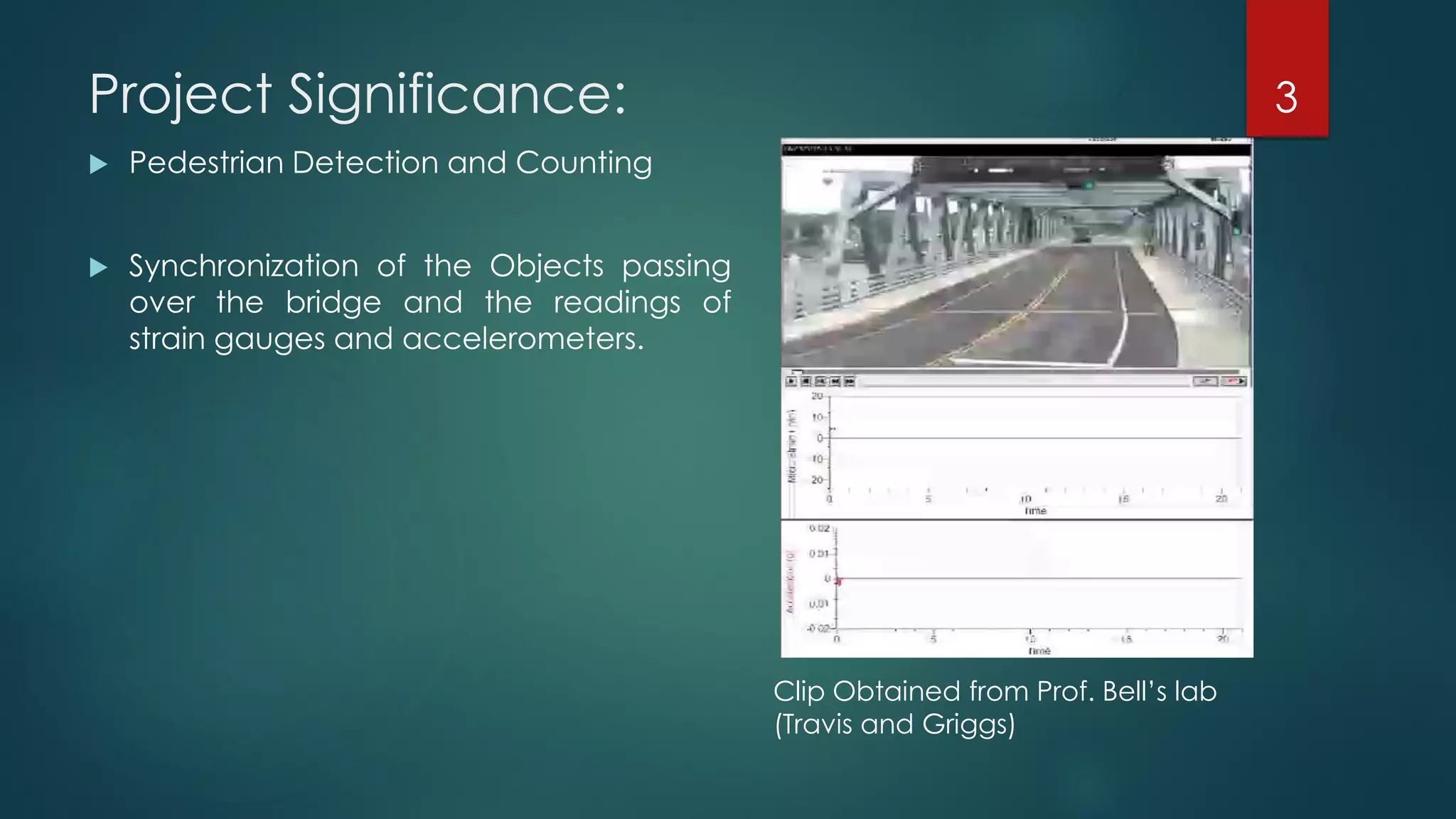
Project Significance:
 Pedestrian Detection and Counting
 Synchronization of the Objects passing
over the bridge and the readings of
strain gauges and accelerometers.
3
Clip Obtained from Prof. Bell’s lab
(Travis and Griggs)
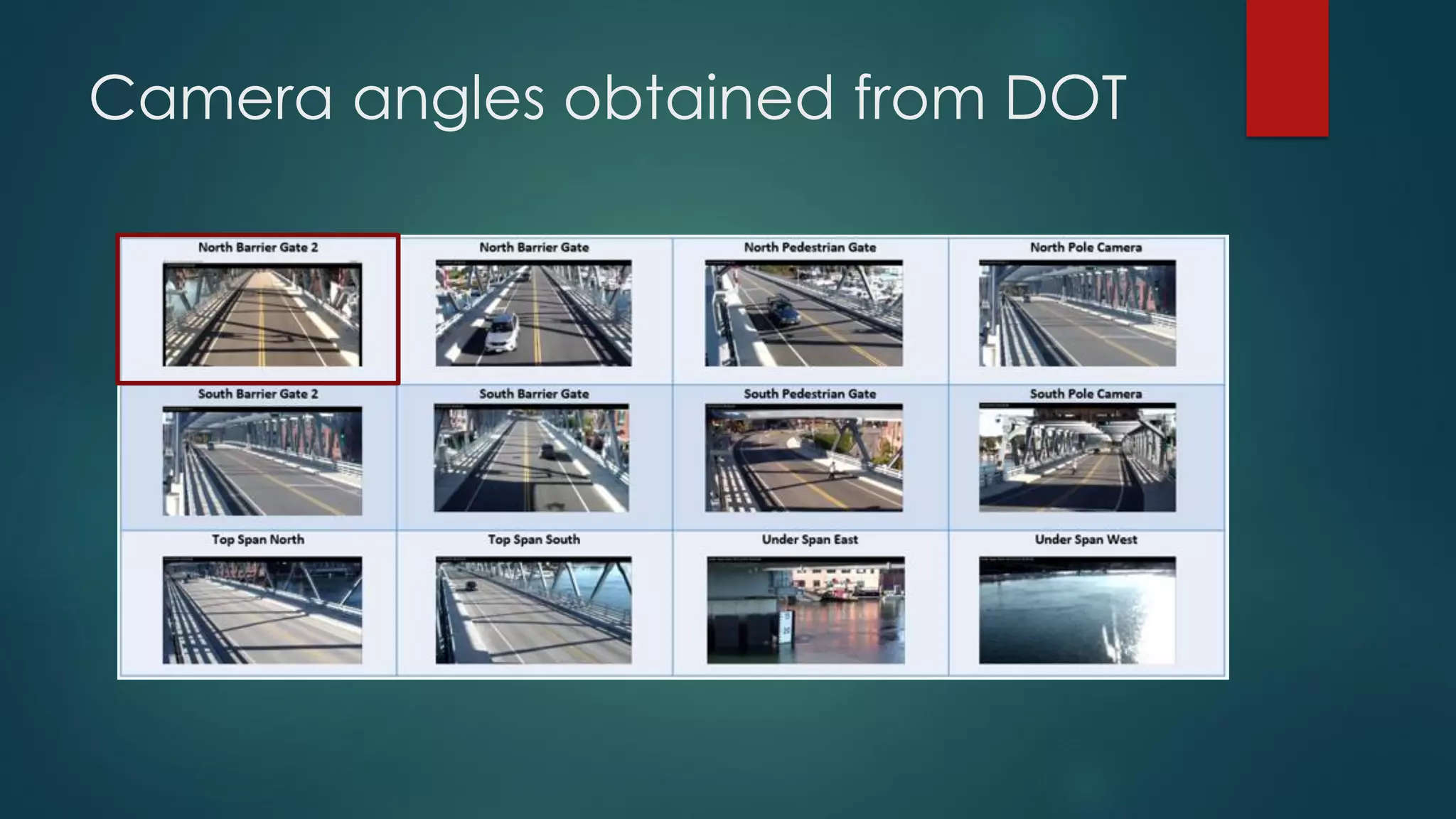
Camera angles obtained from DOT
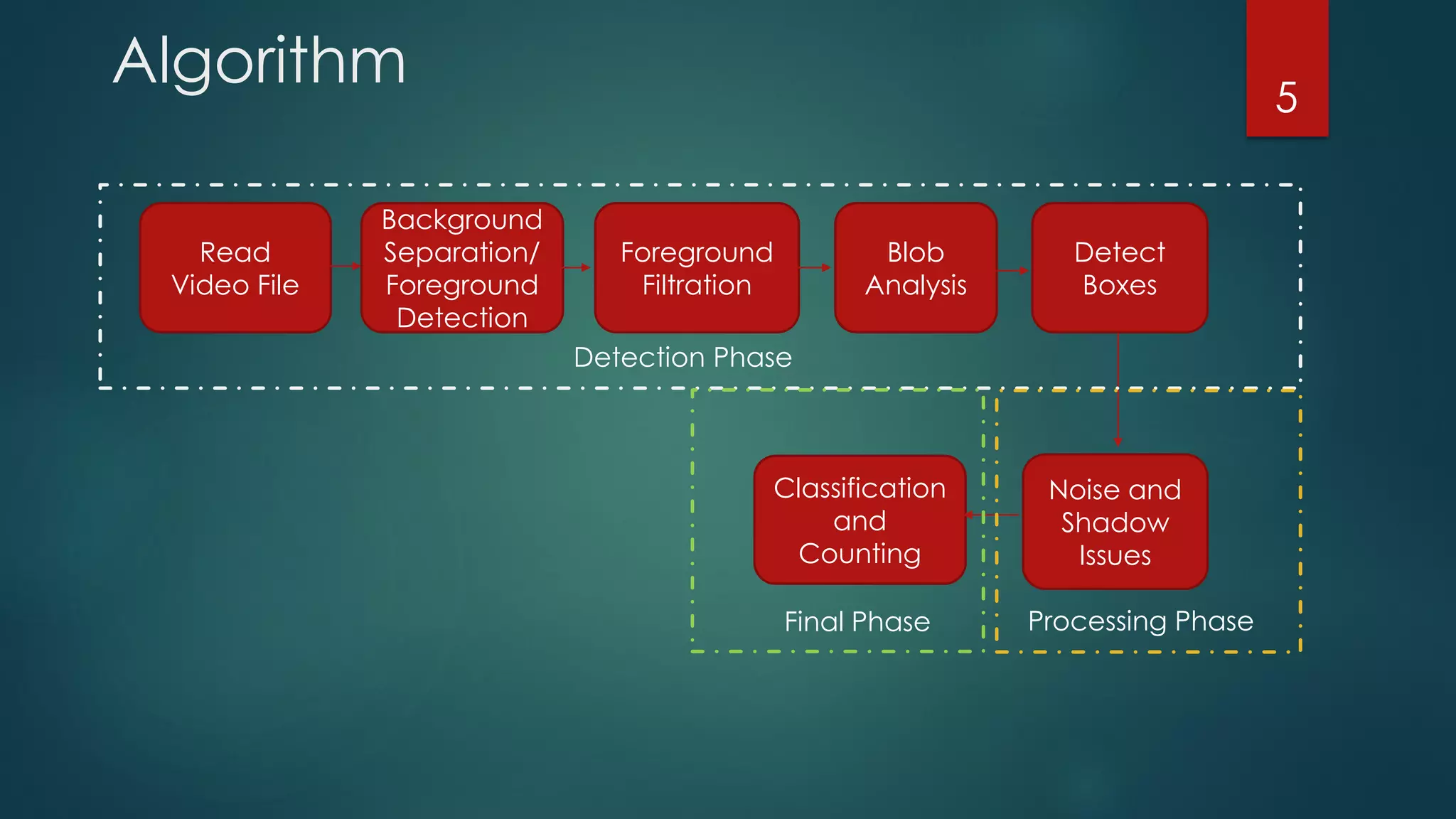
Algorithm 5
Read
Video File
Background
Separation/
Foreground
Detection
Foreground
Filtration
Blob
Analysis
Detect
Boxes
Noise and
Shadow
Issues
Classification
and
Counting
Detection Phase
Processing PhaseFinal Phase
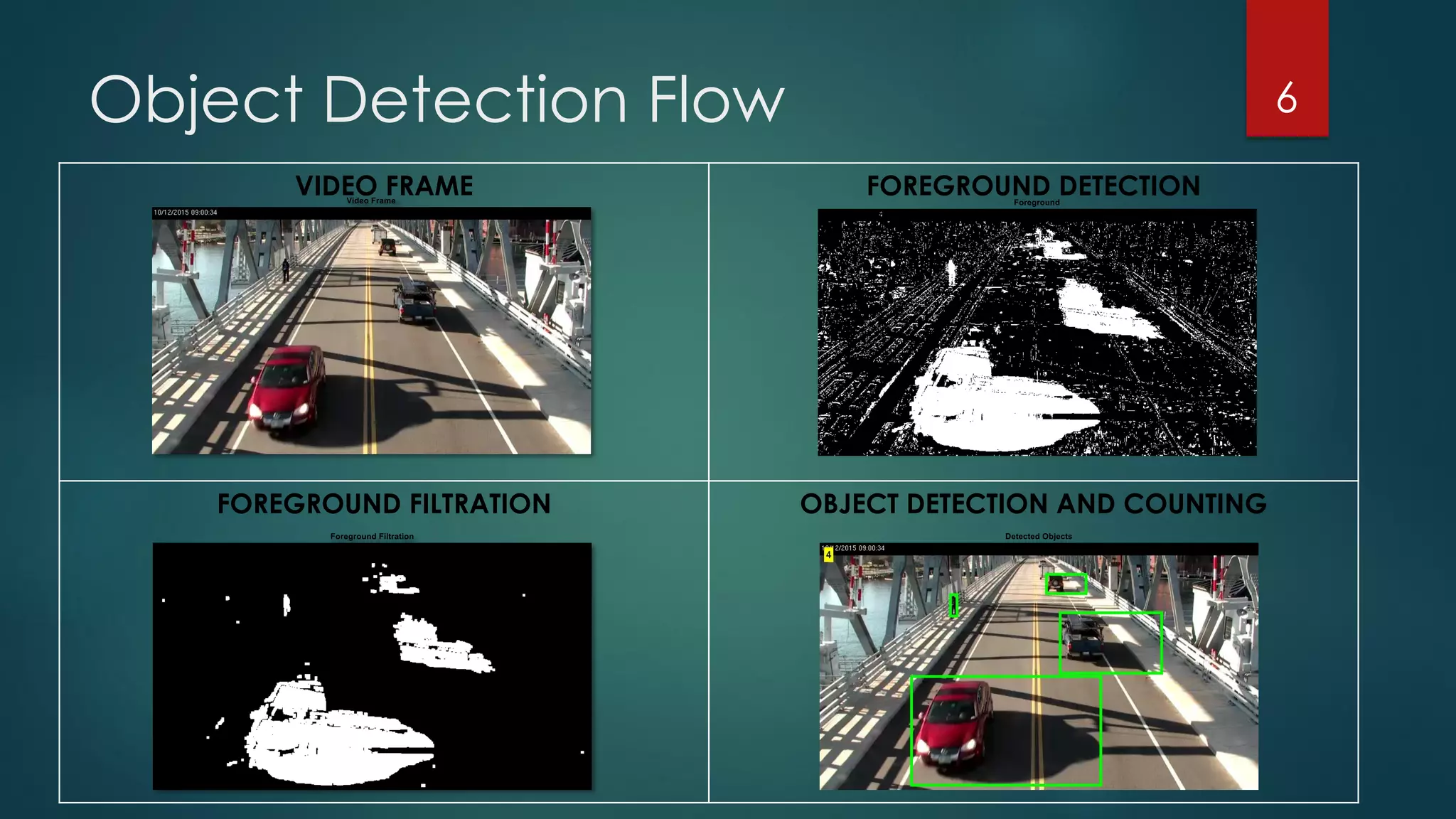
Object Detection Flow
VIDEO FRAME FOREGROUND DETECTION
FOREGROUND FILTRATION OBJECT DETECTION AND COUNTING
6
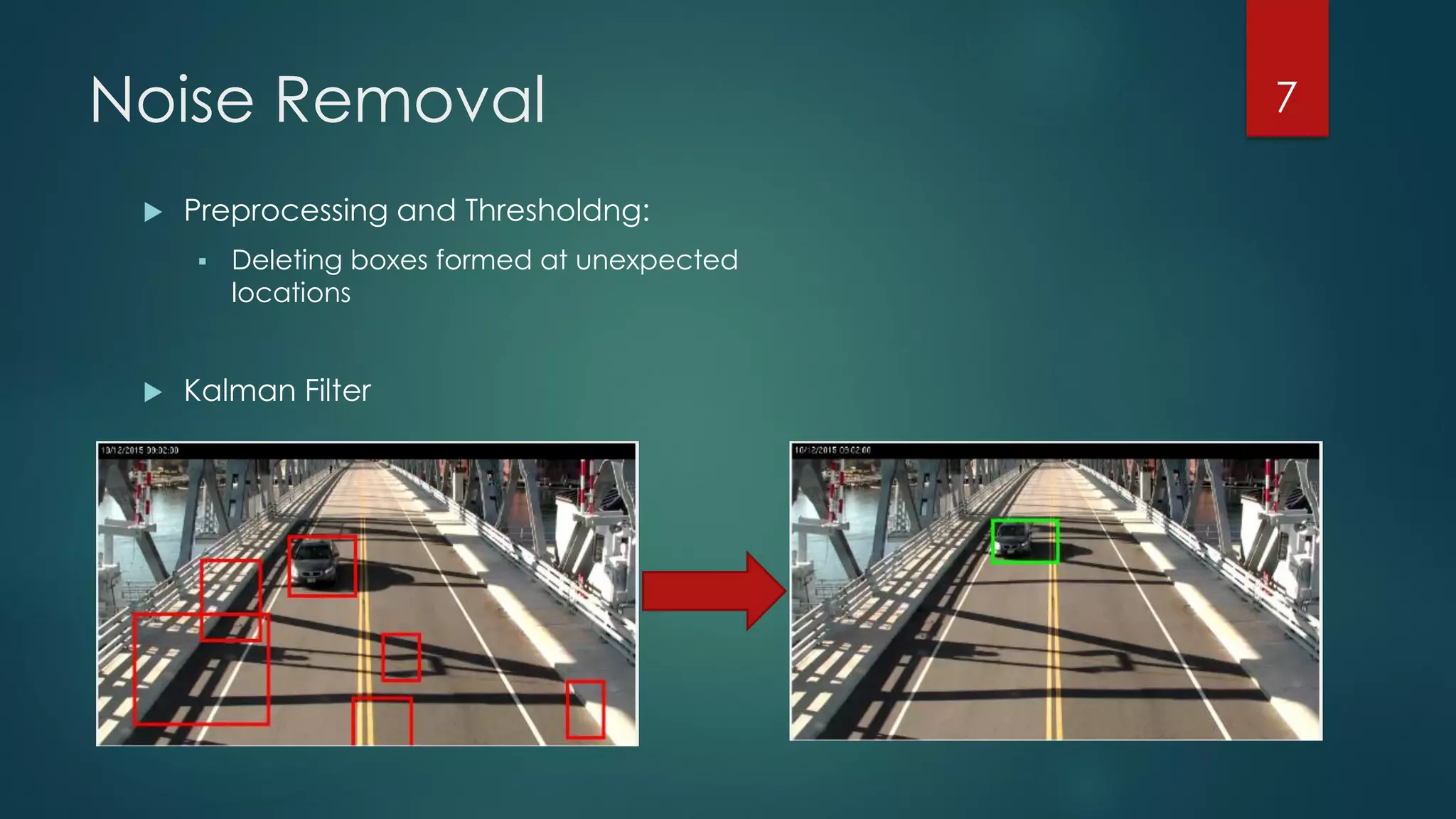
Noise Removal
 Preprocessing and Thresholdng:
 Deleting boxes formed at unexpected
locations
 Kalman Filter
7
What is Kalman Filter?
 A Kalman filter is an optimal recursive data processing algorithm
 The Kalman filter incorporates all information that can be provided
to it. It processes all available measurements, regardless of their
precision, to estimate the current value of the variables of interest
 Computationally efficient due to its recursive structure
 Assumes that variables being estimated are time dependent
8
What does it do?
 Predictor: predicts parameter values ahead of current
measurements
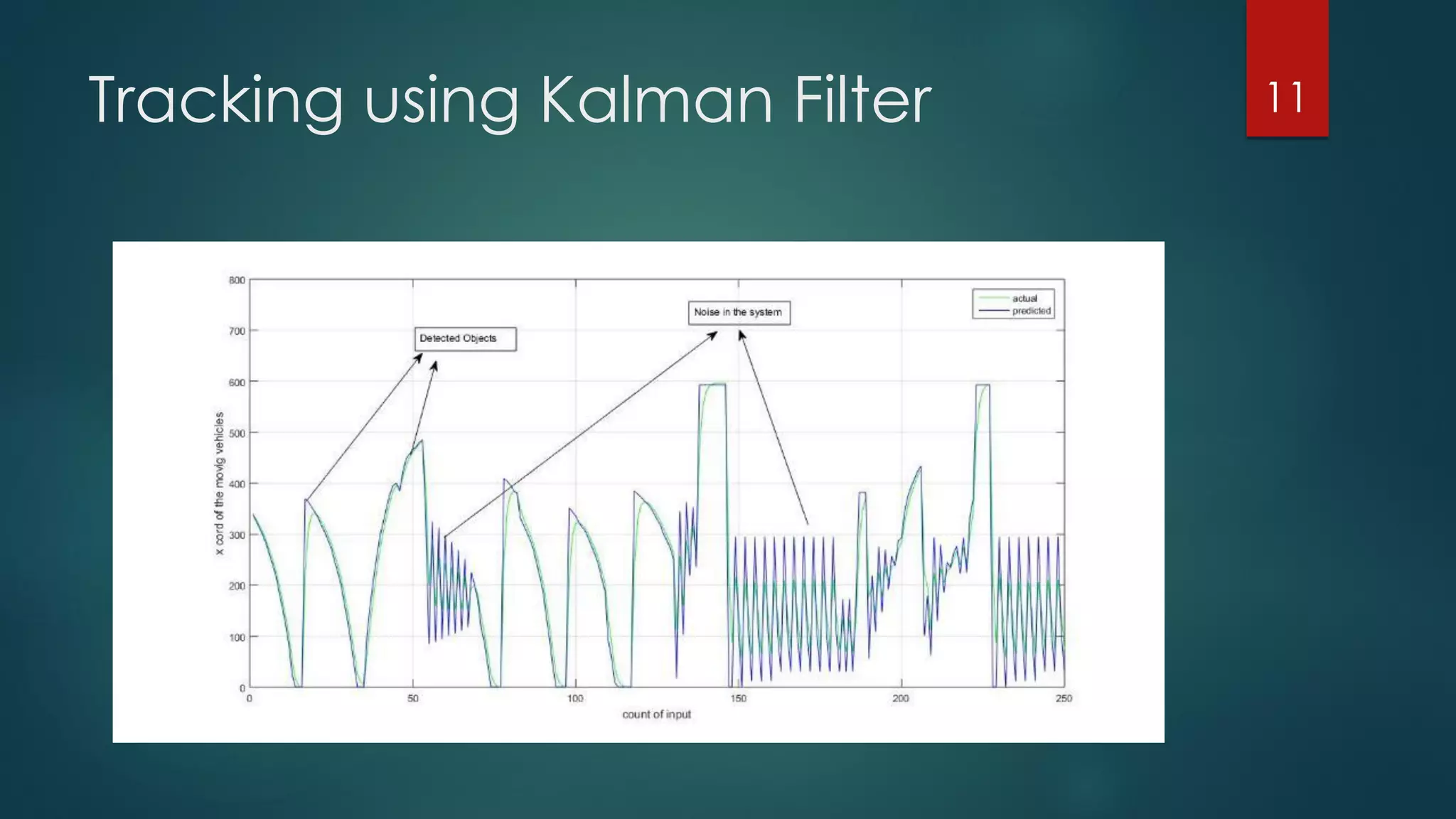
 Noise Reduction: reduces noise introduced by inaccurate
detections
 Tracking: Facilitates the process of association of multiple objects to
their tracks
9
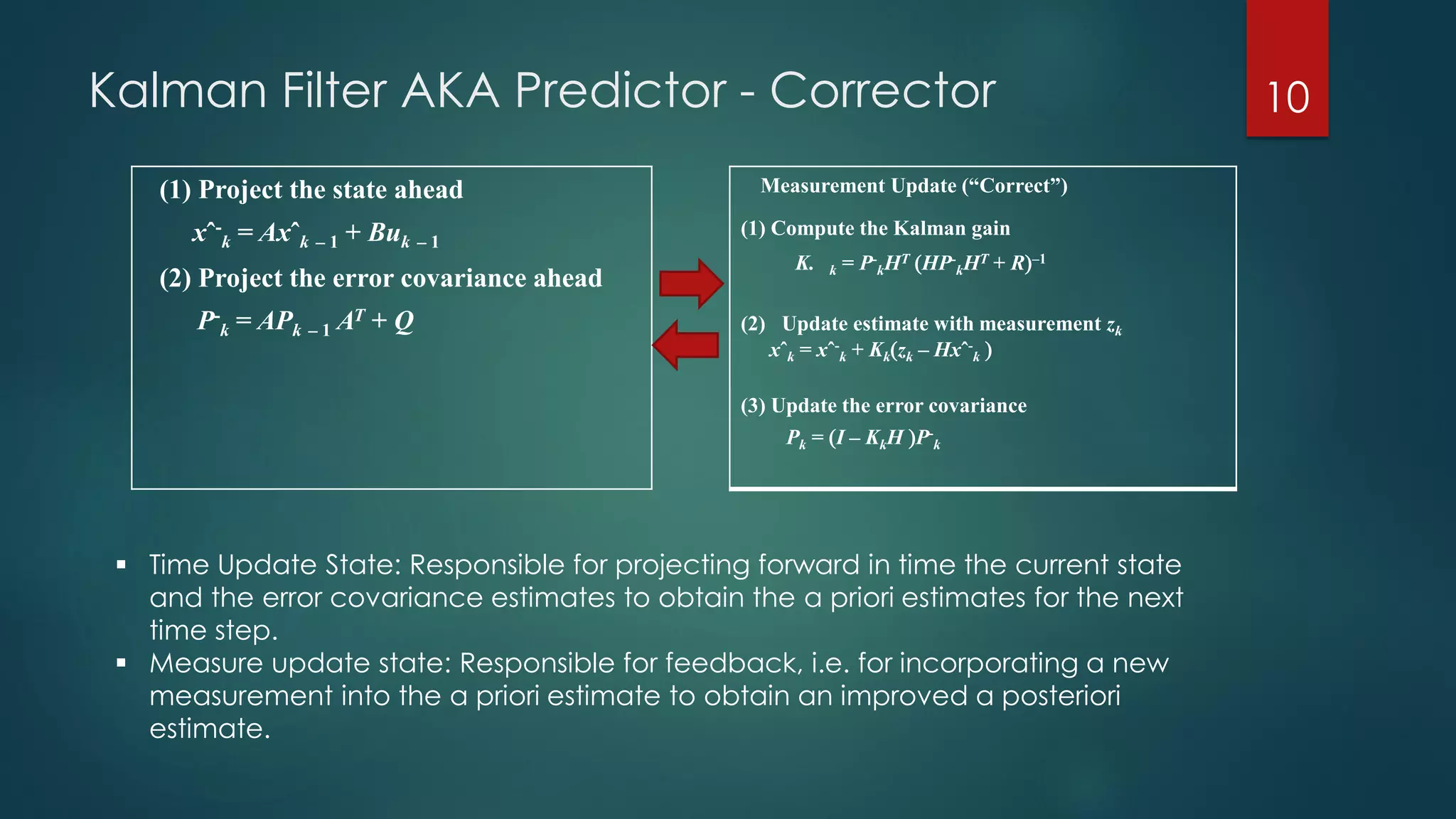
Kalman Filter AKA Predictor - Corrector
(1) Project the state ahead
xˆ-
k = Axˆk – 1 + Buk – 1
(2) Project the error covariance ahead
P-
k = APk – 1 AT + Q
10
Measurement Update (“Correct”)
(1) Compute the Kalman gain
K. k = P-
kHT (HP-
kHT + R)–1
(2) Update estimate with measurement zk
xˆk = xˆ-
k + Kk(zk – Hxˆ-
k )
(3) Update the error covariance
Pk = (I – KkH )P-
k
 Time Update State: Responsible for projecting forward in time the current state
and the error covariance estimates to obtain the a priori estimates for the next
time step.
 Measure update state: Responsible for feedback, i.e. for incorporating a new
measurement into the a priori estimate to obtain an improved a posteriori
estimate.
Tracking using Kalman Filter 11
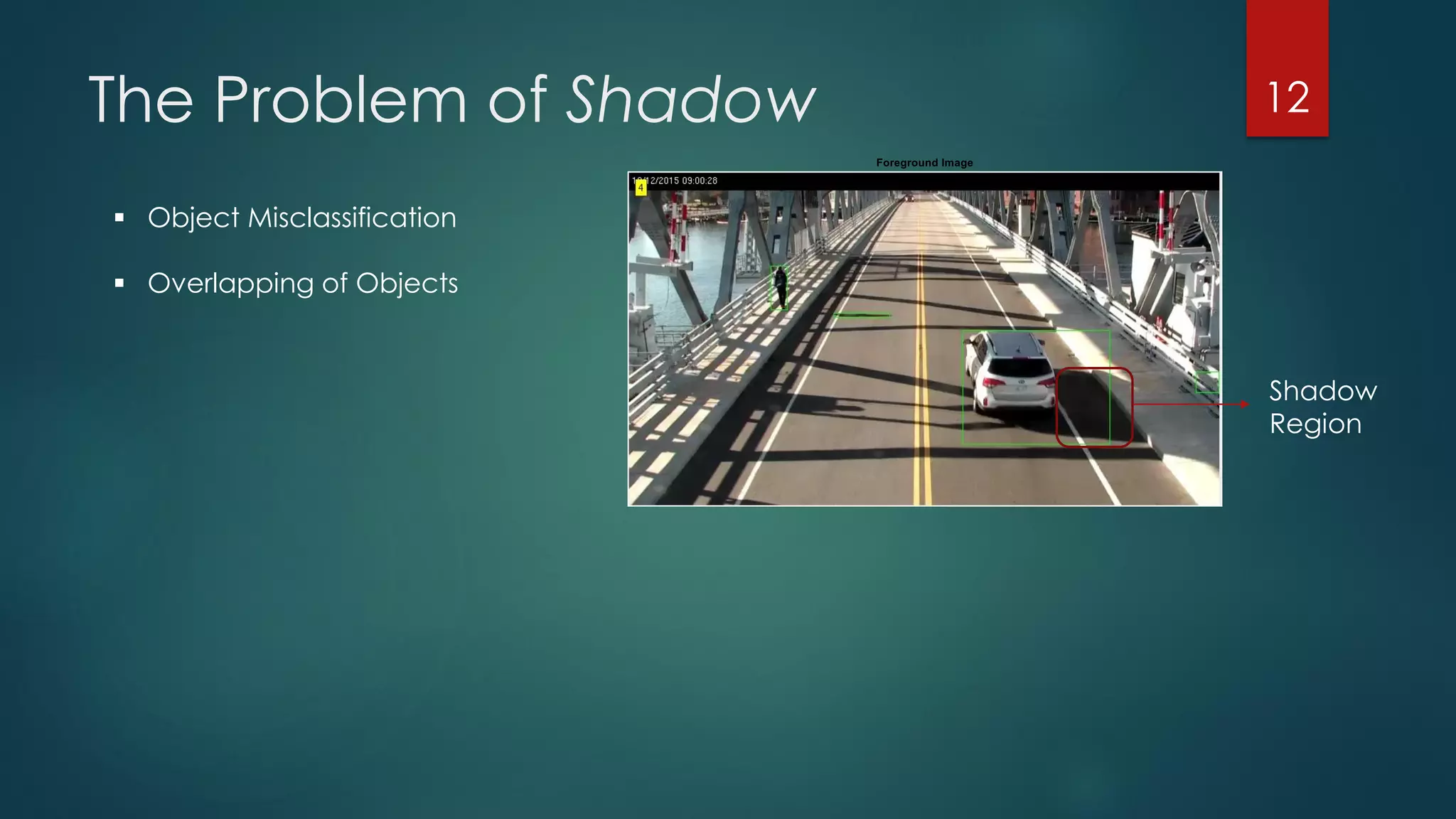
The Problem of Shadow 12
 Object Misclassification
 Overlapping of Objects
Shadow
Region
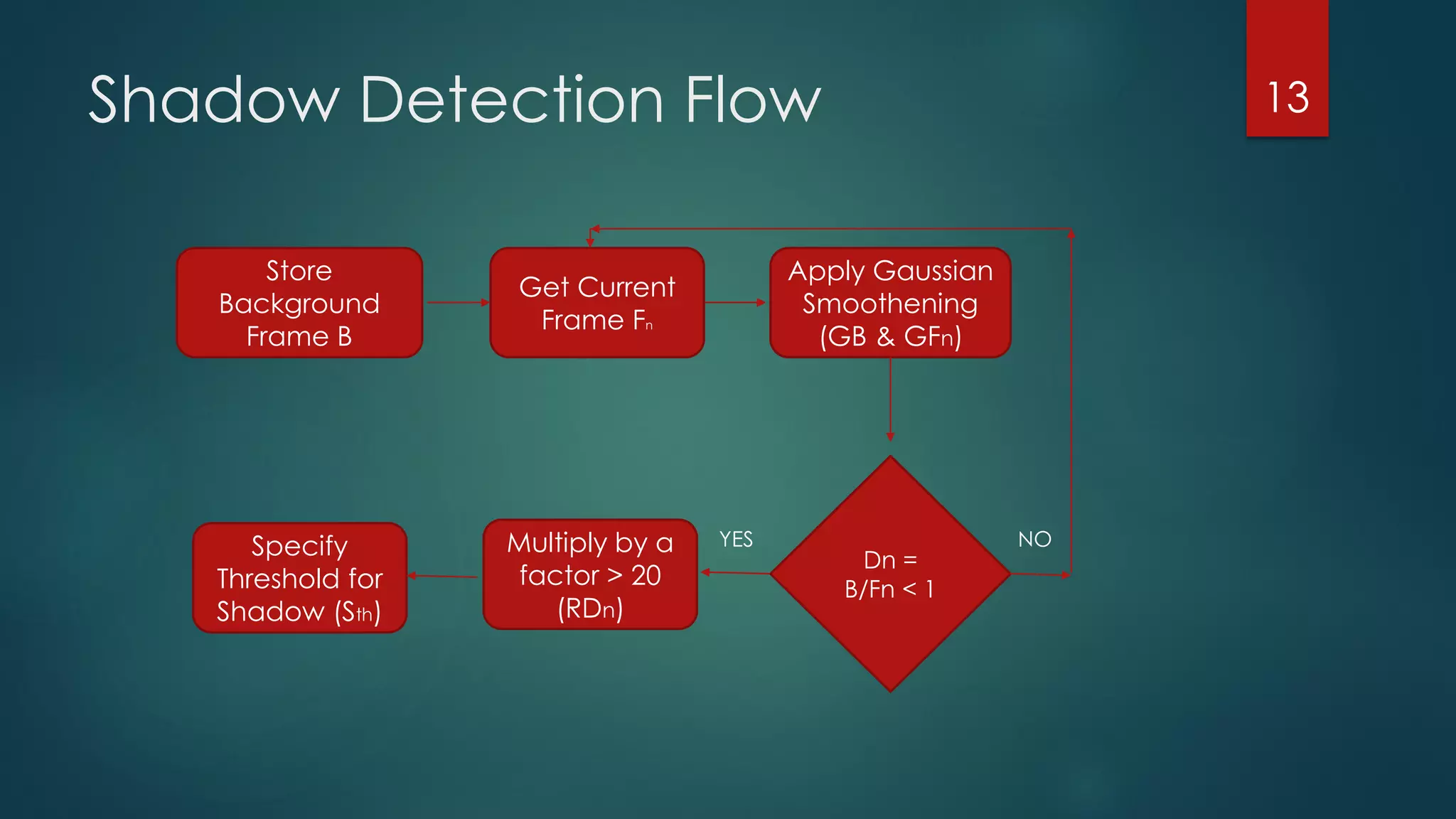
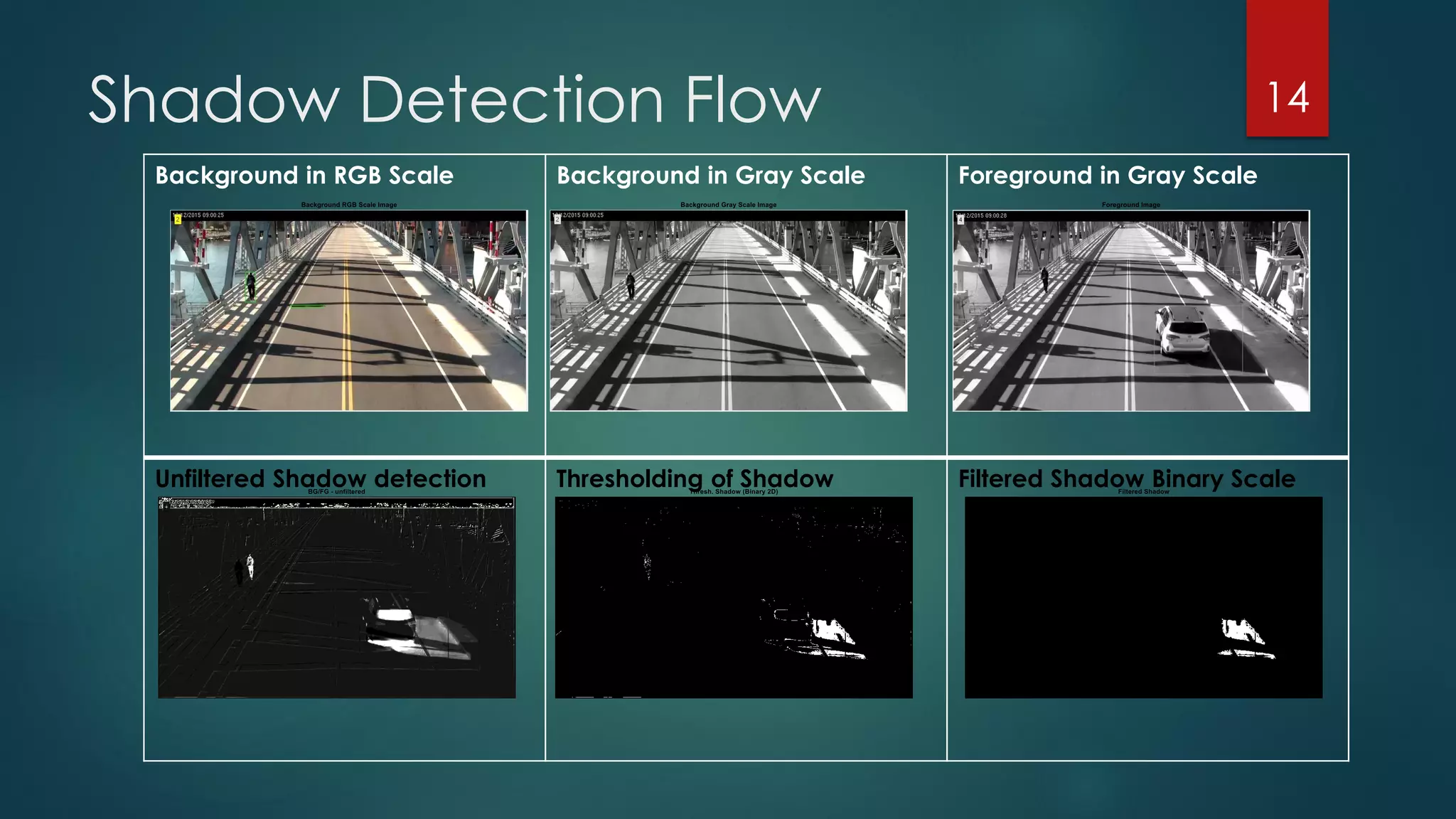
Shadow Detection Flow
YES NO
13
Specify
Threshold for
Shadow (Sth)
Get Current
Frame Fn
Store
Background
Frame B
Apply Gaussian
Smoothening
(GB & GFn)
Dn =
B/Fn < 1
Multiply by a
factor > 20
(RDn)
Shadow Detection Flow
Background in RGB Scale Background in Gray Scale Foreground in Gray Scale
Unfiltered Shadow detection Thresholding of Shadow Filtered Shadow Binary Scale
14
Classification
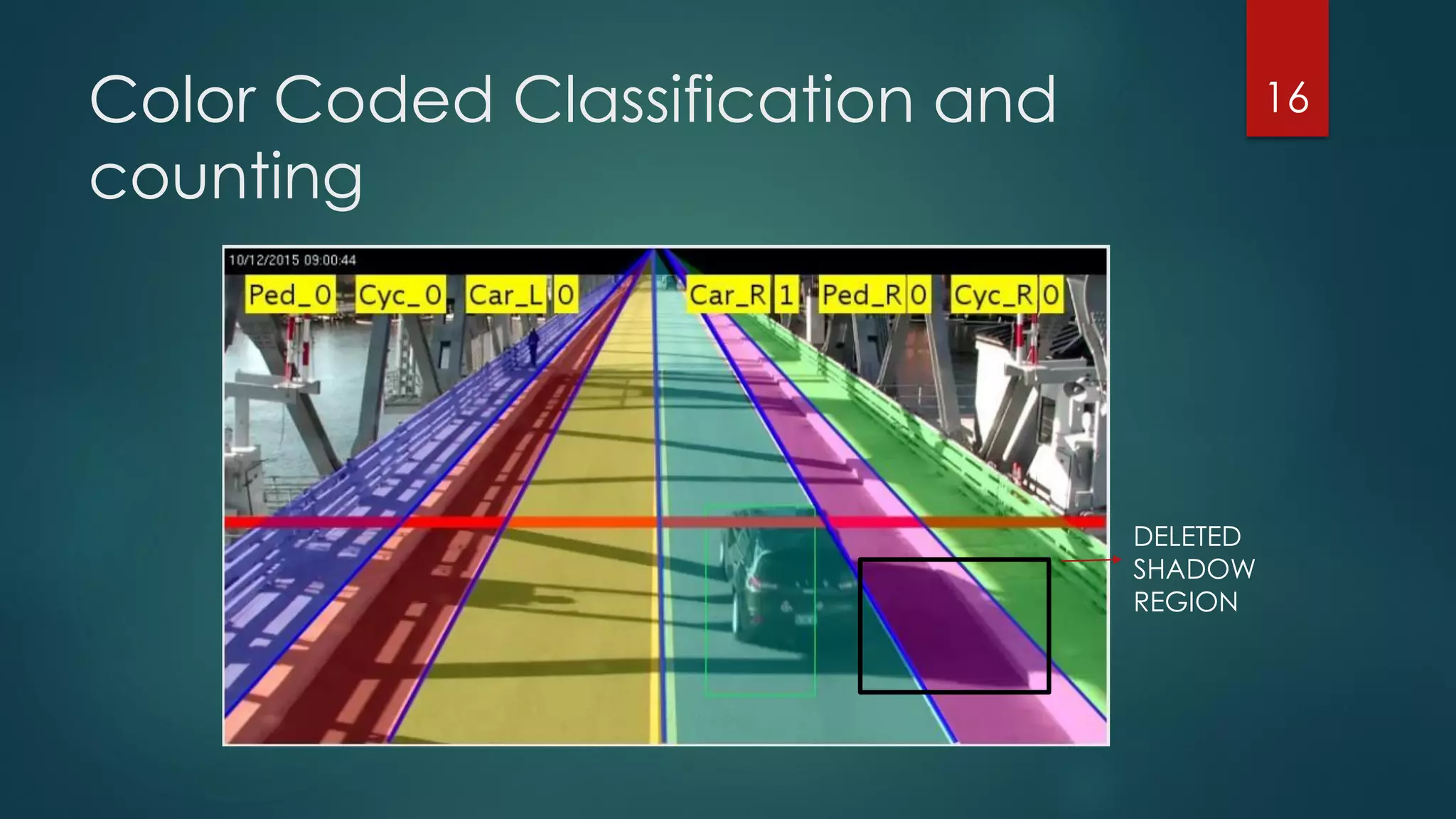
 Color coded classification
 Centroid lying in the color
15
Color Coded Classification and
counting
16
DELETED
SHADOW
REGION
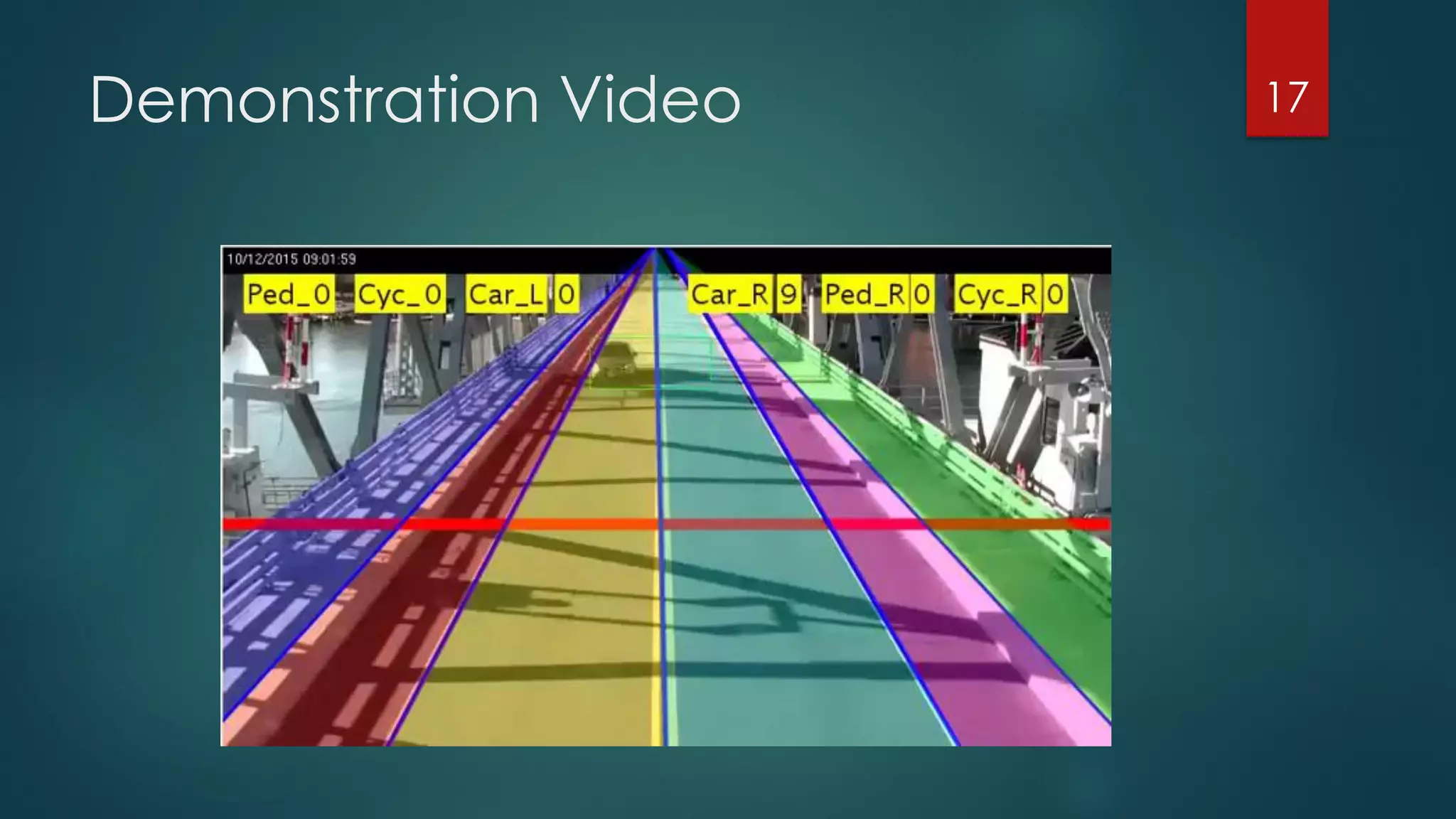
Demonstration Video 17

Object Detection Classification, tracking and Counting

  • 1.
    Object Detection, Tracking, Classification, andCounting SHOUNAK MITRA ADVISOR: PROFESSOR TAT. S. FU, PHD, P.E. CIVIL AND ENVIRONMENTAL ENGINEERING DEPARTMENT UNIVERSITY OF NEW HAMPSHIRE 1
  • 2.
    Overview  Significance ofthe project  Use of camera angles  Video Demonstration  Object Detection  Noise and Shadow issues  Tracking  Classification  Counting 2
  • 3.
    Project Significance:  PedestrianDetection and Counting  Synchronization of the Objects passing over the bridge and the readings of strain gauges and accelerometers. 3 Clip Obtained from Prof. Bell’s lab (Travis and Griggs)
  • 4.
  • 5.
    Algorithm 5 Read Video File Background Separation/ Foreground Detection Foreground Filtration Blob Analysis Detect Boxes Noiseand Shadow Issues Classification and Counting Detection Phase Processing PhaseFinal Phase
  • 6.
    Object Detection Flow VIDEOFRAME FOREGROUND DETECTION FOREGROUND FILTRATION OBJECT DETECTION AND COUNTING 6
  • 7.
    Noise Removal  Preprocessingand Thresholdng:  Deleting boxes formed at unexpected locations  Kalman Filter 7
  • 8.
    What is KalmanFilter?  A Kalman filter is an optimal recursive data processing algorithm  The Kalman filter incorporates all information that can be provided to it. It processes all available measurements, regardless of their precision, to estimate the current value of the variables of interest  Computationally efficient due to its recursive structure  Assumes that variables being estimated are time dependent 8
  • 9.
    What does itdo?  Predictor: predicts parameter values ahead of current measurements  Noise Reduction: reduces noise introduced by inaccurate detections  Tracking: Facilitates the process of association of multiple objects to their tracks 9
  • 10.
    Kalman Filter AKAPredictor - Corrector (1) Project the state ahead xˆ- k = Axˆk – 1 + Buk – 1 (2) Project the error covariance ahead P- k = APk – 1 AT + Q 10 Measurement Update (“Correct”) (1) Compute the Kalman gain K. k = P- kHT (HP- kHT + R)–1 (2) Update estimate with measurement zk xˆk = xˆ- k + Kk(zk – Hxˆ- k ) (3) Update the error covariance Pk = (I – KkH )P- k  Time Update State: Responsible for projecting forward in time the current state and the error covariance estimates to obtain the a priori estimates for the next time step.  Measure update state: Responsible for feedback, i.e. for incorporating a new measurement into the a priori estimate to obtain an improved a posteriori estimate.
  • 11.
  • 12.
    The Problem ofShadow 12  Object Misclassification  Overlapping of Objects Shadow Region
  • 13.
    Shadow Detection Flow YESNO 13 Specify Threshold for Shadow (Sth) Get Current Frame Fn Store Background Frame B Apply Gaussian Smoothening (GB & GFn) Dn = B/Fn < 1 Multiply by a factor > 20 (RDn)
  • 14.
    Shadow Detection Flow Backgroundin RGB Scale Background in Gray Scale Foreground in Gray Scale Unfiltered Shadow detection Thresholding of Shadow Filtered Shadow Binary Scale 14
  • 15.
    Classification  Color codedclassification  Centroid lying in the color 15
  • 16.
    Color Coded Classificationand counting 16 DELETED SHADOW REGION
  • 17.