9/4/2016
1
Unit – 2 CHAPTER - 6
MODELS OF OB
MBA 12 ORGANIZATIONAL
BEHAVIOUR - 1
Delivered By,
Dr. S. Gokula Krishnan, PhD.,
Associate Professor – OB, HR & Data Analytics,
Nehru School of Management,
Nehru College of Engineering & Research Centre.
E-mail : prof.gokulakrishnan@gmail.com
Discussions on
Dr. S. GOKULA KRISHNAN, Associate Professor @NSM2
 Basic OB Models
 OB Models
 Comparison of OB Models
Reference:
1. VSP Rao (2009). Organizational Behaviour,1st ed., Excel Books, p.10-
13
2. John W Newstrom, Organizational behaviour-Human behaviour at
work, 12th ed., McGrawHill Publication, p.30.
9/4/2016
2
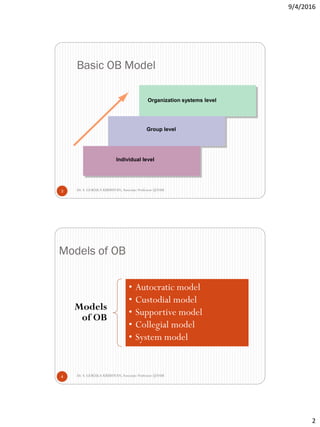
Basic OB Model
Dr. S. GOKULA KRISHNAN, Associate Professor @NSM3
Organization systems level
Group level
Individual level
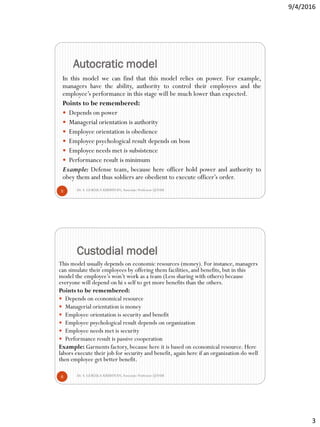
Models of OB
Dr. S. GOKULA KRISHNAN, Associate Professor @NSM4
Models
of OB
• Autocratic model
• Custodial model
• Supportive model
• Collegial model
• System model
9/4/2016
3
Autocratic model
Dr. S. GOKULA KRISHNAN, Associate Professor @NSM5
In this model we can find that this model relies on power. For example,
managers have the ability, authority to control their employees and the
employee’s performance in this stage will be much lower than expected.
Points to be remembered:
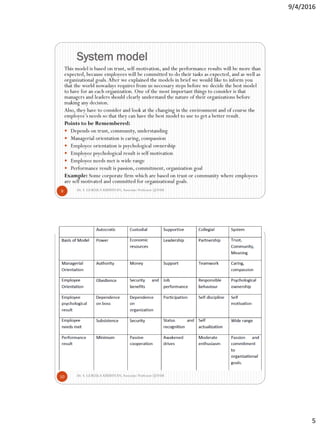
 Depends on power
 Managerial orientation is authority
 Employee orientation is obedience
 Employee psychological result depends on boss
 Employee needs met is subsistence
 Performance result is minimum
Example: Defense team, because here officer hold power and authority to
obey them and thus soldiers are obedient to execute officer’s order.
Custodial model
Dr. S. GOKULA KRISHNAN, Associate Professor @NSM6
This model usually depends on economic resources (money). For instance, managers
can simulate their employees by offering them facilities, and benefits, but in this
model the employee’s won’t work as a team (Less sharing with others) because
everyone will depend on hi s self to get more benefits than the others.
Points to be remembered:
 Depends on economical resource
 Managerial orientation is money
 Employee orientation is security and benefit
 Employee psychological result depends on organization
 Employee needs met is security
 Performance result is passive cooperation
Example: Garments factory, because here it is based on economical resource. Here
labors execute their job for security and benefit, again here if an organization do well
then employee get better benefit.
9/4/2016
4
Supportive model
Dr. S. GOKULA KRISHNAN, Associate Professor @NSM7
This model relies on leadership. For example, managers support their
employees by encouraging, and supporting them to perform a better job, get
along with each other and as well as developing their skills.The Performance
results will be awakened drives.
Points to be remembered
 Depends on leadership
 Managerial orientation is support
 Employee orientation is job and performance
 Employee psychological result is participation
 Employee needs met is status and recognition
 Performance result is awakened drives
Example: Software firm, because here leaders support there employee to
perform their tasks or their project.
Collegial model
Dr. S. GOKULA KRISHNAN, Associate Professor @NSM8
This model means that employees depend on each other cooperatively and work
as a team to do the task. Everyone will be having a normal enthusiasm self-
discipline, and responsible behavior towards their tasks.
Points to be remembered:
 Depends on partnership
 Managerial orientation is teamwork
 Employee orientation is responsible behavior
 Employee psychological result is self discipline
 Employee needs met is self actualization
 Performance result is moderate enthusiasm
Example: Social organization such as willingly blood donation organization
BADHON, because here every one work as teamwork and each member takes
responsibilities for organizational goal. Each member works here only for self
actualization.
9/4/2016
5
System model
Dr. S. GOKULA KRISHNAN, Associate Professor @NSM9
This model is based on trust, self-motivation, and the performance results will be more than
expected, because employees will be committed to do their tasks as expected, and as well as
organizational goals.After we explained the models in brief we would like to inform you
that the world nowadays requires from us necessary steps before we decide the best model
to have for an each organization. One of the most important things to consider is that
managers and leaders should clearly understand the nature of their organizations before
making any decision.
Also, they have to consider and look at the changing in the environment and of course the
employee’s needs so that they can have the best model to use to get a better result.
Points to be Remembered:
 Depends on trust, community, understanding
 Managerial orientation is caring, compassion
 Employee orientation is psychological ownership
 Employee psychological result is self motivation
 Employee needs met is wide range
 Performance result is passion, commitment, organization goal
Example: Some corporate firm which are based on trust or community where employees
are self motivated and committed for organizational goals.
Dr. S. GOKULA KRISHNAN, Associate Professor @NSM10
9/4/2016
6
END OF THE CHAPTER

Ob1 unit 2 chapter - 6 - ob models

  • 1.
    9/4/2016 1 Unit – 2CHAPTER - 6 MODELS OF OB MBA 12 ORGANIZATIONAL BEHAVIOUR - 1 Delivered By, Dr. S. Gokula Krishnan, PhD., Associate Professor – OB, HR & Data Analytics, Nehru School of Management, Nehru College of Engineering & Research Centre. E-mail : prof.gokulakrishnan@gmail.com Discussions on Dr. S. GOKULA KRISHNAN, Associate Professor @NSM2  Basic OB Models  OB Models  Comparison of OB Models Reference: 1. VSP Rao (2009). Organizational Behaviour,1st ed., Excel Books, p.10- 13 2. John W Newstrom, Organizational behaviour-Human behaviour at work, 12th ed., McGrawHill Publication, p.30.
  • 2.
    9/4/2016 2 Basic OB Model Dr.S. GOKULA KRISHNAN, Associate Professor @NSM3 Organization systems level Group level Individual level Models of OB Dr. S. GOKULA KRISHNAN, Associate Professor @NSM4 Models of OB • Autocratic model • Custodial model • Supportive model • Collegial model • System model
  • 3.
    9/4/2016 3 Autocratic model Dr. S.GOKULA KRISHNAN, Associate Professor @NSM5 In this model we can find that this model relies on power. For example, managers have the ability, authority to control their employees and the employee’s performance in this stage will be much lower than expected. Points to be remembered:  Depends on power  Managerial orientation is authority  Employee orientation is obedience  Employee psychological result depends on boss  Employee needs met is subsistence  Performance result is minimum Example: Defense team, because here officer hold power and authority to obey them and thus soldiers are obedient to execute officer’s order. Custodial model Dr. S. GOKULA KRISHNAN, Associate Professor @NSM6 This model usually depends on economic resources (money). For instance, managers can simulate their employees by offering them facilities, and benefits, but in this model the employee’s won’t work as a team (Less sharing with others) because everyone will depend on hi s self to get more benefits than the others. Points to be remembered:  Depends on economical resource  Managerial orientation is money  Employee orientation is security and benefit  Employee psychological result depends on organization  Employee needs met is security  Performance result is passive cooperation Example: Garments factory, because here it is based on economical resource. Here labors execute their job for security and benefit, again here if an organization do well then employee get better benefit.
  • 4.
    9/4/2016 4 Supportive model Dr. S.GOKULA KRISHNAN, Associate Professor @NSM7 This model relies on leadership. For example, managers support their employees by encouraging, and supporting them to perform a better job, get along with each other and as well as developing their skills.The Performance results will be awakened drives. Points to be remembered  Depends on leadership  Managerial orientation is support  Employee orientation is job and performance  Employee psychological result is participation  Employee needs met is status and recognition  Performance result is awakened drives Example: Software firm, because here leaders support there employee to perform their tasks or their project. Collegial model Dr. S. GOKULA KRISHNAN, Associate Professor @NSM8 This model means that employees depend on each other cooperatively and work as a team to do the task. Everyone will be having a normal enthusiasm self- discipline, and responsible behavior towards their tasks. Points to be remembered:  Depends on partnership  Managerial orientation is teamwork  Employee orientation is responsible behavior  Employee psychological result is self discipline  Employee needs met is self actualization  Performance result is moderate enthusiasm Example: Social organization such as willingly blood donation organization BADHON, because here every one work as teamwork and each member takes responsibilities for organizational goal. Each member works here only for self actualization.
  • 5.
    9/4/2016 5 System model Dr. S.GOKULA KRISHNAN, Associate Professor @NSM9 This model is based on trust, self-motivation, and the performance results will be more than expected, because employees will be committed to do their tasks as expected, and as well as organizational goals.After we explained the models in brief we would like to inform you that the world nowadays requires from us necessary steps before we decide the best model to have for an each organization. One of the most important things to consider is that managers and leaders should clearly understand the nature of their organizations before making any decision. Also, they have to consider and look at the changing in the environment and of course the employee’s needs so that they can have the best model to use to get a better result. Points to be Remembered:  Depends on trust, community, understanding  Managerial orientation is caring, compassion  Employee orientation is psychological ownership  Employee psychological result is self motivation  Employee needs met is wide range  Performance result is passion, commitment, organization goal Example: Some corporate firm which are based on trust or community where employees are self motivated and committed for organizational goals. Dr. S. GOKULA KRISHNAN, Associate Professor @NSM10
  • 6.