Motivation Concepts
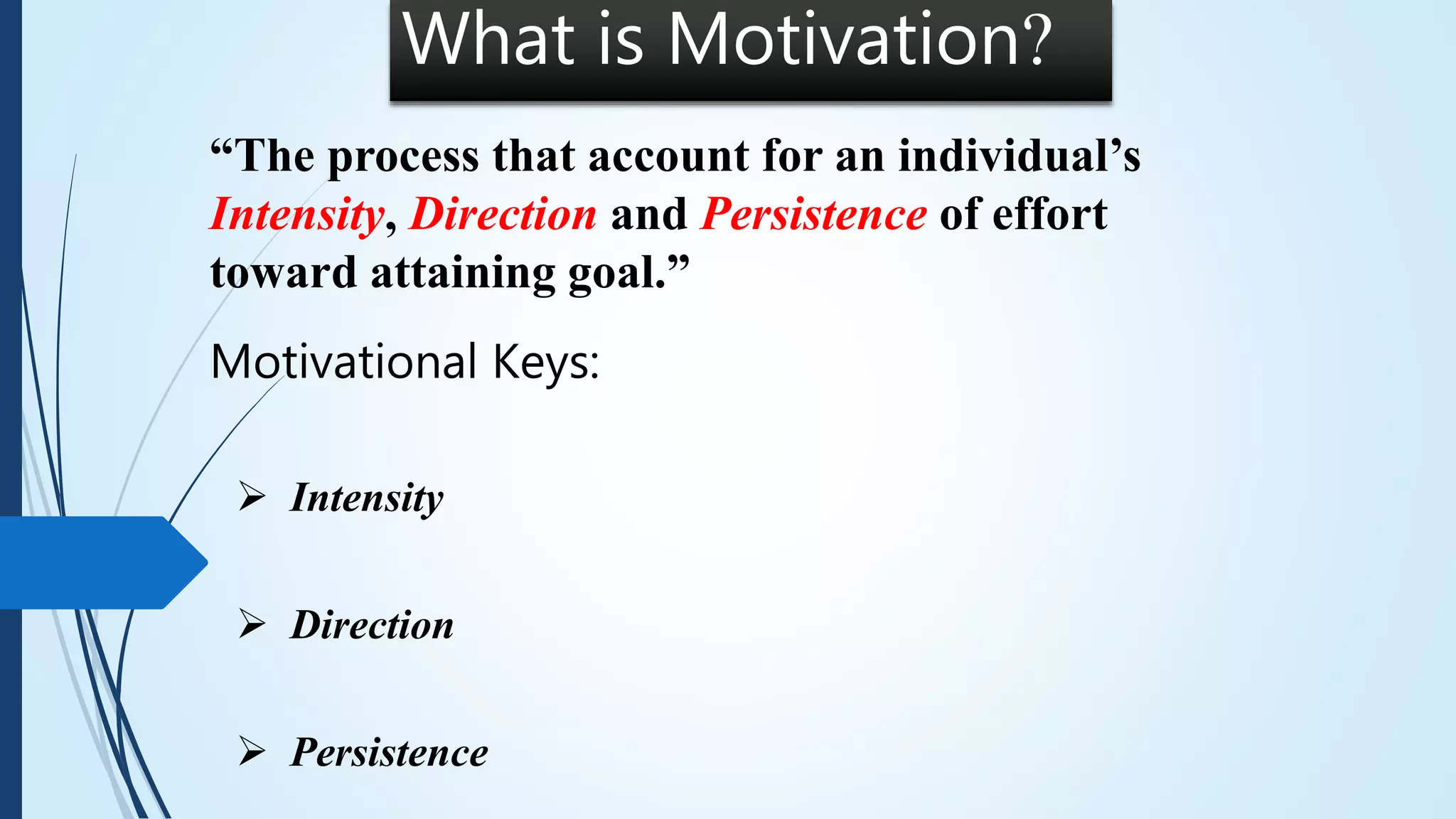
What is Motivation?
“The process that account for an individual’s
Intensity, Direction and Persistence of effort
toward attaining goal.”
Motivational Keys:
 Intensity
 Direction
 Persistence
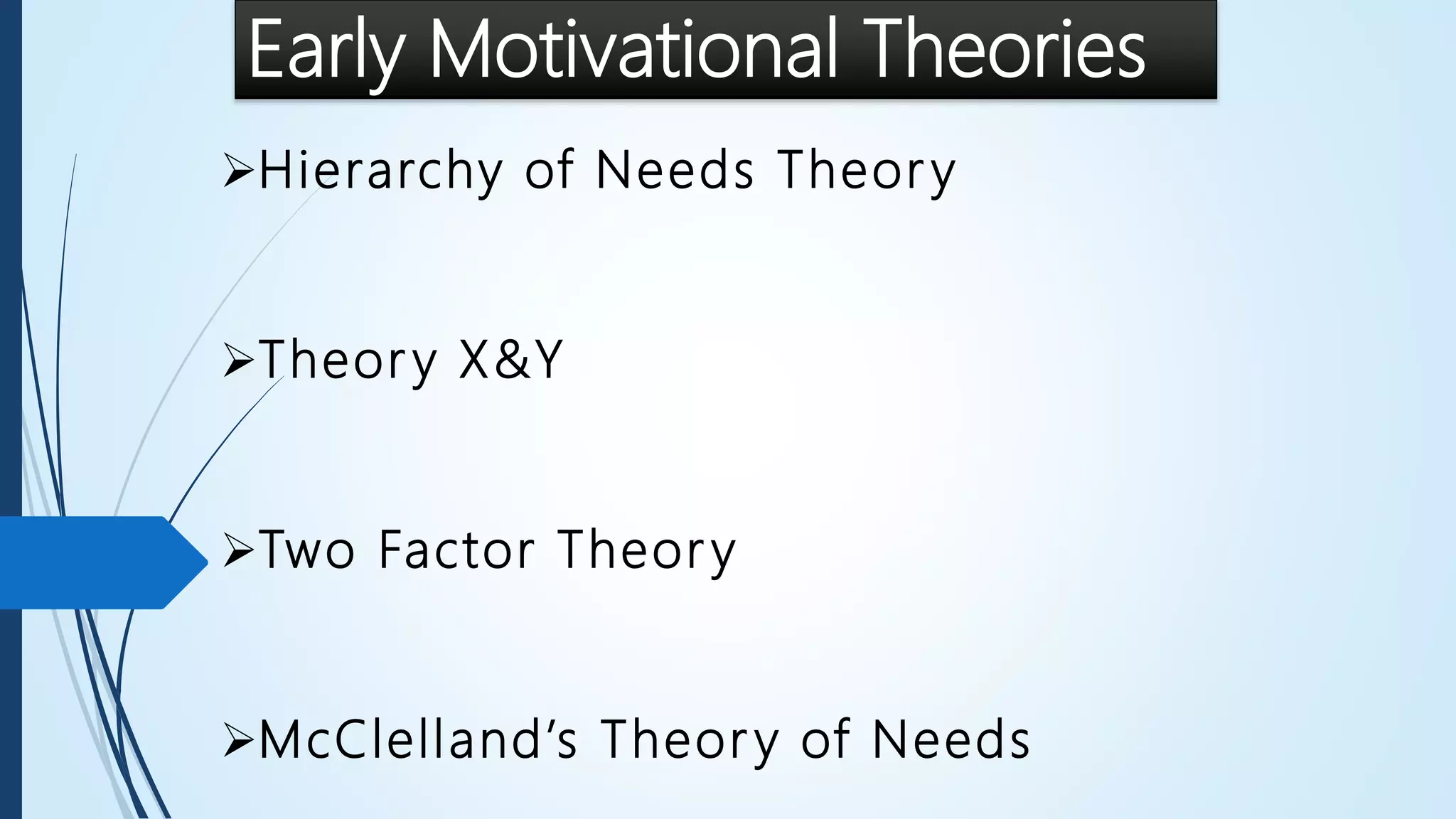
Early Motivational Theories
Hierarchy of Needs Theor y
Theor y X&Y
Two Factor Theor y
McClelland’s Theor y of Needs
Hierarchy of Needs
Physiological Needs
Safety Needs
Social Needs
Esteem Needs
Self-Actualization
Theory X&Y
Theory X :
 Employees Dislike work
 Lazy
 Non-serious Attitude
Theory Y:
 Responsible
 Efficient and Punctual
 Positive Behavior
Two Factor Theory
(Motivational-Hygiene Theory)
McClelland’s Theory of Needs
“A theory that states Achievement, Power, and Affiliation
are three important needs that help explain motivation.”
• Need of Achievement (nAch)
• Need of Power (nPow)
• Need of Affiliation (nAff)
• Needs of Achievement(nAch):
“The drive to excel, to achieve in relationship to a set of
standards, and to strive to succeed.”
• Needs of Power (nPow):
“The need to make others behave in a way in which they wouldn’t
have behaved otherwise.”
• Needs of Affiliation (nAff):
“The desire for friendly and close interpersonal relationships .”
Contemporary Theories
Self-Determination Theory
Job Engagement
Goal-Setting Theory
Self-Efficacy Theory
Reinforcement Theory
Equity Theory/Organizational Justice
Expectancy Theory
Self-Determination Theory
“A theory motivation that is concerned with beneficial effects of
intrinsic motivation and the harmful effects of extrinsic
motivation.”
Cognitive evaluation theory:
“Theory which hypothesizes that extrinsic rewards will reduce intrinsic
interest in a task”
When people are paid for work it feel less like something they want to
do and more like they have to do.
Job Engagement
“The investment of an employee’s Physical, Cognitive,
and Emotional energies into job performance.”
For Example:
When a person comes to work, it seems that everything else in his life
goes away, and he becomes completely absorbed in what he is doing. His
emotions, his thoughts, and his behavior are all directed toward patient
care.
In fact, he can get so caught up in his work that she isn’t even aware of
howlong he’s been there. As a result of this total commitment, he is more
effective in providing patient care and feels uplifted by his time at work.
Goal-Setting Theory
“This theory says that specific and difficult goals, with
feedback, lead to higher performance.”
Management by Objective (MBO):
"A program that encompasses specific goals,
participative set, for an explicit time period, with
feedback on goal progress.”
Influencing Factors:
• Goal Commitment
• Task Characteristics
• National culture
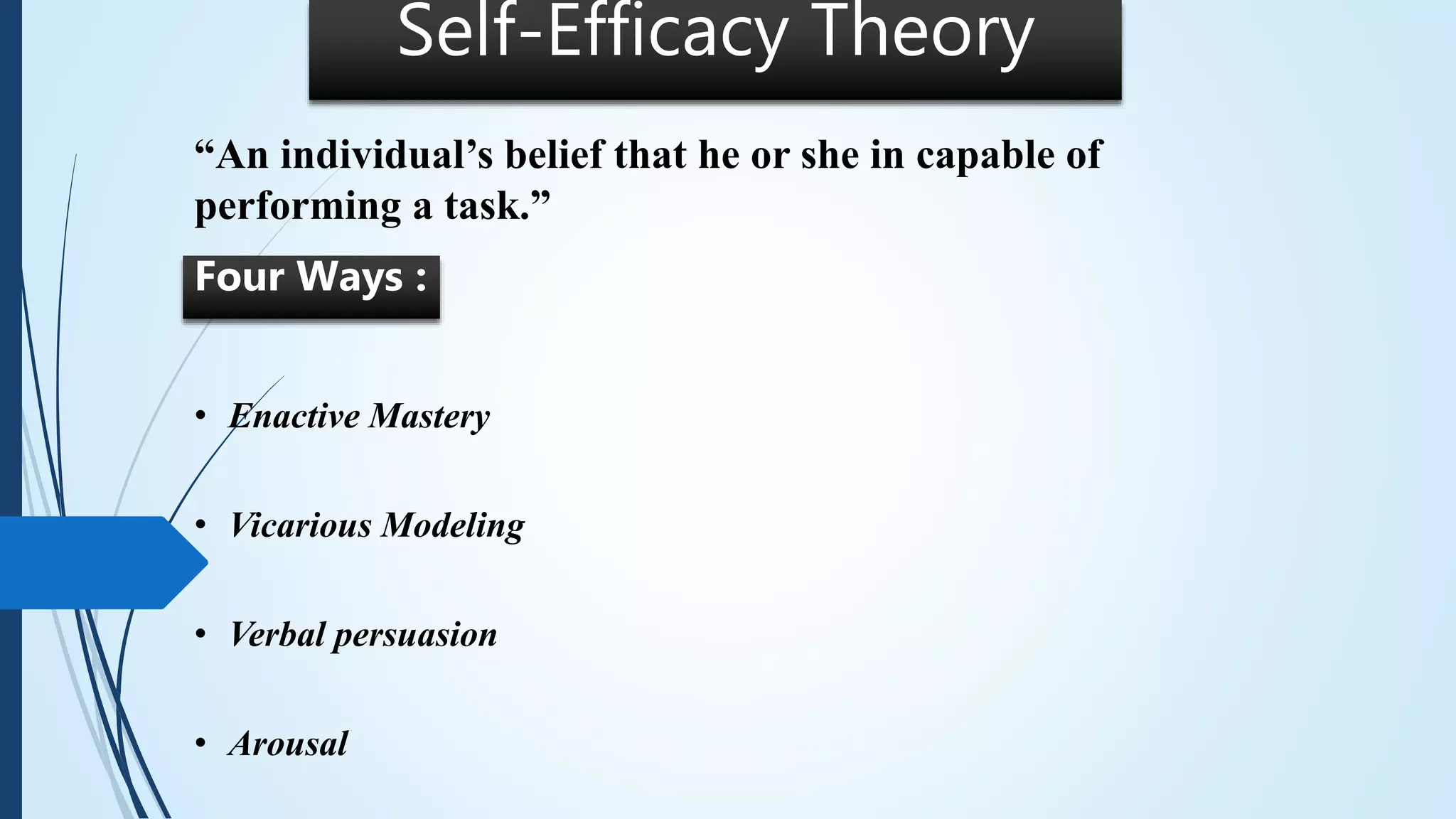
Self-Efficacy Theory
“An individual’s belief that he or she in capable of
performing a task.”
Four Ways :
• Enactive Mastery
• Vicarious Modeling
• Verbal persuasion
• Arousal
• Enactive Mastery:
“Gaining relevant experience with task or job”
• Vicarious Modeling:
“Becoming more confident because you see someone else
doing the task.”
• Verbal Persuasion:
“Becoming more confident because someone convinces
you that you have skills necessary to be successful.”
• Arousal:
“Arousal leads to an energized state , so the person gets
‘psyched up’ and performs better.”
Reinforcement Theory
“Theory proposes that you can change someone's behavior by
using reinforcement, punishment, and extinction.”
Operant conditioning theory:
“People learn to behave to get something they want or to avoid
something they don’t want.”
Four Models:
Attentional processes
Retention processes
Motor Reproduction
processes
Reinforcement
Social-learning Theory:
“The view that we can learn through both
observation and direct experience.”
Attentional processes:
“People learn from a model only when they recognize and pay
attention to its critical features.”
 Retention processes:
“A model’s influence depends on how well the individual remembers
the model’s action after the model is no longer readily available.”
 Motor Reproduction processes:
“After a person has seen a new behavior by observing the model,
watching must be converted to doing.”
 Reinforcement processes:
“Individuals are motivated to exhibit the modeled behavior if
positive incentives or rewards are provided.”
Equity Theory
“A theory that says that individuals compare their job inputs and
outcomes with those of others and then respond to eliminate any
inequities.”
Four Referent Comparison:
• Self-inside
• Self-outside
• Other-inside
• Other-outside
Six Choices
• Change Inputs
• Change Outcomes
• Distort Perceptions of Self
• Distort Perception of Others
• Choose a Different Referent
Types of Equity
Distributive Justice:
“Perceived fairness of the amount and allocation of
rewards among individuals.”
Procedural Justice:
“The perceived fairness of the process used to determine
the distribution of rewards.”
Interactional Justice:
“Perceived degree to which one is treated with dignity
and respect.”
Expectancy Theory
“The strength of a tendency to act in a certain way depends on the
strength of an expectation that the act will be followed by a given
outcome and on the attractiveness of that outcome to the individual.”
Three Relationships:
Effect-Performance Relationship
Performance-Reward Relationship
Rewards-Personal goals Relationship
 Effect-Performance Relationship:
“The probability perceived by the individual that exerting a given amount of
effort will lead to performance.”
 Performance-Reward Relationship:
“The degree to which the individual believes performing at a particular level
will lead to the attainment of a desired outcome.”
 Rewards-Personal goals Relationship:
“The degree to which organizational rewards satisfy an individual’s personal
goals or needs and the attractiveness of those potential rewards for the
individual”

Motivation concepts

  • 1.
  • 2.
    What is Motivation? “Theprocess that account for an individual’s Intensity, Direction and Persistence of effort toward attaining goal.” Motivational Keys:  Intensity  Direction  Persistence
  • 3.
    Early Motivational Theories Hierarchyof Needs Theor y Theor y X&Y Two Factor Theor y McClelland’s Theor y of Needs
  • 4.
    Hierarchy of Needs PhysiologicalNeeds Safety Needs Social Needs Esteem Needs Self-Actualization
  • 5.
    Theory X&Y Theory X:  Employees Dislike work  Lazy  Non-serious Attitude Theory Y:  Responsible  Efficient and Punctual  Positive Behavior
  • 6.
  • 7.
    McClelland’s Theory ofNeeds “A theory that states Achievement, Power, and Affiliation are three important needs that help explain motivation.” • Need of Achievement (nAch) • Need of Power (nPow) • Need of Affiliation (nAff)
  • 8.
    • Needs ofAchievement(nAch): “The drive to excel, to achieve in relationship to a set of standards, and to strive to succeed.” • Needs of Power (nPow): “The need to make others behave in a way in which they wouldn’t have behaved otherwise.” • Needs of Affiliation (nAff): “The desire for friendly and close interpersonal relationships .”
  • 9.
    Contemporary Theories Self-Determination Theory JobEngagement Goal-Setting Theory Self-Efficacy Theory Reinforcement Theory Equity Theory/Organizational Justice Expectancy Theory
  • 10.
    Self-Determination Theory “A theorymotivation that is concerned with beneficial effects of intrinsic motivation and the harmful effects of extrinsic motivation.” Cognitive evaluation theory: “Theory which hypothesizes that extrinsic rewards will reduce intrinsic interest in a task” When people are paid for work it feel less like something they want to do and more like they have to do.
  • 11.
    Job Engagement “The investmentof an employee’s Physical, Cognitive, and Emotional energies into job performance.” For Example: When a person comes to work, it seems that everything else in his life goes away, and he becomes completely absorbed in what he is doing. His emotions, his thoughts, and his behavior are all directed toward patient care. In fact, he can get so caught up in his work that she isn’t even aware of howlong he’s been there. As a result of this total commitment, he is more effective in providing patient care and feels uplifted by his time at work.
  • 12.
    Goal-Setting Theory “This theorysays that specific and difficult goals, with feedback, lead to higher performance.” Management by Objective (MBO): "A program that encompasses specific goals, participative set, for an explicit time period, with feedback on goal progress.” Influencing Factors: • Goal Commitment • Task Characteristics • National culture
  • 13.
    Self-Efficacy Theory “An individual’sbelief that he or she in capable of performing a task.” Four Ways : • Enactive Mastery • Vicarious Modeling • Verbal persuasion • Arousal
  • 14.
    • Enactive Mastery: “Gainingrelevant experience with task or job” • Vicarious Modeling: “Becoming more confident because you see someone else doing the task.” • Verbal Persuasion: “Becoming more confident because someone convinces you that you have skills necessary to be successful.” • Arousal: “Arousal leads to an energized state , so the person gets ‘psyched up’ and performs better.”
  • 15.
    Reinforcement Theory “Theory proposesthat you can change someone's behavior by using reinforcement, punishment, and extinction.” Operant conditioning theory: “People learn to behave to get something they want or to avoid something they don’t want.” Four Models: Attentional processes Retention processes Motor Reproduction processes Reinforcement Social-learning Theory: “The view that we can learn through both observation and direct experience.”
  • 16.
    Attentional processes: “People learnfrom a model only when they recognize and pay attention to its critical features.”  Retention processes: “A model’s influence depends on how well the individual remembers the model’s action after the model is no longer readily available.”  Motor Reproduction processes: “After a person has seen a new behavior by observing the model, watching must be converted to doing.”  Reinforcement processes: “Individuals are motivated to exhibit the modeled behavior if positive incentives or rewards are provided.”
  • 17.
    Equity Theory “A theorythat says that individuals compare their job inputs and outcomes with those of others and then respond to eliminate any inequities.” Four Referent Comparison: • Self-inside • Self-outside • Other-inside • Other-outside Six Choices • Change Inputs • Change Outcomes • Distort Perceptions of Self • Distort Perception of Others • Choose a Different Referent
  • 18.
    Types of Equity DistributiveJustice: “Perceived fairness of the amount and allocation of rewards among individuals.” Procedural Justice: “The perceived fairness of the process used to determine the distribution of rewards.” Interactional Justice: “Perceived degree to which one is treated with dignity and respect.”
  • 19.
    Expectancy Theory “The strengthof a tendency to act in a certain way depends on the strength of an expectation that the act will be followed by a given outcome and on the attractiveness of that outcome to the individual.” Three Relationships: Effect-Performance Relationship Performance-Reward Relationship Rewards-Personal goals Relationship
  • 20.
     Effect-Performance Relationship: “Theprobability perceived by the individual that exerting a given amount of effort will lead to performance.”  Performance-Reward Relationship: “The degree to which the individual believes performing at a particular level will lead to the attainment of a desired outcome.”  Rewards-Personal goals Relationship: “The degree to which organizational rewards satisfy an individual’s personal goals or needs and the attractiveness of those potential rewards for the individual”