Epidemiology of non-communicable
diseases-MALNUTRITION
BY
S.KARTHIKA, ASST.PROF,
MMCON, MMU, MULLANA
AMBALA,HARYANA
Malnutrition is a health problem
occurring due to relative or
absolute deficiency or excess of
nutrients in human body and
causing pathological changes.
TYPES OF PROBLEM OF
MALNUTRITION
 Under nutrition
 over nutrition
 disproportional nutrients causing
imbalance
 specific nutrient deficiency
There are 2 types of malnutrition that can
occur are
 protein energy malnutrition
 Micro nutrient malnutrition
CAUSES
 Infectious disease
 food habits
 Food taboos
 personal choice for food
 customs, beliefs, culture, attitude etc.
 cooking practices
 women’s status
 lack of knowledge
 poverty
 poor sanitary environment
ASSESSMENT
o Clinical examination : WHO expert
committee has classified signs into 3
categories
o Signs which are not related to nutrition –
alopecia, pyorrhea
o Signs which need further investigation-
malar pigmentation, corneal vascularisation
o Signs which are of value- calf tenderness,
absence of knee jerks, enlargement of
thyroid gland, Bitot’s spot
2. Anthropometry
Weight, height, skin fold thickness, arm
circumference, head and chest
circumference.
3. bio-chemical tests
4. Assess the dietary intake
5. Morbidity & mortality data
TYPES OF
MALNUTRITION A] protein energy malnutrition: 2 types
 Kwashiorkor Marasmus
 Due to decreased intake due to decreased
of proteins. Intake of calories.
 clinical features
 edema in lower leg, face loss of subcuta-
& lower arms. neous fat.
 Irritabilty Muscle wasting
 poor appetite weight for height
is low
 sparse, silky, often have
diarrhea
easily pulled out hairs
 hepatic enlargement quiet & apathetic
ASSESSMENT OF PEM
o Growth chart
o comparison of weight of child with the
weight of normal child of same age.
o comparison of height of child with
height of normal child at same age.
B] MICRONUTRIENT
MALNUTRITION
 Deficiency of vitamins & minerals
 deficiency of vitamin A
 night blindness
 conjuctival xerosis
 bitot’s spots
 corneal xerosis
 keratomalacia
 Deficiency of vitamin D- rickets,
osteomalacia
 Deficiency of vitamin E- no clear indication
 Deficiency of vitamin K – bleeding disorders
 Deficiency of vitamin B
 vit B1 – beri-beri wernick’s encephalopathy
 vit B2 – angular stomatitis
 niacin -pellagra-
diarrhea,dermatitis,dementia
 pyridoxine B6- peri-pheral neuritis
 deficiency of folate
 megaloblastic anaemia
 Glossitis
 Cheilosis
 Gastro intestinal disturbances such as
diarrhea, distention & flatulence.
 deficiency of vit B12
 pernicious anaemia
 demyelinating neurological lesions
 Infertility.
 deficiency of vit C- scurvy
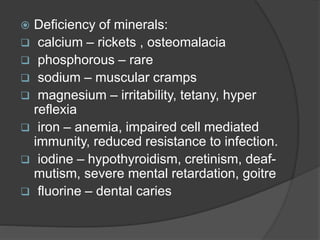
 Deficiency of minerals:
 calcium – rickets , osteomalacia
 phosphorous – rare
 sodium – muscular cramps
 magnesium – irritability, tetany, hyper
reflexia
 iron – anemia, impaired cell mediated
immunity, reduced resistance to infection.
 iodine – hypothyroidism, cretinism, deaf-
mutism, severe mental retardation, goitre
 fluorine – dental caries
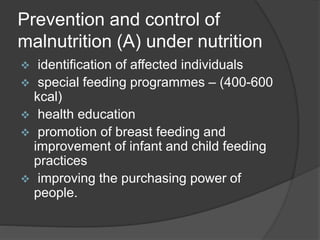
Prevention and control of
malnutrition (A) under nutrition
 identification of affected individuals
 special feeding programmes – (400-600
kcal)
 health education
 promotion of breast feeding and
improvement of infant and child feeding
practices
 improving the purchasing power of
people.
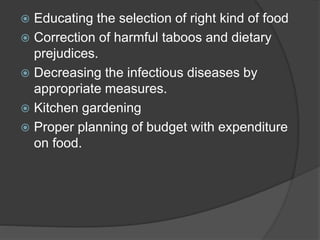
 Educating the selection of right kind of food
 Correction of harmful taboos and dietary
prejudices.
 Decreasing the infectious diseases by
appropriate measures.
 Kitchen gardening
 Proper planning of budget with expenditure
on food.
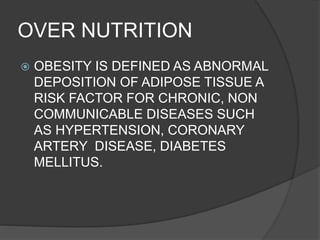
OVER NUTRITION
 OBESITY IS DEFINED AS ABNORMAL
DEPOSITION OF ADIPOSE TISSUE A
RISK FACTOR FOR CHRONIC, NON
COMMUNICABLE DISEASES SUCH
AS HYPERTENSION, CORONARY
ARTERY DISEASE, DIABETES
MELLITUS.
RISK FACTORS
 Over eating
 Physical inactivity
 Genetic factors
 Emotional disturbances
 Endocrinological factors
 Alcohol intake
 Drugs such as corticosteriods
ASSESSMENT OF
OBESITY
 BODY WEIGHT
 SKIN FOLD THICKNESS
 WAIST HIP RATIO
PREVENTION AND CONTROL
OF OVERNUTRITION
 Identification of people having obesity
 Creating awareness among public
regarding dietary habits
 Regular physical exercise
 Surgical treatment
 Health education
 Food intake according to energy
requirement.

Malnutrition

  • 1.
    Epidemiology of non-communicable diseases-MALNUTRITION BY S.KARTHIKA,ASST.PROF, MMCON, MMU, MULLANA AMBALA,HARYANA
  • 2.
    Malnutrition is ahealth problem occurring due to relative or absolute deficiency or excess of nutrients in human body and causing pathological changes.
  • 3.
    TYPES OF PROBLEMOF MALNUTRITION  Under nutrition  over nutrition  disproportional nutrients causing imbalance  specific nutrient deficiency There are 2 types of malnutrition that can occur are  protein energy malnutrition  Micro nutrient malnutrition
  • 4.
    CAUSES  Infectious disease food habits  Food taboos  personal choice for food  customs, beliefs, culture, attitude etc.
  • 5.
     cooking practices women’s status  lack of knowledge  poverty  poor sanitary environment
  • 6.
    ASSESSMENT o Clinical examination: WHO expert committee has classified signs into 3 categories o Signs which are not related to nutrition – alopecia, pyorrhea o Signs which need further investigation- malar pigmentation, corneal vascularisation o Signs which are of value- calf tenderness, absence of knee jerks, enlargement of thyroid gland, Bitot’s spot
  • 7.
    2. Anthropometry Weight, height,skin fold thickness, arm circumference, head and chest circumference. 3. bio-chemical tests 4. Assess the dietary intake 5. Morbidity & mortality data
  • 8.
    TYPES OF MALNUTRITION A]protein energy malnutrition: 2 types  Kwashiorkor Marasmus  Due to decreased intake due to decreased of proteins. Intake of calories.  clinical features  edema in lower leg, face loss of subcuta- & lower arms. neous fat.  Irritabilty Muscle wasting
  • 9.
     poor appetiteweight for height is low  sparse, silky, often have diarrhea easily pulled out hairs  hepatic enlargement quiet & apathetic
  • 10.
    ASSESSMENT OF PEM oGrowth chart o comparison of weight of child with the weight of normal child of same age. o comparison of height of child with height of normal child at same age.
  • 11.
    B] MICRONUTRIENT MALNUTRITION  Deficiencyof vitamins & minerals  deficiency of vitamin A  night blindness  conjuctival xerosis  bitot’s spots  corneal xerosis  keratomalacia
  • 12.
     Deficiency ofvitamin D- rickets, osteomalacia  Deficiency of vitamin E- no clear indication  Deficiency of vitamin K – bleeding disorders  Deficiency of vitamin B  vit B1 – beri-beri wernick’s encephalopathy  vit B2 – angular stomatitis  niacin -pellagra- diarrhea,dermatitis,dementia  pyridoxine B6- peri-pheral neuritis
  • 13.
     deficiency offolate  megaloblastic anaemia  Glossitis  Cheilosis  Gastro intestinal disturbances such as diarrhea, distention & flatulence.  deficiency of vit B12  pernicious anaemia  demyelinating neurological lesions  Infertility.  deficiency of vit C- scurvy
  • 14.
     Deficiency ofminerals:  calcium – rickets , osteomalacia  phosphorous – rare  sodium – muscular cramps  magnesium – irritability, tetany, hyper reflexia  iron – anemia, impaired cell mediated immunity, reduced resistance to infection.  iodine – hypothyroidism, cretinism, deaf- mutism, severe mental retardation, goitre  fluorine – dental caries
  • 15.
    Prevention and controlof malnutrition (A) under nutrition  identification of affected individuals  special feeding programmes – (400-600 kcal)  health education  promotion of breast feeding and improvement of infant and child feeding practices  improving the purchasing power of people.
  • 16.
     Educating theselection of right kind of food  Correction of harmful taboos and dietary prejudices.  Decreasing the infectious diseases by appropriate measures.  Kitchen gardening  Proper planning of budget with expenditure on food.
  • 17.
    OVER NUTRITION  OBESITYIS DEFINED AS ABNORMAL DEPOSITION OF ADIPOSE TISSUE A RISK FACTOR FOR CHRONIC, NON COMMUNICABLE DISEASES SUCH AS HYPERTENSION, CORONARY ARTERY DISEASE, DIABETES MELLITUS.
  • 18.
    RISK FACTORS  Overeating  Physical inactivity  Genetic factors  Emotional disturbances  Endocrinological factors  Alcohol intake  Drugs such as corticosteriods
  • 19.
    ASSESSMENT OF OBESITY  BODYWEIGHT  SKIN FOLD THICKNESS  WAIST HIP RATIO
  • 20.
    PREVENTION AND CONTROL OFOVERNUTRITION  Identification of people having obesity  Creating awareness among public regarding dietary habits  Regular physical exercise  Surgical treatment  Health education  Food intake according to energy requirement.