An Apple a Day is Not Enough
The How’s and Why’s To Increasing Your Fruit and Vegetable Intake


               Karina Wittmann, LRD
Why?
   American Cancer Society recommends at
    least 5 servings of fruits and vegetables
    per day to less risk of certain cancers
   Past Promotions:
       5 a day
       Fruits and Veggies More Matters
       Move More Eat Smarter
   Rainbow of color provides different
    vitamins and minerals
Health Benefits for Increasing Fruit
       and Vegetable Intake
   May reduce risk for stroke and
    cardiovascular disease
   May reduce risk for type 2 diabetes
   May reduce certain types of cancers
   Fruits and vegetables are lower in
    calories per cup than other foods and do
    not contain fat or cholesterol
When?
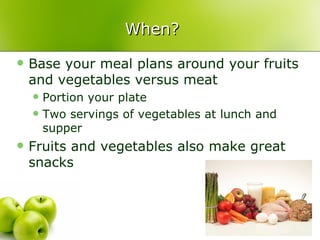
   Base your meal plans around your fruits
    and vegetables versus meat
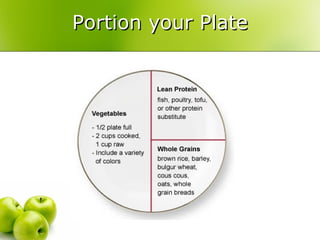
       Portion your plate
       Two servings of vegetables at lunch and
        supper
   Fruits and vegetables also make great
    snacks
Portion your Plate
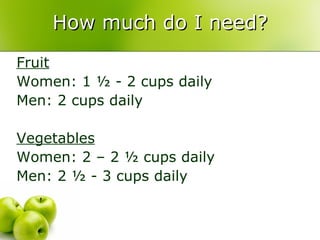
How much do I need?
Fruit
Women: 1 ½ - 2 cups daily
Men: 2 cups daily

Vegetables
Women: 2 – 2 ½ cups daily
Men: 2 ½ - 3 cups daily
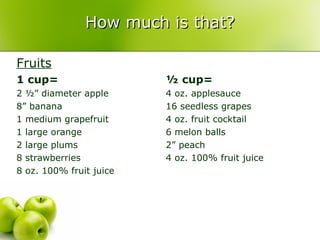
How much is that?

Fruits
1 cup=                   ½ cup=
2 ½” diameter apple      4 oz. applesauce
8” banana                16 seedless grapes
1 medium grapefruit      4 oz. fruit cocktail
1 large orange           6 melon balls
2 large plums            2” peach
8 strawberries           4 oz. 100% fruit juice
8 oz. 100% fruit juice
How much is that?
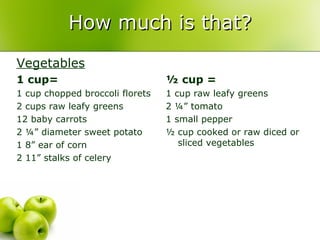
Vegetables
1 cup=                           ½ cup =
1 cup chopped broccoli florets   1 cup raw leafy greens
2 cups raw leafy greens          2 ¼” tomato
12 baby carrots                  1 small pepper
2 ¼” diameter sweet potato       ½ cup cooked or raw diced or
1 8” ear of corn                    sliced vegetables
2 11” stalks of celery
What?

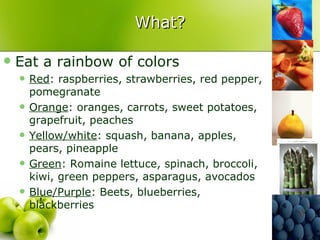
   Eat a rainbow of colors
       Red: raspberries, strawberries, red pepper,
        pomegranate
       Orange: oranges, carrots, sweet potatoes,
        grapefruit, peaches
       Yellow/white: squash, banana, apples,
        pears, pineapple
       Green: Romaine lettuce, spinach, broccoli,
        kiwi, green peppers, asparagus, avocados
       Blue/Purple: Beets, blueberries,
        blackberries
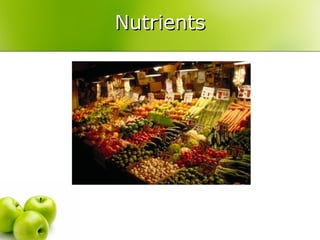
Nutrients
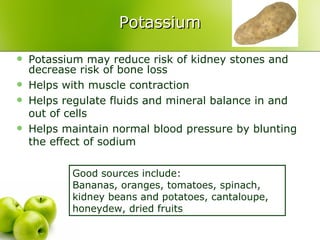
Potassium

   Potassium may reduce risk of kidney stones and
    decrease risk of bone loss
   Helps with muscle contraction
   Helps regulate fluids and mineral balance in and
    out of cells
   Helps maintain normal blood pressure by blunting
    the effect of sodium

           Good sources include:
           Bananas, oranges, tomatoes, spinach,
           kidney beans and potatoes, cantaloupe,
           honeydew, dried fruits
Folate & Folic Acid

   Helps the body form red blood cells and helps to
    prevent neural tube defects in unborn babies
   Aids in the prevention of heart disease
   Daily requirement of 400 micrograms per day
   Most cereals, pasta, breads and grain products
    are now fortified with folic acid, another form of
    folate

               Found in dark green leafy
               vegetables, dried beans and peas
               and certain fruits such as oranges
               and strawberries.
Vitamin A

   Keeps eyes and skin healthy and helps
    to protect against infections


             Sources: carrots, squash,
             pumpkin, tomatoes,
             peppers, leafy greens,
             cantaloupe, apricots,
             mango, pink grapefruit.
Vitamin C

   Helps heal cuts and wounds and keeps teeth and
    gums healthy (the key to a healthy immune
    system)
   Vitamin C aids in iron absorption
   Antioxidant


               Sources: citrus fruits, kiwi,
               strawberries, papaya,
               broccoli, tomatoes, peppers,
               brussel sprouts and potatoes
               leafy greens such as spinach
Fiber

   Helps reduce blood cholesterol levels and may lower risk
    of heart disease
   Important for proper bowel function (helps reduce
    constipation and diverticulosis)
   Fiber-containing foods such as vegetables help provide a
    feeling of fullness with fewer calories.
   Diets rich in fiber may reduce the risk for certain types of
    cancers of the mouth, stomach, colon and rectum.
   When increasing the fiber in your diet, be sure to
    increase fluid consumption as well.


                               Sources: all fruits
                                and vegetables!
Practical Tips
To Increasing Your Fruit Intake

   Keep a bowl of fruit on the counter
   Cut up fruit and pack individually for
    convenience
   Buy fresh fruits in season when they are
    at their peak ripeness
   Buy locally by checking out local farmer’s
    markets
   Buy convenience! Cut up fruits without
    added sugars.
   Try dried fruits like raisins. A little goes a
    long way
Practical Tips
To Increasing Your Vegetable Intake

    Buy fresh vegetables in season (Save
     money and taste great!)
    Frozen vegetables (steam in the bag) are
     quick and easy and just as nutritious
    Buy convenience! Pre-washed salad, mini
     carrots, grape tomatoes
    Use the microwave to quickly cook
     potatoes
    Buy canned vegetables with no salt added
For Breakfast

 Top whole grain cereal with fruit
 Add fruit to whole wheat
  pancakes/waffles
 Mix fruit with yogurt
 Have a glass of 100% juice
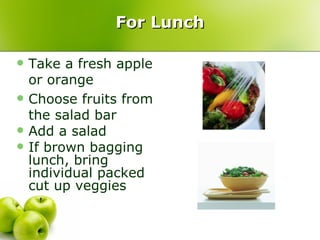
For Lunch

   Take a fresh apple
    or orange
   Choose fruits from
    the salad bar
   Add a salad
   If brown bagging
    lunch, bring
    individual packed
    cut up veggies
For Supper

   Add fruits to tossed salad
   Plan meals with vegetables as the main
    dish
   Shred carrots or zucchini into meat loaf,
    casseroles, muffins and breads
   Include chopped vegetables into pasta
    sauces (tomatoes, green peppers, onions)
   Puree potatoes to thicken soups and stew
    and add flavor
   Grill vegetable kabobs for barbeque’s
For Dessert

 Have baked apples
 Grill fruit in the summer
 Add fruit on top of your favorite
  frozen yogurt
 Dip strawberries in chocolate syrup as
  a treat
Recommendations for a
       Healthy Lifestyle
 Choose more nutrient rich foods like
  fruits, vegetable and whole grains at
  meals and snacks
 Be physically active
 Reduce and minimize stress
 Get adequate sleep
Questions?

An Apple a Day is Not Enough

  • 1.
    An Apple aDay is Not Enough The How’s and Why’s To Increasing Your Fruit and Vegetable Intake Karina Wittmann, LRD
  • 2.
    Why?  American Cancer Society recommends at least 5 servings of fruits and vegetables per day to less risk of certain cancers  Past Promotions:  5 a day  Fruits and Veggies More Matters  Move More Eat Smarter  Rainbow of color provides different vitamins and minerals
  • 3.
    Health Benefits forIncreasing Fruit and Vegetable Intake  May reduce risk for stroke and cardiovascular disease  May reduce risk for type 2 diabetes  May reduce certain types of cancers  Fruits and vegetables are lower in calories per cup than other foods and do not contain fat or cholesterol
  • 4.
    When?  Base your meal plans around your fruits and vegetables versus meat  Portion your plate  Two servings of vegetables at lunch and supper  Fruits and vegetables also make great snacks
  • 5.
  • 6.
    How much doI need? Fruit Women: 1 ½ - 2 cups daily Men: 2 cups daily Vegetables Women: 2 – 2 ½ cups daily Men: 2 ½ - 3 cups daily
  • 7.
    How much isthat? Fruits 1 cup= ½ cup= 2 ½” diameter apple 4 oz. applesauce 8” banana 16 seedless grapes 1 medium grapefruit 4 oz. fruit cocktail 1 large orange 6 melon balls 2 large plums 2” peach 8 strawberries 4 oz. 100% fruit juice 8 oz. 100% fruit juice
  • 8.
    How much isthat? Vegetables 1 cup= ½ cup = 1 cup chopped broccoli florets 1 cup raw leafy greens 2 cups raw leafy greens 2 ¼” tomato 12 baby carrots 1 small pepper 2 ¼” diameter sweet potato ½ cup cooked or raw diced or 1 8” ear of corn sliced vegetables 2 11” stalks of celery
  • 9.
    What?  Eat a rainbow of colors  Red: raspberries, strawberries, red pepper, pomegranate  Orange: oranges, carrots, sweet potatoes, grapefruit, peaches  Yellow/white: squash, banana, apples, pears, pineapple  Green: Romaine lettuce, spinach, broccoli, kiwi, green peppers, asparagus, avocados  Blue/Purple: Beets, blueberries, blackberries
  • 10.
  • 11.
    Potassium  Potassium may reduce risk of kidney stones and decrease risk of bone loss  Helps with muscle contraction  Helps regulate fluids and mineral balance in and out of cells  Helps maintain normal blood pressure by blunting the effect of sodium Good sources include: Bananas, oranges, tomatoes, spinach, kidney beans and potatoes, cantaloupe, honeydew, dried fruits
  • 12.
    Folate & FolicAcid  Helps the body form red blood cells and helps to prevent neural tube defects in unborn babies  Aids in the prevention of heart disease  Daily requirement of 400 micrograms per day  Most cereals, pasta, breads and grain products are now fortified with folic acid, another form of folate Found in dark green leafy vegetables, dried beans and peas and certain fruits such as oranges and strawberries.
  • 13.
    Vitamin A  Keeps eyes and skin healthy and helps to protect against infections Sources: carrots, squash, pumpkin, tomatoes, peppers, leafy greens, cantaloupe, apricots, mango, pink grapefruit.
  • 14.
    Vitamin C  Helps heal cuts and wounds and keeps teeth and gums healthy (the key to a healthy immune system)  Vitamin C aids in iron absorption  Antioxidant Sources: citrus fruits, kiwi, strawberries, papaya, broccoli, tomatoes, peppers, brussel sprouts and potatoes leafy greens such as spinach
  • 15.
    Fiber  Helps reduce blood cholesterol levels and may lower risk of heart disease  Important for proper bowel function (helps reduce constipation and diverticulosis)  Fiber-containing foods such as vegetables help provide a feeling of fullness with fewer calories.  Diets rich in fiber may reduce the risk for certain types of cancers of the mouth, stomach, colon and rectum.  When increasing the fiber in your diet, be sure to increase fluid consumption as well. Sources: all fruits and vegetables!
  • 16.
    Practical Tips To IncreasingYour Fruit Intake  Keep a bowl of fruit on the counter  Cut up fruit and pack individually for convenience  Buy fresh fruits in season when they are at their peak ripeness  Buy locally by checking out local farmer’s markets  Buy convenience! Cut up fruits without added sugars.  Try dried fruits like raisins. A little goes a long way
  • 17.
    Practical Tips To IncreasingYour Vegetable Intake  Buy fresh vegetables in season (Save money and taste great!)  Frozen vegetables (steam in the bag) are quick and easy and just as nutritious  Buy convenience! Pre-washed salad, mini carrots, grape tomatoes  Use the microwave to quickly cook potatoes  Buy canned vegetables with no salt added
  • 18.
    For Breakfast  Topwhole grain cereal with fruit  Add fruit to whole wheat pancakes/waffles  Mix fruit with yogurt  Have a glass of 100% juice
  • 19.
    For Lunch  Take a fresh apple or orange  Choose fruits from the salad bar  Add a salad  If brown bagging lunch, bring individual packed cut up veggies
  • 20.
    For Supper  Add fruits to tossed salad  Plan meals with vegetables as the main dish  Shred carrots or zucchini into meat loaf, casseroles, muffins and breads  Include chopped vegetables into pasta sauces (tomatoes, green peppers, onions)  Puree potatoes to thicken soups and stew and add flavor  Grill vegetable kabobs for barbeque’s
  • 21.
    For Dessert  Havebaked apples  Grill fruit in the summer  Add fruit on top of your favorite frozen yogurt  Dip strawberries in chocolate syrup as a treat
  • 22.
    Recommendations for a Healthy Lifestyle  Choose more nutrient rich foods like fruits, vegetable and whole grains at meals and snacks  Be physically active  Reduce and minimize stress  Get adequate sleep
  • 23.

Editor's Notes

  • #6 Bring a sample plate?
  • #7 Smaller number 31-50 age group Larger number 51+ age group