NoSql Graph Database 
The New Era of Interpreting Data
name : Evgeny Hanikblum 
contact : eugene@honeyflower.net 
current : Owner @ HoneyFlower Systems 
Founder @ True Contact 
past : Architect & Consultant @ AlphaCSP 
CTO @ GILS Transportation 
CoFounder @ Otenti Systems 
whoami
NoSql Graph Databases 
 Contents: 
 NoSQL Graph Databases - the new age of Big Data Solutions 
 Why, when and where should you use NoSQL Graph DB 
 OrientDB - the best of two worlds. A document based NoSQL 
graph database.
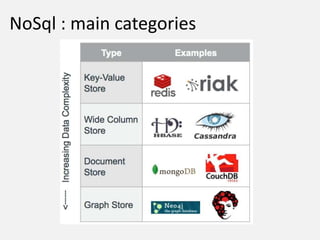
NoSql : main categories
NoSql Graph Databases 
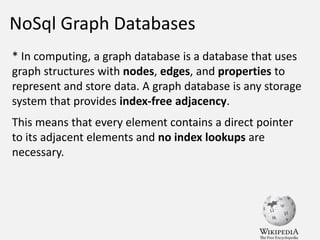
* In computing, a graph database is a database that uses 
graph structures with nodes, edges, and properties to 
represent and store data. A graph database is any storage 
system that provides index-free adjacency. 
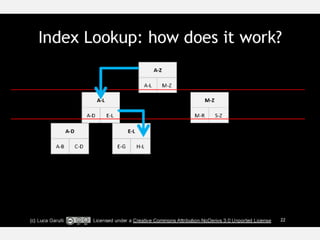
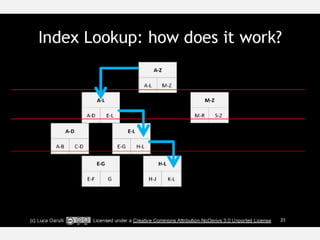
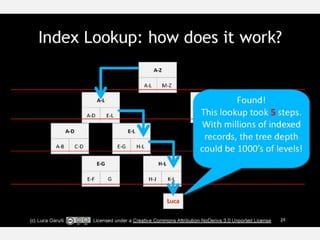
This means that every element contains a direct pointer 
to its adjacent elements and no index lookups are 
necessary.
Graph DB 
Why, when and where 
should I use it 
11/12/14
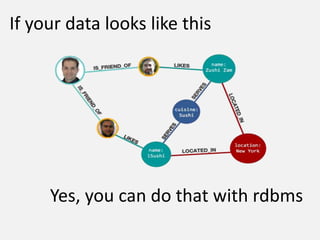
If your data looks like this 
Yes, you can do that with rdbms
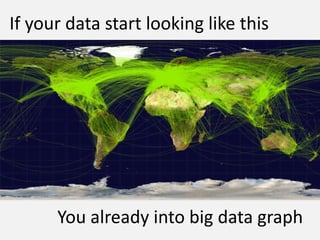
If your data start looking like this 
You already into big data graph
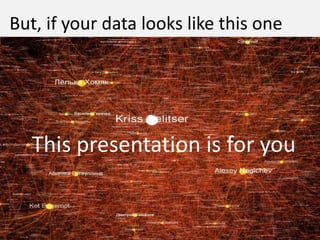
But, if your data looks like this one 
This presentation is for you
Why, Graph DB 
Data is more connected: 
• Text (content) 
• HyperText (added pointers) 
• RSS (joined those pointers) 
• Blogs (added pingbacks) 
• Tagging (grouped related data) 
• RDF (described connected data) 
• Social networks 
• GGG (content + pointers + relationships + 
descriptions)
Graph DB – use cases 
network, recommendations, social, security, 
medicine, …
Graph DB – use cases 
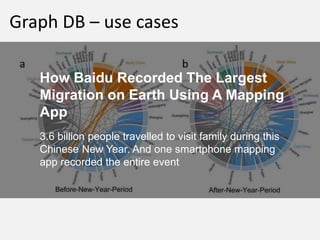
How Baidu Recorded The Largest 
Migration on Earth Using A Mapping 
App 
3.6 billion people travelled to visit family during this 
Chinese New Year. And one smartphone mapping 
app recorded the entire event
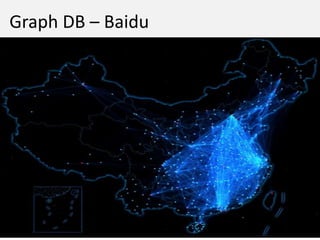
Graph DB – Baidu
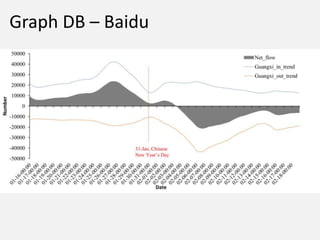
Graph DB – Baidu
Graph DB – use cases 
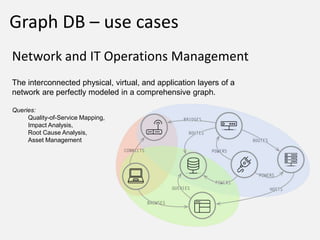
Network and IT Operations Management 
The interconnected physical, virtual, and application layers of a 
network are perfectly modeled in a comprehensive graph. 
Queries: 
Quality-of-Service Mapping, 
Impact Analysis, 
Root Cause Analysis, 
Asset Management
Graph DB – use cases 
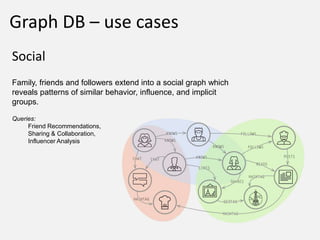
Social 
Family, friends and followers extend into a social graph which 
reveals patterns of similar behavior, influence, and implicit 
groups. 
Queries: 
Friend Recommendations, 
Sharing & Collaboration, 
Influencer Analysis
Graph DB – use cases 
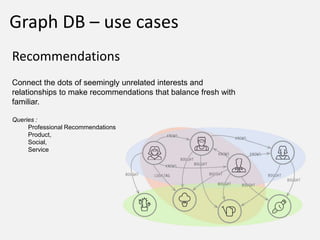
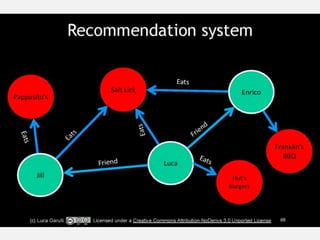
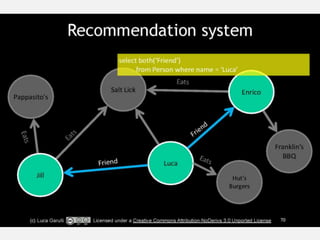
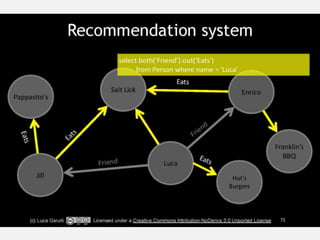
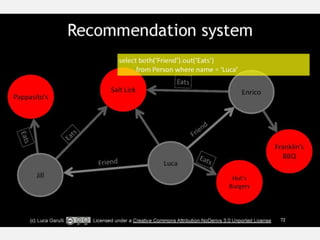
Recommendations 
Connect the dots of seemingly unrelated interests and 
relationships to make recommendations that balance fresh with 
familiar. 
Queries : 
Professional Recommendations 
Product, 
Social, 
Service
Graph DB – use cases 
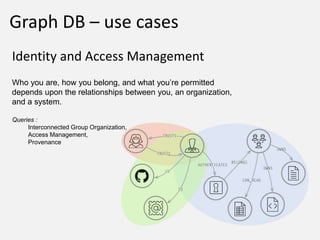
Identity and Access Management 
Who you are, how you belong, and what you’re permitted 
depends upon the relationships between you, an organization, 
and a system. 
Queries : 
Interconnected Group Organization, 
Access Management, 
Provenance
Graph DB - definition 
“Graph Databases are a way of storing data in 
the form of nodes, edges and relationships 
which provide index-free adjacency. “
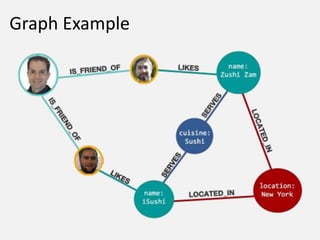
Graph Example
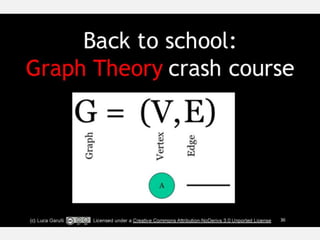
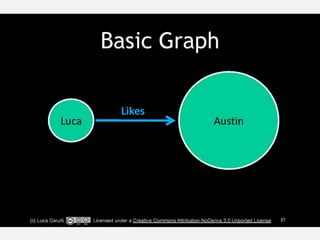
GraphDB definition explained 
• DATA = NODES 
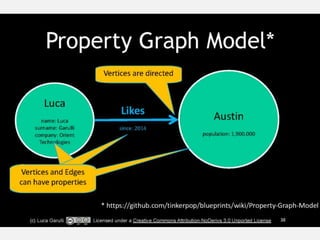
• (NODES) are Fully Featured JSON Objects, Indexable to ensure uniqueness 
• These are the population of your Graph Nation 
• If it is an immutable thing, if you can anthropomorphize it, it should be a 
(NODE)(Computer, Email, Hash, Service Ticket, IDS Rule, Domain, Threat Actor) 
• JOINS = EDGES 
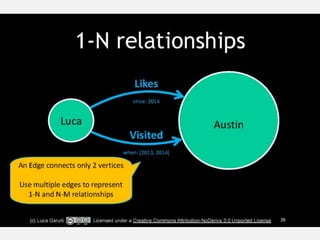
• Every (NODE) must connect to at least one more… as must we all, else why exist? 
• Individual –EDGES-> are directional: (Chris)-->(You) or (You)-->(Chris) 
• EDGES + CONTEXT = RELATIONSHIPS 
• -[:RELATIONSHIPS]-> are Fully Featured JSON Objects! 
• -[:RELATIONSHIPS]-> give context to the connections between (NODES) 
• If it is an action or you can’t imagine holding it, it should be a -[:RELATIONSHIP]-> 
• (Chris) -[:TALKS]->(You) , but are (You)-[:LISTEN]->(Chris) ? 
RELATIONSHIPS + NODES =
Graph DB vendors
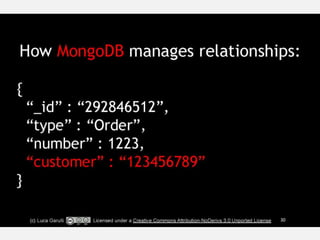
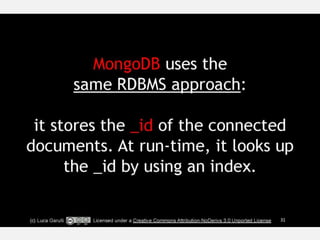
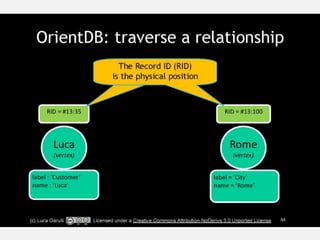
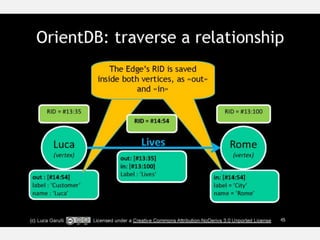
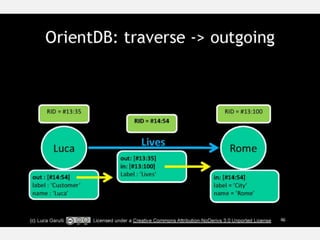
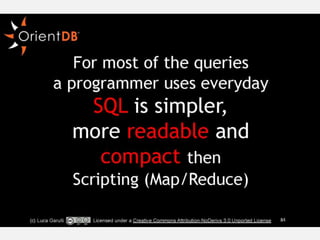
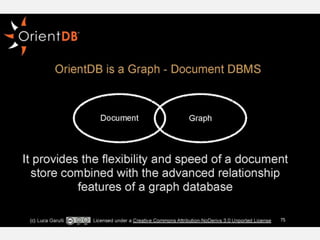
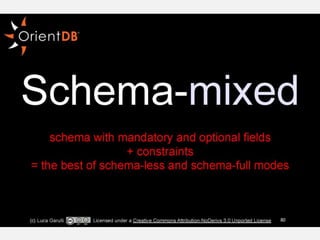
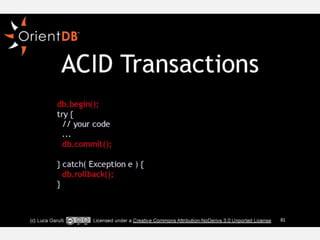
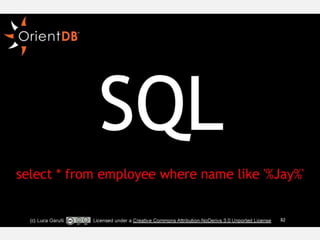
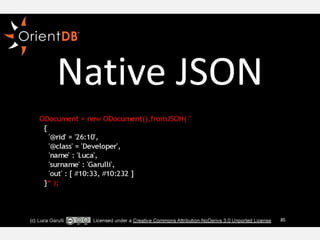
OrientDB is an open source NoSQL database written 
in Java. It is a document-based database, but the 
relationships are managed as in graph databases with 
direct connections between records
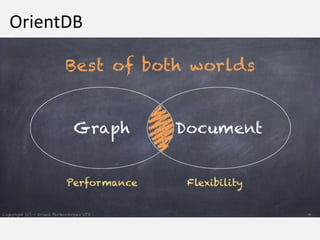
OrientDB
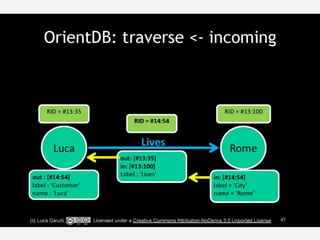
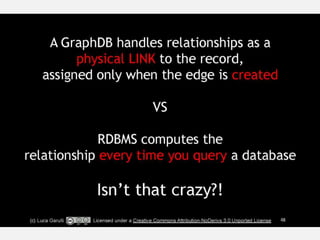
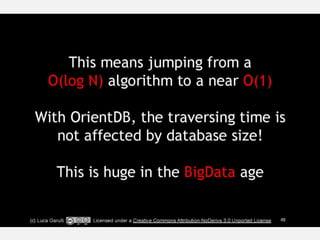
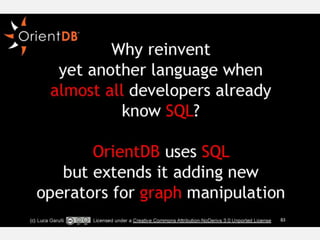
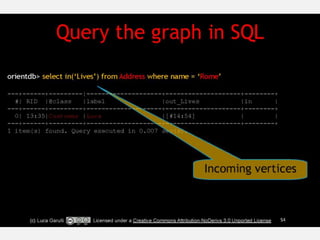
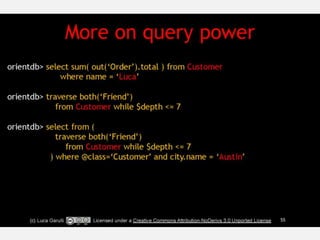
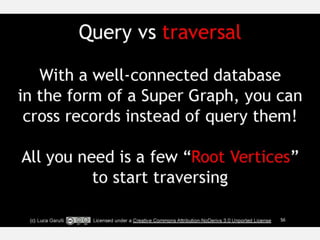
Let’s see how 
OrientDB manages 
relationships
OrientDB 
Summary
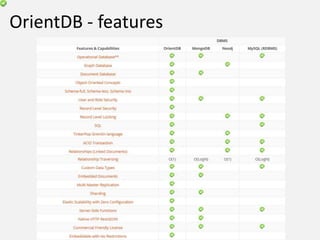
OrientDB - features
HoneyFlower Systems 
Consultancy 
Architecture 
Java & BigData solutions 
info@honeyflower.net
NoSQL Graph Databases - Why, When and Where

NoSQL Graph Databases - Why, When and Where

  • 1.
    NoSql Graph Database The New Era of Interpreting Data
  • 2.
    name : EvgenyHanikblum contact : eugene@honeyflower.net current : Owner @ HoneyFlower Systems Founder @ True Contact past : Architect & Consultant @ AlphaCSP CTO @ GILS Transportation CoFounder @ Otenti Systems whoami
  • 3.
    NoSql Graph Databases  Contents:  NoSQL Graph Databases - the new age of Big Data Solutions  Why, when and where should you use NoSQL Graph DB  OrientDB - the best of two worlds. A document based NoSQL graph database.
  • 4.
    NoSql : maincategories
  • 35.
    NoSql Graph Databases * In computing, a graph database is a database that uses graph structures with nodes, edges, and properties to represent and store data. A graph database is any storage system that provides index-free adjacency. This means that every element contains a direct pointer to its adjacent elements and no index lookups are necessary.
  • 36.
    Graph DB Why,when and where should I use it 11/12/14
  • 37.
    If your datalooks like this Yes, you can do that with rdbms
  • 38.
    If your datastart looking like this You already into big data graph
  • 39.
    But, if yourdata looks like this one This presentation is for you
  • 40.
    Why, Graph DB Data is more connected: • Text (content) • HyperText (added pointers) • RSS (joined those pointers) • Blogs (added pingbacks) • Tagging (grouped related data) • RDF (described connected data) • Social networks • GGG (content + pointers + relationships + descriptions)
  • 41.
    Graph DB –use cases network, recommendations, social, security, medicine, …
  • 42.
    Graph DB –use cases How Baidu Recorded The Largest Migration on Earth Using A Mapping App 3.6 billion people travelled to visit family during this Chinese New Year. And one smartphone mapping app recorded the entire event
  • 43.
  • 44.
  • 45.
    Graph DB –use cases Network and IT Operations Management The interconnected physical, virtual, and application layers of a network are perfectly modeled in a comprehensive graph. Queries: Quality-of-Service Mapping, Impact Analysis, Root Cause Analysis, Asset Management
  • 46.
    Graph DB –use cases Social Family, friends and followers extend into a social graph which reveals patterns of similar behavior, influence, and implicit groups. Queries: Friend Recommendations, Sharing & Collaboration, Influencer Analysis
  • 47.
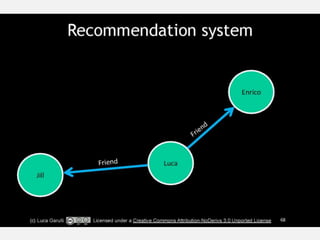
    Graph DB –use cases Recommendations Connect the dots of seemingly unrelated interests and relationships to make recommendations that balance fresh with familiar. Queries : Professional Recommendations Product, Social, Service
  • 48.
    Graph DB –use cases Identity and Access Management Who you are, how you belong, and what you’re permitted depends upon the relationships between you, an organization, and a system. Queries : Interconnected Group Organization, Access Management, Provenance
  • 49.
    Graph DB -definition “Graph Databases are a way of storing data in the form of nodes, edges and relationships which provide index-free adjacency. “
  • 54.
  • 55.
    GraphDB definition explained • DATA = NODES • (NODES) are Fully Featured JSON Objects, Indexable to ensure uniqueness • These are the population of your Graph Nation • If it is an immutable thing, if you can anthropomorphize it, it should be a (NODE)(Computer, Email, Hash, Service Ticket, IDS Rule, Domain, Threat Actor) • JOINS = EDGES • Every (NODE) must connect to at least one more… as must we all, else why exist? • Individual –EDGES-> are directional: (Chris)-->(You) or (You)-->(Chris) • EDGES + CONTEXT = RELATIONSHIPS • -[:RELATIONSHIPS]-> are Fully Featured JSON Objects! • -[:RELATIONSHIPS]-> give context to the connections between (NODES) • If it is an action or you can’t imagine holding it, it should be a -[:RELATIONSHIP]-> • (Chris) -[:TALKS]->(You) , but are (You)-[:LISTEN]->(Chris) ? RELATIONSHIPS + NODES =
  • 56.
  • 57.
    OrientDB is anopen source NoSQL database written in Java. It is a document-based database, but the relationships are managed as in graph databases with direct connections between records
  • 58.
  • 59.
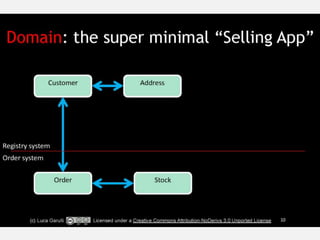
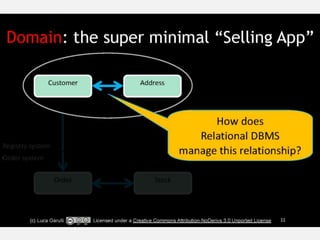
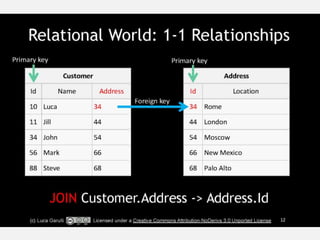
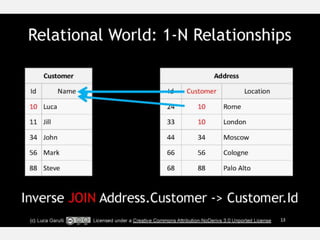
    Let’s see how OrientDB manages relationships
  • 87.
  • 95.
  • 99.
    HoneyFlower Systems Consultancy Architecture Java & BigData solutions info@honeyflower.net