NON
CATECHOLAMINE
S
-Dr.D.RAJESH;M.D.
DEPARTMENT Of
PHARMACOLOGY
RIMS ONGOLE
Definition
Classification
Drugs
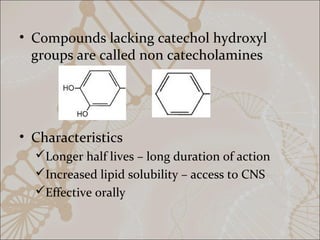
• Compounds lacking catechol hydroxyl
groups are called non catecholamines
• Characteristics
Longer half lives – long duration of action
Increased lipid solubility – access to CNS
Effective orally
CLASSIFICATION
I. Acc. To MOA:
1. Direct acting – Phenylephrine, Methoxamine,
Oxymetazoline, Clonidine, Metaproterenol,
Salbutamol, Terbutaline, Salmeterol
2. Indirect acting – Amphetamines, Tyramine
3. Mixed action – Ephedrine, Pseudoephedrine,
metaraminol
II. Acc. To therapeutic uses:
1. Vasopressor agents: phenylephrine,
methoxamine, ephedrine, mephenteramine
2. Bronchodilators – salbutamol, terbutaline,
salmeterol, formeterol, bambuterol
3. Nasal decongestants – phenyephrine,
naphazoline, oxymetazoline, xylometazoline,
pseudoephedrine, phenylpropanolamine
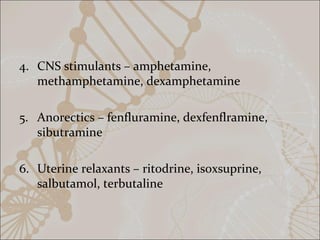
4. CNS stimulants – amphetamine,
methamphetamine, dexamphetamine
5. Anorectics – fenfluramine, dexfenflramine,
sibutramine
6. Uterine relaxants – ritodrine, isoxsuprine,
salbutamol, terbutaline
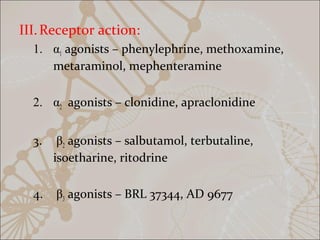
III.Receptor action:
1. α1 agonists – phenylephrine, methoxamine,
metaraminol, mephenteramine
2. α2 agonists – clonidine, apraclonidine
3. β2 agonists – salbutamol, terbutaline,
isoetharine, ritodrine
4. β3 agonists – BRL 37344, AD 9677
PHENYLEPHRINE
• Selective α1 agonist
• Vasoconstrictor - SBP, DBP
• Reflex bradycardia
• Uses:
– Hypotension, shock
– Nasal decongestant
– Mydriatic
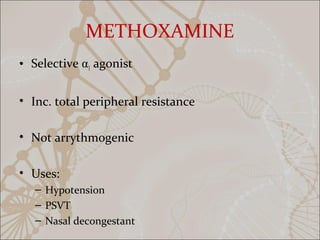
METHOXAMINE
• Selective α1 agonist
• Inc. total peripheral resistance
• Not arrythmogenic
• Uses:
– Hypotension
– PSVT
– Nasal decongestant
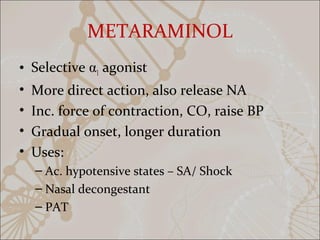
METARAMINOL
• Selective α1 agonist
• More direct action, also release NA
• Inc. force of contraction, CO, raise BP
• Gradual onset, longer duration
• Uses:
– Ac. hypotensive states – SA/ Shock
– Nasal decongestant
– PAT
MEPHENTERAMINE
• Acts both directly and
indirectly
• BP, cardiac rate and
contraction
MIDODRINE
• Prodrug converted to
desglymidodrine
• Vasoconstriction
• Use: postural
hypotension
OXYMETAZOLINE
• Stimulates both α receptors
• Acts on BV of nasal mucosa & conjunctiva
• Use
– Eye drops
– Nasal decongestant
• SE – nervousness, HA, burning of nasal mucosa,
sneezing
Naphazoline, Xylometazoline
• Local vasoconstriction
• Longer duration of action
• SE: atrophic rhinitis, anosmia
–Systemic – CNS depression, rise BP
AMPHETAMINES
• It is phenyl isopropylamine
• Indirectly acting sympathomimetic
• CNS actions: CNS stimulant
– Inc. mental & physical activity, euphoria
– Clinical dose – wakefulness, dec. fatigue
– Larger doses – tremor, restlessness, confusion
• CVS: Inc. SBP, DBP
• Smooth muscle: contracts bladder
sphincter, relax bronchial muscle
• Appetite: suppress appetite – wt. loss
• Weak analgesic, anticonvulsant, anti
emetic
• ADR :palpitations, restlessness, HA,
anxiety, psychosis
• Ac. Toxicity:
– CNS – restlessness, tremors, irritability
– Behavior – delirium, confusion, psychosis,
suicidal/ homicidal tendencies
– ANS instability – angina, arrythmias, HTN
– GI – anorexia, vomiting, abd. Cramps
– Mx – symptomatic,
• Diazepam
• α blocker phentolamine
• Peritoneal dialysis
• Dependence: psychological – euphoria,
mental confusion, wt loss
• Withdrawal symptoms
– Chr. Fatigue, depression
– GI disturbances
– Drowsiness
– Intense craving
• Uses:
– ADHD
– Narcolepsy
• Only CNS effects
• Piperidine derivative
• Used in ADHD
METHAMPHETAMINE
METHYLPHENIDATE
TYRAMINE
• Indirect action
• Normal byproduct of tyrosine metabolism
• Metabolized by MAO
• CHEESE REACTION – inc. BP
• Not used clinically
EPHEDRINE
• Alkaloid obtained from Ephedra vulgaris
• Acts on both α, β receptors
• CVS: BP, CO.
– Repeated adm.- tacyphylaxis
• Smooth muscle: relax
• CNS – stimulation – tremors, insomnia, anxiety
• Eye: mydriasis
• Metabolic: inc metabolic rate, O2 consump.
• SE: GI upset, insomnia, rarely psychosis
• Uses:
– Br.asthma
– Nasal decongestion
– Hypotension
– Stokes Adams syndrome
– Mydriatic
– Narcolepsy
– Misc. – myasthenia gravis, allergic bronchospasm
PSEUDOEPHEDRINE
• Stereo isomer of ephedrine
• Vasoconstriction sp. Mucosa & skin
• Use:
– Nasal & sinus congestion
– Allergic rhinitis
– Blocked eustachian tubes
– URTI
β2 STIMULANTS
• Longer duration of action
• Bronchodil, Vasodil, Uterine relax
• Uses:
– Br. Asthma
– Uterine relaxants
• SE: muscle tremor, tachycardia
– Less likely arrythmias
ISOXSUPRINE
• Smooth muscle relaxant
• Use:
– Threatened abortion
– Dysmenorrhea
– Premature labor
– Peripheral disease
• SE: nausea, tachycardia, hypotension
ANORECTIC AGENTS
• Cause central release of NA/DA
• Inhibit reuptake of NA & DA
β3 agonists
• Polymorphism in β3 receptor gene is related
to risk of obesity
• Targets for anti obesity drugs
• BRL 37344 – No FDA clearance
• AD 9677 – Phase III CT

Non catecholamines

  • 1.
  • 2.
  • 3.
    • Compounds lackingcatechol hydroxyl groups are called non catecholamines • Characteristics Longer half lives – long duration of action Increased lipid solubility – access to CNS Effective orally
  • 4.
    CLASSIFICATION I. Acc. ToMOA: 1. Direct acting – Phenylephrine, Methoxamine, Oxymetazoline, Clonidine, Metaproterenol, Salbutamol, Terbutaline, Salmeterol 2. Indirect acting – Amphetamines, Tyramine 3. Mixed action – Ephedrine, Pseudoephedrine, metaraminol
  • 5.
    II. Acc. Totherapeutic uses: 1. Vasopressor agents: phenylephrine, methoxamine, ephedrine, mephenteramine 2. Bronchodilators – salbutamol, terbutaline, salmeterol, formeterol, bambuterol 3. Nasal decongestants – phenyephrine, naphazoline, oxymetazoline, xylometazoline, pseudoephedrine, phenylpropanolamine
  • 6.
    4. CNS stimulants– amphetamine, methamphetamine, dexamphetamine 5. Anorectics – fenfluramine, dexfenflramine, sibutramine 6. Uterine relaxants – ritodrine, isoxsuprine, salbutamol, terbutaline
  • 7.
    III.Receptor action: 1. α1agonists – phenylephrine, methoxamine, metaraminol, mephenteramine 2. α2 agonists – clonidine, apraclonidine 3. β2 agonists – salbutamol, terbutaline, isoetharine, ritodrine 4. β3 agonists – BRL 37344, AD 9677
  • 8.
    PHENYLEPHRINE • Selective α1agonist • Vasoconstrictor - SBP, DBP • Reflex bradycardia • Uses: – Hypotension, shock – Nasal decongestant – Mydriatic
  • 9.
    METHOXAMINE • Selective α1agonist • Inc. total peripheral resistance • Not arrythmogenic • Uses: – Hypotension – PSVT – Nasal decongestant
  • 10.
    METARAMINOL • Selective α1agonist • More direct action, also release NA • Inc. force of contraction, CO, raise BP • Gradual onset, longer duration • Uses: – Ac. hypotensive states – SA/ Shock – Nasal decongestant – PAT
  • 11.
    MEPHENTERAMINE • Acts bothdirectly and indirectly • BP, cardiac rate and contraction MIDODRINE • Prodrug converted to desglymidodrine • Vasoconstriction • Use: postural hypotension
  • 12.
    OXYMETAZOLINE • Stimulates bothα receptors • Acts on BV of nasal mucosa & conjunctiva • Use – Eye drops – Nasal decongestant • SE – nervousness, HA, burning of nasal mucosa, sneezing
  • 13.
    Naphazoline, Xylometazoline • Localvasoconstriction • Longer duration of action • SE: atrophic rhinitis, anosmia –Systemic – CNS depression, rise BP
  • 14.
    AMPHETAMINES • It isphenyl isopropylamine • Indirectly acting sympathomimetic • CNS actions: CNS stimulant – Inc. mental & physical activity, euphoria – Clinical dose – wakefulness, dec. fatigue – Larger doses – tremor, restlessness, confusion • CVS: Inc. SBP, DBP
  • 15.
    • Smooth muscle:contracts bladder sphincter, relax bronchial muscle • Appetite: suppress appetite – wt. loss • Weak analgesic, anticonvulsant, anti emetic • ADR :palpitations, restlessness, HA, anxiety, psychosis
  • 16.
    • Ac. Toxicity: –CNS – restlessness, tremors, irritability – Behavior – delirium, confusion, psychosis, suicidal/ homicidal tendencies – ANS instability – angina, arrythmias, HTN – GI – anorexia, vomiting, abd. Cramps – Mx – symptomatic, • Diazepam • α blocker phentolamine • Peritoneal dialysis
  • 17.
    • Dependence: psychological– euphoria, mental confusion, wt loss • Withdrawal symptoms – Chr. Fatigue, depression – GI disturbances – Drowsiness – Intense craving • Uses: – ADHD – Narcolepsy
  • 18.
    • Only CNSeffects • Piperidine derivative • Used in ADHD METHAMPHETAMINE METHYLPHENIDATE
  • 19.
    TYRAMINE • Indirect action •Normal byproduct of tyrosine metabolism • Metabolized by MAO • CHEESE REACTION – inc. BP • Not used clinically
  • 20.
    EPHEDRINE • Alkaloid obtainedfrom Ephedra vulgaris • Acts on both α, β receptors • CVS: BP, CO. – Repeated adm.- tacyphylaxis • Smooth muscle: relax • CNS – stimulation – tremors, insomnia, anxiety
  • 21.
    • Eye: mydriasis •Metabolic: inc metabolic rate, O2 consump. • SE: GI upset, insomnia, rarely psychosis • Uses: – Br.asthma – Nasal decongestion – Hypotension – Stokes Adams syndrome – Mydriatic – Narcolepsy – Misc. – myasthenia gravis, allergic bronchospasm
  • 22.
    PSEUDOEPHEDRINE • Stereo isomerof ephedrine • Vasoconstriction sp. Mucosa & skin • Use: – Nasal & sinus congestion – Allergic rhinitis – Blocked eustachian tubes – URTI
  • 23.
    β2 STIMULANTS • Longerduration of action • Bronchodil, Vasodil, Uterine relax • Uses: – Br. Asthma – Uterine relaxants • SE: muscle tremor, tachycardia – Less likely arrythmias
  • 24.
    ISOXSUPRINE • Smooth musclerelaxant • Use: – Threatened abortion – Dysmenorrhea – Premature labor – Peripheral disease • SE: nausea, tachycardia, hypotension
  • 25.
    ANORECTIC AGENTS • Causecentral release of NA/DA • Inhibit reuptake of NA & DA
  • 26.
    β3 agonists • Polymorphismin β3 receptor gene is related to risk of obesity • Targets for anti obesity drugs • BRL 37344 – No FDA clearance • AD 9677 – Phase III CT

Editor's Notes

  • #4 Longer half lives as they are not inactivated by COMT Resistant to MAO – so longer duration of action Increased lipid solubility and has greater access to CNS Effective orally
  • #5 Direct acting – act directly on α,β receptors producing effects similar to those that occur following stimulation of sympathetic nerves or release of Adr/ NA. eg. Phenylephrine, Methoxamine, Oxymetazoline, Clonidine, Metaproterenol, Salbutamol, Terbutaline, Salmeterol Indirect acting – They block the uptake of NA/ are taken up into the presynaptic neuron and cause release of NA from cytoplasmic pools/ vesicles of adrenergic neurons. Released NA then binds to α,β receptors. Eg.Amphetamines, Tyramine Mixed action – they have the capacity both to stimulate adrenoceptors directly and to release NA from adrenergic neuron. Eg. Ephedrine, Pseudephedrine, metaraminol
  • #18 attention-deficit hyperactivity disorder (ADHD) of children, a poorly defined and overdiagnosed behavioral syndrome consisting of short attention span, hyperkinetic physical behavior, and learning problems. Narcolepsy is characterized by hypersomnia, including attacks of sleep that may occur suddenly under conditions that are not normally conducive to sleep.