BY
RAGHUL H
FINAL B.PHARMACY
Contents
 History
 Generation and metabolism
 Receptors
 Pharmacological actions
 Pathophysiological roles
 Drugs affecting the bradykinin system
Generation and metabolism
Plasma kinins are polypeptide split off from a
plasma globulin kininogen by the action of specific
enzymes kallikreins
Two such important plasma kinins are
1. Kallidin(Decapeptide)
2. Bradykinin(Non peptide)
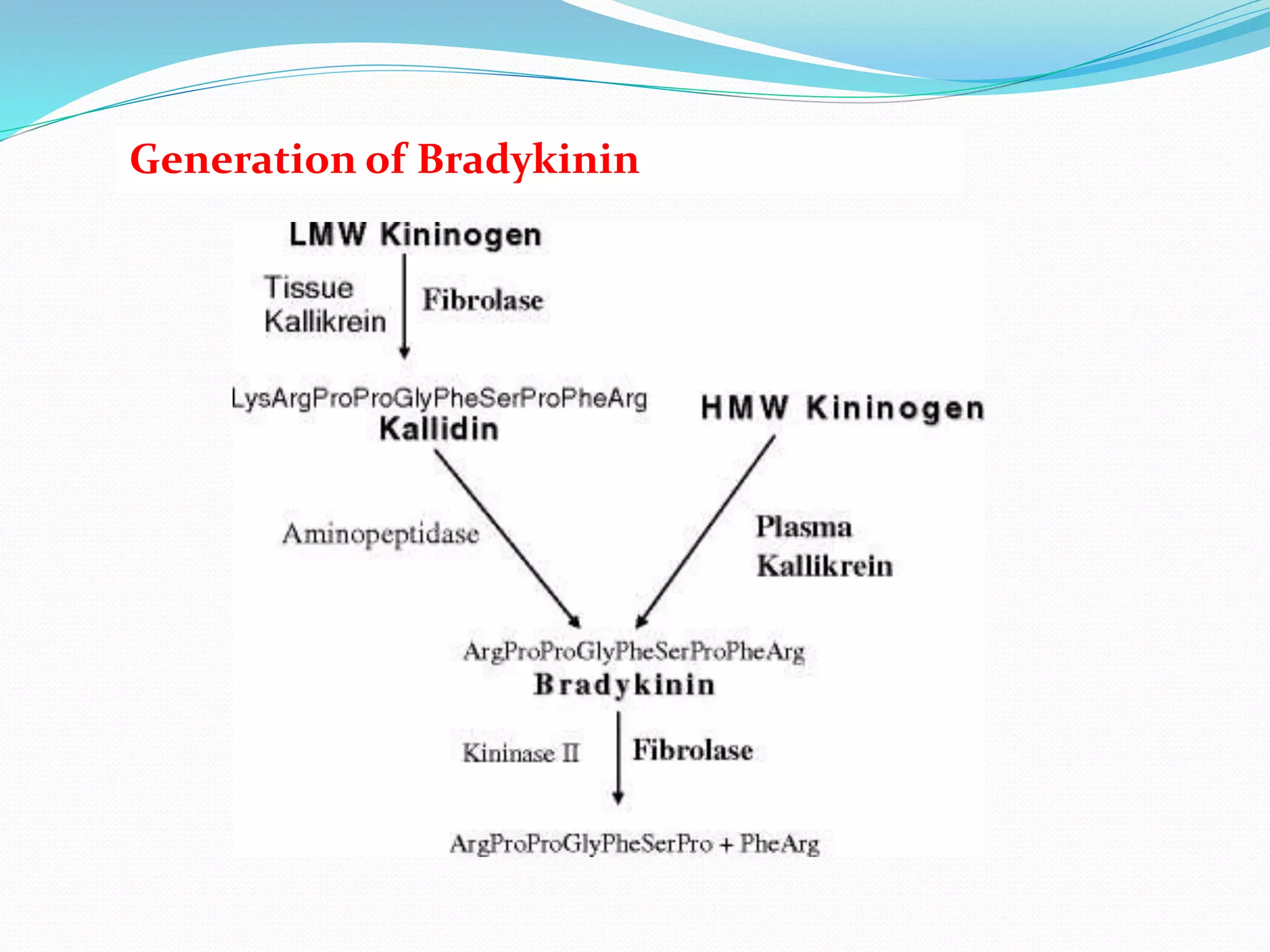
Generation of Bradykinin
Kininogens
 Two kininogens are known to be present in plasma
LMW kininogen
HMW kininogen
 Bradykinin is generated from high molecular weight
HMW kininogen by the action of plasma kalliikrein.
 On the other hand,Kallidin is generated from both
LMW and HMW kininogen by the action of tissue
kallikrein.
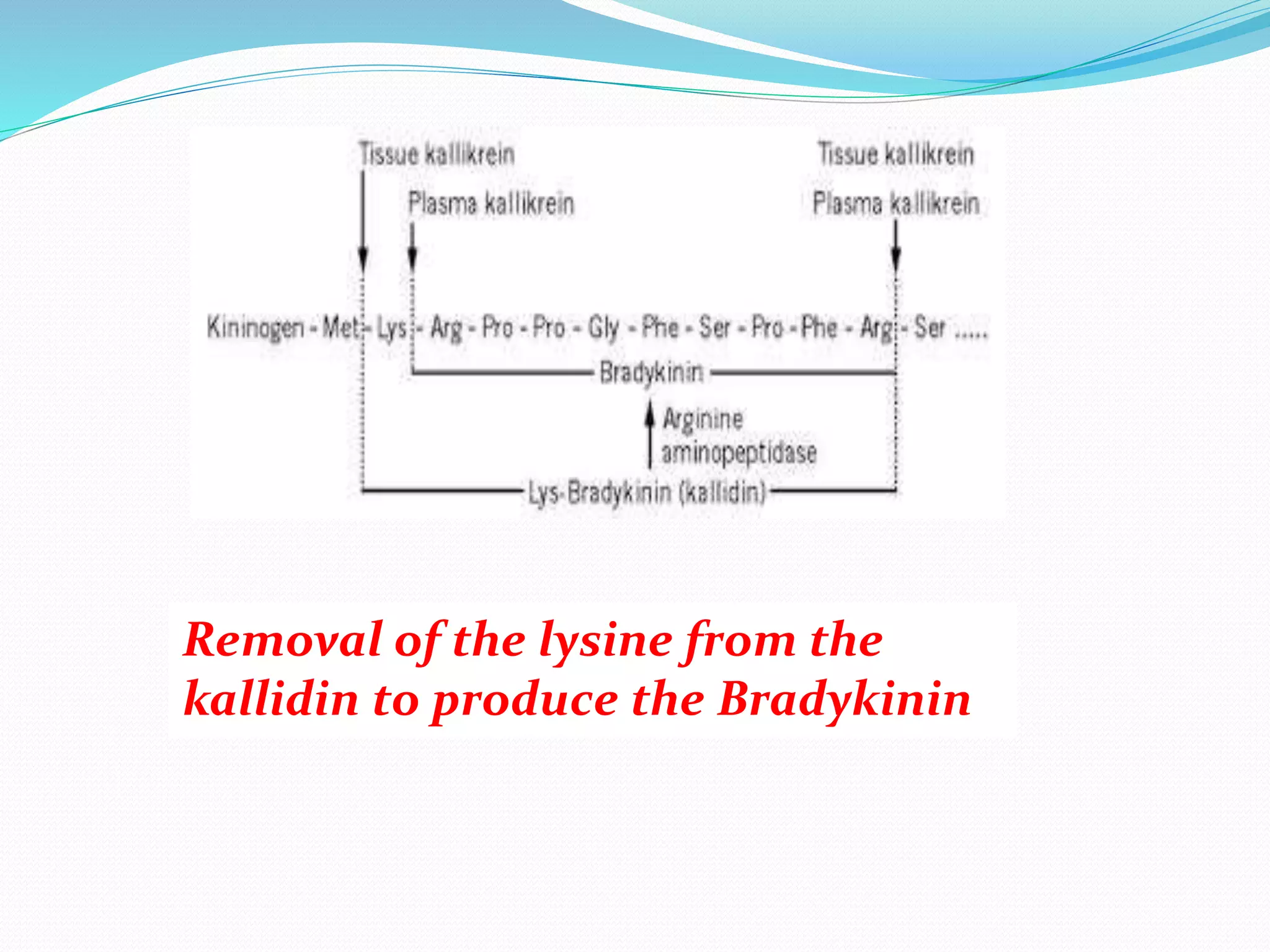
 Bradykinin can also be generated from kallidin on
the removal of lysine residue by amino peptidase.
Removal of the lysine from the
kallidin to produce the Bradykinin
Kallikreins
 Kallikreins are glycoprotein enzymes produced in
the liver as prekallikreins and present in plasma and
in several tissues,including the
kidney,pancreas,intestine.
 Prekallikrein is activated by Hageman factor(Factor
XII)which itself is activated by tissue injury and
contact with surfaces having negative charge.
 Eg.Collagen,basement membrane,bacterial
liposaccharides,bacterial liposaccharides,urate
crystals..,
 Kinins are also generated by trypsin,proteolytic
enzymes in snake .
Metabolism of kinins
 Metabolised rapidly (half life<15seconds)
 By peptidases,commonly referred to as kininases,
 Two plasma kinins are characterized
Kininase I
Kininase II
 Kininase I: synthesised in the liver, it releases
carboxypeptidase that releases the carboxy terminal
arginine residue.
 Kininase II: Present in plasma and vascular endothelial
cell throughout the body.
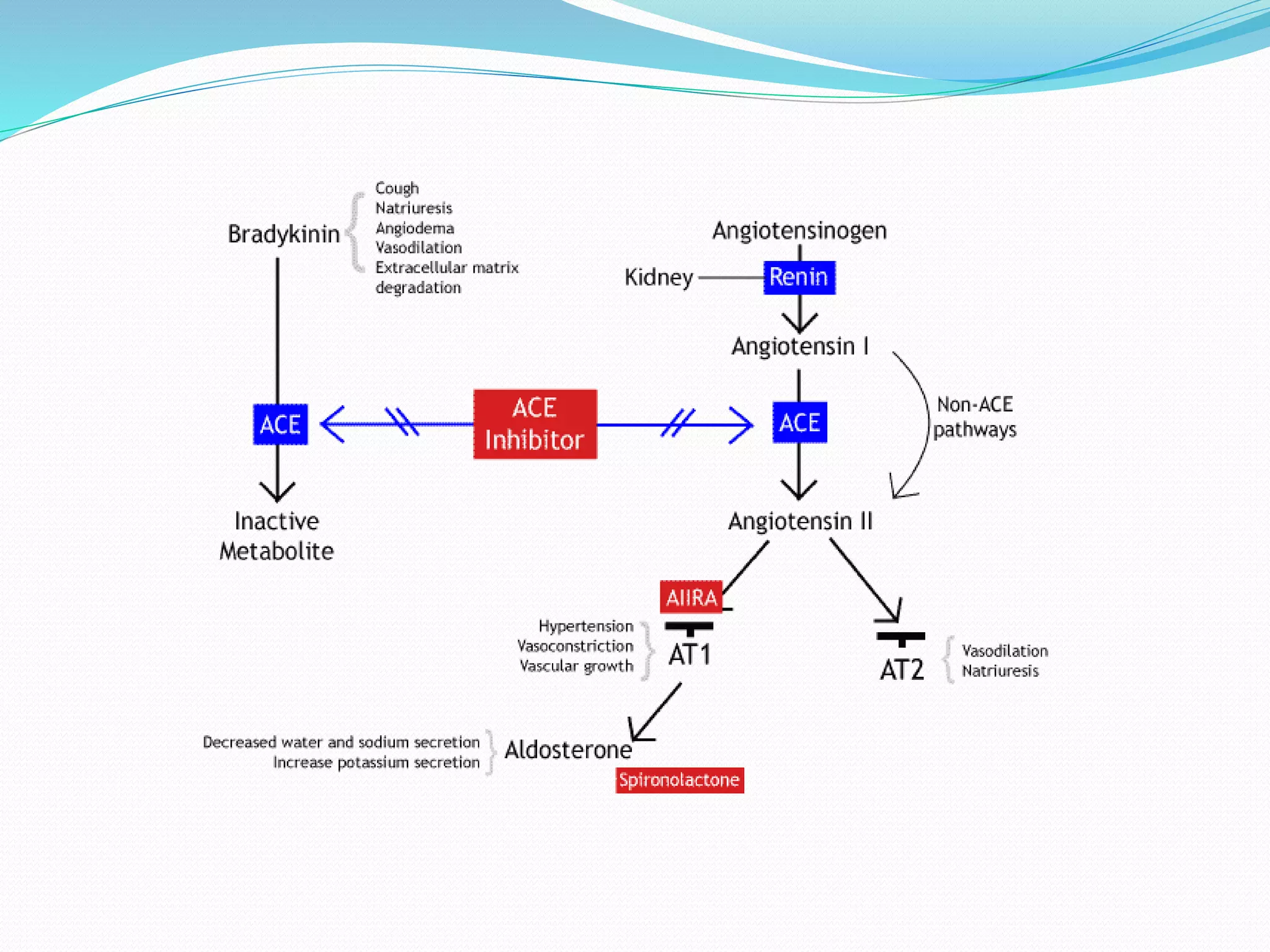
It is identical to ACE Angiotensin converting enzyme.
Kinin receptors
 There are two types of bradykinin receptor
B1 receptor
B2 receptor
B1 receptor B2 receptor
Present in low levels
It strongly induced in inflamed or
damaged tissues by Cytokines line IL-1
It is expressed in most normal tissues
Respond to des-Arg9bradykinin&des-
Arg9kallidin but not to bradykinin itself
Selectively binds the bradykinin and
kallidin and mediates the majority of
actions
Has a role in Inflammation and
Hyperalgesia.
It activates PLA2 and PLC via interaction
with distinct G Protein
ACTIONS OF KININS
Cardiovascular system(CVS):
 There is no direct action on heart,but reflex stimulation
occurs due to fall in BP
 Potent vasodilators than Ach and Histamine.(mediated
through PGI2)
 It releases histamine and other mediators from mast cells.
 It increases the capillary permeability and it causes the
exudation and inflammation occurs.
 Larger arteris and most veins are constricted through
direct action on smooth muscle.
ACTIONS OF KININ
 Smooth muscles:
 Causes marked bronco constriction in guinea pig and in
asthmatic patients.
 Neurons:
 Potent pain producing agent and its action is potentiated
by the prostaglandins.
 It produces pain by stimulating nociceptive afferents in the
skin and viscera.
 Kidney:
 It facilitate salt and water excretion by action on tubules.
 Kinins increases renal blood flow.
PATHOPHYSIOLOGICAL ACTIONS
1) Mediation of inflammation
 Kinins produces all signs of inflammation-
Redness,exudation,pain and leukocytes
mobilization.
 Tissue injury can causes local kinin production
which then sets in motion the above defensive and
reparative process.
 Activation of B2 receptors on macrophages induces
production of IL-1 and TNF alpha (Tumor necrosis
factor) and other inflammatory mediators.
PATHOPHYSIOLOGICAL ACTIONS
2. Mediation of Pain:
• Due to directl stimulating nerve endings and by
increaseing Prostaglandin production.
3. Functional hypermia(Hyperemia is an increased
amount of blood in the vessels of an organ or tissue
in the body)
.
VARIOUS ACTIONS OF BRADYKININ
DRUGS AFFECTING KALLIKREIN
KININ SYSTEM
 Competitive antagonists of both B1 and B2 receptors
are available for research use.
 B1 receptor antagonist
 (Leu8des Arg9)bradykinin
 Lys(Leu8 desArg9)bradykinin
 B2 receptor antagonist
 Icatibant
 The synthesis of kinins can be inhibited with the kallikrein
inhibitor APROTININ
 Actions of kinins mediated by prostaglandin generation
can be blocked non specifically with INHIBITORS OF
PROSTAGLANDIN SYNTHESIS Such as ASPIRIN.
 Conversely, the actions of kinins can be enhanced with
ACE INHIBITORS which blocks the degradation of the
peptides.
 INHIBITION OF BRADYKININ METABOLISM by ACE
inhibitors contributes to their ANTIHYPERTENSIVE
ACTION
ALL THE BEST

Bradykinin by Raghul Pharmacist

  • 1.
  • 2.
    Contents  History  Generationand metabolism  Receptors  Pharmacological actions  Pathophysiological roles  Drugs affecting the bradykinin system
  • 3.
    Generation and metabolism Plasmakinins are polypeptide split off from a plasma globulin kininogen by the action of specific enzymes kallikreins Two such important plasma kinins are 1. Kallidin(Decapeptide) 2. Bradykinin(Non peptide)
  • 4.
  • 5.
    Kininogens  Two kininogensare known to be present in plasma LMW kininogen HMW kininogen  Bradykinin is generated from high molecular weight HMW kininogen by the action of plasma kalliikrein.  On the other hand,Kallidin is generated from both LMW and HMW kininogen by the action of tissue kallikrein.  Bradykinin can also be generated from kallidin on the removal of lysine residue by amino peptidase.
  • 7.
    Removal of thelysine from the kallidin to produce the Bradykinin
  • 8.
    Kallikreins  Kallikreins areglycoprotein enzymes produced in the liver as prekallikreins and present in plasma and in several tissues,including the kidney,pancreas,intestine.  Prekallikrein is activated by Hageman factor(Factor XII)which itself is activated by tissue injury and contact with surfaces having negative charge.  Eg.Collagen,basement membrane,bacterial liposaccharides,bacterial liposaccharides,urate crystals..,  Kinins are also generated by trypsin,proteolytic enzymes in snake .
  • 10.
    Metabolism of kinins Metabolised rapidly (half life<15seconds)  By peptidases,commonly referred to as kininases,  Two plasma kinins are characterized Kininase I Kininase II  Kininase I: synthesised in the liver, it releases carboxypeptidase that releases the carboxy terminal arginine residue.  Kininase II: Present in plasma and vascular endothelial cell throughout the body. It is identical to ACE Angiotensin converting enzyme.
  • 11.
    Kinin receptors  Thereare two types of bradykinin receptor B1 receptor B2 receptor B1 receptor B2 receptor Present in low levels It strongly induced in inflamed or damaged tissues by Cytokines line IL-1 It is expressed in most normal tissues Respond to des-Arg9bradykinin&des- Arg9kallidin but not to bradykinin itself Selectively binds the bradykinin and kallidin and mediates the majority of actions Has a role in Inflammation and Hyperalgesia. It activates PLA2 and PLC via interaction with distinct G Protein
  • 12.
    ACTIONS OF KININS Cardiovascularsystem(CVS):  There is no direct action on heart,but reflex stimulation occurs due to fall in BP  Potent vasodilators than Ach and Histamine.(mediated through PGI2)  It releases histamine and other mediators from mast cells.  It increases the capillary permeability and it causes the exudation and inflammation occurs.  Larger arteris and most veins are constricted through direct action on smooth muscle.
  • 13.
    ACTIONS OF KININ Smooth muscles:  Causes marked bronco constriction in guinea pig and in asthmatic patients.  Neurons:  Potent pain producing agent and its action is potentiated by the prostaglandins.  It produces pain by stimulating nociceptive afferents in the skin and viscera.  Kidney:  It facilitate salt and water excretion by action on tubules.  Kinins increases renal blood flow.
  • 14.
    PATHOPHYSIOLOGICAL ACTIONS 1) Mediationof inflammation  Kinins produces all signs of inflammation- Redness,exudation,pain and leukocytes mobilization.  Tissue injury can causes local kinin production which then sets in motion the above defensive and reparative process.  Activation of B2 receptors on macrophages induces production of IL-1 and TNF alpha (Tumor necrosis factor) and other inflammatory mediators.
  • 15.
    PATHOPHYSIOLOGICAL ACTIONS 2. Mediationof Pain: • Due to directl stimulating nerve endings and by increaseing Prostaglandin production. 3. Functional hypermia(Hyperemia is an increased amount of blood in the vessels of an organ or tissue in the body) .
  • 16.
  • 17.
    DRUGS AFFECTING KALLIKREIN KININSYSTEM  Competitive antagonists of both B1 and B2 receptors are available for research use.  B1 receptor antagonist  (Leu8des Arg9)bradykinin  Lys(Leu8 desArg9)bradykinin  B2 receptor antagonist  Icatibant
  • 19.
     The synthesisof kinins can be inhibited with the kallikrein inhibitor APROTININ  Actions of kinins mediated by prostaglandin generation can be blocked non specifically with INHIBITORS OF PROSTAGLANDIN SYNTHESIS Such as ASPIRIN.  Conversely, the actions of kinins can be enhanced with ACE INHIBITORS which blocks the degradation of the peptides.  INHIBITION OF BRADYKININ METABOLISM by ACE inhibitors contributes to their ANTIHYPERTENSIVE ACTION
  • 20.