National Leprosy Eradication Programme
Vision – Leprosy free India by 2030
Objectives
•Leprosy is one of the oldest
disease of mankind, it is chronic
infectious disease, if not treated
timely, leads to deformity and
disabilities
•India has achieved leprosy
elimination at National Level in
Dec 2005 ( PR<1/10000
Population)
•India has highest leprosy burden
(58% of new cases) in the world
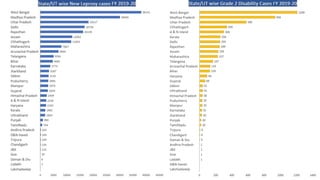
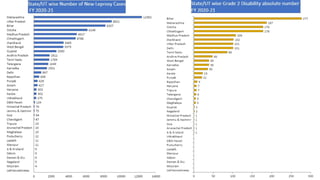
•In year 2019 -20 , 114451 new
cases were detected while 65164
new cases during 2020-21
To reduce Prevalence rate less than 1/10,000
population at District level
Grade II disability % among new cases to
Zero,disability cases per million
population to Zero at National level
Zero disabilities among new pediatric cases
Zero stigma and discrimination
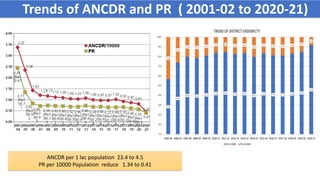
Trends of ANCDR and PR ( 2001-02 to 2020-21)
ANCDR per 1 lac population 23.4 to 4.5
PR per 10000 Population reduce 1.34 to 0.41
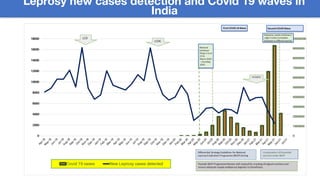
Leprosy new cases detection and Covid 19 waves in
India
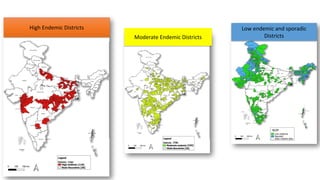
High Endemic Districts
Moderate Endemic Districts
Low endemic and sporadic
Districts
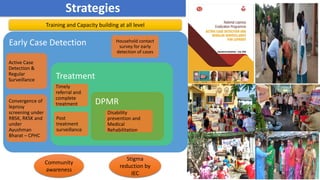
Strategies
Early Case Detection
Active Case
Detection &
Regular
Surveillance
Convergence of
leprosy
screening under
RBSK, RKSK and
under
Ayushman
Bharat – CPHC
Treatment
Timely
referral and
complete
treatment
Post
treatment
surveillance
DPMR
Disability
prevention and
Medical
Rehabilitation
Household contact
survey for early
detection of cases
Community
awareness
Stigma
reduction by
IEC
Training and Capacity building at all level
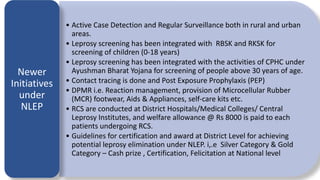
• Active Case Detection and Regular Surveillance both in rural and urban
areas.
• Leprosy screening has been integrated with RBSK and RKSK for
screening of children (0-18 years)
• Leprosy screening has been integrated with the activities of CPHC under
Ayushman Bharat Yojana for screening of people above 30 years of age.
• Contact tracing is done and Post Exposure Prophylaxis (PEP)
• DPMR i.e. Reaction management, provision of Microcellular Rubber
(MCR) footwear, Aids & Appliances, self-care kits etc.
• RCS are conducted at District Hospitals/Medical Colleges/ Central
Leprosy Institutes, and welfare allowance @ Rs 8000 is paid to each
patients undergoing RCS.
• Guidelines for certification and award at District Level for achieving
potential leprosy elimination under NLEP. i,.e Silver Category & Gold
Category – Cash prize , Certification, Felicitation at National level
Newer
Initiatives
under
NLEP
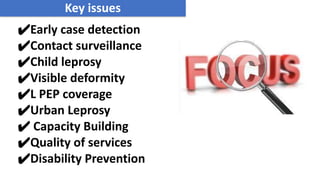
✔Early case detection
✔Contact surveillance
✔Child leprosy
✔Visible deformity
✔L PEP coverage
✔Urban Leprosy
✔ Capacity Building
✔Quality of services
✔Disability Prevention
Key issues
Thank you

NLEP.pdf

  • 1.
  • 2.
    National Leprosy EradicationProgramme Vision – Leprosy free India by 2030 Objectives •Leprosy is one of the oldest disease of mankind, it is chronic infectious disease, if not treated timely, leads to deformity and disabilities •India has achieved leprosy elimination at National Level in Dec 2005 ( PR<1/10000 Population) •India has highest leprosy burden (58% of new cases) in the world •In year 2019 -20 , 114451 new cases were detected while 65164 new cases during 2020-21 To reduce Prevalence rate less than 1/10,000 population at District level Grade II disability % among new cases to Zero,disability cases per million population to Zero at National level Zero disabilities among new pediatric cases Zero stigma and discrimination
  • 3.
    Trends of ANCDRand PR ( 2001-02 to 2020-21) ANCDR per 1 lac population 23.4 to 4.5 PR per 10000 Population reduce 1.34 to 0.41
  • 4.
    Leprosy new casesdetection and Covid 19 waves in India
  • 7.
    High Endemic Districts ModerateEndemic Districts Low endemic and sporadic Districts
  • 8.
    Strategies Early Case Detection ActiveCase Detection & Regular Surveillance Convergence of leprosy screening under RBSK, RKSK and under Ayushman Bharat – CPHC Treatment Timely referral and complete treatment Post treatment surveillance DPMR Disability prevention and Medical Rehabilitation Household contact survey for early detection of cases Community awareness Stigma reduction by IEC Training and Capacity building at all level
  • 9.
    • Active CaseDetection and Regular Surveillance both in rural and urban areas. • Leprosy screening has been integrated with RBSK and RKSK for screening of children (0-18 years) • Leprosy screening has been integrated with the activities of CPHC under Ayushman Bharat Yojana for screening of people above 30 years of age. • Contact tracing is done and Post Exposure Prophylaxis (PEP) • DPMR i.e. Reaction management, provision of Microcellular Rubber (MCR) footwear, Aids & Appliances, self-care kits etc. • RCS are conducted at District Hospitals/Medical Colleges/ Central Leprosy Institutes, and welfare allowance @ Rs 8000 is paid to each patients undergoing RCS. • Guidelines for certification and award at District Level for achieving potential leprosy elimination under NLEP. i,.e Silver Category & Gold Category – Cash prize , Certification, Felicitation at National level Newer Initiatives under NLEP
  • 10.
    ✔Early case detection ✔Contactsurveillance ✔Child leprosy ✔Visible deformity ✔L PEP coverage ✔Urban Leprosy ✔ Capacity Building ✔Quality of services ✔Disability Prevention Key issues
  • 11.