Nitrogen fixed by
     bacteria
Bacteria involved in the cycle


 The importance of bacteria in the cycle is
immediately recognized as being a key element in the
cycle, providing different forms of nitrogen
compounds assailable by higher organisms.
Nitrogen fixation


Nitrogen fixation is the process by which nitrogen is taken
from its relatively inert molecular form (N2) in the
atmosphere and converted into nitrogen compounds
useful for other chemical processes (such as, ammonia,
nitrate and nitrogen dioxide).
Nitrogen fixation is performed naturally by certain types of
anaerobic bacteria. Legumes such as clover contain
symbiotic bacteria of this type within nodules in their root
systems, producing nitrogen compounds that help to
fertilize the soil. Nitrogen can also be artificially fixed for
use as fertilizer or in other industrial processes.
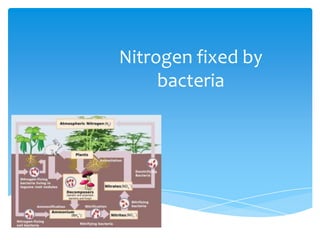
Cycle steps
1. Animals wastes are left in the soil until
the soil cover up the wastes.
2. Waste is ammonificated: saprobiotic
bacteria.
3. Nitrogen is mixed with hydrogen
making ammonia.
4. Then Amonia it Nitrificated an
nitrifying bacteria.
5.Then nitrogen and oxygen mixed up
making natrite
6.Then natrite it Nitrificated.
7.NO3 forms in to nitrate
8.then it have 2 passages one is for the
plants and the other is denitrification a
bacteria
9.then nitrogen goes into the
atmosphere
10. then they are 2 passages 1 to amonia
again and the other get back into the soil
by lighting and create nitrate
11. the cycle strart again.
Ammonification


Ammonia is a chemical compound whose molecule consists of
one atom of nitrogen (N) and three atoms of hydrogen (H) with
the formula NH3 ammonia is a gas with a characteristic pungent
smell; its main uses are in the production of fertilizers, explosives
and polymers.
The process of ammonification is the result of the breakdown of
organic matter such as dead animals and plants or waste
materials like excrement. This breakdown is accomplished by
scores of microorganisms which utilize dead organic material for
energy and produce ammonia and related compounds as a
byproduct of their metabolisms. Ammonification classically
occurs in the soil, in an aerobic environment which gives the
bacteria and other microorganisms oxygen to work with.

Nitrogen fixed by bacteria

  • 1.
  • 2.
    Bacteria involved inthe cycle The importance of bacteria in the cycle is immediately recognized as being a key element in the cycle, providing different forms of nitrogen compounds assailable by higher organisms.
  • 3.
    Nitrogen fixation Nitrogen fixationis the process by which nitrogen is taken from its relatively inert molecular form (N2) in the atmosphere and converted into nitrogen compounds useful for other chemical processes (such as, ammonia, nitrate and nitrogen dioxide). Nitrogen fixation is performed naturally by certain types of anaerobic bacteria. Legumes such as clover contain symbiotic bacteria of this type within nodules in their root systems, producing nitrogen compounds that help to fertilize the soil. Nitrogen can also be artificially fixed for use as fertilizer or in other industrial processes.
  • 4.
    Cycle steps 1. Animalswastes are left in the soil until the soil cover up the wastes. 2. Waste is ammonificated: saprobiotic bacteria. 3. Nitrogen is mixed with hydrogen making ammonia. 4. Then Amonia it Nitrificated an nitrifying bacteria. 5.Then nitrogen and oxygen mixed up making natrite 6.Then natrite it Nitrificated. 7.NO3 forms in to nitrate 8.then it have 2 passages one is for the plants and the other is denitrification a bacteria 9.then nitrogen goes into the atmosphere 10. then they are 2 passages 1 to amonia again and the other get back into the soil by lighting and create nitrate 11. the cycle strart again.
  • 6.
    Ammonification Ammonia is achemical compound whose molecule consists of one atom of nitrogen (N) and three atoms of hydrogen (H) with the formula NH3 ammonia is a gas with a characteristic pungent smell; its main uses are in the production of fertilizers, explosives and polymers. The process of ammonification is the result of the breakdown of organic matter such as dead animals and plants or waste materials like excrement. This breakdown is accomplished by scores of microorganisms which utilize dead organic material for energy and produce ammonia and related compounds as a byproduct of their metabolisms. Ammonification classically occurs in the soil, in an aerobic environment which gives the bacteria and other microorganisms oxygen to work with.