BIOLOGICAL NITROGEN FIXATION
Fixation of elemental nitrogen in the atmosphere by the
microorganism through a reductive process into ammonia is called
as BNF. A variety of prokaryotic organism have the ability to
reduce the atmosphere N2. BNF accounts for about 70% of the
total N fixed in the biosphere. The ability to reduce atmosphere N
is restricted only to bacteria, which are belonging to the diverse
groups. The root nodule associations were the first to be recognized
for their ability to fix atmosphere N2. Rhizobia are the first group
of organism realized for its potential of nitrogen fixation.
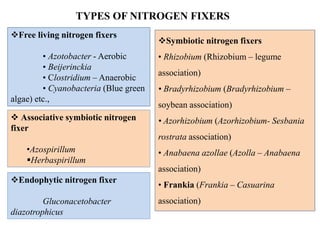
Free living nitrogen fixers
• Azotobacter - Aerobic
• Beijerinckia
• Clostridium – Anaerobic
• Cyanobacteria (Blue green
algae) etc.,
TYPES OF NITROGEN FIXERS
 Associative symbiotic nitrogen
fixer
•Azospirillum
Herbaspirillum
Endophytic nitrogen fixer
Gluconacetobacter
diazotrophicus
Symbiotic nitrogen fixers
• Rhizobium (Rhizobium – legume
association)
• Bradyrhizobium (Bradyrhizobium –
soybean association)
• Azorhizobium (Azorhizobium- Sesbania
rostrata association)
• Anabaena azollae (Azolla – Anabaena
association)
• Frankia (Frankia – Casuarina
association)
NITROGENASE
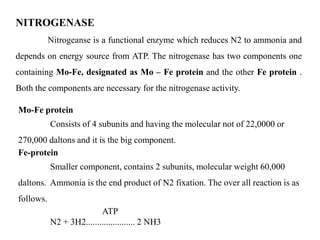
Nitrogeanse is a functional enzyme which reduces N2 to ammonia and
depends on energy source from ATP. The nitrogenase has two components one
containing Mo-Fe, designated as Mo – Fe protein and the other Fe protein .
Both the components are necessary for the nitrogenase activity.
Mo-Fe protein
Consists of 4 subunits and having the molecular not of 22,0000 or
270,000 daltons and it is the big component.
Fe-protein
Smaller component, contains 2 subunits, molecular weight 60,000
daltons. Ammonia is the end product of N2 fixation. The over all reaction is as
follows.
ATP
N2 + 3H2...................... 2 NH3
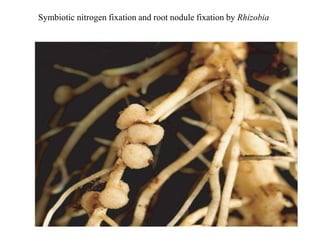
Symbiotic nitrogen fixation and root nodule fixation by Rhizobia
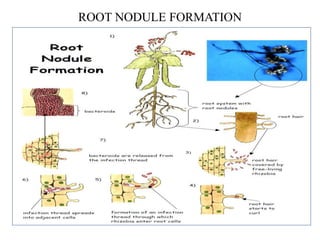
ROOT NODULE FORMATION
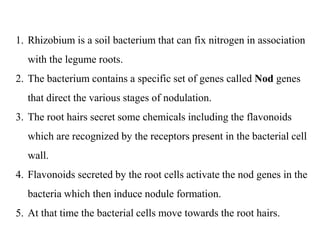
1. Rhizobium is a soil bacterium that can fix nitrogen in association
with the legume roots.
2. The bacterium contains a specific set of genes called Nod genes
that direct the various stages of nodulation.
3. The root hairs secret some chemicals including the flavonoids
which are recognized by the receptors present in the bacterial cell
wall.
4. Flavonoids secreted by the root cells activate the nod genes in the
bacteria which then induce nodule formation.
5. At that time the bacterial cells move towards the root hairs.
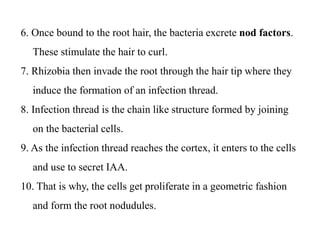
6. Once bound to the root hair, the bacteria excrete nod factors.
These stimulate the hair to curl.
7. Rhizobia then invade the root through the hair tip where they
induce the formation of an infection thread.
8. Infection thread is the chain like structure formed by joining
on the bacterial cells.
9. As the infection thread reaches the cortex, it enters to the cells
and use to secret IAA.
10. That is why, the cells get proliferate in a geometric fashion
and form the root nodudules.
MECHANISM OF NITROGEN FIXATION
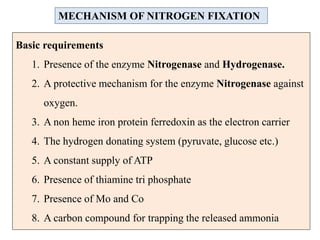
Basic requirements
1. Presence of the enzyme Nitrogenase and Hydrogenase.
2. A protective mechanism for the enzyme Nitrogenase against
oxygen.
3. A non heme iron protein ferredoxin as the electron carrier
4. The hydrogen donating system (pyruvate, glucose etc.)
5. A constant supply of ATP
6. Presence of thiamine tri phosphate
7. Presence of Mo and Co
8. A carbon compound for trapping the released ammonia
STEPS OF NITROGEN FIXATION
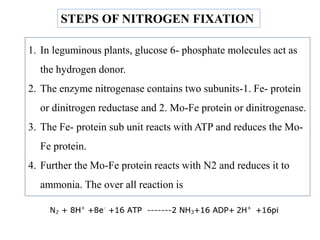
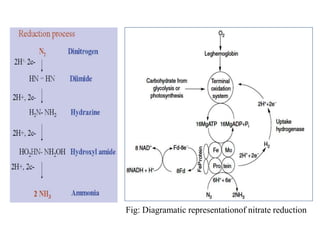
1. In leguminous plants, glucose 6- phosphate molecules act as
the hydrogen donor.
2. The enzyme nitrogenase contains two subunits-1. Fe- protein
or dinitrogen reductase and 2. Mo-Fe protein or dinitrogenase.
3. The Fe- protein sub unit reacts with ATP and reduces the Mo-
Fe protein.
4. Further the Mo-Fe protein reacts with N2 and reduces it to
ammonia. The over all reaction is
Fig: Diagramatic representationof nitrate reduction
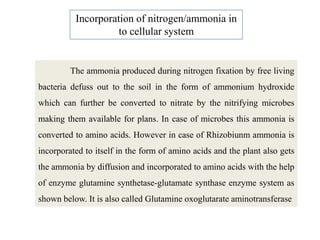
Incorporation of nitrogen/ammonia in
to cellular system
The ammonia produced during nitrogen fixation by free living
bacteria defuss out to the soil in the form of ammonium hydroxide
which can further be converted to nitrate by the nitrifying microbes
making them available for plans. In case of microbes this ammonia is
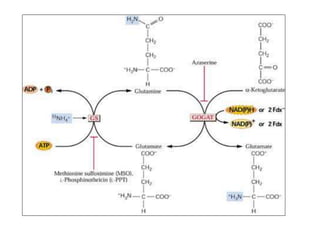
converted to amino acids. However in case of Rhizobiunm ammonia is
incorporated to itself in the form of amino acids and the plant also gets
the ammonia by diffusion and incorporated to amino acids with the help
of enzyme glutamine synthetase-glutamate synthase enzyme system as
shown below. It is also called Glutamine oxoglutarate aminotransferase
nitrogen cycle and biological nitrogen fixation

nitrogen cycle and biological nitrogen fixation

  • 1.
    BIOLOGICAL NITROGEN FIXATION Fixationof elemental nitrogen in the atmosphere by the microorganism through a reductive process into ammonia is called as BNF. A variety of prokaryotic organism have the ability to reduce the atmosphere N2. BNF accounts for about 70% of the total N fixed in the biosphere. The ability to reduce atmosphere N is restricted only to bacteria, which are belonging to the diverse groups. The root nodule associations were the first to be recognized for their ability to fix atmosphere N2. Rhizobia are the first group of organism realized for its potential of nitrogen fixation.
  • 2.
    Free living nitrogenfixers • Azotobacter - Aerobic • Beijerinckia • Clostridium – Anaerobic • Cyanobacteria (Blue green algae) etc., TYPES OF NITROGEN FIXERS  Associative symbiotic nitrogen fixer •Azospirillum Herbaspirillum Endophytic nitrogen fixer Gluconacetobacter diazotrophicus Symbiotic nitrogen fixers • Rhizobium (Rhizobium – legume association) • Bradyrhizobium (Bradyrhizobium – soybean association) • Azorhizobium (Azorhizobium- Sesbania rostrata association) • Anabaena azollae (Azolla – Anabaena association) • Frankia (Frankia – Casuarina association)
  • 3.
    NITROGENASE Nitrogeanse is afunctional enzyme which reduces N2 to ammonia and depends on energy source from ATP. The nitrogenase has two components one containing Mo-Fe, designated as Mo – Fe protein and the other Fe protein . Both the components are necessary for the nitrogenase activity. Mo-Fe protein Consists of 4 subunits and having the molecular not of 22,0000 or 270,000 daltons and it is the big component. Fe-protein Smaller component, contains 2 subunits, molecular weight 60,000 daltons. Ammonia is the end product of N2 fixation. The over all reaction is as follows. ATP N2 + 3H2...................... 2 NH3
  • 4.
    Symbiotic nitrogen fixationand root nodule fixation by Rhizobia
  • 5.
  • 6.
    1. Rhizobium isa soil bacterium that can fix nitrogen in association with the legume roots. 2. The bacterium contains a specific set of genes called Nod genes that direct the various stages of nodulation. 3. The root hairs secret some chemicals including the flavonoids which are recognized by the receptors present in the bacterial cell wall. 4. Flavonoids secreted by the root cells activate the nod genes in the bacteria which then induce nodule formation. 5. At that time the bacterial cells move towards the root hairs.
  • 7.
    6. Once boundto the root hair, the bacteria excrete nod factors. These stimulate the hair to curl. 7. Rhizobia then invade the root through the hair tip where they induce the formation of an infection thread. 8. Infection thread is the chain like structure formed by joining on the bacterial cells. 9. As the infection thread reaches the cortex, it enters to the cells and use to secret IAA. 10. That is why, the cells get proliferate in a geometric fashion and form the root nodudules.
  • 8.
    MECHANISM OF NITROGENFIXATION Basic requirements 1. Presence of the enzyme Nitrogenase and Hydrogenase. 2. A protective mechanism for the enzyme Nitrogenase against oxygen. 3. A non heme iron protein ferredoxin as the electron carrier 4. The hydrogen donating system (pyruvate, glucose etc.) 5. A constant supply of ATP 6. Presence of thiamine tri phosphate 7. Presence of Mo and Co 8. A carbon compound for trapping the released ammonia
  • 9.
    STEPS OF NITROGENFIXATION 1. In leguminous plants, glucose 6- phosphate molecules act as the hydrogen donor. 2. The enzyme nitrogenase contains two subunits-1. Fe- protein or dinitrogen reductase and 2. Mo-Fe protein or dinitrogenase. 3. The Fe- protein sub unit reacts with ATP and reduces the Mo- Fe protein. 4. Further the Mo-Fe protein reacts with N2 and reduces it to ammonia. The over all reaction is
  • 10.
  • 11.
    Incorporation of nitrogen/ammoniain to cellular system The ammonia produced during nitrogen fixation by free living bacteria defuss out to the soil in the form of ammonium hydroxide which can further be converted to nitrate by the nitrifying microbes making them available for plans. In case of microbes this ammonia is converted to amino acids. However in case of Rhizobiunm ammonia is incorporated to itself in the form of amino acids and the plant also gets the ammonia by diffusion and incorporated to amino acids with the help of enzyme glutamine synthetase-glutamate synthase enzyme system as shown below. It is also called Glutamine oxoglutarate aminotransferase