BIOLOGICAL
NITROGEN FIXATION
1
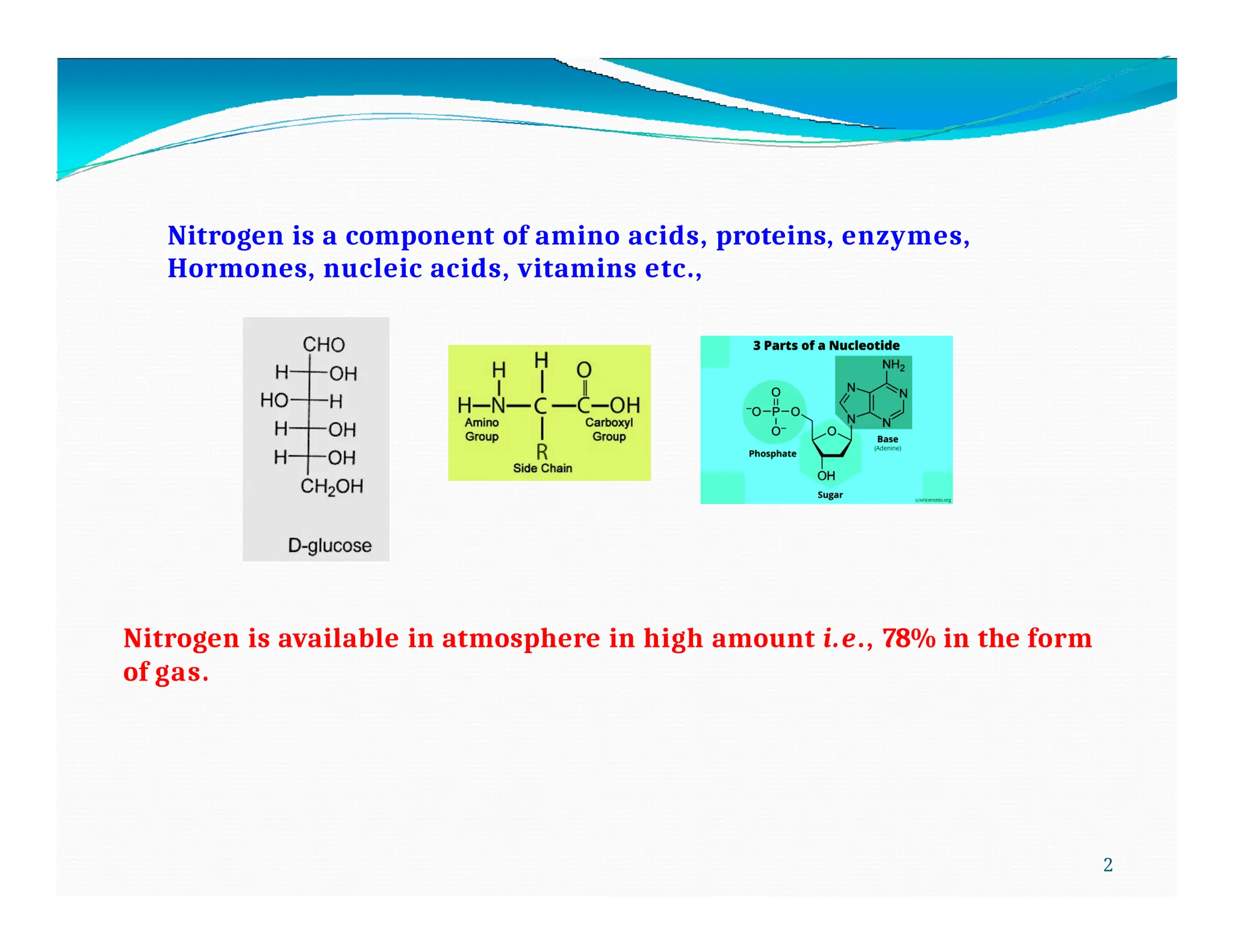
Nitrogen is a component of amino acids, proteins, enzymes,
Hormones, nucleic acids, vitamins etc.,
Nitrogen is available in atmosphere in high amount i.e., 78% in the form
of gas.
2
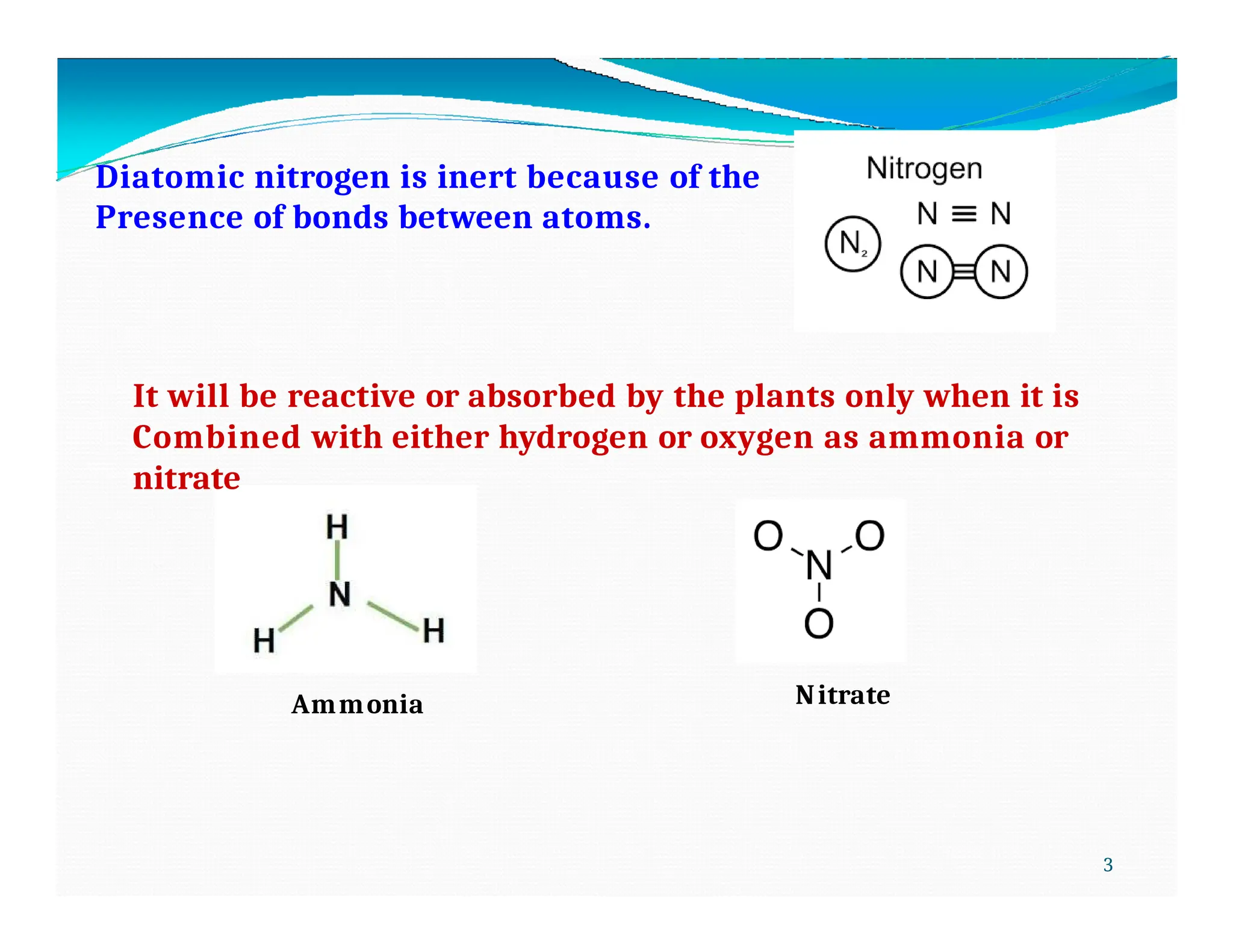
Diatomic nitrogen is inert because of the
Presence of bonds between atoms.
Ammonia
3
Nitrate
It will be reactive or absorbed by the plants only when it is
Combined with either hydrogen or oxygen as ammonia or
nitrate
Nitrogen fixation is a process by which
atmospheric nitrogen (N₂) is converted into
ammonia (NH₃)
4
TYPES OF NITROGEN FIXATION
5
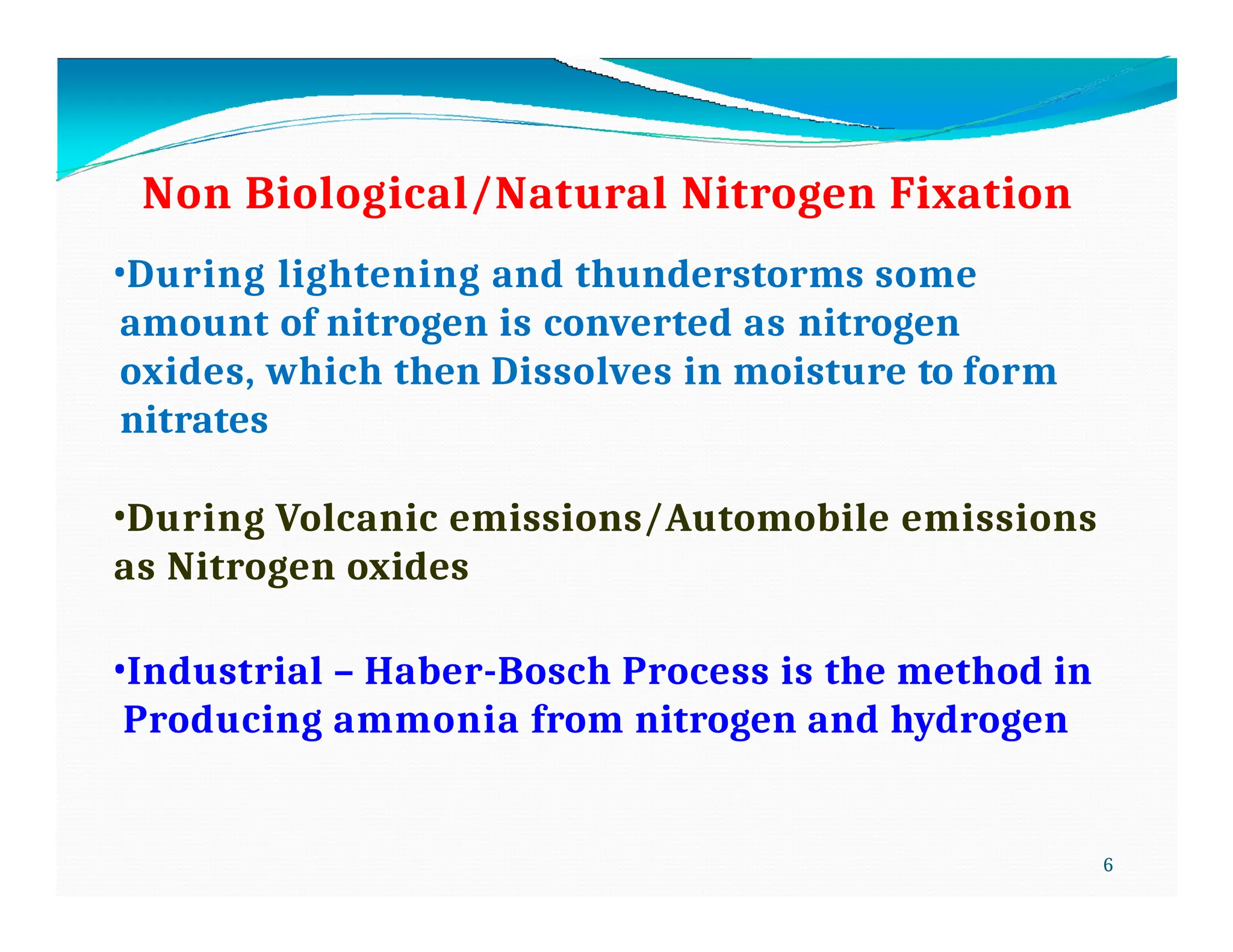
Non Biological/Natural Nitrogen Fixation
•During lightening and thunderstorms some
amount of nitrogen is converted as nitrogen
oxides, which then Dissolves in moisture to form
nitrates
•During Volcanic emissions/Automobile emissions
as Nitrogen oxides
•Industrial – Haber-Bosch Process is the method in
Producing ammonia from nitrogen and hydrogen
6
Biological Nitrogen fixation may be
categorized into following types:
A. Non- Symbiotic/ asymbiotic Biological
Nitrogen Fixation.
B. Associative Biological Nitrogen Fixation.
C. Symbiotic Biological Nitrogen Fixation
7
8
A. Non- Symbiotic/ asymbiotic Biological Nitrogen Fixation:
Soil contains a number of free living nitrogen fixing organisms. These include a number
of aerobic and anaerobic bacteria and blue green algae. Biological nitrogen fixation by
microorganisms living freely or staying out of plant cell is called non-symbiotic Biological
Nitrogen Fixation
The asymbiotic nitrogen fixers can be classified as follows:
1) Free living aerobic nitrogen fixing bacteria:
 Photosynthetic: Chlorobium, Chromatium
 Non-Photosynthetic: Azotobacter, Azomonas, Derxia, Beijerinckia
2) Free living anaerobic nitrogen fixing bacteria:
 Photosynthetic: Rhodospirillum
 Non-Photosynthetic: Clostridium
3) Free living chemosynthetic bacteria:
 Heterotrophic: Desulfovibro
4) Cyanobacteria or Blue green algae:
 Heterocyst bearing: Nostoc, Anabaena, Rivularia, Calothrix.
 Non-Heterocyst bearing: Oscillatoria, Gloeocapsa, Lyngbya, Plectonema.
5) Free living Fungi:
 Yeasts and Pullularia
The asymbiotic free living nitrogen fixers are quite primitive. The fixation is a reduction
process independent of respiration. These organisms fix nitrogen more actively under
poor aeration, provided no hydrogen gas is being produced
9
B. Associative Symbiotic Nitrogen Fixation:
Certain bacteria, living in close contact with the roots of cereal and grasses, fix nitrogen. This
association is a loose mutualism, Called associative Symbiosis. The bacteria reside in the
transition zone between soil and root (the rhizosphere) and sometimes enter the roots. Some
of
the fixed nitrogen is absorbed by the roots and in turn the bacteria get nourishment from the
carbohydrates released by the roots. Some of the examples are:
1. Azospirillum brasilense in association with cereal roots.
2. Beijerinckia in association with the roots of Sugarcane.
3. Azotobacter paspali in association with roots of tropical grass- Paspalum notatum
10
Symbiotic Biological Nitrogen Fixation:
Symbiotic nitrogen fixation is part of a mutualistic relationship in which plants provide a niche
and fixed carbon to bacteria in exchange for fixed nitrogen. Such an association between
bacteria and host is ecological, long term and mutually beneficial to both, microbial partner
fixes atmospheric nitrogen. The various examples of Symbiotic biological nitrogen fixation can
be grouped under the following three categories:
1. Nitrogen Fixation through nodule formation in leguminous plants:
Symbiotic nitrogen fixers in large number of legume plants include genus Rhizobium
mainly. They established themselves inside specialized structures on the roots called root
nodules. The bacteria fix nitrogen only when they are present inside the nodules. The association
is regarded as symbiotic because the host plant supplies the nodule bacteria the required organic
carbon (carbohydrates). In return micro-organism supply fixed nitrogen to the host plant.
Bradyrhizobium japonicum is a slow growing symbiont of Soybeans.
Azorhizobium caulinodans is a stem nodule forming symbiont in Sesbania species.
2. Nitrogen Fixation through nodule formation in non-leguminous plants:
Many plants belonging to families other than Leguminosae are known to produce root
nodules. The important among them are primarily trees and shrubs. The important examples of
non-leguminous plants that produce root nodules and fix nitrogen are:
1. Genus Frankia forms root nodules in association with Alnus sp., Casuarina
equisetifolia, Myrica gale, etc.
2. Rhizobium also root nodules in genus Parasponia .
Biological Nitrogen Fixation
11
12
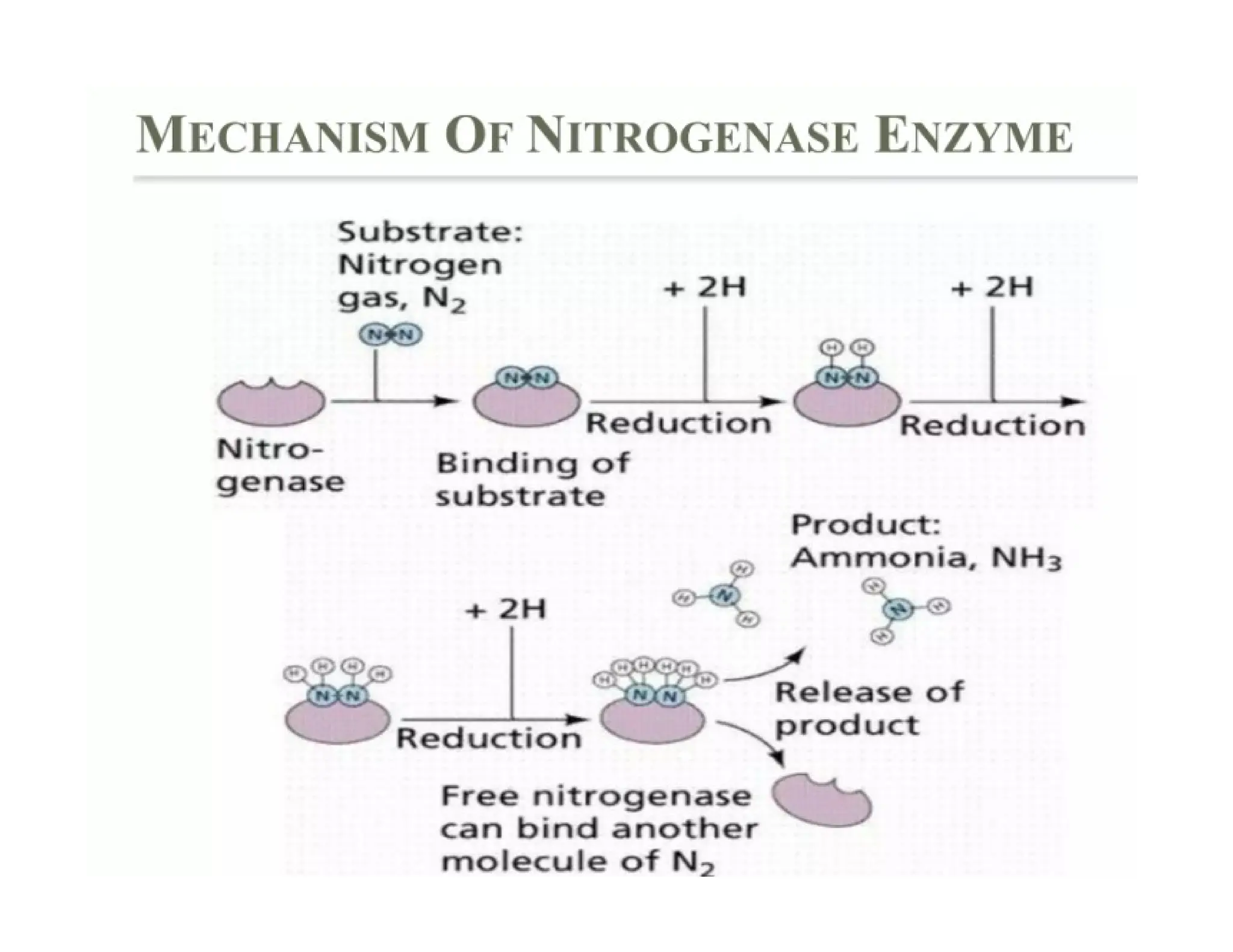
NITROGENASE ENZYME
⚫Nitrogenase is a complex enzyme
containing two oxygen sensitive
components.
⚫Component-I has 2 α-proteins subunits
and 2β protein subunits,24 molecules of
iron,2molecules of molybdenum and an
iron-molybdenum cofactor(FeMoCo).
⚫Component –II possess 2 α-proteins
subunits and a large number of iron
molecule.
13
Structure of Nitrogenase
Component 1 Component
2
Nitrogenase Complex
Component – I – MW : 240 – 270 KDa
Dinitrogenase, Mo -2 atoms/mol,
Fe-32atoms/mol
Component-II – MW: 55 -64kDa
Dinitrogenase reductase, Fe-4 atoms mol
14
15
HYDROGENASE
⚫It is a enzyme which uses hydrogen as
the energy source.
⚫During the coarse of nitrogen fixation by
nitrogenase, an undesirable reaction also
occurs i,e., reduction of H⁺ (hydrogen
ion) --->H₂ (molecular hydrogen).
⚫For the production of hydrogen ATP is
utilized, it is rather wasted.
16
Role of Hydrogenase
Many iazotropes evolve
Hydrogen (H2) during
Nitrogen fixation, which
inturn Inhibits nitrogen
fixation.
Hydrogenase recycles
H2.
Reutilization of H2
produces More ATP and
improves the efficiency
of N2 fixation
www.hbmahesh.weebly.c
om
17
18
19
FLOW OF ELECTRONS
20
ASYMBIOTIC OR NONSYMBIOTIC
⚫The gaseous nitrogen of the
atmosphere is directly and
independently utilized to produce
nitrogen rich compounds.
⚫ When non symbiotic
organisms die, they
enrich the soil with
nitrogenase compounds.
⚫Ex:-Clostridium, Pasteuranium,
Azatobacter chrooccum.
www.hbmahesh.weebly.c
om
21
Mechanism of Nitrogen fixation in free living organisms
Nitrous
Oxide
Acetylene
Hydrogen
ion
www.hbmahesh.weebly.c
om
22
N2+12 Mg+ + ATP+ 6 (H+ + e -) ----- 2 NH3 + 12 (Mg ++ ADP + pi)
Overall Reaction in free living organism
www.hbmahesh.weebly.c
om
23
SYMBIOTIC NITROGEN FIXATION
⚫Microorganisms live together
with the plants in a
mutually beneficial
relationship. This
phenomenon is referred to as
‘Symbiosis’.
⚫Most important microorganisms
involved in symbiosis belong to
the genera Rhizobium and
Bradyrhizobium.
⚫The host plant harbouring these
bacteria are known as legumes.
Ex:- Soyabean, Peas, Beans,
Alphapha, Peanuts and cloves.
www.hbmahesh.weebly.c
om
24
25
26
27
MECHANISM OF NITROGEN FIXATION IN
SYMBIOTIC ORGANISMS
www.hbmahesh.weebly.c
om
28
Process of Symbiotic Nitrogen Fixation.
Root nodulation in
legume.
www.hbmahesh.weebly.c
om
29
The overall process of nitrogen fixation in a bacterioid of Rhizobium
www.hbmahesh.weebly.c
om
30
Overall Reaction in Symbiotic Organisms
2NH4+ + H2 + 16 ADP + 16 pi
www.hbmahesh.weebly.c
om
31
N2 + 16ATP + 8e- + 10H+ -----
M g + +
LEGHAEMOGLOBIN
⚫It is a oxygen binding protein. It contains
iron and is red in colour.
⚫Lhb facilitates the appropriate transfer of
oxygen to bacteria for respiration to produce
ATP.
⚫The energy required for the nitrogen
fixation is utilized in the form of ATP.
⚫The haem part of Lhb is synthesized by
bacteria while the protein part (globin)
portion is produced by host plant.
www.hbmahesh.weebly.c
om
32
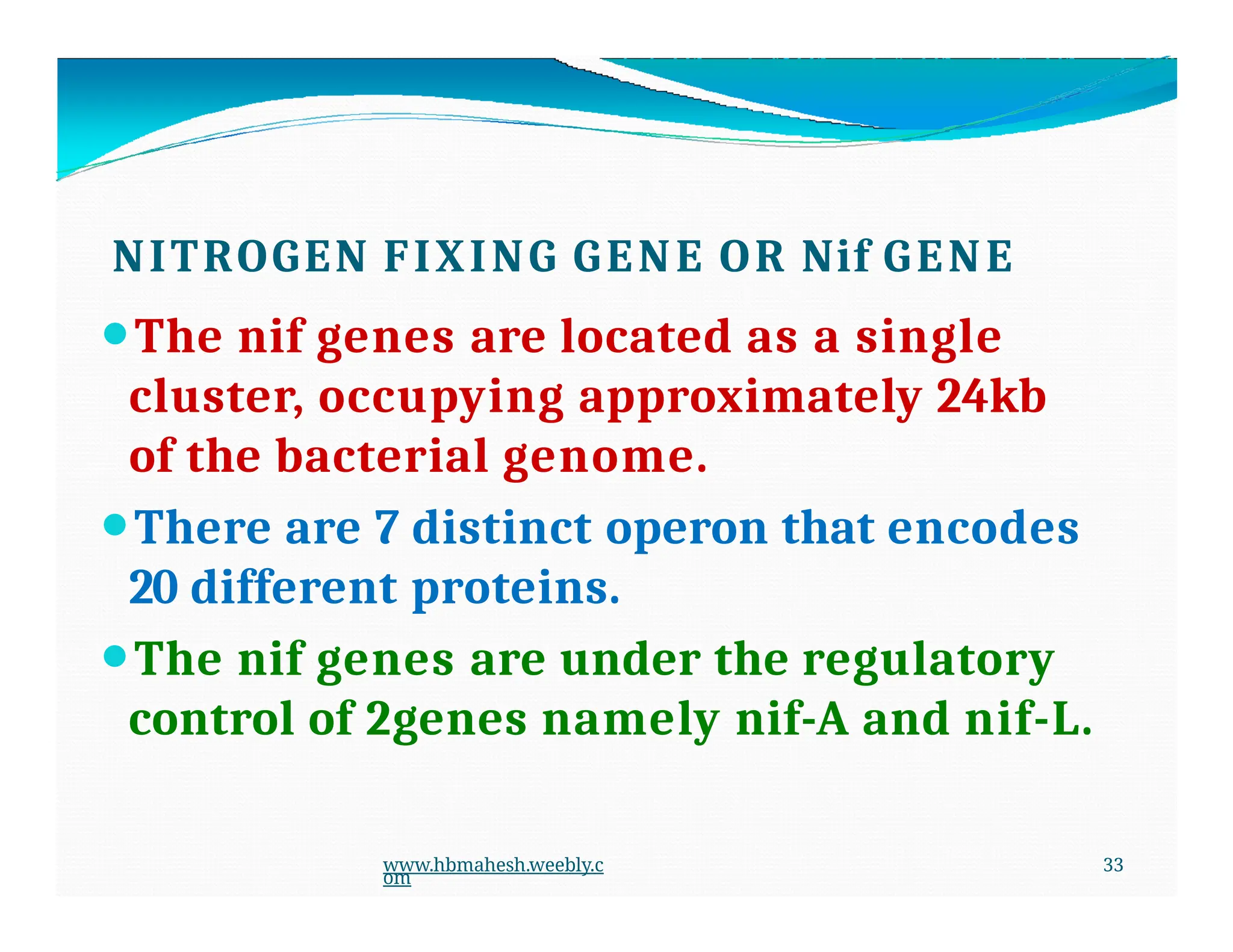
NITROGEN FIXING GENE OR Nif GENE
⚫The nif genes are located as a single
cluster, occupying approximately 24kb
of the bacterial genome.
⚫There are 7 distinct operon that encodes
20 different proteins.
⚫The nif genes are under the regulatory
control of 2genes namely nif-A and nif-L.
www.hbmahesh.weebly.c
om
33
www.hbmahesh.weebly.c
om
34
GENETICS OF NITROGEN FIXATION
⚫It is absolutely necessary to identify, isolate
and characterize the nitrogen fixing gene.
⚫Transfer of genes for nitrogen fixation to
bacteria helps to infect several important
crops.
⚫It can form a symbiotic relationship with
non leguminous plants such as wheat ,rice
and corn.
www.hbmahesh.weebly.c
om
35
A Map of Klebsiella-chromosome showing
relative position of nif genes
www.hbmahesh.weebly.c
om
36
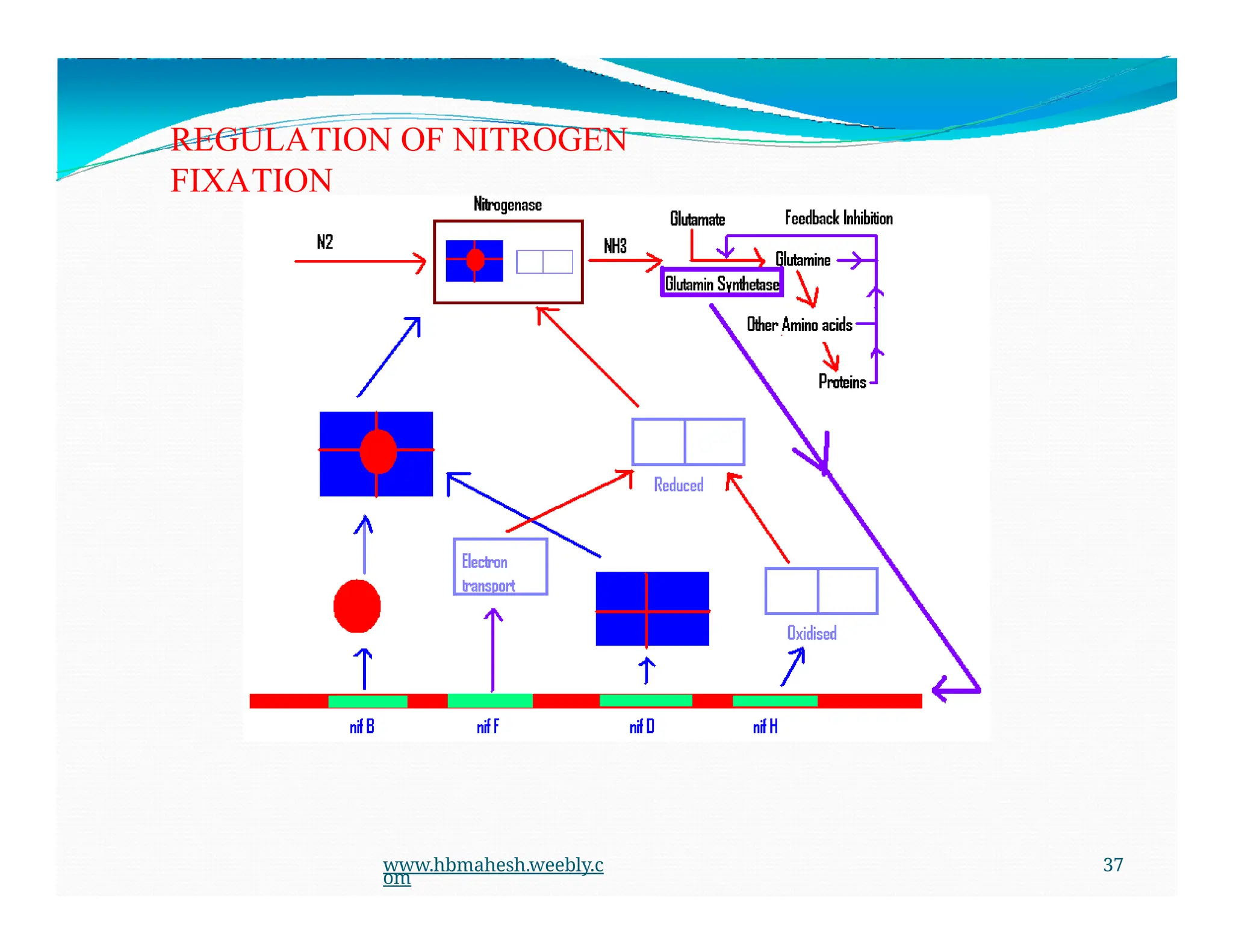
REGULATION OF NITROGEN
FIXATION
www.hbmahesh.weebly.c
om
37
THANK YOU
www.hbmahesh.weebly.c
om
38

biological_nitrogen_fixation.Genetic Mechanismpptx

  • 1.
  • 2.
    Nitrogen is acomponent of amino acids, proteins, enzymes, Hormones, nucleic acids, vitamins etc., Nitrogen is available in atmosphere in high amount i.e., 78% in the form of gas. 2
  • 3.
    Diatomic nitrogen isinert because of the Presence of bonds between atoms. Ammonia 3 Nitrate It will be reactive or absorbed by the plants only when it is Combined with either hydrogen or oxygen as ammonia or nitrate
  • 4.
    Nitrogen fixation isa process by which atmospheric nitrogen (N₂) is converted into ammonia (NH₃) 4
  • 5.
  • 6.
    Non Biological/Natural NitrogenFixation •During lightening and thunderstorms some amount of nitrogen is converted as nitrogen oxides, which then Dissolves in moisture to form nitrates •During Volcanic emissions/Automobile emissions as Nitrogen oxides •Industrial – Haber-Bosch Process is the method in Producing ammonia from nitrogen and hydrogen 6
  • 7.
    Biological Nitrogen fixationmay be categorized into following types: A. Non- Symbiotic/ asymbiotic Biological Nitrogen Fixation. B. Associative Biological Nitrogen Fixation. C. Symbiotic Biological Nitrogen Fixation 7
  • 8.
    8 A. Non- Symbiotic/asymbiotic Biological Nitrogen Fixation: Soil contains a number of free living nitrogen fixing organisms. These include a number of aerobic and anaerobic bacteria and blue green algae. Biological nitrogen fixation by microorganisms living freely or staying out of plant cell is called non-symbiotic Biological Nitrogen Fixation The asymbiotic nitrogen fixers can be classified as follows: 1) Free living aerobic nitrogen fixing bacteria:  Photosynthetic: Chlorobium, Chromatium  Non-Photosynthetic: Azotobacter, Azomonas, Derxia, Beijerinckia 2) Free living anaerobic nitrogen fixing bacteria:  Photosynthetic: Rhodospirillum  Non-Photosynthetic: Clostridium 3) Free living chemosynthetic bacteria:  Heterotrophic: Desulfovibro 4) Cyanobacteria or Blue green algae:  Heterocyst bearing: Nostoc, Anabaena, Rivularia, Calothrix.  Non-Heterocyst bearing: Oscillatoria, Gloeocapsa, Lyngbya, Plectonema. 5) Free living Fungi:  Yeasts and Pullularia The asymbiotic free living nitrogen fixers are quite primitive. The fixation is a reduction process independent of respiration. These organisms fix nitrogen more actively under poor aeration, provided no hydrogen gas is being produced
  • 9.
    9 B. Associative SymbioticNitrogen Fixation: Certain bacteria, living in close contact with the roots of cereal and grasses, fix nitrogen. This association is a loose mutualism, Called associative Symbiosis. The bacteria reside in the transition zone between soil and root (the rhizosphere) and sometimes enter the roots. Some of the fixed nitrogen is absorbed by the roots and in turn the bacteria get nourishment from the carbohydrates released by the roots. Some of the examples are: 1. Azospirillum brasilense in association with cereal roots. 2. Beijerinckia in association with the roots of Sugarcane. 3. Azotobacter paspali in association with roots of tropical grass- Paspalum notatum
  • 10.
    10 Symbiotic Biological NitrogenFixation: Symbiotic nitrogen fixation is part of a mutualistic relationship in which plants provide a niche and fixed carbon to bacteria in exchange for fixed nitrogen. Such an association between bacteria and host is ecological, long term and mutually beneficial to both, microbial partner fixes atmospheric nitrogen. The various examples of Symbiotic biological nitrogen fixation can be grouped under the following three categories: 1. Nitrogen Fixation through nodule formation in leguminous plants: Symbiotic nitrogen fixers in large number of legume plants include genus Rhizobium mainly. They established themselves inside specialized structures on the roots called root nodules. The bacteria fix nitrogen only when they are present inside the nodules. The association is regarded as symbiotic because the host plant supplies the nodule bacteria the required organic carbon (carbohydrates). In return micro-organism supply fixed nitrogen to the host plant. Bradyrhizobium japonicum is a slow growing symbiont of Soybeans. Azorhizobium caulinodans is a stem nodule forming symbiont in Sesbania species. 2. Nitrogen Fixation through nodule formation in non-leguminous plants: Many plants belonging to families other than Leguminosae are known to produce root nodules. The important among them are primarily trees and shrubs. The important examples of non-leguminous plants that produce root nodules and fix nitrogen are: 1. Genus Frankia forms root nodules in association with Alnus sp., Casuarina equisetifolia, Myrica gale, etc. 2. Rhizobium also root nodules in genus Parasponia .
  • 11.
  • 12.
  • 13.
    NITROGENASE ENZYME ⚫Nitrogenase isa complex enzyme containing two oxygen sensitive components. ⚫Component-I has 2 α-proteins subunits and 2β protein subunits,24 molecules of iron,2molecules of molybdenum and an iron-molybdenum cofactor(FeMoCo). ⚫Component –II possess 2 α-proteins subunits and a large number of iron molecule. 13
  • 14.
    Structure of Nitrogenase Component1 Component 2 Nitrogenase Complex Component – I – MW : 240 – 270 KDa Dinitrogenase, Mo -2 atoms/mol, Fe-32atoms/mol Component-II – MW: 55 -64kDa Dinitrogenase reductase, Fe-4 atoms mol 14
  • 15.
  • 16.
    HYDROGENASE ⚫It is aenzyme which uses hydrogen as the energy source. ⚫During the coarse of nitrogen fixation by nitrogenase, an undesirable reaction also occurs i,e., reduction of H⁺ (hydrogen ion) --->H₂ (molecular hydrogen). ⚫For the production of hydrogen ATP is utilized, it is rather wasted. 16
  • 17.
    Role of Hydrogenase Manyiazotropes evolve Hydrogen (H2) during Nitrogen fixation, which inturn Inhibits nitrogen fixation. Hydrogenase recycles H2. Reutilization of H2 produces More ATP and improves the efficiency of N2 fixation www.hbmahesh.weebly.c om 17
  • 18.
  • 19.
  • 20.
  • 21.
    ASYMBIOTIC OR NONSYMBIOTIC ⚫Thegaseous nitrogen of the atmosphere is directly and independently utilized to produce nitrogen rich compounds. ⚫ When non symbiotic organisms die, they enrich the soil with nitrogenase compounds. ⚫Ex:-Clostridium, Pasteuranium, Azatobacter chrooccum. www.hbmahesh.weebly.c om 21
  • 22.
    Mechanism of Nitrogenfixation in free living organisms Nitrous Oxide Acetylene Hydrogen ion www.hbmahesh.weebly.c om 22
  • 23.
    N2+12 Mg+ +ATP+ 6 (H+ + e -) ----- 2 NH3 + 12 (Mg ++ ADP + pi) Overall Reaction in free living organism www.hbmahesh.weebly.c om 23
  • 24.
    SYMBIOTIC NITROGEN FIXATION ⚫Microorganismslive together with the plants in a mutually beneficial relationship. This phenomenon is referred to as ‘Symbiosis’. ⚫Most important microorganisms involved in symbiosis belong to the genera Rhizobium and Bradyrhizobium. ⚫The host plant harbouring these bacteria are known as legumes. Ex:- Soyabean, Peas, Beans, Alphapha, Peanuts and cloves. www.hbmahesh.weebly.c om 24
  • 25.
  • 26.
  • 27.
  • 28.
    MECHANISM OF NITROGENFIXATION IN SYMBIOTIC ORGANISMS www.hbmahesh.weebly.c om 28
  • 29.
    Process of SymbioticNitrogen Fixation. Root nodulation in legume. www.hbmahesh.weebly.c om 29
  • 30.
    The overall processof nitrogen fixation in a bacterioid of Rhizobium www.hbmahesh.weebly.c om 30
  • 31.
    Overall Reaction inSymbiotic Organisms 2NH4+ + H2 + 16 ADP + 16 pi www.hbmahesh.weebly.c om 31 N2 + 16ATP + 8e- + 10H+ ----- M g + +
  • 32.
    LEGHAEMOGLOBIN ⚫It is aoxygen binding protein. It contains iron and is red in colour. ⚫Lhb facilitates the appropriate transfer of oxygen to bacteria for respiration to produce ATP. ⚫The energy required for the nitrogen fixation is utilized in the form of ATP. ⚫The haem part of Lhb is synthesized by bacteria while the protein part (globin) portion is produced by host plant. www.hbmahesh.weebly.c om 32
  • 33.
    NITROGEN FIXING GENEOR Nif GENE ⚫The nif genes are located as a single cluster, occupying approximately 24kb of the bacterial genome. ⚫There are 7 distinct operon that encodes 20 different proteins. ⚫The nif genes are under the regulatory control of 2genes namely nif-A and nif-L. www.hbmahesh.weebly.c om 33
  • 34.
  • 35.
    GENETICS OF NITROGENFIXATION ⚫It is absolutely necessary to identify, isolate and characterize the nitrogen fixing gene. ⚫Transfer of genes for nitrogen fixation to bacteria helps to infect several important crops. ⚫It can form a symbiotic relationship with non leguminous plants such as wheat ,rice and corn. www.hbmahesh.weebly.c om 35
  • 36.
    A Map ofKlebsiella-chromosome showing relative position of nif genes www.hbmahesh.weebly.c om 36
  • 37.
  • 38.