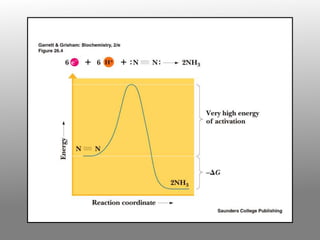
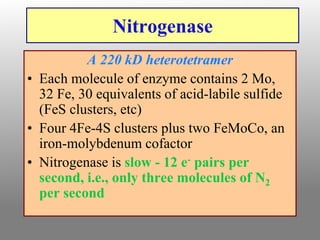
Biological nitrogen fixation is the process by which atmospheric nitrogen is converted to ammonia by the oxygen-sensitive enzyme nitrogenase. This reaction is catalyzed by certain bacteria that are able to fix nitrogen. The best-known nitrogen-fixing symbiosis is between rhizobia bacteria and legume plants, in which the bacteria infect plant root nodules and reduce atmospheric nitrogen to ammonia that is exchanged for carbon from the plant. Key genes and gene products involved in this process include nodulation genes that control nod factor production, which signals to induce nodule formation, and the nitrogenase enzyme complex that facilitates nitrogen fixation.







![The nod ABC gene products are enzymes responsible for
synthesis of diffusible nod factors, whcih are sulfated
and acylated beta-1,4-oligosaccharides of glucosamine
(other gene products, e.g. NodH, may also be needed
for special modifications)
[ 1, 2 or 3 ]
[C16 or C18 fatty acid]
SO3
=](https://image.slidesharecdn.com/coursfixationsymbiose-copie-220720090159-ddbc5db2/85/Cours_Fixationsymbiose_-_copie-ppt-73-320.jpg)