Flip

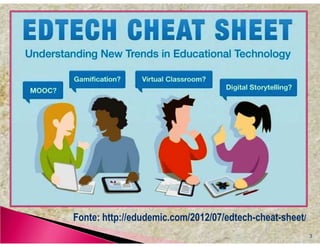
New trends in educational technology


                             Clay Casati
                               05Dec12
Flip Teaching

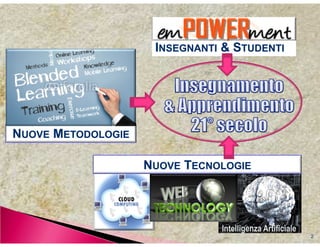
Educational Delivery Models

Platforms for Online Education

School Without Classrooms


                                 2
Flip teaching is a form of blended learning which
encompasses any use of Internet technology to leverage
the learning in a classroom, so a teacher can spend more
time interacting with students instead of lecturing
(including use of differentiated instruction and project-
based learning).
This is most commonly being done using teacher-created
videos that students view outside of class time.
It is also known as backwards classroom, reverse
instruction, flipping the classroom, and reverse teaching.


                                         Source: en.wikipedia
                                                                3
Source: Slide2.jpg theactiveclass.com
                                        4
Flipped                           Traditional

    Source: Flipped-Classroom-Comparison.jpg edtechtips.org
                                                              5
Source: flippedclassroom.jpg blog.han.nl   6
Source: Opener University flipped.jpg wired.co.uk
                                                    7
Source: http://web.mit.edu/edtech/casestudies/teal.html
                                                          8
shot-2012-04-17-at-8.47.02-AM.png
Screen-shot


                                                                Flip Teaching
                                           Don’t just flip your class, transform it!


                                                                                       9
Model

Flipped Classroom, Project
Based Learning & Bloom’s


                             10
11
“Get our hands dirty”
#MOOC, #blendedlearning, #coursera, #edx, #flipteaching,
                                   #higheredu, #udacity

                                                           12
“To explain how my
class will be structured,
I kept looking for
something that would
incorporate both the
Flipped Classroom and
Project Based Learning
into Bloom’s levels of
learning”.
by Amanda Ooten,
2012.
@eaglesbiology
eaglesbiology.com
Source: i mage.axd fhu.edu


                             13
Problem-based learning (PBL) is a student – centered
pedagogy in which students learn about a subject through
the experience of problem solving.
Students learn both thinking
strategies and domain
knowledge.
The goals of PBL are to help
the students develop flexible
knowledge, effective problem
solving skills, self-directed
learning, effective collaboration
skills and intrinsic motivation.
                        en.wikipedia
                                       pbl. jpg blog.naver.com   14
“We learn by experiences                “Reflection is thinking for an
that allow us to:                       extended period by linking
  Absorb (read, hear, feel)             recent experiences to
  Do (activity)                         earlier ones in order to
                                        promote a more complex
  Interact (socialize)
                                        and interrelated mental
(Wertenbroch & Nabeth,                  schema.
2000)
In addition, we also learn by           The thinking involves
reflecting on such                      looking for commonalities,
experiences (Dewey 1933).               differences, and
The goal is to develop higher           interrelations beyond their
order thinking skills”.                 superficial elements”.
      Source: http://www.nwlink.com/~donclark/hrd/development/reflection.html

                                                                            15
Source: Blooms+Revised+Taxonomy.jpg goconstructivism.blogspot.com


16
Flipping Blooms Taxonomy
“I think the best flipped classrooms
work because they spend most of
their time creating, evaluating and
analyzing. In a sense we’re creating
the churn, the friction for the brain,
rather than solely focusing on
acquiring rote knowledge.
The flipped classroom approach is not
about watching videos. It’s about
students being actively involved in their
own learning and creating content in
the structure that is most meaningful
for them”.
Posted by Shelley Wright on May 15,
2012 in Less Teacher, More Student,
Passion Based Learning, The How of
21st Century Teaching, Voices
                                    http://plpnetwork.com/2012/05/15/flipping-blooms-taxonomy/

                                                                                             17
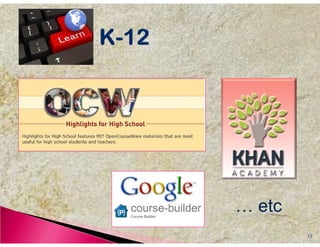
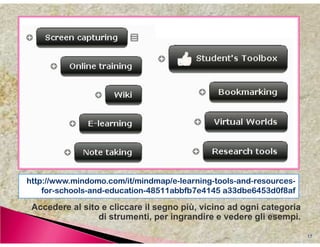
K-12
HigherEdu


            18
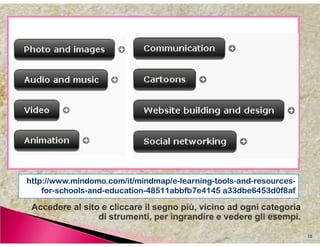
… etc
        19
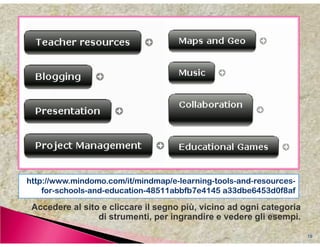
… etc
    20
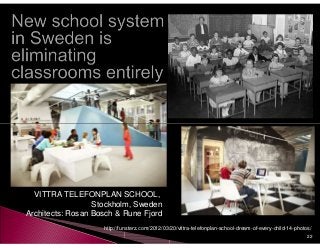
The principles of the Vittra School,
Sweden, revolve around the breakdown
of physical and metaphorical class divi-
sions as a fundamental step to promo-
ting intellectual curiosity, self-confidence,
and communally responsible behavior.

“Instead of classical divisions with chairs
and tables, a giant iceberg for example
serves as cinema, platform, and room for
relaxation, and sets the frame for many
different types of learning,” while “flexible
laboratories make it possible to work
hands-on with themes and projects.”
                                            21
VITTRA TELEFONPLAN SCHOOL,
                  Stockholm, Sweden
Architects: Rosan Bosch & Rune Fjord
                    http://funsterz.com/2012/03/20/vittra-telefonplan-school-dream-of-every-child-14-photos/
                                                                                                          22
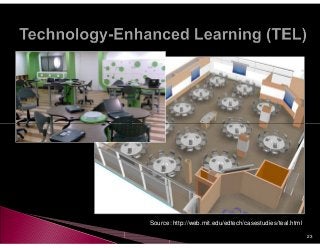
Source: http://web.mit.edu/edtech/casestudies/teal.html

                                                          23
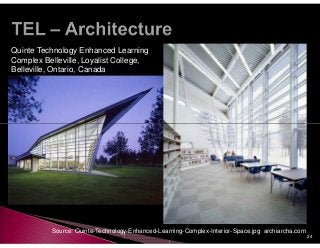
Quinte Technology Enhanced Learning
Complex Belleville, Loyalist College,
Belleville, Ontario, Canada


          Source: Quinte-Technology-Enhanced-Learning-Complex-Interior-Space.jpg archiarcha.com
                                                                                                  24
follow @Inquietus
follow @ClayCasati

                     25
www.festainquietudine.it

festa dell’inquietudine
       2013 – sesta edizione
    31 maggio – 1 e 2 giugno

     cultura & intrattenimento
              tema conduttore
              Finale Ligure
    Complesso Monumentale
          di Santa Caterina
                Ideazione &
             Organizzazione

Flip Teaching - new trends in educational technology

  • 1.
    Flip New trends ineducational technology Clay Casati 05Dec12
  • 2.
    Flip Teaching Educational DeliveryModels Platforms for Online Education School Without Classrooms 2
  • 3.
    Flip teaching isa form of blended learning which encompasses any use of Internet technology to leverage the learning in a classroom, so a teacher can spend more time interacting with students instead of lecturing (including use of differentiated instruction and project- based learning). This is most commonly being done using teacher-created videos that students view outside of class time. It is also known as backwards classroom, reverse instruction, flipping the classroom, and reverse teaching. Source: en.wikipedia 3
  • 4.
  • 5.
    Flipped Traditional Source: Flipped-Classroom-Comparison.jpg edtechtips.org 5
  • 6.
  • 7.
    Source: Opener Universityflipped.jpg wired.co.uk 7
  • 8.
  • 9.
    shot-2012-04-17-at-8.47.02-AM.png Screen-shot Flip Teaching Don’t just flip your class, transform it! 9
  • 10.
  • 11.
  • 12.
    “Get our handsdirty” #MOOC, #blendedlearning, #coursera, #edx, #flipteaching, #higheredu, #udacity 12
  • 13.
    “To explain howmy class will be structured, I kept looking for something that would incorporate both the Flipped Classroom and Project Based Learning into Bloom’s levels of learning”. by Amanda Ooten, 2012. @eaglesbiology eaglesbiology.com Source: i mage.axd fhu.edu 13
  • 14.
    Problem-based learning (PBL)is a student – centered pedagogy in which students learn about a subject through the experience of problem solving. Students learn both thinking strategies and domain knowledge. The goals of PBL are to help the students develop flexible knowledge, effective problem solving skills, self-directed learning, effective collaboration skills and intrinsic motivation. en.wikipedia pbl. jpg blog.naver.com 14
  • 15.
    “We learn byexperiences “Reflection is thinking for an that allow us to: extended period by linking Absorb (read, hear, feel) recent experiences to Do (activity) earlier ones in order to promote a more complex Interact (socialize) and interrelated mental (Wertenbroch & Nabeth, schema. 2000) In addition, we also learn by The thinking involves reflecting on such looking for commonalities, experiences (Dewey 1933). differences, and The goal is to develop higher interrelations beyond their order thinking skills”. superficial elements”. Source: http://www.nwlink.com/~donclark/hrd/development/reflection.html 15
  • 16.
  • 17.
    Flipping Blooms Taxonomy “Ithink the best flipped classrooms work because they spend most of their time creating, evaluating and analyzing. In a sense we’re creating the churn, the friction for the brain, rather than solely focusing on acquiring rote knowledge. The flipped classroom approach is not about watching videos. It’s about students being actively involved in their own learning and creating content in the structure that is most meaningful for them”. Posted by Shelley Wright on May 15, 2012 in Less Teacher, More Student, Passion Based Learning, The How of 21st Century Teaching, Voices http://plpnetwork.com/2012/05/15/flipping-blooms-taxonomy/ 17
  • 18.
  • 19.
  • 20.
  • 21.
    The principles ofthe Vittra School, Sweden, revolve around the breakdown of physical and metaphorical class divi- sions as a fundamental step to promo- ting intellectual curiosity, self-confidence, and communally responsible behavior. “Instead of classical divisions with chairs and tables, a giant iceberg for example serves as cinema, platform, and room for relaxation, and sets the frame for many different types of learning,” while “flexible laboratories make it possible to work hands-on with themes and projects.” 21
  • 22.
    VITTRA TELEFONPLAN SCHOOL, Stockholm, Sweden Architects: Rosan Bosch & Rune Fjord http://funsterz.com/2012/03/20/vittra-telefonplan-school-dream-of-every-child-14-photos/ 22
  • 23.
  • 24.
    Quinte Technology EnhancedLearning Complex Belleville, Loyalist College, Belleville, Ontario, Canada Source: Quinte-Technology-Enhanced-Learning-Complex-Interior-Space.jpg archiarcha.com 24
  • 25.
  • 26.
    www.festainquietudine.it festa dell’inquietudine 2013 – sesta edizione 31 maggio – 1 e 2 giugno cultura & intrattenimento tema conduttore Finale Ligure Complesso Monumentale di Santa Caterina Ideazione & Organizzazione