
Fan Fan
Supervisor: Jerzy Szpunar
.The Self-Healing Mechanism
and Application of Acrylic
Materials_.
Outlines
Introduction
Objectives
Experiments on VHB 4910
Experiments on the coating
Conclusion
Outlines
Introduction
Objectives
Experiments on VHB 4910
Experiments on the coating
Conclusion
What is self-healing?
The most common self-healing
material is our skin which can
recover from injuries
intrinsically.
Image source: healthnbodytips.com/wp-content/uploads/2015/03/Benefits-of-
Drinking-Hot-Water-for-Skin1.jpg?b0bc0c
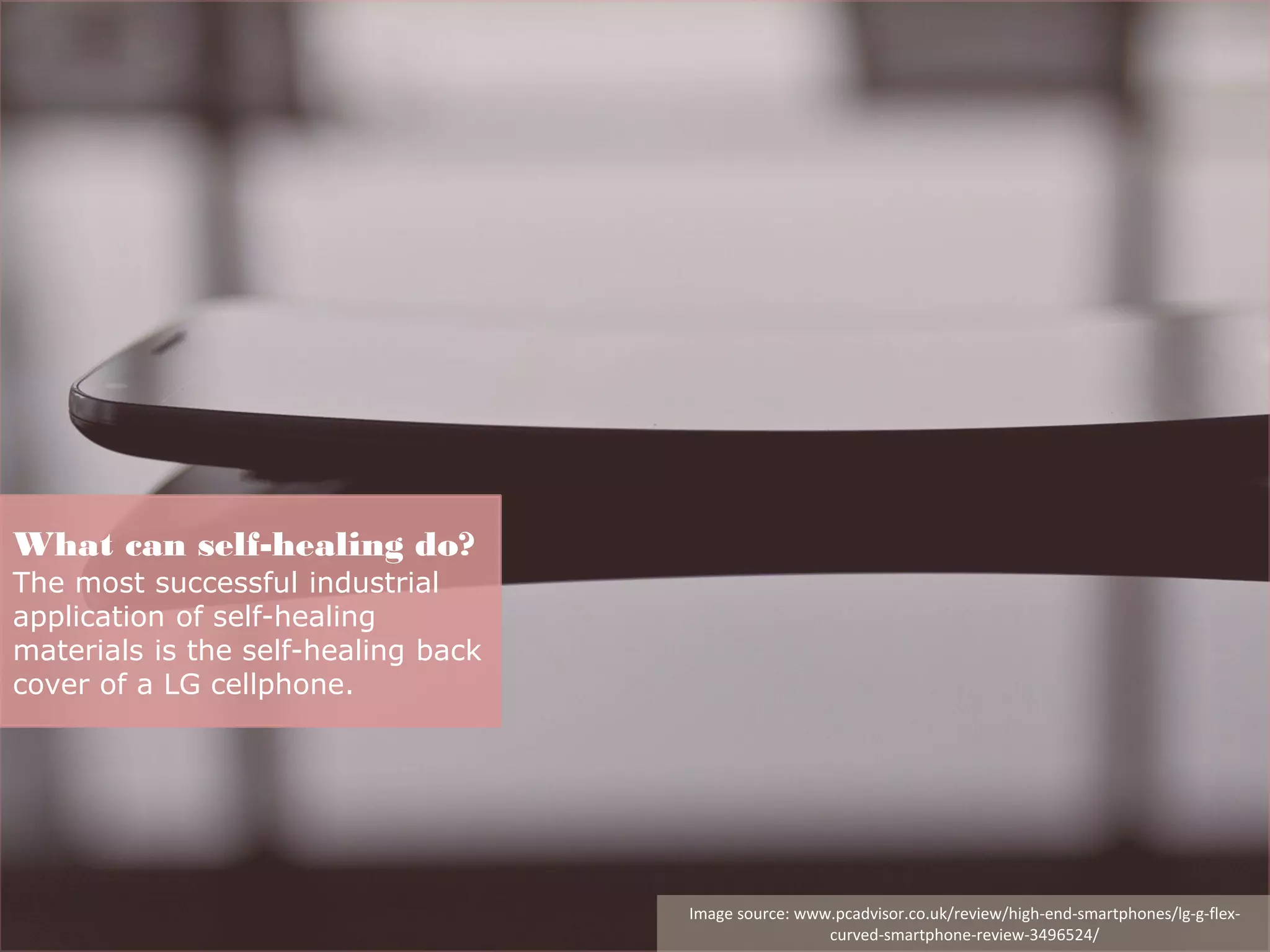
What can self-healing do?
The most successful industrial
application of self-healing
materials is the self-healing back
cover of a LG cellphone.
Image source: www.pcadvisor.co.uk/review/high-end-smartphones/lg-g-flex-
curved-smartphone-review-3496524/
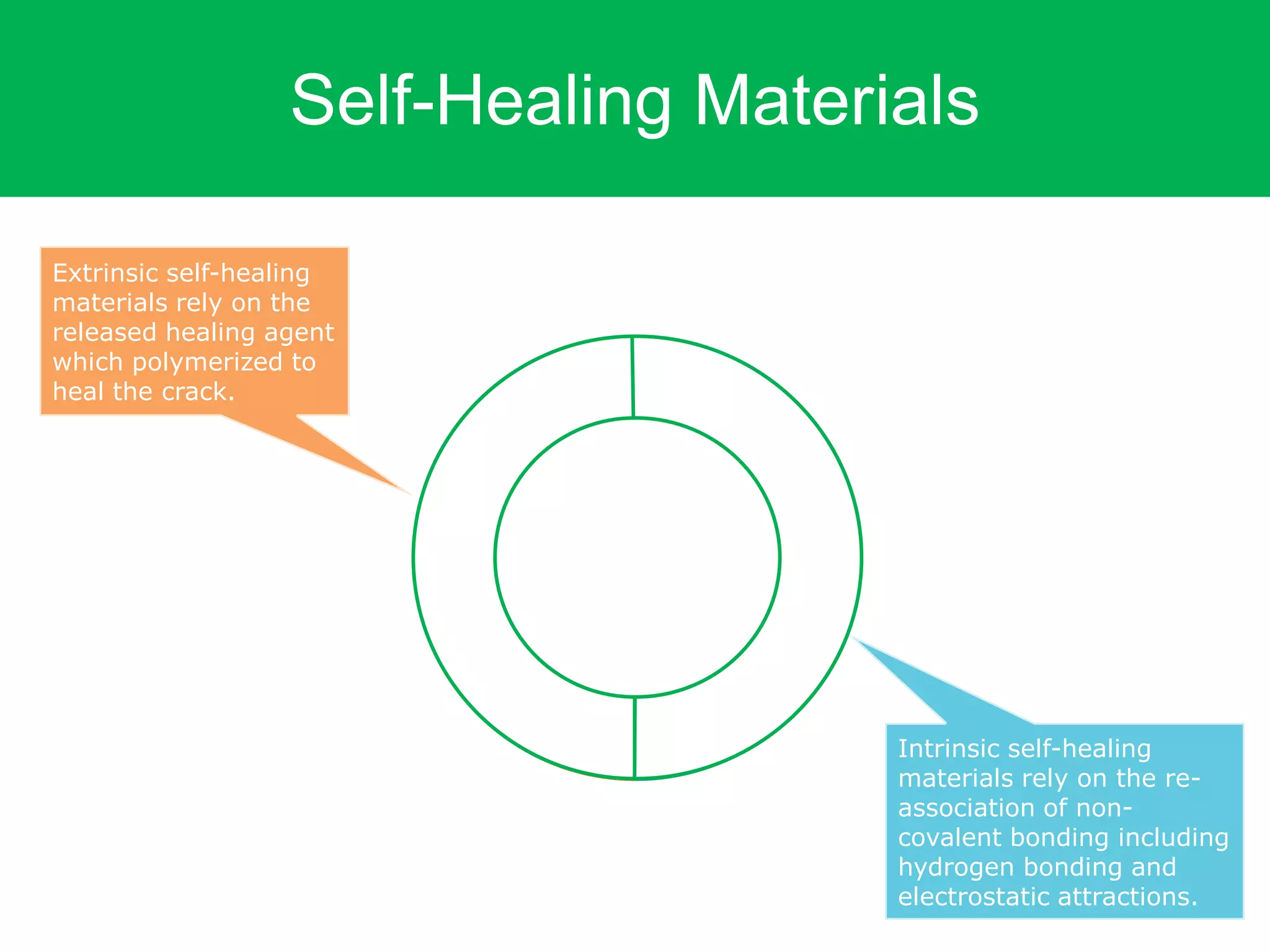
Self-Healing Materials
Extrinsic self-healing
materials rely on the
released healing agent
which polymerized to
heal the crack.
Intrinsic self-healing
materials rely on the re-
association of non-
covalent bonding including
hydrogen bonding and
electrostatic attractions.
Extrinsic Self-Healing Coating
The healing agents were
released to the cracks to
heal the crack.
[1] Huang, M. & Yang, J. Facile microencapsulation of HDI for self-
healing anticorrosion coatings. J. Mater. Chem. 21, 11123 (2011).
Intrinsic Self-Healing Coating
The re-association of hydrogen
bonding initiated the self-
healing process.
[2] Phadke, A. et al. Rapid self-healing hydrogels. Proc. Natl.
Acad. Sci. U. S. A. 109, 4383–4388 (2012).
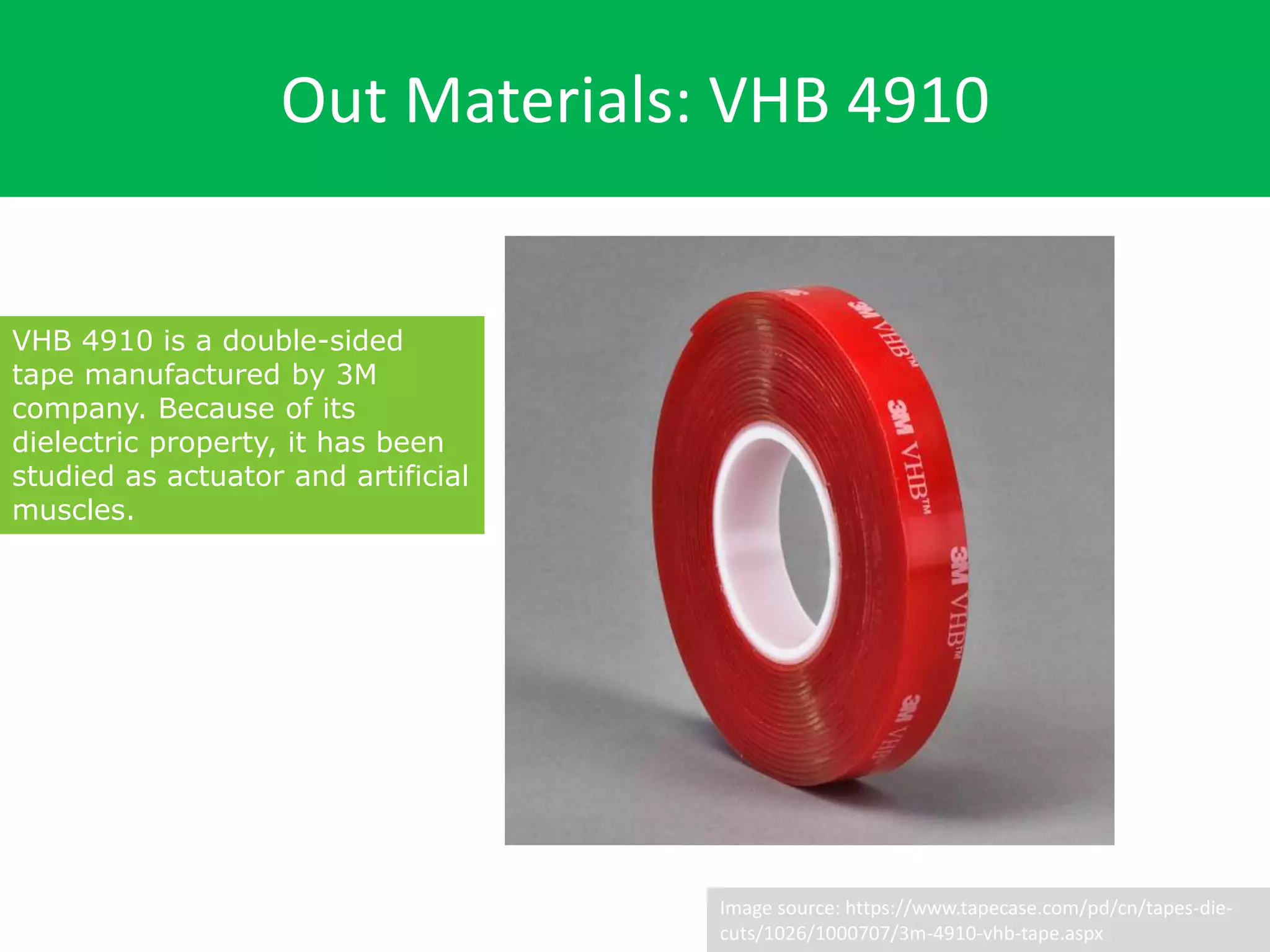
Out Materials: VHB 4910
Image source: https://www.tapecase.com/pd/cn/tapes-die-
cuts/1026/1000707/3m-4910-vhb-tape.aspx
VHB 4910 is a double-sided
tape manufactured by 3M
company. Because of its
dielectric property, it has been
studied as actuator and artificial
muscles.
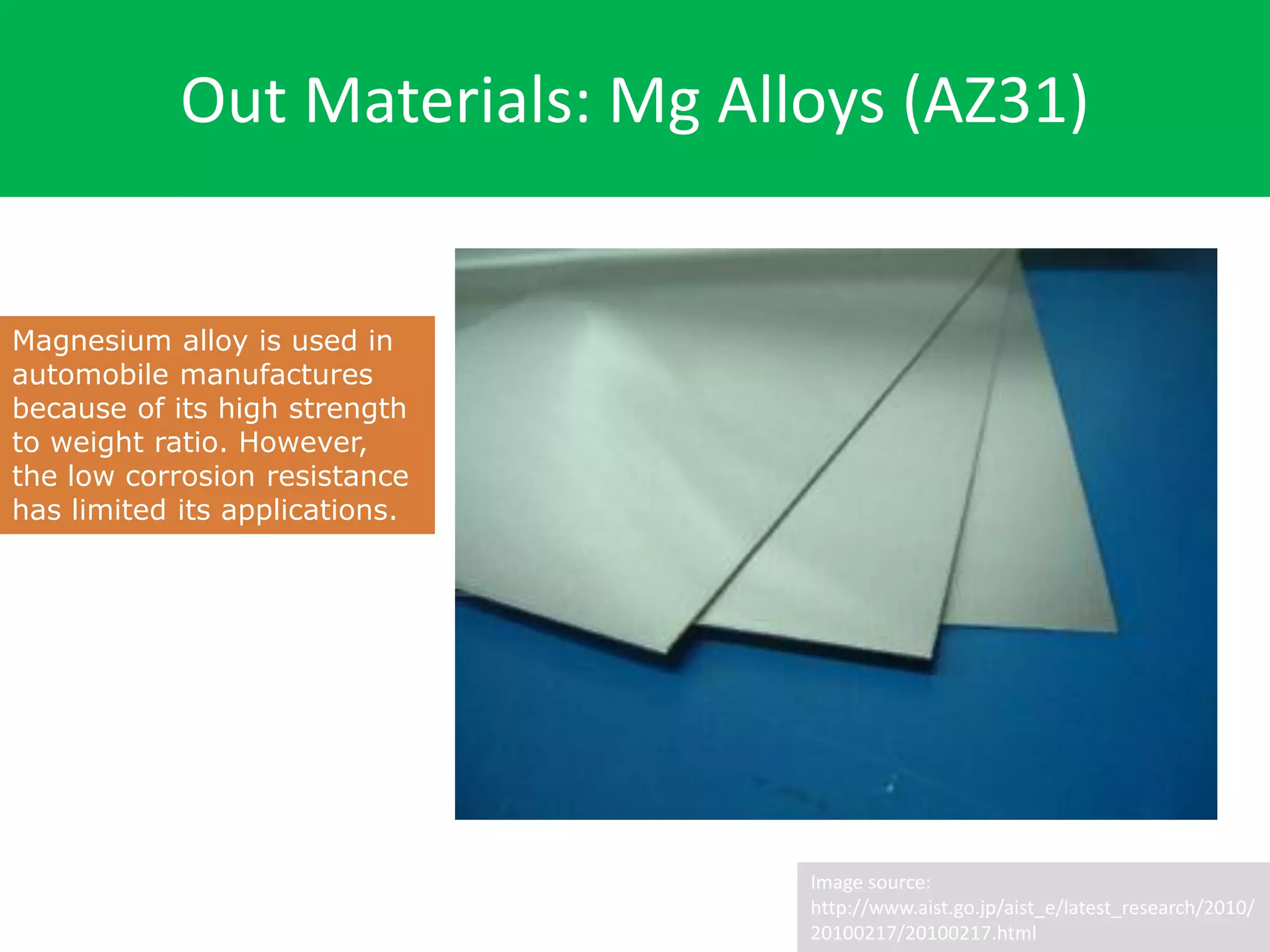
Out Materials: Mg Alloys (AZ31)
Image source:
http://www.aist.go.jp/aist_e/latest_research/2010/
20100217/20100217.html
Magnesium alloy is used in
automobile manufactures
because of its high strength
to weight ratio. However,
the low corrosion resistance
has limited its applications.
Outlines
Introduction
Objectives
Experiments on VHB 4910
Experiments on the coating
Conclusion
Objectives
To determine the self-healing ability of
VHB 4910.
To develop a self-healing coating on the
magnesium alloy substrate.
To understand the self-healing
mechanism of acrylic materials.
Outlines
Introduction
Objectives
Experiments on VHB 4910
Experiments on the coating
Conclusion
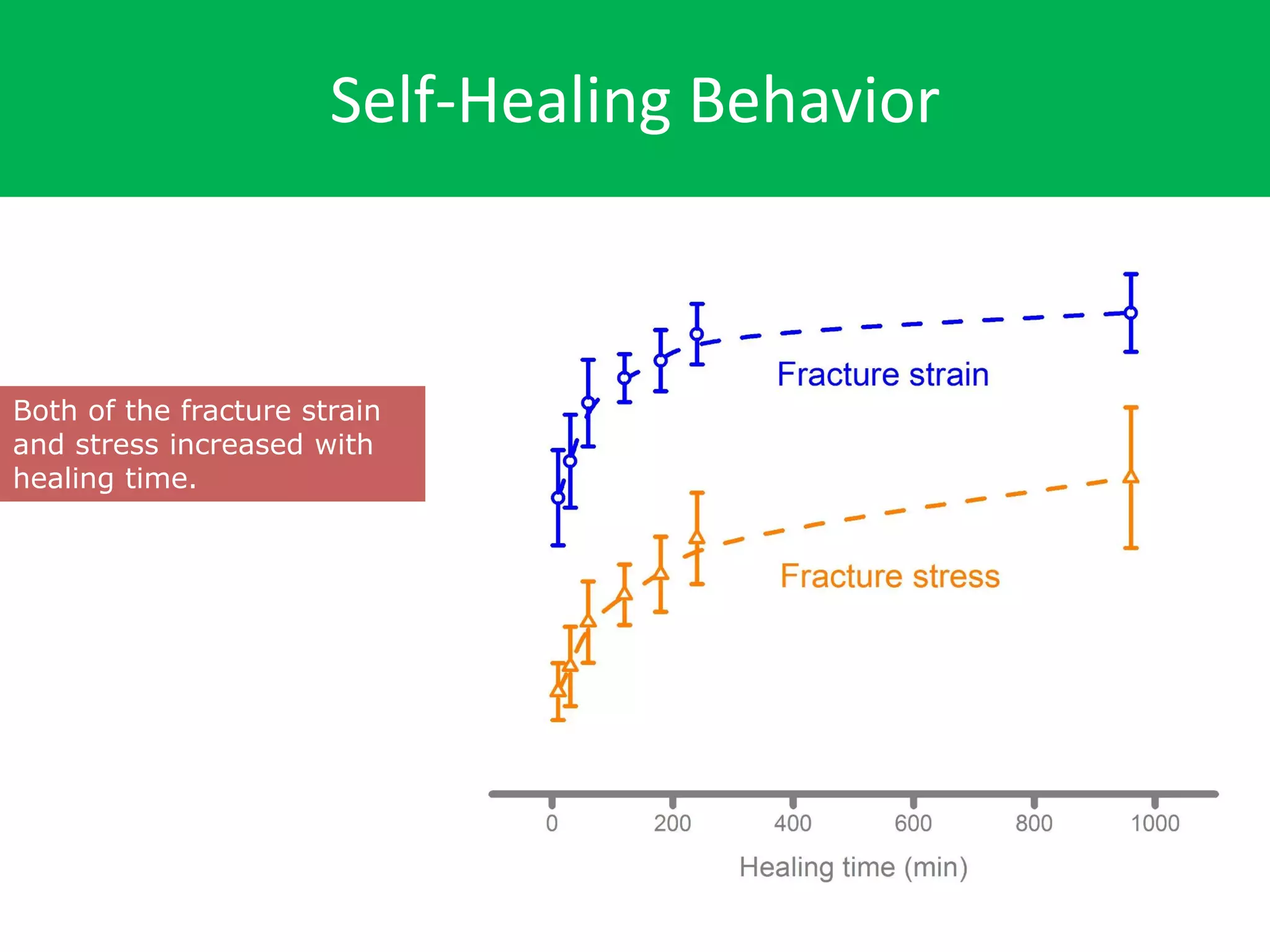
Self-Healing Behavior
Both of the fracture strain
and stress increased with
healing time.
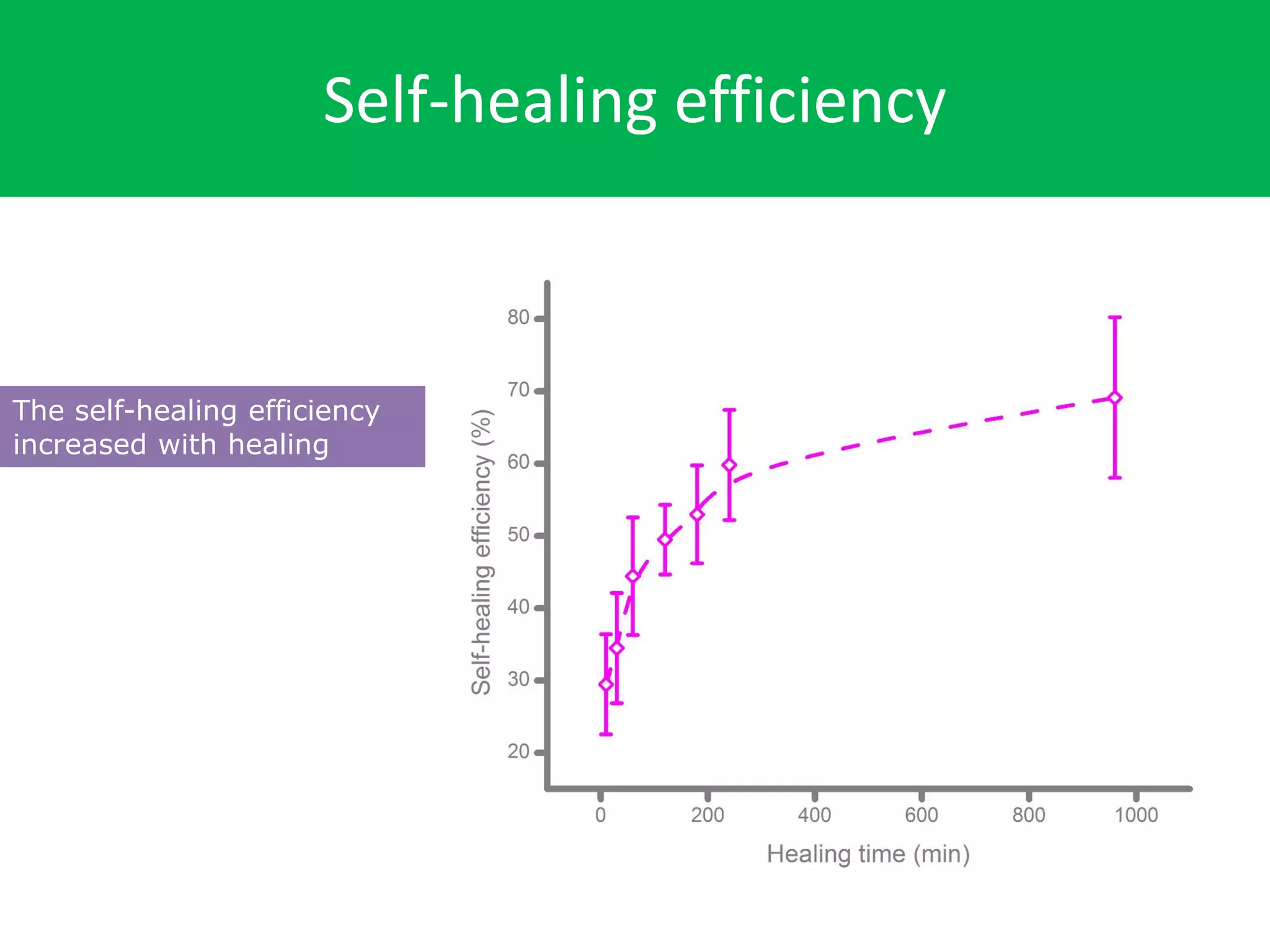
Self-healing efficiency
The self-healing efficiency
increased with healing
time.
Molecular Chain Diffusion
According to Wool et al.[4],
the true fracture stress after
healing is proportional to
(𝑡)^0.25. This is considered
to be a chain diffusion result.
[4] Y. H. Kim, R. P. Wool, Macromolecules 1983, 16, 1115.
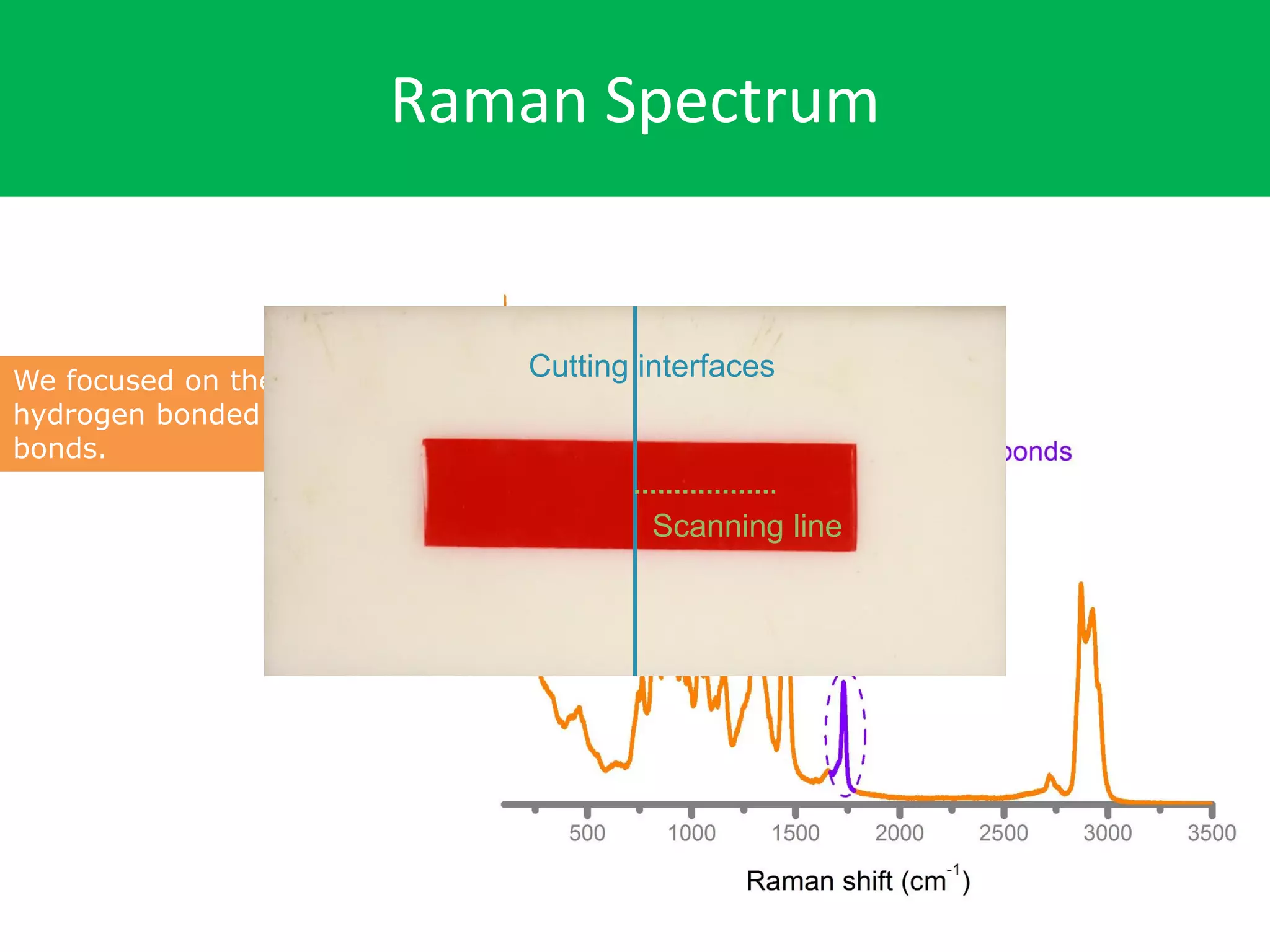
Raman Spectrum
We focused on the free and
hydrogen bonded carbonyl
bonds.
Cutting interfaces
Scanning line
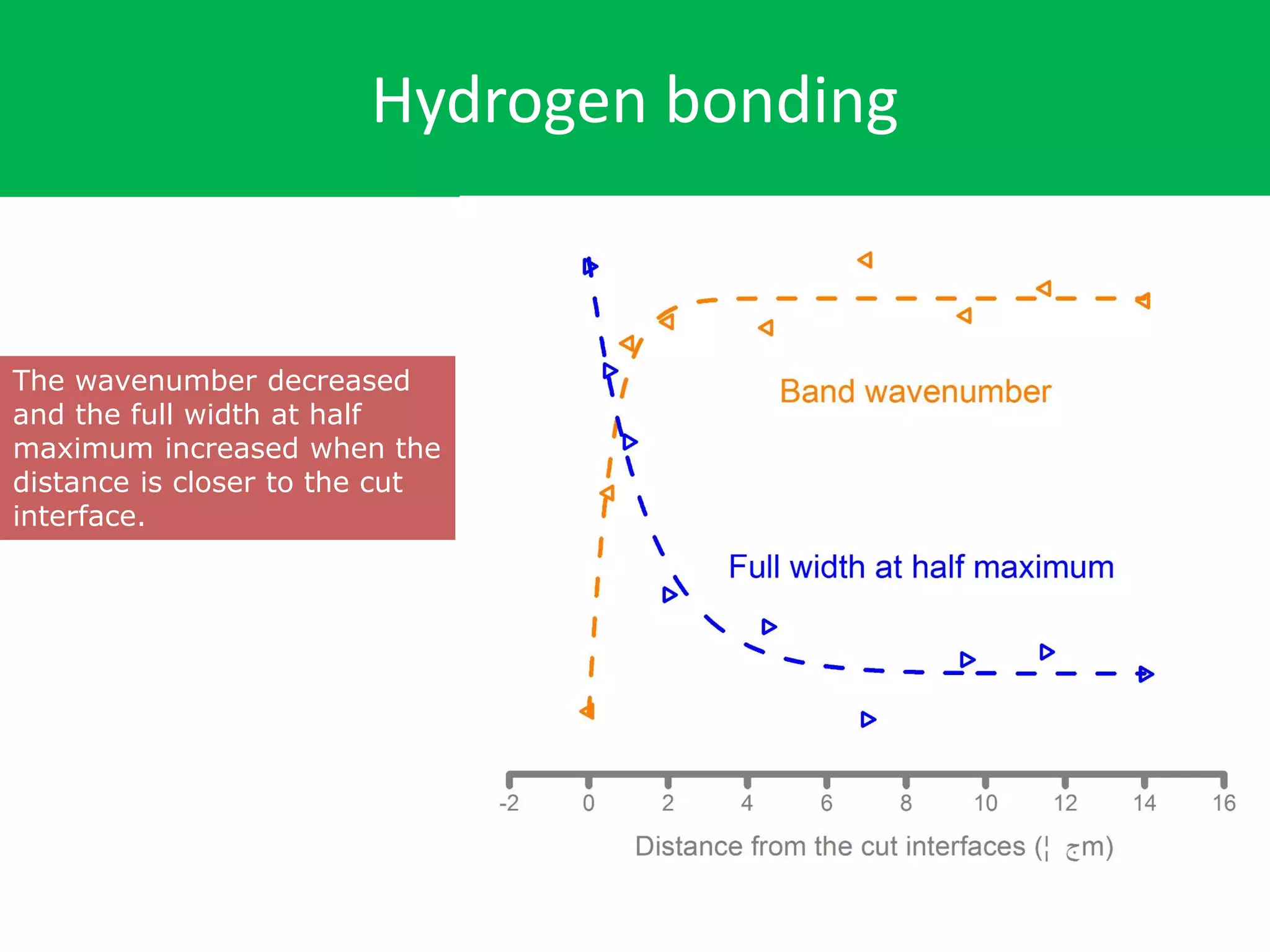
Hydrogen bonding
The wavenumber decreased
and the full width at half
maximum increased when the
distance is closer to the cut
interface.
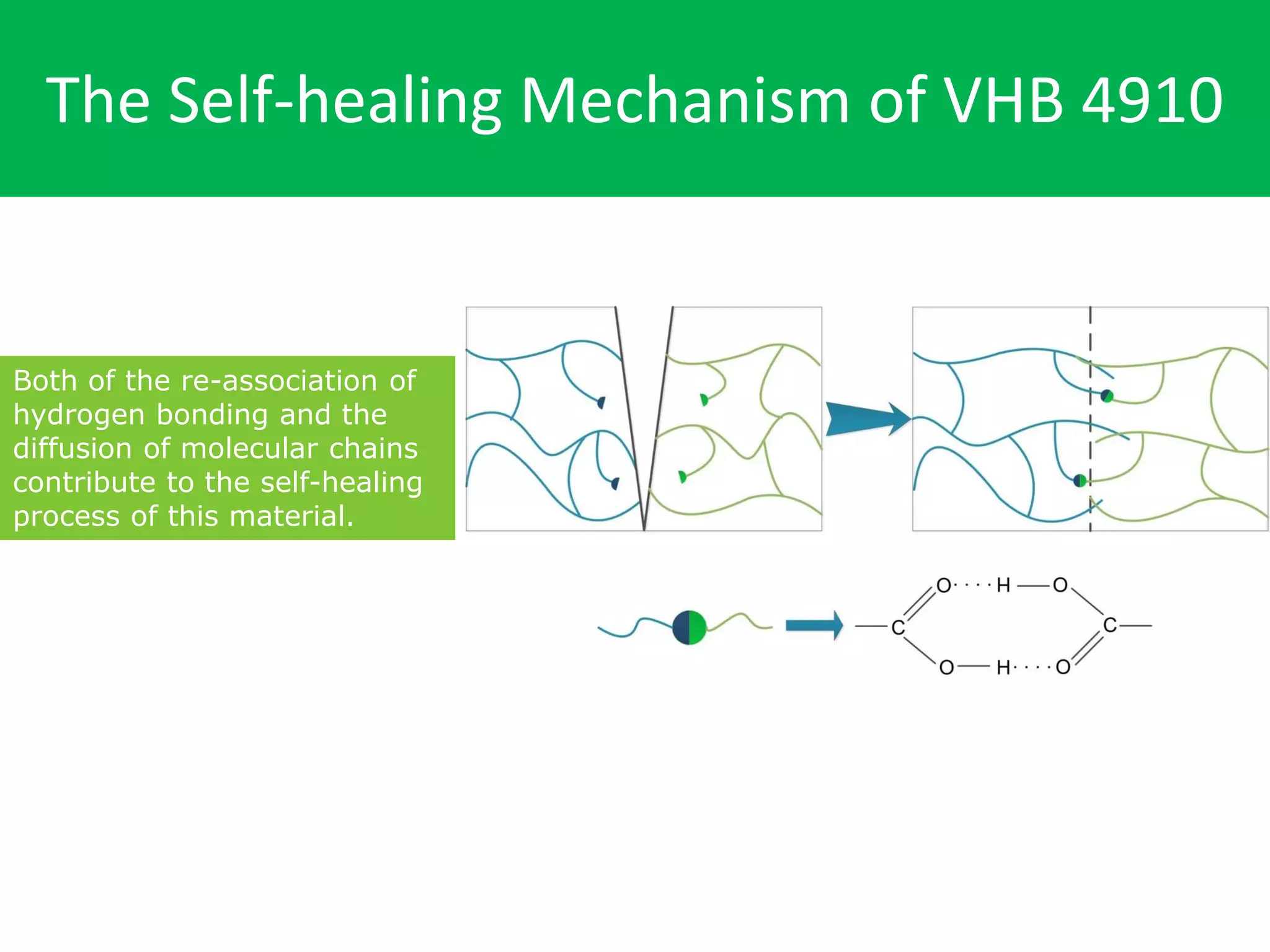
The Self-healing Mechanism of VHB 4910
Both of the re-association of
hydrogen bonding and the
diffusion of molecular chains
contribute to the self-healing
process of this material.
Outlines
Introduction
Objectives
Experiments on VHB 4910
Experiments on the coating
Conclusion
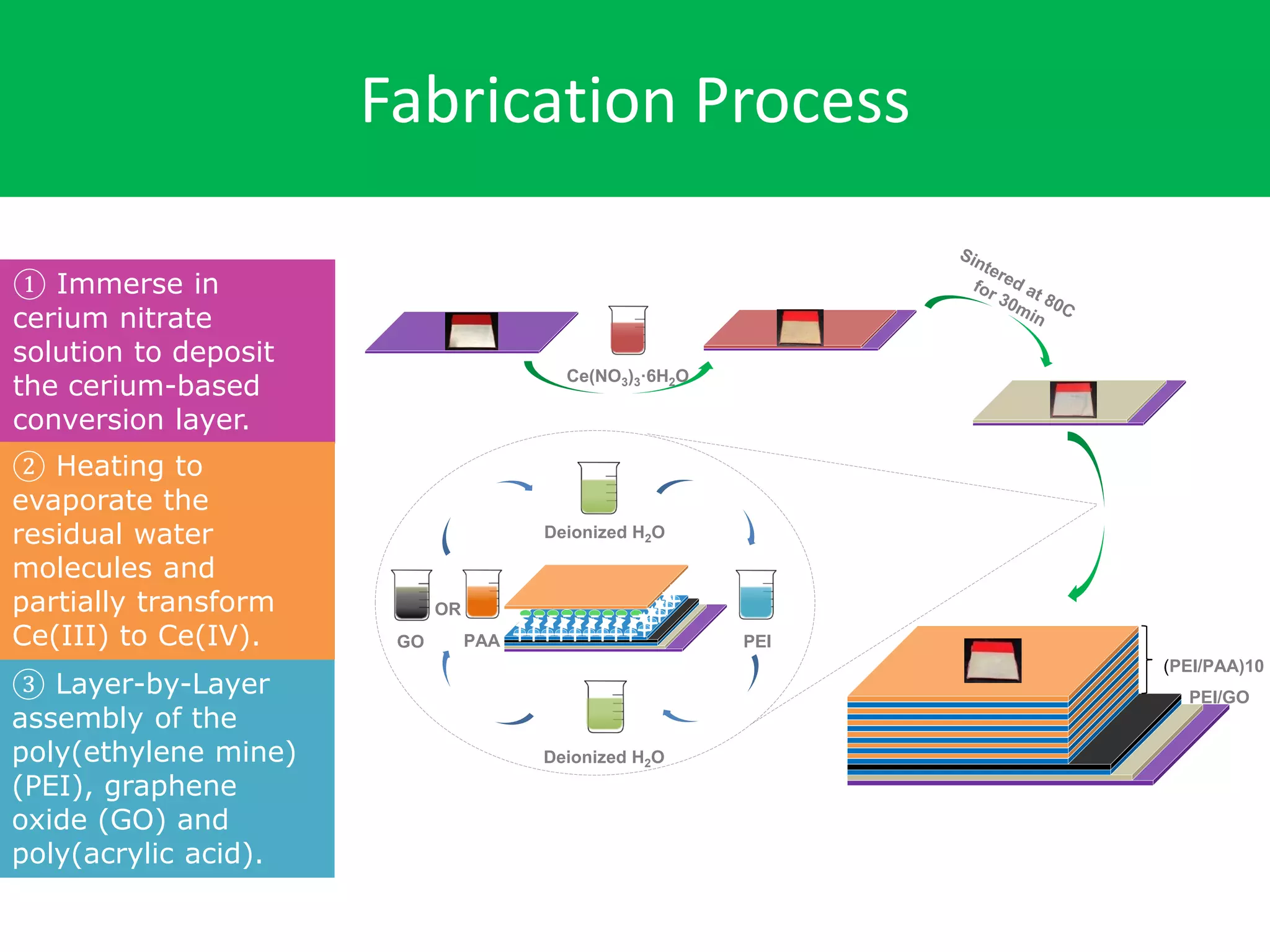
Fabrication Process
(PEI/PAA)10
PEI/GO
Ce(NO3)3·6H2O
PEIPAA
Deionized H2O
Deionized H2O
GO
OR
+++++++++
-------- -+++++
① Immerse in
cerium nitrate
solution to deposit
the cerium-based
conversion layer.
② Heating to
evaporate the
residual water
molecules and
partially transform
Ce(III) to Ce(IV).
③ Layer-by-Layer
assembly of the
poly(ethylene mine)
(PEI), graphene
oxide (GO) and
poly(acrylic acid).
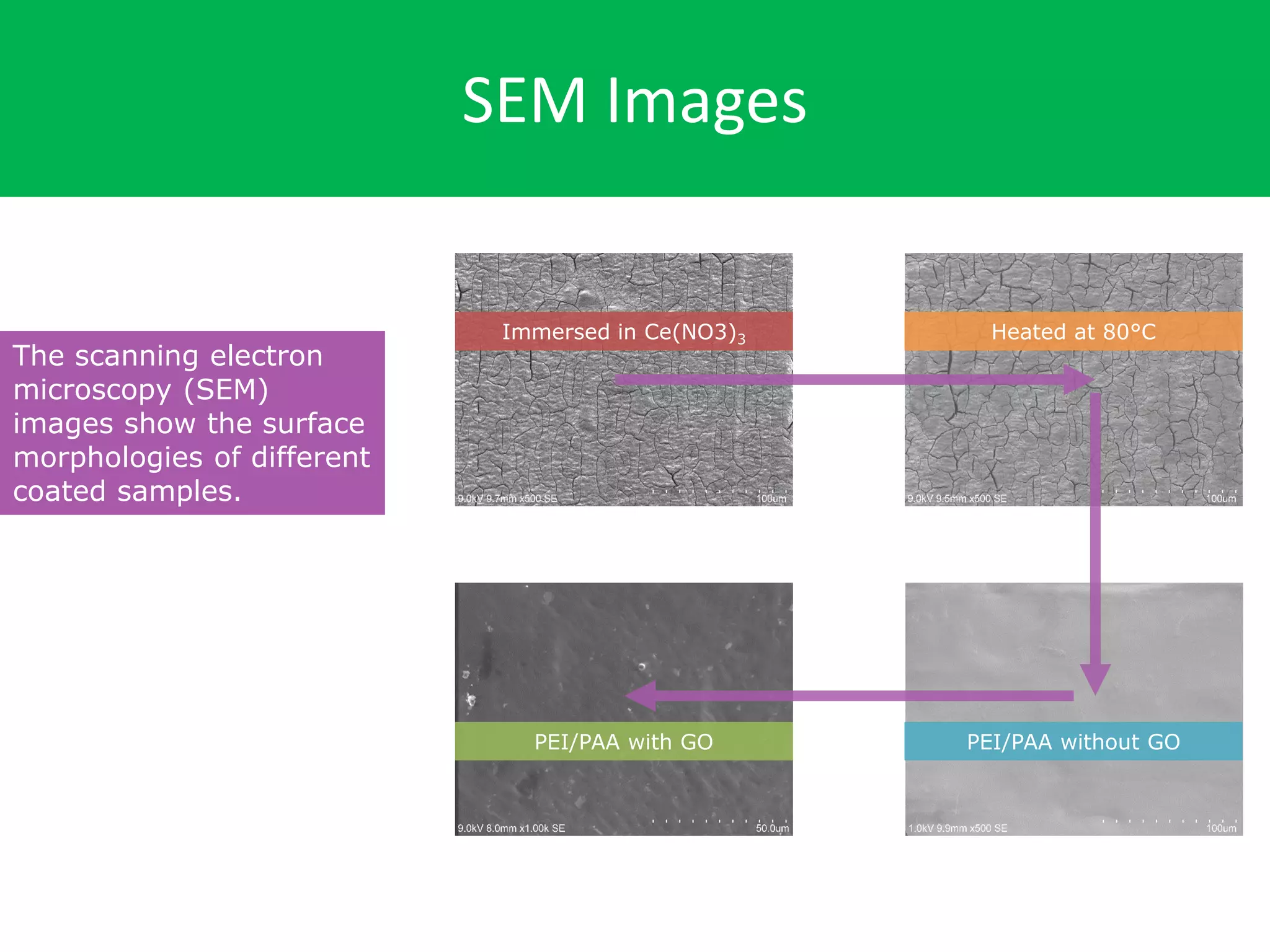
SEM Images
Immersed in Ce(NO3)3 Heated at 80°C
PEI/PAA without GOPEI/PAA with GO
The scanning electron
microscopy (SEM)
images show the surface
morphologies of different
coated samples.
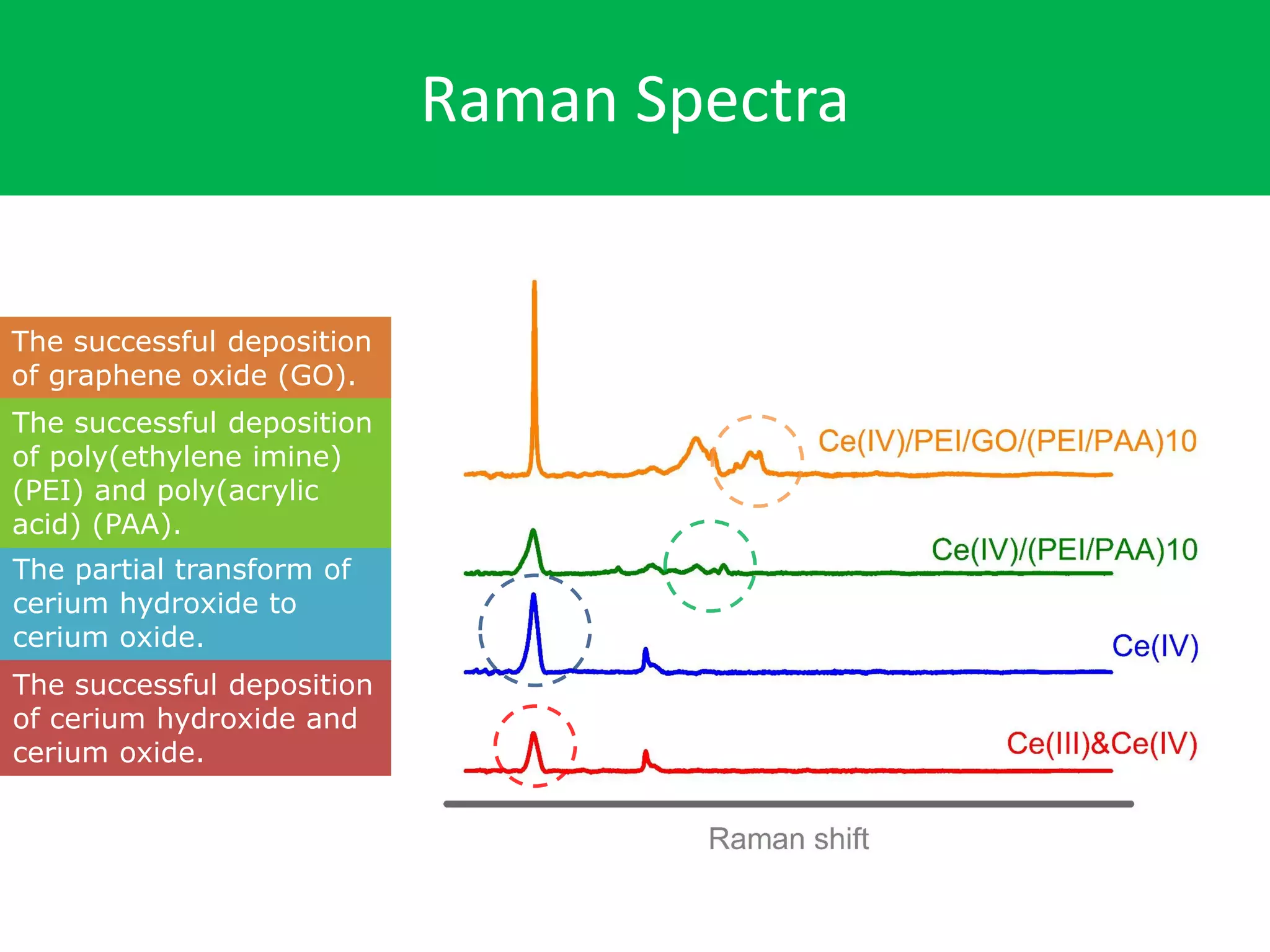
Raman Spectra
The successful deposition
of cerium hydroxide and
cerium oxide.
The partial transform of
cerium hydroxide to
cerium oxide.
The successful deposition
of poly(ethylene imine)
(PEI) and poly(acrylic
acid) (PAA).
The successful deposition
of graphene oxide (GO).
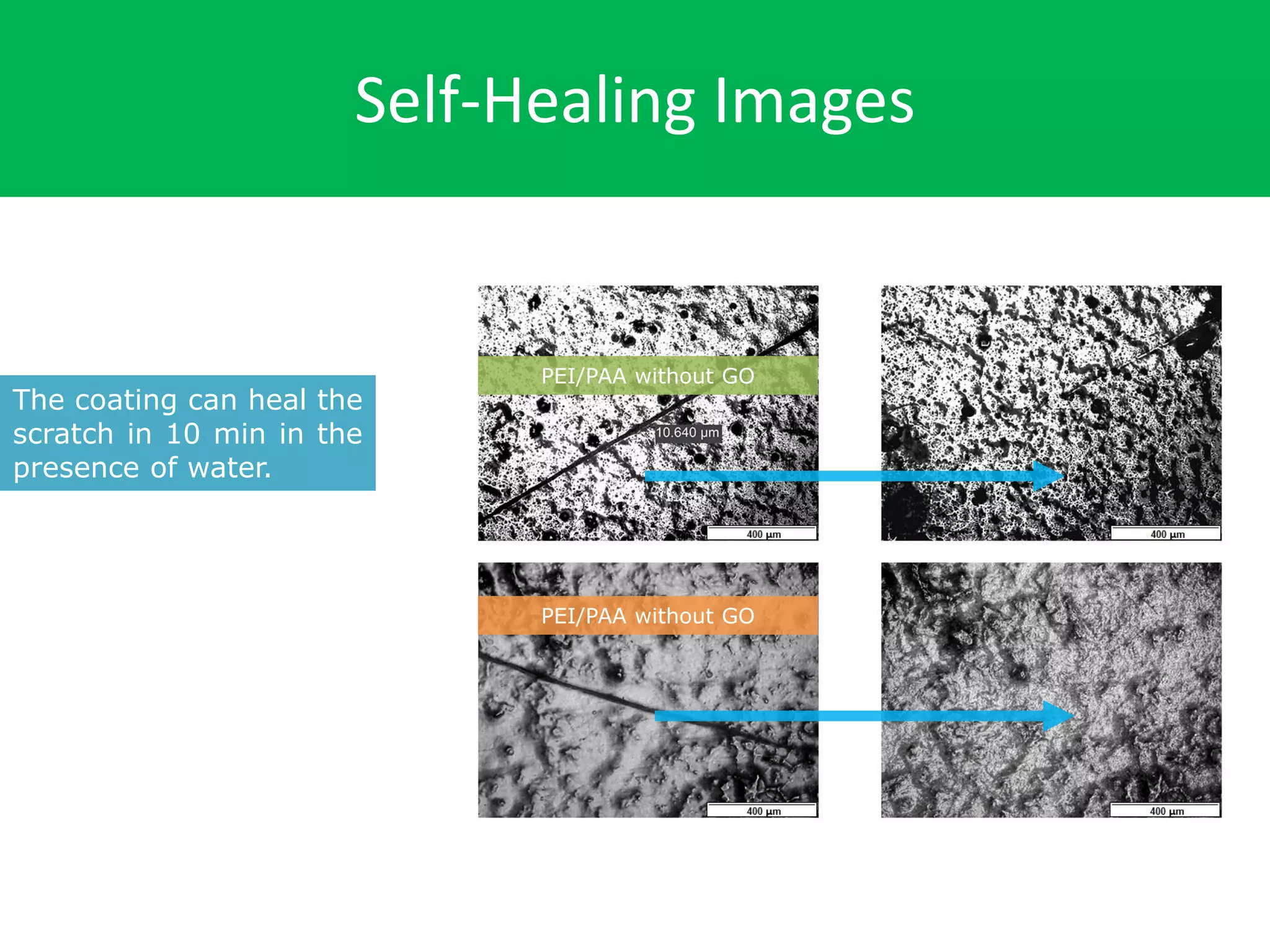
Self-Healing Images
PEI/PAA without GO
PEI/PAA without GO
The coating can heal the
scratch in 10 min in the
presence of water.
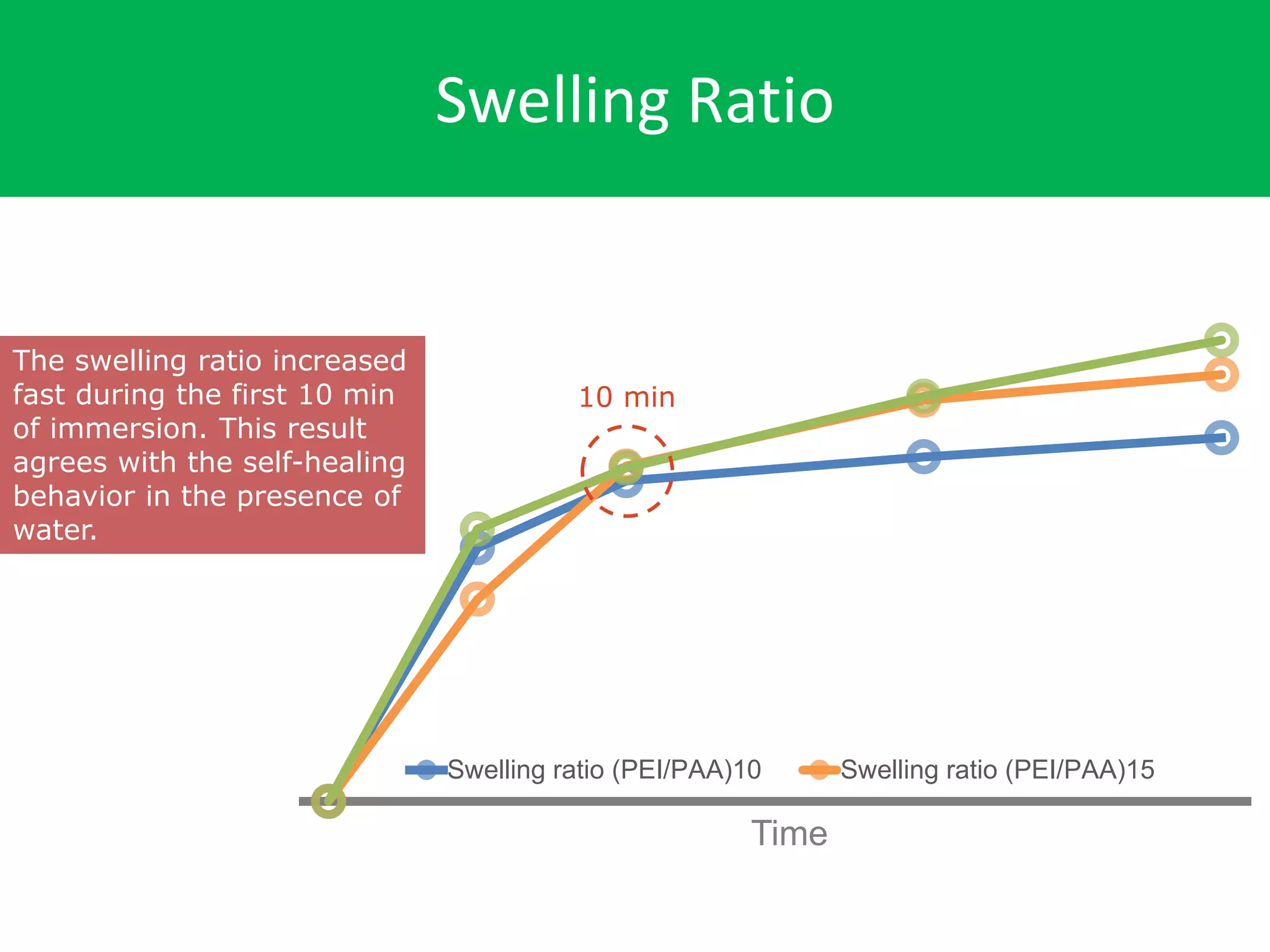
Time
Swelling ratio (PEI/PAA)10 Swelling ratio (PEI/PAA)15
Swelling Ratio
The swelling ratio increased
fast during the first 10 min
of immersion. This result
agrees with the self-healing
behavior in the presence of
water.
10 min
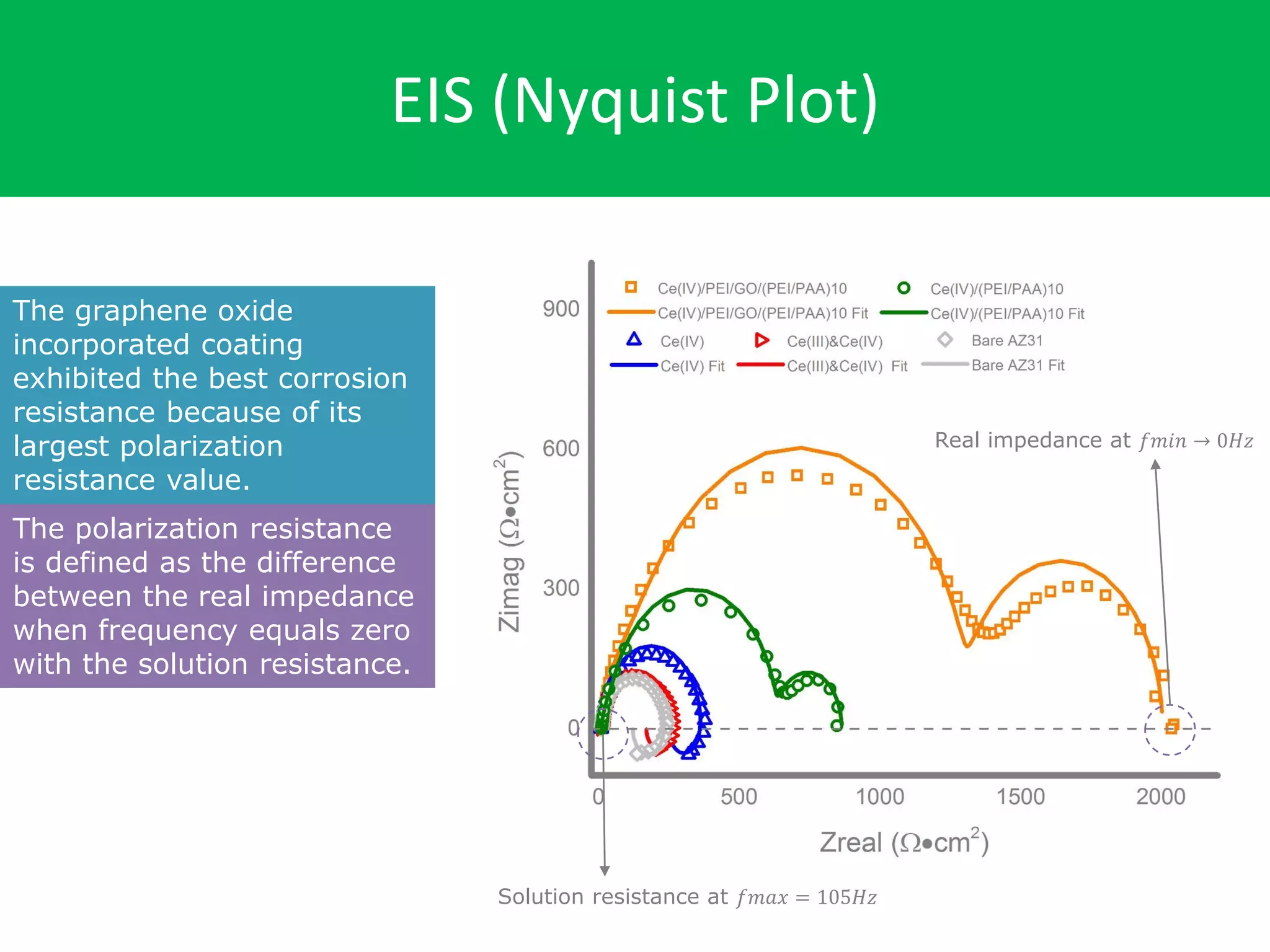
EIS (Nyquist Plot)
The graphene oxide
incorporated coating
exhibited the best corrosion
resistance because of its
largest polarization
resistance value.
The polarization resistance
is defined as the difference
between the real impedance
when frequency equals zero
with the solution resistance.
Solution resistance at 𝑓𝑚𝑎𝑥 = 105𝐻𝑧
Real impedance at 𝑓𝑚𝑖𝑛 → 0𝐻𝑧
Outlines
Introduction
Objectives
Sample preparation
Sample characterization
Surface morphology
Compositions characterization
Corrosion resistance
Self-healing ability
Conclusion
Conclusions
The self-healing efficiency of VHB 4910 increases with the
healing time and healing temperature.
Both of the hydrogen bonding and the chain diffusion
process contribute to the self-healing process.
The PEI/PAA multilayer coating exhibits rapid self-healing
ability in the presence of water.
The graphene oxide can improve the corrosion resistance of
the multilayer coatings.
Q?
A.

The self-healing mechanism and application of acrylic materials

  • 1.
    Fan Fan Supervisor: JerzySzpunar .The Self-Healing Mechanism and Application of Acrylic Materials_.
  • 2.
    Outlines Introduction Objectives Experiments on VHB4910 Experiments on the coating Conclusion
  • 3.
    Outlines Introduction Objectives Experiments on VHB4910 Experiments on the coating Conclusion
  • 4.
    What is self-healing? Themost common self-healing material is our skin which can recover from injuries intrinsically. Image source: healthnbodytips.com/wp-content/uploads/2015/03/Benefits-of- Drinking-Hot-Water-for-Skin1.jpg?b0bc0c
  • 5.
    What can self-healingdo? The most successful industrial application of self-healing materials is the self-healing back cover of a LG cellphone. Image source: www.pcadvisor.co.uk/review/high-end-smartphones/lg-g-flex- curved-smartphone-review-3496524/
  • 6.
    Self-Healing Materials Extrinsic self-healing materialsrely on the released healing agent which polymerized to heal the crack. Intrinsic self-healing materials rely on the re- association of non- covalent bonding including hydrogen bonding and electrostatic attractions.
  • 7.
    Extrinsic Self-Healing Coating Thehealing agents were released to the cracks to heal the crack. [1] Huang, M. & Yang, J. Facile microencapsulation of HDI for self- healing anticorrosion coatings. J. Mater. Chem. 21, 11123 (2011).
  • 8.
    Intrinsic Self-Healing Coating There-association of hydrogen bonding initiated the self- healing process. [2] Phadke, A. et al. Rapid self-healing hydrogels. Proc. Natl. Acad. Sci. U. S. A. 109, 4383–4388 (2012).
  • 9.
    Out Materials: VHB4910 Image source: https://www.tapecase.com/pd/cn/tapes-die- cuts/1026/1000707/3m-4910-vhb-tape.aspx VHB 4910 is a double-sided tape manufactured by 3M company. Because of its dielectric property, it has been studied as actuator and artificial muscles.
  • 10.
    Out Materials: MgAlloys (AZ31) Image source: http://www.aist.go.jp/aist_e/latest_research/2010/ 20100217/20100217.html Magnesium alloy is used in automobile manufactures because of its high strength to weight ratio. However, the low corrosion resistance has limited its applications.
  • 11.
    Outlines Introduction Objectives Experiments on VHB4910 Experiments on the coating Conclusion
  • 12.
    Objectives To determine theself-healing ability of VHB 4910. To develop a self-healing coating on the magnesium alloy substrate. To understand the self-healing mechanism of acrylic materials.
  • 13.
    Outlines Introduction Objectives Experiments on VHB4910 Experiments on the coating Conclusion
  • 14.
    Self-Healing Behavior Both ofthe fracture strain and stress increased with healing time.
  • 15.
    Self-healing efficiency The self-healingefficiency increased with healing time.
  • 16.
    Molecular Chain Diffusion Accordingto Wool et al.[4], the true fracture stress after healing is proportional to (𝑡)^0.25. This is considered to be a chain diffusion result. [4] Y. H. Kim, R. P. Wool, Macromolecules 1983, 16, 1115.
  • 17.
    Raman Spectrum We focusedon the free and hydrogen bonded carbonyl bonds. Cutting interfaces Scanning line
  • 18.
    Hydrogen bonding The wavenumberdecreased and the full width at half maximum increased when the distance is closer to the cut interface.
  • 19.
    The Self-healing Mechanismof VHB 4910 Both of the re-association of hydrogen bonding and the diffusion of molecular chains contribute to the self-healing process of this material.
  • 20.
    Outlines Introduction Objectives Experiments on VHB4910 Experiments on the coating Conclusion
  • 21.
    Fabrication Process (PEI/PAA)10 PEI/GO Ce(NO3)3·6H2O PEIPAA Deionized H2O DeionizedH2O GO OR +++++++++ -------- -+++++ ① Immerse in cerium nitrate solution to deposit the cerium-based conversion layer. ② Heating to evaporate the residual water molecules and partially transform Ce(III) to Ce(IV). ③ Layer-by-Layer assembly of the poly(ethylene mine) (PEI), graphene oxide (GO) and poly(acrylic acid).
  • 22.
    SEM Images Immersed inCe(NO3)3 Heated at 80°C PEI/PAA without GOPEI/PAA with GO The scanning electron microscopy (SEM) images show the surface morphologies of different coated samples.
  • 23.
    Raman Spectra The successfuldeposition of cerium hydroxide and cerium oxide. The partial transform of cerium hydroxide to cerium oxide. The successful deposition of poly(ethylene imine) (PEI) and poly(acrylic acid) (PAA). The successful deposition of graphene oxide (GO).
  • 24.
    Self-Healing Images PEI/PAA withoutGO PEI/PAA without GO The coating can heal the scratch in 10 min in the presence of water.
  • 25.
    Time Swelling ratio (PEI/PAA)10Swelling ratio (PEI/PAA)15 Swelling Ratio The swelling ratio increased fast during the first 10 min of immersion. This result agrees with the self-healing behavior in the presence of water. 10 min
  • 26.
    EIS (Nyquist Plot) Thegraphene oxide incorporated coating exhibited the best corrosion resistance because of its largest polarization resistance value. The polarization resistance is defined as the difference between the real impedance when frequency equals zero with the solution resistance. Solution resistance at 𝑓𝑚𝑎𝑥 = 105𝐻𝑧 Real impedance at 𝑓𝑚𝑖𝑛 → 0𝐻𝑧
  • 27.
    Outlines Introduction Objectives Sample preparation Sample characterization Surfacemorphology Compositions characterization Corrosion resistance Self-healing ability Conclusion
  • 28.
    Conclusions The self-healing efficiencyof VHB 4910 increases with the healing time and healing temperature. Both of the hydrogen bonding and the chain diffusion process contribute to the self-healing process. The PEI/PAA multilayer coating exhibits rapid self-healing ability in the presence of water. The graphene oxide can improve the corrosion resistance of the multilayer coatings.
  • 29.