AN INTRODUCTION TO SELF HEALING
POLYMERS
SUBMITTED TO
CHEMICAL ENGINEERING DEPARTMENT
HBTU, KANPUR
PREPARED BY
SHANJUL SHRIVASTAVA
MTECH II -YEAR
CONTENTS
1. What are Self Healing Polymers
2. Need & Inspiration
3. Thermodynamics of self-healing ,Entropy Changes and Gibbs Energy
4. Intrinsic systems and examples
5. Extrinsic systems and examples
6. Applications of self healing polymers
7. Problems and Challenges
8. References
What are Self Healing
Polymers
Self-healing polymers are
synthetically created ‘smart
materials’ which have the
built-in ability to
automatically repair
damage to themselves
without any external
diagnosis
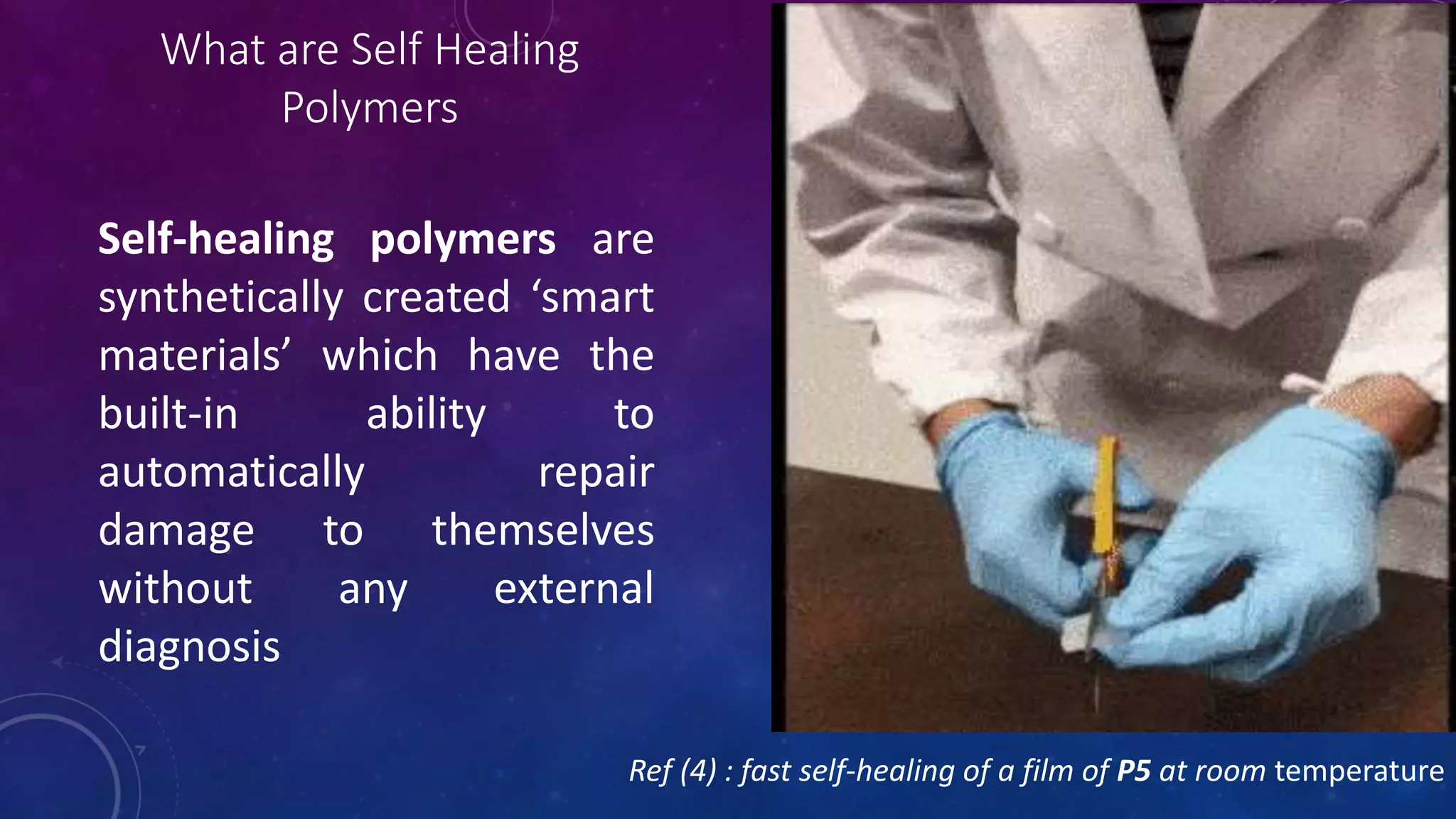
Ref (4) : fast self-healing of a film of P5 at room temperature
Need & Inspiration
Polymers and polymer composites are used in a variety of applications in our
day to day life. However, these materials are susceptible to damage induced
by mechanical, chemical, thermal, UV or a combination of these factors.
Self Healing materials are inspired by
biological systems in which the damage
triggers an autonomic healing response.
THE VISION : if industrial materials have
self healing property, their safety, efficacy,
and reliability are significantly improved.
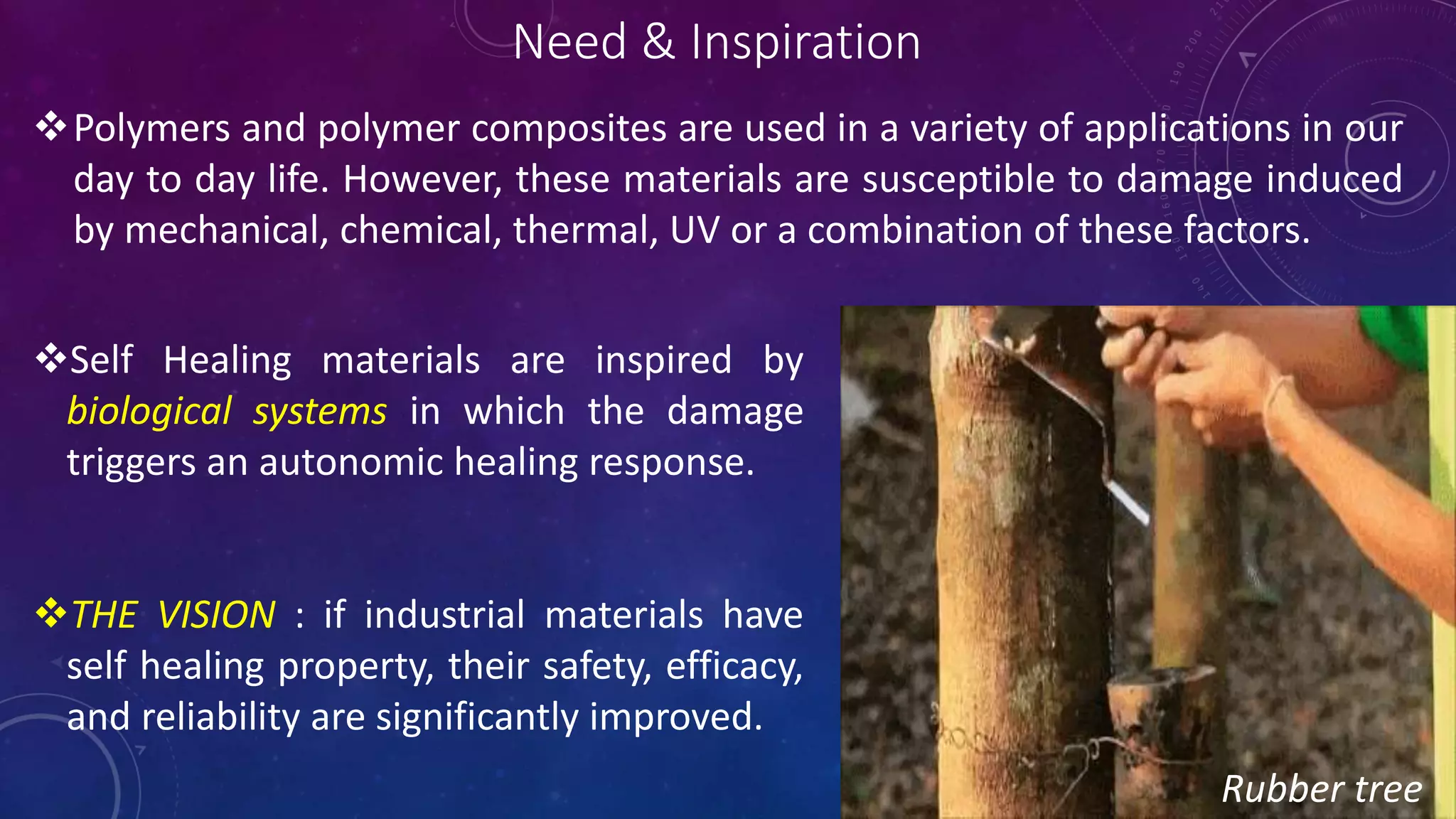
Rubber tree
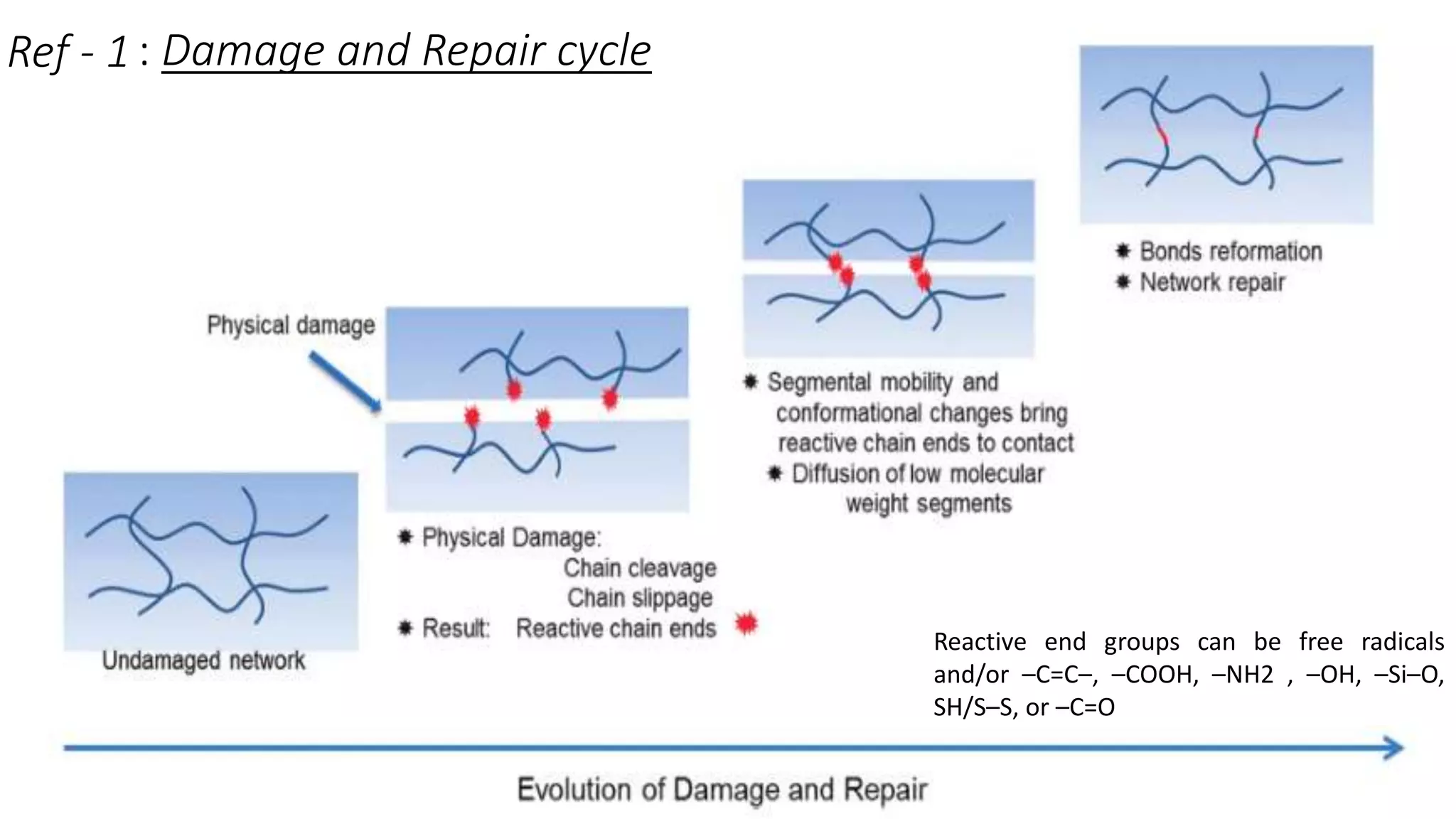
: Damage and Repair cycleRef - 1
Reactive end groups can be free radicals
and/or –C=C–, –COOH, –NH2 , –OH, –Si–O,
SH/S–S, or –C=O
Thermodynamics of self-healing
The self- repairing process can be viewed as series of chain conformational
changes and this approach provided the molecular weight (M) dependence of
repair time : (Tr) ∝ M3 implying that lower molecular weight polymers exhibit
favorable repairing conditions.
Fracture stress (s) is related to M and (Tr) via : (s) ∝ (Tr/M) 1/4
Healing efficiency R(s) can be defined by the extent of the recovery with
respect to its initial post-damage state as the ratio of fracture stress after and
before healing R(s) = [s Healed / s Initial ]
Entropy Changes - Recoupling Model
+∆S from A to B occur due to the V↑ near
created interfaces which will ↑ the number
of arrangements available for a given state.
Driven by the +∆S as well as density gradients
near damaged areas, chain ends will
continuously expand into open voids and thus
fill the damage.
Therefore, flexibility (f) of chains becomes a
critical parameter in rebonding of chains
Ref – (1)
Gibbs Free Energy
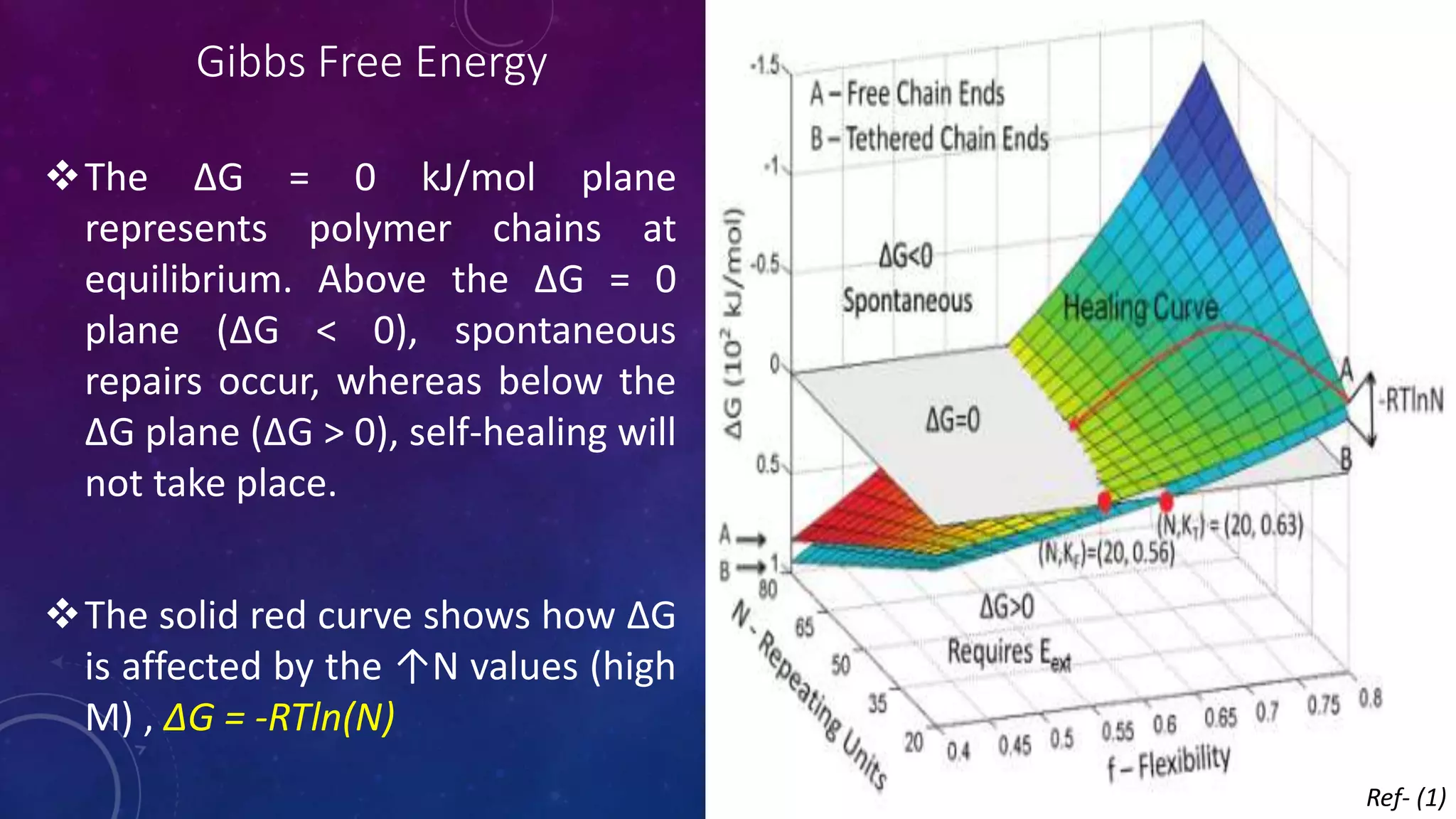
The ∆G = 0 kJ/mol plane
represents polymer chains at
equilibrium. Above the ∆G = 0
plane (∆G < 0), spontaneous
repairs occur, whereas below the
∆G plane (∆G > 0), self-healing will
not take place.
The solid red curve shows how ∆G
is affected by the ↑N values (high
M) , ∆G = -RTln(N)
Ref- (1)
Self Healing Reactions
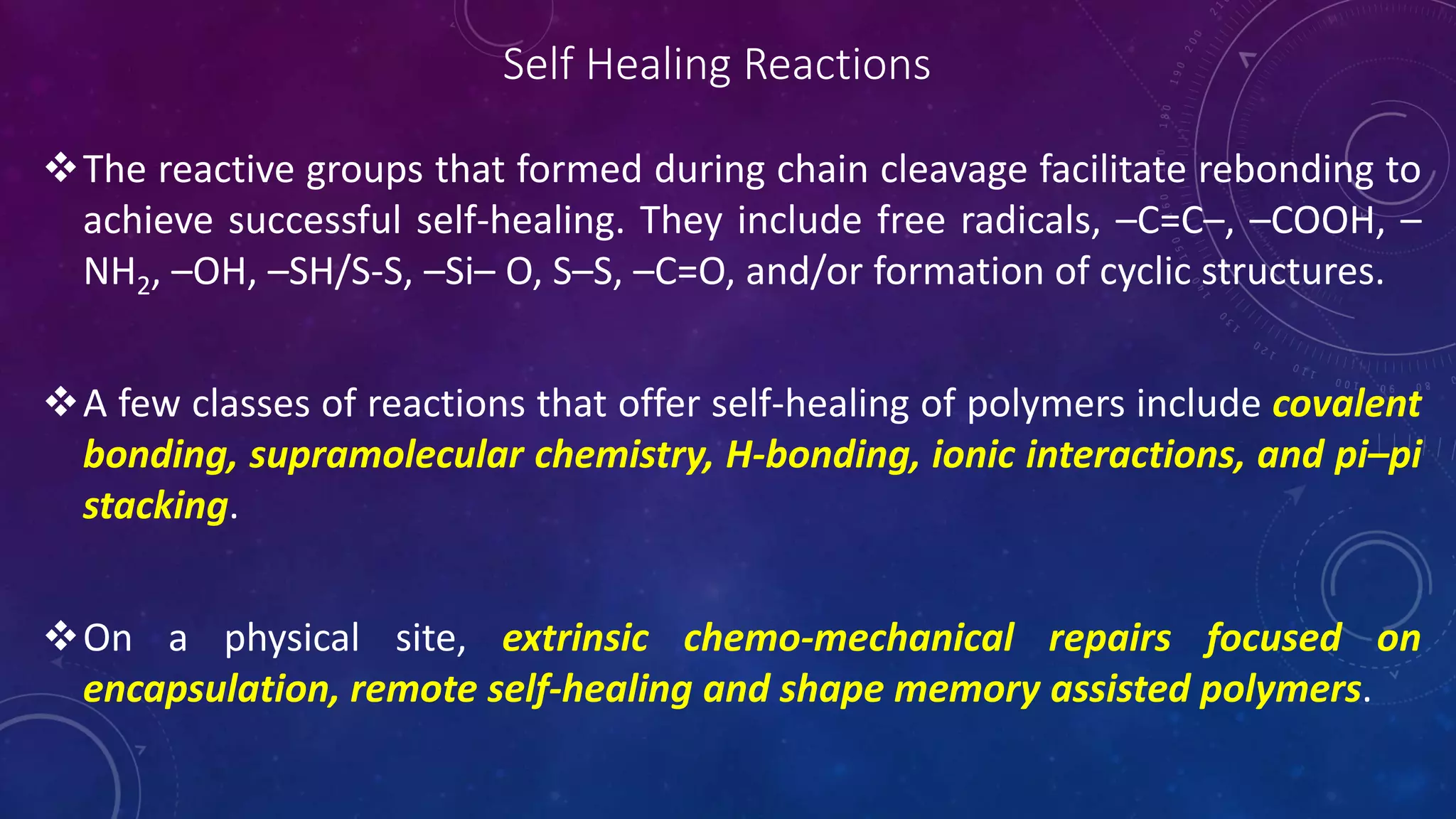
The reactive groups that formed during chain cleavage facilitate rebonding to
achieve successful self-healing. They include free radicals, –C=C–, –COOH, –
NH2, –OH, –SH/S-S, –Si– O, S–S, –C=O, and/or formation of cyclic structures.
A few classes of reactions that offer self-healing of polymers include covalent
bonding, supramolecular chemistry, H-bonding, ionic interactions, and pi–pi
stacking.
On a physical site, extrinsic chemo-mechanical repairs focused on
encapsulation, remote self-healing and shape memory assisted polymers.
Intrinsic systems
The material is inherently able to restore its integrity. Intrinsic systems often
require an external trigger for the healing to take place (such as thermo-
mechanical, electrical, photo-stimuli, etc.
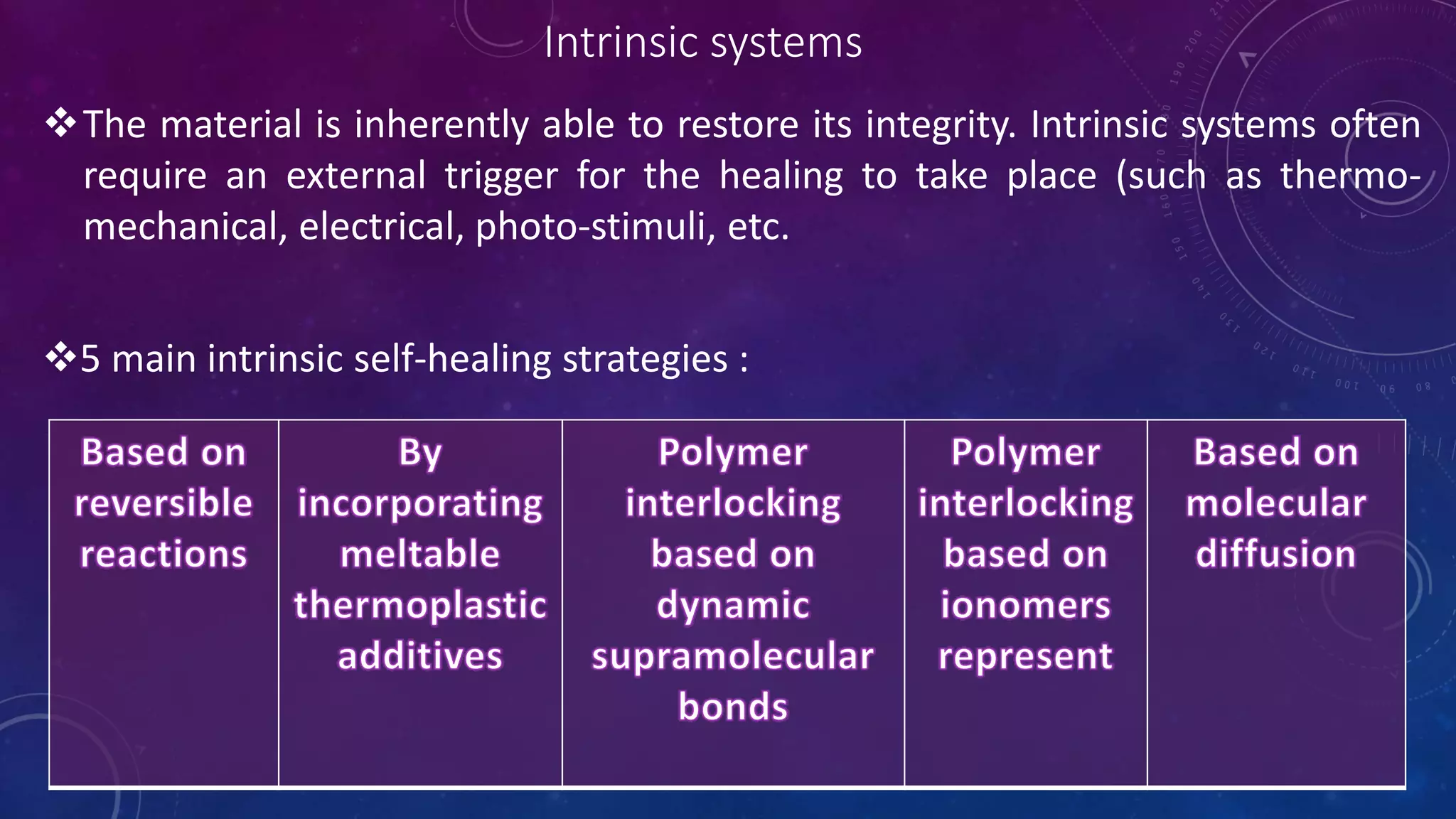
5 main intrinsic self-healing strategies :
Based on covalent bond formation
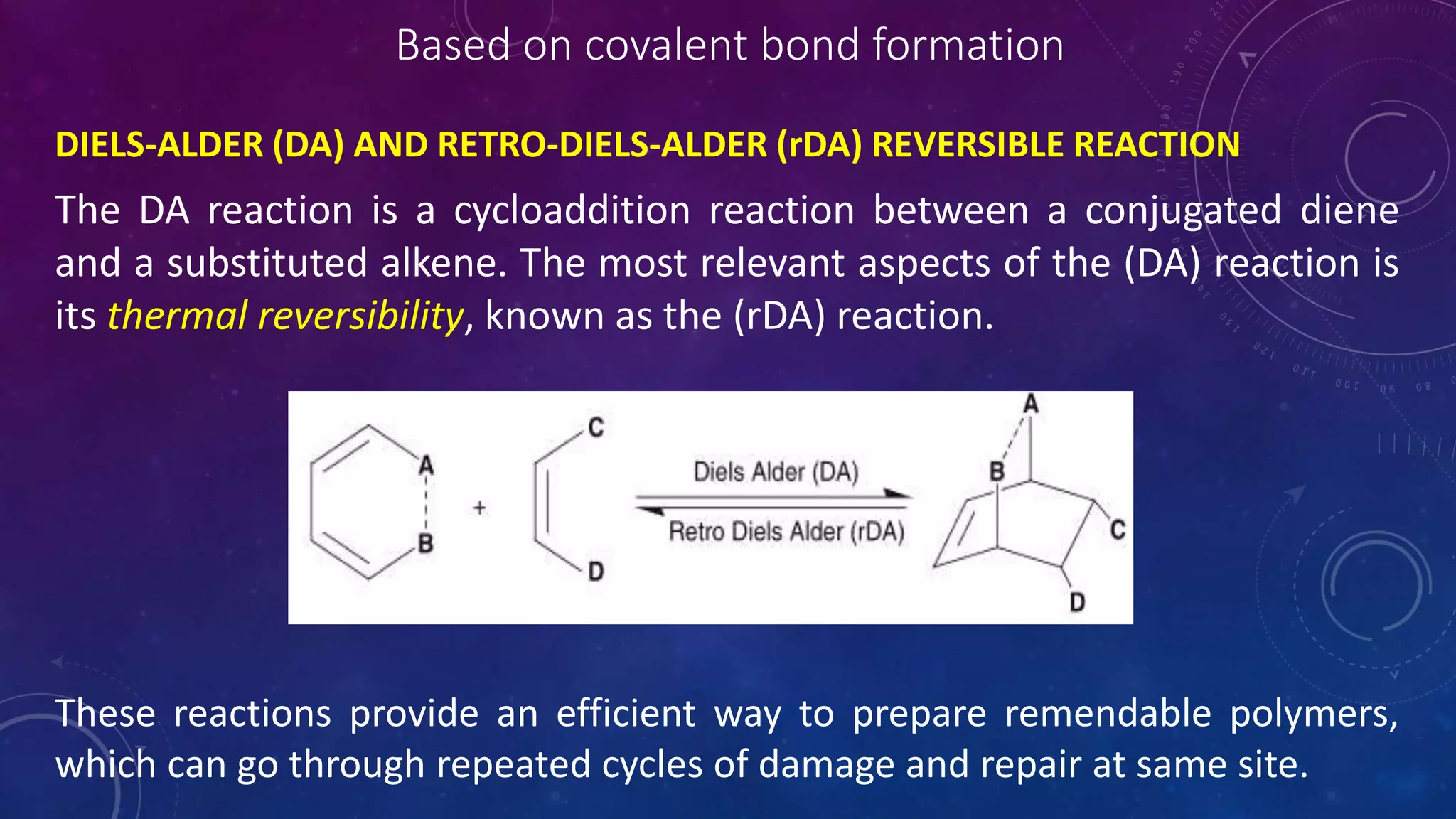
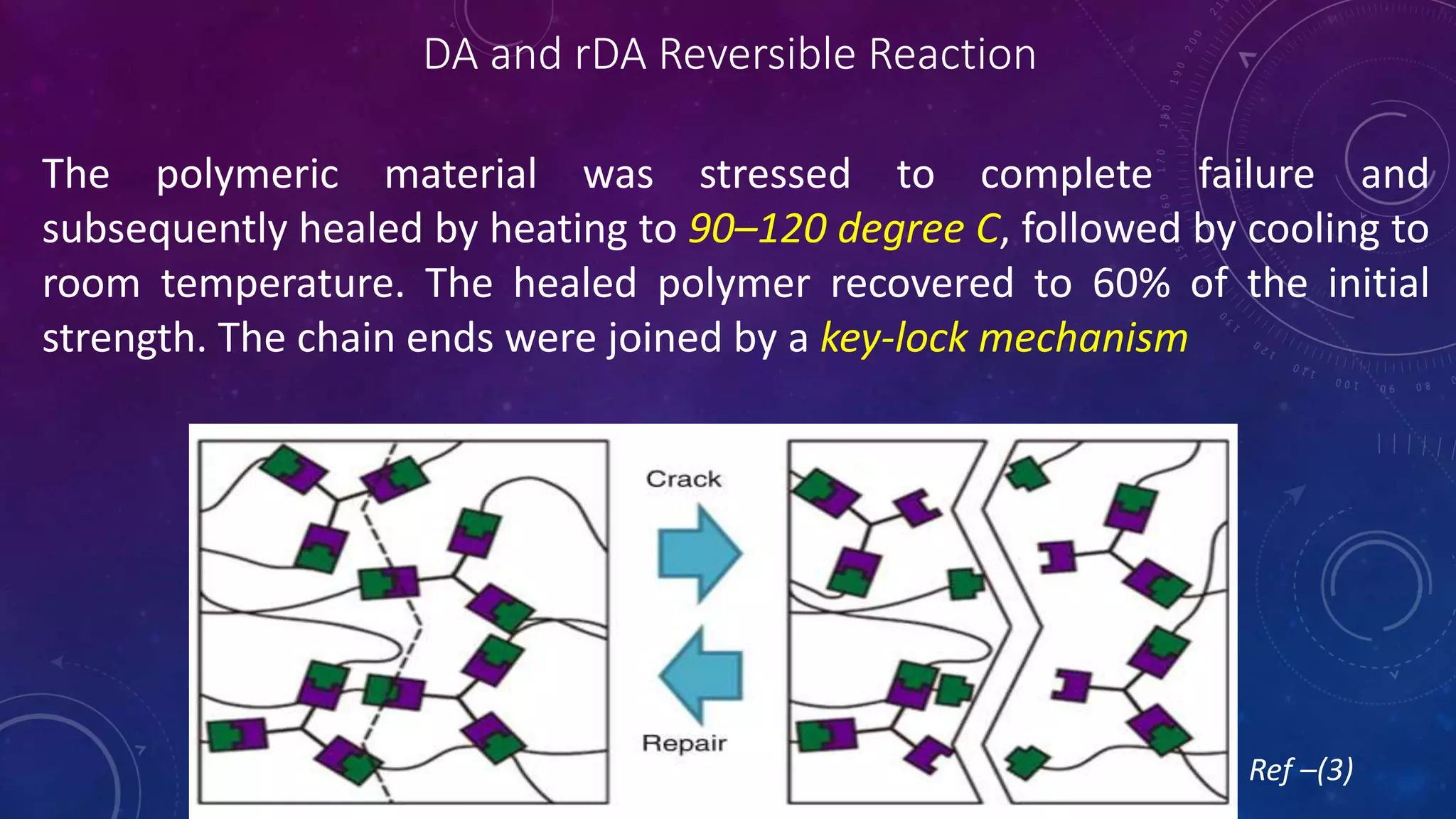
DIELS-ALDER (DA) AND RETRO-DIELS-ALDER (rDA) REVERSIBLE REACTION
The DA reaction is a cycloaddition reaction between a conjugated diene
and a substituted alkene. The most relevant aspects of the (DA) reaction is
its thermal reversibility, known as the (rDA) reaction.
These reactions provide an efficient way to prepare remendable polymers,
which can go through repeated cycles of damage and repair at same site.
The polymeric material was stressed to complete failure and
subsequently healed by heating to 90–120 degree C, followed by cooling to
room temperature. The healed polymer recovered to 60% of the initial
strength. The chain ends were joined by a key-lock mechanism
DA and rDA Reversible Reaction
Ref –(3)
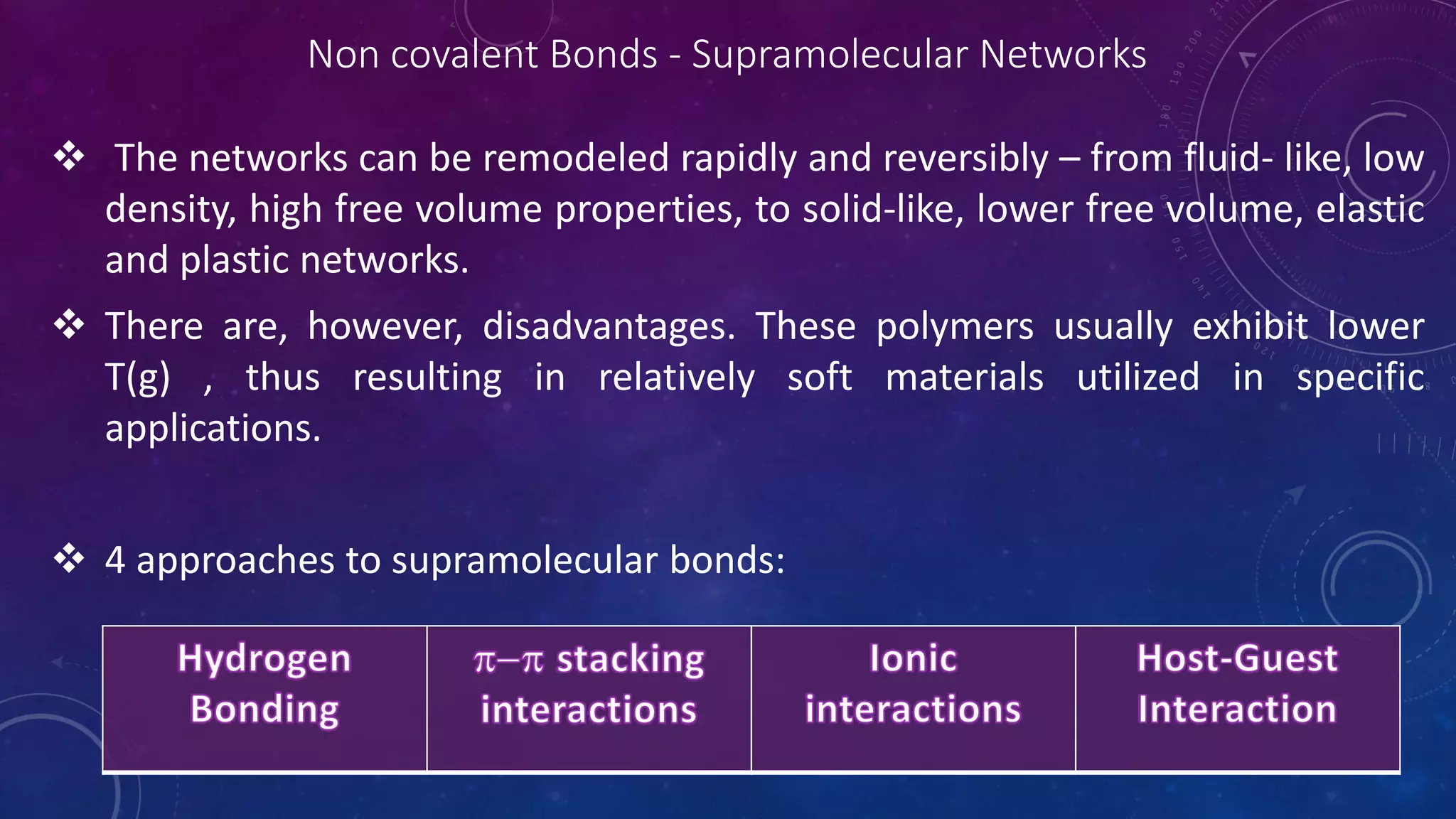
Non covalent Bonds - Supramolecular Networks
 The networks can be remodeled rapidly and reversibly – from fluid- like, low
density, high free volume properties, to solid-like, lower free volume, elastic
and plastic networks.
 There are, however, disadvantages. These polymers usually exhibit lower
T(g) , thus resulting in relatively soft materials utilized in specific
applications.
 4 approaches to supramolecular bonds:
Hydrogen Bonding
 The cross-linking occurs by intermolecular interactions of the monomer
units and/or the side chains by using H- bonds
 The reversibility of non-covalent bonds allows repair to take place at the
molecular level to fully restore the original material properties. Moreover,
the crack and adhesions can be carried out repeatedly.
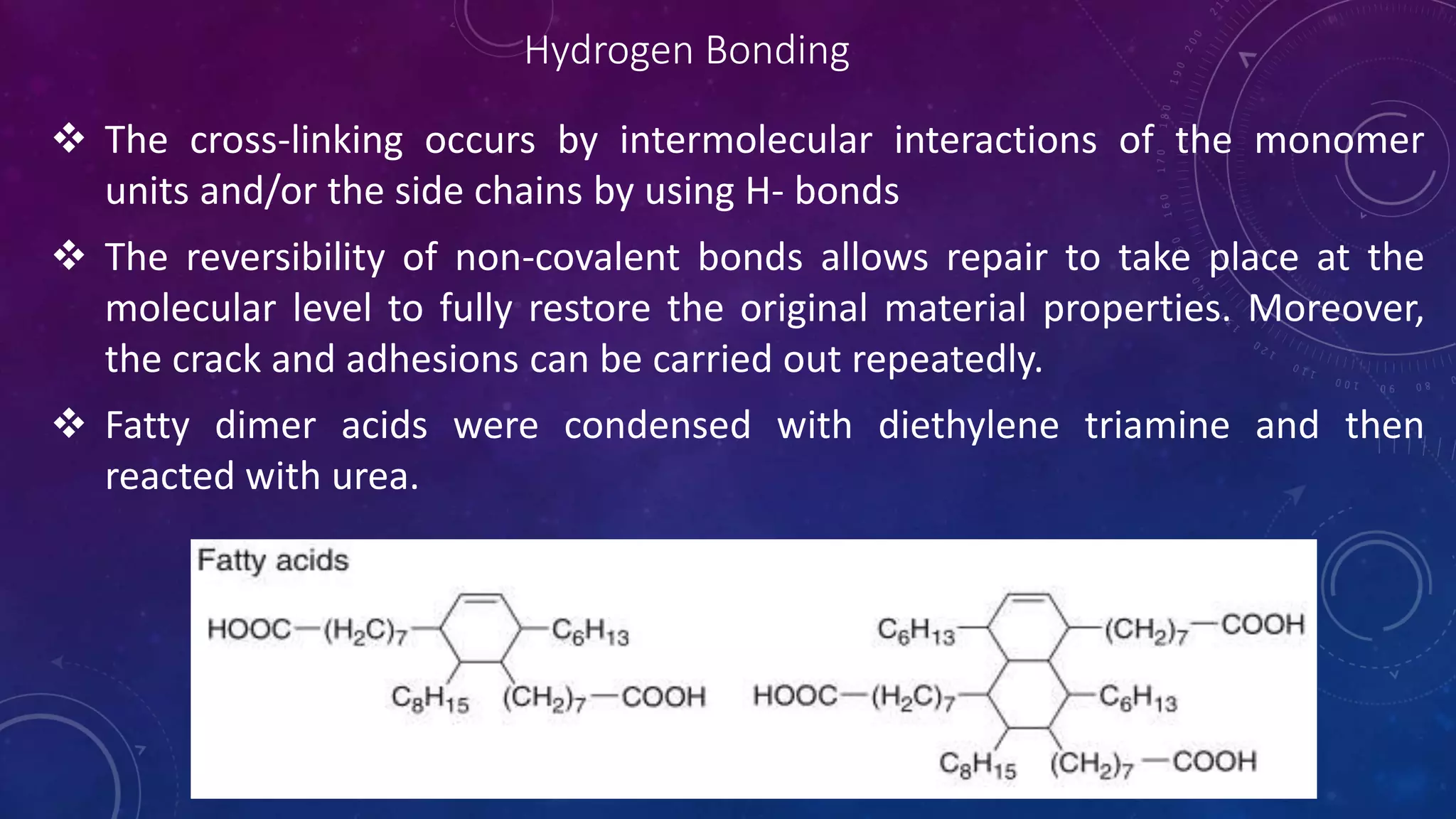
 Fatty dimer acids were condensed with diethylene triamine and then
reacted with urea.
Hydrogen Bonding
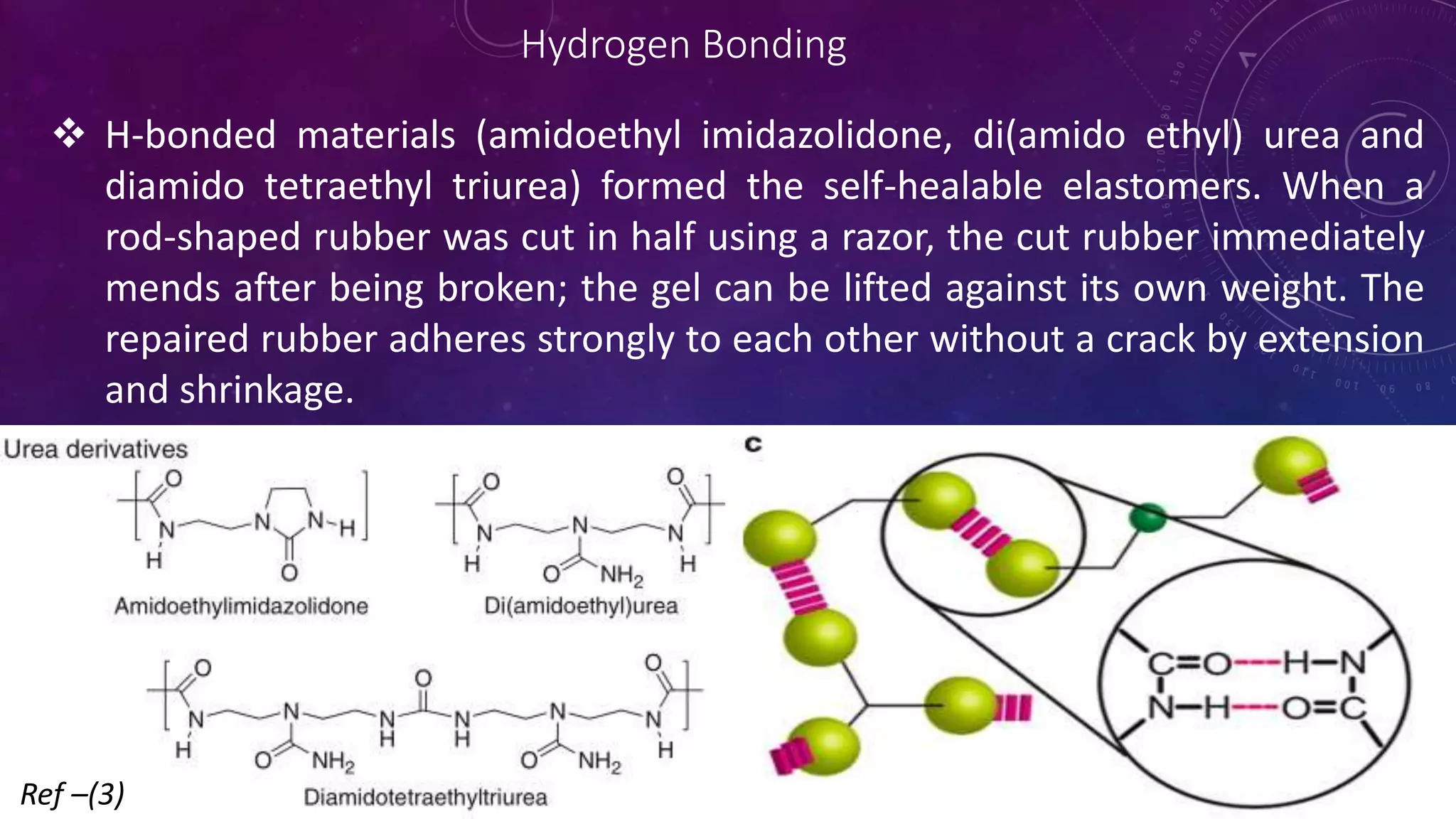
 H-bonded materials (amidoethyl imidazolidone, di(amido ethyl) urea and
diamido tetraethyl triurea) formed the self-healable elastomers. When a
rod-shaped rubber was cut in half using a razor, the cut rubber immediately
mends after being broken; the gel can be lifted against its own weight. The
repaired rubber adheres strongly to each other without a crack by extension
and shrinkage.
Ref –(3)
Self-healing ionomers
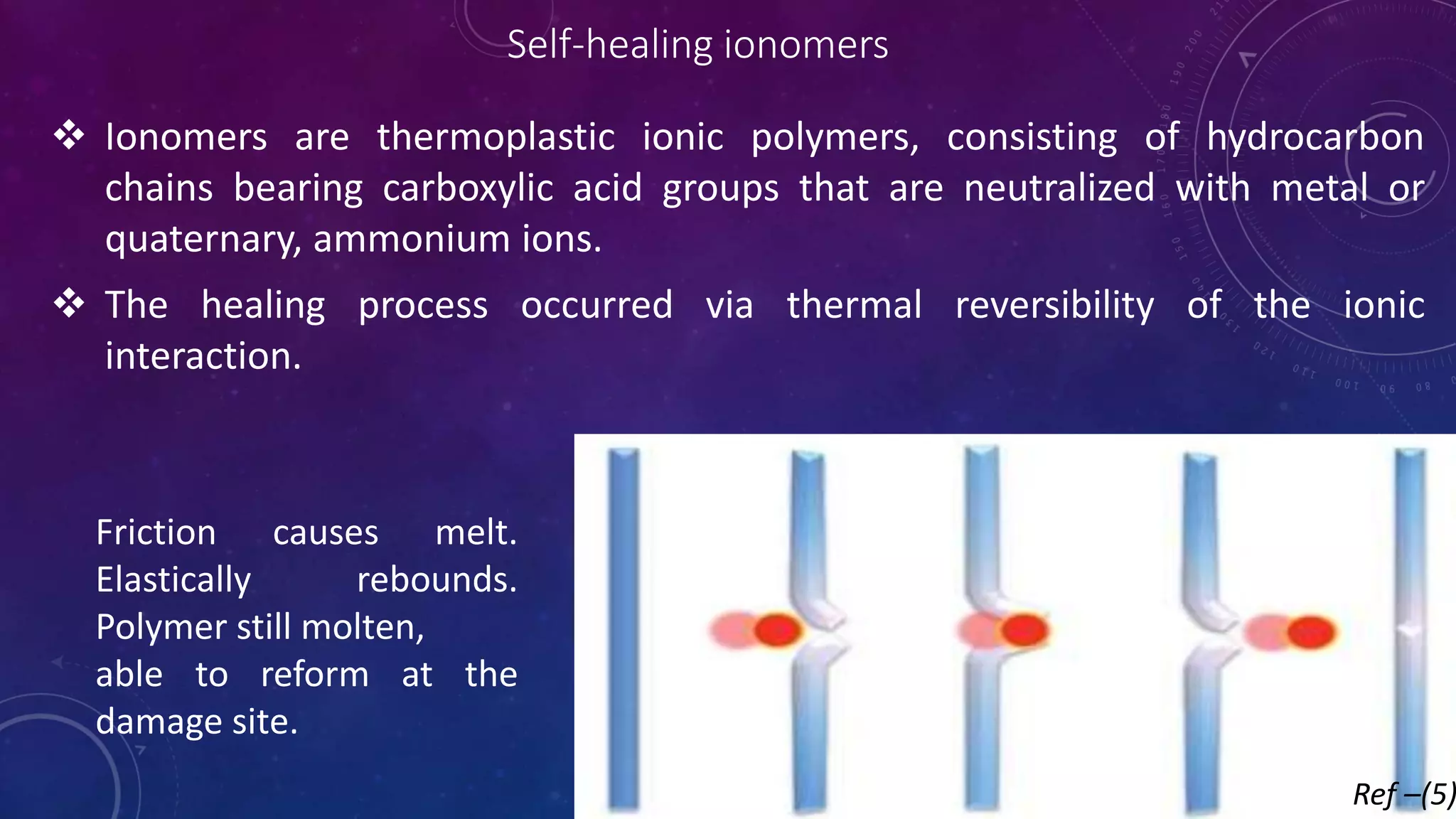
 Ionomers are thermoplastic ionic polymers, consisting of hydrocarbon
chains bearing carboxylic acid groups that are neutralized with metal or
quaternary, ammonium ions.
 The healing process occurred via thermal reversibility of the ionic
interaction.
Friction causes melt.
Elastically rebounds.
Polymer still molten,
able to reform at the
damage site.
Ref –(5)
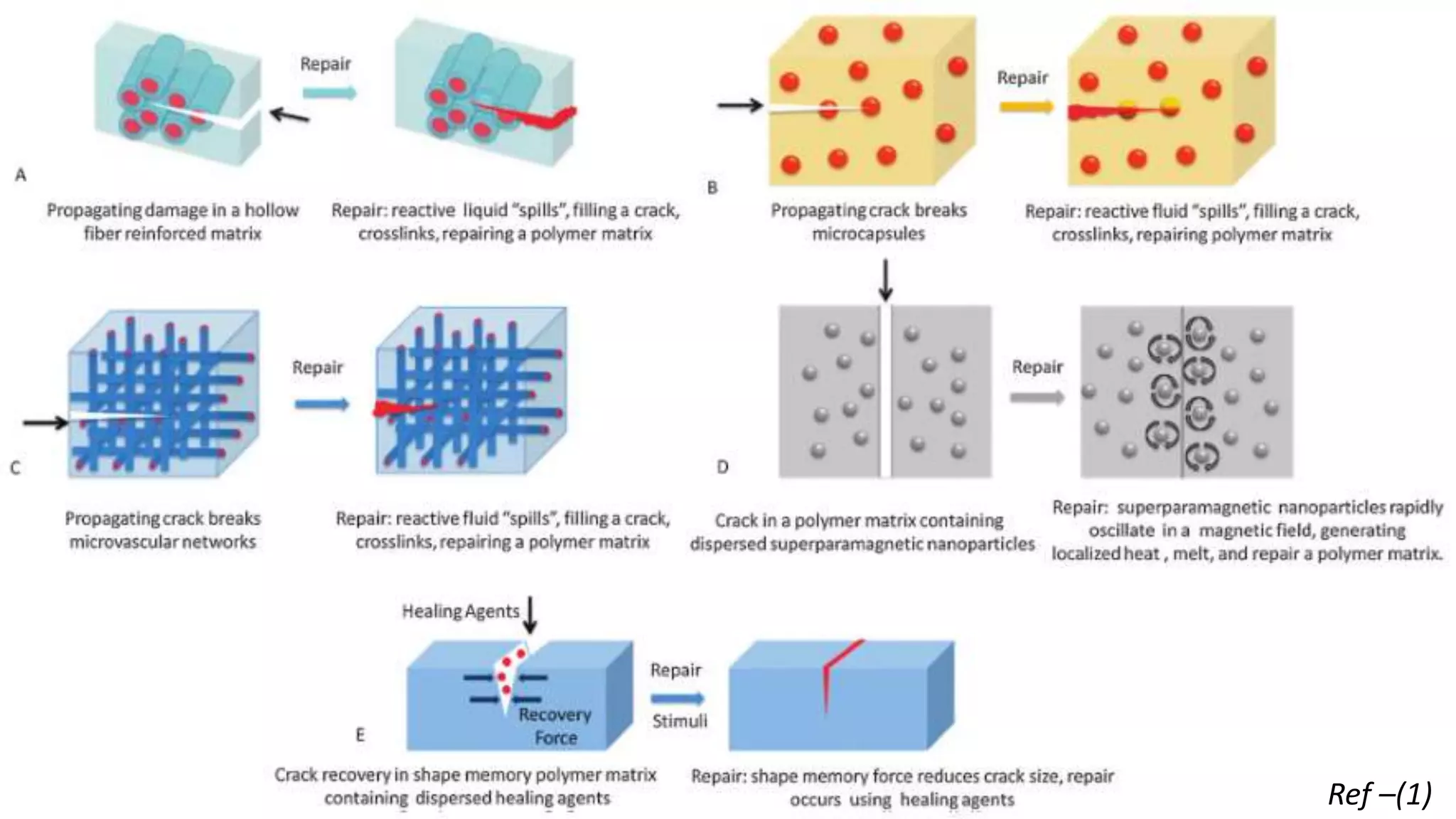
Extrinsic Systems
In extrinsic systems, the healing agents are separated from the surrounding
polymer in microcapsules or vascular networks, which after material
damage/cracking release their reactive fluid into the crack plane, and allow
the restoration of material functionalities.
Extrinsic self-healing materials can achieve healing efficiencies over 100%
even when the damage is large.
There are two modes of the repair activity:
1. Self-healing in terms of healant loaded pipes (tubes)
2. Self-healing in terms of healant loaded microcapsules.(Spheres)
Hollow glass tubes and glass fibers
The core technique lies in filling the brittle-walled vessels with polymerizable
medium, which should be fluid at least at the healing temperature.
Subsequent polymerization of the chemicals flowing to the damage area
plays the role of crack elimination.
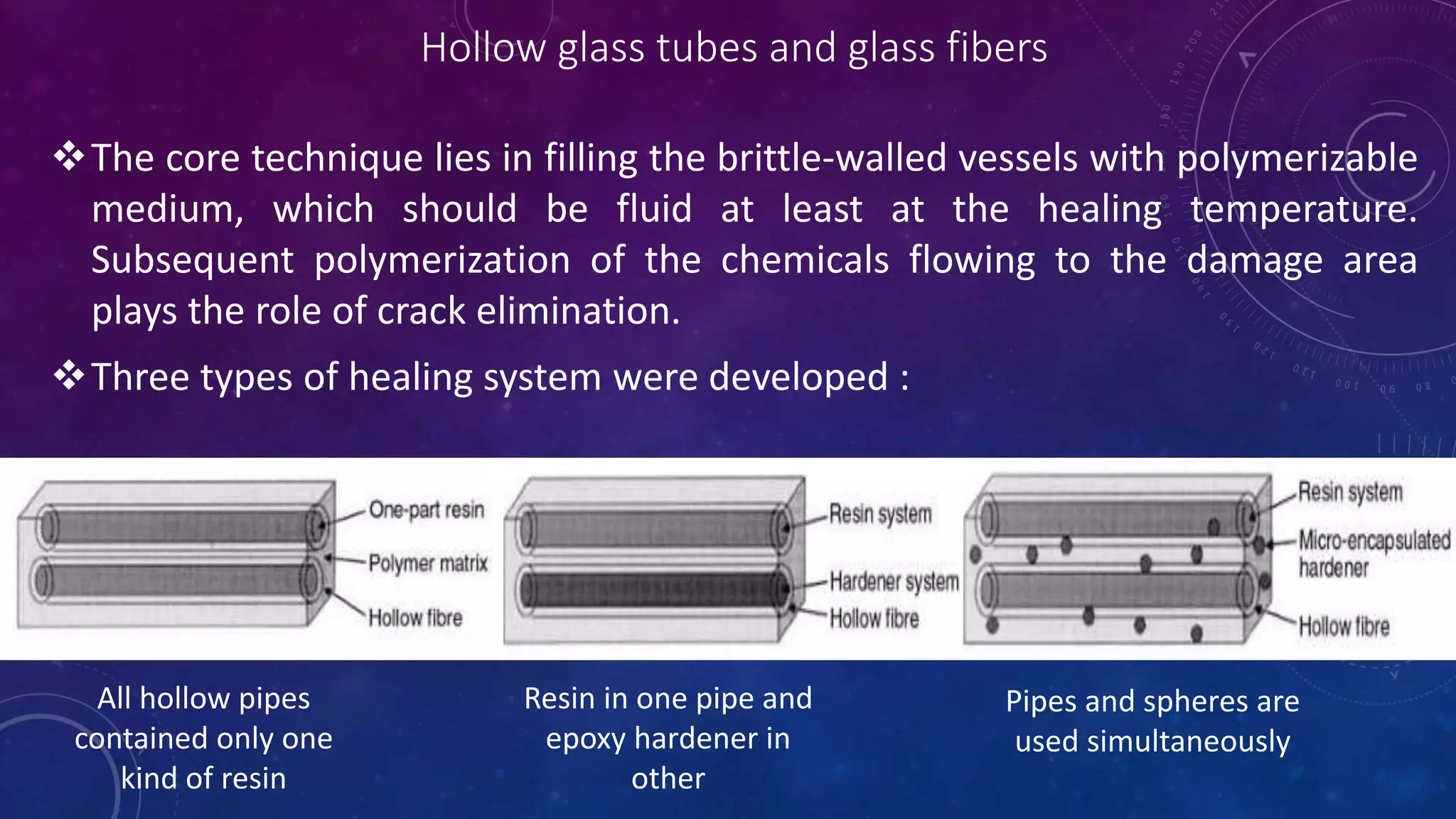
Three types of healing system were developed :
All hollow pipes
contained only one
kind of resin
Resin in one pipe and
epoxy hardener in
other
Pipes and spheres are
used simultaneously
Microcapsules
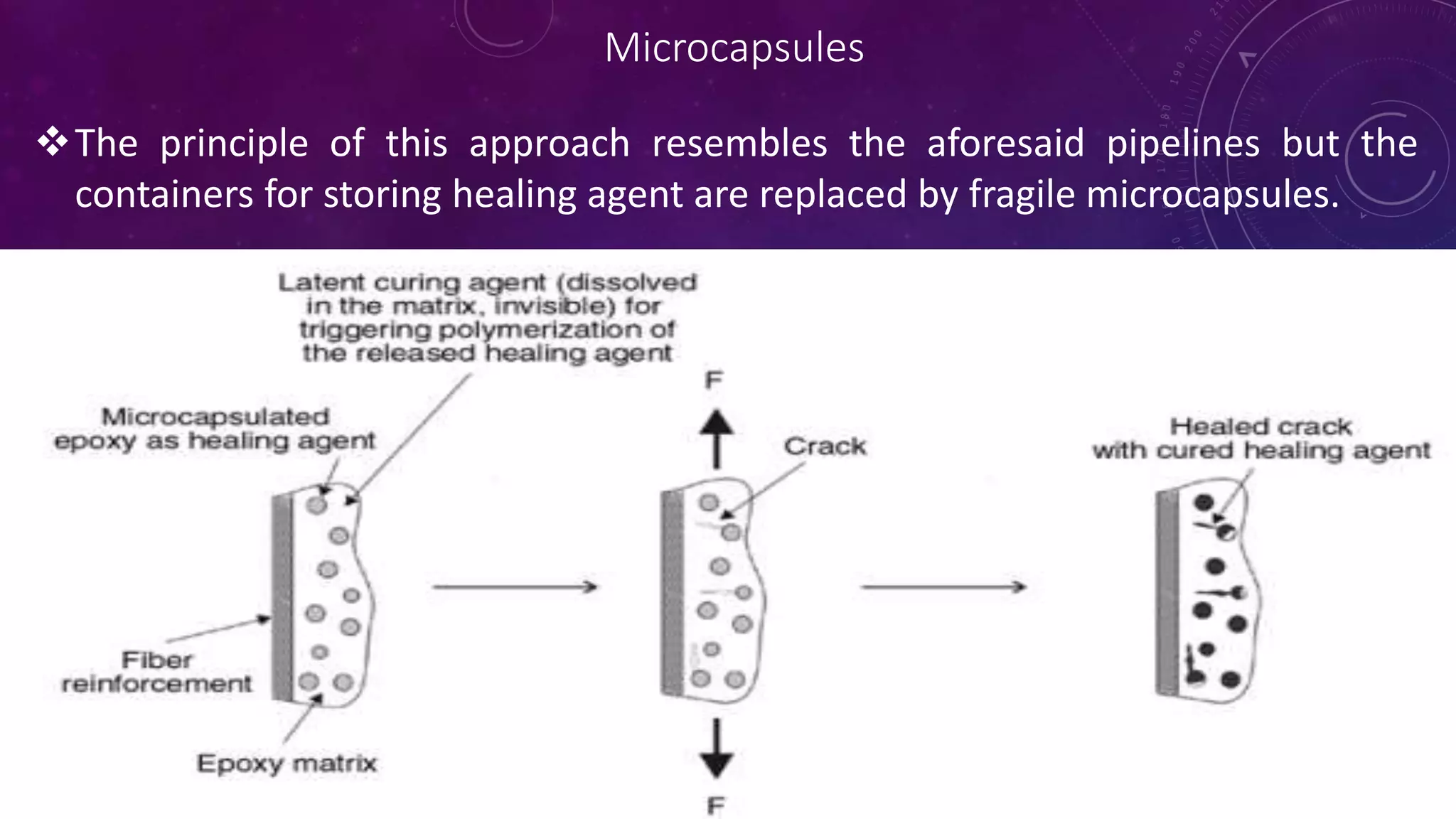
The principle of this approach resembles the aforesaid pipelines but the
containers for storing healing agent are replaced by fragile microcapsules.
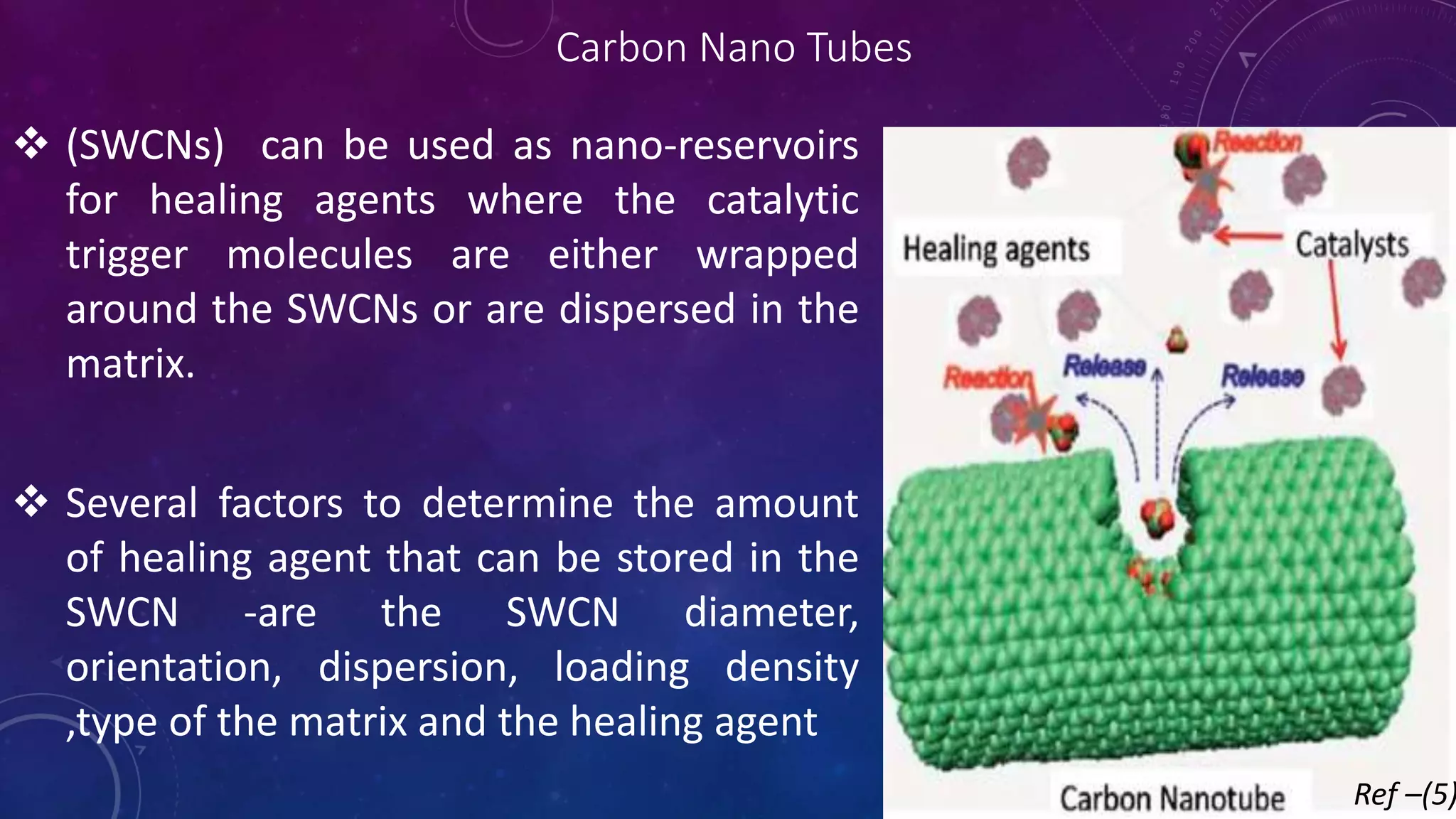
Carbon Nano Tubes
 (SWCNs) can be used as nano-reservoirs
for healing agents where the catalytic
trigger molecules are either wrapped
around the SWCNs or are dispersed in the
matrix.
 Several factors to determine the amount
of healing agent that can be stored in the
SWCN -are the SWCN diameter,
orientation, dispersion, loading density
,type of the matrix and the healing agent
Ref –(5)
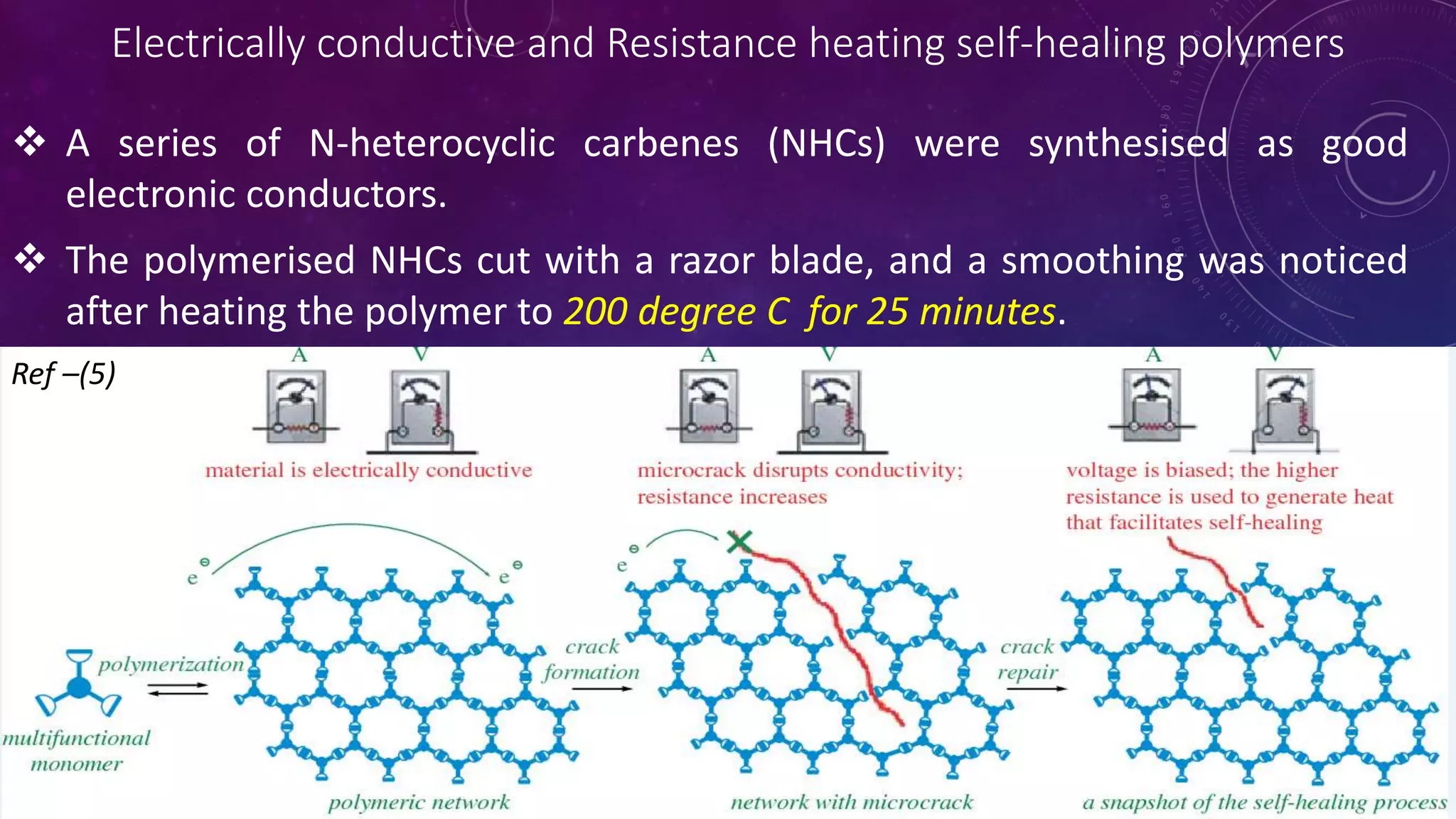
Electrically conductive and Resistance heating self-healing polymers
 A series of N-heterocyclic carbenes (NHCs) were synthesised as good
electronic conductors.
 The polymerised NHCs cut with a razor blade, and a smoothing was noticed
after heating the polymer to 200 degree C for 25 minutes.
Ref –(5)
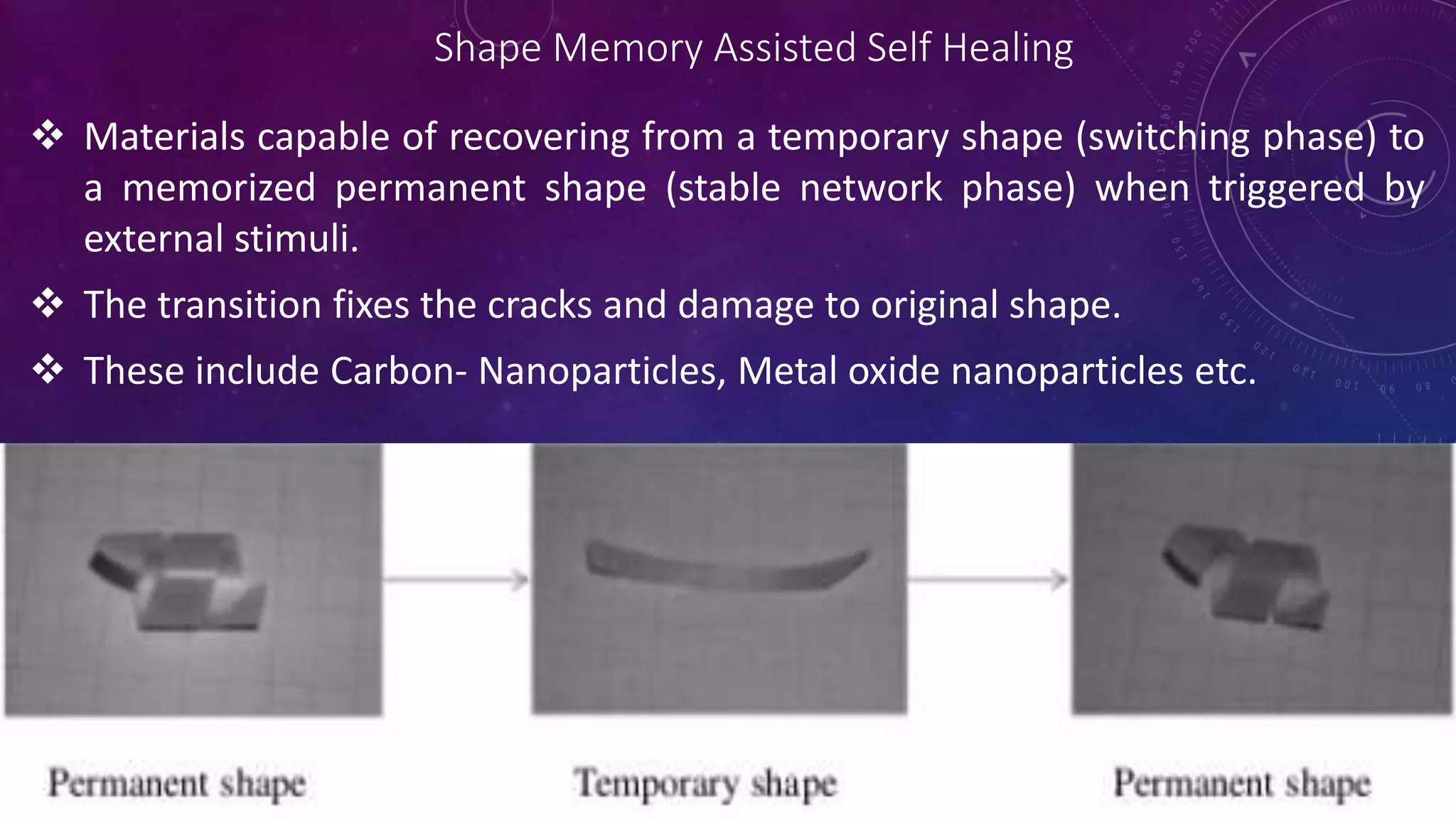
Shape Memory Assisted Self Healing
 Materials capable of recovering from a temporary shape (switching phase) to
a memorized permanent shape (stable network phase) when triggered by
external stimuli.
 The transition fixes the cracks and damage to original shape.
 These include Carbon- Nanoparticles, Metal oxide nanoparticles etc.
Ref –(1)
Applications of Self Healing Materials
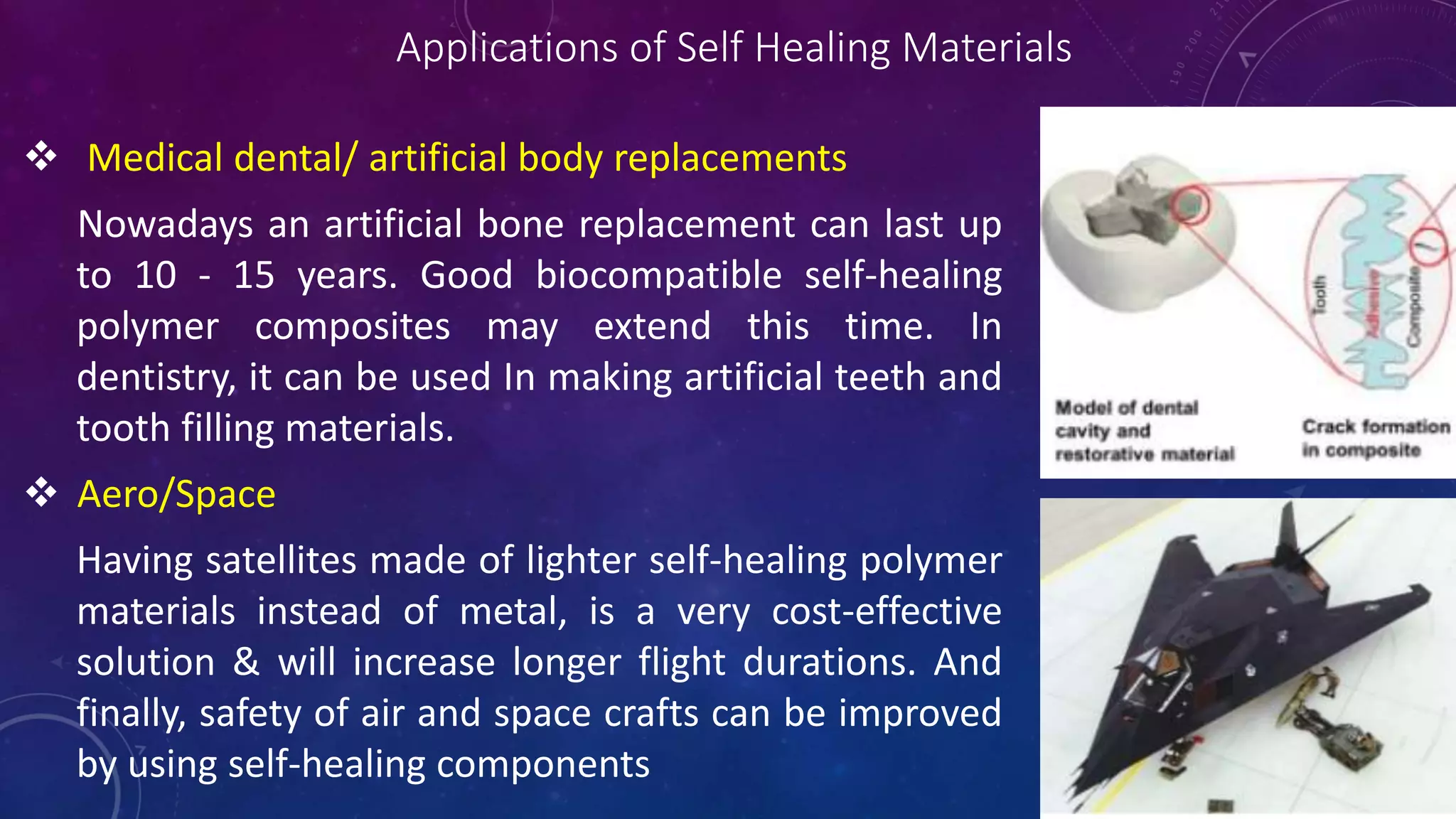
 Medical dental/ artificial body replacements
Nowadays an artificial bone replacement can last up
to 10 - 15 years. Good biocompatible self-healing
polymer composites may extend this time. In
dentistry, it can be used In making artificial teeth and
tooth filling materials.
 Aero/Space
Having satellites made of lighter self-healing polymer
materials instead of metal, is a very cost-effective
solution & will increase longer flight durations. And
finally, safety of air and space crafts can be improved
by using self-healing components
Applications of Self Healing Materials
 Military
Having armor, body protection that could
heal itself even during the battle will be
beneficial for the Army. Air force and Navy
can additionally benefit from fast self
disappearing holes in the skin of a jet or ship.
A prototype of such material already exists.
Dupont’s Surlyn® show good properties to
heal after ballistic damage.
Ref –(4)
Applications of Self Healing Materials
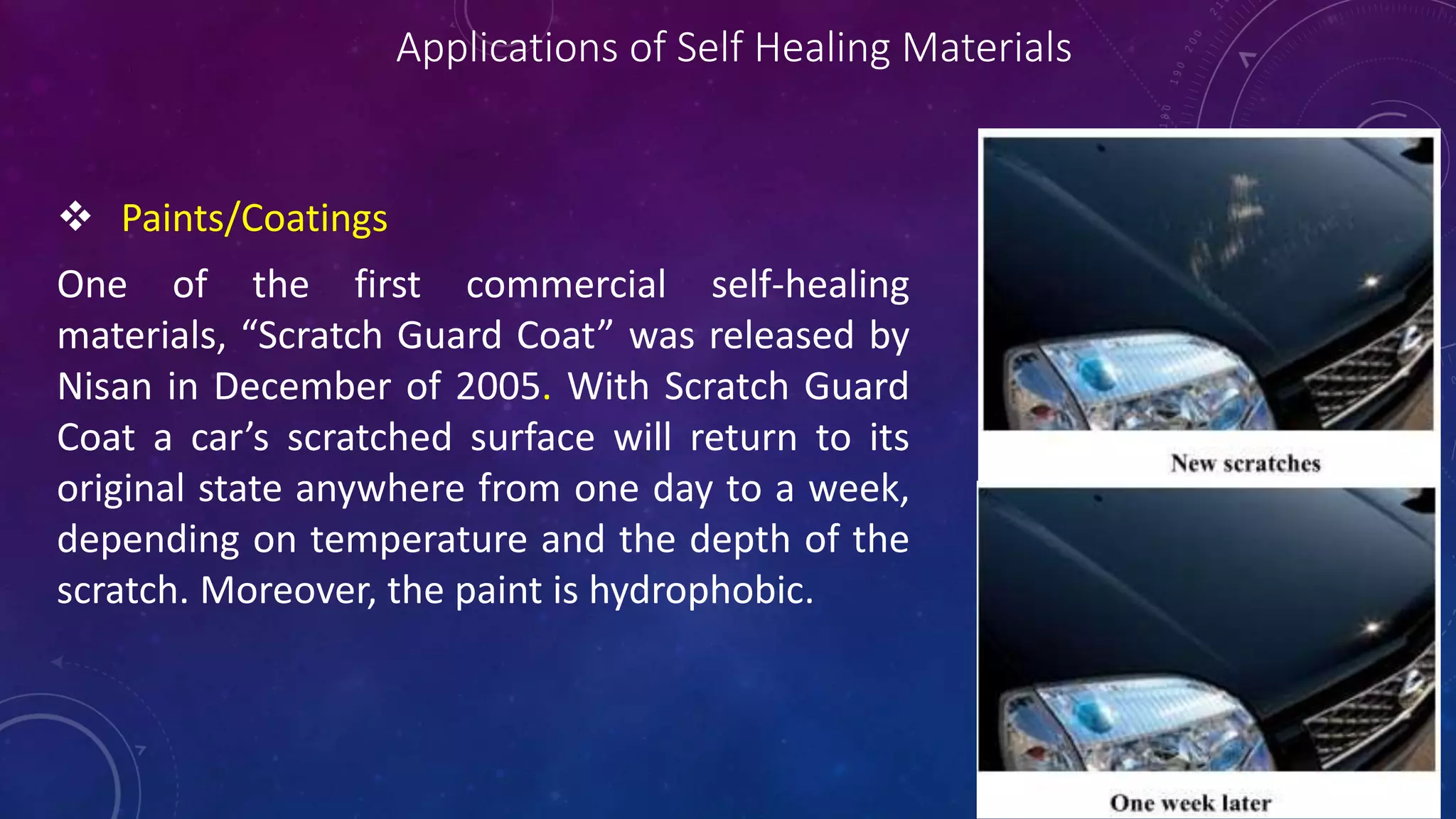
 Paints/Coatings
One of the first commercial self-healing
materials, “Scratch Guard Coat” was released by
Nisan in December of 2005. With Scratch Guard
Coat a car’s scratched surface will return to its
original state anywhere from one day to a week,
depending on temperature and the depth of the
scratch. Moreover, the paint is hydrophobic.
Ref : grandviewresearch.com
Problems & Challenges
1. Storage of healing agent inside the material for a long period of time. This is
especially difficult inside of polymeric materials, which are intrinsically
permeable on molecular level.
2. The healing agent sometimes start reacting either with the surrounding
material or with matrix itself.
3. Finally, the healing agent should be strongly bound to the material, and be
stable with respect to the surrounding environment. This indeed is typically
the simplest problem, which is however, restrictive to the type of the
healing agent.
Conclusion
 Activities in the field of self-healing polymers and polymer composites not
only focus on mechanical and chemical approaches to improving the
durability of materials but also involves new damage detection technique
incorporated.
 From a long-term point of view, synthesis of brand new polymers
accompanied by intrinsic self-healing function through molecular design
would be a reasonable solution. Working out the solutions would certainly
push polymer sciences and engineering forward.
 2 USA based companies have started commercializing the products
References
1. ‘Self-healing polymeric materials’ - Ying Yang and Marek W. Urban , DOI: 10.1039/c3cs60109a
, The Royal Society of Chemistry ,2013 .
2. ‘Chemical and physical aspects of self-healing materials’ - Ying Yang, Xiaochu Ding, Marek W.
Urban, DOI: 10.1016/j.progpolymsci.2015.06.001 ,Progress in polymer science, June 2015 .
3. ‘Self-Healing Polymers’ - Yoshinori Takashima and Akira Harada , DOI 10.1007/978-3-642-
36199-9_50-1 , Encyclopedia of Polymeric Nanomaterials,2013.
4. ‘Synthesis of Self-Healing Polymers by Scandium-Catalyzed Copolymerization of Ethylene and
Anisylpropylenes’ - Haobing Wang, Yang Yang, Masayoshi Nishiura, Yuji Higaki, Atsushi
Takahara and Zhaomin Hou, DOI: 10.1021/jacs.8b13316 ,Journal of American Chemical
Society,2019.
5. ‘Self-healing and self-mendable polymers’ - Jay A. Syrett, C. Remzi Becer and David M.
Haddleton , DOI: 10.1039/c0py00104j , The Royal Society of Chemistry ,2010 .
6. Wikipedia - https://en.wikipedia.org/wiki/Self-healing_material
Any Questions

An Introduction to Self healing polymers

  • 1.
    AN INTRODUCTION TOSELF HEALING POLYMERS SUBMITTED TO CHEMICAL ENGINEERING DEPARTMENT HBTU, KANPUR PREPARED BY SHANJUL SHRIVASTAVA MTECH II -YEAR
  • 2.
    CONTENTS 1. What areSelf Healing Polymers 2. Need & Inspiration 3. Thermodynamics of self-healing ,Entropy Changes and Gibbs Energy 4. Intrinsic systems and examples 5. Extrinsic systems and examples 6. Applications of self healing polymers 7. Problems and Challenges 8. References
  • 3.
    What are SelfHealing Polymers Self-healing polymers are synthetically created ‘smart materials’ which have the built-in ability to automatically repair damage to themselves without any external diagnosis Ref (4) : fast self-healing of a film of P5 at room temperature
  • 4.
    Need & Inspiration Polymersand polymer composites are used in a variety of applications in our day to day life. However, these materials are susceptible to damage induced by mechanical, chemical, thermal, UV or a combination of these factors. Self Healing materials are inspired by biological systems in which the damage triggers an autonomic healing response. THE VISION : if industrial materials have self healing property, their safety, efficacy, and reliability are significantly improved. Rubber tree
  • 5.
    : Damage andRepair cycleRef - 1 Reactive end groups can be free radicals and/or –C=C–, –COOH, –NH2 , –OH, –Si–O, SH/S–S, or –C=O
  • 6.
    Thermodynamics of self-healing Theself- repairing process can be viewed as series of chain conformational changes and this approach provided the molecular weight (M) dependence of repair time : (Tr) ∝ M3 implying that lower molecular weight polymers exhibit favorable repairing conditions. Fracture stress (s) is related to M and (Tr) via : (s) ∝ (Tr/M) 1/4 Healing efficiency R(s) can be defined by the extent of the recovery with respect to its initial post-damage state as the ratio of fracture stress after and before healing R(s) = [s Healed / s Initial ]
  • 7.
    Entropy Changes -Recoupling Model +∆S from A to B occur due to the V↑ near created interfaces which will ↑ the number of arrangements available for a given state. Driven by the +∆S as well as density gradients near damaged areas, chain ends will continuously expand into open voids and thus fill the damage. Therefore, flexibility (f) of chains becomes a critical parameter in rebonding of chains Ref – (1)
  • 8.
    Gibbs Free Energy The∆G = 0 kJ/mol plane represents polymer chains at equilibrium. Above the ∆G = 0 plane (∆G < 0), spontaneous repairs occur, whereas below the ∆G plane (∆G > 0), self-healing will not take place. The solid red curve shows how ∆G is affected by the ↑N values (high M) , ∆G = -RTln(N) Ref- (1)
  • 9.
    Self Healing Reactions Thereactive groups that formed during chain cleavage facilitate rebonding to achieve successful self-healing. They include free radicals, –C=C–, –COOH, – NH2, –OH, –SH/S-S, –Si– O, S–S, –C=O, and/or formation of cyclic structures. A few classes of reactions that offer self-healing of polymers include covalent bonding, supramolecular chemistry, H-bonding, ionic interactions, and pi–pi stacking. On a physical site, extrinsic chemo-mechanical repairs focused on encapsulation, remote self-healing and shape memory assisted polymers.
  • 10.
    Intrinsic systems The materialis inherently able to restore its integrity. Intrinsic systems often require an external trigger for the healing to take place (such as thermo- mechanical, electrical, photo-stimuli, etc. 5 main intrinsic self-healing strategies :
  • 11.
    Based on covalentbond formation DIELS-ALDER (DA) AND RETRO-DIELS-ALDER (rDA) REVERSIBLE REACTION The DA reaction is a cycloaddition reaction between a conjugated diene and a substituted alkene. The most relevant aspects of the (DA) reaction is its thermal reversibility, known as the (rDA) reaction. These reactions provide an efficient way to prepare remendable polymers, which can go through repeated cycles of damage and repair at same site.
  • 12.
    The polymeric materialwas stressed to complete failure and subsequently healed by heating to 90–120 degree C, followed by cooling to room temperature. The healed polymer recovered to 60% of the initial strength. The chain ends were joined by a key-lock mechanism DA and rDA Reversible Reaction Ref –(3)
  • 13.
    Non covalent Bonds- Supramolecular Networks  The networks can be remodeled rapidly and reversibly – from fluid- like, low density, high free volume properties, to solid-like, lower free volume, elastic and plastic networks.  There are, however, disadvantages. These polymers usually exhibit lower T(g) , thus resulting in relatively soft materials utilized in specific applications.  4 approaches to supramolecular bonds:
  • 14.
    Hydrogen Bonding  Thecross-linking occurs by intermolecular interactions of the monomer units and/or the side chains by using H- bonds  The reversibility of non-covalent bonds allows repair to take place at the molecular level to fully restore the original material properties. Moreover, the crack and adhesions can be carried out repeatedly.  Fatty dimer acids were condensed with diethylene triamine and then reacted with urea.
  • 15.
    Hydrogen Bonding  H-bondedmaterials (amidoethyl imidazolidone, di(amido ethyl) urea and diamido tetraethyl triurea) formed the self-healable elastomers. When a rod-shaped rubber was cut in half using a razor, the cut rubber immediately mends after being broken; the gel can be lifted against its own weight. The repaired rubber adheres strongly to each other without a crack by extension and shrinkage. Ref –(3)
  • 16.
    Self-healing ionomers  Ionomersare thermoplastic ionic polymers, consisting of hydrocarbon chains bearing carboxylic acid groups that are neutralized with metal or quaternary, ammonium ions.  The healing process occurred via thermal reversibility of the ionic interaction. Friction causes melt. Elastically rebounds. Polymer still molten, able to reform at the damage site. Ref –(5)
  • 17.
    Extrinsic Systems In extrinsicsystems, the healing agents are separated from the surrounding polymer in microcapsules or vascular networks, which after material damage/cracking release their reactive fluid into the crack plane, and allow the restoration of material functionalities. Extrinsic self-healing materials can achieve healing efficiencies over 100% even when the damage is large. There are two modes of the repair activity: 1. Self-healing in terms of healant loaded pipes (tubes) 2. Self-healing in terms of healant loaded microcapsules.(Spheres)
  • 18.
    Hollow glass tubesand glass fibers The core technique lies in filling the brittle-walled vessels with polymerizable medium, which should be fluid at least at the healing temperature. Subsequent polymerization of the chemicals flowing to the damage area plays the role of crack elimination. Three types of healing system were developed : All hollow pipes contained only one kind of resin Resin in one pipe and epoxy hardener in other Pipes and spheres are used simultaneously
  • 19.
    Microcapsules The principle ofthis approach resembles the aforesaid pipelines but the containers for storing healing agent are replaced by fragile microcapsules.
  • 20.
    Carbon Nano Tubes (SWCNs) can be used as nano-reservoirs for healing agents where the catalytic trigger molecules are either wrapped around the SWCNs or are dispersed in the matrix.  Several factors to determine the amount of healing agent that can be stored in the SWCN -are the SWCN diameter, orientation, dispersion, loading density ,type of the matrix and the healing agent Ref –(5)
  • 21.
    Electrically conductive andResistance heating self-healing polymers  A series of N-heterocyclic carbenes (NHCs) were synthesised as good electronic conductors.  The polymerised NHCs cut with a razor blade, and a smoothing was noticed after heating the polymer to 200 degree C for 25 minutes. Ref –(5)
  • 22.
    Shape Memory AssistedSelf Healing  Materials capable of recovering from a temporary shape (switching phase) to a memorized permanent shape (stable network phase) when triggered by external stimuli.  The transition fixes the cracks and damage to original shape.  These include Carbon- Nanoparticles, Metal oxide nanoparticles etc.
  • 23.
  • 24.
    Applications of SelfHealing Materials  Medical dental/ artificial body replacements Nowadays an artificial bone replacement can last up to 10 - 15 years. Good biocompatible self-healing polymer composites may extend this time. In dentistry, it can be used In making artificial teeth and tooth filling materials.  Aero/Space Having satellites made of lighter self-healing polymer materials instead of metal, is a very cost-effective solution & will increase longer flight durations. And finally, safety of air and space crafts can be improved by using self-healing components
  • 25.
    Applications of SelfHealing Materials  Military Having armor, body protection that could heal itself even during the battle will be beneficial for the Army. Air force and Navy can additionally benefit from fast self disappearing holes in the skin of a jet or ship. A prototype of such material already exists. Dupont’s Surlyn® show good properties to heal after ballistic damage. Ref –(4)
  • 26.
    Applications of SelfHealing Materials  Paints/Coatings One of the first commercial self-healing materials, “Scratch Guard Coat” was released by Nisan in December of 2005. With Scratch Guard Coat a car’s scratched surface will return to its original state anywhere from one day to a week, depending on temperature and the depth of the scratch. Moreover, the paint is hydrophobic.
  • 27.
  • 28.
    Problems & Challenges 1.Storage of healing agent inside the material for a long period of time. This is especially difficult inside of polymeric materials, which are intrinsically permeable on molecular level. 2. The healing agent sometimes start reacting either with the surrounding material or with matrix itself. 3. Finally, the healing agent should be strongly bound to the material, and be stable with respect to the surrounding environment. This indeed is typically the simplest problem, which is however, restrictive to the type of the healing agent.
  • 29.
    Conclusion  Activities inthe field of self-healing polymers and polymer composites not only focus on mechanical and chemical approaches to improving the durability of materials but also involves new damage detection technique incorporated.  From a long-term point of view, synthesis of brand new polymers accompanied by intrinsic self-healing function through molecular design would be a reasonable solution. Working out the solutions would certainly push polymer sciences and engineering forward.  2 USA based companies have started commercializing the products
  • 30.
    References 1. ‘Self-healing polymericmaterials’ - Ying Yang and Marek W. Urban , DOI: 10.1039/c3cs60109a , The Royal Society of Chemistry ,2013 . 2. ‘Chemical and physical aspects of self-healing materials’ - Ying Yang, Xiaochu Ding, Marek W. Urban, DOI: 10.1016/j.progpolymsci.2015.06.001 ,Progress in polymer science, June 2015 . 3. ‘Self-Healing Polymers’ - Yoshinori Takashima and Akira Harada , DOI 10.1007/978-3-642- 36199-9_50-1 , Encyclopedia of Polymeric Nanomaterials,2013. 4. ‘Synthesis of Self-Healing Polymers by Scandium-Catalyzed Copolymerization of Ethylene and Anisylpropylenes’ - Haobing Wang, Yang Yang, Masayoshi Nishiura, Yuji Higaki, Atsushi Takahara and Zhaomin Hou, DOI: 10.1021/jacs.8b13316 ,Journal of American Chemical Society,2019. 5. ‘Self-healing and self-mendable polymers’ - Jay A. Syrett, C. Remzi Becer and David M. Haddleton , DOI: 10.1039/c0py00104j , The Royal Society of Chemistry ,2010 . 6. Wikipedia - https://en.wikipedia.org/wiki/Self-healing_material
  • 31.