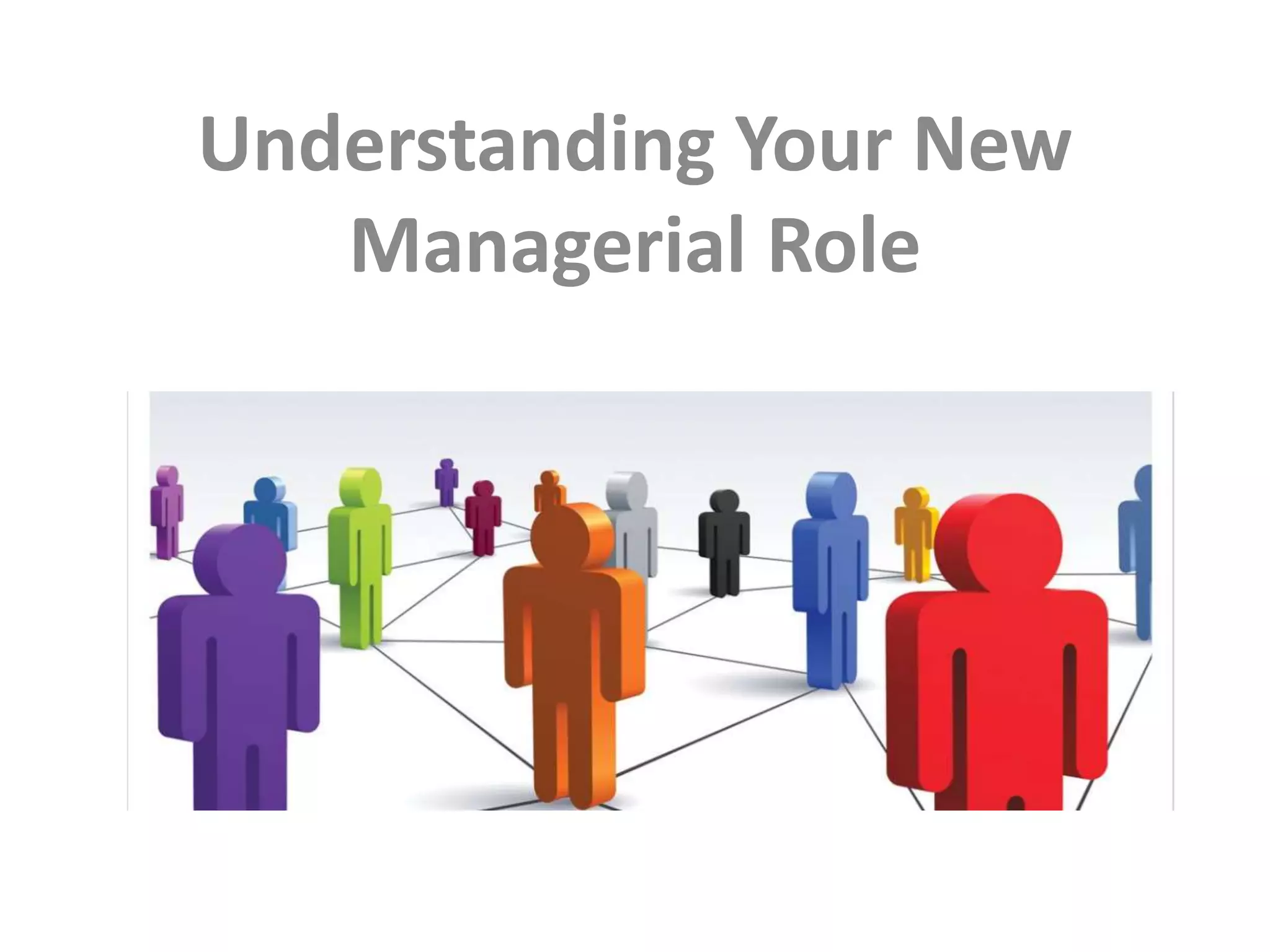
Understanding Your New
Managerial Role
Program Purpose
• Discover your role as a people manager
• Learn to manage yourselves as people manager
• Apply principles and practices for engaging,
managing and developing your employees
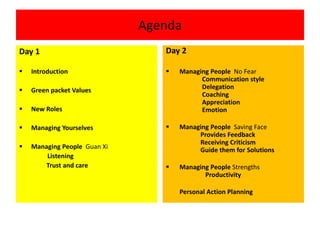
Agenda
Day 1
 Introduction
 Green packet Values
 New Roles
 Managing Yourselves
 Managing People Guan Xi
Listening
Trust and care
Day 2
 Managing People No Fear
Communication style
Delegation
Coaching
Appreciation
Emotion
 Managing People Saving Face
Provides Feedback
Receiving Criticism
Guide them for Solutions
 Managing People Strengths
Productivity
Personal Action Planning
Name Tent
Laurence Yap
Senior Manager, HR Development Department
6 Years
What is the key responsibility of people manager?
Consider This
• The Most Important Part of Your Job is to
deliver business results
through people you manage
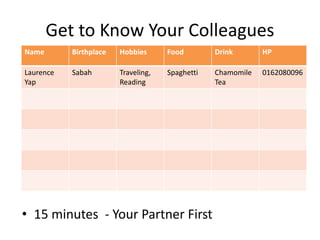
Get to Know Your Colleagues
• 15 minutes - Your Partner First
Name Birthplace Hobbies Food Drink HP
Laurence
Yap
Sabah Traveling,
Reading
Spaghetti Chamomile
Tea
0162080096
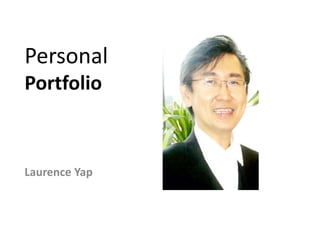
Personal
Portfolio
Laurence Yap
[KL. PG. China. Sg. Ipoh]
16 Years (1993-2012)
Training & Learning
Organization Development
HRD Career
Training & Conferences
Employment
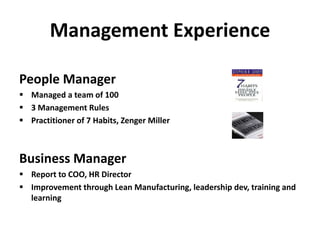
Management Experience
People Manager
 Managed a team of 100
 3 Management Rules
 Practitioner of 7 Habits, Zenger Miller
Business Manager
 Report to COO, HR Director
 Improvement through Lean Manufacturing, leadership dev, training and
learning
Get to Know Each Others
2 Minutes Introduction
Checking In
Expectations
What is your expectation of this training?
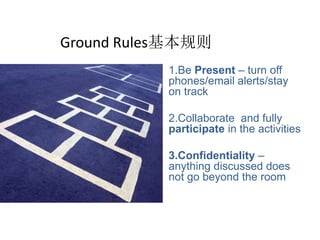
Ground Rules基本规则
1.Be Present – turn off
phones/email alerts/stay
on track
2.Collaborate and fully
participate in the activities
3.Confidentiality –
anything discussed does
not go beyond the room
• Start: 9:00 a.m.
• Break: ~ 15 minutes
• Lunch: ~ 45 minutes
• Break: ~ 15 minutes
• Close: 5:30 p.m.
Today’s Schedule
Team Cheers
• Service Excellence
• Team work
• Reliable
• Innovation
• Passion
Green Packet Values
1. Service Excellence
Service Excellence is ‘WOW’ experiences.
Wonderful, Outstanding, and Way Beyond
Expectation
2. Teamwork
Together Towards the Same Goal with Trust
and Openness, Synergizing Our Individual
Differences
Green Packet Values
3. Reliable
Dare to Commit and Consistently Deliver What
We Promise to Our Customers and Company
Green Packet Values
4. Innovation
Keep Improving by Doing Things Differently to
Deliver Remarkable Results
Green Packet Values
5. Passion
We will Rock the World by Making Things
Possible…and Have Fun Along the Way
Green Packet Values
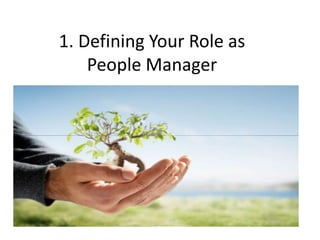
1. Defining Your Role as
People Manager
1. New Role as Managers
Leadership Behaviors required for
effective management
Transition from individual contributor to manager
Sharing of Good Practices
•
Leadership Behaviors
• Complete the self assessment
• Be sure to write your name
• Submit the assessment to me
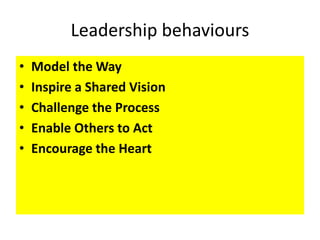
Leadership behaviours
• Model the Way
• Inspire a Shared Vision
• Challenge the Process
• Enable Others to Act
• Encourage the Heart
VIDEO:
SUPPORT 0.25 & VIOLIN
The role of leader
Leadership Lessons from Your
Supervisors
Transition
Your Achievement
• Your best career achievements in the past as
Individual contributor
Key Changes for Successful Transition
• Time:
New timeframes that govern how one works
• Skill:
New capabilities to carry out new responsibilities
• Values:
New beliefs in what tasks are important to focus
on
Key Changes for Successful Transition
• Time:
Days/Weeks - Months/Years
• Skill:
Personal Skills - Team Skills/People Skills
• Values:
Personal Development - Developing teams
Key Changes for Successful Transition:
Individual Contributor to People Manager
• Defining and assigning work to be done
• Enabling direct reports to do the work
• Building social contacts
Discussion
• Difference between Leaders
and Managers
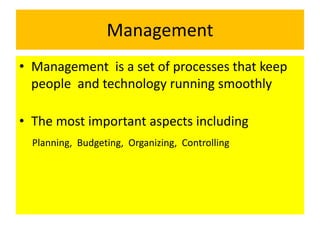
Management
• Management is a set of processes that keep
people and technology running smoothly
• The most important aspects including
Planning, Budgeting, Organizing, Controlling
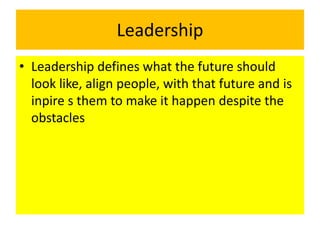
Leadership
• Leadership defines what the future should
look like, align people, with that future and is
inpire s them to make it happen despite the
obstacles
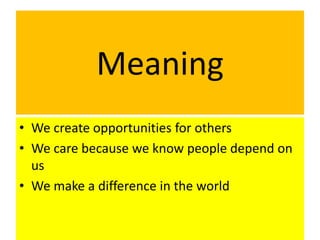
Meaning
• We create opportunities for others
• We care because we know people depend on
us
• We make a difference in the world
Good Practice Sharing
39
2. Managing Yourselves
How to think positively and effectively
Managing Time and Projects
•
Managing Your Thought
• Adopt Effective Way – Lazyman way
What are the most effective way?
• Open Minded – PMI
Let us look at different angle
• Ownership - Use their ways – what do you think?
Think Positively
• Choose positive reactions
Proactive – Freedom of choice – Victor Frankl
Choose positive respond – positive emotions
A to Z
Law of Attraction – Mind like a magnet
43
Tea Break
20 Minutes
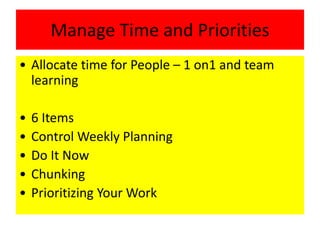
Manage Time and Priorities
• Allocate time for People – 1 on1 and team
learning
• 6 Items
• Control Weekly Planning
• Do It Now
• Chunking
• Prioritizing Your Work
Goals
Your Dream – an hour per day -
write down now
Start small
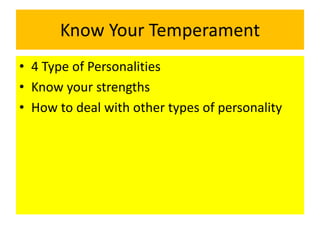
Know Your Temperament
• 4 Type of Personalities
• Know your strengths
• How to deal with other types of personality
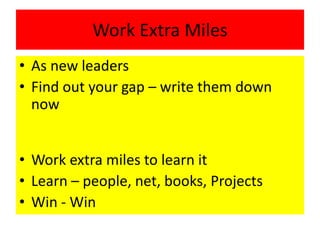
Work Extra Miles
• As new leaders
• Find out your gap – write them down
now
• Work extra miles to learn it
• Learn – people, net, books, Projects
• Win - Win
Good Practices and Things to avoid
3. Managing Others
3. Managing Others: Guan Xi – Build
Positive Relationship and Trust
Asian Concepts of relationship and leadership
Listening and Conversation
Trust and care -
Sharing of Knowledge, Network &
Compassion
Asian Concepts
• Leadership Concepts -
Use fear, fault finding, scolding , stingy in
praises and seniority
• Relationship concepts -
Guan Xi, Face and Job Security
Effective Concepts
• Leadership Concepts -
Utilizing their strengths, coaching,
appreciation, empowerment and bring joy to
work
• Relationship concepts -
Be personal and build trust, save their face
and job security
VIDEO:
Monkey See Monkey Do
Leadership by Example
My Management Experience
• Three rules:
• No scolding, but feedback and coaching (Ros)
• Solving problems and shouldering blames –
solve it together
• Use your strength and developing you
(Michael)
Other Practices
• Care
• Praise
• Work life balance
• Network
• Treat everybody the same
• No mood swinging
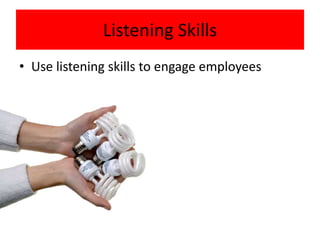
Listening Skills
• Use listening skills to engage employees
Guidelines
1. Questions – 5W1H
2. Body Language and Posture
3. Sincerity
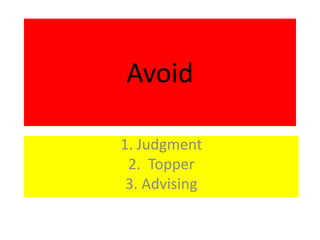
Avoid
1. Judgment
2. Topper
3. Advising
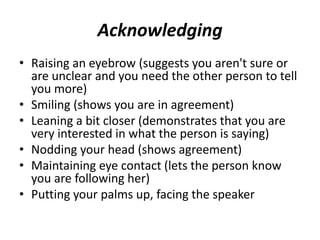
Acknowledging
• Raising an eyebrow (suggests you aren't sure or
are unclear and you need the other person to tell
you more)
• Smiling (shows you are in agreement)
• Leaning a bit closer (demonstrates that you are
very interested in what the person is saying)
• Nodding your head (shows agreement)
• Maintaining eye contact (lets the person know
you are following her)
• Putting your palms up, facing the speaker
Self-Disclosur
• communicating information about how he
feels and what he is thinking. These are his
true feeling and thoughts
Maintaining Congruence
Clarifying
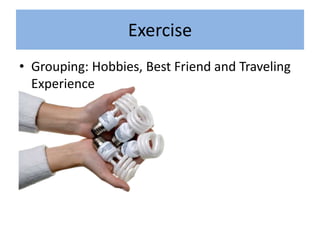
Exercise
• Grouping: Hobbies, Best Friend and Traveling
Experience
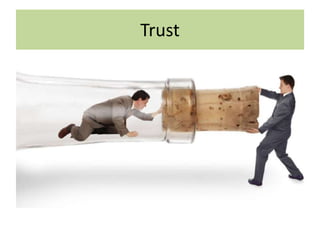
Trust
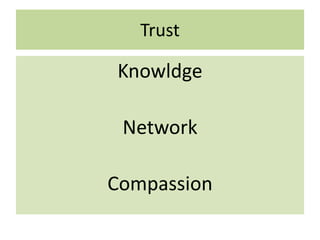
Trust
Knowldge
Network
Compassion
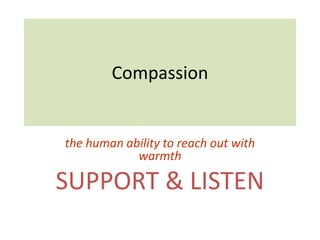
Compassion
the human ability to reach out with
warmth
SUPPORT & LISTEN
Help
A. Help others unconditionally
(share your experience)
• at work
• at home
• at social activities
VIDEO:
Life Vest
HOW MUCH DO YOU REALLY CARE ABOUT THE PEOPLE YOU LEAD?
Why
• Build EBA
• Broaden your horizon
• Positive emotion
• Contribution
Listen
B. Intensive Listening with Compassion
How do you feel?
Share your experience
How
• Interested in them
• Ask – 5W1H
•“Can u tell me more?”
Exercise
Network
your entire web of relationships
MATCH PEOPLE
Network
• Sharing our networks to others
(build relationship and EBA)
Share your experience
Methods
• How do we share our network with others?
Knowledge
everything you have learned and
everything you continue to learn
READ & SHARE
Knowledge
How can we use Knowledge to build care and
trust?
Reading
Reading is the cheapest and fastest way
Our only survival tool: learn faster than your
competitor
Techniques
• How do we increase our knowledge?
Conclusion
Three ways to build emotional
and trust:
Compassion
Network
Know
Summary
Checking Out
Expectations
GOOD, NEW and APPLICABLE
EXPECTATION

New People Manager Leadership Development