NATURE-BIOINSPIRED MATERIALS AND MECHANISMS
(QUALITATIVE):
 Echolocation (ultrasonography, sonars),
 Photosynthesis (photovoltaic cells, bionic leaf).
 Bird flying (GPS and aircrafts),
 Lotus leaf effect (Super hydrophobic and self-cleaning
surfaces),
 Plant burrs (Velcro),
 Shark skin (Friction reducing swim suits),
 Kingfisher beak (Bullet train).
 Human Blood substitutes - hemoglobin-based
oxygen carriers (HBOCs) and perflourocarbons
(PFCs).
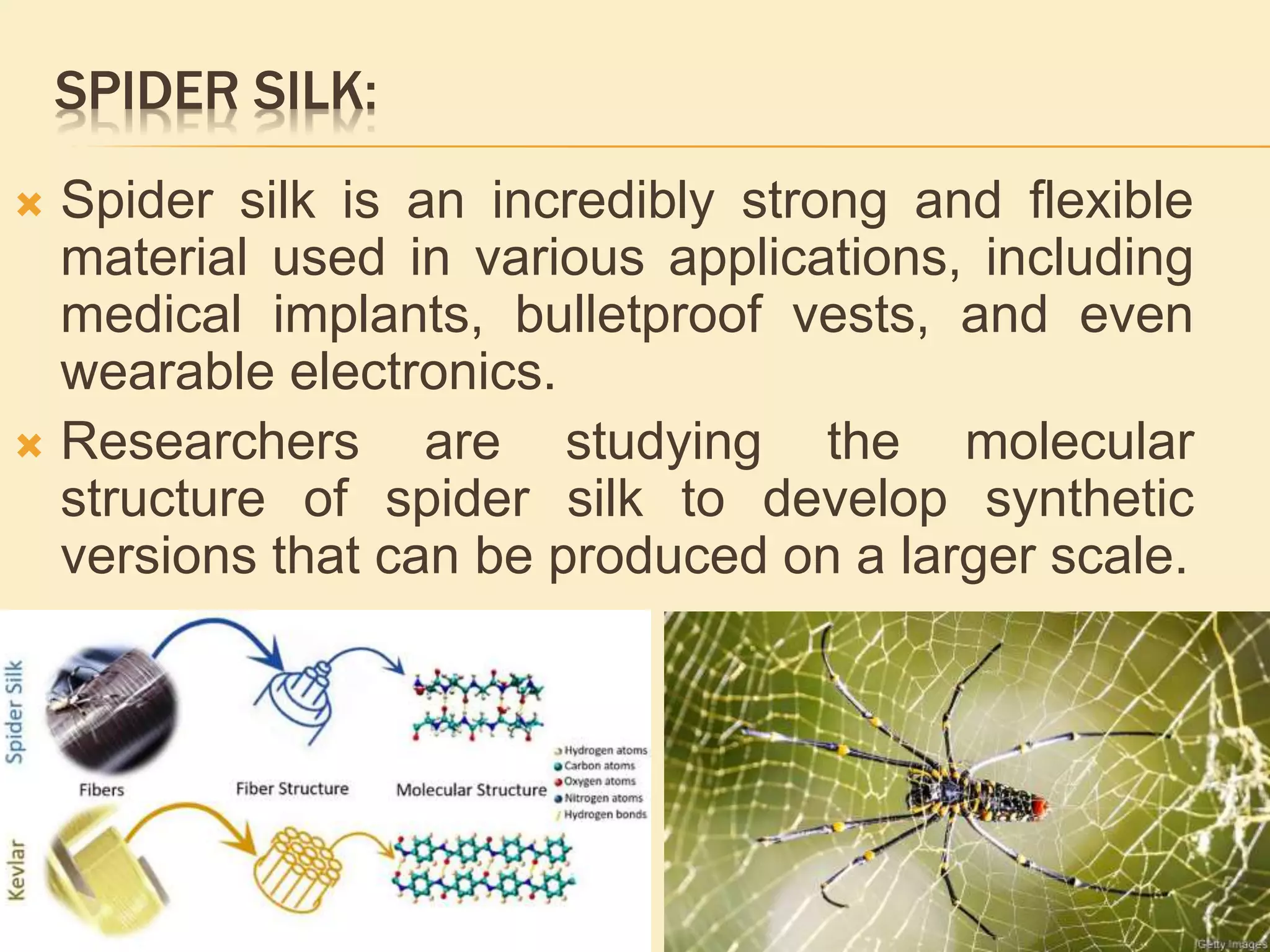
SPIDER SILK:
 Spider silk is an incredibly strong and flexible
material used in various applications, including
medical implants, bulletproof vests, and even
wearable electronics.
 Researchers are studying the molecular
structure of spider silk to develop synthetic
versions that can be produced on a larger scale.
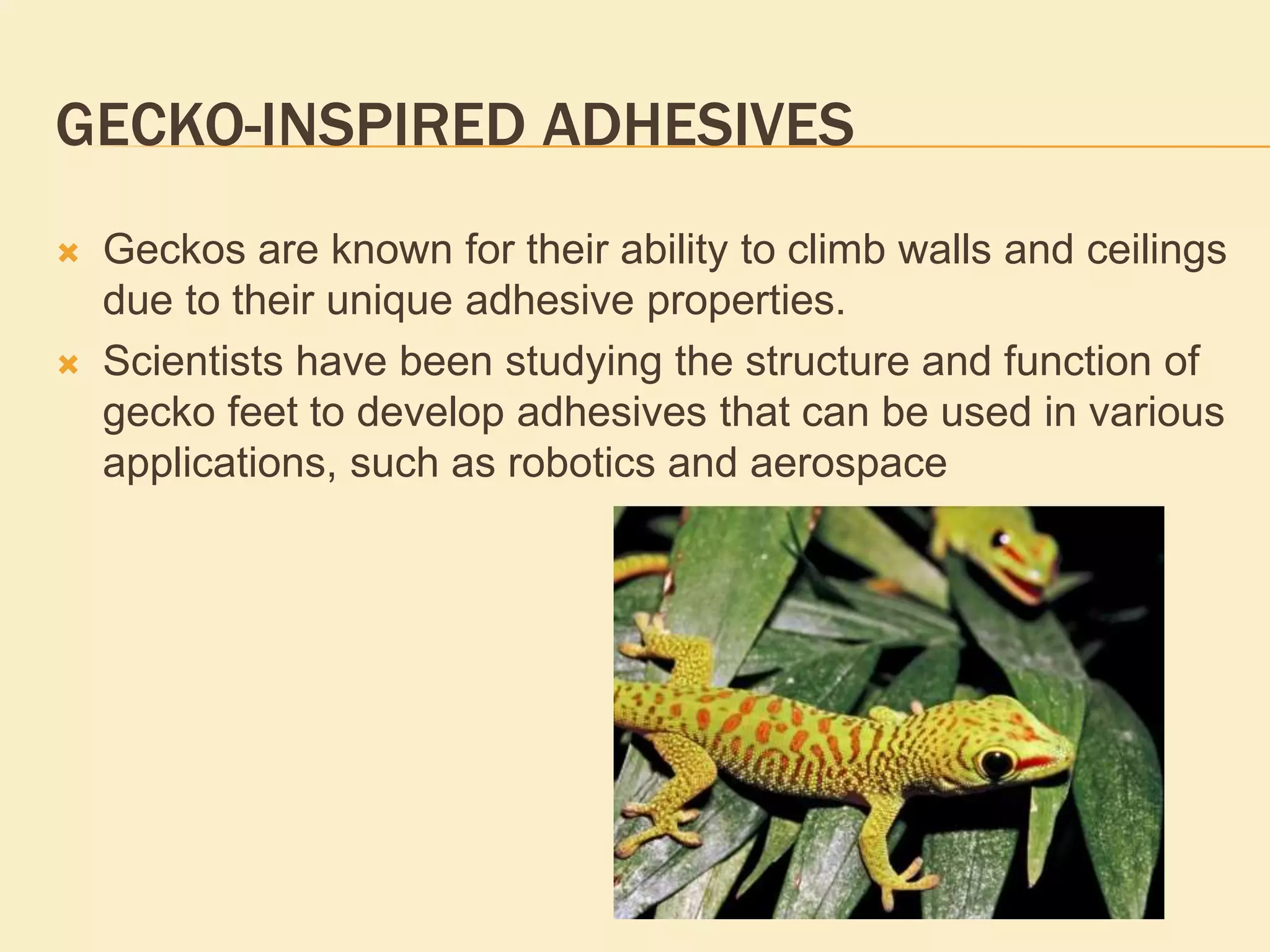
GECKO-INSPIRED ADHESIVES
 Geckos are known for their ability to climb walls and ceilings
due to their unique adhesive properties.
 Scientists have been studying the structure and function of
gecko feet to develop adhesives that can be used in various
applications, such as robotics and aerospace
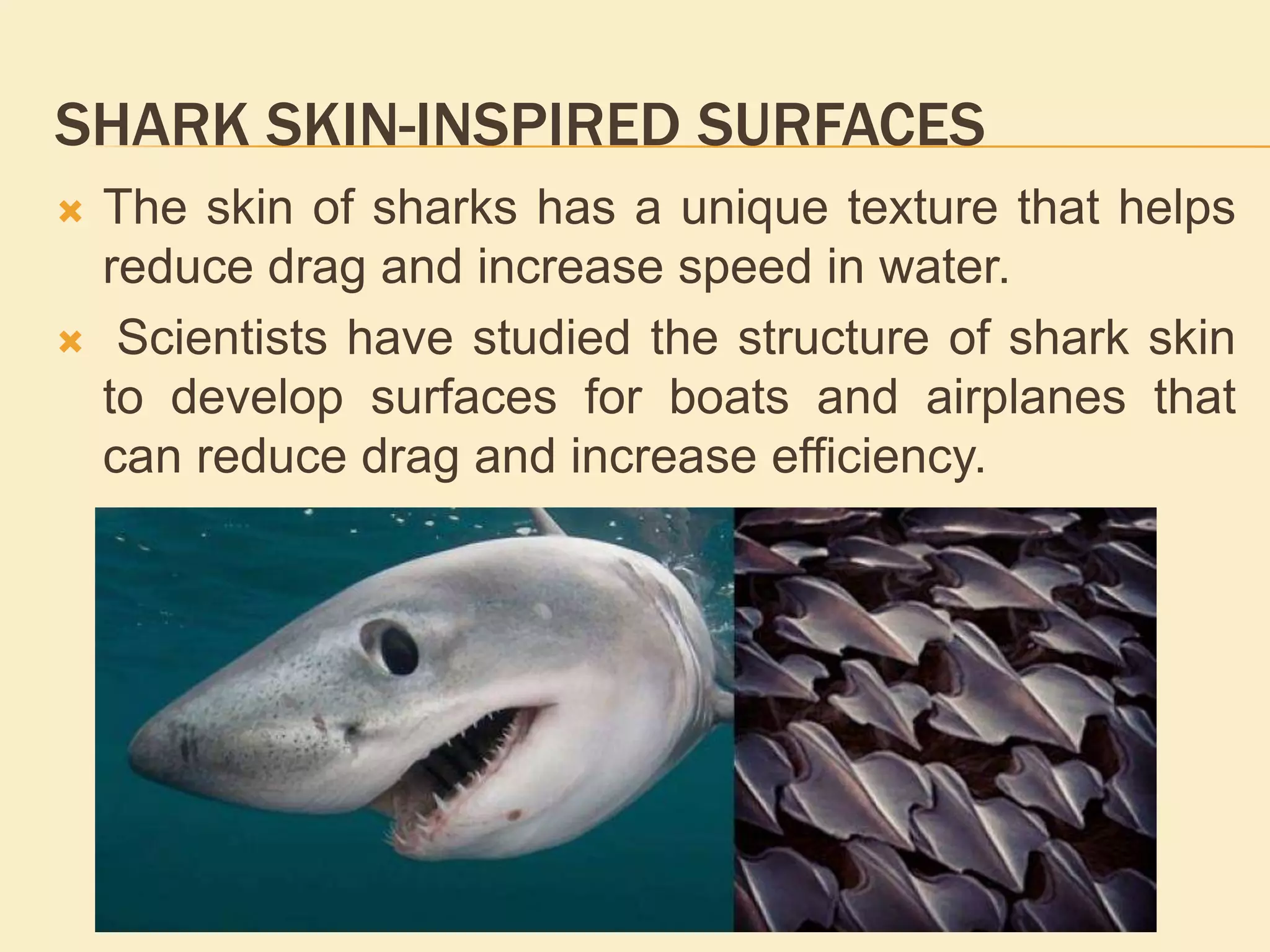
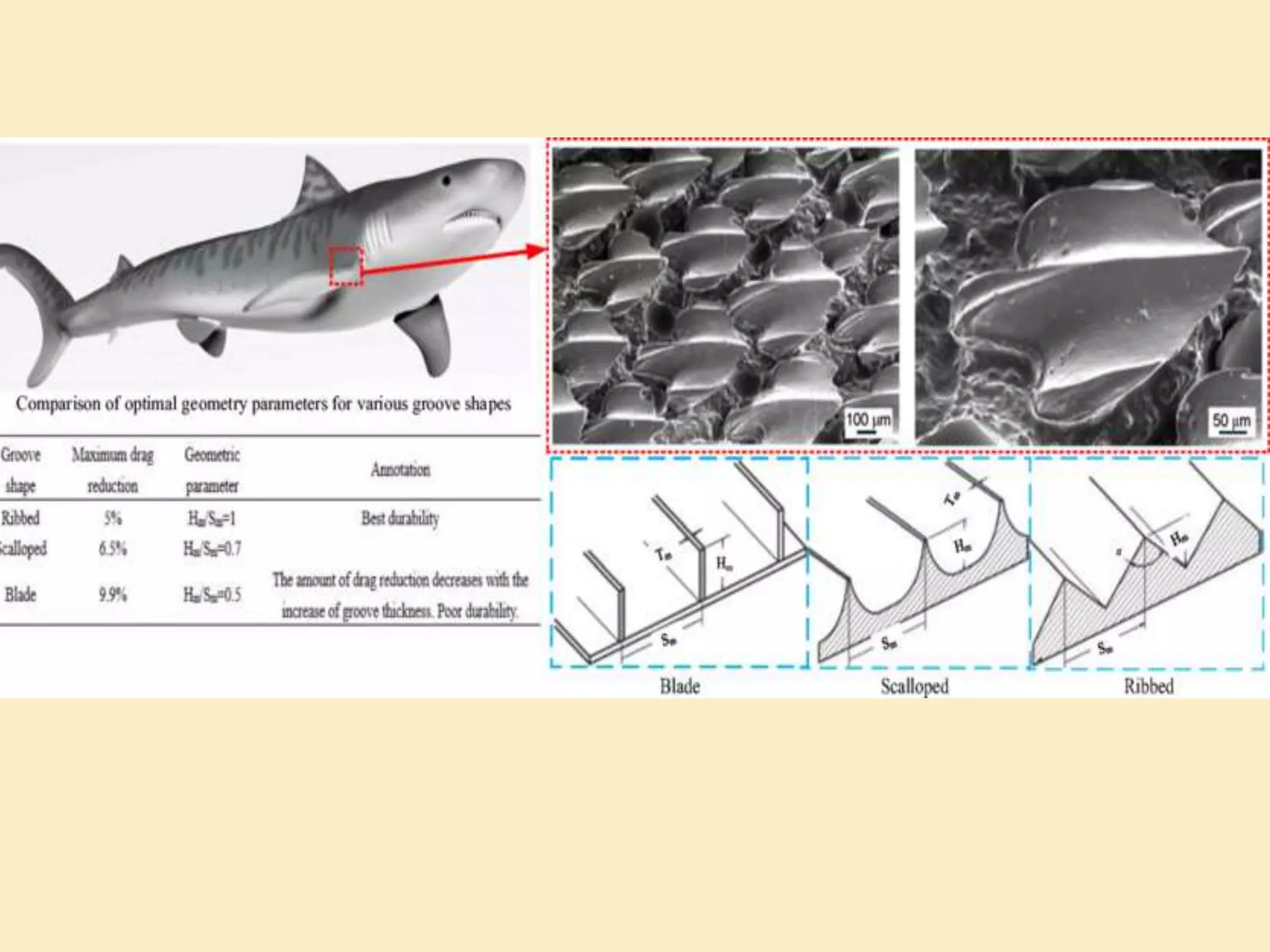
SHARK SKIN-INSPIRED SURFACES
 The skin of sharks has a unique texture that helps
reduce drag and increase speed in water.
 Scientists have studied the structure of shark skin
to develop surfaces for boats and airplanes that
can reduce drag and increase efficiency.
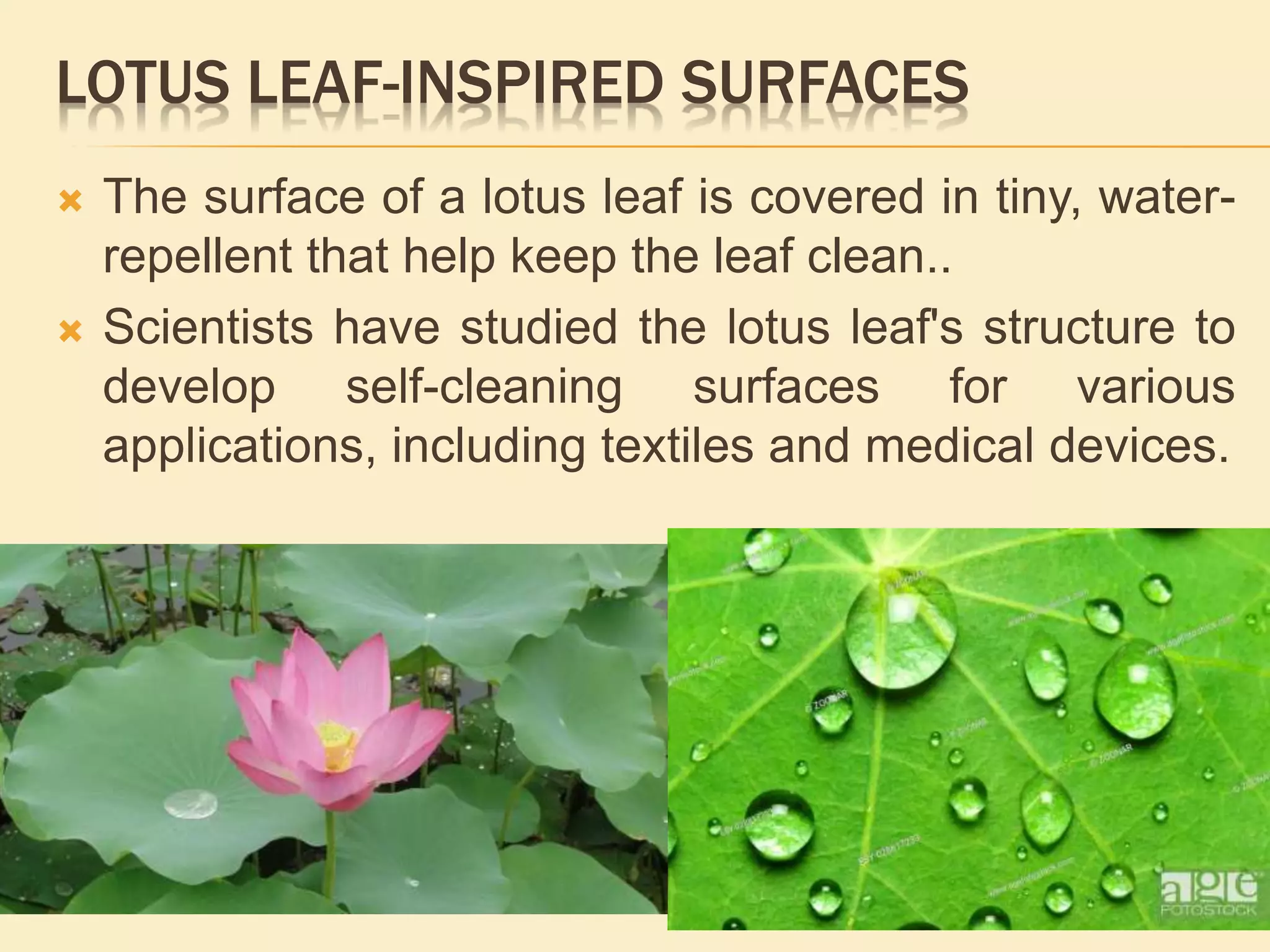
LOTUS LEAF-INSPIRED SURFACES
 The surface of a lotus leaf is covered in tiny, water-
repellent that help keep the leaf clean..
 Scientists have studied the lotus leaf's structure to
develop self-cleaning surfaces for various
applications, including textiles and medical devices.
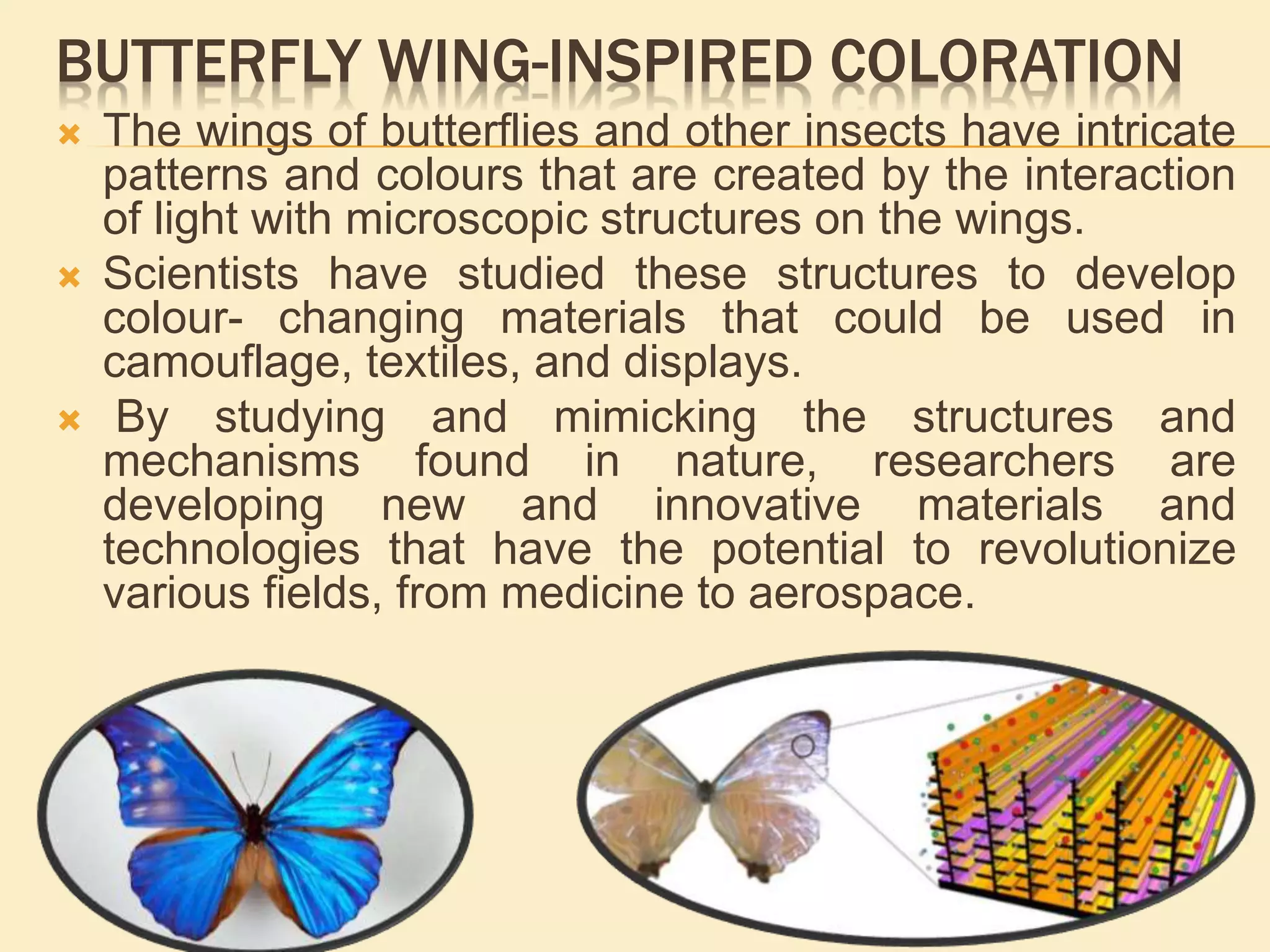
BUTTERFLY WING-INSPIRED COLORATION
 The wings of butterflies and other insects have intricate
patterns and colours that are created by the interaction
of light with microscopic structures on the wings.
 Scientists have studied these structures to develop
colour- changing materials that could be used in
camouflage, textiles, and displays.
 By studying and mimicking the structures and
mechanisms found in nature, researchers are
developing new and innovative materials and
technologies that have the potential to revolutionize
various fields, from medicine to aerospace.
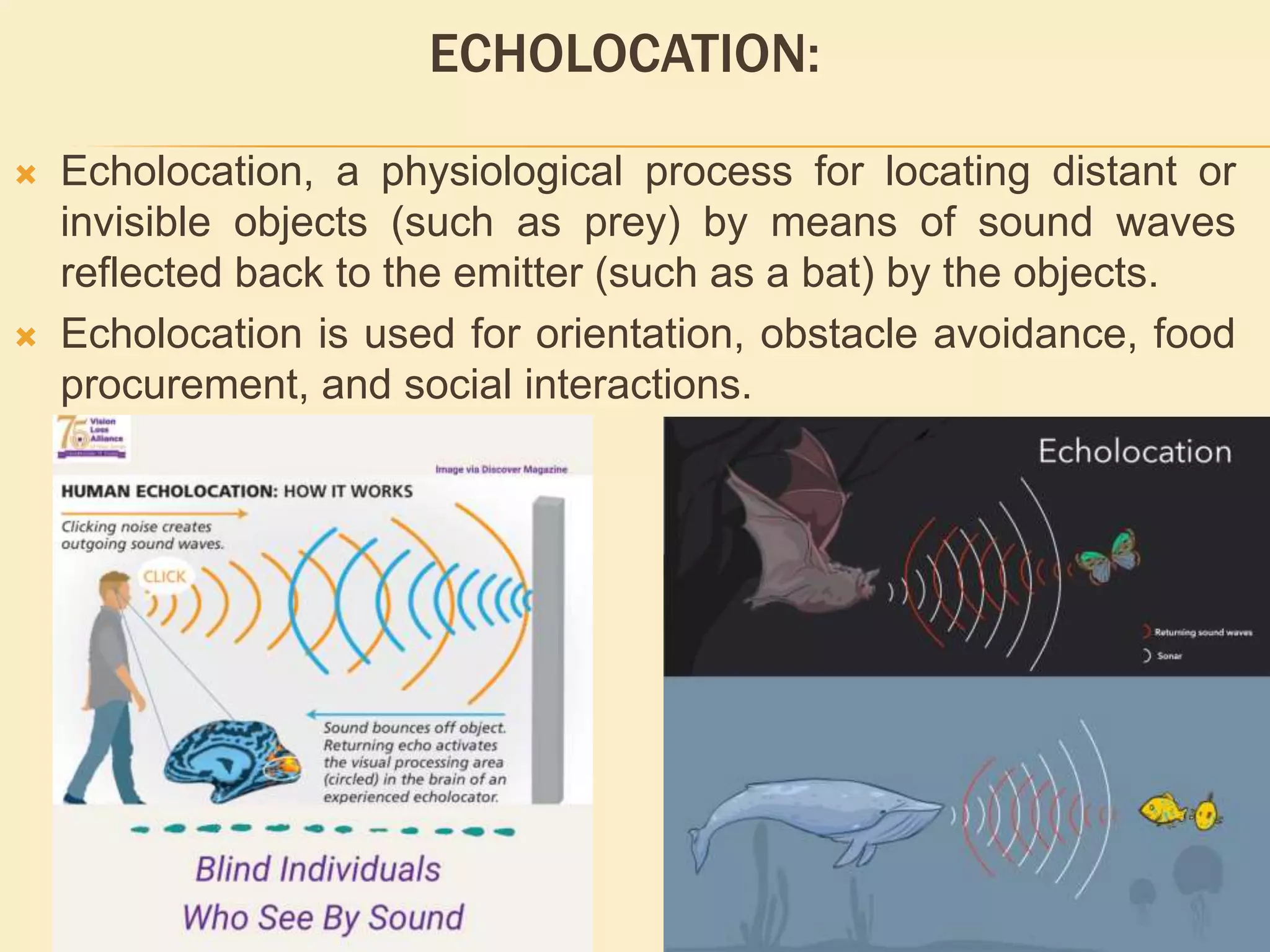
ECHOLOCATION:
 Echolocation, a physiological process for locating distant or
invisible objects (such as prey) by means of sound waves
reflected back to the emitter (such as a bat) by the objects.
 Echolocation is used for orientation, obstacle avoidance, food
procurement, and social interactions.
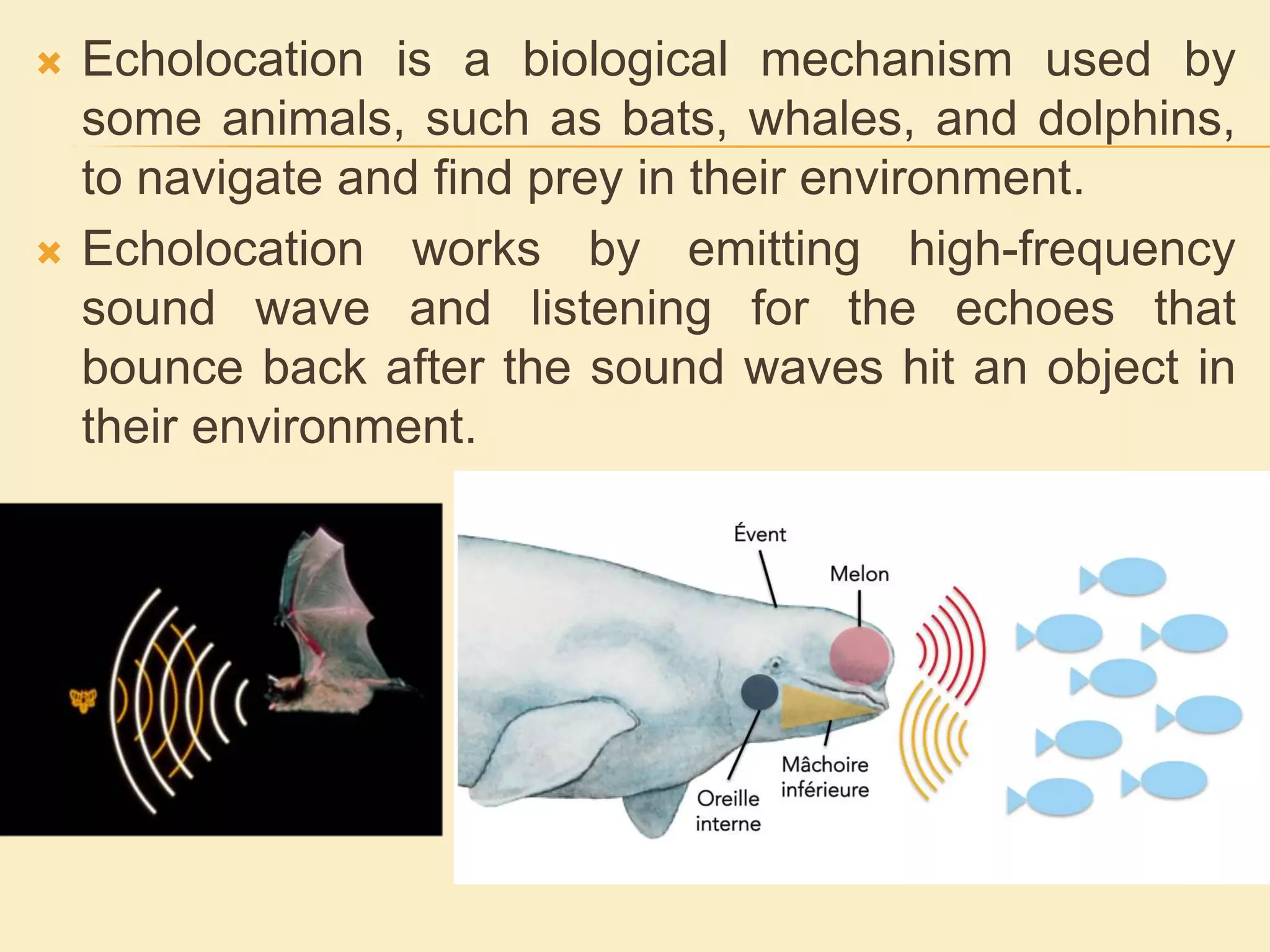
 Echolocation is a biological mechanism used by
some animals, such as bats, whales, and dolphins,
to navigate and find prey in their environment.
 Echolocation works by emitting high-frequency
sound wave and listening for the echoes that
bounce back after the sound waves hit an object in
their environment.
ECHOLOCATION STEPS:
 Emitting sound waves: The animal emits a series of
high- frequency sound waves, which are usually
inaudible to humans.
 Sound wave reflection: When these sound waves
hit an object, they bounce back and reflect off the
object, creating an echo.
 Reception of echo: The animal then listens for the
echoes that bounce back, which provides information
about the location, size, and shape of the object.
 Interpretation of echo: The animal's brain
processes the information provided by the
echoes and uses it to create a mental image
of the object's location and characteristics.
 Echolocation is an incredibly effective way for
animals to navigate and find food, even in
complete darkness.
ECHOLOCATION APPLICATION:
 Medical imaging: Ultrasound imaging uses
high-frequency sound waves to create
images of internal organs and tissues.
 This technique is non-invasive and can be used
for a variety of diagnostic purposes, such as
monitoring fetal development during
pregnancy and detecting tumour's.
 Sonar technology: Sonar technology is used
for navigation and detection in a variety of
applications, such as in submarines, boats,
and aircraft.
 Robotics: Echolocation is used in robotics for obstacle
detection and navigation.
 Some robots are equipped with sensors that emit sound
waves and listen for echoes to determine the location of
obstacles and navigate around them.
Conservation: Echolocation is used in conservation efforts
to study and protect animal populations.
Researchers use echolocation to track the movements
and behavior of animals that use this mechanism, such as
bats and dolphins, to gain insights into their habitats and
behavior.
 Accessibility: Echolocation can be used as a
sensory aid for people with visual impairments.
 Some individuals have developed the ability to use
echolocation to navigate their environment by
emitting clicking sounds and listening for echoes to
detect obstacles and navigate around them.
APPLICATION OF ECHOLOCATION IN
ULTRASONOGRAPHY:
 Ultrasonography, also known as ultrasound
imaging, uses the principles of echolocation
to produce images of internal organs and
tissues.
 In ultrasonography, the transducer emits
sound waves and receives echoes in real-
time, allowing for the visualization of moving
structures, such as the beating of the heart
or the flow of blood through blood vessels.
 Ultrasonography is a non-invasive imaging
technique that is commonly used in obstetrics and
gynecology, cardiology, and other medical
specialties to diagnose and monitor a variety of
conditions.
 Ultrasonography uses high-frequency sound
waves to create images of the body's internal
structures.
 principle behind sonography is based on the way
sound waves travel through different tissues in the
body and receives the echoes.
INSTRUMENTATION OF ULTRASONOGRAPHY
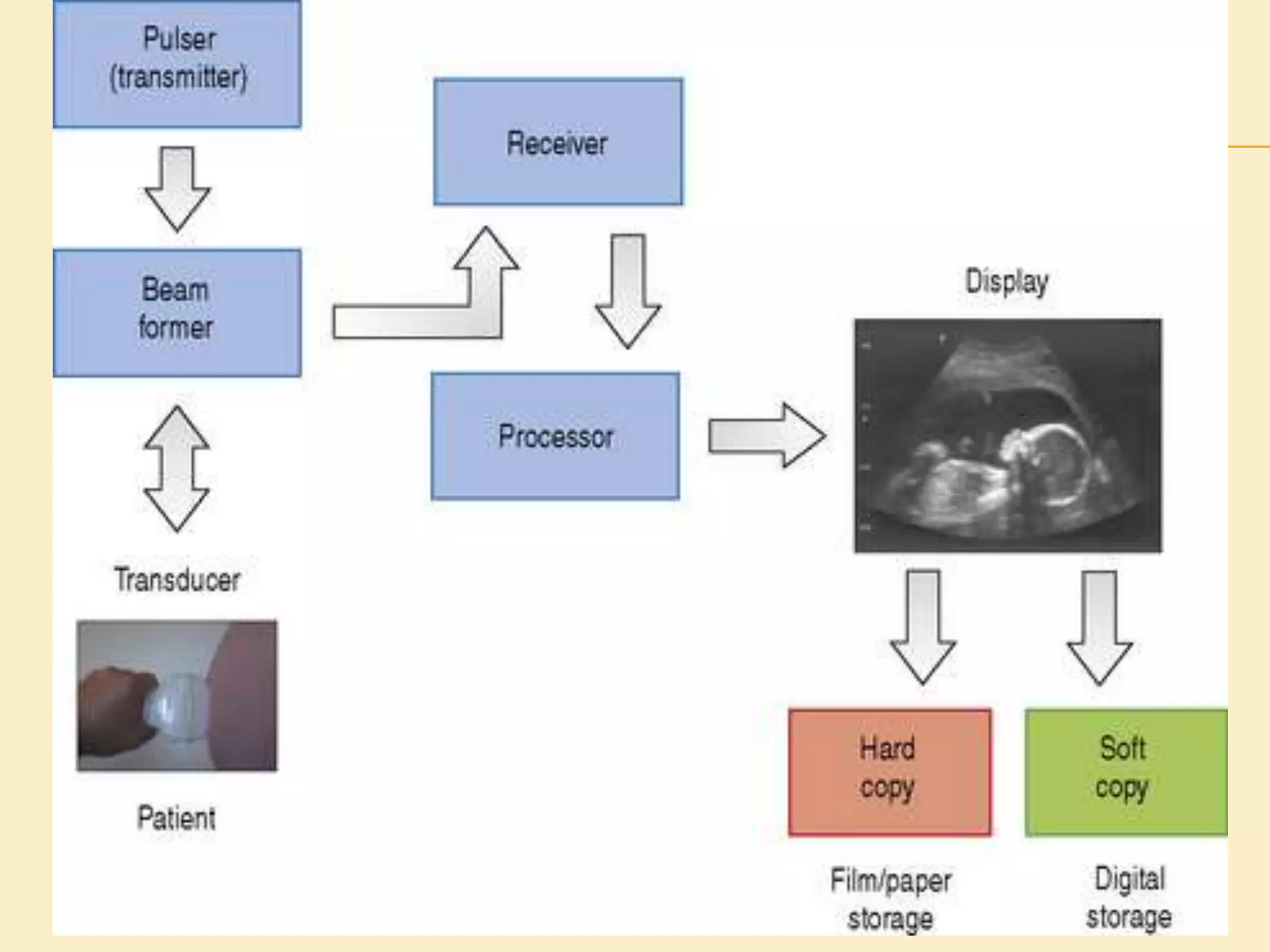
 Transducer: The transducer is a handheld device that emits
high- frequency sound waves and receives echoes. It is placed
on the skin over the area of interest and moved around to
obtain images from different angles.
 Pulser and receiver: The pulser generates electrical signals
that are converted into sound waves by the transducer. The
receiver detects the echoes and converts them back into
electrical-signal.
 Signal processor: The signal processor amplifies and filters
the electrical signals received by the transducer, and converts
them into a format that can be displayed on a monitor.
 Display: The display shows the images produced by the signal
processor in real-time.
New Microsoft PowerPoint Presentation.pptx

New Microsoft PowerPoint Presentation.pptx

  • 1.
    NATURE-BIOINSPIRED MATERIALS ANDMECHANISMS (QUALITATIVE):  Echolocation (ultrasonography, sonars),  Photosynthesis (photovoltaic cells, bionic leaf).  Bird flying (GPS and aircrafts),  Lotus leaf effect (Super hydrophobic and self-cleaning surfaces),  Plant burrs (Velcro),  Shark skin (Friction reducing swim suits),  Kingfisher beak (Bullet train).  Human Blood substitutes - hemoglobin-based oxygen carriers (HBOCs) and perflourocarbons (PFCs).
  • 2.
    SPIDER SILK:  Spidersilk is an incredibly strong and flexible material used in various applications, including medical implants, bulletproof vests, and even wearable electronics.  Researchers are studying the molecular structure of spider silk to develop synthetic versions that can be produced on a larger scale.
  • 3.
    GECKO-INSPIRED ADHESIVES  Geckosare known for their ability to climb walls and ceilings due to their unique adhesive properties.  Scientists have been studying the structure and function of gecko feet to develop adhesives that can be used in various applications, such as robotics and aerospace
  • 4.
    SHARK SKIN-INSPIRED SURFACES The skin of sharks has a unique texture that helps reduce drag and increase speed in water.  Scientists have studied the structure of shark skin to develop surfaces for boats and airplanes that can reduce drag and increase efficiency.
  • 6.
    LOTUS LEAF-INSPIRED SURFACES The surface of a lotus leaf is covered in tiny, water- repellent that help keep the leaf clean..  Scientists have studied the lotus leaf's structure to develop self-cleaning surfaces for various applications, including textiles and medical devices.
  • 7.
    BUTTERFLY WING-INSPIRED COLORATION The wings of butterflies and other insects have intricate patterns and colours that are created by the interaction of light with microscopic structures on the wings.  Scientists have studied these structures to develop colour- changing materials that could be used in camouflage, textiles, and displays.  By studying and mimicking the structures and mechanisms found in nature, researchers are developing new and innovative materials and technologies that have the potential to revolutionize various fields, from medicine to aerospace.
  • 8.
    ECHOLOCATION:  Echolocation, aphysiological process for locating distant or invisible objects (such as prey) by means of sound waves reflected back to the emitter (such as a bat) by the objects.  Echolocation is used for orientation, obstacle avoidance, food procurement, and social interactions.
  • 9.
     Echolocation isa biological mechanism used by some animals, such as bats, whales, and dolphins, to navigate and find prey in their environment.  Echolocation works by emitting high-frequency sound wave and listening for the echoes that bounce back after the sound waves hit an object in their environment.
  • 10.
    ECHOLOCATION STEPS:  Emittingsound waves: The animal emits a series of high- frequency sound waves, which are usually inaudible to humans.  Sound wave reflection: When these sound waves hit an object, they bounce back and reflect off the object, creating an echo.  Reception of echo: The animal then listens for the echoes that bounce back, which provides information about the location, size, and shape of the object.
  • 11.
     Interpretation ofecho: The animal's brain processes the information provided by the echoes and uses it to create a mental image of the object's location and characteristics.  Echolocation is an incredibly effective way for animals to navigate and find food, even in complete darkness.
  • 12.
    ECHOLOCATION APPLICATION:  Medicalimaging: Ultrasound imaging uses high-frequency sound waves to create images of internal organs and tissues.  This technique is non-invasive and can be used for a variety of diagnostic purposes, such as monitoring fetal development during pregnancy and detecting tumour's.  Sonar technology: Sonar technology is used for navigation and detection in a variety of applications, such as in submarines, boats, and aircraft.
  • 13.
     Robotics: Echolocationis used in robotics for obstacle detection and navigation.  Some robots are equipped with sensors that emit sound waves and listen for echoes to determine the location of obstacles and navigate around them. Conservation: Echolocation is used in conservation efforts to study and protect animal populations. Researchers use echolocation to track the movements and behavior of animals that use this mechanism, such as bats and dolphins, to gain insights into their habitats and behavior.
  • 14.
     Accessibility: Echolocationcan be used as a sensory aid for people with visual impairments.  Some individuals have developed the ability to use echolocation to navigate their environment by emitting clicking sounds and listening for echoes to detect obstacles and navigate around them.
  • 15.
    APPLICATION OF ECHOLOCATIONIN ULTRASONOGRAPHY:  Ultrasonography, also known as ultrasound imaging, uses the principles of echolocation to produce images of internal organs and tissues.  In ultrasonography, the transducer emits sound waves and receives echoes in real- time, allowing for the visualization of moving structures, such as the beating of the heart or the flow of blood through blood vessels.
  • 16.
     Ultrasonography isa non-invasive imaging technique that is commonly used in obstetrics and gynecology, cardiology, and other medical specialties to diagnose and monitor a variety of conditions.  Ultrasonography uses high-frequency sound waves to create images of the body's internal structures.  principle behind sonography is based on the way sound waves travel through different tissues in the body and receives the echoes.
  • 17.
    INSTRUMENTATION OF ULTRASONOGRAPHY Transducer: The transducer is a handheld device that emits high- frequency sound waves and receives echoes. It is placed on the skin over the area of interest and moved around to obtain images from different angles.  Pulser and receiver: The pulser generates electrical signals that are converted into sound waves by the transducer. The receiver detects the echoes and converts them back into electrical-signal.  Signal processor: The signal processor amplifies and filters the electrical signals received by the transducer, and converts them into a format that can be displayed on a monitor.  Display: The display shows the images produced by the signal processor in real-time.