Rewire Your Brain John Boghosian Arden, PhD
 
With CHILDREN
With ADULTS
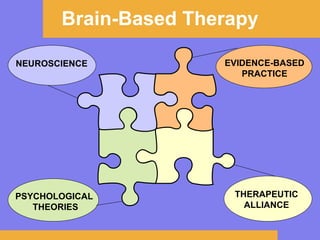
PSYCHOLOGICAL  THEORIES NEUROSCIENCE EVIDENCE-BASED PRACTICE THERAPEUTIC ALLIANCE Brain-Based Therapy
100 Billion Neurons Neurons are  social: Each Neuron has approximately 10,000 synaptic connections with other neurons Connection = Survival    “ Neural Darwinism”  (Edelman, 1992) : If connections are not maintained and strengthened, the neurons will die Neurons that fire together, wire together   (Hebb, 1948)
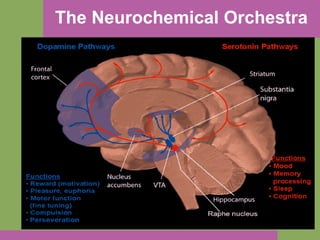
The Neurochemical Orchestra
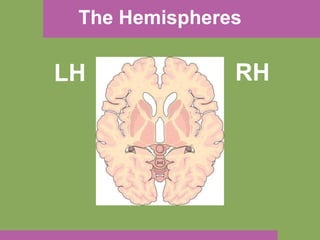
The Hemispheres LH RH
Right Hemisphere Sees the “Whole Picture”—the gist of the situation Reads emotional expressions and body language Has heightened development during the first two years  Picks up the emotional content in speech
Right Hemisphere Picks up prosody (rhyme, meter) and cadence in speech Responds positively to novelty, new learning Is context sensitive Expresses in the left side of the face
Left Hemisphere Processes positive emotion When damaged, “Catastrophic Effect” Problem-Solving Routinized Old learning (e.g., accomplished musicians) Not good at reading facial expressions Expresses in the right side of the face
Left Hemisphere Processes Language The “Interpreter”: Makes sense of experience or confabulates Puts positive spin on events (e.g., “The White House Press Secretary”) Confabulation occurs when RH is disconnected Detail-oriented Uses linear processing Sequential
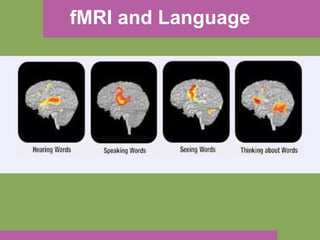
fMRI and Language
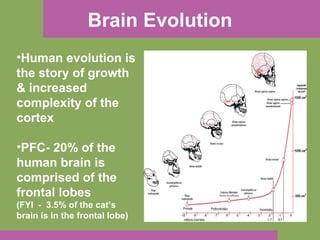
Brain Evolution Human evolution is the story of growth & increased complexity of the cortex PFC- 20% of the human brain is comprised of the frontal lobes (FYI  -  3.5% of the cat’s brain is in the frontal lobe)
Evolution and Increased Frontalization PFC expansion in hominids 20% of the human brain is comprised of the frontal lobes FYI  -  3.5% of the cat’s brain is in the frontal lobe
Pre-Frontal Lobes The “Executive” brain –Executive control center Motor pre-frontal lobes are last to myelinate – e.g., teenagers Identity Insight Sense of Self
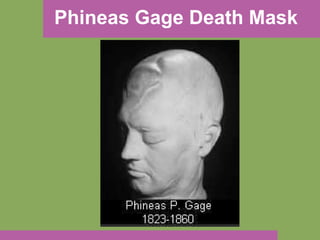
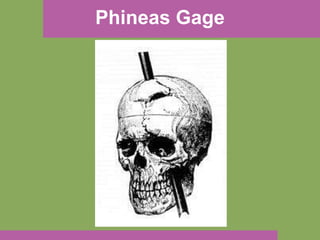
Pre-Frontal Lobes Dorsolateral pre-frontal cortex---working memory: 7, plus or minus 2, or 20-30 seconds of information Orbital pre-frontal cortex (Phineas Gage ) Social brain Affect regulator Empathy Attachment, warmth, and love Connections with limbic area, i.e., amygdala
Phineas Gage Death Mask
Phineas Gage
Your Anatomy Final
New Discoveries in Neuroscience Affect Asymmetry  Neuroplasticity and Neurogenesis Social Brain networks Memory systems  Nutritional Neuroscience
 
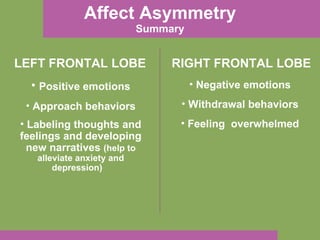
Affect Asymmetry Summary LEFT FRONTAL LOBE Positive emotions Approach behaviors Labeling thoughts and feelings and developing new narratives  (help to alleviate anxiety and depression)   RIGHT FRONTAL LOBE Negative emotions Withdrawal behaviors Feeling  overwhelmed
Systems of the Social Brain Brain Structures Orbital Frontal Cortex (OFC) Amygdala Insula Cingulate Mirror Neurons Spindle Cells Facial expression modules
Systems of the Social Brain Neurotransmitter systems include: Oxytocin Dopamine Central Nerve Vagus Nerve
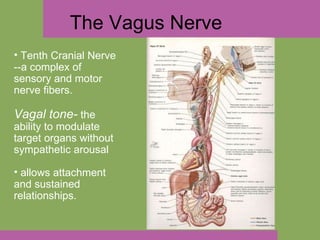
The Vagus Nerve Tenth Cranial Nerve --a complex of sensory and motor nerve fibers. Vagal tone-  the ability to modulate target organs without sympathetic arousal  allows attachment and sustained relationships.
Neuroplasticity Neuroplasticity  is a general term that describes changes in the brain as you experience and learn   ( Buonomano & Merzenich, 1998) Neuroplasticity involves many changes to the brain including: New synaptic connections Strengthening of connections through LTP The growth of new dendrites (dendritogenesis) Neurogenesis (the growth of new neurons)
Examples of Neuroplasticity London cabdrivers - larger right posterior hippocampus. The longer they were on the job, the larger the size of their hippocampus.  (Maguire, et al, 2000) Adults who juggled three balls for 3 months increased grey matter in the midtemporal area and left posterior intraparietal sulcus. - 3 months of little or no juggling, -- grey matter decreased and approached baseline values.  (Draginski, et al, 2003)
Examples of Neuroplasticity Musicians using specific fingers to play their instruments showed enlarged areas of their somatosensory strips associated with those fingers.   (Pantev, et al, 2001) Blind Braille readers showed enlarged cortical areas associated with their reading finger compared to blind non-Braille readers and to sighted people.   (Pascul-Leone & Torres, 1993)
Good News/Bad News Enriched environments Neurons sprout more dendrites More synaptic connections are formed Deprived environments and trauma Change the brains of abused children Chronically elevated cortisol Smaller left frontal lobes and hippocampal  (Bremner et al., 1997) Less integration of left and right hemispheres   (Teicher,  2004) Produce more psychopathology, suicides, and medical problems in adults (Felitt Drugs
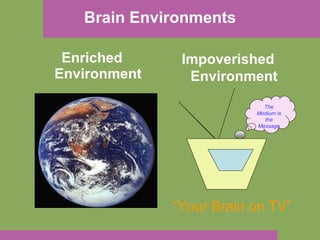
Brain Environments Enriched Environment Impoverished Environment The Medium is the Message “ Your Brain on TV”
“ What’s Missing?”
Neurodynamics The brain is a complex system characterized by nonlinear change Pax Medica employs linear causes/effects Complex systems: Tend toward increasing complexity, i.e., they are self-organizing Maintain continuity  and  flexibility Need new inputs to expand (a lake vs. a pond)
Rewiring: States to Traits Induce repeated states (weak attractors) (i.e. positive moods) Repeat often enough so they become traits – (or strong attractors)
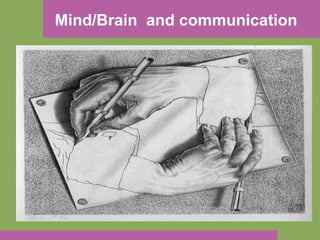
Mind/Brain  and communication
A Mnemonic “Recipe” for  FEED ing Your Brain F ocus E ffort E ffortlessness D etermination
Brain Derived Neurotropic Factor BDNF plays a crucial role in reinforcing neuroplasticity and neurogenesis. BDNF is like Miracle Grow to help: Consolidate the connections between neurons. It helps neurons fire together to wire together Promotes the growth of myelin to make your neurons fire more efficiently Acts on stem cells in the hippocampus to grow into new neurons
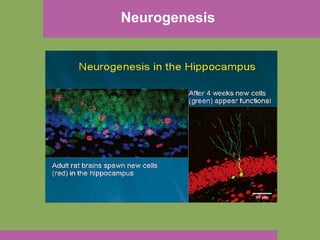
Neurogenesis
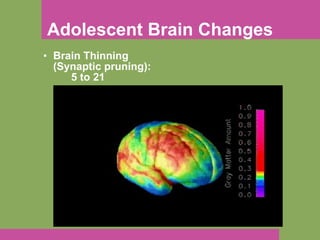
Adolescent Brain Changes Brain Thinning (Synaptic pruning):  5 to 21
Mirror Neurons Helps us respond sympathetically and empathically to others Gives us the ability to anticipate others’ intentions Mirror systems are found in: Motor Affect Cognition Theory of Mind (ToM) Social contagion (e.g., yawning)
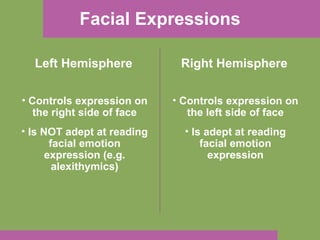
Facial Expressions Left Hemisphere  Right Hemisphere  Controls expression on the left side of face Is adept at reading facial emotion expression Controls expression on the right side of face Is NOT adept at reading facial emotion expression (e.g. alexithymics)
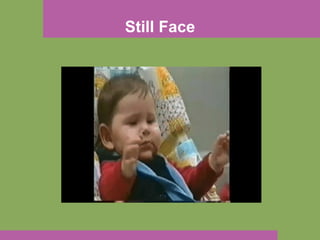
Still Face
D Smiles Guillaume Duchenne (1806-1875) identified the activity of the orbicularis oculi muscle  Non-D smiles possibly masking negative states and more likely to be asymmetrical D smiles -- L-PFC activation Non-D smiles -- R-PFC activation  (Ekman, et al, 1996)
 
 
Pupil Dilation The “Window to the Soul,” the eye is the only visible part of the brain We like large pupils more than small pupils People with large pupils are perceived as being more trustworthy, attractive, interesting, and interested Men find large pupils more attractive while only women who like “bad boys” prefer large pupils
Blushing Involuntary Depends on an awareness of being observed Occurs more on the side of the face we are being looked at Communicates to the other that we are emotionally aware of them and having feelings about what we are doing
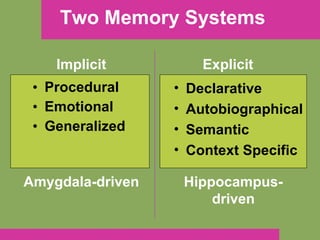
Two Memory Systems Procedural Emotional Generalized Implicit Explicit Amygdala-driven Hippocampus-driven Declarative Autobiographical Semantic Context Specific
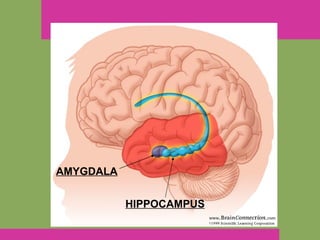
AMYGDALA HIPPOCAMPUS
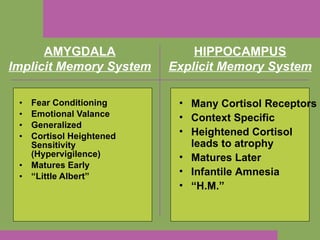
Fear Conditioning Emotional Valance Generalized Cortisol Heightened Sensitivity (Hypervigilence) Matures Early “ Little Albert” HIPPOCAMPUS Explicit Memory System AMYGDALA Implicit Memory System Many Cortisol Receptors Context Specific Heightened Cortisol leads to atrophy Matures Later Infantile Amnesia “ H.M.”
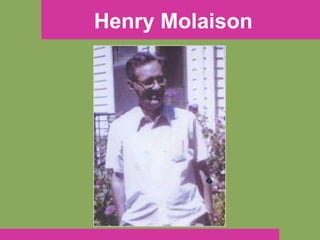
Henry Molaison
The Dynamics of Fear Amygdala memories are hard to forget  (“Stone tablet”) Hippocampal circuits tell us what to fear and in what context  (“Etch-a-Sketch”)
Memory (summary) A moderate degree of anxiety works best to facilitate neuroplasticity and new memory “ Flashbulb Memories” (e.g. JFK’s assassination and 9/11) are facilitated by the release of adrenaline and norepinephrine
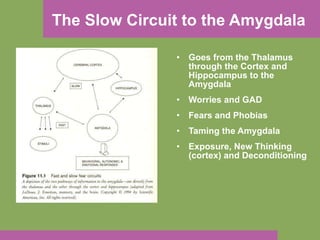
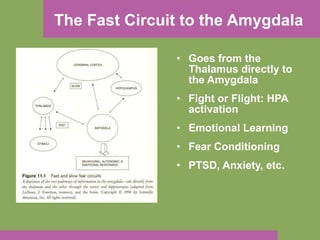
The Slow Circuit to the Amygdala Goes from the Thalamus through the Cortex and Hippocampus to the Amygdala Worries and GAD Fears and Phobias Taming the Amygdala Exposure, New Thinking (cortex) and Deconditioning
The Fast Circuit to the Amygdala Goes from the Thalamus directly to the Amygdala Fight or Flight: HPA activation Emotional Learning Fear Conditioning PTSD, Anxiety, etc.
Memory Skills Memory is not a thing Childhood memories The case against repressed memory Memory is always being rewritten Heraclitus… Working Memory and Long Term
Improving Your Memory Prepare your brain Diet Exercise Avoid memory depressors (ETOH & MJ) Attention skills—open the gate Make it mean something to you Get you nucleus accumbens involved! The inverted “U” Repetition (cells that fire together…)
Improving Your Memory Spacing  Chunking  Combine different types of memory State based memory Combine visual, auditory etc  Using  Associations Mnemonics: NATO Pegging  Loci Story-link
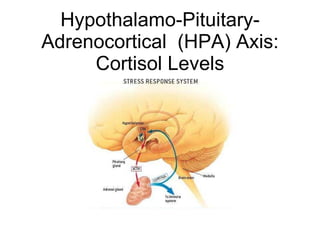
Hypothalamo-Pituitary-Adrenocortical  (HPA) Axis: Cortisol Levels
Long-Term or Traumatic Stress   Cortisol Cascade Hypothesis : Stress causes production of cortisol Excessive cortisol causes dendrites in the hippocampus to shrivel up   (Sapolsky, 1996) This feedforward loop leads to heightened reactivity of amygdala The hippocampus is essential for turning off HPA axis, damage to it leads to even more cortisol release as time passes PTSD patients with smaller hippocampi  (Bremner, 1999)
Allostasis   Allostatic adjustments are adaptive over the short term—cortisol helps orchestrate adjustments by:  enhancing or inhibiting gene transcription  regulation of BDNF up regulates amygdala activity targets prefrontal systems involved in stress and the emotion  (Sullivan & Gratton, 2002).   maintaining stability through a change  (McEwen, 1998). Allostatic load  --When demands exceed the balance of energy expenditure against the energy and regulatory gains from rest and recuperation.  (McEwen and Wingfield, 2003) .
Measures of Allostatic Load   ↑ BP Waist-to-hip ratio  Blood cholesterol Glycosylated hemoglobin (glucose metabolism over a period of days) ↑ cortisol and norepinphrine in overnight urine All the above can predict cognitive deficits 2 years later  (McEwen, 2002)
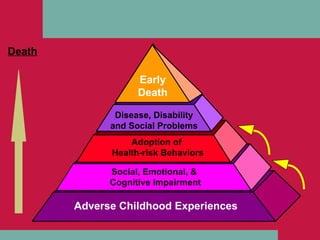
Death Adoption of  Health-risk Behaviors Social, Emotional, &  Cognitive Impairment Early Death Adverse Childhood Experiences Disease, Disability and Social Problems
Stress
Anxiety
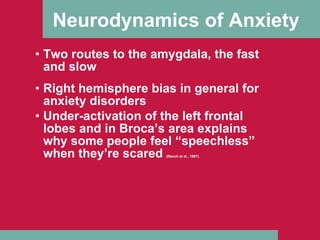
Neurodynamics of Anxiety Two routes to the amygdala, the fast and slow Right hemisphere bias in general for anxiety disorders Under-activation of the left frontal lobes and in Broca’s area explains why some people feel “speechless” when they’re scared  (Rauch et al., 1997).
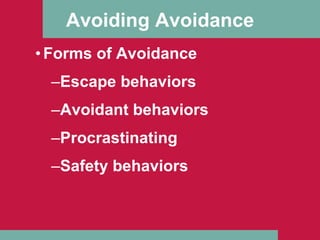
Avoiding Avoidance Forms of Avoidance Escape behaviors Avoidant behaviors Procrastinating Safety behaviors
Avoiding Avoidance Why avoidance is hard to resist: It works to reduce fear over the short term The more you engage in avoidance behaviors the harder it is to resist repeating them in the future because they become habits There is a superficial logic to avoidance, such as “Why wouldn’t I avoid something that makes me anxious?” You get some secondary gain from it like extra care because people around you feel sympathy
Taming the Amygdala Exposure Exercise Changing thinking errors  automatic thoughts assumptions core beliefs Global/Passive (R-PFC) vs.  Detail/Action (L-PFC)
Interoceptive Exposure There are a variety of interoceptive exercises including: Running in place--- to increase heart rate and hyperventilation Holding your breath--- to tighten the chest and create sensations of suffocation Spinning--- leading to dizziness Hyperventilation or breathing through a straw---leading to light-headedness
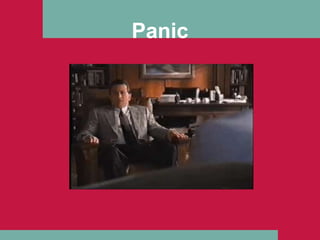
Panic
Four systems-related categories associated with depression: Mood changes  (dysphoria, hopelessness, suicality, anhedonia, anxiety) Circadian dysregulation (low drive, energy, appetite, sleep, libido) Motor deficits (slow movement, restlessness, agitation) Cognitive impairment (poor attention, working memory, executive function, ruminations)
SSRIs Debuted in 1974 Shift from meaning to  pharmacology Correct “chemical imbalances in the brain” By 2005, antidepressants became the most frequently prescribed drug in the US About 1:20 men and 1:10 women use antidepressants 1 :20 Americans sees a licensed mental health professional for any type of psychotherapy
Serotonin Hypothesis Revisted A re-analysis of the anti-depressant medication meta-sample was published in the  New England Journal of Medicine . All but one of the positive 38 studies were published; but only one of the 40 negative studies made it into print. Positive studies 12 times more likely to be published than studies finding negative results A lower effect-size for antidepressants (just over placebos but not by much).
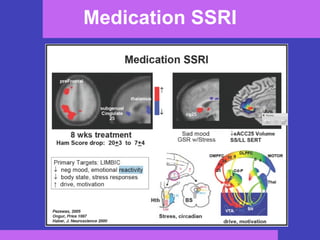
Medication SSRI
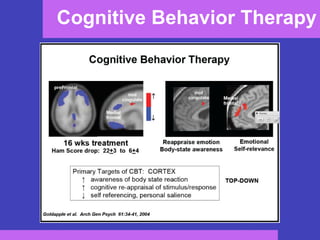
Cognitive Behavior Therapy
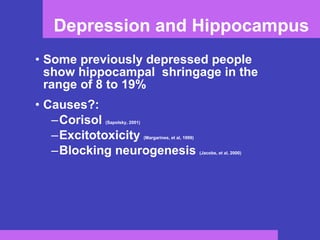
Depression and Hippocampus Some previously depressed people show hippocampal  shringage in the range of 8 to 19%  Causes?: Corisol  (Sapolsky, 2001) Excitotoxicity  (Margarines, et al, 1999) Blocking neurogenesis  (Jacobs, et al, 2000)
Neurodynamics of Depression Exercise reduces depression, boosts  BDNF, increases serotonin, norepinephrine, and dopamine Fatty acids also play a part in making us depression-proof by limiting the devastating effects of cortisol on neurogenesis Medication works on a bottom-up basis Therapy works on a top-down basis
Hemispheric Asymmetry and Depression Evidence from neurology—strokes Left side stroke— catastrophic  effect and become very depressed Right side stroke—  laissez-faire  effect and demonstrate more acceptance and much less depression. Relative inhibition of the left PFC and relative activation of the right PFC  (Davidson, 2000). Left PFC associated with positive emotions and is action oriented Right PFC associated with negative emotions and is passive--withdrawal oriented
Cultivating Depression Pessimism Self-critical Irritability Apathy Inactivity Poor diet Alcohol/drugs
Effort-Driven Reward Circuit  (Lambert,   2008)   Nucleus accumbens-striatal PFC network ↓ accubens—loss of pleasure ↓ striatum—sluggishness and slow motor responses ↓ PFC—poor concentration
Effort-Driven Reward Circuit  (Lambert,   2008)   Kindling this circuit by activities  ↑ DA and 5-HT ↑ positive feelings Efforts reap rewards and problem solving i.e. Behavioral Activation
Effort-Driven Reward Circuit  (Lambert,   2008)   PFC activates when you plan an activity  Striatum activates as you do it Accumbens activates when you feel the pleasure of doing it All the above increases the sense of self control
Loneliness and Depression  In Portugal 1000 people 65 >  assessed  Loneliness was the single most important predictor of distress and not knowing the neighbor increased the probability of depression  (Paul, et al, 2006) In London 2600 people 65>  More than 15% were at risk for social isolation and depression  (Illife et at, 2007)
Mindfulness and Depression Mindfulness targets depression by neutralizing: Monotony Ruminations: via wide spectrum observation and detachment Thinking errors: via affective labeling Fixations on imperfections: via acceptance
Cultivating Positive Moods Methods for getting out of negative mood states and cultivating positive moods: Priming positive moods Light chemistry Constructing narratives Taking action Aerobic boosting Wiring positive thinking Social medicine
5 Healthy Habits   Planting SEEDS S — Social Medicine E — Exercise E — Education  D — Diet  S — Sleep Hygiene
The Effects of Social Medicine Cardiovascular reactivity  (Lepore, et al, 1993) Blood pressure  (Spitzer, et al, 1992) Cortisol levels  (Kiecolt-Glaser, et al, 1984) Serum cholesterol  (Thomes, et al, 1985) Vulnerability to catching a cold  (Cohen, et al, 2003) Depression  (Russell & Cutrona, 1991) Anxiety  (Cohen, 2004) Natural killer cells  (Kiecolt-Glaser, et al, 1984) Slows cognitive decline  (Bassuk, et al 1999) Improves sleep  (Cohen, 2004)
Touch, Voice and Smiling Touch is a critical aspect of early communication and bonding  (Sapolsky, 1997). Even physical proximity directly effects the electrical activity in each individual’s brain  (McCraty et al., 1998).
Smiling—to kindle positive moods Perceiving the smiles of others triggers the release of DA  (Depue & Morrone-Strupinsky) Presenting smiles for a fraction of a second followed by neutral stimulus increases the positive reaction to that stimulus  (Dimburg & Ohman, 1996) Bilateral smiles  ↑L-PFC positive moods Smiling during periods of stress  ↓cardiovascular arousal back to baseline  (Fredrickson & Levenson, 1998)
Laughter is Good Medicine Improves cognitive function  (Fry, 1992) Exercises and relaxes the muscles  (Kuhn, 1994) Increases heart rate and blood pressure  (Pearce, 2004) Decreases cortisol levels  (Berk, et al, 1988) Increases natural killer cell activity  (Takahashi,  et al, 2001) Altering gene expression  (Hayashi, et al, 2006) Stimulates the dopamine reward system  (Mobbs, et al, 2003) Increased longevity  (Yoder & Haude, 1995)
Psychological Boost of Humor Anxiety  (Yovetich, et al, 1990) Stress  (Wooten, 1996) Depression  (Deaner & McConatha, 1993) Self esteem  (Martin, etal, 1993) Energy and hope  (Bellert, 1989) A sense of empowerment  (Wooten, 1996)
Love Activation of the reward systems to see with rose colored glasses Medial insula, Caudate, Putamin and Ventral anterior cingulate Deactivation of fear (i.e amygdala and R-PFC)--- ↑potential blindness to red flags   Oxytocin — the  “ cuddling hormone ” Activating the vagus nerve ↓ heart rate and  ↑relaxation ↑  Dopamine  “ in love ”
Exercise Optimizes Cognition alertness attention motivation cognitive flexibility
Exercise Optimizes Mood ↑  neurotransmitters Serotonin Dopamine norepinephrine physical health
Exercise Optimizes Neurogenesis new neurons in the hippocampus Neuroplasticity ↑  BDNF
Exercise and Repair Processes Insulin-like Growth Factor (IGF-1) Vascular Endotheclial Growth Factor (VEGF) Fibroblast Growth Facto (FGF-2) Brain Derived Neurotrophic Factor (BDNF)
Breaking a Fast Skipping Breakfast ↓  problem solving ↓  short-term  ↓ attention and episodic memory ↓ Mood swings Difficulty concentrating Low energy Increased stress reactivity Increased anxiety and depression
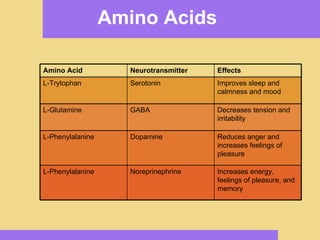
Amino Acids   Amino Acid Neurotransmitter Effects L-Trytophan Serotonin Improves sleep and calmness and mood L-Glutamine GABA Decreases tension and irritability L-Phenylalanine Dopamine Reduces anger and increases feelings of pleasure L-Phenylalanine Noreprinephrine Increases energy, feelings of pleasure, and memory
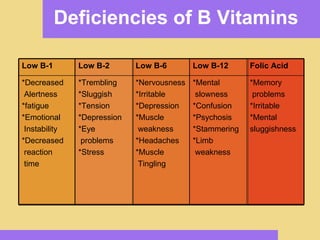
Deficiencies of B Vitamins Low B-1  Low B-2  Low B-6  Low B-12  Folic Acid  *Decreased  Alertness *fatigue *Emotional  Instability *Decreased  reaction  time *Trembling *Sluggish *Tension *Depression *Eye  problems *Stress *Nervousness *Irritable *Depression *Muscle  weakness *Headaches *Muscle  Tingling *Mental  slowness *Confusion *Psychosis *Stammering *Limb  weakness *Memory  problems *Irritable *Mental  sluggishness
Stress and Fatty Acids Stress can have a destructive effect on fatty acids.  Those effects include: Inadequate replacement of lost fatty acids Destruction (rancidity) of long-chain fatty acids in the brain Depletion of long-chain fatty acids in the brain contribute to depression  (Hibbeln, 1995) The imbalanced ratio between Omega-6 and Omega-3 has been correlated with depression. Increased triglycerides (vegetable oil and animal fat) is correlated with depression  (Glueck, 1998)
Excessive Trans-fatty Acids May be taken up directly into your nerve membranes. May block your body’s ability to make its own essential fatty acids—so critical for your brain. May alter the synthesis of neurotransmitters such as dopamine. May negatively effect your brain’s blood supply.
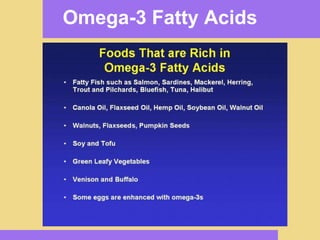
Omega-3 Fatty Acids
Alcohol Drinking on a regular basis -- cognitive deficits such as: ↓ performance on tests of visual and spatial perception ↓ visual and spatial learning ability ↓   ability to make fine motor movements ↓   adaptive abilities ↓   short-term memory ↓   non-verbal abstract learning ↓   abstract thinking ability ↓   conceptual thinking ability
Alcohol Alcohol contributes to the following problems as much as several days after drinking: ↑ stress and anxiety  ↓ GABA—panic attacks common ↑ depression ↓ serotonin and DA for as much as a few weeks after the last drink Alcohol-related insomnia (mid sleep cycle awakening). ↓   deep sleep (Stage 4)  ↓ REM sleep.
The Importance of Sleep for the Brain Protein synthesis   (Ding, et al, 2004) Synthesis and transport of cholesterol   (Cirelli, 2005) Expression of molecules associated with synaptic plasticity   (Taishi, et al, 2005) Increase LTP   (Cirelli, 2005) Gene expression   (Cirelli, 2005) Memory consolidation
“ I’m not going to get to sleep tonight.”   Bed becomes an enemy—a negative cue. Sleep later on the weekends to compensate. Next night you feel as you are losing sleep. You try too hard to get to sleep. Thoughts about sleep add to daytime stress. “ Learned” Insomnia
Sleep Hygiene Don’t “try too hard” to go to sleep.  You’ll frustrate yourself, leading to a paradoxical effect, and work yourself into an anxious state of mind.  Tell yourself “it’s okay if I get just a few hours sleep tonight.  I will catch up the next night.”  This change in expectation will free you up to be able to relax. The harder you try to go to sleep the harder it will be to induce sleep.
Sleep Hygiene Avoid drinking large quantities of liquid at night.  This will lower the sleep threshold and cause you to wake up to urinate. Avoid bright light at least a few hours before going to sleep.  Don’t work on the computer into the late evening.
Sleep Hygiene Try eating a light snack with complex carbohydrates before bed.  Foods rich with L-Tryptophan are advisable.  Don’t eat anything with sugar or salt before bed. Avoid protein snacks at night because protein blocks the synthesis of serotonin and as a result promotes alertness.
Sleep Hygiene Exercise 3 to 6 hours before you go to bed. A brisk walk before or after dinner time is perfect. Avoid alcohol Sleep scheduling technique.  Try the relaxation exercises.  These help you go to sleep or go back to sleep if you wake up during the night.
Mindfulness Meditation  Decentering – thoughts and feelings are events—not realities Intentionality – breaking out of automatic thoughts and behaviors Reducing Avoidance --  turning toward difficulties  Anti-ruminative – here and now focus not the past or future
Mindfulness and the Brain Long-term meditators show increased thicknesses of the medial prefrontal cortex and also enlargement of the right insula  (Lazar, et al, 2005). The process of verbal labeling of affective states reduces anxiety and negative affect  (Leiberman, et al, 2004) The middle prefrontal cortex has been associated with self observation and mindfulness meditation  (Cahn and Polich, 2006). A shift the left PFC which puts a positive spin on the experience  (Davidson, et al., 2003).
Mindfulness for Tx of Diagnostic Groups Borderline patients in dialectic behavior therapy  (Linehan, 1993 )  Patients with OCD  (Baxter, et al., 1992) Patients with depression  (Teasdale) Patients with general medical problems such as chronic pain  (Kabit-Zinn, 1990).
Spirituality Common threads: --Being here now Compassion Unity
[email_address]

Rewire Your Brain

  • 1.
    Rewire Your BrainJohn Boghosian Arden, PhD
  • 2.
  • 3.
  • 4.
  • 5.
    PSYCHOLOGICAL THEORIESNEUROSCIENCE EVIDENCE-BASED PRACTICE THERAPEUTIC ALLIANCE Brain-Based Therapy
  • 6.
    100 Billion NeuronsNeurons are social: Each Neuron has approximately 10,000 synaptic connections with other neurons Connection = Survival “ Neural Darwinism” (Edelman, 1992) : If connections are not maintained and strengthened, the neurons will die Neurons that fire together, wire together (Hebb, 1948)
  • 7.
  • 8.
  • 9.
    Right Hemisphere Seesthe “Whole Picture”—the gist of the situation Reads emotional expressions and body language Has heightened development during the first two years Picks up the emotional content in speech
  • 10.
    Right Hemisphere Picksup prosody (rhyme, meter) and cadence in speech Responds positively to novelty, new learning Is context sensitive Expresses in the left side of the face
  • 11.
    Left Hemisphere Processespositive emotion When damaged, “Catastrophic Effect” Problem-Solving Routinized Old learning (e.g., accomplished musicians) Not good at reading facial expressions Expresses in the right side of the face
  • 12.
    Left Hemisphere ProcessesLanguage The “Interpreter”: Makes sense of experience or confabulates Puts positive spin on events (e.g., “The White House Press Secretary”) Confabulation occurs when RH is disconnected Detail-oriented Uses linear processing Sequential
  • 13.
  • 14.
    Brain Evolution Humanevolution is the story of growth & increased complexity of the cortex PFC- 20% of the human brain is comprised of the frontal lobes (FYI - 3.5% of the cat’s brain is in the frontal lobe)
  • 15.
    Evolution and IncreasedFrontalization PFC expansion in hominids 20% of the human brain is comprised of the frontal lobes FYI - 3.5% of the cat’s brain is in the frontal lobe
  • 16.
    Pre-Frontal Lobes The“Executive” brain –Executive control center Motor pre-frontal lobes are last to myelinate – e.g., teenagers Identity Insight Sense of Self
  • 17.
    Pre-Frontal Lobes Dorsolateralpre-frontal cortex---working memory: 7, plus or minus 2, or 20-30 seconds of information Orbital pre-frontal cortex (Phineas Gage ) Social brain Affect regulator Empathy Attachment, warmth, and love Connections with limbic area, i.e., amygdala
  • 18.
  • 19.
  • 20.
  • 21.
    New Discoveries inNeuroscience Affect Asymmetry Neuroplasticity and Neurogenesis Social Brain networks Memory systems Nutritional Neuroscience
  • 22.
  • 23.
    Affect Asymmetry SummaryLEFT FRONTAL LOBE Positive emotions Approach behaviors Labeling thoughts and feelings and developing new narratives (help to alleviate anxiety and depression) RIGHT FRONTAL LOBE Negative emotions Withdrawal behaviors Feeling overwhelmed
  • 24.
    Systems of theSocial Brain Brain Structures Orbital Frontal Cortex (OFC) Amygdala Insula Cingulate Mirror Neurons Spindle Cells Facial expression modules
  • 25.
    Systems of theSocial Brain Neurotransmitter systems include: Oxytocin Dopamine Central Nerve Vagus Nerve
  • 26.
    The Vagus NerveTenth Cranial Nerve --a complex of sensory and motor nerve fibers. Vagal tone- the ability to modulate target organs without sympathetic arousal allows attachment and sustained relationships.
  • 27.
    Neuroplasticity Neuroplasticity is a general term that describes changes in the brain as you experience and learn ( Buonomano & Merzenich, 1998) Neuroplasticity involves many changes to the brain including: New synaptic connections Strengthening of connections through LTP The growth of new dendrites (dendritogenesis) Neurogenesis (the growth of new neurons)
  • 28.
    Examples of NeuroplasticityLondon cabdrivers - larger right posterior hippocampus. The longer they were on the job, the larger the size of their hippocampus. (Maguire, et al, 2000) Adults who juggled three balls for 3 months increased grey matter in the midtemporal area and left posterior intraparietal sulcus. - 3 months of little or no juggling, -- grey matter decreased and approached baseline values. (Draginski, et al, 2003)
  • 29.
    Examples of NeuroplasticityMusicians using specific fingers to play their instruments showed enlarged areas of their somatosensory strips associated with those fingers. (Pantev, et al, 2001) Blind Braille readers showed enlarged cortical areas associated with their reading finger compared to blind non-Braille readers and to sighted people. (Pascul-Leone & Torres, 1993)
  • 30.
    Good News/Bad NewsEnriched environments Neurons sprout more dendrites More synaptic connections are formed Deprived environments and trauma Change the brains of abused children Chronically elevated cortisol Smaller left frontal lobes and hippocampal (Bremner et al., 1997) Less integration of left and right hemispheres (Teicher, 2004) Produce more psychopathology, suicides, and medical problems in adults (Felitt Drugs
  • 31.
    Brain Environments EnrichedEnvironment Impoverished Environment The Medium is the Message “ Your Brain on TV”
  • 32.
  • 33.
    Neurodynamics The brainis a complex system characterized by nonlinear change Pax Medica employs linear causes/effects Complex systems: Tend toward increasing complexity, i.e., they are self-organizing Maintain continuity and flexibility Need new inputs to expand (a lake vs. a pond)
  • 34.
    Rewiring: States toTraits Induce repeated states (weak attractors) (i.e. positive moods) Repeat often enough so they become traits – (or strong attractors)
  • 35.
    Mind/Brain andcommunication
  • 36.
    A Mnemonic “Recipe”for FEED ing Your Brain F ocus E ffort E ffortlessness D etermination
  • 37.
    Brain Derived NeurotropicFactor BDNF plays a crucial role in reinforcing neuroplasticity and neurogenesis. BDNF is like Miracle Grow to help: Consolidate the connections between neurons. It helps neurons fire together to wire together Promotes the growth of myelin to make your neurons fire more efficiently Acts on stem cells in the hippocampus to grow into new neurons
  • 38.
  • 39.
    Adolescent Brain ChangesBrain Thinning (Synaptic pruning): 5 to 21
  • 40.
    Mirror Neurons Helpsus respond sympathetically and empathically to others Gives us the ability to anticipate others’ intentions Mirror systems are found in: Motor Affect Cognition Theory of Mind (ToM) Social contagion (e.g., yawning)
  • 41.
    Facial Expressions LeftHemisphere Right Hemisphere Controls expression on the left side of face Is adept at reading facial emotion expression Controls expression on the right side of face Is NOT adept at reading facial emotion expression (e.g. alexithymics)
  • 42.
  • 43.
    D Smiles GuillaumeDuchenne (1806-1875) identified the activity of the orbicularis oculi muscle Non-D smiles possibly masking negative states and more likely to be asymmetrical D smiles -- L-PFC activation Non-D smiles -- R-PFC activation (Ekman, et al, 1996)
  • 44.
  • 45.
  • 46.
    Pupil Dilation The“Window to the Soul,” the eye is the only visible part of the brain We like large pupils more than small pupils People with large pupils are perceived as being more trustworthy, attractive, interesting, and interested Men find large pupils more attractive while only women who like “bad boys” prefer large pupils
  • 47.
    Blushing Involuntary Dependson an awareness of being observed Occurs more on the side of the face we are being looked at Communicates to the other that we are emotionally aware of them and having feelings about what we are doing
  • 48.
    Two Memory SystemsProcedural Emotional Generalized Implicit Explicit Amygdala-driven Hippocampus-driven Declarative Autobiographical Semantic Context Specific
  • 49.
  • 50.
    Fear Conditioning EmotionalValance Generalized Cortisol Heightened Sensitivity (Hypervigilence) Matures Early “ Little Albert” HIPPOCAMPUS Explicit Memory System AMYGDALA Implicit Memory System Many Cortisol Receptors Context Specific Heightened Cortisol leads to atrophy Matures Later Infantile Amnesia “ H.M.”
  • 51.
  • 52.
    The Dynamics ofFear Amygdala memories are hard to forget (“Stone tablet”) Hippocampal circuits tell us what to fear and in what context (“Etch-a-Sketch”)
  • 53.
    Memory (summary) Amoderate degree of anxiety works best to facilitate neuroplasticity and new memory “ Flashbulb Memories” (e.g. JFK’s assassination and 9/11) are facilitated by the release of adrenaline and norepinephrine
  • 54.
    The Slow Circuitto the Amygdala Goes from the Thalamus through the Cortex and Hippocampus to the Amygdala Worries and GAD Fears and Phobias Taming the Amygdala Exposure, New Thinking (cortex) and Deconditioning
  • 55.
    The Fast Circuitto the Amygdala Goes from the Thalamus directly to the Amygdala Fight or Flight: HPA activation Emotional Learning Fear Conditioning PTSD, Anxiety, etc.
  • 56.
    Memory Skills Memoryis not a thing Childhood memories The case against repressed memory Memory is always being rewritten Heraclitus… Working Memory and Long Term
  • 57.
    Improving Your MemoryPrepare your brain Diet Exercise Avoid memory depressors (ETOH & MJ) Attention skills—open the gate Make it mean something to you Get you nucleus accumbens involved! The inverted “U” Repetition (cells that fire together…)
  • 58.
    Improving Your MemorySpacing Chunking Combine different types of memory State based memory Combine visual, auditory etc Using Associations Mnemonics: NATO Pegging Loci Story-link
  • 59.
  • 60.
    Long-Term or TraumaticStress Cortisol Cascade Hypothesis : Stress causes production of cortisol Excessive cortisol causes dendrites in the hippocampus to shrivel up (Sapolsky, 1996) This feedforward loop leads to heightened reactivity of amygdala The hippocampus is essential for turning off HPA axis, damage to it leads to even more cortisol release as time passes PTSD patients with smaller hippocampi (Bremner, 1999)
  • 61.
    Allostasis Allostatic adjustments are adaptive over the short term—cortisol helps orchestrate adjustments by: enhancing or inhibiting gene transcription regulation of BDNF up regulates amygdala activity targets prefrontal systems involved in stress and the emotion (Sullivan & Gratton, 2002). maintaining stability through a change (McEwen, 1998). Allostatic load --When demands exceed the balance of energy expenditure against the energy and regulatory gains from rest and recuperation. (McEwen and Wingfield, 2003) .
  • 62.
    Measures of AllostaticLoad ↑ BP Waist-to-hip ratio Blood cholesterol Glycosylated hemoglobin (glucose metabolism over a period of days) ↑ cortisol and norepinphrine in overnight urine All the above can predict cognitive deficits 2 years later (McEwen, 2002)
  • 63.
    Death Adoption of Health-risk Behaviors Social, Emotional, & Cognitive Impairment Early Death Adverse Childhood Experiences Disease, Disability and Social Problems
  • 64.
  • 65.
  • 66.
    Neurodynamics of AnxietyTwo routes to the amygdala, the fast and slow Right hemisphere bias in general for anxiety disorders Under-activation of the left frontal lobes and in Broca’s area explains why some people feel “speechless” when they’re scared (Rauch et al., 1997).
  • 67.
    Avoiding Avoidance Formsof Avoidance Escape behaviors Avoidant behaviors Procrastinating Safety behaviors
  • 68.
    Avoiding Avoidance Whyavoidance is hard to resist: It works to reduce fear over the short term The more you engage in avoidance behaviors the harder it is to resist repeating them in the future because they become habits There is a superficial logic to avoidance, such as “Why wouldn’t I avoid something that makes me anxious?” You get some secondary gain from it like extra care because people around you feel sympathy
  • 69.
    Taming the AmygdalaExposure Exercise Changing thinking errors automatic thoughts assumptions core beliefs Global/Passive (R-PFC) vs. Detail/Action (L-PFC)
  • 70.
    Interoceptive Exposure Thereare a variety of interoceptive exercises including: Running in place--- to increase heart rate and hyperventilation Holding your breath--- to tighten the chest and create sensations of suffocation Spinning--- leading to dizziness Hyperventilation or breathing through a straw---leading to light-headedness
  • 71.
  • 72.
    Four systems-related categoriesassociated with depression: Mood changes (dysphoria, hopelessness, suicality, anhedonia, anxiety) Circadian dysregulation (low drive, energy, appetite, sleep, libido) Motor deficits (slow movement, restlessness, agitation) Cognitive impairment (poor attention, working memory, executive function, ruminations)
  • 73.
    SSRIs Debuted in1974 Shift from meaning to pharmacology Correct “chemical imbalances in the brain” By 2005, antidepressants became the most frequently prescribed drug in the US About 1:20 men and 1:10 women use antidepressants 1 :20 Americans sees a licensed mental health professional for any type of psychotherapy
  • 74.
    Serotonin Hypothesis RevistedA re-analysis of the anti-depressant medication meta-sample was published in the New England Journal of Medicine . All but one of the positive 38 studies were published; but only one of the 40 negative studies made it into print. Positive studies 12 times more likely to be published than studies finding negative results A lower effect-size for antidepressants (just over placebos but not by much).
  • 75.
  • 76.
  • 77.
    Depression and HippocampusSome previously depressed people show hippocampal shringage in the range of 8 to 19% Causes?: Corisol (Sapolsky, 2001) Excitotoxicity (Margarines, et al, 1999) Blocking neurogenesis (Jacobs, et al, 2000)
  • 78.
    Neurodynamics of DepressionExercise reduces depression, boosts BDNF, increases serotonin, norepinephrine, and dopamine Fatty acids also play a part in making us depression-proof by limiting the devastating effects of cortisol on neurogenesis Medication works on a bottom-up basis Therapy works on a top-down basis
  • 79.
    Hemispheric Asymmetry andDepression Evidence from neurology—strokes Left side stroke— catastrophic effect and become very depressed Right side stroke— laissez-faire effect and demonstrate more acceptance and much less depression. Relative inhibition of the left PFC and relative activation of the right PFC (Davidson, 2000). Left PFC associated with positive emotions and is action oriented Right PFC associated with negative emotions and is passive--withdrawal oriented
  • 80.
    Cultivating Depression PessimismSelf-critical Irritability Apathy Inactivity Poor diet Alcohol/drugs
  • 81.
    Effort-Driven Reward Circuit (Lambert, 2008) Nucleus accumbens-striatal PFC network ↓ accubens—loss of pleasure ↓ striatum—sluggishness and slow motor responses ↓ PFC—poor concentration
  • 82.
    Effort-Driven Reward Circuit (Lambert, 2008) Kindling this circuit by activities ↑ DA and 5-HT ↑ positive feelings Efforts reap rewards and problem solving i.e. Behavioral Activation
  • 83.
    Effort-Driven Reward Circuit (Lambert, 2008) PFC activates when you plan an activity Striatum activates as you do it Accumbens activates when you feel the pleasure of doing it All the above increases the sense of self control
  • 84.
    Loneliness and Depression In Portugal 1000 people 65 > assessed Loneliness was the single most important predictor of distress and not knowing the neighbor increased the probability of depression (Paul, et al, 2006) In London 2600 people 65> More than 15% were at risk for social isolation and depression (Illife et at, 2007)
  • 85.
    Mindfulness and DepressionMindfulness targets depression by neutralizing: Monotony Ruminations: via wide spectrum observation and detachment Thinking errors: via affective labeling Fixations on imperfections: via acceptance
  • 86.
    Cultivating Positive MoodsMethods for getting out of negative mood states and cultivating positive moods: Priming positive moods Light chemistry Constructing narratives Taking action Aerobic boosting Wiring positive thinking Social medicine
  • 87.
    5 Healthy Habits Planting SEEDS S — Social Medicine E — Exercise E — Education D — Diet S — Sleep Hygiene
  • 88.
    The Effects ofSocial Medicine Cardiovascular reactivity (Lepore, et al, 1993) Blood pressure (Spitzer, et al, 1992) Cortisol levels (Kiecolt-Glaser, et al, 1984) Serum cholesterol (Thomes, et al, 1985) Vulnerability to catching a cold (Cohen, et al, 2003) Depression (Russell & Cutrona, 1991) Anxiety (Cohen, 2004) Natural killer cells (Kiecolt-Glaser, et al, 1984) Slows cognitive decline (Bassuk, et al 1999) Improves sleep (Cohen, 2004)
  • 89.
    Touch, Voice andSmiling Touch is a critical aspect of early communication and bonding (Sapolsky, 1997). Even physical proximity directly effects the electrical activity in each individual’s brain (McCraty et al., 1998).
  • 90.
    Smiling—to kindle positivemoods Perceiving the smiles of others triggers the release of DA (Depue & Morrone-Strupinsky) Presenting smiles for a fraction of a second followed by neutral stimulus increases the positive reaction to that stimulus (Dimburg & Ohman, 1996) Bilateral smiles ↑L-PFC positive moods Smiling during periods of stress ↓cardiovascular arousal back to baseline (Fredrickson & Levenson, 1998)
  • 91.
    Laughter is GoodMedicine Improves cognitive function (Fry, 1992) Exercises and relaxes the muscles (Kuhn, 1994) Increases heart rate and blood pressure (Pearce, 2004) Decreases cortisol levels (Berk, et al, 1988) Increases natural killer cell activity (Takahashi, et al, 2001) Altering gene expression (Hayashi, et al, 2006) Stimulates the dopamine reward system (Mobbs, et al, 2003) Increased longevity (Yoder & Haude, 1995)
  • 92.
    Psychological Boost ofHumor Anxiety (Yovetich, et al, 1990) Stress (Wooten, 1996) Depression (Deaner & McConatha, 1993) Self esteem (Martin, etal, 1993) Energy and hope (Bellert, 1989) A sense of empowerment (Wooten, 1996)
  • 93.
    Love Activation ofthe reward systems to see with rose colored glasses Medial insula, Caudate, Putamin and Ventral anterior cingulate Deactivation of fear (i.e amygdala and R-PFC)--- ↑potential blindness to red flags Oxytocin — the “ cuddling hormone ” Activating the vagus nerve ↓ heart rate and ↑relaxation ↑ Dopamine “ in love ”
  • 94.
    Exercise Optimizes Cognitionalertness attention motivation cognitive flexibility
  • 95.
    Exercise Optimizes Mood↑ neurotransmitters Serotonin Dopamine norepinephrine physical health
  • 96.
    Exercise Optimizes Neurogenesisnew neurons in the hippocampus Neuroplasticity ↑ BDNF
  • 97.
    Exercise and RepairProcesses Insulin-like Growth Factor (IGF-1) Vascular Endotheclial Growth Factor (VEGF) Fibroblast Growth Facto (FGF-2) Brain Derived Neurotrophic Factor (BDNF)
  • 98.
    Breaking a FastSkipping Breakfast ↓ problem solving ↓ short-term ↓ attention and episodic memory ↓ Mood swings Difficulty concentrating Low energy Increased stress reactivity Increased anxiety and depression
  • 99.
    Amino Acids Amino Acid Neurotransmitter Effects L-Trytophan Serotonin Improves sleep and calmness and mood L-Glutamine GABA Decreases tension and irritability L-Phenylalanine Dopamine Reduces anger and increases feelings of pleasure L-Phenylalanine Noreprinephrine Increases energy, feelings of pleasure, and memory
  • 100.
    Deficiencies of BVitamins Low B-1 Low B-2 Low B-6 Low B-12 Folic Acid *Decreased Alertness *fatigue *Emotional Instability *Decreased reaction time *Trembling *Sluggish *Tension *Depression *Eye problems *Stress *Nervousness *Irritable *Depression *Muscle weakness *Headaches *Muscle Tingling *Mental slowness *Confusion *Psychosis *Stammering *Limb weakness *Memory problems *Irritable *Mental sluggishness
  • 101.
    Stress and FattyAcids Stress can have a destructive effect on fatty acids. Those effects include: Inadequate replacement of lost fatty acids Destruction (rancidity) of long-chain fatty acids in the brain Depletion of long-chain fatty acids in the brain contribute to depression (Hibbeln, 1995) The imbalanced ratio between Omega-6 and Omega-3 has been correlated with depression. Increased triglycerides (vegetable oil and animal fat) is correlated with depression (Glueck, 1998)
  • 102.
    Excessive Trans-fatty AcidsMay be taken up directly into your nerve membranes. May block your body’s ability to make its own essential fatty acids—so critical for your brain. May alter the synthesis of neurotransmitters such as dopamine. May negatively effect your brain’s blood supply.
  • 103.
  • 104.
    Alcohol Drinking ona regular basis -- cognitive deficits such as: ↓ performance on tests of visual and spatial perception ↓ visual and spatial learning ability ↓ ability to make fine motor movements ↓ adaptive abilities ↓ short-term memory ↓ non-verbal abstract learning ↓ abstract thinking ability ↓ conceptual thinking ability
  • 105.
    Alcohol Alcohol contributesto the following problems as much as several days after drinking: ↑ stress and anxiety ↓ GABA—panic attacks common ↑ depression ↓ serotonin and DA for as much as a few weeks after the last drink Alcohol-related insomnia (mid sleep cycle awakening). ↓ deep sleep (Stage 4) ↓ REM sleep.
  • 106.
    The Importance ofSleep for the Brain Protein synthesis (Ding, et al, 2004) Synthesis and transport of cholesterol (Cirelli, 2005) Expression of molecules associated with synaptic plasticity (Taishi, et al, 2005) Increase LTP (Cirelli, 2005) Gene expression (Cirelli, 2005) Memory consolidation
  • 107.
    “ I’m notgoing to get to sleep tonight.” Bed becomes an enemy—a negative cue. Sleep later on the weekends to compensate. Next night you feel as you are losing sleep. You try too hard to get to sleep. Thoughts about sleep add to daytime stress. “ Learned” Insomnia
  • 108.
    Sleep Hygiene Don’t“try too hard” to go to sleep. You’ll frustrate yourself, leading to a paradoxical effect, and work yourself into an anxious state of mind. Tell yourself “it’s okay if I get just a few hours sleep tonight. I will catch up the next night.” This change in expectation will free you up to be able to relax. The harder you try to go to sleep the harder it will be to induce sleep.
  • 109.
    Sleep Hygiene Avoiddrinking large quantities of liquid at night. This will lower the sleep threshold and cause you to wake up to urinate. Avoid bright light at least a few hours before going to sleep. Don’t work on the computer into the late evening.
  • 110.
    Sleep Hygiene Tryeating a light snack with complex carbohydrates before bed. Foods rich with L-Tryptophan are advisable. Don’t eat anything with sugar or salt before bed. Avoid protein snacks at night because protein blocks the synthesis of serotonin and as a result promotes alertness.
  • 111.
    Sleep Hygiene Exercise3 to 6 hours before you go to bed. A brisk walk before or after dinner time is perfect. Avoid alcohol Sleep scheduling technique. Try the relaxation exercises. These help you go to sleep or go back to sleep if you wake up during the night.
  • 112.
    Mindfulness Meditation Decentering – thoughts and feelings are events—not realities Intentionality – breaking out of automatic thoughts and behaviors Reducing Avoidance -- turning toward difficulties Anti-ruminative – here and now focus not the past or future
  • 113.
    Mindfulness and theBrain Long-term meditators show increased thicknesses of the medial prefrontal cortex and also enlargement of the right insula (Lazar, et al, 2005). The process of verbal labeling of affective states reduces anxiety and negative affect (Leiberman, et al, 2004) The middle prefrontal cortex has been associated with self observation and mindfulness meditation (Cahn and Polich, 2006). A shift the left PFC which puts a positive spin on the experience (Davidson, et al., 2003).
  • 114.
    Mindfulness for Txof Diagnostic Groups Borderline patients in dialectic behavior therapy (Linehan, 1993 ) Patients with OCD (Baxter, et al., 1992) Patients with depression (Teasdale) Patients with general medical problems such as chronic pain (Kabit-Zinn, 1990).
  • 115.
    Spirituality Common threads:--Being here now Compassion Unity
  • 116.