Made by : Dr. Saya Mustafa
Oral surgery department
1. Nerve supply
2. What is nerve injury ?
3. Most common injured nerves
4. Sign & symptoms
5. Classification
6. Etiology
7. Prognosis
8. Treatment
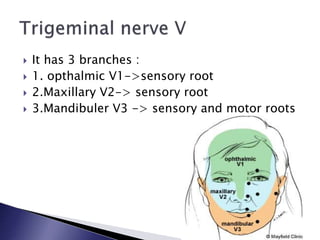
 It has 3 branches :
 1. opthalmic V1->sensory root
 2.Maxillary V2-> sensory root
 3.Mandibuler V3 -> sensory and motor roots
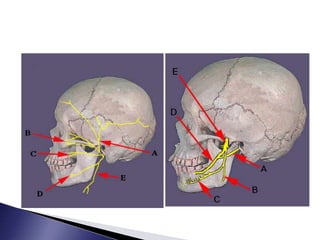
1. Branchiomotor Component: controls the
muscle of facial expression that has 5
branches : Temporal , zygomatic , buccal ,
mandibuler and cervical .
2. The special sensory component: fibers are
carried by chordo tympani join the lingual
nerve provide taste sensation to anterior
2/3 of tongue
 Nerve injury is most serious
complication that may occur during
oral surgical procedures especially
when we are damaging large nerve
branches such as during dental
injections , RCT , insertion of dental
implants , extraction of teeth & other
surgical treatments ...etc.
 The most common nerve injuries are
of the inferior alveoler nerve , mental
and lingual nerves of V3 branch of
trigeminal nerve which cause sensory
disturbance in the inerveted area .
 1. numbness or pain in the chin , lip , gums
and tongue.
 2.tingling or electric shok sensation
 3.impaired speech
 4.loss of taste
 5. abnormal chewing
 6.biting of tongue and lips
 7.burning sensation
 8.paralysis ( bells palsy )
 1.Neurapraxia: has favorable prognosis &
occur after simple contact with the nerve and
nerve conduction failure is temporary and
complete recovery which quite rapid and
occurs gradually within few days to weeks.
 2.Axonotmesis: this serious injury of the
nerve resulting in degeneration of the nerve
axons ,
 regeneration & recovery is slower than
neurapraxia & usually begins as paresthesia
6-8 weeks after the injury .
 3.Neurotmesis :this is the gravest type of
nerve injury resulting in discontinuation of
conduction due to severance of the nerve or
due to formation of scar tissue at the area of
trauma and cause permanent damage to
nerve function including paresthesia
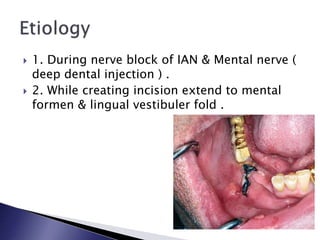
 1. During nerve block of IAN & Mental nerve (
deep dental injection ) .
 2. While creating incision extend to mental
formen & lingual vestibuler fold .
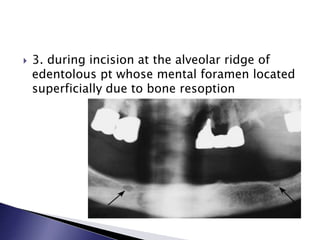
 3. during incision at the alveolar ridge of
edentolous pt whose mental foramen located
superficially due to bone resoption
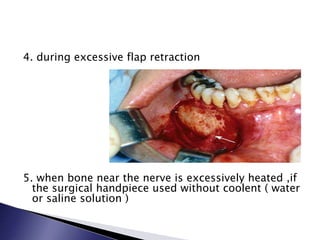
4. during excessive flap retraction
5. when bone near the nerve is excessively heated ,if
the surgical handpiece used without coolent ( water
or saline solution )
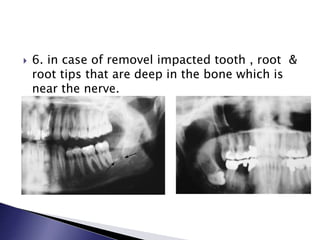
 6. in case of removel impacted tooth , root &
root tips that are deep in the bone which is
near the nerve.
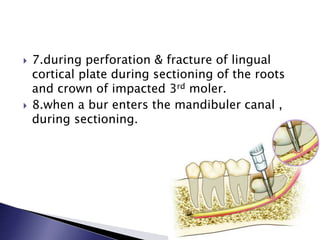
 7.during perforation & fracture of lingual
cortical plate during sectioning of the roots
and crown of impacted 3rd moler.
 8.when a bur enters the mandibuler canal ,
during sectioning.
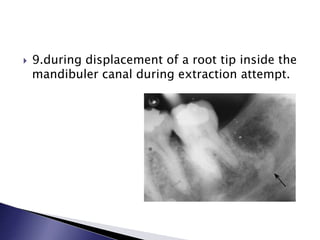
 9.during displacement of a root tip inside the
mandibuler canal during extraction attempt.
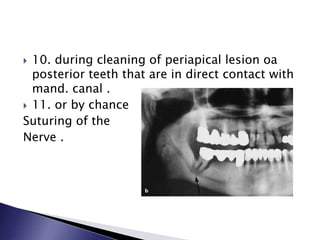
 10. during cleaning of periapical lesion oa
posterior teeth that are in direct contact with
mand. canal .
 11. or by chance
Suturing of the
Nerve .
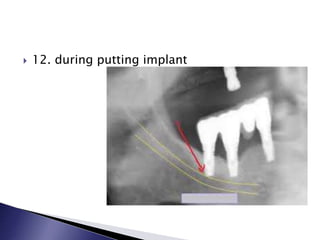
 12. during putting implant
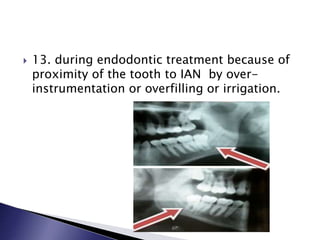
 13. during endodontic treatment because of
proximity of the tooth to IAN by over-
instrumentation or overfilling or irrigation.
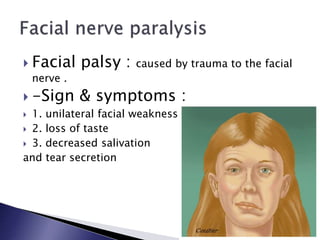
 Facial palsy : caused by trauma to the facial
nerve .
 -Sign & symptoms :
 1. unilateral facial weakness
 2. loss of taste
 3. decreased salivation
and tear secretion
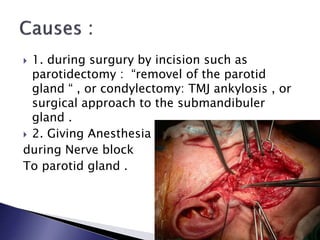
 1. during surgury by incision such as
parotidectomy : “removel of the parotid
gland “ , or condylectomy: TMJ ankylosis , or
surgical approach to the submandibuler
gland .
 2. Giving Anesthesia
during Nerve block
To parotid gland .
 Depends on the age of patient , type of the
damage , time that elapsed till the management
of injury , correct treatment.
 Treatment :
 No treatment required for type 1 & 2 unless if there
foreign body or root tip compressing on the nerve we
just prescribe analgesic & vitamin B to restore the
sensation .
 Treatment of the neaurotmesis is grafting to replace
the injured part or suturing .
 For bell’s palsy is often treated with the corticosteriod

Nerve injury in dentistry

  • 1.
    Made by :Dr. Saya Mustafa Oral surgery department
  • 2.
    1. Nerve supply 2.What is nerve injury ? 3. Most common injured nerves 4. Sign & symptoms 5. Classification 6. Etiology 7. Prognosis 8. Treatment
  • 3.
     It has3 branches :  1. opthalmic V1->sensory root  2.Maxillary V2-> sensory root  3.Mandibuler V3 -> sensory and motor roots
  • 4.
    1. Branchiomotor Component:controls the muscle of facial expression that has 5 branches : Temporal , zygomatic , buccal , mandibuler and cervical . 2. The special sensory component: fibers are carried by chordo tympani join the lingual nerve provide taste sensation to anterior 2/3 of tongue
  • 6.
     Nerve injuryis most serious complication that may occur during oral surgical procedures especially when we are damaging large nerve branches such as during dental injections , RCT , insertion of dental implants , extraction of teeth & other surgical treatments ...etc.
  • 7.
     The mostcommon nerve injuries are of the inferior alveoler nerve , mental and lingual nerves of V3 branch of trigeminal nerve which cause sensory disturbance in the inerveted area .
  • 8.
     1. numbnessor pain in the chin , lip , gums and tongue.  2.tingling or electric shok sensation  3.impaired speech  4.loss of taste  5. abnormal chewing  6.biting of tongue and lips  7.burning sensation  8.paralysis ( bells palsy )
  • 9.
     1.Neurapraxia: hasfavorable prognosis & occur after simple contact with the nerve and nerve conduction failure is temporary and complete recovery which quite rapid and occurs gradually within few days to weeks.  2.Axonotmesis: this serious injury of the nerve resulting in degeneration of the nerve axons ,  regeneration & recovery is slower than neurapraxia & usually begins as paresthesia 6-8 weeks after the injury .
  • 10.
     3.Neurotmesis :thisis the gravest type of nerve injury resulting in discontinuation of conduction due to severance of the nerve or due to formation of scar tissue at the area of trauma and cause permanent damage to nerve function including paresthesia
  • 11.
     1. Duringnerve block of IAN & Mental nerve ( deep dental injection ) .  2. While creating incision extend to mental formen & lingual vestibuler fold .
  • 12.
     3. duringincision at the alveolar ridge of edentolous pt whose mental foramen located superficially due to bone resoption
  • 13.
    4. during excessiveflap retraction 5. when bone near the nerve is excessively heated ,if the surgical handpiece used without coolent ( water or saline solution )
  • 14.
     6. incase of removel impacted tooth , root & root tips that are deep in the bone which is near the nerve.
  • 15.
     7.during perforation& fracture of lingual cortical plate during sectioning of the roots and crown of impacted 3rd moler.  8.when a bur enters the mandibuler canal , during sectioning.
  • 16.
     9.during displacementof a root tip inside the mandibuler canal during extraction attempt.
  • 17.
     10. duringcleaning of periapical lesion oa posterior teeth that are in direct contact with mand. canal .  11. or by chance Suturing of the Nerve .
  • 18.
     12. duringputting implant
  • 19.
     13. duringendodontic treatment because of proximity of the tooth to IAN by over- instrumentation or overfilling or irrigation.
  • 20.
     Facial palsy: caused by trauma to the facial nerve .  -Sign & symptoms :  1. unilateral facial weakness  2. loss of taste  3. decreased salivation and tear secretion
  • 21.
     1. duringsurgury by incision such as parotidectomy : “removel of the parotid gland “ , or condylectomy: TMJ ankylosis , or surgical approach to the submandibuler gland .  2. Giving Anesthesia during Nerve block To parotid gland .
  • 22.
     Depends onthe age of patient , type of the damage , time that elapsed till the management of injury , correct treatment.  Treatment :  No treatment required for type 1 & 2 unless if there foreign body or root tip compressing on the nerve we just prescribe analgesic & vitamin B to restore the sensation .  Treatment of the neaurotmesis is grafting to replace the injured part or suturing .  For bell’s palsy is often treated with the corticosteriod