Neonatal Meningitis
DR. Magdy Shafik
Senior Pediatric and neonatology Consultant
Diploma, M.S ,Ph.D of Pediatrics
Outline
• 1- introduction
• 2- Etiology
• 3- Epidemiology
• 4- Clinical Presentation
• 5- Case definition by MOH
• 6- Complications
• 7- Laboratory Studies and Radiological investigation
• 8- case presentation
9- Prevention
• 10- vaccination for meningitis
• Although the occurrence of neonatal meningitis is uncommon, it
remains a devastating infection with high mortality and high
morbidity.
• Neonatal meningitis is often caused by group B streptococcus
• Despite the development of effective vaccines, useful tools for
rapid identification of pathogens and potent antimicrobial
drugs, neonatal meningitis continues to contribute to
neurological disability worldwide
• The persistence of neonatal meningitis results from
increases in the numbers of infants surviving premature
delivery.
• In addition, the absence of specific clinical findings makes
diagnosis of meningitis more difficult in neonates than in
older children and adults.
• Moreover, a wide variety of pathogens are seen in infants as a
consequence of the immaturity of their immune systems and
intimate exposure to possible infection from their mothers.
Etiology
Common bacterial pathogens
• group B streptococci (GBS) are the most commonly
identified causes of bacterial meningitis, implicated in
roughly 50% of all cases[5] . Escherichia coli accounts for
another 20%[6].
• Listeria monocytogenes is the third most common pathogen,
accounting for 5–10% of cases; [6].
• Studies suggest that in underdeveloped countries, gram-
negative bacilli—specifically, Klebsiella organisms and E
coli —may be more common than GBS[7]
Epidemiology
• The incidence of neonatal meningitis is estimated to be 0.3
per 1000 live births, as observed in the United States,
Sweden, The Netherlands, England, and Wales. [4
• Reported estimated incidences of neonatal meningitis that
ranged from 0.48 per 1000 live births in Hong Kong to 2.4
per 1000 live births in Kuwait. [7]
•
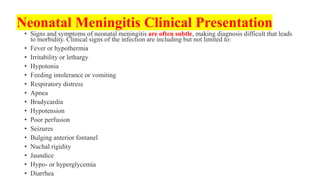
Neonatal Meningitis Clinical Presentation
• Signs and symptoms of neonatal meningitis are often subtle, making diagnosis difficult that leads
to morbidity. Clinical signs of the infection are including but not limited to:
• Fever or hypothermia
• Irritability or lethargy
• Hypotonia
• Feeding intolerance or vomiting
• Respiratory distress
• Apnea
• Bradycardia
• Hypotension
• Poor perfusion
• Seizures
• Bulging anterior fontanel
• Nuchal rigidity
• Jaundice
• Hypo- or hyperglycemia
• Diarrhea
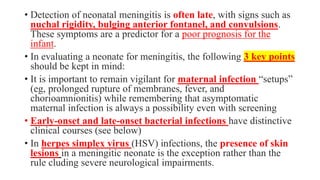
• Detection of neonatal meningitis is often late, with signs such as
nuchal rigidity, bulging anterior fontanel, and convulsions.
These symptoms are a predictor for a poor prognosis for the
infant.
• In evaluating a neonate for meningitis, the following 3 key points
should be kept in mind:
• It is important to remain vigilant for maternal infection “setups”
(eg, prolonged rupture of membranes, fever, and
chorioamnionitis) while remembering that asymptomatic
maternal infection is always a possibility even with screening
• Early-onset and late-onset bacterial infections have distinctive
clinical courses (see below)
• In herpes simplex virus (HSV) infections, the presence of skin
lesions in a meningitic neonate is the exception rather than the
rule cluding severe neurological impairments.
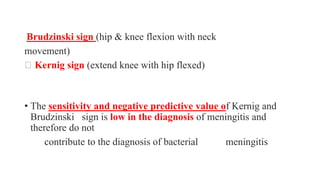
Brudzinski sign (hip & knee flexion with neck
movement)
Kernig sign (extend knee with hip flexed)
• The sensitivity and negative predictive value of Kernig and
Brudzinski sign is low in the diagnosis of meningitis and
therefore do not
contribute to the diagnosis of bacterial meningitis
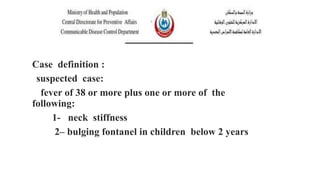
Case definition :
suspected case:
fever of 38 or more plus one or more of the
following:
1- neck stiffness
2– bulging fontanel in children below 2 years
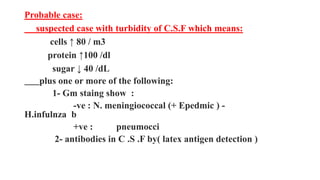
Probable case:
suspected case with turbidity of C.S.F which means:
cells ↑ 80 / m3
protein ↑100 /dl
sugar ↓ 40 /dL
plus one or more of the following:
1- Gm staing show :
-ve : N. meningiococcal (+ Epedmic ) -
H.infulnza b
+ve : pneumocci
2- antibodies in C .S .F by( latex antigen detection )
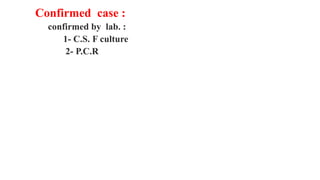
Confirmed case :
confirmed by lab. :
1- C.S. F culture
2- P.C.R
Bacterial meningitis
Early onset
• in the first 48 hours of life
• temperature instability, episodes of apnea or bradycardia,
hypotension, feeding difficulty, hepatic dysfunction, and
irritability alternating with lethargy. [1]
• Respiratory symptoms can become prominent within hours of
birth in group B streptococcal (GBS) infection; however, the
symptom complex also is seen with infection by E
coli or Listeria species.
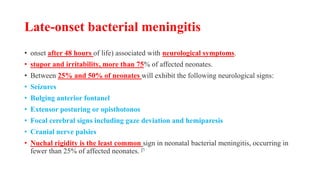
Late-onset bacterial meningitis
• onset after 48 hours of life) associated with neurological symptoms.
• stupor and irritability, more than 75% of affected neonates.
• Between 25% and 50% of neonates will exhibit the following neurological signs:
• Seizures
• Bulging anterior fontanel
• Extensor posturing or opisthotonos
• Focal cerebral signs including gaze deviation and hemiparesis
• Cranial nerve palsies
• Nuchal rigidity is the least common sign in neonatal bacterial meningitis, occurring in
fewer than 25% of affected neonates. [1
• HSV meningitis
• Early features of HSV meningitis may mimic with bacterial
meningitis, including
• pallor, irritability, high-pitched cry, respiratory distress,
• fever, or jaundice, progressing to pneumonitis,
• seizures, hepatic dysfunction,
• and disseminated intravascular coagulopathy
• (DIC). [16]
Complications
• cerebral edema, hydrocephalus, hemorrhage, ventriculitis (especially with
bacterial infection), abscess formation, and cerebral infarction.
• Cerebral edema, hydrocephalus, and hemorrhage each may cause increased intracranial
pressure, with potential for secondary ischemic injury to the brain because of decreased
brain perfusion:
• Cerebral edema results from vasogenic changes, cytotoxic cell injury, and, at times,
inappropriate antidiuretic hormone (ADH) secretion
• Hydrocephalus results from debris obstructing the flow of cerebrospinal fluid (CSF)
through the ventricular system or from dysfunction of arachnoid villi; it occurs in as many
as 24% of neonates with bacterial meningitis [22]
• Hemorrhage occurs in regions of infarction or necrosis and should be suspected in a
neonate with new focal neurological findings or clinical deterioration
• Ventriculitis results in sequestration of infection to areas that are poorly
accessible to systemic antimicrobial drugs.
• Inflammation of the ependymal lining of ventricles often obstructs CSF flow.
Thus, all of these complications are interactive, making effective management
difficult.
• Ventriculitis occurs in as many as 20% of infected neonates. [23]
• Failure to respond to appropriate antibiotic therapy and signs of elevated
intracranial pressure (ICP) may suggest the diagnosis. [24]
• Intraventricular administration of antibiotics may be necessary in cases of
ventriculitis.
• Cerebral abscess occurs in as many as 13% of neonates with
meningitis. [22]
• New seizures, signs of elevated ICP, or new focal neurological signs suggest
the diagnosis.
• Brain imaging with contrast is essential for making the definitive diagnosis.
Surgical intervention may be required.
• Cerebral abscess occurs in as many as 13% of neonates with
meningitis. [22]
• New seizures, signs of elevated ICP, or new focal neurological signs suggest
the diagnosis.
• Brain imaging with contrast is essential for making the definitive diagnosis.
Surgical intervention may be required.
• Cerebral infarction, both focal (arterial) and diffuse (venous), may
complicate recovery.
• Autopsy studies have found evidence of infarction in 30-50% of specimens
studied. [1]
• Imaging studies suggest that the actual incidence of infarction may be even
higher. [25]
• Meningitis has been shown to be associated with 1.6% of all cases of neonatal
arterial stroke and 7.7% of venous infarcts. [26]
• Necrotizing lesions secondary to HSV meningitis can be deleterious to the
developing brain.
• longer-term complications that may develop include residual epilepsy,
cognitive impairment, hearing loss, visual impairment, spastic
paresis, and microcephaly. Some of these disorders may be difficult to
detect during infancy.
• Hearing, for example, is difficult to evaluate without the child’s
cooperation, and even then, assessment may be limited to behavioral
response to sounds.
• Brainstem auditory evoked response (BAER) testing does not evaluate
all dimensions of hearing, but this test, which can be performed reliably
in sedated infants, only slightly overestimates hearing loss, which
occurs in 30% of survivors of bacterial meningitis and 14% of
survivors of nonbacterial meningitis. [27] Subtle impairment of sound
discrimination may not be readily apparent.
Long-Term Monitoring
• Because of the potential for hearing loss, neonates with meningitis
should undergo brainstem auditory evoked response (BAER)
testing at 4-6 weeks after discharge. [40]
• Survivors of neonatal meningitis require long-term surveillance
not only for disorders of hearing but also for disorders of vision,
motor, or cognitive function.
• Developmental delay is a frequent complication of neonatal
meningitis.
• Early intervention services should be employed to maximize
developmental gains
• cognitive impairment may not be evident until the child has started school
or advanced into higher grades where more complex analysis of information is
necessary. [20]
• Careful screening for neurological, cognitive, and developmental deficits
must be conducted as part of routine pediatric care over a period of many
years,
• and the responsible physician should be attentive to possible
problems with perception, learning, or behavior that may result
from neonatal infection.
Laboratory Studies
•Lumbar Puncture
• Lumbar puncture is indicated for evaluation of the CSF in
all neonates suspected of having sepsis or meningitis, even
in the absence of neurological signs.
• Many clinicians are reluctant to perform this procedure on
a critically ill infant. Although the theoretical complications
of lumbar puncture include trauma, brain-stem herniation,
introduction of infection, and hypoxic stress, none of these
complications were reported in a meta-analysis of more
than 10,000 infants who underwent lumbar puncture. [29]
• .
• Meningitis, however, increases the risk of death in neonates. Stoll
et al reported a mortality of 23% in babies with CSF-proven
meningitis, compared with a mortality of 9% in neonates whose
lumbar puncture results were not consistent with meningitis. [35]
• Additionally, many infants who had negative blood cultures had
positive CSF cultures, suggesting that cases of meningitis may be
missed.
• In cases of bacterial meningitis, repeat lumbar puncture should be
performed 24-48 hours after initiation of therapy to ensure
sterilization of the CSF. After a full course of therapy for PCR-
proven HSV, repeat lumbar puncture should be undertaken to
rule out incompletely treated infections
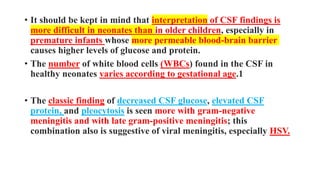
• It should be kept in mind that interpretation of CSF findings is
more difficult in neonates than in older children, especially in
premature infants whose more permeable blood-brain barrier
causes higher levels of glucose and protein.
• The number of white blood cells (WBCs) found in the CSF in
healthy neonates varies according to gestational age.1
• The classic finding of decreased CSF glucose, elevated CSF
protein, and pleocytosis is seen more with gram-negative
meningitis and with late gram-positive meningitis; this
combination also is suggestive of viral meningitis, especially HSV.
• Many authors use a cutoff value of 20-30/µL.
• Bacterial meningitis commonly causes CSF pleocytosis greater
than 100/µL, with predominantly polymorphonuclear leukocytes
(PMNs) gradually evolving to lymphocytes.
• In neonates with viral meningitis, the picture may be similar but
with a less dramatic pleocytosis.
• HSV meningitis may be particularly associated with a large
number of red blood cells (RBCs) in the CSF.
• If the mother is symptomatic, maternal investigation may be
warranted; bacterial or viral cultures can provide valuable
adjunctive information.
• Polymerase chain reaction (PCR) assay is a powerful diagnostic
tool with excellent sensitivity and specificity.
• It permits identification of group B streptococcal (GBS) antigen in
urine or CSF, and it is the standard for identification of herpes
simplex virus (HSV) and enterovirus in CSF.
• In neonates, PCR is 71-100% sensitive for HSV but 98-99%
specific. [16
Magnetic Resonance Imaging
• Magnetic resonance imaging (MRI) is the neuroimaging modality of
choice for identifying focal areas of infection, infarction, secondary
hemorrhage, cerebral edema, hydrocephalus, or, rarely, abscess
formation.
• Sinovenous occlusions, ventriculitis, and subdural collections are best
diagnosed with MRI.
• Follow-up MRI scans are useful for following the resolution of the
infection, as well as for contributing to prognostication. If available,
magnetic resonance spectroscopy can add important information on the
metabolic function of the neonatal brain.
• Several studies have documented periventricular white matter
abnormalities on MRI in infants with neonatal meningitis. [31]
• Newer MRI technologies, including diffusion-weighted and diffusion
tensor imaging, have allowed this association to be evaluated in more
detail, and such evaluation may prove to have prognostic
implications. [32]
MR Angiography (MRA)
• In magnetic resonance angiography (MRA), a powerful magnetic
field, radio frequency waves and a computer are used to evaluate
blood vessels and help identify abnormalities1
• Magnetic Resonance Venography (MRV)
• An MRV uses magnetic resonance technology and intravenous
(IV) contrast dye to visualize the veins. Contrast dye causes the
blood vessels to appear opaque on the X-ray image, allowing the
physician to visualize the blood vessels being evaluated.
Other Imaging Modalities
• (CT) carries the risk of exposing the neonatal brain to radiation, the
rapidity and ease with which it can be obtained (in comparison with
MRI) makes it useful in decision-making for potential neurosurgical
interventions, such as ventriculostomy for hydrocephalus or surgical
drainage of empyema or abscess. It may be particularly appropriate for
a critically ill neonate being considered for neurosurgery.
• Cranial ultrasonography provides an alternative imaging modality for
critically ill neonates, but it does not provide optimal detail in all
circumstances. However, it is a low-risk and thus is useful in monitoring
ventricular size for hydrocephalus during the acute phase of meningitis.
• Chest radiography provides important information about the lung
parenchyma and the cardiac silhouette. Meningitis or sepsis may occur
with pneumonia but may be indistinguishable from surfactant
deficiency, pulmonary hypertension, and obstructive cardiac disease.
•Electroencephalography (EEG)
•
is not an essential part of the initial diagnostic process.
• However, in neonates who are unresponsive or have seizures presenting
as episodes of apnea, bradycardia, or rhythmic focal movements, EEG
monitoring provides useful information to guide treatment with
anticonvulsant drugs.
• EEG also has some prognostic utility
•Neonatal Meningitis Treatment & Management
• early initiation of antimicrobial drugs is essential
• Aggressive antimicrobial intervention is lifesaving in neonates with
suspected meningitis.
• Because distinguishing viral from bacterial meningitis is difficult early
in the clinical course, a combination of agents is often necessary,
providing coverage for both types of infection.
• The duration of therapy for bacterial and herpes simplex virus (HSV)
meningitis with an appropriate agent is typically 14-21 days
• Although there is a consensus that acyclovir is the preferred antiviral
therapy, there remains some disagreement with respect to what
constitutes optimal antibacterial therapy.
• The choice of an antibiotic regimen should be based on the likely
pathogen, the local patterns of antibacterial drug sensitivities, and the
policies of the hospital.
• Corticosteroids have been shown to reduce long-term sequelae,
particularly hearing loss, in older infants with Haemophilus
influenzae type B meningitis and S pneumoniae infection. However, use
of corticosteroids is not recommended for neonates with meningitis
• management of seizures is a common challenge in neonates with
meningitis. Phenobarbital and phenytoin remain the current drugs of
choice, with benzodiazepines utilized as adjunctive therapy
Assessment of response to therapy
• Lumbar puncture, should be repeated 24-48 hours after the initial
study to monitor the course of the infection and guide further treatment
decisions.
• If the patient has persistent infection in the lumbar CSF or clinical
deterioration that is not explained by other complications, imaging
studies to investigate for abscess formation should be performed.
• A diagnostic tap of the lateral ventricle should be considered to assess
for ventriculitis if no focal abscess is noted on imaging.
• Ventriculitis may occur, especially with gram-negative bacteria, in the
absence of pleocytosis in the lumbar CSF or with sterile CSF.
• infants with partially treated bacterial meningitis should be managed
on a case-by-case basis in accordance with their clinical presentation.
These infants should be observed for at least 48 hours after treatment is
discontinued.
• C-reactive protein levels can be useful in identifying the presence of a
systemic anti-inflammatory response and can be used serially to track
the response to treatment.
Ventriculostomy
• Ventriculostomy with external drainage may be required in cases
where acute hydrocephalus develops secondary to obstruction of
CSF flow.
• Administration of intraventricular antibiotics is recommended in
cases of ventriculitis, but is no longer recommended as a routine
treatment for gram-negative meningitis
Prognosis
• 25-50% have significant problems with language, motor function,
hearing, vision, and cognition [18, 3] ;
•
• 5-20% have future epilepsy. [19, 20]
• Survivors are also more likely to have subtle problems, including
visual deficits, middle-ear disease, and behavioral problems. [21]
• As many as 20% of children identified as normal at 5-year follow-
up may have significant educational difficulties lasting into late
adolescence. [18]
case presentation
• En Rawan Saad Esmaail , from Dareen Villlage , Dakhalia governement
, F.T .B.OB 16-3-2022 , C.S ,admiited to AL-Rawada NICU (private
hospital ) because of respiratory distress grade IV since birth .
• NO maternal history of D.M or HTN OR PROM .
• By examination : wt 3.1 kg , chest show diminished air entery for which
baby put on M.V for 7 days , then HFNC then NC .
on 28/3/2022 baby transferred to Nabrou NICU, ON examination , baby
was moderate general condition ,
• chest : diminished air entry ,fine chest crepitation was improved by
nebulization,
• heart :no murmur ,
• CNS: fontanelle at level , intact reflexes
• there was oedema lower limb
• feeding : 15 ml Ryle /3h
• antibiotic given in private NICU was: Unasyn - cefotax then shifted to
vancomymcin - meronam then Tavanic - zithero .
• investigation done on day of transfer was:
• CBC: HB: 9 , WBC:9.2 , PLT 18 S. CR 0 .6
• CRP 172 , blood culture was taken
• on30/3/2022:
• new born poor activity, weak reflexes , bad general condition , baby
developed convulsions for which epanutin was given as loading dose then
maintenance .
• packed RBS , plasama , plt was infused .
• feeding :NPO
• Antibiotic : levo - Vanco - Meronam
• neublization with farcolin , atrovent , plumocort
• on 31-3-2022:
• new born poor activity, weak reflexes , bad general condition , fits continue ,
A.F bulging , there was neck rigidity and opisthotonos , tem. 39.5 , we add
somoni Leta as loading then maintaince to epanuotin
• Antibiotic : levo - Vanco - Meronam
• strat 2ml full term forumla /3 h by Ryle
• on HFNC ,
• neublization with farcolin , atrovent , plumocort
• L.P was taken and sent for Lab
• ON 1/4/2022
• Antibiotic : levo - Vanco - Meronam
• epanutoin - Somonilta + CA
• on HFNC ,
• neublization with farcolin , atrovent , plumocort
• NPO
• 2/4/2022
• NO more convulsion on epanuotin and somonilta
• Antibiotic : levo - Vanco - Meronam
• neublization with farcolin , atrovent , plumocort
• NPO
• on NC
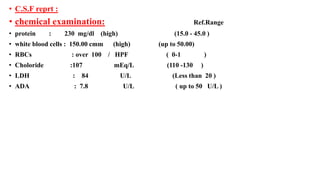
• C.S.F reprt :
• chemical examination: Ref.Range
• protein : 230 mg/dl (high) (15.0 - 45.0 )
• white blood cells : 150.00 cmm (high) (up to 50.00)
• RBCs : over 100 / HPF ( 0-1 )
• Choloride :107 mEq/L (110 -130 )
• LDH : 84 U/L (Less than 20 )
• ADA : 7.8 U/L ( up to 50 U/L )
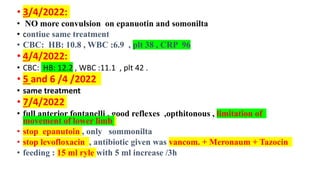
• 3/4/2022:
• NO more convulsion on epanuotin and somonilta
• contiue same treatment
• CBC: HB: 10.8 , WBC :6.9 , plt 38 , CRP 96
• 4/4/2022:
• CBC: HB: 12.2 , WBC :11.1 , plt 42 .
• 5 and 6 /4 /2022
• same treatment
• 7/4/2022
• full anterior fontanelli , good reflexes ,opthitonous , limitation of
movement of lower limb
• stop epanutoin , only sommonilta
• stop levofloxacin , antibiotic given was vancom. + Meronaum + Tazocin
• feeding : 15 ml ryle with 5 ml increase /3h
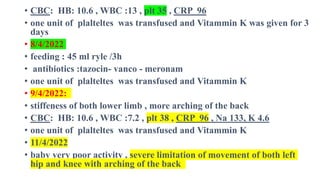
• CBC: HB: 10.6 , WBC :13 , plt 35 , CRP 96
• one unit of plalteltes was transfused and Vitammin K was given for 3
days
• 8/4/2022
• feeding : 45 ml ryle /3h
• antibiotics :tazocin- vanco - meronam
• one unit of plalteltes was transfused and Vitammin K
• 9/4/2022:
• stiffeness of both lower limb , more arching of the back
• CBC: HB: 10.6 , WBC :7.2 , plt 38 , CRP 96 , Na 133, K 4.6
• one unit of plalteltes was transfused and Vitammin K
• 11/4/2022
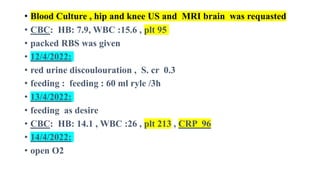
• baby very poor activity , severe limitation of movement of both left
hip and knee with arching of the back
• Blood Culture , hip and knee US and MRI brain was requasted
• CBC: HB: 7.9, WBC :15.6 , plt 95
• packed RBS was given
• 12/4/2022:
• red urine discoulouration , S. cr 0.3
• feeding : feeding : 60 ml ryle /3h
• 13/4/2022:
• feeding as desire
• CBC: HB: 14.1 , WBC :26 , plt 213 , CRP 96
• 14/4/2022:
• open O2
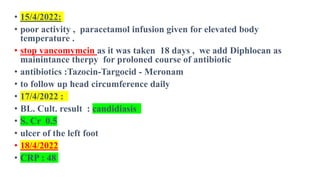
• 15/4/2022:
• poor activity , paracetamol infusion given for elevated body
temperature .
• stop vancomymcin as it was taken 18 days , we add Diphlocan as
mainintance therpy for proloned course of antibiotic
• antibiotics :Tazocin-Targocid - Meronam
• to follow up head circumference daily
• 17/4/2022 :
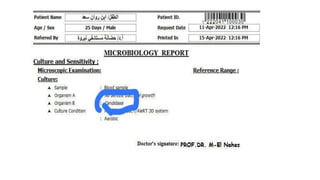
• BL. Cult. result : candidiasis
• S. Cr 0.5
• ulcer of the left foot
• 18/4/2022
• CRP : 48
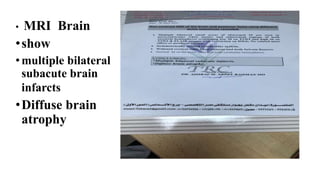
• MRI Brain
•show
•multiple bilateral
subacute brain
infarcts
•Diffuse brain
atrophy
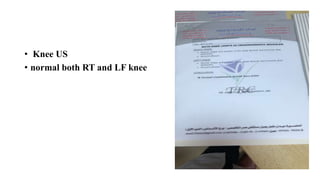
• Knee US
• normal both RT and LF knee
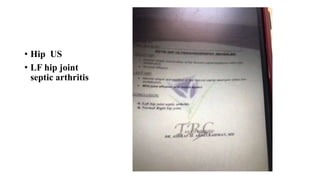
• Hip US
• LF hip joint
septic arthritis
• 19/4/2022: till 22/4
• S.cr 0.4 , CBC: HB: 9.9, WBC :15.1 , plt 142
• baby off O2 , feeding as desire ,lf hip, lf shoulder septic arthritis ,
improved arching of the back .still hypertonic
• chest: mild wheezes
• Drugs: Tazocin-Targocid - Meronam, diphlocan, phenobaribitone ,
Nebulization /6h
• 23/4/2022:
• S.cr 0.4, CRP 48
• Duration of drugs : Tazocin 19 day-Targocid 8 days - Meronam 25
day , diphlocan 11 day , phenobaribitone ( till discharge ), epanuotin
7 days , vancomycin 18 day , levo 8 days
• Diagnosis: N. Sepsis,left hip and shoulder septic artheritis ,
N.meningitis , subacute multiple brain infarct , N. Candidiasis
• 0n 24/4/2022:
• We consultation from Aswan University Hospital by Tellimedicine
avaible in our hospital which they cosult us to do:
• 1- antibiotics: change to ciprofloxacin , linozolid, Fortum .
• 2-I.V.IG for 2 days
• 3- no plasma infusion as it increase sepsis
• 4-breast feeding is essential for the baby
• 5- repeat L.P for follow up now
• 6- newborn must be still isolated till CRP decease at least 12
• 7- follow up of platellts because of linozolid
• 8- baby must be consulted by ped. orthopedic , ped. neurology . ped
ophalomologest and E.N.T .
• 25/4- 1/5/2022:
• CBC: HB: 9.8 WBC :16.8 , plt 158 . CRP 48
• baby off O2 , feeding as desire ,lf hip, lf shoulder septic arthritis ,
improved arching of the back .still hypertonic
• chest: mild wheezes
• Drugs: ciprofloxacin , linozolid, Fortum, diphlocan,
phenobaribitone , Nebulization /6h
• I.V.IG : 2.5 gm in 50 ml ( 2 times 24 hour apart )1
• 1/5/20221
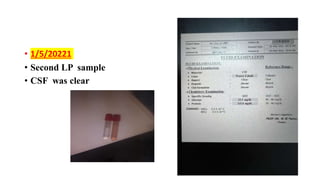
• Second LP sample
• CSF was clear
• 3/5- 4/5 /2022 1
• ESR : 1ST h 30
• Drugs: ciprofloxacin day 11, linozolid day11, Fortum day 11,
diphlocan 22, phenobaribitone (still)
• We consultation from Aswan University Hospital by Tellimedicine
• who advised us to discharg the baby for consultation of ped. orth.
ped. neuro and MRI brain for follow up of postmeninigitc sequale
of brain infarct
• . 5/5/2022:
• baby discharged with moderate condition
• medication of discharge :
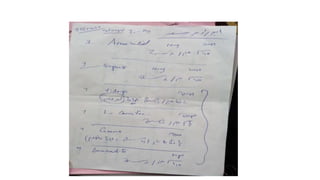
• Averozolid syrp., suprax susp. , germnia drops, l-carnitine drops,
vi drops
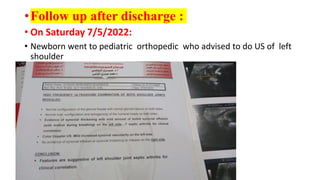
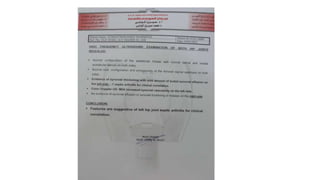
•Follow up after discharge :
• On Saturday 7/5/2022:
• Newborn went to pediatric orthopedic who advised to do US of left
shoulder
•
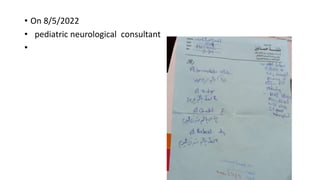
• On 8/5/2022
• pediatric neurological consultant
•
0N 11/5/2022
• By consultation of prdiatri nurologist from BENI SEOF
University Hospital :
• who advisesd us to :
• MRA ( Brain angiography) to detect any arterial thormosis
• MRV (Magnetic Resonance Venography (MRV)to detect
ventriculits
• to do ECHO
• to continue phenobarbitone syrp till 6 months without convuslion ,
if it occurs change to tritam and do EEG
• TO strat physioyherpy
•
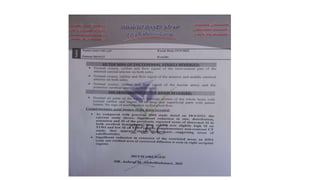
• 0n 15/5/2022 :
• MRA , of cerebral arteries ( internal carotid , anterior and middle
cerebral and basilar ) show Normal course, caliber and flow .
• MRV:
• Normal all parts of the venous drainage system of the whole brain
, no signs of inflammation or disturbed flow.
• Commentary axial images of the brain revealed :
• Reduction of the area of brain atrophy . There are areas of
hyperdensity ?? Suggesting area of calcification at the sites of
brain infarction .
Prevention
• The use of intrapartum antibiotic prophylaxis in pregnant mothers
who are positive for group B streptococcal (GBS) colonization on
screening or have risk factors for GBS colonization has reduced the
incidence of neonatal early-onset GBS meningitis from
approximately 1.8 cases to 0.3 cases per 1000 live births. [9]
• Screening and risk factor assessment should be included universally
in routine prenatal care.
• Cesarean delivery decreases, but does not eliminate, transmission of
HSV from the mother’s genital tract to the neonate in cases of known
infection.
• Suppressive antiviral therapy for HSV-infected women during the
third trimester may prevent recurrent infectious episodes and
thereby minimize the infant’s exposure to the virus during
delivery. [16]
Diet
• Listeria monocytogenes and Escherichia coli are bacteria found in
contaminated foods that can cause neonatal meningitis. [43]
• By avoiding certain foods and safely preparing produce, pregnant mothers
can reduce the risk of neonatal meningitis caused by these bacteria.
• Foods to avoid that may be contaminated by listeria include:
• Soft cheeses made with unpasteurized milk
• Smoked seafood that is not canned or shelf-stable
• Raw (unpasteurized) milk
• Foods that must be safely prepared to prevent the growth of listeria and E.
coli include:
• Raw sprouts
• Melons ‫الشمام‬
• Hot dogs, deli meat, and cold cuts ‫الباردة‬ ‫اللحوم‬
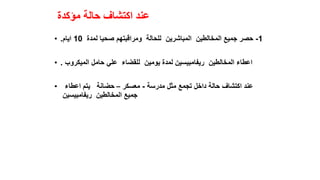
‫مؤكدة‬ ‫حالة‬ ‫اكتشاف‬ ‫عند‬
• 1
-
‫لمدة‬ ‫صحيا‬ ‫ومراقبتهم‬ ‫للحالة‬ ‫المباشرين‬ ‫المخالطين‬ ‫جميع‬ ‫حصر‬
10
‫ايام‬
.
• ‫الميكروب‬ ‫حامل‬ ‫علي‬ ‫للقضاء‬ ‫يومين‬ ‫لمدة‬ ‫ريفامبيسين‬ ‫المخالطين‬ ‫اعطاء‬
.
• ‫مدرسة‬ ‫مثل‬ ‫تجمع‬ ‫داخل‬ ‫حالة‬ ‫اكتشاف‬ ‫عند‬
-
‫معسكر‬
–
‫اعطاء‬ ‫يتم‬ ‫حضانة‬
‫ريفامبيسين‬ ‫المخالطين‬ ‫جميع‬
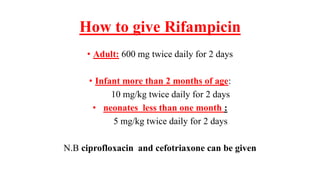
How to give Rifampicin
• Adult: 600 mg twice daily for 2 days
• Infant more than 2 months of age:
10 mg/kg twice daily for 2 days
• neonates less than one month :
5 mg/kg twice daily for 2 days
N.B ciprofloxacin and cefotriaxone can be given
Vaccinations for
Meningitis
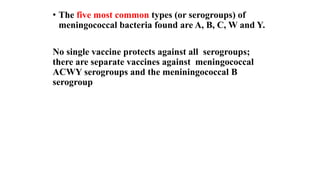
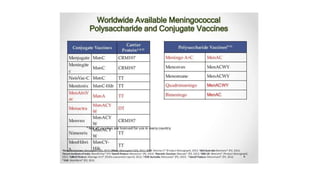
• The five most common types (or serogroups) of
meningococcal bacteria found are A, B, C, W and Y.
No single vaccine protects against all serogroups;
there are separate vaccines against meningococcal
ACWY serogroups and the meniningococcal B
serogroup
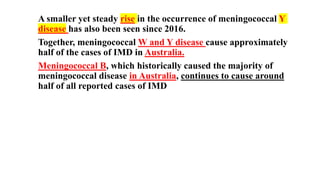
A smaller yet steady rise in the occurrence of meningococcal Y
disease has also been seen since 2016.
Together, meningococcal W and Y disease cause approximately
half of the cases of IMD in Australia.
Meningococcal B, which historically caused the majority of
meningococcal disease in Australia, continues to cause around
half of all reported cases of IMD
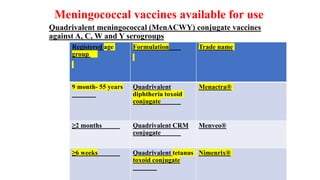
Meningococcal vaccines available for use
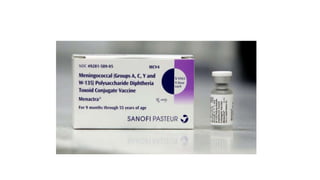
Quadrivalent meningococcal (MenACWY) conjugate vaccines
against A, C, W and Y serogroups
Registered age
group
Formulation Trade name
9 month- 55 years Quadrivalent
diphtheria toxoid
conjugate
Menactra®
≥2 months Quadrivalent CRM
conjugate
Menveo®
≥6 weeks Quadrivalent tetanus
toxoid conjugate
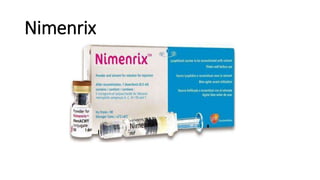
Nimenrix®
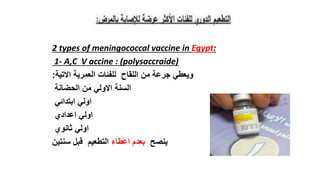
2 types of meningococcal vaccine in Egypt:
1- A,C V accine : (polysaccraide)
‫االتية‬ ‫العمرية‬ ‫للفئات‬ ‫اللقاح‬ ‫من‬ ‫جرعة‬ ‫ويعطي‬
:
‫الحضانة‬ ‫من‬ ‫االولي‬ ‫السنة‬
‫ابتدائي‬ ‫اولي‬
‫اعدادي‬ ‫اولي‬
‫ثانوي‬ ‫اولي‬
‫ينصح‬
‫اعطاء‬ ‫بعدم‬
‫سنتين‬ ‫قبل‬ ‫التطعيم‬
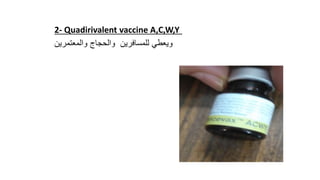
2- Quadirivalent vaccine A,C,W,Y
‫والمعتمرين‬ ‫والحجاج‬ ‫للمسافرين‬ ‫ويعطي‬
Meningococcal (Menactra) Polysaccharide
Diphtheria Toxoid (D T)Conjugate Vaccine
DOSAGE AND ADMINISTRATION
• Primary Vaccination
• Children 9 month through 23 months of age: Two doses, three
months apart.
• Individuals 2 through 55 years of age: A single dose
Booster Vaccination:
A single booster dose may be given to individuals 15 through 55 years of
age at continued risk for meningococcal disease, if at least 4 years have
elapsed since the prior dose.
Nimenrix
Nimenrix is Meningococcal polysaccharide vaccine
serogroups A, C, W-135 & Y conjugate vaccine (
TT)which is used to prevent
.meningococcal infections
INDICATIONS AND CLINICAL USE:
active immunization of individuals from 6 weeks to 55
years of age
THANK YOU

Neonatal Meningitis.pptx

  • 1.
    Neonatal Meningitis DR. MagdyShafik Senior Pediatric and neonatology Consultant Diploma, M.S ,Ph.D of Pediatrics
  • 2.
    Outline • 1- introduction •2- Etiology • 3- Epidemiology • 4- Clinical Presentation • 5- Case definition by MOH • 6- Complications • 7- Laboratory Studies and Radiological investigation • 8- case presentation 9- Prevention • 10- vaccination for meningitis
  • 3.
    • Although theoccurrence of neonatal meningitis is uncommon, it remains a devastating infection with high mortality and high morbidity. • Neonatal meningitis is often caused by group B streptococcus • Despite the development of effective vaccines, useful tools for rapid identification of pathogens and potent antimicrobial drugs, neonatal meningitis continues to contribute to neurological disability worldwide
  • 4.
    • The persistenceof neonatal meningitis results from increases in the numbers of infants surviving premature delivery. • In addition, the absence of specific clinical findings makes diagnosis of meningitis more difficult in neonates than in older children and adults. • Moreover, a wide variety of pathogens are seen in infants as a consequence of the immaturity of their immune systems and intimate exposure to possible infection from their mothers.
  • 5.
    Etiology Common bacterial pathogens •group B streptococci (GBS) are the most commonly identified causes of bacterial meningitis, implicated in roughly 50% of all cases[5] . Escherichia coli accounts for another 20%[6]. • Listeria monocytogenes is the third most common pathogen, accounting for 5–10% of cases; [6]. • Studies suggest that in underdeveloped countries, gram- negative bacilli—specifically, Klebsiella organisms and E coli —may be more common than GBS[7]
  • 6.
    Epidemiology • The incidenceof neonatal meningitis is estimated to be 0.3 per 1000 live births, as observed in the United States, Sweden, The Netherlands, England, and Wales. [4 • Reported estimated incidences of neonatal meningitis that ranged from 0.48 per 1000 live births in Hong Kong to 2.4 per 1000 live births in Kuwait. [7] •
  • 7.
    Neonatal Meningitis ClinicalPresentation • Signs and symptoms of neonatal meningitis are often subtle, making diagnosis difficult that leads to morbidity. Clinical signs of the infection are including but not limited to: • Fever or hypothermia • Irritability or lethargy • Hypotonia • Feeding intolerance or vomiting • Respiratory distress • Apnea • Bradycardia • Hypotension • Poor perfusion • Seizures • Bulging anterior fontanel • Nuchal rigidity • Jaundice • Hypo- or hyperglycemia • Diarrhea
  • 8.
    • Detection ofneonatal meningitis is often late, with signs such as nuchal rigidity, bulging anterior fontanel, and convulsions. These symptoms are a predictor for a poor prognosis for the infant. • In evaluating a neonate for meningitis, the following 3 key points should be kept in mind: • It is important to remain vigilant for maternal infection “setups” (eg, prolonged rupture of membranes, fever, and chorioamnionitis) while remembering that asymptomatic maternal infection is always a possibility even with screening • Early-onset and late-onset bacterial infections have distinctive clinical courses (see below) • In herpes simplex virus (HSV) infections, the presence of skin lesions in a meningitic neonate is the exception rather than the rule cluding severe neurological impairments.
  • 9.
    Brudzinski sign (hip& knee flexion with neck movement) Kernig sign (extend knee with hip flexed) • The sensitivity and negative predictive value of Kernig and Brudzinski sign is low in the diagnosis of meningitis and therefore do not contribute to the diagnosis of bacterial meningitis
  • 10.
    Case definition : suspectedcase: fever of 38 or more plus one or more of the following: 1- neck stiffness 2– bulging fontanel in children below 2 years
  • 11.
    Probable case: suspected casewith turbidity of C.S.F which means: cells ↑ 80 / m3 protein ↑100 /dl sugar ↓ 40 /dL plus one or more of the following: 1- Gm staing show : -ve : N. meningiococcal (+ Epedmic ) - H.infulnza b +ve : pneumocci 2- antibodies in C .S .F by( latex antigen detection )
  • 12.
    Confirmed case : confirmedby lab. : 1- C.S. F culture 2- P.C.R
  • 13.
    Bacterial meningitis Early onset •in the first 48 hours of life • temperature instability, episodes of apnea or bradycardia, hypotension, feeding difficulty, hepatic dysfunction, and irritability alternating with lethargy. [1] • Respiratory symptoms can become prominent within hours of birth in group B streptococcal (GBS) infection; however, the symptom complex also is seen with infection by E coli or Listeria species.
  • 14.
    Late-onset bacterial meningitis •onset after 48 hours of life) associated with neurological symptoms. • stupor and irritability, more than 75% of affected neonates. • Between 25% and 50% of neonates will exhibit the following neurological signs: • Seizures • Bulging anterior fontanel • Extensor posturing or opisthotonos • Focal cerebral signs including gaze deviation and hemiparesis • Cranial nerve palsies • Nuchal rigidity is the least common sign in neonatal bacterial meningitis, occurring in fewer than 25% of affected neonates. [1
  • 15.
    • HSV meningitis •Early features of HSV meningitis may mimic with bacterial meningitis, including • pallor, irritability, high-pitched cry, respiratory distress, • fever, or jaundice, progressing to pneumonitis, • seizures, hepatic dysfunction, • and disseminated intravascular coagulopathy • (DIC). [16]
  • 16.
    Complications • cerebral edema,hydrocephalus, hemorrhage, ventriculitis (especially with bacterial infection), abscess formation, and cerebral infarction. • Cerebral edema, hydrocephalus, and hemorrhage each may cause increased intracranial pressure, with potential for secondary ischemic injury to the brain because of decreased brain perfusion: • Cerebral edema results from vasogenic changes, cytotoxic cell injury, and, at times, inappropriate antidiuretic hormone (ADH) secretion • Hydrocephalus results from debris obstructing the flow of cerebrospinal fluid (CSF) through the ventricular system or from dysfunction of arachnoid villi; it occurs in as many as 24% of neonates with bacterial meningitis [22] • Hemorrhage occurs in regions of infarction or necrosis and should be suspected in a neonate with new focal neurological findings or clinical deterioration
  • 17.
    • Ventriculitis resultsin sequestration of infection to areas that are poorly accessible to systemic antimicrobial drugs. • Inflammation of the ependymal lining of ventricles often obstructs CSF flow. Thus, all of these complications are interactive, making effective management difficult. • Ventriculitis occurs in as many as 20% of infected neonates. [23] • Failure to respond to appropriate antibiotic therapy and signs of elevated intracranial pressure (ICP) may suggest the diagnosis. [24] • Intraventricular administration of antibiotics may be necessary in cases of ventriculitis.
  • 18.
    • Cerebral abscessoccurs in as many as 13% of neonates with meningitis. [22] • New seizures, signs of elevated ICP, or new focal neurological signs suggest the diagnosis. • Brain imaging with contrast is essential for making the definitive diagnosis. Surgical intervention may be required.
  • 19.
    • Cerebral abscessoccurs in as many as 13% of neonates with meningitis. [22] • New seizures, signs of elevated ICP, or new focal neurological signs suggest the diagnosis. • Brain imaging with contrast is essential for making the definitive diagnosis. Surgical intervention may be required.
  • 20.
    • Cerebral infarction,both focal (arterial) and diffuse (venous), may complicate recovery. • Autopsy studies have found evidence of infarction in 30-50% of specimens studied. [1] • Imaging studies suggest that the actual incidence of infarction may be even higher. [25] • Meningitis has been shown to be associated with 1.6% of all cases of neonatal arterial stroke and 7.7% of venous infarcts. [26] • Necrotizing lesions secondary to HSV meningitis can be deleterious to the developing brain.
  • 21.
    • longer-term complicationsthat may develop include residual epilepsy, cognitive impairment, hearing loss, visual impairment, spastic paresis, and microcephaly. Some of these disorders may be difficult to detect during infancy. • Hearing, for example, is difficult to evaluate without the child’s cooperation, and even then, assessment may be limited to behavioral response to sounds. • Brainstem auditory evoked response (BAER) testing does not evaluate all dimensions of hearing, but this test, which can be performed reliably in sedated infants, only slightly overestimates hearing loss, which occurs in 30% of survivors of bacterial meningitis and 14% of survivors of nonbacterial meningitis. [27] Subtle impairment of sound discrimination may not be readily apparent.
  • 22.
    Long-Term Monitoring • Becauseof the potential for hearing loss, neonates with meningitis should undergo brainstem auditory evoked response (BAER) testing at 4-6 weeks after discharge. [40] • Survivors of neonatal meningitis require long-term surveillance not only for disorders of hearing but also for disorders of vision, motor, or cognitive function. • Developmental delay is a frequent complication of neonatal meningitis. • Early intervention services should be employed to maximize developmental gains
  • 23.
    • cognitive impairmentmay not be evident until the child has started school or advanced into higher grades where more complex analysis of information is necessary. [20] • Careful screening for neurological, cognitive, and developmental deficits must be conducted as part of routine pediatric care over a period of many years, • and the responsible physician should be attentive to possible problems with perception, learning, or behavior that may result from neonatal infection.
  • 24.
    Laboratory Studies •Lumbar Puncture •Lumbar puncture is indicated for evaluation of the CSF in all neonates suspected of having sepsis or meningitis, even in the absence of neurological signs. • Many clinicians are reluctant to perform this procedure on a critically ill infant. Although the theoretical complications of lumbar puncture include trauma, brain-stem herniation, introduction of infection, and hypoxic stress, none of these complications were reported in a meta-analysis of more than 10,000 infants who underwent lumbar puncture. [29] • .
  • 25.
    • Meningitis, however,increases the risk of death in neonates. Stoll et al reported a mortality of 23% in babies with CSF-proven meningitis, compared with a mortality of 9% in neonates whose lumbar puncture results were not consistent with meningitis. [35] • Additionally, many infants who had negative blood cultures had positive CSF cultures, suggesting that cases of meningitis may be missed. • In cases of bacterial meningitis, repeat lumbar puncture should be performed 24-48 hours after initiation of therapy to ensure sterilization of the CSF. After a full course of therapy for PCR- proven HSV, repeat lumbar puncture should be undertaken to rule out incompletely treated infections
  • 26.
    • It shouldbe kept in mind that interpretation of CSF findings is more difficult in neonates than in older children, especially in premature infants whose more permeable blood-brain barrier causes higher levels of glucose and protein. • The number of white blood cells (WBCs) found in the CSF in healthy neonates varies according to gestational age.1 • The classic finding of decreased CSF glucose, elevated CSF protein, and pleocytosis is seen more with gram-negative meningitis and with late gram-positive meningitis; this combination also is suggestive of viral meningitis, especially HSV.
  • 27.
    • Many authorsuse a cutoff value of 20-30/µL. • Bacterial meningitis commonly causes CSF pleocytosis greater than 100/µL, with predominantly polymorphonuclear leukocytes (PMNs) gradually evolving to lymphocytes. • In neonates with viral meningitis, the picture may be similar but with a less dramatic pleocytosis. • HSV meningitis may be particularly associated with a large number of red blood cells (RBCs) in the CSF. • If the mother is symptomatic, maternal investigation may be warranted; bacterial or viral cultures can provide valuable adjunctive information.
  • 28.
    • Polymerase chainreaction (PCR) assay is a powerful diagnostic tool with excellent sensitivity and specificity. • It permits identification of group B streptococcal (GBS) antigen in urine or CSF, and it is the standard for identification of herpes simplex virus (HSV) and enterovirus in CSF. • In neonates, PCR is 71-100% sensitive for HSV but 98-99% specific. [16
  • 29.
    Magnetic Resonance Imaging •Magnetic resonance imaging (MRI) is the neuroimaging modality of choice for identifying focal areas of infection, infarction, secondary hemorrhage, cerebral edema, hydrocephalus, or, rarely, abscess formation. • Sinovenous occlusions, ventriculitis, and subdural collections are best diagnosed with MRI. • Follow-up MRI scans are useful for following the resolution of the infection, as well as for contributing to prognostication. If available, magnetic resonance spectroscopy can add important information on the metabolic function of the neonatal brain. • Several studies have documented periventricular white matter abnormalities on MRI in infants with neonatal meningitis. [31] • Newer MRI technologies, including diffusion-weighted and diffusion tensor imaging, have allowed this association to be evaluated in more detail, and such evaluation may prove to have prognostic implications. [32]
  • 30.
    MR Angiography (MRA) •In magnetic resonance angiography (MRA), a powerful magnetic field, radio frequency waves and a computer are used to evaluate blood vessels and help identify abnormalities1 • Magnetic Resonance Venography (MRV) • An MRV uses magnetic resonance technology and intravenous (IV) contrast dye to visualize the veins. Contrast dye causes the blood vessels to appear opaque on the X-ray image, allowing the physician to visualize the blood vessels being evaluated.
  • 31.
    Other Imaging Modalities •(CT) carries the risk of exposing the neonatal brain to radiation, the rapidity and ease with which it can be obtained (in comparison with MRI) makes it useful in decision-making for potential neurosurgical interventions, such as ventriculostomy for hydrocephalus or surgical drainage of empyema or abscess. It may be particularly appropriate for a critically ill neonate being considered for neurosurgery. • Cranial ultrasonography provides an alternative imaging modality for critically ill neonates, but it does not provide optimal detail in all circumstances. However, it is a low-risk and thus is useful in monitoring ventricular size for hydrocephalus during the acute phase of meningitis. • Chest radiography provides important information about the lung parenchyma and the cardiac silhouette. Meningitis or sepsis may occur with pneumonia but may be indistinguishable from surfactant deficiency, pulmonary hypertension, and obstructive cardiac disease.
  • 32.
    •Electroencephalography (EEG) • is notan essential part of the initial diagnostic process. • However, in neonates who are unresponsive or have seizures presenting as episodes of apnea, bradycardia, or rhythmic focal movements, EEG monitoring provides useful information to guide treatment with anticonvulsant drugs. • EEG also has some prognostic utility
  • 33.
    •Neonatal Meningitis Treatment& Management • early initiation of antimicrobial drugs is essential • Aggressive antimicrobial intervention is lifesaving in neonates with suspected meningitis. • Because distinguishing viral from bacterial meningitis is difficult early in the clinical course, a combination of agents is often necessary, providing coverage for both types of infection. • The duration of therapy for bacterial and herpes simplex virus (HSV) meningitis with an appropriate agent is typically 14-21 days • Although there is a consensus that acyclovir is the preferred antiviral therapy, there remains some disagreement with respect to what constitutes optimal antibacterial therapy.
  • 34.
    • The choiceof an antibiotic regimen should be based on the likely pathogen, the local patterns of antibacterial drug sensitivities, and the policies of the hospital. • Corticosteroids have been shown to reduce long-term sequelae, particularly hearing loss, in older infants with Haemophilus influenzae type B meningitis and S pneumoniae infection. However, use of corticosteroids is not recommended for neonates with meningitis • management of seizures is a common challenge in neonates with meningitis. Phenobarbital and phenytoin remain the current drugs of choice, with benzodiazepines utilized as adjunctive therapy
  • 35.
    Assessment of responseto therapy • Lumbar puncture, should be repeated 24-48 hours after the initial study to monitor the course of the infection and guide further treatment decisions. • If the patient has persistent infection in the lumbar CSF or clinical deterioration that is not explained by other complications, imaging studies to investigate for abscess formation should be performed. • A diagnostic tap of the lateral ventricle should be considered to assess for ventriculitis if no focal abscess is noted on imaging. • Ventriculitis may occur, especially with gram-negative bacteria, in the absence of pleocytosis in the lumbar CSF or with sterile CSF.
  • 36.
    • infants withpartially treated bacterial meningitis should be managed on a case-by-case basis in accordance with their clinical presentation. These infants should be observed for at least 48 hours after treatment is discontinued. • C-reactive protein levels can be useful in identifying the presence of a systemic anti-inflammatory response and can be used serially to track the response to treatment.
  • 37.
    Ventriculostomy • Ventriculostomy withexternal drainage may be required in cases where acute hydrocephalus develops secondary to obstruction of CSF flow. • Administration of intraventricular antibiotics is recommended in cases of ventriculitis, but is no longer recommended as a routine treatment for gram-negative meningitis
  • 38.
    Prognosis • 25-50% havesignificant problems with language, motor function, hearing, vision, and cognition [18, 3] ; • • 5-20% have future epilepsy. [19, 20] • Survivors are also more likely to have subtle problems, including visual deficits, middle-ear disease, and behavioral problems. [21] • As many as 20% of children identified as normal at 5-year follow- up may have significant educational difficulties lasting into late adolescence. [18]
  • 39.
    case presentation • EnRawan Saad Esmaail , from Dareen Villlage , Dakhalia governement , F.T .B.OB 16-3-2022 , C.S ,admiited to AL-Rawada NICU (private hospital ) because of respiratory distress grade IV since birth . • NO maternal history of D.M or HTN OR PROM . • By examination : wt 3.1 kg , chest show diminished air entery for which baby put on M.V for 7 days , then HFNC then NC . on 28/3/2022 baby transferred to Nabrou NICU, ON examination , baby was moderate general condition , • chest : diminished air entry ,fine chest crepitation was improved by nebulization, • heart :no murmur , • CNS: fontanelle at level , intact reflexes • there was oedema lower limb • feeding : 15 ml Ryle /3h
  • 40.
    • antibiotic givenin private NICU was: Unasyn - cefotax then shifted to vancomymcin - meronam then Tavanic - zithero . • investigation done on day of transfer was: • CBC: HB: 9 , WBC:9.2 , PLT 18 S. CR 0 .6 • CRP 172 , blood culture was taken • on30/3/2022: • new born poor activity, weak reflexes , bad general condition , baby developed convulsions for which epanutin was given as loading dose then maintenance . • packed RBS , plasama , plt was infused . • feeding :NPO • Antibiotic : levo - Vanco - Meronam • neublization with farcolin , atrovent , plumocort • on 31-3-2022: • new born poor activity, weak reflexes , bad general condition , fits continue , A.F bulging , there was neck rigidity and opisthotonos , tem. 39.5 , we add somoni Leta as loading then maintaince to epanuotin
  • 41.
    • Antibiotic :levo - Vanco - Meronam • strat 2ml full term forumla /3 h by Ryle • on HFNC , • neublization with farcolin , atrovent , plumocort • L.P was taken and sent for Lab • ON 1/4/2022 • Antibiotic : levo - Vanco - Meronam • epanutoin - Somonilta + CA • on HFNC , • neublization with farcolin , atrovent , plumocort • NPO • 2/4/2022 • NO more convulsion on epanuotin and somonilta • Antibiotic : levo - Vanco - Meronam • neublization with farcolin , atrovent , plumocort • NPO • on NC
  • 42.
    • C.S.F reprt: • chemical examination: Ref.Range • protein : 230 mg/dl (high) (15.0 - 45.0 ) • white blood cells : 150.00 cmm (high) (up to 50.00) • RBCs : over 100 / HPF ( 0-1 ) • Choloride :107 mEq/L (110 -130 ) • LDH : 84 U/L (Less than 20 ) • ADA : 7.8 U/L ( up to 50 U/L )
  • 44.
    • 3/4/2022: • NOmore convulsion on epanuotin and somonilta • contiue same treatment • CBC: HB: 10.8 , WBC :6.9 , plt 38 , CRP 96 • 4/4/2022: • CBC: HB: 12.2 , WBC :11.1 , plt 42 . • 5 and 6 /4 /2022 • same treatment • 7/4/2022 • full anterior fontanelli , good reflexes ,opthitonous , limitation of movement of lower limb • stop epanutoin , only sommonilta • stop levofloxacin , antibiotic given was vancom. + Meronaum + Tazocin • feeding : 15 ml ryle with 5 ml increase /3h
  • 45.
    • CBC: HB:10.6 , WBC :13 , plt 35 , CRP 96 • one unit of plalteltes was transfused and Vitammin K was given for 3 days • 8/4/2022 • feeding : 45 ml ryle /3h • antibiotics :tazocin- vanco - meronam • one unit of plalteltes was transfused and Vitammin K • 9/4/2022: • stiffeness of both lower limb , more arching of the back • CBC: HB: 10.6 , WBC :7.2 , plt 38 , CRP 96 , Na 133, K 4.6 • one unit of plalteltes was transfused and Vitammin K • 11/4/2022 • baby very poor activity , severe limitation of movement of both left hip and knee with arching of the back
  • 46.
    • Blood Culture, hip and knee US and MRI brain was requasted • CBC: HB: 7.9, WBC :15.6 , plt 95 • packed RBS was given • 12/4/2022: • red urine discoulouration , S. cr 0.3 • feeding : feeding : 60 ml ryle /3h • 13/4/2022: • feeding as desire • CBC: HB: 14.1 , WBC :26 , plt 213 , CRP 96 • 14/4/2022: • open O2
  • 47.
    • 15/4/2022: • pooractivity , paracetamol infusion given for elevated body temperature . • stop vancomymcin as it was taken 18 days , we add Diphlocan as mainintance therpy for proloned course of antibiotic • antibiotics :Tazocin-Targocid - Meronam • to follow up head circumference daily • 17/4/2022 : • BL. Cult. result : candidiasis • S. Cr 0.5 • ulcer of the left foot • 18/4/2022 • CRP : 48
  • 49.
    • MRI Brain •show •multiplebilateral subacute brain infarcts •Diffuse brain atrophy
  • 50.
    • Knee US •normal both RT and LF knee
  • 51.
    • Hip US •LF hip joint septic arthritis
  • 52.
    • 19/4/2022: till22/4 • S.cr 0.4 , CBC: HB: 9.9, WBC :15.1 , plt 142 • baby off O2 , feeding as desire ,lf hip, lf shoulder septic arthritis , improved arching of the back .still hypertonic • chest: mild wheezes • Drugs: Tazocin-Targocid - Meronam, diphlocan, phenobaribitone , Nebulization /6h • 23/4/2022: • S.cr 0.4, CRP 48 • Duration of drugs : Tazocin 19 day-Targocid 8 days - Meronam 25 day , diphlocan 11 day , phenobaribitone ( till discharge ), epanuotin 7 days , vancomycin 18 day , levo 8 days • Diagnosis: N. Sepsis,left hip and shoulder septic artheritis , N.meningitis , subacute multiple brain infarct , N. Candidiasis
  • 53.
    • 0n 24/4/2022: •We consultation from Aswan University Hospital by Tellimedicine avaible in our hospital which they cosult us to do: • 1- antibiotics: change to ciprofloxacin , linozolid, Fortum . • 2-I.V.IG for 2 days • 3- no plasma infusion as it increase sepsis • 4-breast feeding is essential for the baby • 5- repeat L.P for follow up now • 6- newborn must be still isolated till CRP decease at least 12 • 7- follow up of platellts because of linozolid • 8- baby must be consulted by ped. orthopedic , ped. neurology . ped ophalomologest and E.N.T .
  • 54.
    • 25/4- 1/5/2022: •CBC: HB: 9.8 WBC :16.8 , plt 158 . CRP 48 • baby off O2 , feeding as desire ,lf hip, lf shoulder septic arthritis , improved arching of the back .still hypertonic • chest: mild wheezes • Drugs: ciprofloxacin , linozolid, Fortum, diphlocan, phenobaribitone , Nebulization /6h • I.V.IG : 2.5 gm in 50 ml ( 2 times 24 hour apart )1
  • 55.
    • 1/5/20221 • SecondLP sample • CSF was clear
  • 56.
    • 3/5- 4/5/2022 1 • ESR : 1ST h 30 • Drugs: ciprofloxacin day 11, linozolid day11, Fortum day 11, diphlocan 22, phenobaribitone (still) • We consultation from Aswan University Hospital by Tellimedicine • who advised us to discharg the baby for consultation of ped. orth. ped. neuro and MRI brain for follow up of postmeninigitc sequale of brain infarct • . 5/5/2022: • baby discharged with moderate condition • medication of discharge : • Averozolid syrp., suprax susp. , germnia drops, l-carnitine drops, vi drops
  • 58.
    •Follow up afterdischarge : • On Saturday 7/5/2022: • Newborn went to pediatric orthopedic who advised to do US of left shoulder •
  • 61.
    • On 8/5/2022 •pediatric neurological consultant •
  • 62.
    0N 11/5/2022 • Byconsultation of prdiatri nurologist from BENI SEOF University Hospital : • who advisesd us to : • MRA ( Brain angiography) to detect any arterial thormosis • MRV (Magnetic Resonance Venography (MRV)to detect ventriculits • to do ECHO • to continue phenobarbitone syrp till 6 months without convuslion , if it occurs change to tritam and do EEG • TO strat physioyherpy •
  • 63.
    • 0n 15/5/2022: • MRA , of cerebral arteries ( internal carotid , anterior and middle cerebral and basilar ) show Normal course, caliber and flow . • MRV: • Normal all parts of the venous drainage system of the whole brain , no signs of inflammation or disturbed flow. • Commentary axial images of the brain revealed : • Reduction of the area of brain atrophy . There are areas of hyperdensity ?? Suggesting area of calcification at the sites of brain infarction .
  • 66.
    Prevention • The useof intrapartum antibiotic prophylaxis in pregnant mothers who are positive for group B streptococcal (GBS) colonization on screening or have risk factors for GBS colonization has reduced the incidence of neonatal early-onset GBS meningitis from approximately 1.8 cases to 0.3 cases per 1000 live births. [9] • Screening and risk factor assessment should be included universally in routine prenatal care. • Cesarean delivery decreases, but does not eliminate, transmission of HSV from the mother’s genital tract to the neonate in cases of known infection. • Suppressive antiviral therapy for HSV-infected women during the third trimester may prevent recurrent infectious episodes and thereby minimize the infant’s exposure to the virus during delivery. [16]
  • 67.
    Diet • Listeria monocytogenesand Escherichia coli are bacteria found in contaminated foods that can cause neonatal meningitis. [43] • By avoiding certain foods and safely preparing produce, pregnant mothers can reduce the risk of neonatal meningitis caused by these bacteria. • Foods to avoid that may be contaminated by listeria include: • Soft cheeses made with unpasteurized milk • Smoked seafood that is not canned or shelf-stable • Raw (unpasteurized) milk • Foods that must be safely prepared to prevent the growth of listeria and E. coli include: • Raw sprouts • Melons ‫الشمام‬ • Hot dogs, deli meat, and cold cuts ‫الباردة‬ ‫اللحوم‬
  • 68.
    ‫مؤكدة‬ ‫حالة‬ ‫اكتشاف‬‫عند‬ • 1 - ‫لمدة‬ ‫صحيا‬ ‫ومراقبتهم‬ ‫للحالة‬ ‫المباشرين‬ ‫المخالطين‬ ‫جميع‬ ‫حصر‬ 10 ‫ايام‬ . • ‫الميكروب‬ ‫حامل‬ ‫علي‬ ‫للقضاء‬ ‫يومين‬ ‫لمدة‬ ‫ريفامبيسين‬ ‫المخالطين‬ ‫اعطاء‬ . • ‫مدرسة‬ ‫مثل‬ ‫تجمع‬ ‫داخل‬ ‫حالة‬ ‫اكتشاف‬ ‫عند‬ - ‫معسكر‬ – ‫اعطاء‬ ‫يتم‬ ‫حضانة‬ ‫ريفامبيسين‬ ‫المخالطين‬ ‫جميع‬
  • 69.
    How to giveRifampicin • Adult: 600 mg twice daily for 2 days • Infant more than 2 months of age: 10 mg/kg twice daily for 2 days • neonates less than one month : 5 mg/kg twice daily for 2 days N.B ciprofloxacin and cefotriaxone can be given
  • 70.
  • 71.
    • The fivemost common types (or serogroups) of meningococcal bacteria found are A, B, C, W and Y. No single vaccine protects against all serogroups; there are separate vaccines against meningococcal ACWY serogroups and the meniningococcal B serogroup
  • 72.
    A smaller yetsteady rise in the occurrence of meningococcal Y disease has also been seen since 2016. Together, meningococcal W and Y disease cause approximately half of the cases of IMD in Australia. Meningococcal B, which historically caused the majority of meningococcal disease in Australia, continues to cause around half of all reported cases of IMD
  • 75.
    Meningococcal vaccines availablefor use Quadrivalent meningococcal (MenACWY) conjugate vaccines against A, C, W and Y serogroups Registered age group Formulation Trade name 9 month- 55 years Quadrivalent diphtheria toxoid conjugate Menactra® ≥2 months Quadrivalent CRM conjugate Menveo® ≥6 weeks Quadrivalent tetanus toxoid conjugate Nimenrix®
  • 76.
    2 types ofmeningococcal vaccine in Egypt: 1- A,C V accine : (polysaccraide) ‫االتية‬ ‫العمرية‬ ‫للفئات‬ ‫اللقاح‬ ‫من‬ ‫جرعة‬ ‫ويعطي‬ : ‫الحضانة‬ ‫من‬ ‫االولي‬ ‫السنة‬ ‫ابتدائي‬ ‫اولي‬ ‫اعدادي‬ ‫اولي‬ ‫ثانوي‬ ‫اولي‬ ‫ينصح‬ ‫اعطاء‬ ‫بعدم‬ ‫سنتين‬ ‫قبل‬ ‫التطعيم‬
  • 77.
    2- Quadirivalent vaccineA,C,W,Y ‫والمعتمرين‬ ‫والحجاج‬ ‫للمسافرين‬ ‫ويعطي‬
  • 78.
    Meningococcal (Menactra) Polysaccharide DiphtheriaToxoid (D T)Conjugate Vaccine DOSAGE AND ADMINISTRATION • Primary Vaccination • Children 9 month through 23 months of age: Two doses, three months apart. • Individuals 2 through 55 years of age: A single dose Booster Vaccination: A single booster dose may be given to individuals 15 through 55 years of age at continued risk for meningococcal disease, if at least 4 years have elapsed since the prior dose.
  • 80.
  • 81.
    Nimenrix is Meningococcalpolysaccharide vaccine serogroups A, C, W-135 & Y conjugate vaccine ( TT)which is used to prevent .meningococcal infections INDICATIONS AND CLINICAL USE: active immunization of individuals from 6 weeks to 55 years of age
  • 82.