Congenital Hyperinsulinism:
DR. Magdy Shafik
Senior Pediatric Consultant
Diploma, M.S ,Ph.D of Pediatric
Definition and Incidence
• Congenital hyperinsulinism (HI), although rare, it is the most common
cause of persistent and recurrent hypoglycaemia.
• HI is a group of clinically, genetically and histologically heterogeneous
disorders, characterized by inappropriate insulin secretion from the
pancreatic ß-cells in the presence of low blood glucose (BG) levels.
• Incidence in the United States of 1 in 50,000 live births. In consanguineous
populations reach 1:2500 live births. Also in SAUDIA ARABIA
It is extremely vital
to make a rapid
diagnosis of HI and
immediately initiate
appropriate treatment.
HI is determined to cause adverse
neurodevelopmental sequele in third
to half of patients.
(Banerjee et al., Diabeticmedicine 2018)
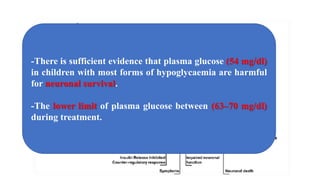
-There is sufficient evidence that plasma glucose (54 mg/dl)
in children with most forms of hypoglycaemia are harmful
for neuronal survival.
-The lower limit of plasma glucose between (63–70 mg/dl)
during treatment.
• The severity of congenital hyperinsulinism varies widely among
affected individuals, even among members of the same family.
• About 60 % of infants with this condition experience a hypoglycemic
episode within the first month of life.
• Other affected children develop hypoglycemia by early childhood.
Unlike typical episodes of hypoglycemia, which occur most often
after periods without food (fasting) or after exercising, episodes of
hypoglycemia in people with congenital hyperinsulinism can also
occur after eating.
Causes
•Congenital hyperinsulinism is caused by mutations in
genes that regulate the release (secretion) of insulin,
which is produced by beta cells in the pancreas .
•Insulin clears excess sugar (in the form of glucose)
from the bloodstream by passing glucose into cells to
be used as energy
•Gene mutations that cause congenital hyperinsulinism
lead to over-secretion of insulin from beta cells.
Normally, insulin is secreted in response to the
amount of glucose in the bloodstream: when glucose
levels rise, so does insulin secretion
•However, in people with congenital hyperinsulinism,
insulin is secreted from beta cells regardless of the
amount of glucose present in the blood.
•This excessive secretion of insulin results in glucose
being rapidly removed from the bloodstream and
passed into tissues such as muscle, liver, and fat
•A lack of glucose in the blood results in frequent
states of hypoglycemia in people with congenital
hyperinsulinism.
• Insufficient blood glucose also deprives the brain of
its primary source of fuel.
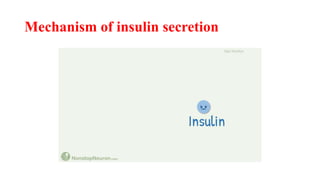
Mechanism of insulin secretion
•Mutations in at least nine genes have been found to
cause congenital hyperinsulinism.
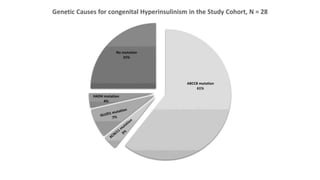
•Mutations in the ABCC8 gene are the most common
known cause of the disorder. They account for this
condition in approximately 40 %of affected
individuals.
•Less frequently, mutations in the KCNJ11 gene have
been found in people with congenital hyperinsulinism
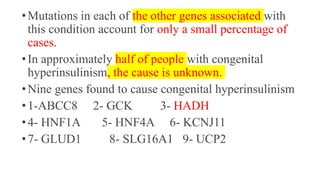
•Mutations in each of the other genes associated with
this condition account for only a small percentage of
cases.
•In approximately half of people with congenital
hyperinsulinism, the cause is unknown.
•Nine genes found to cause congenital hyperinsulinism
•1-ABCC8 2- GCK 3- HADH
•4- HNF1A 5- HNF4A 6- KCNJ11
•7- GLUD1 8- SLG16A1 9- UCP2
Inheritance
• Congenital hyperinsulinism can have different inheritance
patterns, usually depending on the form of the
condition.
• At least two forms of the condition have been identified.
• The most common form is the diffuse form, which
occurs when all of the beta cells in the pancreas secrete
too much insulin.
• The focal form of congenital hyperinsulinism occurs
when only some of the beta cells over-secrete insulin.
• the diffuse form of congenital hyperinsulinism is inherited
in an autosomal recessive
• Less frequently, the diffuse form is inherited in
an autosomal dominant pattern
• The inheritance of the focal form of congenital
hyperinsulinism is more complex. For most genes, both
copies are turned on (active) in all cells,
• but for a small subset of genes, one of the two copies is
turned off (inactive).
• Most people with the focal form of this condition inherit
one copy of the mutated, inactive gene from their
unaffected father.
• During embryonic development, a mutation occurs in the
other, active copy of the gene.
• This second mutation is found within only some cells in
the pancreas.
• As a result, some pancreatic beta cells have abnormal
insulin secretion, while other beta cells function normally.
Incidence of hyperinsulinism in Egypt
• CASE REPORT
• An Egyptian case of congenital hyperinsulinism of infancy due to
a novel mutation in KCNJ11 encoding Kir6.2 and response to
octreotide
• Eman M. Sherif • Abeer A. Abdelmaksoud • Nancy S. Elbarbary • Pa˚l
Rasmus Njølstad
• Received: 3 April 2010 / Accepted: 26 July 2010 / Published online: 5
August 2010 Springer-Verlag 2010
• E. M. Sherif A. A. Abdelmaksoud N. S. Elbarbary Department of Pediatrics, Ain Shams
University, Cairo, Egypt
• P. R. Njølstad Department of Pediatrics, Haukeland University Hospital, Bergen, Norway ( ‫المانيا‬
(
• P. R. Njølstad Department of Clinical Medicine, University of Bergen, Bergen, Norway
• Abstract
• Congenital hyperinsulinism of infancy (CHI) is a rare heterogeneous
disease mostly attributable to mutations in the genes encoding the KATP
channel subunits found in pancreatic b-cells. Here, we report a child
presenting at day 1 with persistent hyperinsulinemic hypoglycemia and who
underwent open laparotomy and subtotal pancreatectomy with resection of
tail and body of pancreas at 30 days of age.
• Normoglycemia was restored by Octreotide that was discontinued when the
child was 7-month old.
• However, 3 months later Octreotide was re-administered as hypoglycemic
attacks recurred.
• On follow-up, the child has adequate glycemic control and is thriving well
with no neurodevelopmental morbidity.
• Genetic analysis revealed the novel mutation c.407G in KCNJ11 encoding
Kir6.2, confirming the diffuse form of CHI. This is to our knowledge the
first reported Egyptian case of CHI due to a mutation in KCNJ11
Clinical characteristics, outcome, and predictors of neurological sequelae of
persistent congenital hyperinsulinism: A single tertiary center experience
Wafaa Laimon MD, PhD,Hadil Mohamed Aboelenin MD, PhD,Noha T. El
Tantawi MD, PhD
First published: 02 February 2021
https://doi.org/10.1111/pedi.13186
•Aim
•Congenital hyperinsulinism (CHI) is a heterogeneous
disease with variable genetic etiology, histopathology,
and clinical phenotype. This study aims to describe the
clinical characteristics of persistent CHI and evaluate
long-term neurological outcome and its risk factors in a
cohort of Egyptian children.
•Methods
•Clinical, genetic, and biochemical data of 42 patients
with CHI were collected. Patients were invited for
neurological assessment, electroencephalogram, and
magnetic resonance imaging of the brain.
• Results
• ABCC8 mutation was found in (61%) of cases who underwent genetic testing
(17/28).
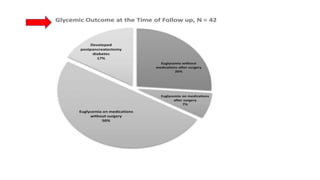
• Five cases with homozygous biparental ABCC8 mutation responded to
combined diazoxide and octreotide without needing surgery.
• Seven out of twenty-one patients who had pancreatectomy (33%) developed
diabetes after a median period of 4.8 (range:1–10) years following surgery.
• 55%e of our patients had neurodevelopmental impairment at follow-up.
• Logistic regression analysis has shown that delayed referral to tertiary centre
for more than 8 days, delayed diagnosis of CHI for more than 14 days and
hospital admission for more than 30 days, are significant predictors of
unfavorable neurological sequelae in CHI; (OR = 12.7 [2.56], p = 0.001),
(OR = 12.7 [2.9–56], p = 0.001), and (OR = 3.8 [0.14.5], p = 0.043),
respectively.
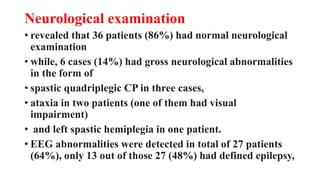
Neurological examination
• revealed that 36 patients (86%) had normal neurological
examination
• while, 6 cases (14%) had gross neurological abnormalities
in the form of
• spastic quadriplegic CP in three cases,
• ataxia in two patients (one of them had visual
impairment)
• and left spastic hemiplegia in one patient.
• EEG abnormalities were detected in total of 27 patients
(64%), only 13 out of those 27 (48%) had defined epilepsy,
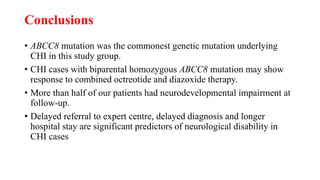
Conclusions
• ABCC8 mutation was the commonest genetic mutation underlying
CHI in this study group.
• CHI cases with biparental homozygous ABCC8 mutation may show
response to combined octreotide and diazoxide therapy.
• More than half of our patients had neurodevelopmental impairment at
follow-up.
• Delayed referral to expert centre, delayed diagnosis and longer
hospital stay are significant predictors of neurological disability in
CHI cases
Treatment
Aim is BG > 3.5 mmol/L (63 mg/dl)
Emergency Management
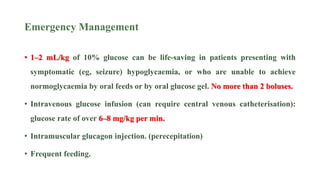
• 1–2 mL/kg of 10% glucose can be life-saving in patients presenting with
symptomatic (eg, seizure) hypoglycaemia, or who are unable to achieve
normoglycaemia by oral feeds or by oral glucose gel. No more than 2 boluses.
• Intravenous glucose infusion (can require central venous catheterisation):
glucose rate of over 6–8 mg/kg per min.
• Intramuscular glucagon injection. (perecepitation)
• Frequent feeding.
Inpatient treatment options
• GIR
• Glucagon infusion 2-20 mic/kg/hour
• Diazoxide
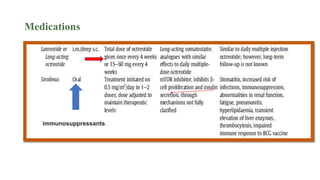
• Octerotides
Octerotids
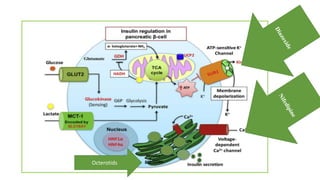
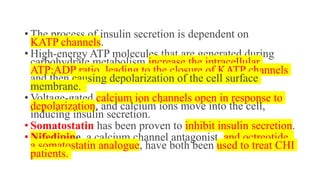
• The process of insulin secretion is dependent on
KATP channels.
• High-energy ATP molecules that are generated during
carbohydrate metabolism increase the intracellular
ATP:ADP ratio, leading to the closure of KATP channels
and then causing depolarization of the cell surface
membrane.
• Voltage-gated calcium ion channels open in response to
depolarization, and calcium ions move into the cell,
inducing insulin secretion.
• Somatostatin has been proven to inhibit insulin secretion.
• Nifedipine, a calcium channel antagonist, and octreotide,
a somatostatin analogue, have both been used to treat CHI
patients.
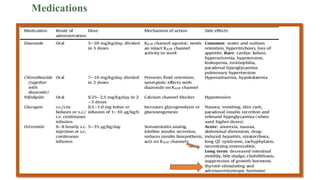
Medications
Medications
immunosuppressants.
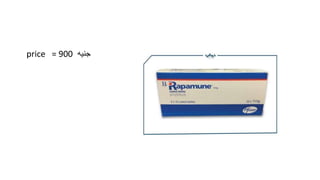
price = 900 ‫جنيه‬
•Diazoxide
• Diazoxide is a vasodilator used in the treatment of acute
hypertension
• Diazoxide is a KATP channel opener and is effective against the
causes of CHI, except for those mutations in the KATP channel
genes, glucokinase gene, and SLC16A1 gene.
• Unfortunately, the majority of cases of neonatal onset persistent
CHI are caused by mutations in the KATP channel genes;
therefore, diazoxide is often ineffective in these patients
Surgical Management
• Lesionectomy for focal disease (laparoscopy or laparotomy)
• Pancreatectomy for diffuse disease (laparoscopic or open):
Partial pancreatectomy with medical therapy
Subtotal pancreatectomy (removal of up to 95% of pancreas)
Near-total pancreatectomy (removal of 95–98% of pancreas)
Home Message
• Congenital hyperinsulinism (HI) is the most common cause of persistent and
recurrent hypoglycaemia.
• Neurodevelopmental outcome of HI makes early diagnosis and management
crucial.
• Transient HI may require treatment but anyway it is transient !
• Many medical options for treating HI have proved to be effective on the face
of pancreatectomy and with incomparable adverse effects.
Home Message
• No role for corticosteroids in management of HI. So, kindly do not use them.
• Failure of documentation of hypoglycemia during admission does not rule out
HI. So, kindly proceed to diagnostic fast with its precautions.
• HI patients’ pancreases has exaggerated response. So, do not over bolus
glucose in managing hypos.
Thank you

Congenital hyperinsuliism .pptx

  • 1.
    Congenital Hyperinsulinism: DR. MagdyShafik Senior Pediatric Consultant Diploma, M.S ,Ph.D of Pediatric
  • 2.
    Definition and Incidence •Congenital hyperinsulinism (HI), although rare, it is the most common cause of persistent and recurrent hypoglycaemia. • HI is a group of clinically, genetically and histologically heterogeneous disorders, characterized by inappropriate insulin secretion from the pancreatic ß-cells in the presence of low blood glucose (BG) levels. • Incidence in the United States of 1 in 50,000 live births. In consanguineous populations reach 1:2500 live births. Also in SAUDIA ARABIA
  • 3.
    It is extremelyvital to make a rapid diagnosis of HI and immediately initiate appropriate treatment. HI is determined to cause adverse neurodevelopmental sequele in third to half of patients. (Banerjee et al., Diabeticmedicine 2018)
  • 4.
    -There is sufficientevidence that plasma glucose (54 mg/dl) in children with most forms of hypoglycaemia are harmful for neuronal survival. -The lower limit of plasma glucose between (63–70 mg/dl) during treatment.
  • 5.
    • The severityof congenital hyperinsulinism varies widely among affected individuals, even among members of the same family. • About 60 % of infants with this condition experience a hypoglycemic episode within the first month of life. • Other affected children develop hypoglycemia by early childhood. Unlike typical episodes of hypoglycemia, which occur most often after periods without food (fasting) or after exercising, episodes of hypoglycemia in people with congenital hyperinsulinism can also occur after eating.
  • 6.
    Causes •Congenital hyperinsulinism iscaused by mutations in genes that regulate the release (secretion) of insulin, which is produced by beta cells in the pancreas . •Insulin clears excess sugar (in the form of glucose) from the bloodstream by passing glucose into cells to be used as energy •Gene mutations that cause congenital hyperinsulinism lead to over-secretion of insulin from beta cells. Normally, insulin is secreted in response to the amount of glucose in the bloodstream: when glucose levels rise, so does insulin secretion
  • 7.
    •However, in peoplewith congenital hyperinsulinism, insulin is secreted from beta cells regardless of the amount of glucose present in the blood. •This excessive secretion of insulin results in glucose being rapidly removed from the bloodstream and passed into tissues such as muscle, liver, and fat •A lack of glucose in the blood results in frequent states of hypoglycemia in people with congenital hyperinsulinism. • Insufficient blood glucose also deprives the brain of its primary source of fuel.
  • 8.
  • 9.
    •Mutations in atleast nine genes have been found to cause congenital hyperinsulinism. •Mutations in the ABCC8 gene are the most common known cause of the disorder. They account for this condition in approximately 40 %of affected individuals. •Less frequently, mutations in the KCNJ11 gene have been found in people with congenital hyperinsulinism
  • 10.
    •Mutations in eachof the other genes associated with this condition account for only a small percentage of cases. •In approximately half of people with congenital hyperinsulinism, the cause is unknown. •Nine genes found to cause congenital hyperinsulinism •1-ABCC8 2- GCK 3- HADH •4- HNF1A 5- HNF4A 6- KCNJ11 •7- GLUD1 8- SLG16A1 9- UCP2
  • 11.
    Inheritance • Congenital hyperinsulinismcan have different inheritance patterns, usually depending on the form of the condition. • At least two forms of the condition have been identified. • The most common form is the diffuse form, which occurs when all of the beta cells in the pancreas secrete too much insulin. • The focal form of congenital hyperinsulinism occurs when only some of the beta cells over-secrete insulin. • the diffuse form of congenital hyperinsulinism is inherited in an autosomal recessive • Less frequently, the diffuse form is inherited in an autosomal dominant pattern
  • 12.
    • The inheritanceof the focal form of congenital hyperinsulinism is more complex. For most genes, both copies are turned on (active) in all cells, • but for a small subset of genes, one of the two copies is turned off (inactive). • Most people with the focal form of this condition inherit one copy of the mutated, inactive gene from their unaffected father. • During embryonic development, a mutation occurs in the other, active copy of the gene. • This second mutation is found within only some cells in the pancreas. • As a result, some pancreatic beta cells have abnormal insulin secretion, while other beta cells function normally.
  • 13.
    Incidence of hyperinsulinismin Egypt • CASE REPORT • An Egyptian case of congenital hyperinsulinism of infancy due to a novel mutation in KCNJ11 encoding Kir6.2 and response to octreotide • Eman M. Sherif • Abeer A. Abdelmaksoud • Nancy S. Elbarbary • Pa˚l Rasmus Njølstad • Received: 3 April 2010 / Accepted: 26 July 2010 / Published online: 5 August 2010 Springer-Verlag 2010 • E. M. Sherif A. A. Abdelmaksoud N. S. Elbarbary Department of Pediatrics, Ain Shams University, Cairo, Egypt • P. R. Njølstad Department of Pediatrics, Haukeland University Hospital, Bergen, Norway ( ‫المانيا‬ ( • P. R. Njølstad Department of Clinical Medicine, University of Bergen, Bergen, Norway
  • 14.
    • Abstract • Congenitalhyperinsulinism of infancy (CHI) is a rare heterogeneous disease mostly attributable to mutations in the genes encoding the KATP channel subunits found in pancreatic b-cells. Here, we report a child presenting at day 1 with persistent hyperinsulinemic hypoglycemia and who underwent open laparotomy and subtotal pancreatectomy with resection of tail and body of pancreas at 30 days of age. • Normoglycemia was restored by Octreotide that was discontinued when the child was 7-month old. • However, 3 months later Octreotide was re-administered as hypoglycemic attacks recurred. • On follow-up, the child has adequate glycemic control and is thriving well with no neurodevelopmental morbidity. • Genetic analysis revealed the novel mutation c.407G in KCNJ11 encoding Kir6.2, confirming the diffuse form of CHI. This is to our knowledge the first reported Egyptian case of CHI due to a mutation in KCNJ11
  • 15.
    Clinical characteristics, outcome,and predictors of neurological sequelae of persistent congenital hyperinsulinism: A single tertiary center experience Wafaa Laimon MD, PhD,Hadil Mohamed Aboelenin MD, PhD,Noha T. El Tantawi MD, PhD First published: 02 February 2021 https://doi.org/10.1111/pedi.13186
  • 16.
    •Aim •Congenital hyperinsulinism (CHI)is a heterogeneous disease with variable genetic etiology, histopathology, and clinical phenotype. This study aims to describe the clinical characteristics of persistent CHI and evaluate long-term neurological outcome and its risk factors in a cohort of Egyptian children. •Methods •Clinical, genetic, and biochemical data of 42 patients with CHI were collected. Patients were invited for neurological assessment, electroencephalogram, and magnetic resonance imaging of the brain.
  • 17.
    • Results • ABCC8mutation was found in (61%) of cases who underwent genetic testing (17/28). • Five cases with homozygous biparental ABCC8 mutation responded to combined diazoxide and octreotide without needing surgery. • Seven out of twenty-one patients who had pancreatectomy (33%) developed diabetes after a median period of 4.8 (range:1–10) years following surgery. • 55%e of our patients had neurodevelopmental impairment at follow-up. • Logistic regression analysis has shown that delayed referral to tertiary centre for more than 8 days, delayed diagnosis of CHI for more than 14 days and hospital admission for more than 30 days, are significant predictors of unfavorable neurological sequelae in CHI; (OR = 12.7 [2.56], p = 0.001), (OR = 12.7 [2.9–56], p = 0.001), and (OR = 3.8 [0.14.5], p = 0.043), respectively.
  • 19.
    Neurological examination • revealedthat 36 patients (86%) had normal neurological examination • while, 6 cases (14%) had gross neurological abnormalities in the form of • spastic quadriplegic CP in three cases, • ataxia in two patients (one of them had visual impairment) • and left spastic hemiplegia in one patient. • EEG abnormalities were detected in total of 27 patients (64%), only 13 out of those 27 (48%) had defined epilepsy,
  • 21.
    Conclusions • ABCC8 mutationwas the commonest genetic mutation underlying CHI in this study group. • CHI cases with biparental homozygous ABCC8 mutation may show response to combined octreotide and diazoxide therapy. • More than half of our patients had neurodevelopmental impairment at follow-up. • Delayed referral to expert centre, delayed diagnosis and longer hospital stay are significant predictors of neurological disability in CHI cases
  • 22.
    Treatment Aim is BG> 3.5 mmol/L (63 mg/dl)
  • 23.
    Emergency Management • 1–2mL/kg of 10% glucose can be life-saving in patients presenting with symptomatic (eg, seizure) hypoglycaemia, or who are unable to achieve normoglycaemia by oral feeds or by oral glucose gel. No more than 2 boluses. • Intravenous glucose infusion (can require central venous catheterisation): glucose rate of over 6–8 mg/kg per min. • Intramuscular glucagon injection. (perecepitation) • Frequent feeding.
  • 24.
    Inpatient treatment options •GIR • Glucagon infusion 2-20 mic/kg/hour • Diazoxide • Octerotides
  • 25.
  • 26.
    • The processof insulin secretion is dependent on KATP channels. • High-energy ATP molecules that are generated during carbohydrate metabolism increase the intracellular ATP:ADP ratio, leading to the closure of KATP channels and then causing depolarization of the cell surface membrane. • Voltage-gated calcium ion channels open in response to depolarization, and calcium ions move into the cell, inducing insulin secretion. • Somatostatin has been proven to inhibit insulin secretion. • Nifedipine, a calcium channel antagonist, and octreotide, a somatostatin analogue, have both been used to treat CHI patients.
  • 27.
  • 28.
  • 29.
    price = 900‫جنيه‬
  • 30.
    •Diazoxide • Diazoxide isa vasodilator used in the treatment of acute hypertension • Diazoxide is a KATP channel opener and is effective against the causes of CHI, except for those mutations in the KATP channel genes, glucokinase gene, and SLC16A1 gene. • Unfortunately, the majority of cases of neonatal onset persistent CHI are caused by mutations in the KATP channel genes; therefore, diazoxide is often ineffective in these patients
  • 31.
    Surgical Management • Lesionectomyfor focal disease (laparoscopy or laparotomy) • Pancreatectomy for diffuse disease (laparoscopic or open): Partial pancreatectomy with medical therapy Subtotal pancreatectomy (removal of up to 95% of pancreas) Near-total pancreatectomy (removal of 95–98% of pancreas)
  • 32.
    Home Message • Congenitalhyperinsulinism (HI) is the most common cause of persistent and recurrent hypoglycaemia. • Neurodevelopmental outcome of HI makes early diagnosis and management crucial. • Transient HI may require treatment but anyway it is transient ! • Many medical options for treating HI have proved to be effective on the face of pancreatectomy and with incomparable adverse effects.
  • 33.
    Home Message • Norole for corticosteroids in management of HI. So, kindly do not use them. • Failure of documentation of hypoglycemia during admission does not rule out HI. So, kindly proceed to diagnostic fast with its precautions. • HI patients’ pancreases has exaggerated response. So, do not over bolus glucose in managing hypos.
  • 34.