Neonatal
 Hypoglycaemia

           Dr Varsha Atul Shah
Dept of Neonatal and Developmental Medicine
        Singapore General Hospital
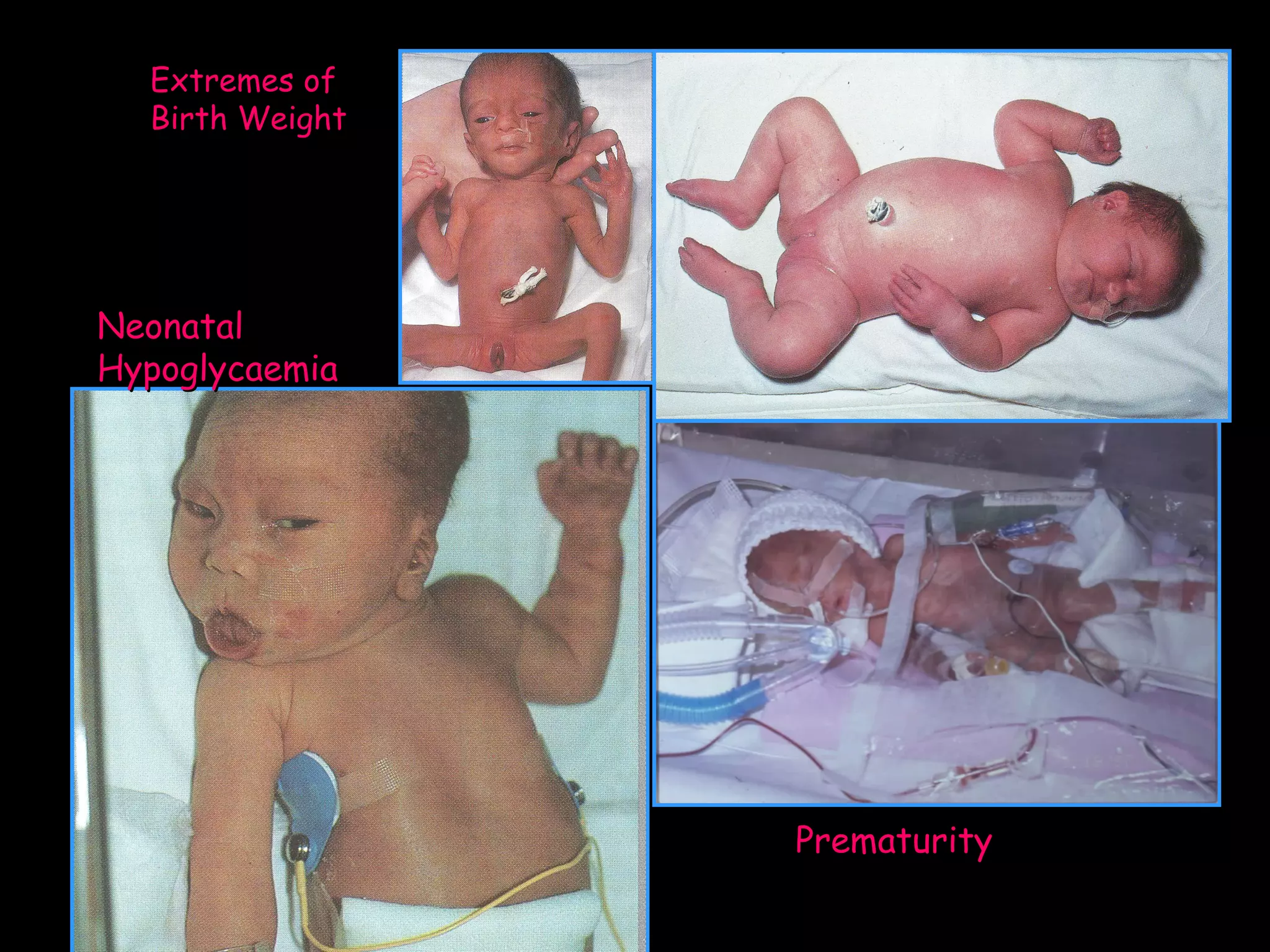
Extremes of
  Birth Weight


Neonatal
Hypoglycaemia


                 Prematurity
Definition

• Controversial

• Operational threshold
  – Pragmatic approach
  – i.e. blood glucose level at which clinical
    intervention should be considered
  – Indication for action but not diagnostic of
    disease

  – Symptomatic: < 45mg/dl (2.5mmol/L)
  – Asymptomatic & at-risk: < 36mg/dl (2.0mmol/L)
• Significant neonatal hypoglycaemia
  (Whipple’s triad)
  – Clinical manifestations
  – Coincident low plasma glucose level (laboratory)
  – Clinical signs resolve within mins - hrs of
    establishing normoglycaemia


• Therapeutic objective
  – Raise plasma glucose level > 45mg/dl (2.5mmol/L)
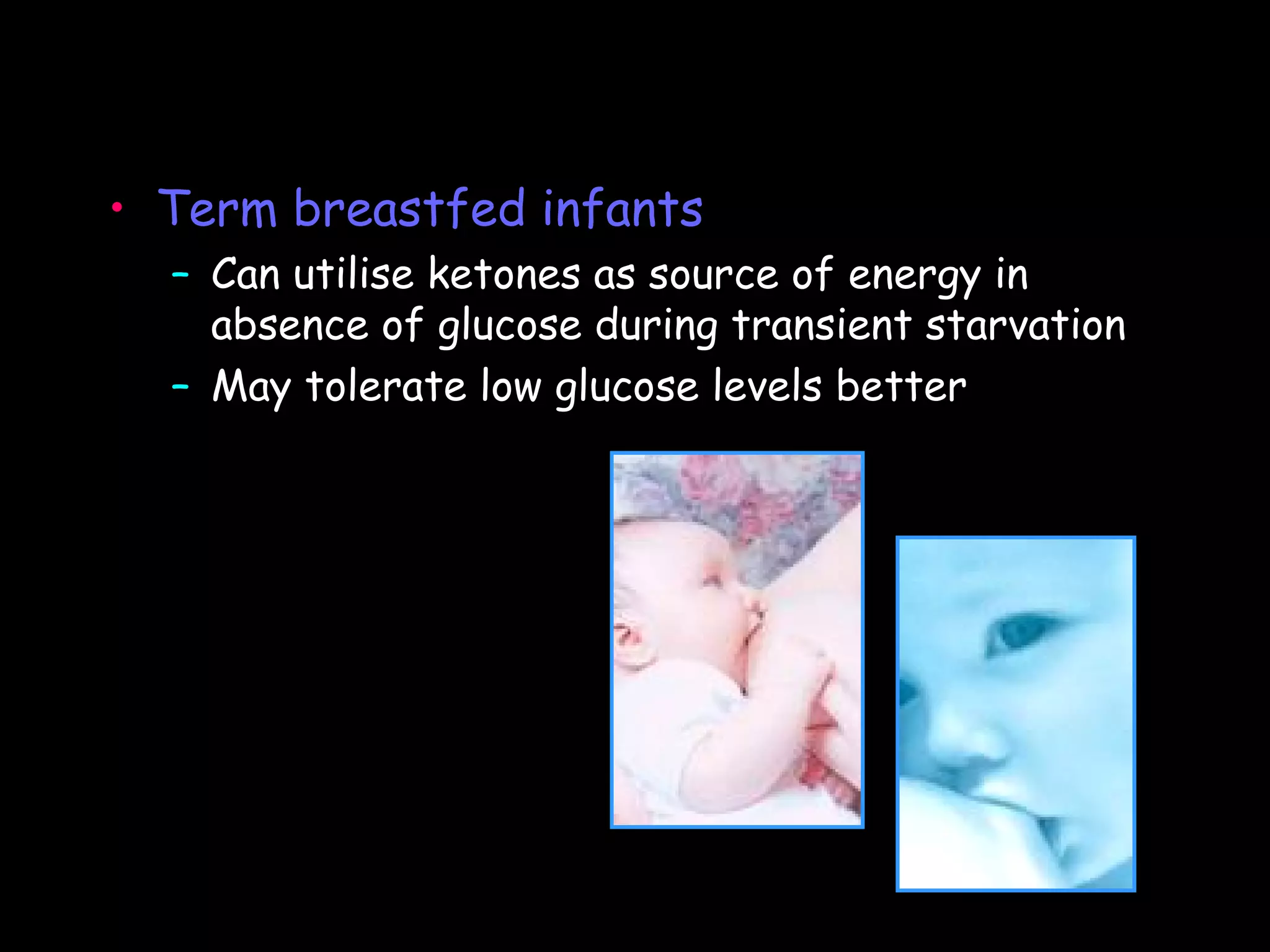
• Term breastfed infants
  – Can utilise ketones as source of energy in
    absence of glucose during transient starvation
  – May tolerate low glucose levels better
Clinical Features
• Non specific
  – Apathy, lethargy, irritability
  – Hypotonia, limpness
  – Sweating, tremors, jitteriness, abnormal cry
    (weak / high pitched)
  – Hypothermia
  – Poor feeding, vomiting
  – Apnoea, irregular respiration, respiratory
    distress, cyanosis
  – Tachycardia, CCF
  – Seizures, coma
• Asymptomatic
Aetiology

∀ ↑ utilisation of glucose: hyperinsulinism
  (Hyperinsulinism: inhibit glycogenolysis & gluconeogenesis)
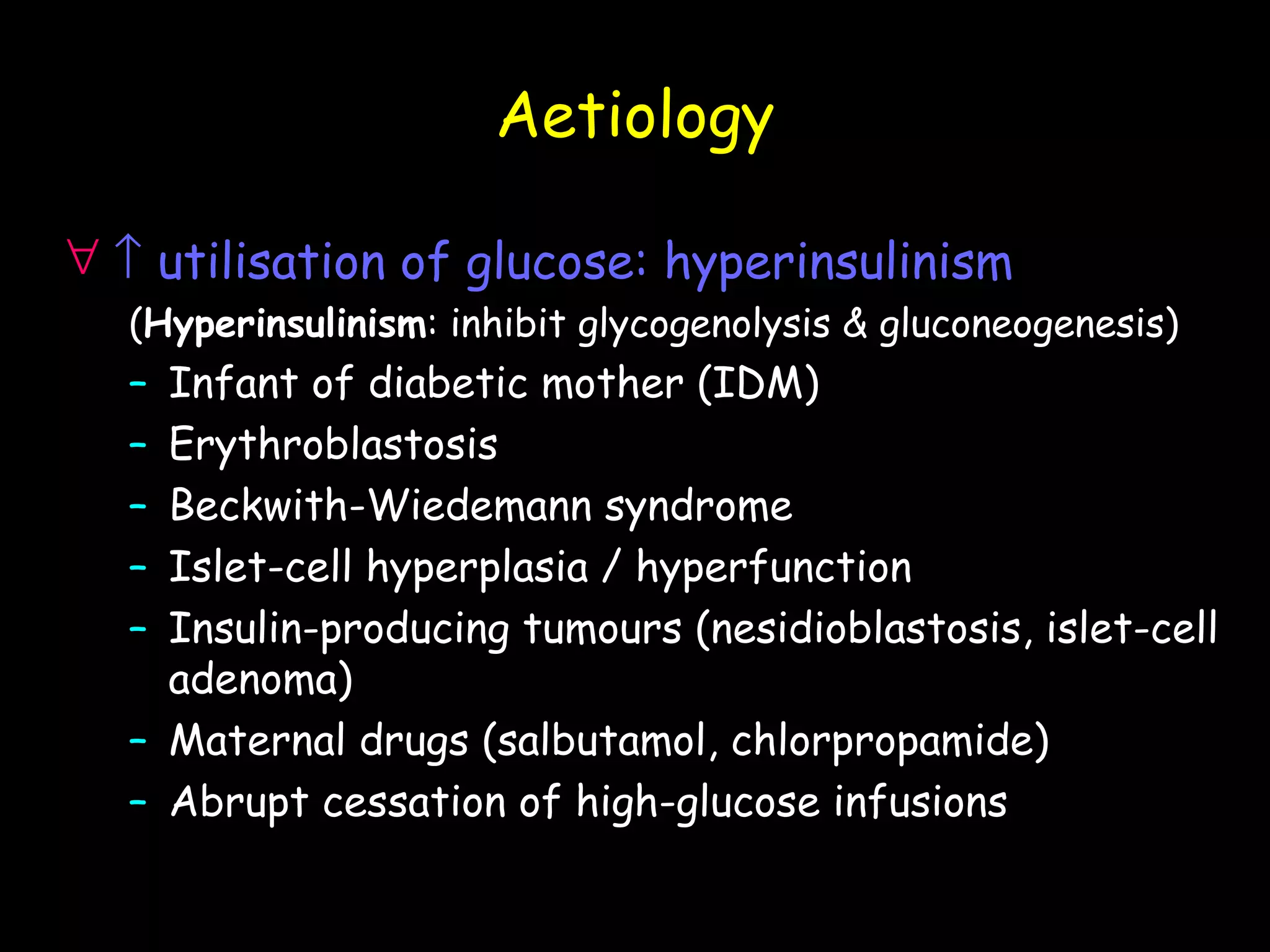
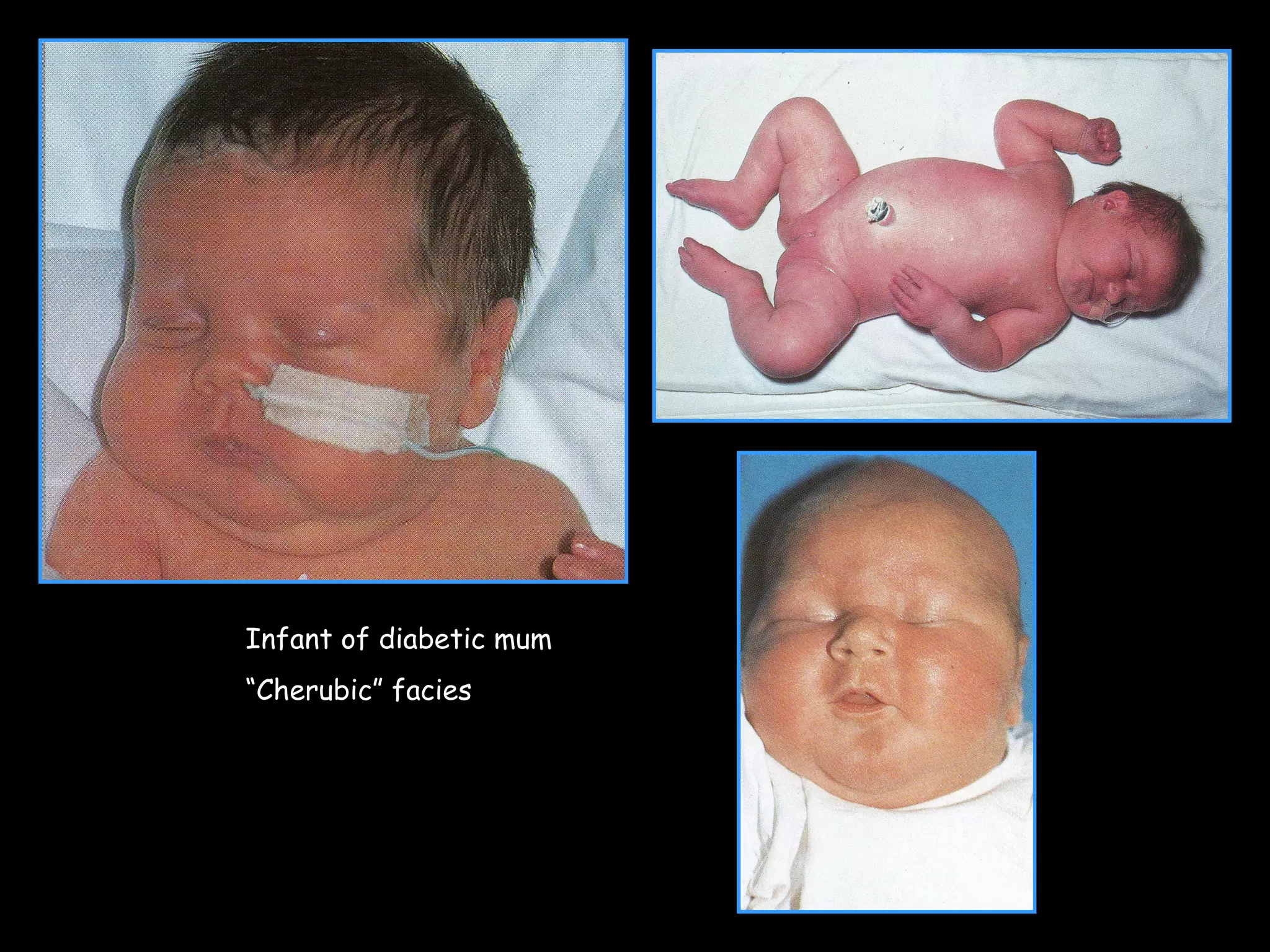
  – Infant of diabetic mother (IDM)
  – Erythroblastosis
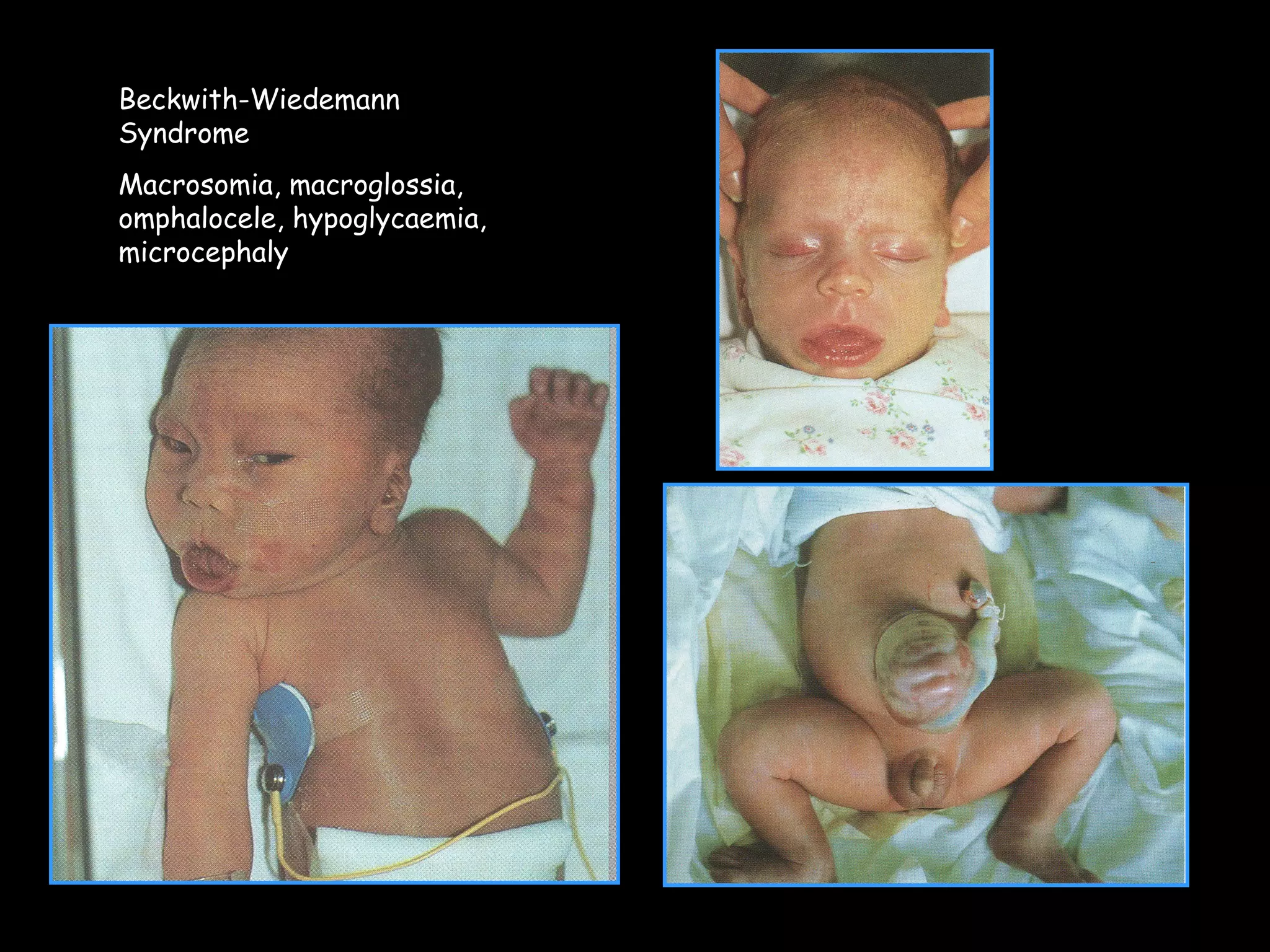
  – Beckwith-Wiedemann syndrome
  – Islet-cell hyperplasia / hyperfunction
  – Insulin-producing tumours (nesidioblastosis, islet-cell
    adenoma)
  – Maternal drugs (salbutamol, chlorpropamide)
  – Abrupt cessation of high-glucose infusions
Infant of diabetic mum
“Cherubic” facies
Beckwith-Wiedemann
Syndrome
Macrosomia, macroglossia,
omphalocele, hypoglycaemia,
microcephaly
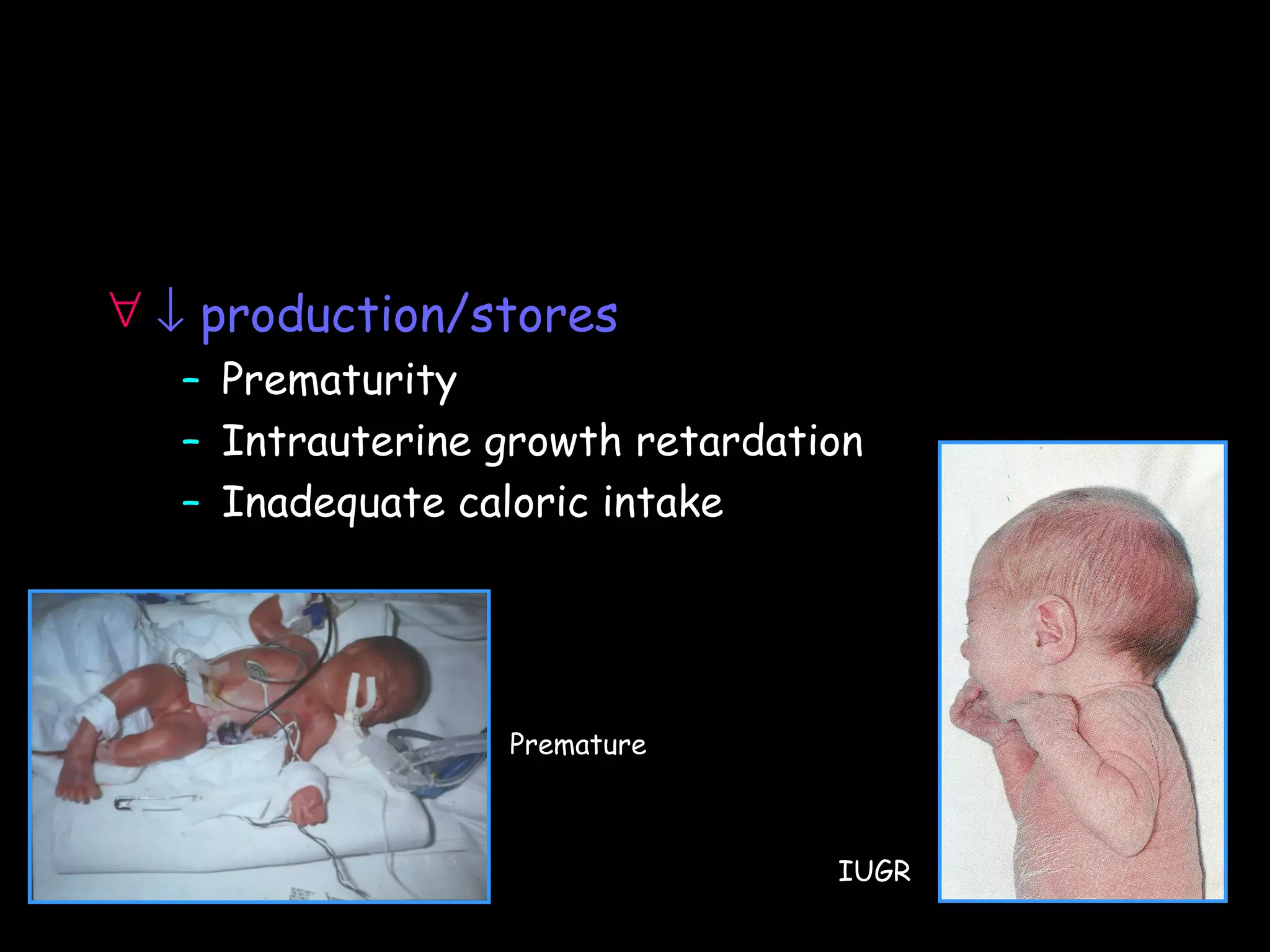
∀ ↓ production/stores
   – Prematurity
   – Intrauterine growth retardation
   – Inadequate caloric intake


                  Premature


                                  IUGR
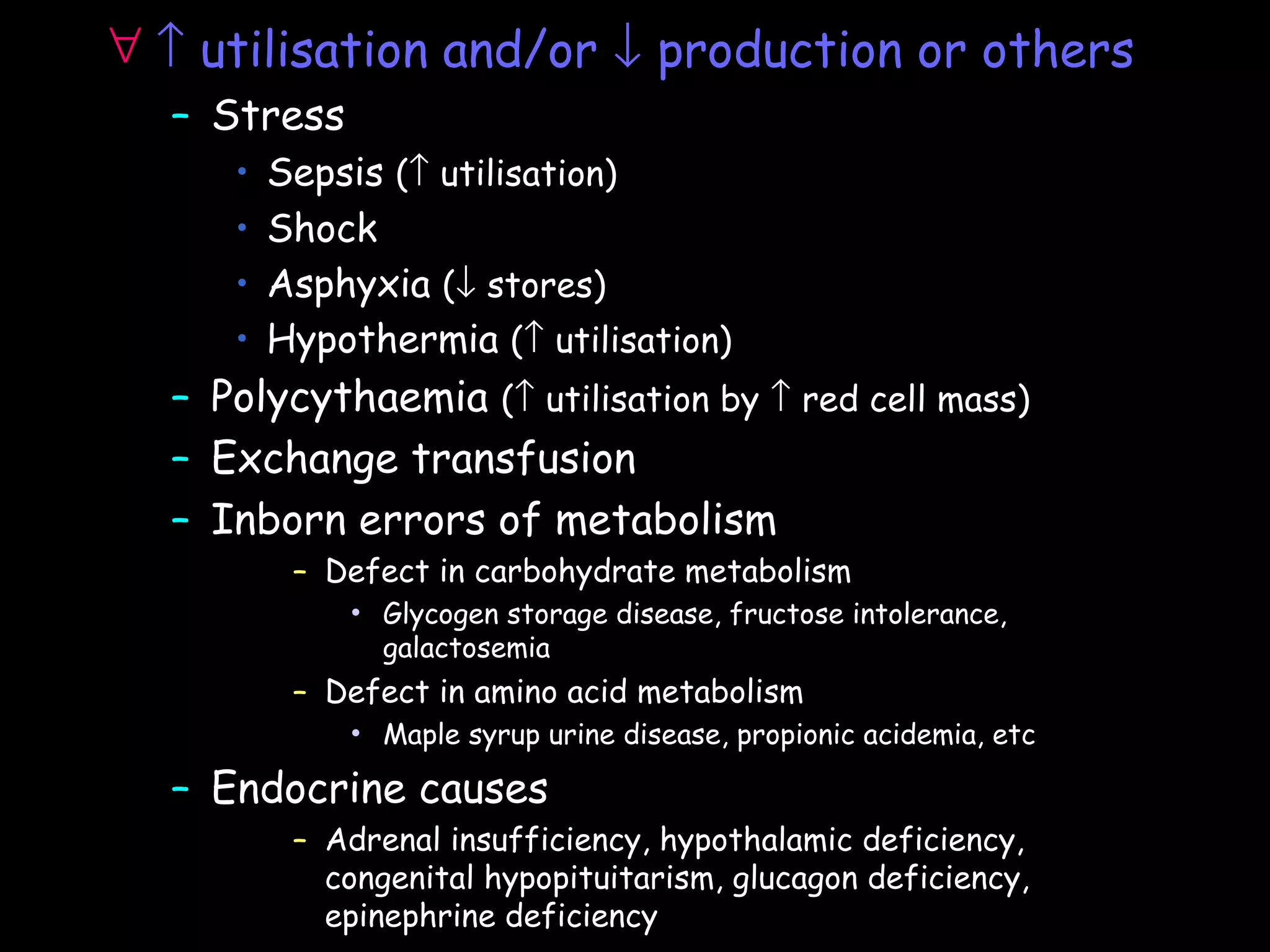
∀ ↑ utilisation and/or ↓ production or others
  – Stress
     •   Sepsis (↑ utilisation)
     •   Shock
     •   Asphyxia (↓ stores)
     •   Hypothermia (↑ utilisation)
  – Polycythaemia (↑ utilisation by ↑ red cell mass)
  – Exchange transfusion
  – Inborn errors of metabolism
          – Defect in carbohydrate metabolism
             •   Glycogen storage disease, fructose intolerance,
                 galactosemia
          – Defect in amino acid metabolism
             •   Maple syrup urine disease, propionic acidemia, etc

  – Endocrine causes
          – Adrenal insufficiency, hypothalamic deficiency,
            congenital hypopituitarism, glucagon deficiency,
            epinephrine deficiency
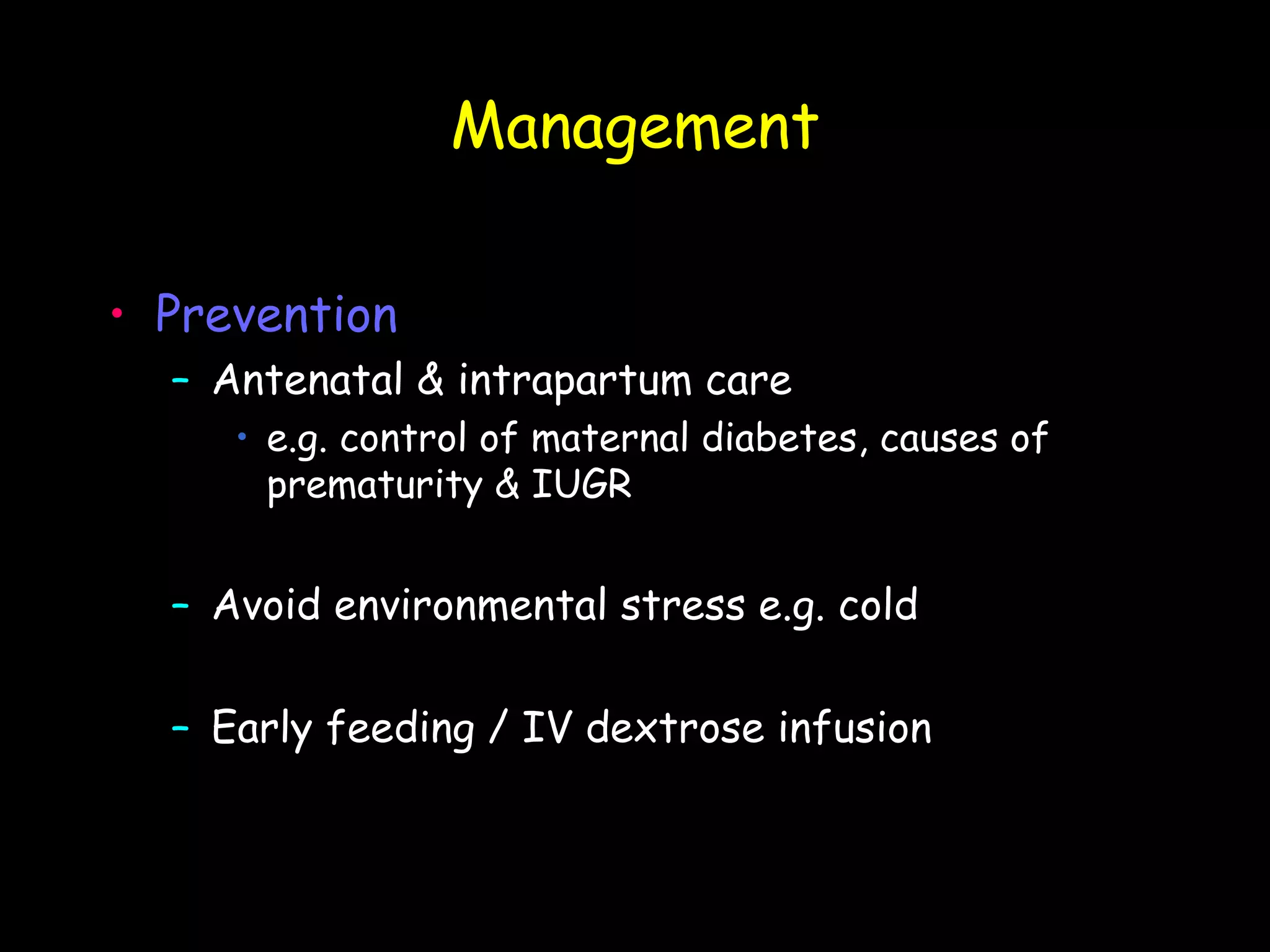
Management

• Prevention
  – Antenatal & intrapartum care
     • e.g. control of maternal diabetes, causes of
       prematurity & IUGR


  – Avoid environmental stress e.g. cold

  – Early feeding / IV dextrose infusion
• Anticipation
  – Screening

    1. At-risk babies
    a. Maternal
        e.g. drugs, intrapartum glucose, diabetes, etc
    b. Neonatal
        e.g. asphyxia / perinatal stress, premature, SGA / LGA, low
        birth weight, sepsis, shock, polycythaemia, etc


    2. Those with symptoms
        Non specific; high index of suspicion
• Diagnosis
  – Screening using glucose reagent strips
     • Within 2 - 3 hrs after birth & before feeding
       (2 - 4 hrly) for 24 - 48 hrs & whenever
       symptomatic


  – Confirmatory laboratory diagnosis important
     • Do not delay treatment while waiting for result
     • Analysed promptly to avoid falsely low value due
       to glycolysis
• Treatment
  – Aim to maintain plasma glucose > 45mg/dl
    (2.5mmol/L)


  – IV dextrose
     • Mini bolus Dex 10% (2ml/kg) followed by infusion
     • Central line required for high dextrose
       concentrations (> Dex 10%)
     • Continued close plasma glucose monitoring to
       titrate infusion
     • Avoid abruptly decreasing dextrose infusion
       (rebound hypoglycaemia)
– Adjunct therapy
  • Considered if persistent hypoglycaemia despite
    glucose infusion > 10-12mg/kg/min


  • Glucagon: stimulates glycogenolysis (adequate
    glycogen stores) (AGA/LGA)


  • Hydrocortisone: ↓ peripheral glucose utilisation, ↑
    gluconeogenesis, ↑ glucagon effects (prem/SGA)


  • Rarely:
     – Diazoxide: inhibits insulin secretion


     – Somatostatin: inhibits insulin & growth hormone release


     – Subtotal pancreatectomy: decreases insulin release
       (insulin-secreting tumours)
• Most hypoglycaemia resolve in 2 - 3 dys

• Persistent / recurrent hypoglycaemia for >
  1 week may require evaluation for other
  causes
   – e.g. insulin, cortisol, other endocrine &
          insulin
     IEM studies during period of
     hypoglycaemia
• During a period of hypoglycaemia, a normal
  infant’s blood insulin level should be low or
  absent. If it is very high suggests
  hyperinsulinism. It inhibits braeking down of
  glyconen
Significance of Hypoglycaemia

• Neuronal cell injury, cerebral damage, long
  term neurologic sequelae

• No single value below which or duration
  beyond which brain injury definitely occurs

• ? Vulnerability of brain of infants of
  different gestational ages

• Prevention, prompt treatment important
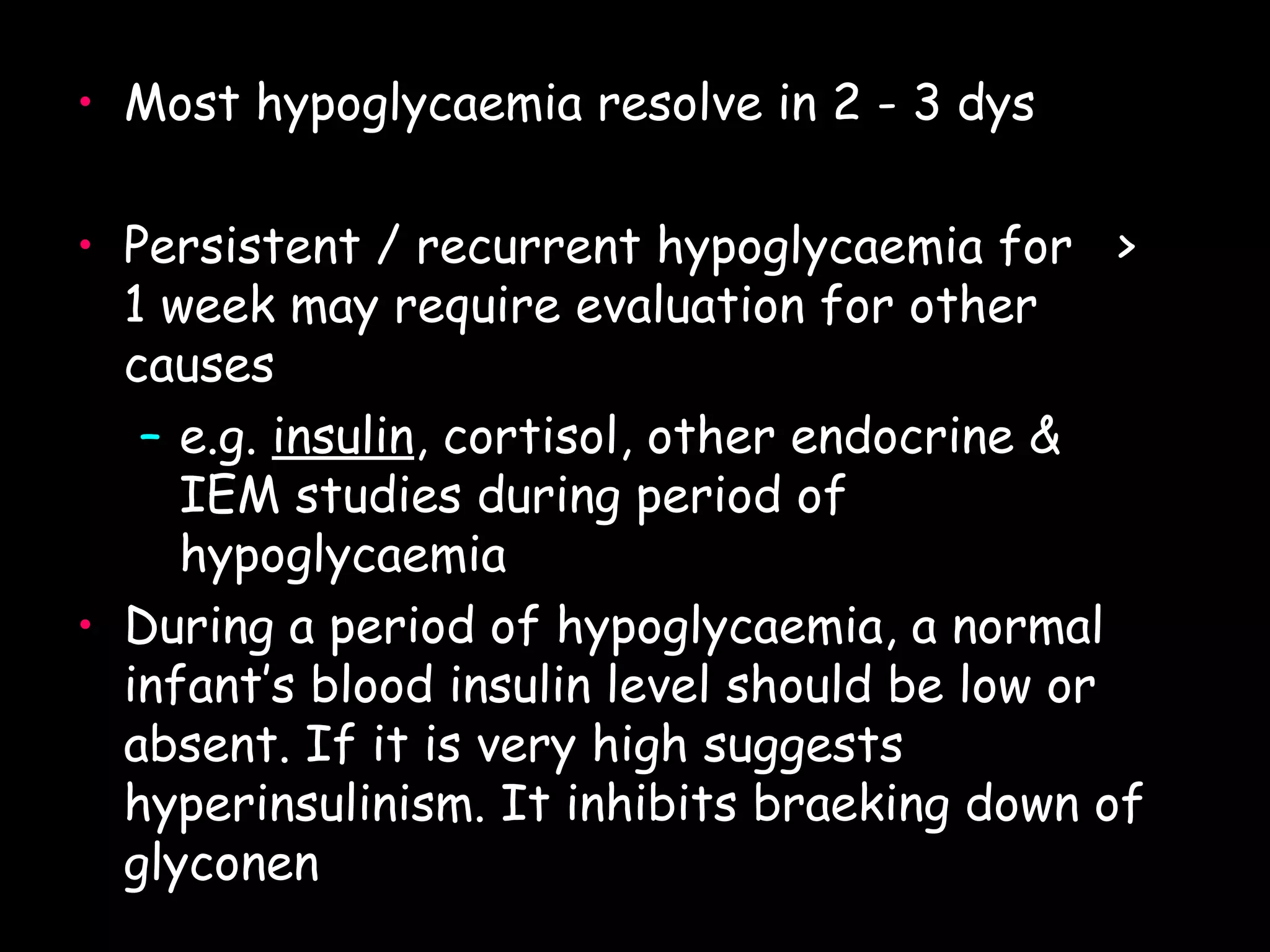
Symmetric patchy
hyperintensities in occipital
white matter in brain of infant
with transient neonatal
hypoglycaemia
              Kinnala Peds 1999
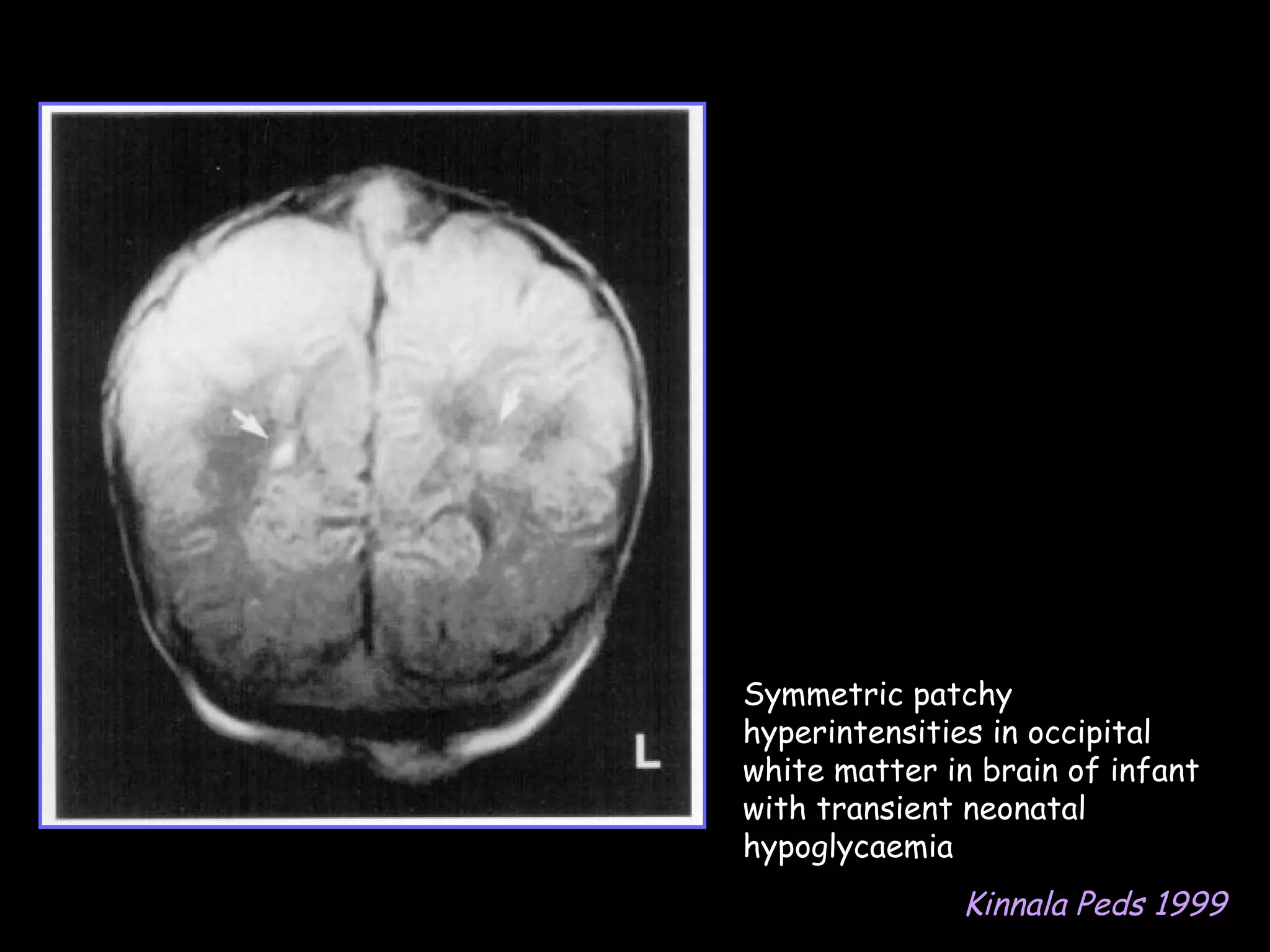
T2 weighted axial MRI at 10 months of age
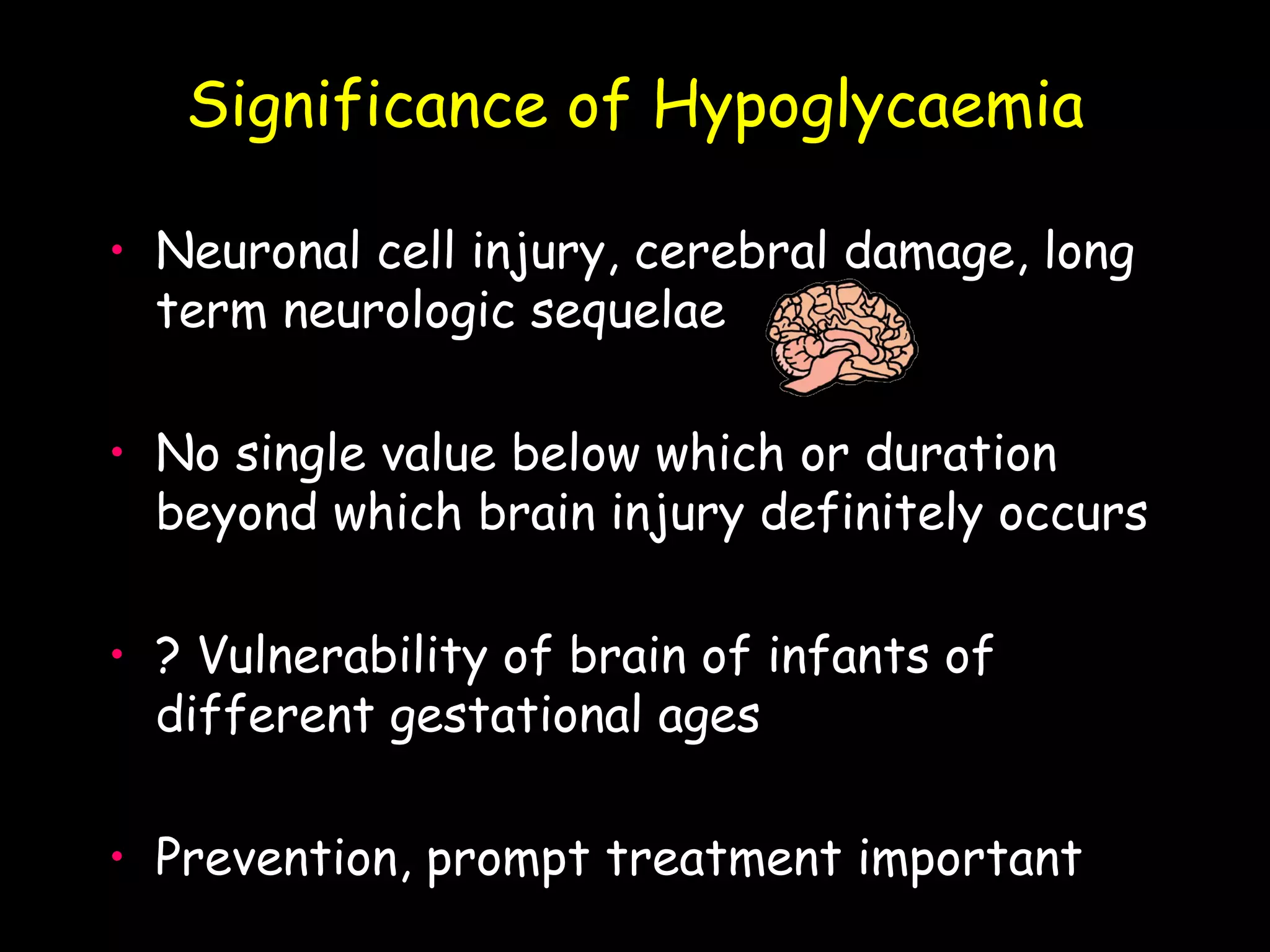
Boy with isolated hypoglycaemia:
                                      shows parenchymal loss posteriorly with
computed tomography at 6 days of
                                      high signal in the white matter of the
age shows cortical and white matter
                                      parietal and occipital lobes (arrows). Note
low density that is most severe in
                                      thin and atrophic gyri (arrowhead)
the parietal and occipital lobes
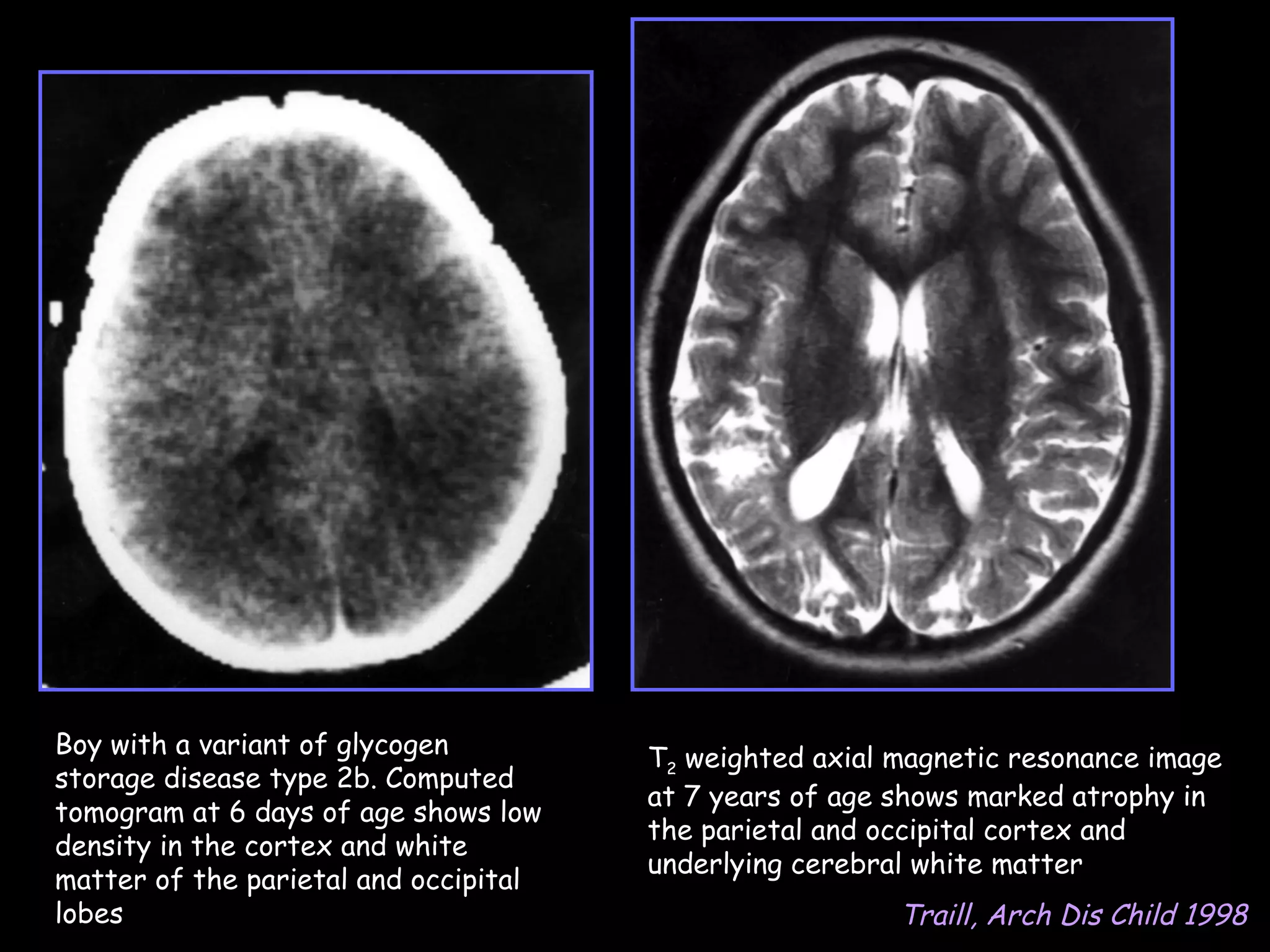
                                                        Traill, Arch Dis Child 1998
Boy with a variant of glycogen         T2 weighted axial magnetic resonance image
storage disease type 2b. Computed
                                       at 7 years of age shows marked atrophy in
tomogram at 6 days of age shows low
                                       the parietal and occipital cortex and
density in the cortex and white
                                       underlying cerebral white matter
matter of the parietal and occipital
lobes                                                    Traill, Arch Dis Child 1998
Outcome

• Varied

• Some have no long term sequelae

• Symptomatic / severe / persistent
  hypoglycaemia
  – Abnormal neurointellectual development
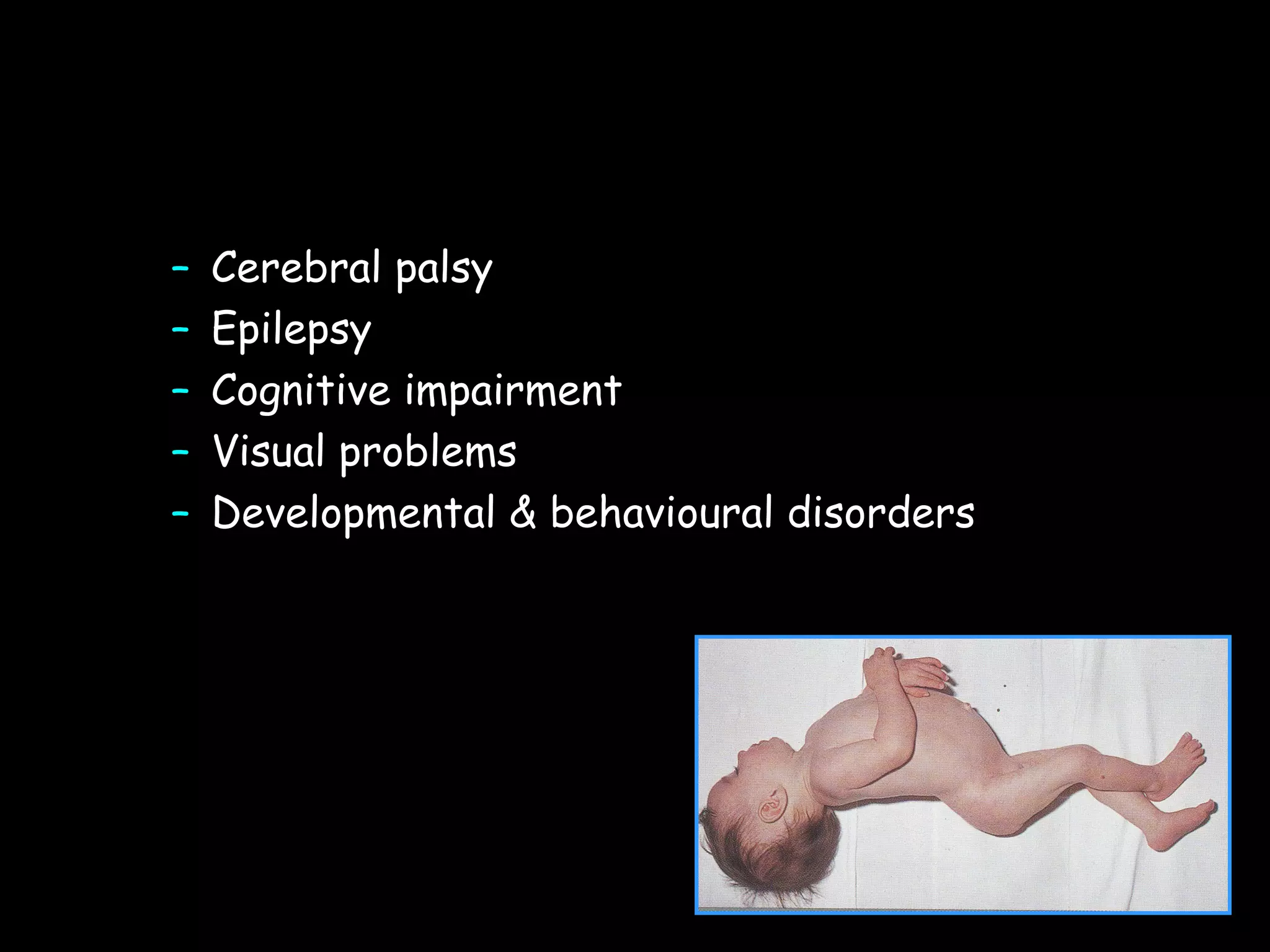
–   Cerebral palsy
–   Epilepsy
–   Cognitive impairment
–   Visual problems
–   Developmental & behavioural disorders
Long Term Management

• Neurodevelopmental follow up to identify
  sequelae of neuroglycopenia

• Identify growth deficits
Neonatal hypoglycaemia

Neonatal hypoglycaemia

  • 1.
    Neonatal Hypoglycaemia Dr Varsha Atul Shah Dept of Neonatal and Developmental Medicine Singapore General Hospital
  • 2.
    Extremes of Birth Weight Neonatal Hypoglycaemia Prematurity
  • 3.
    Definition • Controversial • Operationalthreshold – Pragmatic approach – i.e. blood glucose level at which clinical intervention should be considered – Indication for action but not diagnostic of disease – Symptomatic: < 45mg/dl (2.5mmol/L) – Asymptomatic & at-risk: < 36mg/dl (2.0mmol/L)
  • 4.
    • Significant neonatalhypoglycaemia (Whipple’s triad) – Clinical manifestations – Coincident low plasma glucose level (laboratory) – Clinical signs resolve within mins - hrs of establishing normoglycaemia • Therapeutic objective – Raise plasma glucose level > 45mg/dl (2.5mmol/L)
  • 5.
    • Term breastfedinfants – Can utilise ketones as source of energy in absence of glucose during transient starvation – May tolerate low glucose levels better
  • 6.
    Clinical Features • Nonspecific – Apathy, lethargy, irritability – Hypotonia, limpness – Sweating, tremors, jitteriness, abnormal cry (weak / high pitched) – Hypothermia – Poor feeding, vomiting – Apnoea, irregular respiration, respiratory distress, cyanosis – Tachycardia, CCF – Seizures, coma • Asymptomatic
  • 8.
    Aetiology ∀ ↑ utilisationof glucose: hyperinsulinism (Hyperinsulinism: inhibit glycogenolysis & gluconeogenesis) – Infant of diabetic mother (IDM) – Erythroblastosis – Beckwith-Wiedemann syndrome – Islet-cell hyperplasia / hyperfunction – Insulin-producing tumours (nesidioblastosis, islet-cell adenoma) – Maternal drugs (salbutamol, chlorpropamide) – Abrupt cessation of high-glucose infusions
  • 9.
    Infant of diabeticmum “Cherubic” facies
  • 10.
  • 11.
    ∀ ↓ production/stores – Prematurity – Intrauterine growth retardation – Inadequate caloric intake Premature IUGR
  • 12.
    ∀ ↑ utilisationand/or ↓ production or others – Stress • Sepsis (↑ utilisation) • Shock • Asphyxia (↓ stores) • Hypothermia (↑ utilisation) – Polycythaemia (↑ utilisation by ↑ red cell mass) – Exchange transfusion – Inborn errors of metabolism – Defect in carbohydrate metabolism • Glycogen storage disease, fructose intolerance, galactosemia – Defect in amino acid metabolism • Maple syrup urine disease, propionic acidemia, etc – Endocrine causes – Adrenal insufficiency, hypothalamic deficiency, congenital hypopituitarism, glucagon deficiency, epinephrine deficiency
  • 13.
    Management • Prevention – Antenatal & intrapartum care • e.g. control of maternal diabetes, causes of prematurity & IUGR – Avoid environmental stress e.g. cold – Early feeding / IV dextrose infusion
  • 14.
    • Anticipation – Screening 1. At-risk babies a. Maternal e.g. drugs, intrapartum glucose, diabetes, etc b. Neonatal e.g. asphyxia / perinatal stress, premature, SGA / LGA, low birth weight, sepsis, shock, polycythaemia, etc 2. Those with symptoms Non specific; high index of suspicion
  • 15.
    • Diagnosis – Screening using glucose reagent strips • Within 2 - 3 hrs after birth & before feeding (2 - 4 hrly) for 24 - 48 hrs & whenever symptomatic – Confirmatory laboratory diagnosis important • Do not delay treatment while waiting for result • Analysed promptly to avoid falsely low value due to glycolysis
  • 16.
    • Treatment – Aim to maintain plasma glucose > 45mg/dl (2.5mmol/L) – IV dextrose • Mini bolus Dex 10% (2ml/kg) followed by infusion • Central line required for high dextrose concentrations (> Dex 10%) • Continued close plasma glucose monitoring to titrate infusion • Avoid abruptly decreasing dextrose infusion (rebound hypoglycaemia)
  • 17.
    – Adjunct therapy • Considered if persistent hypoglycaemia despite glucose infusion > 10-12mg/kg/min • Glucagon: stimulates glycogenolysis (adequate glycogen stores) (AGA/LGA) • Hydrocortisone: ↓ peripheral glucose utilisation, ↑ gluconeogenesis, ↑ glucagon effects (prem/SGA) • Rarely: – Diazoxide: inhibits insulin secretion – Somatostatin: inhibits insulin & growth hormone release – Subtotal pancreatectomy: decreases insulin release (insulin-secreting tumours)
  • 18.
    • Most hypoglycaemiaresolve in 2 - 3 dys • Persistent / recurrent hypoglycaemia for > 1 week may require evaluation for other causes – e.g. insulin, cortisol, other endocrine & insulin IEM studies during period of hypoglycaemia • During a period of hypoglycaemia, a normal infant’s blood insulin level should be low or absent. If it is very high suggests hyperinsulinism. It inhibits braeking down of glyconen
  • 19.
    Significance of Hypoglycaemia •Neuronal cell injury, cerebral damage, long term neurologic sequelae • No single value below which or duration beyond which brain injury definitely occurs • ? Vulnerability of brain of infants of different gestational ages • Prevention, prompt treatment important
  • 20.
    Symmetric patchy hyperintensities inoccipital white matter in brain of infant with transient neonatal hypoglycaemia Kinnala Peds 1999
  • 21.
    T2 weighted axialMRI at 10 months of age Boy with isolated hypoglycaemia: shows parenchymal loss posteriorly with computed tomography at 6 days of high signal in the white matter of the age shows cortical and white matter parietal and occipital lobes (arrows). Note low density that is most severe in thin and atrophic gyri (arrowhead) the parietal and occipital lobes Traill, Arch Dis Child 1998
  • 22.
    Boy with avariant of glycogen T2 weighted axial magnetic resonance image storage disease type 2b. Computed at 7 years of age shows marked atrophy in tomogram at 6 days of age shows low the parietal and occipital cortex and density in the cortex and white underlying cerebral white matter matter of the parietal and occipital lobes Traill, Arch Dis Child 1998
  • 23.
    Outcome • Varied • Somehave no long term sequelae • Symptomatic / severe / persistent hypoglycaemia – Abnormal neurointellectual development
  • 24.
    Cerebral palsy – Epilepsy – Cognitive impairment – Visual problems – Developmental & behavioural disorders
  • 25.
    Long Term Management •Neurodevelopmental follow up to identify sequelae of neuroglycopenia • Identify growth deficits

Editor's Notes

  • #9 Erythroblastosis: hyperplastic islets of Langerhans Beckwith-Wiedemann: macrosomia, mild microcephaly, omphalocele, macroglossia, hypoglycaemia, visceromegaly Nesiodioblastosis:  cell hyperplasia Maternal drugs: Tocolytic therapy with  sympathomimetic agents (terbutaline, albuterol, salbutamol), chlorpropamide (sulphonylurea - increases insulin release)
  • #13 Polycythaemia:  glucose utilisation by  red cell mass Exchange transfusion: With blood that has a low glucose level with a glucose infusion or reactive hypoglycaemia following exchange with hyperglycaemic blood Congenital heart disease Maternal propranolol: 1. Prevention of sympathetic stimulation of glycogenolysis 2. Prevention of recovery from insulin-induced decreases in free FAs &amp; glycerol 3. Inhibition of epinephrine-induced increases in free FAs &amp; lactate after excercise
  • #16 Screening using glucose reagent strips - unproven reliability bcos: 1. Reagent strips measure whole blood glucose, which is 15% lower than plasma levels 2. False positive / false negative Glucose level can fall 18mg/dl per hour in blood sample that awaits analysis
  • #18 Somatostatin: long acting, octreotide acetate