
Nelson rules
Rule Description Chart Example Problem Indicated
Rule 1
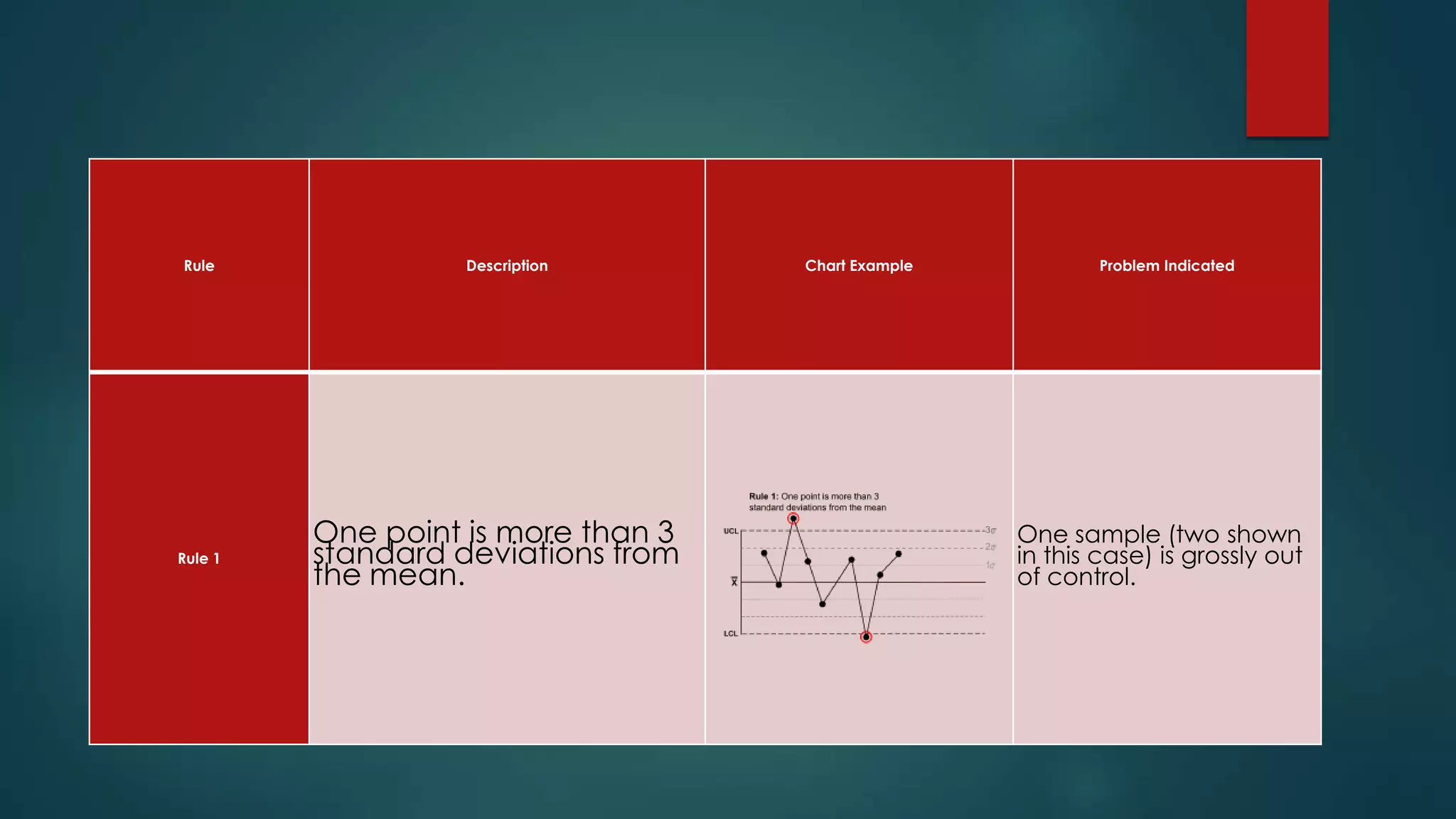
One point is more than 3
standard deviations from
the mean.
One sample (two shown
in this case) is grossly out
of control.
Rule 2
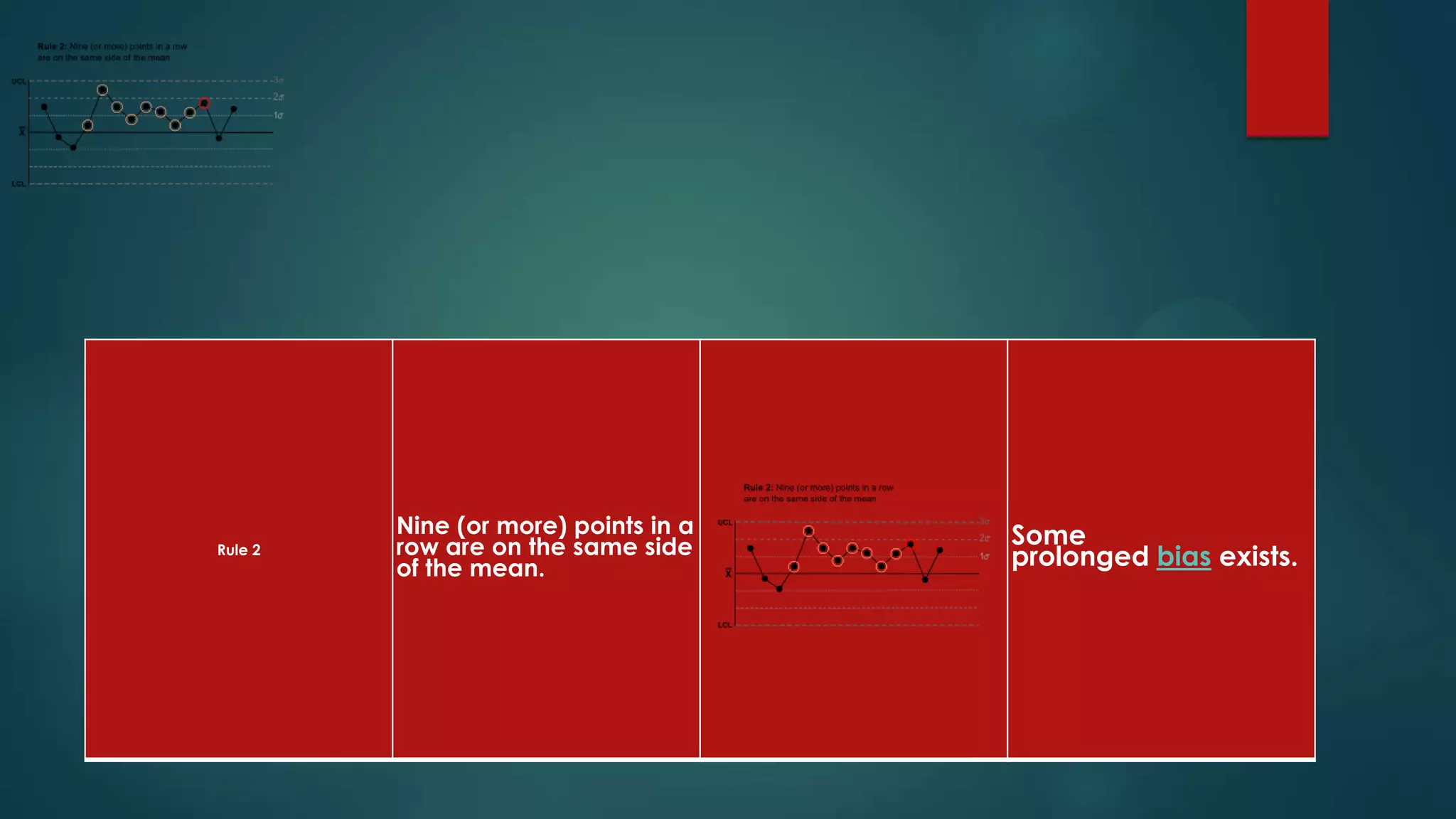
Nine (or more) points in a
row are on the same side
of the mean.
Some
prolonged bias exists.
Rule 3
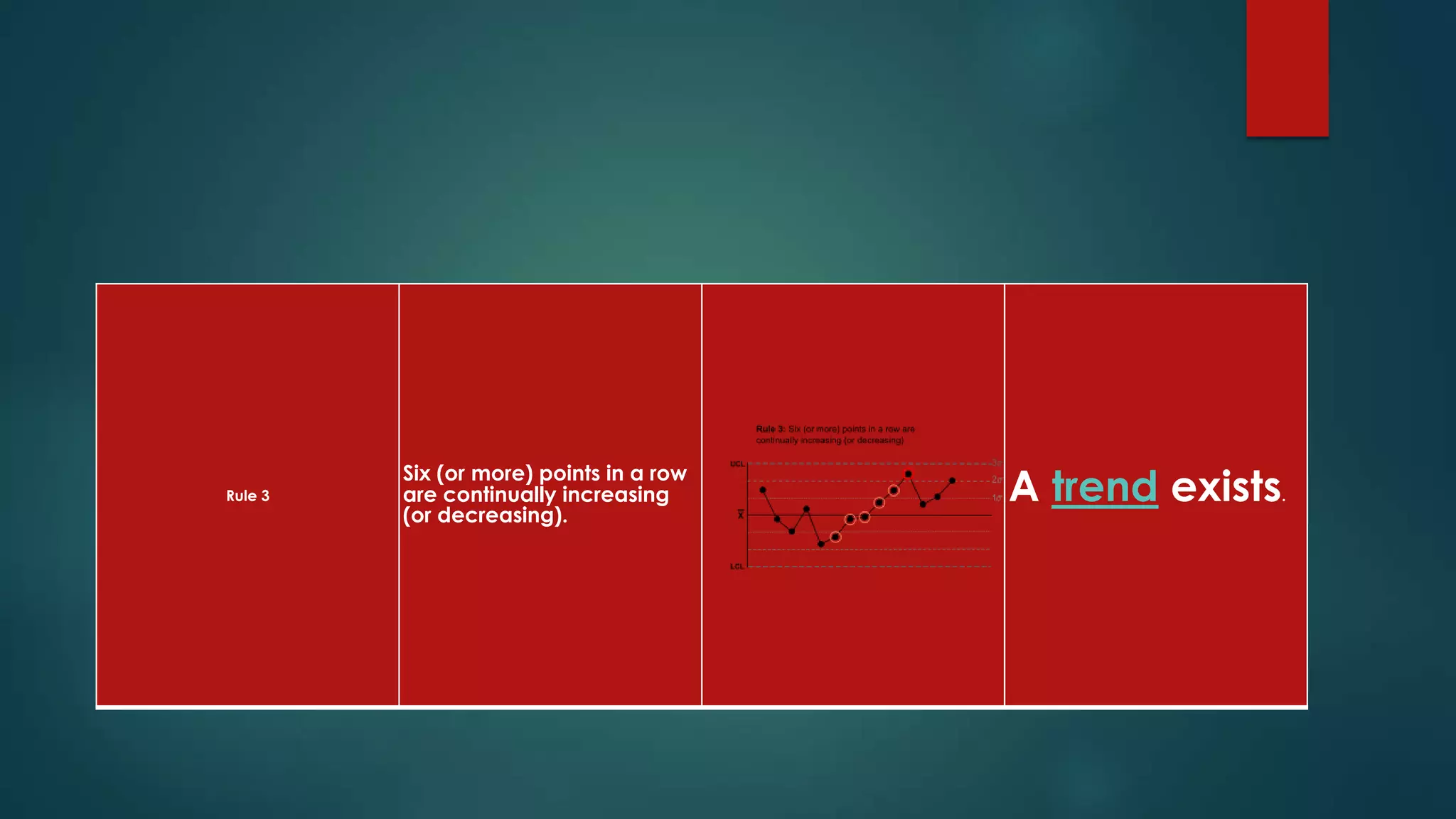
Six (or more) points in a row
are continually increasing
(or decreasing).
A trend exists.
Rule 4
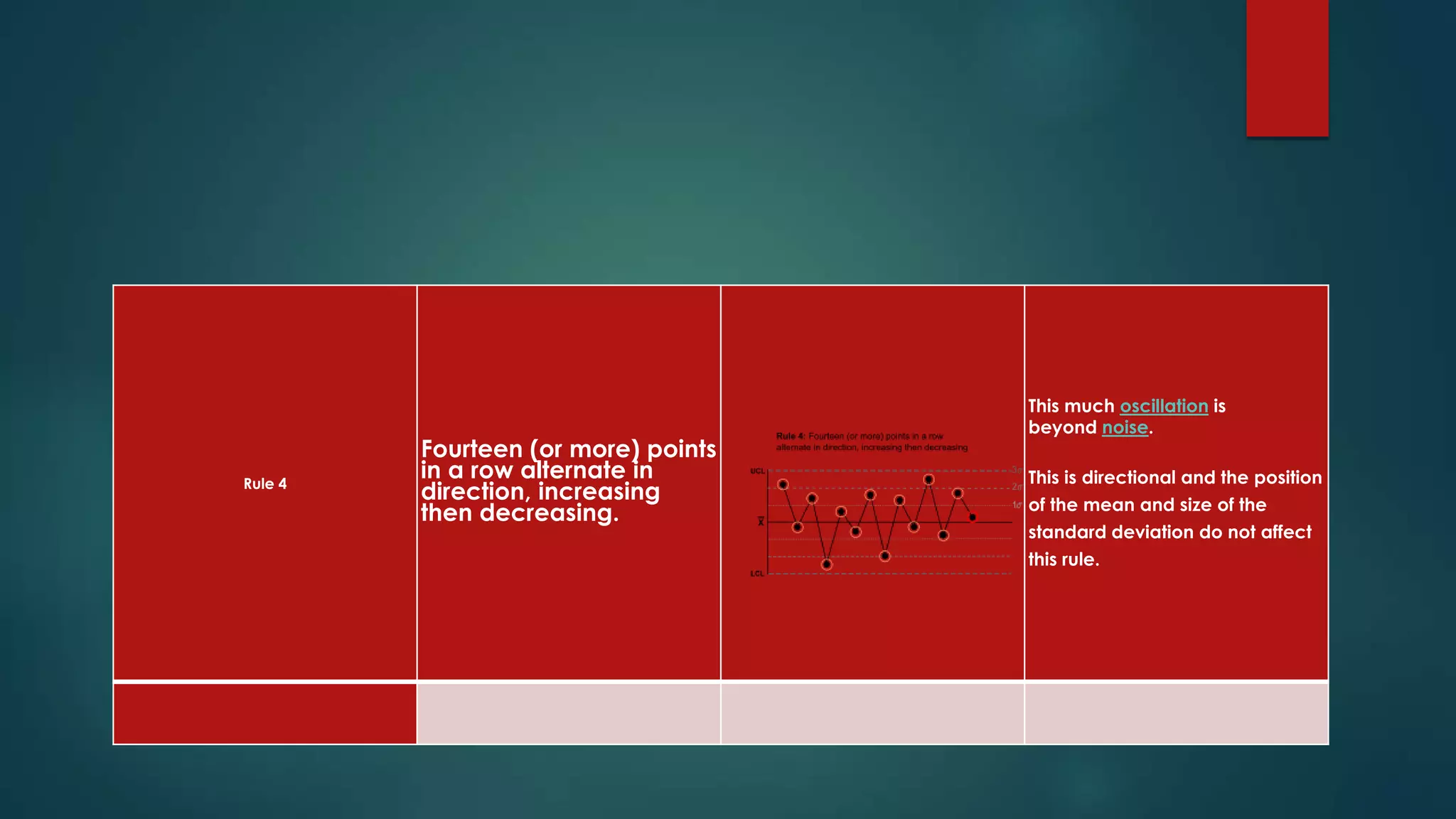
Fourteen (or more) points
in a row alternate in
direction, increasing
then decreasing.
This much oscillation is
beyond noise.
This is directional and the position
of the mean and size of the
standard deviation do not affect
this rule.
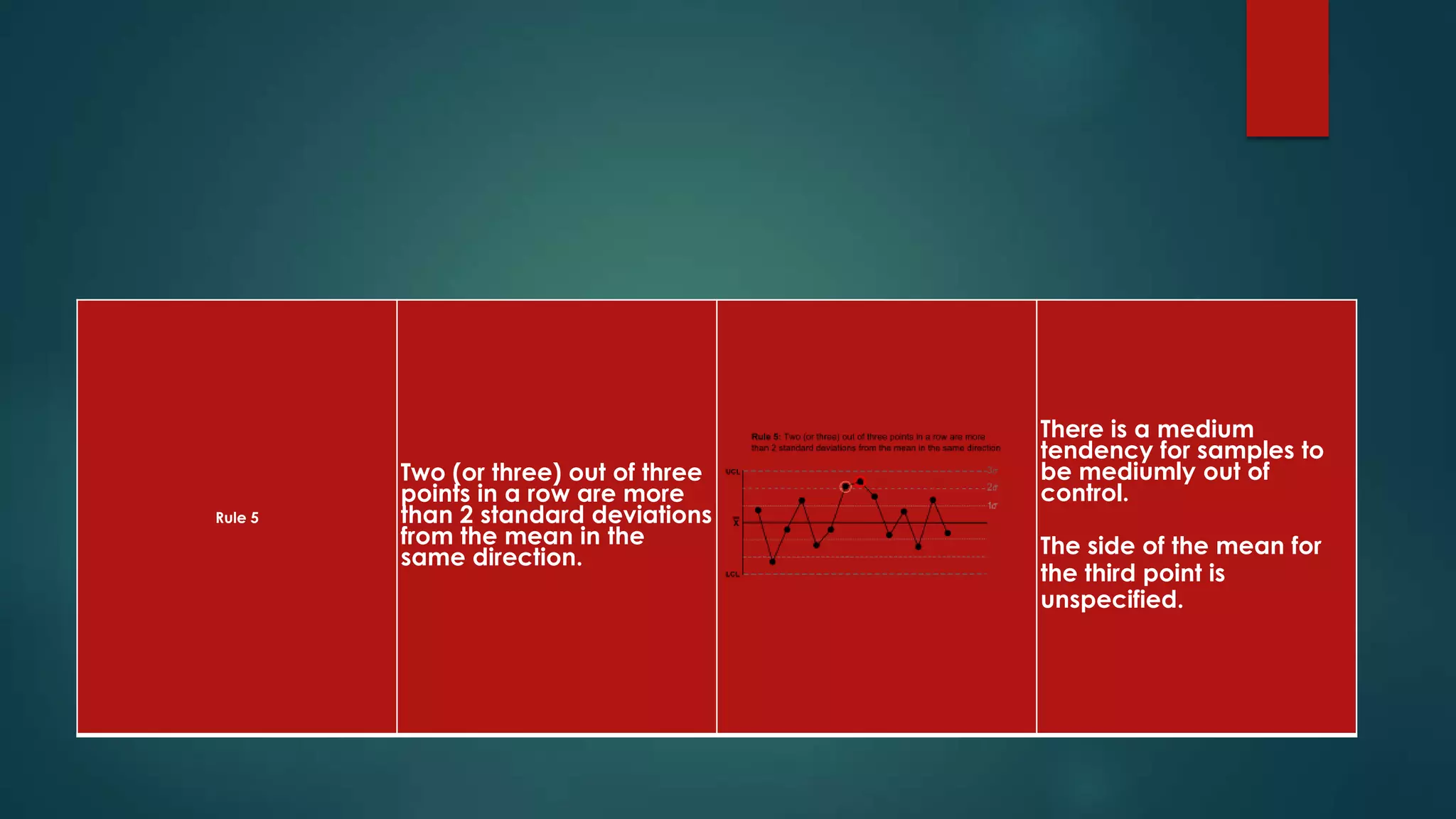
Rule 5
Two (or three) out of three
points in a row are more
than 2 standard deviations
from the mean in the
same direction.
There is a medium
tendency for samples to
be mediumly out of
control.
The side of the mean for
the third point is
unspecified.
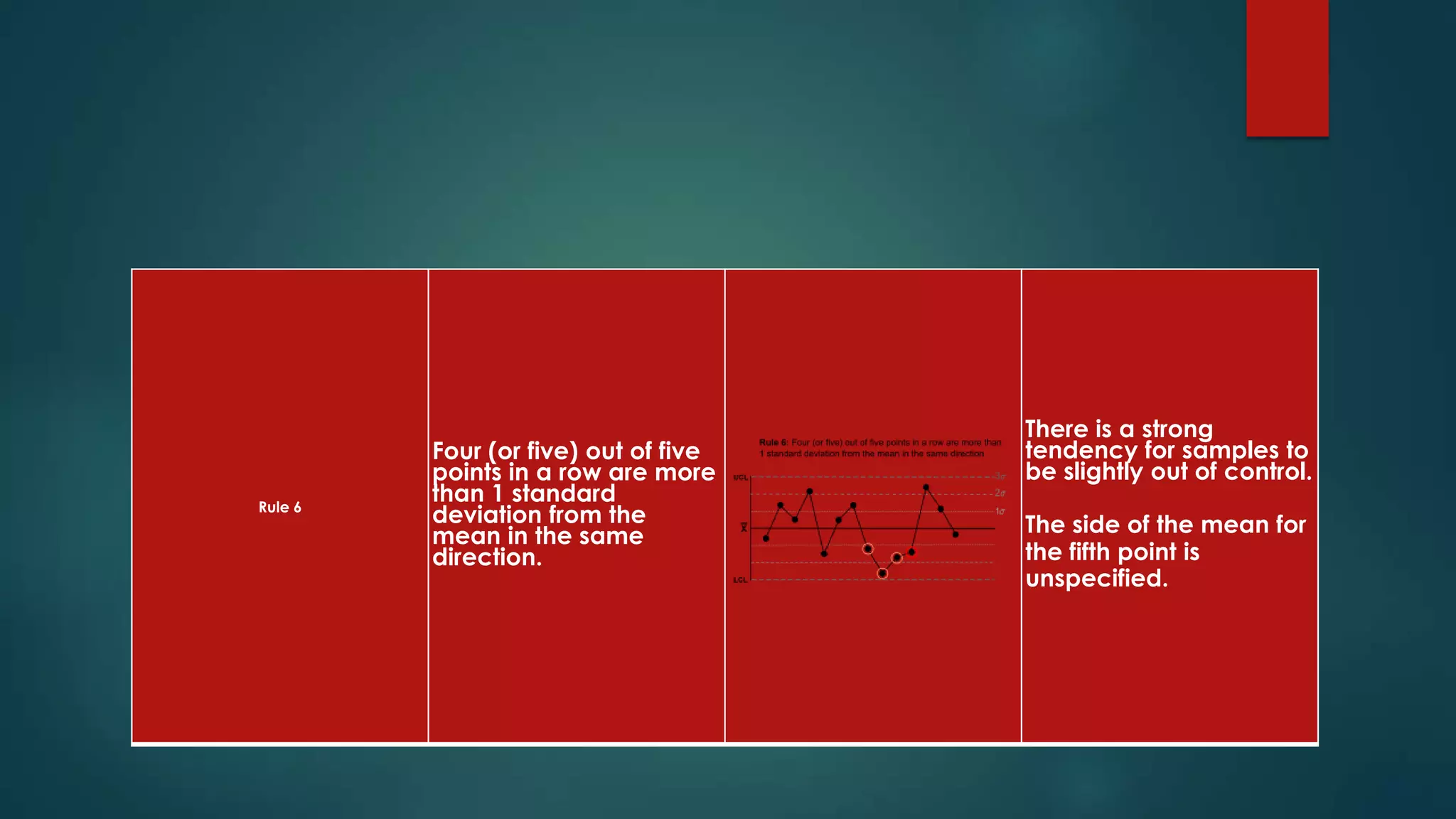
Rule 6
Four (or five) out of five
points in a row are more
than 1 standard
deviation from the
mean in the same
direction.
There is a strong
tendency for samples to
be slightly out of control.
The side of the mean for
the fifth point is
unspecified.
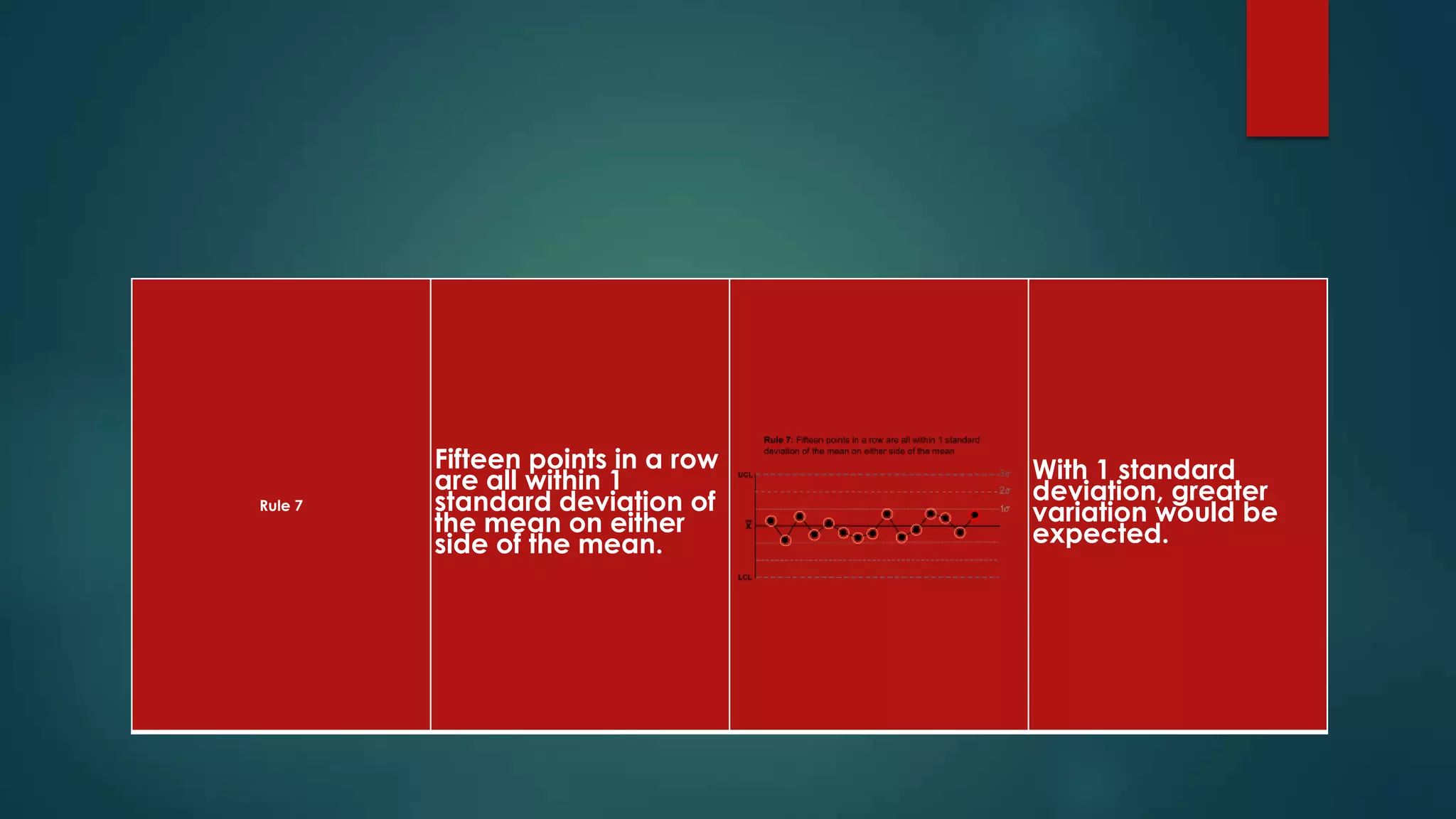
Rule 7
Fifteen points in a row
are all within 1
standard deviation of
the mean on either
side of the mean.
With 1 standard
deviation, greater
variation would be
expected.
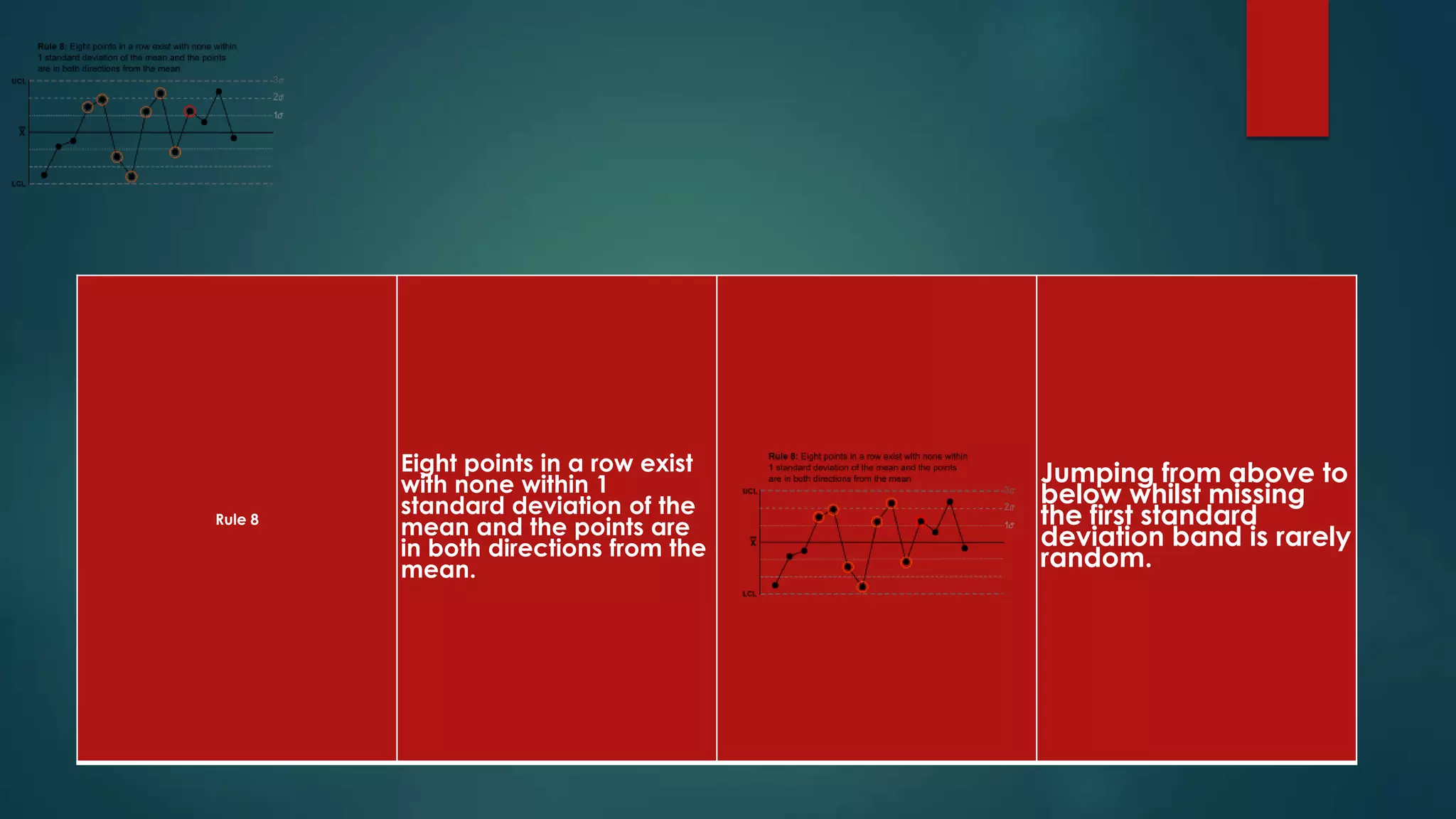
Rule 8
Eight points in a row exist
with none within 1
standard deviation of the
mean and the points are
in both directions from the
mean.
Jumping from above to
below whilst missing
the first standard
deviation band is rarely
random.

Nelson rules

  • 1.
  • 2.
    Rule Description ChartExample Problem Indicated Rule 1 One point is more than 3 standard deviations from the mean. One sample (two shown in this case) is grossly out of control.
  • 3.
    Rule 2 Nine (ormore) points in a row are on the same side of the mean. Some prolonged bias exists.
  • 4.
    Rule 3 Six (ormore) points in a row are continually increasing (or decreasing). A trend exists.
  • 5.
    Rule 4 Fourteen (ormore) points in a row alternate in direction, increasing then decreasing. This much oscillation is beyond noise. This is directional and the position of the mean and size of the standard deviation do not affect this rule.
  • 6.
    Rule 5 Two (orthree) out of three points in a row are more than 2 standard deviations from the mean in the same direction. There is a medium tendency for samples to be mediumly out of control. The side of the mean for the third point is unspecified.
  • 7.
    Rule 6 Four (orfive) out of five points in a row are more than 1 standard deviation from the mean in the same direction. There is a strong tendency for samples to be slightly out of control. The side of the mean for the fifth point is unspecified.
  • 8.
    Rule 7 Fifteen pointsin a row are all within 1 standard deviation of the mean on either side of the mean. With 1 standard deviation, greater variation would be expected.
  • 9.
    Rule 8 Eight pointsin a row exist with none within 1 standard deviation of the mean and the points are in both directions from the mean. Jumping from above to below whilst missing the first standard deviation band is rarely random.