WHAT IS A NEGOTIATION STRATEGY?
 A negotiating strategy is the overall approach you take when you
 exchange proposals and counterproposals with another person when
 negotiating a settlement to a conflict (page 136).
 The ways in which one negotiates is directly influenced by your
 paradigm.
 A paradigm is a worldview; it’s a way of thinking or a set of attitudes
 that guide your behavior (page 136).
NEGOTIATION STRATEGIES
Win-win strategy: This strategy seeks mutual benefit; it uses a cooperative
rather than a competitive approach to finding a solution. People with a win-
win paradigm are empathic listeners; they try to see and understand the
problem from the other person’s perspective.
Win-Lose: This strategy uses a competitive approach to finding a solution;
each negotiator is most concerned with his or her own needs.
Lose-win: A negotiator using this strategy submits to the other person and
ignores his or her own needs.
Lose-Lose: This strategy uses an ‘if I go down, you are going down with
me” approach.
Win: This strategy occurs when negotiators are only concerned about
getting their own needs met and winning.
Win-win or no deal: This strategy takes inot account everyone’s needs. The
negotiator is not happy until everyone wins.
SKILLS FOR NEGOTIATING WIN-WIN SOLUTIONS
Separate the people from the problem when discussing a problem, don’t
   associate it with a name. if you are the leader, take responsibility for the
   problem yourself.


Focus on interests, not positions rather than focus on people’s desired
   solutions, focus on their needs and ultimate goals.


Invent proposals that are mutually beneficial Consider the other’s
   perspective when developing proposals, and generate as many as
   possible, withholding evaluation.


Use objective criteria to evaluate proposals Use mutually agreed-on
   criteria for evaluating proposals.
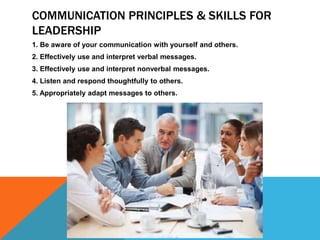
COMMUNICATION PRINCIPLES & SKILLS FOR
LEADERSHIP
1. Be aware of your communication with yourself and others.
2. Effectively use and interpret verbal messages.
3. Effectively use and interpret nonverbal messages.
4. Listen and respond thoughtfully to others.
5. Appropriately adapt messages to others.
QUESTIONS
What is your negotiating style at work?
What are some examples of things you have negotiated for at work before?

Negotiation strategies

  • 2.
    WHAT IS ANEGOTIATION STRATEGY? A negotiating strategy is the overall approach you take when you exchange proposals and counterproposals with another person when negotiating a settlement to a conflict (page 136). The ways in which one negotiates is directly influenced by your paradigm. A paradigm is a worldview; it’s a way of thinking or a set of attitudes that guide your behavior (page 136).
  • 3.
    NEGOTIATION STRATEGIES Win-win strategy:This strategy seeks mutual benefit; it uses a cooperative rather than a competitive approach to finding a solution. People with a win- win paradigm are empathic listeners; they try to see and understand the problem from the other person’s perspective. Win-Lose: This strategy uses a competitive approach to finding a solution; each negotiator is most concerned with his or her own needs. Lose-win: A negotiator using this strategy submits to the other person and ignores his or her own needs. Lose-Lose: This strategy uses an ‘if I go down, you are going down with me” approach. Win: This strategy occurs when negotiators are only concerned about getting their own needs met and winning. Win-win or no deal: This strategy takes inot account everyone’s needs. The negotiator is not happy until everyone wins.
  • 4.
    SKILLS FOR NEGOTIATINGWIN-WIN SOLUTIONS Separate the people from the problem when discussing a problem, don’t associate it with a name. if you are the leader, take responsibility for the problem yourself. Focus on interests, not positions rather than focus on people’s desired solutions, focus on their needs and ultimate goals. Invent proposals that are mutually beneficial Consider the other’s perspective when developing proposals, and generate as many as possible, withholding evaluation. Use objective criteria to evaluate proposals Use mutually agreed-on criteria for evaluating proposals.
  • 5.
    COMMUNICATION PRINCIPLES &SKILLS FOR LEADERSHIP 1. Be aware of your communication with yourself and others. 2. Effectively use and interpret verbal messages. 3. Effectively use and interpret nonverbal messages. 4. Listen and respond thoughtfully to others. 5. Appropriately adapt messages to others.
  • 6.
    QUESTIONS What is yournegotiating style at work? What are some examples of things you have negotiated for at work before?