NEEM TREE
By Md Aashif Raza
INTRODUCTION
• Among the many natural plants and herbs that
people in India use for their medicinal properties.
• The Neem tree (L. Azadirachta Indica) is one of
the most beneficial for natural or Ayurvedic
medicine.
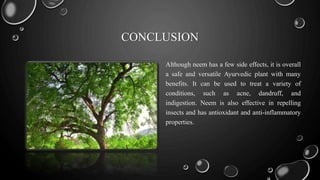
• Neem is a fast growing tree that can reach a height
of 15-20 metres (49-66 ft), rarely to 35-40 metres
(115-130 ft).
USES IN AYURVEDA
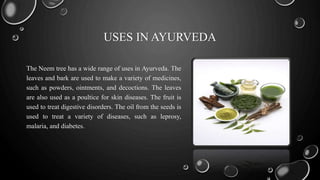
The Neem tree has a wide range of uses in Ayurveda. The
leaves and bark are used to make a variety of medicines,
such as powders, ointments, and decoctions. The leaves
are also used as a poultice for skin diseases. The fruit is
used to treat digestive disorders. The oil from the seeds is
used to treat a variety of diseases, such as leprosy,
malaria, and diabetes.
MEDICINAL USES
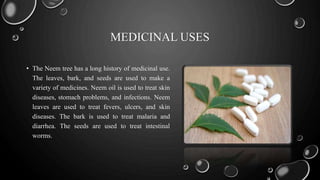
• The Neem tree has a long history of medicinal use.
The leaves, bark, and seeds are used to make a
variety of medicines. Neem oil is used to treat skin
diseases, stomach problems, and infections. Neem
leaves are used to treat fevers, ulcers, and skin
diseases. The bark is used to treat malaria and
diarrhea. The seeds are used to treat intestinal
worms.
CONCLUSION
Although neem has a few side effects, it is overall
a safe and versatile Ayurvedic plant with many
benefits. It can be used to treat a variety of
conditions, such as acne, dandruff, and
indigestion. Neem is also effective in repelling
insects and has antioxidant and anti-inflammatory
properties.

NEEM TREE PPT.pptx

  • 1.
    NEEM TREE By MdAashif Raza
  • 2.
    INTRODUCTION • Among themany natural plants and herbs that people in India use for their medicinal properties. • The Neem tree (L. Azadirachta Indica) is one of the most beneficial for natural or Ayurvedic medicine. • Neem is a fast growing tree that can reach a height of 15-20 metres (49-66 ft), rarely to 35-40 metres (115-130 ft).
  • 3.
    USES IN AYURVEDA TheNeem tree has a wide range of uses in Ayurveda. The leaves and bark are used to make a variety of medicines, such as powders, ointments, and decoctions. The leaves are also used as a poultice for skin diseases. The fruit is used to treat digestive disorders. The oil from the seeds is used to treat a variety of diseases, such as leprosy, malaria, and diabetes.
  • 4.
    MEDICINAL USES • TheNeem tree has a long history of medicinal use. The leaves, bark, and seeds are used to make a variety of medicines. Neem oil is used to treat skin diseases, stomach problems, and infections. Neem leaves are used to treat fevers, ulcers, and skin diseases. The bark is used to treat malaria and diarrhea. The seeds are used to treat intestinal worms.
  • 5.
    CONCLUSION Although neem hasa few side effects, it is overall a safe and versatile Ayurvedic plant with many benefits. It can be used to treat a variety of conditions, such as acne, dandruff, and indigestion. Neem is also effective in repelling insects and has antioxidant and anti-inflammatory properties.