NECROTIZING
ENTEROCOLITIS
 Dr. Devendra Nargawe
• Necrotizing enterocolitis is the most
common serious surgical emergency in
NICU.
• NEC occurs in 2- 5 % of all NICU admission
and 5-10% of VLBW infants.
ETIOLOGY
• It is probably multifactorial . There are several
associated factors including:
• Prematurity
• Rapid advances in feeding of ELBW infants.
• Asphyxia
• PDA
• Umbilical artery cath. Tip at or above the mesenteric
artery.
• Indomethacin / ibuprofen
• Aminophylline
• Polycythemia
• Hypothermia
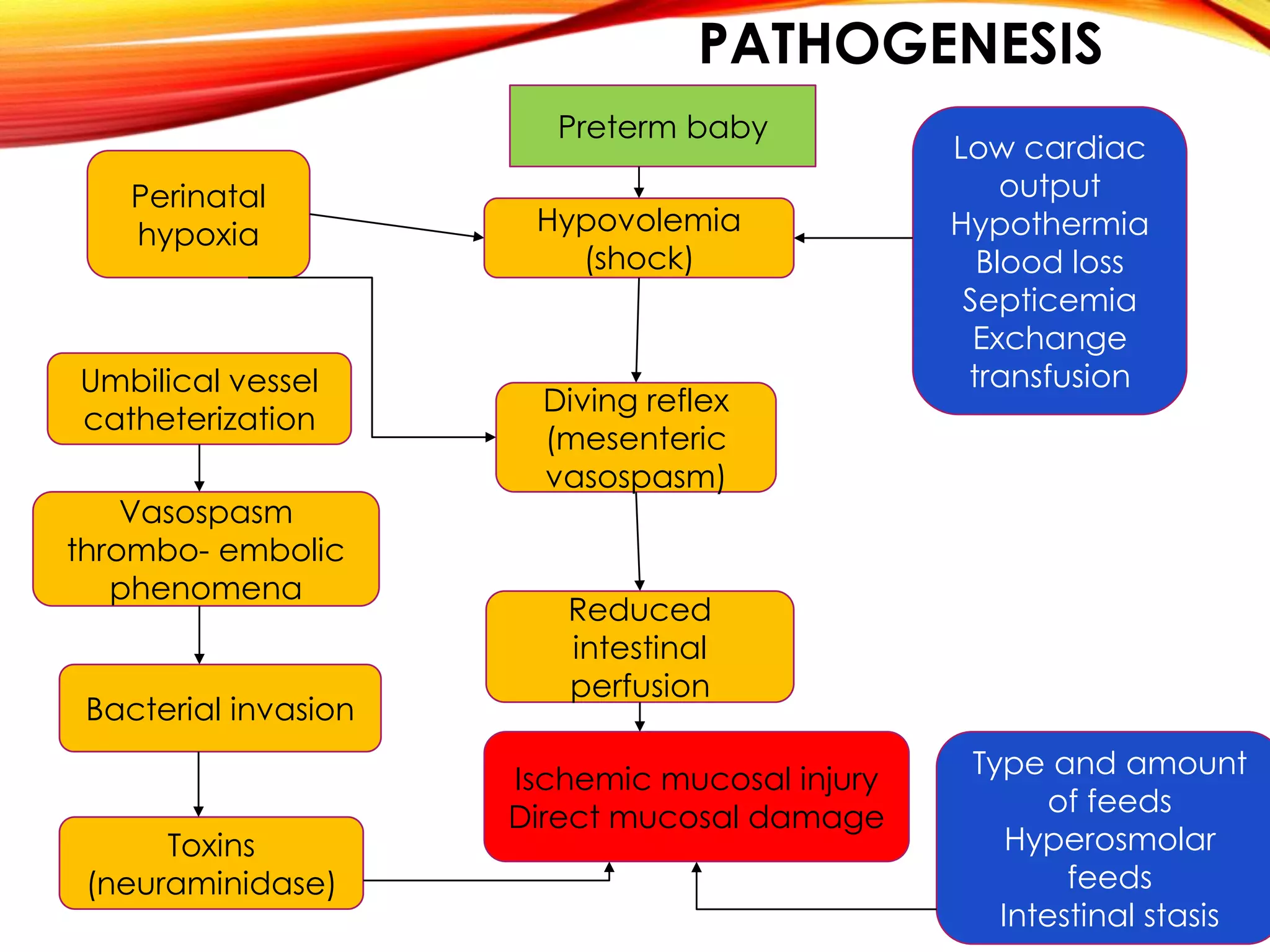
PATHOGENESIS
Perinatal
hypoxia
Umbilical vessel
catheterization
Vasospasm
thrombo- embolic
phenomena
Bacterial invasion
Toxins
(neuraminidase)
Hypovolemia
(shock)
Preterm baby
Diving reflex
(mesenteric
vasospasm)
Reduced
intestinal
perfusion
Ischemic mucosal injury
Direct mucosal damage
Low cardiac
output
Hypothermia
Blood loss
Septicemia
Exchange
transfusion
Type and amount
of feeds
Hyperosmolar
feeds
Intestinal stasis
CLINICAL FINDINGS
• Feeding residuals ( coffee ground aspirates)
• Abdominal distension
• Constipation
• Blood in the stool
• Erythema of abdominal wall ( when peritonitis is present)
• Lethargy or other non-specific signs of infection
* Data from PGIMER shows that the peak age for NEC in
preterm infants is from end of the 1st week of life to the 2nd
week
STAGING
• A staging devised by Bell and letter modified by Walsh
AND Kleighman is useful for therapeutic decisions .
Stage Systemic
sign
Intestinal signs Radiologica
l signs
Rx
Ia suspected
NEC
Temp.
instability,
apnea,
bradycardia
, lethargy
Elevated pre
lavage residual,
mild abdominal
distension ,
emesis , guaiac
positive stool
Normal or
intestinal
dilatation,
mild ileus
NBM,
antibiotics
for 3 days
Ib suspected
NEC
--do-- Bright red blood
from rectum
Do Do
Stage Systemic sign Intestinal
signs
Radiological
signs
Rx
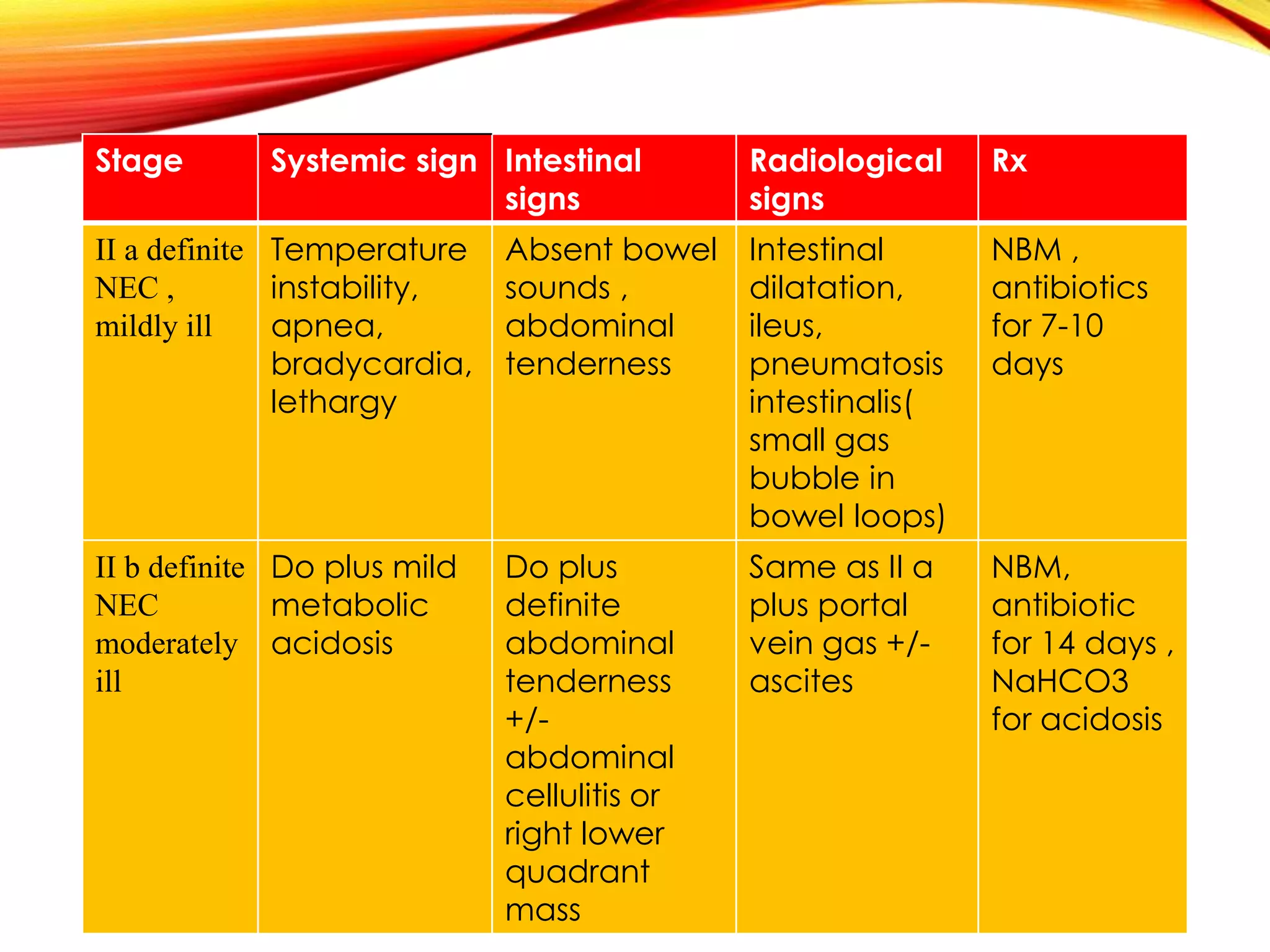
II a definite
NEC ,
mildly ill
Temperature
instability,
apnea,
bradycardia,
lethargy
Absent bowel
sounds ,
abdominal
tenderness
Intestinal
dilatation,
ileus,
pneumatosis
intestinalis(
small gas
bubble in
bowel loops)
NBM ,
antibiotics
for 7-10
days
II b definite
NEC
moderately
ill
Do plus mild
metabolic
acidosis
Do plus
definite
abdominal
tenderness
+/-
abdominal
cellulitis or
right lower
quadrant
mass
Same as II a
plus portal
vein gas +/-
ascites
NBM,
antibiotic
for 14 days ,
NaHCO3
for acidosis
Plain abdominal x-ray on the left showed pneumatosis intestinalis (large arrow), a specific
characteristic finding in necrotizing enterocolitis (NEC). X ray on the right is a follow-up
film which showed free air indicating the perforation of the bowel (small arrow)
Stage Systemic
sign
Intestinal
signs
Radiological
signs
Rx
III a advanced
NEC severely
ill , bowel
intact
Same as II b
plus
hypotension,
bradycardia,
apnea,
combined
respiratory and
metabolic
acidosis, DIC,
neutropenia
Same as
above plus
signs of
generalized
peritonitis,
marked
tenderness
and distension
of abdomen
Same as IIB plus
definite ascites
Same plus
more fluid
abd.
Paracentesis
Inotropic
agents,
ventilation
III b advanced
NEC severely
ill , bowel
perforated
Same as III a Same as III a Same as II b plus
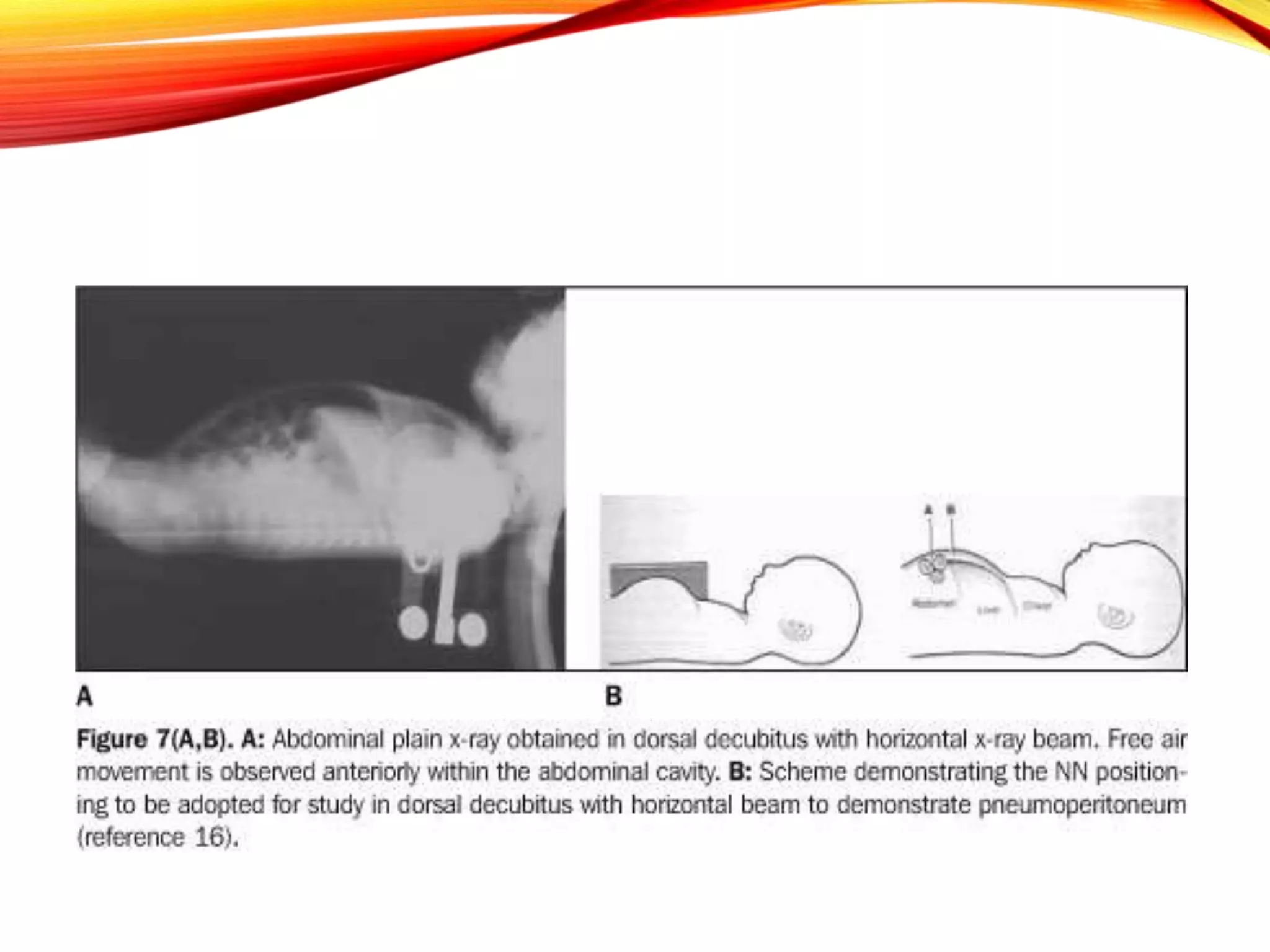
pneumoperitonium
Same +
abdominal
surgery
LABORATORY FINDINGS
• Thrombocytopenia
• Hyponatremia
• Metabolic acidosis
• Evidence of DIC
• overt or occult blood in the stool
• Urine should be examined for hyphae and budding
yeast to rule out systemic candidiasis.
• Blood and stool culture are mandatory
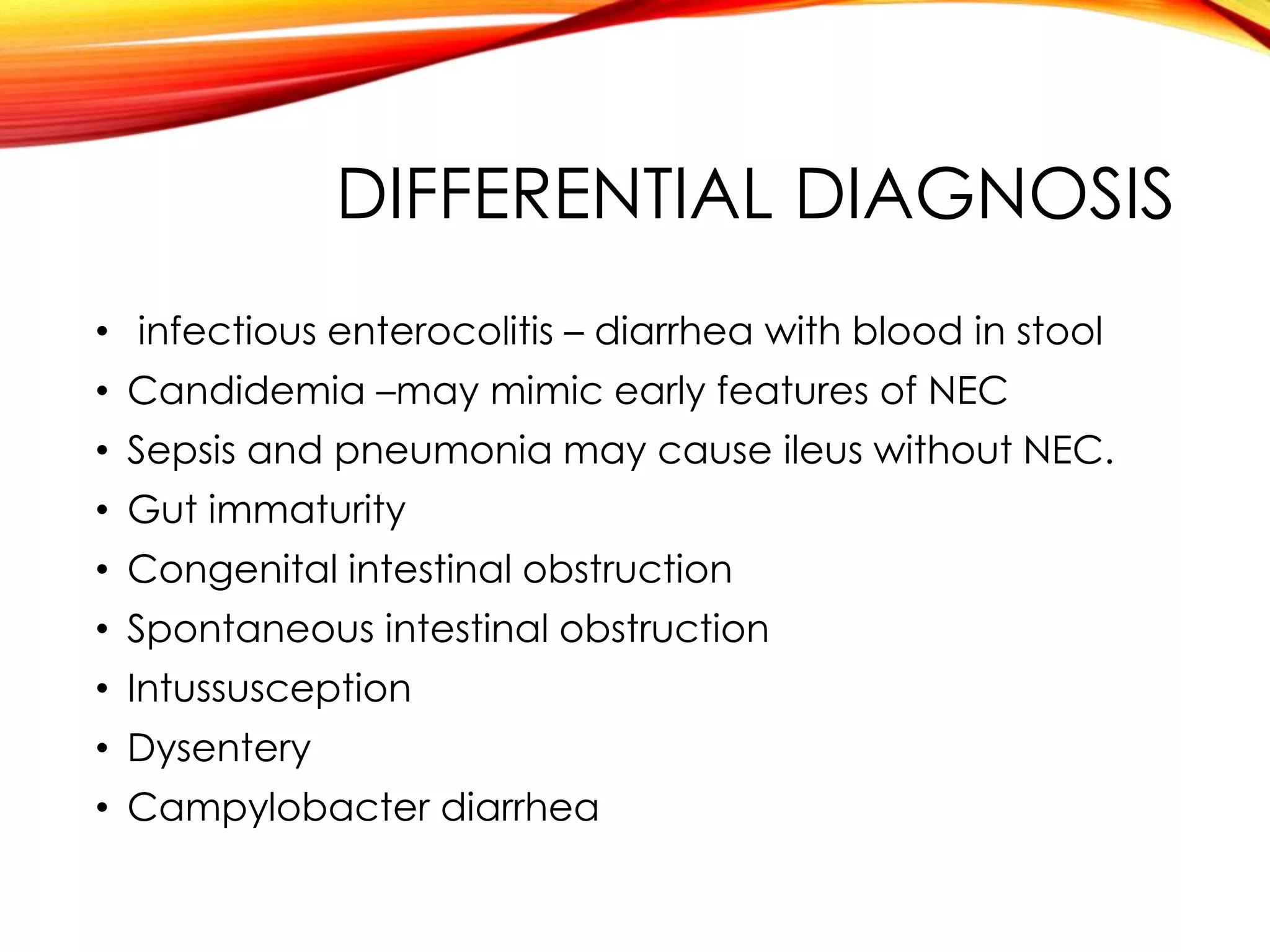
DIFFERENTIAL DIAGNOSIS
• infectious enterocolitis – diarrhea with blood in stool
• Candidemia –may mimic early features of NEC
• Sepsis and pneumonia may cause ileus without NEC.
• Gut immaturity
• Congenital intestinal obstruction
• Spontaneous intestinal obstruction
• Intussusception
• Dysentery
• Campylobacter diarrhea
APPROACH TO CASE OF SUSPECTED NEC
Suspected NEC
NBM, continuous gastric aspiration, antibiotics, complete work up
for sepsis, platelet count, stool for occult blood, ABG, electrolytes,
AXR, remove umbilical cath.
Stage 3 disease
Yes
Pediatric Sx opinion and
abdominal paracentesis
Perforation
Flank discharge
No
improvement
in next 48h
Laparotomy
No
Continue supportive
care in all stages
MANAGEMENT
• General considerations
• Avoid or minimize factors which may contribute to bowel
ischemia.
• Maintain a high level of suspicion , when advancing
feedings in very low birth weights baby.
MEDICAL MANAGEMENT
• Stop enteral feeds and oral medications
• Duration of NBM
• Stage 1 : 3 days
• Stage 2 : 7-10 days
• Stage 2b & 3 : 14 days
Keep the GIT decompressed using 8 -10 F NGT. Replace the
aspirate with N/2 saline with KCL every 8 hours.
• IV fluids
• Give normal maintenance for stage I and II
• In stage III , more than 200ml/kg/day may be required
due to 3rd space losses.
OTHER MEASURES
• Maintain adequate tissue perfusion using
symapathomimetic agents. (dopamine 5-8
microgram/kg/min)
• Give plasma or blood transfusion as required
• Inj. Vit. K if bleeding or if not given in last 1 week
• Correct metabolic acidosis
• Start antibiotics as per culture report
• Duration of therapy
• Stage I : 3 days (depending on culture)
• Stage II : 7 to 10 days
• Stage III : 14 days
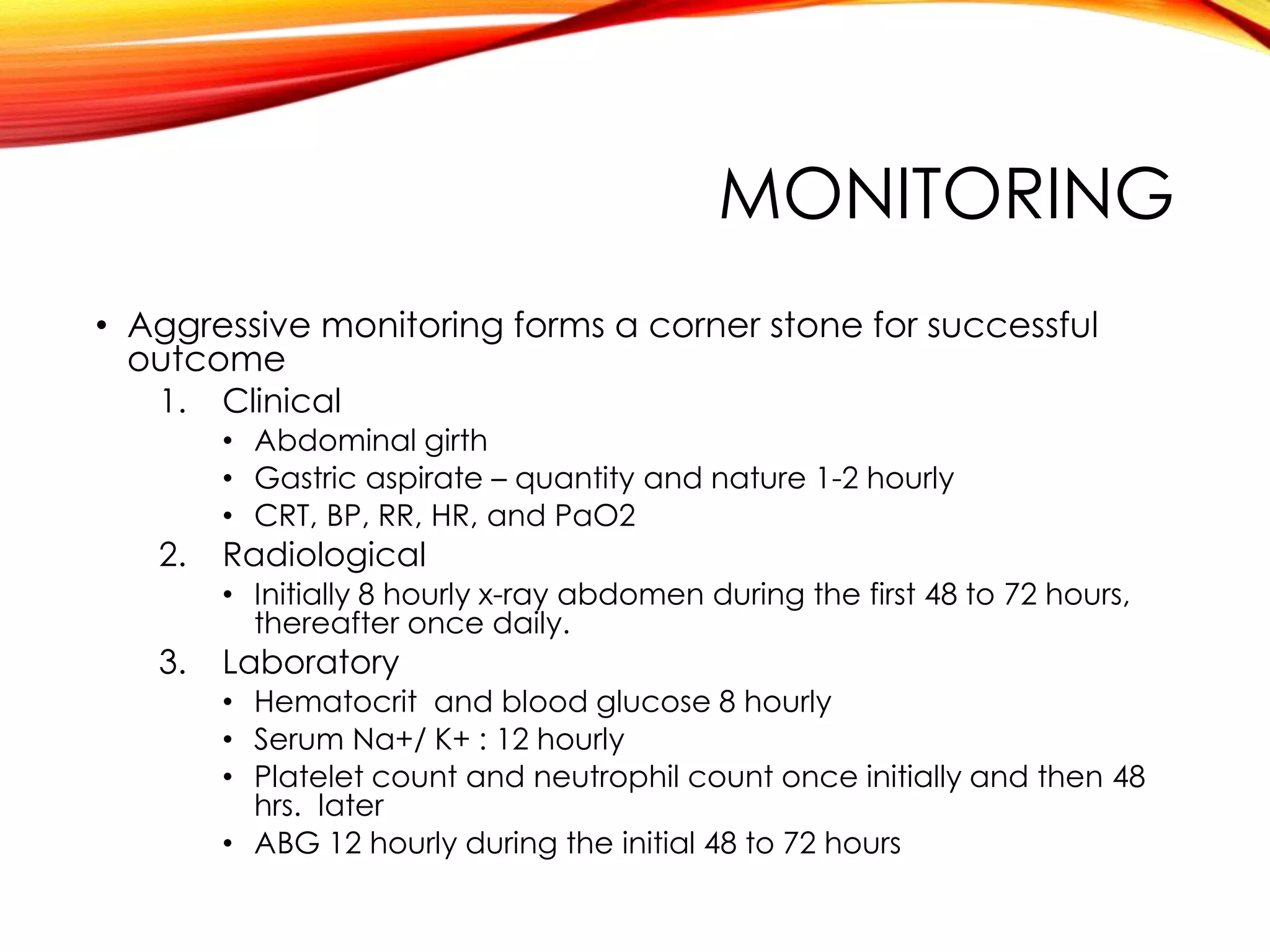
MONITORING
• Aggressive monitoring forms a corner stone for successful
outcome
1. Clinical
• Abdominal girth
• Gastric aspirate – quantity and nature 1-2 hourly
• CRT, BP, RR, HR, and PaO2
2. Radiological
• Initially 8 hourly x-ray abdomen during the first 48 to 72 hours,
thereafter once daily.
3. Laboratory
• Hematocrit and blood glucose 8 hourly
• Serum Na+/ K+ : 12 hourly
• Platelet count and neutrophil count once initially and then 48
hrs. later
• ABG 12 hourly during the initial 48 to 72 hours
SURGICAL MANAGEMENT
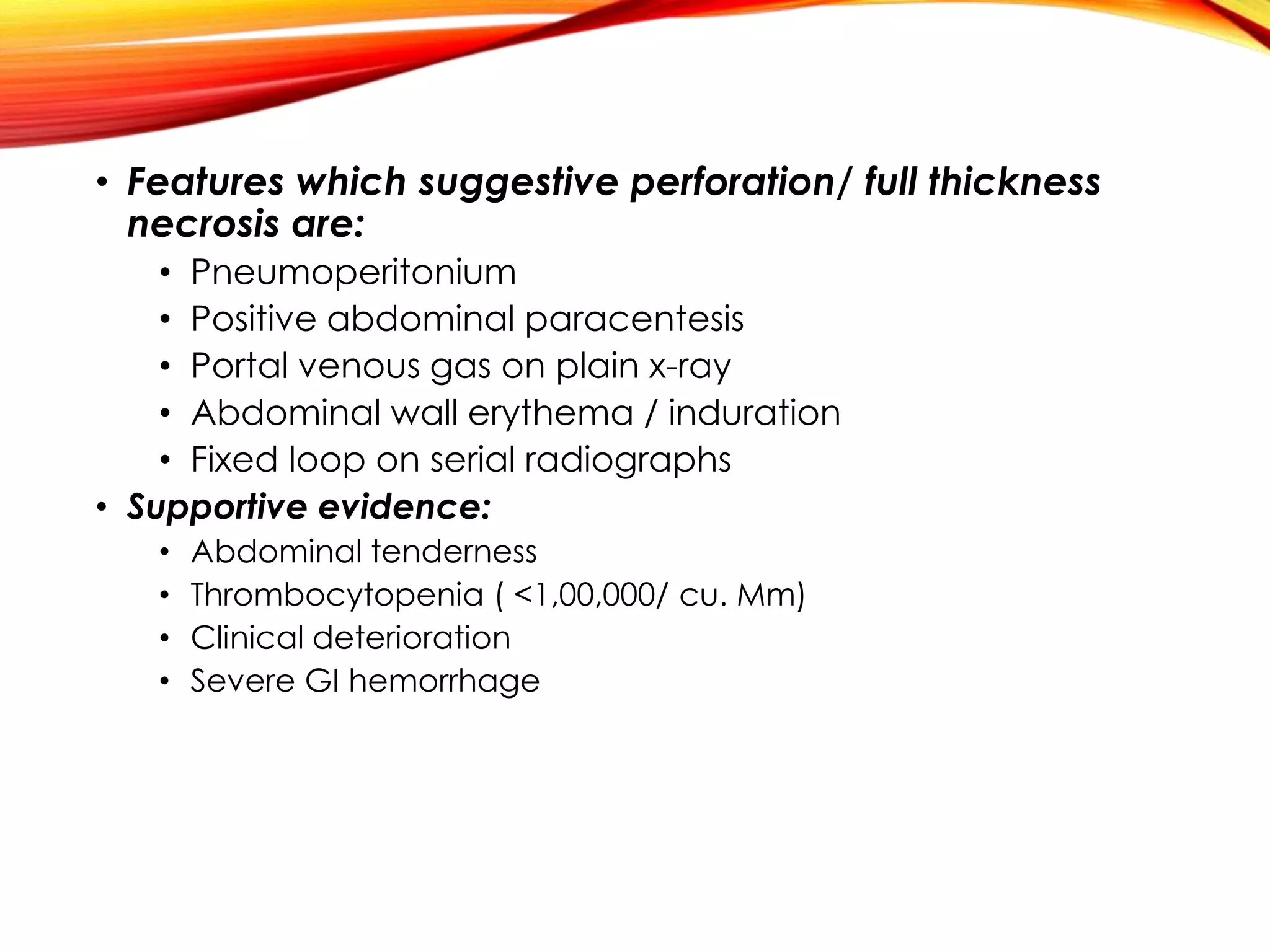
• Indications
• GI perforation
• Full thickness necrosis
• Peritonitis
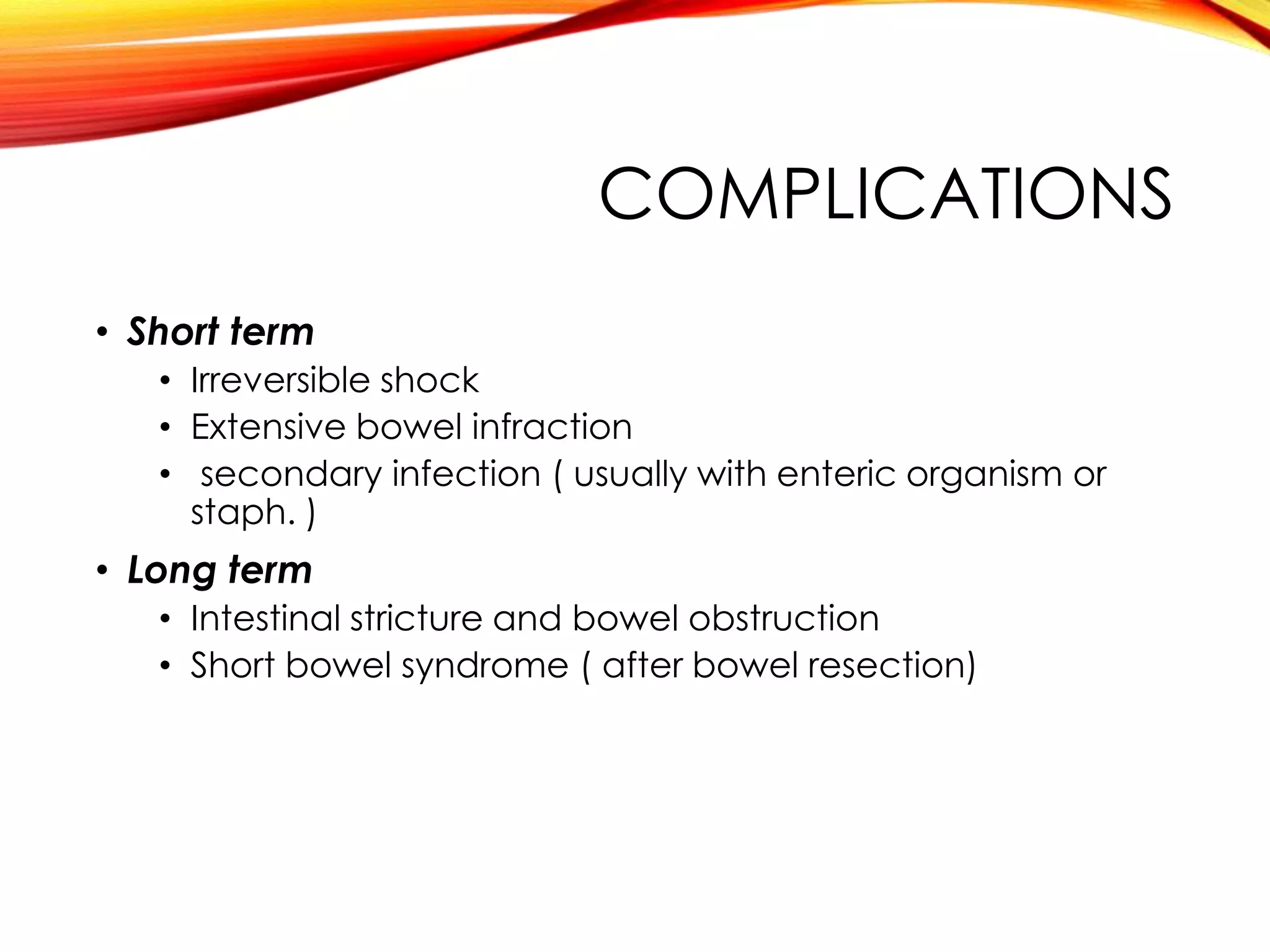
• Features which suggestive perforation/ full thickness
necrosis are:
• Pneumoperitonium
• Positive abdominal paracentesis
• Portal venous gas on plain x-ray
• Abdominal wall erythema / induration
• Fixed loop on serial radiographs
• Supportive evidence:
• Abdominal tenderness
• Thrombocytopenia ( <1,00,000/ cu. Mm)
• Clinical deterioration
• Severe GI hemorrhage
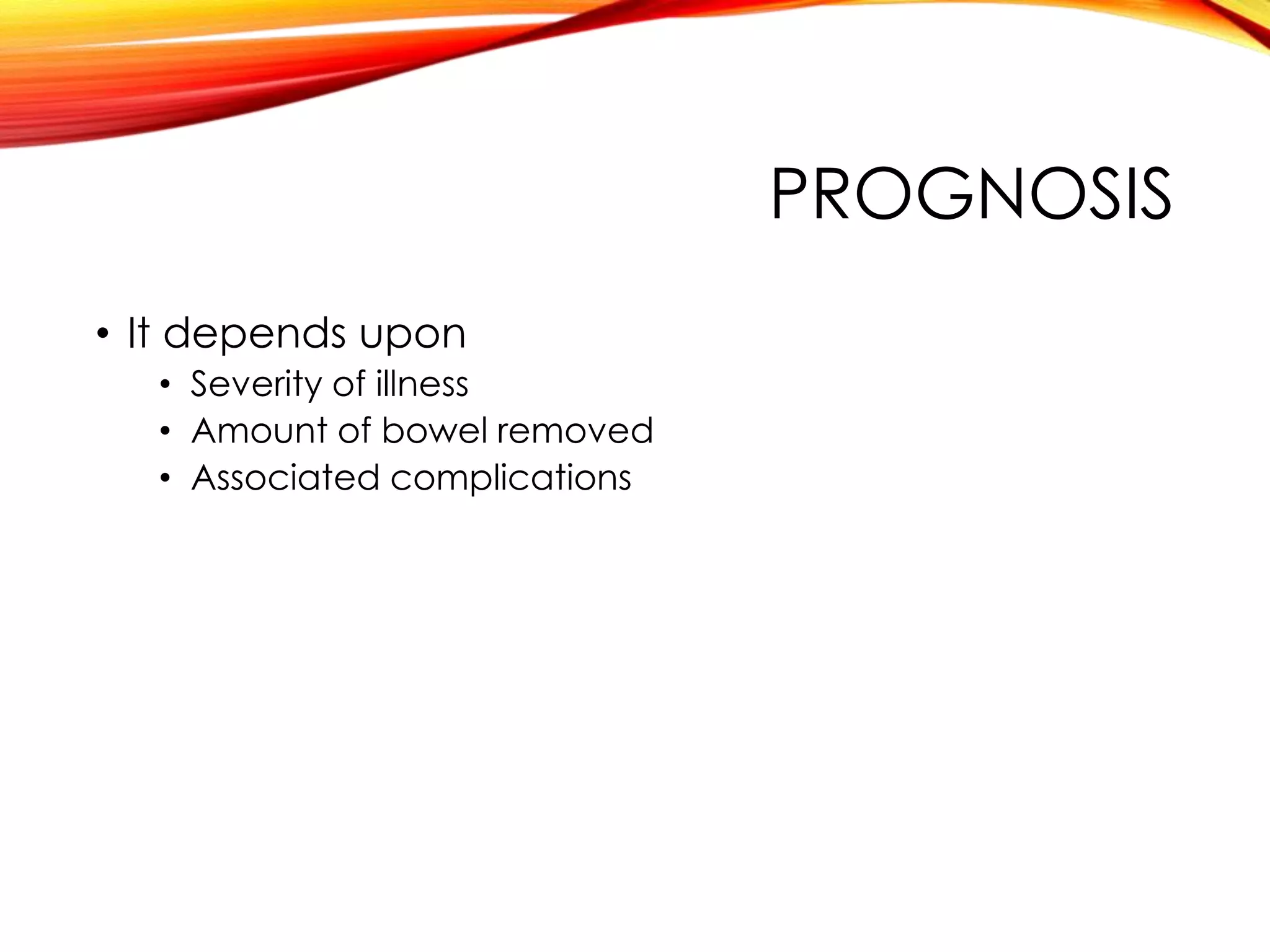
COMPLICATIONS
• Short term
• Irreversible shock
• Extensive bowel infraction
• secondary infection ( usually with enteric organism or
staph. )
• Long term
• Intestinal stricture and bowel obstruction
• Short bowel syndrome ( after bowel resection)
PROGNOSIS
• It depends upon
• Severity of illness
• Amount of bowel removed
• Associated complications
PREVENTION
• Delay enteral feeding in stressed preterm infants who
have suffered hypoxic ischemic episodes.
• Avoid rapid increases in the volume of feeds
• Treat polycythemia aggressively.
• Do not feed preterm with PDA
• Stop feeds with bilious aspirate or continuous large
gastric aspirates
• Do not feed during dopamine infusion
• Prophylactic probiotics reduce severe NEC by 66%. 1
sachet 12 hourly for 21 days for all neonates weighing
<1250 gm at birth .
RE FE RE NCE
• Care Of Newborn – Meherban Singh
• PGI NICU HANDBOOK OF PROTOCOLS; 4th edition 2010
• Handbook of Neonatology ; Dr Hemant Jain
• Manual of newborn care ; 7th edi. John p. cloherty

Necrotizing enterocolitis

  • 1.
  • 2.
    • Necrotizing enterocolitisis the most common serious surgical emergency in NICU. • NEC occurs in 2- 5 % of all NICU admission and 5-10% of VLBW infants.
  • 3.
    ETIOLOGY • It isprobably multifactorial . There are several associated factors including: • Prematurity • Rapid advances in feeding of ELBW infants. • Asphyxia • PDA • Umbilical artery cath. Tip at or above the mesenteric artery. • Indomethacin / ibuprofen • Aminophylline • Polycythemia • Hypothermia
  • 4.
    PATHOGENESIS Perinatal hypoxia Umbilical vessel catheterization Vasospasm thrombo- embolic phenomena Bacterialinvasion Toxins (neuraminidase) Hypovolemia (shock) Preterm baby Diving reflex (mesenteric vasospasm) Reduced intestinal perfusion Ischemic mucosal injury Direct mucosal damage Low cardiac output Hypothermia Blood loss Septicemia Exchange transfusion Type and amount of feeds Hyperosmolar feeds Intestinal stasis
  • 5.
    CLINICAL FINDINGS • Feedingresiduals ( coffee ground aspirates) • Abdominal distension • Constipation • Blood in the stool • Erythema of abdominal wall ( when peritonitis is present) • Lethargy or other non-specific signs of infection * Data from PGIMER shows that the peak age for NEC in preterm infants is from end of the 1st week of life to the 2nd week
  • 6.
    STAGING • A stagingdevised by Bell and letter modified by Walsh AND Kleighman is useful for therapeutic decisions . Stage Systemic sign Intestinal signs Radiologica l signs Rx Ia suspected NEC Temp. instability, apnea, bradycardia , lethargy Elevated pre lavage residual, mild abdominal distension , emesis , guaiac positive stool Normal or intestinal dilatation, mild ileus NBM, antibiotics for 3 days Ib suspected NEC --do-- Bright red blood from rectum Do Do
  • 7.
    Stage Systemic signIntestinal signs Radiological signs Rx II a definite NEC , mildly ill Temperature instability, apnea, bradycardia, lethargy Absent bowel sounds , abdominal tenderness Intestinal dilatation, ileus, pneumatosis intestinalis( small gas bubble in bowel loops) NBM , antibiotics for 7-10 days II b definite NEC moderately ill Do plus mild metabolic acidosis Do plus definite abdominal tenderness +/- abdominal cellulitis or right lower quadrant mass Same as II a plus portal vein gas +/- ascites NBM, antibiotic for 14 days , NaHCO3 for acidosis
  • 8.
    Plain abdominal x-rayon the left showed pneumatosis intestinalis (large arrow), a specific characteristic finding in necrotizing enterocolitis (NEC). X ray on the right is a follow-up film which showed free air indicating the perforation of the bowel (small arrow)
  • 9.
    Stage Systemic sign Intestinal signs Radiological signs Rx III aadvanced NEC severely ill , bowel intact Same as II b plus hypotension, bradycardia, apnea, combined respiratory and metabolic acidosis, DIC, neutropenia Same as above plus signs of generalized peritonitis, marked tenderness and distension of abdomen Same as IIB plus definite ascites Same plus more fluid abd. Paracentesis Inotropic agents, ventilation III b advanced NEC severely ill , bowel perforated Same as III a Same as III a Same as II b plus pneumoperitonium Same + abdominal surgery
  • 12.
    LABORATORY FINDINGS • Thrombocytopenia •Hyponatremia • Metabolic acidosis • Evidence of DIC • overt or occult blood in the stool • Urine should be examined for hyphae and budding yeast to rule out systemic candidiasis. • Blood and stool culture are mandatory
  • 13.
    DIFFERENTIAL DIAGNOSIS • infectiousenterocolitis – diarrhea with blood in stool • Candidemia –may mimic early features of NEC • Sepsis and pneumonia may cause ileus without NEC. • Gut immaturity • Congenital intestinal obstruction • Spontaneous intestinal obstruction • Intussusception • Dysentery • Campylobacter diarrhea
  • 14.
    APPROACH TO CASEOF SUSPECTED NEC Suspected NEC NBM, continuous gastric aspiration, antibiotics, complete work up for sepsis, platelet count, stool for occult blood, ABG, electrolytes, AXR, remove umbilical cath. Stage 3 disease Yes Pediatric Sx opinion and abdominal paracentesis Perforation Flank discharge No improvement in next 48h Laparotomy No Continue supportive care in all stages
  • 15.
    MANAGEMENT • General considerations •Avoid or minimize factors which may contribute to bowel ischemia. • Maintain a high level of suspicion , when advancing feedings in very low birth weights baby.
  • 16.
    MEDICAL MANAGEMENT • Stopenteral feeds and oral medications • Duration of NBM • Stage 1 : 3 days • Stage 2 : 7-10 days • Stage 2b & 3 : 14 days Keep the GIT decompressed using 8 -10 F NGT. Replace the aspirate with N/2 saline with KCL every 8 hours. • IV fluids • Give normal maintenance for stage I and II • In stage III , more than 200ml/kg/day may be required due to 3rd space losses.
  • 17.
    OTHER MEASURES • Maintainadequate tissue perfusion using symapathomimetic agents. (dopamine 5-8 microgram/kg/min) • Give plasma or blood transfusion as required • Inj. Vit. K if bleeding or if not given in last 1 week • Correct metabolic acidosis • Start antibiotics as per culture report • Duration of therapy • Stage I : 3 days (depending on culture) • Stage II : 7 to 10 days • Stage III : 14 days
  • 18.
    MONITORING • Aggressive monitoringforms a corner stone for successful outcome 1. Clinical • Abdominal girth • Gastric aspirate – quantity and nature 1-2 hourly • CRT, BP, RR, HR, and PaO2 2. Radiological • Initially 8 hourly x-ray abdomen during the first 48 to 72 hours, thereafter once daily. 3. Laboratory • Hematocrit and blood glucose 8 hourly • Serum Na+/ K+ : 12 hourly • Platelet count and neutrophil count once initially and then 48 hrs. later • ABG 12 hourly during the initial 48 to 72 hours
  • 19.
    SURGICAL MANAGEMENT • Indications •GI perforation • Full thickness necrosis • Peritonitis
  • 20.
    • Features whichsuggestive perforation/ full thickness necrosis are: • Pneumoperitonium • Positive abdominal paracentesis • Portal venous gas on plain x-ray • Abdominal wall erythema / induration • Fixed loop on serial radiographs • Supportive evidence: • Abdominal tenderness • Thrombocytopenia ( <1,00,000/ cu. Mm) • Clinical deterioration • Severe GI hemorrhage
  • 21.
    COMPLICATIONS • Short term •Irreversible shock • Extensive bowel infraction • secondary infection ( usually with enteric organism or staph. ) • Long term • Intestinal stricture and bowel obstruction • Short bowel syndrome ( after bowel resection)
  • 22.
    PROGNOSIS • It dependsupon • Severity of illness • Amount of bowel removed • Associated complications
  • 23.
    PREVENTION • Delay enteralfeeding in stressed preterm infants who have suffered hypoxic ischemic episodes. • Avoid rapid increases in the volume of feeds • Treat polycythemia aggressively. • Do not feed preterm with PDA • Stop feeds with bilious aspirate or continuous large gastric aspirates • Do not feed during dopamine infusion • Prophylactic probiotics reduce severe NEC by 66%. 1 sachet 12 hourly for 21 days for all neonates weighing <1250 gm at birth .
  • 24.
    RE FE RENCE • Care Of Newborn – Meherban Singh • PGI NICU HANDBOOK OF PROTOCOLS; 4th edition 2010 • Handbook of Neonatology ; Dr Hemant Jain • Manual of newborn care ; 7th edi. John p. cloherty