NECROTIZING
ENTEROCOLITIS
DR.KM PARAKRAMA
REGISTRAR
NICU-THK
24 JAN 2020
INTRODUCTION
• NEC is the most common life-threatening emergency of the GIT in
the new-born period.
• Characterized by various degrees of mucosal or transmural
necrosis of the intestine.
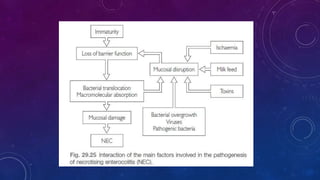
• Cause of NEC remains unclear but is most likely multifactorial.
• Incidence and case fatality rates increase with decreasing birth
weight and POA.
EPIDEMIOLOGY
• Incidence of NEC is 1-3 per 1000 live births.
• 2–5% of VLBW infants.
• In 1–8% of admissions to NICU.
• Mortality of NEC has now fallen to around 13%.
• Most affected are preterm
• 12% of infants with NEC are born at term.
• NEC occurs in 14% of infants under 26 weeks POA and in less than
1% after 32 weeks.
• Mortality ranges from 42% to 16% across a birthweight range of
500–1500 g.
• Onset of signs is most commonly in the second week
• There are no reliable seasonal, sexual or geographical patterns
with NEC.
RISK FACTORS
• Prematurity
• Intrauterine growth restriction
• Abruptio placentae
• Premature rupture of membranes
• Perinatal asphyxia
• Low Apgar score
• Non-human milk
• Hypertonic feeds
• Rapid introduction of enteral feeds
• Fluid overload
• Pathogenic bacteria
• Polycythaemia
• Thrombocytosis
• Anaemia
• Exchange transfusion
• Cyanotic congenital heart disease
• Umbilical catheterisation
• Hypoxia and shock
• Hypothermia
• Patent ductus arteriosus
PATHOPHYSIOLOGY
• NEC may affect any part of the gastrointestinal tract.
• In patients who undergo surgery, or die,
• Commonest sites are the terminal ileum, caecum and ascending
colon.
• It’s a transmural disease
• Bowel is purple and discoloured, distended with serosal damage.
• Pneumatosis is the most characteristic appearance at laparotomy,
histologically and radiographically.
• Produced by gas-forming bacteria.
• Earliest signs are coagulative necrosis of the mucosa with
microthrombus formation,
• Patchy mucosal ulceration, oedema and haemorrhage.
• In focal intestinal perforation,
• Haemorrhagic necrosis distinguishes from classical NEC.
• Cytokines play an important role in inflammation and damage in
NEC.
• Raised levels of interleukins-1, -3 and -6, TNF-α and platelet-
activating factor (PAF) relate to severity of the disease.
• PAF, the lipid-derived, proinflammatory cytokine, has a central
role.
• Imbalance in the pro- and anti-inflammatory balance with
increased proapoptotic protease activity.
AETIOLOGY
• Numerous potential risk factors have been explored
• But most important ones would be,
• Hypoxia ,
• Prematurity,
• Poor mucosal integrity,
• Bacterial flora and
• Presence of a metabolic substrate – milk – in the intestinal lumen
GUT HYPOXIA
• In term infant with NEC, risk factors for gut hypoxia are invariably
present.
• May follow severe generalised hypoxia, maternal cocaine abuse
and exchange transfusion.
• Adverse intrauterine environment leads to diversion of cardiac
output away from the gut.
• Absent or reversed end-diastolic flow on foetal Doppler studies
predispose to NEC.
• Reduction of gut blood flow is still evident after birth.
• Infants with abnormal foetal Doppler, IUGR, are considered at high
risk of NEC.
• Oligohydramnios and foetal echogenic bowel predict difficulties in
the introduction of milk.
• IUGR is an important risk factor for NEC in infants over 29 weeks’
gestation.
• The preterm infant is at particular risk of intestinal hypoxia.
• In the animal model, bacterial colonisation and excessive formula
feeding do not precipitate NEC unless hypoxia is also present.
• After feeds, intestinal oxygen use is increased but not blood flow.
• PDA diminishes superior mesenteric artery blood flow.
• Indometacin has long been said to predispose to NEC,
• Had been attributed to exchange transfusion after HDN, through
UVC.
• UAC has been attributed to reduced blood flow through
thrombosis and emboli.
• Studies done before 1980 ????.
• But early or late introduction of small volume feeds with a high or
low UAC does not predispose to NEC.
• UVC does not predispose to NEC.
MUCOSAL INTEGRITY
• Loss of mucosal integrity disrupts barrier function, allowing
macromolecular absorption,
• Bacterial translocation and interferes with digestion.
• Preterm gut has an immature microvillous membrane with relative
deficiency of mucus and secretory IgA
• Further mucosal damage increases permeability to
microorganisms and toxins.
• This process may initiate NEC
• Antenatal corticosteroid administration induces intestinal
maturation,
• Decreases permeability and protects against NEC.
MICROBIAL INFECTION
• Most NEC is not infectious.
• Presence of bacteria is probably necessary for NEC to occur,
• But is not sufficient without other risk factors.
• In epidemic NEC there may be an identified infectious agent.
• Infection with clostridia, occurs in epidemics and in Hirschsprung’s
enterocolitis.
• NEC during epidemics fare better than in sporadic disease.
• In sporadic disease, a large variety of microorganisms are
associated.
• Positive blood cultures are found in 10–50% and correlate with
isolates from stool or peritoneal fluid.
• proliferation of pathogenic species may occur,
• Bacterial translocation and absorption toxins, explaining the
increased risk of NEC in infants whose mothers were treated with
co-amoxiclav after PROM
ENTERAL NUTRITION
• All studies have demonstrated that most infants with NEC have
received milk.
• Intraluminal milk may simply promote bacterial proliferation or
increase bacterial endotoxin production by Gram-negative bacteria
• Results in gas formation and the production of short-chain fatty
acids.
• They are toxic to intestinal epithelium,
• Long-chain fats and undigested casein may contribute to
inflammation and injury.
• Lipid in milk increases mucosal permeability.
• Immature patterns of motility and decreased digestive capacity
predispose the preterm infant to NEC.
• In healthy infants without NEC, milk induces a cellular and humoral
inflammatory mucosal reaction with an increase in circulating
cytokines.
• Prolonged delay of oral feeding is not recommended.
• Aggressive enteral feeding with rapid increase in feed volume is
more causative.
• Hyperosmolar feeds, promote mucosal damage and NEC.
• Breast milk protects against NEC
• 7- 10 times less likely to suffer from NEC,
• Benefit is attenuated when breast milk is given with formula.
• Important factors in breast milk include,
• Immunoglobulins,
• lysozyme, complement, macrophages, growth factors,
• PAF-acetylhydrolase and
• Production of anti-inflammatory cytokines.
• Prebiotic oligosaccharides in breast milk are bifidogenic,
• Trophic feeding –does not increase the risk of NEC
• Trophic feeding prior to standard milk advancement may protect
against NEC
CLINICAL FEATURES
• Presentation may vary,
• From insidious deterioration with nonspecific signs, to a rapidly
progressive illness with shock, peritonitis and death.
• Early recognition of NEC requires a high index of suspicion.
• Clinically it’s similar to sepsis with pallor, skin mottling and often
jaundice
• Bleeding may be due to DIC.
• Increased volume of gastric residuals or emesis.
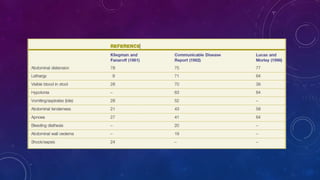
• Then develop classic triad of abdominal distension, bloody,
mucusy stools and bilestained vomit or aspirates.
• Careful review of a baby who consistently has more than 50% of
feed volume as a residual.
• The commonest abdominal sign is distension.
• Often, distended loops are palpable.
• An intra-abdominal mass may represent localised perforation.
• Blue abdominal discoloration suggests disease progression.
• Focal intestinal perforation occurs earlier in life,
• characteristically in infants of low gestation who are receiving full
intensive care,
• Associated with blue discoloration of the abdomen.
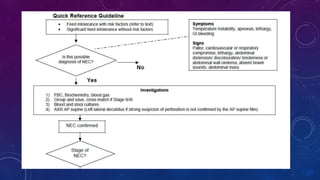
INVESTIGATIONS
• Immediate investigations include
• Hb, white cell and platelet counts,
• Coagulation studies,
• Urea, electrolytes
• Albumin
• Blood gas analysis
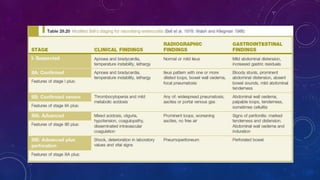
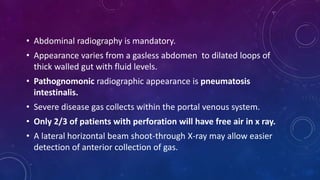
• Abdominal radiography is mandatory.
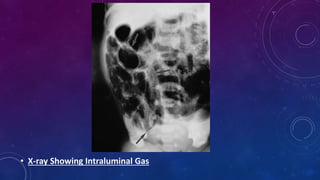
• Appearance varies from a gasless abdomen to dilated loops of
thick walled gut with fluid levels.
• Pathognomonic radiographic appearance is pneumatosis
intestinalis.
• Severe disease gas collects within the portal venous system.
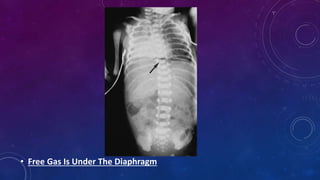
• Only 2/3 of patients with perforation will have free air in x ray.
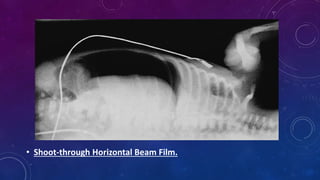
• A lateral horizontal beam shoot-through X-ray may allow easier
detection of anterior collection of gas.
• X-ray Showing Intraluminal Gas
• Free Gas Is Under The Diaphragm
• Shoot-through Horizontal Beam Film.
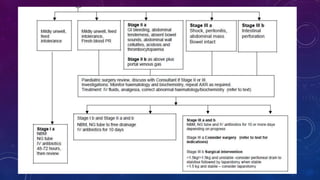
MANAGEMENT
• Aims of treatment are,
• Rest the gut,
• Control infection,
• Restore metabolic equilibrium
• With intensive or high dependency care,
• Maintain the infant in an optimal condition until the bowel heals
• Cessation of enteral feeding.
• Nasogastric drainage with suction.
• Monitoring of vitals.
• Plain abdominal radiography: repeated bd on day 1(high risk of
perforation)
• Peripheral venous access.
• Septic screening
• Volume replacement:
INTRAVENOUS ANTIBIOTICS
• Intravenous antibiotics: a triple-antibiotic regime is
• Gram-negative cover: gentamicin or a third-generation
cephalosporin (e.g. ceftazidime),
• Gram-positive cover: amoxicillin or vancomycin.
• should also include metronidazole..
• Regular blood gas analysis.
• Transfuse to maintain haemoglobin,
• Platelet transfusion is necessary if the count is Below 30 × 109/l or
below 70 × 109/l before surgery.
• Consider removal of umbilical cannulae.
• TPN
• Starvation for at least 7–10 days is needed
• Barrier nursing.
• Surgical,
• In all, 20–50% of infants with NEC require surgery
• Cardinal indications for surgery in NEC are:
• Failure to respond to medical management
• Formation of a mass
• Perforation.
• Commonest indication for surgery is clinical deterioration with
intestinal perforation
• 40–70% of infants who required surgery.
• Commonest site of perforation is the terminal ileum,
OUTCOME
• 5–10%, NEC relapses occurs
• Usually within a month of initial presentation.
• Overall survival after NEC is 70–90%
• Mortality is higher in infants of less than 28 weeks
• Survival rate is poor in <1000g
• Extensive disease, bacteraemia, DIC and persistent ascites are bad
prognostic indicators
PREVENTION
• Use of breast milk
• Minimal enteral feeding (0.5 ml/h) for 7 days before increasing
feeds
• Slow feed advancement
• Standardised feeding regimen
• Probiotics.
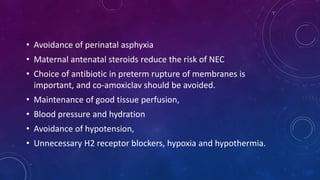
• Avoidance of perinatal asphyxia
• Maternal antenatal steroids reduce the risk of NEC
• Choice of antibiotic in preterm rupture of membranes is
important, and co-amoxiclav should be avoided.
• Maintenance of good tissue perfusion,
• Blood pressure and hydration
• Avoidance of hypotension,
• Unnecessary H2 receptor blockers, hypoxia and hypothermia.
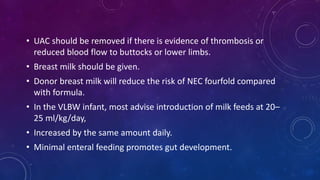
• UAC should be removed if there is evidence of thrombosis or
reduced blood flow to buttocks or lower limbs.
• Breast milk should be given.
• Donor breast milk will reduce the risk of NEC fourfold compared
with formula.
• In the VLBW infant, most advise introduction of milk feeds at 20–
25 ml/kg/day,
• Increased by the same amount daily.
• Minimal enteral feeding promotes gut development.
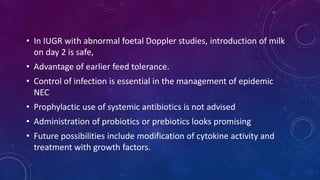
• In IUGR with abnormal foetal Doppler studies, introduction of milk
on day 2 is safe,
• Advantage of earlier feed tolerance.
• Control of infection is essential in the management of epidemic
NEC
• Prophylactic use of systemic antibiotics is not advised
• Administration of probiotics or prebiotics looks promising
• Future possibilities include modification of cytokine activity and
treatment with growth factors.
RESEARCH
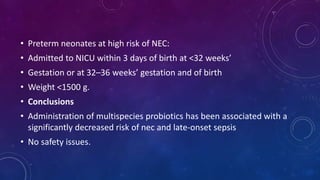
• Preterm neonates at high risk of NEC:
• Admitted to NICU within 3 days of birth at <32 weeks’
• Gestation or at 32–36 weeks’ gestation and of birth
• Weight <1500 g.
• Conclusions
• Administration of multispecies probiotics has been associated with a
significantly decreased risk of nec and late-onset sepsis
• No safety issues.
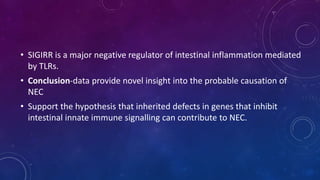
• SIGIRR is a major negative regulator of intestinal inflammation mediated
by TLRs.
• Conclusion-data provide novel insight into the probable causation of
NEC
• Support the hypothesis that inherited defects in genes that inhibit
intestinal innate immune signalling can contribute to NEC.
REFERENCES
• Rennie and Roberton’s textbook of neonatology 5th Edition
• Nelson Textbook of Paediatrics 21st Edition
• Joint Trust Guidelines for the Management of Necrotising
Enterocolitis in Neonates and Infants-NHS 2019
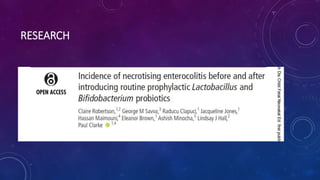
• Robertson C, Savva GM, Clapuci R, et al. Arch Dis Child Fetal
Neonatal Ed Epub “Incidence of necrotising enterocolitis before
and after introducing routine prophylactic Lactobacillus and
Bifidobacterium probiotics”
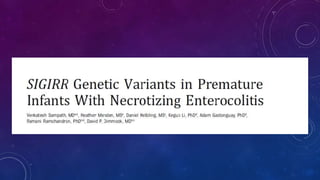
• Venkatesh Sampath, MDa, et al “SIGIRR Genetic Variants in
Premature Infants With Necrotizing Enterocolitis” PEDIATRICS
(ISSN Numbers: Print, 0031-4005; Online,1098-4275).
•THANK YOU!

Necrotizing enterocolitis

  • 1.
  • 2.
    INTRODUCTION • NEC isthe most common life-threatening emergency of the GIT in the new-born period. • Characterized by various degrees of mucosal or transmural necrosis of the intestine. • Cause of NEC remains unclear but is most likely multifactorial. • Incidence and case fatality rates increase with decreasing birth weight and POA.
  • 3.
    EPIDEMIOLOGY • Incidence ofNEC is 1-3 per 1000 live births. • 2–5% of VLBW infants. • In 1–8% of admissions to NICU. • Mortality of NEC has now fallen to around 13%. • Most affected are preterm • 12% of infants with NEC are born at term.
  • 4.
    • NEC occursin 14% of infants under 26 weeks POA and in less than 1% after 32 weeks. • Mortality ranges from 42% to 16% across a birthweight range of 500–1500 g. • Onset of signs is most commonly in the second week • There are no reliable seasonal, sexual or geographical patterns with NEC.
  • 6.
    RISK FACTORS • Prematurity •Intrauterine growth restriction • Abruptio placentae • Premature rupture of membranes • Perinatal asphyxia • Low Apgar score
  • 7.
    • Non-human milk •Hypertonic feeds • Rapid introduction of enteral feeds • Fluid overload • Pathogenic bacteria • Polycythaemia • Thrombocytosis • Anaemia • Exchange transfusion • Cyanotic congenital heart disease
  • 8.
    • Umbilical catheterisation •Hypoxia and shock • Hypothermia • Patent ductus arteriosus
  • 9.
    PATHOPHYSIOLOGY • NEC mayaffect any part of the gastrointestinal tract. • In patients who undergo surgery, or die, • Commonest sites are the terminal ileum, caecum and ascending colon. • It’s a transmural disease • Bowel is purple and discoloured, distended with serosal damage.
  • 10.
    • Pneumatosis isthe most characteristic appearance at laparotomy, histologically and radiographically. • Produced by gas-forming bacteria. • Earliest signs are coagulative necrosis of the mucosa with microthrombus formation, • Patchy mucosal ulceration, oedema and haemorrhage. • In focal intestinal perforation, • Haemorrhagic necrosis distinguishes from classical NEC.
  • 11.
    • Cytokines playan important role in inflammation and damage in NEC. • Raised levels of interleukins-1, -3 and -6, TNF-α and platelet- activating factor (PAF) relate to severity of the disease. • PAF, the lipid-derived, proinflammatory cytokine, has a central role. • Imbalance in the pro- and anti-inflammatory balance with increased proapoptotic protease activity.
  • 12.
    AETIOLOGY • Numerous potentialrisk factors have been explored • But most important ones would be, • Hypoxia , • Prematurity, • Poor mucosal integrity, • Bacterial flora and • Presence of a metabolic substrate – milk – in the intestinal lumen
  • 14.
    GUT HYPOXIA • Interm infant with NEC, risk factors for gut hypoxia are invariably present. • May follow severe generalised hypoxia, maternal cocaine abuse and exchange transfusion. • Adverse intrauterine environment leads to diversion of cardiac output away from the gut.
  • 15.
    • Absent orreversed end-diastolic flow on foetal Doppler studies predispose to NEC. • Reduction of gut blood flow is still evident after birth. • Infants with abnormal foetal Doppler, IUGR, are considered at high risk of NEC. • Oligohydramnios and foetal echogenic bowel predict difficulties in the introduction of milk. • IUGR is an important risk factor for NEC in infants over 29 weeks’ gestation.
  • 16.
    • The preterminfant is at particular risk of intestinal hypoxia. • In the animal model, bacterial colonisation and excessive formula feeding do not precipitate NEC unless hypoxia is also present. • After feeds, intestinal oxygen use is increased but not blood flow. • PDA diminishes superior mesenteric artery blood flow. • Indometacin has long been said to predispose to NEC, • Had been attributed to exchange transfusion after HDN, through UVC.
  • 17.
    • UAC hasbeen attributed to reduced blood flow through thrombosis and emboli. • Studies done before 1980 ????. • But early or late introduction of small volume feeds with a high or low UAC does not predispose to NEC. • UVC does not predispose to NEC.
  • 18.
    MUCOSAL INTEGRITY • Lossof mucosal integrity disrupts barrier function, allowing macromolecular absorption, • Bacterial translocation and interferes with digestion. • Preterm gut has an immature microvillous membrane with relative deficiency of mucus and secretory IgA • Further mucosal damage increases permeability to microorganisms and toxins. • This process may initiate NEC
  • 19.
    • Antenatal corticosteroidadministration induces intestinal maturation, • Decreases permeability and protects against NEC.
  • 20.
    MICROBIAL INFECTION • MostNEC is not infectious. • Presence of bacteria is probably necessary for NEC to occur, • But is not sufficient without other risk factors. • In epidemic NEC there may be an identified infectious agent. • Infection with clostridia, occurs in epidemics and in Hirschsprung’s enterocolitis.
  • 21.
    • NEC duringepidemics fare better than in sporadic disease. • In sporadic disease, a large variety of microorganisms are associated. • Positive blood cultures are found in 10–50% and correlate with isolates from stool or peritoneal fluid. • proliferation of pathogenic species may occur, • Bacterial translocation and absorption toxins, explaining the increased risk of NEC in infants whose mothers were treated with co-amoxiclav after PROM
  • 22.
    ENTERAL NUTRITION • Allstudies have demonstrated that most infants with NEC have received milk. • Intraluminal milk may simply promote bacterial proliferation or increase bacterial endotoxin production by Gram-negative bacteria • Results in gas formation and the production of short-chain fatty acids.
  • 23.
    • They aretoxic to intestinal epithelium, • Long-chain fats and undigested casein may contribute to inflammation and injury. • Lipid in milk increases mucosal permeability. • Immature patterns of motility and decreased digestive capacity predispose the preterm infant to NEC. • In healthy infants without NEC, milk induces a cellular and humoral inflammatory mucosal reaction with an increase in circulating cytokines.
  • 24.
    • Prolonged delayof oral feeding is not recommended. • Aggressive enteral feeding with rapid increase in feed volume is more causative. • Hyperosmolar feeds, promote mucosal damage and NEC. • Breast milk protects against NEC • 7- 10 times less likely to suffer from NEC, • Benefit is attenuated when breast milk is given with formula.
  • 25.
    • Important factorsin breast milk include, • Immunoglobulins, • lysozyme, complement, macrophages, growth factors, • PAF-acetylhydrolase and • Production of anti-inflammatory cytokines. • Prebiotic oligosaccharides in breast milk are bifidogenic, • Trophic feeding –does not increase the risk of NEC • Trophic feeding prior to standard milk advancement may protect against NEC
  • 26.
    CLINICAL FEATURES • Presentationmay vary, • From insidious deterioration with nonspecific signs, to a rapidly progressive illness with shock, peritonitis and death. • Early recognition of NEC requires a high index of suspicion. • Clinically it’s similar to sepsis with pallor, skin mottling and often jaundice
  • 27.
    • Bleeding maybe due to DIC. • Increased volume of gastric residuals or emesis. • Then develop classic triad of abdominal distension, bloody, mucusy stools and bilestained vomit or aspirates. • Careful review of a baby who consistently has more than 50% of feed volume as a residual.
  • 28.
    • The commonestabdominal sign is distension. • Often, distended loops are palpable. • An intra-abdominal mass may represent localised perforation. • Blue abdominal discoloration suggests disease progression. • Focal intestinal perforation occurs earlier in life, • characteristically in infants of low gestation who are receiving full intensive care, • Associated with blue discoloration of the abdomen.
  • 31.
    INVESTIGATIONS • Immediate investigationsinclude • Hb, white cell and platelet counts, • Coagulation studies, • Urea, electrolytes • Albumin • Blood gas analysis
  • 32.
    • Abdominal radiographyis mandatory. • Appearance varies from a gasless abdomen to dilated loops of thick walled gut with fluid levels. • Pathognomonic radiographic appearance is pneumatosis intestinalis. • Severe disease gas collects within the portal venous system. • Only 2/3 of patients with perforation will have free air in x ray. • A lateral horizontal beam shoot-through X-ray may allow easier detection of anterior collection of gas.
  • 33.
    • X-ray ShowingIntraluminal Gas
  • 34.
    • Free GasIs Under The Diaphragm
  • 35.
  • 36.
    MANAGEMENT • Aims oftreatment are, • Rest the gut, • Control infection, • Restore metabolic equilibrium • With intensive or high dependency care, • Maintain the infant in an optimal condition until the bowel heals
  • 37.
    • Cessation ofenteral feeding. • Nasogastric drainage with suction. • Monitoring of vitals. • Plain abdominal radiography: repeated bd on day 1(high risk of perforation) • Peripheral venous access. • Septic screening • Volume replacement:
  • 38.
    INTRAVENOUS ANTIBIOTICS • Intravenousantibiotics: a triple-antibiotic regime is • Gram-negative cover: gentamicin or a third-generation cephalosporin (e.g. ceftazidime), • Gram-positive cover: amoxicillin or vancomycin. • should also include metronidazole..
  • 39.
    • Regular bloodgas analysis. • Transfuse to maintain haemoglobin, • Platelet transfusion is necessary if the count is Below 30 × 109/l or below 70 × 109/l before surgery. • Consider removal of umbilical cannulae. • TPN • Starvation for at least 7–10 days is needed • Barrier nursing.
  • 40.
    • Surgical, • Inall, 20–50% of infants with NEC require surgery • Cardinal indications for surgery in NEC are: • Failure to respond to medical management • Formation of a mass • Perforation.
  • 41.
    • Commonest indicationfor surgery is clinical deterioration with intestinal perforation • 40–70% of infants who required surgery. • Commonest site of perforation is the terminal ileum,
  • 44.
    OUTCOME • 5–10%, NECrelapses occurs • Usually within a month of initial presentation. • Overall survival after NEC is 70–90% • Mortality is higher in infants of less than 28 weeks • Survival rate is poor in <1000g
  • 45.
    • Extensive disease,bacteraemia, DIC and persistent ascites are bad prognostic indicators
  • 47.
    PREVENTION • Use ofbreast milk • Minimal enteral feeding (0.5 ml/h) for 7 days before increasing feeds • Slow feed advancement • Standardised feeding regimen • Probiotics.
  • 48.
    • Avoidance ofperinatal asphyxia • Maternal antenatal steroids reduce the risk of NEC • Choice of antibiotic in preterm rupture of membranes is important, and co-amoxiclav should be avoided. • Maintenance of good tissue perfusion, • Blood pressure and hydration • Avoidance of hypotension, • Unnecessary H2 receptor blockers, hypoxia and hypothermia.
  • 49.
    • UAC shouldbe removed if there is evidence of thrombosis or reduced blood flow to buttocks or lower limbs. • Breast milk should be given. • Donor breast milk will reduce the risk of NEC fourfold compared with formula. • In the VLBW infant, most advise introduction of milk feeds at 20– 25 ml/kg/day, • Increased by the same amount daily. • Minimal enteral feeding promotes gut development.
  • 50.
    • In IUGRwith abnormal foetal Doppler studies, introduction of milk on day 2 is safe, • Advantage of earlier feed tolerance. • Control of infection is essential in the management of epidemic NEC • Prophylactic use of systemic antibiotics is not advised • Administration of probiotics or prebiotics looks promising • Future possibilities include modification of cytokine activity and treatment with growth factors.
  • 51.
  • 52.
    • Preterm neonatesat high risk of NEC: • Admitted to NICU within 3 days of birth at <32 weeks’ • Gestation or at 32–36 weeks’ gestation and of birth • Weight <1500 g. • Conclusions • Administration of multispecies probiotics has been associated with a significantly decreased risk of nec and late-onset sepsis • No safety issues.
  • 54.
    • SIGIRR isa major negative regulator of intestinal inflammation mediated by TLRs. • Conclusion-data provide novel insight into the probable causation of NEC • Support the hypothesis that inherited defects in genes that inhibit intestinal innate immune signalling can contribute to NEC.
  • 55.
    REFERENCES • Rennie andRoberton’s textbook of neonatology 5th Edition • Nelson Textbook of Paediatrics 21st Edition • Joint Trust Guidelines for the Management of Necrotising Enterocolitis in Neonates and Infants-NHS 2019 • Robertson C, Savva GM, Clapuci R, et al. Arch Dis Child Fetal Neonatal Ed Epub “Incidence of necrotising enterocolitis before and after introducing routine prophylactic Lactobacillus and Bifidobacterium probiotics”
  • 56.
    • Venkatesh Sampath,MDa, et al “SIGIRR Genetic Variants in Premature Infants With Necrotizing Enterocolitis” PEDIATRICS (ISSN Numbers: Print, 0031-4005; Online,1098-4275).
  • 57.