Natural Resources
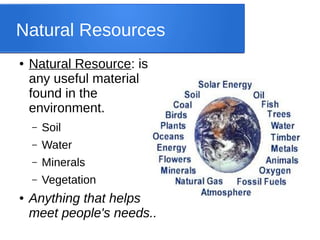
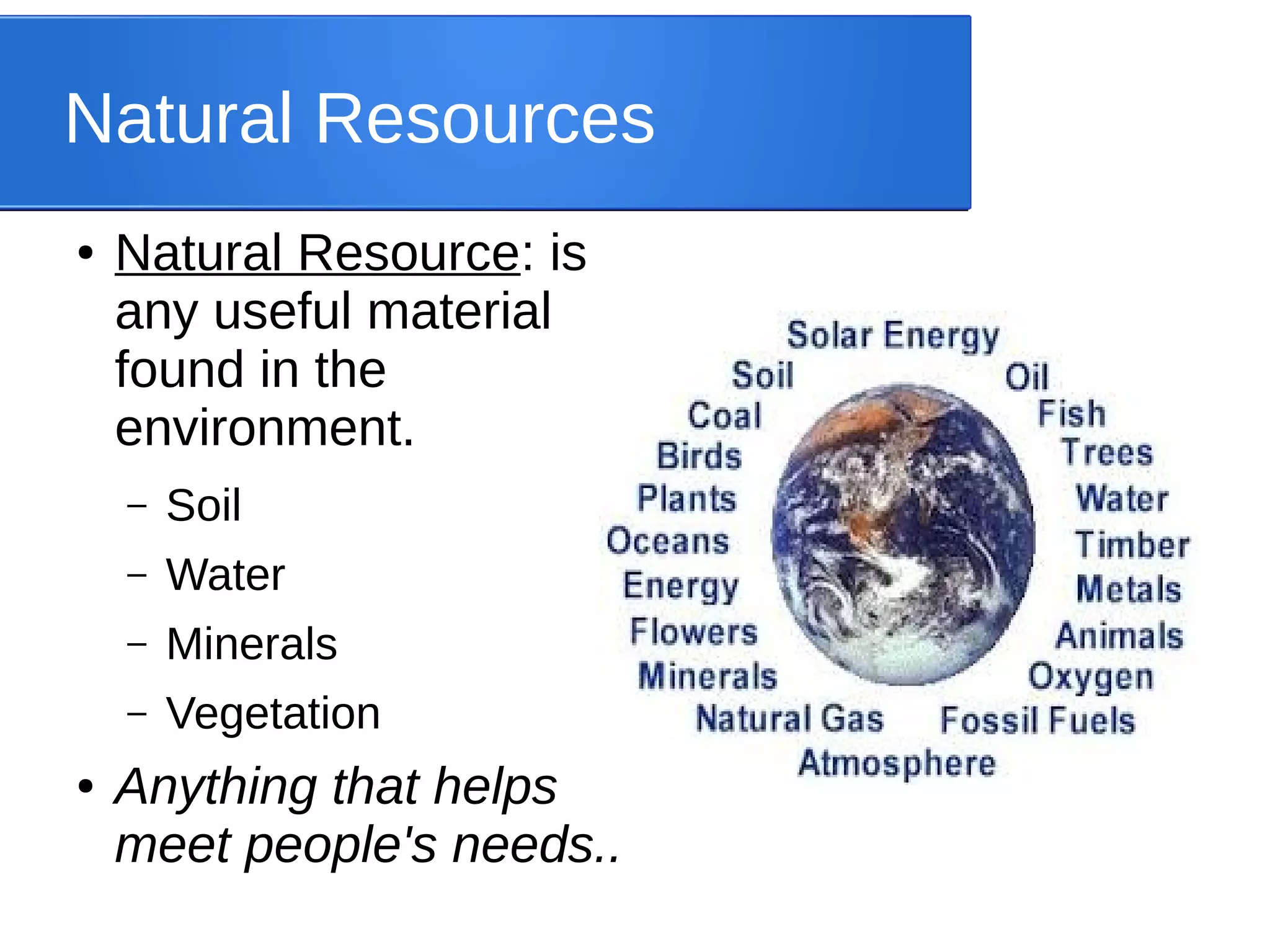
● Natural Resource: is
any useful material
found in the
environment.
– Soil
– Water
– Minerals
– Vegetation
● Anything that helps
meet people's needs..
Different types of resources
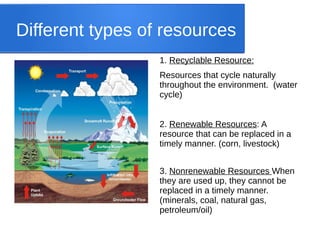
1. Recyclable Resource:
Resources that cycle naturally
throughout the environment. (water
cycle)
2. Renewable Resources: A
resource that can be replaced in a
timely manner. (corn, livestock)
3. Nonrenewable Resources When
they are used up, they cannot be
replaced in a timely manner.
(minerals, coal, natural gas,
petroleum/oil)
Fossil Fuels
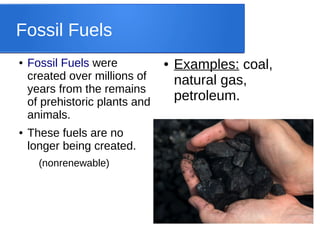
● Fossil Fuels were
created over millions of
years from the remains
of prehistoric plants and
animals.
● These fuels are no
longer being created.
(nonrenewable)
● Examples: coal,
natural gas,
petroleum.
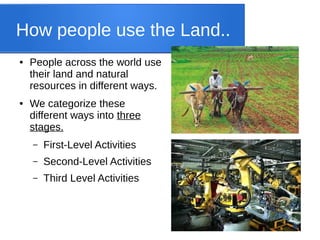
How people use the Land..
● People across the world use
their land and natural
resources in different ways.
● We categorize these
different ways into three
stages.
– First-Level Activities
– Second-Level Activities
– Third Level Activities
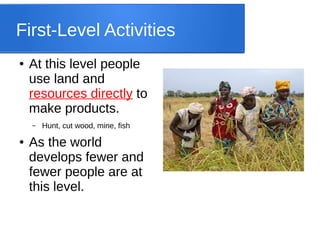
First-Level Activities
● At this level people
use land and
resources directly to
make products.
– Hunt, cut wood, mine, fish
● As the world
develops fewer and
fewer people are at
this level.
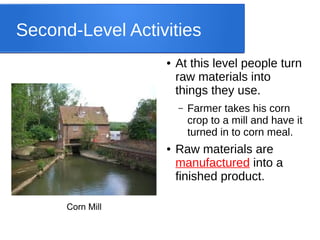
Second-Level Activities
● At this level people turn
raw materials into
things they use.
– Farmer takes his corn
crop to a mill and have it
turned in to corn meal.
● Raw materials are
manufactured into a
finished product.
Corn Mill
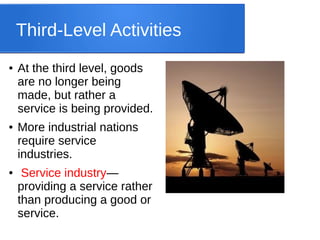
Third-Level Activities
● At the third level, goods
are no longer being
made, but rather a
service is being provided.
● More industrial nations
require service
industries.
● Service industry—
providing a service rather
than producing a good or
service.
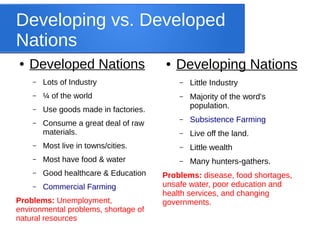
Developing vs. Developed
Nations
● Developed Nations
– Lots of Industry
– ¼ of the world
– Use goods made in factories.
– Consume a great deal of raw
materials.
– Most live in towns/cities.
– Most have food & water
– Good healthcare & Education
– Commercial Farming
Problems: Unemployment,
environmental problems, shortage of
natural resources
● Developing Nations
– Little Industry
– Majority of the word's
population.
– Subsistence Farming
– Live off the land.
– Little wealth
– Many hunters-gathers.
Problems: disease, food shortages,
unsafe water, poor education and
health services, and changing
governments.
People's Effect on the
Environment
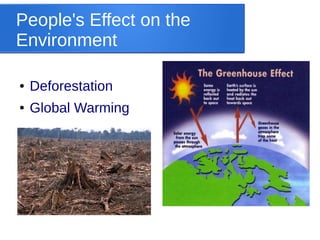
● Deforestation
● Global Warming
People's Effect on the
Environment
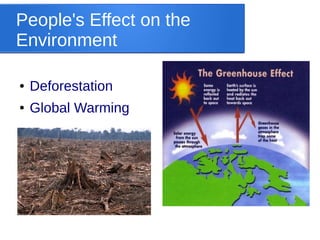
● Deforestation
● Global Warming

Natural resources

  • 1.
    Natural Resources ● NaturalResource: is any useful material found in the environment. – Soil – Water – Minerals – Vegetation ● Anything that helps meet people's needs..
  • 2.
    Different types ofresources 1. Recyclable Resource: Resources that cycle naturally throughout the environment. (water cycle) 2. Renewable Resources: A resource that can be replaced in a timely manner. (corn, livestock) 3. Nonrenewable Resources When they are used up, they cannot be replaced in a timely manner. (minerals, coal, natural gas, petroleum/oil)
  • 3.
    Fossil Fuels ● FossilFuels were created over millions of years from the remains of prehistoric plants and animals. ● These fuels are no longer being created. (nonrenewable) ● Examples: coal, natural gas, petroleum.
  • 4.
    How people usethe Land.. ● People across the world use their land and natural resources in different ways. ● We categorize these different ways into three stages. – First-Level Activities – Second-Level Activities – Third Level Activities
  • 5.
    First-Level Activities ● Atthis level people use land and resources directly to make products. – Hunt, cut wood, mine, fish ● As the world develops fewer and fewer people are at this level.
  • 6.
    Second-Level Activities ● Atthis level people turn raw materials into things they use. – Farmer takes his corn crop to a mill and have it turned in to corn meal. ● Raw materials are manufactured into a finished product. Corn Mill
  • 7.
    Third-Level Activities ● Atthe third level, goods are no longer being made, but rather a service is being provided. ● More industrial nations require service industries. ● Service industry— providing a service rather than producing a good or service.
  • 8.
    Developing vs. Developed Nations ●Developed Nations – Lots of Industry – ¼ of the world – Use goods made in factories. – Consume a great deal of raw materials. – Most live in towns/cities. – Most have food & water – Good healthcare & Education – Commercial Farming Problems: Unemployment, environmental problems, shortage of natural resources ● Developing Nations – Little Industry – Majority of the word's population. – Subsistence Farming – Live off the land. – Little wealth – Many hunters-gathers. Problems: disease, food shortages, unsafe water, poor education and health services, and changing governments.
  • 9.
    People's Effect onthe Environment ● Deforestation ● Global Warming
  • 10.
    People's Effect onthe Environment ● Deforestation ● Global Warming