Economics Systems
All Economic Systems seek to answer the three
basic economic questions...

●

1) What to produce?

●

2) How to produce?

●

3) For whom to produce?
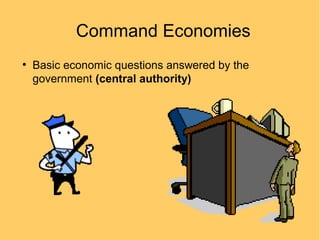
Command Economies
●

Basic economic questions answered by the
government (central authority)
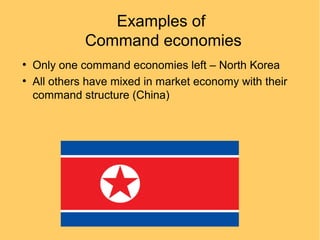
Examples of
Command economies
●
●

Only one command economies left – North Korea
All others have mixed in market economy with their
command structure (China)
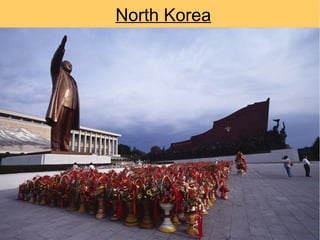
North Korea
How do Command economies answer the
basic economic questions?
●

●

●

1) What to produce?
Whatever the government
says to produce...
2) How to produce?
However the government tells
you to produce..
3) For whom to produce?
For whomever the government
tells you to produce
(ideally the entire society)

Positives & Negatives??
Traditional Economies
●

●

●

Basic economic
questions answered by
what has been done in
the past
Traditions are
maintained
Ritual, Habit, and
Custom
Traditional economies
●

●

●

Individual roles and
choices are defined by the
customs of elders and
ancestors
These economies are
usually based in societies
of hunter/gatherers
Sharing is a big part of
these economies...
How do Traditional economies answer
the three basic questions?
●

●

●

1) What to produce?
Whatever ritual, habit or
custom dictates
2) How to produce?
However ritual, habit or
custom dictate
3) For whom to produce?
For whomever ritual, habit or
custom dictate

Positives &
Negatives??
Market Economies
●

●

Basic economic
questions answered by
consumers
Dollars = Votes
How do market economies answer the
three basic questions?
1) What to produce?
Whatever people need
and want..
2) How to produce?
However companies
decide to produce their
product.
(most profitable)
3) For whom to produce?
For whomever wants to
purchase their product..

Positives &
Negatives??
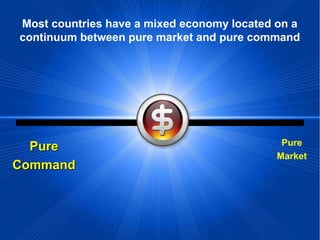
Most countries have a mixed economy located on a
continuum between pure market and pure command

Pure
Command

Pure
Market

Economic systems

  • 1.
  • 2.
    All Economic Systemsseek to answer the three basic economic questions... ● 1) What to produce? ● 2) How to produce? ● 3) For whom to produce?
  • 3.
    Command Economies ● Basic economicquestions answered by the government (central authority)
  • 4.
    Examples of Command economies ● ● Onlyone command economies left – North Korea All others have mixed in market economy with their command structure (China)
  • 5.
  • 6.
    How do Commandeconomies answer the basic economic questions? ● ● ● 1) What to produce? Whatever the government says to produce... 2) How to produce? However the government tells you to produce.. 3) For whom to produce? For whomever the government tells you to produce (ideally the entire society) Positives & Negatives??
  • 7.
    Traditional Economies ● ● ● Basic economic questionsanswered by what has been done in the past Traditions are maintained Ritual, Habit, and Custom
  • 8.
    Traditional economies ● ● ● Individual rolesand choices are defined by the customs of elders and ancestors These economies are usually based in societies of hunter/gatherers Sharing is a big part of these economies...
  • 9.
    How do Traditionaleconomies answer the three basic questions? ● ● ● 1) What to produce? Whatever ritual, habit or custom dictates 2) How to produce? However ritual, habit or custom dictate 3) For whom to produce? For whomever ritual, habit or custom dictate Positives & Negatives??
  • 10.
    Market Economies ● ● Basic economic questionsanswered by consumers Dollars = Votes
  • 11.
    How do marketeconomies answer the three basic questions? 1) What to produce? Whatever people need and want.. 2) How to produce? However companies decide to produce their product. (most profitable) 3) For whom to produce? For whomever wants to purchase their product.. Positives & Negatives??
  • 12.
    Most countries havea mixed economy located on a continuum between pure market and pure command Pure Command Pure Market