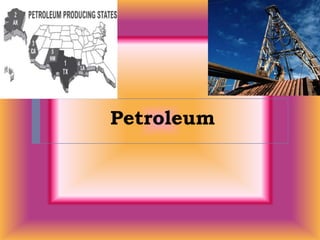
Petroleum
INDEX


 2). Formation of petroleum

 3). History of petroleum


 5).
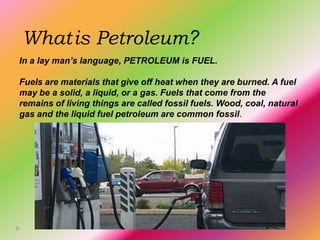
What is Petroleum?
In a lay man’s language, PETROLEUM is FUEL.

Fuels are materials that give off heat when they are burned. A fuel
may be a solid, a liquid, or a gas. Fuels that come from the
remains of living things are called fossil fuels. Wood, coal, natural
gas and the liquid fuel petroleum are common fossil.
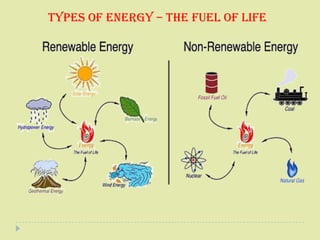
TYPES OF ENERGY – THE FUEL OF LIFE
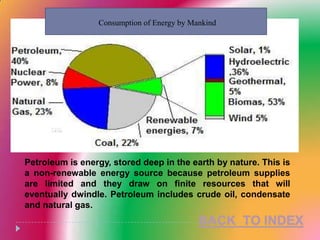
Consumption of Energy by Mankind


Petroleum is energy, stored deep in the earth by nature. This is
a non-renewable energy source because petroleum supplies
are limited and they draw on finite resources that will
eventually dwindle. Petroleum includes crude oil, condensate
and natural gas.
How is Petroleum formed?
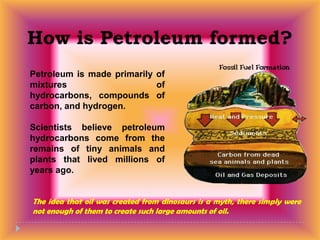
Petroleum is made primarily of
mixtures                    of
hydrocarbons, compounds of
carbon, and hydrogen.

Scientists believe petroleum
hydrocarbons come from the
remains of tiny animals and
plants that lived millions of
years ago.


The idea that oil was created from dinosaurs is a myth, there simply were
not enough of them to create such large amounts of oil.
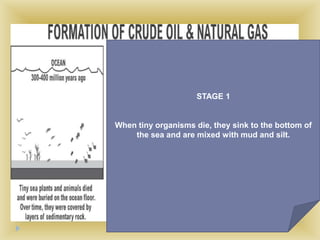
STAGE 1


When tiny organisms die, they sink to the bottom of
    the sea and are mixed with mud and silt.
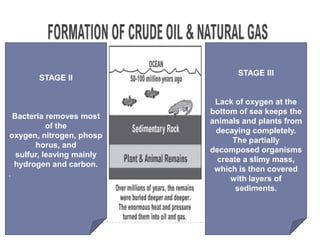
STAGE III
        STAGE II


                             Lack of oxygen at the
                            bottom of sea keeps the
  Bacteria removes most
                            animals and plants from
            of the
                             decaying completely.
oxygen, nitrogen, phosp
                                  The partially
        horus, and
                            decomposed organisms
   sulfur, leaving mainly
                              create a slimy mass,
  hydrogen and carbon.
                             which is then covered
.
                                 with layers of
                                   sediments.
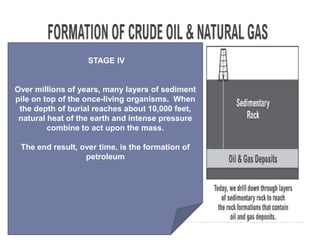
STAGE IV


Over millions of years, many layers of sediment
pile on top of the once-living organisms. When
 the depth of burial reaches about 10,000 feet,
 natural heat of the earth and intense pressure
         combine to act upon the mass.

 The end result, over time, is the formation of
                  petroleum
Petroleum deposits are locked in porous rocks almost like
water is trapped in a wet sponge .When crude oil comes out of
the ground , it can be as thin as water or as thick as tar.
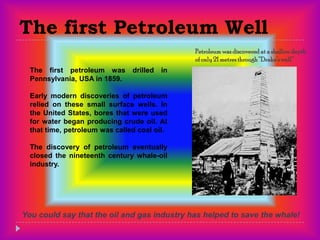
The first Petroleum Well
                                               Petroleum was discovered at a shallow depth
                                               of only 21 metres through “Drake’s well”
  The first petroleum was       drilled   in
  Pennsylvania, USA in 1859.

  Early modern discoveries of petroleum
  relied on these small surface wells. In
  the United States, bores that were used
  for water began producing crude oil. At
  that time, petroleum was called coal oil.

  The discovery of petroleum eventually
  closed the nineteenth century whale-oil
  industry.


You could say that the oil and gas industry has helped to save the whale!
WHO FINDS PETROLEUM
    AND WHERE?
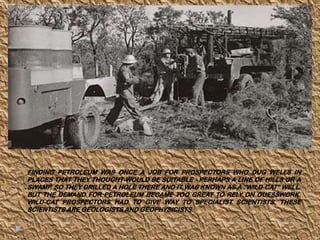
FINDING PETROLEUM WAS ONCE A JOB FOR PROSPECTORS WHO DUG WELLS IN
PLACES THAT THEY THOUGHT WOULD BE SUITABLE - PERHAPS A LINE OF HILLS OR A
SWAMP. SO THEY DRILLED A HOLE THERE AND IT WAS KNOWN AS A “WILD-CAT” WELL.
BUT THE DEMAND FOR PETROLEUM BECAME TOO GREAT TO RELY ON GUESSWORK.
WILD-CAT PROSPECTORS HAD TO GIVE WAY TO SPECIALIST SCIENTISTS. THESE
SCIENTISTS ARE GEOLOGISTS AND GEOPHYSICISTS.
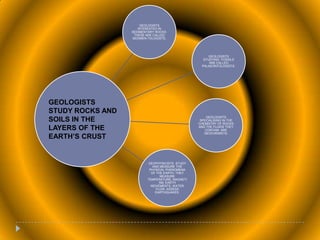
GEOLOGISTS
                     INTERESTED IN
                  SEDIMENTARY ROCKS.
                   THESE ARE CALLED
                  SEDIMEN-TOLOGISTS.


                                                       GEOLOGISTS
                                                    STUDYING FOSSILS
                                                       ARE CALLED
                                                   PALAEONTOLOGISTS.


GEOLOGISTS
STUDY ROCKS AND
                                                     GEOLOGISTS
SOILS IN THE                                      SPECIALISING IN THE
                                                 CHEMISTRY OF ROCKS
LAYERS OF THE                                    AND THE FLUIDS THEY
                                                     CONTAIN ARE
                                                    GEOCHEMISTS.
EARTH’S CRUST


                          GEOPHYSICISTS STUDY
                             AND MEASURE THE
                           PHYSICAL PHENOMENA
                            OF THE EARTH. THEY
                                 MEASURE
                          TEMPERATURE, MAGNETI
                                 SM, EARTH
                            MOVEMENTS, WATER
                               FLOW, ASSESS
                              EARTHQUAKES.
The Geologists
 work together
with 3 objectives
                                             FIRST, TO IMPROVE OUR
                                                KNOWLEDGE AND
                                          UNDERSTANDING OF THE EARTH
                                          (WHAT IT IS AND WHAT MAKES IT
                                                       TICK).


            SECOND, TO FIND OUT WHAT IS
             THE NATURE OF THE EARTH
             FOR THE CONSTRUCTION OF
            TUNNELS, BUILDINGS, POWER
               STATIONS AND OTHER
                   STRUCTURES.


                                              AND THIRD, TO EXPLORE
                                                 THE EARTH FOR
                                             PETROLEUM, NATURAL GAS
                                              AND MINERALS, AND TO
                                               ESTABLISH WHETHER
                                             THESE ARE SUITABLE FOR
                                                   COMMERCIAL
                                                  EXPLOITATION.
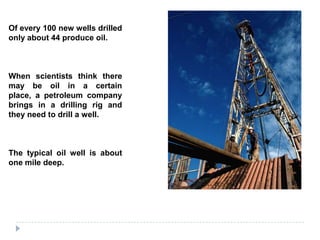
Of every 100 new wells drilled
only about 44 produce oil.


When scientists think there
may be oil in a certain
place, a petroleum company
brings in a drilling rig and
they need to drill a well.


The typical oil well is about
one mile deep.
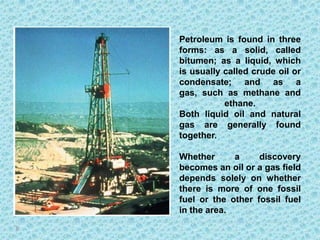
Petroleum is found in three
forms: as a solid, called
bitumen; as a liquid, which
is usually called crude oil or
condensate; and as a
gas, such as methane and
           ethane.
Both liquid oil and natural
gas are generally found
together.

Whether      a     discovery
becomes an oil or a gas field
depends solely on whether
there is more of one fossil
fuel or the other fossil fuel
in the area.
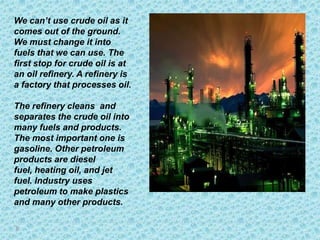
We can’t use crude oil as it
comes out of the ground.
We must change it into
fuels that we can use. The
first stop for crude oil is at
an oil refinery. A refinery is
a factory that processes oil.

The refinery cleans and
separates the crude oil into
many fuels and products.
The most important one is
gasoline. Other petroleum
products are diesel
fuel, heating oil, and jet
fuel. Industry uses
petroleum to make plastics
and many other products.
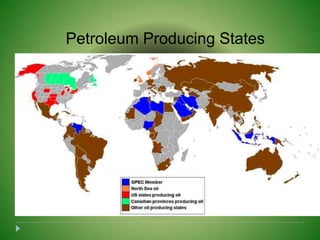
Petroleum Producing States
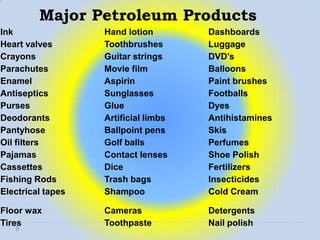
Major Petroleum Products
Ink                Hand lotion        Dashboards
Heart valves       Toothbrushes       Luggage
Crayons            Guitar strings     DVD’s
Parachutes         Movie film         Balloons
Enamel             Aspirin            Paint brushes
Antiseptics        Sunglasses         Footballs
Purses             Glue               Dyes
Deodorants         Artificial limbs   Antihistamines
Pantyhose          Ballpoint pens     Skis
Oil filters        Golf balls         Perfumes
Pajamas            Contact lenses     Shoe Polish
Cassettes          Dice               Fertilizers
Fishing Rods       Trash bags         Insecticides
Electrical tapes   Shampoo            Cold Cream

Floor wax          Cameras            Detergents
Tires              Toothpaste         Nail polish
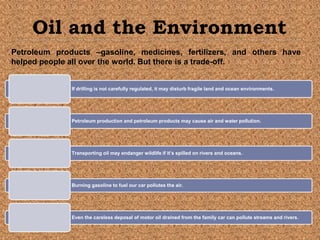
Oil and the Environment
Petroleum products –gasoline, medicines, fertilizers, and others have
helped people all over the world. But there is a trade-off.


              If drilling is not carefully regulated, it may disturb fragile land and ocean environments.


              Petroleum production and petroleum products may cause air and water pollution.


              Transporting oil may endanger wildlife if it’s spilled on rivers and oceans.


              Burning gasoline to fuel our car pollutes the air.


              Even the careless deposal of motor oil drained from the family car can pollute streams and rivers.
Fuel for thought
Phd scholar at the Center Energy and Environment, TERI University,
Aditi Banerjee is currently pursuing her research in the area of biomass
utilization for ethanol production . There has been widespread concern
over global warming and climate change caused by use the use of fossil
fuels. In this regard, biofuels like bioethanol and biodiesel have emerged
as a sustainable and greener alternative in fossil fuels.

Ethanol is a type of an alcohol, used in whisky, bear, rum, wine, etc.
However, ethanol can also be blended with petrol as a fuel additive to
make it more fuel efficient and help reduce air pollution. Generally,
ethanol is produced from sugarcane molasses ( a waste stream for
sugar production factory). But it’s not an adequate source to meet the
rising demand for ethanol production which Is required to blend with
petrol. Therefore, new source or feedstocks are explored for production
of ethanol.
Petroleum

Petroleum

  • 1.
  • 2.
    INDEX  2). Formationof petroleum  3). History of petroleum  5).
  • 3.
    What is Petroleum? Ina lay man’s language, PETROLEUM is FUEL. Fuels are materials that give off heat when they are burned. A fuel may be a solid, a liquid, or a gas. Fuels that come from the remains of living things are called fossil fuels. Wood, coal, natural gas and the liquid fuel petroleum are common fossil.
  • 4.
    TYPES OF ENERGY– THE FUEL OF LIFE
  • 5.
    Consumption of Energyby Mankind Petroleum is energy, stored deep in the earth by nature. This is a non-renewable energy source because petroleum supplies are limited and they draw on finite resources that will eventually dwindle. Petroleum includes crude oil, condensate and natural gas.
  • 6.
    How is Petroleumformed? Petroleum is made primarily of mixtures of hydrocarbons, compounds of carbon, and hydrogen. Scientists believe petroleum hydrocarbons come from the remains of tiny animals and plants that lived millions of years ago. The idea that oil was created from dinosaurs is a myth, there simply were not enough of them to create such large amounts of oil.
  • 7.
    STAGE 1 When tinyorganisms die, they sink to the bottom of the sea and are mixed with mud and silt.
  • 8.
    STAGE III STAGE II Lack of oxygen at the bottom of sea keeps the Bacteria removes most animals and plants from of the decaying completely. oxygen, nitrogen, phosp The partially horus, and decomposed organisms sulfur, leaving mainly create a slimy mass, hydrogen and carbon. which is then covered . with layers of sediments.
  • 9.
    STAGE IV Over millionsof years, many layers of sediment pile on top of the once-living organisms. When the depth of burial reaches about 10,000 feet, natural heat of the earth and intense pressure combine to act upon the mass. The end result, over time, is the formation of petroleum
  • 10.
    Petroleum deposits arelocked in porous rocks almost like water is trapped in a wet sponge .When crude oil comes out of the ground , it can be as thin as water or as thick as tar.
  • 12.
    The first PetroleumWell Petroleum was discovered at a shallow depth of only 21 metres through “Drake’s well” The first petroleum was drilled in Pennsylvania, USA in 1859. Early modern discoveries of petroleum relied on these small surface wells. In the United States, bores that were used for water began producing crude oil. At that time, petroleum was called coal oil. The discovery of petroleum eventually closed the nineteenth century whale-oil industry. You could say that the oil and gas industry has helped to save the whale!
  • 13.
  • 14.
    FINDING PETROLEUM WASONCE A JOB FOR PROSPECTORS WHO DUG WELLS IN PLACES THAT THEY THOUGHT WOULD BE SUITABLE - PERHAPS A LINE OF HILLS OR A SWAMP. SO THEY DRILLED A HOLE THERE AND IT WAS KNOWN AS A “WILD-CAT” WELL. BUT THE DEMAND FOR PETROLEUM BECAME TOO GREAT TO RELY ON GUESSWORK. WILD-CAT PROSPECTORS HAD TO GIVE WAY TO SPECIALIST SCIENTISTS. THESE SCIENTISTS ARE GEOLOGISTS AND GEOPHYSICISTS.
  • 15.
    GEOLOGISTS INTERESTED IN SEDIMENTARY ROCKS. THESE ARE CALLED SEDIMEN-TOLOGISTS. GEOLOGISTS STUDYING FOSSILS ARE CALLED PALAEONTOLOGISTS. GEOLOGISTS STUDY ROCKS AND GEOLOGISTS SOILS IN THE SPECIALISING IN THE CHEMISTRY OF ROCKS LAYERS OF THE AND THE FLUIDS THEY CONTAIN ARE GEOCHEMISTS. EARTH’S CRUST GEOPHYSICISTS STUDY AND MEASURE THE PHYSICAL PHENOMENA OF THE EARTH. THEY MEASURE TEMPERATURE, MAGNETI SM, EARTH MOVEMENTS, WATER FLOW, ASSESS EARTHQUAKES.
  • 16.
    The Geologists worktogether with 3 objectives FIRST, TO IMPROVE OUR KNOWLEDGE AND UNDERSTANDING OF THE EARTH (WHAT IT IS AND WHAT MAKES IT TICK). SECOND, TO FIND OUT WHAT IS THE NATURE OF THE EARTH FOR THE CONSTRUCTION OF TUNNELS, BUILDINGS, POWER STATIONS AND OTHER STRUCTURES. AND THIRD, TO EXPLORE THE EARTH FOR PETROLEUM, NATURAL GAS AND MINERALS, AND TO ESTABLISH WHETHER THESE ARE SUITABLE FOR COMMERCIAL EXPLOITATION.
  • 17.
    Of every 100new wells drilled only about 44 produce oil. When scientists think there may be oil in a certain place, a petroleum company brings in a drilling rig and they need to drill a well. The typical oil well is about one mile deep.
  • 18.
    Petroleum is foundin three forms: as a solid, called bitumen; as a liquid, which is usually called crude oil or condensate; and as a gas, such as methane and ethane. Both liquid oil and natural gas are generally found together. Whether a discovery becomes an oil or a gas field depends solely on whether there is more of one fossil fuel or the other fossil fuel in the area.
  • 19.
    We can’t usecrude oil as it comes out of the ground. We must change it into fuels that we can use. The first stop for crude oil is at an oil refinery. A refinery is a factory that processes oil. The refinery cleans and separates the crude oil into many fuels and products. The most important one is gasoline. Other petroleum products are diesel fuel, heating oil, and jet fuel. Industry uses petroleum to make plastics and many other products.
  • 21.
  • 23.
    Major Petroleum Products Ink Hand lotion Dashboards Heart valves Toothbrushes Luggage Crayons Guitar strings DVD’s Parachutes Movie film Balloons Enamel Aspirin Paint brushes Antiseptics Sunglasses Footballs Purses Glue Dyes Deodorants Artificial limbs Antihistamines Pantyhose Ballpoint pens Skis Oil filters Golf balls Perfumes Pajamas Contact lenses Shoe Polish Cassettes Dice Fertilizers Fishing Rods Trash bags Insecticides Electrical tapes Shampoo Cold Cream Floor wax Cameras Detergents Tires Toothpaste Nail polish
  • 24.
    Oil and theEnvironment Petroleum products –gasoline, medicines, fertilizers, and others have helped people all over the world. But there is a trade-off. If drilling is not carefully regulated, it may disturb fragile land and ocean environments. Petroleum production and petroleum products may cause air and water pollution. Transporting oil may endanger wildlife if it’s spilled on rivers and oceans. Burning gasoline to fuel our car pollutes the air. Even the careless deposal of motor oil drained from the family car can pollute streams and rivers.
  • 25.
    Fuel for thought Phdscholar at the Center Energy and Environment, TERI University, Aditi Banerjee is currently pursuing her research in the area of biomass utilization for ethanol production . There has been widespread concern over global warming and climate change caused by use the use of fossil fuels. In this regard, biofuels like bioethanol and biodiesel have emerged as a sustainable and greener alternative in fossil fuels. Ethanol is a type of an alcohol, used in whisky, bear, rum, wine, etc. However, ethanol can also be blended with petrol as a fuel additive to make it more fuel efficient and help reduce air pollution. Generally, ethanol is produced from sugarcane molasses ( a waste stream for sugar production factory). But it’s not an adequate source to meet the rising demand for ethanol production which Is required to blend with petrol. Therefore, new source or feedstocks are explored for production of ethanol.