Krish Manwani
Aman Semwal
Adamya Vikram Singh
Harsh Sharma
Pranjal Seluriyal
Kartik Arora
Priyambad Suman
Environmental Disaster
By :-
Batch 37-38
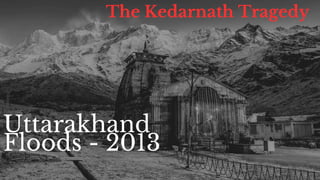
Uttarakhand
Floods - 2013
The Kedarnath Tragedy
CONTENT
Introduction
Causes
Consequences
Rescue Operations
Conclusion
Disaster Management
An
Overview
Disaster Management
• ²
•
•
•
•
•
•
Introduction
KEDARNATH FLOOD
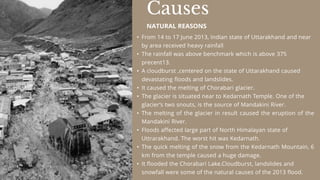
• From 14 to 17 June 2013, Indian state of Uttarakhand and near
by area received heavy rainfall
• The rainfall was above benchmark which is above 375
precent13.
• A cloudburst ,centered on the state of Uttarakhand caused
devastating floods and landslides.
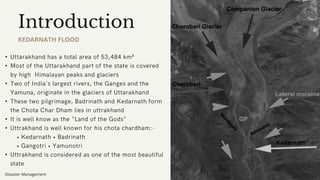
• It caused the melting of Chorabari glacier.
• The glacier is situated near to Kedarnath Temple. One of the
glacier’s two snouts, is the source of Mandakini River.
• The melting of the glacier in result caused the eruption of the
Mandakini River.
• Floods affected large part of North Himalayan state of
Uttrarakhand. The worst hit was Kedarnath.
• The quick melting of the snow from the Kedarnath Mountain, 6
km from the temple caused a huge damage.
• It flooded the Chorabari Lake.Cloudburst, landslides and
snowfall were some of the natural causes of the 2013 flood.
Causes
NATURAL REASONS
Causes
MAN MADE CAUSES
• The Uttarakhand Disaster have been officially termed a natural
calamity caused by cloudbursts and unprecedented heavy
monsoon rainfall.
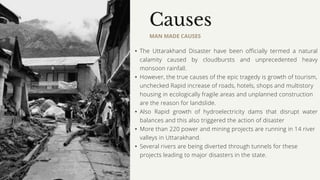
• However, the true causes of the epic tragedy is growth of tourism,
unchecked Rapid increase of roads, hotels, shops and multistory
housing in ecologically fragile areas and unplanned construction
are the reason for landslide.
• Also Rapid growth of hydroelectricity dams that disrupt water
balances and this also triggered the action of disaster
• More than 220 power and mining projects are running in 14 river
valleys in Uttarakhand.
• Several rivers are being diverted through tunnels for these
projects leading to major disasters in the state.
Disaster Management
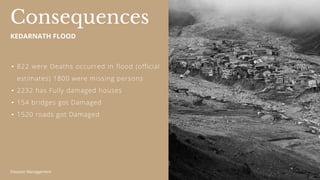
• 822 were Deaths occurred in flood (official
estimates) 1800 were missing persons
• 2232 has Fully damaged houses
• 154 bridges got Damaged
• 1520 roads got Damaged
Consequences
KEDARNATH FLOOD
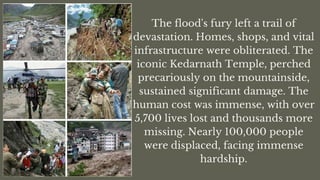
The flood's fury left a trail of
devastation. Homes, shops, and vital
infrastructure were obliterated. The
iconic Kedarnath Temple, perched
precariously on the mountainside,
sustained significant damage. The
human cost was immense, with over
5,700 lives lost and thousands more
missing. Nearly 100,000 people
were displaced, facing immense
hardship.
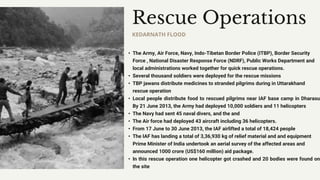
• The Army, Air Force, Navy, Indo-Tibetan Border Police (ITBP), Border Security
Force , National Disaster Response Force (NDRF), Public Works Department and
local administrations worked together for quick rescue operations.
• Several thousand soldiers were deployed for the rescue missions
• TBP jawans distribute medicines to stranded pilgrims during in Uttarakhand
rescue operation
• Local people distribute food to rescued pilgrims near IAF base camp in Dharasu
By 21 June 2013, the Army had deployed 10,000 soldiers and 11 helicopters
• The Navy had sent 45 naval divers, and the and
• The Air force had deployed 43 aircraft including 36 helicopters.
• From 17 June to 30 June 2013, the IAF airlifted a total of 18,424 people
• The IAF has landing a total of 3,36,930 kg of relief material and and equipment
Prime Minister of India undertook an aerial survey of the affected areas and
announced 1000 crore (US$160 million) aid package.
• In this rescue operation one helicopter got crashed and 20 bodies were found on
the site
Rescue Operations
KEDARNATH FLOOD
Conclusion
K E D A R N AT H F L O O D
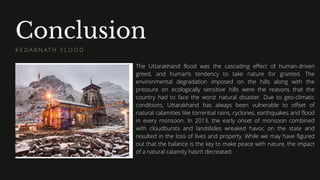
The Uttarakhand flood was the cascading effect of human-driven
greed, and human’s tendency to take nature for granted. The
environmental degradation imposed on the hills along with the
pressure on ecologically sensitive hills were the reasons that the
country had to face the worst natural disaster. Due to geo-climatic
conditions, Uttarakhand has always been vulnerable to offset of
natural calamities like torrential rains, cyclones, earthquakes and flood
in every monsoon. In 2013, the early onset of monsoon combined
with cloudbursts and landslides wreaked havoc on the state and
resulted in the loss of lives and property. While we may have figured
out that the balance is the key to make peace with nature, the impact
of a natural calamity hasn’t decreased.
Thank You !!

kedarnathflood.pptx 1.pptx

  • 1.
    Krish Manwani Aman Semwal AdamyaVikram Singh Harsh Sharma Pranjal Seluriyal Kartik Arora Priyambad Suman Environmental Disaster By :- Batch 37-38
  • 2.
  • 3.
  • 4.
  • 5.
    • From 14to 17 June 2013, Indian state of Uttarakhand and near by area received heavy rainfall • The rainfall was above benchmark which is above 375 precent13. • A cloudburst ,centered on the state of Uttarakhand caused devastating floods and landslides. • It caused the melting of Chorabari glacier. • The glacier is situated near to Kedarnath Temple. One of the glacier’s two snouts, is the source of Mandakini River. • The melting of the glacier in result caused the eruption of the Mandakini River. • Floods affected large part of North Himalayan state of Uttrarakhand. The worst hit was Kedarnath. • The quick melting of the snow from the Kedarnath Mountain, 6 km from the temple caused a huge damage. • It flooded the Chorabari Lake.Cloudburst, landslides and snowfall were some of the natural causes of the 2013 flood. Causes NATURAL REASONS
  • 6.
    Causes MAN MADE CAUSES •The Uttarakhand Disaster have been officially termed a natural calamity caused by cloudbursts and unprecedented heavy monsoon rainfall. • However, the true causes of the epic tragedy is growth of tourism, unchecked Rapid increase of roads, hotels, shops and multistory housing in ecologically fragile areas and unplanned construction are the reason for landslide. • Also Rapid growth of hydroelectricity dams that disrupt water balances and this also triggered the action of disaster • More than 220 power and mining projects are running in 14 river valleys in Uttarakhand. • Several rivers are being diverted through tunnels for these projects leading to major disasters in the state.
  • 7.
    Disaster Management • 822were Deaths occurred in flood (official estimates) 1800 were missing persons • 2232 has Fully damaged houses • 154 bridges got Damaged • 1520 roads got Damaged Consequences KEDARNATH FLOOD
  • 8.
    The flood's furyleft a trail of devastation. Homes, shops, and vital infrastructure were obliterated. The iconic Kedarnath Temple, perched precariously on the mountainside, sustained significant damage. The human cost was immense, with over 5,700 lives lost and thousands more missing. Nearly 100,000 people were displaced, facing immense hardship.
  • 9.
    • The Army,Air Force, Navy, Indo-Tibetan Border Police (ITBP), Border Security Force , National Disaster Response Force (NDRF), Public Works Department and local administrations worked together for quick rescue operations. • Several thousand soldiers were deployed for the rescue missions • TBP jawans distribute medicines to stranded pilgrims during in Uttarakhand rescue operation • Local people distribute food to rescued pilgrims near IAF base camp in Dharasu By 21 June 2013, the Army had deployed 10,000 soldiers and 11 helicopters • The Navy had sent 45 naval divers, and the and • The Air force had deployed 43 aircraft including 36 helicopters. • From 17 June to 30 June 2013, the IAF airlifted a total of 18,424 people • The IAF has landing a total of 3,36,930 kg of relief material and and equipment Prime Minister of India undertook an aerial survey of the affected areas and announced 1000 crore (US$160 million) aid package. • In this rescue operation one helicopter got crashed and 20 bodies were found on the site Rescue Operations KEDARNATH FLOOD
  • 10.
    Conclusion K E DA R N AT H F L O O D The Uttarakhand flood was the cascading effect of human-driven greed, and human’s tendency to take nature for granted. The environmental degradation imposed on the hills along with the pressure on ecologically sensitive hills were the reasons that the country had to face the worst natural disaster. Due to geo-climatic conditions, Uttarakhand has always been vulnerable to offset of natural calamities like torrential rains, cyclones, earthquakes and flood in every monsoon. In 2013, the early onset of monsoon combined with cloudbursts and landslides wreaked havoc on the state and resulted in the loss of lives and property. While we may have figured out that the balance is the key to make peace with nature, the impact of a natural calamity hasn’t decreased.
  • 11.