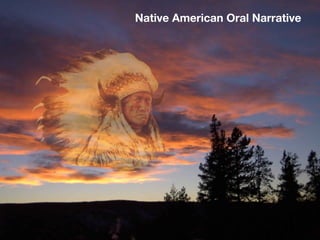
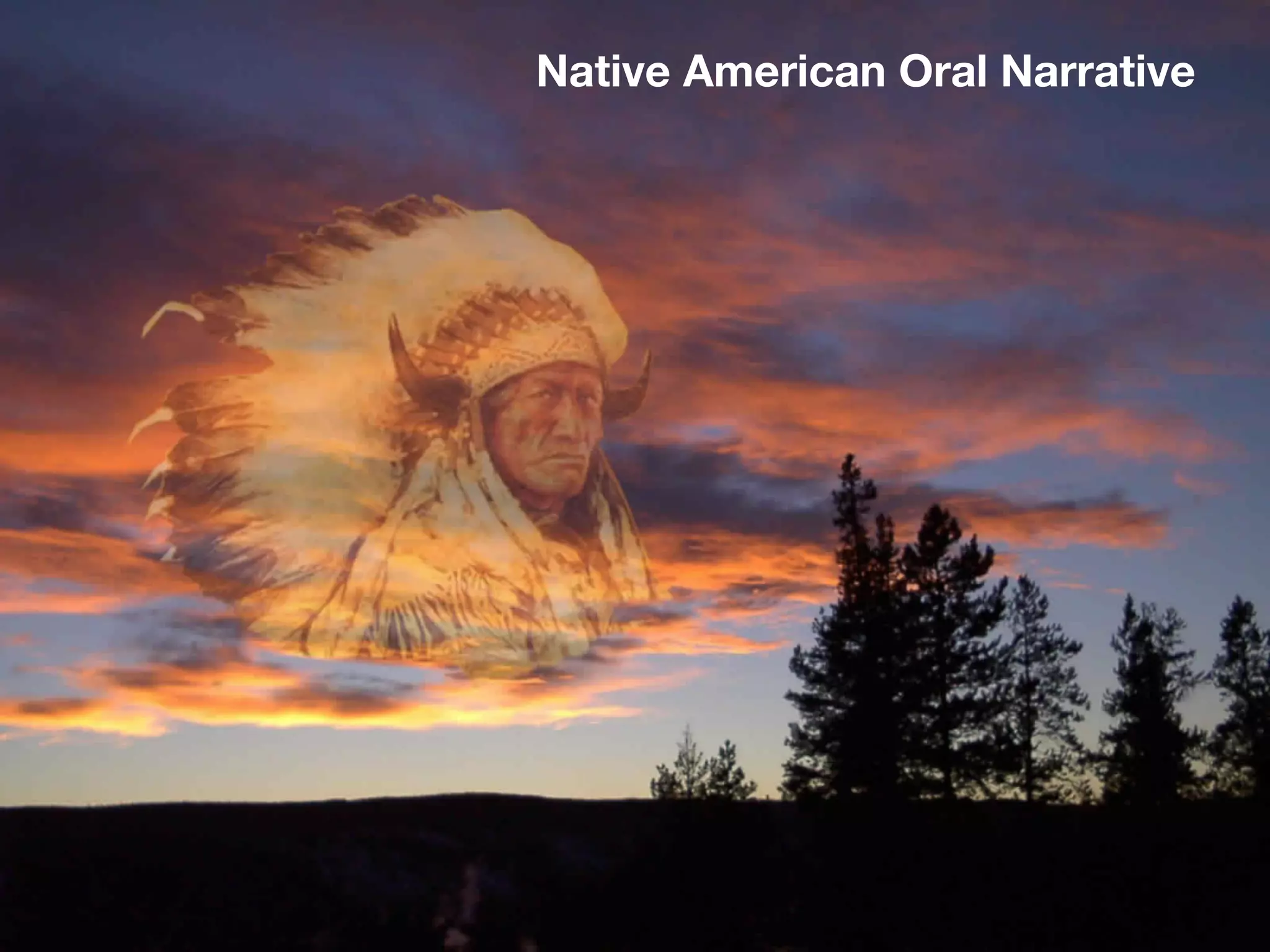
Native American Oral Narrative
Indigenous Literature
Four things we need to be mindful of:

1)	 Difference in cultural values and worldviews

2)	 Dynamics of possession, appropriation, and
translation

3)	 Historical definitions of literature (written and
oral)

4) Native American’s relationship to Nature and
symbolic thinking
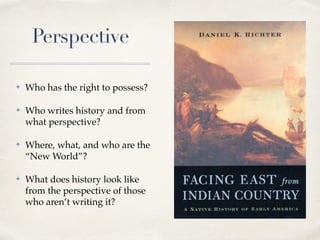
Perspective
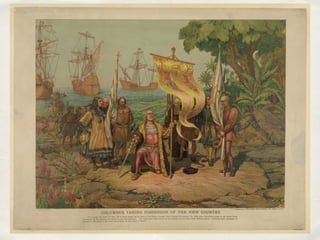
✤ Who has the right to possess?
✤ Who writes history and from
what perspective?
✤ Where, what, and who are the
“New World”?
✤ What does history look like
from the perspective of those
who aren’t writing it?
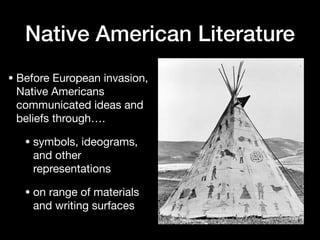
Native American Literature
• Before European invasion,
Native Americans
communicated ideas and
beliefs through….

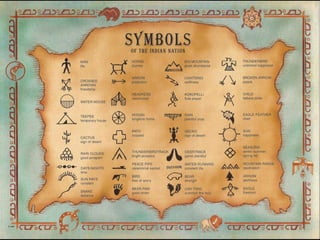
• symbols, ideograms,
and other
representations 

• on range of materials
and writing surfaces
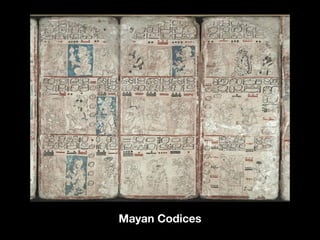
Mayan Codices
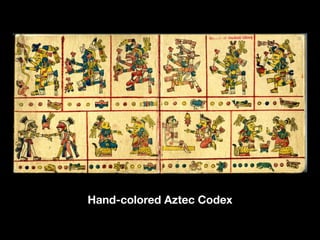
Hand-colored Aztec Codex
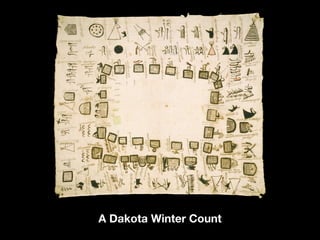
A Dakota Winter Count
Wampum Belts
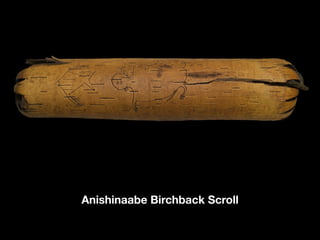
Anishinaabe Birchback Scroll
• “Oral literature is less a tradition of texts than
a tradition of performances”
• Performances often required knowledge of
locations, events, signs, and elements of their
mythology
• Performances involve rituals, symbols,
locations, voices, gestures
Mode of Presentation
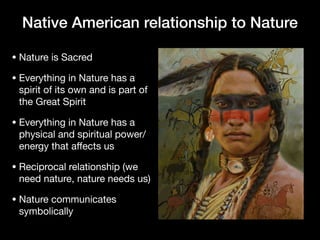
Native American relationship to Nature
• Nature is Sacred

• Everything in Nature has a
spirit of its own and is part of
the Great Spirit

• Everything in Nature has a
physical and spiritual power/
energy that affects us

• Reciprocal relationship (we
need nature, nature needs us)

• Nature communicates
symbolically
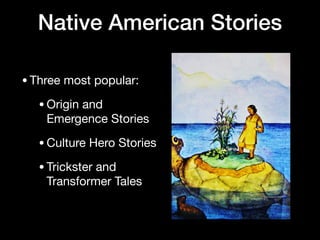
Native American Stories
•Three most popular:

•Origin and
Emergence Stories

•Culture Hero Stories

•Trickster and
Transformer Tales
The Iroquois
Creation Story
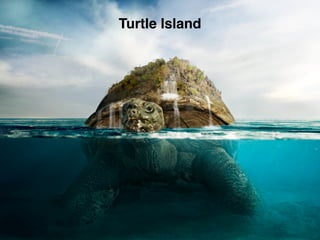
Turtle Island
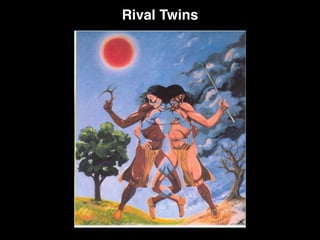
Rival Twins
Creation of the Whites (Yuchi)
A story about two different philosophies
of being, two different ways of seeing,
knowing, and encountering the world
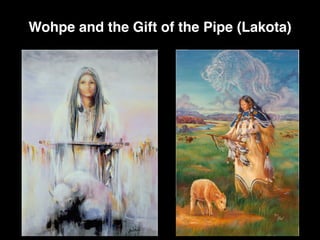
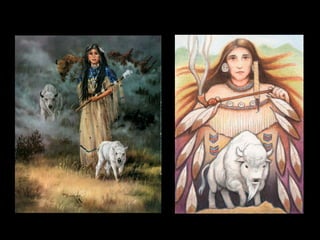
Wohpe and the Gift of the Pipe (Lakota)
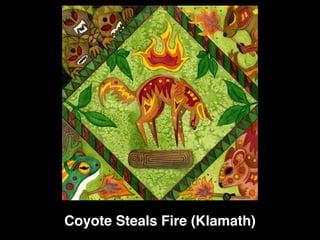
Coyote Steals Fire (Klamath)
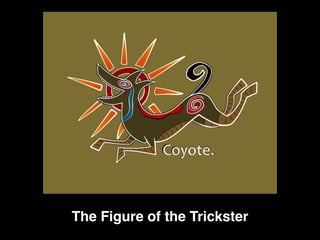
The Figure of the Trickster

Native American Oral Literature