DIALOGUE IN GAMES
Video Games and Interactive Fiction
PURPOSES OF DIALOGUE
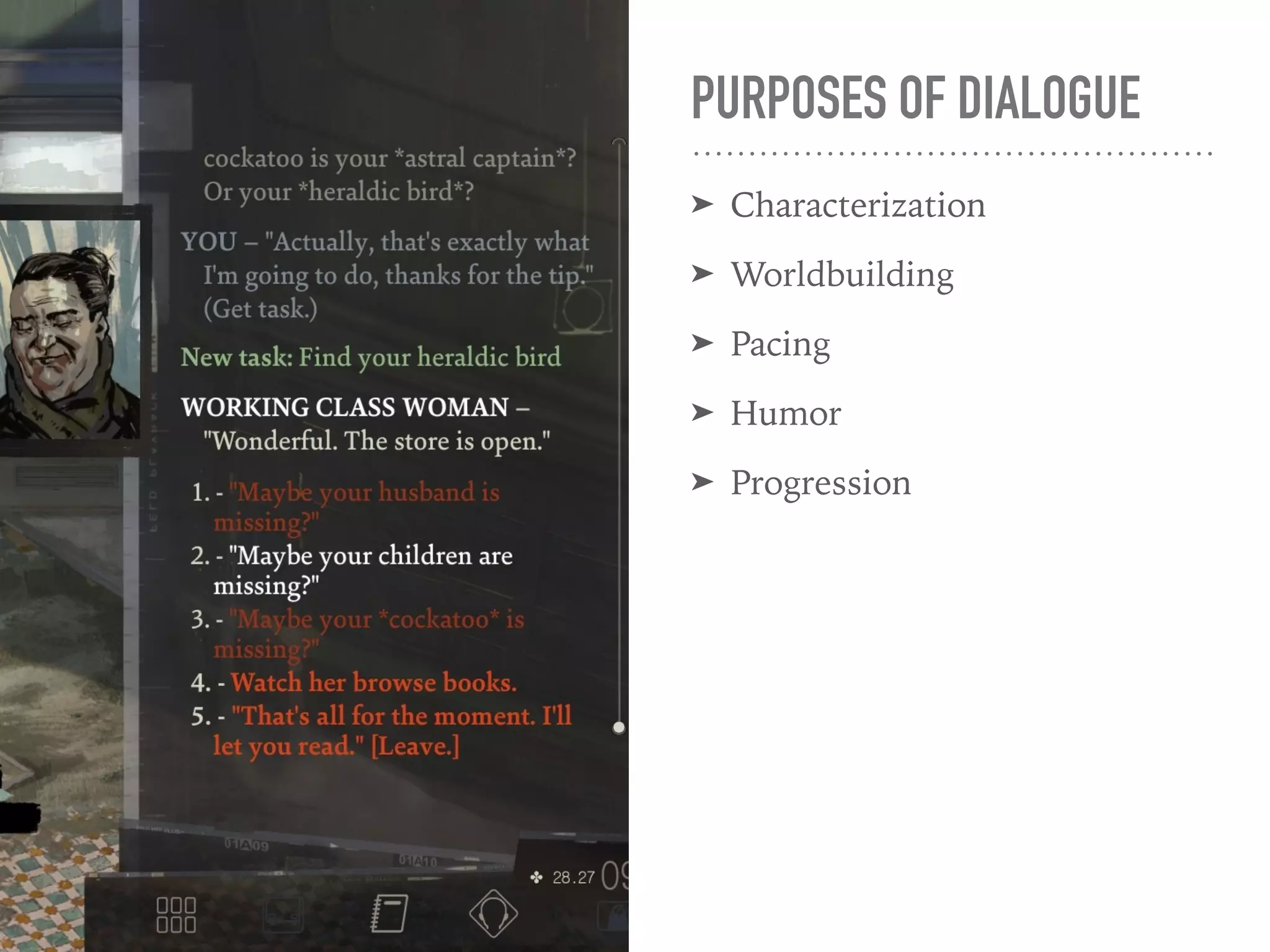
➤ Characterization
➤ Worldbuilding
➤ Pacing
➤ Humor
➤ Progression
THREE CATEGORIES OF DIALOGUE
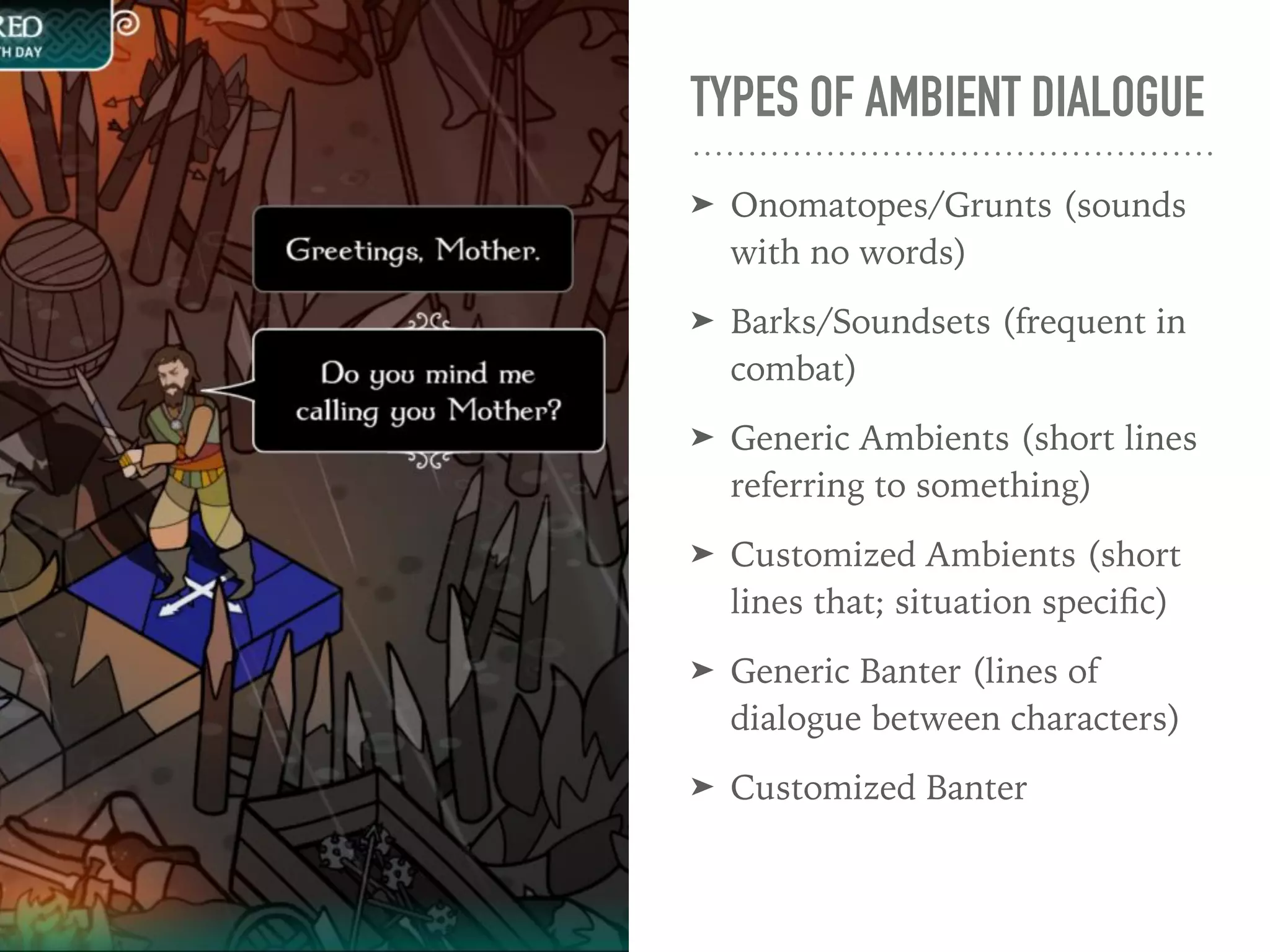
➤ Ambient Dialogue
➤ Talking that happens
during gameplay
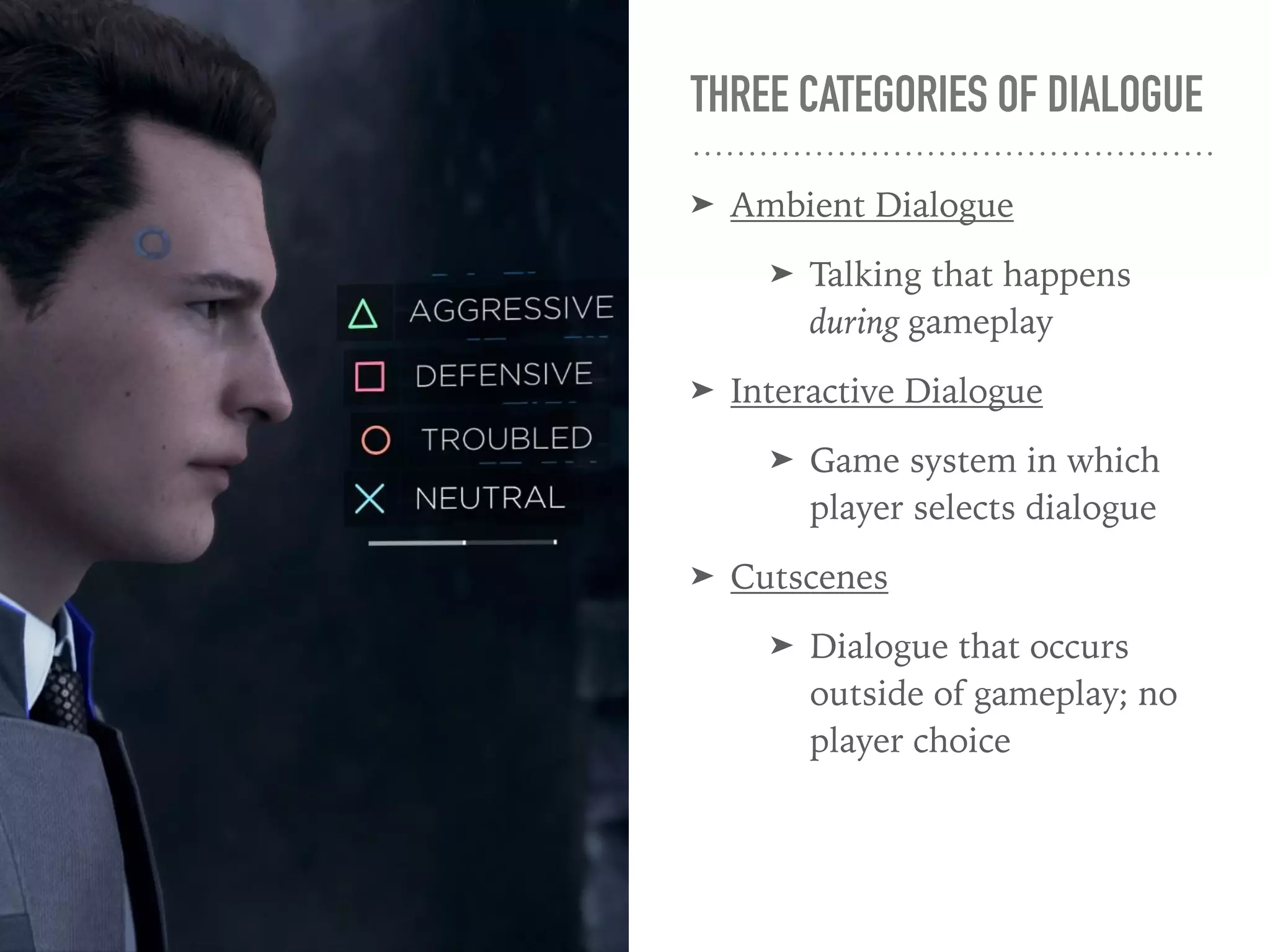
➤ Interactive Dialogue
➤ Game system in which
player selects dialogue
➤ Cutscenes
➤ Dialogue that occurs
outside of gameplay; no
player choice
TYPES OF AMBIENT DIALOGUE
➤ Onomatopes/Grunts (sounds
with no words)
➤ Barks/Soundsets (frequent in
combat)
➤ Generic Ambients (short lines
referring to something)
➤ Customized Ambients (short
lines that; situation specific)
➤ Generic Banter (lines of
dialogue between characters)
➤ Customized Banter
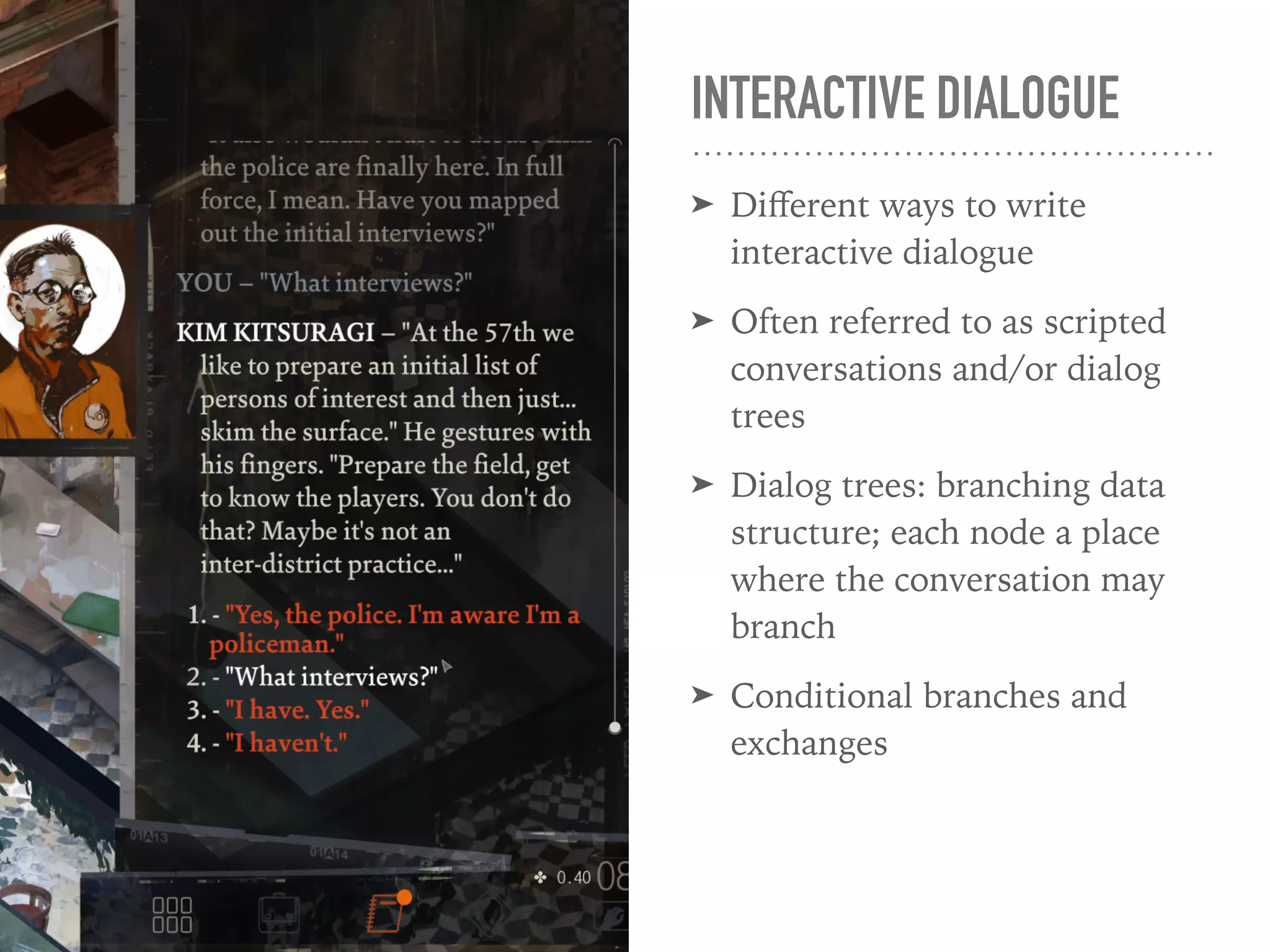
INTERACTIVE DIALOGUE
➤ Different ways to write
interactive dialogue
➤ Often referred to as scripted
conversations and/or dialog
trees
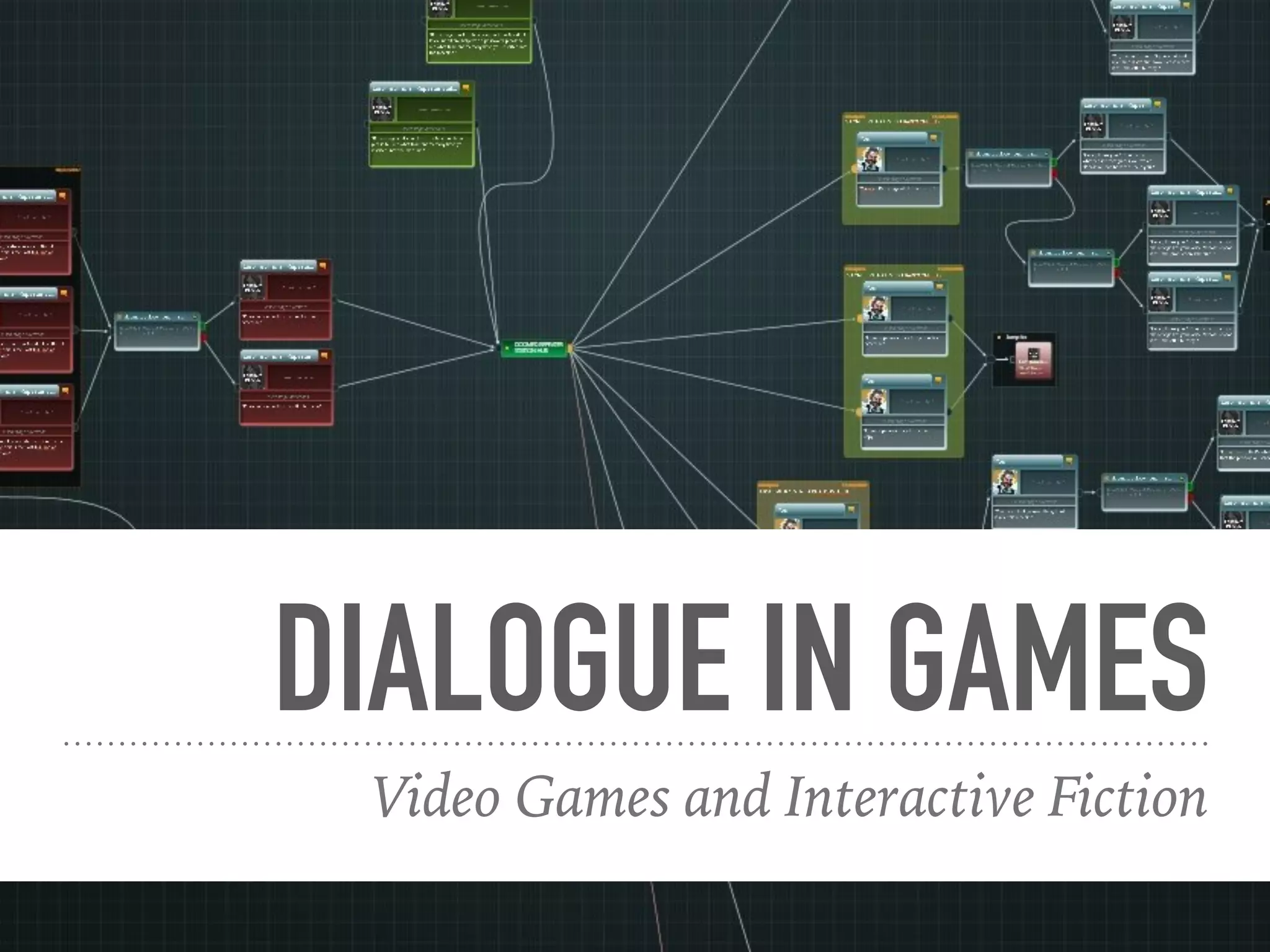
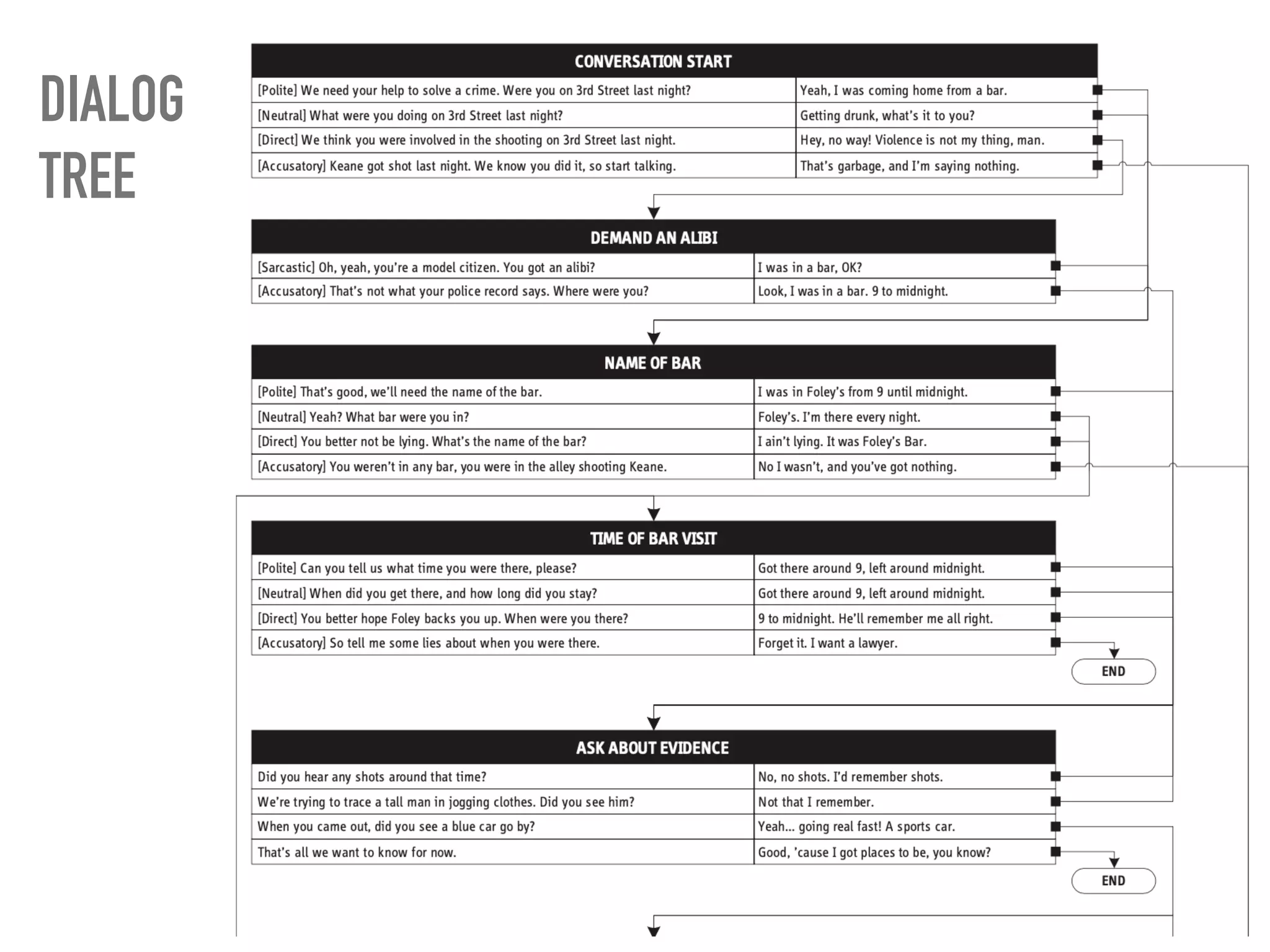
➤ Dialog trees: branching data
structure; each node a place
where the conversation may
branch
➤ Conditional branches and
exchanges
QUEST-GIVING DIALOGUE
➤ Opening hook: attract the player to enter dialogue
➤ First NPC Hub: quest-giver explains the problem
➤ Further NPC Hubs: details of the quest are explained
➤ Player Hubs: player asks questions; accepts or refuses quest
➤ Final NPC Hub: immediate goal is spelled out, sending the
player forward
➤ Success Dialogue (NPC): if player completes quest
➤ Failure Dialogue (NPC): if player fails or refuses quest
DIALOG
TREE
QUEST-GIVING DIALOGUE
➤ Common genre of game writing; often featured in portfolios
of game writers
➤ Usually spoken by NPC: introduces new objective, search
area, and enemies/obstacles
➤ Often divided into two parts: 1) quick context and
introduction to the quest; 2) fleshes out the context and urges
player to complete the quest
➤ Success or failure: what the NPC says when the player
successfully completes the quest, fails it, or refuses it

Dialogue in Games

  • 1.
    DIALOGUE IN GAMES VideoGames and Interactive Fiction
  • 2.
    PURPOSES OF DIALOGUE ➤Characterization ➤ Worldbuilding ➤ Pacing ➤ Humor ➤ Progression
  • 3.
    THREE CATEGORIES OFDIALOGUE ➤ Ambient Dialogue ➤ Talking that happens during gameplay ➤ Interactive Dialogue ➤ Game system in which player selects dialogue ➤ Cutscenes ➤ Dialogue that occurs outside of gameplay; no player choice
  • 4.
    TYPES OF AMBIENTDIALOGUE ➤ Onomatopes/Grunts (sounds with no words) ➤ Barks/Soundsets (frequent in combat) ➤ Generic Ambients (short lines referring to something) ➤ Customized Ambients (short lines that; situation specific) ➤ Generic Banter (lines of dialogue between characters) ➤ Customized Banter
  • 5.
    INTERACTIVE DIALOGUE ➤ Differentways to write interactive dialogue ➤ Often referred to as scripted conversations and/or dialog trees ➤ Dialog trees: branching data structure; each node a place where the conversation may branch ➤ Conditional branches and exchanges
  • 6.
    QUEST-GIVING DIALOGUE ➤ Openinghook: attract the player to enter dialogue ➤ First NPC Hub: quest-giver explains the problem ➤ Further NPC Hubs: details of the quest are explained ➤ Player Hubs: player asks questions; accepts or refuses quest ➤ Final NPC Hub: immediate goal is spelled out, sending the player forward ➤ Success Dialogue (NPC): if player completes quest ➤ Failure Dialogue (NPC): if player fails or refuses quest
  • 7.
  • 8.
    QUEST-GIVING DIALOGUE ➤ Commongenre of game writing; often featured in portfolios of game writers ➤ Usually spoken by NPC: introduces new objective, search area, and enemies/obstacles ➤ Often divided into two parts: 1) quick context and introduction to the quest; 2) fleshes out the context and urges player to complete the quest ➤ Success or failure: what the NPC says when the player successfully completes the quest, fails it, or refuses it