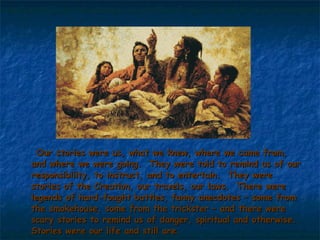
Our stories were us, what we knew, where we came from, and where we were going.  They were told to remind us of our responsibility, to instruct, and to entertain.  They were stories of the Creation, our travels, our laws.  There were legends of hard-fought battles, funny anecdotes – some from the smokehouse, some from the trickster – and there were scary stories to remind us of danger, spiritual and otherwise. Stories were our life and still are. Larry Hill, Seneca Tribe
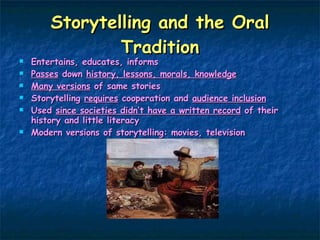
Storytelling and the Oral Tradition Entertains, educates, informs Passes  down  history, lessons, morals, knowledge Many versions  of same stories Storytelling  requires  cooperation and  audience inclusion Used  since societies didn’t have a written record  of their history and little literacy  Modern versions of storytelling: movies, television
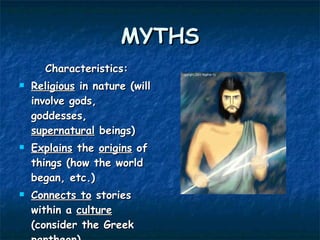
MYTHS Characteristics: Religious  in nature (will involve gods, goddesses,  supernatural  beings) Explains  the  origins  of things (how the world began, etc.) Connects to  stories within a  culture  (consider the Greek pantheon)
MYTHS – cont’d Exists due to oral tradition  Considered essentially true  by that society (their cultural mythology) mythos (word or story) + logos (word of truth) Current meaning of “myth”???
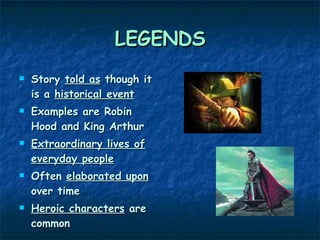
LEGENDS Story  told as  though it is a  historical event Examples are Robin Hood and King Arthur Extraordinary lives of everyday people Often  elaborated upon  over time Heroic characters  are common
FOLKTALES Passed on  through generations May have been  based partially on truth  – now hidden Include fables  (animals / morals) and  fairy tales  (magical characters and creatures)
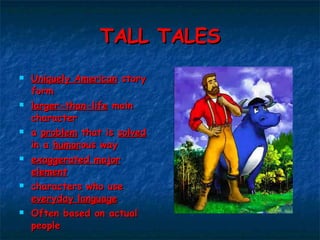
TALL TALES Uniquely American  story form  larger-than-life  main character  a  problem  that is  solved  in a  humor ous way exaggerated major element characters who use  everyday language   Often based on actual people
NATIVE AMERICAN MYTHS Could be called folklore Belief that  everything is divine “ Why ” and “ trickster ” stories Trickster demonstrates qualities that makes civilization possible, but also cause problems

Introduction To Storytelling

  • 1.
    Our stories wereus, what we knew, where we came from, and where we were going. They were told to remind us of our responsibility, to instruct, and to entertain. They were stories of the Creation, our travels, our laws. There were legends of hard-fought battles, funny anecdotes – some from the smokehouse, some from the trickster – and there were scary stories to remind us of danger, spiritual and otherwise. Stories were our life and still are. Larry Hill, Seneca Tribe
  • 2.
    Storytelling and theOral Tradition Entertains, educates, informs Passes down history, lessons, morals, knowledge Many versions of same stories Storytelling requires cooperation and audience inclusion Used since societies didn’t have a written record of their history and little literacy Modern versions of storytelling: movies, television
  • 3.
    MYTHS Characteristics: Religious in nature (will involve gods, goddesses, supernatural beings) Explains the origins of things (how the world began, etc.) Connects to stories within a culture (consider the Greek pantheon)
  • 4.
    MYTHS – cont’dExists due to oral tradition Considered essentially true by that society (their cultural mythology) mythos (word or story) + logos (word of truth) Current meaning of “myth”???
  • 5.
    LEGENDS Story told as though it is a historical event Examples are Robin Hood and King Arthur Extraordinary lives of everyday people Often elaborated upon over time Heroic characters are common
  • 6.
    FOLKTALES Passed on through generations May have been based partially on truth – now hidden Include fables (animals / morals) and fairy tales (magical characters and creatures)
  • 7.
    TALL TALES UniquelyAmerican story form larger-than-life main character a problem that is solved in a humor ous way exaggerated major element characters who use everyday language Often based on actual people
  • 8.
    NATIVE AMERICAN MYTHSCould be called folklore Belief that everything is divine “ Why ” and “ trickster ” stories Trickster demonstrates qualities that makes civilization possible, but also cause problems