Propp and Todorov
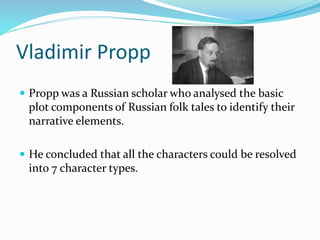
Vladimir Propp
 Propp was a Russian scholar who analysed the basic
plot components of Russian folk tales to identify their
narrative elements.
 He concluded that all the characters could be resolved
into 7 character types.
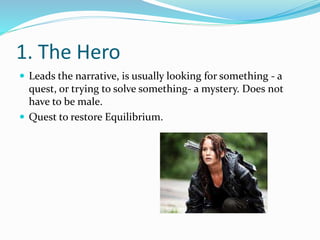
1. The Hero
 Leads the narrative, is usually looking for something - a
quest, or trying to solve something- a mystery. Does not
have to be male.
 Quest to restore Equilibrium.
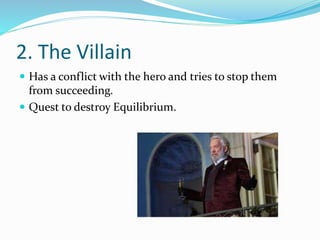
2. The Villain
 Has a conflict with the hero and tries to stop them
from succeeding.
 Quest to destroy Equilibrium.
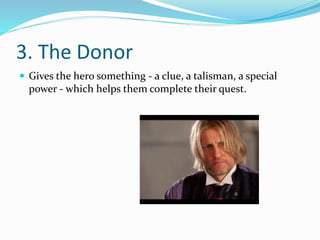
3. The Donor
 Gives the hero something - a clue, a talisman, a special
power - which helps them complete their quest.
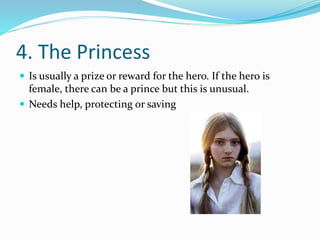
4. The Princess
 Is usually a prize or reward for the hero. If the hero is
female, there can be a prince but this is unusual.
 Needs help, protecting or saving
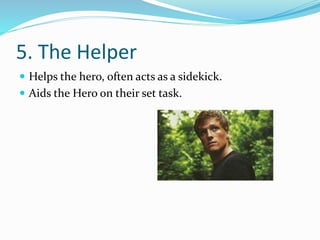
5. The Helper
 Helps the hero, often acts as a sidekick.
 Aids the Hero on their set task.
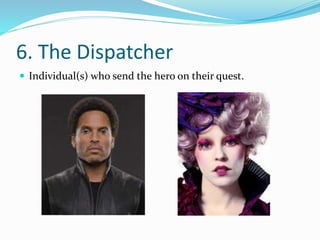
6. The Dispatcher
 Individual(s) who send the hero on their quest.
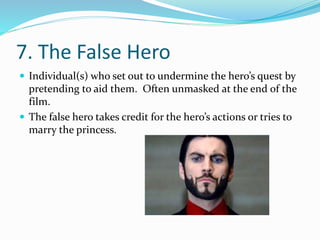
7. The False Hero
 Individual(s) who set out to undermine the hero’s quest by
pretending to aid them. Often unmasked at the end of the
film.
 The false hero takes credit for the hero’s actions or tries to
marry the princess.
Tzvetan Todorov
 Tzvetan Todorov believes that every narrative has
the same five stages to it, based around the main
character.
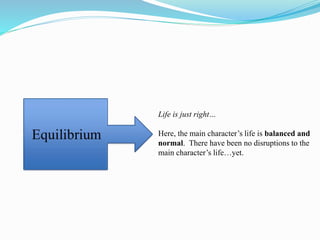
Life is just right…
Here, the main character’s life is balanced and
normal. There have been no disruptions to the
main character’s life…yet.
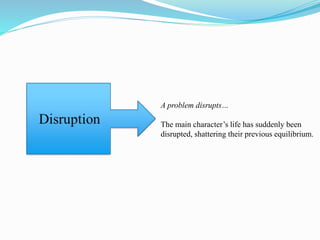
A problem disrupts…
The main character’s life has suddenly been
disrupted, shattering their previous equilibrium.
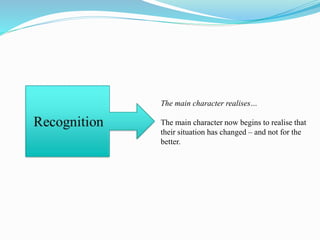
The main character realises…
The main character now begins to realise that
their situation has changed – and not for the
better.
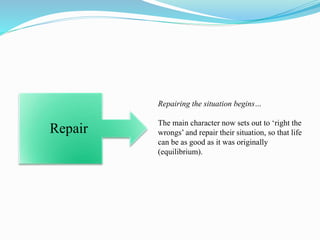
Repair
Repairing the situation begins…
The main character now sets out to ‘right the
wrongs’ and repair their situation, so that life
can be as good as it was originally
(equilibrium).
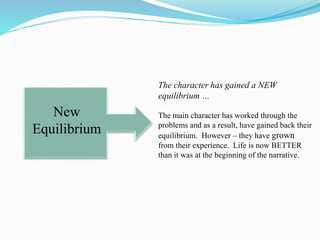
New
Equilibrium
The character has gained a NEW
equilibrium …
The main character has worked through the
problems and as a result, have gained back their
equilibrium. However – they have grown
from their experience. Life is now BETTER
than it was at the beginning of the narrative.

Narrative theories

  • 1.
  • 2.
    Vladimir Propp  Proppwas a Russian scholar who analysed the basic plot components of Russian folk tales to identify their narrative elements.  He concluded that all the characters could be resolved into 7 character types.
  • 3.
    1. The Hero Leads the narrative, is usually looking for something - a quest, or trying to solve something- a mystery. Does not have to be male.  Quest to restore Equilibrium.
  • 4.
    2. The Villain Has a conflict with the hero and tries to stop them from succeeding.  Quest to destroy Equilibrium.
  • 5.
    3. The Donor Gives the hero something - a clue, a talisman, a special power - which helps them complete their quest.
  • 6.
    4. The Princess Is usually a prize or reward for the hero. If the hero is female, there can be a prince but this is unusual.  Needs help, protecting or saving
  • 7.
    5. The Helper Helps the hero, often acts as a sidekick.  Aids the Hero on their set task.
  • 8.
    6. The Dispatcher Individual(s) who send the hero on their quest.
  • 9.
    7. The FalseHero  Individual(s) who set out to undermine the hero’s quest by pretending to aid them. Often unmasked at the end of the film.  The false hero takes credit for the hero’s actions or tries to marry the princess.
  • 10.
    Tzvetan Todorov  TzvetanTodorov believes that every narrative has the same five stages to it, based around the main character.
  • 11.
    Life is justright… Here, the main character’s life is balanced and normal. There have been no disruptions to the main character’s life…yet.
  • 12.
    A problem disrupts… Themain character’s life has suddenly been disrupted, shattering their previous equilibrium.
  • 13.
    The main characterrealises… The main character now begins to realise that their situation has changed – and not for the better.
  • 14.
    Repair Repairing the situationbegins… The main character now sets out to ‘right the wrongs’ and repair their situation, so that life can be as good as it was originally (equilibrium).
  • 15.
    New Equilibrium The character hasgained a NEW equilibrium … The main character has worked through the problems and as a result, have gained back their equilibrium. However – they have grown from their experience. Life is now BETTER than it was at the beginning of the narrative.