VLADIMIR PROPP’S CHARACTER
THEORY
PROPP’S THEORY SAIS THAT THERE ARE NORMALLY
7 MAIN CHARACTERS IN A FAIRYTALE.
 The hero
 The villain
 The princess
 The dispatcher
 The donor
 The helper
 The false hero
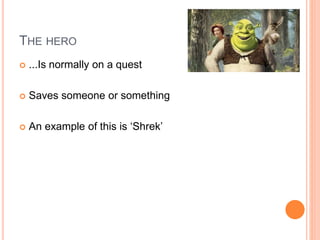
THE HERO
 ...Is normally on a quest
 Saves someone or something
 An example of this is ‘Shrek’
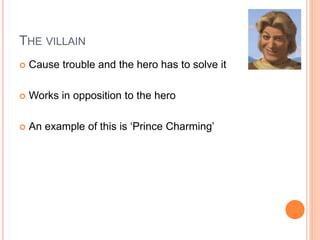
THE VILLAIN
 Cause trouble and the hero has to solve it
 Works in opposition to the hero
 An example of this is ‘Prince Charming’
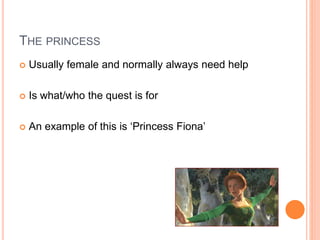
THE PRINCESS
 Usually female and normally always need help
 Is what/who the quest is for
 An example of this is ‘Princess Fiona’
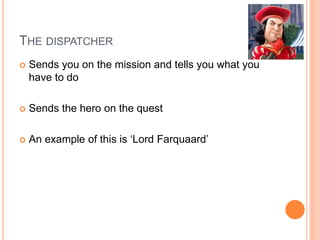
THE DISPATCHER
 Sends you on the mission and tells you what you
have to do
 Sends the hero on the quest
 An example of this is ‘Lord Farquaard’
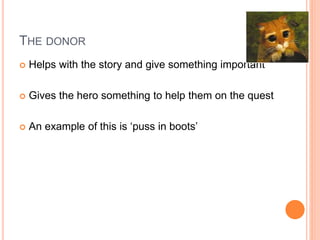
THE DONOR
 Helps with the story and give something important
 Gives the hero something to help them on the quest
 An example of this is ‘puss in boots’
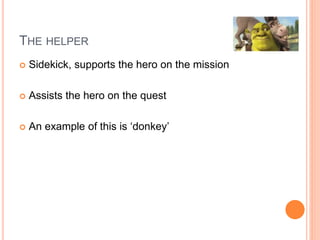
THE HELPER
 Sidekick, supports the hero on the mission
 Assists the hero on the quest
 An example of this is ‘donkey’
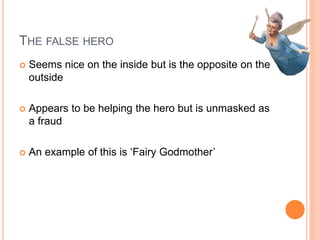
THE FALSE HERO
 Seems nice on the inside but is the opposite on the
outside
 Appears to be helping the hero but is unmasked as
a fraud
 An example of this is ‘Fairy Godmother’
TZVETAN TODOROV THEORY
THERE ARE 5 STAGES THAT TODOROV BELIEVED
MADE UP HIS THEORY
 Equilibrium (how it starts. Normal life?)
 Disruption (something happens)
 Recognition of disruption (characters recognise
something has happened)
 Attempt to repair disruption (try to fix the situation)
 New Equilibrium(there is a new ‘normal’ life)
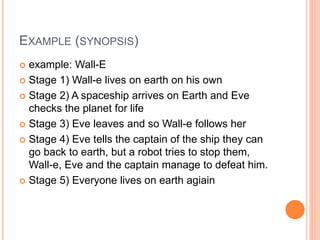
EXAMPLE (SYNOPSIS)
 example: Wall-E
 Stage 1) Wall-e lives on earth on his own
 Stage 2) A spaceship arrives on Earth and Eve
checks the planet for life
 Stage 3) Eve leaves and so Wall-e follows her
 Stage 4) Eve tells the captain of the ship they can
go back to earth, but a robot tries to stop them,
Wall-e, Eve and the captain manage to defeat him.
 Stage 5) Everyone lives on earth agiain

Vladimir propp’s character theory powerpoint

  • 1.
  • 2.
    PROPP’S THEORY SAISTHAT THERE ARE NORMALLY 7 MAIN CHARACTERS IN A FAIRYTALE.  The hero  The villain  The princess  The dispatcher  The donor  The helper  The false hero
  • 3.
    THE HERO  ...Isnormally on a quest  Saves someone or something  An example of this is ‘Shrek’
  • 4.
    THE VILLAIN  Causetrouble and the hero has to solve it  Works in opposition to the hero  An example of this is ‘Prince Charming’
  • 5.
    THE PRINCESS  Usuallyfemale and normally always need help  Is what/who the quest is for  An example of this is ‘Princess Fiona’
  • 6.
    THE DISPATCHER  Sendsyou on the mission and tells you what you have to do  Sends the hero on the quest  An example of this is ‘Lord Farquaard’
  • 7.
    THE DONOR  Helpswith the story and give something important  Gives the hero something to help them on the quest  An example of this is ‘puss in boots’
  • 8.
    THE HELPER  Sidekick,supports the hero on the mission  Assists the hero on the quest  An example of this is ‘donkey’
  • 9.
    THE FALSE HERO Seems nice on the inside but is the opposite on the outside  Appears to be helping the hero but is unmasked as a fraud  An example of this is ‘Fairy Godmother’
  • 10.
  • 11.
    THERE ARE 5STAGES THAT TODOROV BELIEVED MADE UP HIS THEORY  Equilibrium (how it starts. Normal life?)  Disruption (something happens)  Recognition of disruption (characters recognise something has happened)  Attempt to repair disruption (try to fix the situation)  New Equilibrium(there is a new ‘normal’ life)
  • 12.
    EXAMPLE (SYNOPSIS)  example:Wall-E  Stage 1) Wall-e lives on earth on his own  Stage 2) A spaceship arrives on Earth and Eve checks the planet for life  Stage 3) Eve leaves and so Wall-e follows her  Stage 4) Eve tells the captain of the ship they can go back to earth, but a robot tries to stop them, Wall-e, Eve and the captain manage to defeat him.  Stage 5) Everyone lives on earth agiain