• Abir, Ashrful Aziz- 13-24800-2
• Alam, Md Nahid- 13-23917-1
• Mamum, Md Abdullah Al- 13-22850-1
• Majumder, Remon- 13-23112-1
• Bhowal, Sajib Kumar- 13-23263-1
Rethwan Faiz
 What is Nanotechnology?
 When is it invented?
 Why “nano”?
 Where used?
 How it builds our future?
 Nanotechnology is a science where
everything works in nano scale .
 The first use of the concepts in 'nano-
technology' (but predating use of that
name) was in "There's Plenty of Room at
the Bottom," a talk given by physicist
Richard Feynman at an American Physical
Society meeting at Caltech on December 29,
1959.
 Why NANO !? It is better to question why
not NANO ?
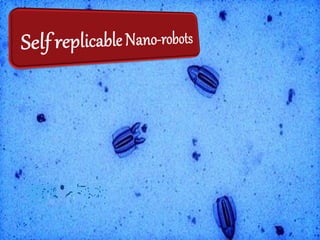
 Inject nano robots into the
patient
 Detect cancer cell
 Destroy cell
 Do not effect on healthy
cell
 New research published
in Advanced Functional
Materials provides some of the
groundwork necessary to one
day develop mini-robots that
could perform delicate tasks
inside our body. As the thinking
goes, these nanotechnologies
would be able to swim in our
bloodstream and even assemble
medical devices inside our
body.
 The basic concept of
pollution control on a
molecular level is
separating specific elements
and molecules from a
mixture of atoms and
molecules . The current
method for separating
atoms is thermal
partitioning, which uses
heat to force phase changes
Making composite fabric with nano-sized particles
or fibers allows improvement of fabric properties
without a significant increase in weight, thickness,
or stiffness as might have been the case with
previously-used  techniques
Nanowhiskers that cause water to bead up, making the
fabric water and stain resistant.
Silver nanoparticles in fabric that kills bacteria making
clothing odor- resistant.
Nanopores providing superior insulation for shoe
inserts in cold weather. 
Nanoparticles that provide a "lotus plant" effect for
fabric used awnings and other material left out in the
weather, causing dirt to rinse off in the rain.
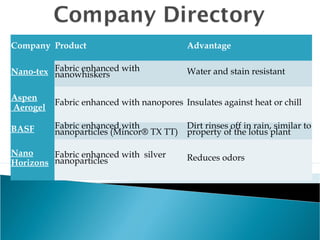
Company Product Advantage
Nano-tex Fabric enhanced with
nanowhiskers Water and stain resistant
Aspen
Aerogel
Fabric enhanced with nanopores Insulates against heat or chill
BASF Fabric enhanced with
nanoparticles (Mincor® TX TT)
Dirt rinses off in rain, similar to
property of the lotus plant
Nano
Horizons
Fabric enhanced with  silver
nanoparticles Reduces odors
Nanotechnologies provide the potential to
enhance energy efficiency across all brunches of
energy industry and to economically leverage
renewable energy production through new
technological solutions and optimized production
technologies.
Nanotechnologies provide essential improvement
potentials for the development of both
conventional energy source (fossil and nuclear)
and the renewable energy sources like geothermal
energy, sun, wind, water, tides or biomass
Nanotechnology involves manipulating properties
and structure at nanoscale often involving
dimensions that are just tiny fractions of the width
of a human hair.
Nanotechnology is already being used in products
in its passive form, such as cosmetics and
sunscreens.
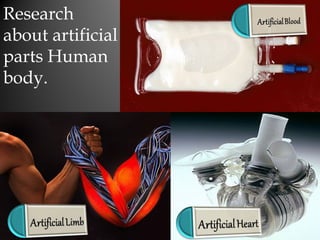
Research
about artificial
parts Human
body.
Nanotechnology final

Nanotechnology final

  • 2.
    • Abir, AshrfulAziz- 13-24800-2 • Alam, Md Nahid- 13-23917-1 • Mamum, Md Abdullah Al- 13-22850-1 • Majumder, Remon- 13-23112-1 • Bhowal, Sajib Kumar- 13-23263-1
  • 3.
  • 4.
     What isNanotechnology?  When is it invented?  Why “nano”?  Where used?  How it builds our future?
  • 5.
     Nanotechnology isa science where everything works in nano scale .  The first use of the concepts in 'nano- technology' (but predating use of that name) was in "There's Plenty of Room at the Bottom," a talk given by physicist Richard Feynman at an American Physical Society meeting at Caltech on December 29, 1959.  Why NANO !? It is better to question why not NANO ?
  • 8.
     Inject nanorobots into the patient  Detect cancer cell  Destroy cell  Do not effect on healthy cell
  • 9.
     New researchpublished in Advanced Functional Materials provides some of the groundwork necessary to one day develop mini-robots that could perform delicate tasks inside our body. As the thinking goes, these nanotechnologies would be able to swim in our bloodstream and even assemble medical devices inside our body.
  • 10.
     The basicconcept of pollution control on a molecular level is separating specific elements and molecules from a mixture of atoms and molecules . The current method for separating atoms is thermal partitioning, which uses heat to force phase changes
  • 11.
    Making composite fabricwith nano-sized particles or fibers allows improvement of fabric properties without a significant increase in weight, thickness, or stiffness as might have been the case with previously-used  techniques
  • 12.
    Nanowhiskers that cause waterto bead up, making the fabric water and stain resistant. Silver nanoparticles in fabric that kills bacteria making clothing odor- resistant. Nanopores providing superior insulation for shoe inserts in cold weather.  Nanoparticles that provide a "lotus plant" effect for fabric used awnings and other material left out in the weather, causing dirt to rinse off in the rain.
  • 13.
    Company Product Advantage Nano-texFabric enhanced with nanowhiskers Water and stain resistant Aspen Aerogel Fabric enhanced with nanopores Insulates against heat or chill BASF Fabric enhanced with nanoparticles (Mincor® TX TT) Dirt rinses off in rain, similar to property of the lotus plant Nano Horizons Fabric enhanced with  silver nanoparticles Reduces odors
  • 14.
    Nanotechnologies provide thepotential to enhance energy efficiency across all brunches of energy industry and to economically leverage renewable energy production through new technological solutions and optimized production technologies.
  • 15.
    Nanotechnologies provide essentialimprovement potentials for the development of both conventional energy source (fossil and nuclear) and the renewable energy sources like geothermal energy, sun, wind, water, tides or biomass
  • 16.
    Nanotechnology involves manipulatingproperties and structure at nanoscale often involving dimensions that are just tiny fractions of the width of a human hair. Nanotechnology is already being used in products in its passive form, such as cosmetics and sunscreens.
  • 19.