NANOROBOTICS
M.FAIZAN
FA21-BSE-132
Presentation Overview
 Introduction to Robotics
 Nanorobotics
 Applications using Nanorobots
 Fractal Robots
 Conclusion
Introduction to robotics
 Like nanotechnology, Robotics is the use of
technology to design and manufacture (intelligent)
machines, built for specific purposes, programmed to
perform specific tasks.
What is a Robot?
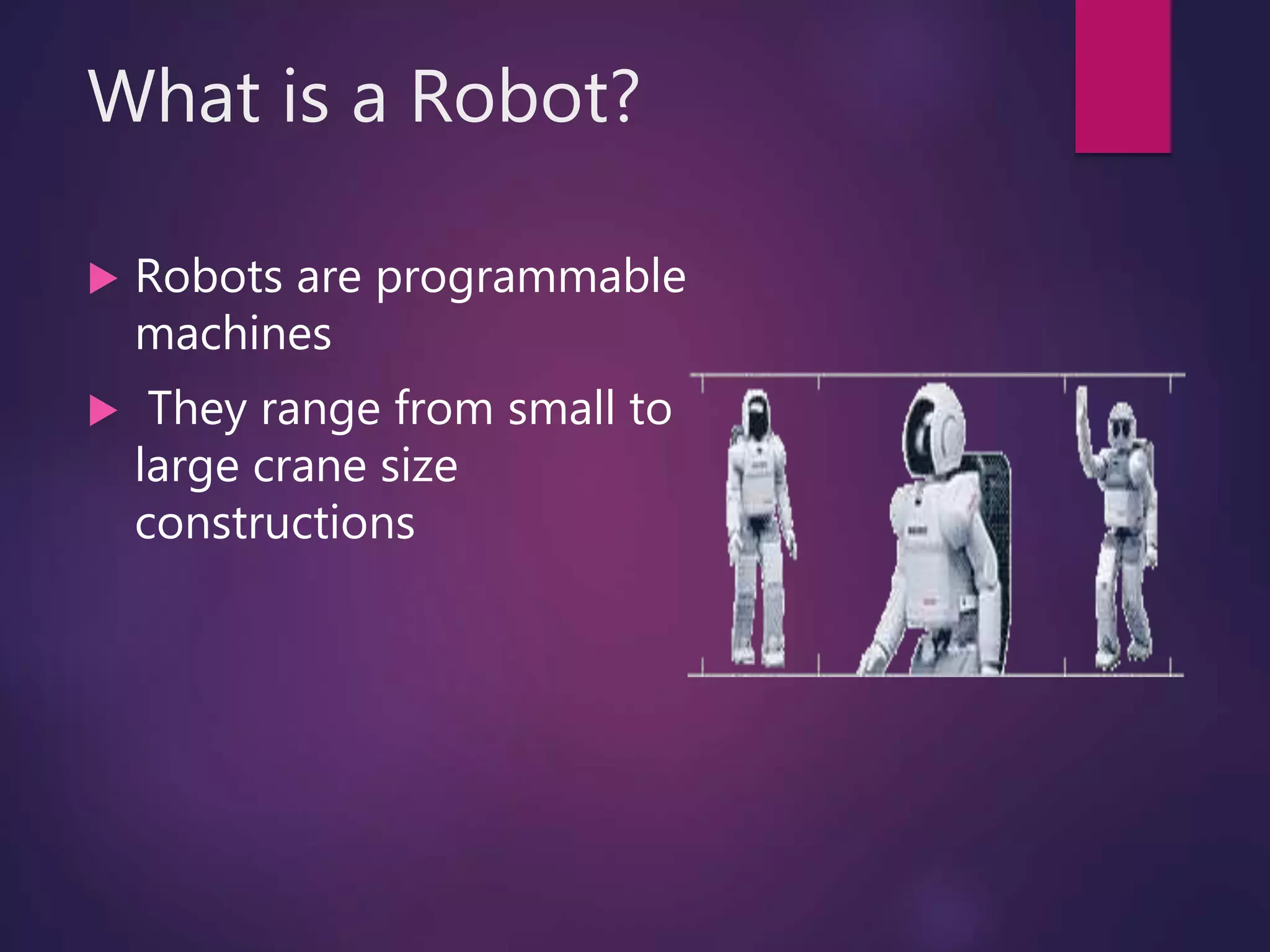
 Robots are programmable
machines
 They range from small to
large crane size
constructions
 NANOSCALE
Introduction to
Nanorobotics
 It deals with the controlled manipulation of objects
with nanometer scale dimensions
 Nano manipulation is most effective process.
 It is concerned with construction and programming of
robots with overall dimensions at the nanoscale.
NANOROBOTICS
 It is concerned with atomic and
molecular-sized objects and is also
called Molecular Robotics.
 Nanorobotics research has
proceeded along two lines:
- first is devoted to simulation
with nanoscale dimensions.
- second involves manipulation
with macroscopic instruments.
Nanorobot
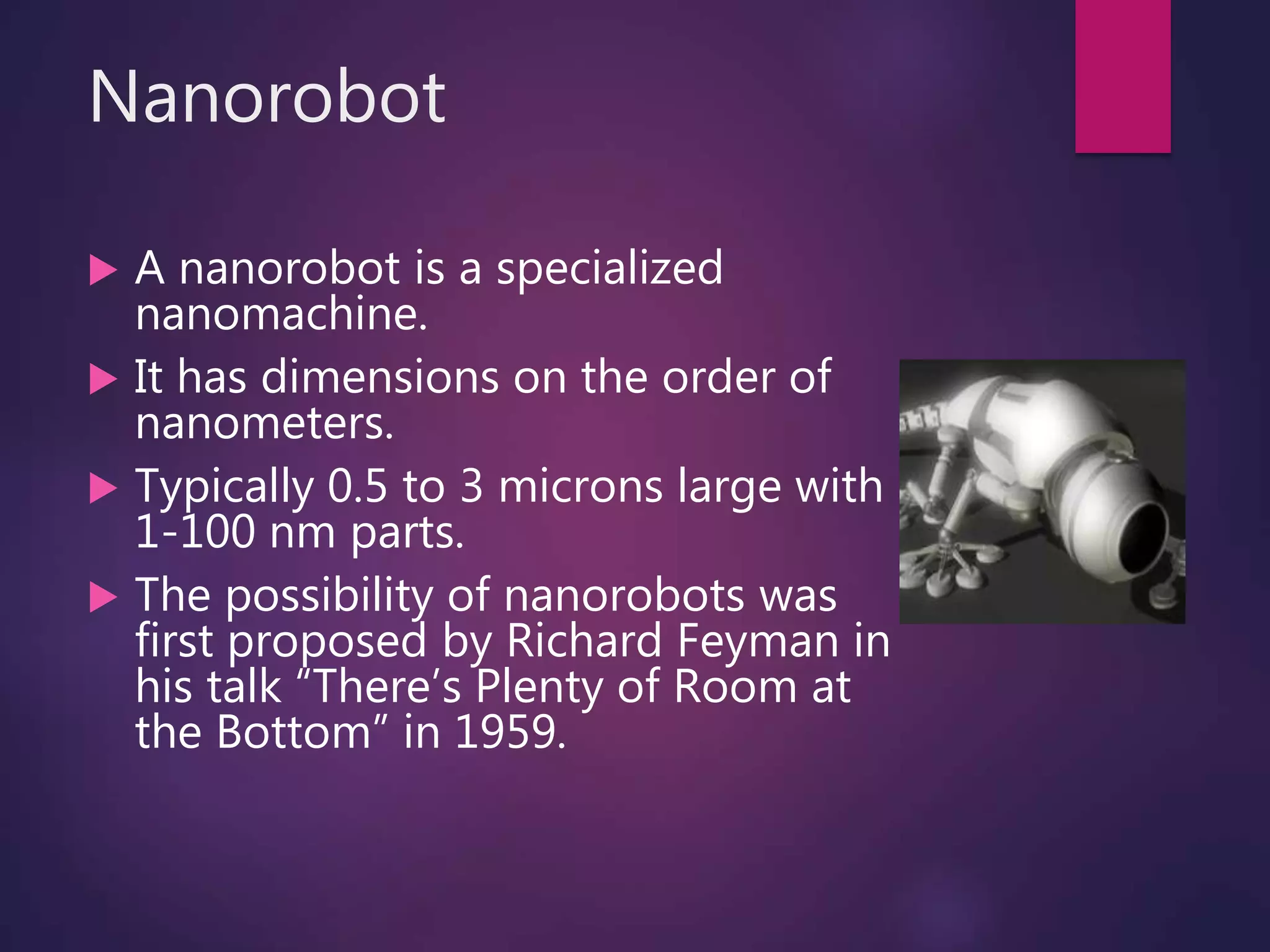
 A nanorobot is a specialized
nanomachine.
 It has dimensions on the order of
nanometers.
 Typically 0.5 to 3 microns large with
1-100 nm parts.
 The possibility of nanorobots was
first proposed by Richard Feyman in
his talk “There’s Plenty of Room at
the Bottom” in 1959.
Features of Nanorobots
 Nanorobots can be categorized into two
groups called autonomous robots and
insect robots.
 A major asset of nanorobots is that they
require very little energy to operate.
 Durability is another potential asset, may
remain operational for years, decades or
centuries.
 High speed is also a significant
consideration. It can operate much faster
than their larger counterparts.
Nanorobots in medicine
 It’s structure will have two spaces consisting
of interior and exterior.
 They will communicate with doctor by
encoding messages to acoustic signals.
 The production of nanorobots has taken a
step closer to real application due to
technological advancements such as AFM ,
bionic motors, nano tanks, DNA as
computer, and nano robotics arms.
 Leonard Adleman confirmed that DNA is
programmable in computers.
Applications using
Nanorobots
 To cure skin disease and as cosmetic
cream.
 Can be used a a mouthwash to do all
brushing and flossing.
 Would augment immune system by
finding and killing bacteria and viruses.
 It would prevent heart attack , kill cancer
cells etc.
 To monitor potentially dangerous
microorganisms in the ocean.
Nanorobots can be used in blood cell
to detect pathogens.
Fractal Robots
 Fractal robot is a new kind of robot
made from motorized cubic bricks
that move under computer control.
 These cubic motorized bricks can
be programmed to move and
shuffle themselves to change
shape to make objects likes a
house potentially in a few seconds
because of their motorized internal
mechanisms.
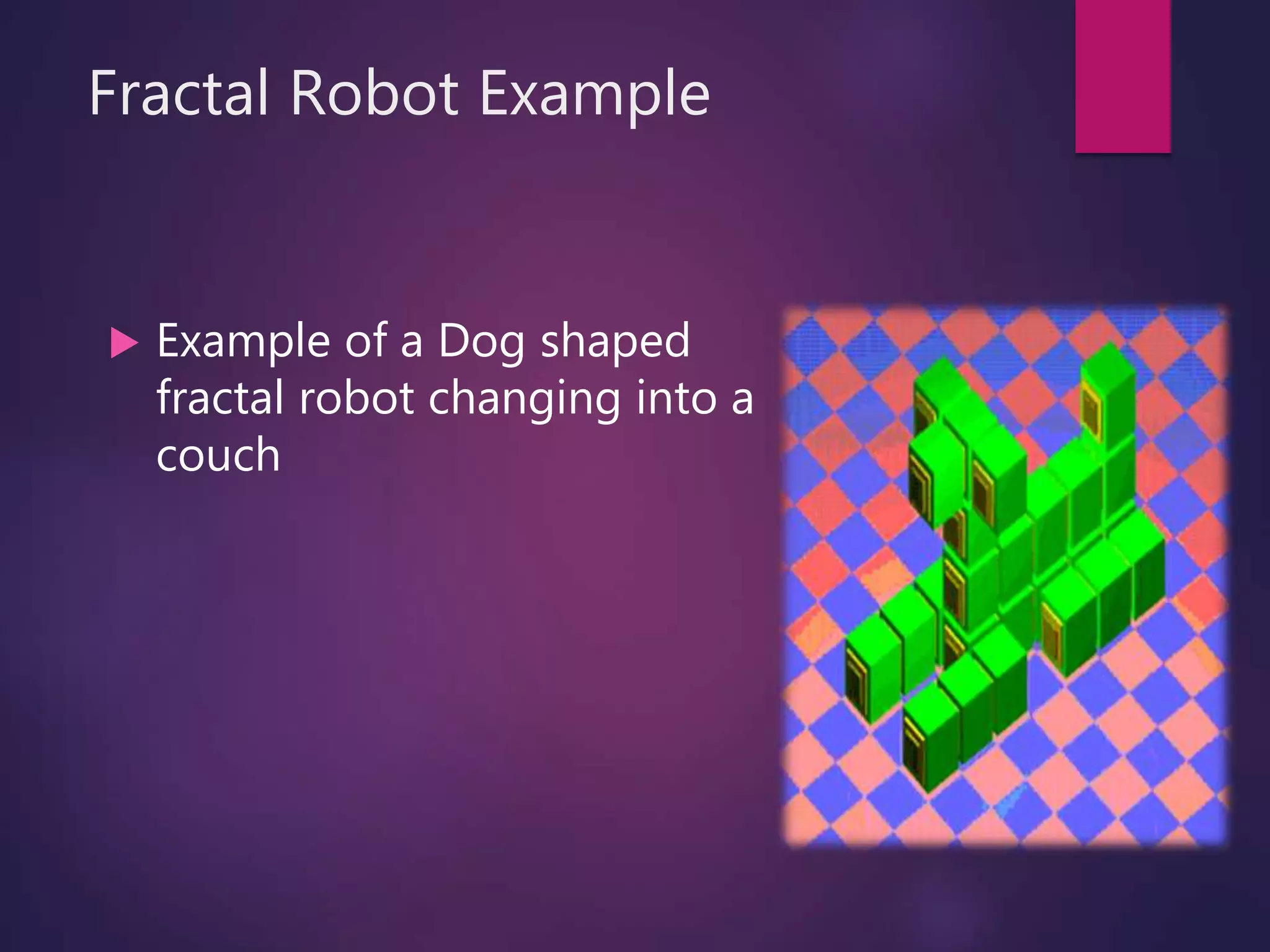
Fractal Robot Example
 Example of a Dog shaped
fractal robot changing into a
couch
Fractal Robots and
Nanotechnology
 Nanotechnology materials are very costly.
 On the other hand, molecular
nanotechnology consumes hundreds of
millions of dollars in research funding and
does not produce a profit at this moment in
time because it is a very difficult subject to
research and develop.
 Fractal robots are made up of small cubes.
 Some cubes are design by using magnetic
field and some by using chips.
Fractal Robots &
Nanotechnology Compatible
Computers
 The design of a fractal nanocomputer is
not an easy task using conventional
principles.
 However, using fractal nanotechnology
principles, the exercise reduces to a
fairly simple exercise where you build a
fractal nanocomputer at the large scale.
SELF-REPAIR IN FRACTAL ROBOTS.
 Self repair is an important
breakthrough for realizing micro and
nanotechnology related end goals.
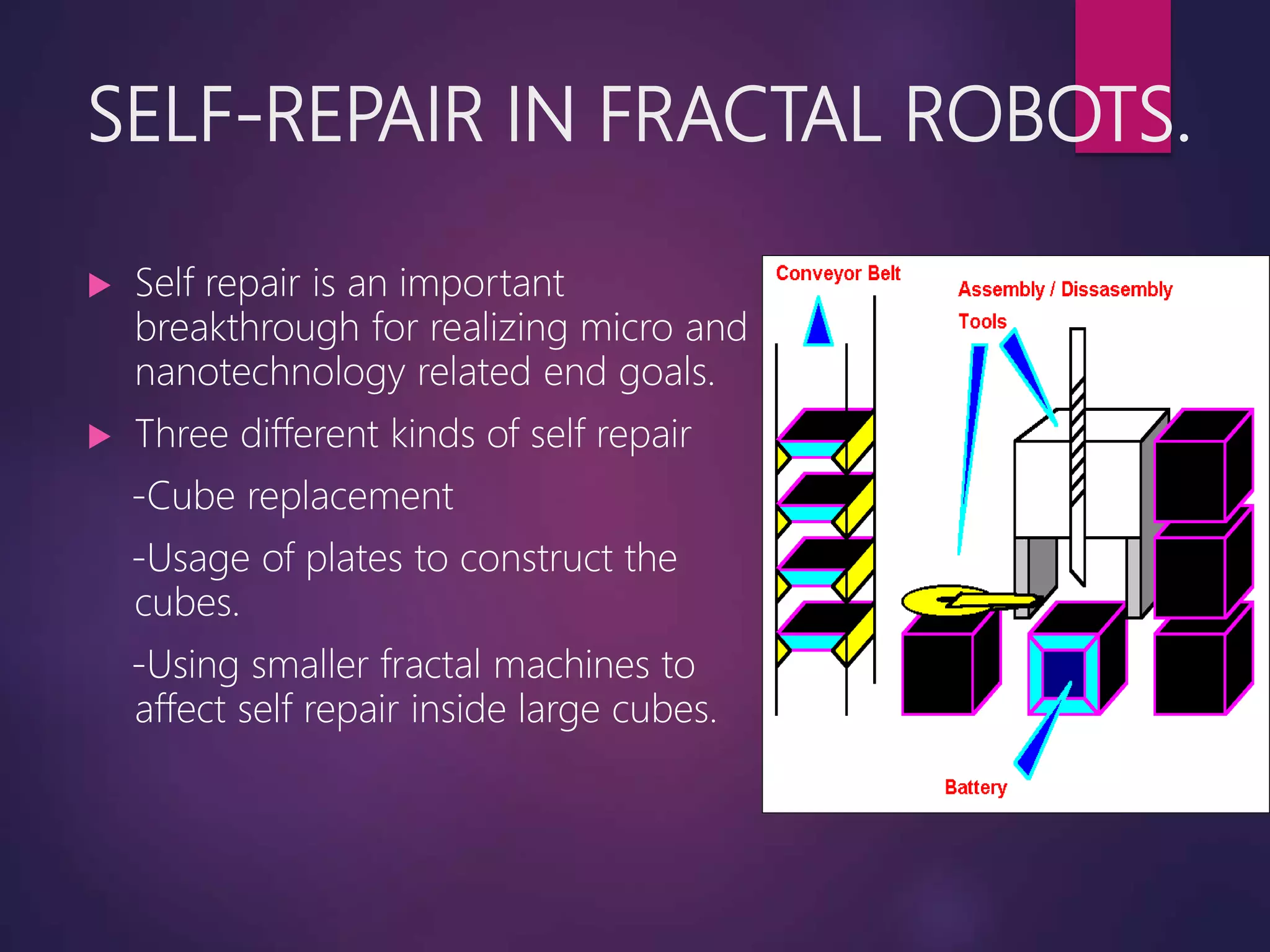
 Three different kinds of self repair
-Cube replacement
-Usage of plates to construct the
cubes.
-Using smaller fractal machines to
affect self repair inside large cubes.
Walking fractal robot performing self
repair
Process of use
Two types of process is using in fractal
moving:
 One is the magnetic field process
between cubes.
 And the second one is gearing process
between cubes.
Algorithms used for fractal moving and
one is very femilier pick and place
algorithm.
Features of fractal robots
 Communication of Power
& Data
 Internal Battery
 Technology today
 Costs - feasible
 Guaranteed Sales
 Increased demand
Applications of fractal robots
 It can be used in medicine.
 In mining.
 Using fractal robots it is possible to build even a space
station.
 Can be used to build roads and clear mines
 In agriculture
Conclusions
 All of the current developments in
technology directs human a step closer
to nanorobots production.
 Nanorobots can theoretically destroy all
common diseases of the 20th century,
thereby ending much of the pain and
suffering.
 Although research into nanorobots is in
its preliminary stages, the promise of
such technology is endless.
References:
 http://www.fractal-robots.com
http://www.me.cmu.edu/faculty1/sitti/nano/
 http://www.links999.net/robotics/robots/ro
bots_introduction.html
 http://www.ifr.mavt.ethz.ch/photo/nanorob
otics
 http://www.cheme.cornell.edu/%7Esaltzman
/Classes/ENGRI_120/Research_Papers/paper
47.PDF
 http://www.medicaldesignonline.com/
Thank You!
Any
Questions?

nanorobotics1

  • 1.
  • 2.
    Presentation Overview  Introductionto Robotics  Nanorobotics  Applications using Nanorobots  Fractal Robots  Conclusion
  • 3.
    Introduction to robotics Like nanotechnology, Robotics is the use of technology to design and manufacture (intelligent) machines, built for specific purposes, programmed to perform specific tasks.
  • 4.
    What is aRobot?  Robots are programmable machines  They range from small to large crane size constructions
  • 5.
  • 6.
    Introduction to Nanorobotics  Itdeals with the controlled manipulation of objects with nanometer scale dimensions  Nano manipulation is most effective process.  It is concerned with construction and programming of robots with overall dimensions at the nanoscale.
  • 7.
    NANOROBOTICS  It isconcerned with atomic and molecular-sized objects and is also called Molecular Robotics.  Nanorobotics research has proceeded along two lines: - first is devoted to simulation with nanoscale dimensions. - second involves manipulation with macroscopic instruments.
  • 8.
    Nanorobot  A nanorobotis a specialized nanomachine.  It has dimensions on the order of nanometers.  Typically 0.5 to 3 microns large with 1-100 nm parts.  The possibility of nanorobots was first proposed by Richard Feyman in his talk “There’s Plenty of Room at the Bottom” in 1959.
  • 9.
    Features of Nanorobots Nanorobots can be categorized into two groups called autonomous robots and insect robots.  A major asset of nanorobots is that they require very little energy to operate.  Durability is another potential asset, may remain operational for years, decades or centuries.  High speed is also a significant consideration. It can operate much faster than their larger counterparts.
  • 10.
    Nanorobots in medicine It’s structure will have two spaces consisting of interior and exterior.  They will communicate with doctor by encoding messages to acoustic signals.  The production of nanorobots has taken a step closer to real application due to technological advancements such as AFM , bionic motors, nano tanks, DNA as computer, and nano robotics arms.  Leonard Adleman confirmed that DNA is programmable in computers.
  • 11.
    Applications using Nanorobots  Tocure skin disease and as cosmetic cream.  Can be used a a mouthwash to do all brushing and flossing.  Would augment immune system by finding and killing bacteria and viruses.  It would prevent heart attack , kill cancer cells etc.  To monitor potentially dangerous microorganisms in the ocean.
  • 12.
    Nanorobots can beused in blood cell to detect pathogens.
  • 13.
    Fractal Robots  Fractalrobot is a new kind of robot made from motorized cubic bricks that move under computer control.  These cubic motorized bricks can be programmed to move and shuffle themselves to change shape to make objects likes a house potentially in a few seconds because of their motorized internal mechanisms.
  • 14.
    Fractal Robot Example Example of a Dog shaped fractal robot changing into a couch
  • 15.
    Fractal Robots and Nanotechnology Nanotechnology materials are very costly.  On the other hand, molecular nanotechnology consumes hundreds of millions of dollars in research funding and does not produce a profit at this moment in time because it is a very difficult subject to research and develop.  Fractal robots are made up of small cubes.  Some cubes are design by using magnetic field and some by using chips.
  • 16.
    Fractal Robots & NanotechnologyCompatible Computers  The design of a fractal nanocomputer is not an easy task using conventional principles.  However, using fractal nanotechnology principles, the exercise reduces to a fairly simple exercise where you build a fractal nanocomputer at the large scale.
  • 17.
    SELF-REPAIR IN FRACTALROBOTS.  Self repair is an important breakthrough for realizing micro and nanotechnology related end goals.  Three different kinds of self repair -Cube replacement -Usage of plates to construct the cubes. -Using smaller fractal machines to affect self repair inside large cubes.
  • 18.
    Walking fractal robotperforming self repair
  • 19.
    Process of use Twotypes of process is using in fractal moving:  One is the magnetic field process between cubes.  And the second one is gearing process between cubes. Algorithms used for fractal moving and one is very femilier pick and place algorithm.
  • 20.
    Features of fractalrobots  Communication of Power & Data  Internal Battery  Technology today  Costs - feasible  Guaranteed Sales  Increased demand
  • 21.
    Applications of fractalrobots  It can be used in medicine.  In mining.  Using fractal robots it is possible to build even a space station.  Can be used to build roads and clear mines  In agriculture
  • 22.
    Conclusions  All ofthe current developments in technology directs human a step closer to nanorobots production.  Nanorobots can theoretically destroy all common diseases of the 20th century, thereby ending much of the pain and suffering.  Although research into nanorobots is in its preliminary stages, the promise of such technology is endless.
  • 23.
    References:  http://www.fractal-robots.com http://www.me.cmu.edu/faculty1/sitti/nano/  http://www.links999.net/robotics/robots/ro bots_introduction.html http://www.ifr.mavt.ethz.ch/photo/nanorob otics  http://www.cheme.cornell.edu/%7Esaltzman /Classes/ENGRI_120/Research_Papers/paper 47.PDF  http://www.medicaldesignonline.com/
  • 24.