Naming Compounds 
More Practice With Naming 
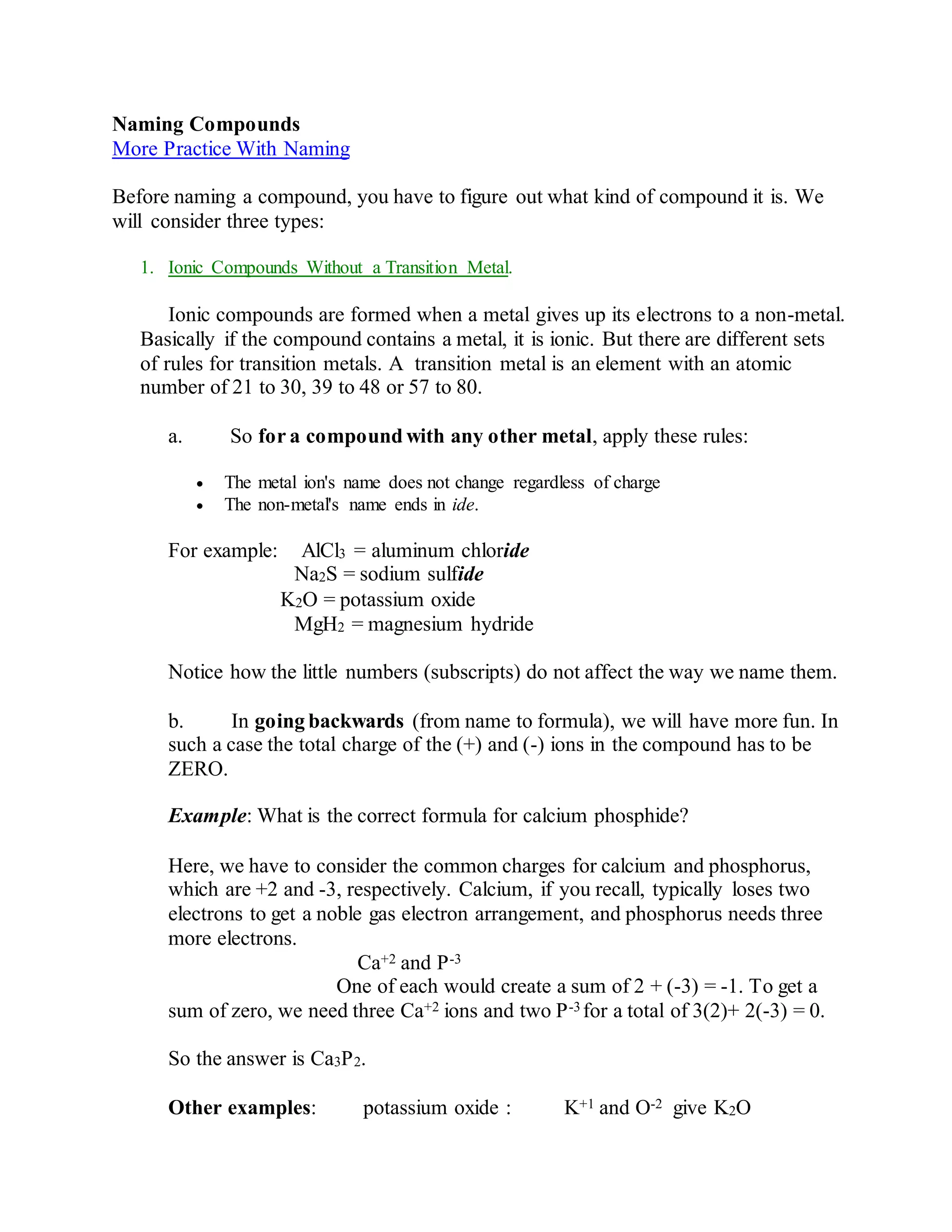
Before naming a compound, you have to figure out what kind of compound it is. We 
will consider three types: 
1. Ionic Compounds Without a Transition Metal. 
Ionic compounds are formed when a metal gives up its electrons to a non-metal. 
Basically if the compound contains a metal, it is ionic. But there are different sets 
of rules for transition metals. A transition metal is an element with an atomic 
number of 21 to 30, 39 to 48 or 57 to 80. 
a. So for a compound with any other metal, apply these rules: 
 The metal ion's name does not change regardless of charge 
 The non-metal's name ends in ide. 
For example: AlCl3 = aluminum chloride 
Na2S = sodium sulfide 
K2O = potassium oxide 
MgH2 = magnesium hydride 
Notice how the little numbers (subscripts) do not affect the way we name them. 
b. In going backwards (from name to formula), we will have more fun. In 
such a case the total charge of the (+) and (-) ions in the compound has to be 
ZERO. 
Example: What is the correct formula for calcium phosphide? 
Here, we have to consider the common charges for calcium and phosphorus, 
which are +2 and -3, respectively. Calcium, if you recall, typically loses two 
electrons to get a noble gas electron arrangement, and phosphorus needs three 
more electrons. 
Ca+2 and P-3 
One of each would create a sum of 2 + (-3) = -1. To get a 
sum of zero, we need three Ca+2 ions and two P-3 for a total of 3(2)+ 2(-3) = 0. 
So the answer is Ca3P2. 
Other examples: potassium oxide : K+1 and O-2 give K2O
aluminum bromide Al+3 and Br-1 yield AlBr3. 
c. Polyatomic Ions 
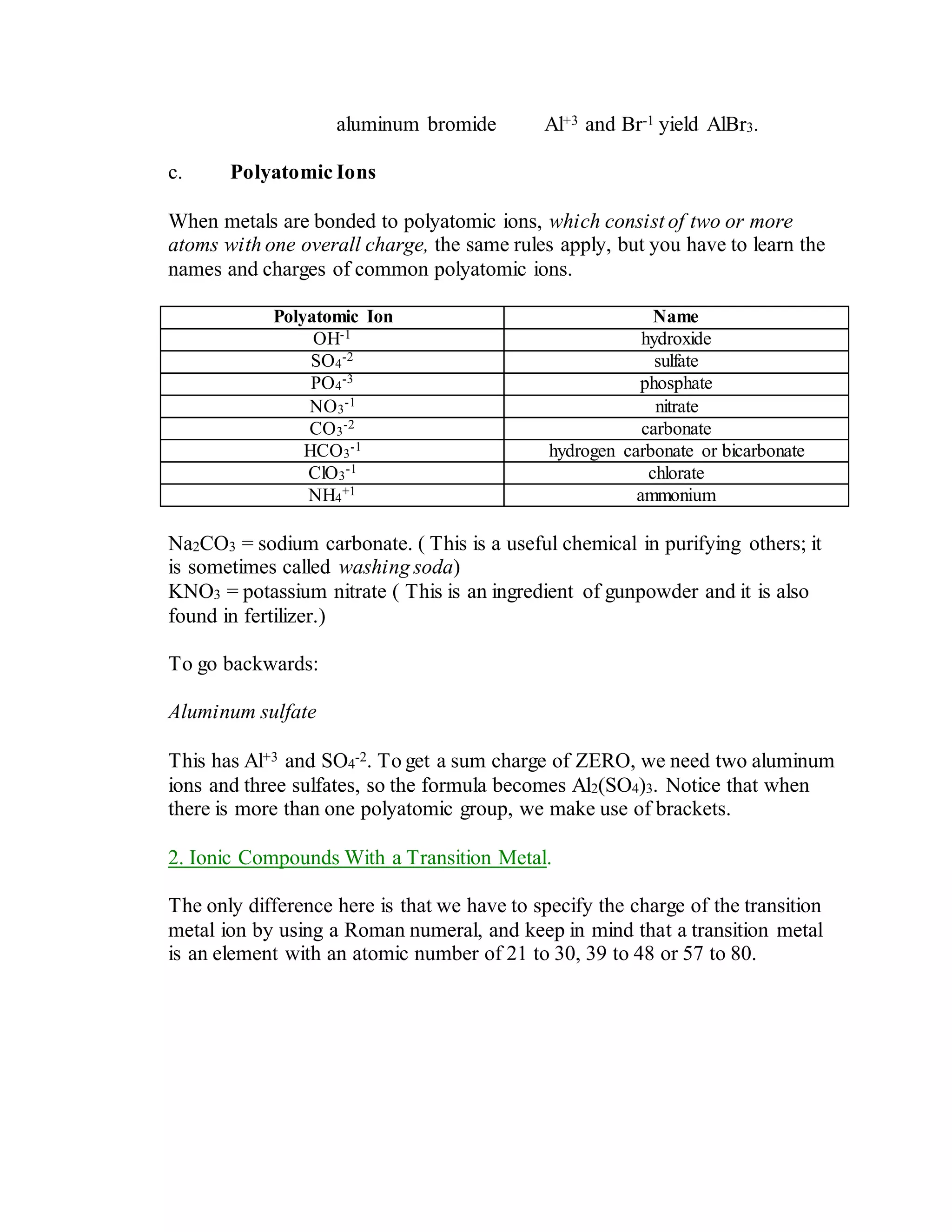
When metals are bonded to polyatomic ions, which consist of two or more 
atoms with one overall charge, the same rules apply, but you have to learn the 
names and charges of common polyatomic ions. 
Polyatomic Ion Name 
OH-1 hydroxide 
SO4 
-2 sulfate 
PO4 
-3 phosphate 
NO3 
-1 nitrate 
CO3 
-2 carbonate 
HCO3 
-1 hydrogen carbonate or bicarbonate 
ClO3 
-1 chlorate 
NH4 
+1 ammonium 
Na2CO3 = sodium carbonate. ( This is a useful chemical in purifying others; it 
is sometimes called washing soda) 
KNO3 = potassium nitrate ( This is an ingredient of gunpowder and it is also 
found in fertilizer.) 
To go backwards: 
Aluminum sulfate 
This has Al+3 and SO4 
-2. To get a sum charge of ZERO, we need two aluminum 
ions and three sulfates, so the formula becomes Al2(SO4)3. Notice that when 
there is more than one polyatomic group, we make use of brackets. 
2. Ionic Compounds With a Transition Metal. 
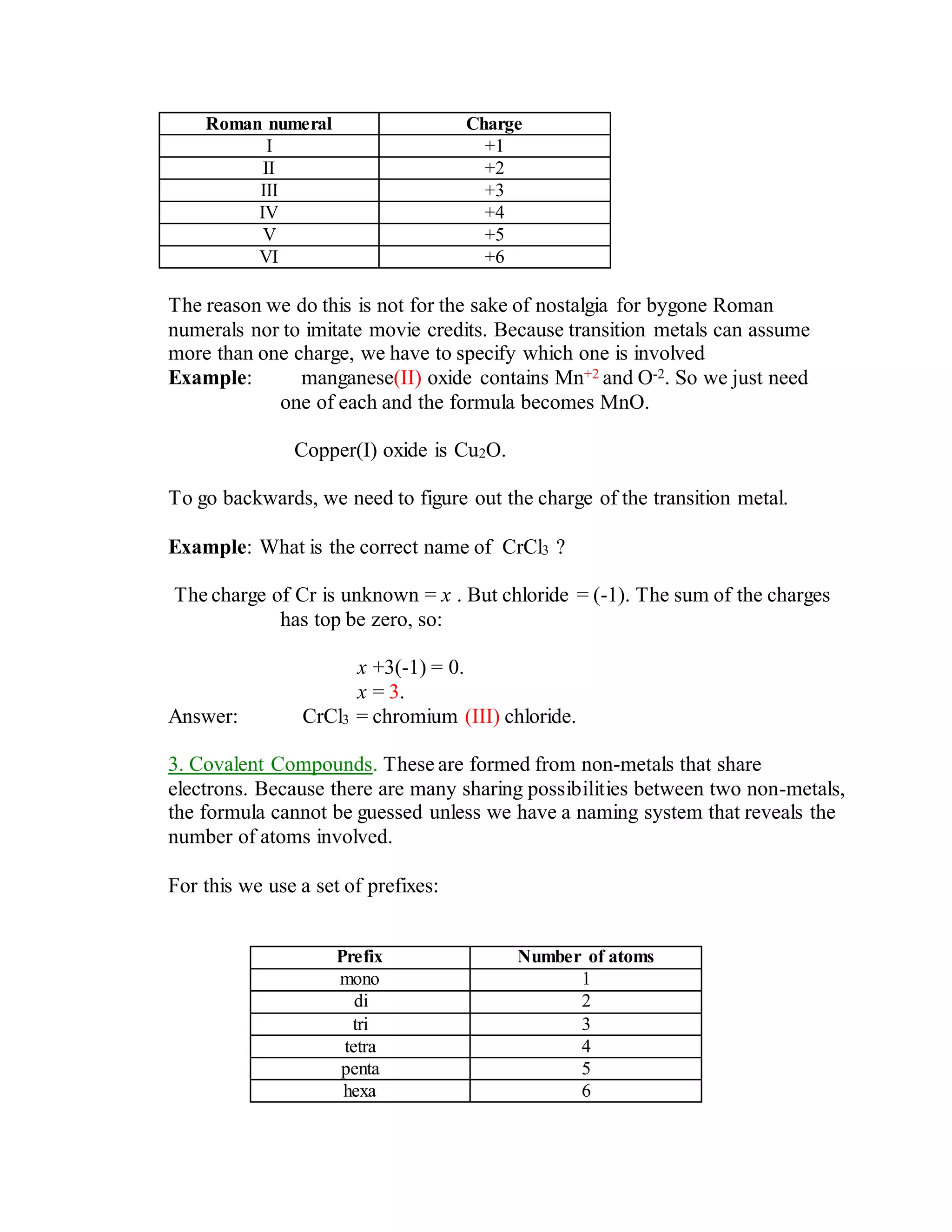
The only difference here is that we have to specify the charge of the transition 
metal ion by using a Roman numeral, and keep in mind that a transition metal 
is an element with an atomic number of 21 to 30, 39 to 48 or 57 to 80.
Roman numeral Charge 
I +1 
II +2 
III +3 
IV +4 
V +5 
VI +6 
The reason we do this is not for the sake of nostalgia for bygone Roman 
numerals nor to imitate movie credits. Because transition metals can assume 
more than one charge, we have to specify which one is involved 
Example: manganese(II) oxide contains Mn+2 and O-2. So we just need 
one of each and the formula becomes MnO. 
Copper(I) oxide is Cu2O. 
To go backwards, we need to figure out the charge of the transition metal. 
Example: What is the correct name of CrCl3 ? 
The charge of Cr is unknown = x . But chloride = (-1). The sum of the charges 
has top be zero, so: 
x +3(-1) = 0. 
x = 3. 
Answer: CrCl3 = chromium (III) chloride. 
3. Covalent Compounds. These are formed from non-metals that share 
electrons. Because there are many sharing possibilities between two non-metals, 
the formula cannot be guessed unless we have a naming system that reveals the 
number of atoms involved. 
For this we use a set of prefixes: 
Prefix Number of atoms 
mono 1 
di 2 
tri 3 
tetra 4 
penta 5 
hexa 6
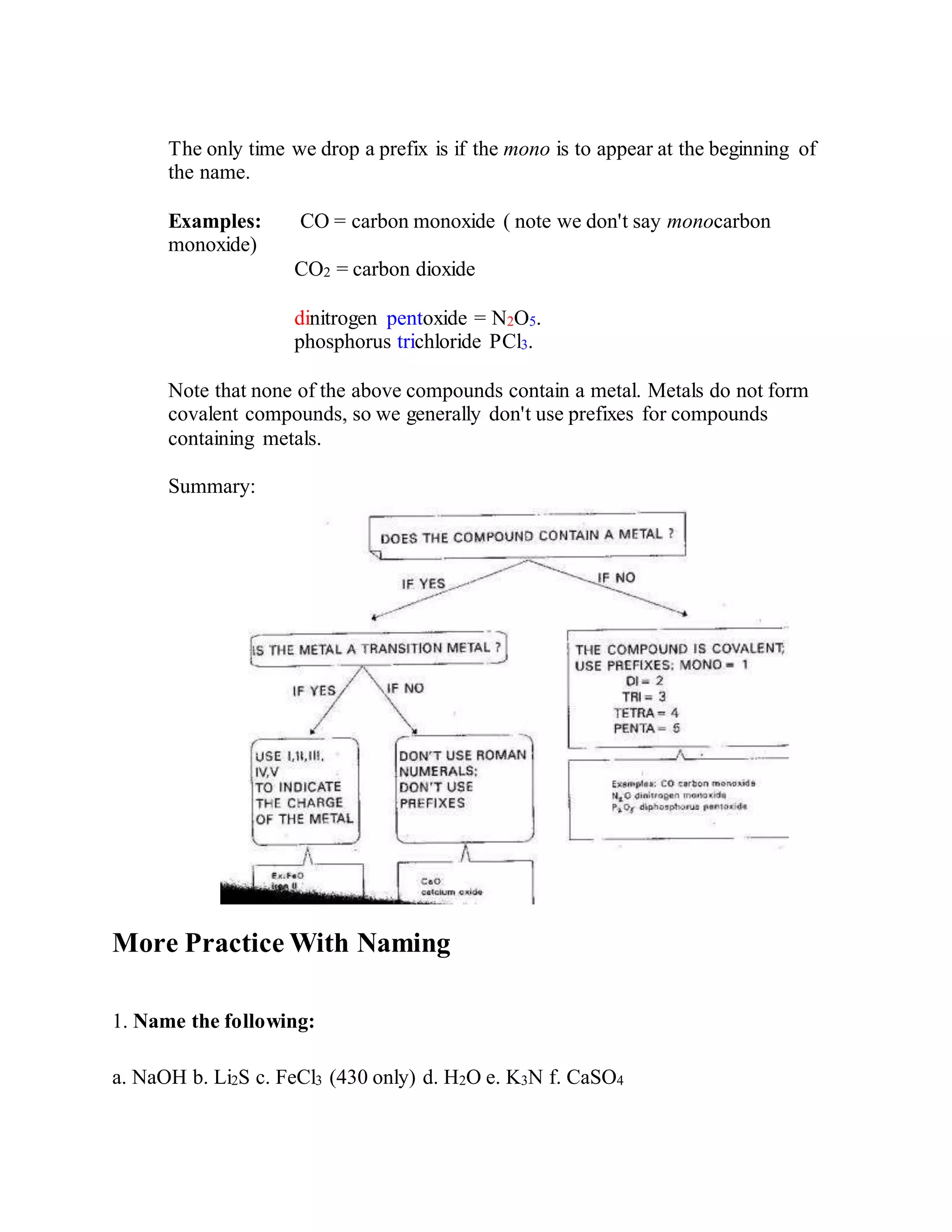
The only time we drop a prefix is if the mono is to appear at the beginning of 
the name. 
Examples: CO = carbon monoxide ( note we don't say monocarbon 
monoxide) 
CO2 = carbon dioxide 
dinitrogen pentoxide = N2O5. 
phosphorus trichloride PCl3. 
Note that none of the above compounds contain a metal. Metals do not form 
covalent compounds, so we generally don't use prefixes for compounds 
containing metals. 
Summary: 
More Practice With Naming 
1. Name the following: 
a. NaOH b. Li2S c. FeCl3 (430 only) d. H2O e. K3N f. CaSO4
2. Write formulae for the following: 
a. beryllium chloride b. copper (I) oxide (430 only) c. diphosphorus pentoxide d. 
aluminum carbonate e. ammonium phosphate f. sulfur dioxide 
Answers 
1. a. sodium hydroxide b. lithium sulfide c. iron(III)chloride d. dihydrogen monoxide 
e. potassium nitride f. calcium sulphate 
2. a. BeCl2 
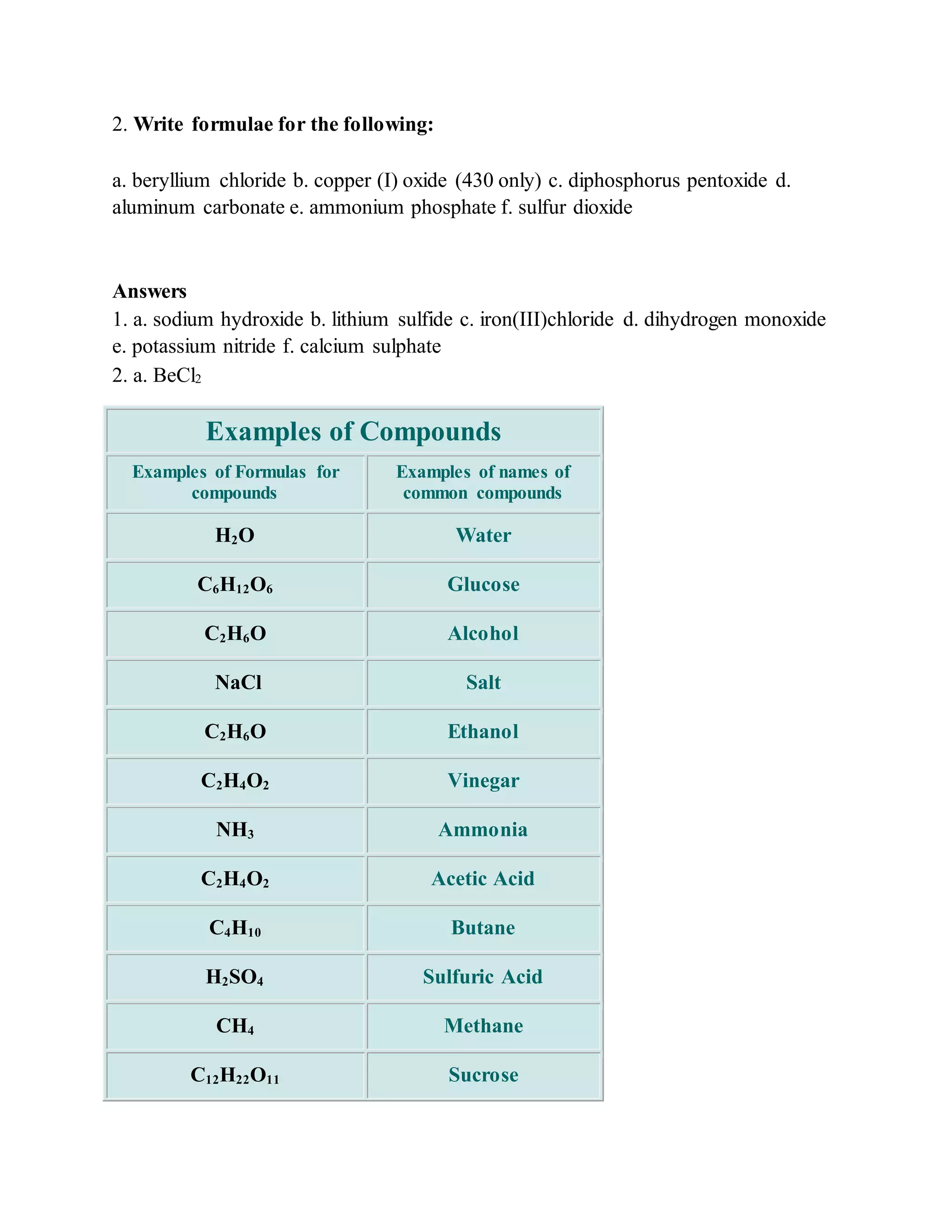
Examples of Compounds 
Examples of Formulas for 
compounds 
Examples of names of 
common compounds 
H2O Water 
C6H12O6 Glucose 
C2H6O Alcohol 
NaCl Salt 
C2H6O Ethanol 
C2H4O2 Vinegar 
NH3 Ammonia 
C2H4O2 Acetic Acid 
C4H10 Butane 
H2SO4 Sulfuric Acid 
CH4 Methane 
C12H22O11 Sucrose
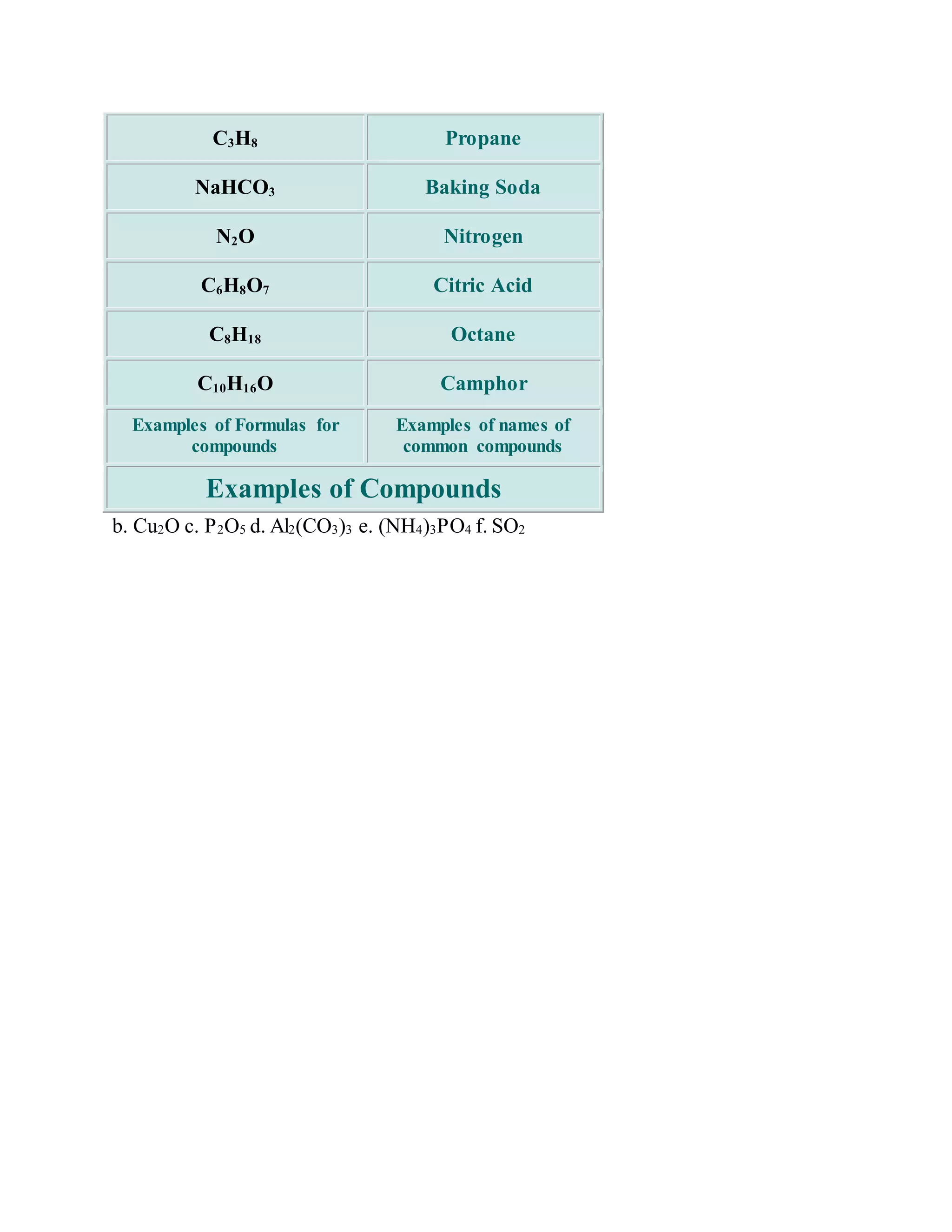
C3H8 Propane 
NaHCO3 Baking Soda 
N2O Nitrogen 
C6H8O7 Citric Acid 
C8H18 Octane 
C10H16O Camphor 
Examples of Formulas for 
compounds 
Examples of names of 
common compounds 
Examples of Compounds 
b. Cu2O c. P2O5 d. Al2(CO3)3 e. (NH4)3PO4 f. SO2

SCIENCE 9 MODULE

  • 1.
    Naming Compounds MorePractice With Naming Before naming a compound, you have to figure out what kind of compound it is. We will consider three types: 1. Ionic Compounds Without a Transition Metal. Ionic compounds are formed when a metal gives up its electrons to a non-metal. Basically if the compound contains a metal, it is ionic. But there are different sets of rules for transition metals. A transition metal is an element with an atomic number of 21 to 30, 39 to 48 or 57 to 80. a. So for a compound with any other metal, apply these rules:  The metal ion's name does not change regardless of charge  The non-metal's name ends in ide. For example: AlCl3 = aluminum chloride Na2S = sodium sulfide K2O = potassium oxide MgH2 = magnesium hydride Notice how the little numbers (subscripts) do not affect the way we name them. b. In going backwards (from name to formula), we will have more fun. In such a case the total charge of the (+) and (-) ions in the compound has to be ZERO. Example: What is the correct formula for calcium phosphide? Here, we have to consider the common charges for calcium and phosphorus, which are +2 and -3, respectively. Calcium, if you recall, typically loses two electrons to get a noble gas electron arrangement, and phosphorus needs three more electrons. Ca+2 and P-3 One of each would create a sum of 2 + (-3) = -1. To get a sum of zero, we need three Ca+2 ions and two P-3 for a total of 3(2)+ 2(-3) = 0. So the answer is Ca3P2. Other examples: potassium oxide : K+1 and O-2 give K2O
  • 2.
    aluminum bromide Al+3and Br-1 yield AlBr3. c. Polyatomic Ions When metals are bonded to polyatomic ions, which consist of two or more atoms with one overall charge, the same rules apply, but you have to learn the names and charges of common polyatomic ions. Polyatomic Ion Name OH-1 hydroxide SO4 -2 sulfate PO4 -3 phosphate NO3 -1 nitrate CO3 -2 carbonate HCO3 -1 hydrogen carbonate or bicarbonate ClO3 -1 chlorate NH4 +1 ammonium Na2CO3 = sodium carbonate. ( This is a useful chemical in purifying others; it is sometimes called washing soda) KNO3 = potassium nitrate ( This is an ingredient of gunpowder and it is also found in fertilizer.) To go backwards: Aluminum sulfate This has Al+3 and SO4 -2. To get a sum charge of ZERO, we need two aluminum ions and three sulfates, so the formula becomes Al2(SO4)3. Notice that when there is more than one polyatomic group, we make use of brackets. 2. Ionic Compounds With a Transition Metal. The only difference here is that we have to specify the charge of the transition metal ion by using a Roman numeral, and keep in mind that a transition metal is an element with an atomic number of 21 to 30, 39 to 48 or 57 to 80.
  • 3.
    Roman numeral Charge I +1 II +2 III +3 IV +4 V +5 VI +6 The reason we do this is not for the sake of nostalgia for bygone Roman numerals nor to imitate movie credits. Because transition metals can assume more than one charge, we have to specify which one is involved Example: manganese(II) oxide contains Mn+2 and O-2. So we just need one of each and the formula becomes MnO. Copper(I) oxide is Cu2O. To go backwards, we need to figure out the charge of the transition metal. Example: What is the correct name of CrCl3 ? The charge of Cr is unknown = x . But chloride = (-1). The sum of the charges has top be zero, so: x +3(-1) = 0. x = 3. Answer: CrCl3 = chromium (III) chloride. 3. Covalent Compounds. These are formed from non-metals that share electrons. Because there are many sharing possibilities between two non-metals, the formula cannot be guessed unless we have a naming system that reveals the number of atoms involved. For this we use a set of prefixes: Prefix Number of atoms mono 1 di 2 tri 3 tetra 4 penta 5 hexa 6
  • 4.
    The only timewe drop a prefix is if the mono is to appear at the beginning of the name. Examples: CO = carbon monoxide ( note we don't say monocarbon monoxide) CO2 = carbon dioxide dinitrogen pentoxide = N2O5. phosphorus trichloride PCl3. Note that none of the above compounds contain a metal. Metals do not form covalent compounds, so we generally don't use prefixes for compounds containing metals. Summary: More Practice With Naming 1. Name the following: a. NaOH b. Li2S c. FeCl3 (430 only) d. H2O e. K3N f. CaSO4
  • 5.
    2. Write formulaefor the following: a. beryllium chloride b. copper (I) oxide (430 only) c. diphosphorus pentoxide d. aluminum carbonate e. ammonium phosphate f. sulfur dioxide Answers 1. a. sodium hydroxide b. lithium sulfide c. iron(III)chloride d. dihydrogen monoxide e. potassium nitride f. calcium sulphate 2. a. BeCl2 Examples of Compounds Examples of Formulas for compounds Examples of names of common compounds H2O Water C6H12O6 Glucose C2H6O Alcohol NaCl Salt C2H6O Ethanol C2H4O2 Vinegar NH3 Ammonia C2H4O2 Acetic Acid C4H10 Butane H2SO4 Sulfuric Acid CH4 Methane C12H22O11 Sucrose
  • 6.
    C3H8 Propane NaHCO3Baking Soda N2O Nitrogen C6H8O7 Citric Acid C8H18 Octane C10H16O Camphor Examples of Formulas for compounds Examples of names of common compounds Examples of Compounds b. Cu2O c. P2O5 d. Al2(CO3)3 e. (NH4)3PO4 f. SO2