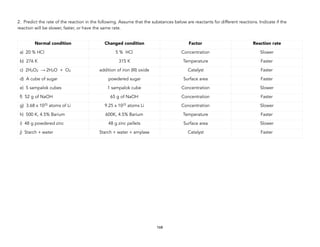
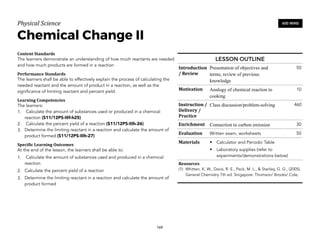
Teaching Guide for Senior High School
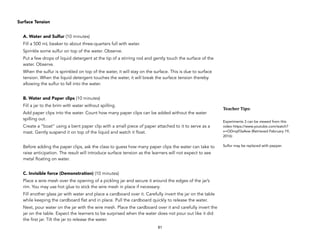
PHYSICAL SCIENCE
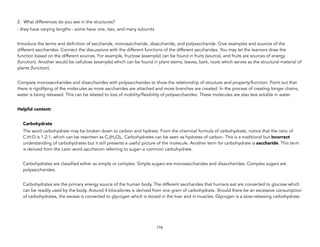
CORE SUBJECT
This Teaching Guide was collaboratively developed and
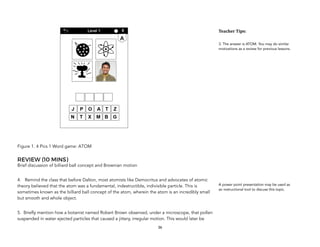
reviewed by educators from public and private schools,
colleges, and universities. We encourage teachers and other
education stakeholders to email their feedback, comments, and
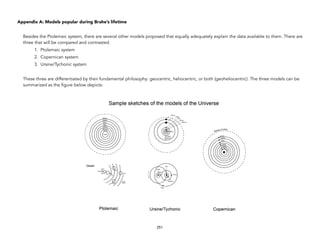
recommendations to the Commission on Higher Education, K to
12 Transition Program Management Unit - Senior High School
Support Team at k12@ched.gov.ph. We value your feedback
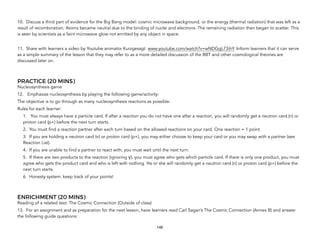
and recommendations.
The Commission on Higher Education
in collaboration with the Philippine Normal University
This Teaching Guide by the
Commission on Higher Education is
licensed under a Creative
Commons Attribution-
NonCommercial-ShareAlike 4.0
International License. This means
you are free to:
Share — copy and redistribute the
material in any medium or format
Adapt — remix, transform, and
build upon the material.
The licensor, CHED, cannot revoke
these freedoms as long as you
follow the license terms. However,
under the following terms:
Attribution — You must give
appropriate credit, provide a link to
the license, and indicate if changes
were made. You may do so in any
reasonable manner, but not in any
way that suggests the licensor
endorses you or your use.
NonCommercial — You may not use
the material for commercial
purposes.
ShareAlike — If you remix,
transform, or build upon the
material, you must distribute your
contributions under the same license
as the original.
Development Team
Team Leader: Jose Perico H. Esguerra, Ph.D.
Writers
Chemistry Part: Gian Karlo R. Dapul, Maria Kristina
Salazar
Physics Part: Johnrob Y. Bantang, Ph.D.
Technical Editors: Nathaniel P. Hermosa, Ph.D.,
Clarisa C. Avila
Copyreader: Ruth Santos
Illustrator: Kristelle Adeline C. Ramos
Published by the Commission on Higher Education, 2016

Chairperson: Patricia B. Licuanan, Ph.D.
Commission on Higher Education

K to 12 Transition Program Management Unit

Office Address: 4th Floor, Commission on Higher Education,
C.P. Garcia Ave., Diliman, Quezon City

Telefax: (02) 441-0927 / E-mail Address: k12@ched.gov.ph
Senior High School Support Team

CHED K to 12 Transition Program Management Unit
Program Director: Karol Mark R. Yee
Lead for Senior High School Support:

Gerson M. Abesamis
Course Development Officers:

John Carlo P. Fernando, Danie Son D. Gonzalvo,
Stanley Ernest G. Yu
Lead for Policy Advocacy and Communications:

Averill M. Pizarro
Teacher Training Officers:

Ma. Theresa C. Carlos, Mylene E. Dones
Monitoring and Evaluation Officer:

Robert Adrian N. Daulat
Administrative Officers: 

Ma. Leana Paula B. Bato, Kevin Ross D. Nera,
Allison A. Danao, Ayhen Loisse B. Dalena
Printed in the Philippines by EC-TEC Commercial, No. 32 St.
Louis Compound 7, Baesa, Quezon City, ectec_com@yahoo.com
Consultants
THIS PROJECT WAS DEVELOPED WITH THE PHILIPPINE NORMAL UNIVERSITY.

University President: Ester B. Ogena, Ph.D.

VP for Academics: Ma. Antoinette C. Montealegre, Ph.D.

VP for University Relations & Advancement: Rosemarievic V. Diaz, Ph.D.
Ma. Cynthia Rose B. Bautista, Ph.D., CHED

Bienvenido F. Nebres, S.J., Ph.D., Ateneo de Manila University

Carmela C. Oracion, Ph.D., Ateneo de Manila University

Minella C. Alarcon, Ph.D., CHED
Gareth Price, Sheffield Hallam University

Stuart Bevins, Ph.D., Sheffield Hallam University
1
Introduction
As the Commission supports DepEd’s implementation of Senior High School (SHS), it upholds the vision
and mission of the K to 12 program, stated in Section 2 of Republic Act 10533, or the Enhanced Basic
Education Act of 2013, that “every graduate of basic education be an empowered individual, through a
program rooted on...the competence to engage in work and be productive, the ability to coexist in
fruitful harmony with local and global communities, the capability to engage in creative and critical
thinking, and the capacity and willingness to transform others and oneself.”
To accomplish this, the Commission partnered with the Philippine Normal University (PNU), the National
Center for Teacher Education, to develop Teaching Guides for Courses of SHS. Together with PNU, this
Teaching Guide was studied and reviewed by education and pedagogy experts, and was enhanced with
appropriate methodologies and strategies.
Furthermore, the Commission believes that teachers are the most important partners in attaining this
goal. Incorporated in this Teaching Guide is a framework that will guide them in creating lessons and
assessment tools, support them in facilitating activities and questions, and assist them towards deeper
content areas and competencies. Thus, the introduction of the SHS for SHS Framework.
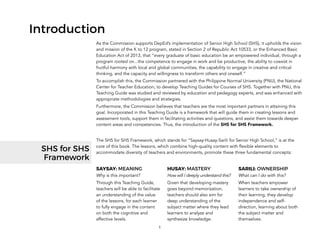
The SHS for SHS Framework, which stands for “Saysay-Husay-Sarili for Senior High School,” is at the
core of this book. The lessons, which combine high-quality content with flexible elements to
accommodate diversity of teachers and environments, promote these three fundamental concepts:
SAYSAY: MEANING
Why is this important?
Through this Teaching Guide,
teachers will be able to facilitate
an understanding of the value
of the lessons, for each learner
to fully engage in the content
on both the cognitive and
affective levels.
HUSAY: MASTERY
How will I deeply understand this?
Given that developing mastery
goes beyond memorization,
teachers should also aim for
deep understanding of the
subject matter where they lead
learners to analyze and
synthesize knowledge.
SARILI: OWNERSHIP
What can I do with this?
When teachers empower
learners to take ownership of
their learning, they develop
independence and self-
direction, learning about both
the subject matter and
themselves.
SHS for SHS
Framework
Earth Science is a Core Subject taken in the first semester of Grade 11. This learning area is
designed to provide a general background for the understanding of the Earth on a planetary
scale. It presents the history of the Earth through geologic time. It discusses the Earth’s
structure and composition, the processes that occur beneath and on the Earth’s surface, as
well as issues, concerns, and problems pertaining to Earth’s resources.
Implementing this course at the senior high school level is subject to numerous challenges
with mastery of content among educators tapped to facilitate learning and a lack of
resources to deliver the necessary content and develop skills and attitudes in the learners,
being foremost among these.
In support of the SHS for SHS framework developed by CHED, these teaching guides were
crafted and refined by biologists and biology educators in partnership with educators from
focus groups all over the Philippines to provide opportunities to develop the following:
Saysay through meaningful, updated, and context-specific content that highlights important
points and common misconceptions so that learners can connect to their real-world
experiences and future careers;
Husay through diverse learning experiences that can be implemented in a resource-poor
classroom or makeshift laboratory that tap cognitive, affective, and psychomotor domains
are accompanied by field-tested teaching tips that aid in facilitating discovery and
development of higher-order thinking skills; and
Sarili through flexible and relevant content and performance standards allow learners the
freedom to innovate, make their own decisions, and initiate activities to fully develop their
academic and personal potential.
These ready-to-use guides are helpful to educators new to either the content or biologists
new to the experience of teaching Senior High School due to their enriched content
presented as lesson plans or guides. Veteran educators may also add ideas from these
guides to their repertoire. The Biology Team hopes that this resource may aid in easing the
transition of the different stakeholders into the new curriculum as we move towards the
constant improvement of Philippine education.
About this

Teaching Guide
3
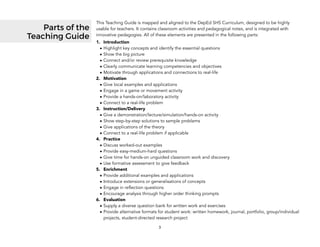
This Teaching Guide is mapped and aligned to the DepEd SHS Curriculum, designed to be highly
usable for teachers. It contains classroom activities and pedagogical notes, and is integrated with
innovative pedagogies. All of these elements are presented in the following parts:
1. Introduction
• Highlight key concepts and identify the essential questions
• Show the big picture
• Connect and/or review prerequisite knowledge
• Clearly communicate learning competencies and objectives
• Motivate through applications and connections to real-life
2. Motivation
• Give local examples and applications
• Engage in a game or movement activity
• Provide a hands-on/laboratory activity
• Connect to a real-life problem
3. Instruction/Delivery
• Give a demonstration/lecture/simulation/hands-on activity
• Show step-by-step solutions to sample problems
• Give applications of the theory
• Connect to a real-life problem if applicable
4. Practice
• Discuss worked-out examples
• Provide easy-medium-hard questions
• Give time for hands-on unguided classroom work and discovery
• Use formative assessment to give feedback
5. Enrichment
• Provide additional examples and applications
• Introduce extensions or generalisations of concepts
• Engage in reflection questions
• Encourage analysis through higher order thinking prompts
6. Evaluation
• Supply a diverse question bank for written work and exercises
• Provide alternative formats for student work: written homework, journal, portfolio, group/individual
projects, student-directed research project
Parts of the

Teaching Guide
As Higher Education Institutions (HEIs) welcome the graduates of
the Senior High School program, it is of paramount importance to
align Functional Skills set by DepEd with the College Readiness
Standards stated by CHED.
The DepEd articulated a set of 21st century skills that should be
embedded in the SHS curriculum across various subjects and tracks.
These skills are desired outcomes that K to 12 graduates should
possess in order to proceed to either higher education,
employment, entrepreneurship, or middle-level skills development.
On the other hand, the Commission declared the College
Readiness Standards that consist of the combination of knowledge,
skills, and reflective thinking necessary to participate and succeed -
without remediation - in entry-level undergraduate courses in
college.
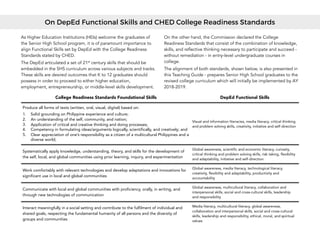
The alignment of both standards, shown below, is also presented in
this Teaching Guide - prepares Senior High School graduates to the
revised college curriculum which will initially be implemented by AY
2018-2019.
College Readiness Standards Foundational Skills DepEd Functional Skills
Produce all forms of texts (written, oral, visual, digital) based on:
1. Solid grounding on Philippine experience and culture;
2. An understanding of the self, community, and nation;
3. Application of critical and creative thinking and doing processes;
4. Competency in formulating ideas/arguments logically, scientifically, and creatively; and
5. Clear appreciation of one’s responsibility as a citizen of a multicultural Philippines and a
diverse world;
Visual and information literacies, media literacy, critical thinking
and problem solving skills, creativity, initiative and self-direction
Systematically apply knowledge, understanding, theory, and skills for the development of
the self, local, and global communities using prior learning, inquiry, and experimentation
Global awareness, scientific and economic literacy, curiosity,
critical thinking and problem solving skills, risk taking, flexibility
and adaptability, initiative and self-direction
Work comfortably with relevant technologies and develop adaptations and innovations for
significant use in local and global communities
Global awareness, media literacy, technological literacy,
creativity, flexibility and adaptability, productivity and
accountability
Communicate with local and global communities with proficiency, orally, in writing, and
through new technologies of communication
Global awareness, multicultural literacy, collaboration and
interpersonal skills, social and cross-cultural skills, leadership
and responsibility
Interact meaningfully in a social setting and contribute to the fulfilment of individual and
shared goals, respecting the fundamental humanity of all persons and the diversity of
groups and communities
Media literacy, multicultural literacy, global awareness,
collaboration and interpersonal skills, social and cross-cultural
skills, leadership and responsibility, ethical, moral, and spiritual
values
On DepEd Functional Skills and CHED College Readiness Standards
Physical
Science
Teaching
Guides
The Physical Science Core subject is composed of two major scientific fields, Chemistry and Physics.
Inside, the teachers can come across Physical Science lessons, including the formation of the most ancient
elements in the universe, chemical composition of household and personal care products, and the
understanding of the Cosmos.
While the topics to be covered are rather extensive across disciplines, the Writing Team has ensured to
tailor fit the materials to the basic education level. In the writing workshops, all Writers have considered
different circumstances inside the senior high school classroom.
As final note to the users, the Chemistry part covers all competencies and the Physics part covers half of
the competencies, which are all quality sample lessons. The Writing Team hopes that this Teaching Guide
be able to help the teachers in ensuring quality content and strategy in teaching Physical Science.
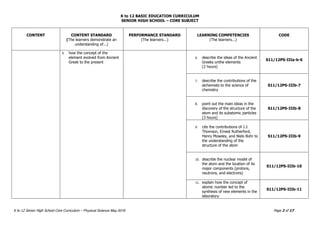
K to 12 BASIC EDUCATION CURRICULUM
SENIOR HIGH SCHOOL – CORE SUBJECT
K to 12 Senior High School Core Curriculum – Physical Science May 2016 Page 1 of 17
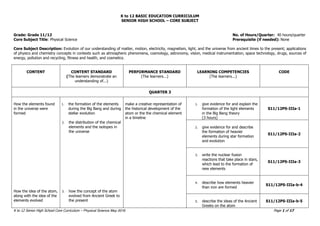
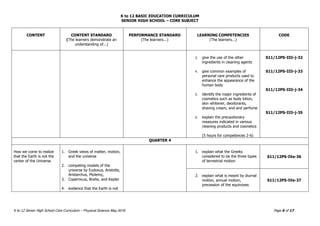
Grade: Grade 11/12 No. of Hours/Quarter: 40 hours/quarter
Core Subject Title: Physical Science Prerequisite (if needed): None
Core Subject Description: Evolution of our understanding of matter, motion, electricity, magnetism, light, and the universe from ancient times to the present; applications
of physics and chemistry concepts in contexts such as atmospheric phenomena, cosmology, astronomy, vision, medical instrumentation, space technology, drugs, sources of
energy, pollution and recycling, fitness and health, and cosmetics.
CONTENT CONTENT STANDARD
(The learners demonstrate an
understanding of...)
PERFORMANCE STANDARD
(The learners...)
LEARNING COMPETENCIES
(The learners...)
CODE
QUARTER 3
How the elements found
in the universe were
formed
How the idea of the atom,
along with the idea of the
elements evolved
1. the formation of the elements
during the Big Bang and during
stellar evolution
2. the distribution of the chemical
elements and the isotopes in
the universe
3. how the concept of the atom
evolved from Ancient Greek to
the present
make a creative representation of
the historical development of the
atom or the the chemical element
in a timeline
1. give evidence for and explain the
formation of the light elements
in the Big Bang theory
(3 hours)
S11/12PS-IIIa-1
2. give evidence for and describe
the formation of heavier
elements during star formation
and evolution
S11/12PS-IIIa-2
3. write the nuclear fusion
reactions that take place in stars,
which lead to the formation of
new elements
S11/12PS-IIIa-3
4. describe how elements heavier
than iron are formed
S11/12PS-IIIa-b-4
5. describe the ideas of the Ancient
Greeks on the atom
S11/12PS-IIIa-b-5
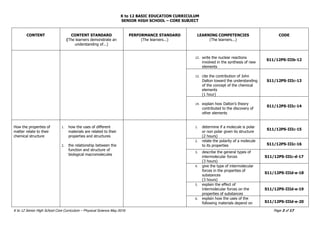
K to 12 BASIC EDUCATION CURRICULUM
SENIOR HIGH SCHOOL – CORE SUBJECT
K to 12 Senior High School Core Curriculum – Physical Science May 2016 Page 2 of 17
CONTENT CONTENT STANDARD
(The learners demonstrate an
understanding of...)
PERFORMANCE STANDARD
(The learners...)
LEARNING COMPETENCIES
(The learners...)
CODE
4. how the concept of the
element evolved from Ancient
Greek to the present
6. describe the ideas of the Ancient
Greeks onthe elements
(2 hours)
S11/12PS-IIIa-b-6
7. describe the contributions of the
alchemists to the science of
chemistry
S11/12PS-IIIb-7
8. point out the main ideas in the
discovery of the structure of the
atom and its subatomic particles
(3 hours)
S11/12PS-IIIb-8
9. cite the contributions of J.J.
Thomson, Ernest Rutherford,
Henry Moseley, and Niels Bohr to
the understanding of the
structure of the atom
S11/12PS-IIIb-9
10. describe the nuclear model of
the atom and the location of its
major components (protons,
neutrons, and electrons)
S11/12PS-IIIb-10
11. explain how the concept of
atomic number led to the
synthesis of new elements in the
laboratory
S11/12PS-IIIb-11
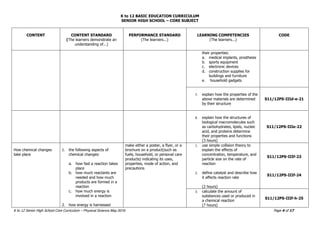
K to 12 BASIC EDUCATION CURRICULUM
SENIOR HIGH SCHOOL – CORE SUBJECT
K to 12 Senior High School Core Curriculum – Physical Science May 2016 Page 3 of 17
CONTENT CONTENT STANDARD
(The learners demonstrate an
understanding of...)
PERFORMANCE STANDARD
(The learners...)
LEARNING COMPETENCIES
(The learners...)
CODE
12. write the nuclear reactions
involved in the synthesis of new
elements
S11/12PS-IIIb-12
13. cite the contribution of John
Dalton toward the understanding
of the concept of the chemical
elements
(1 hour)
S11/12PS-IIIc-13
14. explain how Dalton’s theory
contributed to the discovery of
other elements
S11/12PS-IIIc-14
How the properties of
matter relate to their
chemical structure
1. how the uses of different
materials are related to their
properties and structures
2. the relationship between the
function and structure of
biological macromolecules
1. determine if a molecule is polar
or non polar given its structure
(2 hours)
S11/12PS-IIIc-15
2. relate the polarity of a molecule
to its properties S11/12PS-IIIc-16
3. describe the general types of
intermolecular forces
(3 hours)
S11/12PS-IIIc-d-17
4. give the type of intermolecular
forces in the properties of
substances
(3 hours)
S11/12PS-IIId-e-18
5. explain the effect of
intermolecular forces on the
properties of substances
S11/12PS-IIId-e-19
6. explain how the uses of the
following materials depend on S11/12PS-IIId-e-20
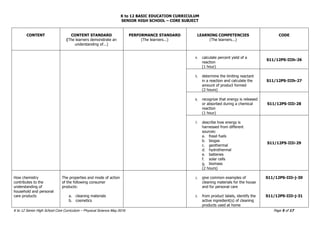
K to 12 BASIC EDUCATION CURRICULUM
SENIOR HIGH SCHOOL – CORE SUBJECT
K to 12 Senior High School Core Curriculum – Physical Science May 2016 Page 4 of 17
CONTENT CONTENT STANDARD
(The learners demonstrate an
understanding of...)
PERFORMANCE STANDARD
(The learners...)
LEARNING COMPETENCIES
(The learners...)
CODE
their properties:
a. medical implants, prosthesis
b. sports equipment
c. electronic devices
d. construction supplies for
buildings and furniture
e. household gadgets
7. explain how the properties of the
above materials are determined
by their structure
S11/12PS-IIId-e-21
8. explain how the structures of
biological macromolecules such
as carbohydrates, lipids, nucleic
acid, and proteins determine
their properties and functions
(3 hours)
S11/12PS-IIIe-22
How chemical changes
take place
1. the following aspects of
chemical changes:
a. how fast a reaction takes
place
b. how much reactants are
needed and how much
products are formed in a
reaction
c. how much energy is
involved in a reaction
2. how energy is harnessed
make either a poster, a flyer, or a
brochure on a product(such as
fuels, household, or personal care
products) indicating its uses,
properties, mode of action, and
precautions
1. use simple collision theory to
explain the effects of
concentration, temperature, and
particle size on the rate of
reaction
2. define catalyst and describe how
it affects reaction rate
(2 hours)
S11/12PS-IIIf-23
S11/12PS-IIIf-24
3. calculate the amount of
substances used or produced in
a chemical reaction
(7 hours)
S11/12PS-IIIf-h-25
K to 12 BASIC EDUCATION CURRICULUM
SENIOR HIGH SCHOOL – CORE SUBJECT
K to 12 Senior High School Core Curriculum – Physical Science May 2016 Page 5 of 17
CONTENT CONTENT STANDARD
(The learners demonstrate an
understanding of...)
PERFORMANCE STANDARD
(The learners...)
LEARNING COMPETENCIES
(The learners...)
CODE
4. calculate percent yield of a
reaction
(1 hour)
S11/12PS-IIIh-26
5. determine the limiting reactant
in a reaction and calculate the
amount of product formed
(2 hours)
S11/12PS-IIIh-27
6. recognize that energy is released
or absorbed during a chemical
reaction
(1 hour)
S11/12PS-IIIi-28
7. describe how energy is
harnessed from different
sources:
a. fossil fuels
b. biogas
c. geothermal
d. hydrothermal
e. batteries
f. solar cells
g. biomass
(2 hours)
S11/12PS-IIIi-29
How chemistry
contributes to the
understanding of
household and personal
care products
The properties and mode of action
of the following consumer
products:
a. cleaning materials
b. cosmetics
1. give common examples of
cleaning materials for the house
and for personal care
2. from product labels, identify the
active ingredient(s) of cleaning
products used at home
S11/12PS-IIIi-j-30
S11/12PS-IIIi-j-31
K to 12 BASIC EDUCATION CURRICULUM
SENIOR HIGH SCHOOL – CORE SUBJECT
K to 12 Senior High School Core Curriculum – Physical Science May 2016 Page 6 of 17
CONTENT CONTENT STANDARD
(The learners demonstrate an
understanding of...)
PERFORMANCE STANDARD
(The learners...)
LEARNING COMPETENCIES
(The learners...)
CODE
3. give the use of the other
ingredients in cleaning agents
4. give common examples of
personal care products used to
enhance the appearance of the
human body
5. identify the major ingredients of
cosmetics such as body lotion,
skin whitener, deodorants,
shaving cream, and and perfume
6. explain the precautionary
measures indicated in various
cleaning products and cosmetics
(5 hours for competences 2-6)
S11/12PS-IIIi-j-32
S11/12PS-IIIi-j-33
S11/12PS-IIIi-j-34
S11/12PS-IIIi-j-35
QUARTER 4
How we come to realize
that the Earth is not the
center of the Universe.
1. Greek views of matter, motion,
and the universe
2. competing models of the
universe by Eudoxus, Aristotle,
Aristarchus, Ptolemy,
3. Copernicus, Brahe, and Kepler
4. evidence that the Earth is not
1. explain what the Greeks
considered to be the three types
of terrestrial motion
S11/12PS-IVa-36
2. explain what is meant by diurnal
motion, annual motion,
precession of the equinoxes
S11/12PS-IVa-37
K to 12 BASIC EDUCATION CURRICULUM
SENIOR HIGH SCHOOL – CORE SUBJECT
K to 12 Senior High School Core Curriculum – Physical Science May 2016 Page 7 of 17
CONTENT CONTENT STANDARD
(The learners demonstrate an
understanding of...)
PERFORMANCE STANDARD
(The learners...)
LEARNING COMPETENCIES
(The learners...)
CODE
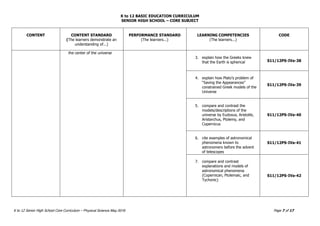
the center of the universe
3. explain how the Greeks knew
that the Earth is spherical S11/12PS-IVa-38
4. explain how Plato’s problem of
“Saving the Appearances”
constrained Greek models of the
Universe
S11/12PS-IVa-39
5. compare and contrast the
models/descriptions of the
universe by Eudoxus, Aristotle,
Aristarchus, Ptolemy, and
Copernicus
S11/12PS-IVa-40
6. cite examples of astronomical
phenomena known to
astronomers before the advent
of telescopes
S11/12PS-IVa-41
7. compare and contrast
explanations and models of
astronomical phenomena
(Copernican, Ptolemaic, and
Tychonic)
S11/12PS-IVa-42
K to 12 BASIC EDUCATION CURRICULUM
SENIOR HIGH SCHOOL – CORE SUBJECT
K to 12 Senior High School Core Curriculum – Physical Science May 2016 Page 8 of 17
CONTENT CONTENT STANDARD
(The learners demonstrate an
understanding of...)
PERFORMANCE STANDARD
(The learners...)
LEARNING COMPETENCIES
(The learners...)
CODE
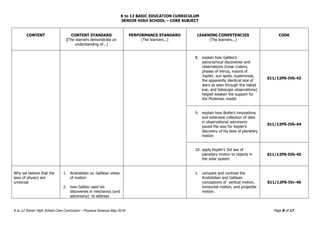
8. explain how Galileo’s
astronomical discoveries and
observations (lunar craters,
phases of Venus, moons of
Jupiter, sun spots, supernovas,
the apparently identical size of
stars as seen through the naked
eye, and telescope observations)
helped weaken the support for
the Ptolemaic model.
S11/12PS-IVb-43
9. explain how Brahe’s innovations
and extensive collection of data
in observational astronomy
paved the way for Kepler’s
discovery of his laws of planetary
motion
S11/12PS-IVb-44
10. apply Kepler’s 3rd law of
planetary motion to objects in
the solar system
S11/12PS-IVb-45
Why we believe that the
laws of physics are
universal
1. Aristotelian vs. Galilean views
of motion
2. how Galileo used his
discoveries in mechanics (and
astronomy) to address
1. compare and contrast the
Aristotelian and Galilean
conceptions of vertical motion,
horizontal motion, and projectile
motion.
S11/12PS-IVc-46
K to 12 BASIC EDUCATION CURRICULUM
SENIOR HIGH SCHOOL – CORE SUBJECT
K to 12 Senior High School Core Curriculum – Physical Science May 2016 Page 9 of 17
CONTENT CONTENT STANDARD
(The learners demonstrate an
understanding of...)
PERFORMANCE STANDARD
(The learners...)
LEARNING COMPETENCIES
(The learners...)
CODE
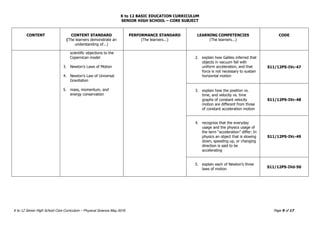
scientific objections to the
Copernican model
3. Newton’s Laws of Motion
4. Newton’s Law of Universal
Gravitation
5. mass, momentum, and
energy conservation
2. explain how Galileo inferred that
objects in vacuum fall with
uniform acceleration, and that
force is not necessary to sustain
horizontal motion
S11/12PS-IVc-47
3. explain how the position vs.
time, and velocity vs. time
graphs of constant velocity
motion are different from those
of constant acceleration motion
S11/12PS-IVc-48
4. recognize that the everyday
usage and the physics usage of
the term “acceleration” differ: In
physics an object that is slowing
down, speeding up, or changing
direction is said to be
accelerating
S11/12PS-IVc-49
5. explain each of Newton’s three
laws of motion S11/12PS-IVd-50
K to 12 BASIC EDUCATION CURRICULUM
SENIOR HIGH SCHOOL – CORE SUBJECT
K to 12 Senior High School Core Curriculum – Physical Science May 2016 Page 10 of 17
CONTENT CONTENT STANDARD
(The learners demonstrate an
understanding of...)
PERFORMANCE STANDARD
(The learners...)
LEARNING COMPETENCIES
(The learners...)
CODE
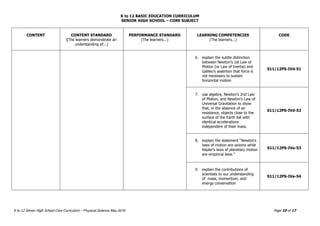
6. explain the subtle distinction
between Newton’s 1st Law of
Motion (or Law of Inertia) and
Galileo’s assertion that force is
not necessary to sustain
horizontal motion
S11/12PS-IVd-51
7. use algebra, Newton’s 2nd Law
of Motion, and Newton’s Law of
Universal Gravitation to show
that, in the absence of air
resistance, objects close to the
surface of the Earth fall with
identical accelerations
independent of their mass.
S11/12PS-IVd-52
8. explain the statement “Newton's
laws of motion are axioms while
Kepler's laws of planetary motion
are empirical laws.”
S11/12PS-IVe-53
9. explain the contributions of
scientists to our understanding
of mass, momentum, and
energy conservation
S11/12PS-IVe-54
K to 12 BASIC EDUCATION CURRICULUM
SENIOR HIGH SCHOOL – CORE SUBJECT
K to 12 Senior High School Core Curriculum – Physical Science May 2016 Page 11 of 17
CONTENT CONTENT STANDARD
(The learners demonstrate an
understanding of...)
PERFORMANCE STANDARD
(The learners...)
LEARNING COMPETENCIES
(The learners...)
CODE
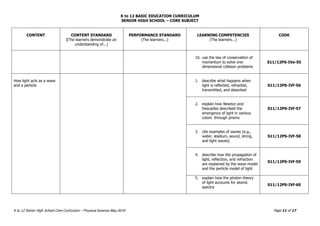
10. use the law of conservation of
momentum to solve one-
dimensional collision problems
S11/12PS-IVe-55
How light acts as a wave
and a particle
1. describe what happens when
light is reflected, refracted,
transmitted, and absorbed
S11/12PS-IVf-56
2. explain how Newton and
Descartes described the
emergence of light in various
colors through prisms
S11/12PS-IVf-57
3. cite examples of waves (e.g.,
water, stadium, sound, string,
and light waves)
S11/12PS-IVf-58
4. describe how the propagation of
light, reflection, and refraction
are explained by the wave model
and the particle model of light
S11/12PS-IVf-59
5. explain how the photon theory
of light accounts for atomic
spectra
S11/12PS-IVf-60
K to 12 BASIC EDUCATION CURRICULUM
SENIOR HIGH SCHOOL – CORE SUBJECT
K to 12 Senior High School Core Curriculum – Physical Science May 2016 Page 12 of 17
CONTENT CONTENT STANDARD
(The learners demonstrate an
understanding of...)
PERFORMANCE STANDARD
(The learners...)
LEARNING COMPETENCIES
(The learners...)
CODE
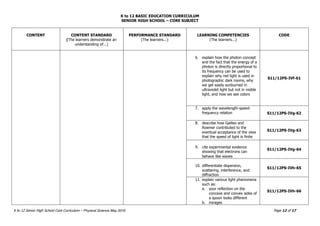
6. explain how the photon concept
and the fact that the energy of a
photon is directly proportional to
its frequency can be used to
explain why red light is used in
photographic dark rooms, why
we get easily sunburned in
ultraviolet light but not in visible
light, and how we see colors
S11/12PS-IVf-61
7. apply the wavelength-speed-
frequency relation S11/12PS-IVg-62
8. describe how Galileo and
Roemer contributed to the
eventual acceptance of the view
that the speed of light is finite
S11/12PS-IVg-63
9. cite experimental evidence
showing that electrons can
behave like waves
S11/12PS-IVg-64
10. differentiate dispersion,
scattering, interference, and
diffraction
S11/12PS-IVh-65
11. explain various light phenomena
such as:
a. your reflection on the
concave and convex sides of
a spoon looks different
b. mirages
S11/12PS-IVh-66
K to 12 BASIC EDUCATION CURRICULUM
SENIOR HIGH SCHOOL – CORE SUBJECT
K to 12 Senior High School Core Curriculum – Physical Science May 2016 Page 13 of 17
CONTENT CONTENT STANDARD
(The learners demonstrate an
understanding of...)
PERFORMANCE STANDARD
(The learners...)
LEARNING COMPETENCIES
(The learners...)
CODE
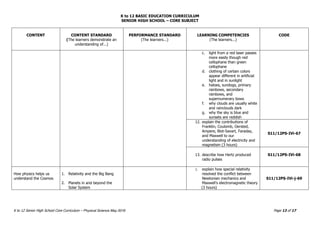
c. light from a red laser passes
more easily though red
cellophane than green
cellophane
d. clothing of certain colors
appear different in artificial
light and in sunlight
e. haloes, sundogs, primary
rainbows, secondary
rainbows, and
supernumerary bows
f. why clouds are usually white
and rainclouds dark
g. why the sky is blue and
sunsets are reddish
12. explain the contributions of
Franklin, Coulomb, Oersted,
Ampere, Biot-Savart, Faraday,
and Maxwell to our
understanding of electricity and
magnetism (3 hours)
S11/12PS-IVi-67
13. describe how Hertz produced
radio pulses
S11/12PS-IVi-68
How physics helps us
understand the Cosmos
1. Relativity and the Big Bang
2. Planets in and beyond the
Solar System
1. explain how special relativity
resolved the conflict between
Newtonian mechanics and
Maxwell’s electromagnetic theory
(3 hours)
S11/12PS-IVi-j-69
K to 12 BASIC EDUCATION CURRICULUM
SENIOR HIGH SCHOOL – CORE SUBJECT
K to 12 Senior High School Core Curriculum – Physical Science May 2016 Page 14 of 17
CONTENT CONTENT STANDARD
(The learners demonstrate an
understanding of...)
PERFORMANCE STANDARD
(The learners...)
LEARNING COMPETENCIES
(The learners...)
CODE
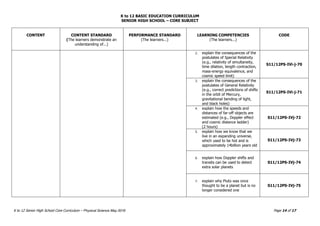
2. explain the consequences of the
postulates of Special Relativity
(e.g., relativity of simultaneity,
time dilation, length contraction,
mass-energy equivalence, and
cosmic speed limit)
S11/12PS-IVi-j-70
3. explain the consequences of the
postulates of General Relativity
(e.g., correct predictions of shifts
in the orbit of Mercury,
gravitational bending of light,
and black holes)
S11/12PS-IVi-j-71
4. explain how the speeds and
distances of far-off objects are
estimated (e.g., Doppler effect
and cosmic distance ladder)
(2 hours)
S11/12PS-IVj-72
5. explain how we know that we
live in an expanding universe,
which used to be hot and is
approximately 14billion years old
S11/12PS-IVj-73
6. explain how Doppler shifts and
transits can be used to detect
extra solar planets
S11/12PS-IVj-74
7. explain why Pluto was once
thought to be a planet but is no
longer considered one
S11/12PS-IVj-75
K to 12 BASIC EDUCATION CURRICULUM
SENIOR HIGH SCHOOL – CORE SUBJECT
K to 12 Senior High School Core Curriculum – Physical Science May 2016 Page 15 of 17
K to 12 BASIC EDUCATION CURRICULUM
SENIOR HIGH SCHOOL – CORE SUBJECT
K to 12 Senior High School Core Curriculum – Physical Science May 2016 Page 16 of 17
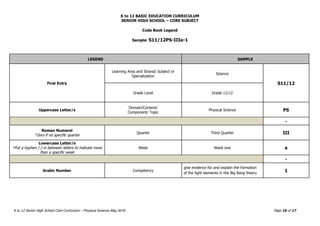
Code Book Legend
Sample: S11/12PS-IIIa-1
LEGEND SAMPLE
First Entry
Learning Area and Strand/ Subject or
Specialization
Science
S11/12
Grade Level Grade 11/12
Uppercase Letter/s
Domain/Content/
Component/ Topic
Physical Science PS
-
Roman Numeral
*Zero if no specific quarter
Quarter Third Quarter III
Lowercase Letter/s
*Put a hyphen (-) in between letters to indicate more
than a specific week
Week Week one a
-
Arabic Number Competency
give evidence for and explain the formation
of the light elements in the Big Bang theory
1
K to 12 BASIC EDUCATION CURRICULUM
SENIOR HIGH SCHOOL – CORE SUBJECT
K to 12 Senior High School Core Curriculum – Physical Science May 2016 Page 17 of 17
References:
Griffith, W. Thomas and Juliet Wain Brosing. The Physics of Everyday Phenomena: A Conceptual Introduction to Physics, 6th ed. NY: McGraw Hill, 2009.
Hewitt, Paul G. Conceptual Physics 11th edition. San Francisco: Pearson, 2015.
March, Robert . Physics for Poets, 5th ed. NY: McGraw-Hill 2003.
Naylor, John. Out of the Blue: A 24-hour Skywatcher's Guide. England: Cambridge University Press, 2002.
Pasachoff, Jay and Alex Filipenko. The Cosmos: Astronomy in the New Millenium. California: Thomson-Brooks/Cole, 2007.
Shipman, James T., Jerry D. Wilson, and Charles A. Higgins. An Introduction to Physical Science. Singapore: Cengage Learning Asia Pte Ltd, 2013.
Spielberg, Nathan and Bryon D. Anderson. Seven Ideas that Shook the Universe, 2nd ed. New Jersey: John Wiley & Sons, 1995.
Physical)Science))
In The Beginning (Big Bang Theory and
Formation of the Light
Elements)
Content&Standards&
The learners demonstrate an understanding of:
1. The formation of the elements during the Big Bang and during stellar
evolution
2. The distribution of the chemical elements and the isotopes in the universe
Performance&Standards&
The learners shall be able to effectively present or discuss the aspects of a
scientific theory in light of its evidence.
Learning&Competencies&
The learners give evidence for and explain the formation of the light elements
in the Big Bang theory (S11/12PS-IIIa-1)
Speci4ic&Learning&Outcomes&
The learners should be able to
1. Briefly discuss the cosmology of the Big Bang model
2. Provide an overview of the proof for the Big Bang model
3. Write reactions involving the nucleosynthesis of the first elements
INTRODUCTION (10 MINS)
Overview of the objectives and key terms for the quarter
1. Give a big picture of Chemistry by describing it as “the study of stuff.”
1
120 MINS
LESSON OUTLINE
Introduction
/&Review
Overview of the objectives and key
terms for the quarter
10
Motivation Cosmology and the Big Bang model as a
cosmological theory from science
15
Instruction&/&
Delivery
Key points, Illustration of expansion,
Nucleosynthesis reactions, and Proofs of
the Big Bang Model
55
Practice Nucleosynthesis game 20
Enrichment Reading of a related text: The Cosmic
Connection
Evaluation Additional Exercises, Performance task
to compare Steady State Theory to Big
Bang model
20
Materials • Projector, computer, speakers
• For activity: balloons, balloon pump
(optional), small stickers (any design)
• For game: see materials in Annex B
Resources&
(1) Contemporary Physics Education Project (CPEP). (2003
November). Chapter 10: Origin of the elements. Retrieved
September 16, 2015 from http://www2.lbl.gov/abc/wallchart/
teachersguide/pdf/Chap10.pdf ;
(2) see additional resources at the end of the lesson
Give a general outline of the lessons for the quarter:
• Study where all the stuff in the universe came from.
• See how our understanding of all stuff has changed and continues to change.
• Try to find answers as to why stuff is a certain way and why it changes in certain ways.
• Develop an appreciation of why stuff is important in our daily lives.
2. Introduce the learning objective below using any of the suggested protocols (Verbatim, Own
Words, Read-aloud):
a. I can give evidence for and explain the formation of the light elements in the Big Bang
theory.
3. Introduce the following list of important terms that learners will encounter:
• Cosmology
• Big Bang theory/Big Bang model
• Singularity
• Inflation
• Annihilation
• Recombination
• Redshift
• Relative abundance
• Cosmic microwave background
MOTIVATION (15 MINS)
Cosmology and the Big Bang model as a cosmological theory from science.
4. Briefly define cosmology as the study of how the universe began, how it continues to exist, and
how it will end. Offer examples of cosmologies from different religions and cultures based on their
beliefs. You may ask for examples from the class. Challenge the class: Do you think there is proof
2
Teacher&Tips:&
1. The “study of stuff” is a simplification of
chemistry to mean the study of matter, its
make-up, its properties, and the changes it
undergoes. Have the learners copy the
general lesson outline so that they know
what to expect from the lessons.
2. Display the objectives and terms
prominently on one side of the classroom
and refer to them frequently during
discussion.
3. Place important terms in a blank bingo
card grid. Learners can write a short
definition of the term under each entry to
block out a square in the bingo card. This
will serve as reference guide/method for
formative assessment.
that any of these stories or cosmologies are true?
Ask why different cultures have the need to explain where they came from and how the world was
created.
5. Explain that science brings forth a cosmological theory, not from belief, but from scientific
evidence that the universe once began to expand and continues to expand until today. This theory
was eventually called the Big Bang theory or Big Bang model. Astronomers George Lemaître and
Edwin Hubble were some of its first proponents.
Mention that George Lemaître was a Catholic priest. He did not find his theory (or science as a
whole) incompatible with his religion. Ask for possible reasons why some people think science
goes against what they believe in.
INSTRUCTION / DELIVERY (55 MINS)
Key points, Illustration of expansion, Nucleosynthesis reactions, and Proofs of the Big Bang Model
6. Use a chart or diagram to discuss the key stages of the Big Bang model.
a. The universe may have begun as an infinitely hot and dense initial singularity, a point with all
of space, time, matter and energy. This means that there was no where, when or what. There is
no space around the singularity – just nothingness.
b. All of it then began to rapidly expand in a process known as inflation. Space itself expanded
faster than the speed of light. In this still hot and dense mass of the universe, pairs of matter
and antimatter (quarks and antiquarks) were formed from energy, but these pairs cancelled each
other back into energy (annihilation).
c. The universe cooled down as it expanded. An excess of matter (electrons, protons, neutrons
and other particles) somehow came to be in a highly energetic “plasma soup.” Photons (light
particles) were being scattered everywhere in this “soup”. Protons and neutrons came together
to form different types of nuclei by nucleosynthesis or nuclear fusion.
d. Much later on, electrons started to bind to ionized protons and nuclei forming neutral atoms
3
Teacher&Tips:&
6. There are several limitations and
misconceptions associated with discussing
the Big Bang Theory. Keep in mind the
following:
• The Big Bang refers to the very
start of the whole process called the Big
Bang model.
• The Big Bang was NOT an
explosion that carried matter outward from
a point. It refers to the rapid inflation of
space itself.
• The theory does not explain what
caused it or where the singularity came
from, BUT the Big Bang model does not
need a cause to be a valid theory. It simply
needs to show that observations and
evidence validate its assumptions. The
model is a work in progress that we are still
finding evidence for until now.
in a process called recombination. The bound particles no longer scattered photons so light and
energy moved freely across space. The period was hence known as the “dark ages”.
e. Gravity caused these atoms to collapse onto one another to form stars and galaxies and
eventually, other matter. This still happens until today. Space also continues to expand at an
accelerating rate, thus increasing the distance between the matters inside it.
7. Conduct a group activity that attempts to model cosmic inflation.
Have learners provide the following:
• Balloons
• Balloon pump (optional)
• Small stickers (any design)
Instructions:
a. Stick small stickers randomly on the surface of the uninflated balloon.
b. Quickly inflate the balloon with a pump or your breath. Observe the stickers.
c. Answer the following questions:
• Why do the stickers appear to be moving away from each other?
• Are the stickers moving across the balloon?
• Do the stickers themselves grow in size?
Briefly discuss how using different instruments can enable us to detect the light of other galaxies.
This light is found to be redshifted (the light looks “stretched”). This suggests that other galaxies are
moving farther away from ours. It was later determined that they are not moving away. Instead,
space itself is expanding in all directions causing all the galaxies to be relatively farther apart. From
this “redshift” we learn how fast the universe is expanding. Redshift is the first piece of evidence for
the Big Bang model.
4
Teacher&Tips:&
7. Clarify key features and limitations of the
demonstration:
• Similar to the Big Bang, a balloon
expands very rapidly at the start, then more
slowly when it has already inflated. But
some evidence shows that the expansion is
now accelerating again.
• The balloon is the universe and space
itself. There is no classroom for it to expand
into.
You may have them conduct this activity
outside of class to save time.
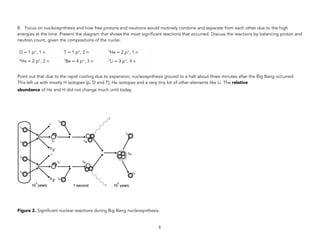
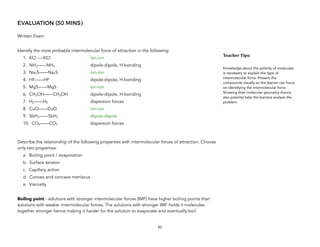
8. Focus on nucleosynthesis and how free protons and neutrons would routinely combine and separate from each other due to the high
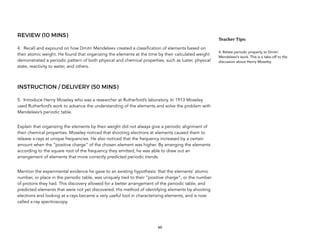
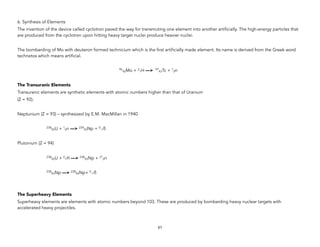
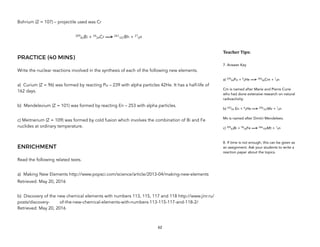
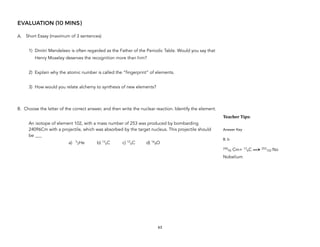
energies at the time. Present the diagram that shows the most significant reactions that occurred. Discuss the reactions by balancing proton and
neutron count, given the compositions of the nuclei:
Point out that due to the rapid cooling due to expansion, nucleosynthesis ground to a halt about three minutes after the Big Bang occurred.
This left us with mostly H isotopes (p, D and T), He isotopes and a very tiny bit of other elements like Li. The relative
abundance of He and H did not change much until today.
Figure 2. Significant nuclear reactions during Big Bang nucleosynthesis.

5
D = 1 p+, 1 n T = 1 p+, 2 n 3He = 2 p+, 1 n
4He = 2 p+, 2 n 7Be = 4 p+, 3 n 7Li = 3 p+, 4 n
Clarify the diagram:
• These are not the only reactions that occurred but these were the most significant.
• Given the (a, b) format in the diagram, it is a that reacts with the particle while it is b that is
produced or removed. γ is the symbol for gamma radiation.
• You may use an accounting approach to count. Place the number of each particle on each side
and balance like a money sheet:
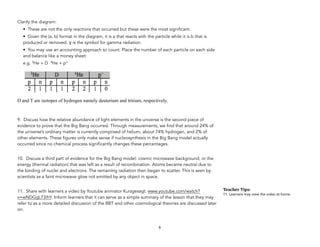
e.g. 3He + D 4He + p+
D and T are isotopes of hydrogen namely deuterium and tritium, respectively.
9. Discuss how the relative abundance of light elements in the universe is the second piece of
evidence to prove that the Big Bang occurred. Through measurements, we find that around 24% of
the universe’s ordinary matter is currently comprised of helium, about 74% hydrogen, and 2% of
other elements. These figures only make sense if nucleosynthesis in the Big Bang model actually
occurred since no chemical process significantly changes these percentages.
10. Discuss a third part of evidence for the Big Bang model: cosmic microwave background, or the
energy (thermal radiation) that was left as a result of recombination. Atoms became neutral due to
the binding of nuclei and electrons. The remaining radiation then began to scatter. This is seen by
scientists as a faint microwave glow not emitted by any object in space.
11. Share with learners a video by Youtube animator Kurzgesagt. www.youtube.com/watch?
v=wNDGgL73ihY. Inform learners that it can serve as a simple summary of the lesson that they may
refer to as a more detailed discussion of the BBT and other cosmological theories are discussed later
on.
6
Teacher&Tips:&
11. Learners may view the video at home.
PRACTICE (20 MINS)
Nucleosynthesis game
12. Emphasize nucleosynthesis by playing the following game/activity:
The objective is to go through as many nucleosynthesis reactions as possible.
Rules for each learner:
1. You must always have a particle card. If after a reaction you do not have one after a reaction,
you will randomly get a neutron card (n) or proton card (p+) before the next turn starts.
2. You must find a reaction partner after each turn based on the allowed reactions on your card.
One reaction = 1 point.
3. If you are holding a neutron card (n) or proton card (p+), you may either choose to keep your
card or you may swap with a partner (see Reaction List).
4. If you are unable to find a partner to react with, you must wait until the next turn.
5. If there are two products to the reaction (ignoring γ), you must agree who gets which particle
card. If there is only one product, you must agree who gets the product card and who is left with
nothing. He or she will randomly get a neutron card (n) or proton card (p+) before the next turn
starts.
6. Honesty system: keep track of your points!
ENRICHMENT (20 MINS)
Reading of a related text: The Cosmic Connection (Outside of class)
13. For an assignment and as preparation for the next lesson, have learners read Carl Sagan’s The
Cosmic Connection (Annex B) and answer the following guide questions:
Understand and remember:
1. Find the meanings of the underlined words in the passage.
2. Astrology and astronomy both deal with the stars and planets. List at least three differences
between them.
Apply and analyze:
3. Why did human beings invent astrology? How do we know astrology is not a real study?
4. How does science say we are connected with the universe?
7
Teacher&Tips:&
12. This is an optional but recommended
activity. See Annex A for the game materials
and a detailed guide. Process the activity by
pointing out that the relative abundance of
elements leaves us with mostly isotopes of
hydrogen and helium.
13. The piece may be linked to or used in
discussions in English, Philosophy or Social
Sciences.
Evaluate:
5. Carl Sagan, the author of the essay, famously says in Paragraph 16, “We are made of star
stuff.” What do you think he meant by that?
14. You may opt to have advanced or interested learners to research on the ideas of dark matter
and dark energy. You may discuss these outside of class using the Discussion Appointments
technique.
EVALUATION (20 MINS)
Additional Exercises, Performance task to compare Steady State Theory to Big Bang model (20
minutes)
A. Additional Exercises (sample questions for Written Evaluation):
1. Arrange the stages of the Big Bang Theory: recombination, inflation, Big Bang
singularity, nucleosynthesis.
2. Given the composition of each nucleus, complete the nucleosynthesis reactions below:
D = 1 p+, 1 n T = 1 p+, 2 n 3He = 2 p+, 1 n 4He = 2 p+, 2 n 7Be = 4 p+, 3 n 7Li = 3 p+, 4 n

a. p+ + n + γ
b. 3He + D + p+
c. 7Li + 2 4He
d. + D T + p+
e. ___ + 7Be + γ

3. Which of these is true about the Big Bang model?
a. The singularity is an established, well-defined part of the model.
b. Cosmic expansion stopped at some point in time.
c. Part of its proof is the amounts of H and He we have in the universe today.
d. The Big Bang was a big explosion that threw matter into many different directions.
4. Using one to two sentences each, explain the three pieces of evidence presented for the Big
Bang Theory:
a. Redshift b. Relative abundance c. Cosmic microwave background
8
Teacher&Tips:&
A. Answer Key:
1. Big Bang singularity, inflation,
nucleosynthesis, recombination
2.
a. D
b. 4He
c. p+
d. n
e. 3He, 4He
3. c. Part of its proof is the amounts of H
and He we have in the universe today
4. (answers may vary according to learner
understanding)
B. Performance Task
If time and schedule permits, have groups of learners research the Steady State Theory, which is
the alternate scientific cosmological theory proposed at the time. In their output, they must:
a. Present the features of the Steady State Theory
b. Compare and contrast Steady State Theory to the Big Bang
c. Discuss the evidence that led to the Steady State Theory being discarded
Learners may present their research in the form of a poster, PowerPoint presentation, an essay,
video, or infographic. A sample rubric may be given as follows:
9
Teacher&Tips:&
B. Emphasize the importance of proper
research skills, citation and creative outputs
throughout the task. If there is no time to
present in class, they may present to you
outside of class, or submit in a form that can
be viewed independently.
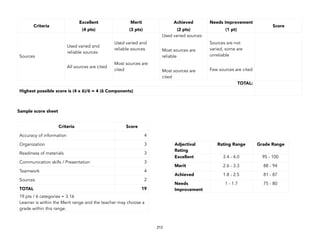
1 pt. 3 pts. 5 pts.
Explanation of Steady
State Theory (SST)
It is unclear what the
key aspects of SST are.
The key aspects of SST
are discussed using the
scientific terminology
Each of the aspects of
SST was discussed in a
clear and simple way,
and included a
discussion of how SST
was theorized.
Comparison of SST to
the Big Bang Model
(BBM)
There was little to no
comparison done.
SST was sufficiently
compared to BBM as a
whole, highlighting the
main differences.
Each of the aspects of
BBM are aligned or
matched with those of
the SST, showing a
detailed understanding
of both theories.
Presentation of
evidence vs. SST
Little to no evidence
was given or it was
poorly argued or
related to the theory
Good evidence was
presented with
sufficient arguments
presented
The merits of BBM vs.
SST were presented
using each piece of
evidence and showed
how BBM is able to
explain a phenomena
that SST cannot.
(add creative metric)
(add other metrics)
As an alternative to the nucleosynthesis game (in case there is not enough time), have the learners study and analyze the given reactions to
help them answer Evaluation A2.
Chief nuclear reactions responsible for the relative abundances of light atomic nuclei observed throughout the universe.
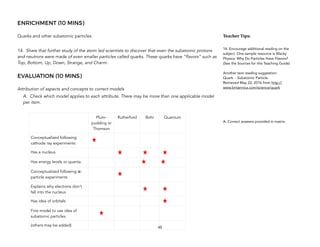
Image retrieved from https://en.wikipedia.org/wiki/Nucleosynthesis
ADDITIONAL RESOURCES
Lineweaver, C., & Davis, T. (2005 March). Misconceptions About The Big Bang. Scientific American, 36-45.
Oakes, K. (2011 August 2). On the origin of chemical elements. Retrieved September 16, 2015, from http://blogs.scientificamerican.com/basic-
space/httpblogsscientificamericancombasic-space20110802on-the-origin-of-chemical-elements/
Sagan, C. (2000). Chapter 26: The Cosmic Connection. In J. Agel (Ed.), Carl Sagan's Cosmic Connection: An Extraterrestrial Perspective.
Cambridge: Cambridge University Press.
Wall, M. (2011, October 21). The Big Bang: What Really Happened at Our Universe's Birth? Retrieved September 15, 2015, from http://
www.space.com/13347-big-bang-origins-universe-birth.html
10
Images:
Figure 1.
History of the Universe [digital image]. (2014). Retrieved September 16, 2015 from http://bicepkeck.org/visuals.html
Figure 2.
Weiss, A. (2006). [Diagram of significant nuclear reactions]. Retrieved September 16, 2015 from http://www.einstein-online.info/en/spotlights/
BBN_phys/index.html
Video:
In a Nutshell – Kurzgesagt [kurzgesagt]. (2014 March 3). The Beginning of Everything – The Big Bang [Youtube video]. Retrieved September 16,
2015, from www.youtube.com/watch?v=wNDGgL73ihY
11
Physical)Science))
We Are All Made of Star
Stuff (Formation of the
Heavy Elements)
Content&Standards&
The learners demonstrate an understanding of:
1. The formation of the elements during the Big Bang and during
stellar evolution
2. The distribution of the chemical elements and the isotopes in the
universe.
Performance&Standards&
The learners shall be able to make a creative representation of the
historical development of the atom or the chemical element in a
timeline.
Learning&Competencies&
The learners:
1. Give evidence for and describe the formation of heavier
elements during star formation and evolution (S11/12PS-IIIa-2)
2. Write the nuclear fusion reactions that take place in stars that
lead to the formation of new elements (S11/12PS-IIIa-3)
Describe how elements heavier than iron are formed (S11/12PS-
IIIa-b-4))
Speci4ic&Learning&Outcomes&
At the end of the lesson, the learners will be able to:
1. Briefly discuss stellar nucleosynthesis or fusion
2. Discuss other processes that led to other elements
3. Write out fusion reactions involved
12
120 MINS
LESSON OUTLINE
Introduction
/&Review
Overview of the objectives and key
terms (5 minutes), Review of the Big
Bang and Big Bang nucleosynthesis (10
minutes)
15
Motivation The Cosmic Connection 10
Instruction&/&
Delivery
Continuation of Big Bang into star
formation, Discussion of star fusion and
other fusion processes
50
Practice Concept map, Alpha process practice 20
Enrichment Brief discussion of man-made nuclei,
Presentation of performance task
10
Evaluation Additional Exercises, Performance task
to present one of the man-made
elements
15
Materials • Projector, computer
Resources&
(1) Dhaliwal, J. K. (2012a). Nucleosynthesis: Alpha Fusion in
Stars. [Powerpoint slides]. Retrieved from http://
earthref.org/SCC/lessons/2012/nuclesosynthesis/
INTRODUCTION (15 MINS)
Overview of the objectives and key terms (5 minutes)
1. Introduce the following learning objectives using any of the
suggested protocols (Verbatim, Own Words, Read-aloud)
a. I can give evidence for and describe the formation of
heavier elements during star formation and evolution.
b. I can write the nuclear fusion reactions that take place in
stars, which lead to the formation of new elements.
c. I can describe how elements heavier than iron are formed.
2. Introduce the following list of important terms that learners will
encounter:
a. Fusion g. Main-sequence star
b. Stellar nucleosynthesis h. Red giant
c. Proton-proton chain reaction i. Supernova explosion
d. Triple alpha process j. Supernova
nucleosynthesis
e. Alpha ladder k. R-process
f. CNO cycle l. S-process
REVIEW
The Big Bang and Big Bang nucleosynthesis
3. Review the stages of the Big Bang model. Focus on
nucleosynthesis and the formation of light elements such as H and
He. Discuss briefly the more significant amounts of Li, Be and B that
are formed through other processes, such as cosmic ray spallation.
Emphasize that once matter recombined, gravity and other forces
brought matter together to eventually form stars 200 billion years
after the Big Bang occurred.
13
Teacher&Tips:&
1. Display the objectives and terms
prominently on one side of the classroom
and refer to them frequently during
discussion.
2. You may map out the lesson in the form
of an outline using the diagram in the
Practice portion of the lesson.
3. Cosmic ray spallation is outside of the
lesson’s scope. Simply explain that when
particles in cosmic rays collide with heavier
elements, they generate Li, Be and B –
among other elements – through nuclear
fission.
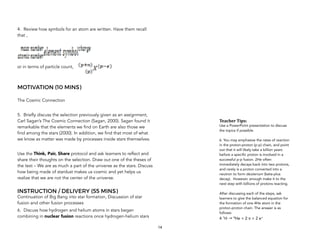
4. Review how symbols for an atom are written. Have them recall
that ,
or in terms of particle count,
MOTIVATION (10 MINS)
The Cosmic Connection
5. Briefly discuss the selection previously given as an assignment,
Carl Sagan’s The Cosmic Connection (Sagan, 2000). Sagan found it
remarkable that the elements we find on Earth are also those we
find among the stars (2000). In addition, we find that most of what
we know as matter was made by processes inside stars themselves.
Use the Think, Pair, Share protocol and ask learners to reflect and
share their thoughts on the selection. Draw out one of the theses of
the text – We are as much a part of the universe as the stars. Discuss
how being made of stardust makes us cosmic and yet helps us
realize that we are not the center of the universe.
INSTRUCTION / DELIVERY (55 MINS)
Continuation of Big Bang into star formation, Discussion of star
fusion and other fusion processes
6. Discuss how hydrogen and helium atoms in stars began
combining in nuclear fusion reactions once hydrogen-helium stars
14
Teacher&Tips:&
Use a PowerPoint presentation to discuss
the topics if possible.
6. You may emphasize the rates of reaction
in the proton-proton (p-p) chain, and point
out that it will likely take a billion years
before a specific proton is involved in a
successful p-p fusion. 2He often
immediately decays back into two protons,
and rarely is a proton converted into a
neutron to form deuterium (beta-plus
decay). However, enough make it to the
next step with billions of protons reacting.
After discussing each of the steps, ask
learners to give the balanced equation for
the formation of one 4He atom in the
proton-proton chain. The answer is as
follows:
4 1H → 4He + 2 ν + 2 e+
had formed from the action of gravity. This releases a tremendous
amount of light, heat, and radioactive energy. Fusion resulted in the
formation of nuclei of new elements. These reactions inside stars are
known as stellar nucleosynthesis.
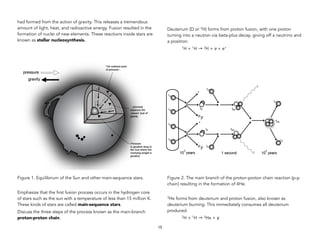
Figure 1. Equilibrium of the Sun and other main-sequence stars.
Emphasize that the first fusion process occurs in the hydrogen core
of stars such as the sun with a temperature of less than 15 million K.
These kinds of stars are called main-sequence stars.
Discuss the three steps of the process known as the main-branch
proton-proton chain.
Deuterium (D or 2H) forms from proton fusion, with one proton
turning into a neutron via beta-plus decay, giving off a neutrino and
a positron:
1H + 1H → 2H + ν + e+
Figure 2. The main branch of the proton-proton chain reaction (p-p
chain) resulting in the formation of 4He.
3He forms from deuterium and proton fusion, also known as
deuterium burning. This immediately consumes all deuterium
produced.
2H + 1H → 3He + γ
15
4He forms from 3He fusion.
3He + 3He → 4He + 2 1H
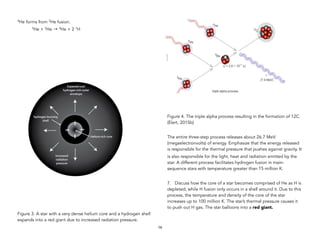
Figure 3. A star with a very dense helium core and a hydrogen shell
expands into a red giant due to increased radiation pressure.
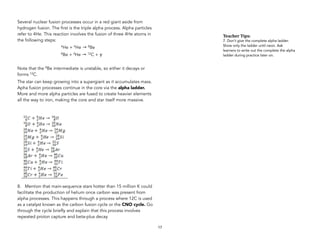
Figure 4. The triple alpha process resulting in the formation of 12C.
(Elert, 2015b)
The entire three-step process releases about 26.7 MeV
(megaelectronvolts) of energy. Emphasize that the energy released
is responsible for the thermal pressure that pushes against gravity. It
is also responsible for the light, heat and radiation emitted by the
star. A different process facilitates hydrogen fusion in main-
sequence stars with temperature greater than 15 million K.
7. Discuss how the core of a star becomes comprised of He as H is
depleted, while H fusion only occurs in a shell around it. Due to this
process, the temperature and density of the core of the star
increases up to 100 million K. The star’s thermal pressure causes it
to push out H gas. The star balloons into a red giant.
16
Several nuclear fusion processes occur in a red giant aside from
hydrogen fusion. The first is the triple alpha process. Alpha particles
refer to 4He. This reaction involves the fusion of three 4He atoms in
the following steps:
4He + 4He → 8Be
8Be + 4He → 12C + γ
Note that the 8Be intermediate is unstable, so either it decays or
forms 12C.
The star can keep growing into a supergiant as it accumulates mass.
Apha fusion processes continue in the core via the alpha ladder.
More and more alpha particles are fused to create heavier elements
all the way to iron, making the core and star itself more massive.
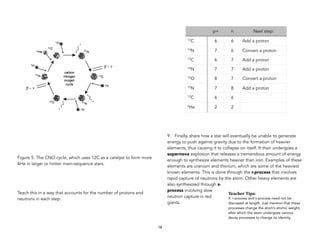
8. Mention that main-sequence stars hotter than 15 million K could
facilitate the production of helium once carbon was present from
alpha processes. This happens through a process where 12C is used
as a catalyst known as the carbon fusion cycle or the CNO cycle. Go
through the cycle briefly and explain that this process involves
repeated proton capture and beta-plus decay
17
Teacher&Tips:&
7. Don’t give the complete alpha ladder.
Show only the ladder until neon. Ask
learners to write out the complete the alpha
ladder during practice later on.
Figure 5. The CNO cycle, which uses 12C as a catalyst to form more
4He in larger or hotter main-sequence stars.
Teach this in a way that accounts for the number of protons and
neutrons in each step:
9. Finally, share how a star will eventually be unable to generate
energy to push against gravity due to the formation of heavier
elements, thus causing it to collapse on itself. It then undergoes a
supernova explosion that releases a tremendous amount of energy
enough to synthesize elements heavier than iron. Examples of these
elements are uranium and thorium, which are some of the heaviest
known elements. This is done through the r-process that involves
rapid capture of neutrons by the atom. Other heavy elements are
also synthesized through s-
process involving slow
neutron capture in red
giants.
18
Teacher&Tips:&
9. r-process and s-process need not be
discussed at length. Just mention that these
processes change the atom’s atomic weight,
after which the atom undergoes various
decay processes to change its identity.
p+ n Next step:
12C 6 6 Add a proton
13N 7 6 Convert a proton
13C 6 7 Add a proton
14N 7 7 Add a proton
15O 8 7 Convert a proton
15N 7 8 Add a proton
12C 6 6
4He 2 2
PRACTICE (20 MINS)
Concept map, Alpha process practice.
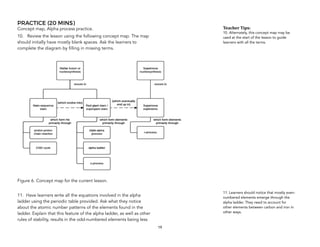
10. Review the lesson using the following concept map. The map
should initially have mostly blank spaces. Ask the learners to
complete the diagram by filling in missing terms.
Figure 6. Concept map for the current lesson.
11. Have learners write all the equations involved in the alpha
ladder using the periodic table provided. Ask what they notice
about the atomic number patterns of the elements found in the
ladder. Explain that this feature of the alpha ladder, as well as other
rules of stability, results in the odd-numbered elements being less
19
Teacher&Tips:&
10. Alternately, this concept map may be
used at the start of the lesson to guide
learners with all the terms.
11. Learners should notice that mostly even-
numbered elements emerge through the
alpha ladder. They need to account for
other elements between carbon and iron in
other ways.
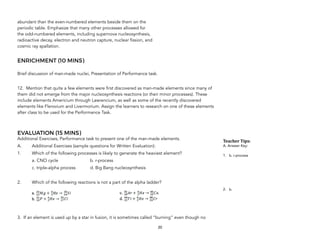
abundant than the even-numbered elements beside them on the
periodic table. Emphasize that many other processes allowed for
the odd-numbered elements, including supernova nucleosynthesis,
radioactive decay, electron and neutron capture, nuclear fission, and
cosmic ray spallation.
ENRICHMENT (10 MINS)
Brief discussion of man-made nuclei, Presentation of Performance task.
12. Mention that quite a few elements were first discovered as man-made elements since many of
them did not emerge from the major nucleosynthesis reactions (or their minor processes). These
include elements Americium through Lawrencium, as well as some of the recently discovered
elements like Flerovium and Livermorium. Assign the learners to research on one of these elements
after class to be used for the Performance Task.
EVALUATION (15 MINS)
Additional Exercises, Performance task to present one of the man-made elements.
A. Additional Exercises (sample questions for Written Evaluation):
1. Which of the following processes is likely to generate the heaviest element?
a. CNO cycle b. r-process
c. triple-alpha process d. Big Bang nucleosynthesis
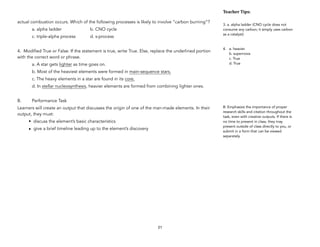
2. Which of the following reactions is not a part of the alpha ladder?
3. If an element is used up by a star in fusion, it is sometimes called “burning” even though no
20
Teacher&Tips:&
A. Answer Key:
1. b. r-process
2. b.
actual combustion occurs. Which of the following processes is likely to involve “carbon burning”?
a. alpha ladder b. CNO cycle
c. triple-alpha process d. s-process
4. Modified True or False: If the statement is true, write True. Else, replace the underlined portion
with the correct word or phrase.
a. A star gets lighter as time goes on.
b. Most of the heaviest elements were formed in main-sequence stars.
c. The heavy elements in a star are found in its core.
d. In stellar nucleosynthesis, heavier elements are formed from combining lighter ones.
B. Performance Task
Learners will create an output that discusses the origin of one of the man-made elements. In their
output, they must:
• discuss the element’s basic characteristics
• give a brief timeline leading up to the element’s discovery
21
Teacher&Tips:&
3. a. alpha ladder (CNO cycle does not
consume any carbon; it simply uses carbon
as a catalyst)
4. a. heavier
b. supernova
c. True
d. True
B. Emphasize the importance of proper
research skills and citation throughout the
task, even with creative outputs. If there is
no time to present in class, they may
present outside of class directly to you, or
submit in a form that can be viewed
separately.
Learners may present their research in the form of a poster, PowerPoint, essay, video, or infographic.
OTHER RESOURCES:
Dhaliwal, J. K. (2012b). Nucleosynthesis: Heavier Elements. [Powerpoint slides]. Retrieved from http://earthref.org/SCC/lessons/2012/
nucleosynthesis/
Nave, C. R. (2012). Nuclear fusion in stars. Retrieved September 23, 2015 from http://hyperphysics.phy-astr.gsu.edu/hbase/astro/astfus.html
Penovich, K. (n.d.). Formation of the High Mass Elements. Retrieved September 23, 2015, from http://aether.lbl.gov/www/tour/elements/stellar/
stellar_a.html
Sagan, C. (2000). Chapter 26: The Cosmic Connection. In J. Agel (Ed.), Carl Sagan's Cosmic Connection: An Extraterrestrial Perspective.
Cambridge: Cambridge University Press.
22
1 pt. 3 pts. 5 pts.
Presentation of the
element’s characteristics
Most basic characteristics of
the element are missing or
absent.
Basic aspects of the
element that can be found
on the periodic table are
present.
Unique aspects of the
element (e.g. the element’s
potential significance or
uses) were presented
Timeline of the element’s
discovery
There is no clear chain of
events or key moments
presented.
The scientific history of the
element’s discovery was
made clear, including
notable people and groups
involved.
The element’s history was
presented clearly and the
process of creating the
element was discussed.
(add creative metric)
(add other metrics)
Images:
Figure 1.
Equilibrium of the Sun [illustration]. (2007 August). Retrieved September 24, 2015 from http://lasp.colorado.edu/education/outerplanets/
solsys_star.php#nuclear
Figure 2.
Elert, G. (2015a). Proton-proton chain (main branch) [diagram]. Retrieved September 23, 2015 from http://physics.info/nucleosynthesis/
Figure 3.
Commonwealth Scientific and Industrial Research Organisation (CSIRO). (2015). Hydrogen Shell Burning on the Red Giant Branch [illustration].
Retrieved September 24, 2015 from http://www.atnf.csiro.au/outreach//education/senior/astrophysics/stellarevolution_postmain.html
Figure 4.
Elert, G. (2015b). Triple alpha process [diagram]. Retrieved September 23, 2015 from http://physics.info/nucleosynthesis/
Figure 5.
Elert, G. (2015c). Carbon nitrogen oxygen cycle [diagram]. Retrieved September 23, 2015 from http://physics.info/nucleosynthesis/
23
Physical)Science))
Atomos, Aristotle and Alchemy
(Chemistry Before
Modern History)
Content&Standards&
The learners demonstrate an understanding of:
1. How the concept of the atom evolved from Ancient Greek to the present
2. How the concept of the element evolved from Ancient Greek to the present
Performance&Standards&
The learners shall be able to make a creative representation of the historical
development of the atom or the chemical element in a timeline.
Learning&Competencies&
The learners to:
1. Describe the ideas of the Ancient Greeks on the atom (S11/12PS-IIIa-b-5)
2. Describe the ideas of the Ancient Greeks on the elements (S11/12PS-IIIa-
b-6)
3. Describe the contributions of the alchemists to the science of chemistry
(S11/12PS-IIIb-7)
Speci4ic&Learning&Outcomes&
At the end of the lesson, the learners will be able to:
1. Discuss key developments in the concept of the atom and element
throughout pre-modern history
2. Discuss key developments in the practical application of chemistry
throughout pre-modern history.
3. Articulate the contributions of alchemy as a protoscience to chemistry.
24
120 MINS
LESSON OUTLINE
Introduction
/&Review
Overview of the objectives and key
names or terms
10
Motivation The Gnome theory of physics 10
Instruction&/&
Delivery
Atomism; non-atomistic views of the
Greeks; The growth of alchemy across
different civilizations, Western Alchemy
65
Practice Concentric Circles review of the lesson 20
Enrichment Reading of a related text: Lead to Gold,
Sorcery to Science
Evaluation Additional Exercises, Written Outputs:
Essay and concept mapping
15
Materials • Projector, computer, speakers
Resources&
(1) Coyne, Glynis L. (2012). Lead to Gold, Sorcery to Science:
Alchemy and the Foundations of Modern Chemistry. University
of North Carolina PIT Journal, 4. Retrieved October 10, 2015
from http://pitjournal.unc.edu/article/lead-gold-sorcery-science-
alchemy-and-foundations-modern-chemistry;
(2) see additional resources at the end of the lesson
INTRODUCTION (10 MINS)
Overview of the objectives and key names or terms
1. Go back to the outline presented at the introduction of the quarter. Let the learners take note
of how our understanding of matter has changed and continues to change after discussing where
all matter came from.
2. Introduce the following learning objectives using any of the suggested protocols (Verbatim,
Own Words, Read-aloud)
a. I can describe the ideas of the Ancient Greeks on the atom.
b. I can describe the ideas of the Ancient Greeks on the elements.
c. I can describe the contributions of the alchemists to the science of chemistry.
3. Introduce the following list of some important names and terms that learners will encounter:
a. Leucippus and Democritus d. Jabir Ibn-Hayyan (Geber)
b. Atomism e. Alchemy
c. Aristotle f. Protoscience
MOTIVATION (10 MINS)
The Gnome theory of physics.
4. Present the amusing and absurd *gnome theory of physics that says the universe can be
explained entirely by the actions and effects of tiny versions of gnomes (duwende in Philippine
mythology). For example:
• Gravity – gnomes like the ground. Gnomes throw small invisible ropes to the ground.
These ropes attach to unseen hooks that enable muscle-toned gnomes to pull themselves
toward the ground. There is minimal gravity far from planetary bodies (i.e. in space) because
25
Teacher&Tips:&
2. Display the objectives and terms
prominently on one side of the classroom
and refer to them frequently during
discussion.
gnomes don’t have cables long enough for them. All bodies experience gravitational
attraction to each other quite simply because gnomes are, to put it mildly, sociable creatures.
• Light – gnomes that make up our eyes can see what color hats other gnomes are wearing
to make up, say, a table. They then hi-five gnomes in our 'optical nerve' who run to tell the
brain gnomes what they have seen. This makes us think we are seeing a table when in fact,
it's all gnomes.
• States of matter – a solid is little more than a closely compacted configuration of gnomes
all holding hands, wearing hats and having legs. Heating causes gnomes to become excited
or tickled. They start to loosen their grip of their neighbors (liquid). When gnomes are
tickled, they are no longer able to hold on and just float away in groups of one or more (gas).
Sometimes the gnomes get so excited they catch fire (plasma).
5. Explain that much of our thinking about the universe began in the same way, that is, with many
different ideas and conjectures. Without the necessary scientific tools or discipline, much of what
was known about matter and the universe in the pre-modern era was a result of discussion,
reflection, and trial-and-error. There were very little evidences or experimentation involved in
finding explanations. This made developing scientific ideas about matter quite difficult. However,
the human need to master our surroundings led to many developments in terms of the practical
understanding of matter and materials.
INSTRUCTION / DELIVERY (65 MINS)
Atomism, non-atomistic views of the Greeks, the growth of alchemy across different civilizations,
Western Alchemy
6. Introduce the Greek philosophers who began considering the nature of what things were made
of. They were preoccupied with how the universe seemed to be both changing and constant.
Leucippus and Democritus were two of the most important theorists about the natural and
physical world. They were called physicists in Ancient Greece. They considered the idea of
atomism, or the idea that things are made up of much smaller things that cannot be changed nor
divided. Among the features of their theory were the following:
26
Teacher&Tips:&
4. Pretend you believe the theory as a true
explanation of matter during presentation.
See more aspects of the theory posted
online
(http://uncyclopedia.wikia.com/wiki/
Physics_doesn't_exist,_it's_all_about_Gnom
es). Encourage learners to think critically in
order to point out holes in the theory. Draw
out the point of the parody theory that just
because an idea of things can be explained
does NOT mean it is true.
*This can be presented through a power
point presentation.
• Atoms make up most of the things in the universe; where there are no atoms, there is a void.
• Atoms are incredibly small and cannot be divided, hence atomos (uncuttable).
• Atoms themselves are solid, homogeneous and cannot change.
• Atoms moving about and colliding in the void cause the changes we see in our universe.
• The shapes, sizes and weights of individual atoms influence the characteristics of the thing
they make up; e.g. sharp atoms cause our tongues to tear and make bitter or sour tastes, and
atoms that compose clay are joined by flexible joints which harden when the clay is baked.
Emphasize that atomism, although more a philosophical idea than a scientific one was closest to our
current thinking about matter. Despite having advocates, atomism was set aside because more
prominent philosophers opposed it. Religious groups later declared it as heretical or blasphemous
because they deemed atomistic thinking denied the existence of God.
Discuss how many correct scientific ideas are unpopular or often disregarded. Cite the treatment of
scientists and thinkers like Galileo or Gregor Mendel who were ridiculed or ostracized for advocating
what we now consider to be truth. Discuss and analyze with the class why some people, even today,
refuse to accept scientifically sound concepts like climate change and evolution.
7. Discuss some of the ideas that served as arguments against atomism and what this revealed
about how the Greeks thought about matter and the world:
• The philosopher Anaxagoras argued that there was an infinite number of elementary natural
substances in the form of infinitesimally small particles that combined to comprise the different
things in the universe.
• Another theory by a philosopher named Empedocles stated that everything is made up of
four eternal and unchanging kinds of matter, fire, air (all gases), water (all liquids and metals)
and earth (all solids).
• The well-known philosopher Plato further expanded Empedocles’ theory by saying each of
the four kinds of matter is composed of geometrical solids (the “Platonic solids”) further
divisible into triangles. When rearranged, these triangles could cause the apparent
transformations between the four basic kinds of matter.
• Aristotle, on the other hand, believed that the four elements could be balanced in
27
Teacher&Tips:&
6. Learners should already have a concept
of the atom from previous years’
discussions. Ask them to compare the
atomists’ ideas to our current scientific
knowledge of the atom using a Venn
diagram. They can also use This can also
serve as pre-assessment regarding their
understanding of the modern atomic theory.
A power point presentation or pictures can
be used as instructional tools for all topics in
this session.
7. Emphasize that the concepts of Greek
philosophers and atomists on the world
were simply a result of reasoning and
thought. They were not necessarily scientific
or empirical.
As an optional (and fun) activity, you may
show or refer learners to a game online
called Little Alchemy (https://
littlealchemy.com/). An alternative is Doodle
God (http://www.addictinggames.com/
puzzle-games/doodle-god-game.jsp). In this
game, learners get to understand the
thinking popularized by Aristotle and the
alchemists – combining any of the four
elements in certain ways resulted in
substances that could be combined further.
substances in an infinite number of ways, and that when combined gave proportions of
“essential qualities,” hot, dry, cold and wet. Transformations between the four elements (or
changes in their balance in a substance) caused changes in the universe.
Emphasize that it was an obsession with Aristotle’s ideas (and his arguments against atomists) that
prevented atomism from gaining ground.
8. Explain that while our concept of matter didn’t advance much during this time, the practical
aspect of dealing with substances, matter and materials flourished in different civilizations before and
after the Greeks:
• The Mesopotamians had techniques to utilize metals like gold and copper. They even
assigned certain symbols to match metals with the heavenly bodies such as the Sun and Moon.
They also made use of other materials such as dyes, glass, paints, and perfumes.
• The Egyptians adapted techniques from the Mesopotamians and perfected the use of
bronze, dye and glass that the Greeks later copied.
• The Chinese also had their own processes for metalwork and ceramic materials, but they
especially focused on finding minerals, plants and substances that could prolong life. Some of
the substances discovered in Chinese medicine have been found to have actual positive effects
while others were found useless or even harmful, like mercury.
• The Indians, like the Chinese, had a kind of alchemy (rasayana) that looked at different
substances and practices for Vedic medicine. This is tied closely to Hindu and Buddhist beliefs.
They also perfected the use of iron and steel and were well-known manufacturers of dyes,
glass, cement, solutions for textiles, and soap.
• The Arabs and Muslims enriched not only the practice but also the literature of chemistry. In
particular, the scholar Jabir Ibn-Hayyan, also known as Geber, translated the practices and
Aristotelian thinking of the Greeks and wrote extensively on how metals can be purified. He
came up with the preparation of acids such as nitric, hydrochloric and sulfuric acids, as well as
aqua regia (nitro-hydrochloric acid).
28
Teacher&Tips:&
8. Enrich the discussion by showing pictures
of each of these civilizations and the
products of their technological advances.
Emphasize that contrary to Euro-centric
historical perspectives, science at this time
was enriched mostly by people outside of
Europe and the West.
Emphasize that despite many of the progress being practical, much of it was shrouded in mysticism
or cultural beliefs, and was often a result of trial and error. These advances in materials, metallurgy
and medicine would often be collectively referred to in history as alchemy, from the Arabic/Greek
alkīmiyā or “the art of transmuting.”
9. The field of alchemy became popular in the Western world because of Aristotle’s ideas on the
elements and the techniques developed by other civilizations. Alchemists tried to play with the
balance of the four elements (fire, water, air, earth) and three principles (salt, sulfur and mercury) to
transform or transmute substances. Among their aims was to try and transform “impure” or “base”
metals like lead or iron into the “purer” metals of silver or gold, discover a magical “Philosopher’s
Stone,” and produce the so-called “Elixir of Life.” With a T-chart, distinguish how alchemy both
contributed to and hampered scientific thought.
Stress that in the pre-modern era, the understanding of chemistry was distinct from the practice of
chemistry. Summarize by pointing out that while alchemists had the wrong understanding of matter,
much of what they did set the stage for much of modern chemistry. For this reason, alchemy is
considered a protoscience, a precursor that allowed the field of chemistry to be what it is today.
29
Teacher&Tips:&
9. After discussing what alchemy is, you may
present pictures or presentations of
alchemy in popular culture, such as in the
fantasy novel, Harry Potter and the
Philosopher’s Stone and the Japanese
anime, Fullmetal Alchemist. Point out how
these fictional stories tend to focus on the
fantastical or esoteric aspect of alchemy and
not so much the scientific.
Protoscience - An unscientific field of study
which later developed into real science (e.g.
astrology toward astronomy and alchemy
toward chemistry).
Scientific Contributions Unscientific Contributions
refined how to crystallize, condense, distill,
evaporate and dissolve metals and materials
used incantations, magic spells and symbols
took lots of notes and information about what
they did
used esoteric symbols connected to astrology and
religion
developed step-by-step procedures and
specialized set-ups or equipment
concerned with riches, purity, immortality, and
spirits
discovered and investigated the properties of
many now-useful substances such as phosphorus,
sulfur and potash
promoted the Aristotelian concept of the
elements
PRACTICE (20 MINS)
Concentric Circles review of the lesson.
10. Review the lesson by asking the learners to discuss what they have learned. Using the
Concentric Circles technique found in http://www.theteachertoolkit.com/index.php/tool/inside-
outside-circles, ask them to work with different partners to answer each of the following questions:
a. What are the aspects of Leucippus and Democritus’ idea of atomism?
b. How did other Greek philosophers like Plato and Aristotle think about the elements?
c. What were the three aims of Western alchemy?
d. Give two similar advances in alchemy carried out by different civilizations.
e. Give an example of how the contributions of alchemy can be found in the modern chemistry
laboratory.
ENRICHMENT
Reading of related text outside of class: Lead to Gold, Sorcery to Science
11. Encourage additional reading on alchemy as contributing to science. In preparation for the next
lesson, and as additional insight into how alchemy impacted chemistry, instruct learners to read
Annex A, which is an adapted excerpt of an article, Lead to Gold, Sorcery to Science: Alchemy and
the Foundations of Modern Chemistry. Have them answer the following questions:
Understand and remember:
1. Find the meanings of the underlined words in the passage.
Apply and analyze:
2. How can we say that alchemy is integral in the definition of chemistry?
3. Why did Boyle engage with alchemy even though he disagreed with it?
Evaluate:
4. Many great minds of the time like Isaac Newton engaged in the practice of alchemy. Does
this make Isaac Newton less of a scientist? Argue why or why not.
30
Teacher&Tips:&
10. As a quick post-assessment, call on
different learners to express in their own
words the answers to the questions.
11. The piece touches on the continuation
of atomic theory through Boyle’s proposed
“corpuscles.” You may use this important
connection to segue into the next topic.
5. The Nobel Prize in physiology or medicine for 2015 was awarded in part to a Chinese woman
named Tu Youyou for discovering artemisinin, an antimalarial substance. She began her work by
looking at traditional Chinese medicine. How is traditional Chinese medicine (herbal medicine,
acupuncture and acupressure) similar to alchemy?
EVALUATION (15 MINS)
Additional Exercises, Writing Outputs: Essay and concept mapping.
A. Additional Exercises (possible questions for Written Evaluation):
1. Which of the following was not part of the ideas of Leucippus and Democritus?
a. The universe is made up of either atoms or a void.
b. An object is made of small, indivisible parts which influence the object’s properties.
c. The universe is made up of four elements that combine and separate to cause change.
d. The universe changes because atoms move about, combine, collide and separate.
2. What did physicist mean in Ancient Greece?
B. Written output questions (longer Essay-type or synthesis questions for Written Evaluation)
1. How is a protoscience like alchemy similar or different from a pseudoscience like astrology or
homeopathy?
2. Create a concept map beginning from each of the words below. Each map should contain at
least 30 connected concepts each.
a. atomism
b. alchemy
31
Teacher&Tips:&
A. Answer Key:
1. c. The universe is made up of four
elements that combine and separate to
cause change.
2. A physicist in Ancient Greece was
somebody who theorized and thought
about the natural and physical world.
Pseudoscience is a claim, belief, or practice
presented as scientific, but which does not
adhere to the scientific method.
e.g. homeopathy
You have the option to limit the evaluation
items if there is time constraint.
ADDITIONAL RESOURCES:
Fowler, M. (2008 August 23). Early Greek Science: Thales to Plato. Lecture. Retrieved October 1, 2015 from http://
galileoandeinstein.physics.virginia.edu/lectures/thales.pdf
Fruen, L. (2010). The History of Ancient Chemistry. Retrieved October 7, 2015 from http://realscience.breckschool.org/upper/fruen/files/
Enrichmentarticles/files/History.html
Shuttleworth, M. (2010 June 17). Alchemy and the Philosopher’s Stone. Retrieved October 7, 2015 from https://explorable.com/alchemy
Shuttleworth, M. (2010 May 25). Ancient Chinese Alchemy. Retrieved October 9, 2015 from https://explorable.com/chinese-alchemy
Shuttleworth, M. (2010 November 23). Islamic Alchemy. Retrieved October 9, 2015 from https://explorable.com/islamic-alchemy
Ancient Atomism. (2011 November 18). In Stanford Encyclopedia of Philosophy. Retrieved October 7, 2015 from http://plato.stanford.edu/
entries/atomism-ancient/
Atomic Structure from Democritus to Dalton. (n.d.). Retrieved October 7, 2015 from http://www.chemteam.info/AtomicStructure/Democritus-to-
Dalton.html
The Greek Concept of Atomos: The Indivisible Atom. (n.d.). Retrieved October 7, 2015 from http://www.chemteam.info/AtomicStructure/
Greeks.html
Physics doesn’t exist, it’s all about Gnomes. (2013 December 16). Retrieved October 10, 2015 from http://uncyclopedia.wikia.com/wiki/
Physics_doesn't_exist,_it's_all_about_Gnomes
Activities:
Koziol, J. (n.d.). Little Alchemy [online game]. Retrieved October 9, 2015 from https://littlealchemy.com/
32
Elite Games Studio. (2010, July 30). Doodle God [online game]. Retrieved October 9, 2015 from http://www.addictinggames.com/puzzle-
games/doodle-god-game.jsp
33
Physical)Science))
Not Indivisible (The Structure of the
Atom)
Content&Standards&
The learners demonstrate an understanding of:
1. How the concept of the atom evolved from Ancient Greek to the present
2. How the concept of the element evolved from Ancient Greek to the present
Performance&Standards&
The learners shall be able to make a creative representation of the historical
development of the atom or the chemical element in a timeline.
Learning&Competencies&
The learners to:
1. Point out the main ideas in the discovery of the structure of the atom and
its subatomic particles (S11/12PS-IIIb-8)
2. Cite the contributions of J.J. Thomson, Ernest Rutherford, Henry Moseley,
and Niels Bohr to the understanding of the structure of the atom
(S11/12PS-IIIb-9)
3. Describe the nuclear model of the atom and the location of its major
components (protons, neutrons, and electrons) (S11/12PS-IIIb-10)
Speci4ic&Learning&Outcomes&
At the end of the lesson, the learners shall be able to:
1. Discuss key developments in the concept of the atomic structure
2. Give brief explanations of each of the models of atomic structure
34
150 MINS
LESSON OUTLINE
Introduction
/&Review
Overview of the objectives and key
names or terms
10
Motivation 4 Pictures, 1 Word (10 minutes); Brief
discussion of billiard ball concept and
Brownian motion (10 minutes)
20
Instruction&/&
Delivery
Discussion of 4 atomic models: plum-
pudding, Rutherford, Bohr (40 minutes)
and quantum models (40 minutes)
80
Practice Demonstration of distance between
nucleus and electrons; summary of four
models
20
Enrichment Quarks and other subatomic particles 10
Evaluation Attribution of aspects and concepts to
correct models
10
Materials Projector, computer, pictures of each of
the models, map of the Philippines
Resources&
(1) Gagnon, S. (n.d.) How much of an atom is empty space?
Retrieved November 17, 2015 from http://education.jlab.org/
qa/how-much-of-an-atom-is-empty-space.html;
(2) see additional resources at the end of the lesson
INTRODUCTION (10 MINS)
Overview of the objectives and key names or terms
1. Introduce the following learning objectives using any of the suggested protocols (Verbatim,
Own Words, Read-aloud)
a. I can point out the main ideas in the discovery of the structure of the atom and its
subatomic particles.
b. I can cite the contributions of J.J. Thomson, Ernest Rutherford, Henry Moseley, and Niels
Bohr to the understanding of the structure of the atom.
c. I can describe the nuclear model of the atom and the location of its major components
(protons, neutrons, and electrons).
2. Introduce the following list of some important terms and names that learners will encounter:
a. Billiard ball g. Protons
b. JJ Thomson h. Niels Bohr
c. Electrons i. Quantum model
d. Plum-pudding model j. James Chadwick
e. Ernest Rutherford k. Neutrons
f. Nucleus
MOTIVATION (10 MINS)
4 Pictures, 1 Word
3. Begin with a 4 Pictures, 1 Word type game that will introduce the subject to be discussed. See
the image to the right.
Inform that class that you will discuss quite a few names and concepts. While it will be good to
keep track of the names of the scientists, it will be more useful to pay attention as to which
concepts belong to which models.
35
Teacher&Tips:&
1. Display the objectives and terms
prominently on one side of the classroom
and refer to them frequently during
discussion.
2. Inform the class that a lot of scientists’
names will be mentioned in discussing
models of atomic structure, and that they
should focus on the differences in their
proposed models.
Figure 1. 4 Pics 1 Word game: ATOM
REVIEW (10 MINS)
Brief discussion of billiard ball concept and Brownian motion
4. Remind the class that before Dalton, most atomists like Democritus and advocates of atomic
theory believed that the atom was a fundamental, indestructible, indivisible particle. This is
sometimes known as the billiard ball concept of the atom, wherein the atom is an incredibly small
but smooth and whole object.
5. Briefly mention how a botanist named Robert Brown observed, under a microscope, that pollen
suspended in water ejected particles that caused a jittery, irregular motion. This would later be
36
Teacher&Tips:&
3. The answer is ATOM. You may do similar
motivations as a review for previous lessons.
A power point presentation may be used as
an instructional tool to discuss this topic.
called Brownian motion. Later on in the 20th century, this observation would be used by Albert
Einstein and a French physicist, Jean Perrin, to mathematically and experimentally confirm John
Dalton’s Chemical Atomic Theory. This made the atom an undeniable part of how we thought about
the universe. The atom is no longer debatable, the way it was in the time of the Greeks, the
alchemists and Lavoisier.
INSTRUCTION / DELIVERY (40 MINS)
Discussion of 4 atomic models: plum-pudding, Rutherford, Bohr
6. Proceed with the discussion by saying that before Dalton clearly defined what an atom was, few
had even considered what an atom looked like, what the nature of the atom itself was, or if it was
composed of anything at all. Throughout the 19th century, scientists experimented quantitatively
with electricity and electric charges. Michael Faraday related electricity to atoms by saying, “...if we
adopt the atomic theory or phraseology, then the atoms of bodies which are equivalent to each
other in their ordinary chemical action, have equal quantities of electricity associated with them.”
Later in 1897, Joseph John Thomson published the idea that electricity was in particles that were
part of the atom. Experimenting with cathode rays, he established the mass and charge properties of
these particles. These particles were named electrons. In 1904, he came up with the plum-pudding
model, which was an idea of what the atom looked like based on his experiments.
He would later conclude that the electron was not the only source of mass in the atom. This implied
that the atom was composed of other particles.
37
Teacher&Tips:&
6. Many of these important figures are
physicists, not chemists. Encourage a side
discussion of how Physics is so tied to
Chemistry in the study of matter and
changes in matter. This can be a separate
Enrichment activity.
Figure 2. Thomson’s plum-pudding model, a sphere with a uniformly distributed positive charge and
enough embedded electrons to neutralize the positive charge. A plum pudding is a sort of cake with
raisins embedded in it.
7. Introduce Ernest Rutherford, a student of Thomson’s, who was among many who studied
radioactivity. He concluded that radioactivity occurred due to changes on a subatomic level, or
changes within the atom itself. In 1902, he worked in Thomson’s laboratory where he distinguished
two kinds of radiation based on their penetrating power: α (alpha) and β (beta). He studied these
types of radiation and noticed, from his experiments, that alpha particles would sometimes bounce
off at a high angle when made to penetrate a very thin gold foil.
38
Teacher&Tips:&
7. Get learners to understand how scientists
determine if a mode or theory is better fit
over another. Rutherford’s model was
preferred over Thomson’s. It was not
because Thomson was wrong, but that his
model was not sufficient to explain the
phenomena of alpha particles rebounding.
Rutherford’s model added insight that
explained the experimental phenomena.
Figure 3. Diagram of the Rutherford atomic model. Physicist Ernest Rutherford envisioned the atom as like a miniature solar system, with
electrons orbiting around a massive nucleus, and as mostly empty space, with the nucleus occupying only a very small part of the atom.
In 1911, Rutherford theorized that the model proposed by Thomson did not explain the deflection of alpha particles. Therefore, he devised his
own model with a positive nucleus at the center and electrons revolving like planets at a distance around it. The incredibly dense nucleus
explained the occasional deflection experienced by the alpha particles, while the amounts of empty space in between explained why most
particles were able to pass through.
Rutherford later concluded that the nucleus was composed of positive particles known as protons, which were then thought to be hydrogen
nuclei found in other atoms. He suggested the possibility of finding a composite particle (proton + electron) with a negligible electric field that
composed the nucleus.
39
8. Introduce the next key figure, Niels Bohr, another scientist in Rutherford’s laboratory. He tackled one of the big issues with the Rutherford
model in 1913. The system proposed by Rutherford was unstable because, under classical physics, the spinning electrons would tend to be
attracted to the positive nucleus and lose energy until they collapse into the center. Bohr proposed that the electrons existed only at fixed
distances from the nucleus at set “energy levels,” or quanta. Quanta was first conceptualized mathematically by Max Planck. Bohr also
proposed that the electrons “jumped” between energy levels by absorbing or releasing discrete amounts of energy.
However, the Bohr model of the atom was still unable to explain why atoms bonded in certain ways to form compounds. For example, carbon
formed compounds of CH4 while oxygen formed H2O.
Figure 4. In the Bohr model of the atom, electrons travel in defined circular orbits around the nucleus. The orbits are labeled by an integer, the
quantum number n. Electrons can jump from one orbit to another by emitting or absorbing energy.
40
PRACTICE (20 MINS)
Demonstration of distance between nucleus and electrons
9. Help learners visualize the Rutherford’s or Bohr’s model wherein most of the matter is
concentrated in the nucleus with no matter in between.
The Scale of Empty Space in the Rutherford/Bohr Atomic Models
The hydrogen nucleus has a radius of approximately 0.84 x 10⁻¹⁵ m. The atom itself (defined as the
diameter of the spherical electron cloud) has a radius of 0.529 x 10⁻¹⁰ m. Compute the difference
between the orders of magnitude between the two.
Using the Rutherford or Bohr models, how far would the electron be if our nucleus was a ball with a
radius of 0.84 m (half as tall as an average Filipino)?
Answer: The electron would most likely be a tiny pellet 52.9 kilometers away from the nucleus ball.
How far away on a map is 52.9 km?
INSTRUCTION / DELIVERY (40 MINS)
Quantum Models
10. Continue the lesson by discussing the development of a new branch of physics called quantum
mechanics. This branch augmented the Bohr model with new explanations of how matter behaved
at a very tiny level that turned it into the quantum model of the atom used today. The model is
based on mathematical equations by several scientists, including Werner Heisenberg and Ernest
Schrödinger.
• Instead of electrons being particles in the model, electrons have characteristics of both
waves and particles.
41
Teacher&Tips:&
To get the order of magnitude, simply
divide the order of the scientific notation
(e.g. divide 10-15 by 10-10 to get the
answer, 100,000 orders of magnitude).
Project or display a map of the Philippines.
Ensure the scale of the map reaches up to
100 kilometers. If a giant 2m nucleus ball
was stuck on top of Rizal’s monument in
Luneta Park, the tiny electron would only be
found as far as Tagaytay. From a nucleus in
Baguio, an electron would be found in
Calasiao, Pangasinan, from a nucleus ball
near Davao City, an electron in Kidapawan.
10. When showing pictures of the quantum
model (and shapes of orbitals), emphasize
that the depicted electron clouds are not
actually “clouds,” but rather regions of
probability that are described by math.
• Instead of orbits, there were orbitals or regions of space with high probability of finding
electrons. These are sometimes known as electron clouds or electron subshells whose shapes
are described by complex wave equations.
• There is no real “empty space,” but there are regions with a high or low probability of
finding an electron.
The quantum model more accurately explains properties of elements such as the way that
atoms bond with one another. However, it made Rutherford’s proposal of composite proton-
electron particles unworkable. This is because the equations would predict that there was a
zero probability of electrons being found in the nucleus. The mass unaccounted for by the
protons had to come from another particle entirely.
11. James Chadwick was a student of Rutherford’s who built on this possibility in 1926. He worked
on radiation emitted by beryllium that took the form of particles heavy enough to displace protons.
These particles were as heavy as protons, but they needed to have a neutral charge that would allow
them to smash into the nucleus without being repelled by electrons or protons. He confirmed their
existence by measuring their mass and called them neutrons. He determined that they were single
particles instead of composite ones that Rutherford had hypothesized.
The neutron was able to explain the mass unaccounted for by a system of protons and electrons
only. It also allowed for more far-reaching advancements in nuclear physics and chemistry. It gave an
understanding of isotopes and radioactive decay, and provided the tools to synthesize new elements
and radioactive materials. These advancements, for better or for worse, changed the landscape of
science because they gave us the ability to derive large amounts of energy from splitting the atom
(nuclear fission).
PRACTICE (20 MINS)
Summary of four models
12. Have each learner draw the four models discussed (Thomson/plum-pudding, Rutherford, Bohr,
quantum) on a matrix like the one below. Ask learners to label these models with relevant concepts.
42
Teacher&Tips:&
It is difficult to determine the exact location
of an electron in an atom. One can only
calculate the probability where it is found. It
is for this reason that the electron in the
quantum model is described in terms of
its probability distribution or
probability density. This probability
distribution does not have definite
boundaries. Its edges are somewhat fuzzy,
hence, the term "electron cloud."
11. Clarify that nuclear science and the
concept of radioactivity existed prior to
Chadwick’s confirmation of the neutron, but
his discovery made it easier to study
because the neutron was used in a lot of
nuclear reactions.
13. Display the following infographic that neatly summarizes what knowledge was added by each
model of atomic structure, and what questions each model raised.
43
Teacher&Tips:&
12. During the activity, remind learners that
models are useful representations to
understand real things, but they are not a
statement of fact or actual appearance.
This Practice may also be given as an
assignment or assessment to save on time.
Plum-Pudding / Thomson’s Model Rutherford’s Model
Bohr’s Model Quantum Model
Figure 5. Historical development of the model of atomic theory with contributions from Dalton to
Chadwick.
44
Teacher&Tips:&
To get the order of magnitude, simply
divide the order of the scientific notation
(e.g. divide 10-15 by 10-10 to get the
answer, 100,000 orders of magnitude).
Project or display a map of the
Philippines. Ensure the scale of the map
reaches up to 100 kilometers. If a giant
2m nucleus ball was stuck on top of Rizal’s
monument in Luneta Park, the tiny
electron would only be found as far as
Tagaytay. From a nucleus in Baguio, an
electron would be found in Calasiao,
Pangasinan, from a nucleus ball near
Davao City, an electron in Kidapawan.
ENRICHMENT (10 MINS)
Quarks and other subatomic particles
14. Share that further study of the atom led scientists to discover that even the subatomic protons
and neutrons were made of even smaller particles called quarks. These quarks have “flavors” such as
Top, Bottom, Up, Down, Strange, and Charm.
EVALUATION (10 MINS)
Attribution of aspects and concepts to correct models
A. Check which model applies to each attribute. There may be more than one applicable model
per item.
45
Teacher&Tips:&
14. Encourage additional reading on the
subject. One sample resource is Wacky
Physics: Why Do Particles Have Flavors?
(See the Sources for this Teaching Guide)
Another text reading suggestion:
Quark - Subatomic Particle.
Retrieved May 22, 2016 from http://
www.britannica.com/science/quark
A. Correct answers provided in matrix.
Plum-
pudding or

Thomson
Rutherford Bohr Quantum
Conceptualized following
cathode ray experiments
Has a nucleus
Has energy levels or quanta
Conceptualized following α-
particle experiments
Explains why electrons don’t
fall into the nucleus
Has idea of orbitals
First model to use idea of
subatomic particles
(others may be added)
!
ADDITIONAL RESOURCES:
Gagnon, S. (n.d.) How much of an atom is empty space? Retrieved November 17, 2015 from http://education.jlab.org/qa/how-much-of-an-
atom-is-empty-space.html
Giunta, C. (2010). Atoms are Divisible: The Pieces Have Pieces. In C. Giunta (Ed.), Atoms in Chemistry: From Dalton's Predecessors to Complex
Atoms and Beyond (pp. 65-81), ACS Symposium Series 1044. American Chemical Society: Washington, DC.
Bohr atomic model. (2015). In Encyclopædia Britannica Online. Retrieved October 27, 2015 from http://www.britannica.com/science/Bohr-
atomic-model
Chadwick discovers the neutron. (1998). Retrieved October 27, 2015 from http://www.pbs.org/wgbh/aso/databank/entries/dp32ne.html
Chronology of Discoveries in Atomic Structure. (n.d.) Retrieved October 27, 2015 from http://www.chemteam.info/AtomicStructure/Hist-
AtomicStructure.pdf
Henry Moseley. (2014, December 29). Retrieved October 27, 2015 from http://www.famousscientists.org/henry-moseley/
James Chadwick. (2014, September 8). Retrieved November 17, 2015 from http://www.famousscientists.org/james-chadwick/
Rutherford atomic model. (2015). In Encyclopædia Britannica Online. Retrieved October 27, 2015 from http://www.britannica.com/science/
Rutherford-atomic-model
Thomson atomic model. (2015). In Encyclopædia Britannica Online. Retrieved October 27, 2015 from http://www.britannica.com/science/
Thomson-atomic-model
46
Additional reading:
Moskowitz, C. (2012, January 26). Wacky Physics: Why Do Particles Have Flavors? Retrieved November 17, 2015 from http://
www.livescience.com/18141-wacky-physics-particle-flavors.html
Images:
Thomson atomic model: structure [art]. (2012). In Encyclopædia Britannica Online. Retrieved October 27, 2015 from http://www.britannica.com/
science/Thomson-atomic-model/images-videos/Thomson-atomic-model-William-Thomson-envisioned-the-atom-as-a/18135
Rutherford atomic model [art]. (2012). In Encyclopædia Britannica Online. Retrieved Oct. 27, 2015 from http://www.britannica.com/science/
Rutherford-atomic-model/images-videos/Diagram-of-the-Rutherford-atomic-model/18079
Bohr atomic model: Bohr atom with first Balmer transition [art]. (2012). In Encyclopædia Britannica Online. Retrieved Nov. 7, 2015 from http://
www.britannica.com/biography/Niels-Bohr/images-videos/In-the-Bohr-model-of-the-atom-electrons-travel-in/17833
VCEasy. (2014). Historical development of the model of atomic theory with contributions from Dalton to Chadwick [infographic]. Retrieved
November 10, 2015 from https://vceasy.wordpress.com/2014/02/22/unit-1-1-2a-historical-development-of-the-model-of-atomic-theory-from-
dalton-to-chadwick/
Rutherford’s Model: http://www.finetuneduniverse.com/atomsandelements.html Retrieved: August 25, 2016
Bohr’s Model: https://commons.wikimedia.org/wiki/File:Bohr-atom-PAR.svg Retrieved: August 25, 2016
47
Physical)Science))
Corpuscles to Chemical Atomic Theory
(The Development of
Atomic Theory)
Content&Standards&
The learners demonstrate an understanding of :
1. How the concept of the atom evolved from Ancient Greek to the present
2. How the concept of the element evolved from Ancient Greek to the present
Performance&Standards&
The learners shall be able to make a creative representation of the historical
development of the atom or the chemical element in a timeline.
Learning&Competencies&
The learners to:
1. Point out the main ideas in the discovery of the structure of the atom and its
subatomic particles (S11/12PS-IIIb-8)
2. Cite the contribution of John Dalton toward the understanding of the
concept of the chemical elements (S11/12PS-IIIc-13)
3. Explain how Dalton’s theory contributed to the discovery of other elements
(S11/12PS-IIIc-14)
Speci4ic&Learning&Outcomes&
At the end of the lesson, the learners shall be able to:
1. Discuss key developments in the concept of the atom and element from
Robert Boyle to John Dalton.
2. Discuss the aspects of the Chemical Atomic Theory, and relate its evidence
(3 Fundamental Laws) to these aspects.
3. Gain an appreciation of the scientists involved in the development of the
science of Chemistry.
48
120MINS
LESSON OUTLINE
Introduction
/&Review
Overview of the objectives and key
names or terms
10
Motivation Give One, Get One, Move On activity
about assigned text (10 minutes); Review
Robert Boyle (15 minutes)
25
Instruction&/&
Delivery
Discussion on Antoine Lavoisier, John
Dalton, Chemical Atomic Theory and its
evidence/implications
60
Practice Rough timeline completion 20
Enrichment Essay writing about Boyle, Lavoisier or
Dalton
Evaluation Additional Exercises, Written Outputs -
short response
5
Materials Projector, computer, Index cards or
sticky notes for motivation, Paper
timeline and cut-outs with names / key
concepts
Resources&
(1) Coyne, Glynis L. (2012). Lead to Gold, Sorcery to Science:
Alchemy and the Foundations of Modern Chemistry. University
of North Carolina PIT Journal, 4. Retrieved October 10, 2015
from http://pitjournal.unc.edu/article/lead-gold-sorcery-science-
alchemy-and-foundations-modern-chemistry;
(2) see additional resources at the end of the lesson
INTRODUCTION (10 MINS)
Overview of the objectives and key names or terms
1. Introduce the following learning objectives using any of the suggested protocols (Verbatim,
Own Words, Read-aloud)
a. I can point out the main ideas in the discovery of the structure of the atom and its
subatomic particles
b. I can cite the contribution of John Dalton toward the understanding of the concept of the
chemical elements
c. I can explain how Dalton’s theory contributed to the discovery of other elements
2. Introduce the list of some important terms and names that learners will encounter:
a. Robert Boyle f. Chemical Atomic Theory
b. corpuscle g. 3 Fundamental Laws
c. Antoine Lavoisier h. Joseph Gay-Lussac
d. chemical element i. Amedeo Avogadro
e. John Dalton j. Dmitri Mendeleev
INTRODUCTION (10 MINS)
Give One, Get One, Move On activity about assigned text
3. Use the suggested Give One, Get One, Move On protocol to refresh learnings from the text
from the previous lesson (the adapted version of Glynis Coyne’s Lead to Gold, Sorcery to Science).
Example Protocol for Go-Go-Mo (There are other variations. Choose one that suits your class.)
• Walk around the room and find a partner.
49
Teacher&Tips:&
1. Display the objectives and terms
prominently on one side of the classroom
and refer to them frequently during
discussion.
3. The learnings to be written can be
answers to the text’s guide questions.
• Give one idea to your partner.
• Get one idea from the partner and write it down.
• Move one to another partner!
• 5 minutes … move fast!
REVIEW (15 MINS)
Robert Boyle
4. Focus on the example of the scientist Robert Boyle from the text. Ask learners to state the
text’s idea on Boyle that while he was a practitioner of alchemy, he was also critical about some of
its ideas. Expound on the highlights of Robert Boyle’s ideas:
• Corpuscles were “certain primitive and simple, or perfectly unmingled bodies” that were
indivisible and whole. This went against the Aristotelian thinking that objects are made of
infinitely divisible elements. It was more like the idea of Democritus and Leucippus.
• He recognized elements as the simplest substances that constitute mixtures, and that
elements are those that cannot be decomposed into other substances via chemical
reactions.
He emphasized the need to observe and test the presence of corpuscles in alchemical
experiments.
INSTRUCTION / DELIVERY (65 MINS)
Discussion on Antoine Lavoisier, John Dalton, Chemical Atomic Theory and its evidence/
implications
5. Mention that Boyle’s empirical mindset slowly gained ground. The practice of performing
experiments and attempting to give possible explanations to their results and observations
became more widespread. Around 1789, a French man named Antoine Lavoisier used closed
vessels and precise weight measurements in many experiments to achieve the following:
50
Teacher&Tips:&
4. Focus on Boyle’s contribution to the
scientific method. While explaining the
corpuscular theory, emphasize that Boyle
championed the importance of observation
and experimentation in science. This was
part of his “mechanical philosophy.”
You may add that Boyle also used his
experimental mindset to make observations
on air using a pump. He recorded his data
that enabled him to determine a
quantitative relationship between the
volume of air and its pressure. We know this
today to be Boyle’s Law (higher pressure on
a gas means a smaller volume, and vice
versa).
• He disproved the principle of phlogiston, where heated metals were thought to lose a
substance of negative weight. Metals, which gain weight when heated in open air, actually
react with oxygen air, causing it to form a calx (metal oxide).
• He showed that air is not an element because it could be separated into several
components. By looking at the air from reacting metals and calces, he found different “types”
of air, one of which caused burning to happen. Lavoisier called it oxygen.
• He showed that water is not an element, because it was made of two substances. Oxygen
was found to produce water when burned in the presence of “flammable air” (a part of air
that would be later called hydrogen).
Emphasize that Lavoisier was able to refute Aristotle’s thinking of a universe composed of three or
four elements. He had proof of Boyle’s concept of a simple substance, now known as the chemical
element. A chemical element is a substance that cannot be broken down into simpler components.
He defined a compound as a substance composed of these elements. He came up with an initial list
of 33 elements, and created a systematic way of naming elements and the compounds they created.
He also wrote the first Chemistry textbook. For this and many other contributions, he became known
as the Father of Chemistry.
6. Explain that this concept of the element allowed for another great chemist, John Dalton
(1766-1844), to further develop the concept of the atom. His Chemical Atomic Theory merged the
concepts of the atom and element, and formally established the two in the practice of chemistry.
• Gases, and all chemically inseparable elements, are made of atoms.
• The atoms of an element are identical in their masses.
• Atoms of different elements have different masses.
• Atoms combine in small, whole number ratios.
7. Explain further that Dalton proposed his atomic theory as the best explanation to three important
observations made at the time. These three observations were replicable results of experiments
done by different scientists. Since we have enough evidence to establish these observations as
consistently occurring under certain conditions of nature, they are now known as laws, namely, the 3
Fundamental Laws:
51
Teacher&Tips:&
5. You may share some details of Lavoisier’s
calx experiments:
• When he heated metal to form a
calx, the weight of the solid went up, but
the volume of air inside the vessel went
down. Part of the air became part of the
solid!
• When he burned the calx to
produce the metal, the weight of the solid
went down, but the volume of air inside the
vessel increased. The air from this reaction
allowed respiration and burning that
released what we know as oxygen!
6. Ask the class: Which aspects of John
Dalton’s theory are not always true?
Answer: The atoms of an element are
identical in their masses. The knowledge we
have of isotopes shows that not all atoms of
a certain element have the same mass.
7. Relate this to the discussion of the Big
Bang Theory as the model that best fit the
evidence that was present at the time.
There should be prior knowledge of these
three laws from Grades 8-10. Ask learners
to articulate the laws in their own words.
• Antoine Lavoisier’s Law of Conservation of Mass
• Joseph Proust’s Law of Definite Proportions
• John Dalton’s Law of Multiple Proportions
Ask learners to relate the aspects of the Chemical Atomic Theory to these three fundamental laws. –
which law contributes to which aspect of the theory, and how?


8. Highlight the developments in the way we think about both atoms and elements as a result of
Dalton’s Chemical Atomic Theory:
• that elements were made of the same atoms and had properties unique to the element,
while chemical compounds were made of different combined or compounded atoms, and
exhibited different sets of properties.
• that one could compute the weights of elements (and their atoms) by looking at comparable
amounts of the compounds they formed.
• that one could compute atomic weights compared to a reference. Dalton set the atomic
weight of hydrogen to 1 as this reference. For this reason, the unit for atomic weight was called
the dalton for some time (it is now called the AMU or atomic mass unit).
However, given the technology at the time, the number of atoms in different compounds was not
known. For example, water was known to be formed from hydrogen and oxygen, but not in the ratio
2:1, so many calculations of atomic weight were inaccurate.
9. Cite other scientists who made headway in the concept of the element thanks to Dalton’s theory.
• Joseph Gay-Lussac determined that oxygen gas was made of 2 atoms of oxygen and took
the form of a molecule instead of an atom. This offered the possibility that an element wasn’t
necessarily made up of one atom, thus distinguishing the atom from the molecule.
• Amedeo Avogadro (the man who conceptualized the mole) determined that equivalent
volumes of two gases under similar conditions contained equal numbers of particles, and that
differences in their masses was a result of a difference in their molecular mass. Thus, he figured
out a reliable way of weighing atoms and molecules. This was something Dalton lacked in his
theory.
52
Teacher&Tips:&
9. Mention that Gay-Lussac’s observation
was experimentally supported by
Avogadro’s ideas and method of weighing,
but that the idea that some elements were
found naturally as atoms and others as
molecules wasn’t given much thought until
1860.
• Later on, Dmitri Mendeleev published a periodic table of elements that ordered elements
according to their atomic weights. He noted patterns in their properties that enabled him to
predict the discovery of other elements. His table became the basis of the modern Periodic
Table.
• Many other scientists in the 19th century discovered more elements, thanks to Dalton’s
theory, Mendeleev’s table, and the advent of improved analytical and decomposition
techniques. From Lavoisier’s 33 elements, the century ended with 82.
53
Teacher&Tips:&
11. Outputs will vary from class
to class. Keep in mind that the
timeline is very rough, and not
necessarily historically time-
scaled. Correct misconceptions
or errors in the sequence of
events or association of
concepts.
10. Show the following video by CrashCourse Chemistry to review most of the lesson: https://www.youtube.com/watch?v=QiiyvzZBKT8. You
can also prepare a PowerPoint presentation as a summary.
PRACTICE (20 MINS)
Rough timeline completion
11. Place/draw a blank timeline on the board. Have learners come up to the board and attach metacards with concepts or names of people or
groups. They should add dates and time periods. Dates need not be exact points on the line. Learners can modify the timeline by adding
brackets (e.g. for alchemy spanning several hundred years). They can link metacards, use arrows or lines to denote periods, etc. They should
accomplish the timeline within 20 minutes, the more detailed the better. Refer to the image below for an incomplete sample.
Figure 1. Sample timeline output containing metacards and notes.
List of metacarpus amy include, but not limited to:
ENRICHMENT
Essay writing about Boyle, Lavoisier or Dalton (Outside of class)
54
Democritus Antoine Lavoisier Egyptians Mesopotamians
Leucippus Aristotle atomism John Dalton
corpuscles Chemical Atomic Theory alchemy Robert Boyle
12. Ask learners to choose from one of the three significant names in the discussion: Boyle,
Lavoisier, or Dalton. Each learner must write five to seven paragraphs on the life of their chosen
scientist, highlighting three to five significant contributions to Science as a whole (not necessarily
Chemistry).
EVALUATION (5 MINS)
Additional Exercises, Written Outputs - short response
A. Additional Exercises (possible questions for Written Evaluation):
1. Which of the following is NOT part of Dalton’s Chemical Atomic Theory?
a. All atoms of the same element can have different masses or isotopes.
b. Atoms combine only in whole number ratios.
c. All elements are made of atoms.
d. None of the above
2. Match the contribution in Column A to the person in Column B by writing the letter beside the
number:
Column A Column B
1) Definition of chemical element A) Dmitri Mendeleev
2) Concept of corpuscles B) Joseph Proust
3) Law of Multiple Proportions C) John Dalton
4) Some elements are found as molecules D) Robert Boyle
5) Law of Definite Proportions E) Antoine Lavoisier
F) Joseph Gay-Lussac
55
Teacher&Tips:&
12. Outputs will vary from class to class.
Keep in mind that the timeline is very
rough, and not necessarily historically time-
scaled. Correct misconceptions or errors in
the sequence of events or association of
concepts.
A. Answer Key:
1. a. All atoms of the same element can
have different masses or isotopes.
2.

1) E
2) D
3) C
4) F
5) B
B. Written output questions (longer Essay-type or synthesis questions for Written Evaluation)
1. State and define the 3 Fundamental Laws in one to two sentences each, or using drawings/
illustrations.
56
Teacher&Tips:&
B.
1. Answers may vary, but should be similar
to the following:
Conservation of Mass: Substances that react
in a closed system don’t gain or lose mass
Definite Proportions: Elements or atoms in
the same proportion to form a certain
compound
Multiple Proportions: If elements form more
than one compound, the ratio of the
amounts needed between the two types of
compounds are whole numbers.
ADDITIONAL RESOURCES:
Coyne, Glynis L. (2012). Lead to Gold, Sorcery to Science: Alchemy and the Foundations of Modern Chemistry. University of North Carolina PIT
Journal, 4. Retrieved October 10, 2015 from http://pitjournal.unc.edu/article/lead-gold-sorcery-science-alchemy-and-foundations-modern-
chemistry
Forrester, R. (2002). The History of Chemistry. Retrieved October 15, 2015 from http://homepages.paradise.net.nz/rochelle.f/The-History-of-
Chemistry.html
Rodriguez, M. (2015). The Periodic Table: Classification as a Means of Understanding. [Powerpoint slides].
Robert Boyle. (2015). Retrieved October 10, 2015 from http://www.chemheritage.org/discover/online-resources/chemistry-in-history/themes/
early-chemistry-and-gases/boyle.aspx
Antoine-Laurent Lavoisier: The Chemical Revolution. (1999 June 8). Booklet dedicated at American Chemical Society International Historic
Chemical Landmarks in Académie des Sciences de l’Institut de France, Paris, France. Retrieved October 7, 2015 from http://www.acs.org/
content/dam/acsorg/education/whatischemistry/landmarks/lavoisier/antoine-laurent-lavoisier-commemorative-booklet.pdf
Atomic Structure from Democritus to Dalton. (n.d.). Retrieved October 7, 2015 from http://www.chemteam.info/AtomicStructure/Democritus-to-
Dalton.html
John Dalton (1766-1844): The Father of the Chemical Atomic Theory. (n.d.) Retrieved October 10, 2015 from http://www.chemteam.info/
AtomicStructure/Dalton.html
Video:
The Creation of Chemistry - The Fundamental Laws: Crash Course Chemistry #3 [CrashCourse]. (2014, March 3). The Beginning of Everything –
The Big Bang [Youtube video]. Retrieved September 16, 2015 from www.youtube.com/watch?v=wNDGgL73ihY
57
Physical)Science))
Henry Moseley, the Atomic Number, and
Synthesis of Elements
Content&Standards&
The learners demonstrate an understanding of :
1. How the concept of the atom evolved from Ancient Greek to the present
2. How the concept of the element evolved from Ancient Greek to the
present.
Performance&Standards&
The learners can make a creative representation of the historical development
of the atom or the chemical element in a timeline.
Learning&Competencies&
The learners to:
1. Cite the contributions of J.J. Thomson, Ernest Rutherford, Henry Moseley,
and Niels Bohr to the understanding of the structure of the atom (S11/12PS-
IIIb-9)
2. Explain how the concept of atomic number led to the synthesis of new
elements in the laboratory (S11/12PS-IIIb-11)
3. Write the nuclear reactions involved in the synthesis of new elements
(S11/12PS-IIIb-12)
Speci4ic&Learning&Outcomes&
At the end of the lesson, the learners will be able to:
1. Explain how Moseley discovered the correlation between the atomic
number of an element and the wavelengths of x-rays emitted by the element
2. Discuss how new elements are synthesized
58
120 MINS
LESSON OUTLINE
Introduction
/&Review
Overview of the objectives and key
names or terms
10
Motivation Making Your Own Periodic Table; review
about Dmitri Mendeleev
10
Instruction&/&
Delivery
Henry Moseley and the atomic number;
synthesis of new elements
50
Practice Writing nuclear reactions involved in the
synthesis of new elements
40
Enrichment Reading of a related text: (1) Making
New Elements (2) Discovery of the new
chemical elements with numbers 113,
115, 117 and 118
Evaluation Short Essay, Multiple Choice 10
Materials Projector, computer, PowerPoint
presentation, Paper timeline, Cut-outs
with names / key concepts
Resources&
(1) Coyne, Glynis L. (2012). Lead to Gold, Sorcery to Science:
Alchemy and the Foundations of Modern Chemistry. University
of North Carolina PIT Journal, 4. Retrieved October 10, 2015
from http://pitjournal.unc.edu/article/lead-gold-sorcery-science-
alchemy-and-foundations-modern-chemistry;
(2) see additional resources at the end of the lesson
INTRODUCTION (10 MINS)
Overview of the objectives and key names or terms
1. Introduce the following learning objectives using any of the suggested protocols (Verbatim,
Own Words, Read-aloud)
a. I can point out the main ideas in the discovery of the structure of the atom and its
subatomic particles
b. I can cite the contribution of John Dalton toward the understanding of the concept of the
chemical elements
c. I can explain how Dalton’s theory contributed to the discovery of other elements
2. Introduce the list of some important terms and names that learners will encounter:
a. Robert Boyle f. Chemical Atomic Theory
b. corpuscle g. 3 Fundamental Laws
c. Antoine Lavoisier h. Joseph Gay-Lussac
d. chemical element i. Amedeo Avogadro
e. John Dalton j. Dmitri Mendeleev
MOTIVATION (10 MINS)
Making Your Own Periodic Table
3. Make your own periodic table using the hypothetical elements that are given in the clues.
Explain the word/s that will be formed if you arrange the symbols of the elements correctly.
a) P and Pr both have one electron each. Pr has a bigger atomic size.
b) Od, Ri, and E are in the same series as P, C, and I. In terms of atomic size, P is the
biggest while C is the smallest. E is a metal while I is a non-metal. Od is smaller than Ri in
atomic size.
c) O has a bigger atomic size than E in the same group. Y is also a bigger atom than C in
the same group. R is more nonmetallic than Pe but more metallic than Ti.
59
Teacher&Tips:&
1. Display the objectives and terms
prominently on one side of the classroom
and refer to them frequently during
discussion.
2. This particular lesson is very heavy on
names and their discoveries. When
presenting the list, do so in a chart where
discoveries are laid on one side and names
are on another. Ask students to match the
discoveries to the names as the lesson
moves along.
3. The answer is PERIODIC PROPERTY. You
may do similar motivations as a review for
previous lessons.
REVIEW (10 MINS)
4. Recall and expound on how Dmitri Mendeleev created a classification of elements based on
their atomic weight. He found that organizing the elements at the time by their calculated weight
demonstrated a periodic pattern of both physical and chemical properties, such as luster, physical
state, reactivity to water, and others.
INSTRUCTION / DELIVERY (50 MINS)
5. Introduce Henry Moseley who was a researcher at Rutherford’s laboratory. In 1913 Moseley
used Rutherford’s work to advance the understanding of the elements and solve the problem with
Mendeleev’s periodic table.
Explain that organizing the elements by their weight did not always give a periodic alignment of
their chemical properties. Moseley noticed that shooting electrons at elements caused them to
release x-rays at unique frequencies. He also noticed that the frequency increased by a certain
amount when the “positive charge” of the chosen element was higher. By arranging the elements
according to the square root of the frequency they emitted, he was able to draw out an
arrangement of elements that more correctly predicted periodic trends.
Mention the experimental evidence he gave to an existing hypothesis: that the elements’ atomic
number, or place in the periodic table, was uniquely tied to their “positive charge”, or the number
of protons they had. This discovery allowed for a better arrangement of the periodic table, and
predicted elements that were not yet discovered. His method of identifying elements by shooting
electrons and looking at x-rays became a very useful tool in characterizing elements, and is now
called x-ray spectroscopy.
60
Teacher&Tips:&
4. Relate periodic property to Dmitri
Mendeleev’s work. This is a take-off to the
discussion about Henry Moseley.
6. Synthesis of Elements
The invention of the device called cyclotron paved the way for transmuting one element into another artificially. The high-energy particles that
are produced from the cyclotron upon hitting heavy target nuclei produce heavier nuclei.
The bombarding of Mo with deuteron formed technicium which is the first artificially made element. Its name is derived from the Greek word
technetos which means artificial.
96
42Mo + 2
1H —> 97
43Tc + 1
0n
The Transuranic Elements
Transuranic elements are synthetic elements with atomic numbers higher than that of Uranium
(Z = 92).
Neptunium (Z = 93) – synthesized by E.M. MacMillan in 1940
238
92U + 1
0n —> 239
93Np + 0
-1ß
Plutonium (Z = 94)
238
92U + 2
1H —> 238
93Np + 21
0n
238
93Np —> 238
94Np+ 0
-1ß
The Superheavy Elements
Superheavy elements are elements with atomic numbers beyond 103. These are produced by bombarding heavy nuclear targets with
accelerated heavy projectiles.
61
Bohrium (Z = 107) – projectile used was Cr
209
83Bi + 54
24Cr —> 261
107Bh + 21
0n
PRACTICE (40 MINS)
Write the nuclear reactions involved in the synthesis of each of the following new elements.
a) Curium (Z = 96) was formed by reacting Pu – 239 with alpha particles 42He. It has a half-life of
162 days.
b) Mendelevium (Z = 101) was formed by reacting En – 253 with alpha particles.
c) Meitnerium (Z = 109) was formed by cold fusion which involves the combination of Bi and Fe
nuclides at ordinary temperature.
ENRICHMENT
Read the following related texts.
a) Making New Elements http://www.popsci.com/science/article/2013-04/making-new-elements
Retrieved: May 20, 2016
b) Discovery of the new chemical elements with numbers 113, 115, 117 and 118 http://www.jinr.ru/
posts/discovery- of-the-new-chemical-elements-with-numbers-113-115-117-and-118-2/
Retrieved: May 20, 2016
62
Teacher&Tips:&
7. Answer Key
a) 239
94Pu + 4
2He —> 242
96Cm + 1
0n
Cm is named after Marie and Pierre Curie
who had done extensive research on natural
radioactivity.
b) 253
99 En + 4
2He —> 256
101Mv + 1
0n
Mv is named after Dmitri Mendeleev.
c) 209
83Bi + 58
26Fe —> 266
109Mt + 1
0n
8. If time is not enough, this can be given as
an assignment. Ask your students to write a
reaction paper about the topics.
EVALUATION (10 MINS)
A. Short Essay (maximum of 3 sentences)
1) Dmitri Mendeleev is often regarded as the Father of the Periodic Table. Would you say that
Henry Moseley deserves the recognition more than him?
2) Explain why the atomic number is called the “fingerprint” of elements.
3) How would you relate alchemy to synthesis of new elements?
B. Choose the letter of the correct answer, and then write the nuclear reaction. Identify the element.
An isotope of element 102, with a mass number of 253 was produced by bombarding
24096Cm with a projectile, which was absorbed by the target nucleus. This projectile should
be ___
a) 5
2He b) 13
6C c) 12
6C d) 16
8O
63
Teacher&Tips:&
Answer Key
B. b
240
96 Cm+ 13
6C —> 253
102 No
Nobelium
ADDITIONAL RESOURCES:
Giunta, C. (2010). Atoms are Divisible: The Pieces Have Pieces. In C. Giunta (Ed.), Atoms in Chemistry: From Dalton's Predecessors to Complex
Atoms and Beyond (pp. 65-81), ACS Symposium Series 1044. American Chemical Society: Washington, DC.
Bohr atomic model. (2015). In Encyclopædia Britannica Online. Retrieved October 27, 2015 from http://www.britannica.com/science/Bohr-
atomic-model
Chadwick discovers the neutron. (1998). Retrieved October 27, 2015 from http://www.pbs.org/wgbh/aso/databank/entries/dp32ne.html
Chronology of Discoveries in Atomic Structure. (n.d.) Retrieved October 27, 2015 from http://www.chemteam.info/AtomicStructure/Hist-
AtomicStructure.pdf
Henry Moseley. (2014, December 29). Retrieved October 27, 2015 from http://www.famousscientists.org/henry-moseley/
Rutherford atomic model. (2015). In Encyclopædia Britannica Online. Retrieved October 27, 2015 from http://www.britannica.com/science/
Rutherford-atomic-model
Thomson atomic model. (2015). In Encyclopædia Britannica Online. Retrieved October 27, 2015 from http://www.britannica.com/science/
Thomson-atomic-model
Making new elements. (2013). Retrieved May 20, 2016 from http://www.popsci.com/science/article/2013-04/making-new-elements
Gopalan, R. (1999). Elements of nuclear chemistry. New Delhi: Vikas Publishing House PVT LTD.
Discovery of the new chemical elements with numbers 113, 115, 117 and 118. (2016). Retrieved May 20, 2016 from http://www.jinr.ru/posts/
discovery- of-the-new-chemical-elements-with-numbers-113-115-117-and-118-2/
64
Images:
Thomson atomic model: structure [art]. (2012). In Encyclopædia Britannica Online. Retrieved October 27, 2015 from http://www.britannica.com/
science/Thomson-atomic-model/images-videos/Thomson-atomic-model-William-Thomson-envisioned-the-atom-as-a/18135
Rutherford atomic model [art]. (2012). In Encyclopædia Britannica Online. Retrieved Oct. 27, 2015 from http://www.britannica.com/science/
Rutherford-atomic-model/images-videos/Diagram-of-the-Rutherford-atomic-model/18079
65
Physical)Science))
Polarity of Molecules
Content&Standards&
The learners demonstrate an understanding of how the uses of different
materials are related to their properties and structures.
Performance&Standards&
The learners shall be able to explain how the uses of different materials are
related to their properties and structures.
Learning&Competencies&
The learners to:
1. Determine if a molecule is polar or non-polar given its structure 

(S11/12PS-IIIc-15)
2. Relate the polarity of a molecule to its properties (S11/12PS-IIIc-16)
Speci4ic&Learning&Outcomes&
At the end of the lesson, the learners shall be able to:
1. Define electronegativity
2. Find the electronegativity of elements in the periodic table
3. Explain the VSEPR theory
4. Draw the geometry of molecules using the VSEPR theory
5. Distinguish between polar and non-polar molecules
6. Relate the properties of molecules to its polarityProvide an overview of the
proof for the Big Bang model
INTRODUCTION (5 MINS)
Presentation of objectives and terms
Communicate learning objectives and important terms.
66
120 MINS
LESSON OUTLINE
Introduction
/&Review
Presentation of objectives and terms 5
Motivation Polarity Experiment 10
Instruction&/&
Delivery
Class discussion 50
Practice Electro negativity and molecular
geometry
20
Enrichment Applications of polarity, VSEPR model-
making
10
Evaluation Written exam 25
Materials • Projector, computer
• Periodic table, balloons
• Other experiment materials (refer to
list below)
• Recyclable materials for model-
making (learner-brought)
Resources&
(1) Whitten, K.W., Davis, R.E., Peck, M.L., & Stanley, G.G., (2005).
General Chemistry 7th ed. Singapore: Thomson/Brooks/Cole.;
1. Introduce the learning objectives below using any of the suggested protocols (Verbatim, Own
Words, Read-aloud):
a. I can define what electronegativity is and find its values in the periodic table
b. I can explain the VSEPR theory
c. I can draw the geometry of molecules using the VSEPR theory
d. I can distinguish between polar and non-polar molecules
e. I can relate the properties of molecules to its polarity
2. Introduce the list of important terms that learners will encounter:
a. Electronegativity d. Covalent bond
b. Valence electron e. Miscible
c. Dipole f. Immiscible
INTRODUCTION (5 MINS)
Polarity Experiment
Materials
• Water
• Vinegar
• Vegetable oil
• Gasoline
• Food coloring (optional for coloring water and vinegar)
• Candle dye (optional for coloring the vegetable oil)
• Test tubes or graduated cylinder
• Stirring rod
Procedure
Mix the following samples well with a spoon and observe their reactions. Stir the mixture.
Remember to wash and dry the stirring rod after each use.
67
Teacher&Tips:&
Display the objectives and terms
prominently on one side of the classroom so
that the learners can refer to them and
review as more terms are introduced.
This experiment can be done either as a
group activity or as a class demonstration.
For class demonstration, larger amounts can
be used for the learners to see the results
better.
Adding color to the solutions will make it
easier to see the different results. Be sure to
use contrasting colors.
a. Water + vinegar
b. Water + oil
c. Water + gasoline
d. Oil + vinegar
e. Oil + gasoline
Disposal
Samples with oil and gasoline should first be mixed with dishwashing liquid before disposing down
the sink.
Have the learners hypothesize why certain combinations mix better than others. Ask them to group
the samples together according to how well they mix.
Learners should be able to predict the results of the experiment as they mix oil and water. They
should recall simple chores they do at home such as washing out oil from pans.
Suggest that water and vinegar can be grouped together while oil and gasoline belong to another
group. These substances can be classified as polar and non-polar substances. The difference in
polarity explains why certain combinations mix and not others.
INSTRUCTION / DELIVERY / PRACTICE (70 MINS)
Class discussion
Introduce the two factors that determine the polarity of molecules. These are:
1) The polarity of the bonds between atoms which can be studied based on electronegativity,
and
2) The geometrical shape of the molecule which can be predicted via the valence shell electron
pair repulsion (VSEPR) theory.
68
Teacher&Tips:&
1. Review the difference between ionic and
covalent compounds. You may also
approach the subject based on the
difference in electronegativity (EN).
Bond Polarity (20 minutes)
Review Grade 9 chemistry discussions on properties of elements found in the periodic table such as
boiling points, melting points, oxidation number, etc. Point out that one of the properties found in
the periodic table is the electronegativity of elements.
Electronegativity (EN) - Measure of the relative tendency of an atom to attract electrons to itself
when chemically combined with another atom. The higher the value of electronegativity, the more
it tends to attract electrons toward itself.
Introduce polar covalent and non-polar covalent bonds.
Polar covalent bonds occur when electron pairs are unequally shared. The difference in
electronegativity between atoms is significant. Examples of compounds having polar covalent
bonds are:
HCl EN of H = 2.1 EN of Cl = 3.0 ΔEN = 0.9
HF EN of H = 2.1 EN of F = 4.0 ΔEN = 1.9
The separation of charges makes the bond polar. It creates an electric dipole. Dipole refers to “two
poles,” meaning there is a positive and a negative pole within a molecule. Elements with the higher
EN value become the partial negative pole while elements with the lower EN value become the
partial positive pole. This makes the molecule a polar molecule
Non-polar covalent bonds occur when electron pairs are shared equally or the difference in
electronegativity between atoms is less than 0.5. Examples of substances having non-polar covalent
bonds are:
H2 EN of H = 2.1 ΔEN = 0.0 NON-POLAR MOLECULE; not a dipole
Cl2 EN of Cl = 3.0 ΔEN = 0.0 NON-POLAR MOLECULE; not a dipole
F2 EN of F = 4.0 ΔEN = 0.0 NON-POLAR MOLECULE; not a dipole
HI EN of H = 2.1 EN of I = 2.5 ΔEN = 0.4 POLAR MOLECULE; a dipole
69
Teacher&Tips:&
2. Have a large periodic table at hand.
Learners should also have their own
individual periodic tables.
3. Have the learners familiarize themselves
with the periodic table. Let them find the
EN value of several elements. Have them
determine the most electronegative
element and the least electronegative
element.
4. Draw the electron cloud for each sample
for the sake of visual learners.
Provide several examples and have the learners determine if the bond between elements are polar
covalent or non-polar covalent.
Seatwork
CH4 CF4 O2 HBr
Answer key
CH4
EN of H = 2.1 EN of C = 2.5 ΔEN = 0.4
Non polar covalent bond
CF4
EN of C = 2.5 EN of F = 4.0 ΔEN = 1.5
Polar covalent bond
O2
EN of O = 3.4 ΔEN = 0.0
Non polar covalent bond
HBr
EN of H= 2.1 EN of Br = 2.8 ΔEN = 0.7
Polar covalent bond
Proceed to discuss molecular geometry, another important which determines if a molecule is polar or
not.
Molecular Geometry (30 minutes)
The valence shell electron pair repulsion theory or VSEPR theory helps predict the spatial
70
Teacher&Tips:&
5. You may take up Molecular Geometry the
following day.
arrangement of atoms in a polyatomic molecule. The shapes are designed to minimize the
repulsion within a molecule.
Show a five-minute video showing the five different geometric shapes under the VSEPR theory,
namely, linear, trigonal planar, tetrahedral, trigonal bipyramidal, and octahedral. The video also
explains the basic principle behind the VSEPR theory.
OldSite Vanden Bout. (2011). VSEPR Theory: Introduction. Retrieved from https://www.youtube.com/
watch?v=keHS-CASZfc
Present the images below summarizing the different shapes under the VSEPR theory.
Linear Bent
Trigonal Planar Tetrahedral
71
Teacher&Tips:&
6. Using balloons as models to present a
three-dimensional view of the different
VSEPR shapes will help to improve
discussions than by using two-dimensional
drawings.
Trigonal bipyramidal Octahedral
Figure 1. Linear, Retrieved May 10, 2016 from 

http://chemlab.truman.edu/CHEM131Labs/MolecularModeling1.asp
Figure 2. Bent, Retrieved May 10, 2016 from 

https://quizlet.com/4023155/chemistry-molecular-bonding-structure-chs-8-9-flash-cards/
Figure 3. Trigonal planar, Retrieved May 10, 2016 from

http://chemlab.truman.edu/CHEM131Labs/MolecularModeling1.asp
Figure 4. Tetrahedral, Retrieved May 10, 2016 from

http://chemlab.truman.edu/CHEM131Labs/MolecularModeling1.asp
Figure 5. Trigonal bipyramidal, Retrieved May 10, 2016 from 

https://www.studyblue.com/notes/note/n/molecular-geometry-/deck/13026512
Figure 6. Octahedral, Retrieved May 10, 2016 from Trigonal planar and Octahedral

http://chemlab.truman.edu/CHEM131Labs/MolecularModeling1.asp
Focus on the basic shapes such as linear, bent, tetrahedral, trigonal pyramidal, trigonal planar, and octahedral.
Emphasize that symmetry plays an important role in determining the polarity of a molecule.
Give the following guidelines to determine the VSEPR shape of a molecule:
1. Determine the central atom of a molecule. The central atom is the least electronegative element.
2. Count how many valence electrons the central atom has.
72
3. Count how many valence electrons the side atoms have.
4. Create the appropriate Lewis structure of the molecule.
5. Using the Lewis structure as a guide, determine the appropriate VSEPR shape for the molecule.
6. Note how many electrons are shared and unshared. This will help determine the appropriate VSEPR shape.
Practice with learners on how to determine and draw different molecular shapes using the examples below. Emphasize that lone pairs has a big
factor in making a molecule polar.
Polar molecule:
H2O Bent - polar due to two lone pairs
NH3 Trigonal pyramidal - polar due to one lone pair
NO Linear - polar due to unequal sharing of electrons
Due to the two lone pairs, the water molecule has a bent shape.
Figure 7. Lewis Structures and the Shapes of Molecules, Retrieved February 18, 2016 from 

https://www.angelo.edu/faculty/kboudrea/general/shapes/00_lewis.htm#PolarNon-polar
73
Note that dots refer to unshared electrons in the Lewis structure above and a dash refers to bonding between two electrons.
Point out the effects of lone pairs in the shape and polarity of a molecule.
Non-polar molecule
CO2 Linear
CH4 Tetrahedral
CCl4 Tetrahedral
Emphasize the difference between bond polarity and molecular polarity. The presence of polar bonds does not automatically make a molecule
polar. The geometry of the molecule also plays an important role. This can be seen in CO2 wherein the electronegativity difference of C and O
is 1.0 which makes the bond between them polar. However carbon is placed in the middle of two oxygen atoms making the molecular structure
linear. This equal distribution of polar bonds make the molecule non-polar.
Figure 8. Retrieved February 18, 2016, from https://www.angelo.edu/faculty/kboudrea/general/shapes/00_lewis.htm#PolarNon-polar
74
+
δ −
δ
+
δ
−
δ
refers to partial positive pole
refers to partial negative pole
Summarize the lesson with emphasis to the fact that molecules are polar or non-polar based on the type of covalent bond and its molecular
geometry.
Mention that one of the most practical manifestations of polarity is solubility and miscibility. Solubility refers to the ability of a solute to dissolve
in a certain amount of solvent. Miscibility is the ability of two liquids to mix in all proportions.
Solubility, Miscibility, and Polarity
Give the general rule that “like dissolves like” or “like mixes with like.” This refers to substances being able to mix due to their same polarity.
In the experiment, water and vinegar mixed because they are both polar substances while gasoline and oil are non-polar substances. Oil and
water, oil and vinegar, gasoline and water, and vinegar and gasoline do not mix because their polarities are different.
MOTIVATION (20 MINS)
Electronegativity and molecular geometry
Determine the polarity of the following compounds based on electronegativity differences and molecular geometry.
Molecular geometry Polarity
1. HBr linear polar
2. PH3 trigonal pyramidal polar
3. SiS2 linear non-polar
4. O2 linear non-polar
5. BCl3 trigonal planar non-polar
Communicate learning objectives and important terms.
75
ENRICHMENT (10 MINS)
Applications of polarity, VSEPR model-making
Introduce the concept of polarity in biological examples.
Explain the importance of the polarity of molecules by citing how many biological processes rely
on polarity. Give proteins and phospholipids as examples. Proteins are macromolecules having
polar and non-polar parts that are essential to life. Protein chains can be so long that they must
bend and form a particular shape. The shape is affected by attraction and repulsion among polar
and non-polar groups. Proteins that have an irregular shape are not able to perform biological
functions well. One particular example is a hereditary disease called sickle cell anemia wherein the
red blood cell acquires the shape of a sickle or crescent moon instead of a normal circular shape.
This irregularity in shape lessens the ability of the red blood cells to carry oxygen throughout the
body.
Phospholipids on the other hand are biological macromolecules that normally form as cell
membrane. Phospholipids have a water-loving (polar) and water-fearing (non-polar) part. This
macromolecule orients itself in such a way that the polar part is oriented towards the watery
environment (outwards) while the non-polar orients itself away from the watery environment
(inwards). In this way, cells are able to perform their functions.
Ask the learners to come up with other applications of polarity. E.g. Water-based paint vs. Oil-based
paint, applications in cooking, milk as remedy for eating spicy food (milk has globules of fat which
bonds with the oil in spicy food), etc.
76
Teacher&Tips:&
1. Show diagrams of a healthy red blood
cell, a sickle cell, and phospholipids.
2. The teacher may also explore emulsifiers
and surfactants as an extension.
3. If time permits, learners may also create
VSEPR models of different compounds
using recyclable materials.
EVALUATION (25 MINS)
Determine the following:
A. Molecular geometry
B. Bond polarity between atoms
C. Polarity of the molecule
Students should have their periodic tables with them for the exam.
Bond Polarity Molecular Geometry Polarity of Molecule
a. H2O polar bent polar
b. CCl4 non-polar tetrahedral non-polar
c. BF3 non-polar trigonal planar non-polar
d. SF6 non-polar octahedral non-polar
e. SiF4 polar tetrahedral non- polar
77
Physical)Science))
Intermolecular Forces
Content&Standards&
The learners demonstrate an understanding on how the uses of different
materials are related to their properties and structures.
Performance&Standards&
The learners shall be able to explain how the intermolecular forces relate to the
properties, uses and structure of substance.
Learning&Competencies&
The learners:
1. Describe the general types of intermolecular forces (S11/12PS-IIIc-d-17)
2. Give the type of intermolecular forces in the properties of substances
(S11/12PS-IIId-e-18)
3. Explain the effect of intermolecular forces on the properties of substances
(S11/12PS-IIId-e-19)
Speci4ic&Learning&Outcomes&
At the end of the lesson, the learners shall be able to:
1. Describe the general types of intermolecular forces
2. Give the type of intermolecular forces in the properties of substances
3. Explain the effect of intermolecular forces on the properties of substances
INTRODUCTION (5 MINS)
Communicate learning objectives and important terms
1. Introduce the following learning objectives using any of the suggested
protocols (Verbatim, Own Words, Read-aloud):
a. Describe the different types of intermolecular forces
78
180 MINS
LESSON OUTLINE
Introduction
/&Review
Presentation of objectives and
terms
5
Motivation Group experiments / Class
demonstration
25
Instruction&/&
Delivery&/&
Practice
Class discussion 90
Enrichment Fact sheet 30
Evaluation Written exam 30
Materials • Projector, computer
• Laboratory supplies (refer to
experiments/demonstration below)
Resources&
(1) Whitten, K. W., Davis, R. E., Peck, M. L., & Stanley, G. G., (2005).
General Chemistry 7th ed. Singapore: Thomson/ Brooks/ Cole.;
(2) Atkins, P. W. Chemical Bonding. (2016). In Encyclopedia
Britannica. Retrieved February 20, 2016 from http://
www.britannica.com/science/chemical-bonding/Intermolecular-
forces
(3) Berstein, R., Carpi, A., (2015). Properties of Liquids In
Visionlearning. Retrieved February 20, 2016 from http://
www.visionlearning.com/en/library/Chemistry/1//222/reading
b. Determine the different types of intermolecular forces in different substances and relate
them to its properties
c. Explain how the different intermolecular forces are utilized in different fields such as in
medical implants, electronic devices, etc.
2. Introduce the list of important terms that learners will encounter:
a. Intermolecular forces j. Adhesion
b. Intramolecular forces k. Cohesion
c. Ion-ion interaction l. Concave meniscus
d. Van der Waals forces m. Convex meniscus
e. Dipole-dipole interaction n. Viscosity
f. Hydrogen bond o. Boiling point
g. Dispersion forces or London forces p. Melting point
h. Induced dipole q. Joule
i. Surface tension r. Mole
MOTIVATION (25 MINS)
Group experiments / Class demonstration
Experiment/ Demonstration
Choose any of the following experiments/demonstration:
1. Floating paper clip (10 minutes)
Carefully suspend a paper clip on water. This demonstration requires practice.
79
Teacher&Tips:&
Do Experiment 1 if you wish to conserve
methanol. Always remind the learners to be
careful when handling different chemicals.
MSDS sheets and a first aid kit should
always be at hand.
Before the activity, ask the learners to predict what will happen when the paper clip is carefully
placed on the surface of the water. Some may predict that it will float. Some will say that it will
sink given that the clip is made of metal. Once the paper clip is made to float ask the learners to
observe closely where the clip and the water meets. Point out that the interaction between the
water and the paper clip allows it to float. This interaction is called intermolecular forces.
2. Methanol and Water--Hydrogen bonding (10 minutes)
Measure out 50 mL of water and 50 mL of methanol in separate 100 mL graduated cylinders.
Have the learners check that the measurements are accurate.
Ask the learners what they think will happen when they mix the methanol with the water. Expect
answers such as 1) nothing will happen, it will be like normal mixing of two liquids, 2) the
mixture will get cold when mixed, 3) volume will add up.
Mix the methanol into the water.
The learners will expect the cylinder to be full but the amount will be less than 100 mL, only
about 95-97 mL. The solution will also heat up quite a bit which indicates a reaction. The
hydrogen bond between the water and the methanol decreases the volume of the solution.
80
Teacher&Tips:&
For Experiment 2, make sure to use large
containers for a better and more dramatic
effect. A large graduated cylinder is the
best.
Experiment 2 can be viewed from this video
https://www.youtube.com/watch?
v=WCd80xsukRI (Retrieved February 19,
2016)
Surface Tension
A. Water and Sulfur (10 minutes)
Fill a 500 mL beaker to about three-quarters full with water.
Sprinkle some sulfur on top of the water. Observe.
Put a few drops of liquid detergent at the tip of a stirring rod and gently touch the surface of the
water. Observe.
When the sulfur is sprinkled on top of the water, it will stay on the surface. This is due to surface
tension. When the liquid detergent touches the water, it will break the surface tension thereby
allowing the sulfur to fall into the water.
B. Water and Paper clips (10 minutes)
Fill a jar to the brim with water without spilling.
Add paper clips into the water. Count how many paper clips can be added without the water
spilling out.
Create a “boat” using a bent paper clip with a small piece of paper attached to it to serve as a
mast. Gently suspend it on top of the liquid and watch it float.
Before adding the paper clips, ask the class to guess how many paper clips the water can take to
raise anticipation. The result will introduce surface tension as the learners will not expect to see
metal floating on water.
C. Invisible force (Demonstration) (10 minutes)
Place a wire mesh over the opening of a pickling jar and secure it around the edges of the jar’s
rim. You may use hot glue to stick the wire mesh in place if necessary.
Fill another glass jar with water and place a cardboard over it. Carefully invert the jar on the table
while keeping the cardboard flat and in place. Pull the cardboard quickly to release the water.
Next, pour water on the jar with the wire mesh. Place the cardboard over it and carefully invert the
jar on the table. Expect the learners to be surprised when the water does not pour out like it did
the first jar. Tilt the jar to release the water.
81
Teacher&Tips:&
Experiments 3 can be viewed from this
video https://www.youtube.com/watch?
v=ODnqtf3aAvw (Retrieved February 19,
2016)
Sulfur may be replaced with pepper.
The surface tension between the water and the wire mesh holds the water in the jar.
Note that this experiment requires practice before performing it in class.
INSTRUCTION / DELIVERY / PRACTICE (90 MINS)
Class Discussion
Give a demonstration/lecture/simulation
Types of Intermolecular Forces (45 minutes)
Gather observations from the experiments and demonstrations. Relate how these phenomena are
theorized to be due to intermolecular forces of attraction.
Lecture proper
First establish the distinction between intramolecular forces and intermolecular forces of attraction.
Ask the learners to derive the meaning of the words focusing on the prefix intra and inter.
Intramolecular forces are many times stronger than intermolecular forces of attraction. Intramolecular
forces are forces that hold molecules together. They are forces within a molecule. Intermolecular
forces are forces that form between molecules, atoms, or ions.
H2O(g) → 2H2(g) + O2(g) absorbs 927 kJ/ mol (H-O bond breaking)
H2O(l) → H2O(g) absorbs 40.7 kJ/ mol
The comparison above shows the relative strengths of intermolecular forces and intramolecular
82
Teacher&Tips:&
For background reference:
Johannes Diderik van der Waals’
Biography http://www.nobelprize.org/
nobel_prizes/physics/laureates/1910/waals-
bio.html (Retrieved February 20, 2016)
http://www.nndb.com/people/
509/000099212/ (Retrieved February 20,
2016)
http://www.nobelprize.org/nobel_prizes/
physics/laureates/1910/waals-facts.html
(February 20, 2016)
http://www.britannica.com/science/van-der-
Waals-forces (February 20, 2016)
http://www.thefamouspeople.com/profiles/
johannes-van-der-waals-3906.php (April 20,
2016)
Facts on Johannes Diderik van der Waals
http://www.nobelprize.org/nobel_prizes/
physics/laureates/1910/waals-facts.html
(Retrieved February 20, 2016)
Note that Johannes van der Waals did not
develop the theory on the different types of
intermolecular forces. He was only the first
one who postulated them during the
development of his theory on the behavior
of real gases in 1873.
forces in terms of energy involved. Intermolecular forces are responsible for the condensed phases
of substances (liquid and solid form). Solids and liquids will not exist without them.
Introduce that intermolecular forces called Van der Waals forces, named after Johannes Diderik van
der Waals who first proposed these forces.
Introduce the four main types of intermolecular forces:
1. Ion-ion interaction
2. Dipole-dipole interaction
3. Hydrogen bonding
4. Dispersion forces also known as London forces in honor of Fritz London.
Ion-ion interaction
Ion-ion interaction exists between oppositely charged ions. It occurs between ionic
compounds. Most ion-ion interaction is strong and compounds which have them have high
melting and boiling points.
Ions of like charges repel while opposite charges attract. The compound orients itself in such a
way as to minimize repulsion. The strength of ion-ion interaction is inversely proportional to the
square of distance between the ions. This is the strongest intermolecular force.
83
Teacher&Tips:&
Van der Waals forces were named after him
to pay tribute to his great contribution on
the study of liquids and gases.
In 1930, Fritz London, a German-born
physicist (March 7, 1900 - March 30,1954)
traced intermolecular forces to electron
motion within molecules. He needed
quantum mechanics in order to correctly
describe the forces.
http://www.britannica.com/science/van-der-
Waals-forces (Retrieved February 20, 2016)
Remind the learners of the following:
- difference between cation and anion
- atomic sizes of the given elements
Remind the learners that polar molecules
are also referred to as “dipoles” due to
their two poles.
The table above shows that the smaller ions have stronger ion-ion interaction
compared to larger ions.
In presenting the different forces, it is advisable to contrast one from the other in terms of particles
involved and strength. Have a table or an outline on the board to show the forces and their
properties throughout the discussion.
Dipole-dipole interaction
Occurs between polar molecules. This is due to the partial positive pole and the partial
negative pole of the molecule. Average dipole-dipole interaction is relatively weak, around 4kJ/
mol. This interaction is effective over a very short range. The strength of dipole-dipole interaction
is inversely proportional to distance raised to the fourth power (d4).
84
Teacher&Tips:&
Van der Waals forces were named after him
to pay tribute to his great contribution on
the study of liquids and gases.
In 1930, Fritz London, a German-born
physicist (March 7, 1900 - March 30,1954)
traced intermolecular forces to electron
motion within molecules. He needed
quantum mechanics in order to correctly
describe the forces.
http://www.britannica.com/science/van-der-
Waals-forces (Retrieved February 20, 2016)
Remind the learners of the following:
- difference between cation and anion
- atomic sizes of the given elements
Remind the learners that polar molecules
are also referred to as “dipoles” due to
their two poles.
85
Dipole-dipole interaction
Image from http://zube.brinkster.net/SCH3U11/
MatterBonding/Bonding/Reading/
sch3ubondingunit.html (Retrieved February 20, 2016)
Image from http://www.visionlearning.com/es/
library/Qu%C3%ADmica/1/Properties-of-Liquids/222
(Retrieved February 20, 2016)
The figure above shows the partially charged poles of the molecules, and the attraction and
repulsion between them. Both attraction and repulsion occur simultaneously.
Hydrogen Bond
Hydrogen bond is a very strong dipole-dipole interaction. Hydrogen bond occurs in polar
molecules containing H and any one of the highly electronegative elements, in particular F,
O, N. Hydrogen tends to be strongly positive due to the strong tendencies of F, O, or N to attract
the electron towards it. The highly electronegative elements make hydrogen strongly positive.
Hydrogen bonding is responsible for the unusually high boiling point and melting point of water
as compared to compounds of similar molecular weight and geometry. Typically, H-bond is in the
range of 15-20 kJ/mol.
86
Teacher&Tips:&
Mention that hydrogen bond is not a bond
as we would think of ionic and covalent
bond. It does not occur within a molecule.
Refer back to Experiment 1 using methanol
and water to this type of bond to make
learners understand the presence of many H
atoms which are capable of bonding with
the O atoms. It was H-bond that decreased
the volume of the solution. Show the
chemical formula of water (H2O) and
methanol (CH3OH)
Hydrogen bonding between methanol
and water
Also relate the experiment using paper clips
and water (Experiment 2 Surface Tension) to
H-bonding.
Image from http://www.bbc.co.uk/
bitesize/higher/chemistry/energy/bsp/
revision/2/ (Retrieved February 20, 2016)
Show the image below comparing the boiling points of hydrogen with compounds. Ask the learners what they notice about the table and the
compounds charted in it. Ask what is being compared (e.g. boiling points of compounds from row 2, 3, 4) and the trend that they see.
Notice that the trend from row 3 to 5 is increasing but there is an unusually high value for elements in row 2 containing F, O, and N. If the trend
were uniform throughout, the values for row 2 would be lower than the values in row 3 (as is evident in CH4). Instead, there is a deviation due to
H-bonding.
Image retrieved (February 20, 2016) from http://www.bbc.co.uk/bitesize/higher/chemistry/energy/bsp/revision/4/
Use the properties of water to show the uniqueness of H-bonds.
The ability of water to form hydrogen bonds relates to its ability to be a universal solvent. Due to its polarity, it is able to dissolve (or interact)
with ionic compounds and polar molecules. Hydrogen bonding is also very important to life in general as the H-bond prevents water from
quickly evaporating into the atmosphere. In freezing temperature, the H-bond causes the water molecules to form a crystal lattice thereby
87
increasing its volume. This is why ice floats on water. This prevents the water beneath from
cooling down further as the ice sheet acts a protective layer. This allows marine creatures to
survive in cold weather. H-bonding in water is also important in the hydration of organic
molecules and in the formation of peptide bonds within proteins.
In the experiment where methanol (CH3OH) is mixed with water, H-bonding is responsible for the
decrease in volume of the solution and the production of heat.
Dispersion Forces or London Forces
Dispersion force is present in all molecules. It is the only force present in nonpolar
molecules. It is very weak and acts in very small distances. It is formed due to the attraction
between the positively charged nucleus of an atom with the negatively charged electron cloud of
a nearby atom. This interaction creates an induced dipole. The strength of dispersion forces is
inversely proportional to distance raised to the 7th power (d7). Without dispersion forces
substances would not be able to condense to liquid and solid phase.
88
Image from http://www.bbc.co.uk/
bitesize/higher/chemistry/energy/bsp/
revision/2/ (Retrieved February 20, 2016)
Teacher&Tips:&
To better grasp the idea of induced dipoles,
use the induced magnetism caused by
permanent magnets on metal as an
example.
Give various context for the word induce to
facilitate understanding.
The image above shows a lone iodine molecule having equal electron density. When several iodine molecules are exposed to each other, an
induce dipole is created. This is shown in the uneven electron density of the iodine molecules.
As the molecular weight of molecules increases (which also corresponds to an increased number of electrons), the polarization increases due to
dispersion forces. Sometimes, dispersion forces can be stronger than dipole-dipole interaction or even H-bonding.
Ask the learners to analyze the chart below and explain what the table means. Ask what are being compared and the trend that they see.
The above diagram shows that the increase in boiling point in correlation with the increased molecular weight of the different compounds is
attributed to increased dispersion forces.
89
Image Retrieved (February 20, 2016) from http://
www.bbc.co.uk/bitesize/higher/chemistry/
energy/bsp/revision/4/
Properties of Substances in Relation to Intermolecular Forces (45 minutes)
Recall the experiments and the following: (15 minutes)
- intramolecular vs intermolecular forces
- Van der Waals forces
- ion-ion interaction
- dipole-dipole interaction
- H- bond
- dispersion forces
From the previous discussion and the experiment, certain properties relating to intermolecular
properties were discussed, namely:
- boiling point
- melting point
- surface tension
Use this as the jump off point to introduce the relationship of intermolecular forces with physical
properties.
Create a list on the board of the different properties that you will discuss. Derive the definition of
each property by giving various phenomena. Use the experiments as examples since the learners
have experienced them firsthand. Learners will be familiar with the properties of boiling point and
melting point and their relationship to intermolecular forces from the previous discussion.
90
Teacher&Tips:&
Have the class review the lesson in groups
of three before proceeding to the next
lesson. Make a table on the board
summarizing the four different kinds of
intermolecular forces. Color code each
force to help memory retention.
A mind map also works as an alternative to
a table.
Recall Exercise:
Use a “talking stick” to help the class
remember the lesson. This is when a stick
gets passed around from one learner to the
next. The one who has a stick will recall a
lesson point out loud then pass the stick to
any classmate who has to recall another
point. You can choose to be strict on the
rules by having the class follow an outline
during the exercise, or it can be free-
flowing. Determine which topic the learners
remember most and least. Reinforce certain
topics as needed.
Instead of a stick, you can use a ball that
can be tossed around in the classroom. This
can be exciting for learners but you must
exercise some degree of control or some of
them may get rowdy.
Include parts of the experiment in the recall.
91
Teacher&Tips:&
Have the class review the lesson in groups
of three before proceeding to the next
lesson. Make a table on the board
summarizing the four different kinds of
intermolecular forces. Color code each
force to help memory retention.
A mind map also works as an alternative to
a table.
Recall Exercise:
Use a “talking stick” to help the class
remember the lesson. This is when a stick
gets passed around from one learner to the
next. The one who has a stick will recall a
lesson point out loud then pass the stick to
any classmate who has to recall another
point. You can choose to be strict on the
rules by having the class follow an outline
during the exercise, or it can be free-
flowing. Determine which topic the learners
remember most and least. Reinforce certain
topics as needed.
Instead of a stick, you can use a ball that
can be tossed around in the classroom. This
can be exciting for learners but you must
exercise some degree of control or some of
them may get rowdy.
Include parts of the experiment in the recall.
Property Phenomena / Discussion
Surface tension
A phenomenon caused by cohesive forces
(intermolecular forces) between molecules
allowing liquids to create a thin film on its
surface. This causes liquids to acquire a
certain shape when put on a container or
dropped on surfaces.
In a container, the bulk of a liquid has a
balance of intermolecular forces in all
direction. There is a net inward force on
the surface since there are no liquids
there. This creates surface tension.
Stronger intermolecular bonds equates to
stronger surface tension.
!
Experiment with the jar with wire mesh
and water not spilling over despite being
tipped over completely. This is due to H-
bonding.
Paper clips in the water experiment.
Certain insects or reptiles being able to
walk/ glide over water. (water striders,
fisher spiders, basilisk lizard).
!
Basilisk lizard or the Jesus lizard being able
to walk in water by virtue of surface
tension
92
Image Retrieved (February 20, 2016) from
http://2012books.lardbucket.org/books/
principles-of-general-chemistry-v1.0/
section_15/
c9615ada612b01b0b04ca98321a14fb5.jpg
!
Water striders are also able to walk or
stride in the water due to surface tension.
!
Fish spider
Images retrieved (February 20, 2016) from
http://voices.nationalgeographic.com/
2014/06/19/walk-water-animals-science-
weird-environment-world/
Teacher&Tips:&
Another recall activity is to challenge the
learners to use the last word used by their
classmates as the first word of their recall
statement. Large classes can do the
exercise by pairs.
Cohesive and adhesive forces are both due
to intermolecular force.
Real life example makes the lesson more
meaningful. This is particularly important for
very abstract topics such as these.
93
Liquid mercury being able to glide on a surface. Show a video of mercury on a surface but not
wetting the surface (as is expected with liquids). Warning: Mercury is toxic.
A video of mercury can be found in:
https://www.youtube.com/watch?v=WR7SIeD-8-o
The video shows how strongly mercury holds on to its surface. It is able to change shape without
breaking. The strong intermolecular forces hold the mercury together.
Once you have shown the learners the various phenomena, bring their attention to the shape of
the water’s surface (from the experiment). Have them imagine water as tiny polar droplets beside
each other. Make them think of the reason why the water does not spill immediately and creates
an invisible elastic film on its surface.
Challenge them to relate their answers to intermolecular forces. The learners may draw the image
that they are thinking of on the board and provide their theory. Once the correct explanation has
been given, ask the learners to formally define what surface tension is.
Formation of meniscus
Concave meniscus
Occurs when there is stronger
adhesive force between the
container and the liquid than
the liquid’s molecules. The
adhesive force overcomes the
cohesive force of the liquid.
This causes the liquid to climb
up the sides of the container.
Recall the water and methanol on the graduated cylinder and point out its meniscus. (concave
meniscus)
Alcohol thermometer is normally available in a chemical laboratory class but since mercury is
toxic, just show the class a picture or video of mercury to explain convex meniscus.
Compare and contrast adhesion and cohesion, and concave and convex meniscus as seen in the
examples above.
Adhesion - interaction between different materials touching each other e.g. Tape and
paper, skin and glass, etc.
Cohesion - interaction between same materials
94
Convex meniscus
Occurs when there is stronger
cohesive force between the
liquid’s molecules than the
adhesive force between the
liquid and the container. This
causes the liquid to create a
dome shape on its surface.
The shape of the meniscus depends on the relative strength of the adhesive and cohesive forces
experienced by the liquid and its container.
Have the learners imagine what is happening between the molecules of the liquid while
considering the surface of the glass container. Point out that formation of meniscus is due to the
interaction between the liquid and the container. Have the learners draw their idea on the board.
Once the correct explanation has been shared, the teacher formalizes the explanation behind
concave and convex meniscus.
Viscosity
Viscosity is the resistance of a
liquid to flow. The more
viscous a liquid is the thicker
its consistency. In layman’s
term it is the measure of the
thickness of a liquid.
In general, stronger
intermolecular forces leads to
higher viscosity.
Increased H-bonding, like in
glycerine, results to higher
viscosity.
Higher surface area or
increasing molecular size also
results to greater viscosity due
to greater dispersion forces.
Compare the flow of honey and water on a spoon. Viscosity should have been introduced in
previous grades. You only need to review the definition.
Do a quick demonstration on viscosity by filling 6-inch test tubes with different kinds of liquid like
dishwashing liquid, oil, honey, shampoo, ethanol, water, etc. Fill the test tubes to about 1 cm from
the top. Stopper the test tube and invert it. Measure the time it takes for the air bubble to move
from the bottom to the top.
Have the learners rank the different kinds of liquids from the fastest to the slowest. Ask the
learners to come up with a theory explaining the results in relation to intermolecular forces.
The liquid with the longest time is the most viscous while the one with the shortest time is the
least viscous. The most viscous liquid has the stronger intermolecular force and the least viscous
liquid has the weakest intermolecular force.
95
Ask how trees bring nutrients up to its leaves. Bring an image of veins or tubes within the plant/
tree that act as straws that bring nutrients up to the tree. This process is a combination of capillary
action and osmosis.
Show this quick video showing how a limp plant gradually gains life when placed in water
http://www.edinformatics.com/math_science/surface_tension_capillary_action.htm (Last accessed
February 20, 2016)
Evaporation / vaporization
Evaporation is the process of
turning liquid into gaseous
form. Weaker intermolecular
forces equates to greater
volatility.
Have the learners recall the meaning of evaporation or vaporization.
Learners may hypothesize the effect of intermolecular forces on this property. Ask them to
determine the effect of intermolecular forces on the rate of evaporation of a substance based on
what they have learned so far. Encourage them to give real life examples.
Capillary action
A phenomenon wherein a
liquid is able to rise up on a
narrow tube. Adhesive forces
between the tube and the
liquid allow the liquid to
exceed its weight.
The narrower the tube, the
higher the liquid will reach.
!
Image retrieved (May 10,
2016) from http://
water.usgs.gov/edu/
capillaryaction.html
ENRICHMENT (30 MINS)
Fact Sheet
Amazing Water
Point out how amazing it is that water is made from two gases that are flammable but together they make a substance that can put out fire.
These two elements bonded together allow life on earth to exist. The ability of water to form hydrogen bonds presents many interesting
properties which are useful for life.
You may give group assignment on selected topics concerning water. Each groups of 2-3 members each will create a fact sheet or a poster
showing what they have researched on.
Topics options:
1. Water and the earth. How is water stored on earth? (polar ice, underground, sea water, atmosphere). How much water does the earth
have? How does water shape land?
2. Water and the human body. How does a human being’s water content change throughout his life? (fetal stage, at birth, adulthood). How
much water do we consume in our lifetime?
3. The triple point of water (for advanced learners)
4. Water and agriculture
5. Why is water called the universal solvent?
6. Water and electricity production
7. Water and religion/ myths
8. The different shapes of water (solid, liquid, ice, snow)
9. Water and its high specific heat capacity
10. Water and its availability to all
96
EVALUATION (30 MINS)
Written Exam
Identify the most probable intermolecular force of attraction in the following:
1. KCl ----KCl ion-ion
2. NH3——NH3 dipole-dipole, H-bonding
3. Na2S——Na2S ion-ion
4. HF——HF dipole-dipole, H-bonding
5. MgS——MgS ion-ion
6. CH3OH——CH3OH dipole-dipole, H-bonding
7. H2——H2 dispersion forces
8. CuO——CuO ion-ion
9. SbH3——SbH3 dipole-dipole
10. CO2——CO2 dispersion forces
Describe the relationship of the following properties with intermolecular forces of attraction. Choose
only two properties.
a. Boiling point / evaporation
b. Surface tension
c. Capillary action
d. Convex and concave meniscus
e. Viscosity
Boiling point - solutions with stronger intermolecular forces (IMF) have higher boiling points than
solutions with weaker intermolecular forces. The solutions with stronger IMF holds it molecules
together stronger hence making it harder for the solution to evaporate and eventually boil.
97
Teacher&Tips:&
Knowledge about the polarity of molecules
is necessary to explain the type of
intermolecular force. Present the
compounds visually so the learner can focus
on identifying the intermolecular force.
Showing their molecular geometry (hence
also polarity) help the learners analyze the
problem.
Surface tension - this is a phenomenon wherein a liquid creates a seemingly thin film on its surface. The stronger the IMF, the stronger is its
surface tension.
Capillary action - this is the ability of fluids to rise in narrow tubes. The IMF between the surface of the tube and the liquid allows the liquid to
rise provided that the IMF between the surface and the liquid is stronger than the cohesive forces within the liquid.
Convex and concave meniscus - a convex meniscus is formed when the cohesive forces within a liquid is stronger than the adhesive forces
between the liquid and the surface of the container. Concave meniscus on the other hand is the opposite wherein the adhesive forces is
stronger than the cohesive forces. The cohesive and adhesive forces are both due to IMF.
Viscosity - this is the measure a liquid’s resistance to flow. Generally, the stronger is the IMF in the liquid the more viscous it is.
98
Physical)Science))
Structures, Properties,
and Uses of Matter
Content&Standards&
The learners demonstrate an understanding on how the uses of
different materials are related to their properties and structures.
Performance&Standards&
The learners shall be able to explain how the uses of different
materials are related to their properties and structures..
Learning&Competencies&
The learners:
1. Explain how the uses of the following materials depend on their
properties: (S11/12PS-IIId-e-20)
a. Medical implants, prosthesis
b. Sports equipment
c. Electronic devices
d. Construction supplies for buildings and furniture
e. Household gadgets
2. Explain how the properties of the above materials are
determined by their structure (S11/12PS-IIId-e-21)
Speci4ic&Learning&Outcomes&
1. Explain how the uses of the following materials depend on their
properties:
a. Medical implants, prosthesis
b. Sports equipment
c. Electronic devices
d. Construction supplies for buildings and furniture
e. Household gadgets
2. Explain how the properties of the above materials are
determined by their structure
99
180 MINS
LESSON OUTLINE
Introduction
/&Review
Presentation of objectives and terms 5
Motivation String engineering activity 20
Instruction&/&
Delivery&/&
Practice
Class discussion / Independent research 100
Enrichment Video clips about Filipino inventors 10
Evaluation Presentation of infographic 45
Materials • Projector
• Computer (learners need computers
with internet access). Should internet
access not available, bring print outs
of the different articles. Save the web
pages and share the soft copy with
the learners
• Materials for Silly Putty activity
Resources&
(1) Stuff of Genius - How Stuff Works (Producer). (2013, August 17).
Kevlar [Video file]. Retrieved from https://www.youtube.com/
watch?v=KFVP8A_G5VI ;
(2) see additional resources at the end of the lesson
INTRODUCTION (10 MINS)
Presentation of objectives and terms
Communicate learning objectives and important terms
1. Introduce the following learning objectives using any of the
suggested protocols (Verbatim, Own Words, Read-aloud):
a. We will learn how the uses and properties of the following
materials depend on their structure:
-Medical implants, prosthesis
-Electronic devices
-Construction Sports equipment
-Supplies for building and furniture
-Household gadgets
2. Introduce the list of important terms that learners will encounter:
a. Polytetrafluroethylene (PTFE)
b. Kevla
c. Carbon fibers
d. Polyurethane
e. Tempered glass
f. Ultra-high strength concrete
g. Thermoplastic
100
Teacher&Tips:&
Display the objectives and terms
prominently on one side of the classroom so
that the learners can refer to them and
review as more terms are introduced.
MOTIVATION (20 MINS)
String Engineering
Present a dilemma to learners of making a piece of string strong
enough to lift a 3 kg weight. OnIn its current state, the string can
only lift a portion of the weight before it breaks. The learners need
to figure out how to make it stronger.
Time limit:
Project making: 15 minutes
Testing: 5-7 minutes
Give the learners several material options to work:
1. More string (maximum amount of 6 meters) - learners may opt
to braid
2. Tape (maximum of 3 meters) - learners can wrap the string with it
3. Glue (maximum of 1/2 cup) – learners may try to stiffen the
string
4. Rubber bands (10 pieces) - learners may try to mix materials
5. Others
The learners can do various things with the string. The only
limitation is that they must make the string strong enough to lift a 3
kg weight and that it must be at least 1/2 meter in length.
The initial string can be yarn, pisi, thin twine, paper twine, etc. as
long as it is a weak string that the learners can “engineer” to make
stronger. The weight may also be changed to practical objects such
as a heavy pot that needs to be hanged, etc.
101
Teacher&Tips:&
An alternative motivational activity is to
show the class a single strand of walis
tingting. Ask for its uses and encourage
creative answers. This can be a fun
interactive activity for the class.
Next, show a bundle of walis tingting and
ask the learners its uses.
At the end of the activity, help the learners
realize that the structure of a material
relates to its properties and eventual uses.
You may use other materials as examples.
INSTRUCTION / DELIVERY/ PRACTICE (100
MINS)
Class discussion / Independent research / Presentation
Introduction (20 minutes)
Inform the learners that what they did is “engineer” the string.
Materials engineering has been practiced in many fields to address
various needs. In this lesson, they will learn about various materials
that have been engineered throughout history and improved the
way we do things. In particular, they will be looking into:
- Polytetrafluroethylene (PTFE) - one brand is Teflon
- Kevlar
- Carbon fibers
- Polyurethane
- Tempered glass
- Ultra high-strength concrete
- Thermoplastic (there are many types, the learner needs to only
research on one)
Have the learners watch a short video on Kevlar as an introduction.
The video can be found at https://www.youtube.com/watch?
v=KFVP8A_G5VI (last accessed March 27, 2016)
Have the learners pick any of the above materials to research on.
The activity will be done by 2-3 learners working as a group. The
learners will be making an infographic for their chosen material.
Infographics or information graphics are a representation of
information in graphic format. It uses a combination of text and
graphics that can easily be understood at a glance. They say that a
102
Teacher&Tips:&
The learners may watch a video of
Stephanie Kwolek’s life to inspire them.
Stephanie Kwolek’s biography
Stephanie Kwolek accidentally invented
Kevlar. Despite chemistry not being a
popular course for women in her time,
Stephanie decided to stay in this profession
and strove to make her mark. She set aside
her love for sewing and medicine for a more
interesting job at the DuPont Company,
doing polymer research. Stephanie Kwolek
received many awards for her work on
Kevlar and has been inducted in the
National Inventors Hall of Fame in 1994 as
one of only four women members.
Source: chemistry/stephanie-kwoleks.aspx.
(Last accessed march 27, 2016).
Giving biographies can help spark learners’
interest. They show the power of the human
mind and how man has shaped the world.
The challenges that these scientists faced
make them more relatable, esp. for learners
who are not inclined to the sciences.
Consequently, these stories should also
make abstract concepts and theories seem
more real.
good infographic is worth a thousand words. Infographics may
include any of the following: statistics in the form of graphs and
charts, helpful diagrams, and timeline or short description of the
story.
Ask the learners to find the following:
- chemical formula of the material
- structure of the material
- properties and uses
- how the material is manufactured
- historical development (if available)
Consultation / Independent research and writing (80 minutes)
Allow the learners enough time in class to do one-on-one
consultation, independent research and to write their reports. You
may do this project with the help of the English teacher. It may be
used to teach research techniques. During consultation, have the
learners bring necessary information/ articles that they need help
with and to prepare questions ahead of time. Guide the learners on
how to make an outline of their report as a method of doing
research.
Presentation (45 minutes)
Have the class present their material using an infographic as their
visual. Each group presentation should span only 3-5 minutes.
Assessment Rubric (see in evaluation)
Below are useful websites for learners.
103
Teacher&Tips:&
As teacher resource, a listing of synthetic
polymers and its inventors, look up the
following weblinks:
Synthetic Polymers
http://www.chemheritage.org/discover/
online-resources/chemistry-in-history/
themes/petrochemistry-and-synthetic-
polymers/synthetic-polymers/index.aspx
(last accessed March 27, 2016)
Another useful read for teachers is:
Science of Plastics
http://www.chemheritage.org/discover/
online-resources/conflicts-in-chemistry/the-
case-of-plastics/all-science-of-plastics.aspx
(last accessed March 27, 2016)
The teacher may work hand-in-hand with
the English, and Information and
Communication Technology teacher for this
project.
Teachers also have the option to explore
products in other fields such as:
- Drugs
- Food
- Petrochemicals
Carbon Fiber
What is Carbon Fiber?
http://zoltek.com/carbonfiber/ (last accessed March 27, 2016)
Polyurethane
Major Industrial Polymers. (2016). In Encyclopedia Britannica.
Retrieved from http://www.britannica.com/topic/industrial-
polymers-468698/Polyurethanes (last accessed March 27, 2016)
Thermoplastic (Comfil srPET)
Facts about PET
http://www.comfil.biz/products/new-products/self-reinforced-
plastics/srpet.php (last accessed March 27, 2016)
Nylon
Nylon: A Revolution in Textiles by Audra J. Wolfe
http://www.chemheritage.org/discover/media/magazine/articles/
26-3-nylon-a-revolution-in-textiles.aspx (last accessed March 27,
2016)
Nylon Fiber
http://www.fibersource.com/f-tutor/nylon.htm (last accessed March
27, 2016)
Tempered glass
Tempered Glass
http://www.grayglass.net/glass.cfm/Flat-Glass/Tempered-Glass-/
catid/1/conid/217 (last accessed March 27, 2016)
Kevlar
Uses and Applications of Kevlar
http://www.dupont.com/products-and-services/fabrics-fibers-
nonwovens/fibers/brands/kevlar.view-all.hlm-usesapplications-
usesapplication.html (last accessed March 27, 2016)
Teflon
Teflon
http://www.lenntech.com/teflon.htm (last accessed March 27, 2016)
Roy J. Plunkett (inventor of Teflon)
http://www.chemheritage.org/discover/online-resources/chemistry-
in-history/themes/petrochemistry-and-synthetic-polymers/synthetic-
polymers/plunkett.aspx (last accessed March 27, 2016)
High Strength Concrete
http://www.cement.org/cement-concrete-basics/products/high-
strength-concrete (last accessed March 27, 2016)
Production of UHPC-Elements (English) using Ultra
HighPerformance Concrete [video file]
https://www.youtube.com/watch?v=ftopsaGUZzs (last accessed
March 27, 2016)
High-Strength and High-Performance Concrete
http://theconstructor.org/concrete/high-strength-vs-high-
performance-concrete/8617/ (last accessed March 27, 2016)
104
At the end of the presentations, help the learners generalize how
chemistry played an important role in the understanding and
development of these materials. Many more materials are still under
research. Man will never cease finding new and innovative ways to
approach human needs.
ENRICHMENT (10 MINS)
Video clips about Filipino inventors
Have the learners watch any of the following three videos
showcasing Filipino inventions.
Filipino Inventor Plastic to Fuel
https://www.youtube.com/watch?v=YMIQCEuNIpE (last accessed
March 27, 2016)
Filipino inventor wins gold in international competition
https://www.youtube.com/watch?v=-1cCm2x-h0U (last accessed
March 27, 2016)
Pinoy teen behind biodegradable plastic bag
https://www.youtube.com/watch
v=XaIpkKnmGkQ&ebc=ANyPxKowZn-
uivsqiVW064okwHlGPrkkg9JEPkDC-TVGVkOXHMH-6Db-
X_4RVY3jCfRsHyj7DA8sUFWb1fT9NufSnLY4xmykWQ (last accessed
March 27, 2016)
Alternative Enrichment Activity: Silly Putty
Have the class make silly putty.
Silly Putty (45 minutes)
Materials:
a. white glue (PVA glue)
b. borax powder (can be purchased in hardware store or
laboratory supply stores)
c. beaker
d. food coloring
e. Popsicle sticks (glass rods have the tendency to break when
the putty becomes thick)
f. stove (for heating water)
g. zip lock or plastic bags as storage for finished putty
Procedures
1. Mix 30 mL of warm water and 30 mL of glue in a beaker.
2. Add a few drops of your desired food coloring.
3. In a separate beaker, mix 1 cup of water with 1 tsp borax.
4. Mix the borax solution with the glue and stir well. Observe.
Allow the learners to change the ratio of borax to water and
compare the consistencies of their putty. The putties may vary in
elasticity, viscosity, bounciness, etc.
Borax (tsp) to water (cup) ratio may be changed to 1:1, 1.5:1, or 2:1.
105
Share to the class that Silly Putty was invented during World War II by James Wright of General Electric while trying to make synthetic rubber.
During the war, there was lack of rubber supply. There was a need in the US to produce more rubber for boots and tires. His discovery did not
meet the standard but it was a hit with children as a toy.
The mixture of glue and borax creates a polymer. The borax creates crosslinks between PVA polymer chains allowing it to change its properties.
Source: https://www.teachengineering.org/view_activity.php?url=collection/csu_/activities/csu_polymer/csu_polymer_lesson01_activity1.xml
(Retrieved from April 16, 2016)
106
EVALUATION (45 MINS DEPENDING ON THE NUMBER OF LEARNERS PRESENTING)
Infographic, Reporting
107
Criteria
Excellent
(4 pts)
Merit
(3 pts)
Achieved
(2 pts)
Needs Improvement
(1 pts)
Score
Accuracy of
information
All information are
accurate and well
supported
Most Information are
accurate and well
supported
Information is
accurate with some
vague points
A good amount of
the information is
inaccurate and/ or
vague
Organization Information is clearly
presented and
ordered in such a way
that it brings a full
picture of the material
Information are
clearly presented and
ordered
Information are clear
Order of information
does not clearly show
cohesiveness
Information is unclear
and written in random
order
Objects Used
(diagram/image/
graphs/charts)
Objects used are
helpful, cohesive, and
positioned
appropriately
Amount of objects
used is just right
Objects used are
helpful, cohesive, and
positioned
appropriately
Amount of objects
used is just right
Objects used are
helpful and
positioned
appropriately
Too many objects
used
Objects are
positioned randomly
Spelling and grammar All spelling and
grammar are correct
Some spelling and
grammar error
Some spelling and
grammar error
Notable spelling and
grammar error
Punctuality Submitted on time Submitted on time Submitted on time Submitted after the
deadline
108
Criteria
Excellent
(4 pts)
Merit
(3 pts)
Achieved
(2 pts)
Needs Improvement
(1 pts)
Score
Visual appeal /
Creativity
Infographic is neat
and incorporates
appropriate designs.
It is visually inviting
and easy to read
Uses appropriate
layout
Infographic is
generally neat and
incorporates
appropriate designs
Visually inviting and
easy to read
Uses appropriate
layout
Infographic is mostly
neat and
incorporates designs
Visually pleasing and
readable
Font does not seem
to complement
objects used
Infographic appears
messy and poorly
designed
Readable
Font does not seem
to complement
objects used
Teamwork
Work is equally
divided between
partners
Partners are able to
communicate well
with each other
Work is equally
divided between
partners
Partners are able to
communicate well
with each other
Work is unequally
divided between
partners
One partner
accomplished more
work than the other
Work is unequally
divided between
partners
One partner
accomplished more
work than the other
Sources Used varied and
reliable sources
All sources are cited
Used varied and
reliable sources
Most sources are
cited
Used varied sources
Most sources are
reliable
Most sources are
cited
Sources are not
varied, some are
unreliable
Few sources are cited
109
Criteria
Excellent
(4 pts)
Merit
(3 pts)
Achieved
(2 pts)
Needs Improvement
(1 pts)
Score
Presentation
Explains information
with minimal errors
Presentation is easy
to follow
Enthusiastic in
presenting
Uses appropriate
language and
gestures
Explains information
with minimal errors
Presentation is easy
to follow
Enthusiastic in
presenting
Uses appropriate
language and
gestures
Able to relay
information
Presentation is
generally easy to
follow, required
prompting once in a
while
Uses appropriate
language and
gestures
Unable to relay
information well
Presentation is hard
to follow and jumps
from one procedure
to another
Appears
disinterested
Generally uses
appropriate language
and gestures
36/9 = 4
!
TOTAL
Highest possible score is (4 x 9)/9 = 4 (9 Components: 8 + 1 for Presentation)
Adjectival Rating Rating Range Grade Range
Excellent 3.4 - 4.0 95 - 100
Merit 2.6 - 3.3 88 - 94
Achieved 1.8 - 2.5 81 - 87
Needs Improvement 1 - 1.7 75 - 80
Sample score sheet
110
Criteria Score
Accuracy of information 4
Organization 3
Objects Used (diagram/ image/
graphs/ charts)
3
Spelling and grammar 3
Punctuality 4
Visual appeal / Creativity 3
Teamwork 4
Sources 2
Presentation 4
TOTAL 30
30 pts / 9 categories = 3.3
Learner is within the Merit range and the teacher may
choose a grade within this range
ADDITIONAL RESOURCES
Rouse, M. (2012). Infographics. Retrieved from http://whatis.techtarget.com/definition/infographics
Tips for Making a Great Infographic. (n.d.) Retrieved from http://teacherweb.com/LA/helencoxhs/lmb/Tips-for-Making-a-Great-Infographic.pdf
Cantancio, J. P. (uploader). (2015, July 15). Filipino Inventor Plastic to Fuel [Video file]. Retrieved from https://www.youtube.com/watch?
v=YMIQCEuNIpE
ABS-CBN News (Producer). (2015, Sept. 28). Filipino inventor wins gold in international competition [Video file]. Retrieved from https://
www.youtube.com/watch?v=-1cCm2x-h0U
ABS-CBN News (Producer). (2016, March 2). WATCH: Pinoy teen behind biodegradable plastic bag [ Video file]. Retrieved from https://
www.youtube.com/watch?v=XaIpkKnmGkQ&ebc=ANyPxKowZn-uivsqiVW064okwHlGPrkkg9JEPkDC-TVGVkOXHMH-6Db-
X_4RVY3jCfRsHyj7DA8sUFWb1fT9NufSnLY4xmykWQ
111
Physical)Science))
Biological Macromolecules
Content&Standards&
The learners demonstrate an understanding of the relationship between the
function and structure of biological macromolecules
Performance&Standards&
The learners shall be able to distinguish the structures of different biological
macromolecules and relate them to their properties
Learning&Competencies&
Explain how the structures of carbohydrates, lipids, nucleic acid and proteins,
and determine their properties and functions (S11/12PS-IIIe-22)
Speci4ic&Learning&Outcomes&
At the end of the lesson, the learners shall be able to:
1. Distinguish between carbohydrates, proteins, lipids, and nucleic acids
2. Summarize the general characteristics of each biomolecule
3. Relate the structures of the biomolecules with their properties
INTRODUCTION (5 MINS)
Presentation of objectives and terms
1. Introduce the following learning objective using any of the suggested
protocols (Verbatim, Own Words, Read-aloud):
a. Explain how the structures of carbohydrates, lipids, nucleic acids, and
proteins determine their properties and functions
2. Introduce the list of important terms that learners will encounter:
112
180 MINS
LESSON OUTLINE
Introduction
/&Review
Presentation of objectives and terms 5
Motivation Trapezoidal Tangram 5
Instruction&/&
Delivery&/&
Practice
Class discussion 145
Enrichment Viewing carbohydrates, proteins, and
lipids under a microscope
15
Evaluation Written exam, Table Summary of
macromolecules
10
Materials • Trapezoidal tangram printout
• Printout of nucleic acid short
description
Resources&
(1) Timberlake, K. C., (1992). Chemistry: An Introduction to
General, Organic, and Biological Chemistry 5th ed. United
States of America: HarperCollins Publishers Inc.;
(2) McMurry, J. E., Fay, R. C., (2008). Chemistry 5th ed. United
States of America: Pearson Prentice Hall.
(3) Boyer, R., (2006). Concepts in Biochemistry 3rd ed. Asia: John
Wiley & Sons Inc
(4) see additional resources at the end of the lesson
a. Carbohydrates m. Nucleic acid
b. Saccharides n. Nucleotides
c. Glycosidic bond o. Phosphodiester bond
d. Proteins p. Amphiphilic
e. Amino acid q. Hydrophilic tendency
f. Peptide bond r. Hydrophobic tendency
g. Lipids s. Functional group
h. Triglyceride t. Carboxylic acid
i. Glycerol u. Alcohol
j. Fatty acid v. Amine
k. Phospholipids w. Fischer structure
l. Steroids x. Haworth structure
MOTIVATION (5 MINS)
Trapezoidal Tangram
Trapezoidal Tangram
Cut out puzzle pieces out of thick paper print-outs. Group the learners in pairs or by three’s and
have them form the different shapes using puzzle pieces.
Show how different configurations or shapes can be formed from identical pieces. Explain that this
is similar to how macromolecules are comprised mainly of carbon, hydrogen, oxygen and nitrogen,
and yet many different substances are formed, all with varied properties.
The different puzzle pieces can represent different elements upon which, depending on orientation
with different pieces, creates a different pattern or “biomolecule”.
113
Teacher&Tips:&
For this puzzle activity, you can use wood
blocks, lego pieces or other similar
inexpensive toys.
INSTRUCTION / DELIVERY / PRACTICE (145 MINS)
Trapezoidal Tangram
• Study where all the stuff in the universe came from.
• See how our understanding of all stuff has changed and continues to change.
• Try to find answers as to why stuff is a certain way and why it changes in certain ways.
• Develop an appreciation of why stuff is important in our daily lives.
2. Introduce the learning objective below using any of the suggested protocols (Verbatim, Own
Words, Read-aloud):
a. I can give evidence for and explain the formation of the light elements in the Big Bang
theory.
3. Introduce the following list of important terms that learners will encounter:
• Cosmology
• Big Bang theory/Big Bang model
• Singularity
• Inflation
• Annihilation
• Recombination
• Redshift
• Relative abundance
• Cosmic microwave background
MOTIVATION (15 MINS)
Class discussion
Have the learners review their lesson on carbohydrates, proteins, lipids and nucleic acids from
114
Teacher&Tips:&
6. There are several limitations and
misconceptions associated with discussing
the Big Bang Theory. Keep in mind the
following:
• The Big Bang refers to the very
start of the whole process called the Big
Bang model.
• The Big Bang was NOT an
explosion that carried matter outward from
a point. It refers to the rapid inflation of
space itself.
• The theory does not explain what
caused it or where the singularity came
from, BUT the Big Bang model does not
need a cause to be a valid theory. It simply
needs to show that observations and
evidence validate its assumptions. The
model is a work in progress that we are still
finding evidence for until now.
Grade 10 Chemistry. Help them recall how the macromolecules were composed of very few
elements, namely carbon, hydrogen, oxygen, and nitrogen. They should also have seen the
structures.
Start the discussion with carbohydrates, followed by proteins, lipids then, nucleic acids. Let there be
a gradual build up as the structures become more complicated.
Carbohydrates (30 minutes)
Show the Fischer structure and chemical formula of glucose.
Using the guide questions, lead the learners into the discussion of carbohydrates.
Guide questions:
1. What elements do you see in the structure/ formula? C, H, O
2. What do you notice with the chemical formula of glucose?
- the number of C and O atoms are the same
- the number of H atoms is double that of the C and O atoms
- the formula can be rewritten as C6 (H2O)6
(given this formula, it seems that carbohydrate is composed of carbon and water)
Show the different structures of Haworth carbohydrates of monosaccharide and disaccharide, and
polysaccharide).
Using the guide questions, lead the learners into the discussion of different kinds of carbohydrates.
Guide questions:
1. What similarities do you see in the structures?
- they have similar units (hexagon units)
- they have the same elements
115
Teacher&Tips:&
7. Clarify key features and limitations of the
demonstration:
• Similar to the Big Bang, a balloon
expands very rapidly at the start, then more
slowly when it has already inflated. But
some evidence shows that the expansion is
now accelerating again.
• The balloon is the universe and space
itself. There is no classroom for it to expand
into.
You may have them conduct this activity
outside of class to save time.
2. What differences do you see in the structures?
- they have varying lengths - some have one, two, and many subunits
Introduce the terms and definition of saccharide, monosaccharide, disaccharide, and polysaccharide. Give examples and sources of the
different saccharides. Connect the discussions with the different functions of the different saccharides. You may let the learners draw the
function based on the different sources. For example, fructose (example) can be found in fruits (source), and fruits are sources of energy
(function). Another would be cellulose (example) which can be found in plant stems, leaves, bark, roots which serves as the structural material of
plants (function).
Compare monosaccharides and disaccharides with polysaccharides to show the relationship of structure and property/function. Point out that
there is rigidifying of the molecules as more saccharides are attached and more branches are created. In the process of creating longer chains,
water is being released. This can be related to loss of mobility/flexibility of polysaccharides. These molecules are also less soluble in water.
Helpful content:
Carbohydrate
The word carbohydrate may be broken down to carbon and hydrate. From the chemical formula of carbohydrate, notice that the ratio of
C:H:O is 1:2:1, which can be rewritten as Cn(H2O)n. Carbohydrates can be seen as hydrates of carbon. This is a traditional but incorrect
understanding of carbohydrates but it still presents a useful picture of the molecule. Another term for carbohydrate is saccharide. This term
is derived from the Latin word saccharum referring to sugar--a common carbohydrate.
Carbohydrates are classified either as simple or complex. Simple sugars are monosaccharides and disaccharides. Complex sugars are
polysaccharides.
Carbohydrates are the primary energy source of the human body. The different saccharides that humans eat are converted to glucose which
can be readily used by the body. Around 4 kilocalories is derived from one gram of carbohydrate. Should there be an excessive consumption
of carbohydrates, the excess is converted to glycogen which is stored in the liver and in muscles. Glycogen is a slow-releasing carbohydrate.
116
Monosaccharide (one saccharide)
Glucose Used in dextrose, blood sugar; the form utilized by the human body
Galactose Found in milk and milk products
Fructose Found in fruits and honey
The above monosaccharides all have the same chemical formula of C6H12O6 and its structure is
the one that made the difference in its properties. For example, galactose (163-169oC) has a
higher melting point than glucose (148-155oC). Glucose is sweeter than galactose.
Melting point of glucose is for β-D-glucose.
(Santa Cruz Biotechnology, Inc. 2007-2016, Retrieved March 25, 2016, from http://www.scbt.com/
datasheet-291973.html)
Melting point of galactose is for D-galactose.
(ChemicalBook, (2016). Retrieved March 25, 2016, from
http://www.chemicalbook.com/ProductMSDSDetailCB1327034_EN.htm)
Disaccharide (two saccharides)
Maltose Glucose + Glucose Found in malt
Sucrose Glucose + Fructose Found in regular table sugar, sugarcane, and sugar beet
Lactose Glucose + Galactose Found in milk and milk products
Individual saccharides are connected via glycosidic bonds. A water molecule is released when
two saccharides are combined.
117
Teacher&Tips:&
Mention that glucose, galactose, and
fructose are isomers or compounds that
have the same molecular but different
structural formulas.
Pictures of α and β glycosidic bonds may be
used to show their differences. There is no
need to elaborate on the formation of the
two bonds.
Polysaccharide (many saccharides)
Starch / Amylose Composed of 250 - 400 glucose molecules connected via α-1-4-
glycosidic bond
Storage form of glucose in plants
118
Teacher&Tips:&
Image retrieved March 26, 2016 from http://
namrataheda.blogspot.com/2013/04/
biomolecules-of-cell-carbohydrates-
part_16.html
13. The piece may be linked to or used in
discussions in English, Philosophy or Social
Sciences.
Amylopectin Like amylose but has more branches attached via α-1-6 glycosidic bond
Storage form of glucose in plants
Glycogen Composed of more glucose, more highly branched (same type of bond
as amylopectin)
Storage form of glucose in animals, stored in the liver and muscles
Cellulose Composed of glucose units connected via β-1-4 glycosidic bond,
linear chain arranged in a parallel manner
Structural material in plants--cell wall in wood, wood fiber
Cannot be digested by humans
Below are the structures of some carbohydrates:
Fischer structure of various monosaccharides
Figure 1. Retrieved March 25, 2016, from http://butane.chem.uiuc.edu/cyerkes/
Chem104ACSpring2009/Lecture_Notes_104/lect23c.html
119
Teacher&Tips:&
Show a sample Haworth structure to
prepare the learners for the nucleic acid
lecture.
Explain the D and L, and α and β forms very
briefly with the help of images.
Haworth Structure of Glucose
Figure 2. Retrieved March 25, 2016, from http://www.chem.latech.edu/~upali/chem102/121c7.htm
Figure 3. Retrieved March 25, 2016, from https://biochem80p.files.wordpress.com/2014/02/glucose-fructose-sucrose.jpg
120
Figure 4. Retrieved March 25, 2016, from https://www.rpi.edu/dept/bcbp/molbiochem/MBWeb/mb1/part2/sugar.htm
121
Figure 5. Retrieved March 25, 2016, from http://cnx.org/resources/ff24547bd43194a91783d82f3b805b5c/
219_Three_Important_Polysaccharides-01.jpg
Recall
On the next day of lesson, ask the learners to create a mind map of the things that they remember about carbohydrates. Ask them to try and
include the rough structure, elements found in carbohydrates
- different examples
- sources and connect these to its function
- general classification (mono-, di-, polysaccharide)
This is an exercise to determine which concepts the learners understood clearly and which ones need strengthening. Allow a few minutes to
clarify concepts before proceeding to the next lesson.
Protein
Ask the learners what they had for breakfast or lunch. As the learners give their answers, write on the board the different proteins found in the
food they mentioned. Ask the learners what they think the functions of proteins are. One possible answer that they may give is that protein is a
122
good energy source. Mention that proteins, like carbohydrates gives 4 kilocalories of energy per gram but they are not all used up by the body
as primary energy source. Explain that protein is more than just a good energy source. Proteins have other structural and enzymatic functions
that are important to the human body. They act as transport, storage and as antibodies. You can focus on two to three examples of proteins
with different functions to relate structure to function/properties.
Introduce amino acids with a picture. Ask the learners what element is different from carbohydrates and proteins. Mention that proteins are
composed of amino acids in the similar way that carbohydrates are composed of saccharides. Depending on the sequence of the different
amino acids, proteins will acquire certain structure and functions. Show the list and classification of amino acids and very briefly go through
different categories to emphasize the wide variation in proteins.
Give two to three examples to emphasize the objective of relating structure to properties and functions.
Helpful content:
Protein
The word protein came from the Greek term proteios meaning first. One can think of protein as the beginning of life. From egg albumin
being pure protein to sperm and egg cells, we all start from proteins. Proteins are composed of four elements, namely, carbon, hydrogen,
oxygen and nitrogen. Sulfur and other metals are sometimes also found in proteins. If carbohydrates are made up of saccharides, proteins
are made up of amino acids. An amino acid is a molecule that has an amine and a carboxyl group. Below is the structure of an amino acid:
Figure 6. Retrieved March 25, 2016, from http://study.com/academy/lesson/what-are-amino-acids-definition-structure-quiz.html
123
There are 20 amino acids. The combination of many amino acids creates protein. Amino acids are
joined together with a peptide bond. Proteins are also called polypeptides.
The diagram below shows that water is released in the formation of peptide bonds. This is similar to
the formation of complex saccharides.
Figure 7. Retrieved March 25, 2016, from http://study.com/academy/lesson/peptide-bond-
definition-formation-structure.html
Different types of proteins are composed of different combinations of amino acids arranged in a
specific way. Depending on the order of the amino acids, the protein will acquire a certain
configuration and function. The configuration is governed by several factors, namely:
124
Teacher&Tips:&
Hydrophobic and hydrophilic tendencies are
recurring properties among biomolecules. It
has an important effect on the configuration
that biomolecules acquire.
a. H-bonding between amino acids which creates either a helical structure or a pleated sheet
b. Disulfide bonds for amino acids containing sulfur
c. Salt bridges
d. Hydrophobic and hydrophilic tendencies
Figure 8. Retrieved March 26, 2016, from https://www.boundless.com/biology/textbooks/
boundless-biology-textbook/biological-macromolecules-3/proteins-56/protein-structure-304-11437/
Protein can acquire many configurations. Common examples are α-helix and β-pleated sheets.
Examples of proteins and their structure and functions are:
Keratin
Keratin is a structural protein found in hair, skin, and nails. It is a highly cross-linked protein
containing α-helix and β-pleated sheets. Sheep’s wool is made largely of keratin.
125
Teacher&Tips:&
Choose two to three proteins as examples.
Figure 9. Retrieved March 25,2016, from http://kriyasbeautyspa.blogspot.com/2014/12/hair-structure.html
Fibroin / Silk protein
Fibroin is found in silk. Silk has a smooth and soft texture. It is one of the strongest natural fibers that have high resistance to deformation. It is
also a good insulation. Silk is primarily composed of β-pleated sheets. The long polypeptide chain doubles back on its own running parallel
connected together by H-bonds.
126
Figure 10. Retrieved March 26, 2016 from https://www.boundless.com/biology/textbooks/1514/biological-macromolecules-3/proteins-56/
protein-structure-304-11437
Figure 11. Silk cocoons. Retrieved March 26, 2016 from http://www.artofsilk.com/blogs/news/6314356-an-introduction-to-silk-cultivation-
sericulture#.VvXiGOJ97IU
127
Collagen
Collagen is a major insoluble fibrous protein found in connective tissues such as tendons, ligaments, skin, cartilage and the cornea of the eye. It
comprises as much as 30% of proteins in animals. Its strength is attributed to its triple helix structure comprising of α-helices braided together.
When several triple helices combine, they form the fibrils that make up connective tissues.
Figure 12. Retrieved March 26, 2016, from http://www.sigmaaldrich.com/life-science/metabolomics/enzyme-explorer/learning-center/
structural-proteins/collagen.html
Enzymes function to catalyze chemical reactions. They either speed up a reaction, lower the needed energy for a reaction to take place, or bind
substances to their specific partners. Enzymes themselves are very specific as can be seen in their shape. Examples of enzymes are below:
1. Lipase - help in digestion of fats
2. Pepsin - help in breaking down proteins into peptides (smaller units)
3. Sucrase - also called invertase, help in the digestion of sugars and starches
128
(a) Human Pancreatic Lipase (b) Pepsin (c) Sucrase or Invertase
Figure 13. Lipase Retrieved May 8, 2016, from http://www.rcsb.org/pdb/explore.do?structureId=2PPL
Figure 14. Pepsin Retrieved May 8, 2016, from http://www.rcsb.org/pdb/explore.do?structureId=1PSN
Figure 15. Sucrase or Invertase Retrieved May 9, 2016, from https://www.colourbox.com/image/invertase-an-enzyme-that-catalyzes-the-
hydrolysis-breakdown-of-sucrose-table-sugar-3d-molecular-structure-image-5539397
Myoglobin
Myoglobin is a polypeptide that stores oxygen in muscles. It is a globular protein comprised of 153 amino acids in a single polypeptide chain. It
contains a heme group which has an iron (II) ion at its center. This is where the oxygen is stored.
129
Heme group
Figure 16. Retrieved March 26, 2016, from
http://wps.prenhall.com/wps/media/objects/
3313/3393071/blb2402.html
Hemoglobin
Hemoglobin is a globular protein that carries oxygen from the lungs to the bloodstream. It is composed of four sub-units, each containing a
heme group that enables it to transport four oxygen molecules at a time.
Figure 17. Retrieved March 26, 2016, from https://www.worldofchemicals.com/271/chemistry-articles/max-ferdinand-perutz-determined-
hemoglobin-structure.html
The samples given are only a few of the thousands upon thousands of proteins.
Recall
On the next day of lesson, ask the learners to create a mind map of the things that they remember about proteins. Ask them to try and include
elements found in proteins. Have them site different examples and sources and connect them to the functions.
Allocate a few minutes for clarification.
130
Lipids
Ask learners what they know about fats and oils. Expect answers relating to sources, health benefits,
harmful effects and properties such as insolubility in water. Mention that lipids provide more energy
per gram than carbohydrates and proteins They provide 9 kilocalories of energy per gram! Aside
from being an energy source or storage, lipids also serve other functions such as material for cell
membrane, insulation to maintain body temperature, aid in digestion, and as signal molecules.
Show the structure of a triglyceride and ask the learners what they notice in the picture. Answers can
be:
- it has three chains connected to a backbone
- it has long chains mainly composed of C and H
- it is composed of C, H, O
Proceed to the different classifications of lipids. Enumerate the different classifications: triglyceride,
phospholipid, wax, and steroid. Mention that the lipid family is one of the most varied in terms of
structure but they share the common property of being insoluble in water.
Begin with triglycerides and discuss its parts. Describe the difference between saturated and
unsaturated fatty acids. Pictures will help to compare and contrast a saturated and an unsaturated
fatty acid. Relate degree of saturation to the properties and the effects on human health of the two
types of fatty acids. Give examples of sources of saturated and unsaturated fatty acids. Emphasize
that the long-chain hydrocarbon (HC) is responsible for making triglycerides insoluble in water. The
longer the HC chain, the more the lipid is insoluble in water.
Show a picture of a phospholipid and ask the learners what they see. Answers can be:
- there are only two long chains and one short one
- the long chains are composed of C, H, and O (mostly C and H)
- there is phosphorus in the structure (that is why it is called phospholipid)
131
Teacher&Tips:&
Limit the discussion on lipids to triglycerides
and phospholipids as these are enough
examples to meet the objective of relating
structure to function and properties.
Should some learners inquire, below is a
short description of wax and steroid.
Wax
Wax is a combination of alcohol and a
saturated fatty acid. It is solid at room
temperature but melts easily. It is found in
plants and animals. It serves as coating of
leaves and fruits in plants. Animals also have
it in feathers and skin as protection.
Common examples of wax are beeswax
from honeycomb, carnauba wax from palm
trees, and spermaceti wax from whale fat
(used by sailors for candles in olden times).
Mention that phospholipids are interesting lipids because they are soluble in water. This is due to the
phosphate part of its structure. Phospholipids are amphiphilic, it has a water-loving head (phosphate
group) and a water-fearing tail (long-chain HC).
Show a picture of a phospholipid bilayer and ask the learners what they notice. Answers can be:
- all the circular part is oriented outwards and the long strips are inward
- it is like a sandwich, where the crust is outside and the filling inside
Proceed to the function of the phospholipid bilayer in cells.
Helpful content:
Lipids
The word lipid comes from the Greek word lipos which means fat. Lipids are a family of biomolecules
having varied structures. They are grouped together simply because of their hydrophilic property
(water-fearing). They are soluble in non-polar solvents such as ether, acetone, and benzene. Lipids
can be classified into four categories:
a. Wax
b. Triglycerides
c. Phospholipids
d. Steroids
The discussion on lipids will be limited to fatty acids, triglycerides, and phospholipids as these are
enough examples to show the relationship of lipid structure to function and properties.
Fatty acids
Understanding fatty acids is essential to understanding lipids. Fatty acids are long-chain carboxylic
acids that are insoluble in water. Fatty acids can be saturated or unsaturated. Saturated fatty acids
contain single bonds in its hydro-carbon chain whereas unsaturated fatty acids contain double
bonds.
132
Teacher&Tips:&
Image: Retrieved March 26,2016, from
http://people.uwplatt.edu/~sundin/363-7/
image/l637-35a.gif
Figure 18. Retrieved March 26, 2016, from https://authoritynutrition.com/saturated-fat-good-or-
bad/
An easy way to remember saturated fatty acids is to think of them as “saturated” with hydrogen. All
the carbon molecules have two hydrogen atoms attached to it. In unsaturated fatty acids, carbons
with a double bond only have one hydrogen atom attached to it hence being “unsaturated.”
Saturated fatty acids allow their molecules to fit close together and form strong attraction. They
usually have high melting points and are solid at room temperature. Unsaturated fatty acids are bent
because of the double bond and are therefore, not as close together as saturated fatty acids. They
are often irregularly shaped. Unsaturated fatty acids have a low melting point and are liquid at room
temperature. Lipids containing either saturated or unsaturated fatty acids somehow are able to
retain these properties.
Triglyceride
Fat and oil are the most common examples of lipids. They are under triglycerides because they are
composed of glycerol and three fatty acids.
133
Teacher&Tips:&
Steroid
Steroid came from the Greek word stereos
meaning solid. It is composed of fused-ring
structures, namely, three six-membered ring
and a five-membered ring. The steroid
groups is very wide, ranging from sterol and
bile acid to sex hormones to adrenal
hormones to hormones regulating the
molting of insects and many more.
Cholesterol is one of the most common
steroids. It is amphiphilic, meaning that it
has a polar head and an extensive non-polar
tail. Cholesterol is a precursor for steroid
hormone synthesis and is also used in
membrane construction. Other common
steroids are estradiol, a form of estrogen,
and testosterone. Testosterone is produced
by the male testis and is responsible for the
development of the male sex organ and
masculine characteristics. Estradiol, on the
other hand, is responsible for the
development of female sex organs,
menstrual cycle and other feminine
qualities.
Image: Retrieved March 26, 2016, from
http://www.britannica.com/science/steroid
Figure 19. Retrieved March 26, 2016, from http://s3.amazonaws.com/answer-board-image/
c44604e7-2231-4d43-94e0-b7e53b1bff83.gif
Fat refers to solid triglyceride usually from animal sources such as meat, milk, butter, margarine,
eggs, and cheese. Oil refers to liquid triglycerides from plant sources. Examples are olive oil, corn
oil, sunflower oil, and soybean oil. Animal fat contains high percentages of saturated fatty acids while
plant oil are mostly unsaturated fatty acids.
134
Teacher&Tips:&
Figure 21. Retrieved March 26, 201, from
https://www.boundless.com/biology/
textbooks/1514/the-endocrine-system-37/
types-of-hormones-210/lipid-derived-
amino-acid-derived-and-peptide-
hormones-793-12028/
Phospholipids
Phospholipids contains glycerol, two fatty acids, and a phosphate group. Unlike other lipids, phospholipids have a polar and non-polar end.
This property allows it to transport molecules in the bloodstream. It is also a major component in the cell membrane. The two parts of a
phospholipid can be termed as the hydrophilic head (phosphate group) and hydrophobic tail (fatty acid group). This dual property allows
phospholipids to form a phospholipid bilayer. In this configuration, the hydrophilic head sticks out while the hydrophobic tail is tucked in and
away from the watery environment. This is why phospholipids are suitable as cell membrane. 

135
Figure 20. Retrieved March 26, 2016, from
https://www.penflip.com/rdburgon/une-organic-
chemistry-i-helper/blob/master/chapter-16.txt
Figure 21. Retrieved March 26, 2016, from
https://www.boundless.com/biology/textbooks/
1514/biological-macromolecules-3/lipids-55/
Figure 21. Retrieved March 26, 2016, from https://www.boundless.com/biology/textbooks/1514/biological-macromolecules-3/lipids-55/
phospholipids-300-11433/
Recall
The following day, ask the learners to create a mind map of the things that they remember about lipids. Help them by asking them to strive to
incorporate the following:
- elements found in lipids
- different classifications of lipids
- different examples and connect these to its function
Allocate a few minutes to clarify concepts, afterwards proceed to nucleic acid.
136
Nucleic Acid
Have the learners read the short description of nucleic acids below. This can be done as a homework or as a class activity. Have the learners
answer the following questions after reading the text. They can work on this by pairs.
Once the learners are done answering the questions, the teacher goes through them one by one in class and asks learners to share their
answers. The teacher can clarify, reiterate, add, or correct the learners’ answers during this process. This will sum up the discussion on nucleic
acid.
Short reading for Nucleic Acid
Nucleic Acid
Nucleic acids play an essential role in the storage, transfer, and expression of genetic information. Nucleic acid was discovered by a twenty-four-
year-old Swiss physician named Friedrich Miescher in 1868. He was puzzled that an unknown substance in white blood cells did not resemble
carbohydrates, proteins, or lipids. He was able to isolate the substance from the nucleus and initially called it nuclein. He eventually was able to
break down nuclein into protein and nucleic acids. He found out that nucleic acids contain carbon, hydrogen, oxygen, nitrogen, and
phosphorus.
The most common examples of nucleic acids are DNA (deoxyribonucleic acid) and RNA(ribonucleic acid). DNA is a nucleic acid that carries the
genetic code of organisms. It is fondly termed as the blueprint of life. RNA, on another hand, carries the information from the DNA to the
cellular factories for the synthesis of proteins. If carbohydrates are composed of saccharide units, proteins of amino acids, and lipids of fatty
acids, nucleic acids are composed of nucleotides. Nucleic acids are also known as polynucleotides. A nucleotide has three parts:
a. Nitrogenous base
b. Five-carbon carbohydrate or sugar
c. Phosphate group
137
Figure 23. Retrieved March 26, 2016, from http://study.com/academy/lesson/nucleotides-structure-components-quiz.html
The nitrogenous bases of DNA and RNA are:
DNA’s : Adenine (A), Guanine (G), Cytosine (C), and Thymine (T)
RNA’s : Adenine (A), Guanine (G), Cytosine (C), and Uracil (U)
DNA has a different sugar group than RNA. DNA has deoxyribose while RNA has ribose.
138
Figure 24. Retrieved May 9, 2016, from http://www.shutterstock.com/pic-108466967/stock-vector-vector-dna-and-rna.html
The drawing above shows that DNA is double stranded and RNA is single stranded. The bases are paired up as can be seen in DNA. The bases
C and G have three H-bonds between them, and A and T have two. Hydrogen bonding is greatly responsible for the shape of both RNA and
DNA. The different nucleotides are connected in a chain via phosphodiester bonds.
139
Phospodiester bond
Figure 25. Retrieved March 26, 2016 from http://www.chem.ucla.edu/harding/IGOC/N/nucleic_acid.html
The sequence of the base pairs in one’s DNA is unique for every organism (except for identical twins). The DNA and the cell containing it
determine the kind of protein that will be synthesized. The different proteins are then responsible for the processes that carbohydrates, lipids,
proteins, and other substances in the body undertake.
140
Guide questions:
1. Why are nucleic acids named so?
- Around 1868, Friedrich Miescher isolated an unknown weakly acidic substance from the nucleus of white blood cells, hence the term
nucleic acid.
2. What comprises nucleic acids?
- Nucleic acids are composed of nucleotides.
3. What is another term for nucleic acids?
- Nucleic acids are also known as polynucleotides.
4. What are the three parts of a nucleotide?
- A nucleotide has a five-carbon sugar, a phosphate group and a nitrogenous base
5. What are common examples of nucleic acids?
- DNA and RNA
6. What is the primary role of DNA?
- It is the blueprint of life. Our genetic code is found in the DNA.
7. How does RNA help in protein synthesis?
- RNA helps in protein synthesis by carrying out the instructions encoded in the DNA.
8. What are the bases of DNA? of RNA?
- DNA: Adenine, Guanine, Tyrosine, Cytosine RNA: Adenine, Guanine, Uracil, Cytosine
9. How are DNA and RNA similar?
- They have the same three bases: A, G, C.
- They both have nucleotides containing one phosphate group, a five-carbon sugar, and a nitrogenous base.
- Both are used in the manufacture of proteins
10. How are DNA and RNA different?
- DNA is double stranded while RNA is single strand
- DNA has deoxyribose for its sugar while RNA has ribose
- DNA has thymine while RNA has uracil
141
ENRICHMENT (15 MINS)
Table Summary
Have the learner summarize their understanding by filling up the table below. This activity is done by
pairs.
142
Description Carbohydrates Proteins Lipids Nucleic Acids
Elements found in
this biomolecule
are... (1 pt each)
C, H, O C, H, O, N
Sometimes S and
other metals also
C, H, O
Can be with P for
phospholipids
C, H, O, N, P
The role or function
of this biomolecule
is/ are...(3 pts each)
Primary source
of energy in the
body
Structural
material in
plants
Structural material
Enzyme
Storage molecule
Transport molecule
Antibody
Source of energy
Maintaining body
heat
Aid in digestion
Material for cell
membrane
Signal molecules
Protein synthesis
Code of life
This biomolecule can
be found in foods
like...(give at least
two, 1 pt each)
Bread, rice,
fruits, grains,
root crops,
sugar
Meat, dairy
products, nuts, egg
Oil, butter, nuts,
fish
---
Teacher&Tips:&
Show the learners a fun biomolecules music
video on Youtube. The song was created by
a high school teacher to the tune of
Gangnam Style. Below are the lyrics of the
song.
Molecules Gone Wild!

Bio Style!

Video published on October 4, 2012 by
scienceteacherhsu at
https://www.youtube.com/watch?
v=nt9u7CfVoc4 (last accessed April 21,
2016)


Carbohydrates provide the energy for your
life!

The simplest form, like glucose, is known as
a monosaccharide

Combine two, and make a larger sugar
called disaccharide

The largest is a polysaccharide!


Lipids are the fats!

3 fatty acids with a glycerol make up the
fats:

Triglycerides with only single bonds are
saturated fats,

But if there're double bonds they now
become unsaturated fats

Don't eat too much fat!

Monomers build to polymers filled

With C, H, O! Hey!

Molecule's macro! Hey!

TOTAL : 48 points
ALTERNATIVE ENRICHMENT
Biomolecule poem
For a homework, ask the learners (2-3 per group) to create a short poem describing what they have
learned about biomolecules. Provide motivation by writing a poem yourself as an example. This is a
fun yet difficult activity as it requires the learners to summarize the topics and creatively translate
them into a poem. Give learners fifteen minutes to consult with each other as a team. Have the
learners post their poems in the room for the class to read.
Criteria
Accuracy of information 50 %
Creativity 40 %
Team work 10 %
143
The sub-units of
these molecules
are...(1 pt each)
Saccharides Amino acids Fatty acids
(technically, there
is not one
uniform subunit
for lipids)
Nucleotides
The different kinds of
this biomolecule
are...(3 pts each)
Monosaccharid
e
Disaccharide
Polysaccharide
Structural
Enzyme
Transport
Storage
Antibody
Triglycerides (fat
and oil)
Phospholipids
Wax
Steroid
---
Examples of this
biomolecule are...
(give at least two, 1
pt each)
Sucrose,
glucose,
glycogen,
cellulose, etc.
Keratin, collagen,
hemoglobin, etc.
Canola oil, palm
oil, margarine,
butter, etc.
DNA, RNA
Teacher&Tips:&


One with HO, other with H, so

Bond and go! Hey!

Release H2O! Hey!


Dehydration Synthesis is underway!!!


Molecules Gone Wild!

Bio Style

Mol-Mol-Mol-Mol Molecules Gone Wild!

Bio Style

Mol-Mol-Mol-Mol Molecules Gone Wild!


Many Polymers-mers-mers-mers:

Molecules Gone Wild!

Many Polymers-mers-mers-mers!


Proteins: the building blocks that make up
your whole body

Your skin, your hair, your muscles - need
protein to get the hotties!

Break down polypeptide to amino acids in
your body

Nitrogen comes to the party!


Nucleic Acids!

The famous one is DNA that's known by all
you kids

With 2 polynucleotide chains linked to make
it valid,

Which breaks into single nucleotides when
it's digested;

Phosphorous added!

EVALUATION
Written exam, Table Summary or Poem
Written exam
I. True or False (1 pt each)
1. Sucrose is a disaccharide
2. Starch is composed of many glucose units
3. Fructose is also known as blood sugar
4. Keratin is easily dissolved in water
5. Proteins are made up of nucleotides
6. The iron group of hemoglobin is called a heme group
7. A nucleotide has three parts: nitrogenous base, sugar, and phosphate group
8. DNA has a double helix structure
9. Triglyceride is a protein
10. Generally, unsaturated fatty acids remain solid at room temperature
Alternative Exercise: Short essay
Essay questions:
1. How is glucose different from cellulose? Give your answer in terms of structure and properties.
2. Draw the structure of collagen and describe how its structure relates to its function as a
connective tissue?
3. Draw a sketch of a phospholipid bilayer and describe why the structure is such.
4. What are the similarities and differences of DNA and RNA?
ANSWER KEY: True or False (1 pt each)
1)TRUE 2)TRUE 3)FALSE 4)FALSE 5)FALSE 6)TRUE 7)TRUE 8)TRUE 9)FALSE 10)FALSE
144
Teacher&Tips:&


When you eat food, to get in the mood (to
study),

Molecules will flow! Hey!

Straight down your throat! Hey!


Need to break those big polymers, so

Here's H2O! Hey!

Splits to H and O! Hey!


Hydrolysis is what I just now displayed!!!


Molecules Gone Wild!

Bio Style

Mol-Mol-Mol-Mol Molecules Gone Wild!

Bio Style

Mol-Mol-Mol-Mol Molecules Gone Wild!


Many Polymers-mers-mers-mers:

Molecules Gone Wild!

Many Polymers-mers-mers-mers!


Food deforms

Into its simplest forms!

When you eat it, break it down,

Then it reforms!


Now you're informed!

So please study more!

Study, Study,

Read your notes and textbook


You know what I'm saying?


Molecules Gone Wild!


Many Polymers-mers-mers-mers:

Molecules Gone Wild!

Many Polymers-mers-mers-mers!


Molecules Gone Wild!
4. Briefly define cosmology as the study of how the universe began, how it continues to exist, and how it will end. Offer examples of
cosmologies from different religions and cultures based on their beliefs. You may ask for examples from the class. Challenge the class: Do you
think there is proof that any of these stories or cosmologies are true?
Ask why different cultures have the need to explain where they came from and how the world was created.
5. Explain that science brings forth a cosmological theory, not from belief, but from scientific evidence that the universe once began to expand
and continues to expand until today. This theory was eventually called the Big Bang theory or Big Bang model. Astronomers George Lemaître
and Edwin Hubble were some of its first proponents.
Mention that George Lemaître was a Catholic priest. He did not find his theory (or science as a whole) incompatible with his religion. Ask for
possible reasons why some people think science goes against what they believe in.
INSTRUCTION / DELIVERY (55 MINS)
Key points, Illustration of expansion, Nucleosynthesis reactions, and Proofs of the Big Bang Model
6. Use a chart or diagram to discuss the key stages of the Big Bang model.
a. The universe may have begun as an infinitely hot and dense initial singularity, a point with all of space, time, matter and energy. This
means that there was no where, when or what. There is no space around the singularity – just nothingness.
145
b. All of it then began to rapidly expand in a process known as inflation. Space itself expanded faster than the speed of light. In this still hot
and dense mass of the universe, pairs of matter and antimatter (quarks and antiquarks) were formed from energy, but these pairs cancelled
each other back into energy (annihilation).
c. The universe cooled down as it expanded. An excess of matter (electrons, protons, neutrons and other particles) somehow came to be in
a highly energetic “plasma soup.” Photons (light particles) were being scattered everywhere in this “soup”. Protons and neutrons came
together to form different types of nuclei by nucleosynthesis or nuclear fusion.
d. Much later on, electrons started to bind to ionized protons and nuclei forming neutral atoms in a process called recombination. The
bound particles no longer scattered photons so light and energy moved freely across space. The period was hence known as the “dark
ages”.
e. Gravity caused these atoms to collapse onto one another to form stars and galaxies and eventually, other matter. This still happens until
today. Space also continues to expand at an accelerating rate, thus increasing the distance between the matters inside it.
7. Conduct a group activity that attempts to model cosmic inflation.
Have learners provide the following:
• Balloons
• Balloon pump (optional)
• Small stickers (any design)
Instructions:
a. Stick small stickers randomly on the surface of the uninflated balloon.
b. Quickly inflate the balloon with a pump or your breath. Observe the stickers.
c. Answer the following questions:
• Why do the stickers appear to be moving away from each other?
• Are the stickers moving across the balloon?
• Do the stickers themselves grow in size?
Briefly discuss how using different instruments can enable us to detect the light of other galaxies. This light is found to be redshifted (the light
looks “stretched”). This suggests that other galaxies are moving farther away from ours. It was later determined that they are not moving away.
Instead, space itself is expanding in all directions causing all the galaxies to be relatively farther apart. From this “redshift” we learn how fast the
universe is expanding. Redshift is the first piece of evidence for the Big Bang model.
146
8. Focus on nucleosynthesis and how free protons and neutrons would routinely combine and separate from each other due to the high
energies at the time. Present the diagram that shows the most significant reactions that occurred. Discuss the reactions by balancing proton and
neutron count, given the compositions of the nuclei:
Point out that due to the rapid cooling due to expansion, nucleosynthesis ground to a halt about three minutes after the Big Bang occurred.
This left us with mostly H isotopes (p, D and T), He isotopes and a very tiny bit of other elements like Li. The relative
abundance of He and H did not change much until today.
Figure 2. Significant nuclear reactions during Big Bang nucleosynthesis.

Clarify the diagram:
• These are not the only reactions that occurred but these were the most significant.
• Given the (a, b) format in the diagram, it is a that reacts with the particle while it is b that is produced or removed. γ is the symbol for
gamma radiation.
• You may use an accounting approach to count. Place the number of each particle on each side and balance like a money sheet:
e.g. 3He + D 4He + p+
D and T are isotopes of hydrogen namely deuterium and tritium, respectively.
9. Discuss how the relative abundance of light elements in the universe is the second piece of evidence to prove that the Big Bang occurred.
Through measurements, we find that around 24% of the universe’s ordinary matter is currently comprised of helium, about 74% hydrogen, and
2% of other elements. These figures only make sense if nucleosynthesis in the Big Bang model actually occurred since no chemical process
significantly changes these percentages.
147
10. Discuss a third part of evidence for the Big Bang model: cosmic microwave background, or the energy (thermal radiation) that was left as a
result of recombination. Atoms became neutral due to the binding of nuclei and electrons. The remaining radiation then began to scatter. This
is seen by scientists as a faint microwave glow not emitted by any object in space.
11. Share with learners a video by Youtube animator Kurzgesagt. www.youtube.com/watch?v=wNDGgL73ihY. Inform learners that it can serve
as a simple summary of the lesson that they may refer to as a more detailed discussion of the BBT and other cosmological theories are
discussed later on.
PRACTICE (20 MINS)
Nucleosynthesis game
12. Emphasize nucleosynthesis by playing the following game/activity:
The objective is to go through as many nucleosynthesis reactions as possible.
Rules for each learner:
1. You must always have a particle card. If after a reaction you do not have one after a reaction, you will randomly get a neutron card (n) or
proton card (p+) before the next turn starts.
2. You must find a reaction partner after each turn based on the allowed reactions on your card. One reaction = 1 point.
3. If you are holding a neutron card (n) or proton card (p+), you may either choose to keep your card or you may swap with a partner (see
Reaction List).
4. If you are unable to find a partner to react with, you must wait until the next turn.
5. If there are two products to the reaction (ignoring γ), you must agree who gets which particle card. If there is only one product, you must
agree who gets the product card and who is left with nothing. He or she will randomly get a neutron card (n) or proton card (p+) before the
next turn starts.
6. Honesty system: keep track of your points!
ENRICHMENT (20 MINS)
Reading of a related text: The Cosmic Connection (Outside of class)
13. For an assignment and as preparation for the next lesson, have learners read Carl Sagan’s The Cosmic Connection (Annex B) and answer
the following guide questions:
148
Understand and remember:
1. Find the meanings of the underlined words in the passage.
2. Astrology and astronomy both deal with the stars and planets. List at least three differences between them.
Apply and analyze:
3. Why did human beings invent astrology? How do we know astrology is not a real study?
4. How does science say we are connected with the universe?
Evaluate:
5. Carl Sagan, the author of the essay, famously says in Paragraph 16, “We are made of star stuff.” What do you think he meant by that?
14. You may opt to have advanced or interested learners to research on the ideas of dark matter and dark energy. You may discuss these
outside of class using the Discussion Appointments technique.
EVALUATION (20 MINS)
Additional Exercises, Performance task to compare Steady State Theory to Big Bang model (20 minutes)
A. Additional Exercises (sample questions for Written Evaluation):
1. Arrange the stages of the Big Bang Theory: recombination, inflation, Big Bang singularity, nucleosynthesis.
2. Given the composition of each nucleus, complete the nucleosynthesis reactions below: D = 1 p+, 1 n T = 1 p+, 2 n 3He = 2 p+, 1
n 4He = 2 p+, 2 n 7Be = 4 p+, 3 n 7Li = 3 p+, 4 n

a. p+ + n + γ
b. 3He + D + p+
c. 7Li + 2 4He
d. + D T + p+
e. ___ + 7Be + γ

3. Which of these is true about the Big Bang model?
a. The singularity is an established, well-defined part of the model.
b. Cosmic expansion stopped at some point in time.
c. Part of its proof is the amounts of H and He we have in the universe today.
d. The Big Bang was a big explosion that threw matter into many different directions.
4. Using one to two sentences each, explain the three pieces of evidence presented for the Big Bang Theory:
149
a. Redshift b. Relative abundance c. Cosmic microwave background
B. Performance Task
If time and schedule permits, have groups of learners research the Steady State Theory, which is the alternate scientific cosmological theory
proposed at the time. In their output, they must:
a. Present the features of the Steady State Theory
b. Compare and contrast Steady State Theory to the Big Bang
c. Discuss the evidence that led to the Steady State Theory being discarded
Learners may present their research in the form of a poster, PowerPoint presentation, an essay, video, or infographic. A sample rubric may be
given as follows:
As an alternative to the nucleosynthesis game (in case there is not enough time), have the learners study and analyze the given reactions to
help them answer Evaluation A2.
Chief nuclear reactions responsible for the relative abundances of light atomic nuclei observed throughout the universe.
Image retrieved from https://en.wikipedia.org/wiki/Nucleosynthesis
ADDITIONAL RESOURCES
Lineweaver, C., & Davis, T. (2005 March). Misconceptions About The Big Bang. Scientific American, 36-45.
150
Oakes, K. (2011 August 2). On the origin of chemical elements. Retrieved September 16, 2015, from http://blogs.scientificamerican.com/basic-
space/httpblogsscientificamericancombasic-space20110802on-the-origin-of-chemical-elements/
Sagan, C. (2000). Chapter 26: The Cosmic Connection. In J. Agel (Ed.), Carl Sagan's Cosmic Connection: An Extraterrestrial Perspective.
Cambridge: Cambridge University Press.
Wall, M. (2011, October 21). The Big Bang: What Really Happened at Our Universe's Birth? Retrieved September 15, 2015, from http://
www.space.com/13347-big-bang-origins-universe-birth.html
Images:
Figure 1.
History of the Universe [digital image]. (2014). Retrieved September 16, 2015 from http://bicepkeck.org/visuals.html
Figure 2.
Weiss, A. (2006). [Diagram of significant nuclear reactions]. Retrieved September 16, 2015 from http://www.einstein-online.info/en/spotlights/
BBN_phys/index.html
Video:
In a Nutshell – Kurzgesagt [kurzgesagt]. (2014 March 3). The Beginning of Everything – The Big Bang [Youtube video]. Retrieved September 16,
2015, from www.youtube.com/watch?v=wNDGgL73ihY
151
Physical)Science))
Chemical Change I
Content&Standards&
The learners demonstrate an understanding of:
1. How fast a reaction takes place
2. How much energy is involved in a reaction
Performance&Standards&
The learners shall be able to propose ways to speed up or slow down chemical
reactions.
Learning&Competencies&
The learners:
1. Use simple collision theory to explain the effects of concentration,
temperature, and particle size on the rate of reaction (S11/12PS-IIIf-23)
2. Define catalyst and describe how it affects reaction rate (S11/12PS-IIIf-24)
3. Recognize that energy is released or absorbed during a chemical reaction
(S11/12PS-IIIi-28)
Speci4ic&Learning&Outcomes&
At the end of the lesson, the learners shall be able to:
1. Use simple collision theory to explain the effects of concentration,
temperature and particle size on the rate of reaction.
2. Define catalyst and describe how it affects reaction rate.
3. Recognize that energy is released or absorbed during a chemical reaction
152
180 MINS
LESSON OUTLINE
Introduction
/&Review
Presentation of objectives and terms 5
Motivation Group experiments/Class demonstration 45
Instruction&/&
Delivery&/&
Practice
Class discussion 80
Enrichment Skit/Learner demonstration/report 30
Evaluation Written exam 20
Materials • Laboratory supplies (refer to
experiments/demonstrations below)
Resources&
(1) Whitten, K. W., Davis, R. E., Peck, M. L., & Stanley, G. G., (2005).
General Chemistry 7th ed. Singapore: Thomson/ Brooks/ Cole;
(2) McMurry, J. E., Fay, R. C., (2008). Chemistry 5th ed. United
States of America: Pearson Prentice Hall.
INTRODUCTION (5 MINS)
Presentation of objectives and terms
Communicate learning objectives and important terms
1. Introduce the following learning objectives using any of the suggested protocols (Verbatim,
Own Words, Read-aloud):
a. Use simple collision theory to explain the effects of concentration, temperature, and particle
size on the rate of reaction.
b. Define catalyst and describe how it affects reaction rate.
c. Recognize that energy is released or absorbed during a chemical reaction.
2. Introduce the list of important terms that learners will encounter:
a. Catalyst e. Collision theory
b. Activation energy f. Effective collision
c. Exothermic reaction g. Transition state
d. Endothermic reaction h. Activated complex
MOTIVATION (45 MINS)
Group experiments/Class demonstration
Experiment
1. Sodium Thiosulfate and Hydrochloric Acid
153
Teacher&Tips:&
Display the objectives and terms
prominently on one side of the classroom so
that the learners can refer to them and
review as more terms are introduced.
Materials:
• Erlenmeyer flasks
• Beakers
• graduated cylinder
• eggshell
• 4% (g/mL) sodium thiosulfate (Na2S2O3)
• 2%, 4%, 8%, 20% (v/v) hydrochloric acid (HCl) (Observe caution!)
• warm and cold water bath
• mortar and pestle
• Thermometer
• Ice
• Stove/ bunsen burner/ alcohol lamp
Procedure:
Effect of Concentration
1. Put 20 mL of 4% Na2S2O3 in a flask. Place flask on top of a white paper with an X-mark.
2. Quickly add 5 mL of 2% HCl and stir. Look through the flask to see the X-mark. Note the time
it takes for the X-mark to disappear.
3. Repeat steps 1 and 2 using 5 mL of 4% HCl.
4. Repeat steps 1 and 2 using 5 mL of 8% HCl. Compare your results.
*Caution: This reaction produces sulfur dioxide (toxic gas). Ensure good ventilation during this
experiment.
Effect of Temperature
5. Warm 20 mL of 4% Na2S2O3 solution by placing it in warm water for five minutes.
6. Repeat steps 1 and 2 using warm Na2S2O3.
154
Teacher&Tips:&
Variation of Experiment 1 (Effect of
concentration) can be viewed in this
video:
https://www.youtube.com/watch?
v=r4IZDPpN-
bk&ebc=ANyPxKqpc1gUZeLbZIApkxPrUFX
0sCgpu2X0O6WCsiJkSr_zn_tDuC1PAkgGU
0Tj_SAcX7rP8DCGVLQblywZ7JhJoDXXU5c
M2w (Last accessed March 22, 2016)
In performing Experiment 1, guide the
learners on how to minimize error during
the reaction between Na2S2O3 and HCl.
The key is to be consistent with deciding
when the reaction is finished. For the lowest
concentration, the reaction will gradually
become cloudy then opaque white and
lastly, an opaque dirty white color. You may
show one reaction to the learners as a
guide.
7. Cool 20 mL of 4% Na2S2O3 solution by placing it in a cold water bath for five minutes.
8. Repeat steps 1 and 2 using cold Na2S2O3.
Effect of Surface Area / Particle Size
9. Put 5 mL of 20% HCl in a beaker. Add half a tablespoon of uncrushed eggshells. Observe for
two minutes.
10. Repeat step 7 using the same amount of crushed eggshell. Compare your results.
Disposal
Dispose solutions of sodium thiosulfate and HCl down the sink with copious amount of running
water. Any excess acid should first be neutralized before disposal.
Data and Observation
155
Teacher&Tips:&
Do not use open flame near this setup as
the reaction produces flammable hydrogen
gas.
Be very careful in handling muriatic acid.
HCl Time Observations
2%
4%
8%
Na2S2O3 Time Observations
Warm
cold
Eggshell Time Observations
uncrushed
crushed
ALTERNATIVE Experiments
2. Aluminum Foil and Hydrochloric Acid (Effect of Concentration)
If sodium thiosulfate is not available, use aluminum foil as an alternative in doing Experiment 1
(Effect of Concentration.)
Cause uniform sizes of aluminum foil (1x1 cm) to react with varying concentrations of hydrochloric
acid. If HCl is not available, household muriatic acid can be used as a substitute. Experiment with 10
mL of 10%, 20%, and 30% muriatic acid. Time the reaction according to the rate of disappearance of
aluminum foil or according to how much aluminum foil reacted for 5 minutes.
3. Baking soda and Vinegar (Effect of Concentration)
If sodium thiosulfate is not available, use baking soda and vinegar as an alternative for Experiment 1.
Dilute vinegar in water to get three different concentrations. The ratio of water to vinegar may be 0:1
(pure vinegar), 1:1, and 2:1. Using the same procedures as experiment 1, pour the vinegar samples
into 1 tbsp. of baking soda. Note the difference in reactions.
4. Glow stick and water (Effect of Temperature)
Prepare three glow sticks. This experiment should be performed in a darkened room or set it up
inside a medium-sized box with only a viewing hole.
1. Prepare three beakers each containing:
a. Hot water (70-80oC))
b. Room temperature water (30-35oC)
c. Cold water (water with ice)
2. Simultaneously snap the glow sticks to activate and individually submerge them in the beakers.
Observe.
156
Teacher&Tips:&
The glow stick in the hot water will be the
brightest of all three. This shows that the
reaction between the chemicals in the glow
stick is happening quickly.
The science of how glow sticks work can be
found in this website: http://
www.compoundchem.com/2014/10/14/
glowsticks/ (Last accessed March 23, 2016)
INSTRUCTION / DELIVERY / PRACTICE (80 MINS)
Class discussion
Gather observations from the experiments. Relate how these reactions (as well as all chemical
reactions) are theorized to be based on the collision theory of reaction rates.
Lecture proper
Introduce the Collision Theory of Reaction Rates.
Collision Theory of Reaction Rates
This theory states that for reactions to occur, molecules, atoms, or ions must first collide. Not all
collisions are successful. In order for collisions to be effective collisions, particles must possess
the minimum amount of energy needed for the reaction and must collide with proper orientation.
Introduce the transition state theory.
Transition State Theory
Chemical reactions which require bond breaking and forming is accompanied by changes in
potential energy. According to the theory, the reactants must pass through a high-energy, short-
lived intermediate state called the transition state in order for reactions to occur. The kinetic
energy of the particles must overcome the potential energy needed to break and create bonds.
The activation energy, Ea (or activation barrier) is the kinetic energy needed by reactants to
allow them to reach the transition state.
157
Teacher&Tips:&
In gathering data from the experiment, have
the learners recall the procedure and set up.
Encourage learners to openly give their
observations while using proper
terminologies.
Take note every time they give explanations
rather than observations. Explain the
difference between observation and
judgment/explanation.
Learners may have working theories in their
minds when conducting experiments but it
is important for them to just plainly observe
to fully appreciate the phenomenon.
Sample reaction:
158
Teacher&Tips:&
Have group members write their
observations on manila paper and post on
the board when completed. Ask for a
member representative to report and give
possible explanations based on the
evidences. Afterwards, give your
explanations supported by the theories.
You may wait until the part of the lecture
where factors affecting reaction rates are
discussed before gathering conclusions
regarding factors affecting rates of
reactions.
Figure 1. Retrieved March 23,
2016, from http://
chemistry.tutorvista.com/
physical-chemistry/transition-
Have the learners observe the two energy diagrams and note their differences. Mention that in
chemical reactions, bond breaking and forming occurs. Point out the energy involved in bond
breaking and forming.
Bond breaking - energy is absorbed
Bond forming - energy is released
Guide questions:
1. Based on the diagram given, how does the energy of the reactants compare with the energy of
the products?
2. If the energy of the reactant is greater than the energy of the product, will energy be released
or absorbed by the reaction? Why do you think so?
3. If the condition were reversed (to that of no 2) what do you think will happen and why?
The net amount of energy in the breaking and forming of bonds determines if a reaction is
exothermic or endothermic.
Point out that the activated complex quickly occurs and is temporary when the activation energy is
reached.
Exothermic reaction
C + D → CD + energy negative heat of reaction
Energy absorbed is less than the energy released. Hence, heat of reaction is negative.
Heat of reaction = Energy of products - Energy of reactants
= lower energy of product - higher energy of reactant
= negative value of Heat of Reaction
C (s) + O2(g) → CO2(g) + 393.5 kJ
C (s) + O2(g) → CO2(g) ΔH = -393.5 kJ
159
Teacher&Tips:&
You need not discuss changes in enthalpy as
it is not within the scope of the curriculum.
The term enthalpy can be replaced with
“heat of reaction.”
This shows two ways of expressing an
exothermic reaction involving the amount of
energy released.
Example retrieved from http://chemistry.tutorvista.com/physical-chemistry/exothermic-reaction.html
(April 17, 2016)
Endothermic reaction
A + B → AB - energy positive heat of reaction
Energy absorbed is more than the energy released. Hence, heat of reaction is positive.
Heat of reaction = Energy of products - Energy of reactants
= higher energy of product - lower energy of reactant
= positive value of Heat of Reaction
N2(g) + O2(g) + 180.5 kJ → 2NO(g)
N2(g) + O2(g) → 2NO(g) ΔH = +180.5 kJ
Example retrieved from http://chemistry.tutorvista.com/physical-chemistry/endothermic-
reaction.html (April 17, 2016)
In endothermic reactions, energy is absorbed overall so the reactions feel cool to the touch. On the
other hand, exothermic reactions have a net release of energy so the reactions feel warm to the
touch. Energy is always part of a chemical reaction. The activation energy state for both is still the
highest energy state in the whole reaction. The transition state is also created when the activation
energy is reached.
The heat of reaction is used in many things. Cite power production as an example. Coal is reacted
with oxygen in the process of combustion. This reaction produces a lot of heat (exothermic). The
heat turns water into steam that then powers the turbines. Baking bread is an endothermic reaction
wherein the dough absorbs heat from the environment in order to rise and cook properly. As more
substances are involved in a chemical reaction, more energy is either absorbed or released to the
environment.
160
Teacher&Tips:&
This shows two ways of expressing an
endothermic reaction involving the amount
of energy released.
With the two theories in mind and recalling the earlier experiments, discuss the factors affecting
reaction rates. Ensure that the learners are the ones who make the conclusions about the
experiments. Ask them how the results can be explained using the collision theory.
Factors affecting reaction rates
Concentration of reactants
From the experiment, it should have been observed that higher concentrations of HCl decreases
the time it takes for the X mark to no longer be visible. Therefore, we can conclude that this
increases the rate of reaction.
In collision theory, an increase in reactant concentration ensures that there will be more collisions
between particles. This also increases the probability rate of effective collisions.
Temperature
From the experiment, it should also have been observed that the sample using warm Na2S2O3
proceeded quicker than the cold Na2S2O3. Therefore, we can conclude that increasing the
temperature of the reactants increases reaction rate. In the glow stick experiment, it was also seen
that the glow stick in the warm water glows brighter than one in the cold water bath showing a
faster reaction.
In collision theory, increasing the temperature of the reactants increases the kinetic energy that it
possesses, thereby increasing the number of collisions and giving enough energy to overcome the
activation energy.
Surface Area / Particle Size
The experiment would show that more crushed eggshells reacted with HCl than the uncrushed
eggshells. Therefore, it can be concluded that decreasing particle size or increasing surface area
results to faster reaction rate.
In collision theory, an increase in surface area relates to more particles being available for collision.
Presence of Catalysts
161
Teacher&Tips:&
Graphing activity (for advanced learners)
Learners may be asked to create:
1. A concentration vs time graph, and a
2. A concentration vs 1/time graph.
The first graph will show that concentration
is inversely proportional to time (increase
concentration equates to less time). The
second graph will show that concentration
is directly proportional to reaction time (1/
time).
Which will last?
Ask the learners which glow stick will last
longer--is it the one in the hot water bath or
the one in the cold water bath? Why?
Catalysts
Catalysts are substances that can be added to a chemical reaction to increase its reaction rate. This
allows the reaction to occur in an alternative pathway. This pathway requires lower activation
energy. Catalysts are not consumed in a reaction.
Introduce this topic by showing the graph below. Point to the two activation energies and ask the
learners to analyze what these mean for the speed of the reaction. You can also introduce analogies.
Figure 2. Retrieved March 23, 2016, from http://www.bbc.co.uk/education/guides/z4cmn39/
revision/5
162
Teacher&Tips:&
An increase in temperature generally
speeds up a chemical reaction, though
there are exceptions.
Many analogies can be made to explain
catalysts. For example, lowering the passing
score so more learners can pass an exam,
finding a shortcut to get to a place,
climbing a mountain taking a less inclined
path, etc.
A very helpful video on catalysts can be
viewed at
https://www.youtube.com/watch?
v=WCAojC4_zIY (Last accessed March 23,
2016)
2 CO(g) + O2(g) 2 CO2(g) [reaction in catalytic converter]
The sample reaction above occurs in catalytic converters of automobiles. This reaction very quickly converts harmful and poisonous carbon
monoxide to less harmful carbon dioxide.
There is no need to discuss all the parts shown in the diagram. Only emphasize the action of the catalysts in cleaning the gas released by the
engine. The honeycomb structure increases the surface area of the catalyst making the catalytic converter more efficient.
163
! Pt
Pd
Figure 3. Retrieved March 23, 2016, from
http://mastermuffler.net/wp-content/
uploads/2014/09/tuneups_graphic.jpg
Other examples of catalyzed reactions are:
To end, have the learners summarize the requirements for an effective collision and the factors affecting reaction rates.
Requirements for effective collision
1. Proper orientation
2. Meet activation energy
Factors affecting reaction rate:
1. Concentration
2. Surface area
3. Temperature
4. Presence of catalyst
Reaction Catalysts Commercial process / Use
N2 + 3 H2 → 2 NH3 Fe, K2O, Al2O3 Haber process for the synthesis of ammonia.
Ammonia is used as a cleaner and as an
ingredient in the manufacture of fertilizers
and nitric acid.
CO + 2 H2 → CH3OH ZnO, Cr2O3 Industrial synthesis of methanol. Methanol is
used in the manufacture of plastics,
adhesives, gasoline additives, and industrial
solvent.
Atmospheric nitrogen → ammonia Nitrogenase, an enzyme present in bacteria
on the root nodules of legumes such as peas
and beans
The ammonia serves as fertilizers for plant
growth.
164
ENRICHMENT (30 MINS)
Demonstration/Report
OPTION 1
Have the learners pick any of the items below to report on. They may form pairs or groups of 3.
Catalysts
Discussions/reports on:
1. Catalytic converters - may be an interesting subject for learners, especially those interested in
cars.
Guide questions for the report:
a. What is a catalytic converter?
b. How does a catalytic converter work?
c. How do catalytic converters help the environment?
2. Biological catalysts -- Enzymes!
Guide questions::
a. What are enzymes?
b. What are the roles that enzymes play in our body?
c. Give two enzymes that you are interested in and share their properties/ roles.
*The teacher should give options of enzymes to limit the learners’ options.
3. CFCs as harmful catalysts in the degradation of our ozone layer!
a. What are CFCs? Its uses and properties?
b. What do CFCs do to our atmosphere?
c. How are CFCs managed? When/ why was it banned? What replaced its use as a refrigerant?
165
Teacher&Tips:&
Helpful website on catalysts:
http://www.scienceclarified.com/everyday/
Real-Life-Chemistry-Vol-2/Catalysts-Real-
life-applications.html (Last accessed March
24, 2016)
OPTION 2
To connect the concept of catalysts to society, ask the learners how they may serve as catalysts for certain causes. Knowing what a catalyst does
to a chemical reaction, the learners may apply the same principle on social issues. Work together with the English and Social Science teacher
for this project. Situations may be related to the school’s needs, the local government or the international community. Allow enough time for
the learners to work on the project. Brochures, flyers, posters, debate, etc. are possible output for this activity.
OPTION 3
Challenge the learners to look for practical applications of their knowledge on factors affecting chemical reactions. Expect answers like cutting
ingredients to small pieces to decrease cooking time, increasing temperature to cook food faster, proofing dough in a warm environment,
refrigerating food to delay spoilage, reducing rusting by painting metal to reduce surface area exposed to air, etc.
Learners may use posters, flyers, brochures to better illustrate their ideas.
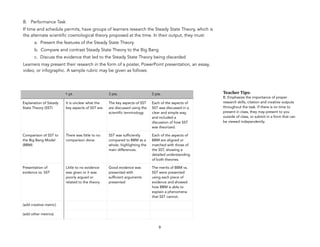
Report Assessment Criteria
Scientific accuracy 50%
Organization 20%
Teamwork (cooperation among group mates, all group
mates contributed)
10%
Presentation (entertaining, shows confidence, uses
appropriate verbal and body language)
20%
166
EVALUATION (20 MINS)
Written exam
1. Which reaction is endothermic? Exothermic? Explain your answer.
167
2. Predict the rate of the reaction in the following. Assume that the substances below are reactants for different reactions. Indicate if the
reaction will be slower, faster, or have the same rate.
Normal condition Changed condition Factor Reaction rate
a) 20 % HCl 5 % HCl Concentration Slower
b) 276 K 315 K Temperature Faster
c) 2H2O2 → 2H2O + O2 addition of iron (III) oxide Catalyst Faster
d) A cube of sugar powdered sugar Surface area Faster
e) 5 sampalok cubes 1 sampalok cube Concentration Slower
f) 52 g of NaOH 65 g of NaOH Concentration Faster
g) 3.68 x 1025 atoms of Li 9.25 x 10²³ atoms Li Concentration Slower
h) 500 K, 4.5% Barium 600K, 4.5% Barium Temperature Faster
i) 48 g powdered zinc 48 g zinc pellets Surface area Slower
j) Starch + water Starch + water + amylase Catalyst Faster
168
Physical)Science))
Chemical Change II
Content&Standards&
The learners demonstrate an understanding of how much reactants are needed
and how much products are formed in a reaction
Performance&Standards&
The learners shall be able to effectively explain the process of calculating the
needed reactant and the amount of product in a reaction, as well as the
significance of limiting reactant and percent yield.
Learning&Competencies&
The learners:
1. Calculate the amount of substances used or produced in a chemical
reaction (S11/12PS-IIIf-h25)
2. Calculate the percent yield of a reaction (S11/12PS-IIIh-26)
3. Determine the limiting reactant in a reaction and calculate the amount of
product formed (S11/12PS-IIIh-27)
Speci4ic&Learning&Outcomes&
At the end of the lesson, the learners shall be able to:
1. Calculate the amount of substances used and produced in a chemical
reaction
2. Calculate the percent yield of a reaction
3. Determine the limiting reactant in a reaction and calculate the amount of
product formed
169
600 MINS
LESSON OUTLINE
Introduction
/&Review
Presentation of objectives and
terms, review of previous
knowledge
50
Motivation Analogy of chemical reaction to
cooking
10
Instruction&/&
Delivery&/&
Practice
Class discussion/problem-solving 460
Enrichment Connection to carbon emission 30
Evaluation Written exam, worksheets 50
Materials • Calculator and Periodic Table
• Laboratory supplies (refer to
experiments/demonstrations below)
Resources&
(1) Whitten, K. W., Davis, R. E., Peck, M. L., & Stanley, G. G., (2005).
General Chemistry 7th ed. Singapore: Thomson/ Brooks/ Cole;
INTRODUCTION (50 MINS)
Presentation of objectives and terms, review of previous lessons
Communicate learning objectives and important terms
1. Introduce the following learning objectives using any of the suggested protocols (Verbatim,
Own Words, Read-aloud):
a. Calculate the amount of substances used and produced in a chemical reaction
b. Calculate the percent yield of a reaction
c. Determine the limiting reactant in a reaction and calculate the amount of product formed
2. Introduce the following list of important terms that learners will encounter:
a. Mole e. Excess reagent
b. Percent yield f. Theoretical yield
c. Stoichiometry g. Actual yield
d. Limiting reagent h. Percent yield
Review previous lessons on:
a. Balancing chemical reactions
b. Dimensional analysis
c. Stoichiometric calculation, namely:
- mole concept
- calculating molar mass
- mass to mole conversion
- mole to mass conversion
170
Teacher&Tips:&
Display the objectives and terms
prominently on one side of the classroom so
that the learners can refer to them and
review as more terms are introduced.
One session dedicated to reviewing
calculation will help to support the next
lesson.
Sample worksheets
Balancing Chemical Equations: Retrieved from http://misterguch.brinkster.net/
WKS001_019_348432.pdf (Last accessed March 23, 2016)
Mole to mass conversion, mass to mole conversion, and molar mass calculation worksheet:
Retrieved from http://www.nclark.net/MolarCalculationWorksheet.pdf) (Last accessed March 23,
2016)
*Item 1 has an incorrect answer. Answer should be 2.16 mole.
MOTIVATION (10 MINS)
Ask the learners to imagine cooking spaghetti with tomato sauce for four people.
Have them determine the ingredients necessary to prepare the meal. List down the ingredients on
the board while intentionally exaggerating the amount of one ingredient in proportion to other
ingredients.
Let the learners react to the wrong amount to make them aware of the importance of proper ratios
in cooking. Relate how this same principle also applies to chemical reactions wherein the proper
amount of each reactant is needed to create the right amount of products.
171
Teacher&Tips:&
Variation of Experiment 1 (Effect of
concentration) can be viewed in this
video:
https://www.youtube.com/watch?
v=r4IZDPpN-
bk&ebc=ANyPxKqpc1gUZeLbZIApkxPrUFX
0sCgpu2X0O6WCsiJkSr_zn_tDuC1PAkgGU
0Tj_SAcX7rP8DCGVLQblywZ7JhJoDXXU5c
M2w (Last accessed March 22, 2016)
In performing Experiment 1, guide the
learners on how to minimize error during
the reaction between Na2S2O3 and HCl.
The key is to be consistent with deciding
when the reaction is finished. For the lowest
concentration, the reaction will gradually
become cloudy then opaque white and
lastly, an opaque dirty white color. You may
show one reaction to the learners as a
guide.
INSTRUCTION / DELIVERY / PRACTICE (460 MINS)
Mention that solving this question involves learning about reaction stoichiometry. Reaction
stoichiometry is about the relationship of the different reactants and products in a chemical reaction.
Show the chemical equation of the reaction between CO and O2. Ask the learners if the equation is
balanced.
CO + O2 → CO2
Since the equation is not yet balanced, have the learners balance the equation.
2 CO + O2 → 2 CO2
Emphasize that in solving such problems, it is important that the chemical equation is balanced to
serve as their guide.
Ask the learners to draw out the relationship/ratios of reactants to products, reactant to reactant, and
product to product.
Mole relationships/ratios
2 mole CO : 1 mole O2
2 mole CO : 2 mole CO2
1 mole O2 : 2 mole CO2
Mass relationships/ratios
Molar mass of CO: 28 g/ mol
Molar mass of O2: 32 g/ mol
Molar mass of CO2: 44 g/ mol
*values rounded off for simplicity
172
Teacher&Tips:&
Create a running list - write things to
remember on the board as you mention
them throughout the entire topic. Make
sure that the chemical equation is balanced.
The stoichiometric relationships can also be
extended to volume and particle count.
Write these relationships in fraction form to
help learners during calculation
e.g.
2 mole CO
1 mole O2
Help learners analyze which variable to
write as numerator and as denominator. The
rule of thumb is:
desired variable
given variable
56 g CO : 32 g O2
56 g CO : 88 g CO2
32 g O2 : 88 g CO2
Mass to mole relationships/ratios
56 g CO : 1 mole O2
56 g CO : 2 mole CO2
32 g O2 : 2 mole CO2
2 mole CO : 88 g CO2
1 mole O2 : 88 g CO2
Give more complicated chemical equations and have the learners balance the equations and draw
out the different relationships/ratios.
e.g. N2(g) + 3 H2(g) → 2 NH3(g)
C2H5OH(s) + 3 O2(g) → 2 CO2(g) + 3 H2O(l)
3 Mg + Fe2O3 → 2 Fe + 3 MgO
Once the learners are comfortable with finding relationships/ratios, the teacher may introduce
varying problem-solving questions.
1. Sodium Thiosulfate and Hydrochloric Acid
Materials:
• Erlenmeyer flasks
• Beakers
• graduated cylinder
• eggshell
173
Teacher&Tips:&
• 4% (g/mL) sodium thiosulfate (Na2S2O3)
• 2%, 4%, 8%, 20% (v/v) hydrochloric acid (HCl) (Observe caution!)
• warm and cold water bath
• mortar and pestle
• Thermometer
• Ice
• Stove/ bunsen burner/ alcohol lamp
Procedure:
Effect of Concentration
1. Put 20 mL of 4% Na2S2O3 in a flask. Place flask on top of a white paper with an X-mark.
2. Quickly add 5 mL of 2% HCl and stir. Look through the flask to see the X-mark. Note the time it
takes for the X-mark to disappear.
3. Repeat steps 1 and 2 using 5 mL of 4% HCl.
4. Repeat steps 1 and 2 using 5 mL of 8% HCl. Compare your results.
*Caution: This reaction produces sulfur dioxide (toxic gas). Ensure good ventilation during this
experiment.
Effect of Temperature
5. Warm 20 mL of 4% Na2S2O3 solution by placing it in warm water for five minutes.
6. Repeat steps 1 and 2 using warm Na2S2O3.
7. Cool 20 mL of 4% Na2S2O3 solution by placing it in a cold water bath for five minutes.
8. Repeat steps 1 and 2 using cold Na2S2O3.
Effect of Surface Area / Particle Size
9. Put 5 mL of 20% HCl in a beaker. Add half a tablespoon of uncrushed eggshells. Observe for
174
Teacher&Tips:&
In gathering data from the experiment, have
the learners recall the procedure and set up.
Encourage learners to openly give their
observations while using proper
terminologies.
Take note every time they give explanations
rather than observations. Explain the
difference between observation and
judgment/explanation.
Learners may have working theories in their
minds when conducting experiments but it
is important for them to just plainly observe
to fully appreciate the phenomenon.
two minutes.
175
Teacher&Tips:&
Have group members write their
observations on manila paper and post on
the board when completed. Ask for a
member representative to report and give
possible explanations based on the
evidences. Afterwards, give your
explanations supported by the theories.
You may wait until the part of the lecture
where factors affecting reaction rates are
discussed before gathering conclusions
regarding factors affecting rates of
reactions.
Figure 1. Retrieved March 23,
2016, from http://
chemistry.tutorvista.com/
physical-chemistry/transition-
10. Repeat step 7 using the same amount of crushed eggshell. Compare your results.
Disposal
Dispose solutions of sodium thiosulfate and HCl down the sink with copious amount of running
water. Any excess acid should first be neutralized before disposal.
Data and Observation
ALTERNATIVE Experiments
2. Aluminum Foil and Hydrochloric Acid (Effect of Concentration)
If sodium thiosulfate is not available, use aluminum foil as an alternative in doing Experiment 1
(Effect of Concentration.)
Cause uniform sizes of aluminum foil (1x1 cm) to react with varying concentrations of hydrochloric
acid. If HCl is not available, household muriatic acid can be used as a substitute. Experiment with 10
mL of 10%, 20%, and 30% muriatic acid. Time the reaction according to the rate of disappearance of
aluminum foil or according to how much aluminum foil reacted for 5 minutes.
3. Baking soda and Vinegar (Effect of Concentration)
If sodium thiosulfate is not available, use baking soda and vinegar as an alternative for Experiment 1.
Dilute vinegar in water to get three different concentrations. The ratio of water to vinegar may be 0:1
(pure vinegar), 1:1, and 2:1. Using the same procedures as experiment 1, pour the vinegar samples
into 1 tbsp. of baking soda. Note the difference in reactions.
176
Teacher&Tips:&
You need not discuss changes in enthalpy as
it is not within the scope of the curriculum.
The term enthalpy can be replaced with
“heat of reaction.”
This shows two ways of expressing an
exothermic reaction involving the amount of
energy released.
4. Glow stick and water (Effect of Temperature)
Prepare three glow sticks. This experiment should be performed in a darkened room or set it up
inside a medium-sized box with only a viewing hole.
1. Prepare three beakers each containing:
a. Hot water (70-80oC))
b. Room temperature water (30-35oC)
c. Cold water (water with ice)
2. Simultaneously snap the glow sticks to activate and individually submerge them in the beakers.
Observe.
INSTRUCTION / DELIVERY / PRACTICE (80 MINS)
Class discussion
Gather observations from the experiments. Relate how these reactions (as well as all chemical
reactions) are theorized to be based on the collision theory of reaction rates.
Lecture proper
Introduce the Collision Theory of Reaction Rates.
Collision Theory of Reaction Rates
This theory states that for reactions to occur, molecules, atoms, or ions must first collide. Not all
collisions are successful. In order for collisions to be effective collisions, particles must possess
the minimum amount of energy needed for the reaction and must collide with proper orientation.
Introduce the transition state theory.
Transition State Theory
Chemical reactions which require bond breaking and forming is accompanied by changes in
177
Teacher&Tips:&
This shows two ways of expressing an
endothermic reaction involving the amount
of energy released.
potential energy. According to the theory, the reactants must pass through a high-energy, short-
lived intermediate state called the transition state in order for reactions to occur. The kinetic
energy of the particles must overcome the potential energy needed to break and create bonds.
The activation energy, Ea (or activation barrier) is the kinetic energy needed by reactants to
allow them to reach the transition state.
Sample reaction:
Have the learners observe the two energy diagrams and note their differences. Mention that in
chemical reactions, bond breaking and forming occurs. Point out the energy involved in bond
breaking and forming.
Bond breaking - energy is absorbed
Bond forming - energy is released
Guide questions:
1. Based on the diagram given, how does the energy of the reactants compare with the energy of
the products?
2. If the energy of the reactant is greater than the energy of the product, will energy be released
or absorbed by the reaction? Why do you think so?
3. If the condition were reversed (to that of no 2) what do you think will happen and why?
The net amount of energy in the breaking and forming of bonds determines if a reaction is
exothermic or endothermic.
Point out that the activated complex quickly occurs and is temporary when the activation energy is
reached.
178
Teacher&Tips:&
Graphing activity (for advanced learners)
Learners may be asked to create:
1. A concentration vs time graph, and a
2. A concentration vs 1/time graph.
The first graph will show that concentration
is inversely proportional to time (increase
concentration equates to less time). The
second graph will show that concentration
is directly proportional to reaction time (1/
time).
Which will last?
Ask the learners which glow stick will last
longer--is it the one in the hot water bath or
the one in the cold water bath? Why?
Exothermic reaction
C + D → CD + energy negative heat of reaction
Energy absorbed is less than the energy released. Hence, heat of reaction is negative.
Heat of reaction = Energy of products - Energy of reactants
= lower energy of product - higher energy of reactant
= negative value of Heat of Reaction
C (s) + O2(g) → CO2(g) + 393.5 kJ
C (s) + O2(g) → CO2(g) ΔH = -393.5 kJ
Example retrieved from http://chemistry.tutorvista.com/physical-chemistry/exothermic-reaction.html
(April 17, 2016)
179
Teacher&Tips:&
An increase in temperature generally
speeds up a chemical reaction, though
there are exceptions.
Many analogies can be made to explain
catalysts. For example, lowering the passing
score so more learners can pass an exam,
finding a shortcut to get to a place,
climbing a mountain taking a less inclined
path, etc.
A very helpful video on catalysts can be
viewed at
https://www.youtube.com/watch?
v=WCAojC4_zIY (Last accessed March 23,
2016)
Endothermic reaction
A + B → AB - energy positive heat of reaction
Energy absorbed is more than the energy released. Hence, heat of reaction is positive.
Heat of reaction = Energy of products - Energy of reactants
= higher energy of product - lower energy of reactant
= positive value of Heat of Reaction
180
! Pt
Pd
N2(g) + O2(g) + 180.5 kJ → 2NO(g)
N2(g) + O2(g) → 2NO(g) ΔH = +180.5 kJ
Example retrieved from http://chemistry.tutorvista.com/physical-chemistry/endothermic-reaction.html (April 17, 2016)
In endothermic reactions, energy is absorbed overall so the reactions feel cool to the touch. On the other hand, exothermic reactions have a
net release of energy so the reactions feel warm to the touch. Energy is always part of a chemical reaction. The activation energy state for both
is still the highest energy state in the whole reaction. The transition state is also created when the activation energy is reached.
The heat of reaction is used in many things. Cite power production as an example. Coal is reacted with oxygen in the process of combustion.
This reaction produces a lot of heat (exothermic). The heat turns water into steam that then powers the turbines. Baking bread is an
endothermic reaction wherein the dough absorbs heat from the environment in order to rise and cook properly. As more substances are
involved in a chemical reaction, more energy is either absorbed or released to the environment.
With the two theories in mind and recalling the earlier experiments, discuss the factors affecting reaction rates. Ensure that the learners are the
ones who make the conclusions about the experiments. Ask them how the results can be explained using the collision theory.
Factors affecting reaction rates
Concentration of reactants
From the experiment, it should have been observed that higher concentrations of HCl decreases the time it takes for the X mark to no longer
be visible. Therefore, we can conclude that this increases the rate of reaction.
In collision theory, an increase in reactant concentration ensures that there will be more collisions between particles. This also increases the
probability rate of effective collisions.
Temperature
From the experiment, it should also have been observed that the sample using warm Na2S2O3 proceeded quicker than the cold Na2S2O3.
Therefore, we can conclude that increasing the temperature of the reactants increases reaction rate. In the glow stick experiment, it was also
seen that the glow stick in the warm water glows brighter than one in the cold water bath showing a faster reaction.
In collision theory, increasing the temperature of the reactants increases the kinetic energy that it possesses, thereby increasing the number
of collisions and giving enough energy to overcome the activation energy.
181
Surface Area / Particle Size
The experiment would show that more crushed eggshells reacted with HCl than the uncrushed
eggshells. Therefore, it can be concluded that decreasing particle size or increasing surface area
results to faster reaction rate.
In collision theory, an increase in surface area relates to more particles being available for
collision.
Presence of Catalysts
Catalysts
Catalysts are substances that can be added to a chemical reaction to increase its reaction rate. This
allows the reaction to occur in an alternative pathway. This pathway requires lower activation
energy. Catalysts are not consumed in a reaction.
Introduce this topic by showing the graph below. Point to the two activation energies and ask the
learners to analyze what these mean for the speed of the reaction. You can also introduce analogies.
Figure 2. Retrieved March 23, 2016, from http://www.bbc.co.uk/education/guides/z4cmn39/
revision/5
2 CO(g) + O2(g) 2 CO2(g) [reaction in catalytic converter]
The sample reaction above occurs in catalytic converters of automobiles. This reaction very quickly
converts harmful and poisonous carbon monoxide to less harmful carbon dioxide.
182
Teacher&Tips:&
Helpful website on catalysts:
http://www.scienceclarified.com/everyday/
Real-Life-Chemistry-Vol-2/Catalysts-Real-
life-applications.html (Last accessed March
24, 2016)
There is no need to discuss all the parts shown in the diagram. Only emphasize the action of the catalysts in cleaning the gas released by the
engine. The honeycomb structure increases the surface area of the catalyst making the catalytic converter more efficient.
Other examples of catalyzed reactions are:
To end, have the learners summarize the requirements for an effective collision and the factors
affecting reaction rates.
Requirements for effective collision
1. Proper orientation
2. Meet activation energy
Factors affecting reaction rate:
1. Concentration
2. Surface area
3. Temperature
4. Presence of catalyst
Reaction Catalysts Commercial process / Use
N2 + 3 H2 → 2 NH3 Fe, K2O, Al2O3 Haber process for the synthesis of ammonia.
Ammonia is used as a cleaner and as an
ingredient in the manufacture of fertilizers
and nitric acid.
CO + 2 H2 → CH3OH ZnO, Cr2O3 Industrial synthesis of methanol. Methanol is
used in the manufacture of plastics,
adhesives, gasoline additives, and industrial
solvent.
Atmospheric nitrogen → ammonia Nitrogenase, an enzyme present in bacteria
on the root nodules of legumes such as peas
and beans
The ammonia serves as fertilizers for plant
growth.
183
Figure 3. Retrieved March 23, 2016, from
http://mastermuffler.net/wp-content/
uploads/2014/09/tuneups_graphic.jpg
ENRICHMENT (30 MINS)
Demonstration/Report
OPTION 1
Have the learners pick any of the items below to report on. They may form pairs or groups of 3.
Catalysts
Discussions/reports on:
184
1. Catalytic converters - may be an interesting subject for learners, especially those interested in cars.
Guide questions for the report:
a. What is a catalytic converter?
b. How does a catalytic converter work?
c. How do catalytic converters help the environment?
2. Biological catalysts -- Enzymes!
Guide questions::
a. What are enzymes?
b. What are the roles that enzymes play in our body?
c. Give two enzymes that you are interested in and share their properties/ roles.
*The teacher should give options of enzymes to limit the learners’ options.
3. CFCs as harmful catalysts in the degradation of our ozone layer!
a. What are CFCs? Its uses and properties?
b. What do CFCs do to our atmosphere?
c. How are CFCs managed? When/ why was it banned? What replaced its use as a refrigerant?
OPTION 2
To connect the concept of catalysts to society, ask the learners how they may serve as catalysts for certain causes. Knowing what a catalyst does
to a chemical reaction, the learners may apply the same principle on social issues. Work together with the English and Social Science teacher
for this project. Situations may be related to the school’s needs, the local government or the international community. Allow enough time for
the learners to work on the project. Brochures, flyers, posters, debate, etc. are possible output for this activity.
OPTION 3
Challenge the learners to look for practical applications of their knowledge on factors affecting chemical reactions. Expect answers like cutting
ingredients to small pieces to decrease cooking time, increasing temperature to cook food faster, proofing dough in a warm environment,
refrigerating food to delay spoilage, reducing rusting by painting metal to reduce surface area exposed to air, etc.
185
Learners may use posters, flyers, brochures to better illustrate their ideas.
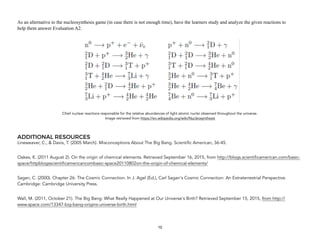
Report Assessment Criteria
EVALUATION (20 MINS)
Written exam
1. Which reaction is endothermic? Exothermic? Explain your answer.
Scientific accuracy 50%
Organization 20%
Teamwork (cooperation among group mates, all group
mates contributed)
10%
Presentation (entertaining, shows confidence, uses
appropriate verbal and body language)
20%
186
2. Predict the rate of the reaction in the following. Assume that the substances below are reactants for different reactions. Indicate if the
reaction will be slower, faster, or have the same rate.
Normal condition Changed condition Factor Reaction rate
a) 20 % HCl 5 % HCl Concentration Slower
b) 276 K 315 K Temperature Faster
c) 2H2O2 → 2H2O + O2 addition of iron (III) oxide Catalyst Faster
d) A cube of sugar powdered sugar Surface area Faster
e) 5 sampalok cubes 1 sampalok cube Concentration Slower
f) 52 g of NaOH 65 g of NaOH Concentration Faster
g) 3.68 x 1025 atoms of Li 9.25 x 10²³ atoms Li Concentration Slower
h) 500 K, 4.5% Barium 600K, 4.5% Barium Temperature Faster
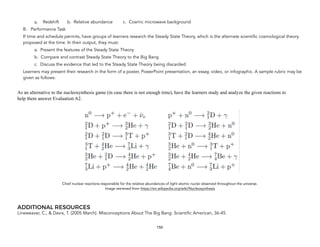
i) 48 g powdered zinc 48 g zinc pellets Surface area Slower
j) Starch + water Starch + water + amylase Catalyst Faster
187
Physical)Science))
How Energy is Produced and Managed
Content&Standards&
The learners demonstrate an understanding of how energy is harnessed from
different sources.
Performance&Standards&
The learners shall be able to illustrate how energy is produced and managed
from different sources.
Learning&Competencies&
The learners describe how energy is produced and managed from different
sources: (S11/12PS-IIIi-29)
a. Fossil fuels e. Hydroelectric
b. Biogas f. Electrochemical (batteries)
c. Geothermal g. Solar cells
d. Hydrothermal h. Biomass
Speci4ic&Learning&Outcomes&
At the end of the lesson, the learners shall be able to:
a. Describe the different sources of energy
b. Give a brief summary of how energy is produced from different sources
c. Differentiate between renewable and non-renewable sources of energy
d. Outline the pros and cons of the different sources of energy
INTRODUCTION (5 MINS)
Overview of the objectives and terms
Communicate learning objectives and important terms
188
120 MINS
LESSON OUTLINE
Introduction
/&Review
Presentation of objectives and terms 5
Motivation Short discussion of what learners know
about electricity
5
Instruction&/&
Delivery&/&
Practice
Class discussion and reporting 90
Enrichment Group discussion and creation of
checklists on how to conserve electricity
10
Evaluation Written assessment 10
Materials • Diagram of basic power plant
• LED, coil of wire strong magnet
Resources&
(1) The American Geological Institute. (2014). Environmental
Science, 2nd ed. Pasig City, Philippines: Cengage Learning Asia
Pte Ltd.;
1. Introduce the following learning objectives using any of the suggested protocols (Verbatim,
Own Words, Read-aloud):
a. We will describe the different sources of energy
b. We will learn how energy is harnessed
c. We will differentiate between renewable and non-renewable sources of energy
d. We will identify the pros and cons of each energy source
2. Introduce the list of important terms:
a. Renewable energy
b. Non-renewable energy
c. Biomass
d. Fossil fuel
3. Have the learners recall how electricity is generated via electromagnetism (taken in Grade 9
Science). Emphasize how a changing magnetic flux is able to create electricity. Demonstrate the
concept using a thick coil of wire, LED, and a strong magnet. Relate how this process is replicated
on a much bigger scale in power plants.
MOTIVATION (5 MINS)
Short discussion of what learners know about electricity
Ask the learners if they ever wondered where the electricity in their power outlet comes from. How
is electricity generated? What is the main source of electricity in the Philippines? Why are we asked
to always conserve electricity? Will electricity run out or is it from a perpetual source?
Ask learners to name different sources of energy and list them on the board. Add on the list
sources that are not mentioned by the learners.
189
Teacher&Tips:&
Display the objectives and terms
prominently on one side of the classroom so
that the learners can refer to them and
review as more terms are introduced.
In the demonstration of the production of
electricity via changing magnetic flux, point
out that motion is necessary in order for
electricity to be produced. The LED will not
light up if the magnet is merely placed
inside the coil. This is so the learners will
understand why turbines have to be turned
continuously via different means (steam
power, hydroelectric, etc.) in order for
electricity to be produced.
INSTRUCTION / DELIVERY / PRACTICE (90 MINS)
Introduction (10 minutes)
Present a diagram showing the different sources of energy in the Philippines and the percentages
of each source. This is to give the learners an overview of the energy situation in our country. Allow
the learners to compare the main source of energy from the different regions of the Philippines.
Figure 1. Gross Power Generation by Fuel (2013), Retrieved February 17, 2016, http://
www.eia.gov/todayinenergy/images/2015.03.06/chart2.png).
190
Teacher&Tips:&
For specific locations of different power
plants and how much electricity is produced
from each, the following sources are useful.
Luzon
(Retrieved February 18, 2016, http://
www.doe.gov.ph/doe_files/pdf/
01_Energy_Situationer/
2015_existing_power_plants_luzon_june_30
.pdf ).
Visayas
(Retrieved February 18, 2016, from http://
www.doe.gov.ph/doe_files/pdf/
01_Energy_Situationer/
2015_existing_power_plants_visayas_june_3
0.pdf
Mindanao
(Retrieved February 18, 2016, from http://
www.doe.gov.ph/doe_files/pdf/
01_Energy_Situationer/
2015_existing_power_plants_mindanao_jun
e_30.pdf ).
Philippines (overall)
(Retrieved February 18, 2016, from http://
www.doe.gov.ph/doe_files/pdf/
01_Energy_Situationer/
2015_existing_power_plants_summary_june
_30.pdf ).
Help the learners realize how modern society has become dependent on electricity. From the moment we wake up, when we eat, travel,
communicate, relax, work and play, we use electricity. Our country produces millions of megawatts of electricity yet it is still not enough. Some
areas in our country still do not have electricity. Learning about the science behind power production should make us better consumers.
Introduce that electricity can be broken down to two major groups: renewable and non-renewable sources.
Present the four major steps in the conversion of energy to electricity:
1. Energy from bond breaking and formation in fuels is converted to heat energy. This step is not necessary if power generation that does
not require burning of fuels. E.g. Geothermal and hydrothermal plants
2. Heat energy is used to convert water to steam which has kinetic energy
3. Steam’s kinetic energy becomes mechanical energy that makes turbines turn
4. Mechanical energy from the turbines create electricity via electromagnetism
Split the class into seven (7) groups and assign one source of energy for each group to research and report on. You may either provide them the
printouts of the resources below or have them research from the library. Guide questions are written below.
Give the learners time for independent research/ reading and collaboration in the classroom (45 minutes).
Allow 4 to 5 minutes for each group to report. Clarify, elaborate, and correct concepts.

191
Non-renewable sources are: Renewable sources are:
- Fossil fuel (coal, petroleum,
natural gas)
- Electrochemical (batteries)
- Hydroelectric
- Wind power
- Solar power
- Geothermal
- Hydrothermal
- Biomass
Guide Questions:
Fossil fuel
- What are fossil fuels? What are the different examples of fossil
fuels?
- In brief, how are fossil fuels formed?
- What are the advantages and disadvantages of using fossil
fuel? You may answer in terms of efficiency of use, availability,
hazards, environmental effect, price, etc.
Electrochemical Cells
- What are electrochemical energy sources?
- How is electrochemical energy produced?
- What is a primary cell?
- What is a secondary cell?
- What are the different examples of a primary and a secondary
cell?
- What are the advantages and disadvantages of using
electrochemical cells? You may answer in terms of efficiency of
use, availability, hazards, environmental effect, price, etc.
Geothermal
- What is the source of geothermal energy?
- How is geothermal energy harnessed from the earth?
- What are the advantages and disadvantages of using
geothermal energy? You may answer in terms of efficiency of use,
availability, hazards, environmental effect, price, etc.
Hydroelectric
- How is hydroelectric energy harnessed?
- What are the advantages and disadvantages of using
hydroelectric energy? You may answer in terms of efficiency of
use, availability, hazards, environmental effect, price, etc.
Wind
- How is wind energy harnessed?
- What are the advantages and disadvantages of using wind
energy? You may answer in terms of efficiency of use, availability,
hazards, environmental effect, price, etc.
Solar Cells
- How is solar energy harnessed from the sun? You may answer in
terms of what happens to the solar panel material when exposed
to sunlight.
- What are the advantages and disadvantages of using solar
energy? You may answer in terms of efficiency of use, availability,
hazards, environmental effect, price, etc.
Biomass
- What is biomass? What are examples of biomass?
- How is biomass used as an energy source?
- What are the advantages and disadvantages of using biomass?
You may answer in terms of efficiency of use, availability, hazards,
environmental effect, price, etc.
192
Below is an overview of the different sources of energy and resources that can be printed and shared
with the class.
Non-renewable sources
Fossil fuels include hydrocarbons such as coal, oil, and natural gas that comes from organic remains
of prehistoric organisms. Coal is the world’s most abundant fossil fuel. It is relatively inexpensive and
is readily available.
The energy that comes from fossil fuels came from the sun through the process of photosynthesis
when the prehistoric plants were still alive. Fossil fuels are captured sunlight! The formation of fossil
fuels is due to a series of geologic processes where the remains of organic life are accumulated in
the ocean bottom and are buried to eventually become part of the geosphere. They are buried to
depths having high temperature and pressure where they are converted to oil, natural gas, or coal.
In the Philippines, around 69% of our electricity is derived from fossil fuels (coal, oil, natural gas,
biomass). In the world, around 75% of our energy is generated by combustion of fossil fuels. Power
plants burn fossil fuels and the heat generated during this process is used to turn water into steam
and this turns the turbines.
The general reaction for the combustion of hydrocarbon is:
Hydrocarbon + Oxygen → Carbon dioxide + Water
Combustion is an exothermic process. Methane is a common natural gas, an example of the
combustion of methane gas can be seen below.
CH4 + 2O2 → CO2 + 2H2O + Energy
As seen from the chemical reaction, burning fossil fuels produces carbon dioxide which is harmful to
193
Teacher&Tips:&
Biography of Alessandro Volta. (Retrieved
February 18, 2016, from http://
www.famousscientists.org/alessandro-
volta/ ).
(Retrieved February 18, 2016, from http://
www.britannica.com/biography/Alessandro-
Volta).
our environment in huge amounts. This is one of the biggest downside of using fossil fuels. The
emissions from fossil fuel power plants also cause acid rain and global-scale pollution by elements
such as mercury.
Fossil fuel is not a sustainable energy source.
Helpful sites:
Fossil Fuels https://www.learnerenergy.org/topics/fossil-fuels (last accessed, May 11, 2016)
Chapter 8: Fossil Fuels - Coal, Oil, and Natural Gas http://www.energyquest.ca.gov/story/
chapter08.html (last accessed, May 11, 2016)
Electrochemical (batteries)
Batteries give electricity via an electrochemical reaction. It has three main parts:
1) Anode
2) Cathode
3) Electrolyte
The first battery was invented by Alessandro Volta, an Italian physicist. He presented his paper
before the Royal Society in London in 1800. His invention of the battery propelled studies on
electricity as it allowed scientists to produce electricity.
Batteries, compared to other sources, have low intensity but they are commonly used since they are
portable and efficient. The two main types of battery:
1) primary or disposable battery
2) secondary or rechargeable battery
Examples of primary batteries are alkaline, mercury, silver-oxide, and zinc carbon batteries. Examples
of secondary batteries are lead-acid and lithium batteries.
194
Teacher&Tips:&
Helpful sites:
Classification of Cells or Batteries
http://depts.washington.edu/matseed/
batteries/MSE/classification.html (last
accessed, May 11, 2016)
Types of Batteries and their Applications
http://www.brighthubengineering.com/
power-generation-distribution/123909-
types-of-batteries-and-their-applications/
(last accessed, May 11, 2016)
Renewable sources
Geothermal
Geothermal power is the main source of energy in the Visayas region. Around 38% of electricity in
Visayas is produced from geothermal power.
Geothermal power utilizes the heat energy from the earth’s crust. This heat energy heats up rocks
which, in turn, heats up nearby groundwater. In some cases, the groundwater becomes so hot that it
turns into underground steam. The steam is tapped to drive turbines that generate electricity.
Geothermal energy is less of an environmental hazard compared to fossil fuels though it still has
some emissions of carbon dioxide, nitrous oxide, and sulfur dioxide. Disposal of water is also a
concern as it contains some salt.
Hydroelectric
Hydroelectric utilizes moving water to turn turbines. This is the main source of electricity in
Mindanao, generating around 45% of electricity in the region.
Dams are installed in strategic locations where there is a substantial drop in elevation.
One of the environmental concerns related to hydroelectric power is displacement of marine
species.
195
Teacher&Tips:&
Helpful sites:
Chapter 11: Geothermal Energy
http://www.energyquest.ca.gov/story/
chapter11.html (last accessed, May 11,
2016)
Geothermal Energy: Tapping the Earth’s
Heat
http://
environment.nationalgeographic.com/
environment/global-warming/geothermal-
profile/ (last accessed, May 11, 2016)
Geothermal
http://www.doe.gov.ph/renewable-energy-
res/geothermal (last accessed, May 11,
2016)
Hydroelectric power water use
http://water.usgs.gov/edu/
wuhy.html (last accessed May 11,
2016)
Hydropower http://www.eia.gov/
kids/energy.cfm?
page=hydropower_home-
basics#hydropower_environment-
basics (last accessed, May 11, 2016)
Wind power
Wind has been used in centuries to move ships and pump water. Wind turbines are installed in
strategic locations to harness the mechanical energy from wind.
Main examples of wind turbines in the Philippines are the ones found in San Lorenzo, Guimaras
(Trans Asia Renewable Energy Corp--TAREC); Bangui Bay, Ilocos Norte (North Wind Power Devt
Corp); Burgos, Ilocos Norte (EDC Wind Power Corporation).
Solar Cells
We will have access to solar power as long as the sun exists.
Solar panels are composed of photovoltaic cells or cells that convert light to electricity. Panels are
comprised of two semi-conducting metals, usually silicon, layered to create a sandwich. Each sheet is
doped so that they can acquire a charge--one positive and one negative. When light shines on the
panels, electrons are made to jump out of the free atom, thereby creating electricity.
Solar energy is abundant, requires low maintenance, and is environmentally-friendly. Emissions
associated with the manufacture of solar panels are present but very minimal compared to pollution
caused by burning fossil fuels. Two of the harmful emissions from the manufacture of solar panels are
nitrogen trifluoride and sulfur hexafluoride. Both are potent greenhouse gases.
Solar energy is also known as “The People’s Power,” referring to the easy deployment of solar panels
and the introduction of “community solar gardens” where energy is shared among owners.
Some disadvantages of solar energy are that it is expensive, requires rare metals and requires a
good amount of space. Thankfully, the technology is continuously improving.
196
Teacher&Tips:&
Helpful sites:
Chapter 16: Wind Energy
http://www.energyquest.ca.gov/story/
chapter16.html (last accessed, May 11,
2016)
Wind
http://needtoknow.nas.edu/energy/energy-
sources/renewable-sources/wind/ (last
accessed, May 11, 2016)
Wind
http://www.eia.gov/kids/energy.cfm?
page=wind_home-basics (last accessed,
May 11, 2016)
Solar
http://needtoknow.nas.edu/energy/energy-
sources/renewable-sources/solar/ (last
accessed May 11, 2016)
Chapter 15: Solar Energy
http://www.energyquest.ca.gov/story/
chapter15.html (last accessed May 11, 2016)
*focus on on Photovoltaic cells as this
website also includes Solar Hot Water and
Solar Thermal Electricity
Solar Basics http://www.eia.gov/kids/
energy.cfm?page=solar_home-basics (last
accessed May 11, 2016) *focus on
Photovoltaic cells as this website also
includes Solar Thermal Electricity, there is
also a more technical description of solar
panels which may be too much for the
learners. It is up to the teacher to cut the
text taken from this site.
Biomass
Biomass refers to organic matter from plants and animals (microorganisms). Plants get their energy
from the sun through the process of photosynthesis which, in turn, gives energy to animals upon
consumption. Wastes such as crop remains, manure and garbage are good sources of biomass.
Wood is also a biomass fuel. As long as we replenish the trees that we cut, biomass can be a
sustainable energy source.
Biomass is used to create methane and alcohol which are fuels useful in energy production and in
powering automobiles.
Production of biogas or biofuels involves the action of microorganisms that break down organic
matter in a multi-step process.
Technologies utilizing biomass are continuously evolving in order to improve efficiency.
ENRICHMENT (10 MINS)
Group discussion and creation of checklists on how to conserve electricity.
Assign the learners to bring their electric bills to class as a prerequisite to this exercise. The electric
bills will serve to make the learners aware of how much energy their own household utilizes. Divide
the class into five groups. Ask them to come up with concrete steps that they can take in order to
help conserve electricity on a daily basis. On a manila paper, have the learners create a checklist of
things that they will do to conserve electricity. Provide different settings such as what to do in school,
at home, in the car, etc.
Have the groups post the lists around the classroom for the class to read.
197
Teacher&Tips:&
Helpful sites:
Chapter 10: Biomass Energy
http://www.energyquest.ca.gov/story/
chapter10.html (last accessed, May 11,
2016)
Biomass http://needtoknow.nas.edu/
energy/energy-sources/renewable-sources/
biomass/ (last accessed May 11, 2016)
Biomass Basics http://www.eia.gov/kids/
energy.cfm?page=biomass_home-basics
(last accessed May 11, 2016) *this site is
very comprehensive but is too long for
learners reading. Choose the short
descriptions of the different kinds of
biomass as learner reading.
EVALUATION (10 MINS)
Written assessment
1. Enumerate renewable and non-renewable sources of energy.
2. Give two advantages and disadvantages of one source of electricity of your choice. Briefly explain your answers.
198
Physical)Science))
Household Chemicals and Personal
Care Products
Content&Standards&
The learners demonstrate an understanding of the properties and mode of action of
the following consumer products:
1. Cleaning materials 2. Cosmetics.
Performance&Standards&
The learners shall be able to make either a poster, a flyer, or a brochure of a product
indicating its uses, properties, mode of action and precautions.
Learning&Competencies&
The learners:
1. Give common examples of cleaning materials for the house and for personal care (S11/12PS-
IIIi-j-30)
2. From product labels, identify the active ingredient(s) of cleaning products used at home
(S11/12PS-IIIi-j-31)
3. Give the use of other ingredients in cleaning agents (S11/12PS-IIIi-j-32)
4. Give common examples of personal care products used to enhance the appearance of the
human body (S11/12PS-IIIi-j-33)
5. Identify the major ingredients of cosmetics such as body lotion, skin whitener, deodorants,
and perfume (S11/12PS-IIIi-j-34)
6. Explain the precautionary measures indicated in various cleaning products
and cosmetics (S11/12PS-IIIi-j-35)
Speci4ic&Learning&Outcomes&
At the end of the lesson, the learners shall be able to:
1. Identify active and major ingredients in cleaning and personal care products
2. Explain the mode of action and precautionary measures indicated in various
cleaning products and cosmetics
3. Create a set of guidelines in selecting healthy and environmentally safe products
4. Explore and create alternative homemade cleaning and personal care products
199
300 MINS
LESSON OUTLINE
Introduction
/&Review
Presentation of objectives and terms 5
Motivation Products in My World Activity
(includes giving homework and product
exploration)
40
Instruction&/&
Delivery&/&
Practice
Class discussion / Independent
research / Sharing
180
Enrichment Healthy Options Activity 75
Evaluation Fact sheet written in a Manila paper,
Classroom Demonstration
Materials In school computer and internet access
for the learners. Should internet access
not be available, provide print outs of
the different articles. You can also save
the web pages and share the soft copy
with learners.
Resources&
(1) Surfactant. (2016). In Encyclopedia Britannica online. Retrieved
March 27, 2016, from http://www.britannica.com/science/
surfactant;
(2) additional resources at the end of the lesson
INTRODUCTION (5 MINS)
Presentation of objectives and terms
Communicate learning objectives and important terms
1. Introduce the following learning objectives using any of the suggested protocols (Verbatim,
Own Words, Read-aloud):
a. Give common examples of cleaning materials for the house and for personal care.
b. From product labels, identify the active ingredient(s) of cleaning products used at home.
c. Give the use of the other ingredients in cleaning agents.
d. Give common examples of personal care products used to enhance the appearance of the
human body.
e. Identify the major ingredients of cosmetics such as body lotion, skin whitener, deodorants
and perfume.
f. Explain the precautionary measures indicated in various cleaning products and cosmetics.
2. Introduce the following list of important terms that learners will encounter:
a. Biodegradable e. Emulsifier
b. Non-biodegradable f. Buffer
c. Oxo-biodegradable g. Emollient
d. Surfactants h. Oxidizer
MOTIVATION (40 MINS)
Products in My World Activity
Products in My World
200
Teacher&Tips:&
Display the objectives and terms
prominently on one side of the classroom so
that the learners can refer to them and
review as more terms are introduced.
Advanced Assignment (10 minutes to give the homework)
Assign three to four learners for each of the products listed below to be brought to class. Have
those assigned to each product agree to bring different brands so they can be compared. Make
sure they bring the products in their original containers with labels intact.
• Bath soap
• Powdered detergent
• Bleach
• Baby powder
• Hand and body lotion
• Shampoo
Product exploration (30 minutes)
The learners will fill the table below using the products they brought to class. The “Mode of
Action” in the last column will be filled out AFTER the learners have conducted independent
research. During the activity, remind them to observe the products with caution, particularly in
smelling and touching as they may have harmful effects upon contact.
201
Teacher&Tips:&
Change or add to the list depending on
your and the learners’ preference.
Product
Product
description
Active/ major
ingredient
Guidelines in
using the
product
Precautions in
using the
product
Texture, odor,
color of product
*observe
CAUTION
Mode of Action
of Active
ingredient
Bath Soap
• Brand X
• Brand Y
Detergent
• Brand X
• Brand Y
INSTRUCTION / DELIVERY / PRACTICE (180 MINS)
Class discussion / Independent research / Sharing
Recall, giving of instructions, introduction of terms (30 minutes)
Review the activity from the previous day. Ask the learners what products they looked into and the specific information that they needed to get
from the different products.
Inform the learners that they will have to conduct independent research to determine the mode of action of the different ingredients that they
have seen. Either have the groups pick which product they would like to work on or assign a product to a group. E.g. Group 1 - Bath soap,
202
Product
Product
description
Active/ major
ingredient
Guidelines in
using the
product
Precautions in
using the
product
Texture, odor,
color of product
*observe
CAUTION
Mode of Action
of Active
ingredient
Bleach
• Brand X
• Brand Y
Baby Powder
• Brand X
• Brand Y
Hand and Body
Lotion
• Brand X
• Brand Y
Shampoo
• Brand X
• Brand Y
Group 2 - Detergent, Group 3 - Bleach, etc. Two groups may have the same products. Each group
should have 3 to 4 members.
Before the groups proceed with their independent research, give them an overview of the terms that
they will encounter. Possible terms are:
a. Biodegradable - capable of being decayed by the action of living organisms. The number of
years depends on many factors such as the kind of waste, environmental temperature and type of
microorganism.
b. Non-biodegradable - incapable of being decayed by the action of living organisms
c. Oxo-biodegradable - capable of being decayed by living organisms only after the help of metal
salts added in the material’s composition. The metal salts speeds up the initial decay process after
which the process is left to microorganisms to finish.
d. Surfactants - a surface active agent, capable of reducing the surface tension of liquids. For
example, in washing oil off plates, surfactants help the oil and water come together by weakening
the surface tension of oil.
e. Emulsifier - encourages the suspension of one liquid in another (e.g. margarine is a mixture of oil
and water). It is also called a stabilizer. It extends storage life and prevents separation of ingredients.
f. Buffer - a solution of acid and base or salt that helps maintain the pH of a solution constant.
g. Emollient - any substance that softens the skin by slowing the evaporation of water.
h. Oxidizer - a substance that oxidizes another substance. Oxidizing a substance may mean
supporting combustion, helping a substance breakdown, etc.
Consultation / Independent Research and writing (120 minutes)
Allow the learners enough time in class to do one-on-one consultation, independent research and to
write their reports. You may do this project with the help of the English teacher. It may be used to teach
research techniques. During consultation, have the learners bring necessary information/ articles that
they need help with and to prepare questions ahead of time.
Instruct the learners to research on the mode of action of the major/active ingredient in their chosen/
assigned product. The fact sheet they will make from their research will be in the form of a poster. It can
either be electronic or handwritten. Provide the fact sheet guidelines for the project as listed below.
203
Teacher&Tips:&
Encourage the learners to list down their
questions whenever they encounter terms
that are difficult to understand during their
research. Inform them that they will have a
chance to present those questions during
consultation with you.
Guide the learners on how to make an
outline of their report as a method of doing
research.
Fact Sheet Guidelines
1. Data on active/ major ingredient:
a. Chemical formula (and structure if available)
b. Mode of action
c. Where the ingredient comes from
d. How the ingredient should be handled, what are its precautionary measures?
e. Other uses of the chemical
f. How does the chemical affect the environment? (if available)
g. Is the chemical biodegradable or not? (if available)
h. Is the chemical natural or synthetically derived? (if available)
i. Are there alternatives for this chemical? What are the alternatives? (if available)
*a to e are mandatory information that the learners must look for.
2. Check multiple sources and make sure to cite them. Learners may use MSDS sheets (Material
Safety Data Sheet) which should be available online.
3. Learners will use mostly internet sources so guide them in selecting good websites. Helpful
websites are:
Chemicals of Concern
http://www.safecosmetics.org/get-the-facts/chemicals-of-concern/ (last accessed March 27, 2016)
Bleach
http://www.madehow.com/Volume-2/Bleach.html (last accessed March 27, 2016)
Household Products Database
https://householdproducts.nlm.nih.gov/ (last accessed March 27, 2016)
Soaps and Detergents: Products and Ingredients http://www.cleaninginstitute.org/clean_living/
soaps__detergents_products__ingredients.aspx (last accessed March 27, 2016)
204
Teacher&Tips:&
Show samples if this is the first time that the
class will be making a fact sheet. Fact
sheets are usually one to two pages long.
A fact sheet normally includes:
- title/heading
- diagram/drawing/picture
- statistics in the form of a graph/ chart
- easy to read descriptions written in outline
or paragraph form
- sources of information
Warn the learners that there will be
opposing opinions on the chemicals that
they will be researching. Their task is to be
as objective as possible in presenting data.
It is up to them to decide whether these
components are harmful or not, and
whether they would use it again.
A good e-book on soap and detergent can
be found in this site:
http://www.cleaninginstitute.org/assets/1/
AssetManager/
SoapsandDetergentsBook.pdf (last
accessed March 27, 2016)
Household Chemicals Chart: Whats in my House
http://my.clevelandclinic.org/health/healthy_living/hic_Steps_to_Staying_Well/
hic_Household_Chemicals_Chart_Whats_in_my_House (last accessed March 27, 2016)
‘Dirty Dozen’ cosmetic chemicals to avoid
http://davidsuzuki.org/issues/health/science/toxics/dirty-dozen-cosmetic-chemicals/ (last accessed
March 27, 2016)
The “Dirty Dozen” Ingredients Investigated in the Suzuki Foundation Survey of Chemicals in
Cosmetics (October 2010)
http://www.davidsuzuki.org/issues/downloads/Dirty-dozen-backgrounder.pdf
3. The fact sheet should be creative, inviting, and informative.
Sharing (30 minutes)
When the groups are done with their fact sheets, have them share their work in to their classmates.
Each learner should read the work of others to try and find similarities and differences in the
ingredients.
Having read the fact sheets and after conducting their own research, ask the learners to create their
own guidelines in choosing a safer, healthier and environmentally friendlier product. Answers can be:
I will:
1. be proactive and will research on the products that I am using
2. choose products that have a short ingredient list (10 or less ingredients)
3. buy products that are biodegradable
4. read the proper disposal of products and make sure to follow them
For # 2. This is often prescribed as a general rule of thumb, this is not necessarily true for all but is a
good guide.
205
Teacher&Tips:&
At the end of the topic, give learners
alternatives and tips on selecting healthier
and environmentally friendlier products by
directing them to the following websites:
Campaign for Safe Cosmetics
http://www.safecosmetics.org/ (last
accessed March 27, 2016)
Personal Care Recipes with Coconut Oil
by Mike Chapman (October 25, 2015)
http://www.organiclifestylemagazine.com/
personal-care-recipes-with-coconut-oil
(last accessed March 27, 2016)
Healthier Hygiene by Matthew Hoffman,
MD
http://www.webmd.com/health-ehome-9/
healthier-hygiene (last accessed March 27,
2016)
Non-Toxic Home Cleaning
http://eartheasy.com/
live_nontoxic_solutions.htm (last accessed
March 27, 2016)
9 Cleaners You Can Make Yourself
http://www.goodhousekeeping.com/home/
cleaning/tips/a24885/make-at-home-
cleaners/ (last accessed March 27, 2016)
27 Chemical-Free Recipes for DIY Spring
Cleaning
http://greatist.com/health/27-chemical-free-
products-diy-spring-cleaning (last accessed
March 27, 2016)
ENRICHMENT (75 MINS)
Healthy Options Activity (75 minutes, depending on the number of learners)
Healthy Options
Divide the class in groups of 3-4 members and have them explore homemade alternative products for their personal hygiene and their
household cleaning use. Have them research to create/replicate the alternative product. Each group will have to demonstrate the process to the
class, describe the creation, use, mode of action and disposal of the homemade product.
The demonstration can span 5-6 minutes, including a short question and answer portion.
EVALUATION (75 MINS)
Fact sheet, Classroom Demonstration
Evaluate learners’ understanding form their fact sheet and demonstration.
Fact Sheet Rubrics
206
Criteria
Excellent
(4 pts)
Merit
(3 pts)
Achieved
(2 pts)
Needs Improvement
(1 pt)
Score
Accuracy of
information
All information are
accurate and well
supported
Most Information are
accurate and well
supported
Information is
accurate with some
vague points
A good amount of
the information is
inaccurate and/ or
vague
207
Criteria
Excellent
(4 pts)
Merit
(3 pts)
Achieved
(2 pts)
Needs Improvement
(1 pt)
Score
Organization
Information are
clearly presented and
ordered in such a way
that it brings a full
picture of the
material
Information are
clearly presented and
ordered
Information are clear
Order of information
does not clearly show
cohesiveness
Information is unclear
and written in
random order
Use of diagram /
image
Diagram/image is
helpful and
positioned
appropriately
Diagram/image is
helpful and
positioned
appropriately
Included a diagram/
image
Included a diagram/
image
Spelling and
grammar
All spelling and
grammar are correct
Some spelling and
grammar error
Some spelling and
grammar error
Notable spelling and
grammar error
Punctuality Submitted on time Submitted on time Submitted on time
Submitted after the
deadline
Visual appeal /
Creativity
Fact sheet is neat
and incorporates
appropriate designs.
It is visually inviting
and easy to read
Uses appropriate
layout
Fact sheet is
generally neat and
incorporates
appropriate designs
Visually inviting and
easy to read
Uses appropriate
layout
Fact sheet is mostly
neat and
incorporates designs
Visually pleasing and
readable
Font does not seem
to complement
objects used
Fact sheet appears
messy and poorly
designed
Readable
Font does not seem
to complement
objects used
208
Criteria
Excellent
(4 pts)
Merit
(3 pts)
Achieved
(2 pts)
Needs Improvement
(1 pt)
Score
Teamwork
Work is equally
divided between
partners
Partners are able to
communicate well
with each other
Work is equally
divided between
partners
Partners are able to
communicate well
with each other
Work is unequally
divided between
partners
One partner
accomplished more
work than the other
Work is unequally
divided between
partners
One partner
accomplished more
work than the other
Teamwork
Sources
Used varied and
reliable sources
All sources are cited
Used varied and
reliable sources
Most sources are
cited
Used varied sources
Most sources are
reliable
Most sources are
cited
Sources are not
varied, some are
unreliable
Few sources are cited
Sources
TOTAL:
Highest possible score is (4 x 8)/8 = 4 (8 Components)
Sample score sheet:
209
Adjectival Rating Rating Range Grade Range
Excellent 3.4 - 4.0 95 - 100
Merit 2.6 - 3.3 88 - 94
Achieved 1.8 - 2.5 81 - 87
Needs Improvement 1 - 1.7 75 - 80
Criteria Score
Accuracy of information 4
Organization 3
Use of diagram / image 3
Spelling and grammar 3
Punctuality 4
Visual appeal / Creativity 3
Teamwork 4
Sources 2
TOTAL 26
26 pts / 8 categories = 3.25

Learner is within the Merit range and the teacher may choose a grade within this range.
Demonstration Rubric
210
Criteria
Excellent
(4 pts)
Merit
(3 pts)
Achieved
(2 pts)
Needs Improvement
(1 pt)
Score
Accuracy of
information
Explains information
with minimal errors
Information are
accurate and well
supported
Explains information
with minimal errors
Most information are
accurate and well
supported
Able to relay
information
Information is
accurate with some
vague points
Unable to relay
information well
A good amount of
the information is
inaccurate and/ or
vague
Organization
Information are
clearly presented and
ordered in such a way
that it brings a full
picture of the
product
Demonstration is
easy to follow
Information are
clearly presented and
ordered
Demonstration is
easy to follow
Information are clear
Order of information
does not clearly show
cohesiveness
Demonstration is
generally easy to
follow, required
prompting once in a
while
Information is unclear
and presented in
random order
Demonstration is
hard to follow and
jumps from one
procedure to another
Readiness of
materials
All ingredients in
proper amount are
brought
Equipment are
appropriate
All ingredients in
proper amount are
brought
Equipment are
appropriate
All ingredients are
brought
Equipment are
appropriate, some
needed to be
borrowed from
classmates
All ingredients are
brought
Equipment are
inappropriate and/or
needed to be
borrowed from
classmates
211
Criteria
Excellent
(4 pts)
Merit
(3 pts)
Achieved
(2 pts)
Needs Improvement
(1 pt)
Score
Communication
skills / Presentation
Enthusiastic in
presenting
Invites audience to
help and try the
product
Includes personal
touches in the
presentation
Voice is audible and
inviting
Uses appropriate
language and
gestures
Enthusiastic in
presenting
Voice is audible and
inviting
Uses appropriate
language and
gestures
Voice is audible
Uses appropriate
language and
gestures
Voice is inaudible at
times
Appears
disinterested
Generally uses
appropriate language
and gestures
Teamwork
Work is equally
divided between
partners
Partners are able to
communicate well
with each other
Work is equally
divided between
partners
Partners are able to
communicate well
with each other
Work is unequally
divided between
partners
One partner
accomplished more
work than the other
Work is unequally
divided between
partners
One partner
accomplished more
work than the other
Sample score sheet
212
Criteria
Excellent
(4 pts)
Merit
(3 pts)
Achieved
(2 pts)
Needs Improvement
(1 pt)
Score
Sources
Used varied and
reliable sources
All sources are cited
Used varied and
reliable sources
Most sources are
cited
Used varied sources
Most sources are
reliable
Most sources are
cited
Sources are not
varied, some are
unreliable
Few sources are cited
TOTAL:
Highest possible score is (4 x 6)/6 = 4 (6 Components)
Adjectival
Rating
Rating Range Grade Range
Excellent 3.4 - 4.0 95 - 100
Merit 2.6 - 3.3 88 - 94
Achieved 1.8 - 2.5 81 - 87
Needs
Improvement
1 - 1.7 75 - 80
Criteria Score
Accuracy of information 4
Organization 3
Readiness of materials 3
Communication skills / Presentation 3
Teamwork 4
Sources 2
TOTAL 19
19 pts / 6 categories = 3.16

Learner is within the Merit range and the teacher may choose a
grade within this range.
ADDITIONAL RESOURCES:
Emulsifier. (2015). In Encyclopedia Britannica online. Retrieved March 27, 2016, from http://www.britannica.com/science/emulsifier
Buffer. (n.d.). In Encyclopedia Britannica online. Retrieved March 27, 2016, from http://www.britannica.com/science/buffer-chemistry
Emollient. (2014). In Encyclopedia Britannica online. Retrieved March 27, 2016, from http://www.britannica.com/topic/emollient
Biodegradable vs Oxo-biodegradable vs Compostable (n.d.) Retrieved March 27, 2016, from http://organics.org/biodegradable-vs-oxo-
biodegradable-vs-compostable/
213
Physical)Science))
Ancient Greek physics and astronomy
Learning(Competencies(
The learners should be able to:
1. Recognize(K) different naked-eye astronomical observations on diurnal and
annual motions of the sky pattern, precession and equinoxes as sense data.
[IVa-37]
2. Summarize(K) ancient Greek on the three types of terrestrial motion and the
perfection of celestial motion. [IVa-36]
3. Enumerate(K) naked-eye astronomical proofs that the Earth is round or
spherical. [IVa-38]
Speci1ic(Learning(Outcomes(
At the end of the lesson, the learners shall be able to:
1. Write a summary of ancient Greek two-domains view
2. Tabulate of the different material elements and motion according to the
two-domains view
3. List the naked-eye astronomical proofs that the Earth is round or spherical
214
60 MINS
LESSON OUTLINE
Introduction/(
Review
Define Science; Caloric Theory; and Development
of scientific thinking
30
Motivation Diurnal/daily and annual motion of the sky 10
Instruction(/(
Delivery
The two-domain view, types of terrestrial motion,
naked-eye astronomical observations, proofs of
spherical earth.
20
Practice Assignment- Summarizing ancient Greek two-
domain system in a table with the types of motion
and the four-element model of matter.
0
Enrichment Myths and legends the appearance of the sky.
Appreciation of scientific progress in terms of
observation, exploration and discovery.
0
Evaluation Summarize ancient Greek two-domain system in a
table; Identify at least one naked-eye
astronomical proof that the Earth is round or
spherical.
0
Materials • Pictures of ancient Greek philosophers:
Pythagoras, Socrates, Plato, Aristotle
• A chart tabulating the two-domain view of
the Universe and the corresponding elements
and motions
• Download the application: Stellarium.
Resources(
(1) Naked-eye observations that prove that Earth is round. PhysLink.com
(1995-2016). Retrieved from http://www.physlink.com/Education/
AskExperts/ae535.cfm;
(2) see additional resources at the end of the lesson
INTRODUCTION / REVIEW (30 MINS)
Ask the learners to cite the concepts they have learned from the previous lesson before
proceeding to the new topic.
Define science as “a collection of known truths about the Universe that develops and expands
over time.” Discuss why science is dynamic and ever changing. Explain that science develops
when better models are found, clearer and more useful mechanisms are used to explain a group
of phenomena, more accurate and precise details are observed, and many more.
Mention that astronomy is a major influence to the development of Physics. That is why we discuss
ancient Greek philosophy, cosmology and astronomy. The Greeks divided the universe into
domains, the celestial domain and the terrestrial domain.
215
Teacher(Tips:(
You may show slides or pictures from
previous lessons as a refresher.
Write the definition on the board. You can
also provide a hand-out or use a slide
presentation.
Pose questions to encourage discussion.
Examples:
When do you think is a scientific theory
rejected?
Is scientific theory final?
Give the Caloric Theory as an example of a
theory that has been superseded by
another theory, the Kinetic Molecular
Theory.
Caloric theory = objects become hot as
they absorb a fluid called “caloric.” Caloric
is not created nor destroyed. It can only be
transferred from one object to another via
contact. The capacity of the object
determines the temperature, given the
same amount of caloric.
In Kinetic Molecular Theory, heat is energy
convertible from other forms and may be
converted to other forms. It is significant in
the Principle of Conservation of Energy
since most energies may be converted to
heat but not fully the other way around.
Show the learners pictures of Greek philosophers and ask them to identify each one. Indicate the
period when they lived.
The learners are not expected to know these philosophers outright so give an advance research
assignment on the names Pythagoras, Socrates, Plato, and Aristotle. Require the learners to
include range of lifetime, to research on how they are possibly related to each other, and to
provide names of other philosophers connected to them.
Mention that the Greeks started with what they can see.
A. Celestial Domain
Discuss the following naked-eye observations that are available to the Greeks that led to the
belief that the Earth must be round and not flat.
MOTIVATION (10 MINS)
Diurnal/daily motion of the sky
Option 1: Show the learners a sequence of pictures of the sky (either animated or in a sequence of
still pictures) that was time-lapsed for 24 hours from the same location.
Option 2: Give this as an advanced project/assignment. Instruct the learners to take pictures of the
sky using their mobile phones or digital camera. Remind them to take the pictures from the same
location and to take precautions in observing the Sun. Have the learners arrange and label the
pictures in sequence.
216
Teacher(Tips:(
The learners are not expected to know
these philosophers outright so give an
advance research assignment on the names
Pythagoras, Socrates, Plato, and Aristotle.
Require the learners to include range of
lifetime, to research on how they are
possibly related to each other, and to
provide names of other philosophers
connected to them.
The list of observations is found in
Appendix A.
Use the Stellarium application to display the
daily motion of the sky if readily available,
or have the learners download and view the
Stellarium as an assignment.
You may assign a group to make a journal or
put up an online blog where the sequence
of pictures can be posted and discussed.
From what they’ve seen from the photos, ask the learners what they noticed about the movement of
the objects in the sky. Lead them to describe the change in position of the stars at different hours of
the night.
Annual motion of the sky
Show a sequence of pictures of the sky (either animated or sequence of still pictures) taken every
two weeks over a period of one year from the same position.
INSTRUCTION / DELIVERY (20 MINS)
Mention that modern scientists know these patterns are produced because the Earth spins on its
own axis and revolves around the sun. In contrast, ancient observers created many myths and
legends about these stars and planets to explain the regularity of the patterns in the sky.
Discuss how some Greeks chose to avoid supernatural beliefs (gods and goddesses) in explaining
phenomena and focused instead on natural causes
217
Teacher(Tips:(
Learners cannot do this themselves since
they would need at least a month to
capture obvious movement of planets and
the moon. You can use Stellarium for this.
As an example, you may cite that in
Egyptian mythology, the Sun is the chariot
of the sun god Ra. The sun moves because
Ra travels across the sky on it. The sun
disappears when Ra goes to sleep at night.
The teacher may also use local myths as
additional examples.
Some learners may ask about conflicts
between science and religion. Mention that
some religious beliefs may be found
consistent and even supportive of honest
scientific achievements.
Limiting explanations within the scope of
natural causes does not necessarily restrict
the belief in supernatural beings such as
God and angels. Scientific natural
explanation for a phenomenon does not
translate to non-existence of such beings.
B. Terrestrial Domain
Proceed to discussing the motion of objects on Earth. Together with the observations of the sky
pattern and many philosophical explanations based on natural causes, we also observe that
objects on Earth and their motion are constantly changing.
Constant change is brought about by disintegration or corruption of things into more basic parts,
and the need for constant intervention (e.g. force) that keep things from their original state or
condition. Ask the learners to recall their experience of walking as tiresome, hence the need for cars
to keep moving. Cite the need for carabaos or cows to pull plows for farming, and then the need for
tractors.
Discuss how the Greeks were able to formulate many theories of the sky and of the Earth based on
observation of natural phenomena. Cite the theory of Pythagoras, Socrates, Plato, Eudoxus and
Aristotle as among those that were convincing and useful.
Discuss how the Ancient Greek philosophers differentiated between the movement of objects on
Earth and of objects in the Sky. They came up with what we now refer to as the “two-domain view”
of the universe. Discuss the contents of the two-domain view by showing them the differences in the
elements and motions.
PRACTICE
Make a table on the board with the following columns: Philosopher name, lifetime period and
philosophical contribution.
For an assignment, ask the learners to fill in the columns with a timeline showing the possible
overlap of the lives of these philosophers. They may add other philosophers who were
contemporaries of the four.
218
Teacher(Tips:(
The contributions related to astronomy and
physics of different philosophers are in
Appendix A.
If time does not permit, you can turn this
part into a reading assignment by referring
learners to online resources or books
available in the library.
You may use an instruction jacket to list the
philosophers and their contributions.
The table of the two-domain view of the
Universe is found in Appendix B.


Instruct the learners to post the completed
table on their blogs to be checked online. If
online work is not possible, have them
manually fill up the table to be submitted
next meeting.
ENRICHMENT
See if learners can provide myths and legends about the Moon, eclipse, etc. Start a discussion on
the social effects these had to the community (either local or national). Ask if the learners can
provide possible explanations of how the myths and legends came to be.
Summarize the scientific progress using the story of “A Night in a Museum.” Scientific progress is a
process that includes making mistakes in trying to discover the right path. Point out that science
requires patience and diligence.
EVALUATION
Give a matching type quiz that connects philosophers with their philosophical contribution.
Another option is to fill out a diagram with domains with corresponding elements and motions found
in these domains.
Ask the learners to provide naked-eye observations showing that the Earth is round.
219
Teacher(Tips:(
You can give this as an assignment if there is
not enough time.
The group may make a blog entry about
the discussions to extend the presentation
of the myths/legends.
The story can be patterned after the one in
Appendix C.
Appendix A: Observations and ancient Greek Philosophers.
Observations leading to the belief that the Earth is round.
1. Observing lunar eclipses (i.e. when the earth blocks the sun from the moon, casting its round shadow on the moon's surface (PhysLink.com.
(1995-2016). Retrieved from http://www.physlink.com/Education/AskExperts/ae535.cfm.
2. “Simultaneously measuring the length of the shadows cast by identical poles perpendicular to a flat surface that is tangential to the earth's
radius at various, distant locations. If indeed the earth is round, then the shadows should all vary in length from one distant location to another.
This means that the angle at which the parallel rays of sunlight struck each pole varied from one location to another. (Recall the alternate-angles
theorem from Geometry class) If the earth is flat, then the lengths of all the shadows should be identical when measured simultaneously, since
all rays of sunlight that strike the earth are parallel. However, they are not identical, but in fact, vary in such a way that the angles indicate a
spherical surface. (This was one of the earliest methods to determine the radius of the earth)” (PhysLink.com. (1995-2016). Retrieved from
http://www.physlink.com/Education/AskExperts/ae535.cfm.) NOTE: The sunlight rays are near parallel because the Sun is practically very far
from the Earth.
3. More lists can be found in the section “Summary of evidence for a spherical Earth” (n.d.) In Wikipedia. Retrieved date, from https://
en.wikipedia.org/wiki/Spherical_Earth#Summary_of_evidence_for_a_spherical_earth
Ancient Greek Philosophers
Pythagoras (c. 570 - c. 495 BC) — Universe is mathematical; mathematics as the best way to express truth about the Universe; Sun, moon and
Earth are spherical; placed Earth as the center of the Universe. [3,7]
Plato (c. 427 - c. 347 BC) — attainment of perfection as absence of change; mathematical symmetries to demonstrate perfect shapes (sphere
and circle); celestial spheres being crystalline and contains the moon, the Sun and the stars; explaining the shadows — read on Plato’s Allegory
of the Cave and the Allegory of the Divided Line — as his description or framework on how to look at the Universe, in particular that the daily
and annual patterns of the sky must have a greater reality besides its appearance. [2]
Eudoxus (of Cnidus, 408 - 355 BC) — followed previous models of the universe but added auxiliary spheres to provide appropriate tilt to the
planets’ path [7]
220
Aristotle (384 - 322 BC) — two-domain system with terrestrial domain containing four elements that tries to attain perfection by being in their
natural location relative to the center of the Universe: the center of the Earth. He was a learner of Plato. [4]
221
Appendix B: Two-domain view of the Universe
Table B1. Summary of the ancient Greek two-domains view of the Universe.
Table B1 summarizes the ancient Greek two-domains view of the Universe. According to them, the Universe is divided into two domains:
Terrestrial and Celestial domains. The Celestial domain is perfect hence can only be made up of the perfect substance they called “ether” and
can only move in perfect motion: circular in path and constant in speed.
The terrestrial domain objects are imperfect and that the tendency of things to attain perfection is the cause of their motion. Meanwhile, they
also believed that things, depending on their composition of the elements — fire, air, water, and earth — tend to move towards the center of
the Universe (center of the Earth) or away from it with earth, naturally, as at the center. Fire and water naturally move away from the center.
Based on the notion of how the Universe is made up and the tendency of things to move towards their perfection, natural motion is believed as
that brings things towards their more perfect state. Thus, heavy objects fall “faster” than lighter ones. Even so, they already know the effect of
air drag being related to medium density (air or water) as well as the mass of the object. Their notion of falling faster may be closer to terminal
speed than the concept of acceleration. [8]
222
Domain Elements Motion
Terrestrial domain fire

air

water

earth
alteration

natural motion

violent motion
Celestial domain ether perfect motion: circular and constant speed
Appendix C: A night at a museum
Knowledge of truth can be likened to a visit to a museum at night.
Imagine a museum full of painting and other artworks. As one enters the museum through the door, one can imagine a case when the light in
the museum is currently off, hence the artworks cannot be recognized or seen.
Once a switch is turned ON, only a certain portion of the museum is lit and thus only those artworks illuminated is seen initially. Once the eyes
get accustomed to the bright illumination it eventually recognizes and sees the artwork in view. One could also imagine that the gaze depends
on the interest at the moment so that other artworks may not be in view despite being illuminated by light. Either way, it does not mean that
the other artworks are not present in the museum.
Knowing is like being able to see the artworks as their images are seen through the eyes in the presence of light. The ideas in our mind is the
analogy of the images we see and the things observed are the artworks. Our limited knowledge means that not all the artworks have been
illuminated yet, the illumination obscures our sight, or our sight is not yet accustomed to the illumination.
Glossary
Diurnal motion of the sky — the appearance that the objects in the sky moves relative to the Earth’s local horizon (celestial objects: moon, Sun,
stars, planets; there were only five known planets: Mercury, Venus, Mars, Jupiter, Saturn) as observed for one whole day at the same location on
Earth. See URL reference.
Annual motion of the sky — the appearance that objects in the sky moves relative to the background stars as observed at the same time of the
day and at the same location on Earth.
223
ADDITIONAL RESOURCES:
“Summary of evidence for a spherical Earth” (n.d.) In Wikipedia. Retrieved date, from https://en.wikipedia.org/wiki/
Spherical_Earth#Summary_of_evidence_for_a_spherical_earth
Plato. (n.d.) In Wikipedia. Retrieved date, from https://en.wikipedia.org/wiki/Plato
Pythagoras. (n.d.) In Wikipedia. Retrieved date, from https://en.wikipedia.org/wiki/Pythagoras
Aristotle. (n.d.) In Wikipedia. Retrieved date, from https://en.wikipedia.org/wiki/Aristotle
Diurnal motion (also known as “diurnal cycle”). (n.d.) In Wikipedia. Retrieved date, from https://en.wikipedia.org/wiki/Diurnal_motion;
Other resource: http://astronomy.swin.edu.au/cosmos/D/Diurnal+Motion
Lecture 6: Daily & Annual Motions. Richard W. Pogge (2007 September 17). Retrieved date from http://www.astronomy.ohio-state.edu/~pogge/
Ast161/Unit2/motions.html
Additional reading on the role of Greek philosophy and numerology:
Spielberg & Anderson (1995). Chapter 2. (title?) 2nd Ed. John Wiley & Sons, pp. 20-25
Arthur Stinner (1994). The story of force: from Aristotle to Einstein” Physics Education, Volume 2. Printed in UK. Online source Retrieved from
http://iopscience.iop.org/article/10.1088/0031-9120/29/2/005/pdf or via Stinner’s website. Retrieved from http://www.arthurstinner.com/
stinner/pdfs/1994-storyofforce.pdf
224
Physical)Science))
Ancient Greek models of the Universe
Content&Standards&
1. Plato’s problem of “saving the appearances”; Allegory of the Cave and the
Analogy of the Divided Line
2. Progression of the ancient Greek models of the Universe from Plato to
Ptolemy (including, but not limited to that of Plato, Eudoxus, Aristotle, and
Ptolemy).
3. Discussion of the recorded proposal of Aristarchus and the measurement of
the Earth’s circumference by Eratosthenes.
Learning&Competencies&
1. Explain (K) how Plato’s problem of “saving the appearances” and the two-
domain system constrained the Greek models of the Universe. [IVa-39]
2. Historical models of the Universe from the time of Plato to the time of
Ptolemy; contributions from Plato, Eudoxus, Aristotle, Aristarchus, Hipparchus,
and Ptolemy [IVa-40]
Speci2ic&Learning&Outcomes&
The learners should be able to
1. Discuss significance of Plato’s problem of “saving the appearances” to the
scientific mindset of the philosophers.
2. Tabulate philosopher name and the proposed model of the Universe and
place them in a time line. Connect the ancient models of the Universe to
their proponents and according to the philosophical biases and the motion
of the sky observed.
3. Specify the additional feature of the new models required to match the
new observations of the annual motion of the sky.
225
60 MINS
LESSON OUTLINE
Introduction
/&Review
Ancient Greeks; Two-domain view of the
Universe and perfect modes of motion; and
the Ancient Greek models of the Universe
20
Motivation Guessing game 8
Instruction&/&
Delivery
Discussion of the different models of the
Universe from Plato to Ptolemy
9
Practice Construction of time line of philosophers 5
Enrichment Discuss advantages of a model against
the previous
3
Evaluation Quiz on sketching the models 10
Materials • Diagram of the Greek models of the
Universe: Plato, Eudoxus, Aristotle and
Ptolemy
• Videos of (or sequential pictures
showing) retrograde motion of planets
Resources&
(1) Allegory of the Cave: https://en.wikipedia.org/wiki/
Allegory_of_the_Cave; Analogy of the Divided Line: https://
en.wikipedia.org/wiki/Analogy_of_the_divided_line; Plato’s
philosophy can be found here: http://plato.stanford.edu/entries/
plato-metaphysics/;
(2) see additional resources at the end of the lesson
INTRODUCTION (10 MINS)
• Review the two-domain system discussed in the previous meeting.
• Provide more emphasis on the celestial domain where perfection is found in objects and
motion.
• Mention that the perfect motion according to the ancient Greeks are (1) circular in path and (2)
constant speed.
• Discuss that according to Plato the Universe is a rational place and that the Universe are seen
as apparent. The ancient Greeks already know that mechanistic explanations must underlie
these observations. Tell the story of the “Allegory of the Cave” and the “Analogy of the
Divided Line”.
• Introduce the topic of the day on the development of the Ptolemaic model of the Universe
based on a two-domain view of the Universe discussed in the previous class meeting.
MOTIVATION (10 MINS)
Convince the students to be interested in finding out how the ancient Greeks modified their model
based on the new observations over many generations. Tell them that you will discuss the
progression from a basic model of Plato to the best possible model of Ptolemy.
Tell the students that the implication of the allegory and the analogy stories of Plato provided an
impetus in finding mechanistic explanations why things appear as such.
Guessing Game. To drive the point, draw in the board and have the students guess what they are.
Sample puzzles are provided in Appendix A.
Point out that the effectivity in realizing the solution to the puzzles or “mystery” is experience and
maturity in reasoning methods.
226
Teacher&Tips:&
• You may need to show them the table
made previously showing the two
domains the elements that make up the
things and the types of motions
allowed.
• The take-off point here is more on the
celestial domain being perfect and
must follow perfect shape and motion.
• A video may be shown to discuss this
(videos of about 3 mins length each
exist) but make sure that a short
discussion (about 2 mins each) be made
as open forum to thresh out
clarifications.
• Different details of the sky motion
progressed from generation to
generation: basic daily and yearly
motion, difference in the axes of the
planets (then five, excluding Earth),
appearance of retrograde motion.
• Alternatively, you may present videos of
illusions such as that in References.
These point to the fact that some
objects appear mysterious but can be
explained as a sort of mechanical trick
combined with a correct perspective
view.
INSTRUCTION / DELIVERY (5 MINS)
Tell the students that the most basic daily experience or basis for hypotheses about the Sky are the
diurnal and annual motion of the sky as presented last meeting. Mention the progression of the
following basic observations.
(1) Diurnal motion of the Sun and the annual motion of the Moon.
(2) Some planets wander from the background stars that appear to be fixed in position relative
to one another.
(3) When seen from Earth, planets appear to undergo the retrograde motion relative to the
background stars.
Discuss that from the above observations, different philosophers proposed basic models that
improved on previous ones starting from Plato, Eudoxus of Cnidus, Aristotle, and eventually
Ptolemy to explain and “save the appearance” of the skies.
Sketch on the board the different models of the Universe and their corresponding proponents. You
may copy the sample sketches per Greek proponent provided in Appendix B. You may search from
the web images sample sketches.
Concentrate discussion on the part when retrograde motion was discovered and had to be
explained by the model. The solution was to introduce the “devices” that explains the appearance
of the motion.
Either using animation (gif), video, or sketches discuss how retrograde motion is produced by the
model of Ptolemy.
Discuss that the models required to follow the well-established two-domain view of the Universe:
that the models must consider the celestial object as perfect (spherical) and moving at perfectly
circular path and perfectly constant speed along the path.
227
Teacher&Tips:&
• You may again show slides, pictures or
videos. If so, it may take more time for
this.
• Videos or animations or sequence of
pictures of the retrograde motion of
planets, especially of Mars, can be
found online. Discussion on retrograde
motion is found in Appendix B.
• You may read Appendix B for this.
• Sketching it on the board allows the
student to see how it’s done. You may
ask them to copy the sketches on the
board to make sure that they
understand.
• Appendix C tabulates the device and
the effects.
• See the Resources for sketches and/or
videos online.
PRACTICE (5 MINS)
On a time line, write the names of the philosophers discussed to give the students an overview of
the development of the models.
ENRICHMENT (3 MINS)
Ask the students for their opinions as to what could have been happening during the long period
when nothing was written by philosophers. The answer is that there are mathematicians and
philosophers who improved on the previous models.
Other philosophers proposed other models closer to our models today such as the Sun-centered
Universe of Aristarchus of Samos (310-230 BC).
Eratosthenes (276-195 BC) was able to propose a highly accurate measure of the Earth’s
circumference based solely on the observed shadows of objects on the Earth’s surface and the use of
geometry.
Mention that other astronomers such as Callipus improved on the other models to account for minor
variations of the Sun’s period. [http://astronomy.swin.edu.au/cosmos/C/Callippus]. Accordingly,
Eudoxus used 27 spheres, while Callpus used 34 spheres and were used to align with the observed
tropical year (length of time between successive equinoxes, about 365.25 days).
EVALUATION (10 MINS)
Give a quiz requiring the student to sketch the model of the Universe as proposed by each of the
following Greek philosophers: Plato, Aristotle, Ptolemy.

228
Teacher&Tips:&
• A sample timeline is proposed in
Appendix D.
• One can have it assigned to the
students to find out who these
philosophers are and discuss what
improvements they contributed.
• You may mention that ancient
philosophers are not ignorant of the
possible immensity of the Universe.
However, their models may be based
on wrong reasoning due to lack of
reliable physical data.
• See References for links to their stories.
• These are points raised to emphasize
that astronomical modeling requires
accuracy of the models when placed
side by side with the available data.
• This may take longer than 5 mins since
preparation of 1/2 sheet of pad paper
may take a while besides the quiz
proper.
Appendix A: Sample drawing for Guessing Game
Sample drawings and their solutions for the Guessing Game. You may add more items or pictures of objects taken in unconventional
perspectives. Avoid perspective pictures that may illicit possibly offensive images to some students.
Appendix B: Appearance of the sky and the mechanistic models to produce them
Retrograde motion
Planetary retrograde motion is the temporary “reversal” of its motion relative to the stars in its annual motion. A typical illustration of retrograde
can be found online. An example is shown below, taken from http://www-personal.ksu.edu/~lyman/english233/images/Mars_retrograde.gif
where the position of the planet at different days at the same time of the day/night. It undergoes a retrograde motion from August 1 to July 1
as labeled. 

229
Development of the Greek models of the Universe
1. The regularity of the diurnal and annual motions of the sky can be explained by the basic model of Plato: spherical crystalline shells
containing the Sun, Moon, and the five planets (Mercury, Venus, Mars, Jupiter, and Saturn). The stars are fixed in the outermost crystalline
sphere that rotates annually. You may add that Plato is able to that the Platonic solids can be used as a rational for the proper sequence of
the planets, but this is not necessary. A sample slide is shown below.
230
2. Since the planets wander even more than previously only roughly observed, a need for more refined separate spheres to mechanically and
visually produce them is required. This is answered by the model of Eudoxus of Cnidus. A sample slide is below. The 27 auxiliary spheres are
needed to produced the appearance that planets deviate from each other’s path.
231
3. Aristotle improved on the model like that of Eudoxus to make it more consistent with his theory of motion — his theory of causes. Aristotle
argued that the motion of the celestial objects can be traced to a Prime Mover that because of its basic movement, all other crystalline
spheres move accordingly. This model requires a geometric and mathematical feat so as to fix the gear ratio of the spheres as well as the
correct tilts of their axes relative to each other to produce the same appearance! A sample slide is shown here.
4. The appearance of the retrograde motion necessitates the addition of more mechanisms called “devices” to produce the visual motion of
the planets. Due to complications, the Aristotelian Prime Mover is ignored and instead other philosophers concentrated on the production
of retrograde motion of all planets using “devices”. Among the devices, one can specifically focus on the combination of deferent and the
epicycles. These devices, though complicates the original model, is most practically accurate during that era. The following sample slides
shows the complicated model and the operation of the devices in producing the apparent retrograde motion of the planets.
232
5. Ptolemy’s model can be subsequently improved (as it was actually done) by adding more epicycles with smaller radius. Here’s a sketch of
how the devices result to the apparent retrograde motion [http://www.mysearch.org.uk/website1/html/17.Ptolemy.html].

233
Appendix C. Model devices and the appearances they “saved”
The different devices (two of the at least five used by Ptolemy) to explain the appearance of the corresponding motion.
234
Appendix D. A sample timeline showing the relative lifespan of the philosophers discussed
235
ADDITIONAL RESOURCES:
• There are many resources from the YouTube, Vimeo or other online public educational video repositories which you can search using
“allegory of the cave” and “analogy of the divided line” as search phrases. Opt for those with good positive reviews.
• Samples of YouTube videos of illusions may be found here: https://www.youtube.com/watch?v=PBLOi6fbM7w; https://www.youtube.com/
watch?v=oy96UMdqnuE; or those made by Kokichi Sugihara such as those featured in https://www.youtube.com/watch?v=a59WImlqNWM
• Aristarchus and Eratosthenes may be read here: https://en.wikipedia.org/wiki/Eratosthenes and https://en.wikipedia.org/wiki/Eratosthenes
• Retrograde motion is discussed here: https://en.wikipedia.org/wiki/Apparent_retrograde_motion, similar URLs discuss it as in http://
earthsky.org/space/what-is-retrograde-motion
• A good alternative source of the history of Cosmological models may be found from the American Institute of Physics link: https://
www.aip.org/history/cosmology/index.htm
236
Physical)Science))
Challenges to the Ptolemaic model of
the Universe
Content&Standards&
1. Astronomical phenomenon known to astronomers before the advent of
telescopes.
2. Observations that support the Ptolemaic system or the model’s
philosophical foundations.
Learning&Competencies&
1. Cite examples of astronomical phenomenon known to astronomers before
the advent of telescopes. [IVa-41]
2. Identify observations that support the Ptolemaic model.
3. Explain how some of these observations weaken the support for the
Ptolemaic model.
4. Explain why the Ptolemaic model is able to cope with the increasing
accuracy of the observed positions of the celestial objects
INTRODUCTION (5 MINS)
Remind the students of the topic discussed last meeting. Include important
concepts that have to be upheld by different models that are used to explain
the “appearance” of the skies: (1) fundamental difference between terrestrial
and celestial domains, and (2) circular paths of constant speeds for the celestial
objects being in their perfect state.
Tell the students that the Ptolemaic model is not completely successful in
237
60 MINS
LESSON OUTLINE
Introduction
/&Review
Philosophy of Plato, Ptolemy’s model and the
Ptolemaic system
5
Motivation Discussion on Ptolemaic system and
Parallax activity
30
Instruction&/&
Delivery
Assumptions in the Ptolemaic system,
Observations of Brahe and The Great
Comet of 1577
20
Evaluation Note down points for clarifications from
the class
10
Materials Projector or screen for displaying videos
(optional)
Resources&
(1) Video showing a figure of Homer Simpson drawn using
Ptolemy’s deferent and epicycle upon epicycles: https://
www.youtube.com/watch?v=QVuU2YCwHjw;
(2) A good source of instructional materials regarding the epicycles
may be found here: https://www.khanacademy.org/partner-
content/nasa/measuringuniverse/spacemath1/a/planets-
epicycles
(3) For the discussion of Tycho Brahe’s discoveries and new data,
read Spielberg & Anderson “Seven Ideas that Shook the
Universe” (John Wiley & Sons: 1995) pp. 41-42.
(4) see additional resources at the end of the lesson
predicting the positions of the planets as new and better observational data made available
because of the advances in measurement techniques.
Discuss that even if the Ptolemaic model is not entirely successful, it is a system that can
accommodate new data by adding new epicycles.
This accuracy and ability of the Ptolemaic model to be modified to adapt to new data is unrivaled
by other proposed models for 1,400 years.
MOTIVATION (30 MINS)
Discuss that while the Ptolemaic system is accurate, it is also consistent with the prevailing
philosophical framework of understanding the Universe.
Discuss the following expected physical observations on the surface of the Earth (terrestrial
domain). The expectations are based on the Aristotelian physics.
(a) If the Earth rotates about its axis, given the calculated circumference of the Earth by
Eratosthenes all objects must be moving at about 2,000 kph. But no one feels a strong breeze.
(b) The spinning Earth would cause object to fly out, which does not happen.
(c) Falling things would veer towards the west as they fall, the arrows are not seen to veer away
from intended target.
(d) Spinning or orbiting Earth would require enormous amount of constant force to keep it
moving.
Discuss that the following naked eye observations support the Ptolemaic system where Earth does
not move (not even rotation about its own axis).
(a) No parallax of the stars, since the annual pattern of the planets does not change.
(b) The apparent size of the stars does not change.
238
Teacher&Tips:&
• You may assign the students to research
on ancient devices used to observe and
measure the skies beforehand.
• The system is general enough to
generate any orbital figure or shape.
You may present a video showing that
the Ptolemaic system can generate the
figure of Homer Simpson. The link is in
References.
• The Ptolemaic system is consistent with
the Two-Domains view. The two-
domains view is a belief that objects and
their motion on Earth (Terrestrial
Domain) is different from the objects
found in the Sky (Celestial Domain).
• You may write these on the board for
the students to copy.
• If time does not permit, you may use
slide projector to show these on screen.
(c) Some basic physics in the terrestrial domain is not observed.
Introduce to the students that the class will be having an activity about parallax.
Do the Parallax Activity described in Appendix A.
INSTRUCTION / DELIVERY (20 MINS)
Discuss that both parallax and changes in the brightness of the stars are not observed at all, or at
least not obvious since they can be alternately explained as atmospheric disturbance.
Besides not observing physical evidences, the Ptolemaic system is also largely consistent with the
prevailing philosophical framework of two domains. Discuss with the students whether they would
retain Ptolemaic model or not when presented by this information and had lived in the time of
Copernicus.
Deliver a lecture on the concepts that the Greek philosophers, mathematicians, and astronomers
got right when modeling the Universe. The early philosophers and mathematicians utilizes the
prevailing philosophical framework in creating models. They had to remain consistent with the
current philosophy given the scarcity of reliable data.
239
Teacher&Tips:&
• You may extend this activity by using
objects that are farther or nearer.
• Let the students realize that the
parallax happens in differing degrees
depending on the distance of the
object from the observer. This is the
same as we observe stars from Earth as
the Earth revolves about the Sun from
one location to another, six months
later (e.g. In June, the Earth is in the
opposite position relative to the Sun as
it was in December).
• Later, you may use this as recall
because the use of Galilean telescopes
still cannot observe the parallax effect
proving that stars are really far from the
Earth.
• This activity will enable the students
practice objectivity in scientific
decisions based on the most reliable
available information.
• The Ptolemaic system is consistent with
the Two-Domains view. The two-
domains view is a belief that objects
and their motion on Earth (Terrestrial
Domain) is different from the objects
found in the Sky (Celestial Domain).
• See Appendix B for the contents.
Stress that while the details are different, the general philosophy is still followed regarding how we
look at nature and natural processes — models are dynamic and dependent on accurate observation
and measurement. Without data obtained through the senses, information about nature cannot be
obtained and models cannot be threshed out as false.
Point out to the students that the Ptolemaic model has become very cumbersome due to
complications that whenever a new epicycle has to be added to keep up with more accurate
measurements of positions of celestial objects. Ptolemaic model, although able to adapt, has
become too complicated to be a useful model.
Besides, no other model can rival the accuracy of the Ptolemaic system in predicting future celestial
events. Ask the students that had they lived in the times of the Greeks and in Europe even until the
1400s, would they opt for a simpler but slightly inaccurate model or a complicated but accurate
model in predicting celestial events?
Discuss the following observations that did not need telescopes to observe (Tycho Brahe):
(a) Supernova explosion of 11 Nov 1572 — named “Nova Stella”, now SN 1572
(b) Comet in 1577
(c) Better and more reliable data sets
Discuss how these observations affect the philosophical support to the Ptolemaic model and to the
obvious need for new models. Mention the socio-political and religious disturbance in the European
region during this time.
Mention that next meeting you will be discussing how the use of telescopes led to the need to
replace the Ptolemaic model.
240
Teacher&Tips:&
• Elicit critical thinking by asking them
reasons why they would choose to still
believe the Ptolemaic model or why
they would go for a simpler model but
with comparable accuracy in predicting
the locations of planets and stars.
• Appendix C provides some detail that
may be discussed.
• This can be an optional assignment.
See Appendix C.
EVALUATION (10 MINS)
Ask the students for points that need clarification. Make a note for discussion in the next meeting.
Appendix A: Parallax Activity
1. Draw any shape on the board (you can use “X” or a circle). Any object may also be used:
Place a small object (e.g. cellphone, small fruit). The object should be small enough so that an
extended arm with a thumb up can conceal it from one eye as follows.
2. Let the students cover (lightly, not pressing) one eye (most will likely cover their right eye).
3. Ask the students to extend their right arm while extending their thumb (as in “thumbs up”
gesture) so that it covers the shape drawn on the board. In this case, the remaining eye cannot
see the figure anymore. You may demonstrate it by doing it yourself.
4. Ask them whether their thumbs have successfully covered the figure on the board.
5. Once everybody got it, tell them not to move their arm and fingers which cover the figure/
object. However, tell them to uncover the first eye and instead cover the other eye.
6. Ask them whether they now see the object. Call a few students to tell the class how the object
shifted (whether to the right or left) as they shifted their “view” from one eye to another.
7. Discuss that the apparent shifting of the position of the object relative to the thumb, is called
parallax.
8. Tell them that by analogy, one eye represent the view from Earth in one month and the other
eye is the same view from the Earth after six months (on the assumption that it moves). The
change in the position of the stars and planets cannot be observed by naked-eye astronomy.
241
Teacher&Tips:&
• If you need more time shelf the
questions for next meeting.
Appendix B: Summary of the nature of Greek philosophy
What they got right:
1. The workings of the Universe can be explained using mechanical models.
2. They know that the celestial object move in circular motion. They are almost right in the nature of planetary motion as almost circular. We
know for a fact that circle is a special case of ellipse.
3. The shape of the celestial objects are generally “spherical”. We also know for a fact that the Moon, the Sun and the planets are
practically spherical in shape.
4. Models should be improved with new observations. While the model is still based on the Ptolemaic system, the model is continually
improved by adding more devices as new and better observations are obtained. This appears as a pre-cursor to the way scientific
research is done today.
5. Given two models that are both able to explain the observed phenomena adequately, the simpler model is usually the better one. The
increased complexity of the modifications (i.e. adding more epicycles and deferent) about the year 1500 AD made it possible to consider
simpler models. The problem largely rests on accuracy of the proposed alternate model rather than simplicity.
6. They have recognized the need for more accurate measurements of the planets’ position in the sky. They knew that there is a need for
more accurate astronomical data.
What they got wrong are as follows.
The difficulty is that the new model has to somehow conform to the Two-Domains view of the Universe:
1. The Earth is the absolute center of the Universe.
2. The nature (things and their motion) of celestial domains (two-domain system) is fundamentally different from the terrestrial domains:
2.1. The nature of things are different: Celestial domain is made up of ether as perfect substance.
2.2. The physics of motion in the Celestial domain is perfect being circular and with constant speed.
242
Appendix C: A brief summary of the development of astronomy in Europe
You may read on the Tychonic system of Tycho Brahe in advance (https://en.wikipedia.org/wiki/Tycho_Brahe). Brahe (1546 - 1601) lived after
Copernicus (1473-1543). He tried to provide an alternative model of the Universe. By his time, the debate between the choice of a heliocentric
(Sun-centered) model and a geocentric (Earth-centered) has arisen since the Ptolemaic model has ended up being too complicated to be
useful.
Tycho Brahe made several important discoveries and based on his good observational skills, he was able to argue well that the observations
goes against several basic assumptions of the Ptolemaic system or paradigm.
243
Tycho Brahe’s notes about a “nova stella” (11
November 1572)
1. Supernova explosion of 11 Nov 1572 (Brahe named it “nova stella”, meaning “new star”, now named SN 1572). You can point the students
to read more details in the Wikipedia entry: https://en.wikipedia.org/wiki/SN_1572. For this “nova stella” he observed the following:
1.1. The new object does not show daily parallax against the background stars unlike the planets and the Moon. Thus, it must be at least
farther than the Moon and the planets.
1.2. Over several months, no parallax was observed very unlike those of the planets that has annual motion.
244
1.3. He concluded that this object must be a fixed star in the celestial sphere containing the known stars. He published a book “De nova
stella.”
1.4. Consequence: According to the two-domain view of the Universe, the stars belong to the celestial domain and hence must be
perfect both in the substance (ether) and motion (perfect circular and constant speed). Stars must be eternal and never changing.
The appearance of a new star shows that they can be dynamic and hence not perfect.
1.5. As a consequence, because of Brahe’s prestige, he was able to secure funding from the heads of state. He further improved his data
collection.
2. Comet of 1577 (also known as “The Great Comet of 1577”). Brahe was able to show that the comet
(observed by everyone in the globe) goes through the known orbits of the planets.
2.1. While his model (Tychonic system) is used here, his proofs that the comet is beyond the terrestrial domain is convincing.
2.2. The crystalline celestial spheres may be displaced or discredited, as a consequence.
3. Brahe left behind thousands of very precise measurements he made of the comet's path, and these findings contributed to
Johannes Kepler's theorizing of the laws of planetary motion and realization that the planets moved in elliptical orbits. [4]
3.1. Consequence: Precise measurements led to Kepler (then his assistant) to easily fit a good empirical laws of planetary orbits.
In summary, Brahe did:
1. Discovery of a “nova stella”
1.1. It’s not due to earth’s atmosphere (no parallax).
1.2. Stars are not eternal.
2. Accurate astronomical data for his time
2.1. Stellar and planetary positions
2.2. Better measure of earth’s axial tilt
2.3. Anomalies in Ptolemaic model surfaced
3. Proved that comets are found in the Celestial Domain.
4. Removed the necessity of crystalline celestial spheres.
245
ADDITIONAL RESOURCES:
Tycho Brahe: https://en.wikipedia.org/wiki/Tycho_Brahe; Tychonic system as a hybrid model: https://en.wikipedia.org/wiki/Tychonic_system;
The Great Comet of 1577: https://en.wikipedia.org/wiki/Great_Comet_of_1577; Supernova of 1572: https://en.wikipedia.org/wiki/SN_1572
A good read on the historical account may be read here: http://tofspot.blogspot.com/2013/08/the-great-ptolemaic-smackdown.html
246
Physical)Science))
Ptolemic, Copernican and
Tychonic models of the
Universe
Content&Standards&
1. Three models of the Universe that are popular about 1600s: Ptolemaic,
Copernican and Tychonian.
2. Explanation for the retrograde motion of the planets as seen from the Earth.
Learning&Competencies&
1. Compare and contrast features of models and mechanical explanations of
the astronomical phenomena observed. [IVa-40]
2. Describe the most basic form of the models proposed by the following:
Ptolemy, Copernicus and Tycho Brahe. [S11/12PS-IVa-42]
3. Demonstrate how the Copernican model of the Universe greatly simplified
the explanation of retrograde motion of the planets.
4. Explain how the Tychonic model of the Universe satisfies both the geo- and
heliocentric frameworks.
247
60 MINS
LESSON OUTLINE
Introduction/&
Review
Recall previous lesson and include naked-eye
observations during the time of Copernicus
and Brahe
10
Instruction&/&
Delivery
Discuss emergence of at least three models
of the Universe: 

(1) Ptolemaic, (2) Copernican, and 

(3) Tychonic/Ursine model
30
Enrichment Discussion of reading material 10
Evaluation Sketching of the different models of the
universe
10
Materials 1. Sketches of the Ptolemaic, Copernican
and Typhonic/Ursine models (see
Appendix A)
2. Video of Ptolemaic and Copernican
systems and retrograde motion
Resources&
(1) Reading material (URL): Blog series entitled “The Great
Ptolemaic Smackdown” by Michael Flynn (http://
tofspot.blogspot.com/2013/08/the-great-ptolemaic-
smackdown.html);
(2) Models from where the Tychonic model may have been derived
can be read in the life of Nicolaus Reimers Ursus (“bear”), called
“Ursine model”. Read here: https://en.wikipedia.org/wiki/
Nicolaus_Reimers
(3) see additional resources at the end of the lesson
INTRODUCTION (10 MINS)
Try to recount the questions and clarifications not taken up last meeting.
Remind the students of the following observations done before the era of telescopes that
supported that the Earth is not in motion:
(1) No parallax is observed for stars.
(2) Apparent size of stars do not change over the year.
(3) Basic physical expectations for moving Earth is not observed.
Discuss that the most significant observation that needs to be explained is the retrograde motion
of the planets. This retrograde motion has been discussed in the previous meeting before the last
time (PSp-02).
Inform them that being scientific means relying on the best available data at that time. Several
models emerged champion in fitting to the data available. Tell the students that the best available
data were not able to discern which among the available model is correct and proponents had to
rely on assumptions or philosophical arguments.
248
Teacher&Tips:&
• Use the notes taken down last meeting
as guide.
• You may show them the pictures that
you used in the previous meeting to
help them remember their questions.
• Allow some time for them to recall.
• You may show slides for each of these
cases or remind them of the Parallax
experiment previously done to help
them remember these three points.
• The key idea is that serious scientists
are convinced during the time of
Galileo that based on available data
and scientific reasoning / philosophy,
the Earth is not moving.
• You may need to discuss or show a
video of the planets retrograde path.
• You may read some of the Reading
Materials listed particularly #1 and #2.
Some books may also be read for
balance.
INSTRUCTION / DELIVERY (30 MINS)
Mention that new models were proposed including the Tychonic/Ursine model — a hybrid of
heliocentric and geocentric models (also labeled “geoheliocentric system”).
Indicate that the real challenge for the scientist is how to discern which model best fits the
available data of their times. Mention that as a class, you will go through each of the following
competing models:
(1) Ptolemaic system
(2) Copernican system
(3) Ursine/Tychonic system
Discuss with the students what they think how such a model could be a good compromise
between geocentric and heliocentric frameworks.
Discuss each model and how each are able to explain the main observation about the planets:
retrograde motion. Concentrate mainly on how the Copernican system explained it versus the way
the Ptolemaic system does.
ENRICHMENT (10 MINS)
More detailed story of the different models are found online: “The Great Ptolemaic Smackdown”
by Michael Flynn written August 2013. (See reference link)
You may assign to the students to unravel possible alternative models that were proposed
between the the lifetime of Ptolemy and that of Tycho Brahe, but **before** the time of Kepler.
249
Teacher&Tips:&
• See Appendix A for the sketches.
• Sketch the three models on board or
use the prepared materials to show and
discuss the respective systems. It is
important to discuss that in all the
models, even by Kepler, the stars are
depicted to be “attached” to the
outermost sphere of stars. Typical
debate about it is more of the distance
rather than its nature being a spherical
shell (celestial sphere).
• See Appendix B
• You may just concentrate on the
retrograde motion explanation and
avoid too much detail on the other
“devices” of the Ptolemaic system.
• Optional activity may be done under
“Activity 3” of Reference 8. It claims to
require 1 class period.
• The students may begin looking
starting with the work of Brahe, Ursus
backwards.
For a more mathematically-inclined class, you may challenge them to show that the Copernican
system, the Tychonic system, and the Ptolemaic system can be made mathematically equivalent with
regards to the explanation of the apparent retrograde motion of the planets.
The Ptolemaic system uses several other “devices” such as equant and eccentric. These devices,
including deferent and epicycle combinations are used by the Copernican system as corrections to
correspond to the astronomical data. You may discuss this in detail with the students if time permits.
If not, you may have it assigned as research paper.
EVALUATION (10 MINS)
Give a quiz to the students asking them to draw the three alternative models of the Universe.
250
Teacher&Tips:&
• If time does not permit, the students
may be assigned to have it sketched in
the coupon bonds with appropriate
labels.
• These may be assigned as project.
Appendix A: Models popular during Brahe’s lifetime
Besides the Ptolemaic system, there are several other models proposed that equally adequately explain the data available to them. There are
three that will be compared and contrasted:
1. Ptolemaic system
2. Copernican system
3. Ursine/Tychonic system
These three are differentiated by their fundamental philosophy: geocentric, heliocentric, or both (geoheliocentric). The three models can be
summarized as the figure below depicts:
251
These models may be easily drawn or sketched on the board. For teachers who are particularly challenged in sketching, you may prepare
these sketches previously on another material or more permanent print. The figure below are sample sketches of the models above.
Notable differences are based on several criteria as in Table 1 below summarizes:
Table 1: Notable differences in the Model Systems considerable by the 16th century (excludes the Keplerian system)
Several notes regarding the model systems:
a. They are properly called “systems” because of their modeling paradigms since they all correspond well to the observed astronomical
data. These models are made before the advent of using telescopes to observe the celestial bodies.
b. The Ptolemaic system is a robust system that can be upgraded by adding new epicycles upon existing epicycles based on the need for
improvement as the data dictates. Hence, while it is accurate, the Ptolemaic system requires inherent increase in complexity requiring
mathematicians and specialists in the area.
c. The epicycles originated earlier than Ptolemy and are used to explain the apparent reversal (“retrograde motion”, as observed from
Earth) of planets in relation to the background stars when observed for the whole year (annual motion).
d. The Copernican system is proposed by Nicolaus Copernicus (see the Reference on Copernican model) to explain the retrograde motion
with the argument for simplicity. Due to lack of physical consistency with the prevailing Aristotelian Physics of his time (as in going against
252
Model system Center Orbits Stars
Ptolemaic Earth All other celestial bodies orbit the Earth Outermost celestial sphere, fixed
Copernican Sun All planets including Earth orbits the Sun, only Moon
orbits the Earth
Outermost celestial sphere, fixed
Ursine/Tychonic Earth The Moon and the Sun orbits the Earth, all other
planets orbit the Sun; debatable whether some of
orbits (or shells) transect each other; the version of
Tyco involves non-crystalline orbital spheres of the
planets
Outermost celestial sphere, fixed
the physical expectations discussed in the previous lesson PSp-03), the system is considered only as a “mathematical tool” rather than a
physical reality.
e. Tyco Brahe, with his vast amount of more reliable astronomical data (positions of celestial objects over many years) is convinced that the
Ursine model is a possible reality and added his version based on the data available. There are some subtle differences between Ursine
and Tychonic model but the essence of being geoheliocentric is glaring.
f. The reliability and consistency with the available data are equal for these systems. The debate is really more of their underlying
philosophical foundations and assumptions. Some details of these philosophical biases are detailed in literature especially that of the
blog in the reference “The Great Ptolemaic Smackdown”.
Appendix B: Retrograde motion according to the Copernican model
The generation of the apparent reversal motion of the planets (retrograde motion) are straightforwardly explained by the Ptolemaic model
using epicycles. The video reference #6 from YouTube best explains it.
For those students interested in the astronomical details of the retrograde motion of planets, you may point them to the following URL:
http://mars.nasa.gov/allaboutmars/nightsky/retrograde/
The retrograde motion according to the Ptolemaic system is the literal retrograde motion (though still apparent) due to the epicycles. The
constraints of the Ptolemaic system is the requirement of the two-domain framework that all celestial objects must be following purely
circular motion. Superposition of these circular motion, according to the Ptolemaic system reproduces the motions observed.
The Copernican system, inspired by simplicity, explains that the apparent retrograde motion is truly apparent due to the difference in the
orbital speeds of the planets. At different times of the year, the outer planet (such as Mars, relative to observer on Earth) moves as it does
usually across the fixed stars. However, once the Earth overtakes the planet (inner planets move faster than the outer planets according to
the model as they do as we know today), Mars apparently moves backwards until Earth sufficiently passes away at which point Mars starts to
follow and resume its apparent motion relative to the background stars.
The explanations of the two system is depicted in the Figure below.
253
254
Three volunteers may be asked to move about marked path as above. One is
designated as the Sun, the Earth and another planet. They will move along the
path and the “Earth” observer describes how the others move relative to him/her.
ADDITIONAL RESOURCES:
The heliocentric proposal of Copernicus is discussed in wikipedia.org: https://en.wikipedia.org/wiki/De_revolutionibus_orbium_coelestium
You may start looking for the retrograde motion of planets here: http://earthsky.org/space/what-is-retrograde-motion or from wikipedia
https://en.wikipedia.org/wiki/Apparent_retrograde_motion
Sample Copernican explanation of the apparent retrograde motion may be found here: http://www.polaris.iastate.edu/EveningStar/Unit2/
unit2_sub2.htm (animation).
A video explanation is shown in this youtube including a possible project may be duplicated: https://www.youtube.com/watch?
v=1nVSzzYCAYk
Astronomical details and animations of the retrograde motion of Mars may be found in the NASA website: http://mars.nasa.gov/
allaboutmars/nightsky/retrograde/
Interesting activities may be obtained from: http://users.clas.ufl.edu/ufhatch/nsf-plans/1-5_ptolemac.htm
255
Physical)Science))
The telescope of Galileo and the
weakening of the two-
domains view
Learning(Competencies(
1. Discuss the role of the telescope in the advances of astronomy during the
time of Galileo Galilei.
2. Identify discoveries about the celestial objects aided by telescopes up to
the time of Galileo. [IVb-43]
3. Explain how the astronomical observations aided by telescopes weakens
the philosophical supports to the Ptolemaic system. [IVb-43]
256
60 MINS
LESSON OUTLINE
Introduction/(
Review
Review of previous discussion 10
Motivation Activity on the Telescope 15
Instruction(/(
Delivery
Discussion on Galileo and the features of the
first made telescope
25
Enrichment Conflicting views of the Universe 10
Evaluation Sketching of the different models of the
universe
10
Materials 1. Actual telescope (if available), alternative
can be home-made or toy telescope
2. Video of Ptolemaic and Copernican
systems and retrograde motion
Resources(
(1) You may find a good discussion on the telescopes covering the
modern types: https://en.wikipedia.org/wiki/Telescope;
(2) How to make homemade telescopes can be found here: http://
www.funsci.com/fun3_en/tele/tele.htm as an example
(3) see additional resources at the end of the lesson
INTRODUCTION (10 MINS)
Answer questions related to the previous lessons.
Recall with the students the prevailing challenge for the medieval philosophers and astronomers
regarding the right model for the observed motion of the sky specifically the retrograde motion.
Proceed with the following points:
(1) The availability of the astronomical data by Tyco Brahe gave reasons for the increasing
complexity of the Ptolemaic system.
(2) The plausibility of many alternative explanations requires a new perspective in the
philosophical foundations and reasoning in defense of the model used in order to
scientifically choose which among these models are least likely to correspond to the physical
reality.
Discuss that the challenge is really more into the philosophical foundation since the time of
Aristotle: The Two-Domain System — A system that assumes the celestial domain is fundamentally
different both in composition (element: ether) and in the nature motion. In the celestial domains,
all objects are perfect (both shape and element) and their motion is always circular (perfect shape)
and constant (perfect state).
Mention that all naked-eye astronomical evidence cannot discern a best system for modeling the
Universe, between at least three: Ptolemaic, Copernican, and Ursine/Tychonic sytems.
MOTIVATION (15 MINS)
Tell the students that these models were later confirmed only in the presence of available data
through the TELESCOPE. In this regard, new observations have weakened the assumptions about
the celestial domains and new models besides the Ptolemaic model becomes acceptable.
257
Teacher(Tips:(
• Emphasize that besides the retrograde
motion, the prediction of the relative
position of the planets with respect to
the background stars and with
themselves are also crucial
• You may recall to them the two-domain
system.
• You may show them a sample of the
telescope and discuss the different
types of optical telescopes today:
refracting, reflecting (see Ref 1).
• A toy telescope may be brought for
demonstrating the capability to make
faraway object seem nearer
Option: Let the students calculate the magnification of a typical refracting telescope.
Option: Students may be tasked to group into three or four and bring materials for making their
own refracting telescopes using two refracting lenses (“magnifying glass”) and tubes made of
cartolina or similar hard papers.
INSTRUCTION / DELIVERY (25 MINS)
Clarify that Galileo was one of the first person who used the telescope to look at the celestial
objects. Galileo also improved by 1609 on the original telescope first made in 1608 as it appeared
in Netherlands. It can be said that he had the best refracting telescope of his day.
Discuss the following observations and observations by the time of Galileo mostly by Galileo
himself.
(1) Lunar craters
(2) Sun spots (WARNING: observed by projecting the image onto a screen!)
(3) Changing shape of Saturn
(4) Phases of Venus undergoing full cycle like the Moon
(5) Moons of Jupiter
Discuss associating the observations to the conclusions against the prevailing Aristotelian physics
and the two-domains view of the Universe.
(1) Lunar craters, the Sun spots and the changing shape of Saturn — celestial objects are not
perfect (not necessarily crystalline perfect sphere)
(2) Moons of Jupiter — Not all celestial object necessarily orbits the Earth (or the Sun). Here, the
“stars” even orbit Jupiter, a planet.
258
Teacher(Tips:(
• A sample refracting telescope is
depicted in Appendix A.
• See Reference 2 for a sample website
on how to make a toy telescope.
• Remind the students to NEVER use the
telescope in viewing the Sun or similar
bright objects.
• For more details regarding the Galilean
observations, you may read Reference
3.
• Images of the lunar craters, sun spots,
phases of Venus and the moons of
Jupiter may be shown.
• Images closer to those sketched (they
have no camera then) by Galileo may
be found in WWW such as those in
Appendix B.
(3) The phases of Venus being able to undergo the full cycle like the Moon goes in direct
opposition to the expectations based on the Ptolemaic system.
ENRICHMENT (10 MINS)
It is not uncommon that Galileo is depicted to have posited a view of the Universe in conflict with
that of the Catholic Faith. Ask students what they know about this so far. If there are rich opinions,
you may have them discuss among each other why.
Finally, give this as a research topic for the students to dig into the historical facts. Encourage the
students to dig into original sources as evidence against or in favor of this proposition.
Ask the students to design a telescope using only two refracting lenses.
EVALUATION (30 MINS)
Mention that new models were proposed including the Tychonic/Ursine model — a hybrid of
heliocentric and geocentric models (also labeled “geoheliocentric system”).
Indicate that the real challenge for the scientist is how to discern which model best fits the available
data of their times. Mention that as a class, you will go through each of the following competing
models:
(1) Ptolemaic system
(2) Copernican system
(3) Ursine/Tychonic system
259
Teacher(Tips:(
• You may hint that they may start with
the documentaries and begin digging
into the original documents such as the
minutes or transcripts of reports of
inquisitions including letters of the
involved bishops on the findings on
Galileo’s “formal heresies” and final
verdict on his “house arrest.”
Discuss with the students what they think how such a model could be a good compromise between geocentric and heliocentric frameworks.
Discuss each model and how each are able to explain the main observation about the planets: retrograde motion. Concentrate mainly on how
the Copernican system explained it versus the way the Ptolemaic system does.
ENRICHMENT (10 MINS)
More detailed story of the different models are found online: “The Great Ptolemaic Smackdown” by Michael Flynn written August 2013. (See
reference link)
You may assign to the students to unravel possible alternative models that were proposed between the the lifetime of Ptolemy and that of
Tycho Brahe, but **before** the time of Kepler.
For a more mathematically-inclined class, you may challenge them to show that the Copernican system, the Tychonic system, and the Ptolemaic
system can be made mathematically equivalent with regards to the explanation of the apparent retrograde motion of the planets.
The Ptolemaic system uses several other “devices” such as equant and eccentric. These devices, including deferent and epicycle combinations
are used by the Copernican system as corrections to correspond to the astronomical data. You may discuss this in detail with the students if
time permits. If not, you may have it assigned as research paper.
EVALUATION (10 MINS)
Give a quiz asking the students to enumerate (e.g. at least give three) of the astronomical observations made using a telescope by Galileo
Galilei.
260
Appendix A: Refracting Telescope
A theoretical analysis of how a simple two-positive lens telescope is sketched below.
Image retrieved at: http://www.physchem.co.za/OB11-wav/instruments.htm#telescope
In this regard, the objective lens focuses at the primary focus (F1) a real image behind the secondary focus (F2) of the
second converging lens (eyepiece). The resulting virtual image will be larger depending on how near the real image is
behind F2. Typically, corrections are made so that F2 coincides with F1 for objects at infinity (e.g. sufficiently very far
objects such as the stars).
You may ask the students to show that the virtual image is larger (or magnified) compared to the objects at finite distance
from the objective lens.
261
Appendix B: Sample sketches by Galileo
262
Appendix C: Ptolemaic vs Copernican expectation on Venus

263
ADDITIONAL RESOURCES:
A historical accounting of the competition of looking at the heavens are discussed here: http://tofspot.blogspot.com/2013/09/the-great-
ptolemaic-smackdown-great.html; The blog included as reference books such as http://www.amazon.com/Galileo-Rome-Rise-Troublesome-
Genius/dp/0195177584 “Galileo in Rome” by Shea and Artigas, also http://www.amazon.com/Galileos-Mistake-Confrontation-Between-
Galileo/dp/1559706848 “Galileo’s Mistake” by Wade Rowland.
Pictures of Galileo’s observations may be downloaded from an image search.
264
Physical)Science))
Tycho Brahe and Kepler’s
Three Laws of Planetary
Motion
Learning(Competencies(
1. Explain how Tycho Brahe’s innovation and extensive collection of
astronomical data (naked-eye astronomy) paved the way for Kepler’s
discovery of his laws of planetary motion. [IVb-44]
2. State Kepler’s Three Laws of Planetary motion. [IVb-45]
265
60 MINS
LESSON OUTLINE
Introduction/(
Review
Discussion on the relation of the topic to
previous lessons
10
Instruction(/(
Delivery
Story of Kepler and Brahe 20
Practice Drawing ellipses 20
Enrichment Experimenting with ellipses 10
Materials 1. two pins; string; clean paper;
drawing board/mat
Resources(
(1) Spielberg & Anderson, “Seven Ideas that Shook the Universe”
2nd Ed (John Wiley & Sons, 1995), Chapter 2 (Section F
“Kepler’s Heliocentric Theory”) pp.44ff; Other discussions on
“Kepler’s Three Laws of Planetary Motion” is available online
such as URL http://www.studyphysics.ca/newnotes/20/
unit02_circulargravitation/chp08_space/lesson34.htm (accessed
October 2015). Make sure to take as reference educational
websites ending with .edu as well as from universities.;
(2) Contributions of Tycho Brahe is listed in “The Observations of
Tycho Brahe” URL http://csep10.phys.utk.edu/astr161/lect/
history/brahe.html (accessed October 2015).
(3) Sample guide for drawing an ellipse may be accessed at
wikihow page, URL
INTRODUCTION (10 MINS)
Tell the students that this session will be a topic away from the series on Galileo.
Inform the students that Brahe’s observations were made long before the telescope was invented and used to view celestial objects.
Brahe’s observations paved way to doubt Ptolemaic model. It also called for the need for new models because the Ptolemaic model needs to
be complicated to become more accurate as precise astronomical data become available.
Tell the students that due to the honest consideration of the accurate data available, it was obvious that the centuries-old model had to be
replaced.
Discuss with the students that scientific ideas, even if they seem to be correct (even for more than 1400 years!) can become obsolete with
improved data.
It may also be mentioned that progress in scientific endeavor often requires the meeting of skills, patience in making observations, and making
available the data obtained.
Tell the students that today, you will tackle the three laws of planetary motion that were the most accurate depiction of how the planets go
about the Sun including how the moons revolve about their planets.
266
INSTRUCTION / DELIVERY (20 MINS)
Tell the story of how Brahe became famous by recalling the previous lesson on his observations:
(a) Supernova explosion of 11 Nov 1572 — named “Nova Stella”, now SN 1572
(b) Comet in 1577
(c) Better and more reliable astronomical data
Inform them that Kepler was hired as sort of “research assistant” by Brahe primarily to prove that
Brahe’s model (geoheliocentric model) of the Universe is consistent with the available data. Kepler
needed Brahe’s data to do mathematical analysis while Brahe needs Kepler to make mathematical
calculations to prove that the model satisfies the observed data.
Brahe died before his model is proven. Kepler inherited vast data set that will prove crucial for
developing his Three Laws of Planetary Motion later.
It took Kepler many more years trying out many possible models to fit the available data being
concerned largely on the philosophical implications of his models and the belief that there has to
be simple numerical relationships among phenomena like the Pythagoreans.
Emphasize that only after about 20 years or so working with the data he got from Brahe, the Three
Laws of Planetary Motion were published in two different years:
(1) Law of Orbit (1609)
(2) Law of Equal Area (1609)
(3) Law of Period (1619)
267
Teacher(Tips:(
• Contributions of Brahe may be found in
Reference #2 or similar URL.
• Background material can be read from
Reference #1.
• Notable on Kepler’s “Mysterium
Cosmographicum” is his attempt to use
nesting of “Platonic solids” to explain
the spacing the the then known
number of planets (six).
• Here, emphasize that it was important
that Kepler was aware of the possible
errors (uncertainties) in the available
data such that he believed that the
Copernican model can still be improved
(see Reference #1, Section F.3.).
Discuss each laws of planetary motion to the students emphasizing the mathematical and geometric
patterns described by each law.
Show them elliptical shape and their geometrical properties.
Discuss that the second law necessarily imply that planets actually speeds up as it goes nearer to the
sun. You may ask the students to think how this variation of speeds can be explained by the second
law.
Provide a table of values for the period T of the planets and their average distance from the Sun, D.
PRACTICE (20 MINS)
Lead the students in drawing ellipses.
Ask the students to experiment with changing the following: (a) total length of the string used; (b)
distance between pins (“foci”).
Make the students realize that the actual eccentricities of the planetary orbits around the Sun is
practically very small that they can be practically considered “circular.”
ENRICHMENT (10 MINS)
Ask the students possible applications of drawing ellipses. Mention for example Bernini in the use of
ellipses for perspectives in painting. These can also be used as guides in the arrangement of home.
They can be told to experiment on having a third pin situated not on the line joining the original two
pins and describe the effect on the resulting elliptical shape.
268
Teacher(Tips:(
• Write on the board, use pre-prepared
slides or posters for this.
• You may use the Appendix A as a guide
for the appraisal of the Three Laws of
Planetary motion.
• You may need to draw the ellipse and
or copy the figures from Reference #1.
• See Reference #3 for a sample
procedure guide.
• You may use a software to do the same
though the pin-string-pencil works best
because students can see and feel the
drawing process.
• Note that the total length of the string
is related to the semi-minor and semi-
major lengths and the smaller the
distance between foci makes the
ellipses closer to circles.
A project may be made to help illustrate the law of equal areas.
Appendix A: Three Laws of Planetary Motion by Kepler
The following text is taken from pp. 48-49 of Reference #1.
1. Law of Ellipse: The orbit of each planet about the Sun is an ellipse with the Sun at one of the foci of the ellipse.
Possible appraisal: The law of ellipse somehow replaced the perfection of the circular orbits somehow accepted by all the previous models.
In one sense, Kepler is saying that the new “perfect” shape must be an ellipse. In any case, a circular path is a degenerate ellipse with the
foci merging as the center of the circle.
2. Law of Equal Areas: The line joining the Sun and the planet (called the “radius vector”) sweeps over equal areas in equal times as the planet
travels around the orbit.
Possible appraisal: The law of equal areas somehow replaced the concept of uniform speed. In the case of Kepler’s laws, the new
requirement is the uniform “speed” of sweeping an area by the line joining the planet and the Sun.
3. Law of Period: The square of the period of revolution (time for one complete orbit) of a planet around the Sun is proportional to the cube of
the average distance of the planet from the Sun.
Possible appraisal: The Law of Period being related to the average distance of the planet from the Sun marked the conclusion that there is a
certain kind of harmonics in the Universe (remember that the Universe for scientists during the time of Kepler meant the entire Solar System
with the stars being “glued” to the celestial sphere eventually realized to be very very far since even with the aide of telescopes, the stars do
not exhibit parallax. In fact, the third law is also known as “Harmonic Law” described in a book called “Harmony of the World”.
269
Overall, we can also see that Kepler did further philosophical musings about the Laws he discovered. One such ideas was the identification of
“anima motrix” (literally, “motor life”) or the “Prime Mover” initially thought of by Aristotle. Such philosophical ideas could be identified as a
primitive idea of the gravitational forces exerted by the Sun to keep the planets in orbit.
270
Physical)Science))
Aristotelian and Galilean concepts of
motion
Learning(Competencies(
1. Compare and contrast the Aristotelian and Galilean concepts of motion:
vertical, horizontal and projectile motions (IVc-46)
2. Explain how Galileo was able to infer that (a) objects on the surface of the
Earth falls at the same acceleration; and (b) force is not necessary to sustain
horizontal motion (IVc-47)
271
60 MINS
LESSON OUTLINE
Introduction/(
Review
Review of astronomy and the Aristotelian
physics, specific thesis of Aristotle
10
Instruction(/(
Delivery
Galileo’s timeline. Experiments and
accomplishments of Galileo related to
motion, Leaning Tower of Pisa Experiment,
Philosophical Argument for equal rates of
fall, ramp experiments, falling demo.
20
Practice Additional reading on Aristotle’s and
Galileo’s life and works
20
Materials 1. Slides/poster of Galileo’s lifetime
2. Video of moon experiment on hammer
and feather
Resources(
(1) Spielberg & Anderson, “Seven Ideas that Shook the Universe”
2nd Ed (John Wiley & Sons, 1995), Chapter 3 (Section B.2
“Falling Bodies”) pp. 71ff.;
(2) One of the references regarding the accuracy of Galileo’s
infamous Leaning Tower of Pisa experiment is Phil. Ball “Science
history: setting the record straight”, The Hindu (a Hindu national
paper) URL http://www.thehindu.com/seta/2005/06/30/stories/
2005063000351500.htm (accessed October 2015) as cited in
the wikipedia article: URL https://en.wikipedia.org/wiki/Galileo
%27s_Leaning_Tower_of_Pisa_experiment (accessed October
2015).
(3) see additional resources at the end of the lesson
INTRODUCTION (30 MINS)
Give a brief review of the development of astronomy up to the time of Galileo and Kepler in the
early to middle 1600s.
Explain that our current understanding on the physics of motion did not happen overnight.
Instead, it gradually developed as philosophers take up previously held philosophies and improve
on it or give critique identifying possible weakness or inconsistencies with observations.
Mention that one of such concepts is the philosophy behind motion in two particular points:
(1) existence of one unifying explanation for the horizontal and vertical motions and how
projectile motions can be derived from the two.
(2) quantification of the “rate of fall” or “acceleration” as used by Aristotle.
Give a brief review of the physics of Aristotle related to the two-domain view of the Universe as
well as the four types of the terrestrial motion. Focus on the terrestrial motion briefly mentioning
the four types: (1) Alteration — simply chemical or physical changes, (2) natural local motion, (3)
horizontal or violent motion, and (4) celestial motion.
Discuss natural motion in relation to the four-element model of Aristotle and their “natural
position” in the Universe — Earth being at the middle of it, hence object made more of earth falls
“faster” than those made more of fire or air.
The concept of violent motion is related to the term “violent” being the state of motion that
prevents the attainment of natural progression of motion: either frustrates or goes against natural
motion.
Encourage the students that while Galileo is popularly known to have finally nailed the following
early Aristotelian thesis on motion, previous ideas and even experimentation has already been
272
Teacher(Tips:(
• You may show a timeline showing the
different personalities involved in
Astronomy during the time of Galileo.
• An example of such timeline is shown in
Appendix A.
• The celestial motion will be discussed
later. It is important to note that
philosophically, these motions are by
there very essence different from each
other. The closest to each other would
be natural motion and violent motion. It
is in this regard that the next point can
be discussed.
• There should be an impression that the
natural philosophers had to base their
explanations of motion on the
prevailing philosophical standpoint
done.
(1) Aristotelian: Natural motion (largely vertical motion, falling or rising) and violent motion
(largely associated with horizontal, hence projectile, motion) are two motions of distinct nature
(2) Aristotelian: A constant amount of force is needed to be applied to objects to keep them
moving in horizontal motion.
INSTRUCTION / DELIVERY (30 MINS)
Discuss the above premises were largely held by the philosophers and scientists from the time of
Aristotle up to the time of Galileo. It would have needed great scientific efforts (evidence and
arguments) to change that view.
Give notice that by the time of Galileo, several philosophers already knew of the increasing
number of physical observations that violate majority of Aristotelian premises.
However, it can be credited to Galileo to quantify the “rate of fall” by measurement of distance
and time and plotting it graphically.
(1) He was able to slow down the “fall” using ramps rather than viscous materials as Aristotle
did resulting to significantly different conclusions related to the “rate of fall”.
(2) He correctly measured motion in two independent directions (horizontal and vertical) and
deduced that the “rate of fall” is better measured in terms of downward acceleration.
(3) Used geometry to provide better description (kinematics) of projectile motion whereby
horizontal motion has zero acceleration (constant speed horizontally) and content vertical
acceleration.
273
Teacher(Tips:(
• Contributions of Brahe may be found in
Reference #2 or similar URL.
• You may need to show a timeline
similar to the one in Appendix A giving
temporal perspective on life of Galileo
relative to the other scientists and
philosophers contemporary to him.
Discuss that the infamous Leaning Tower of Pisa experiment of Galileo may not be true but only
likely to have been done by Galileo. Other philosophers before him mentioned a very similar
observation. You may read the article “Science history: setting the record straight” by Phil Ball
(Reference #2). Reference 1 also mentions that the Experiment accounts is only found in the
Bibliographic work for Galileo by one of his students, Vincenzo Viviani, who accordingly recounts
such Experiments done in 1589.
Discuss the philosophical argument reductio ad absurdum method used by Galileo in showing that
the Aristotelian proposal that heavier objects fall at the same rate must be false and that the only
plausible explanation is that all objects fall at the same rate.
Add to the discussion that Galileo instead slowed down the “fall” using ramp. By plotting the
position against time, and at the same time increasing the slope, one can deduce that the resulting
“rate of fall” (or acceleration) approaches a single value.
274
Teacher(Tips:(
• You may show pictures of the Leaning
Tower of Pisa and tell the story of how
Galileo allegedly demonstrated the
equal rate of fall of objects differing in
weight.
• A similar experiment was done on the
Moon by an american astronaut David
Scott during the Apollo 15 mission. See
Reference 3.
• A falling demonstration may be done
as depicted in Appendix B to sustain
the interest and attention of the class.
• See Appendix C for the arguments of
Galileo. You might need to spend one
piece of chalk for this.
ENRICHMENT (10 MINS)
You may assign students to read about the life of Galileo as well as read on the other philosophers
who lived before him. Emphasize readings on the experiments that he did make in comparison to
what others did.
Note that Aristotle concentrated on using viscous liquids to show differences on the “rates of fall”. It
appears that Aristotle could have been talking about “terminal velocity” for his concept of “rate of
fall.” You may discuss with the students that the terminal velocity is directly proportional to sqrt{W}
or W, where W is the weight of the object, on the condition that the viscous medium is not changed,
the shape and roughness is the same. It depends on the best estimate for the dependence of the
drag force of the liquid to the speed of the object.
Appendix A: Sample timeline of astronomers and early physicists during the time of Galileo
275
Teacher(Tips:(
• Reference #1 gives a brief account in
Chapter 3 B.2 “Falling Bodies”.
• You may refer to the standard physics
text on the terminal velocity. See
Reference #4 for an example.
Appendix B: Sample demonstration of falling bodies
276
Materials: (a) One coin; and (b) a piece of paper (may be a paper bill).
Directions: A mini Leaning Tower of Pisa experiment may be done using a piece of paper (or paper bill) and a coin. Obviously, one is lighter
than another. In their usual state, you may show to the students that when a paper (or bill) and a coin are released from rest in midair at the
same level, the coin will reach the ground first, showing that Aristotelian physics is right.
However, when the paper is crumpled the two will strike the ground at the same time, showing that Galileo’s conclusions are right.
You may ask one student to do the demo to increase class participation. It may also be done that mini-group be done and determine possible
special cases. For example, would the conclusion be the same if it’s done in greater height? WARNING: Experiments higher than one floor
height may pose danger to health or life. Notice that a standing height or even standing on a chair or table should be enough for the
demonstration objective.
Appendix C: Reductio ad absurdum argument of Galileo against Aristotelian rate of fall
Materials: You may simply draw on the board or use the one whole chalk for this. The chalk stick will be cut into half unequally.
Procedure:
1. Show one whole piece of chalk to the students. Show how you divide it into two obviously unequal parts. Ensure that the two pieces of
chalk may still be re-united and appear like the original. An image below shows such obvious proportion of smaller and bigger portions
[ATTENTION: may need to redraw or take an original picture`].
277
Image: http://www.copblock.org/34690/las-vegas-metro-police-chalk-washes-off-but-
injustice-never-will-2/Retrieved:September 8, 2016
2. Now, discuss that according to Aristotelian physics, heavier objects fall faster. If we accept this premise, then we expect that the larger
(heavier) piece will fall faster than the smaller (lighter) one.
3. However, we can imagine that when joined, the heavier part was actually tugging along the smaller piece so that as it pulls the smaller, the
smaller which should fall slower will, together with the heavier, fall at a slightly faster rate. The same conclusion can be made as the smaller
piece, since it falls at a slower rate, would slow down the fall of the heavier. Thus, together, they fall at a rate faster than the smaller piece
but slower than the larger, never outside the range between the two.
278
4. Now, imagine the original whole chalk. You may demonstrate that together (putting them back) this piece is heavier, both ideally and
physically. It is obviously heaver than any of the two, therefore should fall faster than any of the two.
5. The conclusion in No. 4 contradicts that of No. 3. Thus, the original premise cannot be true.
6. This contradiction can be removed if we initially assumed that both pieces fall at the same rate consistent with the proposal of Galileo.
279
ADDITIONAL RESOURCES:
YouTube video of a falling experiment done on the Moon during the Apollo 15 mission may be found here: “Feather and Hammer Drop on
Moon” https://www.youtube.com/watch?v=5C5_dOEyAfk (accessed October 2015). Other versions of the video may be found in the Web.
Discussion on the terminal speeds as a function of the weight (product of mass and gravitational acceleration g) may be found in section “Fluid
Resistance and Terminal Speed” of Sears & Semanski’s “University Physics with Modern Physics” Technology Update on Young and Freedman
13th Edition (pp.169ff).
280

Physical Science.pdf

  • 1.
    Teaching Guide forSenior High School PHYSICAL SCIENCE CORE SUBJECT This Teaching Guide was collaboratively developed and reviewed by educators from public and private schools, colleges, and universities. We encourage teachers and other education stakeholders to email their feedback, comments, and recommendations to the Commission on Higher Education, K to 12 Transition Program Management Unit - Senior High School Support Team at k12@ched.gov.ph. We value your feedback and recommendations. The Commission on Higher Education in collaboration with the Philippine Normal University
  • 2.
    This Teaching Guideby the Commission on Higher Education is licensed under a Creative Commons Attribution- NonCommercial-ShareAlike 4.0 International License. This means you are free to: Share — copy and redistribute the material in any medium or format Adapt — remix, transform, and build upon the material. The licensor, CHED, cannot revoke these freedoms as long as you follow the license terms. However, under the following terms: Attribution — You must give appropriate credit, provide a link to the license, and indicate if changes were made. You may do so in any reasonable manner, but not in any way that suggests the licensor endorses you or your use. NonCommercial — You may not use the material for commercial purposes. ShareAlike — If you remix, transform, or build upon the material, you must distribute your contributions under the same license as the original. Development Team Team Leader: Jose Perico H. Esguerra, Ph.D. Writers Chemistry Part: Gian Karlo R. Dapul, Maria Kristina Salazar Physics Part: Johnrob Y. Bantang, Ph.D. Technical Editors: Nathaniel P. Hermosa, Ph.D., Clarisa C. Avila Copyreader: Ruth Santos Illustrator: Kristelle Adeline C. Ramos Published by the Commission on Higher Education, 2016
 Chairperson: Patricia B. Licuanan, Ph.D. Commission on Higher Education
 K to 12 Transition Program Management Unit
 Office Address: 4th Floor, Commission on Higher Education, C.P. Garcia Ave., Diliman, Quezon City
 Telefax: (02) 441-0927 / E-mail Address: k12@ched.gov.ph Senior High School Support Team
 CHED K to 12 Transition Program Management Unit Program Director: Karol Mark R. Yee Lead for Senior High School Support:
 Gerson M. Abesamis Course Development Officers:
 John Carlo P. Fernando, Danie Son D. Gonzalvo, Stanley Ernest G. Yu Lead for Policy Advocacy and Communications:
 Averill M. Pizarro Teacher Training Officers:
 Ma. Theresa C. Carlos, Mylene E. Dones Monitoring and Evaluation Officer:
 Robert Adrian N. Daulat Administrative Officers: 
 Ma. Leana Paula B. Bato, Kevin Ross D. Nera, Allison A. Danao, Ayhen Loisse B. Dalena Printed in the Philippines by EC-TEC Commercial, No. 32 St. Louis Compound 7, Baesa, Quezon City, ectec_com@yahoo.com Consultants THIS PROJECT WAS DEVELOPED WITH THE PHILIPPINE NORMAL UNIVERSITY.
 University President: Ester B. Ogena, Ph.D.
 VP for Academics: Ma. Antoinette C. Montealegre, Ph.D.
 VP for University Relations & Advancement: Rosemarievic V. Diaz, Ph.D. Ma. Cynthia Rose B. Bautista, Ph.D., CHED
 Bienvenido F. Nebres, S.J., Ph.D., Ateneo de Manila University
 Carmela C. Oracion, Ph.D., Ateneo de Manila University
 Minella C. Alarcon, Ph.D., CHED Gareth Price, Sheffield Hallam University
 Stuart Bevins, Ph.D., Sheffield Hallam University
  • 3.
    1 Introduction As the Commissionsupports DepEd’s implementation of Senior High School (SHS), it upholds the vision and mission of the K to 12 program, stated in Section 2 of Republic Act 10533, or the Enhanced Basic Education Act of 2013, that “every graduate of basic education be an empowered individual, through a program rooted on...the competence to engage in work and be productive, the ability to coexist in fruitful harmony with local and global communities, the capability to engage in creative and critical thinking, and the capacity and willingness to transform others and oneself.” To accomplish this, the Commission partnered with the Philippine Normal University (PNU), the National Center for Teacher Education, to develop Teaching Guides for Courses of SHS. Together with PNU, this Teaching Guide was studied and reviewed by education and pedagogy experts, and was enhanced with appropriate methodologies and strategies. Furthermore, the Commission believes that teachers are the most important partners in attaining this goal. Incorporated in this Teaching Guide is a framework that will guide them in creating lessons and assessment tools, support them in facilitating activities and questions, and assist them towards deeper content areas and competencies. Thus, the introduction of the SHS for SHS Framework. The SHS for SHS Framework, which stands for “Saysay-Husay-Sarili for Senior High School,” is at the core of this book. The lessons, which combine high-quality content with flexible elements to accommodate diversity of teachers and environments, promote these three fundamental concepts: SAYSAY: MEANING Why is this important? Through this Teaching Guide, teachers will be able to facilitate an understanding of the value of the lessons, for each learner to fully engage in the content on both the cognitive and affective levels. HUSAY: MASTERY How will I deeply understand this? Given that developing mastery goes beyond memorization, teachers should also aim for deep understanding of the subject matter where they lead learners to analyze and synthesize knowledge. SARILI: OWNERSHIP What can I do with this? When teachers empower learners to take ownership of their learning, they develop independence and self- direction, learning about both the subject matter and themselves. SHS for SHS Framework
  • 4.
    Earth Science isa Core Subject taken in the first semester of Grade 11. This learning area is designed to provide a general background for the understanding of the Earth on a planetary scale. It presents the history of the Earth through geologic time. It discusses the Earth’s structure and composition, the processes that occur beneath and on the Earth’s surface, as well as issues, concerns, and problems pertaining to Earth’s resources. Implementing this course at the senior high school level is subject to numerous challenges with mastery of content among educators tapped to facilitate learning and a lack of resources to deliver the necessary content and develop skills and attitudes in the learners, being foremost among these. In support of the SHS for SHS framework developed by CHED, these teaching guides were crafted and refined by biologists and biology educators in partnership with educators from focus groups all over the Philippines to provide opportunities to develop the following: Saysay through meaningful, updated, and context-specific content that highlights important points and common misconceptions so that learners can connect to their real-world experiences and future careers; Husay through diverse learning experiences that can be implemented in a resource-poor classroom or makeshift laboratory that tap cognitive, affective, and psychomotor domains are accompanied by field-tested teaching tips that aid in facilitating discovery and development of higher-order thinking skills; and Sarili through flexible and relevant content and performance standards allow learners the freedom to innovate, make their own decisions, and initiate activities to fully develop their academic and personal potential. These ready-to-use guides are helpful to educators new to either the content or biologists new to the experience of teaching Senior High School due to their enriched content presented as lesson plans or guides. Veteran educators may also add ideas from these guides to their repertoire. The Biology Team hopes that this resource may aid in easing the transition of the different stakeholders into the new curriculum as we move towards the constant improvement of Philippine education. About this
 Teaching Guide
  • 5.
    3 This Teaching Guideis mapped and aligned to the DepEd SHS Curriculum, designed to be highly usable for teachers. It contains classroom activities and pedagogical notes, and is integrated with innovative pedagogies. All of these elements are presented in the following parts: 1. Introduction • Highlight key concepts and identify the essential questions • Show the big picture • Connect and/or review prerequisite knowledge • Clearly communicate learning competencies and objectives • Motivate through applications and connections to real-life 2. Motivation • Give local examples and applications • Engage in a game or movement activity • Provide a hands-on/laboratory activity • Connect to a real-life problem 3. Instruction/Delivery • Give a demonstration/lecture/simulation/hands-on activity • Show step-by-step solutions to sample problems • Give applications of the theory • Connect to a real-life problem if applicable 4. Practice • Discuss worked-out examples • Provide easy-medium-hard questions • Give time for hands-on unguided classroom work and discovery • Use formative assessment to give feedback 5. Enrichment • Provide additional examples and applications • Introduce extensions or generalisations of concepts • Engage in reflection questions • Encourage analysis through higher order thinking prompts 6. Evaluation • Supply a diverse question bank for written work and exercises • Provide alternative formats for student work: written homework, journal, portfolio, group/individual projects, student-directed research project Parts of the
 Teaching Guide
  • 6.
    As Higher EducationInstitutions (HEIs) welcome the graduates of the Senior High School program, it is of paramount importance to align Functional Skills set by DepEd with the College Readiness Standards stated by CHED. The DepEd articulated a set of 21st century skills that should be embedded in the SHS curriculum across various subjects and tracks. These skills are desired outcomes that K to 12 graduates should possess in order to proceed to either higher education, employment, entrepreneurship, or middle-level skills development. On the other hand, the Commission declared the College Readiness Standards that consist of the combination of knowledge, skills, and reflective thinking necessary to participate and succeed - without remediation - in entry-level undergraduate courses in college. The alignment of both standards, shown below, is also presented in this Teaching Guide - prepares Senior High School graduates to the revised college curriculum which will initially be implemented by AY 2018-2019. College Readiness Standards Foundational Skills DepEd Functional Skills Produce all forms of texts (written, oral, visual, digital) based on: 1. Solid grounding on Philippine experience and culture; 2. An understanding of the self, community, and nation; 3. Application of critical and creative thinking and doing processes; 4. Competency in formulating ideas/arguments logically, scientifically, and creatively; and 5. Clear appreciation of one’s responsibility as a citizen of a multicultural Philippines and a diverse world; Visual and information literacies, media literacy, critical thinking and problem solving skills, creativity, initiative and self-direction Systematically apply knowledge, understanding, theory, and skills for the development of the self, local, and global communities using prior learning, inquiry, and experimentation Global awareness, scientific and economic literacy, curiosity, critical thinking and problem solving skills, risk taking, flexibility and adaptability, initiative and self-direction Work comfortably with relevant technologies and develop adaptations and innovations for significant use in local and global communities Global awareness, media literacy, technological literacy, creativity, flexibility and adaptability, productivity and accountability Communicate with local and global communities with proficiency, orally, in writing, and through new technologies of communication Global awareness, multicultural literacy, collaboration and interpersonal skills, social and cross-cultural skills, leadership and responsibility Interact meaningfully in a social setting and contribute to the fulfilment of individual and shared goals, respecting the fundamental humanity of all persons and the diversity of groups and communities Media literacy, multicultural literacy, global awareness, collaboration and interpersonal skills, social and cross-cultural skills, leadership and responsibility, ethical, moral, and spiritual values On DepEd Functional Skills and CHED College Readiness Standards
  • 7.
    Physical Science Teaching Guides The Physical ScienceCore subject is composed of two major scientific fields, Chemistry and Physics. Inside, the teachers can come across Physical Science lessons, including the formation of the most ancient elements in the universe, chemical composition of household and personal care products, and the understanding of the Cosmos. While the topics to be covered are rather extensive across disciplines, the Writing Team has ensured to tailor fit the materials to the basic education level. In the writing workshops, all Writers have considered different circumstances inside the senior high school classroom. As final note to the users, the Chemistry part covers all competencies and the Physics part covers half of the competencies, which are all quality sample lessons. The Writing Team hopes that this Teaching Guide be able to help the teachers in ensuring quality content and strategy in teaching Physical Science.
  • 8.
    K to 12BASIC EDUCATION CURRICULUM SENIOR HIGH SCHOOL – CORE SUBJECT K to 12 Senior High School Core Curriculum – Physical Science May 2016 Page 1 of 17 Grade: Grade 11/12 No. of Hours/Quarter: 40 hours/quarter Core Subject Title: Physical Science Prerequisite (if needed): None Core Subject Description: Evolution of our understanding of matter, motion, electricity, magnetism, light, and the universe from ancient times to the present; applications of physics and chemistry concepts in contexts such as atmospheric phenomena, cosmology, astronomy, vision, medical instrumentation, space technology, drugs, sources of energy, pollution and recycling, fitness and health, and cosmetics. CONTENT CONTENT STANDARD (The learners demonstrate an understanding of...) PERFORMANCE STANDARD (The learners...) LEARNING COMPETENCIES (The learners...) CODE QUARTER 3 How the elements found in the universe were formed How the idea of the atom, along with the idea of the elements evolved 1. the formation of the elements during the Big Bang and during stellar evolution 2. the distribution of the chemical elements and the isotopes in the universe 3. how the concept of the atom evolved from Ancient Greek to the present make a creative representation of the historical development of the atom or the the chemical element in a timeline 1. give evidence for and explain the formation of the light elements in the Big Bang theory (3 hours) S11/12PS-IIIa-1 2. give evidence for and describe the formation of heavier elements during star formation and evolution S11/12PS-IIIa-2 3. write the nuclear fusion reactions that take place in stars, which lead to the formation of new elements S11/12PS-IIIa-3 4. describe how elements heavier than iron are formed S11/12PS-IIIa-b-4 5. describe the ideas of the Ancient Greeks on the atom S11/12PS-IIIa-b-5
  • 9.
    K to 12BASIC EDUCATION CURRICULUM SENIOR HIGH SCHOOL – CORE SUBJECT K to 12 Senior High School Core Curriculum – Physical Science May 2016 Page 2 of 17 CONTENT CONTENT STANDARD (The learners demonstrate an understanding of...) PERFORMANCE STANDARD (The learners...) LEARNING COMPETENCIES (The learners...) CODE 4. how the concept of the element evolved from Ancient Greek to the present 6. describe the ideas of the Ancient Greeks onthe elements (2 hours) S11/12PS-IIIa-b-6 7. describe the contributions of the alchemists to the science of chemistry S11/12PS-IIIb-7 8. point out the main ideas in the discovery of the structure of the atom and its subatomic particles (3 hours) S11/12PS-IIIb-8 9. cite the contributions of J.J. Thomson, Ernest Rutherford, Henry Moseley, and Niels Bohr to the understanding of the structure of the atom S11/12PS-IIIb-9 10. describe the nuclear model of the atom and the location of its major components (protons, neutrons, and electrons) S11/12PS-IIIb-10 11. explain how the concept of atomic number led to the synthesis of new elements in the laboratory S11/12PS-IIIb-11
  • 10.
    K to 12BASIC EDUCATION CURRICULUM SENIOR HIGH SCHOOL – CORE SUBJECT K to 12 Senior High School Core Curriculum – Physical Science May 2016 Page 3 of 17 CONTENT CONTENT STANDARD (The learners demonstrate an understanding of...) PERFORMANCE STANDARD (The learners...) LEARNING COMPETENCIES (The learners...) CODE 12. write the nuclear reactions involved in the synthesis of new elements S11/12PS-IIIb-12 13. cite the contribution of John Dalton toward the understanding of the concept of the chemical elements (1 hour) S11/12PS-IIIc-13 14. explain how Dalton’s theory contributed to the discovery of other elements S11/12PS-IIIc-14 How the properties of matter relate to their chemical structure 1. how the uses of different materials are related to their properties and structures 2. the relationship between the function and structure of biological macromolecules 1. determine if a molecule is polar or non polar given its structure (2 hours) S11/12PS-IIIc-15 2. relate the polarity of a molecule to its properties S11/12PS-IIIc-16 3. describe the general types of intermolecular forces (3 hours) S11/12PS-IIIc-d-17 4. give the type of intermolecular forces in the properties of substances (3 hours) S11/12PS-IIId-e-18 5. explain the effect of intermolecular forces on the properties of substances S11/12PS-IIId-e-19 6. explain how the uses of the following materials depend on S11/12PS-IIId-e-20
  • 11.
    K to 12BASIC EDUCATION CURRICULUM SENIOR HIGH SCHOOL – CORE SUBJECT K to 12 Senior High School Core Curriculum – Physical Science May 2016 Page 4 of 17 CONTENT CONTENT STANDARD (The learners demonstrate an understanding of...) PERFORMANCE STANDARD (The learners...) LEARNING COMPETENCIES (The learners...) CODE their properties: a. medical implants, prosthesis b. sports equipment c. electronic devices d. construction supplies for buildings and furniture e. household gadgets 7. explain how the properties of the above materials are determined by their structure S11/12PS-IIId-e-21 8. explain how the structures of biological macromolecules such as carbohydrates, lipids, nucleic acid, and proteins determine their properties and functions (3 hours) S11/12PS-IIIe-22 How chemical changes take place 1. the following aspects of chemical changes: a. how fast a reaction takes place b. how much reactants are needed and how much products are formed in a reaction c. how much energy is involved in a reaction 2. how energy is harnessed make either a poster, a flyer, or a brochure on a product(such as fuels, household, or personal care products) indicating its uses, properties, mode of action, and precautions 1. use simple collision theory to explain the effects of concentration, temperature, and particle size on the rate of reaction 2. define catalyst and describe how it affects reaction rate (2 hours) S11/12PS-IIIf-23 S11/12PS-IIIf-24 3. calculate the amount of substances used or produced in a chemical reaction (7 hours) S11/12PS-IIIf-h-25
  • 12.
    K to 12BASIC EDUCATION CURRICULUM SENIOR HIGH SCHOOL – CORE SUBJECT K to 12 Senior High School Core Curriculum – Physical Science May 2016 Page 5 of 17 CONTENT CONTENT STANDARD (The learners demonstrate an understanding of...) PERFORMANCE STANDARD (The learners...) LEARNING COMPETENCIES (The learners...) CODE 4. calculate percent yield of a reaction (1 hour) S11/12PS-IIIh-26 5. determine the limiting reactant in a reaction and calculate the amount of product formed (2 hours) S11/12PS-IIIh-27 6. recognize that energy is released or absorbed during a chemical reaction (1 hour) S11/12PS-IIIi-28 7. describe how energy is harnessed from different sources: a. fossil fuels b. biogas c. geothermal d. hydrothermal e. batteries f. solar cells g. biomass (2 hours) S11/12PS-IIIi-29 How chemistry contributes to the understanding of household and personal care products The properties and mode of action of the following consumer products: a. cleaning materials b. cosmetics 1. give common examples of cleaning materials for the house and for personal care 2. from product labels, identify the active ingredient(s) of cleaning products used at home S11/12PS-IIIi-j-30 S11/12PS-IIIi-j-31
  • 13.
    K to 12BASIC EDUCATION CURRICULUM SENIOR HIGH SCHOOL – CORE SUBJECT K to 12 Senior High School Core Curriculum – Physical Science May 2016 Page 6 of 17 CONTENT CONTENT STANDARD (The learners demonstrate an understanding of...) PERFORMANCE STANDARD (The learners...) LEARNING COMPETENCIES (The learners...) CODE 3. give the use of the other ingredients in cleaning agents 4. give common examples of personal care products used to enhance the appearance of the human body 5. identify the major ingredients of cosmetics such as body lotion, skin whitener, deodorants, shaving cream, and and perfume 6. explain the precautionary measures indicated in various cleaning products and cosmetics (5 hours for competences 2-6) S11/12PS-IIIi-j-32 S11/12PS-IIIi-j-33 S11/12PS-IIIi-j-34 S11/12PS-IIIi-j-35 QUARTER 4 How we come to realize that the Earth is not the center of the Universe. 1. Greek views of matter, motion, and the universe 2. competing models of the universe by Eudoxus, Aristotle, Aristarchus, Ptolemy, 3. Copernicus, Brahe, and Kepler 4. evidence that the Earth is not 1. explain what the Greeks considered to be the three types of terrestrial motion S11/12PS-IVa-36 2. explain what is meant by diurnal motion, annual motion, precession of the equinoxes S11/12PS-IVa-37
  • 14.
    K to 12BASIC EDUCATION CURRICULUM SENIOR HIGH SCHOOL – CORE SUBJECT K to 12 Senior High School Core Curriculum – Physical Science May 2016 Page 7 of 17 CONTENT CONTENT STANDARD (The learners demonstrate an understanding of...) PERFORMANCE STANDARD (The learners...) LEARNING COMPETENCIES (The learners...) CODE the center of the universe 3. explain how the Greeks knew that the Earth is spherical S11/12PS-IVa-38 4. explain how Plato’s problem of “Saving the Appearances” constrained Greek models of the Universe S11/12PS-IVa-39 5. compare and contrast the models/descriptions of the universe by Eudoxus, Aristotle, Aristarchus, Ptolemy, and Copernicus S11/12PS-IVa-40 6. cite examples of astronomical phenomena known to astronomers before the advent of telescopes S11/12PS-IVa-41 7. compare and contrast explanations and models of astronomical phenomena (Copernican, Ptolemaic, and Tychonic) S11/12PS-IVa-42
  • 15.
    K to 12BASIC EDUCATION CURRICULUM SENIOR HIGH SCHOOL – CORE SUBJECT K to 12 Senior High School Core Curriculum – Physical Science May 2016 Page 8 of 17 CONTENT CONTENT STANDARD (The learners demonstrate an understanding of...) PERFORMANCE STANDARD (The learners...) LEARNING COMPETENCIES (The learners...) CODE 8. explain how Galileo’s astronomical discoveries and observations (lunar craters, phases of Venus, moons of Jupiter, sun spots, supernovas, the apparently identical size of stars as seen through the naked eye, and telescope observations) helped weaken the support for the Ptolemaic model. S11/12PS-IVb-43 9. explain how Brahe’s innovations and extensive collection of data in observational astronomy paved the way for Kepler’s discovery of his laws of planetary motion S11/12PS-IVb-44 10. apply Kepler’s 3rd law of planetary motion to objects in the solar system S11/12PS-IVb-45 Why we believe that the laws of physics are universal 1. Aristotelian vs. Galilean views of motion 2. how Galileo used his discoveries in mechanics (and astronomy) to address 1. compare and contrast the Aristotelian and Galilean conceptions of vertical motion, horizontal motion, and projectile motion. S11/12PS-IVc-46
  • 16.
    K to 12BASIC EDUCATION CURRICULUM SENIOR HIGH SCHOOL – CORE SUBJECT K to 12 Senior High School Core Curriculum – Physical Science May 2016 Page 9 of 17 CONTENT CONTENT STANDARD (The learners demonstrate an understanding of...) PERFORMANCE STANDARD (The learners...) LEARNING COMPETENCIES (The learners...) CODE scientific objections to the Copernican model 3. Newton’s Laws of Motion 4. Newton’s Law of Universal Gravitation 5. mass, momentum, and energy conservation 2. explain how Galileo inferred that objects in vacuum fall with uniform acceleration, and that force is not necessary to sustain horizontal motion S11/12PS-IVc-47 3. explain how the position vs. time, and velocity vs. time graphs of constant velocity motion are different from those of constant acceleration motion S11/12PS-IVc-48 4. recognize that the everyday usage and the physics usage of the term “acceleration” differ: In physics an object that is slowing down, speeding up, or changing direction is said to be accelerating S11/12PS-IVc-49 5. explain each of Newton’s three laws of motion S11/12PS-IVd-50
  • 17.
    K to 12BASIC EDUCATION CURRICULUM SENIOR HIGH SCHOOL – CORE SUBJECT K to 12 Senior High School Core Curriculum – Physical Science May 2016 Page 10 of 17 CONTENT CONTENT STANDARD (The learners demonstrate an understanding of...) PERFORMANCE STANDARD (The learners...) LEARNING COMPETENCIES (The learners...) CODE 6. explain the subtle distinction between Newton’s 1st Law of Motion (or Law of Inertia) and Galileo’s assertion that force is not necessary to sustain horizontal motion S11/12PS-IVd-51 7. use algebra, Newton’s 2nd Law of Motion, and Newton’s Law of Universal Gravitation to show that, in the absence of air resistance, objects close to the surface of the Earth fall with identical accelerations independent of their mass. S11/12PS-IVd-52 8. explain the statement “Newton's laws of motion are axioms while Kepler's laws of planetary motion are empirical laws.” S11/12PS-IVe-53 9. explain the contributions of scientists to our understanding of mass, momentum, and energy conservation S11/12PS-IVe-54
  • 18.
    K to 12BASIC EDUCATION CURRICULUM SENIOR HIGH SCHOOL – CORE SUBJECT K to 12 Senior High School Core Curriculum – Physical Science May 2016 Page 11 of 17 CONTENT CONTENT STANDARD (The learners demonstrate an understanding of...) PERFORMANCE STANDARD (The learners...) LEARNING COMPETENCIES (The learners...) CODE 10. use the law of conservation of momentum to solve one- dimensional collision problems S11/12PS-IVe-55 How light acts as a wave and a particle 1. describe what happens when light is reflected, refracted, transmitted, and absorbed S11/12PS-IVf-56 2. explain how Newton and Descartes described the emergence of light in various colors through prisms S11/12PS-IVf-57 3. cite examples of waves (e.g., water, stadium, sound, string, and light waves) S11/12PS-IVf-58 4. describe how the propagation of light, reflection, and refraction are explained by the wave model and the particle model of light S11/12PS-IVf-59 5. explain how the photon theory of light accounts for atomic spectra S11/12PS-IVf-60
  • 19.
    K to 12BASIC EDUCATION CURRICULUM SENIOR HIGH SCHOOL – CORE SUBJECT K to 12 Senior High School Core Curriculum – Physical Science May 2016 Page 12 of 17 CONTENT CONTENT STANDARD (The learners demonstrate an understanding of...) PERFORMANCE STANDARD (The learners...) LEARNING COMPETENCIES (The learners...) CODE 6. explain how the photon concept and the fact that the energy of a photon is directly proportional to its frequency can be used to explain why red light is used in photographic dark rooms, why we get easily sunburned in ultraviolet light but not in visible light, and how we see colors S11/12PS-IVf-61 7. apply the wavelength-speed- frequency relation S11/12PS-IVg-62 8. describe how Galileo and Roemer contributed to the eventual acceptance of the view that the speed of light is finite S11/12PS-IVg-63 9. cite experimental evidence showing that electrons can behave like waves S11/12PS-IVg-64 10. differentiate dispersion, scattering, interference, and diffraction S11/12PS-IVh-65 11. explain various light phenomena such as: a. your reflection on the concave and convex sides of a spoon looks different b. mirages S11/12PS-IVh-66
  • 20.
    K to 12BASIC EDUCATION CURRICULUM SENIOR HIGH SCHOOL – CORE SUBJECT K to 12 Senior High School Core Curriculum – Physical Science May 2016 Page 13 of 17 CONTENT CONTENT STANDARD (The learners demonstrate an understanding of...) PERFORMANCE STANDARD (The learners...) LEARNING COMPETENCIES (The learners...) CODE c. light from a red laser passes more easily though red cellophane than green cellophane d. clothing of certain colors appear different in artificial light and in sunlight e. haloes, sundogs, primary rainbows, secondary rainbows, and supernumerary bows f. why clouds are usually white and rainclouds dark g. why the sky is blue and sunsets are reddish 12. explain the contributions of Franklin, Coulomb, Oersted, Ampere, Biot-Savart, Faraday, and Maxwell to our understanding of electricity and magnetism (3 hours) S11/12PS-IVi-67 13. describe how Hertz produced radio pulses S11/12PS-IVi-68 How physics helps us understand the Cosmos 1. Relativity and the Big Bang 2. Planets in and beyond the Solar System 1. explain how special relativity resolved the conflict between Newtonian mechanics and Maxwell’s electromagnetic theory (3 hours) S11/12PS-IVi-j-69
  • 21.
    K to 12BASIC EDUCATION CURRICULUM SENIOR HIGH SCHOOL – CORE SUBJECT K to 12 Senior High School Core Curriculum – Physical Science May 2016 Page 14 of 17 CONTENT CONTENT STANDARD (The learners demonstrate an understanding of...) PERFORMANCE STANDARD (The learners...) LEARNING COMPETENCIES (The learners...) CODE 2. explain the consequences of the postulates of Special Relativity (e.g., relativity of simultaneity, time dilation, length contraction, mass-energy equivalence, and cosmic speed limit) S11/12PS-IVi-j-70 3. explain the consequences of the postulates of General Relativity (e.g., correct predictions of shifts in the orbit of Mercury, gravitational bending of light, and black holes) S11/12PS-IVi-j-71 4. explain how the speeds and distances of far-off objects are estimated (e.g., Doppler effect and cosmic distance ladder) (2 hours) S11/12PS-IVj-72 5. explain how we know that we live in an expanding universe, which used to be hot and is approximately 14billion years old S11/12PS-IVj-73 6. explain how Doppler shifts and transits can be used to detect extra solar planets S11/12PS-IVj-74 7. explain why Pluto was once thought to be a planet but is no longer considered one S11/12PS-IVj-75
  • 22.
    K to 12BASIC EDUCATION CURRICULUM SENIOR HIGH SCHOOL – CORE SUBJECT K to 12 Senior High School Core Curriculum – Physical Science May 2016 Page 15 of 17
  • 23.
    K to 12BASIC EDUCATION CURRICULUM SENIOR HIGH SCHOOL – CORE SUBJECT K to 12 Senior High School Core Curriculum – Physical Science May 2016 Page 16 of 17 Code Book Legend Sample: S11/12PS-IIIa-1 LEGEND SAMPLE First Entry Learning Area and Strand/ Subject or Specialization Science S11/12 Grade Level Grade 11/12 Uppercase Letter/s Domain/Content/ Component/ Topic Physical Science PS - Roman Numeral *Zero if no specific quarter Quarter Third Quarter III Lowercase Letter/s *Put a hyphen (-) in between letters to indicate more than a specific week Week Week one a - Arabic Number Competency give evidence for and explain the formation of the light elements in the Big Bang theory 1
  • 24.
    K to 12BASIC EDUCATION CURRICULUM SENIOR HIGH SCHOOL – CORE SUBJECT K to 12 Senior High School Core Curriculum – Physical Science May 2016 Page 17 of 17 References: Griffith, W. Thomas and Juliet Wain Brosing. The Physics of Everyday Phenomena: A Conceptual Introduction to Physics, 6th ed. NY: McGraw Hill, 2009. Hewitt, Paul G. Conceptual Physics 11th edition. San Francisco: Pearson, 2015. March, Robert . Physics for Poets, 5th ed. NY: McGraw-Hill 2003. Naylor, John. Out of the Blue: A 24-hour Skywatcher's Guide. England: Cambridge University Press, 2002. Pasachoff, Jay and Alex Filipenko. The Cosmos: Astronomy in the New Millenium. California: Thomson-Brooks/Cole, 2007. Shipman, James T., Jerry D. Wilson, and Charles A. Higgins. An Introduction to Physical Science. Singapore: Cengage Learning Asia Pte Ltd, 2013. Spielberg, Nathan and Bryon D. Anderson. Seven Ideas that Shook the Universe, 2nd ed. New Jersey: John Wiley & Sons, 1995.
  • 25.
    Physical)Science)) In The Beginning(Big Bang Theory and Formation of the Light Elements) Content&Standards& The learners demonstrate an understanding of: 1. The formation of the elements during the Big Bang and during stellar evolution 2. The distribution of the chemical elements and the isotopes in the universe Performance&Standards& The learners shall be able to effectively present or discuss the aspects of a scientific theory in light of its evidence. Learning&Competencies& The learners give evidence for and explain the formation of the light elements in the Big Bang theory (S11/12PS-IIIa-1) Speci4ic&Learning&Outcomes& The learners should be able to 1. Briefly discuss the cosmology of the Big Bang model 2. Provide an overview of the proof for the Big Bang model 3. Write reactions involving the nucleosynthesis of the first elements INTRODUCTION (10 MINS) Overview of the objectives and key terms for the quarter 1. Give a big picture of Chemistry by describing it as “the study of stuff.” 1 120 MINS LESSON OUTLINE Introduction /&Review Overview of the objectives and key terms for the quarter 10 Motivation Cosmology and the Big Bang model as a cosmological theory from science 15 Instruction&/& Delivery Key points, Illustration of expansion, Nucleosynthesis reactions, and Proofs of the Big Bang Model 55 Practice Nucleosynthesis game 20 Enrichment Reading of a related text: The Cosmic Connection Evaluation Additional Exercises, Performance task to compare Steady State Theory to Big Bang model 20 Materials • Projector, computer, speakers • For activity: balloons, balloon pump (optional), small stickers (any design) • For game: see materials in Annex B Resources& (1) Contemporary Physics Education Project (CPEP). (2003 November). Chapter 10: Origin of the elements. Retrieved September 16, 2015 from http://www2.lbl.gov/abc/wallchart/ teachersguide/pdf/Chap10.pdf ; (2) see additional resources at the end of the lesson
  • 26.
    Give a generaloutline of the lessons for the quarter: • Study where all the stuff in the universe came from. • See how our understanding of all stuff has changed and continues to change. • Try to find answers as to why stuff is a certain way and why it changes in certain ways. • Develop an appreciation of why stuff is important in our daily lives. 2. Introduce the learning objective below using any of the suggested protocols (Verbatim, Own Words, Read-aloud): a. I can give evidence for and explain the formation of the light elements in the Big Bang theory. 3. Introduce the following list of important terms that learners will encounter: • Cosmology • Big Bang theory/Big Bang model • Singularity • Inflation • Annihilation • Recombination • Redshift • Relative abundance • Cosmic microwave background MOTIVATION (15 MINS) Cosmology and the Big Bang model as a cosmological theory from science. 4. Briefly define cosmology as the study of how the universe began, how it continues to exist, and how it will end. Offer examples of cosmologies from different religions and cultures based on their beliefs. You may ask for examples from the class. Challenge the class: Do you think there is proof 2 Teacher&Tips:& 1. The “study of stuff” is a simplification of chemistry to mean the study of matter, its make-up, its properties, and the changes it undergoes. Have the learners copy the general lesson outline so that they know what to expect from the lessons. 2. Display the objectives and terms prominently on one side of the classroom and refer to them frequently during discussion. 3. Place important terms in a blank bingo card grid. Learners can write a short definition of the term under each entry to block out a square in the bingo card. This will serve as reference guide/method for formative assessment.
  • 27.
    that any ofthese stories or cosmologies are true? Ask why different cultures have the need to explain where they came from and how the world was created. 5. Explain that science brings forth a cosmological theory, not from belief, but from scientific evidence that the universe once began to expand and continues to expand until today. This theory was eventually called the Big Bang theory or Big Bang model. Astronomers George Lemaître and Edwin Hubble were some of its first proponents. Mention that George Lemaître was a Catholic priest. He did not find his theory (or science as a whole) incompatible with his religion. Ask for possible reasons why some people think science goes against what they believe in. INSTRUCTION / DELIVERY (55 MINS) Key points, Illustration of expansion, Nucleosynthesis reactions, and Proofs of the Big Bang Model 6. Use a chart or diagram to discuss the key stages of the Big Bang model. a. The universe may have begun as an infinitely hot and dense initial singularity, a point with all of space, time, matter and energy. This means that there was no where, when or what. There is no space around the singularity – just nothingness. b. All of it then began to rapidly expand in a process known as inflation. Space itself expanded faster than the speed of light. In this still hot and dense mass of the universe, pairs of matter and antimatter (quarks and antiquarks) were formed from energy, but these pairs cancelled each other back into energy (annihilation). c. The universe cooled down as it expanded. An excess of matter (electrons, protons, neutrons and other particles) somehow came to be in a highly energetic “plasma soup.” Photons (light particles) were being scattered everywhere in this “soup”. Protons and neutrons came together to form different types of nuclei by nucleosynthesis or nuclear fusion. d. Much later on, electrons started to bind to ionized protons and nuclei forming neutral atoms 3 Teacher&Tips:& 6. There are several limitations and misconceptions associated with discussing the Big Bang Theory. Keep in mind the following: • The Big Bang refers to the very start of the whole process called the Big Bang model. • The Big Bang was NOT an explosion that carried matter outward from a point. It refers to the rapid inflation of space itself. • The theory does not explain what caused it or where the singularity came from, BUT the Big Bang model does not need a cause to be a valid theory. It simply needs to show that observations and evidence validate its assumptions. The model is a work in progress that we are still finding evidence for until now.
  • 28.
    in a processcalled recombination. The bound particles no longer scattered photons so light and energy moved freely across space. The period was hence known as the “dark ages”. e. Gravity caused these atoms to collapse onto one another to form stars and galaxies and eventually, other matter. This still happens until today. Space also continues to expand at an accelerating rate, thus increasing the distance between the matters inside it. 7. Conduct a group activity that attempts to model cosmic inflation. Have learners provide the following: • Balloons • Balloon pump (optional) • Small stickers (any design) Instructions: a. Stick small stickers randomly on the surface of the uninflated balloon. b. Quickly inflate the balloon with a pump or your breath. Observe the stickers. c. Answer the following questions: • Why do the stickers appear to be moving away from each other? • Are the stickers moving across the balloon? • Do the stickers themselves grow in size? Briefly discuss how using different instruments can enable us to detect the light of other galaxies. This light is found to be redshifted (the light looks “stretched”). This suggests that other galaxies are moving farther away from ours. It was later determined that they are not moving away. Instead, space itself is expanding in all directions causing all the galaxies to be relatively farther apart. From this “redshift” we learn how fast the universe is expanding. Redshift is the first piece of evidence for the Big Bang model. 4 Teacher&Tips:& 7. Clarify key features and limitations of the demonstration: • Similar to the Big Bang, a balloon expands very rapidly at the start, then more slowly when it has already inflated. But some evidence shows that the expansion is now accelerating again. • The balloon is the universe and space itself. There is no classroom for it to expand into. You may have them conduct this activity outside of class to save time.
  • 29.
    8. Focus onnucleosynthesis and how free protons and neutrons would routinely combine and separate from each other due to the high energies at the time. Present the diagram that shows the most significant reactions that occurred. Discuss the reactions by balancing proton and neutron count, given the compositions of the nuclei: Point out that due to the rapid cooling due to expansion, nucleosynthesis ground to a halt about three minutes after the Big Bang occurred. This left us with mostly H isotopes (p, D and T), He isotopes and a very tiny bit of other elements like Li. The relative abundance of He and H did not change much until today. Figure 2. Significant nuclear reactions during Big Bang nucleosynthesis.
 5 D = 1 p+, 1 n T = 1 p+, 2 n 3He = 2 p+, 1 n 4He = 2 p+, 2 n 7Be = 4 p+, 3 n 7Li = 3 p+, 4 n
  • 30.
    Clarify the diagram: •These are not the only reactions that occurred but these were the most significant. • Given the (a, b) format in the diagram, it is a that reacts with the particle while it is b that is produced or removed. γ is the symbol for gamma radiation. • You may use an accounting approach to count. Place the number of each particle on each side and balance like a money sheet: e.g. 3He + D 4He + p+ D and T are isotopes of hydrogen namely deuterium and tritium, respectively. 9. Discuss how the relative abundance of light elements in the universe is the second piece of evidence to prove that the Big Bang occurred. Through measurements, we find that around 24% of the universe’s ordinary matter is currently comprised of helium, about 74% hydrogen, and 2% of other elements. These figures only make sense if nucleosynthesis in the Big Bang model actually occurred since no chemical process significantly changes these percentages. 10. Discuss a third part of evidence for the Big Bang model: cosmic microwave background, or the energy (thermal radiation) that was left as a result of recombination. Atoms became neutral due to the binding of nuclei and electrons. The remaining radiation then began to scatter. This is seen by scientists as a faint microwave glow not emitted by any object in space. 11. Share with learners a video by Youtube animator Kurzgesagt. www.youtube.com/watch? v=wNDGgL73ihY. Inform learners that it can serve as a simple summary of the lesson that they may refer to as a more detailed discussion of the BBT and other cosmological theories are discussed later on. 6 Teacher&Tips:& 11. Learners may view the video at home.
  • 31.
    PRACTICE (20 MINS) Nucleosynthesisgame 12. Emphasize nucleosynthesis by playing the following game/activity: The objective is to go through as many nucleosynthesis reactions as possible. Rules for each learner: 1. You must always have a particle card. If after a reaction you do not have one after a reaction, you will randomly get a neutron card (n) or proton card (p+) before the next turn starts. 2. You must find a reaction partner after each turn based on the allowed reactions on your card. One reaction = 1 point. 3. If you are holding a neutron card (n) or proton card (p+), you may either choose to keep your card or you may swap with a partner (see Reaction List). 4. If you are unable to find a partner to react with, you must wait until the next turn. 5. If there are two products to the reaction (ignoring γ), you must agree who gets which particle card. If there is only one product, you must agree who gets the product card and who is left with nothing. He or she will randomly get a neutron card (n) or proton card (p+) before the next turn starts. 6. Honesty system: keep track of your points! ENRICHMENT (20 MINS) Reading of a related text: The Cosmic Connection (Outside of class) 13. For an assignment and as preparation for the next lesson, have learners read Carl Sagan’s The Cosmic Connection (Annex B) and answer the following guide questions: Understand and remember: 1. Find the meanings of the underlined words in the passage. 2. Astrology and astronomy both deal with the stars and planets. List at least three differences between them. Apply and analyze: 3. Why did human beings invent astrology? How do we know astrology is not a real study? 4. How does science say we are connected with the universe? 7 Teacher&Tips:& 12. This is an optional but recommended activity. See Annex A for the game materials and a detailed guide. Process the activity by pointing out that the relative abundance of elements leaves us with mostly isotopes of hydrogen and helium. 13. The piece may be linked to or used in discussions in English, Philosophy or Social Sciences.
  • 32.
    Evaluate: 5. Carl Sagan,the author of the essay, famously says in Paragraph 16, “We are made of star stuff.” What do you think he meant by that? 14. You may opt to have advanced or interested learners to research on the ideas of dark matter and dark energy. You may discuss these outside of class using the Discussion Appointments technique. EVALUATION (20 MINS) Additional Exercises, Performance task to compare Steady State Theory to Big Bang model (20 minutes) A. Additional Exercises (sample questions for Written Evaluation): 1. Arrange the stages of the Big Bang Theory: recombination, inflation, Big Bang singularity, nucleosynthesis. 2. Given the composition of each nucleus, complete the nucleosynthesis reactions below: D = 1 p+, 1 n T = 1 p+, 2 n 3He = 2 p+, 1 n 4He = 2 p+, 2 n 7Be = 4 p+, 3 n 7Li = 3 p+, 4 n
 a. p+ + n + γ b. 3He + D + p+ c. 7Li + 2 4He d. + D T + p+ e. ___ + 7Be + γ
 3. Which of these is true about the Big Bang model? a. The singularity is an established, well-defined part of the model. b. Cosmic expansion stopped at some point in time. c. Part of its proof is the amounts of H and He we have in the universe today. d. The Big Bang was a big explosion that threw matter into many different directions. 4. Using one to two sentences each, explain the three pieces of evidence presented for the Big Bang Theory: a. Redshift b. Relative abundance c. Cosmic microwave background 8 Teacher&Tips:& A. Answer Key: 1. Big Bang singularity, inflation, nucleosynthesis, recombination 2. a. D b. 4He c. p+ d. n e. 3He, 4He 3. c. Part of its proof is the amounts of H and He we have in the universe today 4. (answers may vary according to learner understanding)
  • 33.
    B. Performance Task Iftime and schedule permits, have groups of learners research the Steady State Theory, which is the alternate scientific cosmological theory proposed at the time. In their output, they must: a. Present the features of the Steady State Theory b. Compare and contrast Steady State Theory to the Big Bang c. Discuss the evidence that led to the Steady State Theory being discarded Learners may present their research in the form of a poster, PowerPoint presentation, an essay, video, or infographic. A sample rubric may be given as follows: 9 Teacher&Tips:& B. Emphasize the importance of proper research skills, citation and creative outputs throughout the task. If there is no time to present in class, they may present to you outside of class, or submit in a form that can be viewed independently. 1 pt. 3 pts. 5 pts. Explanation of Steady State Theory (SST) It is unclear what the key aspects of SST are. The key aspects of SST are discussed using the scientific terminology Each of the aspects of SST was discussed in a clear and simple way, and included a discussion of how SST was theorized. Comparison of SST to the Big Bang Model (BBM) There was little to no comparison done. SST was sufficiently compared to BBM as a whole, highlighting the main differences. Each of the aspects of BBM are aligned or matched with those of the SST, showing a detailed understanding of both theories. Presentation of evidence vs. SST Little to no evidence was given or it was poorly argued or related to the theory Good evidence was presented with sufficient arguments presented The merits of BBM vs. SST were presented using each piece of evidence and showed how BBM is able to explain a phenomena that SST cannot. (add creative metric) (add other metrics)
  • 34.
    As an alternativeto the nucleosynthesis game (in case there is not enough time), have the learners study and analyze the given reactions to help them answer Evaluation A2. Chief nuclear reactions responsible for the relative abundances of light atomic nuclei observed throughout the universe. Image retrieved from https://en.wikipedia.org/wiki/Nucleosynthesis ADDITIONAL RESOURCES Lineweaver, C., & Davis, T. (2005 March). Misconceptions About The Big Bang. Scientific American, 36-45. Oakes, K. (2011 August 2). On the origin of chemical elements. Retrieved September 16, 2015, from http://blogs.scientificamerican.com/basic- space/httpblogsscientificamericancombasic-space20110802on-the-origin-of-chemical-elements/ Sagan, C. (2000). Chapter 26: The Cosmic Connection. In J. Agel (Ed.), Carl Sagan's Cosmic Connection: An Extraterrestrial Perspective. Cambridge: Cambridge University Press. Wall, M. (2011, October 21). The Big Bang: What Really Happened at Our Universe's Birth? Retrieved September 15, 2015, from http:// www.space.com/13347-big-bang-origins-universe-birth.html 10
  • 35.
    Images: Figure 1. History ofthe Universe [digital image]. (2014). Retrieved September 16, 2015 from http://bicepkeck.org/visuals.html Figure 2. Weiss, A. (2006). [Diagram of significant nuclear reactions]. Retrieved September 16, 2015 from http://www.einstein-online.info/en/spotlights/ BBN_phys/index.html Video: In a Nutshell – Kurzgesagt [kurzgesagt]. (2014 March 3). The Beginning of Everything – The Big Bang [Youtube video]. Retrieved September 16, 2015, from www.youtube.com/watch?v=wNDGgL73ihY 11
  • 36.
    Physical)Science)) We Are AllMade of Star Stuff (Formation of the Heavy Elements) Content&Standards& The learners demonstrate an understanding of: 1. The formation of the elements during the Big Bang and during stellar evolution 2. The distribution of the chemical elements and the isotopes in the universe. Performance&Standards& The learners shall be able to make a creative representation of the historical development of the atom or the chemical element in a timeline. Learning&Competencies& The learners: 1. Give evidence for and describe the formation of heavier elements during star formation and evolution (S11/12PS-IIIa-2) 2. Write the nuclear fusion reactions that take place in stars that lead to the formation of new elements (S11/12PS-IIIa-3) Describe how elements heavier than iron are formed (S11/12PS- IIIa-b-4)) Speci4ic&Learning&Outcomes& At the end of the lesson, the learners will be able to: 1. Briefly discuss stellar nucleosynthesis or fusion 2. Discuss other processes that led to other elements 3. Write out fusion reactions involved 12 120 MINS LESSON OUTLINE Introduction /&Review Overview of the objectives and key terms (5 minutes), Review of the Big Bang and Big Bang nucleosynthesis (10 minutes) 15 Motivation The Cosmic Connection 10 Instruction&/& Delivery Continuation of Big Bang into star formation, Discussion of star fusion and other fusion processes 50 Practice Concept map, Alpha process practice 20 Enrichment Brief discussion of man-made nuclei, Presentation of performance task 10 Evaluation Additional Exercises, Performance task to present one of the man-made elements 15 Materials • Projector, computer Resources& (1) Dhaliwal, J. K. (2012a). Nucleosynthesis: Alpha Fusion in Stars. [Powerpoint slides]. Retrieved from http:// earthref.org/SCC/lessons/2012/nuclesosynthesis/
  • 37.
    INTRODUCTION (15 MINS) Overviewof the objectives and key terms (5 minutes) 1. Introduce the following learning objectives using any of the suggested protocols (Verbatim, Own Words, Read-aloud) a. I can give evidence for and describe the formation of heavier elements during star formation and evolution. b. I can write the nuclear fusion reactions that take place in stars, which lead to the formation of new elements. c. I can describe how elements heavier than iron are formed. 2. Introduce the following list of important terms that learners will encounter: a. Fusion g. Main-sequence star b. Stellar nucleosynthesis h. Red giant c. Proton-proton chain reaction i. Supernova explosion d. Triple alpha process j. Supernova nucleosynthesis e. Alpha ladder k. R-process f. CNO cycle l. S-process REVIEW The Big Bang and Big Bang nucleosynthesis 3. Review the stages of the Big Bang model. Focus on nucleosynthesis and the formation of light elements such as H and He. Discuss briefly the more significant amounts of Li, Be and B that are formed through other processes, such as cosmic ray spallation. Emphasize that once matter recombined, gravity and other forces brought matter together to eventually form stars 200 billion years after the Big Bang occurred. 13 Teacher&Tips:& 1. Display the objectives and terms prominently on one side of the classroom and refer to them frequently during discussion. 2. You may map out the lesson in the form of an outline using the diagram in the Practice portion of the lesson. 3. Cosmic ray spallation is outside of the lesson’s scope. Simply explain that when particles in cosmic rays collide with heavier elements, they generate Li, Be and B – among other elements – through nuclear fission.
  • 38.
    4. Review howsymbols for an atom are written. Have them recall that , or in terms of particle count, MOTIVATION (10 MINS) The Cosmic Connection 5. Briefly discuss the selection previously given as an assignment, Carl Sagan’s The Cosmic Connection (Sagan, 2000). Sagan found it remarkable that the elements we find on Earth are also those we find among the stars (2000). In addition, we find that most of what we know as matter was made by processes inside stars themselves. Use the Think, Pair, Share protocol and ask learners to reflect and share their thoughts on the selection. Draw out one of the theses of the text – We are as much a part of the universe as the stars. Discuss how being made of stardust makes us cosmic and yet helps us realize that we are not the center of the universe. INSTRUCTION / DELIVERY (55 MINS) Continuation of Big Bang into star formation, Discussion of star fusion and other fusion processes 6. Discuss how hydrogen and helium atoms in stars began combining in nuclear fusion reactions once hydrogen-helium stars 14 Teacher&Tips:& Use a PowerPoint presentation to discuss the topics if possible. 6. You may emphasize the rates of reaction in the proton-proton (p-p) chain, and point out that it will likely take a billion years before a specific proton is involved in a successful p-p fusion. 2He often immediately decays back into two protons, and rarely is a proton converted into a neutron to form deuterium (beta-plus decay). However, enough make it to the next step with billions of protons reacting. After discussing each of the steps, ask learners to give the balanced equation for the formation of one 4He atom in the proton-proton chain. The answer is as follows: 4 1H → 4He + 2 ν + 2 e+
  • 39.
    had formed fromthe action of gravity. This releases a tremendous amount of light, heat, and radioactive energy. Fusion resulted in the formation of nuclei of new elements. These reactions inside stars are known as stellar nucleosynthesis. Figure 1. Equilibrium of the Sun and other main-sequence stars. Emphasize that the first fusion process occurs in the hydrogen core of stars such as the sun with a temperature of less than 15 million K. These kinds of stars are called main-sequence stars. Discuss the three steps of the process known as the main-branch proton-proton chain. Deuterium (D or 2H) forms from proton fusion, with one proton turning into a neutron via beta-plus decay, giving off a neutrino and a positron: 1H + 1H → 2H + ν + e+ Figure 2. The main branch of the proton-proton chain reaction (p-p chain) resulting in the formation of 4He. 3He forms from deuterium and proton fusion, also known as deuterium burning. This immediately consumes all deuterium produced. 2H + 1H → 3He + γ 15
  • 40.
    4He forms from3He fusion. 3He + 3He → 4He + 2 1H Figure 3. A star with a very dense helium core and a hydrogen shell expands into a red giant due to increased radiation pressure. Figure 4. The triple alpha process resulting in the formation of 12C. (Elert, 2015b) The entire three-step process releases about 26.7 MeV (megaelectronvolts) of energy. Emphasize that the energy released is responsible for the thermal pressure that pushes against gravity. It is also responsible for the light, heat and radiation emitted by the star. A different process facilitates hydrogen fusion in main- sequence stars with temperature greater than 15 million K. 7. Discuss how the core of a star becomes comprised of He as H is depleted, while H fusion only occurs in a shell around it. Due to this process, the temperature and density of the core of the star increases up to 100 million K. The star’s thermal pressure causes it to push out H gas. The star balloons into a red giant. 16
  • 41.
    Several nuclear fusionprocesses occur in a red giant aside from hydrogen fusion. The first is the triple alpha process. Alpha particles refer to 4He. This reaction involves the fusion of three 4He atoms in the following steps: 4He + 4He → 8Be 8Be + 4He → 12C + γ Note that the 8Be intermediate is unstable, so either it decays or forms 12C. The star can keep growing into a supergiant as it accumulates mass. Apha fusion processes continue in the core via the alpha ladder. More and more alpha particles are fused to create heavier elements all the way to iron, making the core and star itself more massive. 8. Mention that main-sequence stars hotter than 15 million K could facilitate the production of helium once carbon was present from alpha processes. This happens through a process where 12C is used as a catalyst known as the carbon fusion cycle or the CNO cycle. Go through the cycle briefly and explain that this process involves repeated proton capture and beta-plus decay 17 Teacher&Tips:& 7. Don’t give the complete alpha ladder. Show only the ladder until neon. Ask learners to write out the complete the alpha ladder during practice later on.
  • 42.
    Figure 5. TheCNO cycle, which uses 12C as a catalyst to form more 4He in larger or hotter main-sequence stars. Teach this in a way that accounts for the number of protons and neutrons in each step: 9. Finally, share how a star will eventually be unable to generate energy to push against gravity due to the formation of heavier elements, thus causing it to collapse on itself. It then undergoes a supernova explosion that releases a tremendous amount of energy enough to synthesize elements heavier than iron. Examples of these elements are uranium and thorium, which are some of the heaviest known elements. This is done through the r-process that involves rapid capture of neutrons by the atom. Other heavy elements are also synthesized through s- process involving slow neutron capture in red giants. 18 Teacher&Tips:& 9. r-process and s-process need not be discussed at length. Just mention that these processes change the atom’s atomic weight, after which the atom undergoes various decay processes to change its identity. p+ n Next step: 12C 6 6 Add a proton 13N 7 6 Convert a proton 13C 6 7 Add a proton 14N 7 7 Add a proton 15O 8 7 Convert a proton 15N 7 8 Add a proton 12C 6 6 4He 2 2
  • 43.
    PRACTICE (20 MINS) Conceptmap, Alpha process practice. 10. Review the lesson using the following concept map. The map should initially have mostly blank spaces. Ask the learners to complete the diagram by filling in missing terms. Figure 6. Concept map for the current lesson. 11. Have learners write all the equations involved in the alpha ladder using the periodic table provided. Ask what they notice about the atomic number patterns of the elements found in the ladder. Explain that this feature of the alpha ladder, as well as other rules of stability, results in the odd-numbered elements being less 19 Teacher&Tips:& 10. Alternately, this concept map may be used at the start of the lesson to guide learners with all the terms. 11. Learners should notice that mostly even- numbered elements emerge through the alpha ladder. They need to account for other elements between carbon and iron in other ways.
  • 44.
    abundant than theeven-numbered elements beside them on the periodic table. Emphasize that many other processes allowed for the odd-numbered elements, including supernova nucleosynthesis, radioactive decay, electron and neutron capture, nuclear fission, and cosmic ray spallation. ENRICHMENT (10 MINS) Brief discussion of man-made nuclei, Presentation of Performance task. 12. Mention that quite a few elements were first discovered as man-made elements since many of them did not emerge from the major nucleosynthesis reactions (or their minor processes). These include elements Americium through Lawrencium, as well as some of the recently discovered elements like Flerovium and Livermorium. Assign the learners to research on one of these elements after class to be used for the Performance Task. EVALUATION (15 MINS) Additional Exercises, Performance task to present one of the man-made elements. A. Additional Exercises (sample questions for Written Evaluation): 1. Which of the following processes is likely to generate the heaviest element? a. CNO cycle b. r-process c. triple-alpha process d. Big Bang nucleosynthesis 2. Which of the following reactions is not a part of the alpha ladder? 3. If an element is used up by a star in fusion, it is sometimes called “burning” even though no 20 Teacher&Tips:& A. Answer Key: 1. b. r-process 2. b.
  • 45.
    actual combustion occurs.Which of the following processes is likely to involve “carbon burning”? a. alpha ladder b. CNO cycle c. triple-alpha process d. s-process 4. Modified True or False: If the statement is true, write True. Else, replace the underlined portion with the correct word or phrase. a. A star gets lighter as time goes on. b. Most of the heaviest elements were formed in main-sequence stars. c. The heavy elements in a star are found in its core. d. In stellar nucleosynthesis, heavier elements are formed from combining lighter ones. B. Performance Task Learners will create an output that discusses the origin of one of the man-made elements. In their output, they must: • discuss the element’s basic characteristics • give a brief timeline leading up to the element’s discovery 21 Teacher&Tips:& 3. a. alpha ladder (CNO cycle does not consume any carbon; it simply uses carbon as a catalyst) 4. a. heavier b. supernova c. True d. True B. Emphasize the importance of proper research skills and citation throughout the task, even with creative outputs. If there is no time to present in class, they may present outside of class directly to you, or submit in a form that can be viewed separately.
  • 46.
    Learners may presenttheir research in the form of a poster, PowerPoint, essay, video, or infographic. OTHER RESOURCES: Dhaliwal, J. K. (2012b). Nucleosynthesis: Heavier Elements. [Powerpoint slides]. Retrieved from http://earthref.org/SCC/lessons/2012/ nucleosynthesis/ Nave, C. R. (2012). Nuclear fusion in stars. Retrieved September 23, 2015 from http://hyperphysics.phy-astr.gsu.edu/hbase/astro/astfus.html Penovich, K. (n.d.). Formation of the High Mass Elements. Retrieved September 23, 2015, from http://aether.lbl.gov/www/tour/elements/stellar/ stellar_a.html Sagan, C. (2000). Chapter 26: The Cosmic Connection. In J. Agel (Ed.), Carl Sagan's Cosmic Connection: An Extraterrestrial Perspective. Cambridge: Cambridge University Press. 22 1 pt. 3 pts. 5 pts. Presentation of the element’s characteristics Most basic characteristics of the element are missing or absent. Basic aspects of the element that can be found on the periodic table are present. Unique aspects of the element (e.g. the element’s potential significance or uses) were presented Timeline of the element’s discovery There is no clear chain of events or key moments presented. The scientific history of the element’s discovery was made clear, including notable people and groups involved. The element’s history was presented clearly and the process of creating the element was discussed. (add creative metric) (add other metrics)
  • 47.
    Images: Figure 1. Equilibrium ofthe Sun [illustration]. (2007 August). Retrieved September 24, 2015 from http://lasp.colorado.edu/education/outerplanets/ solsys_star.php#nuclear Figure 2. Elert, G. (2015a). Proton-proton chain (main branch) [diagram]. Retrieved September 23, 2015 from http://physics.info/nucleosynthesis/ Figure 3. Commonwealth Scientific and Industrial Research Organisation (CSIRO). (2015). Hydrogen Shell Burning on the Red Giant Branch [illustration]. Retrieved September 24, 2015 from http://www.atnf.csiro.au/outreach//education/senior/astrophysics/stellarevolution_postmain.html Figure 4. Elert, G. (2015b). Triple alpha process [diagram]. Retrieved September 23, 2015 from http://physics.info/nucleosynthesis/ Figure 5. Elert, G. (2015c). Carbon nitrogen oxygen cycle [diagram]. Retrieved September 23, 2015 from http://physics.info/nucleosynthesis/ 23
  • 48.
    Physical)Science)) Atomos, Aristotle andAlchemy (Chemistry Before Modern History) Content&Standards& The learners demonstrate an understanding of: 1. How the concept of the atom evolved from Ancient Greek to the present 2. How the concept of the element evolved from Ancient Greek to the present Performance&Standards& The learners shall be able to make a creative representation of the historical development of the atom or the chemical element in a timeline. Learning&Competencies& The learners to: 1. Describe the ideas of the Ancient Greeks on the atom (S11/12PS-IIIa-b-5) 2. Describe the ideas of the Ancient Greeks on the elements (S11/12PS-IIIa- b-6) 3. Describe the contributions of the alchemists to the science of chemistry (S11/12PS-IIIb-7) Speci4ic&Learning&Outcomes& At the end of the lesson, the learners will be able to: 1. Discuss key developments in the concept of the atom and element throughout pre-modern history 2. Discuss key developments in the practical application of chemistry throughout pre-modern history. 3. Articulate the contributions of alchemy as a protoscience to chemistry. 24 120 MINS LESSON OUTLINE Introduction /&Review Overview of the objectives and key names or terms 10 Motivation The Gnome theory of physics 10 Instruction&/& Delivery Atomism; non-atomistic views of the Greeks; The growth of alchemy across different civilizations, Western Alchemy 65 Practice Concentric Circles review of the lesson 20 Enrichment Reading of a related text: Lead to Gold, Sorcery to Science Evaluation Additional Exercises, Written Outputs: Essay and concept mapping 15 Materials • Projector, computer, speakers Resources& (1) Coyne, Glynis L. (2012). Lead to Gold, Sorcery to Science: Alchemy and the Foundations of Modern Chemistry. University of North Carolina PIT Journal, 4. Retrieved October 10, 2015 from http://pitjournal.unc.edu/article/lead-gold-sorcery-science- alchemy-and-foundations-modern-chemistry; (2) see additional resources at the end of the lesson
  • 49.
    INTRODUCTION (10 MINS) Overviewof the objectives and key names or terms 1. Go back to the outline presented at the introduction of the quarter. Let the learners take note of how our understanding of matter has changed and continues to change after discussing where all matter came from. 2. Introduce the following learning objectives using any of the suggested protocols (Verbatim, Own Words, Read-aloud) a. I can describe the ideas of the Ancient Greeks on the atom. b. I can describe the ideas of the Ancient Greeks on the elements. c. I can describe the contributions of the alchemists to the science of chemistry. 3. Introduce the following list of some important names and terms that learners will encounter: a. Leucippus and Democritus d. Jabir Ibn-Hayyan (Geber) b. Atomism e. Alchemy c. Aristotle f. Protoscience MOTIVATION (10 MINS) The Gnome theory of physics. 4. Present the amusing and absurd *gnome theory of physics that says the universe can be explained entirely by the actions and effects of tiny versions of gnomes (duwende in Philippine mythology). For example: • Gravity – gnomes like the ground. Gnomes throw small invisible ropes to the ground. These ropes attach to unseen hooks that enable muscle-toned gnomes to pull themselves toward the ground. There is minimal gravity far from planetary bodies (i.e. in space) because 25 Teacher&Tips:& 2. Display the objectives and terms prominently on one side of the classroom and refer to them frequently during discussion.
  • 50.
    gnomes don’t havecables long enough for them. All bodies experience gravitational attraction to each other quite simply because gnomes are, to put it mildly, sociable creatures. • Light – gnomes that make up our eyes can see what color hats other gnomes are wearing to make up, say, a table. They then hi-five gnomes in our 'optical nerve' who run to tell the brain gnomes what they have seen. This makes us think we are seeing a table when in fact, it's all gnomes. • States of matter – a solid is little more than a closely compacted configuration of gnomes all holding hands, wearing hats and having legs. Heating causes gnomes to become excited or tickled. They start to loosen their grip of their neighbors (liquid). When gnomes are tickled, they are no longer able to hold on and just float away in groups of one or more (gas). Sometimes the gnomes get so excited they catch fire (plasma). 5. Explain that much of our thinking about the universe began in the same way, that is, with many different ideas and conjectures. Without the necessary scientific tools or discipline, much of what was known about matter and the universe in the pre-modern era was a result of discussion, reflection, and trial-and-error. There were very little evidences or experimentation involved in finding explanations. This made developing scientific ideas about matter quite difficult. However, the human need to master our surroundings led to many developments in terms of the practical understanding of matter and materials. INSTRUCTION / DELIVERY (65 MINS) Atomism, non-atomistic views of the Greeks, the growth of alchemy across different civilizations, Western Alchemy 6. Introduce the Greek philosophers who began considering the nature of what things were made of. They were preoccupied with how the universe seemed to be both changing and constant. Leucippus and Democritus were two of the most important theorists about the natural and physical world. They were called physicists in Ancient Greece. They considered the idea of atomism, or the idea that things are made up of much smaller things that cannot be changed nor divided. Among the features of their theory were the following: 26 Teacher&Tips:& 4. Pretend you believe the theory as a true explanation of matter during presentation. See more aspects of the theory posted online (http://uncyclopedia.wikia.com/wiki/ Physics_doesn't_exist,_it's_all_about_Gnom es). Encourage learners to think critically in order to point out holes in the theory. Draw out the point of the parody theory that just because an idea of things can be explained does NOT mean it is true. *This can be presented through a power point presentation.
  • 51.
    • Atoms makeup most of the things in the universe; where there are no atoms, there is a void. • Atoms are incredibly small and cannot be divided, hence atomos (uncuttable). • Atoms themselves are solid, homogeneous and cannot change. • Atoms moving about and colliding in the void cause the changes we see in our universe. • The shapes, sizes and weights of individual atoms influence the characteristics of the thing they make up; e.g. sharp atoms cause our tongues to tear and make bitter or sour tastes, and atoms that compose clay are joined by flexible joints which harden when the clay is baked. Emphasize that atomism, although more a philosophical idea than a scientific one was closest to our current thinking about matter. Despite having advocates, atomism was set aside because more prominent philosophers opposed it. Religious groups later declared it as heretical or blasphemous because they deemed atomistic thinking denied the existence of God. Discuss how many correct scientific ideas are unpopular or often disregarded. Cite the treatment of scientists and thinkers like Galileo or Gregor Mendel who were ridiculed or ostracized for advocating what we now consider to be truth. Discuss and analyze with the class why some people, even today, refuse to accept scientifically sound concepts like climate change and evolution. 7. Discuss some of the ideas that served as arguments against atomism and what this revealed about how the Greeks thought about matter and the world: • The philosopher Anaxagoras argued that there was an infinite number of elementary natural substances in the form of infinitesimally small particles that combined to comprise the different things in the universe. • Another theory by a philosopher named Empedocles stated that everything is made up of four eternal and unchanging kinds of matter, fire, air (all gases), water (all liquids and metals) and earth (all solids). • The well-known philosopher Plato further expanded Empedocles’ theory by saying each of the four kinds of matter is composed of geometrical solids (the “Platonic solids”) further divisible into triangles. When rearranged, these triangles could cause the apparent transformations between the four basic kinds of matter. • Aristotle, on the other hand, believed that the four elements could be balanced in 27 Teacher&Tips:& 6. Learners should already have a concept of the atom from previous years’ discussions. Ask them to compare the atomists’ ideas to our current scientific knowledge of the atom using a Venn diagram. They can also use This can also serve as pre-assessment regarding their understanding of the modern atomic theory. A power point presentation or pictures can be used as instructional tools for all topics in this session. 7. Emphasize that the concepts of Greek philosophers and atomists on the world were simply a result of reasoning and thought. They were not necessarily scientific or empirical. As an optional (and fun) activity, you may show or refer learners to a game online called Little Alchemy (https:// littlealchemy.com/). An alternative is Doodle God (http://www.addictinggames.com/ puzzle-games/doodle-god-game.jsp). In this game, learners get to understand the thinking popularized by Aristotle and the alchemists – combining any of the four elements in certain ways resulted in substances that could be combined further.
  • 52.
    substances in aninfinite number of ways, and that when combined gave proportions of “essential qualities,” hot, dry, cold and wet. Transformations between the four elements (or changes in their balance in a substance) caused changes in the universe. Emphasize that it was an obsession with Aristotle’s ideas (and his arguments against atomists) that prevented atomism from gaining ground. 8. Explain that while our concept of matter didn’t advance much during this time, the practical aspect of dealing with substances, matter and materials flourished in different civilizations before and after the Greeks: • The Mesopotamians had techniques to utilize metals like gold and copper. They even assigned certain symbols to match metals with the heavenly bodies such as the Sun and Moon. They also made use of other materials such as dyes, glass, paints, and perfumes. • The Egyptians adapted techniques from the Mesopotamians and perfected the use of bronze, dye and glass that the Greeks later copied. • The Chinese also had their own processes for metalwork and ceramic materials, but they especially focused on finding minerals, plants and substances that could prolong life. Some of the substances discovered in Chinese medicine have been found to have actual positive effects while others were found useless or even harmful, like mercury. • The Indians, like the Chinese, had a kind of alchemy (rasayana) that looked at different substances and practices for Vedic medicine. This is tied closely to Hindu and Buddhist beliefs. They also perfected the use of iron and steel and were well-known manufacturers of dyes, glass, cement, solutions for textiles, and soap. • The Arabs and Muslims enriched not only the practice but also the literature of chemistry. In particular, the scholar Jabir Ibn-Hayyan, also known as Geber, translated the practices and Aristotelian thinking of the Greeks and wrote extensively on how metals can be purified. He came up with the preparation of acids such as nitric, hydrochloric and sulfuric acids, as well as aqua regia (nitro-hydrochloric acid). 28 Teacher&Tips:& 8. Enrich the discussion by showing pictures of each of these civilizations and the products of their technological advances. Emphasize that contrary to Euro-centric historical perspectives, science at this time was enriched mostly by people outside of Europe and the West.
  • 53.
    Emphasize that despitemany of the progress being practical, much of it was shrouded in mysticism or cultural beliefs, and was often a result of trial and error. These advances in materials, metallurgy and medicine would often be collectively referred to in history as alchemy, from the Arabic/Greek alkīmiyā or “the art of transmuting.” 9. The field of alchemy became popular in the Western world because of Aristotle’s ideas on the elements and the techniques developed by other civilizations. Alchemists tried to play with the balance of the four elements (fire, water, air, earth) and three principles (salt, sulfur and mercury) to transform or transmute substances. Among their aims was to try and transform “impure” or “base” metals like lead or iron into the “purer” metals of silver or gold, discover a magical “Philosopher’s Stone,” and produce the so-called “Elixir of Life.” With a T-chart, distinguish how alchemy both contributed to and hampered scientific thought. Stress that in the pre-modern era, the understanding of chemistry was distinct from the practice of chemistry. Summarize by pointing out that while alchemists had the wrong understanding of matter, much of what they did set the stage for much of modern chemistry. For this reason, alchemy is considered a protoscience, a precursor that allowed the field of chemistry to be what it is today. 29 Teacher&Tips:& 9. After discussing what alchemy is, you may present pictures or presentations of alchemy in popular culture, such as in the fantasy novel, Harry Potter and the Philosopher’s Stone and the Japanese anime, Fullmetal Alchemist. Point out how these fictional stories tend to focus on the fantastical or esoteric aspect of alchemy and not so much the scientific. Protoscience - An unscientific field of study which later developed into real science (e.g. astrology toward astronomy and alchemy toward chemistry). Scientific Contributions Unscientific Contributions refined how to crystallize, condense, distill, evaporate and dissolve metals and materials used incantations, magic spells and symbols took lots of notes and information about what they did used esoteric symbols connected to astrology and religion developed step-by-step procedures and specialized set-ups or equipment concerned with riches, purity, immortality, and spirits discovered and investigated the properties of many now-useful substances such as phosphorus, sulfur and potash promoted the Aristotelian concept of the elements
  • 54.
    PRACTICE (20 MINS) ConcentricCircles review of the lesson. 10. Review the lesson by asking the learners to discuss what they have learned. Using the Concentric Circles technique found in http://www.theteachertoolkit.com/index.php/tool/inside- outside-circles, ask them to work with different partners to answer each of the following questions: a. What are the aspects of Leucippus and Democritus’ idea of atomism? b. How did other Greek philosophers like Plato and Aristotle think about the elements? c. What were the three aims of Western alchemy? d. Give two similar advances in alchemy carried out by different civilizations. e. Give an example of how the contributions of alchemy can be found in the modern chemistry laboratory. ENRICHMENT Reading of related text outside of class: Lead to Gold, Sorcery to Science 11. Encourage additional reading on alchemy as contributing to science. In preparation for the next lesson, and as additional insight into how alchemy impacted chemistry, instruct learners to read Annex A, which is an adapted excerpt of an article, Lead to Gold, Sorcery to Science: Alchemy and the Foundations of Modern Chemistry. Have them answer the following questions: Understand and remember: 1. Find the meanings of the underlined words in the passage. Apply and analyze: 2. How can we say that alchemy is integral in the definition of chemistry? 3. Why did Boyle engage with alchemy even though he disagreed with it? Evaluate: 4. Many great minds of the time like Isaac Newton engaged in the practice of alchemy. Does this make Isaac Newton less of a scientist? Argue why or why not. 30 Teacher&Tips:& 10. As a quick post-assessment, call on different learners to express in their own words the answers to the questions. 11. The piece touches on the continuation of atomic theory through Boyle’s proposed “corpuscles.” You may use this important connection to segue into the next topic.
  • 55.
    5. The NobelPrize in physiology or medicine for 2015 was awarded in part to a Chinese woman named Tu Youyou for discovering artemisinin, an antimalarial substance. She began her work by looking at traditional Chinese medicine. How is traditional Chinese medicine (herbal medicine, acupuncture and acupressure) similar to alchemy? EVALUATION (15 MINS) Additional Exercises, Writing Outputs: Essay and concept mapping. A. Additional Exercises (possible questions for Written Evaluation): 1. Which of the following was not part of the ideas of Leucippus and Democritus? a. The universe is made up of either atoms or a void. b. An object is made of small, indivisible parts which influence the object’s properties. c. The universe is made up of four elements that combine and separate to cause change. d. The universe changes because atoms move about, combine, collide and separate. 2. What did physicist mean in Ancient Greece? B. Written output questions (longer Essay-type or synthesis questions for Written Evaluation) 1. How is a protoscience like alchemy similar or different from a pseudoscience like astrology or homeopathy? 2. Create a concept map beginning from each of the words below. Each map should contain at least 30 connected concepts each. a. atomism b. alchemy 31 Teacher&Tips:& A. Answer Key: 1. c. The universe is made up of four elements that combine and separate to cause change. 2. A physicist in Ancient Greece was somebody who theorized and thought about the natural and physical world. Pseudoscience is a claim, belief, or practice presented as scientific, but which does not adhere to the scientific method. e.g. homeopathy You have the option to limit the evaluation items if there is time constraint.
  • 56.
    ADDITIONAL RESOURCES: Fowler, M.(2008 August 23). Early Greek Science: Thales to Plato. Lecture. Retrieved October 1, 2015 from http:// galileoandeinstein.physics.virginia.edu/lectures/thales.pdf Fruen, L. (2010). The History of Ancient Chemistry. Retrieved October 7, 2015 from http://realscience.breckschool.org/upper/fruen/files/ Enrichmentarticles/files/History.html Shuttleworth, M. (2010 June 17). Alchemy and the Philosopher’s Stone. Retrieved October 7, 2015 from https://explorable.com/alchemy Shuttleworth, M. (2010 May 25). Ancient Chinese Alchemy. Retrieved October 9, 2015 from https://explorable.com/chinese-alchemy Shuttleworth, M. (2010 November 23). Islamic Alchemy. Retrieved October 9, 2015 from https://explorable.com/islamic-alchemy Ancient Atomism. (2011 November 18). In Stanford Encyclopedia of Philosophy. Retrieved October 7, 2015 from http://plato.stanford.edu/ entries/atomism-ancient/ Atomic Structure from Democritus to Dalton. (n.d.). Retrieved October 7, 2015 from http://www.chemteam.info/AtomicStructure/Democritus-to- Dalton.html The Greek Concept of Atomos: The Indivisible Atom. (n.d.). Retrieved October 7, 2015 from http://www.chemteam.info/AtomicStructure/ Greeks.html Physics doesn’t exist, it’s all about Gnomes. (2013 December 16). Retrieved October 10, 2015 from http://uncyclopedia.wikia.com/wiki/ Physics_doesn't_exist,_it's_all_about_Gnomes Activities: Koziol, J. (n.d.). Little Alchemy [online game]. Retrieved October 9, 2015 from https://littlealchemy.com/ 32
  • 57.
    Elite Games Studio.(2010, July 30). Doodle God [online game]. Retrieved October 9, 2015 from http://www.addictinggames.com/puzzle- games/doodle-god-game.jsp 33
  • 58.
    Physical)Science)) Not Indivisible (TheStructure of the Atom) Content&Standards& The learners demonstrate an understanding of: 1. How the concept of the atom evolved from Ancient Greek to the present 2. How the concept of the element evolved from Ancient Greek to the present Performance&Standards& The learners shall be able to make a creative representation of the historical development of the atom or the chemical element in a timeline. Learning&Competencies& The learners to: 1. Point out the main ideas in the discovery of the structure of the atom and its subatomic particles (S11/12PS-IIIb-8) 2. Cite the contributions of J.J. Thomson, Ernest Rutherford, Henry Moseley, and Niels Bohr to the understanding of the structure of the atom (S11/12PS-IIIb-9) 3. Describe the nuclear model of the atom and the location of its major components (protons, neutrons, and electrons) (S11/12PS-IIIb-10) Speci4ic&Learning&Outcomes& At the end of the lesson, the learners shall be able to: 1. Discuss key developments in the concept of the atomic structure 2. Give brief explanations of each of the models of atomic structure 34 150 MINS LESSON OUTLINE Introduction /&Review Overview of the objectives and key names or terms 10 Motivation 4 Pictures, 1 Word (10 minutes); Brief discussion of billiard ball concept and Brownian motion (10 minutes) 20 Instruction&/& Delivery Discussion of 4 atomic models: plum- pudding, Rutherford, Bohr (40 minutes) and quantum models (40 minutes) 80 Practice Demonstration of distance between nucleus and electrons; summary of four models 20 Enrichment Quarks and other subatomic particles 10 Evaluation Attribution of aspects and concepts to correct models 10 Materials Projector, computer, pictures of each of the models, map of the Philippines Resources& (1) Gagnon, S. (n.d.) How much of an atom is empty space? Retrieved November 17, 2015 from http://education.jlab.org/ qa/how-much-of-an-atom-is-empty-space.html; (2) see additional resources at the end of the lesson
  • 59.
    INTRODUCTION (10 MINS) Overviewof the objectives and key names or terms 1. Introduce the following learning objectives using any of the suggested protocols (Verbatim, Own Words, Read-aloud) a. I can point out the main ideas in the discovery of the structure of the atom and its subatomic particles. b. I can cite the contributions of J.J. Thomson, Ernest Rutherford, Henry Moseley, and Niels Bohr to the understanding of the structure of the atom. c. I can describe the nuclear model of the atom and the location of its major components (protons, neutrons, and electrons). 2. Introduce the following list of some important terms and names that learners will encounter: a. Billiard ball g. Protons b. JJ Thomson h. Niels Bohr c. Electrons i. Quantum model d. Plum-pudding model j. James Chadwick e. Ernest Rutherford k. Neutrons f. Nucleus MOTIVATION (10 MINS) 4 Pictures, 1 Word 3. Begin with a 4 Pictures, 1 Word type game that will introduce the subject to be discussed. See the image to the right. Inform that class that you will discuss quite a few names and concepts. While it will be good to keep track of the names of the scientists, it will be more useful to pay attention as to which concepts belong to which models. 35 Teacher&Tips:& 1. Display the objectives and terms prominently on one side of the classroom and refer to them frequently during discussion. 2. Inform the class that a lot of scientists’ names will be mentioned in discussing models of atomic structure, and that they should focus on the differences in their proposed models.
  • 60.
    Figure 1. 4Pics 1 Word game: ATOM REVIEW (10 MINS) Brief discussion of billiard ball concept and Brownian motion 4. Remind the class that before Dalton, most atomists like Democritus and advocates of atomic theory believed that the atom was a fundamental, indestructible, indivisible particle. This is sometimes known as the billiard ball concept of the atom, wherein the atom is an incredibly small but smooth and whole object. 5. Briefly mention how a botanist named Robert Brown observed, under a microscope, that pollen suspended in water ejected particles that caused a jittery, irregular motion. This would later be 36 Teacher&Tips:& 3. The answer is ATOM. You may do similar motivations as a review for previous lessons. A power point presentation may be used as an instructional tool to discuss this topic.
  • 61.
    called Brownian motion.Later on in the 20th century, this observation would be used by Albert Einstein and a French physicist, Jean Perrin, to mathematically and experimentally confirm John Dalton’s Chemical Atomic Theory. This made the atom an undeniable part of how we thought about the universe. The atom is no longer debatable, the way it was in the time of the Greeks, the alchemists and Lavoisier. INSTRUCTION / DELIVERY (40 MINS) Discussion of 4 atomic models: plum-pudding, Rutherford, Bohr 6. Proceed with the discussion by saying that before Dalton clearly defined what an atom was, few had even considered what an atom looked like, what the nature of the atom itself was, or if it was composed of anything at all. Throughout the 19th century, scientists experimented quantitatively with electricity and electric charges. Michael Faraday related electricity to atoms by saying, “...if we adopt the atomic theory or phraseology, then the atoms of bodies which are equivalent to each other in their ordinary chemical action, have equal quantities of electricity associated with them.” Later in 1897, Joseph John Thomson published the idea that electricity was in particles that were part of the atom. Experimenting with cathode rays, he established the mass and charge properties of these particles. These particles were named electrons. In 1904, he came up with the plum-pudding model, which was an idea of what the atom looked like based on his experiments. He would later conclude that the electron was not the only source of mass in the atom. This implied that the atom was composed of other particles. 37 Teacher&Tips:& 6. Many of these important figures are physicists, not chemists. Encourage a side discussion of how Physics is so tied to Chemistry in the study of matter and changes in matter. This can be a separate Enrichment activity.
  • 62.
    Figure 2. Thomson’splum-pudding model, a sphere with a uniformly distributed positive charge and enough embedded electrons to neutralize the positive charge. A plum pudding is a sort of cake with raisins embedded in it. 7. Introduce Ernest Rutherford, a student of Thomson’s, who was among many who studied radioactivity. He concluded that radioactivity occurred due to changes on a subatomic level, or changes within the atom itself. In 1902, he worked in Thomson’s laboratory where he distinguished two kinds of radiation based on their penetrating power: α (alpha) and β (beta). He studied these types of radiation and noticed, from his experiments, that alpha particles would sometimes bounce off at a high angle when made to penetrate a very thin gold foil. 38 Teacher&Tips:& 7. Get learners to understand how scientists determine if a mode or theory is better fit over another. Rutherford’s model was preferred over Thomson’s. It was not because Thomson was wrong, but that his model was not sufficient to explain the phenomena of alpha particles rebounding. Rutherford’s model added insight that explained the experimental phenomena.
  • 63.
    Figure 3. Diagramof the Rutherford atomic model. Physicist Ernest Rutherford envisioned the atom as like a miniature solar system, with electrons orbiting around a massive nucleus, and as mostly empty space, with the nucleus occupying only a very small part of the atom. In 1911, Rutherford theorized that the model proposed by Thomson did not explain the deflection of alpha particles. Therefore, he devised his own model with a positive nucleus at the center and electrons revolving like planets at a distance around it. The incredibly dense nucleus explained the occasional deflection experienced by the alpha particles, while the amounts of empty space in between explained why most particles were able to pass through. Rutherford later concluded that the nucleus was composed of positive particles known as protons, which were then thought to be hydrogen nuclei found in other atoms. He suggested the possibility of finding a composite particle (proton + electron) with a negligible electric field that composed the nucleus. 39
  • 64.
    8. Introduce thenext key figure, Niels Bohr, another scientist in Rutherford’s laboratory. He tackled one of the big issues with the Rutherford model in 1913. The system proposed by Rutherford was unstable because, under classical physics, the spinning electrons would tend to be attracted to the positive nucleus and lose energy until they collapse into the center. Bohr proposed that the electrons existed only at fixed distances from the nucleus at set “energy levels,” or quanta. Quanta was first conceptualized mathematically by Max Planck. Bohr also proposed that the electrons “jumped” between energy levels by absorbing or releasing discrete amounts of energy. However, the Bohr model of the atom was still unable to explain why atoms bonded in certain ways to form compounds. For example, carbon formed compounds of CH4 while oxygen formed H2O. Figure 4. In the Bohr model of the atom, electrons travel in defined circular orbits around the nucleus. The orbits are labeled by an integer, the quantum number n. Electrons can jump from one orbit to another by emitting or absorbing energy. 40
  • 65.
    PRACTICE (20 MINS) Demonstrationof distance between nucleus and electrons 9. Help learners visualize the Rutherford’s or Bohr’s model wherein most of the matter is concentrated in the nucleus with no matter in between. The Scale of Empty Space in the Rutherford/Bohr Atomic Models The hydrogen nucleus has a radius of approximately 0.84 x 10⁻¹⁵ m. The atom itself (defined as the diameter of the spherical electron cloud) has a radius of 0.529 x 10⁻¹⁰ m. Compute the difference between the orders of magnitude between the two. Using the Rutherford or Bohr models, how far would the electron be if our nucleus was a ball with a radius of 0.84 m (half as tall as an average Filipino)? Answer: The electron would most likely be a tiny pellet 52.9 kilometers away from the nucleus ball. How far away on a map is 52.9 km? INSTRUCTION / DELIVERY (40 MINS) Quantum Models 10. Continue the lesson by discussing the development of a new branch of physics called quantum mechanics. This branch augmented the Bohr model with new explanations of how matter behaved at a very tiny level that turned it into the quantum model of the atom used today. The model is based on mathematical equations by several scientists, including Werner Heisenberg and Ernest Schrödinger. • Instead of electrons being particles in the model, electrons have characteristics of both waves and particles. 41 Teacher&Tips:& To get the order of magnitude, simply divide the order of the scientific notation (e.g. divide 10-15 by 10-10 to get the answer, 100,000 orders of magnitude). Project or display a map of the Philippines. Ensure the scale of the map reaches up to 100 kilometers. If a giant 2m nucleus ball was stuck on top of Rizal’s monument in Luneta Park, the tiny electron would only be found as far as Tagaytay. From a nucleus in Baguio, an electron would be found in Calasiao, Pangasinan, from a nucleus ball near Davao City, an electron in Kidapawan. 10. When showing pictures of the quantum model (and shapes of orbitals), emphasize that the depicted electron clouds are not actually “clouds,” but rather regions of probability that are described by math.
  • 66.
    • Instead oforbits, there were orbitals or regions of space with high probability of finding electrons. These are sometimes known as electron clouds or electron subshells whose shapes are described by complex wave equations. • There is no real “empty space,” but there are regions with a high or low probability of finding an electron. The quantum model more accurately explains properties of elements such as the way that atoms bond with one another. However, it made Rutherford’s proposal of composite proton- electron particles unworkable. This is because the equations would predict that there was a zero probability of electrons being found in the nucleus. The mass unaccounted for by the protons had to come from another particle entirely. 11. James Chadwick was a student of Rutherford’s who built on this possibility in 1926. He worked on radiation emitted by beryllium that took the form of particles heavy enough to displace protons. These particles were as heavy as protons, but they needed to have a neutral charge that would allow them to smash into the nucleus without being repelled by electrons or protons. He confirmed their existence by measuring their mass and called them neutrons. He determined that they were single particles instead of composite ones that Rutherford had hypothesized. The neutron was able to explain the mass unaccounted for by a system of protons and electrons only. It also allowed for more far-reaching advancements in nuclear physics and chemistry. It gave an understanding of isotopes and radioactive decay, and provided the tools to synthesize new elements and radioactive materials. These advancements, for better or for worse, changed the landscape of science because they gave us the ability to derive large amounts of energy from splitting the atom (nuclear fission). PRACTICE (20 MINS) Summary of four models 12. Have each learner draw the four models discussed (Thomson/plum-pudding, Rutherford, Bohr, quantum) on a matrix like the one below. Ask learners to label these models with relevant concepts. 42 Teacher&Tips:& It is difficult to determine the exact location of an electron in an atom. One can only calculate the probability where it is found. It is for this reason that the electron in the quantum model is described in terms of its probability distribution or probability density. This probability distribution does not have definite boundaries. Its edges are somewhat fuzzy, hence, the term "electron cloud." 11. Clarify that nuclear science and the concept of radioactivity existed prior to Chadwick’s confirmation of the neutron, but his discovery made it easier to study because the neutron was used in a lot of nuclear reactions.
  • 67.
    13. Display thefollowing infographic that neatly summarizes what knowledge was added by each model of atomic structure, and what questions each model raised. 43 Teacher&Tips:& 12. During the activity, remind learners that models are useful representations to understand real things, but they are not a statement of fact or actual appearance. This Practice may also be given as an assignment or assessment to save on time. Plum-Pudding / Thomson’s Model Rutherford’s Model Bohr’s Model Quantum Model
  • 68.
    Figure 5. Historicaldevelopment of the model of atomic theory with contributions from Dalton to Chadwick. 44 Teacher&Tips:& To get the order of magnitude, simply divide the order of the scientific notation (e.g. divide 10-15 by 10-10 to get the answer, 100,000 orders of magnitude). Project or display a map of the Philippines. Ensure the scale of the map reaches up to 100 kilometers. If a giant 2m nucleus ball was stuck on top of Rizal’s monument in Luneta Park, the tiny electron would only be found as far as Tagaytay. From a nucleus in Baguio, an electron would be found in Calasiao, Pangasinan, from a nucleus ball near Davao City, an electron in Kidapawan.
  • 69.
    ENRICHMENT (10 MINS) Quarksand other subatomic particles 14. Share that further study of the atom led scientists to discover that even the subatomic protons and neutrons were made of even smaller particles called quarks. These quarks have “flavors” such as Top, Bottom, Up, Down, Strange, and Charm. EVALUATION (10 MINS) Attribution of aspects and concepts to correct models A. Check which model applies to each attribute. There may be more than one applicable model per item. 45 Teacher&Tips:& 14. Encourage additional reading on the subject. One sample resource is Wacky Physics: Why Do Particles Have Flavors? (See the Sources for this Teaching Guide) Another text reading suggestion: Quark - Subatomic Particle. Retrieved May 22, 2016 from http:// www.britannica.com/science/quark A. Correct answers provided in matrix. Plum- pudding or
 Thomson Rutherford Bohr Quantum Conceptualized following cathode ray experiments Has a nucleus Has energy levels or quanta Conceptualized following α- particle experiments Explains why electrons don’t fall into the nucleus Has idea of orbitals First model to use idea of subatomic particles (others may be added) !
  • 70.
    ADDITIONAL RESOURCES: Gagnon, S.(n.d.) How much of an atom is empty space? Retrieved November 17, 2015 from http://education.jlab.org/qa/how-much-of-an- atom-is-empty-space.html Giunta, C. (2010). Atoms are Divisible: The Pieces Have Pieces. In C. Giunta (Ed.), Atoms in Chemistry: From Dalton's Predecessors to Complex Atoms and Beyond (pp. 65-81), ACS Symposium Series 1044. American Chemical Society: Washington, DC. Bohr atomic model. (2015). In Encyclopædia Britannica Online. Retrieved October 27, 2015 from http://www.britannica.com/science/Bohr- atomic-model Chadwick discovers the neutron. (1998). Retrieved October 27, 2015 from http://www.pbs.org/wgbh/aso/databank/entries/dp32ne.html Chronology of Discoveries in Atomic Structure. (n.d.) Retrieved October 27, 2015 from http://www.chemteam.info/AtomicStructure/Hist- AtomicStructure.pdf Henry Moseley. (2014, December 29). Retrieved October 27, 2015 from http://www.famousscientists.org/henry-moseley/ James Chadwick. (2014, September 8). Retrieved November 17, 2015 from http://www.famousscientists.org/james-chadwick/ Rutherford atomic model. (2015). In Encyclopædia Britannica Online. Retrieved October 27, 2015 from http://www.britannica.com/science/ Rutherford-atomic-model Thomson atomic model. (2015). In Encyclopædia Britannica Online. Retrieved October 27, 2015 from http://www.britannica.com/science/ Thomson-atomic-model 46
  • 71.
    Additional reading: Moskowitz, C.(2012, January 26). Wacky Physics: Why Do Particles Have Flavors? Retrieved November 17, 2015 from http:// www.livescience.com/18141-wacky-physics-particle-flavors.html Images: Thomson atomic model: structure [art]. (2012). In Encyclopædia Britannica Online. Retrieved October 27, 2015 from http://www.britannica.com/ science/Thomson-atomic-model/images-videos/Thomson-atomic-model-William-Thomson-envisioned-the-atom-as-a/18135 Rutherford atomic model [art]. (2012). In Encyclopædia Britannica Online. Retrieved Oct. 27, 2015 from http://www.britannica.com/science/ Rutherford-atomic-model/images-videos/Diagram-of-the-Rutherford-atomic-model/18079 Bohr atomic model: Bohr atom with first Balmer transition [art]. (2012). In Encyclopædia Britannica Online. Retrieved Nov. 7, 2015 from http:// www.britannica.com/biography/Niels-Bohr/images-videos/In-the-Bohr-model-of-the-atom-electrons-travel-in/17833 VCEasy. (2014). Historical development of the model of atomic theory with contributions from Dalton to Chadwick [infographic]. Retrieved November 10, 2015 from https://vceasy.wordpress.com/2014/02/22/unit-1-1-2a-historical-development-of-the-model-of-atomic-theory-from- dalton-to-chadwick/ Rutherford’s Model: http://www.finetuneduniverse.com/atomsandelements.html Retrieved: August 25, 2016 Bohr’s Model: https://commons.wikimedia.org/wiki/File:Bohr-atom-PAR.svg Retrieved: August 25, 2016 47
  • 72.
    Physical)Science)) Corpuscles to ChemicalAtomic Theory (The Development of Atomic Theory) Content&Standards& The learners demonstrate an understanding of : 1. How the concept of the atom evolved from Ancient Greek to the present 2. How the concept of the element evolved from Ancient Greek to the present Performance&Standards& The learners shall be able to make a creative representation of the historical development of the atom or the chemical element in a timeline. Learning&Competencies& The learners to: 1. Point out the main ideas in the discovery of the structure of the atom and its subatomic particles (S11/12PS-IIIb-8) 2. Cite the contribution of John Dalton toward the understanding of the concept of the chemical elements (S11/12PS-IIIc-13) 3. Explain how Dalton’s theory contributed to the discovery of other elements (S11/12PS-IIIc-14) Speci4ic&Learning&Outcomes& At the end of the lesson, the learners shall be able to: 1. Discuss key developments in the concept of the atom and element from Robert Boyle to John Dalton. 2. Discuss the aspects of the Chemical Atomic Theory, and relate its evidence (3 Fundamental Laws) to these aspects. 3. Gain an appreciation of the scientists involved in the development of the science of Chemistry. 48 120MINS LESSON OUTLINE Introduction /&Review Overview of the objectives and key names or terms 10 Motivation Give One, Get One, Move On activity about assigned text (10 minutes); Review Robert Boyle (15 minutes) 25 Instruction&/& Delivery Discussion on Antoine Lavoisier, John Dalton, Chemical Atomic Theory and its evidence/implications 60 Practice Rough timeline completion 20 Enrichment Essay writing about Boyle, Lavoisier or Dalton Evaluation Additional Exercises, Written Outputs - short response 5 Materials Projector, computer, Index cards or sticky notes for motivation, Paper timeline and cut-outs with names / key concepts Resources& (1) Coyne, Glynis L. (2012). Lead to Gold, Sorcery to Science: Alchemy and the Foundations of Modern Chemistry. University of North Carolina PIT Journal, 4. Retrieved October 10, 2015 from http://pitjournal.unc.edu/article/lead-gold-sorcery-science- alchemy-and-foundations-modern-chemistry; (2) see additional resources at the end of the lesson
  • 73.
    INTRODUCTION (10 MINS) Overviewof the objectives and key names or terms 1. Introduce the following learning objectives using any of the suggested protocols (Verbatim, Own Words, Read-aloud) a. I can point out the main ideas in the discovery of the structure of the atom and its subatomic particles b. I can cite the contribution of John Dalton toward the understanding of the concept of the chemical elements c. I can explain how Dalton’s theory contributed to the discovery of other elements 2. Introduce the list of some important terms and names that learners will encounter: a. Robert Boyle f. Chemical Atomic Theory b. corpuscle g. 3 Fundamental Laws c. Antoine Lavoisier h. Joseph Gay-Lussac d. chemical element i. Amedeo Avogadro e. John Dalton j. Dmitri Mendeleev INTRODUCTION (10 MINS) Give One, Get One, Move On activity about assigned text 3. Use the suggested Give One, Get One, Move On protocol to refresh learnings from the text from the previous lesson (the adapted version of Glynis Coyne’s Lead to Gold, Sorcery to Science). Example Protocol for Go-Go-Mo (There are other variations. Choose one that suits your class.) • Walk around the room and find a partner. 49 Teacher&Tips:& 1. Display the objectives and terms prominently on one side of the classroom and refer to them frequently during discussion. 3. The learnings to be written can be answers to the text’s guide questions.
  • 74.
    • Give oneidea to your partner. • Get one idea from the partner and write it down. • Move one to another partner! • 5 minutes … move fast! REVIEW (15 MINS) Robert Boyle 4. Focus on the example of the scientist Robert Boyle from the text. Ask learners to state the text’s idea on Boyle that while he was a practitioner of alchemy, he was also critical about some of its ideas. Expound on the highlights of Robert Boyle’s ideas: • Corpuscles were “certain primitive and simple, or perfectly unmingled bodies” that were indivisible and whole. This went against the Aristotelian thinking that objects are made of infinitely divisible elements. It was more like the idea of Democritus and Leucippus. • He recognized elements as the simplest substances that constitute mixtures, and that elements are those that cannot be decomposed into other substances via chemical reactions. He emphasized the need to observe and test the presence of corpuscles in alchemical experiments. INSTRUCTION / DELIVERY (65 MINS) Discussion on Antoine Lavoisier, John Dalton, Chemical Atomic Theory and its evidence/ implications 5. Mention that Boyle’s empirical mindset slowly gained ground. The practice of performing experiments and attempting to give possible explanations to their results and observations became more widespread. Around 1789, a French man named Antoine Lavoisier used closed vessels and precise weight measurements in many experiments to achieve the following: 50 Teacher&Tips:& 4. Focus on Boyle’s contribution to the scientific method. While explaining the corpuscular theory, emphasize that Boyle championed the importance of observation and experimentation in science. This was part of his “mechanical philosophy.” You may add that Boyle also used his experimental mindset to make observations on air using a pump. He recorded his data that enabled him to determine a quantitative relationship between the volume of air and its pressure. We know this today to be Boyle’s Law (higher pressure on a gas means a smaller volume, and vice versa).
  • 75.
    • He disprovedthe principle of phlogiston, where heated metals were thought to lose a substance of negative weight. Metals, which gain weight when heated in open air, actually react with oxygen air, causing it to form a calx (metal oxide). • He showed that air is not an element because it could be separated into several components. By looking at the air from reacting metals and calces, he found different “types” of air, one of which caused burning to happen. Lavoisier called it oxygen. • He showed that water is not an element, because it was made of two substances. Oxygen was found to produce water when burned in the presence of “flammable air” (a part of air that would be later called hydrogen). Emphasize that Lavoisier was able to refute Aristotle’s thinking of a universe composed of three or four elements. He had proof of Boyle’s concept of a simple substance, now known as the chemical element. A chemical element is a substance that cannot be broken down into simpler components. He defined a compound as a substance composed of these elements. He came up with an initial list of 33 elements, and created a systematic way of naming elements and the compounds they created. He also wrote the first Chemistry textbook. For this and many other contributions, he became known as the Father of Chemistry. 6. Explain that this concept of the element allowed for another great chemist, John Dalton (1766-1844), to further develop the concept of the atom. His Chemical Atomic Theory merged the concepts of the atom and element, and formally established the two in the practice of chemistry. • Gases, and all chemically inseparable elements, are made of atoms. • The atoms of an element are identical in their masses. • Atoms of different elements have different masses. • Atoms combine in small, whole number ratios. 7. Explain further that Dalton proposed his atomic theory as the best explanation to three important observations made at the time. These three observations were replicable results of experiments done by different scientists. Since we have enough evidence to establish these observations as consistently occurring under certain conditions of nature, they are now known as laws, namely, the 3 Fundamental Laws: 51 Teacher&Tips:& 5. You may share some details of Lavoisier’s calx experiments: • When he heated metal to form a calx, the weight of the solid went up, but the volume of air inside the vessel went down. Part of the air became part of the solid! • When he burned the calx to produce the metal, the weight of the solid went down, but the volume of air inside the vessel increased. The air from this reaction allowed respiration and burning that released what we know as oxygen! 6. Ask the class: Which aspects of John Dalton’s theory are not always true? Answer: The atoms of an element are identical in their masses. The knowledge we have of isotopes shows that not all atoms of a certain element have the same mass. 7. Relate this to the discussion of the Big Bang Theory as the model that best fit the evidence that was present at the time. There should be prior knowledge of these three laws from Grades 8-10. Ask learners to articulate the laws in their own words.
  • 76.
    • Antoine Lavoisier’sLaw of Conservation of Mass • Joseph Proust’s Law of Definite Proportions • John Dalton’s Law of Multiple Proportions Ask learners to relate the aspects of the Chemical Atomic Theory to these three fundamental laws. – which law contributes to which aspect of the theory, and how? 
 8. Highlight the developments in the way we think about both atoms and elements as a result of Dalton’s Chemical Atomic Theory: • that elements were made of the same atoms and had properties unique to the element, while chemical compounds were made of different combined or compounded atoms, and exhibited different sets of properties. • that one could compute the weights of elements (and their atoms) by looking at comparable amounts of the compounds they formed. • that one could compute atomic weights compared to a reference. Dalton set the atomic weight of hydrogen to 1 as this reference. For this reason, the unit for atomic weight was called the dalton for some time (it is now called the AMU or atomic mass unit). However, given the technology at the time, the number of atoms in different compounds was not known. For example, water was known to be formed from hydrogen and oxygen, but not in the ratio 2:1, so many calculations of atomic weight were inaccurate. 9. Cite other scientists who made headway in the concept of the element thanks to Dalton’s theory. • Joseph Gay-Lussac determined that oxygen gas was made of 2 atoms of oxygen and took the form of a molecule instead of an atom. This offered the possibility that an element wasn’t necessarily made up of one atom, thus distinguishing the atom from the molecule. • Amedeo Avogadro (the man who conceptualized the mole) determined that equivalent volumes of two gases under similar conditions contained equal numbers of particles, and that differences in their masses was a result of a difference in their molecular mass. Thus, he figured out a reliable way of weighing atoms and molecules. This was something Dalton lacked in his theory. 52 Teacher&Tips:& 9. Mention that Gay-Lussac’s observation was experimentally supported by Avogadro’s ideas and method of weighing, but that the idea that some elements were found naturally as atoms and others as molecules wasn’t given much thought until 1860.
  • 77.
    • Later on,Dmitri Mendeleev published a periodic table of elements that ordered elements according to their atomic weights. He noted patterns in their properties that enabled him to predict the discovery of other elements. His table became the basis of the modern Periodic Table. • Many other scientists in the 19th century discovered more elements, thanks to Dalton’s theory, Mendeleev’s table, and the advent of improved analytical and decomposition techniques. From Lavoisier’s 33 elements, the century ended with 82. 53 Teacher&Tips:& 11. Outputs will vary from class to class. Keep in mind that the timeline is very rough, and not necessarily historically time- scaled. Correct misconceptions or errors in the sequence of events or association of concepts.
  • 78.
    10. Show thefollowing video by CrashCourse Chemistry to review most of the lesson: https://www.youtube.com/watch?v=QiiyvzZBKT8. You can also prepare a PowerPoint presentation as a summary. PRACTICE (20 MINS) Rough timeline completion 11. Place/draw a blank timeline on the board. Have learners come up to the board and attach metacards with concepts or names of people or groups. They should add dates and time periods. Dates need not be exact points on the line. Learners can modify the timeline by adding brackets (e.g. for alchemy spanning several hundred years). They can link metacards, use arrows or lines to denote periods, etc. They should accomplish the timeline within 20 minutes, the more detailed the better. Refer to the image below for an incomplete sample. Figure 1. Sample timeline output containing metacards and notes. List of metacarpus amy include, but not limited to: ENRICHMENT Essay writing about Boyle, Lavoisier or Dalton (Outside of class) 54 Democritus Antoine Lavoisier Egyptians Mesopotamians Leucippus Aristotle atomism John Dalton corpuscles Chemical Atomic Theory alchemy Robert Boyle
  • 79.
    12. Ask learnersto choose from one of the three significant names in the discussion: Boyle, Lavoisier, or Dalton. Each learner must write five to seven paragraphs on the life of their chosen scientist, highlighting three to five significant contributions to Science as a whole (not necessarily Chemistry). EVALUATION (5 MINS) Additional Exercises, Written Outputs - short response A. Additional Exercises (possible questions for Written Evaluation): 1. Which of the following is NOT part of Dalton’s Chemical Atomic Theory? a. All atoms of the same element can have different masses or isotopes. b. Atoms combine only in whole number ratios. c. All elements are made of atoms. d. None of the above 2. Match the contribution in Column A to the person in Column B by writing the letter beside the number: Column A Column B 1) Definition of chemical element A) Dmitri Mendeleev 2) Concept of corpuscles B) Joseph Proust 3) Law of Multiple Proportions C) John Dalton 4) Some elements are found as molecules D) Robert Boyle 5) Law of Definite Proportions E) Antoine Lavoisier F) Joseph Gay-Lussac 55 Teacher&Tips:& 12. Outputs will vary from class to class. Keep in mind that the timeline is very rough, and not necessarily historically time- scaled. Correct misconceptions or errors in the sequence of events or association of concepts. A. Answer Key: 1. a. All atoms of the same element can have different masses or isotopes. 2.
 1) E 2) D 3) C 4) F 5) B
  • 80.
    B. Written outputquestions (longer Essay-type or synthesis questions for Written Evaluation) 1. State and define the 3 Fundamental Laws in one to two sentences each, or using drawings/ illustrations. 56 Teacher&Tips:& B. 1. Answers may vary, but should be similar to the following: Conservation of Mass: Substances that react in a closed system don’t gain or lose mass Definite Proportions: Elements or atoms in the same proportion to form a certain compound Multiple Proportions: If elements form more than one compound, the ratio of the amounts needed between the two types of compounds are whole numbers.
  • 81.
    ADDITIONAL RESOURCES: Coyne, GlynisL. (2012). Lead to Gold, Sorcery to Science: Alchemy and the Foundations of Modern Chemistry. University of North Carolina PIT Journal, 4. Retrieved October 10, 2015 from http://pitjournal.unc.edu/article/lead-gold-sorcery-science-alchemy-and-foundations-modern- chemistry Forrester, R. (2002). The History of Chemistry. Retrieved October 15, 2015 from http://homepages.paradise.net.nz/rochelle.f/The-History-of- Chemistry.html Rodriguez, M. (2015). The Periodic Table: Classification as a Means of Understanding. [Powerpoint slides]. Robert Boyle. (2015). Retrieved October 10, 2015 from http://www.chemheritage.org/discover/online-resources/chemistry-in-history/themes/ early-chemistry-and-gases/boyle.aspx Antoine-Laurent Lavoisier: The Chemical Revolution. (1999 June 8). Booklet dedicated at American Chemical Society International Historic Chemical Landmarks in Académie des Sciences de l’Institut de France, Paris, France. Retrieved October 7, 2015 from http://www.acs.org/ content/dam/acsorg/education/whatischemistry/landmarks/lavoisier/antoine-laurent-lavoisier-commemorative-booklet.pdf Atomic Structure from Democritus to Dalton. (n.d.). Retrieved October 7, 2015 from http://www.chemteam.info/AtomicStructure/Democritus-to- Dalton.html John Dalton (1766-1844): The Father of the Chemical Atomic Theory. (n.d.) Retrieved October 10, 2015 from http://www.chemteam.info/ AtomicStructure/Dalton.html Video: The Creation of Chemistry - The Fundamental Laws: Crash Course Chemistry #3 [CrashCourse]. (2014, March 3). The Beginning of Everything – The Big Bang [Youtube video]. Retrieved September 16, 2015 from www.youtube.com/watch?v=wNDGgL73ihY 57
  • 82.
    Physical)Science)) Henry Moseley, theAtomic Number, and Synthesis of Elements Content&Standards& The learners demonstrate an understanding of : 1. How the concept of the atom evolved from Ancient Greek to the present 2. How the concept of the element evolved from Ancient Greek to the present. Performance&Standards& The learners can make a creative representation of the historical development of the atom or the chemical element in a timeline. Learning&Competencies& The learners to: 1. Cite the contributions of J.J. Thomson, Ernest Rutherford, Henry Moseley, and Niels Bohr to the understanding of the structure of the atom (S11/12PS- IIIb-9) 2. Explain how the concept of atomic number led to the synthesis of new elements in the laboratory (S11/12PS-IIIb-11) 3. Write the nuclear reactions involved in the synthesis of new elements (S11/12PS-IIIb-12) Speci4ic&Learning&Outcomes& At the end of the lesson, the learners will be able to: 1. Explain how Moseley discovered the correlation between the atomic number of an element and the wavelengths of x-rays emitted by the element 2. Discuss how new elements are synthesized 58 120 MINS LESSON OUTLINE Introduction /&Review Overview of the objectives and key names or terms 10 Motivation Making Your Own Periodic Table; review about Dmitri Mendeleev 10 Instruction&/& Delivery Henry Moseley and the atomic number; synthesis of new elements 50 Practice Writing nuclear reactions involved in the synthesis of new elements 40 Enrichment Reading of a related text: (1) Making New Elements (2) Discovery of the new chemical elements with numbers 113, 115, 117 and 118 Evaluation Short Essay, Multiple Choice 10 Materials Projector, computer, PowerPoint presentation, Paper timeline, Cut-outs with names / key concepts Resources& (1) Coyne, Glynis L. (2012). Lead to Gold, Sorcery to Science: Alchemy and the Foundations of Modern Chemistry. University of North Carolina PIT Journal, 4. Retrieved October 10, 2015 from http://pitjournal.unc.edu/article/lead-gold-sorcery-science- alchemy-and-foundations-modern-chemistry; (2) see additional resources at the end of the lesson
  • 83.
    INTRODUCTION (10 MINS) Overviewof the objectives and key names or terms 1. Introduce the following learning objectives using any of the suggested protocols (Verbatim, Own Words, Read-aloud) a. I can point out the main ideas in the discovery of the structure of the atom and its subatomic particles b. I can cite the contribution of John Dalton toward the understanding of the concept of the chemical elements c. I can explain how Dalton’s theory contributed to the discovery of other elements 2. Introduce the list of some important terms and names that learners will encounter: a. Robert Boyle f. Chemical Atomic Theory b. corpuscle g. 3 Fundamental Laws c. Antoine Lavoisier h. Joseph Gay-Lussac d. chemical element i. Amedeo Avogadro e. John Dalton j. Dmitri Mendeleev MOTIVATION (10 MINS) Making Your Own Periodic Table 3. Make your own periodic table using the hypothetical elements that are given in the clues. Explain the word/s that will be formed if you arrange the symbols of the elements correctly. a) P and Pr both have one electron each. Pr has a bigger atomic size. b) Od, Ri, and E are in the same series as P, C, and I. In terms of atomic size, P is the biggest while C is the smallest. E is a metal while I is a non-metal. Od is smaller than Ri in atomic size. c) O has a bigger atomic size than E in the same group. Y is also a bigger atom than C in the same group. R is more nonmetallic than Pe but more metallic than Ti. 59 Teacher&Tips:& 1. Display the objectives and terms prominently on one side of the classroom and refer to them frequently during discussion. 2. This particular lesson is very heavy on names and their discoveries. When presenting the list, do so in a chart where discoveries are laid on one side and names are on another. Ask students to match the discoveries to the names as the lesson moves along. 3. The answer is PERIODIC PROPERTY. You may do similar motivations as a review for previous lessons.
  • 84.
    REVIEW (10 MINS) 4.Recall and expound on how Dmitri Mendeleev created a classification of elements based on their atomic weight. He found that organizing the elements at the time by their calculated weight demonstrated a periodic pattern of both physical and chemical properties, such as luster, physical state, reactivity to water, and others. INSTRUCTION / DELIVERY (50 MINS) 5. Introduce Henry Moseley who was a researcher at Rutherford’s laboratory. In 1913 Moseley used Rutherford’s work to advance the understanding of the elements and solve the problem with Mendeleev’s periodic table. Explain that organizing the elements by their weight did not always give a periodic alignment of their chemical properties. Moseley noticed that shooting electrons at elements caused them to release x-rays at unique frequencies. He also noticed that the frequency increased by a certain amount when the “positive charge” of the chosen element was higher. By arranging the elements according to the square root of the frequency they emitted, he was able to draw out an arrangement of elements that more correctly predicted periodic trends. Mention the experimental evidence he gave to an existing hypothesis: that the elements’ atomic number, or place in the periodic table, was uniquely tied to their “positive charge”, or the number of protons they had. This discovery allowed for a better arrangement of the periodic table, and predicted elements that were not yet discovered. His method of identifying elements by shooting electrons and looking at x-rays became a very useful tool in characterizing elements, and is now called x-ray spectroscopy. 60 Teacher&Tips:& 4. Relate periodic property to Dmitri Mendeleev’s work. This is a take-off to the discussion about Henry Moseley.
  • 85.
    6. Synthesis ofElements The invention of the device called cyclotron paved the way for transmuting one element into another artificially. The high-energy particles that are produced from the cyclotron upon hitting heavy target nuclei produce heavier nuclei. The bombarding of Mo with deuteron formed technicium which is the first artificially made element. Its name is derived from the Greek word technetos which means artificial. 96 42Mo + 2 1H —> 97 43Tc + 1 0n The Transuranic Elements Transuranic elements are synthetic elements with atomic numbers higher than that of Uranium (Z = 92). Neptunium (Z = 93) – synthesized by E.M. MacMillan in 1940 238 92U + 1 0n —> 239 93Np + 0 -1ß Plutonium (Z = 94) 238 92U + 2 1H —> 238 93Np + 21 0n 238 93Np —> 238 94Np+ 0 -1ß The Superheavy Elements Superheavy elements are elements with atomic numbers beyond 103. These are produced by bombarding heavy nuclear targets with accelerated heavy projectiles. 61
  • 86.
    Bohrium (Z =107) – projectile used was Cr 209 83Bi + 54 24Cr —> 261 107Bh + 21 0n PRACTICE (40 MINS) Write the nuclear reactions involved in the synthesis of each of the following new elements. a) Curium (Z = 96) was formed by reacting Pu – 239 with alpha particles 42He. It has a half-life of 162 days. b) Mendelevium (Z = 101) was formed by reacting En – 253 with alpha particles. c) Meitnerium (Z = 109) was formed by cold fusion which involves the combination of Bi and Fe nuclides at ordinary temperature. ENRICHMENT Read the following related texts. a) Making New Elements http://www.popsci.com/science/article/2013-04/making-new-elements Retrieved: May 20, 2016 b) Discovery of the new chemical elements with numbers 113, 115, 117 and 118 http://www.jinr.ru/ posts/discovery- of-the-new-chemical-elements-with-numbers-113-115-117-and-118-2/ Retrieved: May 20, 2016 62 Teacher&Tips:& 7. Answer Key a) 239 94Pu + 4 2He —> 242 96Cm + 1 0n Cm is named after Marie and Pierre Curie who had done extensive research on natural radioactivity. b) 253 99 En + 4 2He —> 256 101Mv + 1 0n Mv is named after Dmitri Mendeleev. c) 209 83Bi + 58 26Fe —> 266 109Mt + 1 0n 8. If time is not enough, this can be given as an assignment. Ask your students to write a reaction paper about the topics.
  • 87.
    EVALUATION (10 MINS) A.Short Essay (maximum of 3 sentences) 1) Dmitri Mendeleev is often regarded as the Father of the Periodic Table. Would you say that Henry Moseley deserves the recognition more than him? 2) Explain why the atomic number is called the “fingerprint” of elements. 3) How would you relate alchemy to synthesis of new elements? B. Choose the letter of the correct answer, and then write the nuclear reaction. Identify the element. An isotope of element 102, with a mass number of 253 was produced by bombarding 24096Cm with a projectile, which was absorbed by the target nucleus. This projectile should be ___ a) 5 2He b) 13 6C c) 12 6C d) 16 8O 63 Teacher&Tips:& Answer Key B. b 240 96 Cm+ 13 6C —> 253 102 No Nobelium
  • 88.
    ADDITIONAL RESOURCES: Giunta, C.(2010). Atoms are Divisible: The Pieces Have Pieces. In C. Giunta (Ed.), Atoms in Chemistry: From Dalton's Predecessors to Complex Atoms and Beyond (pp. 65-81), ACS Symposium Series 1044. American Chemical Society: Washington, DC. Bohr atomic model. (2015). In Encyclopædia Britannica Online. Retrieved October 27, 2015 from http://www.britannica.com/science/Bohr- atomic-model Chadwick discovers the neutron. (1998). Retrieved October 27, 2015 from http://www.pbs.org/wgbh/aso/databank/entries/dp32ne.html Chronology of Discoveries in Atomic Structure. (n.d.) Retrieved October 27, 2015 from http://www.chemteam.info/AtomicStructure/Hist- AtomicStructure.pdf Henry Moseley. (2014, December 29). Retrieved October 27, 2015 from http://www.famousscientists.org/henry-moseley/ Rutherford atomic model. (2015). In Encyclopædia Britannica Online. Retrieved October 27, 2015 from http://www.britannica.com/science/ Rutherford-atomic-model Thomson atomic model. (2015). In Encyclopædia Britannica Online. Retrieved October 27, 2015 from http://www.britannica.com/science/ Thomson-atomic-model Making new elements. (2013). Retrieved May 20, 2016 from http://www.popsci.com/science/article/2013-04/making-new-elements Gopalan, R. (1999). Elements of nuclear chemistry. New Delhi: Vikas Publishing House PVT LTD. Discovery of the new chemical elements with numbers 113, 115, 117 and 118. (2016). Retrieved May 20, 2016 from http://www.jinr.ru/posts/ discovery- of-the-new-chemical-elements-with-numbers-113-115-117-and-118-2/ 64
  • 89.
    Images: Thomson atomic model:structure [art]. (2012). In Encyclopædia Britannica Online. Retrieved October 27, 2015 from http://www.britannica.com/ science/Thomson-atomic-model/images-videos/Thomson-atomic-model-William-Thomson-envisioned-the-atom-as-a/18135 Rutherford atomic model [art]. (2012). In Encyclopædia Britannica Online. Retrieved Oct. 27, 2015 from http://www.britannica.com/science/ Rutherford-atomic-model/images-videos/Diagram-of-the-Rutherford-atomic-model/18079 65
  • 90.
    Physical)Science)) Polarity of Molecules Content&Standards& Thelearners demonstrate an understanding of how the uses of different materials are related to their properties and structures. Performance&Standards& The learners shall be able to explain how the uses of different materials are related to their properties and structures. Learning&Competencies& The learners to: 1. Determine if a molecule is polar or non-polar given its structure 
 (S11/12PS-IIIc-15) 2. Relate the polarity of a molecule to its properties (S11/12PS-IIIc-16) Speci4ic&Learning&Outcomes& At the end of the lesson, the learners shall be able to: 1. Define electronegativity 2. Find the electronegativity of elements in the periodic table 3. Explain the VSEPR theory 4. Draw the geometry of molecules using the VSEPR theory 5. Distinguish between polar and non-polar molecules 6. Relate the properties of molecules to its polarityProvide an overview of the proof for the Big Bang model INTRODUCTION (5 MINS) Presentation of objectives and terms Communicate learning objectives and important terms. 66 120 MINS LESSON OUTLINE Introduction /&Review Presentation of objectives and terms 5 Motivation Polarity Experiment 10 Instruction&/& Delivery Class discussion 50 Practice Electro negativity and molecular geometry 20 Enrichment Applications of polarity, VSEPR model- making 10 Evaluation Written exam 25 Materials • Projector, computer • Periodic table, balloons • Other experiment materials (refer to list below) • Recyclable materials for model- making (learner-brought) Resources& (1) Whitten, K.W., Davis, R.E., Peck, M.L., & Stanley, G.G., (2005). General Chemistry 7th ed. Singapore: Thomson/Brooks/Cole.;
  • 91.
    1. Introduce thelearning objectives below using any of the suggested protocols (Verbatim, Own Words, Read-aloud): a. I can define what electronegativity is and find its values in the periodic table b. I can explain the VSEPR theory c. I can draw the geometry of molecules using the VSEPR theory d. I can distinguish between polar and non-polar molecules e. I can relate the properties of molecules to its polarity 2. Introduce the list of important terms that learners will encounter: a. Electronegativity d. Covalent bond b. Valence electron e. Miscible c. Dipole f. Immiscible INTRODUCTION (5 MINS) Polarity Experiment Materials • Water • Vinegar • Vegetable oil • Gasoline • Food coloring (optional for coloring water and vinegar) • Candle dye (optional for coloring the vegetable oil) • Test tubes or graduated cylinder • Stirring rod Procedure Mix the following samples well with a spoon and observe their reactions. Stir the mixture. Remember to wash and dry the stirring rod after each use. 67 Teacher&Tips:& Display the objectives and terms prominently on one side of the classroom so that the learners can refer to them and review as more terms are introduced. This experiment can be done either as a group activity or as a class demonstration. For class demonstration, larger amounts can be used for the learners to see the results better. Adding color to the solutions will make it easier to see the different results. Be sure to use contrasting colors.
  • 92.
    a. Water +vinegar b. Water + oil c. Water + gasoline d. Oil + vinegar e. Oil + gasoline Disposal Samples with oil and gasoline should first be mixed with dishwashing liquid before disposing down the sink. Have the learners hypothesize why certain combinations mix better than others. Ask them to group the samples together according to how well they mix. Learners should be able to predict the results of the experiment as they mix oil and water. They should recall simple chores they do at home such as washing out oil from pans. Suggest that water and vinegar can be grouped together while oil and gasoline belong to another group. These substances can be classified as polar and non-polar substances. The difference in polarity explains why certain combinations mix and not others. INSTRUCTION / DELIVERY / PRACTICE (70 MINS) Class discussion Introduce the two factors that determine the polarity of molecules. These are: 1) The polarity of the bonds between atoms which can be studied based on electronegativity, and 2) The geometrical shape of the molecule which can be predicted via the valence shell electron pair repulsion (VSEPR) theory. 68 Teacher&Tips:& 1. Review the difference between ionic and covalent compounds. You may also approach the subject based on the difference in electronegativity (EN).
  • 93.
    Bond Polarity (20minutes) Review Grade 9 chemistry discussions on properties of elements found in the periodic table such as boiling points, melting points, oxidation number, etc. Point out that one of the properties found in the periodic table is the electronegativity of elements. Electronegativity (EN) - Measure of the relative tendency of an atom to attract electrons to itself when chemically combined with another atom. The higher the value of electronegativity, the more it tends to attract electrons toward itself. Introduce polar covalent and non-polar covalent bonds. Polar covalent bonds occur when electron pairs are unequally shared. The difference in electronegativity between atoms is significant. Examples of compounds having polar covalent bonds are: HCl EN of H = 2.1 EN of Cl = 3.0 ΔEN = 0.9 HF EN of H = 2.1 EN of F = 4.0 ΔEN = 1.9 The separation of charges makes the bond polar. It creates an electric dipole. Dipole refers to “two poles,” meaning there is a positive and a negative pole within a molecule. Elements with the higher EN value become the partial negative pole while elements with the lower EN value become the partial positive pole. This makes the molecule a polar molecule Non-polar covalent bonds occur when electron pairs are shared equally or the difference in electronegativity between atoms is less than 0.5. Examples of substances having non-polar covalent bonds are: H2 EN of H = 2.1 ΔEN = 0.0 NON-POLAR MOLECULE; not a dipole Cl2 EN of Cl = 3.0 ΔEN = 0.0 NON-POLAR MOLECULE; not a dipole F2 EN of F = 4.0 ΔEN = 0.0 NON-POLAR MOLECULE; not a dipole HI EN of H = 2.1 EN of I = 2.5 ΔEN = 0.4 POLAR MOLECULE; a dipole 69 Teacher&Tips:& 2. Have a large periodic table at hand. Learners should also have their own individual periodic tables. 3. Have the learners familiarize themselves with the periodic table. Let them find the EN value of several elements. Have them determine the most electronegative element and the least electronegative element. 4. Draw the electron cloud for each sample for the sake of visual learners.
  • 94.
    Provide several examplesand have the learners determine if the bond between elements are polar covalent or non-polar covalent. Seatwork CH4 CF4 O2 HBr Answer key CH4 EN of H = 2.1 EN of C = 2.5 ΔEN = 0.4 Non polar covalent bond CF4 EN of C = 2.5 EN of F = 4.0 ΔEN = 1.5 Polar covalent bond O2 EN of O = 3.4 ΔEN = 0.0 Non polar covalent bond HBr EN of H= 2.1 EN of Br = 2.8 ΔEN = 0.7 Polar covalent bond Proceed to discuss molecular geometry, another important which determines if a molecule is polar or not. Molecular Geometry (30 minutes) The valence shell electron pair repulsion theory or VSEPR theory helps predict the spatial 70 Teacher&Tips:& 5. You may take up Molecular Geometry the following day.
  • 95.
    arrangement of atomsin a polyatomic molecule. The shapes are designed to minimize the repulsion within a molecule. Show a five-minute video showing the five different geometric shapes under the VSEPR theory, namely, linear, trigonal planar, tetrahedral, trigonal bipyramidal, and octahedral. The video also explains the basic principle behind the VSEPR theory. OldSite Vanden Bout. (2011). VSEPR Theory: Introduction. Retrieved from https://www.youtube.com/ watch?v=keHS-CASZfc Present the images below summarizing the different shapes under the VSEPR theory. Linear Bent Trigonal Planar Tetrahedral 71 Teacher&Tips:& 6. Using balloons as models to present a three-dimensional view of the different VSEPR shapes will help to improve discussions than by using two-dimensional drawings.
  • 96.
    Trigonal bipyramidal Octahedral Figure1. Linear, Retrieved May 10, 2016 from 
 http://chemlab.truman.edu/CHEM131Labs/MolecularModeling1.asp Figure 2. Bent, Retrieved May 10, 2016 from 
 https://quizlet.com/4023155/chemistry-molecular-bonding-structure-chs-8-9-flash-cards/ Figure 3. Trigonal planar, Retrieved May 10, 2016 from
 http://chemlab.truman.edu/CHEM131Labs/MolecularModeling1.asp Figure 4. Tetrahedral, Retrieved May 10, 2016 from
 http://chemlab.truman.edu/CHEM131Labs/MolecularModeling1.asp Figure 5. Trigonal bipyramidal, Retrieved May 10, 2016 from 
 https://www.studyblue.com/notes/note/n/molecular-geometry-/deck/13026512 Figure 6. Octahedral, Retrieved May 10, 2016 from Trigonal planar and Octahedral
 http://chemlab.truman.edu/CHEM131Labs/MolecularModeling1.asp Focus on the basic shapes such as linear, bent, tetrahedral, trigonal pyramidal, trigonal planar, and octahedral. Emphasize that symmetry plays an important role in determining the polarity of a molecule. Give the following guidelines to determine the VSEPR shape of a molecule: 1. Determine the central atom of a molecule. The central atom is the least electronegative element. 2. Count how many valence electrons the central atom has. 72
  • 97.
    3. Count howmany valence electrons the side atoms have. 4. Create the appropriate Lewis structure of the molecule. 5. Using the Lewis structure as a guide, determine the appropriate VSEPR shape for the molecule. 6. Note how many electrons are shared and unshared. This will help determine the appropriate VSEPR shape. Practice with learners on how to determine and draw different molecular shapes using the examples below. Emphasize that lone pairs has a big factor in making a molecule polar. Polar molecule: H2O Bent - polar due to two lone pairs NH3 Trigonal pyramidal - polar due to one lone pair NO Linear - polar due to unequal sharing of electrons Due to the two lone pairs, the water molecule has a bent shape. Figure 7. Lewis Structures and the Shapes of Molecules, Retrieved February 18, 2016 from 
 https://www.angelo.edu/faculty/kboudrea/general/shapes/00_lewis.htm#PolarNon-polar 73
  • 98.
    Note that dotsrefer to unshared electrons in the Lewis structure above and a dash refers to bonding between two electrons. Point out the effects of lone pairs in the shape and polarity of a molecule. Non-polar molecule CO2 Linear CH4 Tetrahedral CCl4 Tetrahedral Emphasize the difference between bond polarity and molecular polarity. The presence of polar bonds does not automatically make a molecule polar. The geometry of the molecule also plays an important role. This can be seen in CO2 wherein the electronegativity difference of C and O is 1.0 which makes the bond between them polar. However carbon is placed in the middle of two oxygen atoms making the molecular structure linear. This equal distribution of polar bonds make the molecule non-polar. Figure 8. Retrieved February 18, 2016, from https://www.angelo.edu/faculty/kboudrea/general/shapes/00_lewis.htm#PolarNon-polar 74 + δ − δ + δ − δ refers to partial positive pole refers to partial negative pole
  • 99.
    Summarize the lessonwith emphasis to the fact that molecules are polar or non-polar based on the type of covalent bond and its molecular geometry. Mention that one of the most practical manifestations of polarity is solubility and miscibility. Solubility refers to the ability of a solute to dissolve in a certain amount of solvent. Miscibility is the ability of two liquids to mix in all proportions. Solubility, Miscibility, and Polarity Give the general rule that “like dissolves like” or “like mixes with like.” This refers to substances being able to mix due to their same polarity. In the experiment, water and vinegar mixed because they are both polar substances while gasoline and oil are non-polar substances. Oil and water, oil and vinegar, gasoline and water, and vinegar and gasoline do not mix because their polarities are different. MOTIVATION (20 MINS) Electronegativity and molecular geometry Determine the polarity of the following compounds based on electronegativity differences and molecular geometry. Molecular geometry Polarity 1. HBr linear polar 2. PH3 trigonal pyramidal polar 3. SiS2 linear non-polar 4. O2 linear non-polar 5. BCl3 trigonal planar non-polar Communicate learning objectives and important terms. 75
  • 100.
    ENRICHMENT (10 MINS) Applicationsof polarity, VSEPR model-making Introduce the concept of polarity in biological examples. Explain the importance of the polarity of molecules by citing how many biological processes rely on polarity. Give proteins and phospholipids as examples. Proteins are macromolecules having polar and non-polar parts that are essential to life. Protein chains can be so long that they must bend and form a particular shape. The shape is affected by attraction and repulsion among polar and non-polar groups. Proteins that have an irregular shape are not able to perform biological functions well. One particular example is a hereditary disease called sickle cell anemia wherein the red blood cell acquires the shape of a sickle or crescent moon instead of a normal circular shape. This irregularity in shape lessens the ability of the red blood cells to carry oxygen throughout the body. Phospholipids on the other hand are biological macromolecules that normally form as cell membrane. Phospholipids have a water-loving (polar) and water-fearing (non-polar) part. This macromolecule orients itself in such a way that the polar part is oriented towards the watery environment (outwards) while the non-polar orients itself away from the watery environment (inwards). In this way, cells are able to perform their functions. Ask the learners to come up with other applications of polarity. E.g. Water-based paint vs. Oil-based paint, applications in cooking, milk as remedy for eating spicy food (milk has globules of fat which bonds with the oil in spicy food), etc. 76 Teacher&Tips:& 1. Show diagrams of a healthy red blood cell, a sickle cell, and phospholipids. 2. The teacher may also explore emulsifiers and surfactants as an extension. 3. If time permits, learners may also create VSEPR models of different compounds using recyclable materials.
  • 101.
    EVALUATION (25 MINS) Determinethe following: A. Molecular geometry B. Bond polarity between atoms C. Polarity of the molecule Students should have their periodic tables with them for the exam. Bond Polarity Molecular Geometry Polarity of Molecule a. H2O polar bent polar b. CCl4 non-polar tetrahedral non-polar c. BF3 non-polar trigonal planar non-polar d. SF6 non-polar octahedral non-polar e. SiF4 polar tetrahedral non- polar 77
  • 102.
    Physical)Science)) Intermolecular Forces Content&Standards& The learnersdemonstrate an understanding on how the uses of different materials are related to their properties and structures. Performance&Standards& The learners shall be able to explain how the intermolecular forces relate to the properties, uses and structure of substance. Learning&Competencies& The learners: 1. Describe the general types of intermolecular forces (S11/12PS-IIIc-d-17) 2. Give the type of intermolecular forces in the properties of substances (S11/12PS-IIId-e-18) 3. Explain the effect of intermolecular forces on the properties of substances (S11/12PS-IIId-e-19) Speci4ic&Learning&Outcomes& At the end of the lesson, the learners shall be able to: 1. Describe the general types of intermolecular forces 2. Give the type of intermolecular forces in the properties of substances 3. Explain the effect of intermolecular forces on the properties of substances INTRODUCTION (5 MINS) Communicate learning objectives and important terms 1. Introduce the following learning objectives using any of the suggested protocols (Verbatim, Own Words, Read-aloud): a. Describe the different types of intermolecular forces 78 180 MINS LESSON OUTLINE Introduction /&Review Presentation of objectives and terms 5 Motivation Group experiments / Class demonstration 25 Instruction&/& Delivery&/& Practice Class discussion 90 Enrichment Fact sheet 30 Evaluation Written exam 30 Materials • Projector, computer • Laboratory supplies (refer to experiments/demonstration below) Resources& (1) Whitten, K. W., Davis, R. E., Peck, M. L., & Stanley, G. G., (2005). General Chemistry 7th ed. Singapore: Thomson/ Brooks/ Cole.; (2) Atkins, P. W. Chemical Bonding. (2016). In Encyclopedia Britannica. Retrieved February 20, 2016 from http:// www.britannica.com/science/chemical-bonding/Intermolecular- forces (3) Berstein, R., Carpi, A., (2015). Properties of Liquids In Visionlearning. Retrieved February 20, 2016 from http:// www.visionlearning.com/en/library/Chemistry/1//222/reading
  • 103.
    b. Determine thedifferent types of intermolecular forces in different substances and relate them to its properties c. Explain how the different intermolecular forces are utilized in different fields such as in medical implants, electronic devices, etc. 2. Introduce the list of important terms that learners will encounter: a. Intermolecular forces j. Adhesion b. Intramolecular forces k. Cohesion c. Ion-ion interaction l. Concave meniscus d. Van der Waals forces m. Convex meniscus e. Dipole-dipole interaction n. Viscosity f. Hydrogen bond o. Boiling point g. Dispersion forces or London forces p. Melting point h. Induced dipole q. Joule i. Surface tension r. Mole MOTIVATION (25 MINS) Group experiments / Class demonstration Experiment/ Demonstration Choose any of the following experiments/demonstration: 1. Floating paper clip (10 minutes) Carefully suspend a paper clip on water. This demonstration requires practice. 79 Teacher&Tips:& Do Experiment 1 if you wish to conserve methanol. Always remind the learners to be careful when handling different chemicals. MSDS sheets and a first aid kit should always be at hand.
  • 104.
    Before the activity,ask the learners to predict what will happen when the paper clip is carefully placed on the surface of the water. Some may predict that it will float. Some will say that it will sink given that the clip is made of metal. Once the paper clip is made to float ask the learners to observe closely where the clip and the water meets. Point out that the interaction between the water and the paper clip allows it to float. This interaction is called intermolecular forces. 2. Methanol and Water--Hydrogen bonding (10 minutes) Measure out 50 mL of water and 50 mL of methanol in separate 100 mL graduated cylinders. Have the learners check that the measurements are accurate. Ask the learners what they think will happen when they mix the methanol with the water. Expect answers such as 1) nothing will happen, it will be like normal mixing of two liquids, 2) the mixture will get cold when mixed, 3) volume will add up. Mix the methanol into the water. The learners will expect the cylinder to be full but the amount will be less than 100 mL, only about 95-97 mL. The solution will also heat up quite a bit which indicates a reaction. The hydrogen bond between the water and the methanol decreases the volume of the solution. 80 Teacher&Tips:& For Experiment 2, make sure to use large containers for a better and more dramatic effect. A large graduated cylinder is the best. Experiment 2 can be viewed from this video https://www.youtube.com/watch? v=WCd80xsukRI (Retrieved February 19, 2016)
  • 105.
    Surface Tension A. Waterand Sulfur (10 minutes) Fill a 500 mL beaker to about three-quarters full with water. Sprinkle some sulfur on top of the water. Observe. Put a few drops of liquid detergent at the tip of a stirring rod and gently touch the surface of the water. Observe. When the sulfur is sprinkled on top of the water, it will stay on the surface. This is due to surface tension. When the liquid detergent touches the water, it will break the surface tension thereby allowing the sulfur to fall into the water. B. Water and Paper clips (10 minutes) Fill a jar to the brim with water without spilling. Add paper clips into the water. Count how many paper clips can be added without the water spilling out. Create a “boat” using a bent paper clip with a small piece of paper attached to it to serve as a mast. Gently suspend it on top of the liquid and watch it float. Before adding the paper clips, ask the class to guess how many paper clips the water can take to raise anticipation. The result will introduce surface tension as the learners will not expect to see metal floating on water. C. Invisible force (Demonstration) (10 minutes) Place a wire mesh over the opening of a pickling jar and secure it around the edges of the jar’s rim. You may use hot glue to stick the wire mesh in place if necessary. Fill another glass jar with water and place a cardboard over it. Carefully invert the jar on the table while keeping the cardboard flat and in place. Pull the cardboard quickly to release the water. Next, pour water on the jar with the wire mesh. Place the cardboard over it and carefully invert the jar on the table. Expect the learners to be surprised when the water does not pour out like it did the first jar. Tilt the jar to release the water. 81 Teacher&Tips:& Experiments 3 can be viewed from this video https://www.youtube.com/watch? v=ODnqtf3aAvw (Retrieved February 19, 2016) Sulfur may be replaced with pepper.
  • 106.
    The surface tensionbetween the water and the wire mesh holds the water in the jar. Note that this experiment requires practice before performing it in class. INSTRUCTION / DELIVERY / PRACTICE (90 MINS) Class Discussion Give a demonstration/lecture/simulation Types of Intermolecular Forces (45 minutes) Gather observations from the experiments and demonstrations. Relate how these phenomena are theorized to be due to intermolecular forces of attraction. Lecture proper First establish the distinction between intramolecular forces and intermolecular forces of attraction. Ask the learners to derive the meaning of the words focusing on the prefix intra and inter. Intramolecular forces are many times stronger than intermolecular forces of attraction. Intramolecular forces are forces that hold molecules together. They are forces within a molecule. Intermolecular forces are forces that form between molecules, atoms, or ions. H2O(g) → 2H2(g) + O2(g) absorbs 927 kJ/ mol (H-O bond breaking) H2O(l) → H2O(g) absorbs 40.7 kJ/ mol The comparison above shows the relative strengths of intermolecular forces and intramolecular 82 Teacher&Tips:& For background reference: Johannes Diderik van der Waals’ Biography http://www.nobelprize.org/ nobel_prizes/physics/laureates/1910/waals- bio.html (Retrieved February 20, 2016) http://www.nndb.com/people/ 509/000099212/ (Retrieved February 20, 2016) http://www.nobelprize.org/nobel_prizes/ physics/laureates/1910/waals-facts.html (February 20, 2016) http://www.britannica.com/science/van-der- Waals-forces (February 20, 2016) http://www.thefamouspeople.com/profiles/ johannes-van-der-waals-3906.php (April 20, 2016) Facts on Johannes Diderik van der Waals http://www.nobelprize.org/nobel_prizes/ physics/laureates/1910/waals-facts.html (Retrieved February 20, 2016) Note that Johannes van der Waals did not develop the theory on the different types of intermolecular forces. He was only the first one who postulated them during the development of his theory on the behavior of real gases in 1873.
  • 107.
    forces in termsof energy involved. Intermolecular forces are responsible for the condensed phases of substances (liquid and solid form). Solids and liquids will not exist without them. Introduce that intermolecular forces called Van der Waals forces, named after Johannes Diderik van der Waals who first proposed these forces. Introduce the four main types of intermolecular forces: 1. Ion-ion interaction 2. Dipole-dipole interaction 3. Hydrogen bonding 4. Dispersion forces also known as London forces in honor of Fritz London. Ion-ion interaction Ion-ion interaction exists between oppositely charged ions. It occurs between ionic compounds. Most ion-ion interaction is strong and compounds which have them have high melting and boiling points. Ions of like charges repel while opposite charges attract. The compound orients itself in such a way as to minimize repulsion. The strength of ion-ion interaction is inversely proportional to the square of distance between the ions. This is the strongest intermolecular force. 83 Teacher&Tips:& Van der Waals forces were named after him to pay tribute to his great contribution on the study of liquids and gases. In 1930, Fritz London, a German-born physicist (March 7, 1900 - March 30,1954) traced intermolecular forces to electron motion within molecules. He needed quantum mechanics in order to correctly describe the forces. http://www.britannica.com/science/van-der- Waals-forces (Retrieved February 20, 2016) Remind the learners of the following: - difference between cation and anion - atomic sizes of the given elements Remind the learners that polar molecules are also referred to as “dipoles” due to their two poles.
  • 108.
    The table aboveshows that the smaller ions have stronger ion-ion interaction compared to larger ions. In presenting the different forces, it is advisable to contrast one from the other in terms of particles involved and strength. Have a table or an outline on the board to show the forces and their properties throughout the discussion. Dipole-dipole interaction Occurs between polar molecules. This is due to the partial positive pole and the partial negative pole of the molecule. Average dipole-dipole interaction is relatively weak, around 4kJ/ mol. This interaction is effective over a very short range. The strength of dipole-dipole interaction is inversely proportional to distance raised to the fourth power (d4). 84 Teacher&Tips:& Van der Waals forces were named after him to pay tribute to his great contribution on the study of liquids and gases. In 1930, Fritz London, a German-born physicist (March 7, 1900 - March 30,1954) traced intermolecular forces to electron motion within molecules. He needed quantum mechanics in order to correctly describe the forces. http://www.britannica.com/science/van-der- Waals-forces (Retrieved February 20, 2016) Remind the learners of the following: - difference between cation and anion - atomic sizes of the given elements Remind the learners that polar molecules are also referred to as “dipoles” due to their two poles.
  • 109.
    85 Dipole-dipole interaction Image fromhttp://zube.brinkster.net/SCH3U11/ MatterBonding/Bonding/Reading/ sch3ubondingunit.html (Retrieved February 20, 2016) Image from http://www.visionlearning.com/es/ library/Qu%C3%ADmica/1/Properties-of-Liquids/222 (Retrieved February 20, 2016)
  • 110.
    The figure aboveshows the partially charged poles of the molecules, and the attraction and repulsion between them. Both attraction and repulsion occur simultaneously. Hydrogen Bond Hydrogen bond is a very strong dipole-dipole interaction. Hydrogen bond occurs in polar molecules containing H and any one of the highly electronegative elements, in particular F, O, N. Hydrogen tends to be strongly positive due to the strong tendencies of F, O, or N to attract the electron towards it. The highly electronegative elements make hydrogen strongly positive. Hydrogen bonding is responsible for the unusually high boiling point and melting point of water as compared to compounds of similar molecular weight and geometry. Typically, H-bond is in the range of 15-20 kJ/mol. 86 Teacher&Tips:& Mention that hydrogen bond is not a bond as we would think of ionic and covalent bond. It does not occur within a molecule. Refer back to Experiment 1 using methanol and water to this type of bond to make learners understand the presence of many H atoms which are capable of bonding with the O atoms. It was H-bond that decreased the volume of the solution. Show the chemical formula of water (H2O) and methanol (CH3OH) Hydrogen bonding between methanol and water Also relate the experiment using paper clips and water (Experiment 2 Surface Tension) to H-bonding. Image from http://www.bbc.co.uk/ bitesize/higher/chemistry/energy/bsp/ revision/2/ (Retrieved February 20, 2016)
  • 111.
    Show the imagebelow comparing the boiling points of hydrogen with compounds. Ask the learners what they notice about the table and the compounds charted in it. Ask what is being compared (e.g. boiling points of compounds from row 2, 3, 4) and the trend that they see. Notice that the trend from row 3 to 5 is increasing but there is an unusually high value for elements in row 2 containing F, O, and N. If the trend were uniform throughout, the values for row 2 would be lower than the values in row 3 (as is evident in CH4). Instead, there is a deviation due to H-bonding. Image retrieved (February 20, 2016) from http://www.bbc.co.uk/bitesize/higher/chemistry/energy/bsp/revision/4/ Use the properties of water to show the uniqueness of H-bonds. The ability of water to form hydrogen bonds relates to its ability to be a universal solvent. Due to its polarity, it is able to dissolve (or interact) with ionic compounds and polar molecules. Hydrogen bonding is also very important to life in general as the H-bond prevents water from quickly evaporating into the atmosphere. In freezing temperature, the H-bond causes the water molecules to form a crystal lattice thereby 87
  • 112.
    increasing its volume.This is why ice floats on water. This prevents the water beneath from cooling down further as the ice sheet acts a protective layer. This allows marine creatures to survive in cold weather. H-bonding in water is also important in the hydration of organic molecules and in the formation of peptide bonds within proteins. In the experiment where methanol (CH3OH) is mixed with water, H-bonding is responsible for the decrease in volume of the solution and the production of heat. Dispersion Forces or London Forces Dispersion force is present in all molecules. It is the only force present in nonpolar molecules. It is very weak and acts in very small distances. It is formed due to the attraction between the positively charged nucleus of an atom with the negatively charged electron cloud of a nearby atom. This interaction creates an induced dipole. The strength of dispersion forces is inversely proportional to distance raised to the 7th power (d7). Without dispersion forces substances would not be able to condense to liquid and solid phase. 88 Image from http://www.bbc.co.uk/ bitesize/higher/chemistry/energy/bsp/ revision/2/ (Retrieved February 20, 2016) Teacher&Tips:& To better grasp the idea of induced dipoles, use the induced magnetism caused by permanent magnets on metal as an example. Give various context for the word induce to facilitate understanding.
  • 113.
    The image aboveshows a lone iodine molecule having equal electron density. When several iodine molecules are exposed to each other, an induce dipole is created. This is shown in the uneven electron density of the iodine molecules. As the molecular weight of molecules increases (which also corresponds to an increased number of electrons), the polarization increases due to dispersion forces. Sometimes, dispersion forces can be stronger than dipole-dipole interaction or even H-bonding. Ask the learners to analyze the chart below and explain what the table means. Ask what are being compared and the trend that they see. The above diagram shows that the increase in boiling point in correlation with the increased molecular weight of the different compounds is attributed to increased dispersion forces. 89 Image Retrieved (February 20, 2016) from http:// www.bbc.co.uk/bitesize/higher/chemistry/ energy/bsp/revision/4/
  • 114.
    Properties of Substancesin Relation to Intermolecular Forces (45 minutes) Recall the experiments and the following: (15 minutes) - intramolecular vs intermolecular forces - Van der Waals forces - ion-ion interaction - dipole-dipole interaction - H- bond - dispersion forces From the previous discussion and the experiment, certain properties relating to intermolecular properties were discussed, namely: - boiling point - melting point - surface tension Use this as the jump off point to introduce the relationship of intermolecular forces with physical properties. Create a list on the board of the different properties that you will discuss. Derive the definition of each property by giving various phenomena. Use the experiments as examples since the learners have experienced them firsthand. Learners will be familiar with the properties of boiling point and melting point and their relationship to intermolecular forces from the previous discussion. 90 Teacher&Tips:& Have the class review the lesson in groups of three before proceeding to the next lesson. Make a table on the board summarizing the four different kinds of intermolecular forces. Color code each force to help memory retention. A mind map also works as an alternative to a table. Recall Exercise: Use a “talking stick” to help the class remember the lesson. This is when a stick gets passed around from one learner to the next. The one who has a stick will recall a lesson point out loud then pass the stick to any classmate who has to recall another point. You can choose to be strict on the rules by having the class follow an outline during the exercise, or it can be free- flowing. Determine which topic the learners remember most and least. Reinforce certain topics as needed. Instead of a stick, you can use a ball that can be tossed around in the classroom. This can be exciting for learners but you must exercise some degree of control or some of them may get rowdy. Include parts of the experiment in the recall.
  • 115.
    91 Teacher&Tips:& Have the classreview the lesson in groups of three before proceeding to the next lesson. Make a table on the board summarizing the four different kinds of intermolecular forces. Color code each force to help memory retention. A mind map also works as an alternative to a table. Recall Exercise: Use a “talking stick” to help the class remember the lesson. This is when a stick gets passed around from one learner to the next. The one who has a stick will recall a lesson point out loud then pass the stick to any classmate who has to recall another point. You can choose to be strict on the rules by having the class follow an outline during the exercise, or it can be free- flowing. Determine which topic the learners remember most and least. Reinforce certain topics as needed. Instead of a stick, you can use a ball that can be tossed around in the classroom. This can be exciting for learners but you must exercise some degree of control or some of them may get rowdy. Include parts of the experiment in the recall. Property Phenomena / Discussion Surface tension A phenomenon caused by cohesive forces (intermolecular forces) between molecules allowing liquids to create a thin film on its surface. This causes liquids to acquire a certain shape when put on a container or dropped on surfaces. In a container, the bulk of a liquid has a balance of intermolecular forces in all direction. There is a net inward force on the surface since there are no liquids there. This creates surface tension. Stronger intermolecular bonds equates to stronger surface tension. ! Experiment with the jar with wire mesh and water not spilling over despite being tipped over completely. This is due to H- bonding. Paper clips in the water experiment. Certain insects or reptiles being able to walk/ glide over water. (water striders, fisher spiders, basilisk lizard). ! Basilisk lizard or the Jesus lizard being able to walk in water by virtue of surface tension
  • 116.
    92 Image Retrieved (February20, 2016) from http://2012books.lardbucket.org/books/ principles-of-general-chemistry-v1.0/ section_15/ c9615ada612b01b0b04ca98321a14fb5.jpg ! Water striders are also able to walk or stride in the water due to surface tension. ! Fish spider Images retrieved (February 20, 2016) from http://voices.nationalgeographic.com/ 2014/06/19/walk-water-animals-science- weird-environment-world/ Teacher&Tips:& Another recall activity is to challenge the learners to use the last word used by their classmates as the first word of their recall statement. Large classes can do the exercise by pairs. Cohesive and adhesive forces are both due to intermolecular force. Real life example makes the lesson more meaningful. This is particularly important for very abstract topics such as these.
  • 117.
    93 Liquid mercury beingable to glide on a surface. Show a video of mercury on a surface but not wetting the surface (as is expected with liquids). Warning: Mercury is toxic. A video of mercury can be found in: https://www.youtube.com/watch?v=WR7SIeD-8-o The video shows how strongly mercury holds on to its surface. It is able to change shape without breaking. The strong intermolecular forces hold the mercury together. Once you have shown the learners the various phenomena, bring their attention to the shape of the water’s surface (from the experiment). Have them imagine water as tiny polar droplets beside each other. Make them think of the reason why the water does not spill immediately and creates an invisible elastic film on its surface. Challenge them to relate their answers to intermolecular forces. The learners may draw the image that they are thinking of on the board and provide their theory. Once the correct explanation has been given, ask the learners to formally define what surface tension is. Formation of meniscus Concave meniscus Occurs when there is stronger adhesive force between the container and the liquid than the liquid’s molecules. The adhesive force overcomes the cohesive force of the liquid. This causes the liquid to climb up the sides of the container. Recall the water and methanol on the graduated cylinder and point out its meniscus. (concave meniscus) Alcohol thermometer is normally available in a chemical laboratory class but since mercury is toxic, just show the class a picture or video of mercury to explain convex meniscus. Compare and contrast adhesion and cohesion, and concave and convex meniscus as seen in the examples above. Adhesion - interaction between different materials touching each other e.g. Tape and paper, skin and glass, etc. Cohesion - interaction between same materials
  • 118.
    94 Convex meniscus Occurs whenthere is stronger cohesive force between the liquid’s molecules than the adhesive force between the liquid and the container. This causes the liquid to create a dome shape on its surface. The shape of the meniscus depends on the relative strength of the adhesive and cohesive forces experienced by the liquid and its container. Have the learners imagine what is happening between the molecules of the liquid while considering the surface of the glass container. Point out that formation of meniscus is due to the interaction between the liquid and the container. Have the learners draw their idea on the board. Once the correct explanation has been shared, the teacher formalizes the explanation behind concave and convex meniscus. Viscosity Viscosity is the resistance of a liquid to flow. The more viscous a liquid is the thicker its consistency. In layman’s term it is the measure of the thickness of a liquid. In general, stronger intermolecular forces leads to higher viscosity. Increased H-bonding, like in glycerine, results to higher viscosity. Higher surface area or increasing molecular size also results to greater viscosity due to greater dispersion forces. Compare the flow of honey and water on a spoon. Viscosity should have been introduced in previous grades. You only need to review the definition. Do a quick demonstration on viscosity by filling 6-inch test tubes with different kinds of liquid like dishwashing liquid, oil, honey, shampoo, ethanol, water, etc. Fill the test tubes to about 1 cm from the top. Stopper the test tube and invert it. Measure the time it takes for the air bubble to move from the bottom to the top. Have the learners rank the different kinds of liquids from the fastest to the slowest. Ask the learners to come up with a theory explaining the results in relation to intermolecular forces. The liquid with the longest time is the most viscous while the one with the shortest time is the least viscous. The most viscous liquid has the stronger intermolecular force and the least viscous liquid has the weakest intermolecular force.
  • 119.
    95 Ask how treesbring nutrients up to its leaves. Bring an image of veins or tubes within the plant/ tree that act as straws that bring nutrients up to the tree. This process is a combination of capillary action and osmosis. Show this quick video showing how a limp plant gradually gains life when placed in water http://www.edinformatics.com/math_science/surface_tension_capillary_action.htm (Last accessed February 20, 2016) Evaporation / vaporization Evaporation is the process of turning liquid into gaseous form. Weaker intermolecular forces equates to greater volatility. Have the learners recall the meaning of evaporation or vaporization. Learners may hypothesize the effect of intermolecular forces on this property. Ask them to determine the effect of intermolecular forces on the rate of evaporation of a substance based on what they have learned so far. Encourage them to give real life examples. Capillary action A phenomenon wherein a liquid is able to rise up on a narrow tube. Adhesive forces between the tube and the liquid allow the liquid to exceed its weight. The narrower the tube, the higher the liquid will reach. ! Image retrieved (May 10, 2016) from http:// water.usgs.gov/edu/ capillaryaction.html
  • 120.
    ENRICHMENT (30 MINS) FactSheet Amazing Water Point out how amazing it is that water is made from two gases that are flammable but together they make a substance that can put out fire. These two elements bonded together allow life on earth to exist. The ability of water to form hydrogen bonds presents many interesting properties which are useful for life. You may give group assignment on selected topics concerning water. Each groups of 2-3 members each will create a fact sheet or a poster showing what they have researched on. Topics options: 1. Water and the earth. How is water stored on earth? (polar ice, underground, sea water, atmosphere). How much water does the earth have? How does water shape land? 2. Water and the human body. How does a human being’s water content change throughout his life? (fetal stage, at birth, adulthood). How much water do we consume in our lifetime? 3. The triple point of water (for advanced learners) 4. Water and agriculture 5. Why is water called the universal solvent? 6. Water and electricity production 7. Water and religion/ myths 8. The different shapes of water (solid, liquid, ice, snow) 9. Water and its high specific heat capacity 10. Water and its availability to all 96
  • 121.
    EVALUATION (30 MINS) WrittenExam Identify the most probable intermolecular force of attraction in the following: 1. KCl ----KCl ion-ion 2. NH3——NH3 dipole-dipole, H-bonding 3. Na2S——Na2S ion-ion 4. HF——HF dipole-dipole, H-bonding 5. MgS——MgS ion-ion 6. CH3OH——CH3OH dipole-dipole, H-bonding 7. H2——H2 dispersion forces 8. CuO——CuO ion-ion 9. SbH3——SbH3 dipole-dipole 10. CO2——CO2 dispersion forces Describe the relationship of the following properties with intermolecular forces of attraction. Choose only two properties. a. Boiling point / evaporation b. Surface tension c. Capillary action d. Convex and concave meniscus e. Viscosity Boiling point - solutions with stronger intermolecular forces (IMF) have higher boiling points than solutions with weaker intermolecular forces. The solutions with stronger IMF holds it molecules together stronger hence making it harder for the solution to evaporate and eventually boil. 97 Teacher&Tips:& Knowledge about the polarity of molecules is necessary to explain the type of intermolecular force. Present the compounds visually so the learner can focus on identifying the intermolecular force. Showing their molecular geometry (hence also polarity) help the learners analyze the problem.
  • 122.
    Surface tension -this is a phenomenon wherein a liquid creates a seemingly thin film on its surface. The stronger the IMF, the stronger is its surface tension. Capillary action - this is the ability of fluids to rise in narrow tubes. The IMF between the surface of the tube and the liquid allows the liquid to rise provided that the IMF between the surface and the liquid is stronger than the cohesive forces within the liquid. Convex and concave meniscus - a convex meniscus is formed when the cohesive forces within a liquid is stronger than the adhesive forces between the liquid and the surface of the container. Concave meniscus on the other hand is the opposite wherein the adhesive forces is stronger than the cohesive forces. The cohesive and adhesive forces are both due to IMF. Viscosity - this is the measure a liquid’s resistance to flow. Generally, the stronger is the IMF in the liquid the more viscous it is. 98
  • 123.
    Physical)Science)) Structures, Properties, and Usesof Matter Content&Standards& The learners demonstrate an understanding on how the uses of different materials are related to their properties and structures. Performance&Standards& The learners shall be able to explain how the uses of different materials are related to their properties and structures.. Learning&Competencies& The learners: 1. Explain how the uses of the following materials depend on their properties: (S11/12PS-IIId-e-20) a. Medical implants, prosthesis b. Sports equipment c. Electronic devices d. Construction supplies for buildings and furniture e. Household gadgets 2. Explain how the properties of the above materials are determined by their structure (S11/12PS-IIId-e-21) Speci4ic&Learning&Outcomes& 1. Explain how the uses of the following materials depend on their properties: a. Medical implants, prosthesis b. Sports equipment c. Electronic devices d. Construction supplies for buildings and furniture e. Household gadgets 2. Explain how the properties of the above materials are determined by their structure 99 180 MINS LESSON OUTLINE Introduction /&Review Presentation of objectives and terms 5 Motivation String engineering activity 20 Instruction&/& Delivery&/& Practice Class discussion / Independent research 100 Enrichment Video clips about Filipino inventors 10 Evaluation Presentation of infographic 45 Materials • Projector • Computer (learners need computers with internet access). Should internet access not available, bring print outs of the different articles. Save the web pages and share the soft copy with the learners • Materials for Silly Putty activity Resources& (1) Stuff of Genius - How Stuff Works (Producer). (2013, August 17). Kevlar [Video file]. Retrieved from https://www.youtube.com/ watch?v=KFVP8A_G5VI ; (2) see additional resources at the end of the lesson
  • 124.
    INTRODUCTION (10 MINS) Presentationof objectives and terms Communicate learning objectives and important terms 1. Introduce the following learning objectives using any of the suggested protocols (Verbatim, Own Words, Read-aloud): a. We will learn how the uses and properties of the following materials depend on their structure: -Medical implants, prosthesis -Electronic devices -Construction Sports equipment -Supplies for building and furniture -Household gadgets 2. Introduce the list of important terms that learners will encounter: a. Polytetrafluroethylene (PTFE) b. Kevla c. Carbon fibers d. Polyurethane e. Tempered glass f. Ultra-high strength concrete g. Thermoplastic 100 Teacher&Tips:& Display the objectives and terms prominently on one side of the classroom so that the learners can refer to them and review as more terms are introduced.
  • 125.
    MOTIVATION (20 MINS) StringEngineering Present a dilemma to learners of making a piece of string strong enough to lift a 3 kg weight. OnIn its current state, the string can only lift a portion of the weight before it breaks. The learners need to figure out how to make it stronger. Time limit: Project making: 15 minutes Testing: 5-7 minutes Give the learners several material options to work: 1. More string (maximum amount of 6 meters) - learners may opt to braid 2. Tape (maximum of 3 meters) - learners can wrap the string with it 3. Glue (maximum of 1/2 cup) – learners may try to stiffen the string 4. Rubber bands (10 pieces) - learners may try to mix materials 5. Others The learners can do various things with the string. The only limitation is that they must make the string strong enough to lift a 3 kg weight and that it must be at least 1/2 meter in length. The initial string can be yarn, pisi, thin twine, paper twine, etc. as long as it is a weak string that the learners can “engineer” to make stronger. The weight may also be changed to practical objects such as a heavy pot that needs to be hanged, etc. 101 Teacher&Tips:& An alternative motivational activity is to show the class a single strand of walis tingting. Ask for its uses and encourage creative answers. This can be a fun interactive activity for the class. Next, show a bundle of walis tingting and ask the learners its uses. At the end of the activity, help the learners realize that the structure of a material relates to its properties and eventual uses. You may use other materials as examples.
  • 126.
    INSTRUCTION / DELIVERY/PRACTICE (100 MINS) Class discussion / Independent research / Presentation Introduction (20 minutes) Inform the learners that what they did is “engineer” the string. Materials engineering has been practiced in many fields to address various needs. In this lesson, they will learn about various materials that have been engineered throughout history and improved the way we do things. In particular, they will be looking into: - Polytetrafluroethylene (PTFE) - one brand is Teflon - Kevlar - Carbon fibers - Polyurethane - Tempered glass - Ultra high-strength concrete - Thermoplastic (there are many types, the learner needs to only research on one) Have the learners watch a short video on Kevlar as an introduction. The video can be found at https://www.youtube.com/watch? v=KFVP8A_G5VI (last accessed March 27, 2016) Have the learners pick any of the above materials to research on. The activity will be done by 2-3 learners working as a group. The learners will be making an infographic for their chosen material. Infographics or information graphics are a representation of information in graphic format. It uses a combination of text and graphics that can easily be understood at a glance. They say that a 102 Teacher&Tips:& The learners may watch a video of Stephanie Kwolek’s life to inspire them. Stephanie Kwolek’s biography Stephanie Kwolek accidentally invented Kevlar. Despite chemistry not being a popular course for women in her time, Stephanie decided to stay in this profession and strove to make her mark. She set aside her love for sewing and medicine for a more interesting job at the DuPont Company, doing polymer research. Stephanie Kwolek received many awards for her work on Kevlar and has been inducted in the National Inventors Hall of Fame in 1994 as one of only four women members. Source: chemistry/stephanie-kwoleks.aspx. (Last accessed march 27, 2016). Giving biographies can help spark learners’ interest. They show the power of the human mind and how man has shaped the world. The challenges that these scientists faced make them more relatable, esp. for learners who are not inclined to the sciences. Consequently, these stories should also make abstract concepts and theories seem more real.
  • 127.
    good infographic isworth a thousand words. Infographics may include any of the following: statistics in the form of graphs and charts, helpful diagrams, and timeline or short description of the story. Ask the learners to find the following: - chemical formula of the material - structure of the material - properties and uses - how the material is manufactured - historical development (if available) Consultation / Independent research and writing (80 minutes) Allow the learners enough time in class to do one-on-one consultation, independent research and to write their reports. You may do this project with the help of the English teacher. It may be used to teach research techniques. During consultation, have the learners bring necessary information/ articles that they need help with and to prepare questions ahead of time. Guide the learners on how to make an outline of their report as a method of doing research. Presentation (45 minutes) Have the class present their material using an infographic as their visual. Each group presentation should span only 3-5 minutes. Assessment Rubric (see in evaluation) Below are useful websites for learners. 103 Teacher&Tips:& As teacher resource, a listing of synthetic polymers and its inventors, look up the following weblinks: Synthetic Polymers http://www.chemheritage.org/discover/ online-resources/chemistry-in-history/ themes/petrochemistry-and-synthetic- polymers/synthetic-polymers/index.aspx (last accessed March 27, 2016) Another useful read for teachers is: Science of Plastics http://www.chemheritage.org/discover/ online-resources/conflicts-in-chemistry/the- case-of-plastics/all-science-of-plastics.aspx (last accessed March 27, 2016) The teacher may work hand-in-hand with the English, and Information and Communication Technology teacher for this project. Teachers also have the option to explore products in other fields such as: - Drugs - Food - Petrochemicals
  • 128.
    Carbon Fiber What isCarbon Fiber? http://zoltek.com/carbonfiber/ (last accessed March 27, 2016) Polyurethane Major Industrial Polymers. (2016). In Encyclopedia Britannica. Retrieved from http://www.britannica.com/topic/industrial- polymers-468698/Polyurethanes (last accessed March 27, 2016) Thermoplastic (Comfil srPET) Facts about PET http://www.comfil.biz/products/new-products/self-reinforced- plastics/srpet.php (last accessed March 27, 2016) Nylon Nylon: A Revolution in Textiles by Audra J. Wolfe http://www.chemheritage.org/discover/media/magazine/articles/ 26-3-nylon-a-revolution-in-textiles.aspx (last accessed March 27, 2016) Nylon Fiber http://www.fibersource.com/f-tutor/nylon.htm (last accessed March 27, 2016) Tempered glass Tempered Glass http://www.grayglass.net/glass.cfm/Flat-Glass/Tempered-Glass-/ catid/1/conid/217 (last accessed March 27, 2016) Kevlar Uses and Applications of Kevlar http://www.dupont.com/products-and-services/fabrics-fibers- nonwovens/fibers/brands/kevlar.view-all.hlm-usesapplications- usesapplication.html (last accessed March 27, 2016) Teflon Teflon http://www.lenntech.com/teflon.htm (last accessed March 27, 2016) Roy J. Plunkett (inventor of Teflon) http://www.chemheritage.org/discover/online-resources/chemistry- in-history/themes/petrochemistry-and-synthetic-polymers/synthetic- polymers/plunkett.aspx (last accessed March 27, 2016) High Strength Concrete High Strength Concrete http://www.cement.org/cement-concrete-basics/products/high- strength-concrete (last accessed March 27, 2016) Production of UHPC-Elements (English) using Ultra HighPerformance Concrete [video file] https://www.youtube.com/watch?v=ftopsaGUZzs (last accessed March 27, 2016) High-Strength and High-Performance Concrete http://theconstructor.org/concrete/high-strength-vs-high- performance-concrete/8617/ (last accessed March 27, 2016) 104
  • 129.
    At the endof the presentations, help the learners generalize how chemistry played an important role in the understanding and development of these materials. Many more materials are still under research. Man will never cease finding new and innovative ways to approach human needs. ENRICHMENT (10 MINS) Video clips about Filipino inventors Have the learners watch any of the following three videos showcasing Filipino inventions. Filipino Inventor Plastic to Fuel https://www.youtube.com/watch?v=YMIQCEuNIpE (last accessed March 27, 2016) Filipino inventor wins gold in international competition https://www.youtube.com/watch?v=-1cCm2x-h0U (last accessed March 27, 2016) Pinoy teen behind biodegradable plastic bag https://www.youtube.com/watch v=XaIpkKnmGkQ&ebc=ANyPxKowZn- uivsqiVW064okwHlGPrkkg9JEPkDC-TVGVkOXHMH-6Db- X_4RVY3jCfRsHyj7DA8sUFWb1fT9NufSnLY4xmykWQ (last accessed March 27, 2016) Alternative Enrichment Activity: Silly Putty Have the class make silly putty. Silly Putty (45 minutes) Materials: a. white glue (PVA glue) b. borax powder (can be purchased in hardware store or laboratory supply stores) c. beaker d. food coloring e. Popsicle sticks (glass rods have the tendency to break when the putty becomes thick) f. stove (for heating water) g. zip lock or plastic bags as storage for finished putty Procedures 1. Mix 30 mL of warm water and 30 mL of glue in a beaker. 2. Add a few drops of your desired food coloring. 3. In a separate beaker, mix 1 cup of water with 1 tsp borax. 4. Mix the borax solution with the glue and stir well. Observe. Allow the learners to change the ratio of borax to water and compare the consistencies of their putty. The putties may vary in elasticity, viscosity, bounciness, etc. Borax (tsp) to water (cup) ratio may be changed to 1:1, 1.5:1, or 2:1. 105
  • 130.
    Share to theclass that Silly Putty was invented during World War II by James Wright of General Electric while trying to make synthetic rubber. During the war, there was lack of rubber supply. There was a need in the US to produce more rubber for boots and tires. His discovery did not meet the standard but it was a hit with children as a toy. The mixture of glue and borax creates a polymer. The borax creates crosslinks between PVA polymer chains allowing it to change its properties. Source: https://www.teachengineering.org/view_activity.php?url=collection/csu_/activities/csu_polymer/csu_polymer_lesson01_activity1.xml (Retrieved from April 16, 2016) 106
  • 131.
    EVALUATION (45 MINSDEPENDING ON THE NUMBER OF LEARNERS PRESENTING) Infographic, Reporting 107 Criteria Excellent (4 pts) Merit (3 pts) Achieved (2 pts) Needs Improvement (1 pts) Score Accuracy of information All information are accurate and well supported Most Information are accurate and well supported Information is accurate with some vague points A good amount of the information is inaccurate and/ or vague Organization Information is clearly presented and ordered in such a way that it brings a full picture of the material Information are clearly presented and ordered Information are clear Order of information does not clearly show cohesiveness Information is unclear and written in random order Objects Used (diagram/image/ graphs/charts) Objects used are helpful, cohesive, and positioned appropriately Amount of objects used is just right Objects used are helpful, cohesive, and positioned appropriately Amount of objects used is just right Objects used are helpful and positioned appropriately Too many objects used Objects are positioned randomly Spelling and grammar All spelling and grammar are correct Some spelling and grammar error Some spelling and grammar error Notable spelling and grammar error Punctuality Submitted on time Submitted on time Submitted on time Submitted after the deadline
  • 132.
    108 Criteria Excellent (4 pts) Merit (3 pts) Achieved (2pts) Needs Improvement (1 pts) Score Visual appeal / Creativity Infographic is neat and incorporates appropriate designs. It is visually inviting and easy to read Uses appropriate layout Infographic is generally neat and incorporates appropriate designs Visually inviting and easy to read Uses appropriate layout Infographic is mostly neat and incorporates designs Visually pleasing and readable Font does not seem to complement objects used Infographic appears messy and poorly designed Readable Font does not seem to complement objects used Teamwork Work is equally divided between partners Partners are able to communicate well with each other Work is equally divided between partners Partners are able to communicate well with each other Work is unequally divided between partners One partner accomplished more work than the other Work is unequally divided between partners One partner accomplished more work than the other Sources Used varied and reliable sources All sources are cited Used varied and reliable sources Most sources are cited Used varied sources Most sources are reliable Most sources are cited Sources are not varied, some are unreliable Few sources are cited
  • 133.
    109 Criteria Excellent (4 pts) Merit (3 pts) Achieved (2pts) Needs Improvement (1 pts) Score Presentation Explains information with minimal errors Presentation is easy to follow Enthusiastic in presenting Uses appropriate language and gestures Explains information with minimal errors Presentation is easy to follow Enthusiastic in presenting Uses appropriate language and gestures Able to relay information Presentation is generally easy to follow, required prompting once in a while Uses appropriate language and gestures Unable to relay information well Presentation is hard to follow and jumps from one procedure to another Appears disinterested Generally uses appropriate language and gestures 36/9 = 4 ! TOTAL Highest possible score is (4 x 9)/9 = 4 (9 Components: 8 + 1 for Presentation) Adjectival Rating Rating Range Grade Range Excellent 3.4 - 4.0 95 - 100 Merit 2.6 - 3.3 88 - 94 Achieved 1.8 - 2.5 81 - 87 Needs Improvement 1 - 1.7 75 - 80
  • 134.
    Sample score sheet 110 CriteriaScore Accuracy of information 4 Organization 3 Objects Used (diagram/ image/ graphs/ charts) 3 Spelling and grammar 3 Punctuality 4 Visual appeal / Creativity 3 Teamwork 4 Sources 2 Presentation 4 TOTAL 30 30 pts / 9 categories = 3.3 Learner is within the Merit range and the teacher may choose a grade within this range
  • 135.
    ADDITIONAL RESOURCES Rouse, M.(2012). Infographics. Retrieved from http://whatis.techtarget.com/definition/infographics Tips for Making a Great Infographic. (n.d.) Retrieved from http://teacherweb.com/LA/helencoxhs/lmb/Tips-for-Making-a-Great-Infographic.pdf Cantancio, J. P. (uploader). (2015, July 15). Filipino Inventor Plastic to Fuel [Video file]. Retrieved from https://www.youtube.com/watch? v=YMIQCEuNIpE ABS-CBN News (Producer). (2015, Sept. 28). Filipino inventor wins gold in international competition [Video file]. Retrieved from https:// www.youtube.com/watch?v=-1cCm2x-h0U ABS-CBN News (Producer). (2016, March 2). WATCH: Pinoy teen behind biodegradable plastic bag [ Video file]. Retrieved from https:// www.youtube.com/watch?v=XaIpkKnmGkQ&ebc=ANyPxKowZn-uivsqiVW064okwHlGPrkkg9JEPkDC-TVGVkOXHMH-6Db- X_4RVY3jCfRsHyj7DA8sUFWb1fT9NufSnLY4xmykWQ 111
  • 136.
    Physical)Science)) Biological Macromolecules Content&Standards& The learnersdemonstrate an understanding of the relationship between the function and structure of biological macromolecules Performance&Standards& The learners shall be able to distinguish the structures of different biological macromolecules and relate them to their properties Learning&Competencies& Explain how the structures of carbohydrates, lipids, nucleic acid and proteins, and determine their properties and functions (S11/12PS-IIIe-22) Speci4ic&Learning&Outcomes& At the end of the lesson, the learners shall be able to: 1. Distinguish between carbohydrates, proteins, lipids, and nucleic acids 2. Summarize the general characteristics of each biomolecule 3. Relate the structures of the biomolecules with their properties INTRODUCTION (5 MINS) Presentation of objectives and terms 1. Introduce the following learning objective using any of the suggested protocols (Verbatim, Own Words, Read-aloud): a. Explain how the structures of carbohydrates, lipids, nucleic acids, and proteins determine their properties and functions 2. Introduce the list of important terms that learners will encounter: 112 180 MINS LESSON OUTLINE Introduction /&Review Presentation of objectives and terms 5 Motivation Trapezoidal Tangram 5 Instruction&/& Delivery&/& Practice Class discussion 145 Enrichment Viewing carbohydrates, proteins, and lipids under a microscope 15 Evaluation Written exam, Table Summary of macromolecules 10 Materials • Trapezoidal tangram printout • Printout of nucleic acid short description Resources& (1) Timberlake, K. C., (1992). Chemistry: An Introduction to General, Organic, and Biological Chemistry 5th ed. United States of America: HarperCollins Publishers Inc.; (2) McMurry, J. E., Fay, R. C., (2008). Chemistry 5th ed. United States of America: Pearson Prentice Hall. (3) Boyer, R., (2006). Concepts in Biochemistry 3rd ed. Asia: John Wiley & Sons Inc (4) see additional resources at the end of the lesson
  • 137.
    a. Carbohydrates m.Nucleic acid b. Saccharides n. Nucleotides c. Glycosidic bond o. Phosphodiester bond d. Proteins p. Amphiphilic e. Amino acid q. Hydrophilic tendency f. Peptide bond r. Hydrophobic tendency g. Lipids s. Functional group h. Triglyceride t. Carboxylic acid i. Glycerol u. Alcohol j. Fatty acid v. Amine k. Phospholipids w. Fischer structure l. Steroids x. Haworth structure MOTIVATION (5 MINS) Trapezoidal Tangram Trapezoidal Tangram Cut out puzzle pieces out of thick paper print-outs. Group the learners in pairs or by three’s and have them form the different shapes using puzzle pieces. Show how different configurations or shapes can be formed from identical pieces. Explain that this is similar to how macromolecules are comprised mainly of carbon, hydrogen, oxygen and nitrogen, and yet many different substances are formed, all with varied properties. The different puzzle pieces can represent different elements upon which, depending on orientation with different pieces, creates a different pattern or “biomolecule”. 113 Teacher&Tips:& For this puzzle activity, you can use wood blocks, lego pieces or other similar inexpensive toys.
  • 138.
    INSTRUCTION / DELIVERY/ PRACTICE (145 MINS) Trapezoidal Tangram • Study where all the stuff in the universe came from. • See how our understanding of all stuff has changed and continues to change. • Try to find answers as to why stuff is a certain way and why it changes in certain ways. • Develop an appreciation of why stuff is important in our daily lives. 2. Introduce the learning objective below using any of the suggested protocols (Verbatim, Own Words, Read-aloud): a. I can give evidence for and explain the formation of the light elements in the Big Bang theory. 3. Introduce the following list of important terms that learners will encounter: • Cosmology • Big Bang theory/Big Bang model • Singularity • Inflation • Annihilation • Recombination • Redshift • Relative abundance • Cosmic microwave background MOTIVATION (15 MINS) Class discussion Have the learners review their lesson on carbohydrates, proteins, lipids and nucleic acids from 114 Teacher&Tips:& 6. There are several limitations and misconceptions associated with discussing the Big Bang Theory. Keep in mind the following: • The Big Bang refers to the very start of the whole process called the Big Bang model. • The Big Bang was NOT an explosion that carried matter outward from a point. It refers to the rapid inflation of space itself. • The theory does not explain what caused it or where the singularity came from, BUT the Big Bang model does not need a cause to be a valid theory. It simply needs to show that observations and evidence validate its assumptions. The model is a work in progress that we are still finding evidence for until now.
  • 139.
    Grade 10 Chemistry.Help them recall how the macromolecules were composed of very few elements, namely carbon, hydrogen, oxygen, and nitrogen. They should also have seen the structures. Start the discussion with carbohydrates, followed by proteins, lipids then, nucleic acids. Let there be a gradual build up as the structures become more complicated. Carbohydrates (30 minutes) Show the Fischer structure and chemical formula of glucose. Using the guide questions, lead the learners into the discussion of carbohydrates. Guide questions: 1. What elements do you see in the structure/ formula? C, H, O 2. What do you notice with the chemical formula of glucose? - the number of C and O atoms are the same - the number of H atoms is double that of the C and O atoms - the formula can be rewritten as C6 (H2O)6 (given this formula, it seems that carbohydrate is composed of carbon and water) Show the different structures of Haworth carbohydrates of monosaccharide and disaccharide, and polysaccharide). Using the guide questions, lead the learners into the discussion of different kinds of carbohydrates. Guide questions: 1. What similarities do you see in the structures? - they have similar units (hexagon units) - they have the same elements 115 Teacher&Tips:& 7. Clarify key features and limitations of the demonstration: • Similar to the Big Bang, a balloon expands very rapidly at the start, then more slowly when it has already inflated. But some evidence shows that the expansion is now accelerating again. • The balloon is the universe and space itself. There is no classroom for it to expand into. You may have them conduct this activity outside of class to save time.
  • 140.
    2. What differencesdo you see in the structures? - they have varying lengths - some have one, two, and many subunits Introduce the terms and definition of saccharide, monosaccharide, disaccharide, and polysaccharide. Give examples and sources of the different saccharides. Connect the discussions with the different functions of the different saccharides. You may let the learners draw the function based on the different sources. For example, fructose (example) can be found in fruits (source), and fruits are sources of energy (function). Another would be cellulose (example) which can be found in plant stems, leaves, bark, roots which serves as the structural material of plants (function). Compare monosaccharides and disaccharides with polysaccharides to show the relationship of structure and property/function. Point out that there is rigidifying of the molecules as more saccharides are attached and more branches are created. In the process of creating longer chains, water is being released. This can be related to loss of mobility/flexibility of polysaccharides. These molecules are also less soluble in water. Helpful content: Carbohydrate The word carbohydrate may be broken down to carbon and hydrate. From the chemical formula of carbohydrate, notice that the ratio of C:H:O is 1:2:1, which can be rewritten as Cn(H2O)n. Carbohydrates can be seen as hydrates of carbon. This is a traditional but incorrect understanding of carbohydrates but it still presents a useful picture of the molecule. Another term for carbohydrate is saccharide. This term is derived from the Latin word saccharum referring to sugar--a common carbohydrate. Carbohydrates are classified either as simple or complex. Simple sugars are monosaccharides and disaccharides. Complex sugars are polysaccharides. Carbohydrates are the primary energy source of the human body. The different saccharides that humans eat are converted to glucose which can be readily used by the body. Around 4 kilocalories is derived from one gram of carbohydrate. Should there be an excessive consumption of carbohydrates, the excess is converted to glycogen which is stored in the liver and in muscles. Glycogen is a slow-releasing carbohydrate. 116
  • 141.
    Monosaccharide (one saccharide) GlucoseUsed in dextrose, blood sugar; the form utilized by the human body Galactose Found in milk and milk products Fructose Found in fruits and honey The above monosaccharides all have the same chemical formula of C6H12O6 and its structure is the one that made the difference in its properties. For example, galactose (163-169oC) has a higher melting point than glucose (148-155oC). Glucose is sweeter than galactose. Melting point of glucose is for β-D-glucose. (Santa Cruz Biotechnology, Inc. 2007-2016, Retrieved March 25, 2016, from http://www.scbt.com/ datasheet-291973.html) Melting point of galactose is for D-galactose. (ChemicalBook, (2016). Retrieved March 25, 2016, from http://www.chemicalbook.com/ProductMSDSDetailCB1327034_EN.htm) Disaccharide (two saccharides) Maltose Glucose + Glucose Found in malt Sucrose Glucose + Fructose Found in regular table sugar, sugarcane, and sugar beet Lactose Glucose + Galactose Found in milk and milk products Individual saccharides are connected via glycosidic bonds. A water molecule is released when two saccharides are combined. 117 Teacher&Tips:& Mention that glucose, galactose, and fructose are isomers or compounds that have the same molecular but different structural formulas. Pictures of α and β glycosidic bonds may be used to show their differences. There is no need to elaborate on the formation of the two bonds.
  • 142.
    Polysaccharide (many saccharides) Starch/ Amylose Composed of 250 - 400 glucose molecules connected via α-1-4- glycosidic bond Storage form of glucose in plants 118 Teacher&Tips:& Image retrieved March 26, 2016 from http:// namrataheda.blogspot.com/2013/04/ biomolecules-of-cell-carbohydrates- part_16.html 13. The piece may be linked to or used in discussions in English, Philosophy or Social Sciences.
  • 143.
    Amylopectin Like amylosebut has more branches attached via α-1-6 glycosidic bond Storage form of glucose in plants Glycogen Composed of more glucose, more highly branched (same type of bond as amylopectin) Storage form of glucose in animals, stored in the liver and muscles Cellulose Composed of glucose units connected via β-1-4 glycosidic bond, linear chain arranged in a parallel manner Structural material in plants--cell wall in wood, wood fiber Cannot be digested by humans Below are the structures of some carbohydrates: Fischer structure of various monosaccharides Figure 1. Retrieved March 25, 2016, from http://butane.chem.uiuc.edu/cyerkes/ Chem104ACSpring2009/Lecture_Notes_104/lect23c.html 119 Teacher&Tips:& Show a sample Haworth structure to prepare the learners for the nucleic acid lecture. Explain the D and L, and α and β forms very briefly with the help of images.
  • 144.
    Haworth Structure ofGlucose Figure 2. Retrieved March 25, 2016, from http://www.chem.latech.edu/~upali/chem102/121c7.htm Figure 3. Retrieved March 25, 2016, from https://biochem80p.files.wordpress.com/2014/02/glucose-fructose-sucrose.jpg 120
  • 145.
    Figure 4. RetrievedMarch 25, 2016, from https://www.rpi.edu/dept/bcbp/molbiochem/MBWeb/mb1/part2/sugar.htm 121
  • 146.
    Figure 5. RetrievedMarch 25, 2016, from http://cnx.org/resources/ff24547bd43194a91783d82f3b805b5c/ 219_Three_Important_Polysaccharides-01.jpg Recall On the next day of lesson, ask the learners to create a mind map of the things that they remember about carbohydrates. Ask them to try and include the rough structure, elements found in carbohydrates - different examples - sources and connect these to its function - general classification (mono-, di-, polysaccharide) This is an exercise to determine which concepts the learners understood clearly and which ones need strengthening. Allow a few minutes to clarify concepts before proceeding to the next lesson. Protein Ask the learners what they had for breakfast or lunch. As the learners give their answers, write on the board the different proteins found in the food they mentioned. Ask the learners what they think the functions of proteins are. One possible answer that they may give is that protein is a 122
  • 147.
    good energy source.Mention that proteins, like carbohydrates gives 4 kilocalories of energy per gram but they are not all used up by the body as primary energy source. Explain that protein is more than just a good energy source. Proteins have other structural and enzymatic functions that are important to the human body. They act as transport, storage and as antibodies. You can focus on two to three examples of proteins with different functions to relate structure to function/properties. Introduce amino acids with a picture. Ask the learners what element is different from carbohydrates and proteins. Mention that proteins are composed of amino acids in the similar way that carbohydrates are composed of saccharides. Depending on the sequence of the different amino acids, proteins will acquire certain structure and functions. Show the list and classification of amino acids and very briefly go through different categories to emphasize the wide variation in proteins. Give two to three examples to emphasize the objective of relating structure to properties and functions. Helpful content: Protein The word protein came from the Greek term proteios meaning first. One can think of protein as the beginning of life. From egg albumin being pure protein to sperm and egg cells, we all start from proteins. Proteins are composed of four elements, namely, carbon, hydrogen, oxygen and nitrogen. Sulfur and other metals are sometimes also found in proteins. If carbohydrates are made up of saccharides, proteins are made up of amino acids. An amino acid is a molecule that has an amine and a carboxyl group. Below is the structure of an amino acid: Figure 6. Retrieved March 25, 2016, from http://study.com/academy/lesson/what-are-amino-acids-definition-structure-quiz.html 123
  • 148.
    There are 20amino acids. The combination of many amino acids creates protein. Amino acids are joined together with a peptide bond. Proteins are also called polypeptides. The diagram below shows that water is released in the formation of peptide bonds. This is similar to the formation of complex saccharides. Figure 7. Retrieved March 25, 2016, from http://study.com/academy/lesson/peptide-bond- definition-formation-structure.html Different types of proteins are composed of different combinations of amino acids arranged in a specific way. Depending on the order of the amino acids, the protein will acquire a certain configuration and function. The configuration is governed by several factors, namely: 124 Teacher&Tips:& Hydrophobic and hydrophilic tendencies are recurring properties among biomolecules. It has an important effect on the configuration that biomolecules acquire.
  • 149.
    a. H-bonding betweenamino acids which creates either a helical structure or a pleated sheet b. Disulfide bonds for amino acids containing sulfur c. Salt bridges d. Hydrophobic and hydrophilic tendencies Figure 8. Retrieved March 26, 2016, from https://www.boundless.com/biology/textbooks/ boundless-biology-textbook/biological-macromolecules-3/proteins-56/protein-structure-304-11437/ Protein can acquire many configurations. Common examples are α-helix and β-pleated sheets. Examples of proteins and their structure and functions are: Keratin Keratin is a structural protein found in hair, skin, and nails. It is a highly cross-linked protein containing α-helix and β-pleated sheets. Sheep’s wool is made largely of keratin. 125 Teacher&Tips:& Choose two to three proteins as examples.
  • 150.
    Figure 9. RetrievedMarch 25,2016, from http://kriyasbeautyspa.blogspot.com/2014/12/hair-structure.html Fibroin / Silk protein Fibroin is found in silk. Silk has a smooth and soft texture. It is one of the strongest natural fibers that have high resistance to deformation. It is also a good insulation. Silk is primarily composed of β-pleated sheets. The long polypeptide chain doubles back on its own running parallel connected together by H-bonds. 126
  • 151.
    Figure 10. RetrievedMarch 26, 2016 from https://www.boundless.com/biology/textbooks/1514/biological-macromolecules-3/proteins-56/ protein-structure-304-11437 Figure 11. Silk cocoons. Retrieved March 26, 2016 from http://www.artofsilk.com/blogs/news/6314356-an-introduction-to-silk-cultivation- sericulture#.VvXiGOJ97IU 127
  • 152.
    Collagen Collagen is amajor insoluble fibrous protein found in connective tissues such as tendons, ligaments, skin, cartilage and the cornea of the eye. It comprises as much as 30% of proteins in animals. Its strength is attributed to its triple helix structure comprising of α-helices braided together. When several triple helices combine, they form the fibrils that make up connective tissues. Figure 12. Retrieved March 26, 2016, from http://www.sigmaaldrich.com/life-science/metabolomics/enzyme-explorer/learning-center/ structural-proteins/collagen.html Enzymes function to catalyze chemical reactions. They either speed up a reaction, lower the needed energy for a reaction to take place, or bind substances to their specific partners. Enzymes themselves are very specific as can be seen in their shape. Examples of enzymes are below: 1. Lipase - help in digestion of fats 2. Pepsin - help in breaking down proteins into peptides (smaller units) 3. Sucrase - also called invertase, help in the digestion of sugars and starches 128
  • 153.
    (a) Human PancreaticLipase (b) Pepsin (c) Sucrase or Invertase Figure 13. Lipase Retrieved May 8, 2016, from http://www.rcsb.org/pdb/explore.do?structureId=2PPL Figure 14. Pepsin Retrieved May 8, 2016, from http://www.rcsb.org/pdb/explore.do?structureId=1PSN Figure 15. Sucrase or Invertase Retrieved May 9, 2016, from https://www.colourbox.com/image/invertase-an-enzyme-that-catalyzes-the- hydrolysis-breakdown-of-sucrose-table-sugar-3d-molecular-structure-image-5539397 Myoglobin Myoglobin is a polypeptide that stores oxygen in muscles. It is a globular protein comprised of 153 amino acids in a single polypeptide chain. It contains a heme group which has an iron (II) ion at its center. This is where the oxygen is stored. 129 Heme group Figure 16. Retrieved March 26, 2016, from http://wps.prenhall.com/wps/media/objects/ 3313/3393071/blb2402.html
  • 154.
    Hemoglobin Hemoglobin is aglobular protein that carries oxygen from the lungs to the bloodstream. It is composed of four sub-units, each containing a heme group that enables it to transport four oxygen molecules at a time. Figure 17. Retrieved March 26, 2016, from https://www.worldofchemicals.com/271/chemistry-articles/max-ferdinand-perutz-determined- hemoglobin-structure.html The samples given are only a few of the thousands upon thousands of proteins. Recall On the next day of lesson, ask the learners to create a mind map of the things that they remember about proteins. Ask them to try and include elements found in proteins. Have them site different examples and sources and connect them to the functions. Allocate a few minutes for clarification. 130
  • 155.
    Lipids Ask learners whatthey know about fats and oils. Expect answers relating to sources, health benefits, harmful effects and properties such as insolubility in water. Mention that lipids provide more energy per gram than carbohydrates and proteins They provide 9 kilocalories of energy per gram! Aside from being an energy source or storage, lipids also serve other functions such as material for cell membrane, insulation to maintain body temperature, aid in digestion, and as signal molecules. Show the structure of a triglyceride and ask the learners what they notice in the picture. Answers can be: - it has three chains connected to a backbone - it has long chains mainly composed of C and H - it is composed of C, H, O Proceed to the different classifications of lipids. Enumerate the different classifications: triglyceride, phospholipid, wax, and steroid. Mention that the lipid family is one of the most varied in terms of structure but they share the common property of being insoluble in water. Begin with triglycerides and discuss its parts. Describe the difference between saturated and unsaturated fatty acids. Pictures will help to compare and contrast a saturated and an unsaturated fatty acid. Relate degree of saturation to the properties and the effects on human health of the two types of fatty acids. Give examples of sources of saturated and unsaturated fatty acids. Emphasize that the long-chain hydrocarbon (HC) is responsible for making triglycerides insoluble in water. The longer the HC chain, the more the lipid is insoluble in water. Show a picture of a phospholipid and ask the learners what they see. Answers can be: - there are only two long chains and one short one - the long chains are composed of C, H, and O (mostly C and H) - there is phosphorus in the structure (that is why it is called phospholipid) 131 Teacher&Tips:& Limit the discussion on lipids to triglycerides and phospholipids as these are enough examples to meet the objective of relating structure to function and properties. Should some learners inquire, below is a short description of wax and steroid. Wax Wax is a combination of alcohol and a saturated fatty acid. It is solid at room temperature but melts easily. It is found in plants and animals. It serves as coating of leaves and fruits in plants. Animals also have it in feathers and skin as protection. Common examples of wax are beeswax from honeycomb, carnauba wax from palm trees, and spermaceti wax from whale fat (used by sailors for candles in olden times).
  • 156.
    Mention that phospholipidsare interesting lipids because they are soluble in water. This is due to the phosphate part of its structure. Phospholipids are amphiphilic, it has a water-loving head (phosphate group) and a water-fearing tail (long-chain HC). Show a picture of a phospholipid bilayer and ask the learners what they notice. Answers can be: - all the circular part is oriented outwards and the long strips are inward - it is like a sandwich, where the crust is outside and the filling inside Proceed to the function of the phospholipid bilayer in cells. Helpful content: Lipids The word lipid comes from the Greek word lipos which means fat. Lipids are a family of biomolecules having varied structures. They are grouped together simply because of their hydrophilic property (water-fearing). They are soluble in non-polar solvents such as ether, acetone, and benzene. Lipids can be classified into four categories: a. Wax b. Triglycerides c. Phospholipids d. Steroids The discussion on lipids will be limited to fatty acids, triglycerides, and phospholipids as these are enough examples to show the relationship of lipid structure to function and properties. Fatty acids Understanding fatty acids is essential to understanding lipids. Fatty acids are long-chain carboxylic acids that are insoluble in water. Fatty acids can be saturated or unsaturated. Saturated fatty acids contain single bonds in its hydro-carbon chain whereas unsaturated fatty acids contain double bonds. 132 Teacher&Tips:& Image: Retrieved March 26,2016, from http://people.uwplatt.edu/~sundin/363-7/ image/l637-35a.gif
  • 157.
    Figure 18. RetrievedMarch 26, 2016, from https://authoritynutrition.com/saturated-fat-good-or- bad/ An easy way to remember saturated fatty acids is to think of them as “saturated” with hydrogen. All the carbon molecules have two hydrogen atoms attached to it. In unsaturated fatty acids, carbons with a double bond only have one hydrogen atom attached to it hence being “unsaturated.” Saturated fatty acids allow their molecules to fit close together and form strong attraction. They usually have high melting points and are solid at room temperature. Unsaturated fatty acids are bent because of the double bond and are therefore, not as close together as saturated fatty acids. They are often irregularly shaped. Unsaturated fatty acids have a low melting point and are liquid at room temperature. Lipids containing either saturated or unsaturated fatty acids somehow are able to retain these properties. Triglyceride Fat and oil are the most common examples of lipids. They are under triglycerides because they are composed of glycerol and three fatty acids. 133 Teacher&Tips:& Steroid Steroid came from the Greek word stereos meaning solid. It is composed of fused-ring structures, namely, three six-membered ring and a five-membered ring. The steroid groups is very wide, ranging from sterol and bile acid to sex hormones to adrenal hormones to hormones regulating the molting of insects and many more. Cholesterol is one of the most common steroids. It is amphiphilic, meaning that it has a polar head and an extensive non-polar tail. Cholesterol is a precursor for steroid hormone synthesis and is also used in membrane construction. Other common steroids are estradiol, a form of estrogen, and testosterone. Testosterone is produced by the male testis and is responsible for the development of the male sex organ and masculine characteristics. Estradiol, on the other hand, is responsible for the development of female sex organs, menstrual cycle and other feminine qualities. Image: Retrieved March 26, 2016, from http://www.britannica.com/science/steroid
  • 158.
    Figure 19. RetrievedMarch 26, 2016, from http://s3.amazonaws.com/answer-board-image/ c44604e7-2231-4d43-94e0-b7e53b1bff83.gif Fat refers to solid triglyceride usually from animal sources such as meat, milk, butter, margarine, eggs, and cheese. Oil refers to liquid triglycerides from plant sources. Examples are olive oil, corn oil, sunflower oil, and soybean oil. Animal fat contains high percentages of saturated fatty acids while plant oil are mostly unsaturated fatty acids. 134 Teacher&Tips:& Figure 21. Retrieved March 26, 201, from https://www.boundless.com/biology/ textbooks/1514/the-endocrine-system-37/ types-of-hormones-210/lipid-derived- amino-acid-derived-and-peptide- hormones-793-12028/
  • 159.
    Phospholipids Phospholipids contains glycerol,two fatty acids, and a phosphate group. Unlike other lipids, phospholipids have a polar and non-polar end. This property allows it to transport molecules in the bloodstream. It is also a major component in the cell membrane. The two parts of a phospholipid can be termed as the hydrophilic head (phosphate group) and hydrophobic tail (fatty acid group). This dual property allows phospholipids to form a phospholipid bilayer. In this configuration, the hydrophilic head sticks out while the hydrophobic tail is tucked in and away from the watery environment. This is why phospholipids are suitable as cell membrane. 
 135 Figure 20. Retrieved March 26, 2016, from https://www.penflip.com/rdburgon/une-organic- chemistry-i-helper/blob/master/chapter-16.txt Figure 21. Retrieved March 26, 2016, from https://www.boundless.com/biology/textbooks/ 1514/biological-macromolecules-3/lipids-55/
  • 160.
    Figure 21. RetrievedMarch 26, 2016, from https://www.boundless.com/biology/textbooks/1514/biological-macromolecules-3/lipids-55/ phospholipids-300-11433/ Recall The following day, ask the learners to create a mind map of the things that they remember about lipids. Help them by asking them to strive to incorporate the following: - elements found in lipids - different classifications of lipids - different examples and connect these to its function Allocate a few minutes to clarify concepts, afterwards proceed to nucleic acid. 136
  • 161.
    Nucleic Acid Have thelearners read the short description of nucleic acids below. This can be done as a homework or as a class activity. Have the learners answer the following questions after reading the text. They can work on this by pairs. Once the learners are done answering the questions, the teacher goes through them one by one in class and asks learners to share their answers. The teacher can clarify, reiterate, add, or correct the learners’ answers during this process. This will sum up the discussion on nucleic acid. Short reading for Nucleic Acid Nucleic Acid Nucleic acids play an essential role in the storage, transfer, and expression of genetic information. Nucleic acid was discovered by a twenty-four- year-old Swiss physician named Friedrich Miescher in 1868. He was puzzled that an unknown substance in white blood cells did not resemble carbohydrates, proteins, or lipids. He was able to isolate the substance from the nucleus and initially called it nuclein. He eventually was able to break down nuclein into protein and nucleic acids. He found out that nucleic acids contain carbon, hydrogen, oxygen, nitrogen, and phosphorus. The most common examples of nucleic acids are DNA (deoxyribonucleic acid) and RNA(ribonucleic acid). DNA is a nucleic acid that carries the genetic code of organisms. It is fondly termed as the blueprint of life. RNA, on another hand, carries the information from the DNA to the cellular factories for the synthesis of proteins. If carbohydrates are composed of saccharide units, proteins of amino acids, and lipids of fatty acids, nucleic acids are composed of nucleotides. Nucleic acids are also known as polynucleotides. A nucleotide has three parts: a. Nitrogenous base b. Five-carbon carbohydrate or sugar c. Phosphate group 137
  • 162.
    Figure 23. RetrievedMarch 26, 2016, from http://study.com/academy/lesson/nucleotides-structure-components-quiz.html The nitrogenous bases of DNA and RNA are: DNA’s : Adenine (A), Guanine (G), Cytosine (C), and Thymine (T) RNA’s : Adenine (A), Guanine (G), Cytosine (C), and Uracil (U) DNA has a different sugar group than RNA. DNA has deoxyribose while RNA has ribose. 138
  • 163.
    Figure 24. RetrievedMay 9, 2016, from http://www.shutterstock.com/pic-108466967/stock-vector-vector-dna-and-rna.html The drawing above shows that DNA is double stranded and RNA is single stranded. The bases are paired up as can be seen in DNA. The bases C and G have three H-bonds between them, and A and T have two. Hydrogen bonding is greatly responsible for the shape of both RNA and DNA. The different nucleotides are connected in a chain via phosphodiester bonds. 139
  • 164.
    Phospodiester bond Figure 25.Retrieved March 26, 2016 from http://www.chem.ucla.edu/harding/IGOC/N/nucleic_acid.html The sequence of the base pairs in one’s DNA is unique for every organism (except for identical twins). The DNA and the cell containing it determine the kind of protein that will be synthesized. The different proteins are then responsible for the processes that carbohydrates, lipids, proteins, and other substances in the body undertake. 140
  • 165.
    Guide questions: 1. Whyare nucleic acids named so? - Around 1868, Friedrich Miescher isolated an unknown weakly acidic substance from the nucleus of white blood cells, hence the term nucleic acid. 2. What comprises nucleic acids? - Nucleic acids are composed of nucleotides. 3. What is another term for nucleic acids? - Nucleic acids are also known as polynucleotides. 4. What are the three parts of a nucleotide? - A nucleotide has a five-carbon sugar, a phosphate group and a nitrogenous base 5. What are common examples of nucleic acids? - DNA and RNA 6. What is the primary role of DNA? - It is the blueprint of life. Our genetic code is found in the DNA. 7. How does RNA help in protein synthesis? - RNA helps in protein synthesis by carrying out the instructions encoded in the DNA. 8. What are the bases of DNA? of RNA? - DNA: Adenine, Guanine, Tyrosine, Cytosine RNA: Adenine, Guanine, Uracil, Cytosine 9. How are DNA and RNA similar? - They have the same three bases: A, G, C. - They both have nucleotides containing one phosphate group, a five-carbon sugar, and a nitrogenous base. - Both are used in the manufacture of proteins 10. How are DNA and RNA different? - DNA is double stranded while RNA is single strand - DNA has deoxyribose for its sugar while RNA has ribose - DNA has thymine while RNA has uracil 141
  • 166.
    ENRICHMENT (15 MINS) TableSummary Have the learner summarize their understanding by filling up the table below. This activity is done by pairs. 142 Description Carbohydrates Proteins Lipids Nucleic Acids Elements found in this biomolecule are... (1 pt each) C, H, O C, H, O, N Sometimes S and other metals also C, H, O Can be with P for phospholipids C, H, O, N, P The role or function of this biomolecule is/ are...(3 pts each) Primary source of energy in the body Structural material in plants Structural material Enzyme Storage molecule Transport molecule Antibody Source of energy Maintaining body heat Aid in digestion Material for cell membrane Signal molecules Protein synthesis Code of life This biomolecule can be found in foods like...(give at least two, 1 pt each) Bread, rice, fruits, grains, root crops, sugar Meat, dairy products, nuts, egg Oil, butter, nuts, fish --- Teacher&Tips:& Show the learners a fun biomolecules music video on Youtube. The song was created by a high school teacher to the tune of Gangnam Style. Below are the lyrics of the song. Molecules Gone Wild!
 Bio Style!
 Video published on October 4, 2012 by scienceteacherhsu at https://www.youtube.com/watch? v=nt9u7CfVoc4 (last accessed April 21, 2016) 
 Carbohydrates provide the energy for your life!
 The simplest form, like glucose, is known as a monosaccharide
 Combine two, and make a larger sugar called disaccharide
 The largest is a polysaccharide!
 
 Lipids are the fats!
 3 fatty acids with a glycerol make up the fats:
 Triglycerides with only single bonds are saturated fats,
 But if there're double bonds they now become unsaturated fats
 Don't eat too much fat!
 Monomers build to polymers filled
 With C, H, O! Hey!
 Molecule's macro! Hey!

  • 167.
    TOTAL : 48points ALTERNATIVE ENRICHMENT Biomolecule poem For a homework, ask the learners (2-3 per group) to create a short poem describing what they have learned about biomolecules. Provide motivation by writing a poem yourself as an example. This is a fun yet difficult activity as it requires the learners to summarize the topics and creatively translate them into a poem. Give learners fifteen minutes to consult with each other as a team. Have the learners post their poems in the room for the class to read. Criteria Accuracy of information 50 % Creativity 40 % Team work 10 % 143 The sub-units of these molecules are...(1 pt each) Saccharides Amino acids Fatty acids (technically, there is not one uniform subunit for lipids) Nucleotides The different kinds of this biomolecule are...(3 pts each) Monosaccharid e Disaccharide Polysaccharide Structural Enzyme Transport Storage Antibody Triglycerides (fat and oil) Phospholipids Wax Steroid --- Examples of this biomolecule are... (give at least two, 1 pt each) Sucrose, glucose, glycogen, cellulose, etc. Keratin, collagen, hemoglobin, etc. Canola oil, palm oil, margarine, butter, etc. DNA, RNA Teacher&Tips:& 
 One with HO, other with H, so
 Bond and go! Hey!
 Release H2O! Hey!
 
 Dehydration Synthesis is underway!!!
 
 Molecules Gone Wild!
 Bio Style
 Mol-Mol-Mol-Mol Molecules Gone Wild!
 Bio Style
 Mol-Mol-Mol-Mol Molecules Gone Wild!
 
 Many Polymers-mers-mers-mers:
 Molecules Gone Wild!
 Many Polymers-mers-mers-mers!
 
 Proteins: the building blocks that make up your whole body
 Your skin, your hair, your muscles - need protein to get the hotties!
 Break down polypeptide to amino acids in your body
 Nitrogen comes to the party!
 
 Nucleic Acids!
 The famous one is DNA that's known by all you kids
 With 2 polynucleotide chains linked to make it valid,
 Which breaks into single nucleotides when it's digested;
 Phosphorous added!

  • 168.
    EVALUATION Written exam, TableSummary or Poem Written exam I. True or False (1 pt each) 1. Sucrose is a disaccharide 2. Starch is composed of many glucose units 3. Fructose is also known as blood sugar 4. Keratin is easily dissolved in water 5. Proteins are made up of nucleotides 6. The iron group of hemoglobin is called a heme group 7. A nucleotide has three parts: nitrogenous base, sugar, and phosphate group 8. DNA has a double helix structure 9. Triglyceride is a protein 10. Generally, unsaturated fatty acids remain solid at room temperature Alternative Exercise: Short essay Essay questions: 1. How is glucose different from cellulose? Give your answer in terms of structure and properties. 2. Draw the structure of collagen and describe how its structure relates to its function as a connective tissue? 3. Draw a sketch of a phospholipid bilayer and describe why the structure is such. 4. What are the similarities and differences of DNA and RNA? ANSWER KEY: True or False (1 pt each) 1)TRUE 2)TRUE 3)FALSE 4)FALSE 5)FALSE 6)TRUE 7)TRUE 8)TRUE 9)FALSE 10)FALSE 144 Teacher&Tips:& 
 When you eat food, to get in the mood (to study),
 Molecules will flow! Hey!
 Straight down your throat! Hey!
 
 Need to break those big polymers, so
 Here's H2O! Hey!
 Splits to H and O! Hey!
 
 Hydrolysis is what I just now displayed!!!
 
 Molecules Gone Wild!
 Bio Style
 Mol-Mol-Mol-Mol Molecules Gone Wild!
 Bio Style
 Mol-Mol-Mol-Mol Molecules Gone Wild!
 
 Many Polymers-mers-mers-mers:
 Molecules Gone Wild!
 Many Polymers-mers-mers-mers!
 
 Food deforms
 Into its simplest forms!
 When you eat it, break it down,
 Then it reforms!
 
 Now you're informed!
 So please study more!
 Study, Study,
 Read your notes and textbook
 
 You know what I'm saying?
 
 Molecules Gone Wild!
 
 Many Polymers-mers-mers-mers:
 Molecules Gone Wild!
 Many Polymers-mers-mers-mers!
 
 Molecules Gone Wild!
  • 169.
    4. Briefly definecosmology as the study of how the universe began, how it continues to exist, and how it will end. Offer examples of cosmologies from different religions and cultures based on their beliefs. You may ask for examples from the class. Challenge the class: Do you think there is proof that any of these stories or cosmologies are true? Ask why different cultures have the need to explain where they came from and how the world was created. 5. Explain that science brings forth a cosmological theory, not from belief, but from scientific evidence that the universe once began to expand and continues to expand until today. This theory was eventually called the Big Bang theory or Big Bang model. Astronomers George Lemaître and Edwin Hubble were some of its first proponents. Mention that George Lemaître was a Catholic priest. He did not find his theory (or science as a whole) incompatible with his religion. Ask for possible reasons why some people think science goes against what they believe in. INSTRUCTION / DELIVERY (55 MINS) Key points, Illustration of expansion, Nucleosynthesis reactions, and Proofs of the Big Bang Model 6. Use a chart or diagram to discuss the key stages of the Big Bang model. a. The universe may have begun as an infinitely hot and dense initial singularity, a point with all of space, time, matter and energy. This means that there was no where, when or what. There is no space around the singularity – just nothingness. 145
  • 170.
    b. All ofit then began to rapidly expand in a process known as inflation. Space itself expanded faster than the speed of light. In this still hot and dense mass of the universe, pairs of matter and antimatter (quarks and antiquarks) were formed from energy, but these pairs cancelled each other back into energy (annihilation). c. The universe cooled down as it expanded. An excess of matter (electrons, protons, neutrons and other particles) somehow came to be in a highly energetic “plasma soup.” Photons (light particles) were being scattered everywhere in this “soup”. Protons and neutrons came together to form different types of nuclei by nucleosynthesis or nuclear fusion. d. Much later on, electrons started to bind to ionized protons and nuclei forming neutral atoms in a process called recombination. The bound particles no longer scattered photons so light and energy moved freely across space. The period was hence known as the “dark ages”. e. Gravity caused these atoms to collapse onto one another to form stars and galaxies and eventually, other matter. This still happens until today. Space also continues to expand at an accelerating rate, thus increasing the distance between the matters inside it. 7. Conduct a group activity that attempts to model cosmic inflation. Have learners provide the following: • Balloons • Balloon pump (optional) • Small stickers (any design) Instructions: a. Stick small stickers randomly on the surface of the uninflated balloon. b. Quickly inflate the balloon with a pump or your breath. Observe the stickers. c. Answer the following questions: • Why do the stickers appear to be moving away from each other? • Are the stickers moving across the balloon? • Do the stickers themselves grow in size? Briefly discuss how using different instruments can enable us to detect the light of other galaxies. This light is found to be redshifted (the light looks “stretched”). This suggests that other galaxies are moving farther away from ours. It was later determined that they are not moving away. Instead, space itself is expanding in all directions causing all the galaxies to be relatively farther apart. From this “redshift” we learn how fast the universe is expanding. Redshift is the first piece of evidence for the Big Bang model. 146
  • 171.
    8. Focus onnucleosynthesis and how free protons and neutrons would routinely combine and separate from each other due to the high energies at the time. Present the diagram that shows the most significant reactions that occurred. Discuss the reactions by balancing proton and neutron count, given the compositions of the nuclei: Point out that due to the rapid cooling due to expansion, nucleosynthesis ground to a halt about three minutes after the Big Bang occurred. This left us with mostly H isotopes (p, D and T), He isotopes and a very tiny bit of other elements like Li. The relative abundance of He and H did not change much until today. Figure 2. Significant nuclear reactions during Big Bang nucleosynthesis.
 Clarify the diagram: • These are not the only reactions that occurred but these were the most significant. • Given the (a, b) format in the diagram, it is a that reacts with the particle while it is b that is produced or removed. γ is the symbol for gamma radiation. • You may use an accounting approach to count. Place the number of each particle on each side and balance like a money sheet: e.g. 3He + D 4He + p+ D and T are isotopes of hydrogen namely deuterium and tritium, respectively. 9. Discuss how the relative abundance of light elements in the universe is the second piece of evidence to prove that the Big Bang occurred. Through measurements, we find that around 24% of the universe’s ordinary matter is currently comprised of helium, about 74% hydrogen, and 2% of other elements. These figures only make sense if nucleosynthesis in the Big Bang model actually occurred since no chemical process significantly changes these percentages. 147
  • 172.
    10. Discuss athird part of evidence for the Big Bang model: cosmic microwave background, or the energy (thermal radiation) that was left as a result of recombination. Atoms became neutral due to the binding of nuclei and electrons. The remaining radiation then began to scatter. This is seen by scientists as a faint microwave glow not emitted by any object in space. 11. Share with learners a video by Youtube animator Kurzgesagt. www.youtube.com/watch?v=wNDGgL73ihY. Inform learners that it can serve as a simple summary of the lesson that they may refer to as a more detailed discussion of the BBT and other cosmological theories are discussed later on. PRACTICE (20 MINS) Nucleosynthesis game 12. Emphasize nucleosynthesis by playing the following game/activity: The objective is to go through as many nucleosynthesis reactions as possible. Rules for each learner: 1. You must always have a particle card. If after a reaction you do not have one after a reaction, you will randomly get a neutron card (n) or proton card (p+) before the next turn starts. 2. You must find a reaction partner after each turn based on the allowed reactions on your card. One reaction = 1 point. 3. If you are holding a neutron card (n) or proton card (p+), you may either choose to keep your card or you may swap with a partner (see Reaction List). 4. If you are unable to find a partner to react with, you must wait until the next turn. 5. If there are two products to the reaction (ignoring γ), you must agree who gets which particle card. If there is only one product, you must agree who gets the product card and who is left with nothing. He or she will randomly get a neutron card (n) or proton card (p+) before the next turn starts. 6. Honesty system: keep track of your points! ENRICHMENT (20 MINS) Reading of a related text: The Cosmic Connection (Outside of class) 13. For an assignment and as preparation for the next lesson, have learners read Carl Sagan’s The Cosmic Connection (Annex B) and answer the following guide questions: 148
  • 173.
    Understand and remember: 1.Find the meanings of the underlined words in the passage. 2. Astrology and astronomy both deal with the stars and planets. List at least three differences between them. Apply and analyze: 3. Why did human beings invent astrology? How do we know astrology is not a real study? 4. How does science say we are connected with the universe? Evaluate: 5. Carl Sagan, the author of the essay, famously says in Paragraph 16, “We are made of star stuff.” What do you think he meant by that? 14. You may opt to have advanced or interested learners to research on the ideas of dark matter and dark energy. You may discuss these outside of class using the Discussion Appointments technique. EVALUATION (20 MINS) Additional Exercises, Performance task to compare Steady State Theory to Big Bang model (20 minutes) A. Additional Exercises (sample questions for Written Evaluation): 1. Arrange the stages of the Big Bang Theory: recombination, inflation, Big Bang singularity, nucleosynthesis. 2. Given the composition of each nucleus, complete the nucleosynthesis reactions below: D = 1 p+, 1 n T = 1 p+, 2 n 3He = 2 p+, 1 n 4He = 2 p+, 2 n 7Be = 4 p+, 3 n 7Li = 3 p+, 4 n
 a. p+ + n + γ b. 3He + D + p+ c. 7Li + 2 4He d. + D T + p+ e. ___ + 7Be + γ
 3. Which of these is true about the Big Bang model? a. The singularity is an established, well-defined part of the model. b. Cosmic expansion stopped at some point in time. c. Part of its proof is the amounts of H and He we have in the universe today. d. The Big Bang was a big explosion that threw matter into many different directions. 4. Using one to two sentences each, explain the three pieces of evidence presented for the Big Bang Theory: 149
  • 174.
    a. Redshift b.Relative abundance c. Cosmic microwave background B. Performance Task If time and schedule permits, have groups of learners research the Steady State Theory, which is the alternate scientific cosmological theory proposed at the time. In their output, they must: a. Present the features of the Steady State Theory b. Compare and contrast Steady State Theory to the Big Bang c. Discuss the evidence that led to the Steady State Theory being discarded Learners may present their research in the form of a poster, PowerPoint presentation, an essay, video, or infographic. A sample rubric may be given as follows: As an alternative to the nucleosynthesis game (in case there is not enough time), have the learners study and analyze the given reactions to help them answer Evaluation A2. Chief nuclear reactions responsible for the relative abundances of light atomic nuclei observed throughout the universe. Image retrieved from https://en.wikipedia.org/wiki/Nucleosynthesis ADDITIONAL RESOURCES Lineweaver, C., & Davis, T. (2005 March). Misconceptions About The Big Bang. Scientific American, 36-45. 150
  • 175.
    Oakes, K. (2011August 2). On the origin of chemical elements. Retrieved September 16, 2015, from http://blogs.scientificamerican.com/basic- space/httpblogsscientificamericancombasic-space20110802on-the-origin-of-chemical-elements/ Sagan, C. (2000). Chapter 26: The Cosmic Connection. In J. Agel (Ed.), Carl Sagan's Cosmic Connection: An Extraterrestrial Perspective. Cambridge: Cambridge University Press. Wall, M. (2011, October 21). The Big Bang: What Really Happened at Our Universe's Birth? Retrieved September 15, 2015, from http:// www.space.com/13347-big-bang-origins-universe-birth.html Images: Figure 1. History of the Universe [digital image]. (2014). Retrieved September 16, 2015 from http://bicepkeck.org/visuals.html Figure 2. Weiss, A. (2006). [Diagram of significant nuclear reactions]. Retrieved September 16, 2015 from http://www.einstein-online.info/en/spotlights/ BBN_phys/index.html Video: In a Nutshell – Kurzgesagt [kurzgesagt]. (2014 March 3). The Beginning of Everything – The Big Bang [Youtube video]. Retrieved September 16, 2015, from www.youtube.com/watch?v=wNDGgL73ihY 151
  • 176.
    Physical)Science)) Chemical Change I Content&Standards& Thelearners demonstrate an understanding of: 1. How fast a reaction takes place 2. How much energy is involved in a reaction Performance&Standards& The learners shall be able to propose ways to speed up or slow down chemical reactions. Learning&Competencies& The learners: 1. Use simple collision theory to explain the effects of concentration, temperature, and particle size on the rate of reaction (S11/12PS-IIIf-23) 2. Define catalyst and describe how it affects reaction rate (S11/12PS-IIIf-24) 3. Recognize that energy is released or absorbed during a chemical reaction (S11/12PS-IIIi-28) Speci4ic&Learning&Outcomes& At the end of the lesson, the learners shall be able to: 1. Use simple collision theory to explain the effects of concentration, temperature and particle size on the rate of reaction. 2. Define catalyst and describe how it affects reaction rate. 3. Recognize that energy is released or absorbed during a chemical reaction 152 180 MINS LESSON OUTLINE Introduction /&Review Presentation of objectives and terms 5 Motivation Group experiments/Class demonstration 45 Instruction&/& Delivery&/& Practice Class discussion 80 Enrichment Skit/Learner demonstration/report 30 Evaluation Written exam 20 Materials • Laboratory supplies (refer to experiments/demonstrations below) Resources& (1) Whitten, K. W., Davis, R. E., Peck, M. L., & Stanley, G. G., (2005). General Chemistry 7th ed. Singapore: Thomson/ Brooks/ Cole; (2) McMurry, J. E., Fay, R. C., (2008). Chemistry 5th ed. United States of America: Pearson Prentice Hall.
  • 177.
    INTRODUCTION (5 MINS) Presentationof objectives and terms Communicate learning objectives and important terms 1. Introduce the following learning objectives using any of the suggested protocols (Verbatim, Own Words, Read-aloud): a. Use simple collision theory to explain the effects of concentration, temperature, and particle size on the rate of reaction. b. Define catalyst and describe how it affects reaction rate. c. Recognize that energy is released or absorbed during a chemical reaction. 2. Introduce the list of important terms that learners will encounter: a. Catalyst e. Collision theory b. Activation energy f. Effective collision c. Exothermic reaction g. Transition state d. Endothermic reaction h. Activated complex MOTIVATION (45 MINS) Group experiments/Class demonstration Experiment 1. Sodium Thiosulfate and Hydrochloric Acid 153 Teacher&Tips:& Display the objectives and terms prominently on one side of the classroom so that the learners can refer to them and review as more terms are introduced.
  • 178.
    Materials: • Erlenmeyer flasks •Beakers • graduated cylinder • eggshell • 4% (g/mL) sodium thiosulfate (Na2S2O3) • 2%, 4%, 8%, 20% (v/v) hydrochloric acid (HCl) (Observe caution!) • warm and cold water bath • mortar and pestle • Thermometer • Ice • Stove/ bunsen burner/ alcohol lamp Procedure: Effect of Concentration 1. Put 20 mL of 4% Na2S2O3 in a flask. Place flask on top of a white paper with an X-mark. 2. Quickly add 5 mL of 2% HCl and stir. Look through the flask to see the X-mark. Note the time it takes for the X-mark to disappear. 3. Repeat steps 1 and 2 using 5 mL of 4% HCl. 4. Repeat steps 1 and 2 using 5 mL of 8% HCl. Compare your results. *Caution: This reaction produces sulfur dioxide (toxic gas). Ensure good ventilation during this experiment. Effect of Temperature 5. Warm 20 mL of 4% Na2S2O3 solution by placing it in warm water for five minutes. 6. Repeat steps 1 and 2 using warm Na2S2O3. 154 Teacher&Tips:& Variation of Experiment 1 (Effect of concentration) can be viewed in this video: https://www.youtube.com/watch? v=r4IZDPpN- bk&ebc=ANyPxKqpc1gUZeLbZIApkxPrUFX 0sCgpu2X0O6WCsiJkSr_zn_tDuC1PAkgGU 0Tj_SAcX7rP8DCGVLQblywZ7JhJoDXXU5c M2w (Last accessed March 22, 2016) In performing Experiment 1, guide the learners on how to minimize error during the reaction between Na2S2O3 and HCl. The key is to be consistent with deciding when the reaction is finished. For the lowest concentration, the reaction will gradually become cloudy then opaque white and lastly, an opaque dirty white color. You may show one reaction to the learners as a guide.
  • 179.
    7. Cool 20mL of 4% Na2S2O3 solution by placing it in a cold water bath for five minutes. 8. Repeat steps 1 and 2 using cold Na2S2O3. Effect of Surface Area / Particle Size 9. Put 5 mL of 20% HCl in a beaker. Add half a tablespoon of uncrushed eggshells. Observe for two minutes. 10. Repeat step 7 using the same amount of crushed eggshell. Compare your results. Disposal Dispose solutions of sodium thiosulfate and HCl down the sink with copious amount of running water. Any excess acid should first be neutralized before disposal. Data and Observation 155 Teacher&Tips:& Do not use open flame near this setup as the reaction produces flammable hydrogen gas. Be very careful in handling muriatic acid. HCl Time Observations 2% 4% 8% Na2S2O3 Time Observations Warm cold Eggshell Time Observations uncrushed crushed
  • 180.
    ALTERNATIVE Experiments 2. AluminumFoil and Hydrochloric Acid (Effect of Concentration) If sodium thiosulfate is not available, use aluminum foil as an alternative in doing Experiment 1 (Effect of Concentration.) Cause uniform sizes of aluminum foil (1x1 cm) to react with varying concentrations of hydrochloric acid. If HCl is not available, household muriatic acid can be used as a substitute. Experiment with 10 mL of 10%, 20%, and 30% muriatic acid. Time the reaction according to the rate of disappearance of aluminum foil or according to how much aluminum foil reacted for 5 minutes. 3. Baking soda and Vinegar (Effect of Concentration) If sodium thiosulfate is not available, use baking soda and vinegar as an alternative for Experiment 1. Dilute vinegar in water to get three different concentrations. The ratio of water to vinegar may be 0:1 (pure vinegar), 1:1, and 2:1. Using the same procedures as experiment 1, pour the vinegar samples into 1 tbsp. of baking soda. Note the difference in reactions. 4. Glow stick and water (Effect of Temperature) Prepare three glow sticks. This experiment should be performed in a darkened room or set it up inside a medium-sized box with only a viewing hole. 1. Prepare three beakers each containing: a. Hot water (70-80oC)) b. Room temperature water (30-35oC) c. Cold water (water with ice) 2. Simultaneously snap the glow sticks to activate and individually submerge them in the beakers. Observe. 156 Teacher&Tips:& The glow stick in the hot water will be the brightest of all three. This shows that the reaction between the chemicals in the glow stick is happening quickly. The science of how glow sticks work can be found in this website: http:// www.compoundchem.com/2014/10/14/ glowsticks/ (Last accessed March 23, 2016)
  • 181.
    INSTRUCTION / DELIVERY/ PRACTICE (80 MINS) Class discussion Gather observations from the experiments. Relate how these reactions (as well as all chemical reactions) are theorized to be based on the collision theory of reaction rates. Lecture proper Introduce the Collision Theory of Reaction Rates. Collision Theory of Reaction Rates This theory states that for reactions to occur, molecules, atoms, or ions must first collide. Not all collisions are successful. In order for collisions to be effective collisions, particles must possess the minimum amount of energy needed for the reaction and must collide with proper orientation. Introduce the transition state theory. Transition State Theory Chemical reactions which require bond breaking and forming is accompanied by changes in potential energy. According to the theory, the reactants must pass through a high-energy, short- lived intermediate state called the transition state in order for reactions to occur. The kinetic energy of the particles must overcome the potential energy needed to break and create bonds. The activation energy, Ea (or activation barrier) is the kinetic energy needed by reactants to allow them to reach the transition state. 157 Teacher&Tips:& In gathering data from the experiment, have the learners recall the procedure and set up. Encourage learners to openly give their observations while using proper terminologies. Take note every time they give explanations rather than observations. Explain the difference between observation and judgment/explanation. Learners may have working theories in their minds when conducting experiments but it is important for them to just plainly observe to fully appreciate the phenomenon.
  • 182.
    Sample reaction: 158 Teacher&Tips:& Have groupmembers write their observations on manila paper and post on the board when completed. Ask for a member representative to report and give possible explanations based on the evidences. Afterwards, give your explanations supported by the theories. You may wait until the part of the lecture where factors affecting reaction rates are discussed before gathering conclusions regarding factors affecting rates of reactions. Figure 1. Retrieved March 23, 2016, from http:// chemistry.tutorvista.com/ physical-chemistry/transition-
  • 183.
    Have the learnersobserve the two energy diagrams and note their differences. Mention that in chemical reactions, bond breaking and forming occurs. Point out the energy involved in bond breaking and forming. Bond breaking - energy is absorbed Bond forming - energy is released Guide questions: 1. Based on the diagram given, how does the energy of the reactants compare with the energy of the products? 2. If the energy of the reactant is greater than the energy of the product, will energy be released or absorbed by the reaction? Why do you think so? 3. If the condition were reversed (to that of no 2) what do you think will happen and why? The net amount of energy in the breaking and forming of bonds determines if a reaction is exothermic or endothermic. Point out that the activated complex quickly occurs and is temporary when the activation energy is reached. Exothermic reaction C + D → CD + energy negative heat of reaction Energy absorbed is less than the energy released. Hence, heat of reaction is negative. Heat of reaction = Energy of products - Energy of reactants = lower energy of product - higher energy of reactant = negative value of Heat of Reaction C (s) + O2(g) → CO2(g) + 393.5 kJ C (s) + O2(g) → CO2(g) ΔH = -393.5 kJ 159 Teacher&Tips:& You need not discuss changes in enthalpy as it is not within the scope of the curriculum. The term enthalpy can be replaced with “heat of reaction.” This shows two ways of expressing an exothermic reaction involving the amount of energy released.
  • 184.
    Example retrieved fromhttp://chemistry.tutorvista.com/physical-chemistry/exothermic-reaction.html (April 17, 2016) Endothermic reaction A + B → AB - energy positive heat of reaction Energy absorbed is more than the energy released. Hence, heat of reaction is positive. Heat of reaction = Energy of products - Energy of reactants = higher energy of product - lower energy of reactant = positive value of Heat of Reaction N2(g) + O2(g) + 180.5 kJ → 2NO(g) N2(g) + O2(g) → 2NO(g) ΔH = +180.5 kJ Example retrieved from http://chemistry.tutorvista.com/physical-chemistry/endothermic- reaction.html (April 17, 2016) In endothermic reactions, energy is absorbed overall so the reactions feel cool to the touch. On the other hand, exothermic reactions have a net release of energy so the reactions feel warm to the touch. Energy is always part of a chemical reaction. The activation energy state for both is still the highest energy state in the whole reaction. The transition state is also created when the activation energy is reached. The heat of reaction is used in many things. Cite power production as an example. Coal is reacted with oxygen in the process of combustion. This reaction produces a lot of heat (exothermic). The heat turns water into steam that then powers the turbines. Baking bread is an endothermic reaction wherein the dough absorbs heat from the environment in order to rise and cook properly. As more substances are involved in a chemical reaction, more energy is either absorbed or released to the environment. 160 Teacher&Tips:& This shows two ways of expressing an endothermic reaction involving the amount of energy released.
  • 185.
    With the twotheories in mind and recalling the earlier experiments, discuss the factors affecting reaction rates. Ensure that the learners are the ones who make the conclusions about the experiments. Ask them how the results can be explained using the collision theory. Factors affecting reaction rates Concentration of reactants From the experiment, it should have been observed that higher concentrations of HCl decreases the time it takes for the X mark to no longer be visible. Therefore, we can conclude that this increases the rate of reaction. In collision theory, an increase in reactant concentration ensures that there will be more collisions between particles. This also increases the probability rate of effective collisions. Temperature From the experiment, it should also have been observed that the sample using warm Na2S2O3 proceeded quicker than the cold Na2S2O3. Therefore, we can conclude that increasing the temperature of the reactants increases reaction rate. In the glow stick experiment, it was also seen that the glow stick in the warm water glows brighter than one in the cold water bath showing a faster reaction. In collision theory, increasing the temperature of the reactants increases the kinetic energy that it possesses, thereby increasing the number of collisions and giving enough energy to overcome the activation energy. Surface Area / Particle Size The experiment would show that more crushed eggshells reacted with HCl than the uncrushed eggshells. Therefore, it can be concluded that decreasing particle size or increasing surface area results to faster reaction rate. In collision theory, an increase in surface area relates to more particles being available for collision. Presence of Catalysts 161 Teacher&Tips:& Graphing activity (for advanced learners) Learners may be asked to create: 1. A concentration vs time graph, and a 2. A concentration vs 1/time graph. The first graph will show that concentration is inversely proportional to time (increase concentration equates to less time). The second graph will show that concentration is directly proportional to reaction time (1/ time). Which will last? Ask the learners which glow stick will last longer--is it the one in the hot water bath or the one in the cold water bath? Why?
  • 186.
    Catalysts Catalysts are substancesthat can be added to a chemical reaction to increase its reaction rate. This allows the reaction to occur in an alternative pathway. This pathway requires lower activation energy. Catalysts are not consumed in a reaction. Introduce this topic by showing the graph below. Point to the two activation energies and ask the learners to analyze what these mean for the speed of the reaction. You can also introduce analogies. Figure 2. Retrieved March 23, 2016, from http://www.bbc.co.uk/education/guides/z4cmn39/ revision/5 162 Teacher&Tips:& An increase in temperature generally speeds up a chemical reaction, though there are exceptions. Many analogies can be made to explain catalysts. For example, lowering the passing score so more learners can pass an exam, finding a shortcut to get to a place, climbing a mountain taking a less inclined path, etc. A very helpful video on catalysts can be viewed at https://www.youtube.com/watch? v=WCAojC4_zIY (Last accessed March 23, 2016)
  • 187.
    2 CO(g) +O2(g) 2 CO2(g) [reaction in catalytic converter] The sample reaction above occurs in catalytic converters of automobiles. This reaction very quickly converts harmful and poisonous carbon monoxide to less harmful carbon dioxide. There is no need to discuss all the parts shown in the diagram. Only emphasize the action of the catalysts in cleaning the gas released by the engine. The honeycomb structure increases the surface area of the catalyst making the catalytic converter more efficient. 163 ! Pt Pd Figure 3. Retrieved March 23, 2016, from http://mastermuffler.net/wp-content/ uploads/2014/09/tuneups_graphic.jpg
  • 188.
    Other examples ofcatalyzed reactions are: To end, have the learners summarize the requirements for an effective collision and the factors affecting reaction rates. Requirements for effective collision 1. Proper orientation 2. Meet activation energy Factors affecting reaction rate: 1. Concentration 2. Surface area 3. Temperature 4. Presence of catalyst Reaction Catalysts Commercial process / Use N2 + 3 H2 → 2 NH3 Fe, K2O, Al2O3 Haber process for the synthesis of ammonia. Ammonia is used as a cleaner and as an ingredient in the manufacture of fertilizers and nitric acid. CO + 2 H2 → CH3OH ZnO, Cr2O3 Industrial synthesis of methanol. Methanol is used in the manufacture of plastics, adhesives, gasoline additives, and industrial solvent. Atmospheric nitrogen → ammonia Nitrogenase, an enzyme present in bacteria on the root nodules of legumes such as peas and beans The ammonia serves as fertilizers for plant growth. 164
  • 189.
    ENRICHMENT (30 MINS) Demonstration/Report OPTION1 Have the learners pick any of the items below to report on. They may form pairs or groups of 3. Catalysts Discussions/reports on: 1. Catalytic converters - may be an interesting subject for learners, especially those interested in cars. Guide questions for the report: a. What is a catalytic converter? b. How does a catalytic converter work? c. How do catalytic converters help the environment? 2. Biological catalysts -- Enzymes! Guide questions:: a. What are enzymes? b. What are the roles that enzymes play in our body? c. Give two enzymes that you are interested in and share their properties/ roles. *The teacher should give options of enzymes to limit the learners’ options. 3. CFCs as harmful catalysts in the degradation of our ozone layer! a. What are CFCs? Its uses and properties? b. What do CFCs do to our atmosphere? c. How are CFCs managed? When/ why was it banned? What replaced its use as a refrigerant? 165 Teacher&Tips:& Helpful website on catalysts: http://www.scienceclarified.com/everyday/ Real-Life-Chemistry-Vol-2/Catalysts-Real- life-applications.html (Last accessed March 24, 2016)
  • 190.
    OPTION 2 To connectthe concept of catalysts to society, ask the learners how they may serve as catalysts for certain causes. Knowing what a catalyst does to a chemical reaction, the learners may apply the same principle on social issues. Work together with the English and Social Science teacher for this project. Situations may be related to the school’s needs, the local government or the international community. Allow enough time for the learners to work on the project. Brochures, flyers, posters, debate, etc. are possible output for this activity. OPTION 3 Challenge the learners to look for practical applications of their knowledge on factors affecting chemical reactions. Expect answers like cutting ingredients to small pieces to decrease cooking time, increasing temperature to cook food faster, proofing dough in a warm environment, refrigerating food to delay spoilage, reducing rusting by painting metal to reduce surface area exposed to air, etc. Learners may use posters, flyers, brochures to better illustrate their ideas. Report Assessment Criteria Scientific accuracy 50% Organization 20% Teamwork (cooperation among group mates, all group mates contributed) 10% Presentation (entertaining, shows confidence, uses appropriate verbal and body language) 20% 166
  • 191.
    EVALUATION (20 MINS) Writtenexam 1. Which reaction is endothermic? Exothermic? Explain your answer. 167
  • 192.
    2. Predict therate of the reaction in the following. Assume that the substances below are reactants for different reactions. Indicate if the reaction will be slower, faster, or have the same rate. Normal condition Changed condition Factor Reaction rate a) 20 % HCl 5 % HCl Concentration Slower b) 276 K 315 K Temperature Faster c) 2H2O2 → 2H2O + O2 addition of iron (III) oxide Catalyst Faster d) A cube of sugar powdered sugar Surface area Faster e) 5 sampalok cubes 1 sampalok cube Concentration Slower f) 52 g of NaOH 65 g of NaOH Concentration Faster g) 3.68 x 1025 atoms of Li 9.25 x 10²³ atoms Li Concentration Slower h) 500 K, 4.5% Barium 600K, 4.5% Barium Temperature Faster i) 48 g powdered zinc 48 g zinc pellets Surface area Slower j) Starch + water Starch + water + amylase Catalyst Faster 168
  • 193.
    Physical)Science)) Chemical Change II Content&Standards& Thelearners demonstrate an understanding of how much reactants are needed and how much products are formed in a reaction Performance&Standards& The learners shall be able to effectively explain the process of calculating the needed reactant and the amount of product in a reaction, as well as the significance of limiting reactant and percent yield. Learning&Competencies& The learners: 1. Calculate the amount of substances used or produced in a chemical reaction (S11/12PS-IIIf-h25) 2. Calculate the percent yield of a reaction (S11/12PS-IIIh-26) 3. Determine the limiting reactant in a reaction and calculate the amount of product formed (S11/12PS-IIIh-27) Speci4ic&Learning&Outcomes& At the end of the lesson, the learners shall be able to: 1. Calculate the amount of substances used and produced in a chemical reaction 2. Calculate the percent yield of a reaction 3. Determine the limiting reactant in a reaction and calculate the amount of product formed 169 600 MINS LESSON OUTLINE Introduction /&Review Presentation of objectives and terms, review of previous knowledge 50 Motivation Analogy of chemical reaction to cooking 10 Instruction&/& Delivery&/& Practice Class discussion/problem-solving 460 Enrichment Connection to carbon emission 30 Evaluation Written exam, worksheets 50 Materials • Calculator and Periodic Table • Laboratory supplies (refer to experiments/demonstrations below) Resources& (1) Whitten, K. W., Davis, R. E., Peck, M. L., & Stanley, G. G., (2005). General Chemistry 7th ed. Singapore: Thomson/ Brooks/ Cole;
  • 194.
    INTRODUCTION (50 MINS) Presentationof objectives and terms, review of previous lessons Communicate learning objectives and important terms 1. Introduce the following learning objectives using any of the suggested protocols (Verbatim, Own Words, Read-aloud): a. Calculate the amount of substances used and produced in a chemical reaction b. Calculate the percent yield of a reaction c. Determine the limiting reactant in a reaction and calculate the amount of product formed 2. Introduce the following list of important terms that learners will encounter: a. Mole e. Excess reagent b. Percent yield f. Theoretical yield c. Stoichiometry g. Actual yield d. Limiting reagent h. Percent yield Review previous lessons on: a. Balancing chemical reactions b. Dimensional analysis c. Stoichiometric calculation, namely: - mole concept - calculating molar mass - mass to mole conversion - mole to mass conversion 170 Teacher&Tips:& Display the objectives and terms prominently on one side of the classroom so that the learners can refer to them and review as more terms are introduced. One session dedicated to reviewing calculation will help to support the next lesson.
  • 195.
    Sample worksheets Balancing ChemicalEquations: Retrieved from http://misterguch.brinkster.net/ WKS001_019_348432.pdf (Last accessed March 23, 2016) Mole to mass conversion, mass to mole conversion, and molar mass calculation worksheet: Retrieved from http://www.nclark.net/MolarCalculationWorksheet.pdf) (Last accessed March 23, 2016) *Item 1 has an incorrect answer. Answer should be 2.16 mole. MOTIVATION (10 MINS) Ask the learners to imagine cooking spaghetti with tomato sauce for four people. Have them determine the ingredients necessary to prepare the meal. List down the ingredients on the board while intentionally exaggerating the amount of one ingredient in proportion to other ingredients. Let the learners react to the wrong amount to make them aware of the importance of proper ratios in cooking. Relate how this same principle also applies to chemical reactions wherein the proper amount of each reactant is needed to create the right amount of products. 171 Teacher&Tips:& Variation of Experiment 1 (Effect of concentration) can be viewed in this video: https://www.youtube.com/watch? v=r4IZDPpN- bk&ebc=ANyPxKqpc1gUZeLbZIApkxPrUFX 0sCgpu2X0O6WCsiJkSr_zn_tDuC1PAkgGU 0Tj_SAcX7rP8DCGVLQblywZ7JhJoDXXU5c M2w (Last accessed March 22, 2016) In performing Experiment 1, guide the learners on how to minimize error during the reaction between Na2S2O3 and HCl. The key is to be consistent with deciding when the reaction is finished. For the lowest concentration, the reaction will gradually become cloudy then opaque white and lastly, an opaque dirty white color. You may show one reaction to the learners as a guide.
  • 196.
    INSTRUCTION / DELIVERY/ PRACTICE (460 MINS) Mention that solving this question involves learning about reaction stoichiometry. Reaction stoichiometry is about the relationship of the different reactants and products in a chemical reaction. Show the chemical equation of the reaction between CO and O2. Ask the learners if the equation is balanced. CO + O2 → CO2 Since the equation is not yet balanced, have the learners balance the equation. 2 CO + O2 → 2 CO2 Emphasize that in solving such problems, it is important that the chemical equation is balanced to serve as their guide. Ask the learners to draw out the relationship/ratios of reactants to products, reactant to reactant, and product to product. Mole relationships/ratios 2 mole CO : 1 mole O2 2 mole CO : 2 mole CO2 1 mole O2 : 2 mole CO2 Mass relationships/ratios Molar mass of CO: 28 g/ mol Molar mass of O2: 32 g/ mol Molar mass of CO2: 44 g/ mol *values rounded off for simplicity 172 Teacher&Tips:& Create a running list - write things to remember on the board as you mention them throughout the entire topic. Make sure that the chemical equation is balanced. The stoichiometric relationships can also be extended to volume and particle count. Write these relationships in fraction form to help learners during calculation e.g. 2 mole CO 1 mole O2 Help learners analyze which variable to write as numerator and as denominator. The rule of thumb is: desired variable given variable
  • 197.
    56 g CO: 32 g O2 56 g CO : 88 g CO2 32 g O2 : 88 g CO2 Mass to mole relationships/ratios 56 g CO : 1 mole O2 56 g CO : 2 mole CO2 32 g O2 : 2 mole CO2 2 mole CO : 88 g CO2 1 mole O2 : 88 g CO2 Give more complicated chemical equations and have the learners balance the equations and draw out the different relationships/ratios. e.g. N2(g) + 3 H2(g) → 2 NH3(g) C2H5OH(s) + 3 O2(g) → 2 CO2(g) + 3 H2O(l) 3 Mg + Fe2O3 → 2 Fe + 3 MgO Once the learners are comfortable with finding relationships/ratios, the teacher may introduce varying problem-solving questions. 1. Sodium Thiosulfate and Hydrochloric Acid Materials: • Erlenmeyer flasks • Beakers • graduated cylinder • eggshell 173 Teacher&Tips:&
  • 198.
    • 4% (g/mL)sodium thiosulfate (Na2S2O3) • 2%, 4%, 8%, 20% (v/v) hydrochloric acid (HCl) (Observe caution!) • warm and cold water bath • mortar and pestle • Thermometer • Ice • Stove/ bunsen burner/ alcohol lamp Procedure: Effect of Concentration 1. Put 20 mL of 4% Na2S2O3 in a flask. Place flask on top of a white paper with an X-mark. 2. Quickly add 5 mL of 2% HCl and stir. Look through the flask to see the X-mark. Note the time it takes for the X-mark to disappear. 3. Repeat steps 1 and 2 using 5 mL of 4% HCl. 4. Repeat steps 1 and 2 using 5 mL of 8% HCl. Compare your results. *Caution: This reaction produces sulfur dioxide (toxic gas). Ensure good ventilation during this experiment. Effect of Temperature 5. Warm 20 mL of 4% Na2S2O3 solution by placing it in warm water for five minutes. 6. Repeat steps 1 and 2 using warm Na2S2O3. 7. Cool 20 mL of 4% Na2S2O3 solution by placing it in a cold water bath for five minutes. 8. Repeat steps 1 and 2 using cold Na2S2O3. Effect of Surface Area / Particle Size 9. Put 5 mL of 20% HCl in a beaker. Add half a tablespoon of uncrushed eggshells. Observe for 174 Teacher&Tips:& In gathering data from the experiment, have the learners recall the procedure and set up. Encourage learners to openly give their observations while using proper terminologies. Take note every time they give explanations rather than observations. Explain the difference between observation and judgment/explanation. Learners may have working theories in their minds when conducting experiments but it is important for them to just plainly observe to fully appreciate the phenomenon.
  • 199.
    two minutes. 175 Teacher&Tips:& Have groupmembers write their observations on manila paper and post on the board when completed. Ask for a member representative to report and give possible explanations based on the evidences. Afterwards, give your explanations supported by the theories. You may wait until the part of the lecture where factors affecting reaction rates are discussed before gathering conclusions regarding factors affecting rates of reactions. Figure 1. Retrieved March 23, 2016, from http:// chemistry.tutorvista.com/ physical-chemistry/transition-
  • 200.
    10. Repeat step7 using the same amount of crushed eggshell. Compare your results. Disposal Dispose solutions of sodium thiosulfate and HCl down the sink with copious amount of running water. Any excess acid should first be neutralized before disposal. Data and Observation ALTERNATIVE Experiments 2. Aluminum Foil and Hydrochloric Acid (Effect of Concentration) If sodium thiosulfate is not available, use aluminum foil as an alternative in doing Experiment 1 (Effect of Concentration.) Cause uniform sizes of aluminum foil (1x1 cm) to react with varying concentrations of hydrochloric acid. If HCl is not available, household muriatic acid can be used as a substitute. Experiment with 10 mL of 10%, 20%, and 30% muriatic acid. Time the reaction according to the rate of disappearance of aluminum foil or according to how much aluminum foil reacted for 5 minutes. 3. Baking soda and Vinegar (Effect of Concentration) If sodium thiosulfate is not available, use baking soda and vinegar as an alternative for Experiment 1. Dilute vinegar in water to get three different concentrations. The ratio of water to vinegar may be 0:1 (pure vinegar), 1:1, and 2:1. Using the same procedures as experiment 1, pour the vinegar samples into 1 tbsp. of baking soda. Note the difference in reactions. 176 Teacher&Tips:& You need not discuss changes in enthalpy as it is not within the scope of the curriculum. The term enthalpy can be replaced with “heat of reaction.” This shows two ways of expressing an exothermic reaction involving the amount of energy released.
  • 201.
    4. Glow stickand water (Effect of Temperature) Prepare three glow sticks. This experiment should be performed in a darkened room or set it up inside a medium-sized box with only a viewing hole. 1. Prepare three beakers each containing: a. Hot water (70-80oC)) b. Room temperature water (30-35oC) c. Cold water (water with ice) 2. Simultaneously snap the glow sticks to activate and individually submerge them in the beakers. Observe. INSTRUCTION / DELIVERY / PRACTICE (80 MINS) Class discussion Gather observations from the experiments. Relate how these reactions (as well as all chemical reactions) are theorized to be based on the collision theory of reaction rates. Lecture proper Introduce the Collision Theory of Reaction Rates. Collision Theory of Reaction Rates This theory states that for reactions to occur, molecules, atoms, or ions must first collide. Not all collisions are successful. In order for collisions to be effective collisions, particles must possess the minimum amount of energy needed for the reaction and must collide with proper orientation. Introduce the transition state theory. Transition State Theory Chemical reactions which require bond breaking and forming is accompanied by changes in 177 Teacher&Tips:& This shows two ways of expressing an endothermic reaction involving the amount of energy released.
  • 202.
    potential energy. Accordingto the theory, the reactants must pass through a high-energy, short- lived intermediate state called the transition state in order for reactions to occur. The kinetic energy of the particles must overcome the potential energy needed to break and create bonds. The activation energy, Ea (or activation barrier) is the kinetic energy needed by reactants to allow them to reach the transition state. Sample reaction: Have the learners observe the two energy diagrams and note their differences. Mention that in chemical reactions, bond breaking and forming occurs. Point out the energy involved in bond breaking and forming. Bond breaking - energy is absorbed Bond forming - energy is released Guide questions: 1. Based on the diagram given, how does the energy of the reactants compare with the energy of the products? 2. If the energy of the reactant is greater than the energy of the product, will energy be released or absorbed by the reaction? Why do you think so? 3. If the condition were reversed (to that of no 2) what do you think will happen and why? The net amount of energy in the breaking and forming of bonds determines if a reaction is exothermic or endothermic. Point out that the activated complex quickly occurs and is temporary when the activation energy is reached. 178 Teacher&Tips:& Graphing activity (for advanced learners) Learners may be asked to create: 1. A concentration vs time graph, and a 2. A concentration vs 1/time graph. The first graph will show that concentration is inversely proportional to time (increase concentration equates to less time). The second graph will show that concentration is directly proportional to reaction time (1/ time). Which will last? Ask the learners which glow stick will last longer--is it the one in the hot water bath or the one in the cold water bath? Why?
  • 203.
    Exothermic reaction C +D → CD + energy negative heat of reaction Energy absorbed is less than the energy released. Hence, heat of reaction is negative. Heat of reaction = Energy of products - Energy of reactants = lower energy of product - higher energy of reactant = negative value of Heat of Reaction C (s) + O2(g) → CO2(g) + 393.5 kJ C (s) + O2(g) → CO2(g) ΔH = -393.5 kJ Example retrieved from http://chemistry.tutorvista.com/physical-chemistry/exothermic-reaction.html (April 17, 2016) 179 Teacher&Tips:& An increase in temperature generally speeds up a chemical reaction, though there are exceptions. Many analogies can be made to explain catalysts. For example, lowering the passing score so more learners can pass an exam, finding a shortcut to get to a place, climbing a mountain taking a less inclined path, etc. A very helpful video on catalysts can be viewed at https://www.youtube.com/watch? v=WCAojC4_zIY (Last accessed March 23, 2016)
  • 204.
    Endothermic reaction A +B → AB - energy positive heat of reaction Energy absorbed is more than the energy released. Hence, heat of reaction is positive. Heat of reaction = Energy of products - Energy of reactants = higher energy of product - lower energy of reactant = positive value of Heat of Reaction 180 ! Pt Pd
  • 205.
    N2(g) + O2(g)+ 180.5 kJ → 2NO(g) N2(g) + O2(g) → 2NO(g) ΔH = +180.5 kJ Example retrieved from http://chemistry.tutorvista.com/physical-chemistry/endothermic-reaction.html (April 17, 2016) In endothermic reactions, energy is absorbed overall so the reactions feel cool to the touch. On the other hand, exothermic reactions have a net release of energy so the reactions feel warm to the touch. Energy is always part of a chemical reaction. The activation energy state for both is still the highest energy state in the whole reaction. The transition state is also created when the activation energy is reached. The heat of reaction is used in many things. Cite power production as an example. Coal is reacted with oxygen in the process of combustion. This reaction produces a lot of heat (exothermic). The heat turns water into steam that then powers the turbines. Baking bread is an endothermic reaction wherein the dough absorbs heat from the environment in order to rise and cook properly. As more substances are involved in a chemical reaction, more energy is either absorbed or released to the environment. With the two theories in mind and recalling the earlier experiments, discuss the factors affecting reaction rates. Ensure that the learners are the ones who make the conclusions about the experiments. Ask them how the results can be explained using the collision theory. Factors affecting reaction rates Concentration of reactants From the experiment, it should have been observed that higher concentrations of HCl decreases the time it takes for the X mark to no longer be visible. Therefore, we can conclude that this increases the rate of reaction. In collision theory, an increase in reactant concentration ensures that there will be more collisions between particles. This also increases the probability rate of effective collisions. Temperature From the experiment, it should also have been observed that the sample using warm Na2S2O3 proceeded quicker than the cold Na2S2O3. Therefore, we can conclude that increasing the temperature of the reactants increases reaction rate. In the glow stick experiment, it was also seen that the glow stick in the warm water glows brighter than one in the cold water bath showing a faster reaction. In collision theory, increasing the temperature of the reactants increases the kinetic energy that it possesses, thereby increasing the number of collisions and giving enough energy to overcome the activation energy. 181
  • 206.
    Surface Area /Particle Size The experiment would show that more crushed eggshells reacted with HCl than the uncrushed eggshells. Therefore, it can be concluded that decreasing particle size or increasing surface area results to faster reaction rate. In collision theory, an increase in surface area relates to more particles being available for collision. Presence of Catalysts Catalysts Catalysts are substances that can be added to a chemical reaction to increase its reaction rate. This allows the reaction to occur in an alternative pathway. This pathway requires lower activation energy. Catalysts are not consumed in a reaction. Introduce this topic by showing the graph below. Point to the two activation energies and ask the learners to analyze what these mean for the speed of the reaction. You can also introduce analogies. Figure 2. Retrieved March 23, 2016, from http://www.bbc.co.uk/education/guides/z4cmn39/ revision/5 2 CO(g) + O2(g) 2 CO2(g) [reaction in catalytic converter] The sample reaction above occurs in catalytic converters of automobiles. This reaction very quickly converts harmful and poisonous carbon monoxide to less harmful carbon dioxide. 182 Teacher&Tips:& Helpful website on catalysts: http://www.scienceclarified.com/everyday/ Real-Life-Chemistry-Vol-2/Catalysts-Real- life-applications.html (Last accessed March 24, 2016)
  • 207.
    There is noneed to discuss all the parts shown in the diagram. Only emphasize the action of the catalysts in cleaning the gas released by the engine. The honeycomb structure increases the surface area of the catalyst making the catalytic converter more efficient. Other examples of catalyzed reactions are: To end, have the learners summarize the requirements for an effective collision and the factors affecting reaction rates. Requirements for effective collision 1. Proper orientation 2. Meet activation energy Factors affecting reaction rate: 1. Concentration 2. Surface area 3. Temperature 4. Presence of catalyst Reaction Catalysts Commercial process / Use N2 + 3 H2 → 2 NH3 Fe, K2O, Al2O3 Haber process for the synthesis of ammonia. Ammonia is used as a cleaner and as an ingredient in the manufacture of fertilizers and nitric acid. CO + 2 H2 → CH3OH ZnO, Cr2O3 Industrial synthesis of methanol. Methanol is used in the manufacture of plastics, adhesives, gasoline additives, and industrial solvent. Atmospheric nitrogen → ammonia Nitrogenase, an enzyme present in bacteria on the root nodules of legumes such as peas and beans The ammonia serves as fertilizers for plant growth. 183 Figure 3. Retrieved March 23, 2016, from http://mastermuffler.net/wp-content/ uploads/2014/09/tuneups_graphic.jpg
  • 208.
    ENRICHMENT (30 MINS) Demonstration/Report OPTION1 Have the learners pick any of the items below to report on. They may form pairs or groups of 3. Catalysts Discussions/reports on: 184
  • 209.
    1. Catalytic converters- may be an interesting subject for learners, especially those interested in cars. Guide questions for the report: a. What is a catalytic converter? b. How does a catalytic converter work? c. How do catalytic converters help the environment? 2. Biological catalysts -- Enzymes! Guide questions:: a. What are enzymes? b. What are the roles that enzymes play in our body? c. Give two enzymes that you are interested in and share their properties/ roles. *The teacher should give options of enzymes to limit the learners’ options. 3. CFCs as harmful catalysts in the degradation of our ozone layer! a. What are CFCs? Its uses and properties? b. What do CFCs do to our atmosphere? c. How are CFCs managed? When/ why was it banned? What replaced its use as a refrigerant? OPTION 2 To connect the concept of catalysts to society, ask the learners how they may serve as catalysts for certain causes. Knowing what a catalyst does to a chemical reaction, the learners may apply the same principle on social issues. Work together with the English and Social Science teacher for this project. Situations may be related to the school’s needs, the local government or the international community. Allow enough time for the learners to work on the project. Brochures, flyers, posters, debate, etc. are possible output for this activity. OPTION 3 Challenge the learners to look for practical applications of their knowledge on factors affecting chemical reactions. Expect answers like cutting ingredients to small pieces to decrease cooking time, increasing temperature to cook food faster, proofing dough in a warm environment, refrigerating food to delay spoilage, reducing rusting by painting metal to reduce surface area exposed to air, etc. 185
  • 210.
    Learners may useposters, flyers, brochures to better illustrate their ideas. Report Assessment Criteria EVALUATION (20 MINS) Written exam 1. Which reaction is endothermic? Exothermic? Explain your answer. Scientific accuracy 50% Organization 20% Teamwork (cooperation among group mates, all group mates contributed) 10% Presentation (entertaining, shows confidence, uses appropriate verbal and body language) 20% 186
  • 211.
    2. Predict therate of the reaction in the following. Assume that the substances below are reactants for different reactions. Indicate if the reaction will be slower, faster, or have the same rate. Normal condition Changed condition Factor Reaction rate a) 20 % HCl 5 % HCl Concentration Slower b) 276 K 315 K Temperature Faster c) 2H2O2 → 2H2O + O2 addition of iron (III) oxide Catalyst Faster d) A cube of sugar powdered sugar Surface area Faster e) 5 sampalok cubes 1 sampalok cube Concentration Slower f) 52 g of NaOH 65 g of NaOH Concentration Faster g) 3.68 x 1025 atoms of Li 9.25 x 10²³ atoms Li Concentration Slower h) 500 K, 4.5% Barium 600K, 4.5% Barium Temperature Faster i) 48 g powdered zinc 48 g zinc pellets Surface area Slower j) Starch + water Starch + water + amylase Catalyst Faster 187
  • 212.
    Physical)Science)) How Energy isProduced and Managed Content&Standards& The learners demonstrate an understanding of how energy is harnessed from different sources. Performance&Standards& The learners shall be able to illustrate how energy is produced and managed from different sources. Learning&Competencies& The learners describe how energy is produced and managed from different sources: (S11/12PS-IIIi-29) a. Fossil fuels e. Hydroelectric b. Biogas f. Electrochemical (batteries) c. Geothermal g. Solar cells d. Hydrothermal h. Biomass Speci4ic&Learning&Outcomes& At the end of the lesson, the learners shall be able to: a. Describe the different sources of energy b. Give a brief summary of how energy is produced from different sources c. Differentiate between renewable and non-renewable sources of energy d. Outline the pros and cons of the different sources of energy INTRODUCTION (5 MINS) Overview of the objectives and terms Communicate learning objectives and important terms 188 120 MINS LESSON OUTLINE Introduction /&Review Presentation of objectives and terms 5 Motivation Short discussion of what learners know about electricity 5 Instruction&/& Delivery&/& Practice Class discussion and reporting 90 Enrichment Group discussion and creation of checklists on how to conserve electricity 10 Evaluation Written assessment 10 Materials • Diagram of basic power plant • LED, coil of wire strong magnet Resources& (1) The American Geological Institute. (2014). Environmental Science, 2nd ed. Pasig City, Philippines: Cengage Learning Asia Pte Ltd.;
  • 213.
    1. Introduce thefollowing learning objectives using any of the suggested protocols (Verbatim, Own Words, Read-aloud): a. We will describe the different sources of energy b. We will learn how energy is harnessed c. We will differentiate between renewable and non-renewable sources of energy d. We will identify the pros and cons of each energy source 2. Introduce the list of important terms: a. Renewable energy b. Non-renewable energy c. Biomass d. Fossil fuel 3. Have the learners recall how electricity is generated via electromagnetism (taken in Grade 9 Science). Emphasize how a changing magnetic flux is able to create electricity. Demonstrate the concept using a thick coil of wire, LED, and a strong magnet. Relate how this process is replicated on a much bigger scale in power plants. MOTIVATION (5 MINS) Short discussion of what learners know about electricity Ask the learners if they ever wondered where the electricity in their power outlet comes from. How is electricity generated? What is the main source of electricity in the Philippines? Why are we asked to always conserve electricity? Will electricity run out or is it from a perpetual source? Ask learners to name different sources of energy and list them on the board. Add on the list sources that are not mentioned by the learners. 189 Teacher&Tips:& Display the objectives and terms prominently on one side of the classroom so that the learners can refer to them and review as more terms are introduced. In the demonstration of the production of electricity via changing magnetic flux, point out that motion is necessary in order for electricity to be produced. The LED will not light up if the magnet is merely placed inside the coil. This is so the learners will understand why turbines have to be turned continuously via different means (steam power, hydroelectric, etc.) in order for electricity to be produced.
  • 214.
    INSTRUCTION / DELIVERY/ PRACTICE (90 MINS) Introduction (10 minutes) Present a diagram showing the different sources of energy in the Philippines and the percentages of each source. This is to give the learners an overview of the energy situation in our country. Allow the learners to compare the main source of energy from the different regions of the Philippines. Figure 1. Gross Power Generation by Fuel (2013), Retrieved February 17, 2016, http:// www.eia.gov/todayinenergy/images/2015.03.06/chart2.png). 190 Teacher&Tips:& For specific locations of different power plants and how much electricity is produced from each, the following sources are useful. Luzon (Retrieved February 18, 2016, http:// www.doe.gov.ph/doe_files/pdf/ 01_Energy_Situationer/ 2015_existing_power_plants_luzon_june_30 .pdf ). Visayas (Retrieved February 18, 2016, from http:// www.doe.gov.ph/doe_files/pdf/ 01_Energy_Situationer/ 2015_existing_power_plants_visayas_june_3 0.pdf Mindanao (Retrieved February 18, 2016, from http:// www.doe.gov.ph/doe_files/pdf/ 01_Energy_Situationer/ 2015_existing_power_plants_mindanao_jun e_30.pdf ). Philippines (overall) (Retrieved February 18, 2016, from http:// www.doe.gov.ph/doe_files/pdf/ 01_Energy_Situationer/ 2015_existing_power_plants_summary_june _30.pdf ).
  • 215.
    Help the learnersrealize how modern society has become dependent on electricity. From the moment we wake up, when we eat, travel, communicate, relax, work and play, we use electricity. Our country produces millions of megawatts of electricity yet it is still not enough. Some areas in our country still do not have electricity. Learning about the science behind power production should make us better consumers. Introduce that electricity can be broken down to two major groups: renewable and non-renewable sources. Present the four major steps in the conversion of energy to electricity: 1. Energy from bond breaking and formation in fuels is converted to heat energy. This step is not necessary if power generation that does not require burning of fuels. E.g. Geothermal and hydrothermal plants 2. Heat energy is used to convert water to steam which has kinetic energy 3. Steam’s kinetic energy becomes mechanical energy that makes turbines turn 4. Mechanical energy from the turbines create electricity via electromagnetism Split the class into seven (7) groups and assign one source of energy for each group to research and report on. You may either provide them the printouts of the resources below or have them research from the library. Guide questions are written below. Give the learners time for independent research/ reading and collaboration in the classroom (45 minutes). Allow 4 to 5 minutes for each group to report. Clarify, elaborate, and correct concepts.
 191 Non-renewable sources are: Renewable sources are: - Fossil fuel (coal, petroleum, natural gas) - Electrochemical (batteries) - Hydroelectric - Wind power - Solar power - Geothermal - Hydrothermal - Biomass
  • 216.
    Guide Questions: Fossil fuel -What are fossil fuels? What are the different examples of fossil fuels? - In brief, how are fossil fuels formed? - What are the advantages and disadvantages of using fossil fuel? You may answer in terms of efficiency of use, availability, hazards, environmental effect, price, etc. Electrochemical Cells - What are electrochemical energy sources? - How is electrochemical energy produced? - What is a primary cell? - What is a secondary cell? - What are the different examples of a primary and a secondary cell? - What are the advantages and disadvantages of using electrochemical cells? You may answer in terms of efficiency of use, availability, hazards, environmental effect, price, etc. Geothermal - What is the source of geothermal energy? - How is geothermal energy harnessed from the earth? - What are the advantages and disadvantages of using geothermal energy? You may answer in terms of efficiency of use, availability, hazards, environmental effect, price, etc. Hydroelectric - How is hydroelectric energy harnessed? - What are the advantages and disadvantages of using hydroelectric energy? You may answer in terms of efficiency of use, availability, hazards, environmental effect, price, etc. Wind - How is wind energy harnessed? - What are the advantages and disadvantages of using wind energy? You may answer in terms of efficiency of use, availability, hazards, environmental effect, price, etc. Solar Cells - How is solar energy harnessed from the sun? You may answer in terms of what happens to the solar panel material when exposed to sunlight. - What are the advantages and disadvantages of using solar energy? You may answer in terms of efficiency of use, availability, hazards, environmental effect, price, etc. Biomass - What is biomass? What are examples of biomass? - How is biomass used as an energy source? - What are the advantages and disadvantages of using biomass? You may answer in terms of efficiency of use, availability, hazards, environmental effect, price, etc. 192
  • 217.
    Below is anoverview of the different sources of energy and resources that can be printed and shared with the class. Non-renewable sources Fossil fuels include hydrocarbons such as coal, oil, and natural gas that comes from organic remains of prehistoric organisms. Coal is the world’s most abundant fossil fuel. It is relatively inexpensive and is readily available. The energy that comes from fossil fuels came from the sun through the process of photosynthesis when the prehistoric plants were still alive. Fossil fuels are captured sunlight! The formation of fossil fuels is due to a series of geologic processes where the remains of organic life are accumulated in the ocean bottom and are buried to eventually become part of the geosphere. They are buried to depths having high temperature and pressure where they are converted to oil, natural gas, or coal. In the Philippines, around 69% of our electricity is derived from fossil fuels (coal, oil, natural gas, biomass). In the world, around 75% of our energy is generated by combustion of fossil fuels. Power plants burn fossil fuels and the heat generated during this process is used to turn water into steam and this turns the turbines. The general reaction for the combustion of hydrocarbon is: Hydrocarbon + Oxygen → Carbon dioxide + Water Combustion is an exothermic process. Methane is a common natural gas, an example of the combustion of methane gas can be seen below. CH4 + 2O2 → CO2 + 2H2O + Energy As seen from the chemical reaction, burning fossil fuels produces carbon dioxide which is harmful to 193 Teacher&Tips:& Biography of Alessandro Volta. (Retrieved February 18, 2016, from http:// www.famousscientists.org/alessandro- volta/ ). (Retrieved February 18, 2016, from http:// www.britannica.com/biography/Alessandro- Volta).
  • 218.
    our environment inhuge amounts. This is one of the biggest downside of using fossil fuels. The emissions from fossil fuel power plants also cause acid rain and global-scale pollution by elements such as mercury. Fossil fuel is not a sustainable energy source. Helpful sites: Fossil Fuels https://www.learnerenergy.org/topics/fossil-fuels (last accessed, May 11, 2016) Chapter 8: Fossil Fuels - Coal, Oil, and Natural Gas http://www.energyquest.ca.gov/story/ chapter08.html (last accessed, May 11, 2016) Electrochemical (batteries) Batteries give electricity via an electrochemical reaction. It has three main parts: 1) Anode 2) Cathode 3) Electrolyte The first battery was invented by Alessandro Volta, an Italian physicist. He presented his paper before the Royal Society in London in 1800. His invention of the battery propelled studies on electricity as it allowed scientists to produce electricity. Batteries, compared to other sources, have low intensity but they are commonly used since they are portable and efficient. The two main types of battery: 1) primary or disposable battery 2) secondary or rechargeable battery Examples of primary batteries are alkaline, mercury, silver-oxide, and zinc carbon batteries. Examples of secondary batteries are lead-acid and lithium batteries. 194 Teacher&Tips:& Helpful sites: Classification of Cells or Batteries http://depts.washington.edu/matseed/ batteries/MSE/classification.html (last accessed, May 11, 2016) Types of Batteries and their Applications http://www.brighthubengineering.com/ power-generation-distribution/123909- types-of-batteries-and-their-applications/ (last accessed, May 11, 2016)
  • 219.
    Renewable sources Geothermal Geothermal poweris the main source of energy in the Visayas region. Around 38% of electricity in Visayas is produced from geothermal power. Geothermal power utilizes the heat energy from the earth’s crust. This heat energy heats up rocks which, in turn, heats up nearby groundwater. In some cases, the groundwater becomes so hot that it turns into underground steam. The steam is tapped to drive turbines that generate electricity. Geothermal energy is less of an environmental hazard compared to fossil fuels though it still has some emissions of carbon dioxide, nitrous oxide, and sulfur dioxide. Disposal of water is also a concern as it contains some salt. Hydroelectric Hydroelectric utilizes moving water to turn turbines. This is the main source of electricity in Mindanao, generating around 45% of electricity in the region. Dams are installed in strategic locations where there is a substantial drop in elevation. One of the environmental concerns related to hydroelectric power is displacement of marine species. 195 Teacher&Tips:& Helpful sites: Chapter 11: Geothermal Energy http://www.energyquest.ca.gov/story/ chapter11.html (last accessed, May 11, 2016) Geothermal Energy: Tapping the Earth’s Heat http:// environment.nationalgeographic.com/ environment/global-warming/geothermal- profile/ (last accessed, May 11, 2016) Geothermal http://www.doe.gov.ph/renewable-energy- res/geothermal (last accessed, May 11, 2016) Hydroelectric power water use http://water.usgs.gov/edu/ wuhy.html (last accessed May 11, 2016) Hydropower http://www.eia.gov/ kids/energy.cfm? page=hydropower_home- basics#hydropower_environment- basics (last accessed, May 11, 2016)
  • 220.
    Wind power Wind hasbeen used in centuries to move ships and pump water. Wind turbines are installed in strategic locations to harness the mechanical energy from wind. Main examples of wind turbines in the Philippines are the ones found in San Lorenzo, Guimaras (Trans Asia Renewable Energy Corp--TAREC); Bangui Bay, Ilocos Norte (North Wind Power Devt Corp); Burgos, Ilocos Norte (EDC Wind Power Corporation). Solar Cells We will have access to solar power as long as the sun exists. Solar panels are composed of photovoltaic cells or cells that convert light to electricity. Panels are comprised of two semi-conducting metals, usually silicon, layered to create a sandwich. Each sheet is doped so that they can acquire a charge--one positive and one negative. When light shines on the panels, electrons are made to jump out of the free atom, thereby creating electricity. Solar energy is abundant, requires low maintenance, and is environmentally-friendly. Emissions associated with the manufacture of solar panels are present but very minimal compared to pollution caused by burning fossil fuels. Two of the harmful emissions from the manufacture of solar panels are nitrogen trifluoride and sulfur hexafluoride. Both are potent greenhouse gases. Solar energy is also known as “The People’s Power,” referring to the easy deployment of solar panels and the introduction of “community solar gardens” where energy is shared among owners. Some disadvantages of solar energy are that it is expensive, requires rare metals and requires a good amount of space. Thankfully, the technology is continuously improving. 196 Teacher&Tips:& Helpful sites: Chapter 16: Wind Energy http://www.energyquest.ca.gov/story/ chapter16.html (last accessed, May 11, 2016) Wind http://needtoknow.nas.edu/energy/energy- sources/renewable-sources/wind/ (last accessed, May 11, 2016) Wind http://www.eia.gov/kids/energy.cfm? page=wind_home-basics (last accessed, May 11, 2016) Solar http://needtoknow.nas.edu/energy/energy- sources/renewable-sources/solar/ (last accessed May 11, 2016) Chapter 15: Solar Energy http://www.energyquest.ca.gov/story/ chapter15.html (last accessed May 11, 2016) *focus on on Photovoltaic cells as this website also includes Solar Hot Water and Solar Thermal Electricity Solar Basics http://www.eia.gov/kids/ energy.cfm?page=solar_home-basics (last accessed May 11, 2016) *focus on Photovoltaic cells as this website also includes Solar Thermal Electricity, there is also a more technical description of solar panels which may be too much for the learners. It is up to the teacher to cut the text taken from this site.
  • 221.
    Biomass Biomass refers toorganic matter from plants and animals (microorganisms). Plants get their energy from the sun through the process of photosynthesis which, in turn, gives energy to animals upon consumption. Wastes such as crop remains, manure and garbage are good sources of biomass. Wood is also a biomass fuel. As long as we replenish the trees that we cut, biomass can be a sustainable energy source. Biomass is used to create methane and alcohol which are fuels useful in energy production and in powering automobiles. Production of biogas or biofuels involves the action of microorganisms that break down organic matter in a multi-step process. Technologies utilizing biomass are continuously evolving in order to improve efficiency. ENRICHMENT (10 MINS) Group discussion and creation of checklists on how to conserve electricity. Assign the learners to bring their electric bills to class as a prerequisite to this exercise. The electric bills will serve to make the learners aware of how much energy their own household utilizes. Divide the class into five groups. Ask them to come up with concrete steps that they can take in order to help conserve electricity on a daily basis. On a manila paper, have the learners create a checklist of things that they will do to conserve electricity. Provide different settings such as what to do in school, at home, in the car, etc. Have the groups post the lists around the classroom for the class to read. 197 Teacher&Tips:& Helpful sites: Chapter 10: Biomass Energy http://www.energyquest.ca.gov/story/ chapter10.html (last accessed, May 11, 2016) Biomass http://needtoknow.nas.edu/ energy/energy-sources/renewable-sources/ biomass/ (last accessed May 11, 2016) Biomass Basics http://www.eia.gov/kids/ energy.cfm?page=biomass_home-basics (last accessed May 11, 2016) *this site is very comprehensive but is too long for learners reading. Choose the short descriptions of the different kinds of biomass as learner reading.
  • 222.
    EVALUATION (10 MINS) Writtenassessment 1. Enumerate renewable and non-renewable sources of energy. 2. Give two advantages and disadvantages of one source of electricity of your choice. Briefly explain your answers. 198
  • 223.
    Physical)Science)) Household Chemicals andPersonal Care Products Content&Standards& The learners demonstrate an understanding of the properties and mode of action of the following consumer products: 1. Cleaning materials 2. Cosmetics. Performance&Standards& The learners shall be able to make either a poster, a flyer, or a brochure of a product indicating its uses, properties, mode of action and precautions. Learning&Competencies& The learners: 1. Give common examples of cleaning materials for the house and for personal care (S11/12PS- IIIi-j-30) 2. From product labels, identify the active ingredient(s) of cleaning products used at home (S11/12PS-IIIi-j-31) 3. Give the use of other ingredients in cleaning agents (S11/12PS-IIIi-j-32) 4. Give common examples of personal care products used to enhance the appearance of the human body (S11/12PS-IIIi-j-33) 5. Identify the major ingredients of cosmetics such as body lotion, skin whitener, deodorants, and perfume (S11/12PS-IIIi-j-34) 6. Explain the precautionary measures indicated in various cleaning products and cosmetics (S11/12PS-IIIi-j-35) Speci4ic&Learning&Outcomes& At the end of the lesson, the learners shall be able to: 1. Identify active and major ingredients in cleaning and personal care products 2. Explain the mode of action and precautionary measures indicated in various cleaning products and cosmetics 3. Create a set of guidelines in selecting healthy and environmentally safe products 4. Explore and create alternative homemade cleaning and personal care products 199 300 MINS LESSON OUTLINE Introduction /&Review Presentation of objectives and terms 5 Motivation Products in My World Activity (includes giving homework and product exploration) 40 Instruction&/& Delivery&/& Practice Class discussion / Independent research / Sharing 180 Enrichment Healthy Options Activity 75 Evaluation Fact sheet written in a Manila paper, Classroom Demonstration Materials In school computer and internet access for the learners. Should internet access not be available, provide print outs of the different articles. You can also save the web pages and share the soft copy with learners. Resources& (1) Surfactant. (2016). In Encyclopedia Britannica online. Retrieved March 27, 2016, from http://www.britannica.com/science/ surfactant; (2) additional resources at the end of the lesson
  • 224.
    INTRODUCTION (5 MINS) Presentationof objectives and terms Communicate learning objectives and important terms 1. Introduce the following learning objectives using any of the suggested protocols (Verbatim, Own Words, Read-aloud): a. Give common examples of cleaning materials for the house and for personal care. b. From product labels, identify the active ingredient(s) of cleaning products used at home. c. Give the use of the other ingredients in cleaning agents. d. Give common examples of personal care products used to enhance the appearance of the human body. e. Identify the major ingredients of cosmetics such as body lotion, skin whitener, deodorants and perfume. f. Explain the precautionary measures indicated in various cleaning products and cosmetics. 2. Introduce the following list of important terms that learners will encounter: a. Biodegradable e. Emulsifier b. Non-biodegradable f. Buffer c. Oxo-biodegradable g. Emollient d. Surfactants h. Oxidizer MOTIVATION (40 MINS) Products in My World Activity Products in My World 200 Teacher&Tips:& Display the objectives and terms prominently on one side of the classroom so that the learners can refer to them and review as more terms are introduced.
  • 225.
    Advanced Assignment (10minutes to give the homework) Assign three to four learners for each of the products listed below to be brought to class. Have those assigned to each product agree to bring different brands so they can be compared. Make sure they bring the products in their original containers with labels intact. • Bath soap • Powdered detergent • Bleach • Baby powder • Hand and body lotion • Shampoo Product exploration (30 minutes) The learners will fill the table below using the products they brought to class. The “Mode of Action” in the last column will be filled out AFTER the learners have conducted independent research. During the activity, remind them to observe the products with caution, particularly in smelling and touching as they may have harmful effects upon contact. 201 Teacher&Tips:& Change or add to the list depending on your and the learners’ preference. Product Product description Active/ major ingredient Guidelines in using the product Precautions in using the product Texture, odor, color of product *observe CAUTION Mode of Action of Active ingredient Bath Soap • Brand X • Brand Y Detergent • Brand X • Brand Y
  • 226.
    INSTRUCTION / DELIVERY/ PRACTICE (180 MINS) Class discussion / Independent research / Sharing Recall, giving of instructions, introduction of terms (30 minutes) Review the activity from the previous day. Ask the learners what products they looked into and the specific information that they needed to get from the different products. Inform the learners that they will have to conduct independent research to determine the mode of action of the different ingredients that they have seen. Either have the groups pick which product they would like to work on or assign a product to a group. E.g. Group 1 - Bath soap, 202 Product Product description Active/ major ingredient Guidelines in using the product Precautions in using the product Texture, odor, color of product *observe CAUTION Mode of Action of Active ingredient Bleach • Brand X • Brand Y Baby Powder • Brand X • Brand Y Hand and Body Lotion • Brand X • Brand Y Shampoo • Brand X • Brand Y
  • 227.
    Group 2 -Detergent, Group 3 - Bleach, etc. Two groups may have the same products. Each group should have 3 to 4 members. Before the groups proceed with their independent research, give them an overview of the terms that they will encounter. Possible terms are: a. Biodegradable - capable of being decayed by the action of living organisms. The number of years depends on many factors such as the kind of waste, environmental temperature and type of microorganism. b. Non-biodegradable - incapable of being decayed by the action of living organisms c. Oxo-biodegradable - capable of being decayed by living organisms only after the help of metal salts added in the material’s composition. The metal salts speeds up the initial decay process after which the process is left to microorganisms to finish. d. Surfactants - a surface active agent, capable of reducing the surface tension of liquids. For example, in washing oil off plates, surfactants help the oil and water come together by weakening the surface tension of oil. e. Emulsifier - encourages the suspension of one liquid in another (e.g. margarine is a mixture of oil and water). It is also called a stabilizer. It extends storage life and prevents separation of ingredients. f. Buffer - a solution of acid and base or salt that helps maintain the pH of a solution constant. g. Emollient - any substance that softens the skin by slowing the evaporation of water. h. Oxidizer - a substance that oxidizes another substance. Oxidizing a substance may mean supporting combustion, helping a substance breakdown, etc. Consultation / Independent Research and writing (120 minutes) Allow the learners enough time in class to do one-on-one consultation, independent research and to write their reports. You may do this project with the help of the English teacher. It may be used to teach research techniques. During consultation, have the learners bring necessary information/ articles that they need help with and to prepare questions ahead of time. Instruct the learners to research on the mode of action of the major/active ingredient in their chosen/ assigned product. The fact sheet they will make from their research will be in the form of a poster. It can either be electronic or handwritten. Provide the fact sheet guidelines for the project as listed below. 203 Teacher&Tips:& Encourage the learners to list down their questions whenever they encounter terms that are difficult to understand during their research. Inform them that they will have a chance to present those questions during consultation with you. Guide the learners on how to make an outline of their report as a method of doing research.
  • 228.
    Fact Sheet Guidelines 1.Data on active/ major ingredient: a. Chemical formula (and structure if available) b. Mode of action c. Where the ingredient comes from d. How the ingredient should be handled, what are its precautionary measures? e. Other uses of the chemical f. How does the chemical affect the environment? (if available) g. Is the chemical biodegradable or not? (if available) h. Is the chemical natural or synthetically derived? (if available) i. Are there alternatives for this chemical? What are the alternatives? (if available) *a to e are mandatory information that the learners must look for. 2. Check multiple sources and make sure to cite them. Learners may use MSDS sheets (Material Safety Data Sheet) which should be available online. 3. Learners will use mostly internet sources so guide them in selecting good websites. Helpful websites are: Chemicals of Concern http://www.safecosmetics.org/get-the-facts/chemicals-of-concern/ (last accessed March 27, 2016) Bleach http://www.madehow.com/Volume-2/Bleach.html (last accessed March 27, 2016) Household Products Database https://householdproducts.nlm.nih.gov/ (last accessed March 27, 2016) Soaps and Detergents: Products and Ingredients http://www.cleaninginstitute.org/clean_living/ soaps__detergents_products__ingredients.aspx (last accessed March 27, 2016) 204 Teacher&Tips:& Show samples if this is the first time that the class will be making a fact sheet. Fact sheets are usually one to two pages long. A fact sheet normally includes: - title/heading - diagram/drawing/picture - statistics in the form of a graph/ chart - easy to read descriptions written in outline or paragraph form - sources of information Warn the learners that there will be opposing opinions on the chemicals that they will be researching. Their task is to be as objective as possible in presenting data. It is up to them to decide whether these components are harmful or not, and whether they would use it again. A good e-book on soap and detergent can be found in this site: http://www.cleaninginstitute.org/assets/1/ AssetManager/ SoapsandDetergentsBook.pdf (last accessed March 27, 2016)
  • 229.
    Household Chemicals Chart:Whats in my House http://my.clevelandclinic.org/health/healthy_living/hic_Steps_to_Staying_Well/ hic_Household_Chemicals_Chart_Whats_in_my_House (last accessed March 27, 2016) ‘Dirty Dozen’ cosmetic chemicals to avoid http://davidsuzuki.org/issues/health/science/toxics/dirty-dozen-cosmetic-chemicals/ (last accessed March 27, 2016) The “Dirty Dozen” Ingredients Investigated in the Suzuki Foundation Survey of Chemicals in Cosmetics (October 2010) http://www.davidsuzuki.org/issues/downloads/Dirty-dozen-backgrounder.pdf 3. The fact sheet should be creative, inviting, and informative. Sharing (30 minutes) When the groups are done with their fact sheets, have them share their work in to their classmates. Each learner should read the work of others to try and find similarities and differences in the ingredients. Having read the fact sheets and after conducting their own research, ask the learners to create their own guidelines in choosing a safer, healthier and environmentally friendlier product. Answers can be: I will: 1. be proactive and will research on the products that I am using 2. choose products that have a short ingredient list (10 or less ingredients) 3. buy products that are biodegradable 4. read the proper disposal of products and make sure to follow them For # 2. This is often prescribed as a general rule of thumb, this is not necessarily true for all but is a good guide. 205 Teacher&Tips:& At the end of the topic, give learners alternatives and tips on selecting healthier and environmentally friendlier products by directing them to the following websites: Campaign for Safe Cosmetics http://www.safecosmetics.org/ (last accessed March 27, 2016) Personal Care Recipes with Coconut Oil by Mike Chapman (October 25, 2015) http://www.organiclifestylemagazine.com/ personal-care-recipes-with-coconut-oil (last accessed March 27, 2016) Healthier Hygiene by Matthew Hoffman, MD http://www.webmd.com/health-ehome-9/ healthier-hygiene (last accessed March 27, 2016) Non-Toxic Home Cleaning http://eartheasy.com/ live_nontoxic_solutions.htm (last accessed March 27, 2016) 9 Cleaners You Can Make Yourself http://www.goodhousekeeping.com/home/ cleaning/tips/a24885/make-at-home- cleaners/ (last accessed March 27, 2016) 27 Chemical-Free Recipes for DIY Spring Cleaning http://greatist.com/health/27-chemical-free- products-diy-spring-cleaning (last accessed March 27, 2016)
  • 230.
    ENRICHMENT (75 MINS) HealthyOptions Activity (75 minutes, depending on the number of learners) Healthy Options Divide the class in groups of 3-4 members and have them explore homemade alternative products for their personal hygiene and their household cleaning use. Have them research to create/replicate the alternative product. Each group will have to demonstrate the process to the class, describe the creation, use, mode of action and disposal of the homemade product. The demonstration can span 5-6 minutes, including a short question and answer portion. EVALUATION (75 MINS) Fact sheet, Classroom Demonstration Evaluate learners’ understanding form their fact sheet and demonstration. Fact Sheet Rubrics 206 Criteria Excellent (4 pts) Merit (3 pts) Achieved (2 pts) Needs Improvement (1 pt) Score Accuracy of information All information are accurate and well supported Most Information are accurate and well supported Information is accurate with some vague points A good amount of the information is inaccurate and/ or vague
  • 231.
    207 Criteria Excellent (4 pts) Merit (3 pts) Achieved (2pts) Needs Improvement (1 pt) Score Organization Information are clearly presented and ordered in such a way that it brings a full picture of the material Information are clearly presented and ordered Information are clear Order of information does not clearly show cohesiveness Information is unclear and written in random order Use of diagram / image Diagram/image is helpful and positioned appropriately Diagram/image is helpful and positioned appropriately Included a diagram/ image Included a diagram/ image Spelling and grammar All spelling and grammar are correct Some spelling and grammar error Some spelling and grammar error Notable spelling and grammar error Punctuality Submitted on time Submitted on time Submitted on time Submitted after the deadline Visual appeal / Creativity Fact sheet is neat and incorporates appropriate designs. It is visually inviting and easy to read Uses appropriate layout Fact sheet is generally neat and incorporates appropriate designs Visually inviting and easy to read Uses appropriate layout Fact sheet is mostly neat and incorporates designs Visually pleasing and readable Font does not seem to complement objects used Fact sheet appears messy and poorly designed Readable Font does not seem to complement objects used
  • 232.
    208 Criteria Excellent (4 pts) Merit (3 pts) Achieved (2pts) Needs Improvement (1 pt) Score Teamwork Work is equally divided between partners Partners are able to communicate well with each other Work is equally divided between partners Partners are able to communicate well with each other Work is unequally divided between partners One partner accomplished more work than the other Work is unequally divided between partners One partner accomplished more work than the other Teamwork Sources Used varied and reliable sources All sources are cited Used varied and reliable sources Most sources are cited Used varied sources Most sources are reliable Most sources are cited Sources are not varied, some are unreliable Few sources are cited Sources TOTAL: Highest possible score is (4 x 8)/8 = 4 (8 Components)
  • 233.
    Sample score sheet: 209 AdjectivalRating Rating Range Grade Range Excellent 3.4 - 4.0 95 - 100 Merit 2.6 - 3.3 88 - 94 Achieved 1.8 - 2.5 81 - 87 Needs Improvement 1 - 1.7 75 - 80 Criteria Score Accuracy of information 4 Organization 3 Use of diagram / image 3 Spelling and grammar 3 Punctuality 4 Visual appeal / Creativity 3 Teamwork 4 Sources 2 TOTAL 26 26 pts / 8 categories = 3.25
 Learner is within the Merit range and the teacher may choose a grade within this range.
  • 234.
    Demonstration Rubric 210 Criteria Excellent (4 pts) Merit (3pts) Achieved (2 pts) Needs Improvement (1 pt) Score Accuracy of information Explains information with minimal errors Information are accurate and well supported Explains information with minimal errors Most information are accurate and well supported Able to relay information Information is accurate with some vague points Unable to relay information well A good amount of the information is inaccurate and/ or vague Organization Information are clearly presented and ordered in such a way that it brings a full picture of the product Demonstration is easy to follow Information are clearly presented and ordered Demonstration is easy to follow Information are clear Order of information does not clearly show cohesiveness Demonstration is generally easy to follow, required prompting once in a while Information is unclear and presented in random order Demonstration is hard to follow and jumps from one procedure to another Readiness of materials All ingredients in proper amount are brought Equipment are appropriate All ingredients in proper amount are brought Equipment are appropriate All ingredients are brought Equipment are appropriate, some needed to be borrowed from classmates All ingredients are brought Equipment are inappropriate and/or needed to be borrowed from classmates
  • 235.
    211 Criteria Excellent (4 pts) Merit (3 pts) Achieved (2pts) Needs Improvement (1 pt) Score Communication skills / Presentation Enthusiastic in presenting Invites audience to help and try the product Includes personal touches in the presentation Voice is audible and inviting Uses appropriate language and gestures Enthusiastic in presenting Voice is audible and inviting Uses appropriate language and gestures Voice is audible Uses appropriate language and gestures Voice is inaudible at times Appears disinterested Generally uses appropriate language and gestures Teamwork Work is equally divided between partners Partners are able to communicate well with each other Work is equally divided between partners Partners are able to communicate well with each other Work is unequally divided between partners One partner accomplished more work than the other Work is unequally divided between partners One partner accomplished more work than the other
  • 236.
    Sample score sheet 212 Criteria Excellent (4pts) Merit (3 pts) Achieved (2 pts) Needs Improvement (1 pt) Score Sources Used varied and reliable sources All sources are cited Used varied and reliable sources Most sources are cited Used varied sources Most sources are reliable Most sources are cited Sources are not varied, some are unreliable Few sources are cited TOTAL: Highest possible score is (4 x 6)/6 = 4 (6 Components) Adjectival Rating Rating Range Grade Range Excellent 3.4 - 4.0 95 - 100 Merit 2.6 - 3.3 88 - 94 Achieved 1.8 - 2.5 81 - 87 Needs Improvement 1 - 1.7 75 - 80 Criteria Score Accuracy of information 4 Organization 3 Readiness of materials 3 Communication skills / Presentation 3 Teamwork 4 Sources 2 TOTAL 19 19 pts / 6 categories = 3.16
 Learner is within the Merit range and the teacher may choose a grade within this range.
  • 237.
    ADDITIONAL RESOURCES: Emulsifier. (2015).In Encyclopedia Britannica online. Retrieved March 27, 2016, from http://www.britannica.com/science/emulsifier Buffer. (n.d.). In Encyclopedia Britannica online. Retrieved March 27, 2016, from http://www.britannica.com/science/buffer-chemistry Emollient. (2014). In Encyclopedia Britannica online. Retrieved March 27, 2016, from http://www.britannica.com/topic/emollient Biodegradable vs Oxo-biodegradable vs Compostable (n.d.) Retrieved March 27, 2016, from http://organics.org/biodegradable-vs-oxo- biodegradable-vs-compostable/ 213
  • 238.
    Physical)Science)) Ancient Greek physicsand astronomy Learning(Competencies( The learners should be able to: 1. Recognize(K) different naked-eye astronomical observations on diurnal and annual motions of the sky pattern, precession and equinoxes as sense data. [IVa-37] 2. Summarize(K) ancient Greek on the three types of terrestrial motion and the perfection of celestial motion. [IVa-36] 3. Enumerate(K) naked-eye astronomical proofs that the Earth is round or spherical. [IVa-38] Speci1ic(Learning(Outcomes( At the end of the lesson, the learners shall be able to: 1. Write a summary of ancient Greek two-domains view 2. Tabulate of the different material elements and motion according to the two-domains view 3. List the naked-eye astronomical proofs that the Earth is round or spherical 214 60 MINS LESSON OUTLINE Introduction/( Review Define Science; Caloric Theory; and Development of scientific thinking 30 Motivation Diurnal/daily and annual motion of the sky 10 Instruction(/( Delivery The two-domain view, types of terrestrial motion, naked-eye astronomical observations, proofs of spherical earth. 20 Practice Assignment- Summarizing ancient Greek two- domain system in a table with the types of motion and the four-element model of matter. 0 Enrichment Myths and legends the appearance of the sky. Appreciation of scientific progress in terms of observation, exploration and discovery. 0 Evaluation Summarize ancient Greek two-domain system in a table; Identify at least one naked-eye astronomical proof that the Earth is round or spherical. 0 Materials • Pictures of ancient Greek philosophers: Pythagoras, Socrates, Plato, Aristotle • A chart tabulating the two-domain view of the Universe and the corresponding elements and motions • Download the application: Stellarium. Resources( (1) Naked-eye observations that prove that Earth is round. PhysLink.com (1995-2016). Retrieved from http://www.physlink.com/Education/ AskExperts/ae535.cfm; (2) see additional resources at the end of the lesson
  • 239.
    INTRODUCTION / REVIEW(30 MINS) Ask the learners to cite the concepts they have learned from the previous lesson before proceeding to the new topic. Define science as “a collection of known truths about the Universe that develops and expands over time.” Discuss why science is dynamic and ever changing. Explain that science develops when better models are found, clearer and more useful mechanisms are used to explain a group of phenomena, more accurate and precise details are observed, and many more. Mention that astronomy is a major influence to the development of Physics. That is why we discuss ancient Greek philosophy, cosmology and astronomy. The Greeks divided the universe into domains, the celestial domain and the terrestrial domain. 215 Teacher(Tips:( You may show slides or pictures from previous lessons as a refresher. Write the definition on the board. You can also provide a hand-out or use a slide presentation. Pose questions to encourage discussion. Examples: When do you think is a scientific theory rejected? Is scientific theory final? Give the Caloric Theory as an example of a theory that has been superseded by another theory, the Kinetic Molecular Theory. Caloric theory = objects become hot as they absorb a fluid called “caloric.” Caloric is not created nor destroyed. It can only be transferred from one object to another via contact. The capacity of the object determines the temperature, given the same amount of caloric. In Kinetic Molecular Theory, heat is energy convertible from other forms and may be converted to other forms. It is significant in the Principle of Conservation of Energy since most energies may be converted to heat but not fully the other way around.
  • 240.
    Show the learnerspictures of Greek philosophers and ask them to identify each one. Indicate the period when they lived. The learners are not expected to know these philosophers outright so give an advance research assignment on the names Pythagoras, Socrates, Plato, and Aristotle. Require the learners to include range of lifetime, to research on how they are possibly related to each other, and to provide names of other philosophers connected to them. Mention that the Greeks started with what they can see. A. Celestial Domain Discuss the following naked-eye observations that are available to the Greeks that led to the belief that the Earth must be round and not flat. MOTIVATION (10 MINS) Diurnal/daily motion of the sky Diurnal/daily motion of the sky Option 1: Show the learners a sequence of pictures of the sky (either animated or in a sequence of still pictures) that was time-lapsed for 24 hours from the same location. Option 2: Give this as an advanced project/assignment. Instruct the learners to take pictures of the sky using their mobile phones or digital camera. Remind them to take the pictures from the same location and to take precautions in observing the Sun. Have the learners arrange and label the pictures in sequence. 216 Teacher(Tips:( The learners are not expected to know these philosophers outright so give an advance research assignment on the names Pythagoras, Socrates, Plato, and Aristotle. Require the learners to include range of lifetime, to research on how they are possibly related to each other, and to provide names of other philosophers connected to them. The list of observations is found in Appendix A. Use the Stellarium application to display the daily motion of the sky if readily available, or have the learners download and view the Stellarium as an assignment. You may assign a group to make a journal or put up an online blog where the sequence of pictures can be posted and discussed.
  • 241.
    From what they’veseen from the photos, ask the learners what they noticed about the movement of the objects in the sky. Lead them to describe the change in position of the stars at different hours of the night. Annual motion of the sky Show a sequence of pictures of the sky (either animated or sequence of still pictures) taken every two weeks over a period of one year from the same position. INSTRUCTION / DELIVERY (20 MINS) Mention that modern scientists know these patterns are produced because the Earth spins on its own axis and revolves around the sun. In contrast, ancient observers created many myths and legends about these stars and planets to explain the regularity of the patterns in the sky. Discuss how some Greeks chose to avoid supernatural beliefs (gods and goddesses) in explaining phenomena and focused instead on natural causes 217 Teacher(Tips:( Learners cannot do this themselves since they would need at least a month to capture obvious movement of planets and the moon. You can use Stellarium for this. As an example, you may cite that in Egyptian mythology, the Sun is the chariot of the sun god Ra. The sun moves because Ra travels across the sky on it. The sun disappears when Ra goes to sleep at night. The teacher may also use local myths as additional examples. Some learners may ask about conflicts between science and religion. Mention that some religious beliefs may be found consistent and even supportive of honest scientific achievements. Limiting explanations within the scope of natural causes does not necessarily restrict the belief in supernatural beings such as God and angels. Scientific natural explanation for a phenomenon does not translate to non-existence of such beings.
  • 242.
    B. Terrestrial Domain Proceedto discussing the motion of objects on Earth. Together with the observations of the sky pattern and many philosophical explanations based on natural causes, we also observe that objects on Earth and their motion are constantly changing. Constant change is brought about by disintegration or corruption of things into more basic parts, and the need for constant intervention (e.g. force) that keep things from their original state or condition. Ask the learners to recall their experience of walking as tiresome, hence the need for cars to keep moving. Cite the need for carabaos or cows to pull plows for farming, and then the need for tractors. Discuss how the Greeks were able to formulate many theories of the sky and of the Earth based on observation of natural phenomena. Cite the theory of Pythagoras, Socrates, Plato, Eudoxus and Aristotle as among those that were convincing and useful. Discuss how the Ancient Greek philosophers differentiated between the movement of objects on Earth and of objects in the Sky. They came up with what we now refer to as the “two-domain view” of the universe. Discuss the contents of the two-domain view by showing them the differences in the elements and motions. PRACTICE Make a table on the board with the following columns: Philosopher name, lifetime period and philosophical contribution. For an assignment, ask the learners to fill in the columns with a timeline showing the possible overlap of the lives of these philosophers. They may add other philosophers who were contemporaries of the four. 218 Teacher(Tips:( The contributions related to astronomy and physics of different philosophers are in Appendix A. If time does not permit, you can turn this part into a reading assignment by referring learners to online resources or books available in the library. You may use an instruction jacket to list the philosophers and their contributions. The table of the two-domain view of the Universe is found in Appendix B.


 Instruct the learners to post the completed table on their blogs to be checked online. If online work is not possible, have them manually fill up the table to be submitted next meeting.
  • 243.
    ENRICHMENT See if learnerscan provide myths and legends about the Moon, eclipse, etc. Start a discussion on the social effects these had to the community (either local or national). Ask if the learners can provide possible explanations of how the myths and legends came to be. Summarize the scientific progress using the story of “A Night in a Museum.” Scientific progress is a process that includes making mistakes in trying to discover the right path. Point out that science requires patience and diligence. EVALUATION Give a matching type quiz that connects philosophers with their philosophical contribution. Another option is to fill out a diagram with domains with corresponding elements and motions found in these domains. Ask the learners to provide naked-eye observations showing that the Earth is round. 219 Teacher(Tips:( You can give this as an assignment if there is not enough time. The group may make a blog entry about the discussions to extend the presentation of the myths/legends. The story can be patterned after the one in Appendix C.
  • 244.
    Appendix A: Observationsand ancient Greek Philosophers. Observations leading to the belief that the Earth is round. 1. Observing lunar eclipses (i.e. when the earth blocks the sun from the moon, casting its round shadow on the moon's surface (PhysLink.com. (1995-2016). Retrieved from http://www.physlink.com/Education/AskExperts/ae535.cfm. 2. “Simultaneously measuring the length of the shadows cast by identical poles perpendicular to a flat surface that is tangential to the earth's radius at various, distant locations. If indeed the earth is round, then the shadows should all vary in length from one distant location to another. This means that the angle at which the parallel rays of sunlight struck each pole varied from one location to another. (Recall the alternate-angles theorem from Geometry class) If the earth is flat, then the lengths of all the shadows should be identical when measured simultaneously, since all rays of sunlight that strike the earth are parallel. However, they are not identical, but in fact, vary in such a way that the angles indicate a spherical surface. (This was one of the earliest methods to determine the radius of the earth)” (PhysLink.com. (1995-2016). Retrieved from http://www.physlink.com/Education/AskExperts/ae535.cfm.) NOTE: The sunlight rays are near parallel because the Sun is practically very far from the Earth. 3. More lists can be found in the section “Summary of evidence for a spherical Earth” (n.d.) In Wikipedia. Retrieved date, from https:// en.wikipedia.org/wiki/Spherical_Earth#Summary_of_evidence_for_a_spherical_earth Ancient Greek Philosophers Pythagoras (c. 570 - c. 495 BC) — Universe is mathematical; mathematics as the best way to express truth about the Universe; Sun, moon and Earth are spherical; placed Earth as the center of the Universe. [3,7] Plato (c. 427 - c. 347 BC) — attainment of perfection as absence of change; mathematical symmetries to demonstrate perfect shapes (sphere and circle); celestial spheres being crystalline and contains the moon, the Sun and the stars; explaining the shadows — read on Plato’s Allegory of the Cave and the Allegory of the Divided Line — as his description or framework on how to look at the Universe, in particular that the daily and annual patterns of the sky must have a greater reality besides its appearance. [2] Eudoxus (of Cnidus, 408 - 355 BC) — followed previous models of the universe but added auxiliary spheres to provide appropriate tilt to the planets’ path [7] 220
  • 245.
    Aristotle (384 -322 BC) — two-domain system with terrestrial domain containing four elements that tries to attain perfection by being in their natural location relative to the center of the Universe: the center of the Earth. He was a learner of Plato. [4] 221
  • 246.
    Appendix B: Two-domainview of the Universe Table B1. Summary of the ancient Greek two-domains view of the Universe. Table B1 summarizes the ancient Greek two-domains view of the Universe. According to them, the Universe is divided into two domains: Terrestrial and Celestial domains. The Celestial domain is perfect hence can only be made up of the perfect substance they called “ether” and can only move in perfect motion: circular in path and constant in speed. The terrestrial domain objects are imperfect and that the tendency of things to attain perfection is the cause of their motion. Meanwhile, they also believed that things, depending on their composition of the elements — fire, air, water, and earth — tend to move towards the center of the Universe (center of the Earth) or away from it with earth, naturally, as at the center. Fire and water naturally move away from the center. Based on the notion of how the Universe is made up and the tendency of things to move towards their perfection, natural motion is believed as that brings things towards their more perfect state. Thus, heavy objects fall “faster” than lighter ones. Even so, they already know the effect of air drag being related to medium density (air or water) as well as the mass of the object. Their notion of falling faster may be closer to terminal speed than the concept of acceleration. [8] 222 Domain Elements Motion Terrestrial domain fire
 air
 water
 earth alteration
 natural motion
 violent motion Celestial domain ether perfect motion: circular and constant speed
  • 247.
    Appendix C: Anight at a museum Knowledge of truth can be likened to a visit to a museum at night. Imagine a museum full of painting and other artworks. As one enters the museum through the door, one can imagine a case when the light in the museum is currently off, hence the artworks cannot be recognized or seen. Once a switch is turned ON, only a certain portion of the museum is lit and thus only those artworks illuminated is seen initially. Once the eyes get accustomed to the bright illumination it eventually recognizes and sees the artwork in view. One could also imagine that the gaze depends on the interest at the moment so that other artworks may not be in view despite being illuminated by light. Either way, it does not mean that the other artworks are not present in the museum. Knowing is like being able to see the artworks as their images are seen through the eyes in the presence of light. The ideas in our mind is the analogy of the images we see and the things observed are the artworks. Our limited knowledge means that not all the artworks have been illuminated yet, the illumination obscures our sight, or our sight is not yet accustomed to the illumination. Glossary Diurnal motion of the sky — the appearance that the objects in the sky moves relative to the Earth’s local horizon (celestial objects: moon, Sun, stars, planets; there were only five known planets: Mercury, Venus, Mars, Jupiter, Saturn) as observed for one whole day at the same location on Earth. See URL reference. Annual motion of the sky — the appearance that objects in the sky moves relative to the background stars as observed at the same time of the day and at the same location on Earth. 223
  • 248.
    ADDITIONAL RESOURCES: “Summary ofevidence for a spherical Earth” (n.d.) In Wikipedia. Retrieved date, from https://en.wikipedia.org/wiki/ Spherical_Earth#Summary_of_evidence_for_a_spherical_earth Plato. (n.d.) In Wikipedia. Retrieved date, from https://en.wikipedia.org/wiki/Plato Pythagoras. (n.d.) In Wikipedia. Retrieved date, from https://en.wikipedia.org/wiki/Pythagoras Aristotle. (n.d.) In Wikipedia. Retrieved date, from https://en.wikipedia.org/wiki/Aristotle Diurnal motion (also known as “diurnal cycle”). (n.d.) In Wikipedia. Retrieved date, from https://en.wikipedia.org/wiki/Diurnal_motion; Other resource: http://astronomy.swin.edu.au/cosmos/D/Diurnal+Motion Lecture 6: Daily & Annual Motions. Richard W. Pogge (2007 September 17). Retrieved date from http://www.astronomy.ohio-state.edu/~pogge/ Ast161/Unit2/motions.html Additional reading on the role of Greek philosophy and numerology: Spielberg & Anderson (1995). Chapter 2. (title?) 2nd Ed. John Wiley & Sons, pp. 20-25 Arthur Stinner (1994). The story of force: from Aristotle to Einstein” Physics Education, Volume 2. Printed in UK. Online source Retrieved from http://iopscience.iop.org/article/10.1088/0031-9120/29/2/005/pdf or via Stinner’s website. Retrieved from http://www.arthurstinner.com/ stinner/pdfs/1994-storyofforce.pdf 224
  • 249.
    Physical)Science)) Ancient Greek modelsof the Universe Content&Standards& 1. Plato’s problem of “saving the appearances”; Allegory of the Cave and the Analogy of the Divided Line 2. Progression of the ancient Greek models of the Universe from Plato to Ptolemy (including, but not limited to that of Plato, Eudoxus, Aristotle, and Ptolemy). 3. Discussion of the recorded proposal of Aristarchus and the measurement of the Earth’s circumference by Eratosthenes. Learning&Competencies& 1. Explain (K) how Plato’s problem of “saving the appearances” and the two- domain system constrained the Greek models of the Universe. [IVa-39] 2. Historical models of the Universe from the time of Plato to the time of Ptolemy; contributions from Plato, Eudoxus, Aristotle, Aristarchus, Hipparchus, and Ptolemy [IVa-40] Speci2ic&Learning&Outcomes& The learners should be able to 1. Discuss significance of Plato’s problem of “saving the appearances” to the scientific mindset of the philosophers. 2. Tabulate philosopher name and the proposed model of the Universe and place them in a time line. Connect the ancient models of the Universe to their proponents and according to the philosophical biases and the motion of the sky observed. 3. Specify the additional feature of the new models required to match the new observations of the annual motion of the sky. 225 60 MINS LESSON OUTLINE Introduction /&Review Ancient Greeks; Two-domain view of the Universe and perfect modes of motion; and the Ancient Greek models of the Universe 20 Motivation Guessing game 8 Instruction&/& Delivery Discussion of the different models of the Universe from Plato to Ptolemy 9 Practice Construction of time line of philosophers 5 Enrichment Discuss advantages of a model against the previous 3 Evaluation Quiz on sketching the models 10 Materials • Diagram of the Greek models of the Universe: Plato, Eudoxus, Aristotle and Ptolemy • Videos of (or sequential pictures showing) retrograde motion of planets Resources& (1) Allegory of the Cave: https://en.wikipedia.org/wiki/ Allegory_of_the_Cave; Analogy of the Divided Line: https:// en.wikipedia.org/wiki/Analogy_of_the_divided_line; Plato’s philosophy can be found here: http://plato.stanford.edu/entries/ plato-metaphysics/; (2) see additional resources at the end of the lesson
  • 250.
    INTRODUCTION (10 MINS) •Review the two-domain system discussed in the previous meeting. • Provide more emphasis on the celestial domain where perfection is found in objects and motion. • Mention that the perfect motion according to the ancient Greeks are (1) circular in path and (2) constant speed. • Discuss that according to Plato the Universe is a rational place and that the Universe are seen as apparent. The ancient Greeks already know that mechanistic explanations must underlie these observations. Tell the story of the “Allegory of the Cave” and the “Analogy of the Divided Line”. • Introduce the topic of the day on the development of the Ptolemaic model of the Universe based on a two-domain view of the Universe discussed in the previous class meeting. MOTIVATION (10 MINS) Convince the students to be interested in finding out how the ancient Greeks modified their model based on the new observations over many generations. Tell them that you will discuss the progression from a basic model of Plato to the best possible model of Ptolemy. Tell the students that the implication of the allegory and the analogy stories of Plato provided an impetus in finding mechanistic explanations why things appear as such. Guessing Game. To drive the point, draw in the board and have the students guess what they are. Sample puzzles are provided in Appendix A. Point out that the effectivity in realizing the solution to the puzzles or “mystery” is experience and maturity in reasoning methods. 226 Teacher&Tips:& • You may need to show them the table made previously showing the two domains the elements that make up the things and the types of motions allowed. • The take-off point here is more on the celestial domain being perfect and must follow perfect shape and motion. • A video may be shown to discuss this (videos of about 3 mins length each exist) but make sure that a short discussion (about 2 mins each) be made as open forum to thresh out clarifications. • Different details of the sky motion progressed from generation to generation: basic daily and yearly motion, difference in the axes of the planets (then five, excluding Earth), appearance of retrograde motion. • Alternatively, you may present videos of illusions such as that in References. These point to the fact that some objects appear mysterious but can be explained as a sort of mechanical trick combined with a correct perspective view.
  • 251.
    INSTRUCTION / DELIVERY(5 MINS) Tell the students that the most basic daily experience or basis for hypotheses about the Sky are the diurnal and annual motion of the sky as presented last meeting. Mention the progression of the following basic observations. (1) Diurnal motion of the Sun and the annual motion of the Moon. (2) Some planets wander from the background stars that appear to be fixed in position relative to one another. (3) When seen from Earth, planets appear to undergo the retrograde motion relative to the background stars. Discuss that from the above observations, different philosophers proposed basic models that improved on previous ones starting from Plato, Eudoxus of Cnidus, Aristotle, and eventually Ptolemy to explain and “save the appearance” of the skies. Sketch on the board the different models of the Universe and their corresponding proponents. You may copy the sample sketches per Greek proponent provided in Appendix B. You may search from the web images sample sketches. Concentrate discussion on the part when retrograde motion was discovered and had to be explained by the model. The solution was to introduce the “devices” that explains the appearance of the motion. Either using animation (gif), video, or sketches discuss how retrograde motion is produced by the model of Ptolemy. Discuss that the models required to follow the well-established two-domain view of the Universe: that the models must consider the celestial object as perfect (spherical) and moving at perfectly circular path and perfectly constant speed along the path. 227 Teacher&Tips:& • You may again show slides, pictures or videos. If so, it may take more time for this. • Videos or animations or sequence of pictures of the retrograde motion of planets, especially of Mars, can be found online. Discussion on retrograde motion is found in Appendix B. • You may read Appendix B for this. • Sketching it on the board allows the student to see how it’s done. You may ask them to copy the sketches on the board to make sure that they understand. • Appendix C tabulates the device and the effects. • See the Resources for sketches and/or videos online.
  • 252.
    PRACTICE (5 MINS) Ona time line, write the names of the philosophers discussed to give the students an overview of the development of the models. ENRICHMENT (3 MINS) Ask the students for their opinions as to what could have been happening during the long period when nothing was written by philosophers. The answer is that there are mathematicians and philosophers who improved on the previous models. Other philosophers proposed other models closer to our models today such as the Sun-centered Universe of Aristarchus of Samos (310-230 BC). Eratosthenes (276-195 BC) was able to propose a highly accurate measure of the Earth’s circumference based solely on the observed shadows of objects on the Earth’s surface and the use of geometry. Mention that other astronomers such as Callipus improved on the other models to account for minor variations of the Sun’s period. [http://astronomy.swin.edu.au/cosmos/C/Callippus]. Accordingly, Eudoxus used 27 spheres, while Callpus used 34 spheres and were used to align with the observed tropical year (length of time between successive equinoxes, about 365.25 days). EVALUATION (10 MINS) Give a quiz requiring the student to sketch the model of the Universe as proposed by each of the following Greek philosophers: Plato, Aristotle, Ptolemy.
 228 Teacher&Tips:& • A sample timeline is proposed in Appendix D. • One can have it assigned to the students to find out who these philosophers are and discuss what improvements they contributed. • You may mention that ancient philosophers are not ignorant of the possible immensity of the Universe. However, their models may be based on wrong reasoning due to lack of reliable physical data. • See References for links to their stories. • These are points raised to emphasize that astronomical modeling requires accuracy of the models when placed side by side with the available data. • This may take longer than 5 mins since preparation of 1/2 sheet of pad paper may take a while besides the quiz proper.
  • 253.
    Appendix A: Sampledrawing for Guessing Game Sample drawings and their solutions for the Guessing Game. You may add more items or pictures of objects taken in unconventional perspectives. Avoid perspective pictures that may illicit possibly offensive images to some students. Appendix B: Appearance of the sky and the mechanistic models to produce them Retrograde motion Planetary retrograde motion is the temporary “reversal” of its motion relative to the stars in its annual motion. A typical illustration of retrograde can be found online. An example is shown below, taken from http://www-personal.ksu.edu/~lyman/english233/images/Mars_retrograde.gif where the position of the planet at different days at the same time of the day/night. It undergoes a retrograde motion from August 1 to July 1 as labeled. 
 229
  • 254.
    Development of theGreek models of the Universe 1. The regularity of the diurnal and annual motions of the sky can be explained by the basic model of Plato: spherical crystalline shells containing the Sun, Moon, and the five planets (Mercury, Venus, Mars, Jupiter, and Saturn). The stars are fixed in the outermost crystalline sphere that rotates annually. You may add that Plato is able to that the Platonic solids can be used as a rational for the proper sequence of the planets, but this is not necessary. A sample slide is shown below. 230
  • 255.
    2. Since theplanets wander even more than previously only roughly observed, a need for more refined separate spheres to mechanically and visually produce them is required. This is answered by the model of Eudoxus of Cnidus. A sample slide is below. The 27 auxiliary spheres are needed to produced the appearance that planets deviate from each other’s path. 231
  • 256.
    3. Aristotle improvedon the model like that of Eudoxus to make it more consistent with his theory of motion — his theory of causes. Aristotle argued that the motion of the celestial objects can be traced to a Prime Mover that because of its basic movement, all other crystalline spheres move accordingly. This model requires a geometric and mathematical feat so as to fix the gear ratio of the spheres as well as the correct tilts of their axes relative to each other to produce the same appearance! A sample slide is shown here. 4. The appearance of the retrograde motion necessitates the addition of more mechanisms called “devices” to produce the visual motion of the planets. Due to complications, the Aristotelian Prime Mover is ignored and instead other philosophers concentrated on the production of retrograde motion of all planets using “devices”. Among the devices, one can specifically focus on the combination of deferent and the epicycles. These devices, though complicates the original model, is most practically accurate during that era. The following sample slides shows the complicated model and the operation of the devices in producing the apparent retrograde motion of the planets. 232
  • 257.
    5. Ptolemy’s modelcan be subsequently improved (as it was actually done) by adding more epicycles with smaller radius. Here’s a sketch of how the devices result to the apparent retrograde motion [http://www.mysearch.org.uk/website1/html/17.Ptolemy.html].
 233
  • 258.
    Appendix C. Modeldevices and the appearances they “saved” The different devices (two of the at least five used by Ptolemy) to explain the appearance of the corresponding motion. 234
  • 259.
    Appendix D. Asample timeline showing the relative lifespan of the philosophers discussed 235
  • 260.
    ADDITIONAL RESOURCES: • Thereare many resources from the YouTube, Vimeo or other online public educational video repositories which you can search using “allegory of the cave” and “analogy of the divided line” as search phrases. Opt for those with good positive reviews. • Samples of YouTube videos of illusions may be found here: https://www.youtube.com/watch?v=PBLOi6fbM7w; https://www.youtube.com/ watch?v=oy96UMdqnuE; or those made by Kokichi Sugihara such as those featured in https://www.youtube.com/watch?v=a59WImlqNWM • Aristarchus and Eratosthenes may be read here: https://en.wikipedia.org/wiki/Eratosthenes and https://en.wikipedia.org/wiki/Eratosthenes • Retrograde motion is discussed here: https://en.wikipedia.org/wiki/Apparent_retrograde_motion, similar URLs discuss it as in http:// earthsky.org/space/what-is-retrograde-motion • A good alternative source of the history of Cosmological models may be found from the American Institute of Physics link: https:// www.aip.org/history/cosmology/index.htm 236
  • 261.
    Physical)Science)) Challenges to thePtolemaic model of the Universe Content&Standards& 1. Astronomical phenomenon known to astronomers before the advent of telescopes. 2. Observations that support the Ptolemaic system or the model’s philosophical foundations. Learning&Competencies& 1. Cite examples of astronomical phenomenon known to astronomers before the advent of telescopes. [IVa-41] 2. Identify observations that support the Ptolemaic model. 3. Explain how some of these observations weaken the support for the Ptolemaic model. 4. Explain why the Ptolemaic model is able to cope with the increasing accuracy of the observed positions of the celestial objects INTRODUCTION (5 MINS) Remind the students of the topic discussed last meeting. Include important concepts that have to be upheld by different models that are used to explain the “appearance” of the skies: (1) fundamental difference between terrestrial and celestial domains, and (2) circular paths of constant speeds for the celestial objects being in their perfect state. Tell the students that the Ptolemaic model is not completely successful in 237 60 MINS LESSON OUTLINE Introduction /&Review Philosophy of Plato, Ptolemy’s model and the Ptolemaic system 5 Motivation Discussion on Ptolemaic system and Parallax activity 30 Instruction&/& Delivery Assumptions in the Ptolemaic system, Observations of Brahe and The Great Comet of 1577 20 Evaluation Note down points for clarifications from the class 10 Materials Projector or screen for displaying videos (optional) Resources& (1) Video showing a figure of Homer Simpson drawn using Ptolemy’s deferent and epicycle upon epicycles: https:// www.youtube.com/watch?v=QVuU2YCwHjw; (2) A good source of instructional materials regarding the epicycles may be found here: https://www.khanacademy.org/partner- content/nasa/measuringuniverse/spacemath1/a/planets- epicycles (3) For the discussion of Tycho Brahe’s discoveries and new data, read Spielberg & Anderson “Seven Ideas that Shook the Universe” (John Wiley & Sons: 1995) pp. 41-42. (4) see additional resources at the end of the lesson
  • 262.
    predicting the positionsof the planets as new and better observational data made available because of the advances in measurement techniques. Discuss that even if the Ptolemaic model is not entirely successful, it is a system that can accommodate new data by adding new epicycles. This accuracy and ability of the Ptolemaic model to be modified to adapt to new data is unrivaled by other proposed models for 1,400 years. MOTIVATION (30 MINS) Discuss that while the Ptolemaic system is accurate, it is also consistent with the prevailing philosophical framework of understanding the Universe. Discuss the following expected physical observations on the surface of the Earth (terrestrial domain). The expectations are based on the Aristotelian physics. (a) If the Earth rotates about its axis, given the calculated circumference of the Earth by Eratosthenes all objects must be moving at about 2,000 kph. But no one feels a strong breeze. (b) The spinning Earth would cause object to fly out, which does not happen. (c) Falling things would veer towards the west as they fall, the arrows are not seen to veer away from intended target. (d) Spinning or orbiting Earth would require enormous amount of constant force to keep it moving. Discuss that the following naked eye observations support the Ptolemaic system where Earth does not move (not even rotation about its own axis). (a) No parallax of the stars, since the annual pattern of the planets does not change. (b) The apparent size of the stars does not change. 238 Teacher&Tips:& • You may assign the students to research on ancient devices used to observe and measure the skies beforehand. • The system is general enough to generate any orbital figure or shape. You may present a video showing that the Ptolemaic system can generate the figure of Homer Simpson. The link is in References. • The Ptolemaic system is consistent with the Two-Domains view. The two- domains view is a belief that objects and their motion on Earth (Terrestrial Domain) is different from the objects found in the Sky (Celestial Domain). • You may write these on the board for the students to copy. • If time does not permit, you may use slide projector to show these on screen.
  • 263.
    (c) Some basicphysics in the terrestrial domain is not observed. Introduce to the students that the class will be having an activity about parallax. Do the Parallax Activity described in Appendix A. INSTRUCTION / DELIVERY (20 MINS) Discuss that both parallax and changes in the brightness of the stars are not observed at all, or at least not obvious since they can be alternately explained as atmospheric disturbance. Besides not observing physical evidences, the Ptolemaic system is also largely consistent with the prevailing philosophical framework of two domains. Discuss with the students whether they would retain Ptolemaic model or not when presented by this information and had lived in the time of Copernicus. Deliver a lecture on the concepts that the Greek philosophers, mathematicians, and astronomers got right when modeling the Universe. The early philosophers and mathematicians utilizes the prevailing philosophical framework in creating models. They had to remain consistent with the current philosophy given the scarcity of reliable data. 239 Teacher&Tips:& • You may extend this activity by using objects that are farther or nearer. • Let the students realize that the parallax happens in differing degrees depending on the distance of the object from the observer. This is the same as we observe stars from Earth as the Earth revolves about the Sun from one location to another, six months later (e.g. In June, the Earth is in the opposite position relative to the Sun as it was in December). • Later, you may use this as recall because the use of Galilean telescopes still cannot observe the parallax effect proving that stars are really far from the Earth. • This activity will enable the students practice objectivity in scientific decisions based on the most reliable available information. • The Ptolemaic system is consistent with the Two-Domains view. The two- domains view is a belief that objects and their motion on Earth (Terrestrial Domain) is different from the objects found in the Sky (Celestial Domain). • See Appendix B for the contents.
  • 264.
    Stress that whilethe details are different, the general philosophy is still followed regarding how we look at nature and natural processes — models are dynamic and dependent on accurate observation and measurement. Without data obtained through the senses, information about nature cannot be obtained and models cannot be threshed out as false. Point out to the students that the Ptolemaic model has become very cumbersome due to complications that whenever a new epicycle has to be added to keep up with more accurate measurements of positions of celestial objects. Ptolemaic model, although able to adapt, has become too complicated to be a useful model. Besides, no other model can rival the accuracy of the Ptolemaic system in predicting future celestial events. Ask the students that had they lived in the times of the Greeks and in Europe even until the 1400s, would they opt for a simpler but slightly inaccurate model or a complicated but accurate model in predicting celestial events? Discuss the following observations that did not need telescopes to observe (Tycho Brahe): (a) Supernova explosion of 11 Nov 1572 — named “Nova Stella”, now SN 1572 (b) Comet in 1577 (c) Better and more reliable data sets Discuss how these observations affect the philosophical support to the Ptolemaic model and to the obvious need for new models. Mention the socio-political and religious disturbance in the European region during this time. Mention that next meeting you will be discussing how the use of telescopes led to the need to replace the Ptolemaic model. 240 Teacher&Tips:& • Elicit critical thinking by asking them reasons why they would choose to still believe the Ptolemaic model or why they would go for a simpler model but with comparable accuracy in predicting the locations of planets and stars. • Appendix C provides some detail that may be discussed. • This can be an optional assignment. See Appendix C.
  • 265.
    EVALUATION (10 MINS) Askthe students for points that need clarification. Make a note for discussion in the next meeting. Appendix A: Parallax Activity 1. Draw any shape on the board (you can use “X” or a circle). Any object may also be used: Place a small object (e.g. cellphone, small fruit). The object should be small enough so that an extended arm with a thumb up can conceal it from one eye as follows. 2. Let the students cover (lightly, not pressing) one eye (most will likely cover their right eye). 3. Ask the students to extend their right arm while extending their thumb (as in “thumbs up” gesture) so that it covers the shape drawn on the board. In this case, the remaining eye cannot see the figure anymore. You may demonstrate it by doing it yourself. 4. Ask them whether their thumbs have successfully covered the figure on the board. 5. Once everybody got it, tell them not to move their arm and fingers which cover the figure/ object. However, tell them to uncover the first eye and instead cover the other eye. 6. Ask them whether they now see the object. Call a few students to tell the class how the object shifted (whether to the right or left) as they shifted their “view” from one eye to another. 7. Discuss that the apparent shifting of the position of the object relative to the thumb, is called parallax. 8. Tell them that by analogy, one eye represent the view from Earth in one month and the other eye is the same view from the Earth after six months (on the assumption that it moves). The change in the position of the stars and planets cannot be observed by naked-eye astronomy. 241 Teacher&Tips:& • If you need more time shelf the questions for next meeting.
  • 266.
    Appendix B: Summaryof the nature of Greek philosophy What they got right: 1. The workings of the Universe can be explained using mechanical models. 2. They know that the celestial object move in circular motion. They are almost right in the nature of planetary motion as almost circular. We know for a fact that circle is a special case of ellipse. 3. The shape of the celestial objects are generally “spherical”. We also know for a fact that the Moon, the Sun and the planets are practically spherical in shape. 4. Models should be improved with new observations. While the model is still based on the Ptolemaic system, the model is continually improved by adding more devices as new and better observations are obtained. This appears as a pre-cursor to the way scientific research is done today. 5. Given two models that are both able to explain the observed phenomena adequately, the simpler model is usually the better one. The increased complexity of the modifications (i.e. adding more epicycles and deferent) about the year 1500 AD made it possible to consider simpler models. The problem largely rests on accuracy of the proposed alternate model rather than simplicity. 6. They have recognized the need for more accurate measurements of the planets’ position in the sky. They knew that there is a need for more accurate astronomical data. What they got wrong are as follows. The difficulty is that the new model has to somehow conform to the Two-Domains view of the Universe: 1. The Earth is the absolute center of the Universe. 2. The nature (things and their motion) of celestial domains (two-domain system) is fundamentally different from the terrestrial domains: 2.1. The nature of things are different: Celestial domain is made up of ether as perfect substance. 2.2. The physics of motion in the Celestial domain is perfect being circular and with constant speed. 242
  • 267.
    Appendix C: Abrief summary of the development of astronomy in Europe You may read on the Tychonic system of Tycho Brahe in advance (https://en.wikipedia.org/wiki/Tycho_Brahe). Brahe (1546 - 1601) lived after Copernicus (1473-1543). He tried to provide an alternative model of the Universe. By his time, the debate between the choice of a heliocentric (Sun-centered) model and a geocentric (Earth-centered) has arisen since the Ptolemaic model has ended up being too complicated to be useful. Tycho Brahe made several important discoveries and based on his good observational skills, he was able to argue well that the observations goes against several basic assumptions of the Ptolemaic system or paradigm. 243 Tycho Brahe’s notes about a “nova stella” (11 November 1572)
  • 268.
    1. Supernova explosionof 11 Nov 1572 (Brahe named it “nova stella”, meaning “new star”, now named SN 1572). You can point the students to read more details in the Wikipedia entry: https://en.wikipedia.org/wiki/SN_1572. For this “nova stella” he observed the following: 1.1. The new object does not show daily parallax against the background stars unlike the planets and the Moon. Thus, it must be at least farther than the Moon and the planets. 1.2. Over several months, no parallax was observed very unlike those of the planets that has annual motion. 244
  • 269.
    1.3. He concludedthat this object must be a fixed star in the celestial sphere containing the known stars. He published a book “De nova stella.” 1.4. Consequence: According to the two-domain view of the Universe, the stars belong to the celestial domain and hence must be perfect both in the substance (ether) and motion (perfect circular and constant speed). Stars must be eternal and never changing. The appearance of a new star shows that they can be dynamic and hence not perfect. 1.5. As a consequence, because of Brahe’s prestige, he was able to secure funding from the heads of state. He further improved his data collection. 2. Comet of 1577 (also known as “The Great Comet of 1577”). Brahe was able to show that the comet (observed by everyone in the globe) goes through the known orbits of the planets. 2.1. While his model (Tychonic system) is used here, his proofs that the comet is beyond the terrestrial domain is convincing. 2.2. The crystalline celestial spheres may be displaced or discredited, as a consequence. 3. Brahe left behind thousands of very precise measurements he made of the comet's path, and these findings contributed to Johannes Kepler's theorizing of the laws of planetary motion and realization that the planets moved in elliptical orbits. [4] 3.1. Consequence: Precise measurements led to Kepler (then his assistant) to easily fit a good empirical laws of planetary orbits. In summary, Brahe did: 1. Discovery of a “nova stella” 1.1. It’s not due to earth’s atmosphere (no parallax). 1.2. Stars are not eternal. 2. Accurate astronomical data for his time 2.1. Stellar and planetary positions 2.2. Better measure of earth’s axial tilt 2.3. Anomalies in Ptolemaic model surfaced 3. Proved that comets are found in the Celestial Domain. 4. Removed the necessity of crystalline celestial spheres. 245
  • 270.
    ADDITIONAL RESOURCES: Tycho Brahe:https://en.wikipedia.org/wiki/Tycho_Brahe; Tychonic system as a hybrid model: https://en.wikipedia.org/wiki/Tychonic_system; The Great Comet of 1577: https://en.wikipedia.org/wiki/Great_Comet_of_1577; Supernova of 1572: https://en.wikipedia.org/wiki/SN_1572 A good read on the historical account may be read here: http://tofspot.blogspot.com/2013/08/the-great-ptolemaic-smackdown.html 246
  • 271.
    Physical)Science)) Ptolemic, Copernican and Tychonicmodels of the Universe Content&Standards& 1. Three models of the Universe that are popular about 1600s: Ptolemaic, Copernican and Tychonian. 2. Explanation for the retrograde motion of the planets as seen from the Earth. Learning&Competencies& 1. Compare and contrast features of models and mechanical explanations of the astronomical phenomena observed. [IVa-40] 2. Describe the most basic form of the models proposed by the following: Ptolemy, Copernicus and Tycho Brahe. [S11/12PS-IVa-42] 3. Demonstrate how the Copernican model of the Universe greatly simplified the explanation of retrograde motion of the planets. 4. Explain how the Tychonic model of the Universe satisfies both the geo- and heliocentric frameworks. 247 60 MINS LESSON OUTLINE Introduction/& Review Recall previous lesson and include naked-eye observations during the time of Copernicus and Brahe 10 Instruction&/& Delivery Discuss emergence of at least three models of the Universe: 
 (1) Ptolemaic, (2) Copernican, and 
 (3) Tychonic/Ursine model 30 Enrichment Discussion of reading material 10 Evaluation Sketching of the different models of the universe 10 Materials 1. Sketches of the Ptolemaic, Copernican and Typhonic/Ursine models (see Appendix A) 2. Video of Ptolemaic and Copernican systems and retrograde motion Resources& (1) Reading material (URL): Blog series entitled “The Great Ptolemaic Smackdown” by Michael Flynn (http:// tofspot.blogspot.com/2013/08/the-great-ptolemaic- smackdown.html); (2) Models from where the Tychonic model may have been derived can be read in the life of Nicolaus Reimers Ursus (“bear”), called “Ursine model”. Read here: https://en.wikipedia.org/wiki/ Nicolaus_Reimers (3) see additional resources at the end of the lesson
  • 272.
    INTRODUCTION (10 MINS) Tryto recount the questions and clarifications not taken up last meeting. Remind the students of the following observations done before the era of telescopes that supported that the Earth is not in motion: (1) No parallax is observed for stars. (2) Apparent size of stars do not change over the year. (3) Basic physical expectations for moving Earth is not observed. Discuss that the most significant observation that needs to be explained is the retrograde motion of the planets. This retrograde motion has been discussed in the previous meeting before the last time (PSp-02). Inform them that being scientific means relying on the best available data at that time. Several models emerged champion in fitting to the data available. Tell the students that the best available data were not able to discern which among the available model is correct and proponents had to rely on assumptions or philosophical arguments. 248 Teacher&Tips:& • Use the notes taken down last meeting as guide. • You may show them the pictures that you used in the previous meeting to help them remember their questions. • Allow some time for them to recall. • You may show slides for each of these cases or remind them of the Parallax experiment previously done to help them remember these three points. • The key idea is that serious scientists are convinced during the time of Galileo that based on available data and scientific reasoning / philosophy, the Earth is not moving. • You may need to discuss or show a video of the planets retrograde path. • You may read some of the Reading Materials listed particularly #1 and #2. Some books may also be read for balance.
  • 273.
    INSTRUCTION / DELIVERY(30 MINS) Mention that new models were proposed including the Tychonic/Ursine model — a hybrid of heliocentric and geocentric models (also labeled “geoheliocentric system”). Indicate that the real challenge for the scientist is how to discern which model best fits the available data of their times. Mention that as a class, you will go through each of the following competing models: (1) Ptolemaic system (2) Copernican system (3) Ursine/Tychonic system Discuss with the students what they think how such a model could be a good compromise between geocentric and heliocentric frameworks. Discuss each model and how each are able to explain the main observation about the planets: retrograde motion. Concentrate mainly on how the Copernican system explained it versus the way the Ptolemaic system does. ENRICHMENT (10 MINS) More detailed story of the different models are found online: “The Great Ptolemaic Smackdown” by Michael Flynn written August 2013. (See reference link) You may assign to the students to unravel possible alternative models that were proposed between the the lifetime of Ptolemy and that of Tycho Brahe, but **before** the time of Kepler. 249 Teacher&Tips:& • See Appendix A for the sketches. • Sketch the three models on board or use the prepared materials to show and discuss the respective systems. It is important to discuss that in all the models, even by Kepler, the stars are depicted to be “attached” to the outermost sphere of stars. Typical debate about it is more of the distance rather than its nature being a spherical shell (celestial sphere). • See Appendix B • You may just concentrate on the retrograde motion explanation and avoid too much detail on the other “devices” of the Ptolemaic system. • Optional activity may be done under “Activity 3” of Reference 8. It claims to require 1 class period. • The students may begin looking starting with the work of Brahe, Ursus backwards.
  • 274.
    For a moremathematically-inclined class, you may challenge them to show that the Copernican system, the Tychonic system, and the Ptolemaic system can be made mathematically equivalent with regards to the explanation of the apparent retrograde motion of the planets. The Ptolemaic system uses several other “devices” such as equant and eccentric. These devices, including deferent and epicycle combinations are used by the Copernican system as corrections to correspond to the astronomical data. You may discuss this in detail with the students if time permits. If not, you may have it assigned as research paper. EVALUATION (10 MINS) Give a quiz to the students asking them to draw the three alternative models of the Universe. 250 Teacher&Tips:& • If time does not permit, the students may be assigned to have it sketched in the coupon bonds with appropriate labels. • These may be assigned as project.
  • 275.
    Appendix A: Modelspopular during Brahe’s lifetime Besides the Ptolemaic system, there are several other models proposed that equally adequately explain the data available to them. There are three that will be compared and contrasted: 1. Ptolemaic system 2. Copernican system 3. Ursine/Tychonic system These three are differentiated by their fundamental philosophy: geocentric, heliocentric, or both (geoheliocentric). The three models can be summarized as the figure below depicts: 251
  • 276.
    These models maybe easily drawn or sketched on the board. For teachers who are particularly challenged in sketching, you may prepare these sketches previously on another material or more permanent print. The figure below are sample sketches of the models above. Notable differences are based on several criteria as in Table 1 below summarizes: Table 1: Notable differences in the Model Systems considerable by the 16th century (excludes the Keplerian system) Several notes regarding the model systems: a. They are properly called “systems” because of their modeling paradigms since they all correspond well to the observed astronomical data. These models are made before the advent of using telescopes to observe the celestial bodies. b. The Ptolemaic system is a robust system that can be upgraded by adding new epicycles upon existing epicycles based on the need for improvement as the data dictates. Hence, while it is accurate, the Ptolemaic system requires inherent increase in complexity requiring mathematicians and specialists in the area. c. The epicycles originated earlier than Ptolemy and are used to explain the apparent reversal (“retrograde motion”, as observed from Earth) of planets in relation to the background stars when observed for the whole year (annual motion). d. The Copernican system is proposed by Nicolaus Copernicus (see the Reference on Copernican model) to explain the retrograde motion with the argument for simplicity. Due to lack of physical consistency with the prevailing Aristotelian Physics of his time (as in going against 252 Model system Center Orbits Stars Ptolemaic Earth All other celestial bodies orbit the Earth Outermost celestial sphere, fixed Copernican Sun All planets including Earth orbits the Sun, only Moon orbits the Earth Outermost celestial sphere, fixed Ursine/Tychonic Earth The Moon and the Sun orbits the Earth, all other planets orbit the Sun; debatable whether some of orbits (or shells) transect each other; the version of Tyco involves non-crystalline orbital spheres of the planets Outermost celestial sphere, fixed
  • 277.
    the physical expectationsdiscussed in the previous lesson PSp-03), the system is considered only as a “mathematical tool” rather than a physical reality. e. Tyco Brahe, with his vast amount of more reliable astronomical data (positions of celestial objects over many years) is convinced that the Ursine model is a possible reality and added his version based on the data available. There are some subtle differences between Ursine and Tychonic model but the essence of being geoheliocentric is glaring. f. The reliability and consistency with the available data are equal for these systems. The debate is really more of their underlying philosophical foundations and assumptions. Some details of these philosophical biases are detailed in literature especially that of the blog in the reference “The Great Ptolemaic Smackdown”. Appendix B: Retrograde motion according to the Copernican model The generation of the apparent reversal motion of the planets (retrograde motion) are straightforwardly explained by the Ptolemaic model using epicycles. The video reference #6 from YouTube best explains it. For those students interested in the astronomical details of the retrograde motion of planets, you may point them to the following URL: http://mars.nasa.gov/allaboutmars/nightsky/retrograde/ The retrograde motion according to the Ptolemaic system is the literal retrograde motion (though still apparent) due to the epicycles. The constraints of the Ptolemaic system is the requirement of the two-domain framework that all celestial objects must be following purely circular motion. Superposition of these circular motion, according to the Ptolemaic system reproduces the motions observed. The Copernican system, inspired by simplicity, explains that the apparent retrograde motion is truly apparent due to the difference in the orbital speeds of the planets. At different times of the year, the outer planet (such as Mars, relative to observer on Earth) moves as it does usually across the fixed stars. However, once the Earth overtakes the planet (inner planets move faster than the outer planets according to the model as they do as we know today), Mars apparently moves backwards until Earth sufficiently passes away at which point Mars starts to follow and resume its apparent motion relative to the background stars. The explanations of the two system is depicted in the Figure below. 253
  • 278.
    254 Three volunteers maybe asked to move about marked path as above. One is designated as the Sun, the Earth and another planet. They will move along the path and the “Earth” observer describes how the others move relative to him/her.
  • 279.
    ADDITIONAL RESOURCES: The heliocentricproposal of Copernicus is discussed in wikipedia.org: https://en.wikipedia.org/wiki/De_revolutionibus_orbium_coelestium You may start looking for the retrograde motion of planets here: http://earthsky.org/space/what-is-retrograde-motion or from wikipedia https://en.wikipedia.org/wiki/Apparent_retrograde_motion Sample Copernican explanation of the apparent retrograde motion may be found here: http://www.polaris.iastate.edu/EveningStar/Unit2/ unit2_sub2.htm (animation). A video explanation is shown in this youtube including a possible project may be duplicated: https://www.youtube.com/watch? v=1nVSzzYCAYk Astronomical details and animations of the retrograde motion of Mars may be found in the NASA website: http://mars.nasa.gov/ allaboutmars/nightsky/retrograde/ Interesting activities may be obtained from: http://users.clas.ufl.edu/ufhatch/nsf-plans/1-5_ptolemac.htm 255
  • 280.
    Physical)Science)) The telescope ofGalileo and the weakening of the two- domains view Learning(Competencies( 1. Discuss the role of the telescope in the advances of astronomy during the time of Galileo Galilei. 2. Identify discoveries about the celestial objects aided by telescopes up to the time of Galileo. [IVb-43] 3. Explain how the astronomical observations aided by telescopes weakens the philosophical supports to the Ptolemaic system. [IVb-43] 256 60 MINS LESSON OUTLINE Introduction/( Review Review of previous discussion 10 Motivation Activity on the Telescope 15 Instruction(/( Delivery Discussion on Galileo and the features of the first made telescope 25 Enrichment Conflicting views of the Universe 10 Evaluation Sketching of the different models of the universe 10 Materials 1. Actual telescope (if available), alternative can be home-made or toy telescope 2. Video of Ptolemaic and Copernican systems and retrograde motion Resources( (1) You may find a good discussion on the telescopes covering the modern types: https://en.wikipedia.org/wiki/Telescope; (2) How to make homemade telescopes can be found here: http:// www.funsci.com/fun3_en/tele/tele.htm as an example (3) see additional resources at the end of the lesson
  • 281.
    INTRODUCTION (10 MINS) Answerquestions related to the previous lessons. Recall with the students the prevailing challenge for the medieval philosophers and astronomers regarding the right model for the observed motion of the sky specifically the retrograde motion. Proceed with the following points: (1) The availability of the astronomical data by Tyco Brahe gave reasons for the increasing complexity of the Ptolemaic system. (2) The plausibility of many alternative explanations requires a new perspective in the philosophical foundations and reasoning in defense of the model used in order to scientifically choose which among these models are least likely to correspond to the physical reality. Discuss that the challenge is really more into the philosophical foundation since the time of Aristotle: The Two-Domain System — A system that assumes the celestial domain is fundamentally different both in composition (element: ether) and in the nature motion. In the celestial domains, all objects are perfect (both shape and element) and their motion is always circular (perfect shape) and constant (perfect state). Mention that all naked-eye astronomical evidence cannot discern a best system for modeling the Universe, between at least three: Ptolemaic, Copernican, and Ursine/Tychonic sytems. MOTIVATION (15 MINS) Tell the students that these models were later confirmed only in the presence of available data through the TELESCOPE. In this regard, new observations have weakened the assumptions about the celestial domains and new models besides the Ptolemaic model becomes acceptable. 257 Teacher(Tips:( • Emphasize that besides the retrograde motion, the prediction of the relative position of the planets with respect to the background stars and with themselves are also crucial • You may recall to them the two-domain system. • You may show them a sample of the telescope and discuss the different types of optical telescopes today: refracting, reflecting (see Ref 1). • A toy telescope may be brought for demonstrating the capability to make faraway object seem nearer
  • 282.
    Option: Let thestudents calculate the magnification of a typical refracting telescope. Option: Students may be tasked to group into three or four and bring materials for making their own refracting telescopes using two refracting lenses (“magnifying glass”) and tubes made of cartolina or similar hard papers. INSTRUCTION / DELIVERY (25 MINS) Clarify that Galileo was one of the first person who used the telescope to look at the celestial objects. Galileo also improved by 1609 on the original telescope first made in 1608 as it appeared in Netherlands. It can be said that he had the best refracting telescope of his day. Discuss the following observations and observations by the time of Galileo mostly by Galileo himself. (1) Lunar craters (2) Sun spots (WARNING: observed by projecting the image onto a screen!) (3) Changing shape of Saturn (4) Phases of Venus undergoing full cycle like the Moon (5) Moons of Jupiter Discuss associating the observations to the conclusions against the prevailing Aristotelian physics and the two-domains view of the Universe. (1) Lunar craters, the Sun spots and the changing shape of Saturn — celestial objects are not perfect (not necessarily crystalline perfect sphere) (2) Moons of Jupiter — Not all celestial object necessarily orbits the Earth (or the Sun). Here, the “stars” even orbit Jupiter, a planet. 258 Teacher(Tips:( • A sample refracting telescope is depicted in Appendix A. • See Reference 2 for a sample website on how to make a toy telescope. • Remind the students to NEVER use the telescope in viewing the Sun or similar bright objects. • For more details regarding the Galilean observations, you may read Reference 3. • Images of the lunar craters, sun spots, phases of Venus and the moons of Jupiter may be shown. • Images closer to those sketched (they have no camera then) by Galileo may be found in WWW such as those in Appendix B.
  • 283.
    (3) The phasesof Venus being able to undergo the full cycle like the Moon goes in direct opposition to the expectations based on the Ptolemaic system. ENRICHMENT (10 MINS) It is not uncommon that Galileo is depicted to have posited a view of the Universe in conflict with that of the Catholic Faith. Ask students what they know about this so far. If there are rich opinions, you may have them discuss among each other why. Finally, give this as a research topic for the students to dig into the historical facts. Encourage the students to dig into original sources as evidence against or in favor of this proposition. Ask the students to design a telescope using only two refracting lenses. EVALUATION (30 MINS) Mention that new models were proposed including the Tychonic/Ursine model — a hybrid of heliocentric and geocentric models (also labeled “geoheliocentric system”). Indicate that the real challenge for the scientist is how to discern which model best fits the available data of their times. Mention that as a class, you will go through each of the following competing models: (1) Ptolemaic system (2) Copernican system (3) Ursine/Tychonic system 259 Teacher(Tips:( • You may hint that they may start with the documentaries and begin digging into the original documents such as the minutes or transcripts of reports of inquisitions including letters of the involved bishops on the findings on Galileo’s “formal heresies” and final verdict on his “house arrest.”
  • 284.
    Discuss with thestudents what they think how such a model could be a good compromise between geocentric and heliocentric frameworks. Discuss each model and how each are able to explain the main observation about the planets: retrograde motion. Concentrate mainly on how the Copernican system explained it versus the way the Ptolemaic system does. ENRICHMENT (10 MINS) More detailed story of the different models are found online: “The Great Ptolemaic Smackdown” by Michael Flynn written August 2013. (See reference link) You may assign to the students to unravel possible alternative models that were proposed between the the lifetime of Ptolemy and that of Tycho Brahe, but **before** the time of Kepler. For a more mathematically-inclined class, you may challenge them to show that the Copernican system, the Tychonic system, and the Ptolemaic system can be made mathematically equivalent with regards to the explanation of the apparent retrograde motion of the planets. The Ptolemaic system uses several other “devices” such as equant and eccentric. These devices, including deferent and epicycle combinations are used by the Copernican system as corrections to correspond to the astronomical data. You may discuss this in detail with the students if time permits. If not, you may have it assigned as research paper. EVALUATION (10 MINS) Give a quiz asking the students to enumerate (e.g. at least give three) of the astronomical observations made using a telescope by Galileo Galilei. 260
  • 285.
    Appendix A: RefractingTelescope A theoretical analysis of how a simple two-positive lens telescope is sketched below. Image retrieved at: http://www.physchem.co.za/OB11-wav/instruments.htm#telescope In this regard, the objective lens focuses at the primary focus (F1) a real image behind the secondary focus (F2) of the second converging lens (eyepiece). The resulting virtual image will be larger depending on how near the real image is behind F2. Typically, corrections are made so that F2 coincides with F1 for objects at infinity (e.g. sufficiently very far objects such as the stars). You may ask the students to show that the virtual image is larger (or magnified) compared to the objects at finite distance from the objective lens. 261
  • 286.
    Appendix B: Samplesketches by Galileo 262
  • 287.
    Appendix C: Ptolemaicvs Copernican expectation on Venus
 263
  • 288.
    ADDITIONAL RESOURCES: A historicalaccounting of the competition of looking at the heavens are discussed here: http://tofspot.blogspot.com/2013/09/the-great- ptolemaic-smackdown-great.html; The blog included as reference books such as http://www.amazon.com/Galileo-Rome-Rise-Troublesome- Genius/dp/0195177584 “Galileo in Rome” by Shea and Artigas, also http://www.amazon.com/Galileos-Mistake-Confrontation-Between- Galileo/dp/1559706848 “Galileo’s Mistake” by Wade Rowland. Pictures of Galileo’s observations may be downloaded from an image search. 264
  • 289.
    Physical)Science)) Tycho Brahe andKepler’s Three Laws of Planetary Motion Learning(Competencies( 1. Explain how Tycho Brahe’s innovation and extensive collection of astronomical data (naked-eye astronomy) paved the way for Kepler’s discovery of his laws of planetary motion. [IVb-44] 2. State Kepler’s Three Laws of Planetary motion. [IVb-45] 265 60 MINS LESSON OUTLINE Introduction/( Review Discussion on the relation of the topic to previous lessons 10 Instruction(/( Delivery Story of Kepler and Brahe 20 Practice Drawing ellipses 20 Enrichment Experimenting with ellipses 10 Materials 1. two pins; string; clean paper; drawing board/mat Resources( (1) Spielberg & Anderson, “Seven Ideas that Shook the Universe” 2nd Ed (John Wiley & Sons, 1995), Chapter 2 (Section F “Kepler’s Heliocentric Theory”) pp.44ff; Other discussions on “Kepler’s Three Laws of Planetary Motion” is available online such as URL http://www.studyphysics.ca/newnotes/20/ unit02_circulargravitation/chp08_space/lesson34.htm (accessed October 2015). Make sure to take as reference educational websites ending with .edu as well as from universities.; (2) Contributions of Tycho Brahe is listed in “The Observations of Tycho Brahe” URL http://csep10.phys.utk.edu/astr161/lect/ history/brahe.html (accessed October 2015). (3) Sample guide for drawing an ellipse may be accessed at wikihow page, URL
  • 290.
    INTRODUCTION (10 MINS) Tellthe students that this session will be a topic away from the series on Galileo. Inform the students that Brahe’s observations were made long before the telescope was invented and used to view celestial objects. Brahe’s observations paved way to doubt Ptolemaic model. It also called for the need for new models because the Ptolemaic model needs to be complicated to become more accurate as precise astronomical data become available. Tell the students that due to the honest consideration of the accurate data available, it was obvious that the centuries-old model had to be replaced. Discuss with the students that scientific ideas, even if they seem to be correct (even for more than 1400 years!) can become obsolete with improved data. It may also be mentioned that progress in scientific endeavor often requires the meeting of skills, patience in making observations, and making available the data obtained. Tell the students that today, you will tackle the three laws of planetary motion that were the most accurate depiction of how the planets go about the Sun including how the moons revolve about their planets. 266
  • 291.
    INSTRUCTION / DELIVERY(20 MINS) Tell the story of how Brahe became famous by recalling the previous lesson on his observations: (a) Supernova explosion of 11 Nov 1572 — named “Nova Stella”, now SN 1572 (b) Comet in 1577 (c) Better and more reliable astronomical data Inform them that Kepler was hired as sort of “research assistant” by Brahe primarily to prove that Brahe’s model (geoheliocentric model) of the Universe is consistent with the available data. Kepler needed Brahe’s data to do mathematical analysis while Brahe needs Kepler to make mathematical calculations to prove that the model satisfies the observed data. Brahe died before his model is proven. Kepler inherited vast data set that will prove crucial for developing his Three Laws of Planetary Motion later. It took Kepler many more years trying out many possible models to fit the available data being concerned largely on the philosophical implications of his models and the belief that there has to be simple numerical relationships among phenomena like the Pythagoreans. Emphasize that only after about 20 years or so working with the data he got from Brahe, the Three Laws of Planetary Motion were published in two different years: (1) Law of Orbit (1609) (2) Law of Equal Area (1609) (3) Law of Period (1619) 267 Teacher(Tips:( • Contributions of Brahe may be found in Reference #2 or similar URL. • Background material can be read from Reference #1. • Notable on Kepler’s “Mysterium Cosmographicum” is his attempt to use nesting of “Platonic solids” to explain the spacing the the then known number of planets (six). • Here, emphasize that it was important that Kepler was aware of the possible errors (uncertainties) in the available data such that he believed that the Copernican model can still be improved (see Reference #1, Section F.3.).
  • 292.
    Discuss each lawsof planetary motion to the students emphasizing the mathematical and geometric patterns described by each law. Show them elliptical shape and their geometrical properties. Discuss that the second law necessarily imply that planets actually speeds up as it goes nearer to the sun. You may ask the students to think how this variation of speeds can be explained by the second law. Provide a table of values for the period T of the planets and their average distance from the Sun, D. PRACTICE (20 MINS) Lead the students in drawing ellipses. Ask the students to experiment with changing the following: (a) total length of the string used; (b) distance between pins (“foci”). Make the students realize that the actual eccentricities of the planetary orbits around the Sun is practically very small that they can be practically considered “circular.” ENRICHMENT (10 MINS) Ask the students possible applications of drawing ellipses. Mention for example Bernini in the use of ellipses for perspectives in painting. These can also be used as guides in the arrangement of home. They can be told to experiment on having a third pin situated not on the line joining the original two pins and describe the effect on the resulting elliptical shape. 268 Teacher(Tips:( • Write on the board, use pre-prepared slides or posters for this. • You may use the Appendix A as a guide for the appraisal of the Three Laws of Planetary motion. • You may need to draw the ellipse and or copy the figures from Reference #1. • See Reference #3 for a sample procedure guide. • You may use a software to do the same though the pin-string-pencil works best because students can see and feel the drawing process. • Note that the total length of the string is related to the semi-minor and semi- major lengths and the smaller the distance between foci makes the ellipses closer to circles.
  • 293.
    A project maybe made to help illustrate the law of equal areas. Appendix A: Three Laws of Planetary Motion by Kepler The following text is taken from pp. 48-49 of Reference #1. 1. Law of Ellipse: The orbit of each planet about the Sun is an ellipse with the Sun at one of the foci of the ellipse. Possible appraisal: The law of ellipse somehow replaced the perfection of the circular orbits somehow accepted by all the previous models. In one sense, Kepler is saying that the new “perfect” shape must be an ellipse. In any case, a circular path is a degenerate ellipse with the foci merging as the center of the circle. 2. Law of Equal Areas: The line joining the Sun and the planet (called the “radius vector”) sweeps over equal areas in equal times as the planet travels around the orbit. Possible appraisal: The law of equal areas somehow replaced the concept of uniform speed. In the case of Kepler’s laws, the new requirement is the uniform “speed” of sweeping an area by the line joining the planet and the Sun. 3. Law of Period: The square of the period of revolution (time for one complete orbit) of a planet around the Sun is proportional to the cube of the average distance of the planet from the Sun. Possible appraisal: The Law of Period being related to the average distance of the planet from the Sun marked the conclusion that there is a certain kind of harmonics in the Universe (remember that the Universe for scientists during the time of Kepler meant the entire Solar System with the stars being “glued” to the celestial sphere eventually realized to be very very far since even with the aide of telescopes, the stars do not exhibit parallax. In fact, the third law is also known as “Harmonic Law” described in a book called “Harmony of the World”. 269
  • 294.
    Overall, we canalso see that Kepler did further philosophical musings about the Laws he discovered. One such ideas was the identification of “anima motrix” (literally, “motor life”) or the “Prime Mover” initially thought of by Aristotle. Such philosophical ideas could be identified as a primitive idea of the gravitational forces exerted by the Sun to keep the planets in orbit. 270
  • 295.
    Physical)Science)) Aristotelian and Galileanconcepts of motion Learning(Competencies( 1. Compare and contrast the Aristotelian and Galilean concepts of motion: vertical, horizontal and projectile motions (IVc-46) 2. Explain how Galileo was able to infer that (a) objects on the surface of the Earth falls at the same acceleration; and (b) force is not necessary to sustain horizontal motion (IVc-47) 271 60 MINS LESSON OUTLINE Introduction/( Review Review of astronomy and the Aristotelian physics, specific thesis of Aristotle 10 Instruction(/( Delivery Galileo’s timeline. Experiments and accomplishments of Galileo related to motion, Leaning Tower of Pisa Experiment, Philosophical Argument for equal rates of fall, ramp experiments, falling demo. 20 Practice Additional reading on Aristotle’s and Galileo’s life and works 20 Materials 1. Slides/poster of Galileo’s lifetime 2. Video of moon experiment on hammer and feather Resources( (1) Spielberg & Anderson, “Seven Ideas that Shook the Universe” 2nd Ed (John Wiley & Sons, 1995), Chapter 3 (Section B.2 “Falling Bodies”) pp. 71ff.; (2) One of the references regarding the accuracy of Galileo’s infamous Leaning Tower of Pisa experiment is Phil. Ball “Science history: setting the record straight”, The Hindu (a Hindu national paper) URL http://www.thehindu.com/seta/2005/06/30/stories/ 2005063000351500.htm (accessed October 2015) as cited in the wikipedia article: URL https://en.wikipedia.org/wiki/Galileo %27s_Leaning_Tower_of_Pisa_experiment (accessed October 2015). (3) see additional resources at the end of the lesson
  • 296.
    INTRODUCTION (30 MINS) Givea brief review of the development of astronomy up to the time of Galileo and Kepler in the early to middle 1600s. Explain that our current understanding on the physics of motion did not happen overnight. Instead, it gradually developed as philosophers take up previously held philosophies and improve on it or give critique identifying possible weakness or inconsistencies with observations. Mention that one of such concepts is the philosophy behind motion in two particular points: (1) existence of one unifying explanation for the horizontal and vertical motions and how projectile motions can be derived from the two. (2) quantification of the “rate of fall” or “acceleration” as used by Aristotle. Give a brief review of the physics of Aristotle related to the two-domain view of the Universe as well as the four types of the terrestrial motion. Focus on the terrestrial motion briefly mentioning the four types: (1) Alteration — simply chemical or physical changes, (2) natural local motion, (3) horizontal or violent motion, and (4) celestial motion. Discuss natural motion in relation to the four-element model of Aristotle and their “natural position” in the Universe — Earth being at the middle of it, hence object made more of earth falls “faster” than those made more of fire or air. The concept of violent motion is related to the term “violent” being the state of motion that prevents the attainment of natural progression of motion: either frustrates or goes against natural motion. Encourage the students that while Galileo is popularly known to have finally nailed the following early Aristotelian thesis on motion, previous ideas and even experimentation has already been 272 Teacher(Tips:( • You may show a timeline showing the different personalities involved in Astronomy during the time of Galileo. • An example of such timeline is shown in Appendix A. • The celestial motion will be discussed later. It is important to note that philosophically, these motions are by there very essence different from each other. The closest to each other would be natural motion and violent motion. It is in this regard that the next point can be discussed. • There should be an impression that the natural philosophers had to base their explanations of motion on the prevailing philosophical standpoint
  • 297.
    done. (1) Aristotelian: Naturalmotion (largely vertical motion, falling or rising) and violent motion (largely associated with horizontal, hence projectile, motion) are two motions of distinct nature (2) Aristotelian: A constant amount of force is needed to be applied to objects to keep them moving in horizontal motion. INSTRUCTION / DELIVERY (30 MINS) Discuss the above premises were largely held by the philosophers and scientists from the time of Aristotle up to the time of Galileo. It would have needed great scientific efforts (evidence and arguments) to change that view. Give notice that by the time of Galileo, several philosophers already knew of the increasing number of physical observations that violate majority of Aristotelian premises. However, it can be credited to Galileo to quantify the “rate of fall” by measurement of distance and time and plotting it graphically. (1) He was able to slow down the “fall” using ramps rather than viscous materials as Aristotle did resulting to significantly different conclusions related to the “rate of fall”. (2) He correctly measured motion in two independent directions (horizontal and vertical) and deduced that the “rate of fall” is better measured in terms of downward acceleration. (3) Used geometry to provide better description (kinematics) of projectile motion whereby horizontal motion has zero acceleration (constant speed horizontally) and content vertical acceleration. 273 Teacher(Tips:( • Contributions of Brahe may be found in Reference #2 or similar URL. • You may need to show a timeline similar to the one in Appendix A giving temporal perspective on life of Galileo relative to the other scientists and philosophers contemporary to him.
  • 298.
    Discuss that theinfamous Leaning Tower of Pisa experiment of Galileo may not be true but only likely to have been done by Galileo. Other philosophers before him mentioned a very similar observation. You may read the article “Science history: setting the record straight” by Phil Ball (Reference #2). Reference 1 also mentions that the Experiment accounts is only found in the Bibliographic work for Galileo by one of his students, Vincenzo Viviani, who accordingly recounts such Experiments done in 1589. Discuss the philosophical argument reductio ad absurdum method used by Galileo in showing that the Aristotelian proposal that heavier objects fall at the same rate must be false and that the only plausible explanation is that all objects fall at the same rate. Add to the discussion that Galileo instead slowed down the “fall” using ramp. By plotting the position against time, and at the same time increasing the slope, one can deduce that the resulting “rate of fall” (or acceleration) approaches a single value. 274 Teacher(Tips:( • You may show pictures of the Leaning Tower of Pisa and tell the story of how Galileo allegedly demonstrated the equal rate of fall of objects differing in weight. • A similar experiment was done on the Moon by an american astronaut David Scott during the Apollo 15 mission. See Reference 3. • A falling demonstration may be done as depicted in Appendix B to sustain the interest and attention of the class. • See Appendix C for the arguments of Galileo. You might need to spend one piece of chalk for this.
  • 299.
    ENRICHMENT (10 MINS) Youmay assign students to read about the life of Galileo as well as read on the other philosophers who lived before him. Emphasize readings on the experiments that he did make in comparison to what others did. Note that Aristotle concentrated on using viscous liquids to show differences on the “rates of fall”. It appears that Aristotle could have been talking about “terminal velocity” for his concept of “rate of fall.” You may discuss with the students that the terminal velocity is directly proportional to sqrt{W} or W, where W is the weight of the object, on the condition that the viscous medium is not changed, the shape and roughness is the same. It depends on the best estimate for the dependence of the drag force of the liquid to the speed of the object. Appendix A: Sample timeline of astronomers and early physicists during the time of Galileo 275 Teacher(Tips:( • Reference #1 gives a brief account in Chapter 3 B.2 “Falling Bodies”. • You may refer to the standard physics text on the terminal velocity. See Reference #4 for an example.
  • 300.
    Appendix B: Sampledemonstration of falling bodies 276
  • 301.
    Materials: (a) Onecoin; and (b) a piece of paper (may be a paper bill). Directions: A mini Leaning Tower of Pisa experiment may be done using a piece of paper (or paper bill) and a coin. Obviously, one is lighter than another. In their usual state, you may show to the students that when a paper (or bill) and a coin are released from rest in midair at the same level, the coin will reach the ground first, showing that Aristotelian physics is right. However, when the paper is crumpled the two will strike the ground at the same time, showing that Galileo’s conclusions are right. You may ask one student to do the demo to increase class participation. It may also be done that mini-group be done and determine possible special cases. For example, would the conclusion be the same if it’s done in greater height? WARNING: Experiments higher than one floor height may pose danger to health or life. Notice that a standing height or even standing on a chair or table should be enough for the demonstration objective. Appendix C: Reductio ad absurdum argument of Galileo against Aristotelian rate of fall Materials: You may simply draw on the board or use the one whole chalk for this. The chalk stick will be cut into half unequally. Procedure: 1. Show one whole piece of chalk to the students. Show how you divide it into two obviously unequal parts. Ensure that the two pieces of chalk may still be re-united and appear like the original. An image below shows such obvious proportion of smaller and bigger portions [ATTENTION: may need to redraw or take an original picture`]. 277 Image: http://www.copblock.org/34690/las-vegas-metro-police-chalk-washes-off-but- injustice-never-will-2/Retrieved:September 8, 2016
  • 302.
    2. Now, discussthat according to Aristotelian physics, heavier objects fall faster. If we accept this premise, then we expect that the larger (heavier) piece will fall faster than the smaller (lighter) one. 3. However, we can imagine that when joined, the heavier part was actually tugging along the smaller piece so that as it pulls the smaller, the smaller which should fall slower will, together with the heavier, fall at a slightly faster rate. The same conclusion can be made as the smaller piece, since it falls at a slower rate, would slow down the fall of the heavier. Thus, together, they fall at a rate faster than the smaller piece but slower than the larger, never outside the range between the two. 278
  • 303.
    4. Now, imaginethe original whole chalk. You may demonstrate that together (putting them back) this piece is heavier, both ideally and physically. It is obviously heaver than any of the two, therefore should fall faster than any of the two. 5. The conclusion in No. 4 contradicts that of No. 3. Thus, the original premise cannot be true. 6. This contradiction can be removed if we initially assumed that both pieces fall at the same rate consistent with the proposal of Galileo. 279
  • 304.
    ADDITIONAL RESOURCES: YouTube videoof a falling experiment done on the Moon during the Apollo 15 mission may be found here: “Feather and Hammer Drop on Moon” https://www.youtube.com/watch?v=5C5_dOEyAfk (accessed October 2015). Other versions of the video may be found in the Web. Discussion on the terminal speeds as a function of the weight (product of mass and gravitational acceleration g) may be found in section “Fluid Resistance and Terminal Speed” of Sears & Semanski’s “University Physics with Modern Physics” Technology Update on Young and Freedman 13th Edition (pp.169ff). 280