Myth & Facts 
Designing for UX
“ Human needs should be the guide for our technologies. 
” 
—Ben Shneiderman
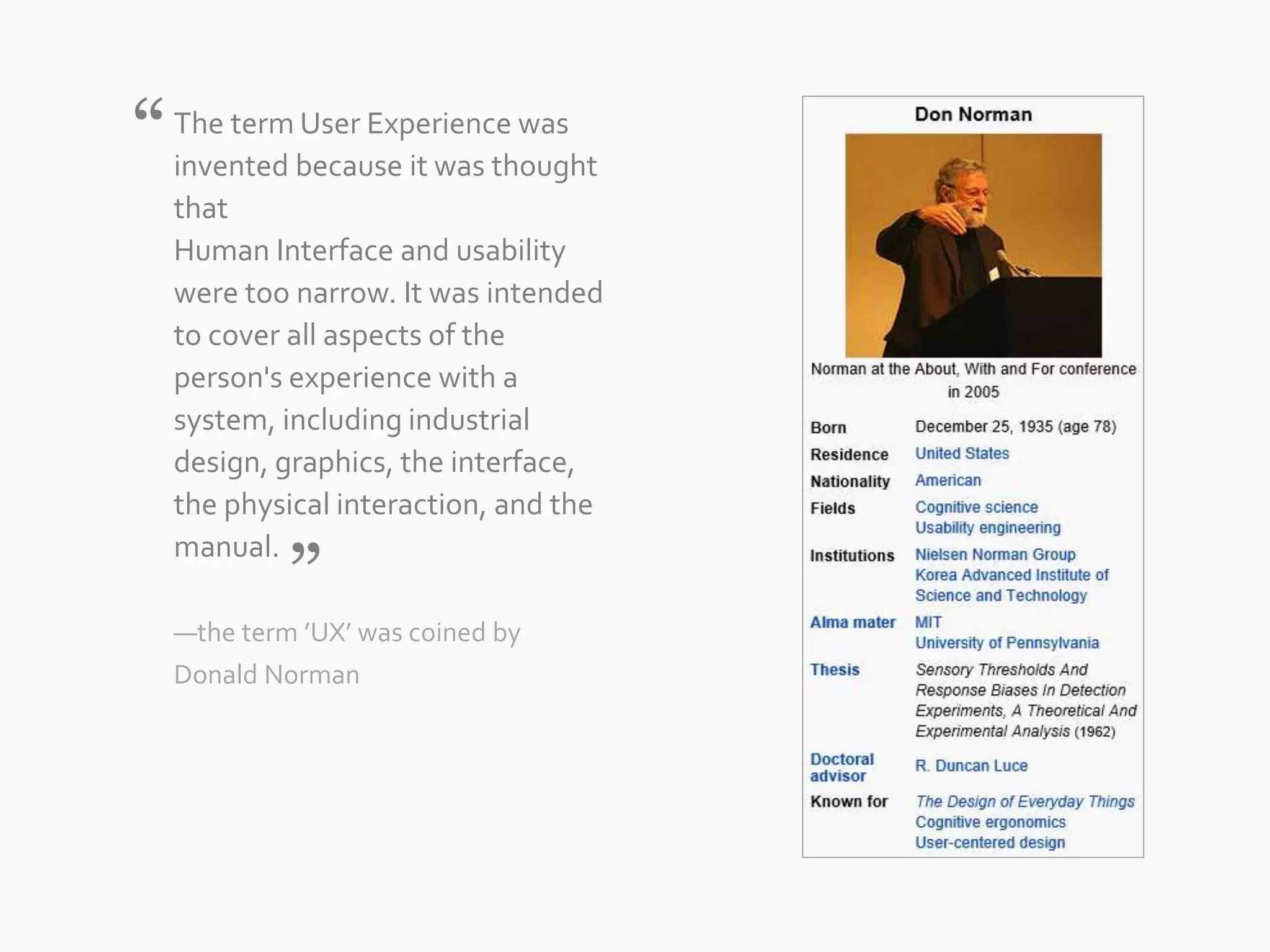
The term User Experience was 
invented because it was thought 
that 
Human Interface and usability 
were too narrow. It was intended 
to cover all aspects of the 
person's experience with a 
system, including industrial 
design, graphics, the interface, 
the physical interaction, and the 
manual. 
—the term ’UX’ was coined by 
Donald Norman 
“ 
”
User Experience Design – in a narrow perspective 
In general, the professionals in IXD, UID, UXD or Web defines UXD as referring to the 
judicious application of user centered design, highly contextual design mentality, use 
of techniques & methods through process management to produce cohesive, 
predictable, desirable effects in the target to meet user goals, measuring of success 
& engagement objectives of organization. 
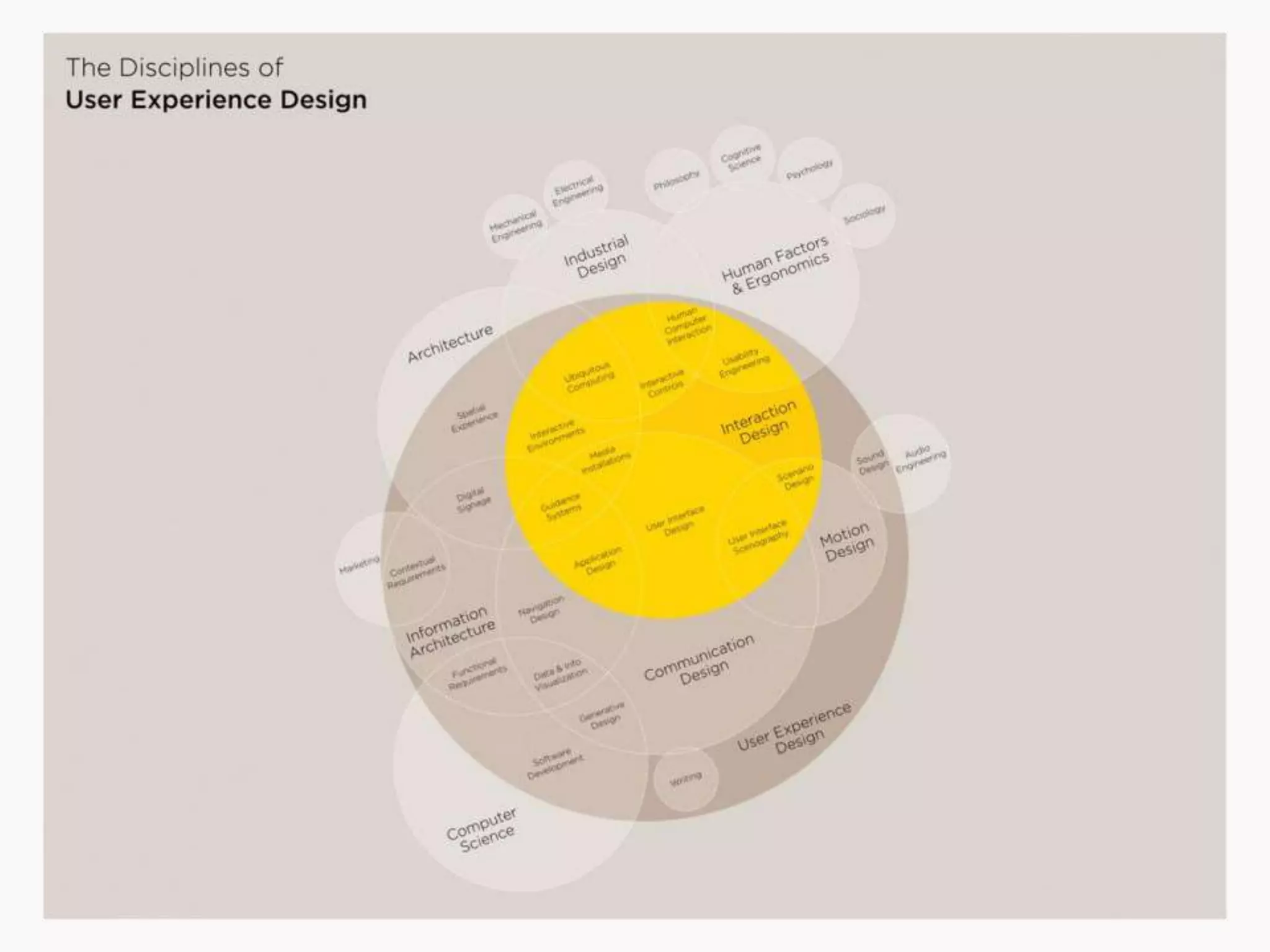
As Don Norman clarified, UXD is not singularly related to or is not similar to any of 
the 
individual disciplines: 
•Web Design 
• User Centered Design 
• Graphic Design 
• Human factor Engineering 
• User Interface Design 
• Interaction Design 
• Information Architecture 
• Usability Testing 
• Customer satisfaction…
User Experience Design – definition 
UXD is the design of anything with Human Experience as an explicit 
outcome and Human Engagement as an explicit goal. Every design tells a 
story - the product, the users and the world.
The term ‘user experience’ is more than just aesthetics to me. We have 
relationship with our technology. User experience is not just eye candy — 
it promotes a positive relationship between humans and technology. 
—Mitch Stein 
“ 
”
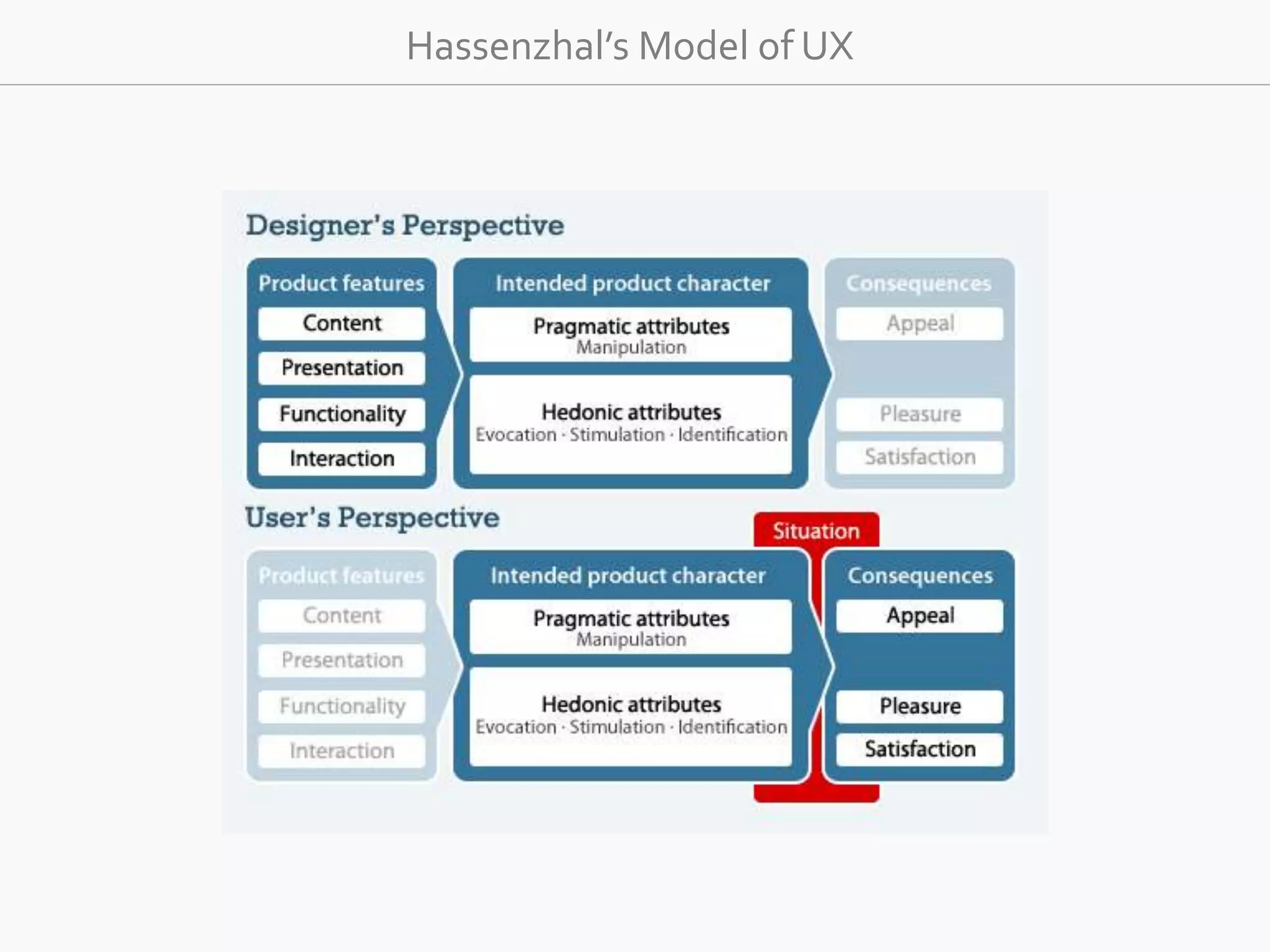
Why UX cannot be designed? 
It’s because UX depends not only on the product itself, but on the user and the 
situation in which they use the product. You can neither design the user nor the 
situation.
Hassenzhal’s Model of UX
Why we can design for UX but not design UX? 
The difference between designing UX and designing for UX is subtle but important. 
For instance, the UX is the sum of certain factors, such as fun, emotion, usability, 
motivation, co-experience, user involvement and user engagement. In turn, we must 
address some of these factors when we design for UX, depending on how we want 
our product to be perceived. If we want an application to be fun, then we need to add 
some features that will entertain; a joke, a challenging quiz, a funny video, a 
competitive aspect or something else. We should keep in mind, however, that, as 
designers, we can never really predict that the application will be perceived as fun by 
the user. Users have different standards, and sometimes they aren’t even willing to 
be entertained.
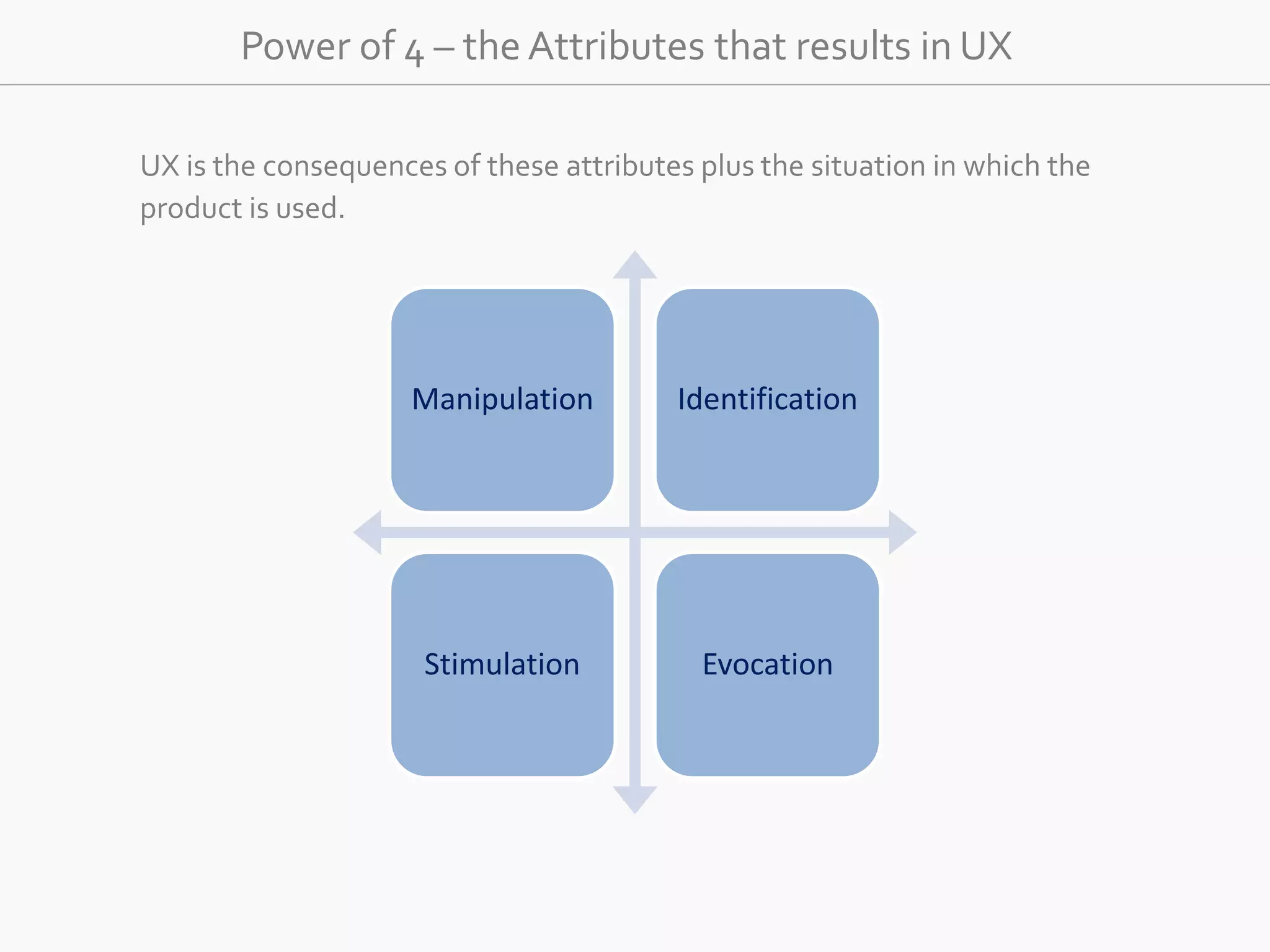
Power of 4 – the Attributes that results in UX 
UX is the consequences of these attributes plus the situation in which the 
product is used. 
Manipulation Identification 
Stimulation Evocation
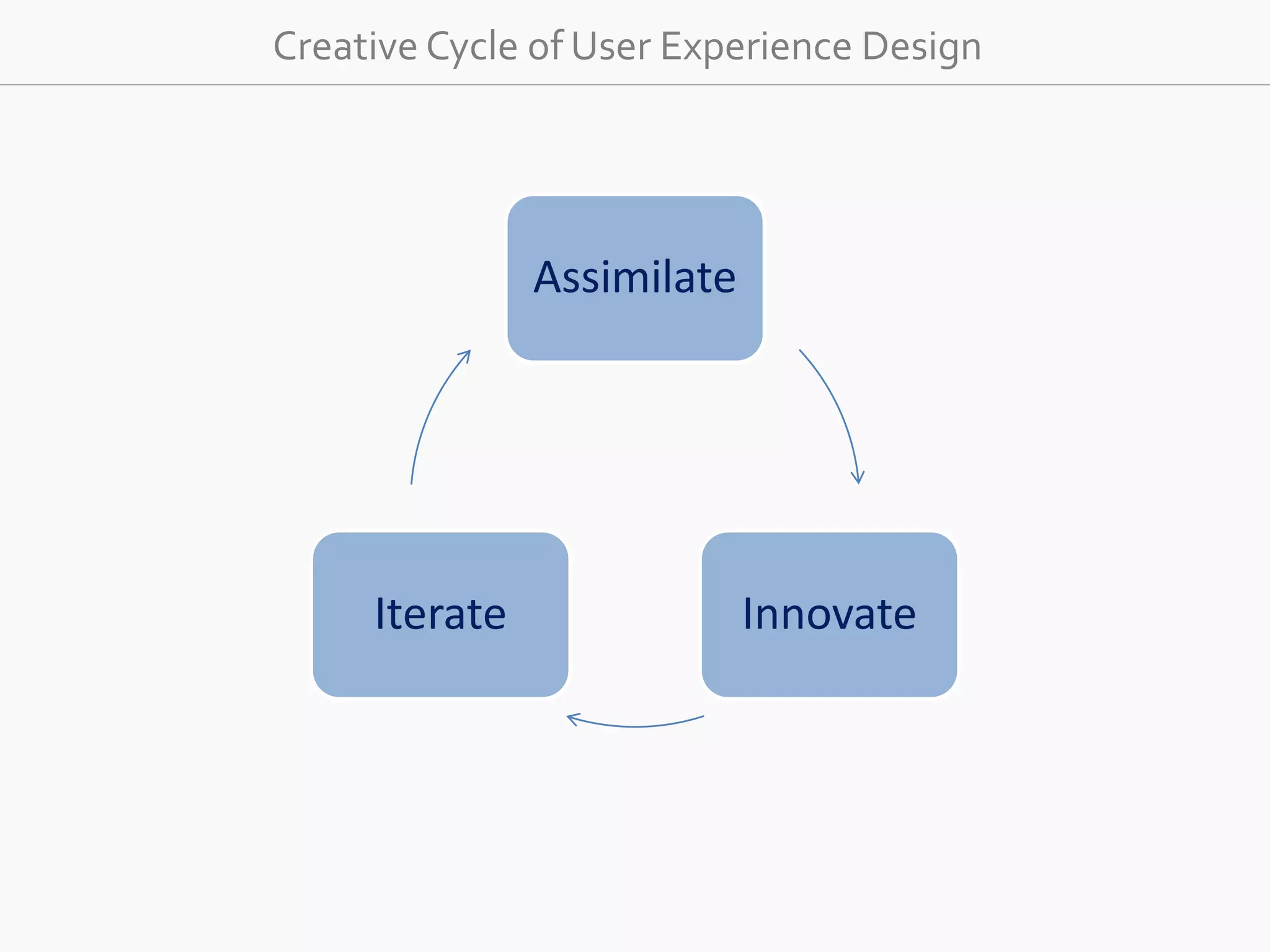
Creative Cycle of User Experience Design 
Assimilate 
Iterate Innovate
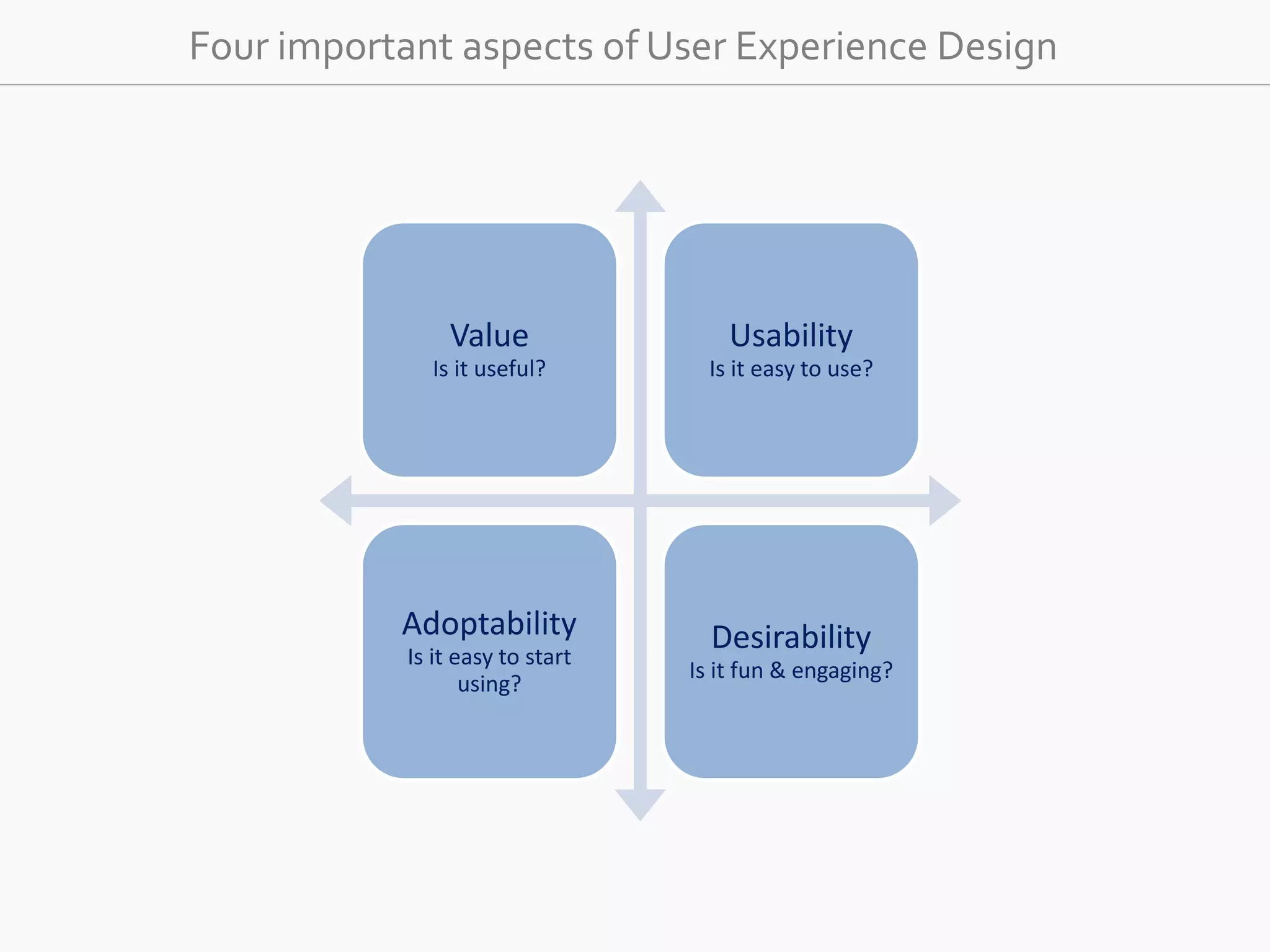
Four important aspects of User Experience Design 
Value 
Is it useful? 
Usability 
Is it easy to use? 
Adoptability 
Is it easy to start 
using? 
Desirability 
Is it fun & engaging?
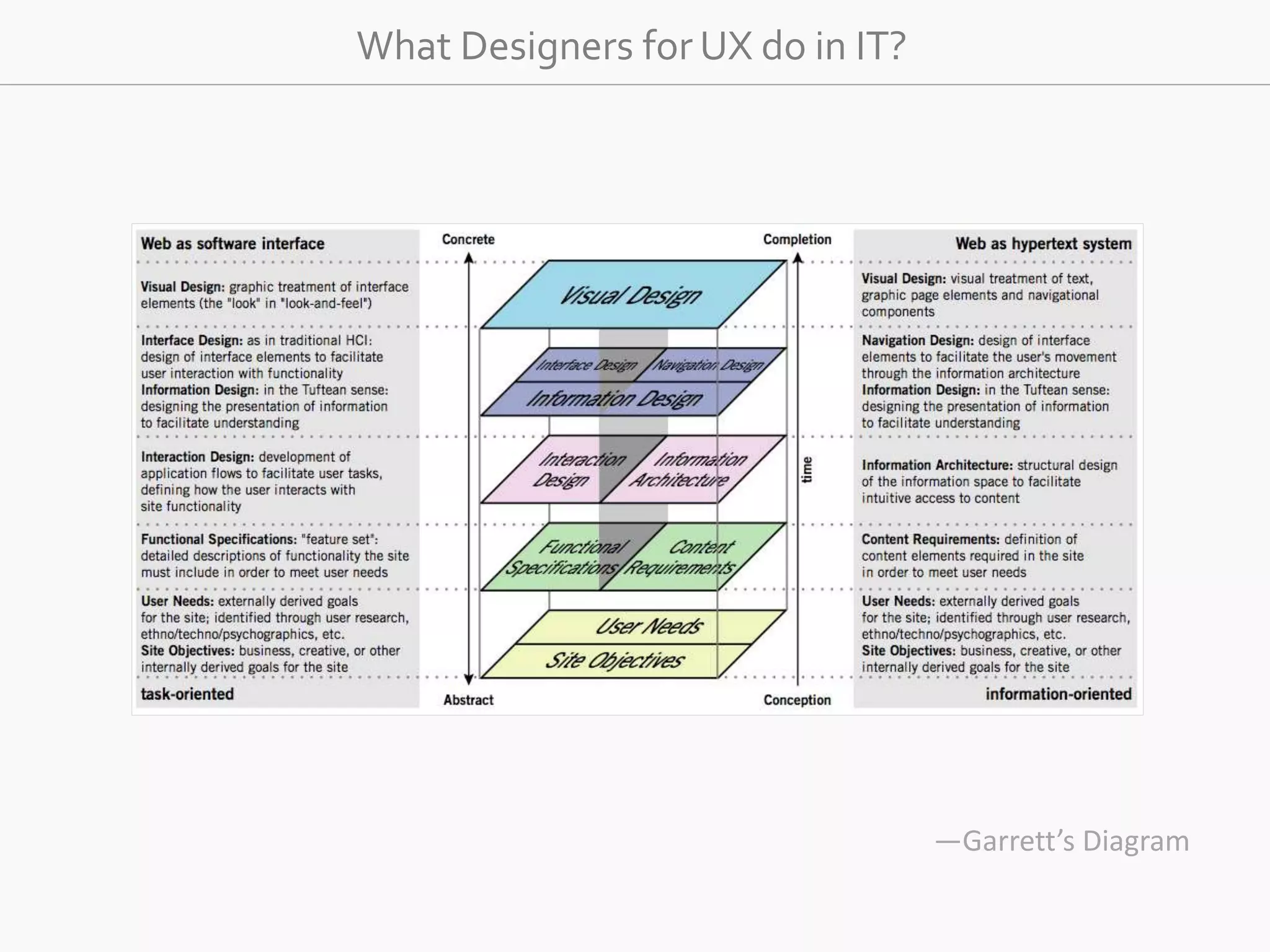
What Designers for UX do in IT? 
—Garrett’s Diagram
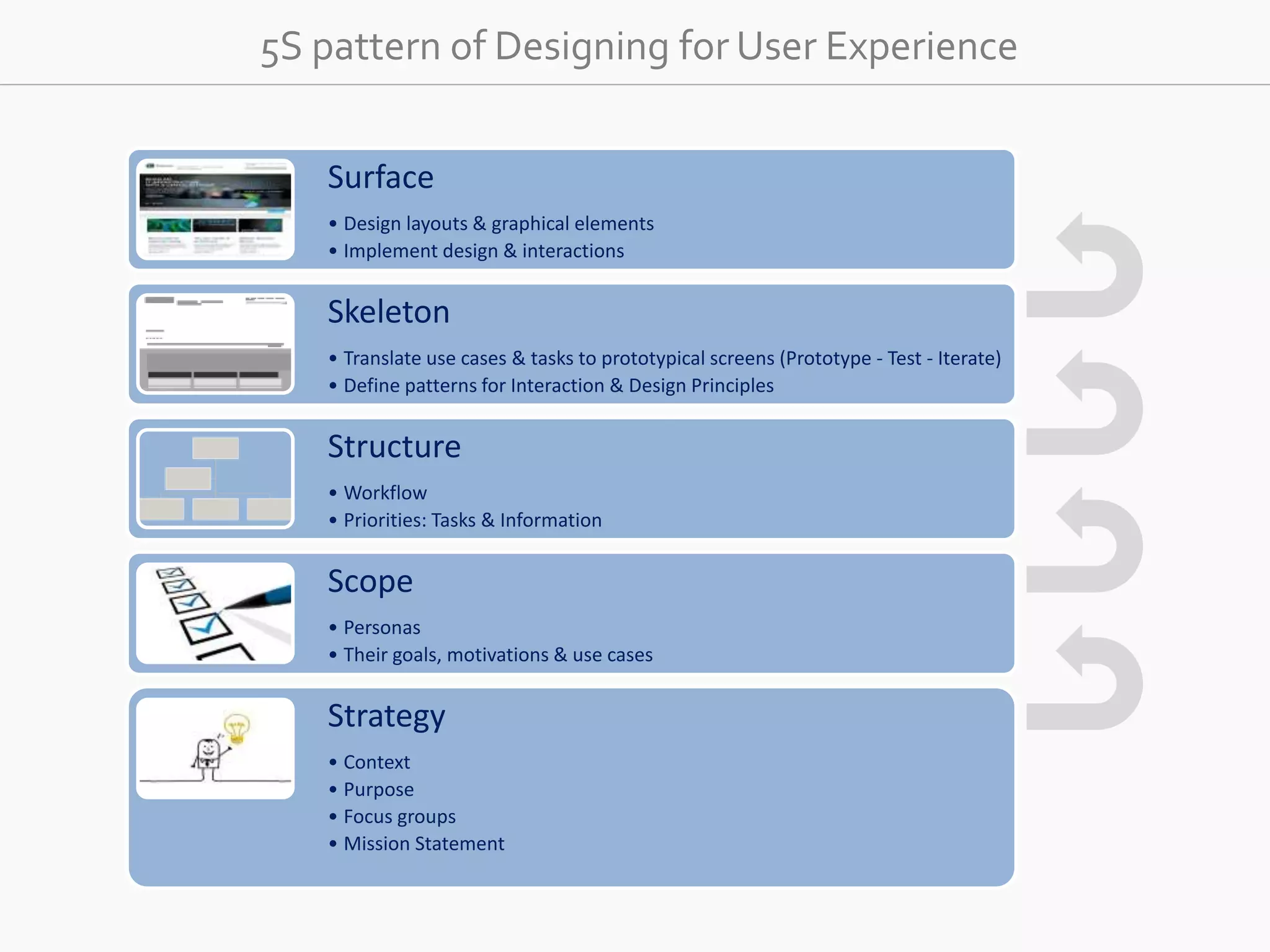
5S pattern of Designing for User Experience 
Surface 
• Design layouts & graphical elements 
• Implement design & interactions 
Skeleton 
• Translate use cases & tasks to prototypical screens (Prototype - Test - Iterate) 
• Define patterns for Interaction & Design Principles 
Structure 
• Workflow 
• Priorities: Tasks & Information 
Scope 
• Personas 
• Their goals, motivations & use cases 
Strategy 
• Context 
• Purpose 
• Focus groups 
• Mission Statement
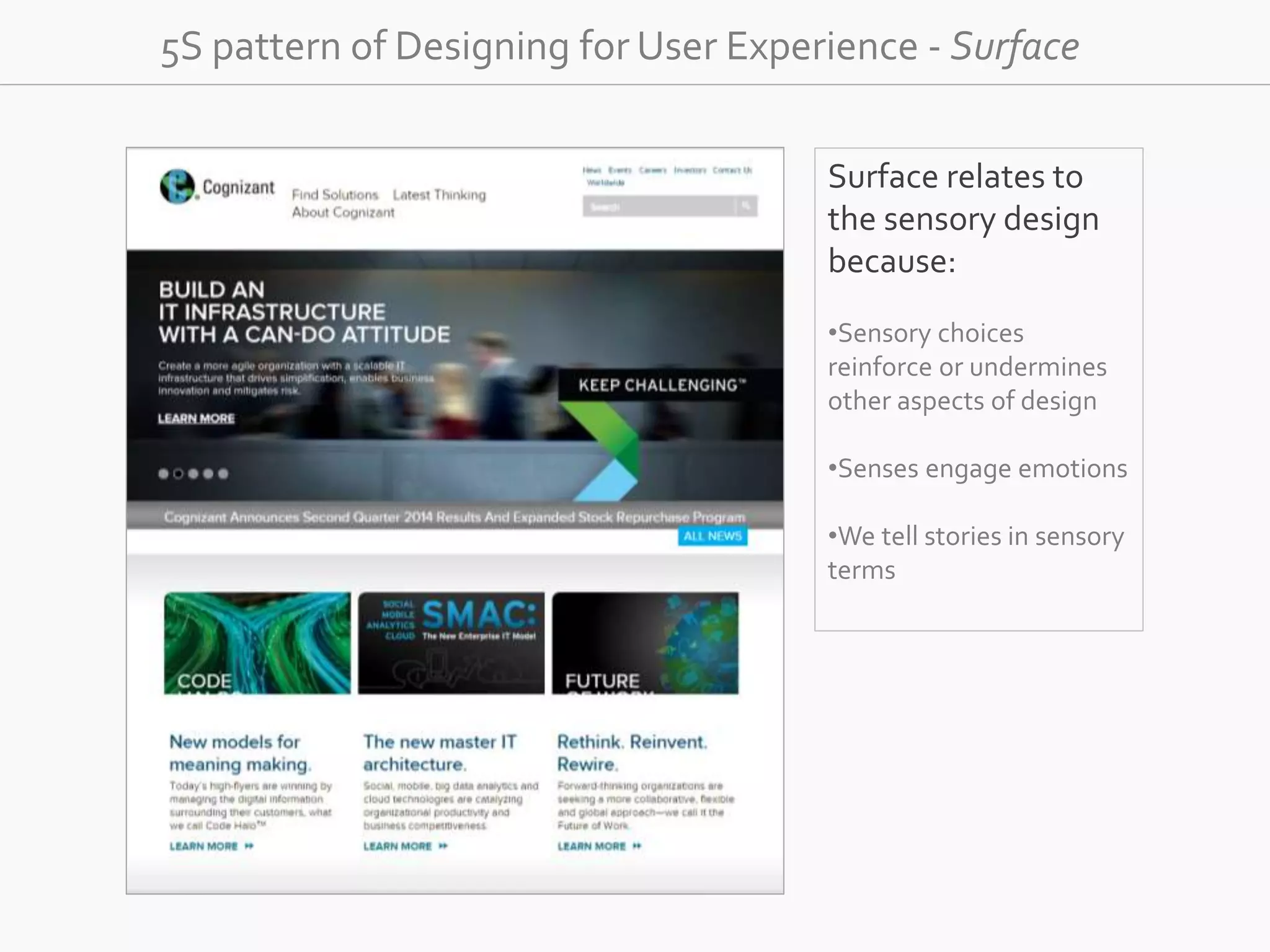
5S pattern of Designing for User Experience - Surface 
Surface relates to 
the sensory design 
because: 
•Sensory choices 
reinforce or undermines 
other aspects of design 
•Senses engage emotions 
•We tell stories in sensory 
terms
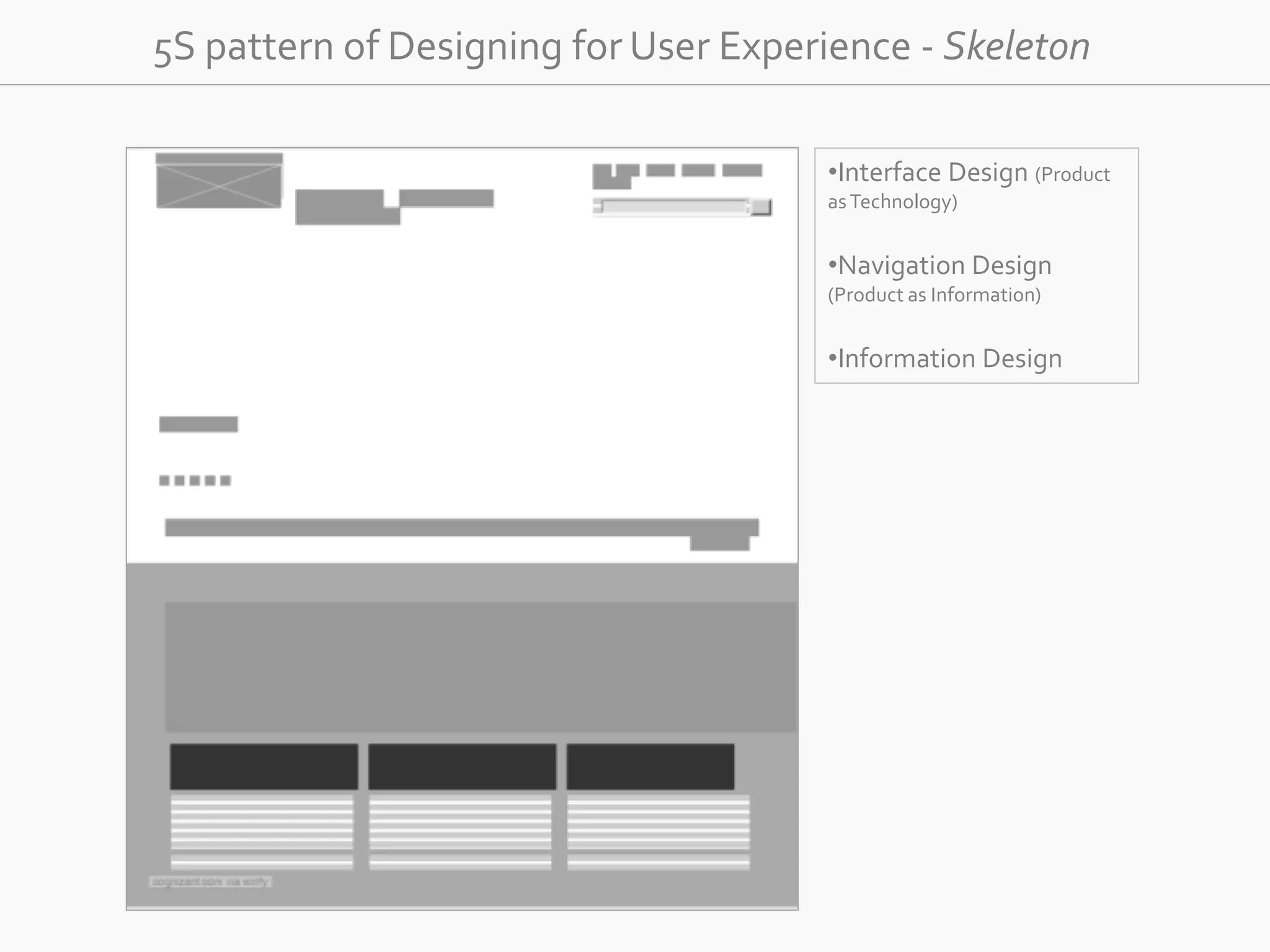
5S pattern of Designing for User Experience - Skeleton 
•Interface Design (Product 
as Technology) 
•Navigation Design 
(Product as Information) 
•Information Design
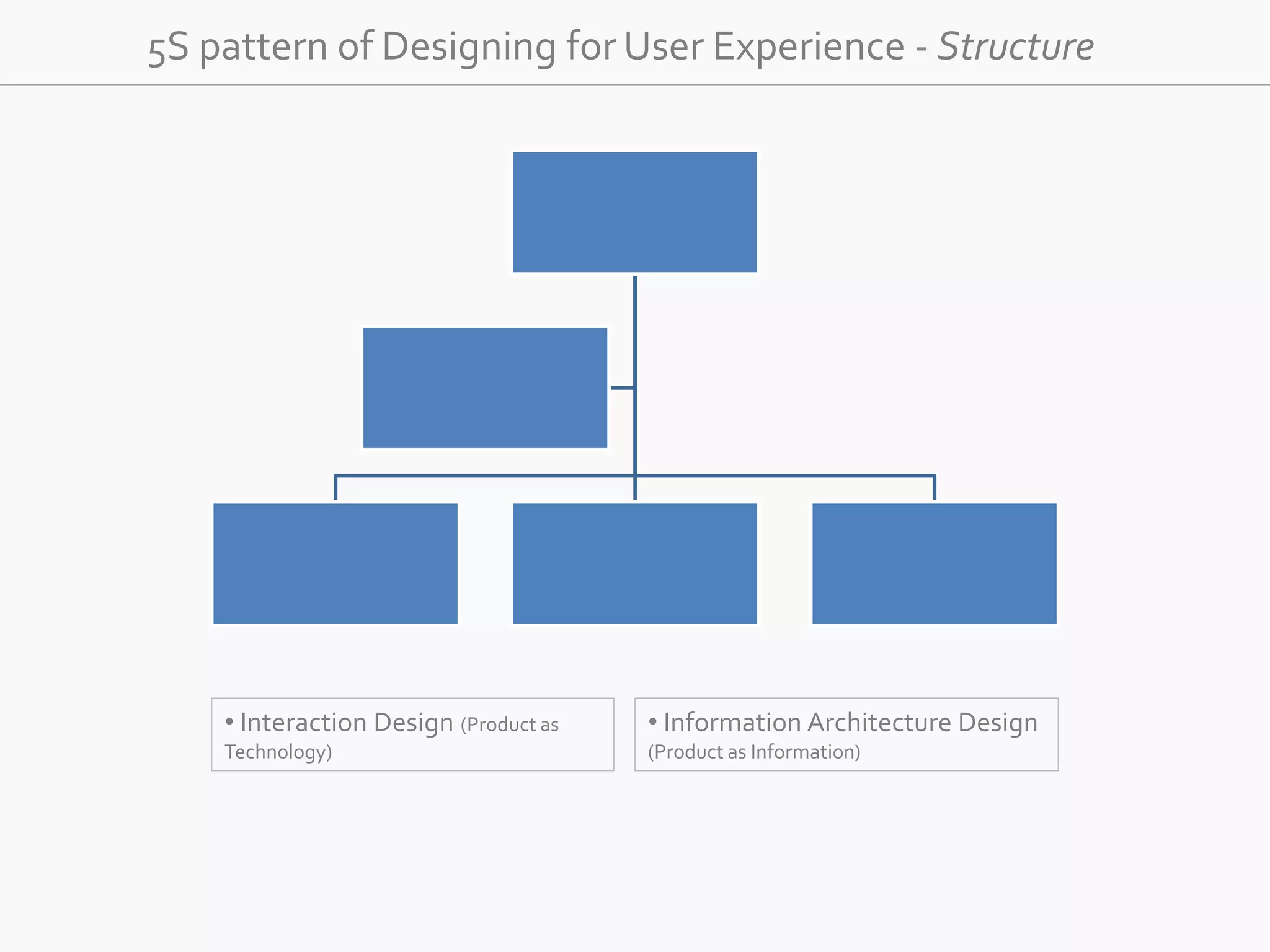
5S pattern of Designing for User Experience - Structure 
• Interaction Design (Product as 
Technology) 
• Information Architecture Design 
(Product as Information)
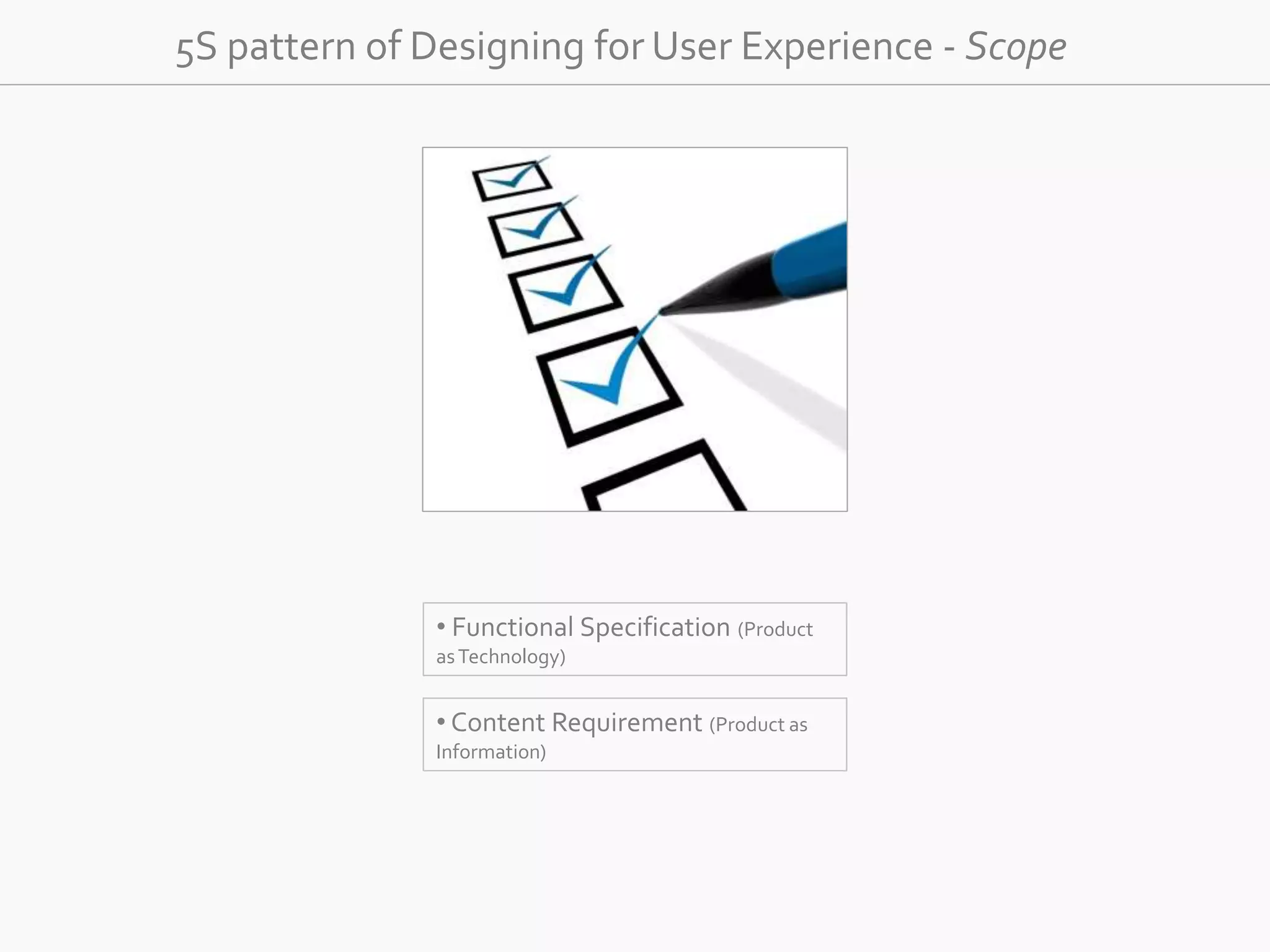
5S pattern of Designing for User Experience - Scope 
• Functional Specification (Product 
as Technology) 
• Content Requirement (Product as 
Information)
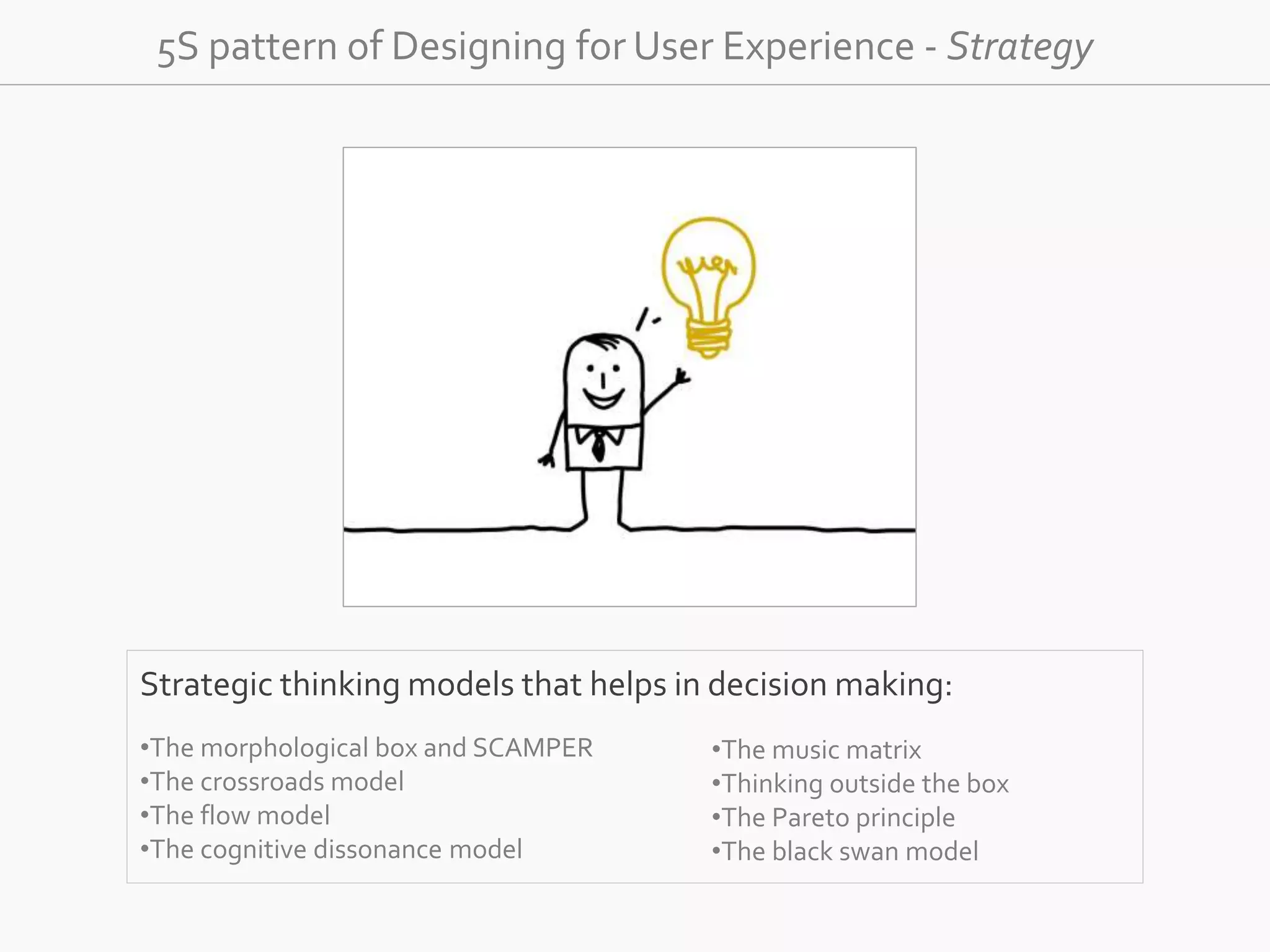
5S pattern of Designing for User Experience - Strategy 
Strategic thinking models that helps in decision making: 
•The morphological box and SCAMPER 
•The crossroads model 
•The flow model 
•The cognitive dissonance model 
•The music matrix 
•Thinking outside the box 
•The Pareto principle 
•The black swan model
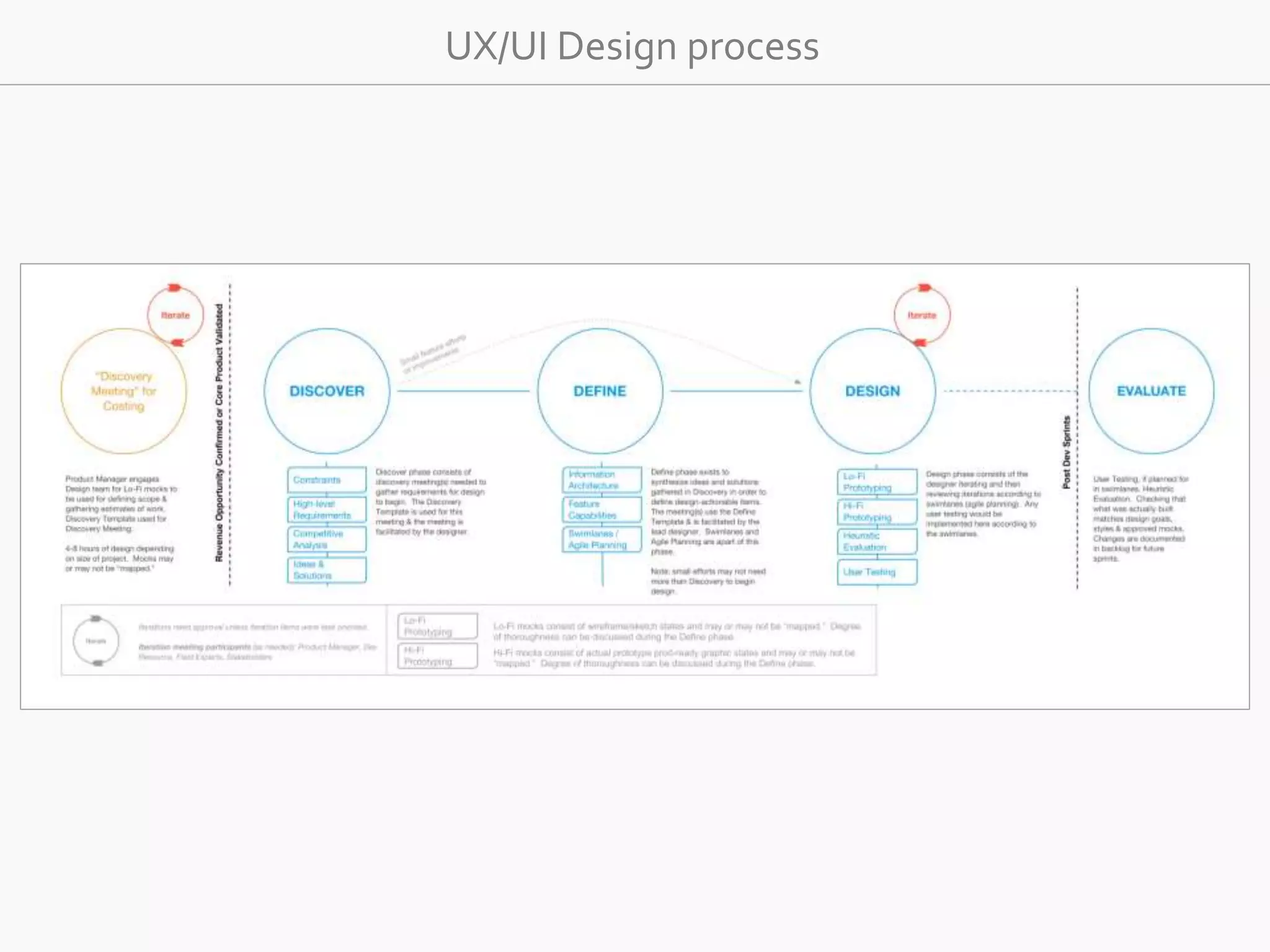
UX/UI Design process
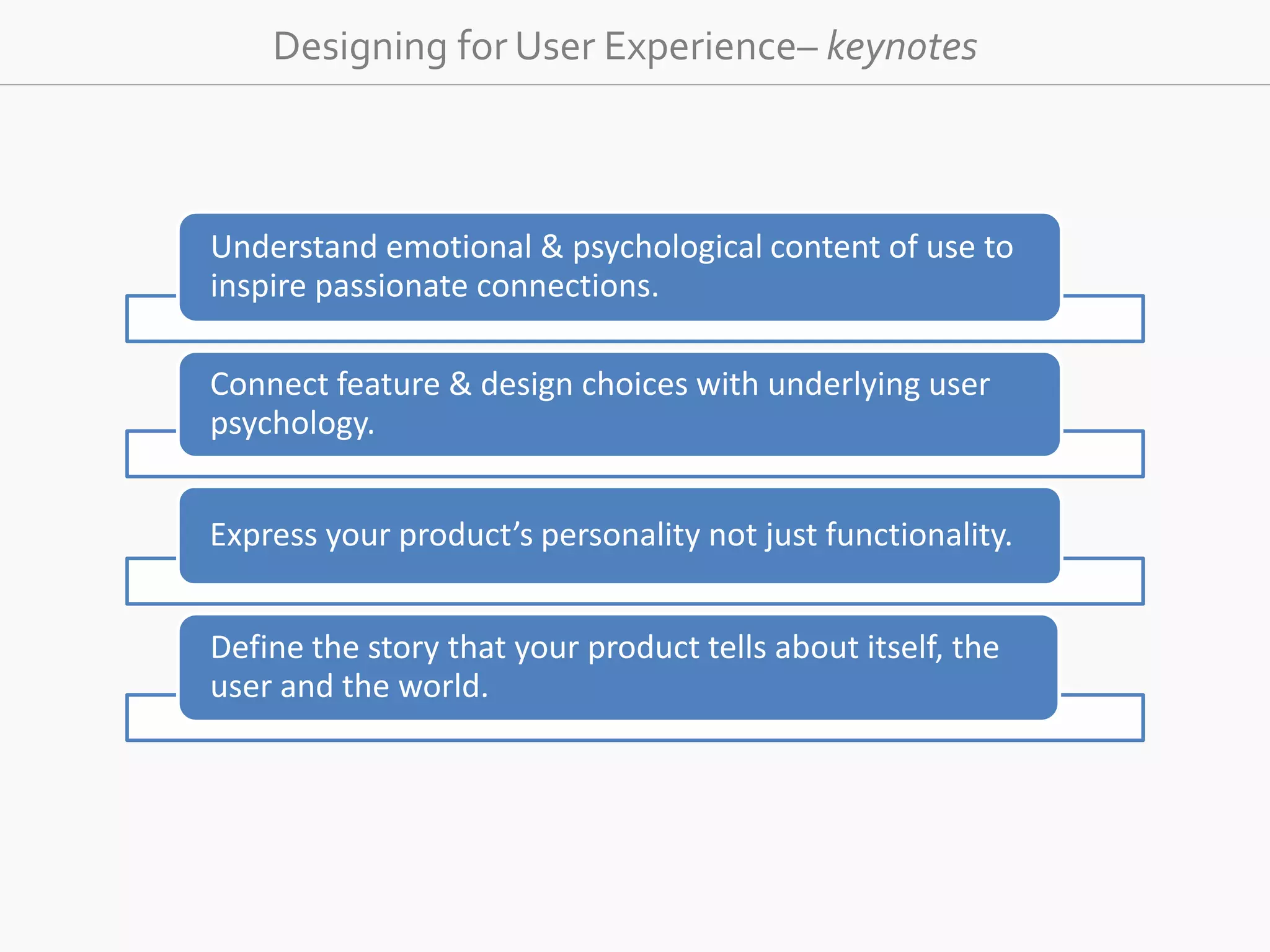
Designing for User Experience– keynotes 
Understand emotional & psychological content of use to 
inspire passionate connections. 
Connect feature & design choices with underlying user 
psychology. 
Express your product’s personality not just functionality. 
Define the story that your product tells about itself, the 
user and the world.
Design is not about making something look pretty, it’s about making the 
world work better. I mean everything, from your cellphone to health care 
to education to our impact on the environment. That’s what we’re 
focused on. 
-Don Norman 
“ 
”
Alternative Reference Sites: 
5-brilliant-ted-talks-that-will-make-you-a-better-ux-designer 
UX – Myths 
UI is not UX 
Credits - of course…

Myth & fact - Designing for UX

  • 1.
    Myth & Facts Designing for UX
  • 2.
    “ Human needsshould be the guide for our technologies. ” —Ben Shneiderman
  • 3.
    The term UserExperience was invented because it was thought that Human Interface and usability were too narrow. It was intended to cover all aspects of the person's experience with a system, including industrial design, graphics, the interface, the physical interaction, and the manual. —the term ’UX’ was coined by Donald Norman “ ”
  • 4.
    User Experience Design– in a narrow perspective In general, the professionals in IXD, UID, UXD or Web defines UXD as referring to the judicious application of user centered design, highly contextual design mentality, use of techniques & methods through process management to produce cohesive, predictable, desirable effects in the target to meet user goals, measuring of success & engagement objectives of organization. As Don Norman clarified, UXD is not singularly related to or is not similar to any of the individual disciplines: •Web Design • User Centered Design • Graphic Design • Human factor Engineering • User Interface Design • Interaction Design • Information Architecture • Usability Testing • Customer satisfaction…
  • 5.
    User Experience Design– definition UXD is the design of anything with Human Experience as an explicit outcome and Human Engagement as an explicit goal. Every design tells a story - the product, the users and the world.
  • 7.
    The term ‘userexperience’ is more than just aesthetics to me. We have relationship with our technology. User experience is not just eye candy — it promotes a positive relationship between humans and technology. —Mitch Stein “ ”
  • 8.
    Why UX cannotbe designed? It’s because UX depends not only on the product itself, but on the user and the situation in which they use the product. You can neither design the user nor the situation.
  • 9.
  • 10.
    Why we candesign for UX but not design UX? The difference between designing UX and designing for UX is subtle but important. For instance, the UX is the sum of certain factors, such as fun, emotion, usability, motivation, co-experience, user involvement and user engagement. In turn, we must address some of these factors when we design for UX, depending on how we want our product to be perceived. If we want an application to be fun, then we need to add some features that will entertain; a joke, a challenging quiz, a funny video, a competitive aspect or something else. We should keep in mind, however, that, as designers, we can never really predict that the application will be perceived as fun by the user. Users have different standards, and sometimes they aren’t even willing to be entertained.
  • 11.
    Power of 4– the Attributes that results in UX UX is the consequences of these attributes plus the situation in which the product is used. Manipulation Identification Stimulation Evocation
  • 12.
    Creative Cycle ofUser Experience Design Assimilate Iterate Innovate
  • 13.
    Four important aspectsof User Experience Design Value Is it useful? Usability Is it easy to use? Adoptability Is it easy to start using? Desirability Is it fun & engaging?
  • 14.
    What Designers forUX do in IT? —Garrett’s Diagram
  • 15.
    5S pattern ofDesigning for User Experience Surface • Design layouts & graphical elements • Implement design & interactions Skeleton • Translate use cases & tasks to prototypical screens (Prototype - Test - Iterate) • Define patterns for Interaction & Design Principles Structure • Workflow • Priorities: Tasks & Information Scope • Personas • Their goals, motivations & use cases Strategy • Context • Purpose • Focus groups • Mission Statement
  • 16.
    5S pattern ofDesigning for User Experience - Surface Surface relates to the sensory design because: •Sensory choices reinforce or undermines other aspects of design •Senses engage emotions •We tell stories in sensory terms
  • 17.
    5S pattern ofDesigning for User Experience - Skeleton •Interface Design (Product as Technology) •Navigation Design (Product as Information) •Information Design
  • 18.
    5S pattern ofDesigning for User Experience - Structure • Interaction Design (Product as Technology) • Information Architecture Design (Product as Information)
  • 19.
    5S pattern ofDesigning for User Experience - Scope • Functional Specification (Product as Technology) • Content Requirement (Product as Information)
  • 20.
    5S pattern ofDesigning for User Experience - Strategy Strategic thinking models that helps in decision making: •The morphological box and SCAMPER •The crossroads model •The flow model •The cognitive dissonance model •The music matrix •Thinking outside the box •The Pareto principle •The black swan model
  • 21.
  • 22.
    Designing for UserExperience– keynotes Understand emotional & psychological content of use to inspire passionate connections. Connect feature & design choices with underlying user psychology. Express your product’s personality not just functionality. Define the story that your product tells about itself, the user and the world.
  • 23.
    Design is notabout making something look pretty, it’s about making the world work better. I mean everything, from your cellphone to health care to education to our impact on the environment. That’s what we’re focused on. -Don Norman “ ”
  • 24.
    Alternative Reference Sites: 5-brilliant-ted-talks-that-will-make-you-a-better-ux-designer UX – Myths UI is not UX Credits - of course…