USER
EXPERIENCE
Presentation by
Pushkar Dhande
What is USER EXPERIENCE ?
USER EXPERIENCE (UX) is the overall experience of a person using a product
such as a website or computer application, especially in terms of how easy
or pleasing it is to use.
What is USER EXPERIENCE DESIGN ?
User Experience Design (UXD or UED or XD) is the process of enhancing
user satisfaction by improving the usability, accessibility, and pleasure provided
in the interaction between the user and the product.
What is USER CENTRED DESIGN ?
USER CENTRED DESIGN (UCD) is a flexible methodology incorporating
research, design and evaluation techniques to ensure a user friendly website
or system.
What is USABILITY ?
USABILITY relates to how easily, efficiently & satisfactorily a product is used by
a person to achieve their goals within a specific context of use.
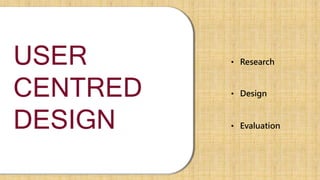
USER
CENTRED
DESIGN
• Research
• Design
• Evaluation
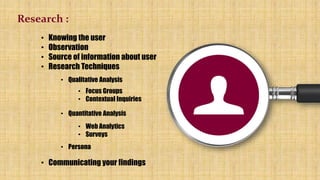
Research :
• Knowing the user
• Observation
• Source of information about user
• Research Techniques
• Qualitative Analysis
• Focus Groups
• Contextual Inquiries
• Quantitative Analysis
• Web Analytics
• Surveys
• Persona
• Communicating your findings
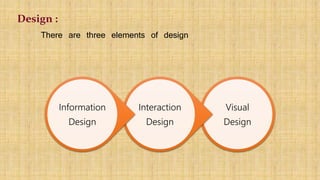
Design :
There are three elements of design
Visual
Design
Interaction
Design
Information
Design
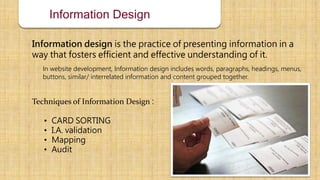
Information Design
Information design is the practice of presenting information in a
way that fosters efficient and effective understanding of it.
In website development, Information design includes words, paragraphs, headings, menus,
buttons, similar/ interrelated information and content grouped together.
Techniques of Information Design :
• CARD SORTING
• I.A. validation
• Mapping
• Audit
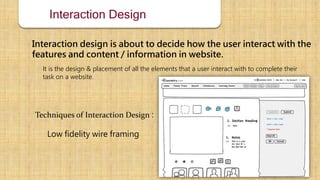
Interaction Design
Interaction design is about to decide how the user interact with the
features and content / information in website.
It is the design & placement of all the elements that a user interact with to complete their
task on a website.
Techniques of Interaction Design :
Low fidelity wire framing
Visual Design
• Visual design is the way a website is composed and
appeals to the user eyes.
• It includes look & feel of the interface to user.
• It is also known as Graphic Design.
USABILITY
• Usability Evaluation
• Analysing &
Reporting
Benefits of usability Evaluation:
• Scalable
• Flexible
• Helps to refine the design
• Iterative process hence can use
use again & again
Usability Evaluation :
Usability evaluation assesses the extent to which an interactive system
is easy and pleasant to use for user.
Benefits of usability Evaluation:
• Scalable
• Flexible
• Helps to refine the design
• Iterative process hence can use
again & again
Important points for Usability
Evaluation:
• Clear about the purpose
• Thinking about scope
• Knowing issues
• Users
• Context
• Budget
• Deliverables
Usability Evaluation Techniques :
• Usability walkthroughs
• Usability Testing
• Moderated usability testing
• Unmoderated usability testing
• User Acceptance Test (UAT)
• Expert Reviews
• Competitor Analysis
User Acceptance test (UAT):
UAT is the way of ensuring every feature that was documented, exists
in the design.
This is typically the last step before the product goes live or before the delivery
of the product is accepted and conducted by the user or client.
Phases for conducting UAT :
• Introduction & Formalities
• Pre-test session
• Crux of testing
• Post test phase
• Debrief
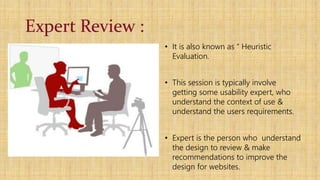
Expert Review :
• It is also known as “ Heuristic
Evaluation.
• This session is typically involve
getting some usability expert, who
understand the context of use &
understand the users requirements.
• Expert is the person who understand
the design to review & make
recommendations to improve the
design for websites.
Competitors Analysis
Review websites one by one
Review features one by one
There are two approaches
Reporting :
• Format
• Audience
• Simple language
• Qualitative/Quantitative
• Confirm objectives
Basics of Ux Design

Basics of Ux Design

  • 1.
  • 2.
    What is USEREXPERIENCE ? USER EXPERIENCE (UX) is the overall experience of a person using a product such as a website or computer application, especially in terms of how easy or pleasing it is to use. What is USER EXPERIENCE DESIGN ? User Experience Design (UXD or UED or XD) is the process of enhancing user satisfaction by improving the usability, accessibility, and pleasure provided in the interaction between the user and the product.
  • 3.
    What is USERCENTRED DESIGN ? USER CENTRED DESIGN (UCD) is a flexible methodology incorporating research, design and evaluation techniques to ensure a user friendly website or system. What is USABILITY ? USABILITY relates to how easily, efficiently & satisfactorily a product is used by a person to achieve their goals within a specific context of use.
  • 4.
  • 5.
    Research : • Knowingthe user • Observation • Source of information about user • Research Techniques • Qualitative Analysis • Focus Groups • Contextual Inquiries • Quantitative Analysis • Web Analytics • Surveys • Persona • Communicating your findings
  • 6.
    Design : There arethree elements of design Visual Design Interaction Design Information Design
  • 7.
    Information Design Information designis the practice of presenting information in a way that fosters efficient and effective understanding of it. In website development, Information design includes words, paragraphs, headings, menus, buttons, similar/ interrelated information and content grouped together. Techniques of Information Design : • CARD SORTING • I.A. validation • Mapping • Audit
  • 8.
    Interaction Design Interaction designis about to decide how the user interact with the features and content / information in website. It is the design & placement of all the elements that a user interact with to complete their task on a website. Techniques of Interaction Design : Low fidelity wire framing
  • 9.
    Visual Design • Visualdesign is the way a website is composed and appeals to the user eyes. • It includes look & feel of the interface to user. • It is also known as Graphic Design.
  • 10.
  • 11.
    Benefits of usabilityEvaluation: • Scalable • Flexible • Helps to refine the design • Iterative process hence can use use again & again Usability Evaluation : Usability evaluation assesses the extent to which an interactive system is easy and pleasant to use for user. Benefits of usability Evaluation: • Scalable • Flexible • Helps to refine the design • Iterative process hence can use again & again Important points for Usability Evaluation: • Clear about the purpose • Thinking about scope • Knowing issues • Users • Context • Budget • Deliverables
  • 12.
    Usability Evaluation Techniques: • Usability walkthroughs • Usability Testing • Moderated usability testing • Unmoderated usability testing • User Acceptance Test (UAT) • Expert Reviews • Competitor Analysis
  • 13.
    User Acceptance test(UAT): UAT is the way of ensuring every feature that was documented, exists in the design. This is typically the last step before the product goes live or before the delivery of the product is accepted and conducted by the user or client. Phases for conducting UAT : • Introduction & Formalities • Pre-test session • Crux of testing • Post test phase • Debrief
  • 14.
    Expert Review : •It is also known as “ Heuristic Evaluation. • This session is typically involve getting some usability expert, who understand the context of use & understand the users requirements. • Expert is the person who understand the design to review & make recommendations to improve the design for websites.
  • 15.
    Competitors Analysis Review websitesone by one Review features one by one There are two approaches
  • 16.
    Reporting : • Format •Audience • Simple language • Qualitative/Quantitative • Confirm objectives