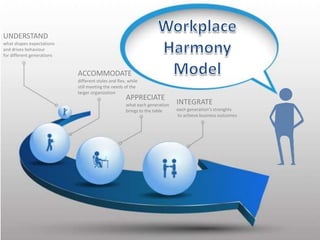
UNDERSTAND
what shapes expectations
and drives behaviour
for different generations

ACCOMMODATE
different styles and flex, while
still meeting the needs of the
larger organization

APPRECIATE
what each generation
brings to the table

@elifdurugonen

INTEGRATE
each generation’s strenghts
to achieve business outcomes
• Born after World War
II
• Great Impact on the
World

Baby Boomers
1946 - 1964

@elifdurugonen.com

• Dot-Com Generation
• Parent planned,
structured lives
• Long term = 2 years

•
•

Gen X

Gen Y

1965 – 1980

1981 – 2000
GENERATIONAL
D I V E R S I T Y
Recognizing and understanding generational
differences can help everyone learn to work
together more effectively and transform your
workplace from a generation war zone to an
age-diverse and productive team.

@elifdurugonen.com
Benefits of Teaming Generations
Generations learn from one
86% agree
another
Better work quality due to variety 82% agree
of generational perspectives

@elifdurugonen.com
@elifdurugonen
@elifdurugonen
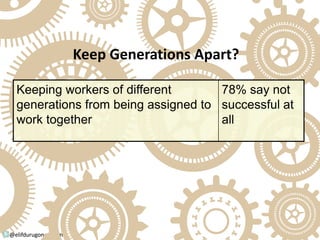
Keep Generations Apart?
Keeping workers of different
78% say not
generations from being assigned to successful at
work together
all

@elifdurugonen.com
@elifdurugonen
@elifdurugonen
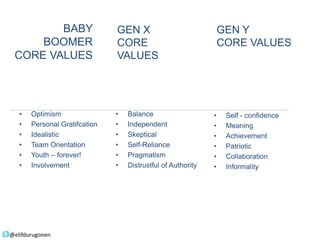
BABY
BOOMER
CORE VALUES
•
•
•
•
•
•
•
•
•
•

Family
Love
Integrity
Diversity
Optimism
Personal Gratifcation
Idealistic
Team Orientation
Youth – forever!
Involvement

@elifdurugonen

GEN X
CORE
VALUES
•
•
•
•
•
•
•
•
•
•

Family
Love
Integrity
Diversity
Balance
Independent
Skeptical
Self-Reliance
Pragmatism
Distrustful of Authority

GEN Y
CORE VALUES
•
•
•
•
•
•
•
•
•
•

Family
Love
Integrity
Diversity
Self - confidence
Meaning
Achievement
Patriotic
Collaboration
Informality
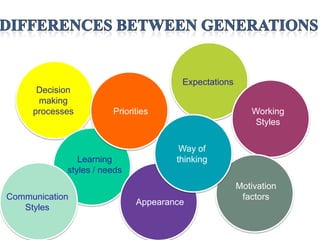
Decision
making
processes

Expectations
Priorities

Learning
styles / needs
Communication
Styles

Working
Styles
Way of
thinking

Appearance

Motivation
factors
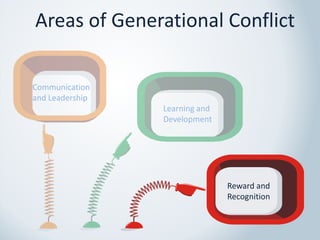
Areas of Generational Conflict
Communication
and Leadership
Learning and
Development

Reward and
Recognition
Communication

Baby Boomers – Face to face
•

Use open and direct style but avoid controlling language

•

“Show me" generation

•

Prepared to answer questions

•

Present options to demonstrate flexibility in your thinking

Generation X – Direct, as needed
• Talk in short to keep their attention
• Ask and give regular feedback
• Use an informal communication style
• Email as a primary communication tool
Generation Y – Email, instant messaging
•
•
•
•
•

@elifdurugonen.com
@elifdurugonen

Challenge them
They will resent it if you talk down to them
Prefer communication through technology (e.g., email, instant messaging,
text messages, podcasts, bulletin boards, on line chats, blogs, etc.)
Prefer networking opportunities
Quick responses to emails

11
Change
Agility

Mental
Agility
Selfawareness

Results
Agility

@elifdurugonen

We need
“learning
agile”
leaders!

People
Agility
Leadership
@elifdurugonen.com
@elifdurugonen

Baby Boomers
• Show respect to their achievements
• Involve in change initiatives and
organizational issues
Gen X
• Truth
• Coaching
• Include in decisions
• May challenge leadership (asking “why”)
Gen Y
• Avoid «I am the boss» style
• Like to be treated as colleagues
• Informality
• Coaching and mentoring

13
Areas of Generational Conflict
Communication
and Leadership
Learning and
Development

Reward and
Recognition

@elifdurugonen
Development is an issue!
Have you ever left a job due to lack of development
opportunities?

3%

Boomers

“I learned the hard way; you can too!”

13%

Gen X

“Train them too much and they will leave.”

28% “Continuous learning is a lifestyle.”

Gen Y

0

@elifdurugonen

10

20

30
Gen X and Y
Mentoring

Feedback!

Boomers

marketable skills

context
and value

collaborative; peer-topeer

@elifdurugonen

to stay current

“lead me to the
information”

Independent;
expert or coach
led
Generation X

Baby Boomers
•
•

Give Recognition
Establish Link
– Organizational Mission
– Organizational Values

@elifdurugonen

•
•
•
•

Show Respect for Time
Approach Efficiently
Be Straightforward
Use Results Language

Generation Y
•
•
•

Speak positive
Offer help
Ask / COACHING
The Most Effective L&D Tools

Coaching

Mentoring

40% of Gen Yers said having a mentor
directly influenced their decision to stay at
their current company!
@elifdurugonen
The Most Effective L&D Tools

Coaching

@elifdurugonen

Mentoring

Reverse
Mentoring
Areas of Generational Conflict
Communication
and Leadership
Learning and
Development

Reward and
Recognition

@elifdurugonen
Reward means...

Baby
Boomers:
“Show respect.
Opportunity to
share”
@elifdurugonen

Gen Xers:

Gen Yers:

“Freedom is
the ultimate
reward”

“Assign
meaningful tasks.
Be sincere.”
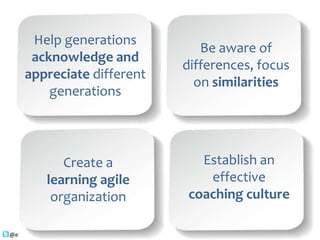
Help generations
acknowledge and
appreciate different
generations

Be aware of
differences, focus
on similarities

Create a
learning agile
organization

Establish an
effective
coaching culture

@elifdurugonen
Objects in the mirror
are
closer than they appear!
@elifdurugonen
Gen Z!

They are coming soon;)
@elifdurugonen

Multi generational teams

  • 1.
    UNDERSTAND what shapes expectations anddrives behaviour for different generations ACCOMMODATE different styles and flex, while still meeting the needs of the larger organization APPRECIATE what each generation brings to the table @elifdurugonen INTEGRATE each generation’s strenghts to achieve business outcomes
  • 2.
    • Born afterWorld War II • Great Impact on the World Baby Boomers 1946 - 1964 @elifdurugonen.com • Dot-Com Generation • Parent planned, structured lives • Long term = 2 years • • Gen X Gen Y 1965 – 1980 1981 – 2000
  • 3.
    GENERATIONAL D I VE R S I T Y Recognizing and understanding generational differences can help everyone learn to work together more effectively and transform your workplace from a generation war zone to an age-diverse and productive team. @elifdurugonen.com
  • 4.
    Benefits of TeamingGenerations Generations learn from one 86% agree another Better work quality due to variety 82% agree of generational perspectives @elifdurugonen.com @elifdurugonen
  • 5.
  • 6.
    Keep Generations Apart? Keepingworkers of different 78% say not generations from being assigned to successful at work together all @elifdurugonen.com @elifdurugonen
  • 7.
  • 8.
    BABY BOOMER CORE VALUES • • • • • • • • • • Family Love Integrity Diversity Optimism Personal Gratifcation Idealistic TeamOrientation Youth – forever! Involvement @elifdurugonen GEN X CORE VALUES • • • • • • • • • • Family Love Integrity Diversity Balance Independent Skeptical Self-Reliance Pragmatism Distrustful of Authority GEN Y CORE VALUES • • • • • • • • • • Family Love Integrity Diversity Self - confidence Meaning Achievement Patriotic Collaboration Informality
  • 9.
  • 10.
    Areas of GenerationalConflict Communication and Leadership Learning and Development Reward and Recognition
  • 11.
    Communication Baby Boomers –Face to face • Use open and direct style but avoid controlling language • “Show me" generation • Prepared to answer questions • Present options to demonstrate flexibility in your thinking Generation X – Direct, as needed • Talk in short to keep their attention • Ask and give regular feedback • Use an informal communication style • Email as a primary communication tool Generation Y – Email, instant messaging • • • • • @elifdurugonen.com @elifdurugonen Challenge them They will resent it if you talk down to them Prefer communication through technology (e.g., email, instant messaging, text messages, podcasts, bulletin boards, on line chats, blogs, etc.) Prefer networking opportunities Quick responses to emails 11
  • 12.
  • 13.
    Leadership @elifdurugonen.com @elifdurugonen Baby Boomers • Showrespect to their achievements • Involve in change initiatives and organizational issues Gen X • Truth • Coaching • Include in decisions • May challenge leadership (asking “why”) Gen Y • Avoid «I am the boss» style • Like to be treated as colleagues • Informality • Coaching and mentoring 13
  • 14.
    Areas of GenerationalConflict Communication and Leadership Learning and Development Reward and Recognition @elifdurugonen
  • 15.
    Development is anissue! Have you ever left a job due to lack of development opportunities? 3% Boomers “I learned the hard way; you can too!” 13% Gen X “Train them too much and they will leave.” 28% “Continuous learning is a lifestyle.” Gen Y 0 @elifdurugonen 10 20 30
  • 16.
    Gen X andY Mentoring Feedback! Boomers marketable skills context and value collaborative; peer-topeer @elifdurugonen to stay current “lead me to the information” Independent; expert or coach led
  • 17.
    Generation X Baby Boomers • • GiveRecognition Establish Link – Organizational Mission – Organizational Values @elifdurugonen • • • • Show Respect for Time Approach Efficiently Be Straightforward Use Results Language Generation Y • • • Speak positive Offer help Ask / COACHING
  • 18.
    The Most EffectiveL&D Tools Coaching Mentoring 40% of Gen Yers said having a mentor directly influenced their decision to stay at their current company! @elifdurugonen
  • 19.
    The Most EffectiveL&D Tools Coaching @elifdurugonen Mentoring Reverse Mentoring
  • 20.
    Areas of GenerationalConflict Communication and Leadership Learning and Development Reward and Recognition @elifdurugonen
  • 21.
    Reward means... Baby Boomers: “Show respect. Opportunityto share” @elifdurugonen Gen Xers: Gen Yers: “Freedom is the ultimate reward” “Assign meaningful tasks. Be sincere.”
  • 22.
    Help generations acknowledge and appreciatedifferent generations Be aware of differences, focus on similarities Create a learning agile organization Establish an effective coaching culture @elifdurugonen
  • 23.
    Objects in themirror are closer than they appear! @elifdurugonen
  • 24.
    Gen Z! They arecoming soon;) @elifdurugonen

Editor's Notes

  • #2 We laready started to understand ....... Today we will understand and discuss how to integrate their strenghts to achieve the best business results.
  • #3 As small and large businesses alike seek to become more highperforming,the challenge is to engage a diverse workforce. Seniorleaders and managers have often been working in the sector theirentire careers, and as younger employees enter the field the differencesin expectations and behaviours between Traditionalists and Baby Boomerson one side and Gen Xers and Gen Ys on the other, has become moreapparent. Generational cohorts possess unique values, behaviours and skillsbased on their experiences of life-defining events. The commonality ofthese shared events creates generational identities. The generationalidentities shape the viewpoints that each cohort has on life and work.These characteristics are important to understand because they affectindividual, team and organizational performance.For Traditionalists, the effects of the Great Depression and the worldwars caused them to be a generation of institution-builders, with deeprootedvalues of honour, loyalty, dedication and sacrifice. They transferthese qualities into the workplace where they are stable, detail-orientedand hard-working. They are loyal to the organization and are focused onbuilding a legacy.Baby Boomers were raised in the optimistic post-Second World Warera. Because of their sheer number (9.3 million in Canada), society cateredto their needs by building suburbs, hospitals and schools.However,the numbers that worked for them prior to entering by Adwoa K. Buahenethe workplace togenerations –Fourfourapproaches towork: A synopsisBROADCAST DIALOGUE—The Voice of Broadcasting in Canada • September 2012 30Traditionalists Baby Boomers Gen Xers Gen Ys1922-1945 1946-1964 1965-1980 1981-2000v Loyalty v Optimism v Independence v Confidencev Respect for v Involvement v Self-reliance v Diversityauthority v Team-orientated v Pragmatism v Civic dutyv Dedication v Personal growth v Skepticism v Optimismv Sacrifice and gratification v Informality v Immediatev Conformity v Youthfulness v Balance access tov Honour v Equality informationv Privacy v Career-focused and servicesv Stabilityv Economicconservatismv Compliant v Driven to succeed v Techno-literate v Techno-savvyv Stable v Team player v Flexible and v Collective actionv Detail-orientated v Relationship- adaptable v Expressive andv Hardworking focused v Creative tolerant ofv Dedicated v Eager to v Entrepreneurial differencesv Fiscally frugal add value v Multi-tasker v Eager to acceptv Trustworthy v Politically savvy v Results-driven challengesv Risk averse in the workplace v Individualistic v Innovativev Long-term v Competitive and creativefocusedcreate social change (marches about gender equality, multiculturalism etc.)worked against them when they entered into the workplace. When thiscohort entered the workplace, they were faced with high competition andthe need to constantly prove their value in order to move ahead. They areknown for their strong commitment to their careers, organizational politicalsavvy, and drive to add value.Gen Xers grew up in less optimistic times. High rates of divorce andwitnessing the effects of corporate downsizing caused this generation to bevery independent. Since organizations could no longer guarantee stability,Gen Xers pledged to take care of themselves. This cohort is constantly seekingto learn new marketable skills as a way of controlling their future. In theworkplace, they are eager to work on multiple projects that are focused onproducing results and are determined to have a work-life balance.While Gen Ys have been exposed to negative socio-historical events suchas 9/11 and school violence, they are being raised in extremely positive environments,both at home and at school. Many are raised in a peer-to-peerrelationship by their parents where their opinions are solicited, listened-to,and acted upon. In school, the philosophy is to build self-esteem. Gen Ysenter the workforce with high levels of confidence, and expect managers totreat them as colleagues and peers.Those are the generations we interact in our daily life. Today as we will be focusing on worklife, our focus will be on 4 generations.
  • #6 Lately, everyone is talkin' 'bout generation. With an age gap of nearly 50 years between the oldest and youngest employees in some organisations, there is a broad range of perspectives, needs and attitudes floating around the office. Today's workplace is most definitely a multi-generational one - and each generation has its own set of expectations, needs, values and working styles.If we do not recognize the difference and set the proper climate in our working environment it will be a big risk to our business.
  • #8 First start with values. Your workplace values are the guiding principles that are most important to you about the way that you work. You use these deeply held principles to choose between right and wrong ways of working, and they help you make important decisions and career choices. –Your values are based on your experiences in life and will impact on everything from who you are attracted to, your political leanings, your tastes, things you do in your spare time or that you have interests in, your religious and social interactions, where you want to live, what you’re passionate about, and more.Values work in tandem with your boundaries which are your personal guideline of what you are prepared to accept in your relationships and from people, and are tied to your values, so if you have one, you have the other, and where you have little or no boundaries, your values, will exist, but are likely to be focused on more superficial, insubstantial values that don’t make a positive impact on your life.Values (and boundaries) allow you to know what is good and bad, and right and wrong about life, both in terms of morals and how you feel about everything around you.
  • #9 For example, since Traditionalistsdemonstrate fierce loyalty to an organization,Gen Xers and Gen Ys are oftenjudged as disloyal to employers. Or, thefact that Baby Boomers are renowned fortheir dedication to long hours at workmeans that Gen Xers and Gen Ys mustnot have a work ethic, as they generallywon’t commit to the same number ofhours consistently without a direct returnon their time investment. To fully understandthe generations, and how each cohortinherently brings both positive and negativerisks to the workplace, organizationsmust deepen their understanding of howdifferent generations impact workplaceperformance. It is not the case that thefour generations have different values, butit is the case that they define the valuesdifferently and demonstrate those valuesthrough different behaviours and expectations.All four generations are loyal, respectauthority, want a successful career, havea work style (work ethic), embrace change,and collaborate well in teams. However,the way in which each cohort defines,behaves, and demonstrates expectationsrelated to these concepts differs greatly.With such different values, behaviours and expectations, it is nowonder that on a team there might be generational conflict. But whyshould you care about meeting the needs of all four generations? Rather the key is to expand both your formal and informalculture such that it speaks to the values, motivations and expectationsof all four generations. Colleagues from each generationhave to recognize the strengths and the differences of others. Youngercolleagues who enter into your organization need to understand theorganizational history and the value more senior generations bring tothe team. Conversely, the experienced generations need to understandthat the younger generations often demonstrate strong competency andpossess different and useful skill sets earlier in life.Leaders are the front line of defence to recruitment and retention.A leader who effectively engages a multi-generational team has ahigh-performing team. As a manager you should evaluate your existingmanagement practices and policies to gauge how effective you are atdriving performance from your team. Invest in understanding generationalvalues, expectations and behaviours and adapt your work style,management style and communication style to drive greater engagement.Each individual manager must assume greater accountability for creatingstronger team collaboration.Ultimately, creating an engaged workplace requires the collaborationof everyone—from senior leaders who make strategic decisions to frontlineemployees who work on multigenerational teams every day. By focusingon how to maximize the strengths of each generation while managingconflict points, recruitment, retention and, most importantly, engagementcan be improved.Like consistency and uniformityConformers to traditional roles and hierarchiesDisciplined and value a self-denial work ethicPast oriented and history absorbedHave faith in organizations and leadersWork hard today for a better tomorrowSeparation of work and homeBelief in sacrifice…give up for the greater goodLoyalty…You take care of the company the company will take care of youDedicated…. Greater good and hard workPracticality… Use it up and wear it out.Patriotism…. Get behind the leadership when times are toughHistory….hold wealth of institutional knowledgeBelieve in growth and expansionValue self-fulfillment and pursue own personal gratificationQuestion traditional roles Question authority, but desire to hold higher ranksBig trendsetters, continuously morphing - hippies, yuppies, graying of the workforce - a lot of media focus -In school and at home learned about teamworkWe are the world… value a sense of belongingCollaboration…work together not aloneLoyalty…family, friends, and the organizationCommunityAchievementNetworking…more willing to engageTolerance…deep appreciation for everyone