Understanding
Generational
Differences
Understand Generational
Differences
For the first time in history, four generations are working
side by side. Different values, experiences, styles, and
activities create misunderstandings and frustrations
By the year 2014, 70 million Baby Boomer (including
many teachers and school leaders) will entire retirement
in large numbers
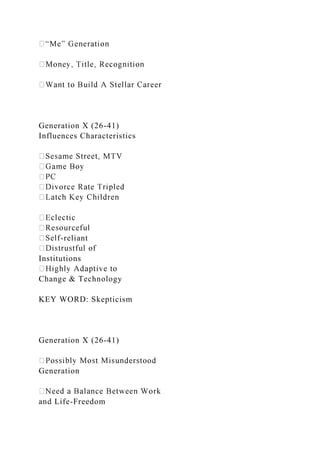
Generation X, a generation with different sensibilities
and priorities than Boomers, will assume positions of
leadership in schools and districts
The Generational Divide
(U.S. Population)
Traditionalists Born 1925-1945 50 million
GWAEA 6% (28)
Baby Boomers Born 1946-1964 80 million
GWAEA 70% (341)
Generation X Born 1965-1980 46 million
GWAEA 22% (110)
Generation
Y/Millennials
Born 1981-2006 76 million
GWAEA 2% (9)
Traditionalists (61+)
Influences Characteristics
want not”
ns—
one company career
down approach
KEY WORD: LOYAL
Traditionalists (61+)
Baby Boomers (42-60)
Influences Characteristics
Watergate
Rights Movement
KEY WORD: Optimist
Baby Boomers (42-60)
Generation X (26-41)
Influences Characteristics
-reliant
Institutions
Change & Technology
KEY WORD: Skepticism
Generation X (26-41)
Generation
and Life-Freedom
Generation Y/Millennials
(up to 26)
Influences Characteristics
isasters
Number One Concern
KEY WORD: Realistic
Generation Y/Millennials
(up to 26)
Value Diversity/Change
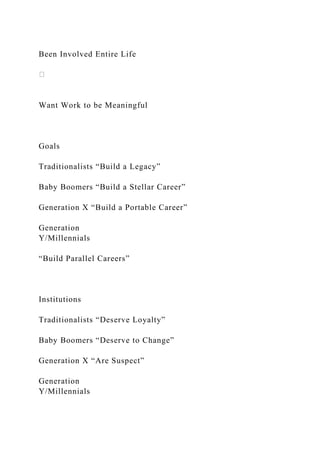
Been Involved Entire Life
Want Work to be Meaningful
Goals
Traditionalists “Build a Legacy”
Baby Boomers “Build a Stellar Career”
Generation X “Build a Portable Career”
Generation
Y/Millennials
“Build Parallel Careers”
Institutions
Traditionalists “Deserve Loyalty”
Baby Boomers “Deserve to Change”
Generation X “Are Suspect”
Generation
Y/Millennials
“Should Be Judged on Their
Own Merit”
Rewards
Traditionalists “Satisfaction of job well done”
Baby Boomers “Money, Title, Recognition”
Generation X “Freedom!”
Generation
Y/Millenials
“Work that has meaning”
Career Path
Traditionalists “Job changing has stigma”
Baby Boomers “Job changing puts you behind”
Generation X “Job changing is necessary”
Generation
Y/Millennials
“Doesn’t need to be a straight
line”
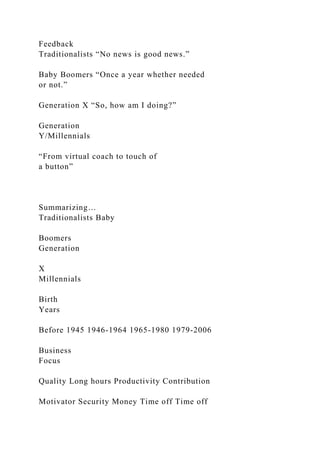
Feedback
Traditionalists “No news is good news.”
Baby Boomers “Once a year whether needed
or not.”
Generation X “So, how am I doing?”
Generation
Y/Millennials
“From virtual coach to touch of
a button”
Summarizing…
Traditionalists Baby
Boomers
Generation
X
Millennials
Birth
Years
Before 1945 1946-1964 1965-1980 1979-2006
Business
Focus
Quality Long hours Productivity Contribution
Motivator Security Money Time off Time off
Company
Loyalty
Highest High Low Low
Money is Livelihood Status
symbol
Means to
an end
Today’s
payoff
Value Family/Community Success Time Individuality
What To Do? Traditionalists
Consider engaging them as teachers,
mentors, coaches.
When they retire, consider re-hiring
them as part-time project leaders and
coaches.
What To Do? Baby Boomers
Boomers are burning
out with today’s
workload and are not
impressed with less
ambitious Gen Xers.
Offer them flexibility,
authority and respect.
Challenge them to
keep growing (in their
own way).
What To Do? Gen Xers
Gen Xers don’t want to follow Boomers
into burn out. They think Millennials need
too much hand holding.
Manage them with a coaching style--FAST
feedback and credit for results.
Push them to keep learning
just-in-time for every new project.
What To Do? Millennials
Millennials feel that basics
such as punctuality and
dress code are less
important.
They want fair and direct
managers who are highly
engaged in their personal
development.
What To Do? Millennials
Get to know their capabilities and put them in roles that
push their limits.
Treat them as professional colleagues and they will act
like professionals.
Keep them focused with speed, customization and
interactivity.
Credits
“When Generations Collide: Who They Are.
Why They Clash. How to Solve the
Generational Puzzle at Work”
Lynne Lancaster and David Stillman
www.generations.com
Resources
More information about GWAEA leadership
programs can be found at :
http://www.aea10.k12.ia.us/leadership/ldrshipdev.html
Understanding Generational DifferencesUnderstand
Generational DifferencesThe Generational Divide�(U.S.
Population)Traditionalists (61+)Traditionalists (61+)Baby
Boomers (42-60)Baby Boomers (42-60)Generation X (26-
41)Generation X (26-41)Generation Y/Millennials �(up to
26)Generation Y/Millennials �(up to
26)GoalsInstitutionsRewardsCareer
PathFeedbackSummarizing…What To Do? TraditionalistsWhat
To Do? Baby BoomersWhat To Do? Gen XersWhat To Do?
MillennialsWhat To Do? MillennialsCreditsResources
I need 2 different resources.
1. Puffery and Deception
A critical point of distinction between deceptive advertising and
mere puffery is whether a claim is a measurable statement of
fact.
· Think of some contemporary examples of each and explain
why they are or are not measurable statements of fact.
· When you notice deceptive advertising or puffery, how does
your sense of personal ethical perspectives and values affect the
way you make decisions about those advertised goods and
services?
· How does the ethical program of a particular group to which
you currently belong, or previously belonged, treat the topic of
misrepresentation or exaggeration of company goods and
service?
Your initial post should be at least 250 words in length. Support
your claims with examples from required material(s) and/or
other scholarly resources, and properly cite any references.

Understanding Generational DifferencesUnderstand G.docx

  • 1.
    Understanding Generational Differences Understand Generational Differences For thefirst time in history, four generations are working side by side. Different values, experiences, styles, and activities create misunderstandings and frustrations By the year 2014, 70 million Baby Boomer (including many teachers and school leaders) will entire retirement in large numbers Generation X, a generation with different sensibilities and priorities than Boomers, will assume positions of leadership in schools and districts
  • 2.
    The Generational Divide (U.S.Population) Traditionalists Born 1925-1945 50 million GWAEA 6% (28) Baby Boomers Born 1946-1964 80 million GWAEA 70% (341) Generation X Born 1965-1980 46 million GWAEA 22% (110) Generation Y/Millennials Born 1981-2006 76 million GWAEA 2% (9) Traditionalists (61+) Influences Characteristics want not” ns— one company career down approach
  • 3.
    KEY WORD: LOYAL Traditionalists(61+) Baby Boomers (42-60) Influences Characteristics Watergate Rights Movement KEY WORD: Optimist Baby Boomers (42-60)
  • 4.
    Generation X (26-41) InfluencesCharacteristics -reliant Institutions Change & Technology KEY WORD: Skepticism Generation X (26-41) Generation and Life-Freedom
  • 5.
    Generation Y/Millennials (up to26) Influences Characteristics isasters Number One Concern KEY WORD: Realistic Generation Y/Millennials (up to 26) Value Diversity/Change
  • 6.
    Been Involved EntireLife Want Work to be Meaningful Goals Traditionalists “Build a Legacy” Baby Boomers “Build a Stellar Career” Generation X “Build a Portable Career” Generation Y/Millennials “Build Parallel Careers” Institutions Traditionalists “Deserve Loyalty” Baby Boomers “Deserve to Change” Generation X “Are Suspect” Generation Y/Millennials
  • 7.
    “Should Be Judgedon Their Own Merit” Rewards Traditionalists “Satisfaction of job well done” Baby Boomers “Money, Title, Recognition” Generation X “Freedom!” Generation Y/Millenials “Work that has meaning” Career Path Traditionalists “Job changing has stigma” Baby Boomers “Job changing puts you behind” Generation X “Job changing is necessary” Generation Y/Millennials “Doesn’t need to be a straight line”
  • 8.
    Feedback Traditionalists “No newsis good news.” Baby Boomers “Once a year whether needed or not.” Generation X “So, how am I doing?” Generation Y/Millennials “From virtual coach to touch of a button” Summarizing… Traditionalists Baby Boomers Generation X Millennials Birth Years Before 1945 1946-1964 1965-1980 1979-2006 Business Focus Quality Long hours Productivity Contribution Motivator Security Money Time off Time off
  • 9.
    Company Loyalty Highest High LowLow Money is Livelihood Status symbol Means to an end Today’s payoff Value Family/Community Success Time Individuality What To Do? Traditionalists Consider engaging them as teachers, mentors, coaches. When they retire, consider re-hiring them as part-time project leaders and coaches. What To Do? Baby Boomers
  • 10.
    Boomers are burning outwith today’s workload and are not impressed with less ambitious Gen Xers. Offer them flexibility, authority and respect. Challenge them to keep growing (in their own way). What To Do? Gen Xers Gen Xers don’t want to follow Boomers into burn out. They think Millennials need too much hand holding. Manage them with a coaching style--FAST feedback and credit for results.
  • 11.
    Push them tokeep learning just-in-time for every new project. What To Do? Millennials Millennials feel that basics such as punctuality and dress code are less important. They want fair and direct managers who are highly engaged in their personal development. What To Do? Millennials Get to know their capabilities and put them in roles that push their limits. Treat them as professional colleagues and they will act like professionals.
  • 12.
    Keep them focusedwith speed, customization and interactivity. Credits “When Generations Collide: Who They Are. Why They Clash. How to Solve the Generational Puzzle at Work” Lynne Lancaster and David Stillman www.generations.com Resources More information about GWAEA leadership programs can be found at : http://www.aea10.k12.ia.us/leadership/ldrshipdev.html Understanding Generational DifferencesUnderstand Generational DifferencesThe Generational Divide�(U.S. Population)Traditionalists (61+)Traditionalists (61+)Baby Boomers (42-60)Baby Boomers (42-60)Generation X (26- 41)Generation X (26-41)Generation Y/Millennials �(up to 26)Generation Y/Millennials �(up to 26)GoalsInstitutionsRewardsCareer PathFeedbackSummarizing…What To Do? TraditionalistsWhat To Do? Baby BoomersWhat To Do? Gen XersWhat To Do? MillennialsWhat To Do? MillennialsCreditsResources I need 2 different resources. 1. Puffery and Deception
  • 13.
    A critical pointof distinction between deceptive advertising and mere puffery is whether a claim is a measurable statement of fact. · Think of some contemporary examples of each and explain why they are or are not measurable statements of fact. · When you notice deceptive advertising or puffery, how does your sense of personal ethical perspectives and values affect the way you make decisions about those advertised goods and services? · How does the ethical program of a particular group to which you currently belong, or previously belonged, treat the topic of misrepresentation or exaggeration of company goods and service? Your initial post should be at least 250 words in length. Support your claims with examples from required material(s) and/or other scholarly resources, and properly cite any references.