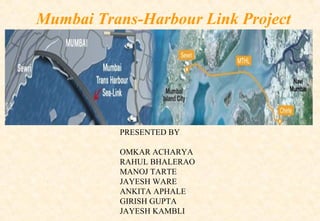
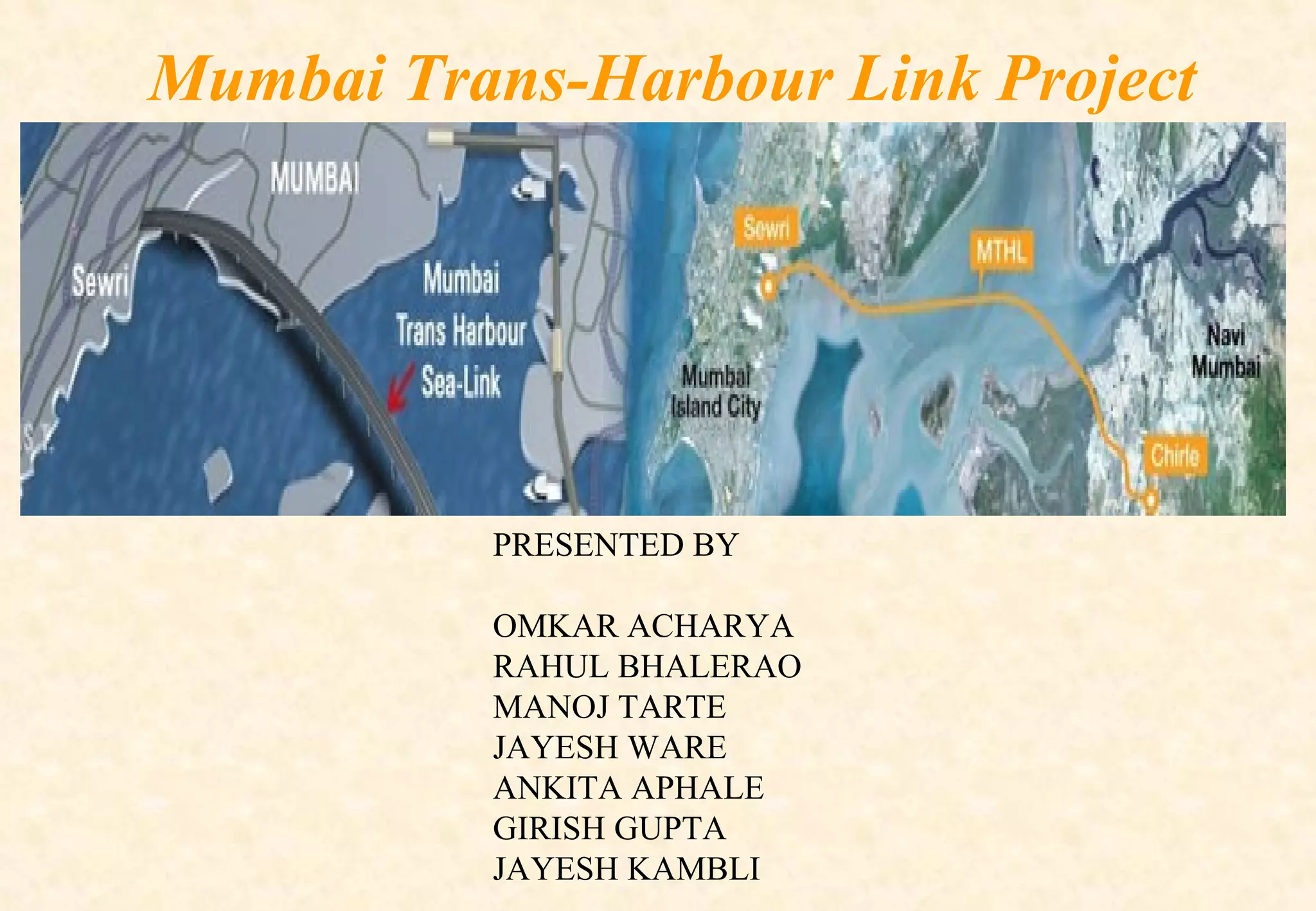
Mumbai Trans-Harbour Link Project

Presentation on
PRESENTED BY
OMKAR ACHARYA
RAHUL BHALERAO
MANOJ TARTE
JAYESH WARE
ANKITA APHALE
GIRISH GUPTA
JAYESH KAMBLI
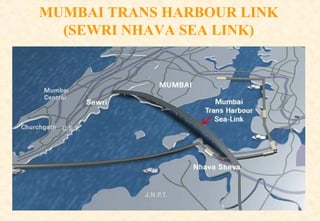
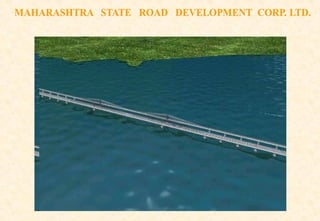
MUMBAI TRANS HARBOUR LINK
(SEWRI NHAVA SEA LINK)
Introduction

• Mumbai Trans Harbour Link (MTHL), is also
known as Mumbai Trans Harbour Link
(MTHL), Sewri-Nhava Sheva Trans Harbour
Link
• It will connect freeway grade road bridge
connecting the Indian city of Mumbai with Navi
Mumbai .
• If completed, it would be the longest sea bridge
in India.
• The sea link is expected to reduce commuting
time between Mumbai and Navi Mumbai, and
provide direct connectivity to Mumbai Port
Trust, Jawaharlal Nehru Port Trust and the
proposed Navi -Mumbai International Airport
• It will also allow faster travel to Thane, Nashik,
Panvel, Pune and southern India and is also
expected to boost the economic growth of
neighbouring Raigad district and raise real
estate prices in the region.
Highlights of MTHL
•
•
•
•
•
•
•

Carries
Cross
Owner
Total Length
Design life
Construction Cost
Opened in

6 Highway
Thane Greek
MMRDA
22 km(14m)
100+yr
9360 cr (US$1.5 billion)
2019 (planned)
History
• The MTHL was first proposed in the 1970s. The first concrete
attempt to build it was made in 2004, when Infrastructure Leasing &
Financial Services (IL&FS) submitted a proposal to implement the
project on a build, own, operate and transfer (BOOT) basis.
• The State Government called for a fresh bids for the project in 2008.
However, none of the 13 companies that had shown interest,
submitted bids.
• The media criticized the political feud between the ruling Nationalist
Congress Party (NCP) and Congress coalition, as being responsible
for slowing "down the pace of Mumbai's development".
• The project received environmental clearance from the Ministry of
Environment and Forests (MoEF) on 23 October 2012
Cost
• The cost of the MTHL has increased several times. In 2005, the
cost of the project was estimated at 4000 Cr.
• The cost was revised to Rs. 6000 Cr in 2008. It was then
increased to Rs. 8800 Cr in November,
• 2011 and finally to Rs.9360 Cr in August 2012.
• In January 2013, the Central Government sanctioned 1920 Cr
(US$310 million), which is 20% of the project cost, in viability
gap for the MTHL.
• The State Government will also contribute the same amount.
• The remaining 60% will have to be borne by the developer who
wins the bid.
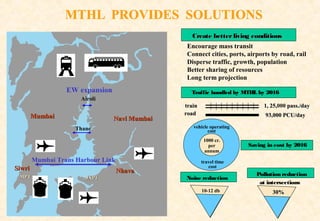
Create better living conditions
Encourage mass transit
Connect cities, ports, airports by road, rail
Disperse traffic, growth, population
Better sharing of resources
Long term projection

EW expansion

Traffic handled by MTHL by 2016

Airoli

Mumbai

Navi Mumbai

train
road

1, 25,000 pass./day
25,
93,000 PCU/day

vehicle operating
cost

Thane

1000 cr.
per
annum

Mumbai Trans Harbour Link
Siwri
MPT

Nhava
JNPT

Saving in cost by 2016

travel time
cost

Noise reduction
10-12 db

Pollution reduction
at intersections
30%
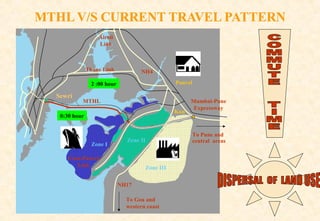
Airoli
Link

Thane Link

NH4
Panvel

2 :00 hour

Sewri

MTHL
Kon

0:30 hour

JNPT

Zone I

Mumbai-Pune
Expressway

NH4B
To Pune and
central areas

Zone II

Uran-Panvel
Link

Zone III
NH17
To Goa and
western coast
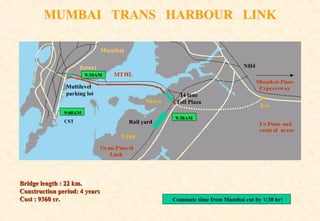
Mumbai
NH4
9:10AM

Multilevel
parking lot
Nhava
9:00AM
CST

Rail yard

14 lane
Toll Plaza

Kon

9:30AM

Uran

Bridge length : 22 km.
Construction period: 4 years
Cost : 9360 cr.

Commute time from Mumbai cut by 1:30 hr!
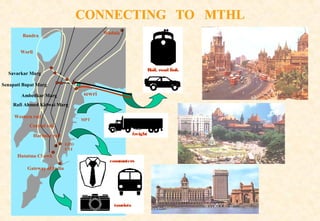
Wadala

Bandra
Worli

Rail, road link

Savarkar Marg
Senapati Bapat Marg

sewri

Ambedkar Marg
Rafi Ahmed Kidwai Marg
Western rail

MPT

Central rail
freight

Harbour rail
GPO
CST

Hutatma Chowk

commuters

Gateway of India

tourists
FUNDING OF THE PROJECT
• DEVELOPMENT CESS IN BENEFICIARY
ZONES
• CESS ON REGISTRATION OF SALE OF LAND
IN BENEFICIARY ZONES
• INITIAL CONTRIBUTION FROM
BENEFICIARY ORGANISATIONS
• TOLL & ADVERTISEMENT REVENUE
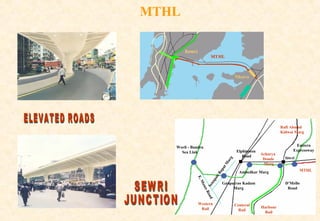
Rafi Ahmad
Kidwai Marg

M
E.

ose

Se
na
pa
ti

Ba

pa
tM

ar
g

Worli - Bandra
Sea Link

oad
sR

Western
Rail

Elphinston
Road

Acharya
Donde
Marg

Ambedkar Marg

Ganpatrao Kadam
Marg

Centeral
Rail

Eastern
Expressway
Siwri
MTHL
D’Mello
Road

Harbour
Rail
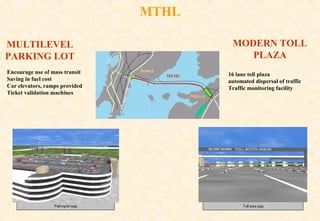
MULTILEVEL
PARKING LOT
Encourage use of mass transit
Saving in fuel cost
Car elevators, ramps provided
Ticket validation machines

MODERN TOLL
PLAZA
16 lane toll plaza
automated dispersal of traffic
Traffic monitoring facility
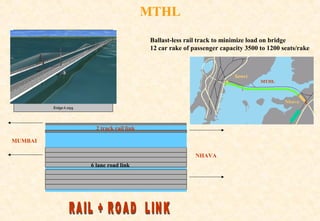
Ballast-less rail track to minimize load on bridge
12 car rake of passenger capacity 3500 to 1200 seats/rake

2 track rail link
MUMBAI
NHAVA
6 lane road link
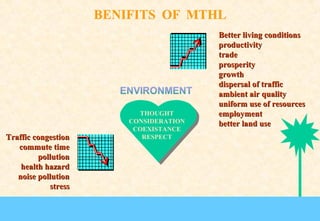
Traffic congestion
commute time
pollution
health hazard
noise pollution
stress

THOUGHT
CONSIDERATION
COEXISTANCE
RESPECT

Better living conditions
productivity
trade
prosperity
growth
dispersal of traffic
ambient air quality
uniform use of resources
employment
better land use
FEASIBILITY
STUDIES
Alignment technically feasible
Project is financially viable
In depth analysis of biotic conditions
Eco-friendly route chosen
No displacement of existing settlement
Better employment opportunities
Better dispersal of traffics
PLANNING
Use of latest technology
Aesthetic designs
Large spans used
Strict compliance with laws
Future expansion accommodated
Better distribution of land use
Modern traffic surveillance and monitoring
CONSTRUCTION
Modern construction techniques
Use of prefabricated components
Use of corrosion resistant steel
Construction camps monitored
Quality assurance
Effective environment management during construction
covering material transport, labour
MAINTENANCE
Administration on BOT basis
Funds generated by toll
Low maintenance structure
Low maintenance plantation
SAFETY
Disaster Management Plan
Traffic surveillance and monitoring
Insurance against medical expenses in case of accidents
BIOTIC
CONDITIONS
Environment Management Plan
Green belt avenue plantation along solid approaches
Periodic monitoring of environmental parameters
No adverse impact on account of this project
Viaducts preserve existing terrain
Minimum excavation, grading

Minimum emission due to smooth traffic
Reduction in air, noise pollution
Ambient air quality improved in the city

No effect on tidal conditions
Marine life least disturbed

Safety exits provided
Service areas provided
Highest quality materials used
Appropriate illumination, signs
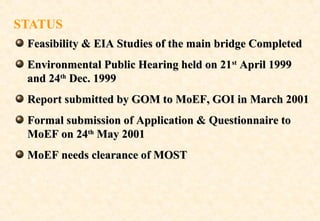
STATUS
Feasibility & EIA Studies of the main bridge Completed
Environmental Public Hearing held on 21st April 1999
and 24th Dec. 1999
Report submitted by GOM to MoEF, GOI in March 2001
Formal submission of Application & Questionnaire to
MoEF on 24th May 2001
MoEF needs clearance of MOST
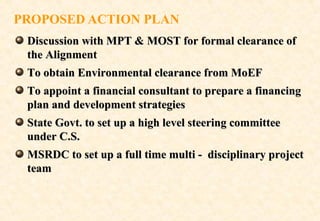
PROPOSED ACTION PLAN
Discussion with MPT & MOST for formal clearance of
the Alignment
To obtain Environmental clearance from MoEF
To appoint a financial consultant to prepare a financing
plan and development strategies
State Govt. to set up a high level steering committee
under C.S.
MSRDC to set up a full time multi - disciplinary project
team
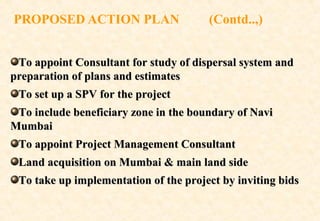
PROPOSED ACTION PLAN

(Contd..,)

To appoint Consultant for study of dispersal system and
preparation of plans and estimates
To set up a SPV for the project
To include beneficiary zone in the boundary of Navi
Mumbai
To appoint Project Management Consultant
Land acquisition on Mumbai & main land side
To take up implementation of the project by inviting bids
Mthl( Mumbai Transe Harbour link)

Mthl( Mumbai Transe Harbour link)

  • 1.
    Mumbai Trans-Harbour LinkProject Presentation on PRESENTED BY OMKAR ACHARYA RAHUL BHALERAO MANOJ TARTE JAYESH WARE ANKITA APHALE GIRISH GUPTA JAYESH KAMBLI
  • 2.
    MUMBAI TRANS HARBOURLINK (SEWRI NHAVA SEA LINK)
  • 3.
    Introduction • Mumbai TransHarbour Link (MTHL), is also known as Mumbai Trans Harbour Link (MTHL), Sewri-Nhava Sheva Trans Harbour Link • It will connect freeway grade road bridge connecting the Indian city of Mumbai with Navi Mumbai . • If completed, it would be the longest sea bridge in India.
  • 4.
    • The sealink is expected to reduce commuting time between Mumbai and Navi Mumbai, and provide direct connectivity to Mumbai Port Trust, Jawaharlal Nehru Port Trust and the proposed Navi -Mumbai International Airport • It will also allow faster travel to Thane, Nashik, Panvel, Pune and southern India and is also expected to boost the economic growth of neighbouring Raigad district and raise real estate prices in the region.
  • 5.
    Highlights of MTHL • • • • • • • Carries Cross Owner TotalLength Design life Construction Cost Opened in 6 Highway Thane Greek MMRDA 22 km(14m) 100+yr 9360 cr (US$1.5 billion) 2019 (planned)
  • 6.
    History • The MTHLwas first proposed in the 1970s. The first concrete attempt to build it was made in 2004, when Infrastructure Leasing & Financial Services (IL&FS) submitted a proposal to implement the project on a build, own, operate and transfer (BOOT) basis. • The State Government called for a fresh bids for the project in 2008. However, none of the 13 companies that had shown interest, submitted bids. • The media criticized the political feud between the ruling Nationalist Congress Party (NCP) and Congress coalition, as being responsible for slowing "down the pace of Mumbai's development". • The project received environmental clearance from the Ministry of Environment and Forests (MoEF) on 23 October 2012
  • 7.
    Cost • The costof the MTHL has increased several times. In 2005, the cost of the project was estimated at 4000 Cr. • The cost was revised to Rs. 6000 Cr in 2008. It was then increased to Rs. 8800 Cr in November, • 2011 and finally to Rs.9360 Cr in August 2012. • In January 2013, the Central Government sanctioned 1920 Cr (US$310 million), which is 20% of the project cost, in viability gap for the MTHL. • The State Government will also contribute the same amount. • The remaining 60% will have to be borne by the developer who wins the bid.
  • 8.
    Create better livingconditions Encourage mass transit Connect cities, ports, airports by road, rail Disperse traffic, growth, population Better sharing of resources Long term projection EW expansion Traffic handled by MTHL by 2016 Airoli Mumbai Navi Mumbai train road 1, 25,000 pass./day 25, 93,000 PCU/day vehicle operating cost Thane 1000 cr. per annum Mumbai Trans Harbour Link Siwri MPT Nhava JNPT Saving in cost by 2016 travel time cost Noise reduction 10-12 db Pollution reduction at intersections 30%
  • 9.
    Airoli Link Thane Link NH4 Panvel 2 :00hour Sewri MTHL Kon 0:30 hour JNPT Zone I Mumbai-Pune Expressway NH4B To Pune and central areas Zone II Uran-Panvel Link Zone III NH17 To Goa and western coast
  • 10.
    Mumbai NH4 9:10AM Multilevel parking lot Nhava 9:00AM CST Rail yard 14lane Toll Plaza Kon 9:30AM Uran Bridge length : 22 km. Construction period: 4 years Cost : 9360 cr. Commute time from Mumbai cut by 1:30 hr!
  • 11.
    Wadala Bandra Worli Rail, road link SavarkarMarg Senapati Bapat Marg sewri Ambedkar Marg Rafi Ahmed Kidwai Marg Western rail MPT Central rail freight Harbour rail GPO CST Hutatma Chowk commuters Gateway of India tourists
  • 12.
    FUNDING OF THEPROJECT • DEVELOPMENT CESS IN BENEFICIARY ZONES • CESS ON REGISTRATION OF SALE OF LAND IN BENEFICIARY ZONES • INITIAL CONTRIBUTION FROM BENEFICIARY ORGANISATIONS • TOLL & ADVERTISEMENT REVENUE
  • 13.
    Rafi Ahmad Kidwai Marg M E. ose Se na pa ti Ba pa tM ar g Worli- Bandra Sea Link oad sR Western Rail Elphinston Road Acharya Donde Marg Ambedkar Marg Ganpatrao Kadam Marg Centeral Rail Eastern Expressway Siwri MTHL D’Mello Road Harbour Rail
  • 14.
    MULTILEVEL PARKING LOT Encourage useof mass transit Saving in fuel cost Car elevators, ramps provided Ticket validation machines MODERN TOLL PLAZA 16 lane toll plaza automated dispersal of traffic Traffic monitoring facility
  • 15.
    Ballast-less rail trackto minimize load on bridge 12 car rake of passenger capacity 3500 to 1200 seats/rake 2 track rail link MUMBAI NHAVA 6 lane road link
  • 16.
    Traffic congestion commute time pollution healthhazard noise pollution stress THOUGHT CONSIDERATION COEXISTANCE RESPECT Better living conditions productivity trade prosperity growth dispersal of traffic ambient air quality uniform use of resources employment better land use
  • 17.
    FEASIBILITY STUDIES Alignment technically feasible Projectis financially viable In depth analysis of biotic conditions Eco-friendly route chosen No displacement of existing settlement Better employment opportunities Better dispersal of traffics
  • 18.
    PLANNING Use of latesttechnology Aesthetic designs Large spans used Strict compliance with laws Future expansion accommodated Better distribution of land use Modern traffic surveillance and monitoring
  • 19.
    CONSTRUCTION Modern construction techniques Useof prefabricated components Use of corrosion resistant steel Construction camps monitored Quality assurance Effective environment management during construction covering material transport, labour
  • 20.
    MAINTENANCE Administration on BOTbasis Funds generated by toll Low maintenance structure Low maintenance plantation
  • 21.
    SAFETY Disaster Management Plan Trafficsurveillance and monitoring Insurance against medical expenses in case of accidents
  • 22.
    BIOTIC CONDITIONS Environment Management Plan Greenbelt avenue plantation along solid approaches Periodic monitoring of environmental parameters No adverse impact on account of this project
  • 23.
    Viaducts preserve existingterrain Minimum excavation, grading Minimum emission due to smooth traffic Reduction in air, noise pollution Ambient air quality improved in the city No effect on tidal conditions Marine life least disturbed Safety exits provided Service areas provided Highest quality materials used Appropriate illumination, signs
  • 25.
    STATUS Feasibility & EIAStudies of the main bridge Completed Environmental Public Hearing held on 21st April 1999 and 24th Dec. 1999 Report submitted by GOM to MoEF, GOI in March 2001 Formal submission of Application & Questionnaire to MoEF on 24th May 2001 MoEF needs clearance of MOST
  • 26.
    PROPOSED ACTION PLAN Discussionwith MPT & MOST for formal clearance of the Alignment To obtain Environmental clearance from MoEF To appoint a financial consultant to prepare a financing plan and development strategies State Govt. to set up a high level steering committee under C.S. MSRDC to set up a full time multi - disciplinary project team
  • 27.
    PROPOSED ACTION PLAN (Contd..,) Toappoint Consultant for study of dispersal system and preparation of plans and estimates To set up a SPV for the project To include beneficiary zone in the boundary of Navi Mumbai To appoint Project Management Consultant Land acquisition on Mumbai & main land side To take up implementation of the project by inviting bids