Last edited on March 12th, 2014 
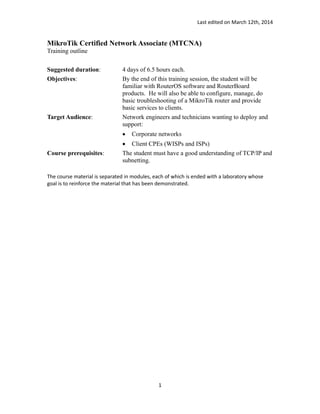
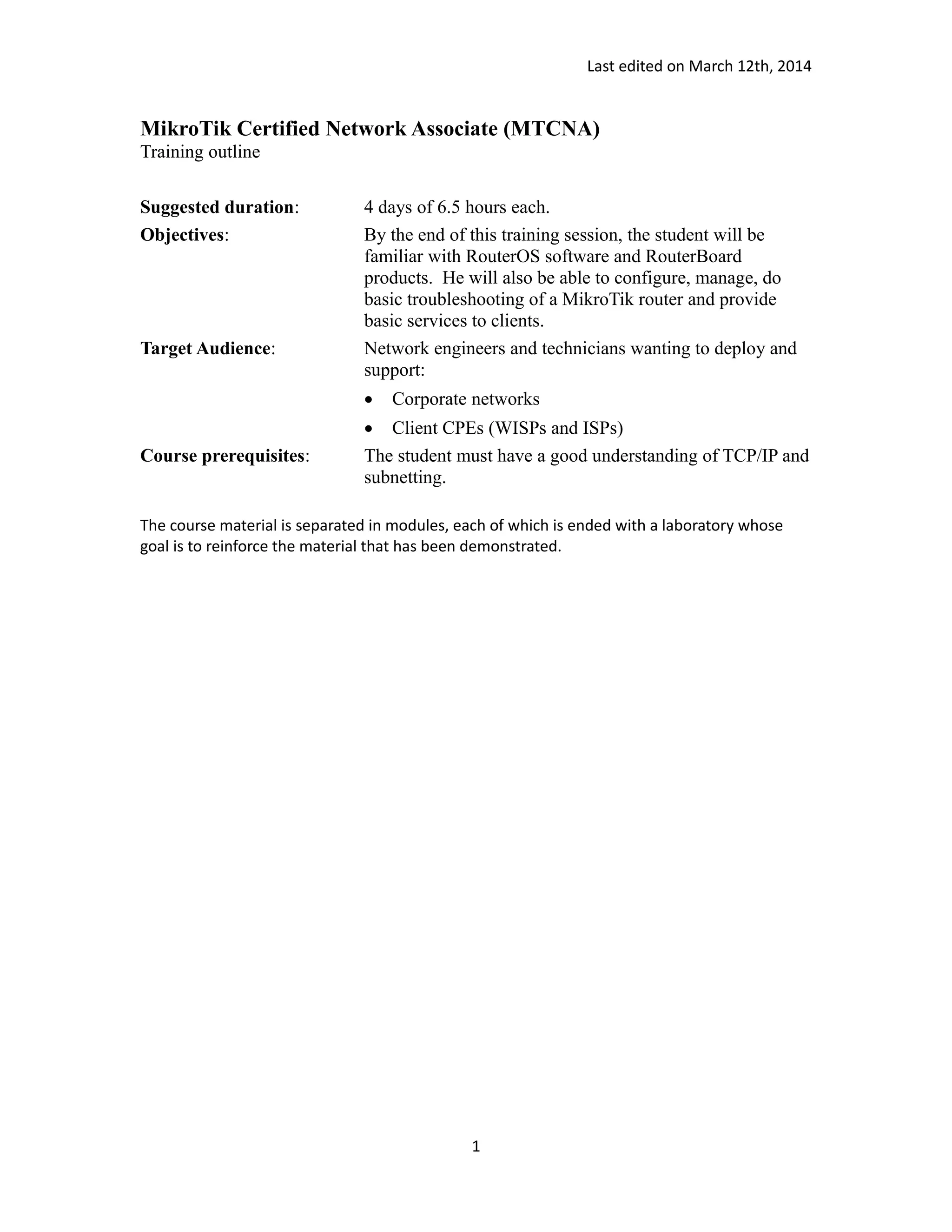
MikroTik Certified Network Associate (MTCNA) 
Training outline 
Suggested duration: 4 days of 6.5 hours each. 
Objectives: By the end of this training session, the student will be 
familiar with RouterOS software and RouterBoard 
products. He will also be able to configure, manage, do 
basic troubleshooting of a MikroTik router and provide 
basic services to clients. 
Target Audience: Network engineers and technicians wanting to deploy and 
support: 
 Corporate networks 
 Client CPEs (WISPs and ISPs) 
Course prerequisites: The student must have a good understanding of TCP/IP and 
subnetting. 
The course material is separated in modules, each of which is ended with a laboratory whose 
goal is to reinforce the material that has been demonstrated. 
1
Last edited on March 12th, 2014 
Title Objective 
Module 1 
• About MikroTik 
Introduction 
• What is RouterOS 
• What is RouterBoard 
• First time accessing the router 
• Winbox and MAC-Winbox 
• Webfig and Quickset 
• RouterOS command line interface (CLI) 
• Null Modem cable 
• SSH and Telnet 
• New terminal in Winbox/Webfig 
• RouterOS CLI principles 
• <tab>, double <tab>, “?”, navigation 
• command history and its benefits 
• Initial configuration (Internet access) 
• WAN DHCP-client 
• LAN IP address and default gateway 
• Basic Firewall - NAT masquerade 
• Upgrading RouterOS 
• Package types 
• Ways of upgrading 
• RouterBOOT firmware upgrade 
• Manage RouterOS logins 
• Manage RouterOS services 
• Managing configuration backups 
• Saving and reload backup 
• Editing export file 
• RouterOS license 
• Levels 
• Updating a license 
• Netinstall 
• Reinstall RouterOS 
• Reset RouterOS 
• Sources of additional information 
• http://wiki.mikrotik.com/wiki/Manual:TOC 
• http://www.tiktube.com/ 
• http://forum.mikrotik.com/ 
• Distributor and consultant support 
• support@mikrotik.com 
• Module 1 laboratory 
2
Last edited on March 12th, 2014 
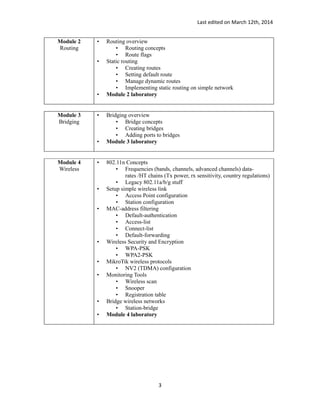
Module 2 
Routing 
• Routing overview 
• Routing concepts 
• Route flags 
• Static routing 
• Creating routes 
• Setting default route 
• Manage dynamic routes 
• Implementing static routing on simple network 
• Module 2 laboratory 
Module 3 
Bridging 
• Bridging overview 
• Bridge concepts 
• Creating bridges 
• Adding ports to bridges 
• Module 3 laboratory 
Module 4 
Wireless 
• 802.11n Concepts 
• Frequencies (bands, channels, advanced channels) data-rates 
/HT chains (Tx power, rx sensitivity, country regulations) 
• Legacy 802.11a/b/g stuff 
• Setup simple wireless link 
• Access Point configuration 
• Station configuration 
• MAC-address filtering 
• Default-authentication 
• Access-list 
• Connect-list 
• Default-forwarding 
• Wireless Security and Encryption 
• WPA-PSK 
• WPA2-PSK 
• MikroTik wireless protocols 
• NV2 (TDMA) configuration 
• Monitoring Tools 
• Wireless scan 
• Snooper 
• Registration table 
• Bridge wireless networks 
• Station-bridge 
• Module 4 laboratory 
3
Last edited on March 12th, 2014 
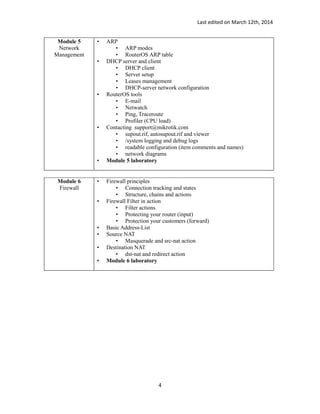
Module 5 
Network 
Management 
• ARP 
• ARP modes 
• RouterOS ARP table 
• DHCP server and client 
• DHCP client 
• Server setup 
• Leases management 
• DHCP-server network configuration 
• RouterOS tools 
• E-mail 
• Netwatch 
• Ping, Traceroute 
• Profiler (CPU load) 
• Contacting support@mikrotik.com 
• supout.rif, autosupout.rif and viewer 
• /system logging and debug logs 
• readable configuration (item comments and names) 
• network diagrams 
• Module 5 laboratory 
Module 6 
Firewall 
• Firewall principles 
• Connection tracking and states 
• Structure, chains and actions 
• Firewall Filter in action 
• Filter actions 
• Protecting your router (input) 
• Protection your customers (forward) 
• Basic Address-List 
• Source NAT 
• Masquerade and src-nat action 
• Destination NAT 
• dst-nat and redirect action 
• Module 6 laboratory 
4
Last edited on March 12th, 2014 
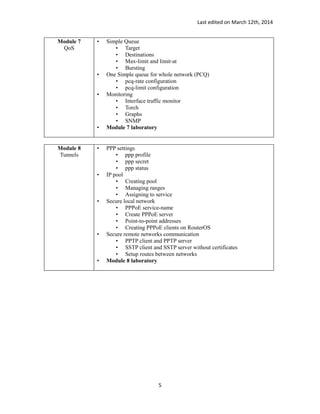
Module 7 
QoS 
• Simple Queue 
• Target 
• Destinations 
• Max-limit and limit-at 
• Bursting 
• One Simple queue for whole network (PCQ) 
• pcq-rate configuration 
• pcq-limit configuration 
• Monitoring 
• Interface traffic monitor 
• Torch 
• Graphs 
• SNMP 
• Module 7 laboratory 
Module 8 
Tunnels 
• PPP settings 
• ppp profile 
• ppp secret 
• ppp status 
• IP pool 
• Creating pool 
• Managing ranges 
• Assigning to service 
• Secure local network 
• PPPoE service-name 
• Create PPPoE server 
• Point-to-point addresses 
• Creating PPPoE clients on RouterOS 
• Secure remote networks communication 
• PPTP client and PPTP server 
• SSTP client and SSTP server without certificates 
• Setup routes between networks 
• Module 8 laboratory 
5

Mtcna outline

  • 1.
    Last edited onMarch 12th, 2014 MikroTik Certified Network Associate (MTCNA) Training outline Suggested duration: 4 days of 6.5 hours each. Objectives: By the end of this training session, the student will be familiar with RouterOS software and RouterBoard products. He will also be able to configure, manage, do basic troubleshooting of a MikroTik router and provide basic services to clients. Target Audience: Network engineers and technicians wanting to deploy and support:  Corporate networks  Client CPEs (WISPs and ISPs) Course prerequisites: The student must have a good understanding of TCP/IP and subnetting. The course material is separated in modules, each of which is ended with a laboratory whose goal is to reinforce the material that has been demonstrated. 1
  • 2.
    Last edited onMarch 12th, 2014 Title Objective Module 1 • About MikroTik Introduction • What is RouterOS • What is RouterBoard • First time accessing the router • Winbox and MAC-Winbox • Webfig and Quickset • RouterOS command line interface (CLI) • Null Modem cable • SSH and Telnet • New terminal in Winbox/Webfig • RouterOS CLI principles • <tab>, double <tab>, “?”, navigation • command history and its benefits • Initial configuration (Internet access) • WAN DHCP-client • LAN IP address and default gateway • Basic Firewall - NAT masquerade • Upgrading RouterOS • Package types • Ways of upgrading • RouterBOOT firmware upgrade • Manage RouterOS logins • Manage RouterOS services • Managing configuration backups • Saving and reload backup • Editing export file • RouterOS license • Levels • Updating a license • Netinstall • Reinstall RouterOS • Reset RouterOS • Sources of additional information • http://wiki.mikrotik.com/wiki/Manual:TOC • http://www.tiktube.com/ • http://forum.mikrotik.com/ • Distributor and consultant support • support@mikrotik.com • Module 1 laboratory 2
  • 3.
    Last edited onMarch 12th, 2014 Module 2 Routing • Routing overview • Routing concepts • Route flags • Static routing • Creating routes • Setting default route • Manage dynamic routes • Implementing static routing on simple network • Module 2 laboratory Module 3 Bridging • Bridging overview • Bridge concepts • Creating bridges • Adding ports to bridges • Module 3 laboratory Module 4 Wireless • 802.11n Concepts • Frequencies (bands, channels, advanced channels) data-rates /HT chains (Tx power, rx sensitivity, country regulations) • Legacy 802.11a/b/g stuff • Setup simple wireless link • Access Point configuration • Station configuration • MAC-address filtering • Default-authentication • Access-list • Connect-list • Default-forwarding • Wireless Security and Encryption • WPA-PSK • WPA2-PSK • MikroTik wireless protocols • NV2 (TDMA) configuration • Monitoring Tools • Wireless scan • Snooper • Registration table • Bridge wireless networks • Station-bridge • Module 4 laboratory 3
  • 4.
    Last edited onMarch 12th, 2014 Module 5 Network Management • ARP • ARP modes • RouterOS ARP table • DHCP server and client • DHCP client • Server setup • Leases management • DHCP-server network configuration • RouterOS tools • E-mail • Netwatch • Ping, Traceroute • Profiler (CPU load) • Contacting support@mikrotik.com • supout.rif, autosupout.rif and viewer • /system logging and debug logs • readable configuration (item comments and names) • network diagrams • Module 5 laboratory Module 6 Firewall • Firewall principles • Connection tracking and states • Structure, chains and actions • Firewall Filter in action • Filter actions • Protecting your router (input) • Protection your customers (forward) • Basic Address-List • Source NAT • Masquerade and src-nat action • Destination NAT • dst-nat and redirect action • Module 6 laboratory 4
  • 5.
    Last edited onMarch 12th, 2014 Module 7 QoS • Simple Queue • Target • Destinations • Max-limit and limit-at • Bursting • One Simple queue for whole network (PCQ) • pcq-rate configuration • pcq-limit configuration • Monitoring • Interface traffic monitor • Torch • Graphs • SNMP • Module 7 laboratory Module 8 Tunnels • PPP settings • ppp profile • ppp secret • ppp status • IP pool • Creating pool • Managing ranges • Assigning to service • Secure local network • PPPoE service-name • Create PPPoE server • Point-to-point addresses • Creating PPPoE clients on RouterOS • Secure remote networks communication • PPTP client and PPTP server • SSTP client and SSTP server without certificates • Setup routes between networks • Module 8 laboratory 5