Natural Disasters Mount St Helens
Location: Mount St Helens, Skamania County,  Washington Date: May 18 th  1980 Time: 8:32 am


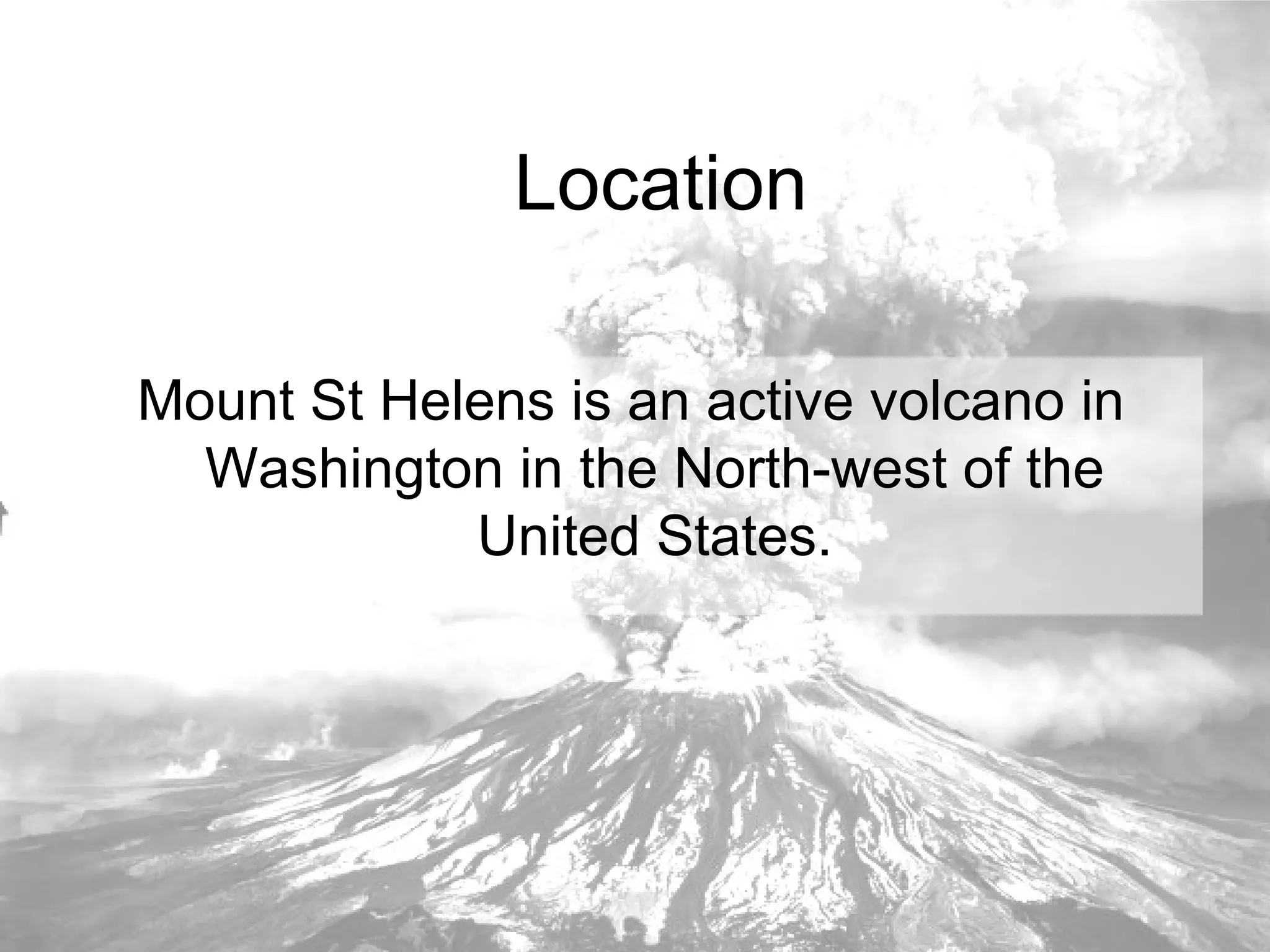
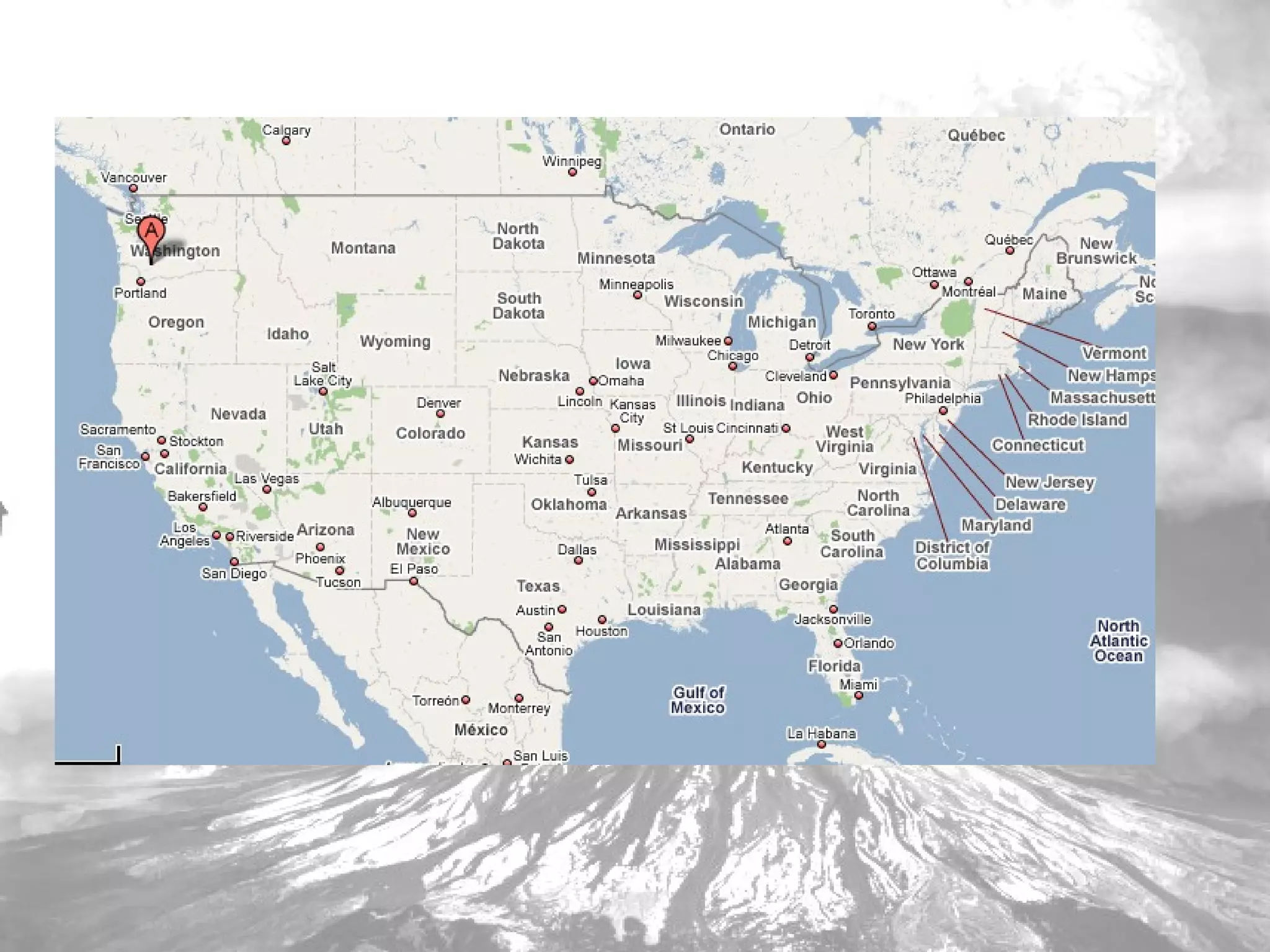
Location Mount St Helens is an active volcano in Washington in the North-west of the United States.
 
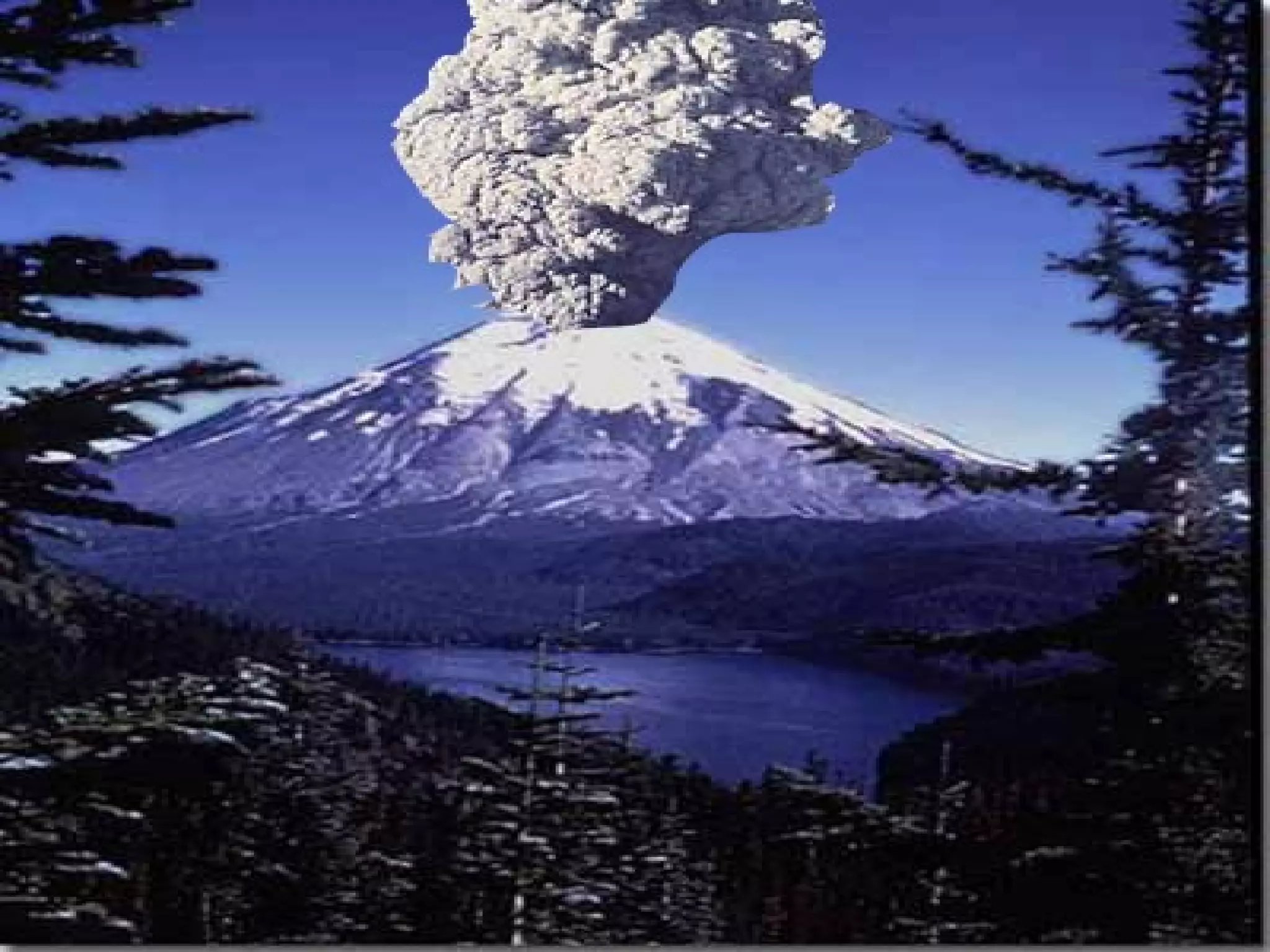
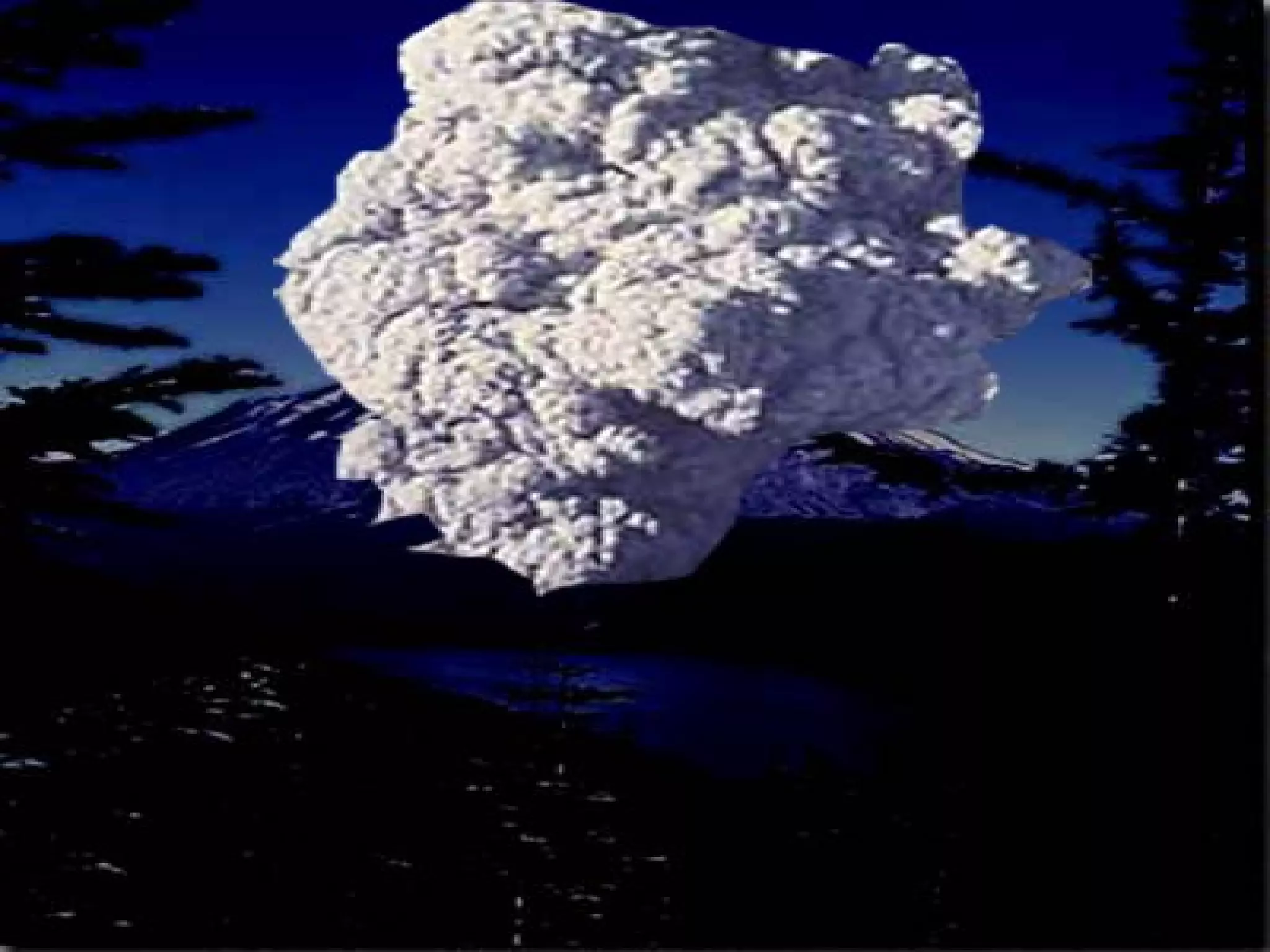
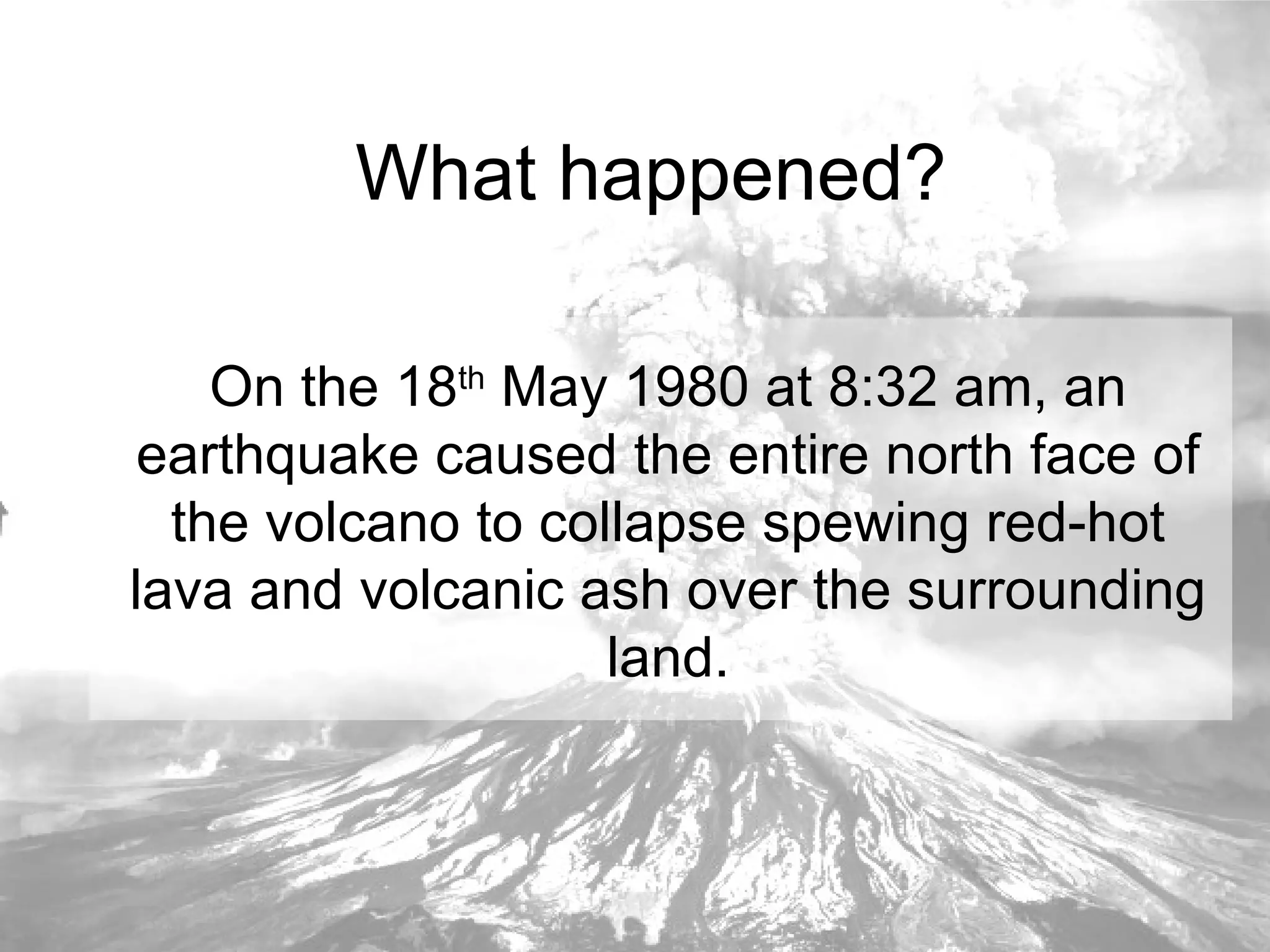
What happened? On the 18 th  May 1980 at 8:32 am, an earthquake caused the entire north face of the volcano to collapse spewing red-hot lava and volcanic ash over the surrounding land.
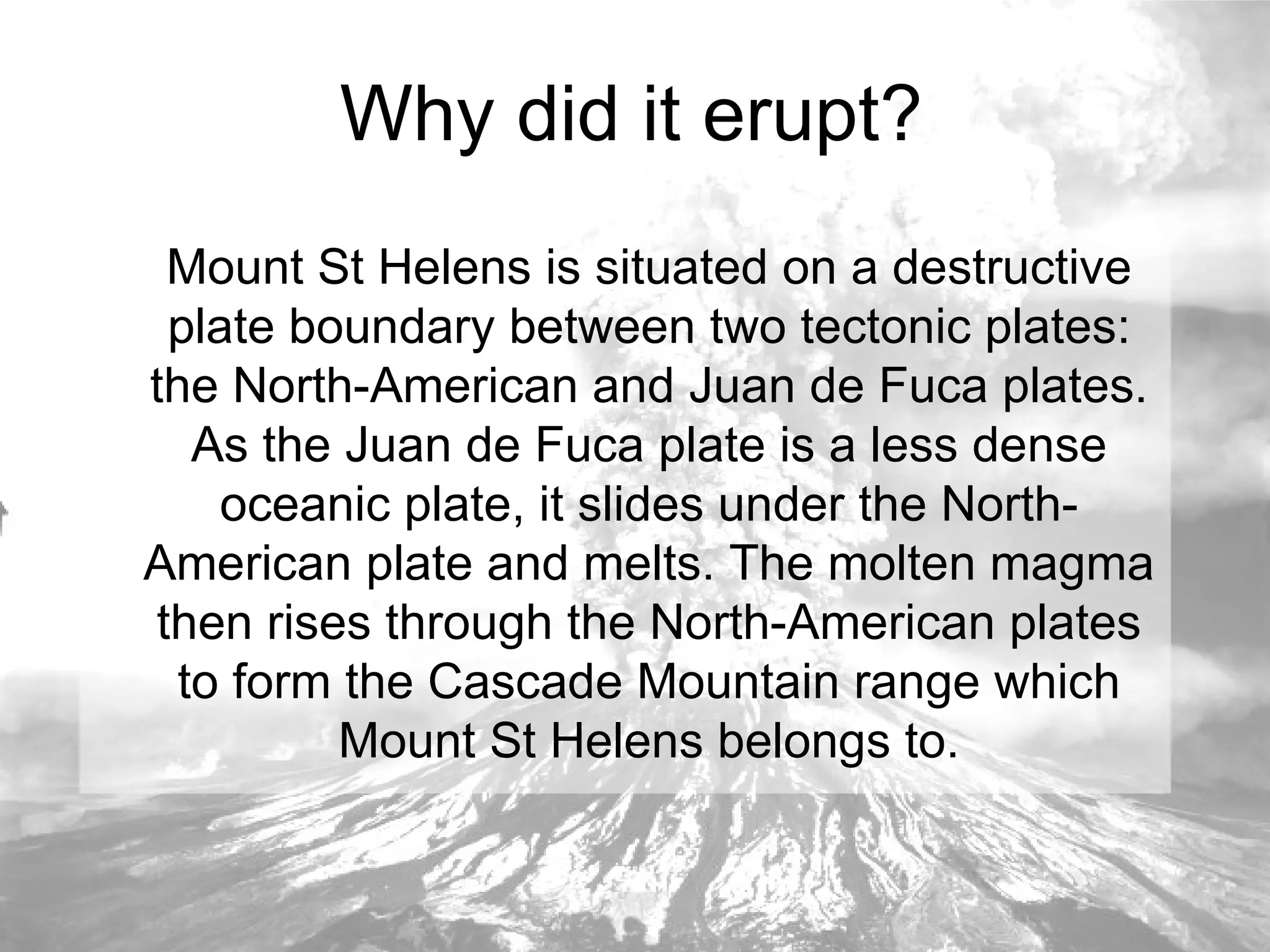
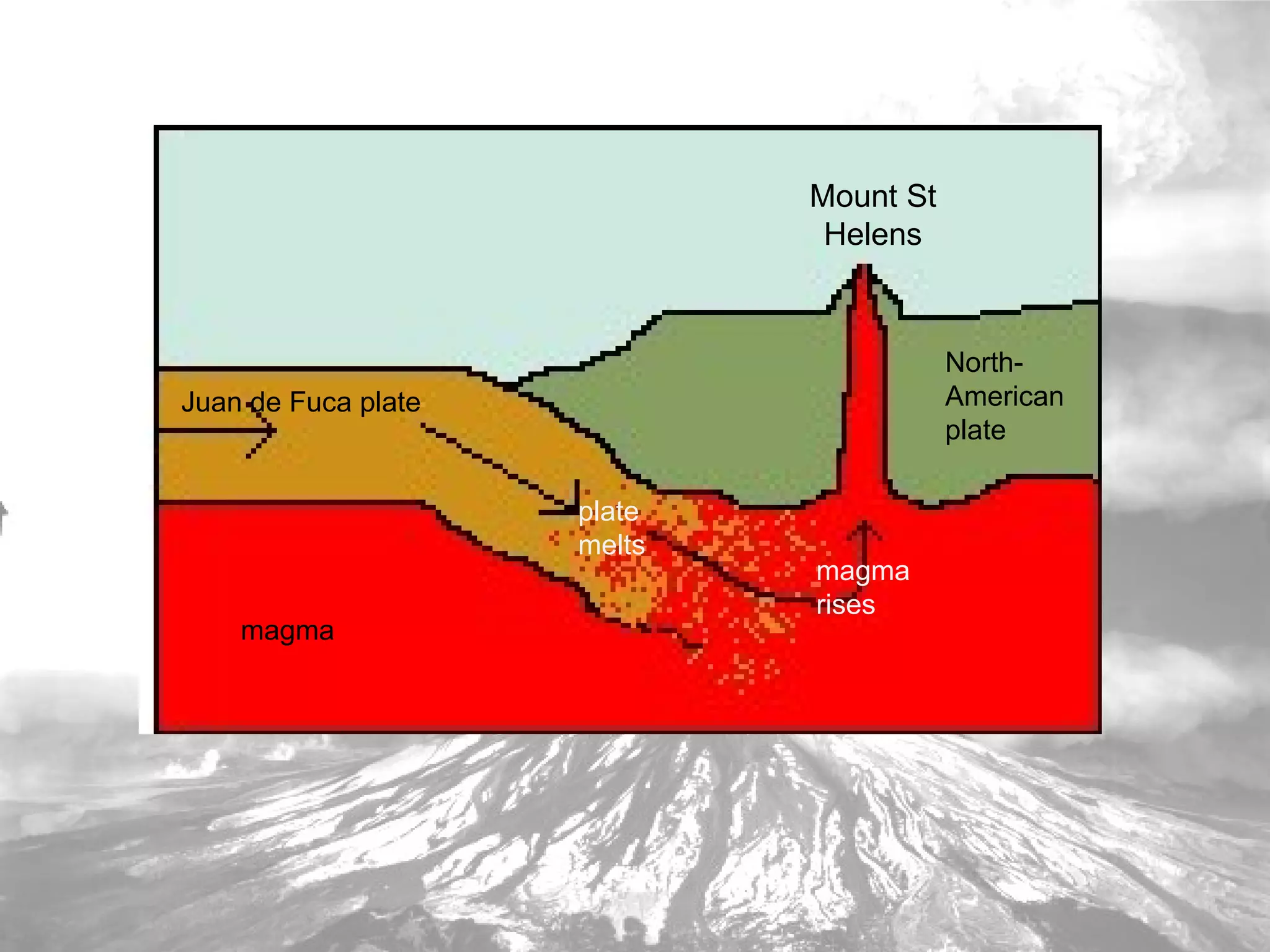
Why did it erupt? Mount St Helens is situated on a destructive plate boundary between two tectonic plates: the North-American and Juan de Fuca plates. As the Juan de Fuca plate is a less dense oceanic plate, it slides under the North-American plate and melts. The molten magma then rises through the North-American plates to form the Cascade Mountain range which Mount St Helens belongs to.
magma Juan de Fuca plate North-American plate Mount St Helens plate melts magma rises
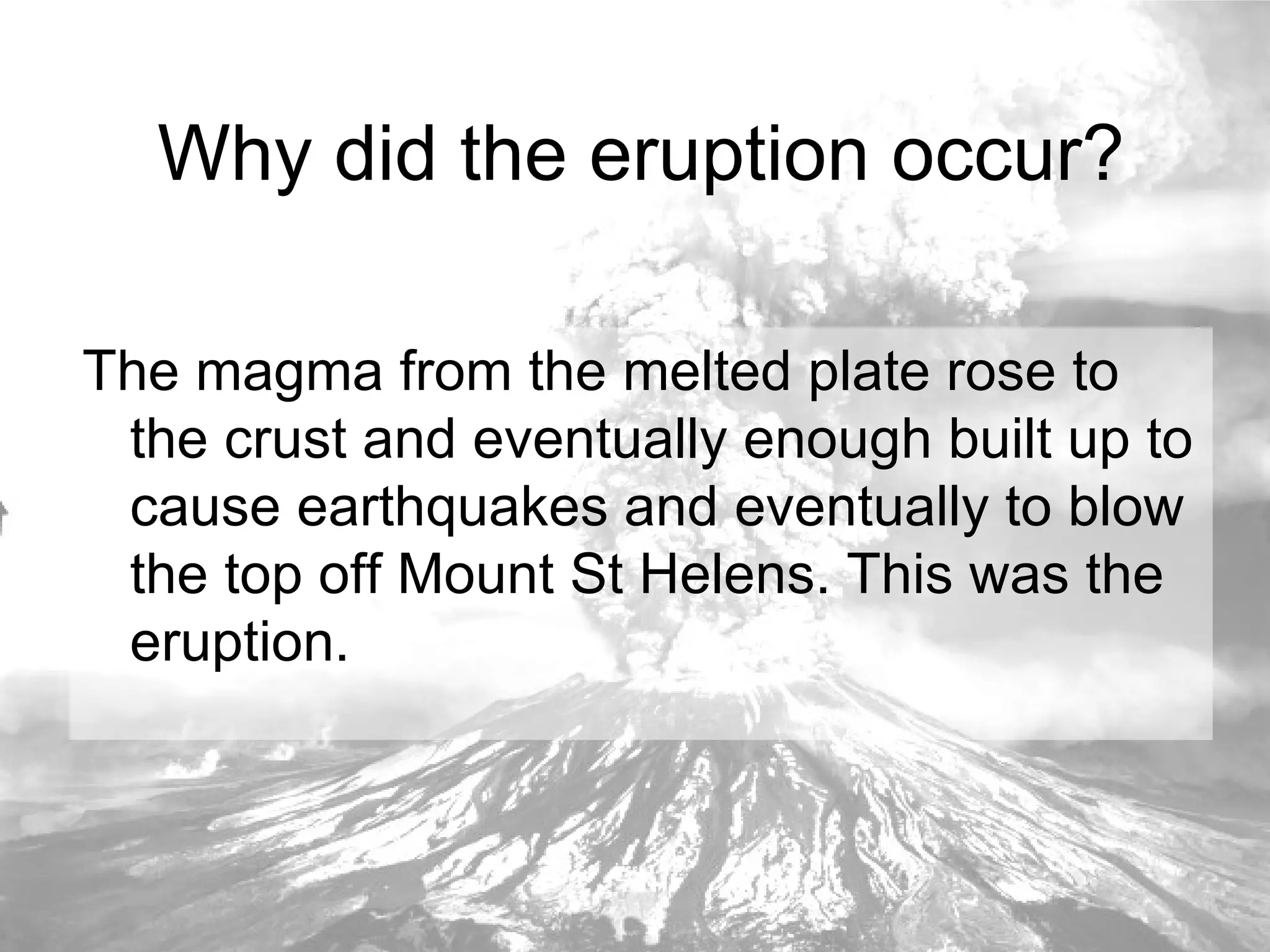
Why did the eruption occur? The magma from the melted plate rose to the crust and eventually enough built up to cause earthquakes and eventually to blow the top off Mount St Helens. This was the eruption.
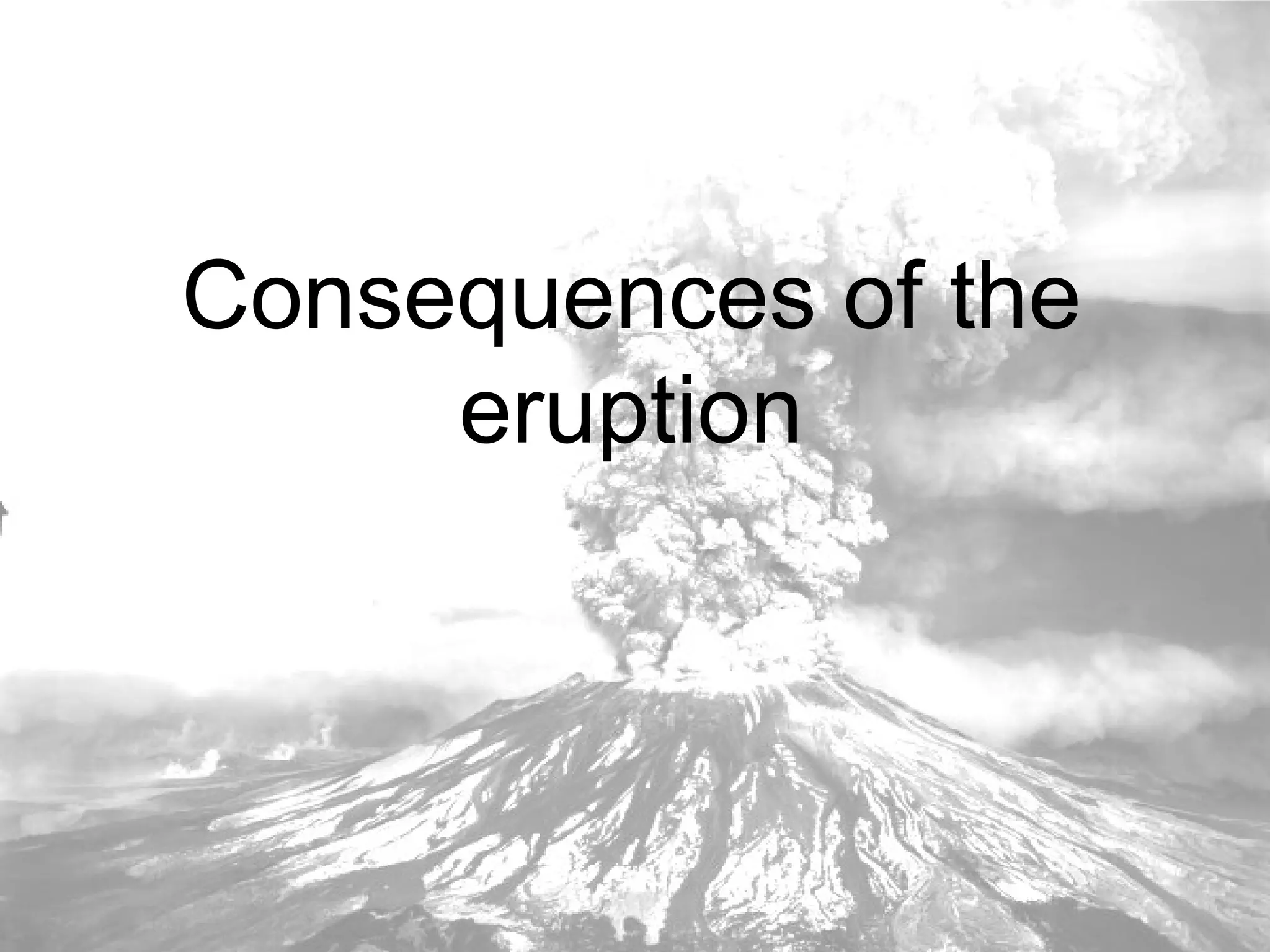
Consequences of the eruption
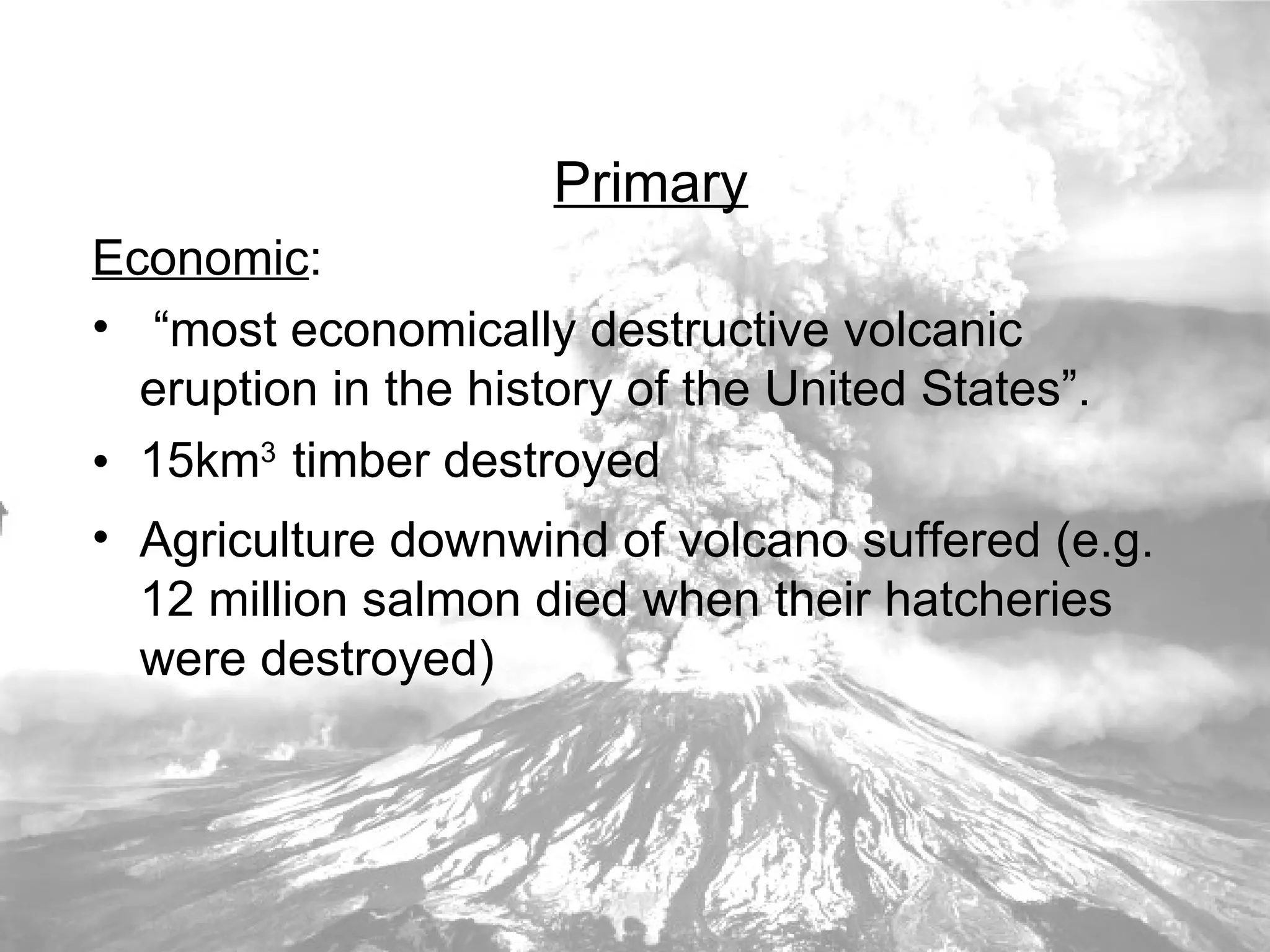
Primary Economic : “ most economically destructive volcanic eruption in the history of the United States”.  15km 3   timber destroyed Agriculture downwind of volcano suffered (e.g. 12 million salmon died when their hatcheries were destroyed)
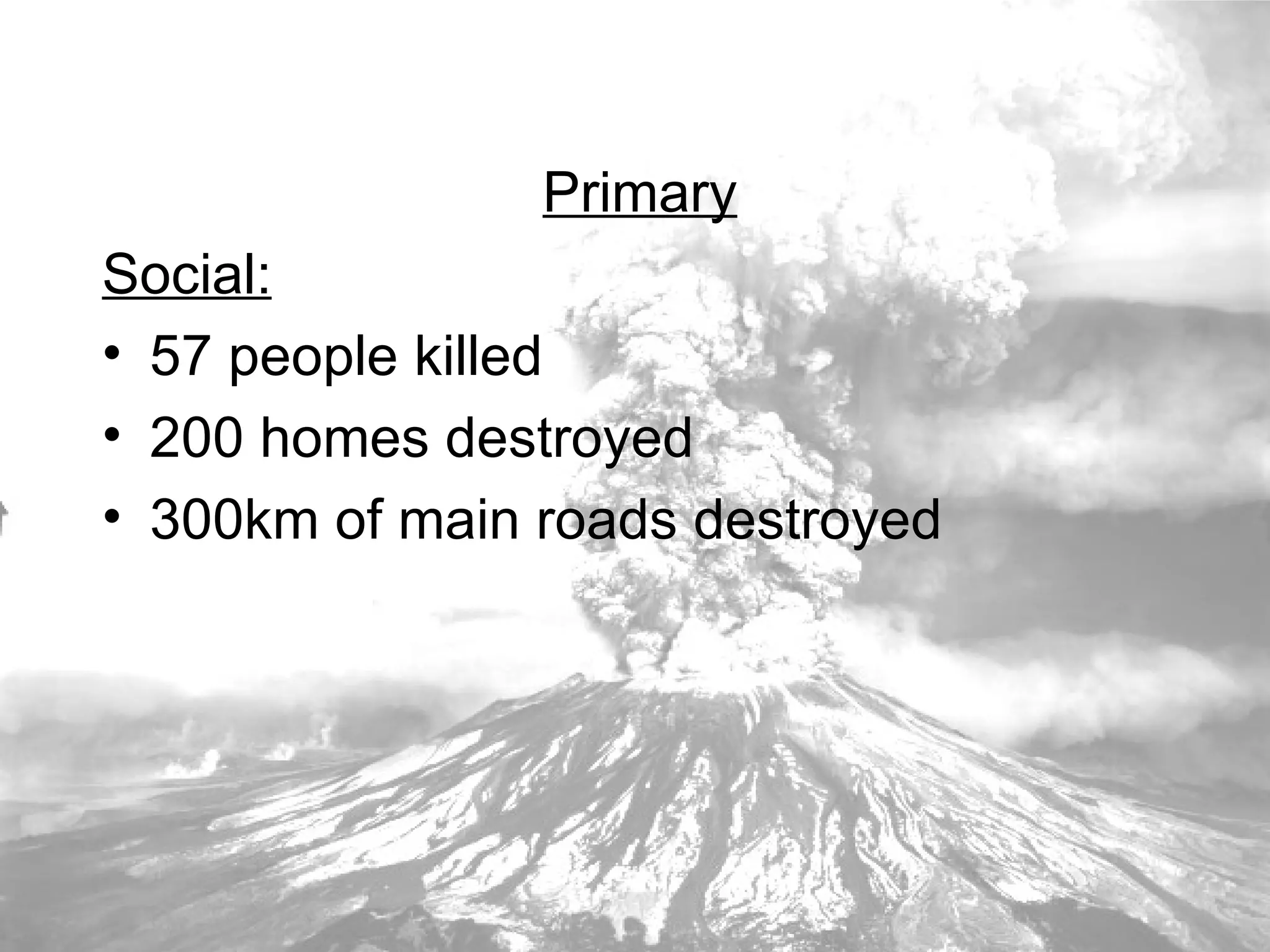
Primary Social: 57 people killed 200 homes destroyed 300km of main roads destroyed
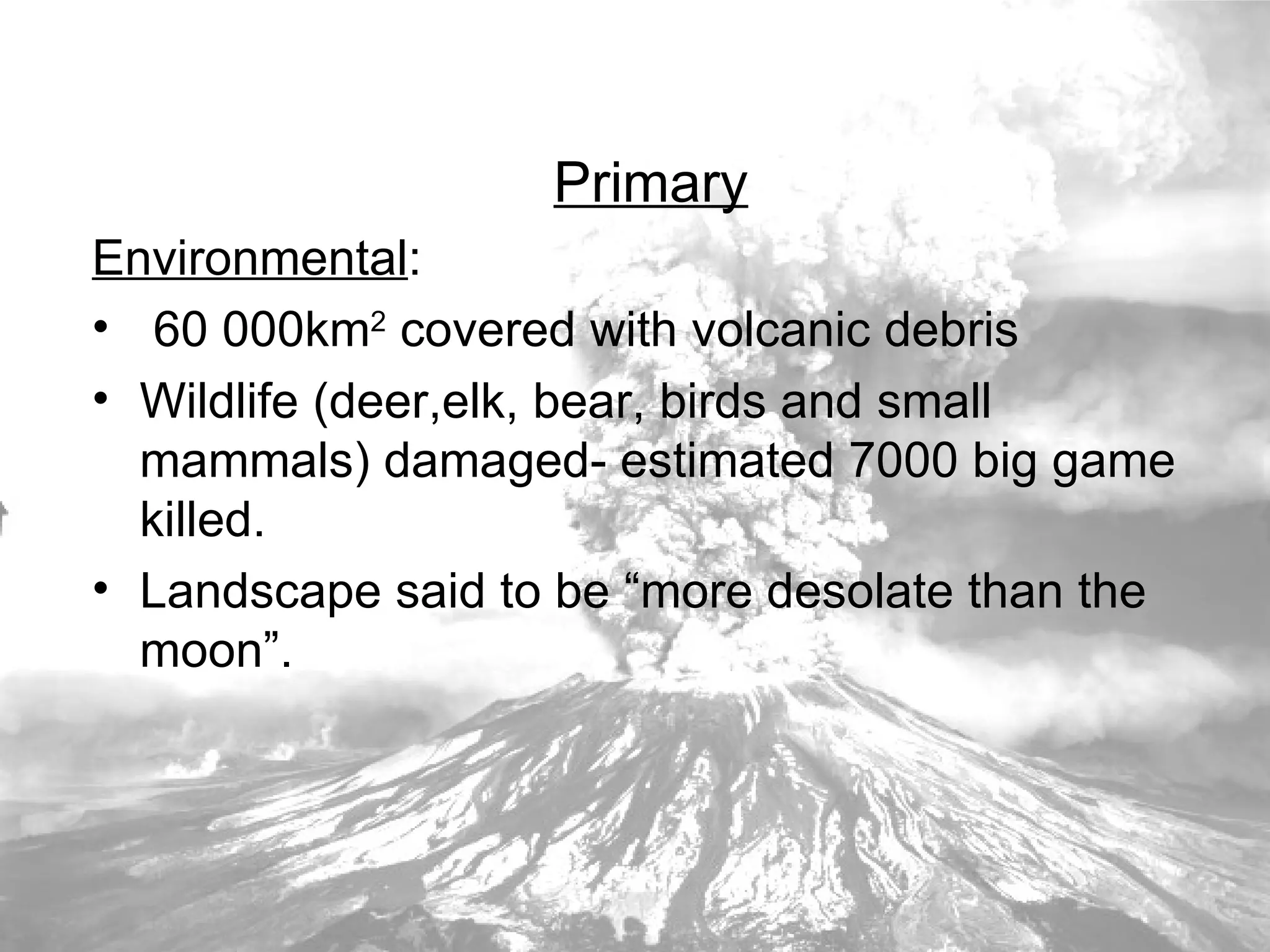
Primary Environmental : 60 000km 2  covered with volcanic debris Wildlife (deer,elk, bear, birds and small mammals) damaged- estimated 7000 big game killed. Landscape said to be “more desolate than the moon”.
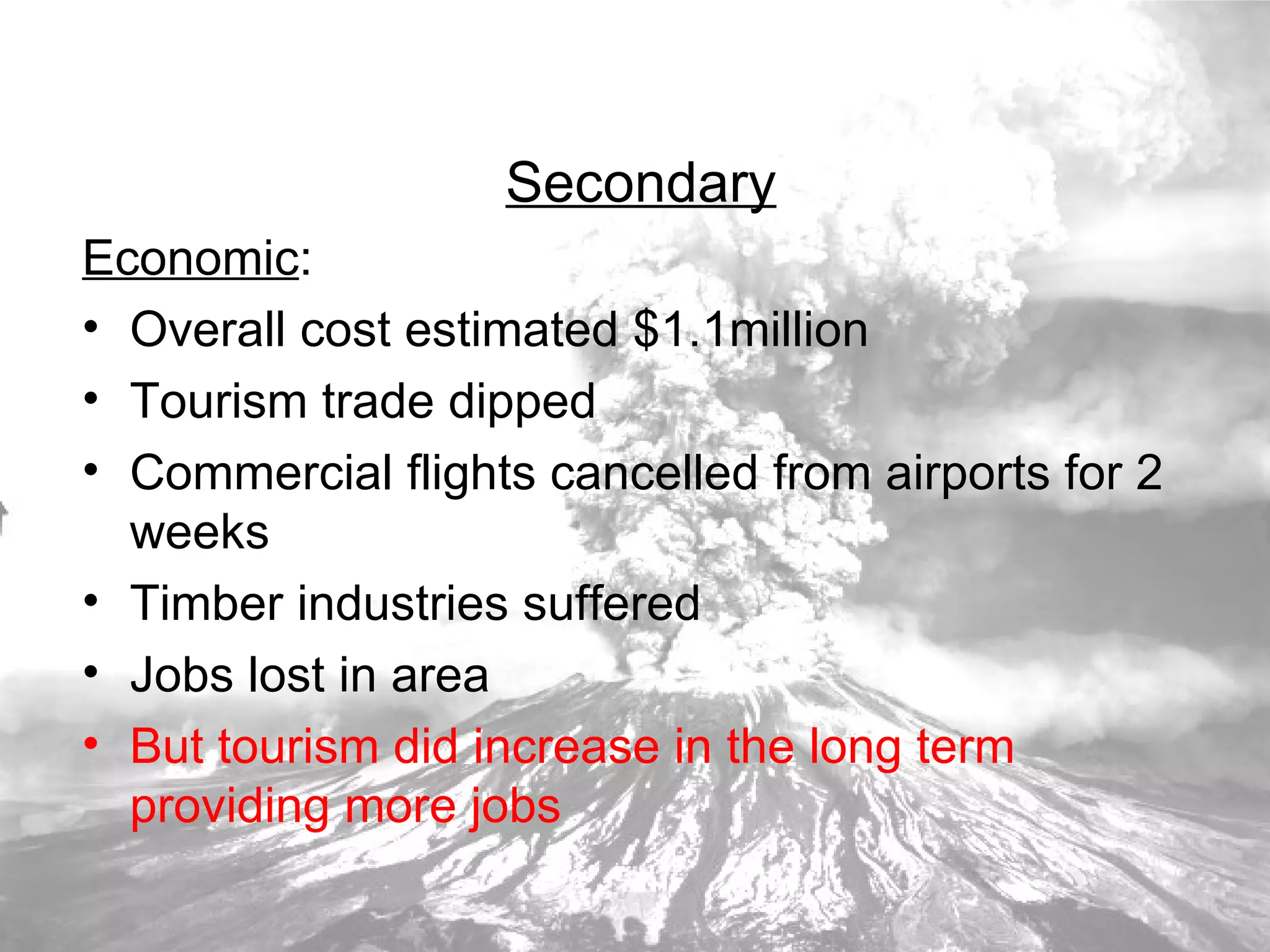
Secondary Economic : Overall cost estimated $1.1million Tourism trade dipped Commercial flights cancelled from airports for 2 weeks Timber industries suffered Jobs lost in area But tourism did increase in the long term providing more jobs
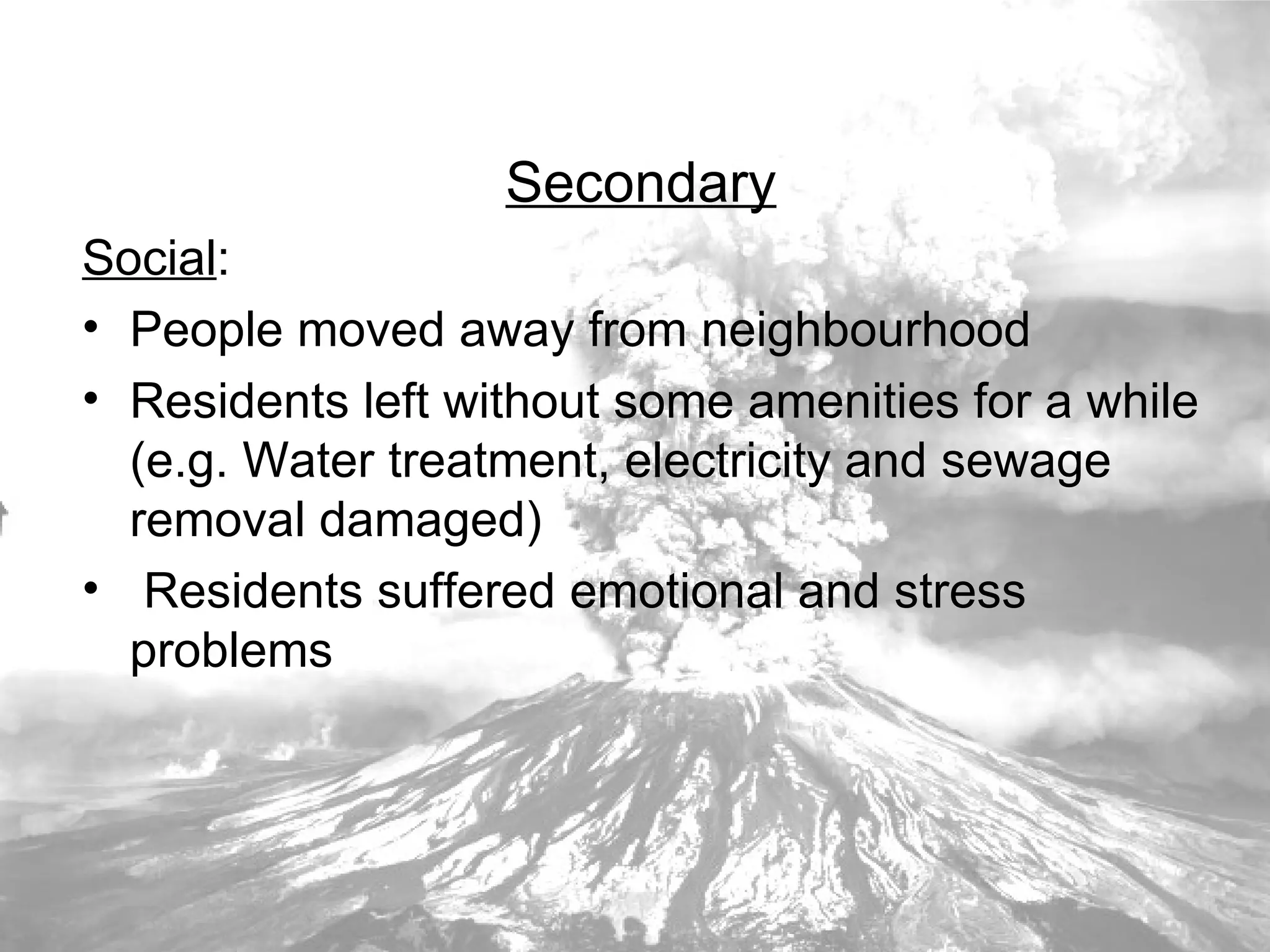
Secondary Social : People moved away from neighbourhood Residents left without some amenities for a while (e.g. Water treatment, electricity and sewage removal damaged) Residents suffered emotional and stress problems
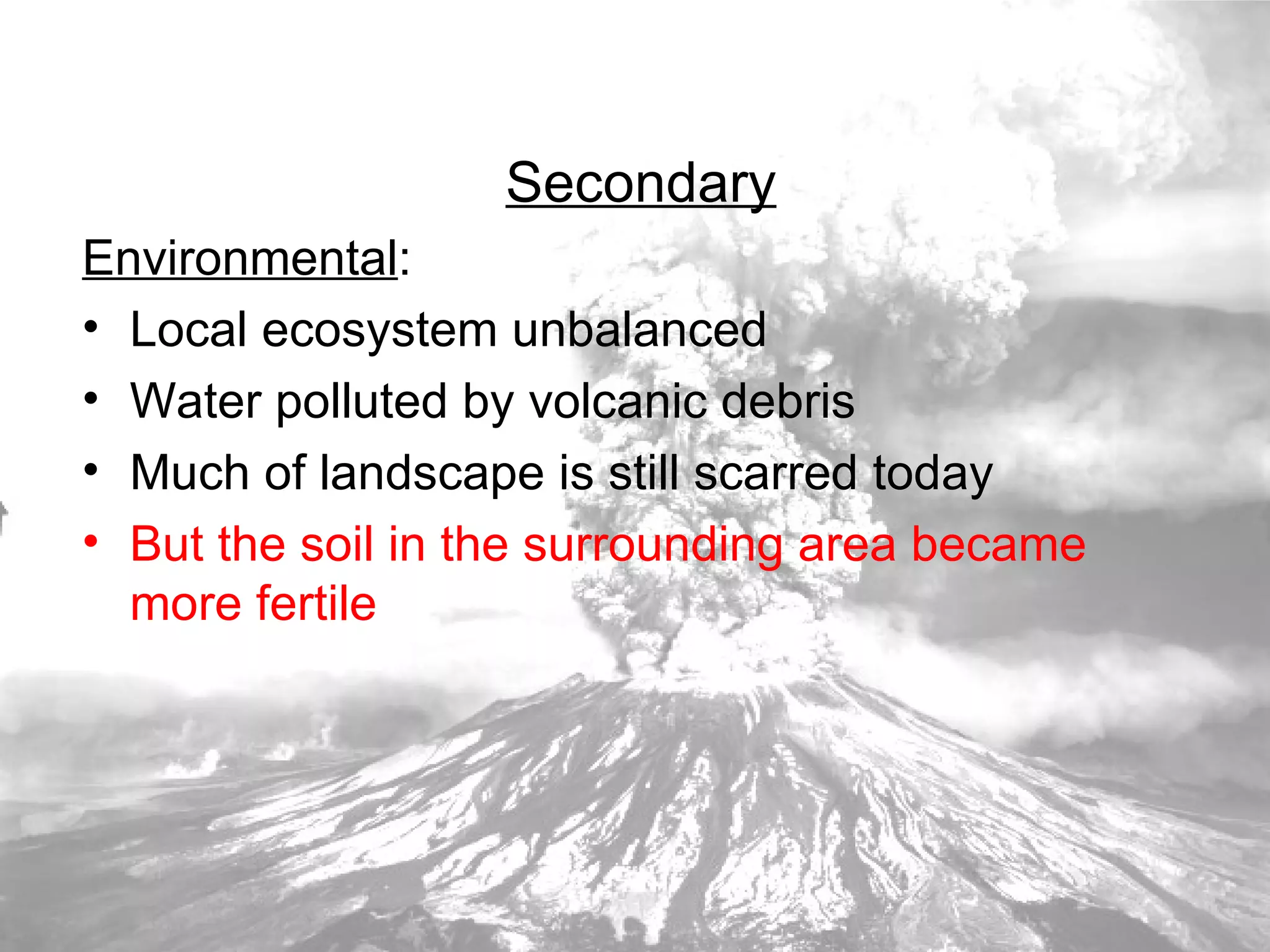
Secondary Environmental : Local ecosystem unbalanced Water polluted by volcanic debris  Much of landscape is still scarred today But the soil in the surrounding area became more fertile
Thank  you for watching

Mt St Helens Geography Case Study

  • 1.
  • 2.
    Location: Mount StHelens, Skamania County, Washington Date: May 18 th 1980 Time: 8:32 am
  • 3.
  • 4.
  • 5.
  • 6.
  • 7.
    Location Mount StHelens is an active volcano in Washington in the North-west of the United States.
  • 8.
  • 9.
    What happened? Onthe 18 th May 1980 at 8:32 am, an earthquake caused the entire north face of the volcano to collapse spewing red-hot lava and volcanic ash over the surrounding land.
  • 10.
    Why did iterupt? Mount St Helens is situated on a destructive plate boundary between two tectonic plates: the North-American and Juan de Fuca plates. As the Juan de Fuca plate is a less dense oceanic plate, it slides under the North-American plate and melts. The molten magma then rises through the North-American plates to form the Cascade Mountain range which Mount St Helens belongs to.
  • 11.
    magma Juan deFuca plate North-American plate Mount St Helens plate melts magma rises
  • 12.
    Why did theeruption occur? The magma from the melted plate rose to the crust and eventually enough built up to cause earthquakes and eventually to blow the top off Mount St Helens. This was the eruption.
  • 13.
  • 14.
    Primary Economic :“ most economically destructive volcanic eruption in the history of the United States”. 15km 3 timber destroyed Agriculture downwind of volcano suffered (e.g. 12 million salmon died when their hatcheries were destroyed)
  • 15.
    Primary Social: 57people killed 200 homes destroyed 300km of main roads destroyed
  • 16.
    Primary Environmental :60 000km 2 covered with volcanic debris Wildlife (deer,elk, bear, birds and small mammals) damaged- estimated 7000 big game killed. Landscape said to be “more desolate than the moon”.
  • 17.
    Secondary Economic :Overall cost estimated $1.1million Tourism trade dipped Commercial flights cancelled from airports for 2 weeks Timber industries suffered Jobs lost in area But tourism did increase in the long term providing more jobs
  • 18.
    Secondary Social :People moved away from neighbourhood Residents left without some amenities for a while (e.g. Water treatment, electricity and sewage removal damaged) Residents suffered emotional and stress problems
  • 19.
    Secondary Environmental :Local ecosystem unbalanced Water polluted by volcanic debris Much of landscape is still scarred today But the soil in the surrounding area became more fertile
  • 20.
    Thank youfor watching