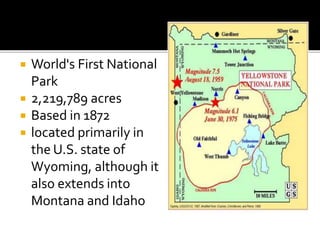

 World's First National 
Park 
 2,219,789 acres 
 Based in 1872 
 located primarily in 
the U.S. state of 
Wyoming, although it 
also extends into 
Montana and Idaho
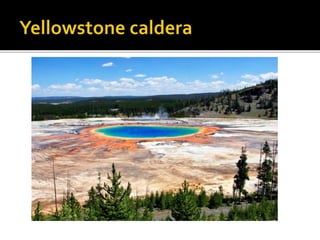
 The Yellowstone Caldera is the largest 
volcanic system in North America. It has been 
termed a "supervolcano" because the caldera 
was formed by exceptionally large explosive 
eruptions. The magma chamber that lies 
under Yellowstone is estimated to be a single 
connected chamber, about 37 miles (60 km) 
long, 18 miles (29 km) wide, and 3 to 7 miles 
(5 to 12 km) deep
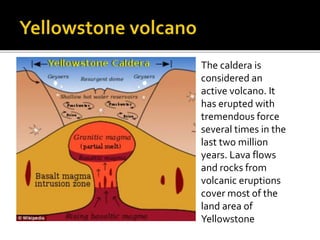
The caldera is 
considered an 
active volcano. It 
has erupted with 
tremendous force 
several times in the 
last two million 
years. Lava flows 
and rocks from 
volcanic eruptions 
cover most of the 
land area of 
Yellowstone
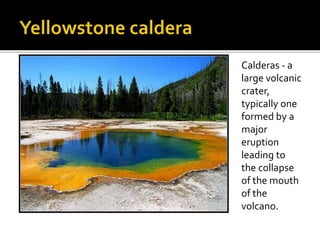
Calderas - a 
large volcanic 
crater, 
typically one 
formed by a 
major 
eruption 
leading to 
the collapse 
of the mouth 
of the 
volcano.
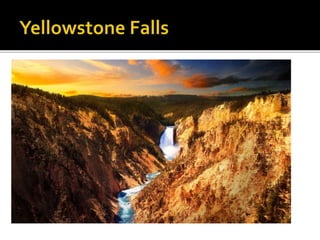
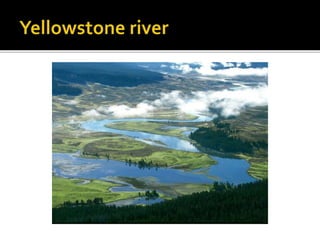
 Falls consist of two major waterfalls on the 
Yellowstone River. As the Yellowstone river 
flows north from Yellowstone Lake, it leaves 
the Hayden Valley and plunges first over 
Upper Yellowstone Falls and then a quarter 
mile (400 m) downstream over Lower 
Yellowstone Falls, at which point it then 
enters the Grand Canyon of the Yellowstone, 
which is up to 1,000 feet (304 m) deep.
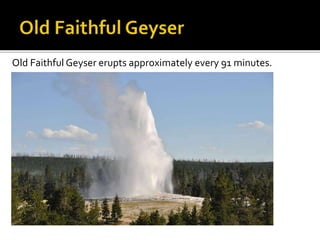
 The most famous geyser in the park, and 
perhaps the world, is Old Faithful Geyser. 
 A study that was completed in 2011 found 
that at least 1283 geysers have erupted in 
Yellowstone. 
 Of these, an average of 465 are active in a 
given year.
Old Faithful Geyser erupts approximately every 91 minutes.
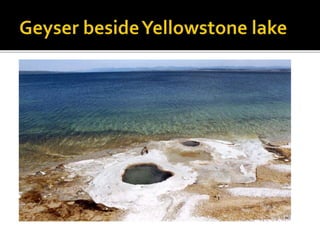
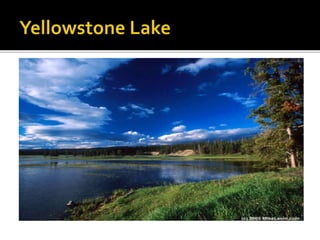
 Yellowstone Lake is the largest lake in north 
america. 
 The lake is 2,357 m above sea level and covers 
350 km2 with 180 km of shoreline. While the 
average depth of the lake is 42 m, its 
greatest depth is at least 120 m.
Yellowstone national park

Yellowstone national park

  • 2.
     World's FirstNational Park  2,219,789 acres  Based in 1872  located primarily in the U.S. state of Wyoming, although it also extends into Montana and Idaho
  • 4.
     The YellowstoneCaldera is the largest volcanic system in North America. It has been termed a "supervolcano" because the caldera was formed by exceptionally large explosive eruptions. The magma chamber that lies under Yellowstone is estimated to be a single connected chamber, about 37 miles (60 km) long, 18 miles (29 km) wide, and 3 to 7 miles (5 to 12 km) deep
  • 5.
    The caldera is considered an active volcano. It has erupted with tremendous force several times in the last two million years. Lava flows and rocks from volcanic eruptions cover most of the land area of Yellowstone
  • 7.
    Calderas - a large volcanic crater, typically one formed by a major eruption leading to the collapse of the mouth of the volcano.
  • 8.
     Falls consistof two major waterfalls on the Yellowstone River. As the Yellowstone river flows north from Yellowstone Lake, it leaves the Hayden Valley and plunges first over Upper Yellowstone Falls and then a quarter mile (400 m) downstream over Lower Yellowstone Falls, at which point it then enters the Grand Canyon of the Yellowstone, which is up to 1,000 feet (304 m) deep.
  • 11.
     The mostfamous geyser in the park, and perhaps the world, is Old Faithful Geyser.  A study that was completed in 2011 found that at least 1283 geysers have erupted in Yellowstone.  Of these, an average of 465 are active in a given year.
  • 13.
    Old Faithful Geysererupts approximately every 91 minutes.
  • 14.
     Yellowstone Lakeis the largest lake in north america.  The lake is 2,357 m above sea level and covers 350 km2 with 180 km of shoreline. While the average depth of the lake is 42 m, its greatest depth is at least 120 m.