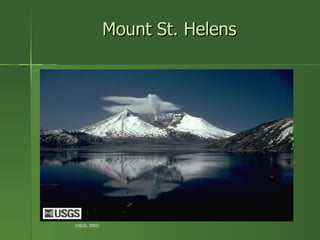
Mount St. Helens (USGS, 2005)
Notes Take notes to help you write your paragraph about what it would have been like to be near Mount Saint Helen when it erupted. Take notes because you will be teaching a fourth grader about volcanoes.
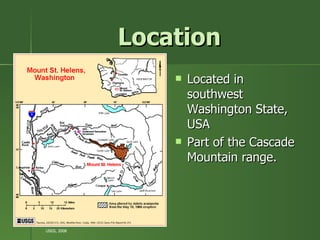
Location Located in southwest Washington State, USA Part of the Cascade Mountain range. USGS, 2008
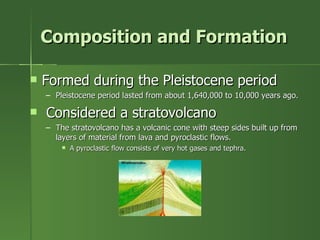
Composition and Formation Formed during the Pleistocene period Pleistocene period lasted from about 1,640,000 to 10,000 years ago. Considered a stratovolcano  The stratovolcano has a volcanic cone with steep sides built up from layers of material from lava and pyroclastic flows. A pyroclastic flow consists of very hot gases and tephra.
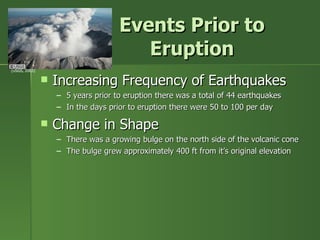
Events Prior to Eruption Increasing Frequency of Earthquakes 5 years prior to eruption there was a total of 44 earthquakes In the days prior to eruption there were 50 to 100 per day Change in Shape There was a growing bulge on the north side of the volcanic cone The bulge grew approximately 400 ft from it’s original elevation (USGS, 2003)
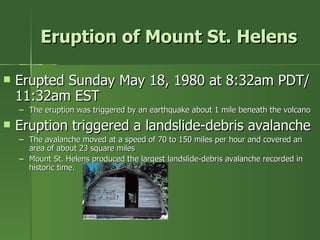
Eruption of Mount St. Helens Erupted Sunday May 18, 1980 at 8:32am PDT/ 11:32am EST The eruption was triggered by an earthquake about 1 mile beneath the volcano Eruption triggered a landslide-debris avalanche The avalanche moved at a speed of 70 to 150 miles per hour and covered an area of about 23 square miles Mount St. Helens produced the largest landslide-debris avalanche recorded in historic time.
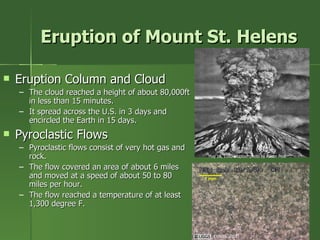
Eruption of Mount St. Helens Eruption Column and Cloud The cloud reached a height of about 80,000ft in less than 15 minutes. It spread across the U.S. in 3 days and encircled the Earth in 15 days. Pyroclastic Flows Pyroclastic flows consist of very hot gas and rock. The flow covered an area of about 6 miles and moved at a speed of about 50 to 80 miles per hour. The flow reached a temperature of at least 1,300 degree F. ( USGS, 2003) May 18, 1980 eruption photo by Austin Post
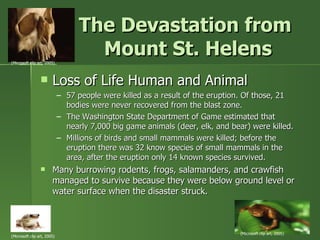
The Devastation from  Mount St. Helens Loss of Life Human and Animal 57 people were killed as a result of the eruption. Of those, 21 bodies were never recovered from the blast zone. The Washington State Department of Game estimated that nearly 7,000 big game animals (deer, elk, and bear) were killed. Millions of birds and small mammals were killed; before the eruption there was 32 know species of small mammals in the area, after the eruption only 14 known species survived. Many burrowing rodents, frogs, salamanders, and crawfish managed to survive because they were below ground level or water surface when the disaster struck. (Microsoft clip art, 2005) (Microsoft clip art, 2005) (Microsoft clip art, 2005)
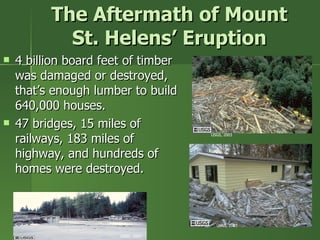
The Aftermath of Mount St. Helens’ Eruption 4 billion board feet of timber was damaged or destroyed, that’s enough lumber to build 640,000 houses.  47 bridges, 15 miles of railways, 183 miles of highway, and hundreds of homes were destroyed.  USGS, 2003 USGS, 2003 USGS, 2003
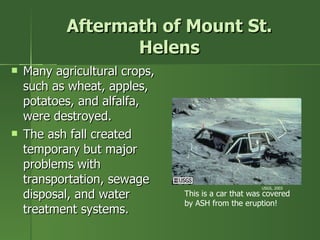
Aftermath of Mount St. Helens Many agricultural crops, such as wheat, apples, potatoes, and alfalfa, were destroyed. The ash fall created temporary but major problems with transportation, sewage disposal, and water treatment systems.  This is a car that was covered by ASH from the eruption! USGS, 2003
Mount St. Helens After May 18, 1980 St. Helens produced five more explosive eruptions between May and October 1980.  Through the early 1990, a total of at least 21 periods of eruptive activity had occurred. The   volcano remains active, with smaller, dome- building eruptions continuing into 2008. After the 1980 eruption, Congress funded the USGS Cascades Volcano Observatory to monitor volcanoes in the Cascade range. The budget for monitoring volcanoes went from $2 million in 1980 to $21 million today, and the USGS now has close to 120 volcanologists on staff.
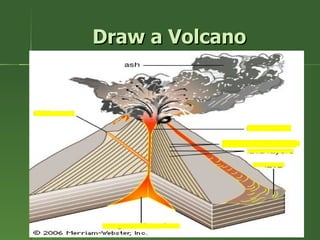
Draw a Volcano
Writing Activity: Write one paragraph about what it would have been like to be near Mount Saint Helen when it erupted. Use your notes from the power point. Be descriptive, use adjectives when describing something.

Mt st helens

  • 1.
    Mount St. Helens(USGS, 2005)
  • 2.
    Notes Take notesto help you write your paragraph about what it would have been like to be near Mount Saint Helen when it erupted. Take notes because you will be teaching a fourth grader about volcanoes.
  • 3.
    Location Located insouthwest Washington State, USA Part of the Cascade Mountain range. USGS, 2008
  • 4.
    Composition and FormationFormed during the Pleistocene period Pleistocene period lasted from about 1,640,000 to 10,000 years ago. Considered a stratovolcano The stratovolcano has a volcanic cone with steep sides built up from layers of material from lava and pyroclastic flows. A pyroclastic flow consists of very hot gases and tephra.
  • 5.
    Events Prior toEruption Increasing Frequency of Earthquakes 5 years prior to eruption there was a total of 44 earthquakes In the days prior to eruption there were 50 to 100 per day Change in Shape There was a growing bulge on the north side of the volcanic cone The bulge grew approximately 400 ft from it’s original elevation (USGS, 2003)
  • 6.
    Eruption of MountSt. Helens Erupted Sunday May 18, 1980 at 8:32am PDT/ 11:32am EST The eruption was triggered by an earthquake about 1 mile beneath the volcano Eruption triggered a landslide-debris avalanche The avalanche moved at a speed of 70 to 150 miles per hour and covered an area of about 23 square miles Mount St. Helens produced the largest landslide-debris avalanche recorded in historic time.
  • 7.
    Eruption of MountSt. Helens Eruption Column and Cloud The cloud reached a height of about 80,000ft in less than 15 minutes. It spread across the U.S. in 3 days and encircled the Earth in 15 days. Pyroclastic Flows Pyroclastic flows consist of very hot gas and rock. The flow covered an area of about 6 miles and moved at a speed of about 50 to 80 miles per hour. The flow reached a temperature of at least 1,300 degree F. ( USGS, 2003) May 18, 1980 eruption photo by Austin Post
  • 8.
    The Devastation from Mount St. Helens Loss of Life Human and Animal 57 people were killed as a result of the eruption. Of those, 21 bodies were never recovered from the blast zone. The Washington State Department of Game estimated that nearly 7,000 big game animals (deer, elk, and bear) were killed. Millions of birds and small mammals were killed; before the eruption there was 32 know species of small mammals in the area, after the eruption only 14 known species survived. Many burrowing rodents, frogs, salamanders, and crawfish managed to survive because they were below ground level or water surface when the disaster struck. (Microsoft clip art, 2005) (Microsoft clip art, 2005) (Microsoft clip art, 2005)
  • 9.
    The Aftermath ofMount St. Helens’ Eruption 4 billion board feet of timber was damaged or destroyed, that’s enough lumber to build 640,000 houses. 47 bridges, 15 miles of railways, 183 miles of highway, and hundreds of homes were destroyed. USGS, 2003 USGS, 2003 USGS, 2003
  • 10.
    Aftermath of MountSt. Helens Many agricultural crops, such as wheat, apples, potatoes, and alfalfa, were destroyed. The ash fall created temporary but major problems with transportation, sewage disposal, and water treatment systems. This is a car that was covered by ASH from the eruption! USGS, 2003
  • 11.
    Mount St. HelensAfter May 18, 1980 St. Helens produced five more explosive eruptions between May and October 1980. Through the early 1990, a total of at least 21 periods of eruptive activity had occurred. The volcano remains active, with smaller, dome- building eruptions continuing into 2008. After the 1980 eruption, Congress funded the USGS Cascades Volcano Observatory to monitor volcanoes in the Cascade range. The budget for monitoring volcanoes went from $2 million in 1980 to $21 million today, and the USGS now has close to 120 volcanologists on staff.
  • 12.
  • 13.
    Writing Activity: Writeone paragraph about what it would have been like to be near Mount Saint Helen when it erupted. Use your notes from the power point. Be descriptive, use adjectives when describing something.